
India’s top diplomat stressed Thursday that keeping international shipping lanes open is essential for worldwide economic stability, particularly highlighting concerns about key maritime passages like the Strait of Hormuz.
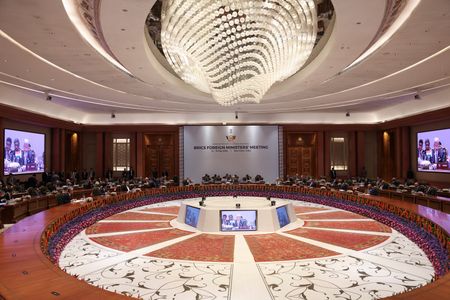
Foreign Minister Subrahmanyam Jaishankar made these remarks while opening a two-day gathering of BRICS foreign ministers in New Delhi.
“The conflict in West Asia merits particular attention,” Jaishankar stated, referencing the ongoing U.S.-Israeli war in Iran.
“Safe and unimpeded maritime flows through international waterways, including the Strait of Hormuz and the Red Sea, remain vital for global economic well-being.”
The Iranian conflict’s effects, particularly the practical shutdown of the Strait of Hormuz, have been characterized as among the most severe disruptions to energy markets in recorded history.
These interruptions have severely limited oil tanker movement and caused energy costs to spike dramatically, raising concerns about accelerating inflation and potential worldwide economic decline.
The BRICS alliance originally consisted of Brazil, Russia, India and China, with South Africa joining in 2011. More recent additions include Egypt, Ethiopia, Indonesia, Iran and the United Arab Emirates. India currently serves as the BRICS chair for 2026.
Representatives from most member nations are participating in the New Delhi conference, including Iran’s Foreign Minister Abbas Araqchi and the UAE’s Deputy Foreign Minister Khalifa Shaheen Al Marar.
The ongoing war has complicated efforts for the group to agree on unified statements, highlighting tensions between Iran and the UAE, which support different sides in the conflict that began February 28.
Jaishankar additionally criticized what he called the “increasing resort to unilateral coercive measures and sanctions inconsistent with international law and the U.N. Charter.”
“Such measures disproportionately affect developing countries. These unjustifiable measures cannot substitute dialogue, nor can pressure replace diplomacy.”
The minister noted that developing nations look to BRICS to provide constructive leadership and stability in global affairs.