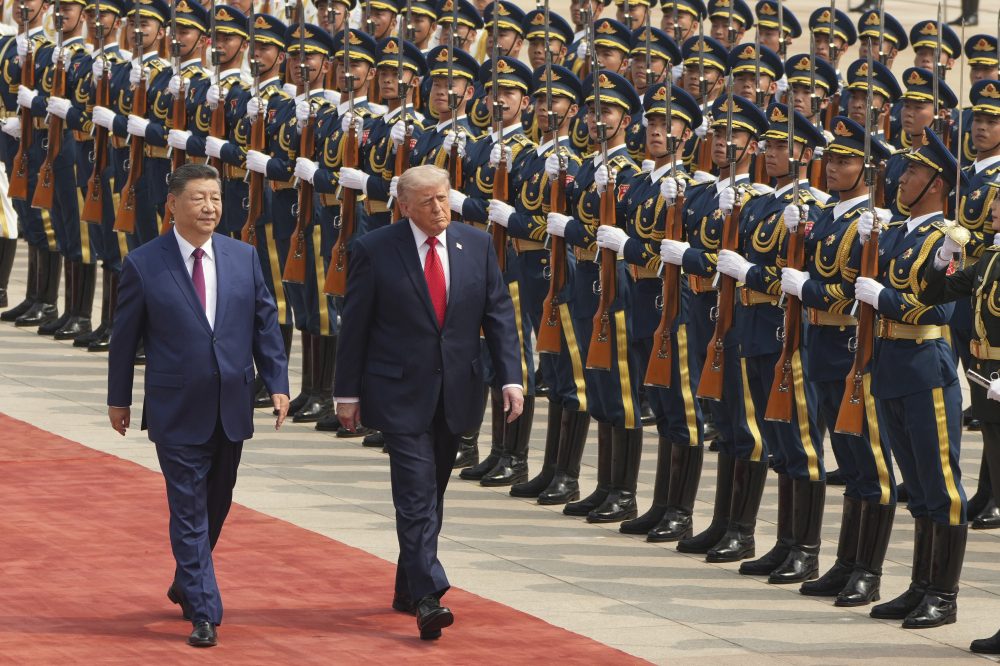

President Donald Trump concluded his rapid visit to China on Friday, maintaining that ties between the world’s two largest economies are strong and improving, even as major disagreements persist over Taiwan, Iran, and other critical issues.
On his final day in Beijing, Trump took to social media to claim that Chinese leader Xi Jinping had “congratulated me on so many tremendous successes” and clarified that Xi was speaking only about his predecessor, former U.S. President Joe Biden, when he “very elegantly referred to the United States as perhaps being a declining nation.”
However, Trump’s optimistic assessment of U.S.-China ties conflicts with challenging realities surrounding the most contentious matters between the two global powers.
China has demonstrated minimal public enthusiasm for American requests to become more engaged in addressing the Iran situation, despite Trump revealing in a Fox News interview with Sean Hannity that Xi had privately offered assistance during their discussions. The White House also maintains that China could do more to reduce the supply of Chinese-produced precursor chemicals flowing into Mexico for illegal fentanyl production that has devastated numerous American communities.
During private discussions, Xi cautioned Trump that their disagreements regarding the self-governed island of Taiwan could push the world’s leading powers toward “clashes and even conflicts” if mismanaged, according to Chinese government representatives.
Trump and Xi planned additional time together at Xi’s official Beijing residence on Friday before the American president’s lengthy return trip to Washington.
Xi’s stern warnings about Taiwan dominated Thursday’s discussions, even as Trump emphasized the idea that America and China maintain a “special relationship.”
Secretary of State Marco Rubio informed NBC News that American policy regarding Taiwan remained “unchanged” and warned it would be “a terrible mistake” for China to attempt taking Taiwan through military force. He characterized Xi’s remarks as routine.
“They always raise it on their side. We always make clear our position, and we move on to the other topics,” Rubio explained, noting he was among senior advisors joining Trump for the discussions.
In recent weeks, China has emphasized its position that Taiwan represents the “core” of its interests and remains essential for maintaining stable U.S. relations.
Trump has insisted Taiwan boost its defense expenditures, and in December, the White House revealed an $11 billion arms package for Taiwan, representing the largest ever for the island democracy.
However, America has not yet started delivering these weapons sales, and Trump indicated he planned to address this issue with Xi in Beijing. He has also complained that Taiwan “stole” America’s semiconductor industry and demanded Taiwan compensate the U.S. for protection.
Meanwhile, Trump has used tariff threats and Biden-era incentives to encourage Taipei to commit to substantial investments in American semiconductor production and purchase billions in U.S. liquefied natural gas and crude oil. This approach toward Taiwan has sparked questions about whether Trump might reduce support for the island democracy.
Ma Chun-wei, a China-Taiwan relations specialist at Taiwan’s Tamkang University, explained that the strengthened defense partnership between Washington and Taipei has prompted China to intensify its Taiwan rhetoric.
“For Xi Jinping, he must show that the Taiwan issue is in China’s hands. He must demonstrate this image, or else he would be criticized,” Ma stated.
Iran featured prominently when Trump met with Xi on Thursday for their two-hour session in the Great Hall of the People.
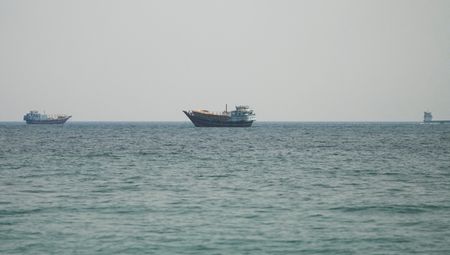
The leaders reached agreement that the Strait of Hormuz — essentially blocked since the Iran conflict began — must reopen to support worldwide energy needs, Trump revealed in his Fox News interview. Approximately 20% of global oil passed through the strait before hostilities commenced on Feb. 28.
Trump disclosed in the interview that Xi privately volunteered help in resolving the conflict, though the specifics remained unclear given China’s strategic alliance with Iran.
“He’d like to see the Hormuz Strait open,” Trump stated. “He said if I can be of any help whatsoever, I would like to help.”
The president also noted Xi opposed implementing tolls on vessels using the strait and showed interest in China potentially buying more American oil to decrease Chinese reliance on Gulf oil going forward.
Earlier this week, Trump had minimized the significance of Iran discussions with Xi regarding the 11-week conflict that has caused rising energy costs and threatens global economic recession if not resolved quickly.
“We have a lot of things to discuss. I wouldn’t say Iran is one of them, to be honest with you, because we have Iran very much under control,” Trump informed reporters Tuesday before departing for Beijing.
Yet before Air Force One reached Beijing, Rubio indicated administration officials would argue to Chinese representatives why they should help pressure Iran to negotiate an end to the war.
“Economies are melting down because of this crisis,” Rubio stated aboard the presidential aircraft during the Beijing flight. This situation, the secretary added in a Wednesday Fox News interview with Sean Hannity, will cause consumers to buy “less Chinese product.”
“So it’s in their interest to resolve this,” Rubio concluded.
China, which has criticized American and Israeli attacks on Iran, possesses unique influence as Iran’s largest trading partner. The Chinese government has managed the war’s economic impact using strategic oil reserves, but this protection has limits. Economic experts warn the Iran conflict could significantly affect China’s export-dependent economy.
Prior to the visit, the White House emphasized Trump wouldn’t make the trip without seeking concrete results, hinting at possible trade announcements.
Such developments remained possible, with American officials hoping to secure Chinese commitments for purchasing U.S. soybeans and beef. Trump told Fox News that Xi had indicated China’s commitment to buy 200 Boeing aircraft from America.
Thursday’s discussions included increasing Chinese purchases of American agricultural products and expanding investment opportunities between both markets, the White House reported. Trump administration officials also seek to establish a Board of Trade with China for addressing commercial disputes.
Chinese Premier Li Qiang emphasized friendship and cooperation in U.S.-China relations while meeting with American business leaders, including Tesla’s Elon Musk, Apple’s Tim Cook, and Nvidia CEO Jensen Huang, who accompanied Trump’s Beijing delegation.
“China and the United States have been able to maintain frank and smooth dialogue and communication and actively safeguard a stable and healthy bilateral relationship” despite international turbulence, Li remarked.