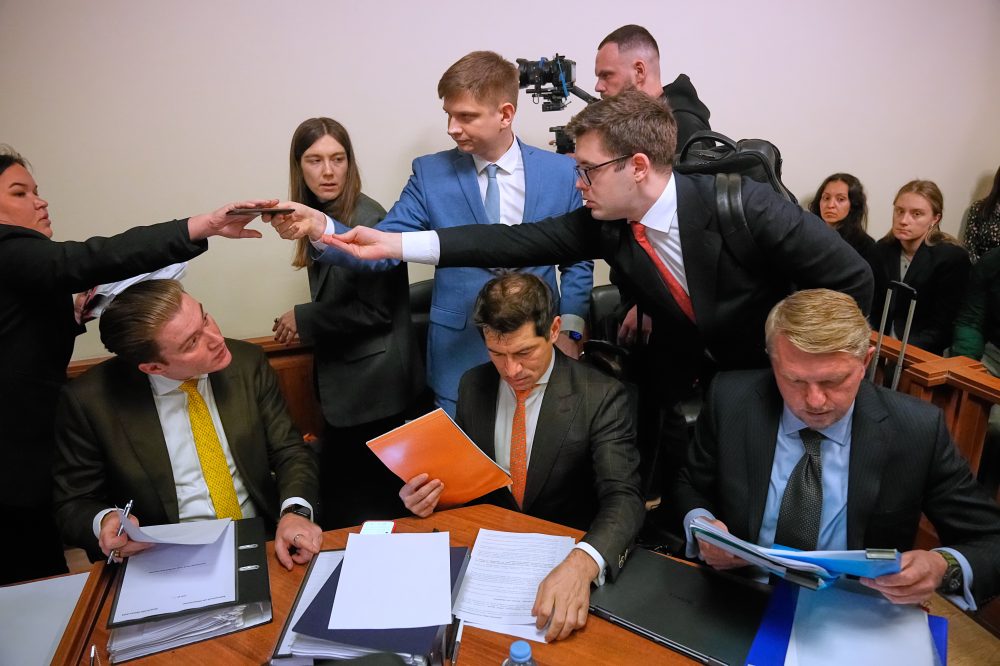
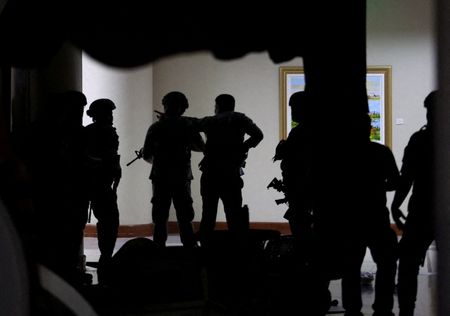
Authorities from three nations collaborated in an unprecedented international effort that resulted in the detention of 276 individuals suspected of operating telecom scams from Dubai, according to a Sunday report from Chinese state broadcaster CCTV.
The collaborative effort between law enforcement from China, the United States, and the United Arab Emirates marked the first operation of this scale involving all three nations and “successfully destroyed nine fraud dens,” according to the broadcast. The criminal organizations targeted victims by deceiving them into fraudulent cryptocurrency investment schemes, the report stated.
According to China’s public security ministry, as cited in the report, “Chinese police will deepen pragmatic cooperation with more countries” in their efforts to combat wire fraud. The ministry noted that China has previously partnered with Myanmar to bring back large numbers of individuals connected to international cyber fraud operations over recent years.
Italy’s Prime Minister Giorgia Meloni has altered her schedule to visit Modena on Sunday following a vehicle attack that wounded multiple people in the northern Italian city, according to government sources. The prime minister scrapped a planned meeting with Cyprus’ president in Nicosia to make the trip.
Italy’s President Sergio Mattarella is also planning to visit the city, sources confirmed.
On Saturday, a 30-year-old Italian-born man of North African descent plowed his vehicle into pedestrians in Modena’s downtown area, leaving eight people wounded, with four sustaining severe injuries.
After the attack, the suspect tried to escape on foot and used a knife to wound one of three civilians who attempted to apprehend him. Police subsequently took him into custody.
On Sunday, prosecutors in Modena released a statement saying the suspect faces charges of massacre and personal injury, while investigators work to determine what motivated the attack.
Officials described how the man targeted walkers in the busy downtown district of the city, home to more than 180,000 people, “in an indiscriminate, random and deliberate manner.”
“The man had received treatment for mental health issues in 2022 due to schizoid personality disorder, after which he went off the radar,” Modena’s mayor, Massimo Mezzetti, told broadcaster RaiNews24 late on Saturday.
Prosecutors revealed that among the critically wounded victims, two suffered leg amputations, with one person fighting for their life.
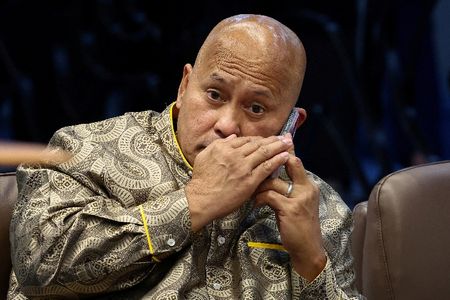
Government attorneys in the Philippines have asked the nation’s highest court to deny a request from a fugitive senator seeking to avoid arrest on war crimes allegations connected to his involvement in a deadly anti-drug campaign.
The senator, Ronald dela Rosa, previously served as the country’s top police official and supervised former President Rodrigo Duterte’s drug enforcement operations. He petitioned the Supreme Court to prevent officials from detaining him and turning him over to the International Criminal Court.
Both dela Rosa and Duterte face identical accusations related to crimes against humanity, with Duterte expected to be the first former Asian leader to face trial in The Hague. Both men have rejected the allegations against them.
The senator’s legal argument centers on his claim that the ICC lost authority over the Philippines when the country left the Rome Statute in 2019.
However, the Office of the Solicitor General (OSG) contended that Philippine officials can execute the ICC warrant through domestic legislation, Republic Act 9851, which permits authorities to hand over individuals accused of serious international crimes to global courts for trial.
The office stated that dela Rosa cannot require a separate Philippine court determination of adequate grounds for his arrest since the ICC has already issued its warrant, emphasizing that the nation “will never become a sanctuary for impunity.”
According to the OSG, dela Rosa lacks standing for relief because his “actions show that he comes to court with unclean hands.”
“His flight, coupled with the fact that he had previously gone into hiding, is not merely incidental but is a deliberate act to avoid accountability. His conduct places him squarely within the definition of a fugitive from justice,” the OSG stated in documents submitted on Saturday and released to media on Sunday.
The senator avoided capture on Monday after receiving protection from the Senate, whose new leader he helped elect by emerging from months of absence to provide a crucial vote for Alan Peter Cayetano, a strong supporter of the Duterte family.
International court officials revealed an arrest warrant for dela Rosa on Monday that was originally dated in November. While the senator had been sheltering in the Senate building, he departed before sunrise on Thursday in what his spouse described as an “escape.” His present location remains unknown.
“To once more extend exceptional privileges to a petitioner who now seeks relief while evading lawful process sends a chilling message — not only to the victims of the drug war, but to all who look to the law for justice: that its protections are strongest for the powerful, and weakest for those who are now dead,” the OSG stated.
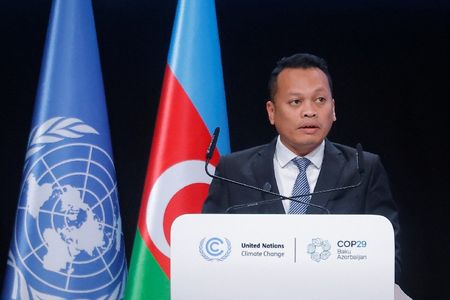
KUALA LUMPUR, May 17 – A pair of former cabinet officials in Malaysia declared Sunday that they plan to step down from their legislative positions and depart from their existing political organization, PKR, as they prepare to join a different party they have assumed control of.
Rafizi Ramli, who previously served as economy minister, along with Nik Nazmi Nik Ahmad, the former minister overseeing natural resources and environmental sustainability, stated they will give up their legislative positions on Monday and plan to send written notification to the House speaker regarding their departures.
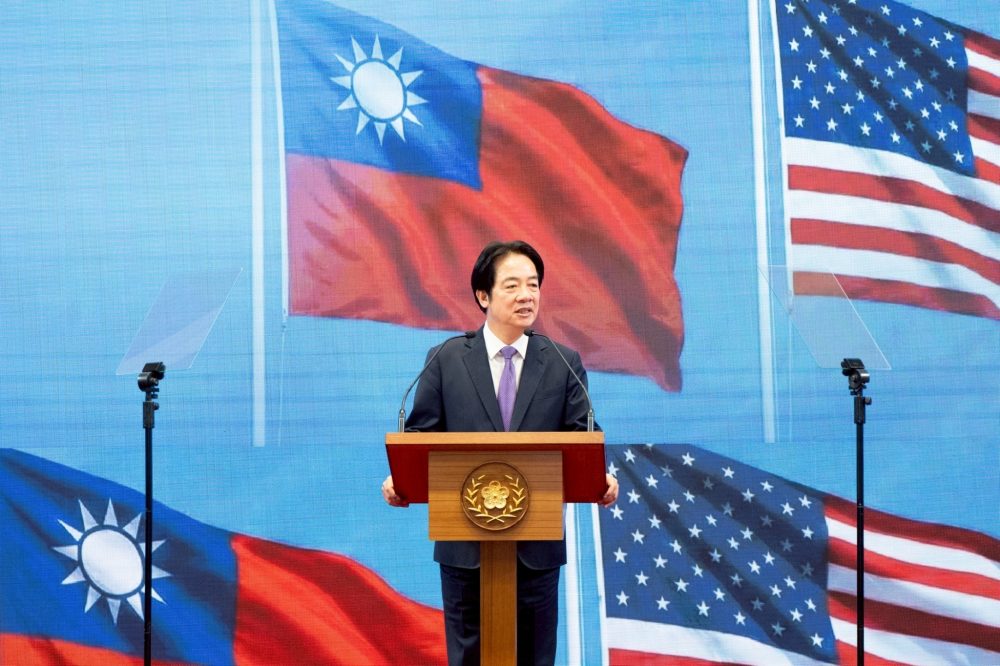
Taiwan’s leader offered a detailed explanation Sunday of what his administration means when discussing the island’s independence from mainland China’s control.
President Lai Ching-te clarified that references to “Taiwan independence” indicate the island operates outside Beijing’s authority and that Taiwan’s residents alone should determine their political destiny. His remarks came during a speech in Taipei.
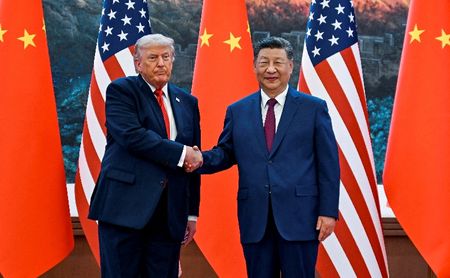
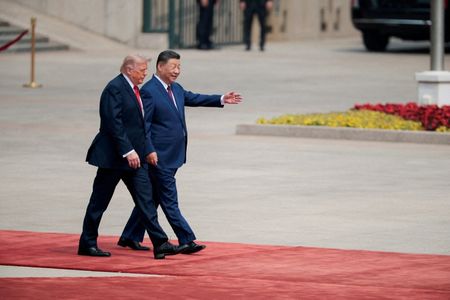
The president’s statements follow recent high-level discussions between President Donald Trump and Chinese leader Xi Jinping in Beijing, which sparked uncertainty in Taiwan about continued American support.
Following those talks, Trump commented to Fox News: “We’re not looking to have somebody say, ‘Let’s go independent because the United States is backing us’.”
Beijing considers Taiwan part of its territory and maintains it could use military action to enforce control, particularly if it believes the island is pursuing formal separation.
During his address, Lai referenced a 1999 resolution from his Democratic Progressive Party that remains current policy, declaring Taiwan already functions as an independent nation known as the Republic of China.
He emphasized that Taiwan’s self-governance cannot be compromised or taken away, and its political direction must be chosen by its citizens.
“Everyone can clearly understand that the meaning of the term ‘Taiwan independence’ actually refers to Taiwan not being part of the People’s Republic of China,” Lai stated at an event commemorating the DPP’s 40th anniversary.
“It refers to the Republic of China and the People’s Republic of China not being subordinate to each other,” he continued.
Beijing’s Taiwan Affairs Office had not issued a response to requests for comment.
The current Republic of China administration relocated to Taiwan in 1949 following defeat in a civil conflict against Mao Zedong’s communist forces, who established the People’s Republic.
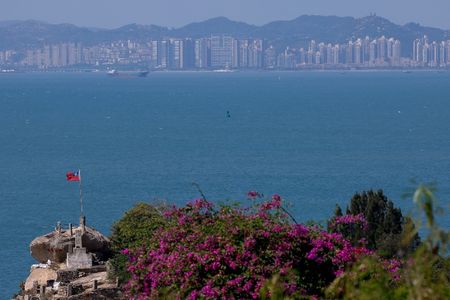
Lai noted that Taiwan’s existence is essential to the Republic of China, whose boundaries encompass the Penghu islands in the Taiwan Strait plus Kinmen and Matsu islands near the Chinese mainland.
“So it is very clear: the Republic of China has been in Taiwan for 70 or 80 years and has already become integrated with Taiwan as one,” he explained.
“Whether we call it the Republic of China, the Republic of China, Taiwan, or Taiwan — basically, no matter what we are called internationally, it refers to us: the 23 million people of Taiwan, Penghu, Kinmen and Matsu.”
The president did not mention Trump during his remarks and declined to respond to reporters’ questions afterward.
Although the U.S. has historically served as Taiwan’s primary international supporter, Trump indicated during his return flight from Beijing that he hasn’t made decisions regarding additional weapons sales to Taiwan, which are mandated under the 1979 Taiwan Relations Act.
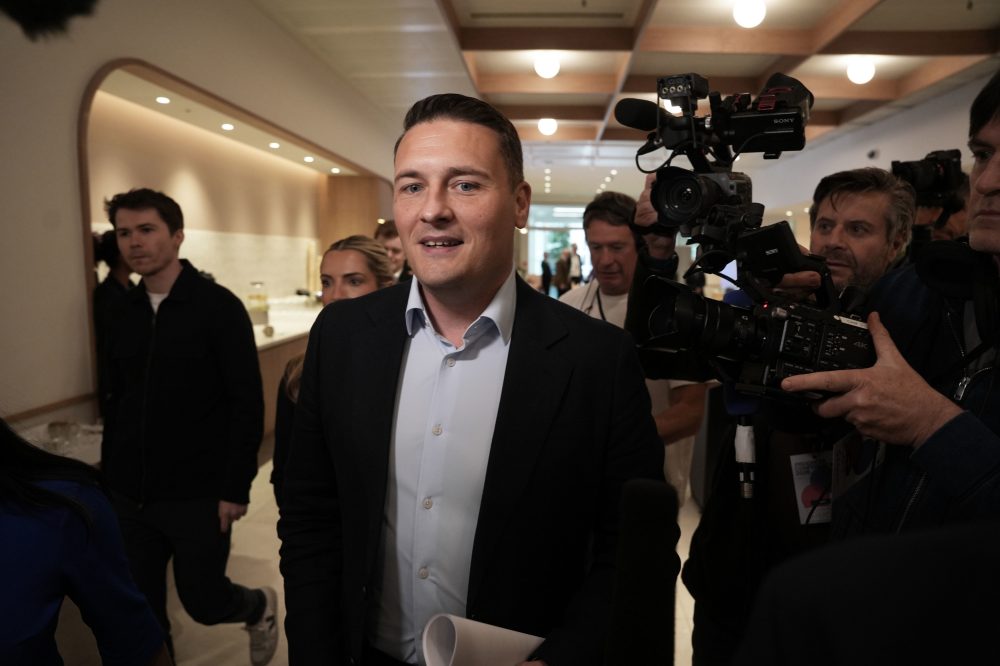
LONDON (AP) — For those following British politics, Wes Streeting’s desire to lead the nation’s government has been an open secret for quite some time.
However, any remaining doubt was eliminated Saturday when the former health secretary formally declared his campaign to replace Prime Minister Keir Starmer.
Streeting becomes the initial member of Parliament to challenge Starmer in what promises to be an intense internal battle for control of the Labour Party, whose political standing has declined significantly in the two years following its overwhelming electoral triumph that ended 14 years of Conservative rule.
Additional challengers are expected to emerge, potentially including Greater Manchester Mayor Andy Burnham, provided he can secure victory in a special parliamentary election.
Despite widespread unpopularity stemming from multiple setbacks, policy reversals, and criticism over his decision to name a Jeffrey Epstein associate as U.S. ambassador, Starmer has pledged to continue leading. The administration faces potential weeks of turmoil after he refused resignation demands following Labour’s poor showing in the May 7 local and regional elections, where Nigel Farage’s anti-immigration Reform UK party achieved significant victories.
“The voters did more than send Labour a message last week,” Streeting declared Saturday. “They issued a warning: that unless we change course, we risk being the handmaidens of Nigel Farage and the breakup of the United Kingdom.”
At 43, the youthful-appearing Streeting has earned recognition as among the party’s most effective speakers and has been vocal on various matters, including the conflict in Gaza.
His political ascent from humble beginnings in London’s working-class East End, where he was raised in public housing, is documented in his autobiography, “One Boy, Two Bills and a Fry Up: A Memoir of Growing Up and Getting On.”
The book’s title references his two grandfathers, both named Bill: his maternal grandfather had criminal connections and was imprisoned for armed robbery, while he attributes his educational path to Cambridge University to his paternal grandfather’s influence.
Streeting entered politics early, heading the Cambridge student union before becoming president of the National Union of Students. He subsequently worked for Stonewall, an LGBTQ+ organization, and has discussed his challenges with coming out as gay while maintaining his Anglican beliefs.
After serving as a local councilor and later deputy council leader in east London’s Redbridge borough, he won election to Parliament in 2015.
During Jeremy Corbyn’s leadership—a period marked by two electoral defeats and antisemitism controversies—Streeting served as a backbench MP and was often critical of the veteran socialist leader. His promotion came after Starmer assumed party leadership in 2020.
Streeting’s Cabinet role became deeply personal due to his own kidney cancer diagnosis, making NHS reform a central mission.
“The NHS saved my life,” he stated upon becoming health secretary. “Today, I can begin to repay that debt by saving our NHS.”
While rumors of higher ambitions persisted, Streeting consistently supported Starmer and rejected speculation about leadership aspirations.
However, with Starmer’s position weakening, maintaining this stance became increasingly challenging last week.
Wednesday saw leadership speculation dominate news coverage even as King Charles III presented the government’s legislative agenda during Parliament’s ceremonial opening.
“Streeting to ignite Labour day of anarchy,” declared the Daily Mail in bold headlines. The Daily Express questioned: “Finally, a move to bring down ‘Zombie’ Keir?”
The next day, Streeting became the first Cabinet member to resign, citing lost confidence in Starmer and criticizing his lack of vision and leadership direction. However, he delayed announcing his expected leadership challenge.
His resignation coincided with announcing that medical appointment waiting times—a key policy priority—had decreased for five consecutive months.
Considered part of the party’s moderate faction, Streeting had connections to Peter Mandelson, the formerly influential Labour figure now controversial due to his Epstein ties. Starmer’s appointment and subsequent dismissal of Mandelson as U.S. ambassador continues to create political problems.
When the appointment controversy resurfaced recently, Streeting proactively published email correspondence with Mandelson to demonstrate they weren’t close associates.
“Contrary to what has been widely reported, I was not a close friend of Peter Mandelson, but I am not going to wash my hands of my actual association with him either,” he explained in The Guardian.
One email showed his criticism of Starmer’s leadership, noting “there isn’t a clear answer to the question: why Labour?”
Streeting plans to present his response to that question in upcoming weeks.
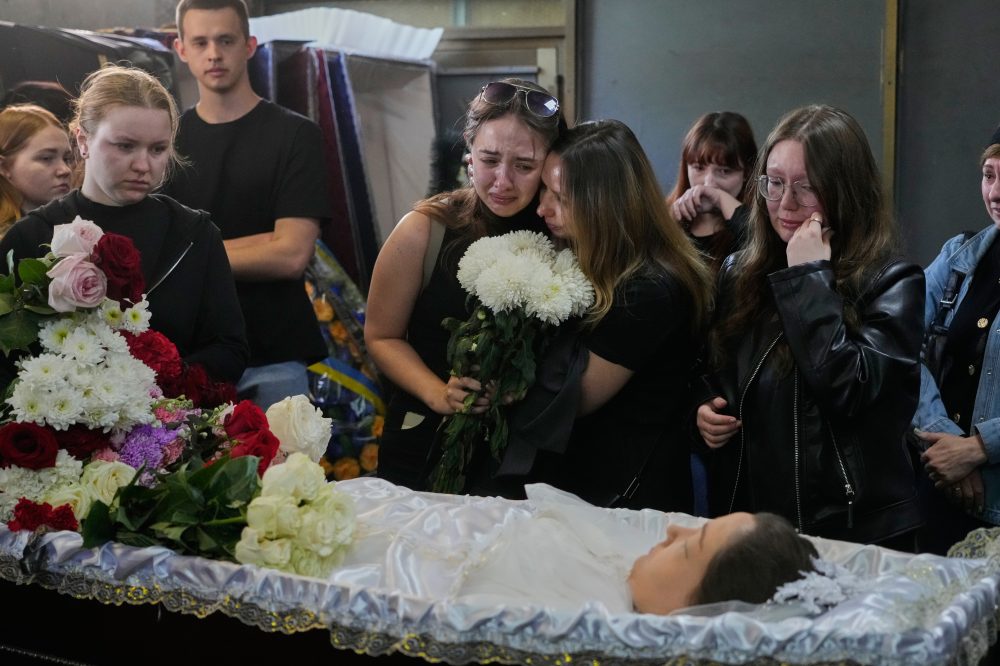
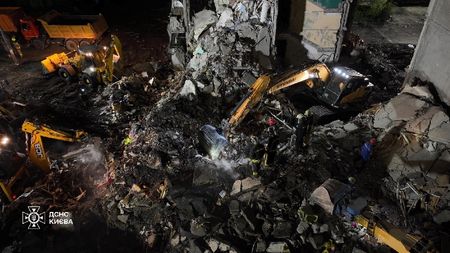
KYIV, Ukraine — A young Ukrainian woman who had returned home to build a life with the man she loved became one of 24 victims in what Ukrainian military officials are calling the war’s most devastating Russian bombardment.
Maryna Homeniuk, 24, had escaped Ukraine when Russia launched its full-scale invasion four years ago. While studying in the Czech Republic, she expanded her already remarkable language skills by learning Vietnamese. After completing her education, she came back to Ukraine in 2023, where she would eventually meet Yurii Orlov through a dating application.
The couple perished Thursday when a cruise missile destroyed their apartment building during what Ukrainian officials described as the most intense Russian assault of the conflict. Orlov, who was 30, served as captain of the Kyiv Floorball Club and had previously played hockey for teams in Ukraine’s capital city.
Friends and relatives gathered Saturday for Homeniuk’s funeral service. Orlov’s burial was postponed as his remains were not yet prepared for the ceremony.
“She was a very caring person. I feel very sorry, because she had so many dreams. She worked with children and wanted to have children herself someday, when times were safer,” her friend Olesia Yukhnovych told The Associated Press.
Those who knew Homeniuk described her as exceptionally gifted with languages, speaking approximately 10 different tongues with fluency in Korean and Chinese. As an English instructor, she worked with young students while harboring hopes of becoming a mother herself when circumstances improved.
Her compassionate nature extended to rescuing stray animals, and she had a passion for international travel, carefully saving money to explore different countries.
“This is a young person. This is a girl who had absolutely the whole future ahead of her,” said Anastasiia Petrushyna, a friend and colleague. “This future will no longer exist — our youth basically can’t have it. You never know what trouble awaits you.”
Despite their contrasting interests — his focus on athletics and hers on creative pursuits — friends observed the deep affection between the pair. Homeniuk attended all of Orlov’s Sunday matches as their weekly ritual. While he introduced her to floorball, a variant of floor hockey, she helped him learn English.
“It’s a shame. I should have been helping prepare for the wedding and I ended up helping prepare for the funeral,” said Yukhnovych. “It’s horrible.”
The tragedy occurred after a particularly harsh winter of continuous Russian bombardments targeting Kyiv. Yukhnovych revealed that the couple frequently discussed moving away from their Darnytsia neighborhood on Kyiv’s left bank, where electricity was restored more slowly than other areas, but lacked the financial means to relocate.
After Thursday’s attack, Yukhnovych attempted to reach Homeniuk through text messages but received no response.
“You never think something could happen to someone close to you, and you just message them as a precaution,” she said. “I never thought this would be one of those times when the message would remain unread.”
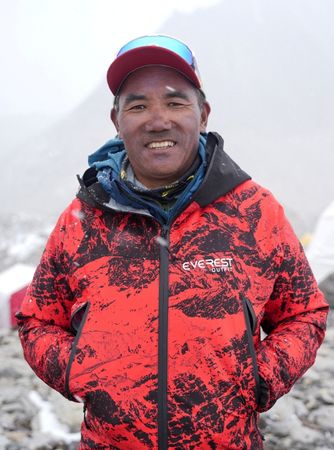
A veteran Nepali mountain guide has shattered his own world record by conquering Mount Everest for the 32nd time, officials announced Sunday.
Kami Rita Sherpa, 56, successfully reached the world’s tallest peak at 8,849 metres (29,032 feet) on Sunday morning, breaking the record he established just last year. The experienced guide was leading clients from the 14 Peaks Expedition company during his historic climb.
Nepal’s Department of Tourism praised the Sherpa for reaching this “historic milestone” and recognized his significant role in advancing mountain tourism in the region.
According to an official statement, he arrived at the summit at 10:12 a.m. (0427 GMT) on Sunday. The same statement noted that a Sherpa woman named Lakhpa, 52, completed her 11th successful ascent to the peak, establishing the record for most climbs by a woman. Additional details about the expeditions were not provided.
Kami Rita hails from Thame village in Solukhumbu district, the same birthplace as Tenzing Norgay. Norgay, alongside New Zealander Sir Edmund Hillary, became the first climbers to successfully reach Everest’s summit in 1953.
The record-holder first conquered the mountain in 1994 and has continued climbing annually, with exceptions only in 2014, 2015, and 2020 when expeditions were suspended for various reasons. During some years, he managed to reach the summit multiple times.
Since Norgay and Hillary’s pioneering achievement, more than 8,000 climbers have successfully scaled Mount Everest, with many completing multiple ascents.
Among climbers who are not Sherpas, British guide Kenton Cool holds the record with 19 successful climbs, followed by American mountaineers Dave Hahn and Garrett Madison, each with 15 ascents. Both Cool and Madison are currently on Everest attempting to break their own records.
For many Sherpas native to the Solukhumbu district where Everest stands, serving as guides for international climbers on Everest and neighboring peaks represents an essential source of family income.
Officials have granted 492 climbing permits for Everest during this March-May climbing season, though three Nepali climbers have lost their lives on the mountain this month.
MOSCOW, May 17 – Ukrainian drones struck the Moscow region during nighttime hours, resulting in three fatalities and leaving 12 people wounded, Russian officials reported Sunday.
The majority of those injured were hurt in the vicinity of a Moscow oil refinery entrance during the drone assault, according to authorities.
Moscow city Mayor Sergei Sobyanin confirmed that the refinery’s “technology” remained undamaged in the attack.
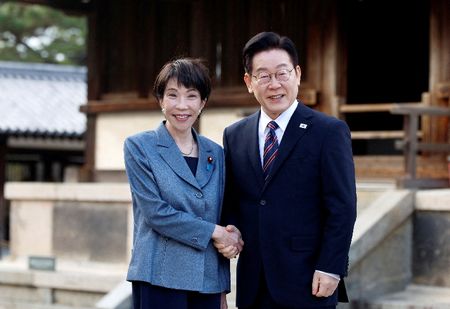
Officials from South Korea announced Sunday that the nation’s president, Lee Jae Myung, will host Japanese Prime Minister Sanae Takaichi for a diplomatic summit this Tuesday.
According to Lee’s office, the gathering represents an important chance to strengthen diplomatic ties and build greater cooperation between the two countries.
The meeting will take place in Andong, Lee’s birthplace, following their initial summit held in Takaichi’s home city this past January. Officials plan to conduct the visit with full state honors, including a formal dinner and performances showcasing traditional culture.
Two campaign staff members working for Colombian right-wing presidential candidate Abelardo De La Espriella were fatally shot just two weeks ahead of the nation’s presidential election, according to his political party Defenders of the Homeland on Saturday.
The victims, Rogers Mauricio Devia and Fabian Cardona, were gunned down Friday evening in a countryside location in Cubarral, Meta province. According to the party, four masked individuals riding motorcycles stopped the men and began shooting.
Devia, who previously served as mayor of Cubarral, was responsible for managing De La Espriella’s regional campaign efforts, while Cardona handled logistical support. The pair had been traveling back from Villavicencio on a motorcycle carrying campaign supplies when the attack occurred.
“They were cowardly murdered in cold blood,” De La Espriella stated in a recorded message. While officials have not attributed the killings to any specific armed organization, De La Espriella pointed fingers at a breakaway group from the former Revolutionary Armed Forces of Colombia (FARC) rebels, though he offered no supporting evidence.
In polling data, De La Espriella holds the second position behind leftist candidate Ivan Cepeda before the May 31 initial voting round. His campaign platform emphasizes aggressive tactics against guerrilla fighters, criminal organizations and narcotics operations, including bombing rebel locations and restarting airplane spraying of coca plantations.
De La Espriella has previously claimed there was a sniper plot targeting his life that involved members of government intelligence services.
Colombian voters will choose the replacement for President Gustavo Petro. Should no candidate secure over 50% of the vote, a second round of voting is scheduled for June 21.
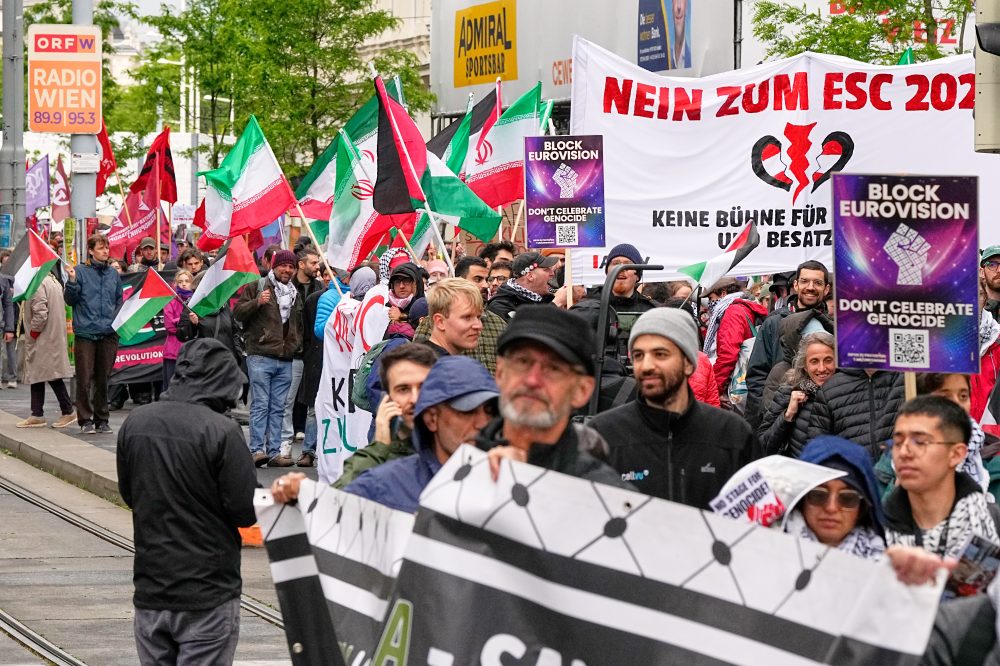
VIENNA, May 16 (Reuters) – Bulgaria secured its first-ever Eurovision Song Contest victory Saturday during a competition that saw five nations boycott the event due to the Gaza conflict.
The winning entry “Bangaranga,” performed by artist Dara, topped the scoreboard when public voting and national jury points were combined, placing Bulgaria ahead of Israel which finished in second place.
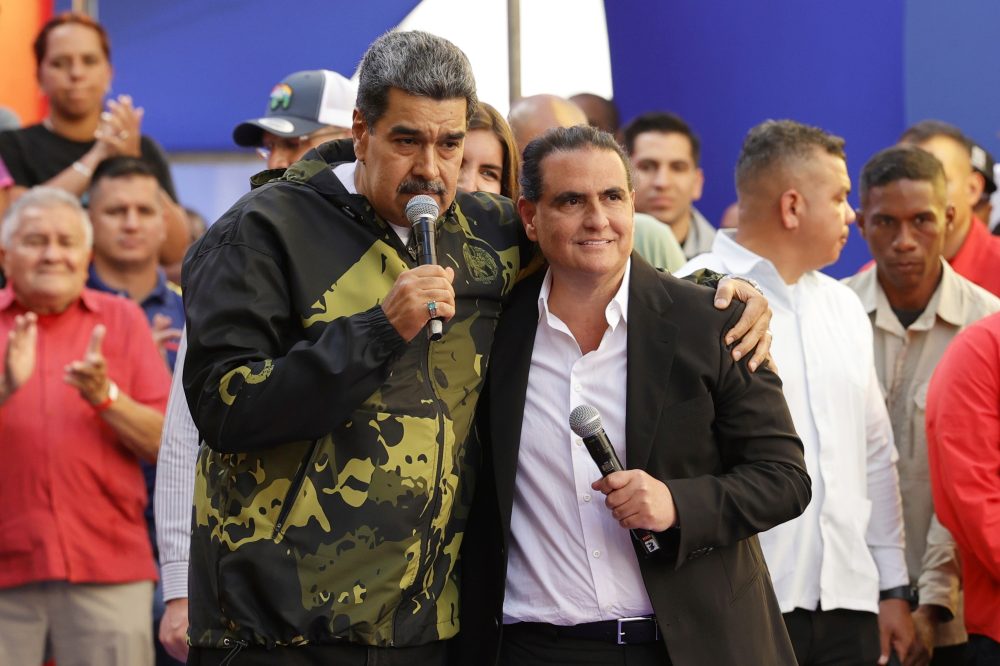
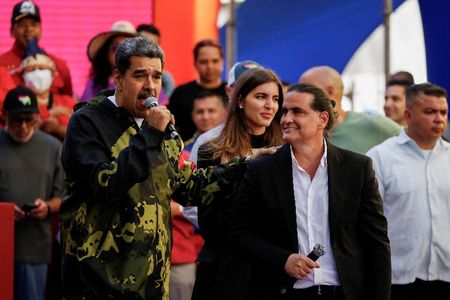
Venezuelan authorities announced Saturday they have sent a key associate of Nicolás Maduro to the United States to face criminal charges, marking a dramatic shift for Alex Saab, who was freed less than three years ago through a prisoner exchange involving President Joe Biden.
This represents a complete turnaround for Saab, whom Maduro had previously fought vigorously to protect following his international detention in 2020. The Colombian-born entrepreneur, whom U.S. authorities have characterized as Maduro’s “bag man,” could now potentially provide testimony against his former ally, who faces drug trafficking charges in Manhattan following his capture during a surprise U.S. military operation in January.
Venezuelan immigration officials released a brief statement Saturday without specifying Saab’s exact destination, noting the action was taken due to multiple active criminal cases in the United States. The statement’s description of Saab solely as a “Colombian citizen” appears to reference Venezuelan legal restrictions against extraditing Venezuelan nationals. During his previous detention, Maduro and acting President Delcy Rodríguez had argued that Saab held Venezuelan diplomatic status and was unlawfully seized during a fuel stop while traveling to Iran on humanitarian business.
The Associated Press previously reported that federal investigators have spent months examining Saab’s involvement in an alleged corruption scheme related to Venezuelan government food import contracts.
This probe connects to a 2021 Justice Department case targeting Saab’s business partner, Alvaro Pulido, according to a former law enforcement source. That Miami-based prosecution focuses on the CLAP program established by Maduro to distribute basic goods including rice, corn flour, and cooking oil to impoverished Venezuelans during a period of severe inflation and economic collapse.
The 54-year-old Saab built substantial wealth through Venezuelan government deals. However, he lost standing with the new administration that assumed control after Maduro’s removal. Since Rodríguez took leadership on January 3, she has reduced Saab’s influence, removing him from her Cabinet and ending his position as the primary liaison for foreign investors seeking Venezuelan opportunities. Reports have circulated for months suggesting he was either jailed or confined to his residence.
The Justice Department has not yet provided a response to requests for comment.
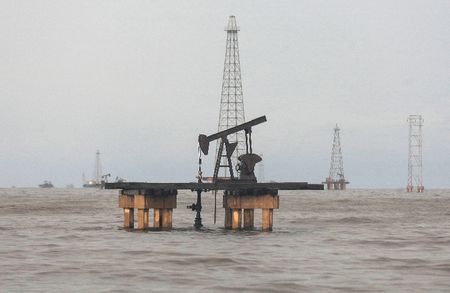
Venezuela’s government will maintain authority to determine royalty and tax rates for international and private investors in petroleum and natural gas ventures on an individual project basis, according to draft regulations for new hydrocarbons legislation reviewed by Reuters on Saturday.
The legislation, which became law in January, established a royalty ceiling of 30% and introduced a maximum integrated hydrocarbons tax of 15%. Industry analysts had expected the accompanying regulations would outline the precise rates below those limits that international and private partners would be required to pay.
However, the draft document indicates that the Ministry of Hydrocarbons will examine each operating company’s business plan to establish the particular tax and royalty rates.
Venezuela is working to draw foreign investment and reconstruct its economy after the U.S. removed President Nicolas Maduro at the beginning of the year. Under acting President Delcy Rodriguez, the draft framework formally concludes decades of state control by permitting private companies to secure licenses for heavy crude oil processing, refining and international trading — operations that previously only state-owned PDVSA could conduct.
The 63-page regulation still requires publication in the Official Gazette before becoming effective.
Under the new legal structure, the National Assembly no longer approves energy joint ventures.
Rather, the Ministry of Hydrocarbons possesses nearly complete power to execute contracts and alter their conditions, including taxes and royalties. Oil analysts and economists have condemned the ministry’s extensive discretion as a possible obstacle to foreign investors who fear the government could make one-sided modifications to negotiated terms.
The establishment of the integrated tax generated doubt about whether Caracas planned to substantially lower the state’s share, which has traditionally been among the highest in Latin America.
A Venezuelan government official with close ties to former President Nicolas Maduro has been returned to the United States, according to an announcement Saturday from Venezuela’s immigration authority SAIME.
The official, Alex Saab, is a Colombian-Venezuelan businessman who was taken into custody in Caracas in February during a coordinated effort between American and Venezuelan law enforcement, a U.S. law enforcement official reported at the time.
Born in Colombia, Saab had previously been held in Cape Verde starting in 2020 before being brought to the United States to face bribery charges. In 2023, he received clemency as part of an agreement that secured the freedom of Americans who had been held in Venezuela.
A large-scale humanitarian mission carrying emergency supplies and volunteers has left the Libyan city of Zawiya, making its way toward Egypt’s Rafah crossing to bring assistance to Gaza.
The mission, called “Sumud 2” or “Resilience 2,” brings together more than 350 volunteers from 30 nations, including the United States, the United Kingdom, Turkey, Algeria, and Spain.
The volunteers include medical professionals, engineers, aid workers, and representatives from civil society groups who are traveling in buses and trucks filled with emergency supplies and temporary housing structures.
According to organizers, the mission includes 50 containers total – 30 loaded with emergency relief materials, 20 portable housing units, and five completely equipped ambulances.
The mission started its route in Algeria about one week ago, gathered additional resources in Libya, and has been moving eastward. Organizers report the convoy cleared security and immigration checkpoints successfully before advancing past Zliten.
The goal is to reach Gaza through Egypt’s Rafah crossing within the next few days.
Mission coordinator Ahmed Ghniya stated that organizers have been collaborating with humanitarian organizations as the convoy moves toward the Egyptian border.
“We’re now setting off in coordination with them to deliver the relief aid, as well as to deploy the medical specialties, in coordination with the Red Crescent,” Ghniya stated, according to Africa News. He noted that the convoy was in the “advanced stages” of coordination efforts with the Red Crescent.
VIENNA (AP) — Saturday evening’s 2026 Eurovision Song Contest finale showcased performers from 25 nations competing at Vienna’s Wiener Stadthalle arena in an energetic competition for Europe’s most coveted pop music title. While talent was abundant throughout the evening, the quality of musical entries varied significantly.
For Eurovision enthusiasts and newcomers alike seeking to discover the competition’s standout musical moments, here are the evening’s top 10 performances, listed without ranking.
Romania’s Alexandra Căpitănescu delivered “Choke Me,” a track that channels what a Lady Gaga nu-metal fusion might sound like. Beyond her spoken segments and her delivery of “All I need is your love” that echoes Gaga’s “I Want Your Love,” the song’s intense sound and undeniable stage presence set it apart.
Italy’s “Per Sempre Sì” started with piano accompaniment before evolving into surprisingly rhythmic production, featuring classical vocalist Sal Da Vinci pouring emotion into lyrics about newfound romance. This entertaining throwback appeals to fans of Eurovision’s traditional style, with Da Vinci displaying natural Italian charisma during Saturday’s performance.
Cyprus representative Antigoni may seem recognizable to viewers familiar with “Love Island UK,” where she previously appeared as a contestant on the popular reality dating program. While her television appearance was brief, her uplifting “Jalla” promises lasting impact in 2026. The summery pop track incorporates traditional Cypriot instruments like çifteli and lute, creating ideal mental vacation soundtrack material.
Finland met expectations with their electrifying performance, having been early competition favorites. Linda Lampenius and Pete Parkkonen’s “Liekinheitin” (“Flamethrower”) combines Parkkonen’s emotional vocals with Lampenius’ passionate violin work. The collaboration pairs an “Idol” finalist with an internationally acclaimed classical musician in a successful partnership.
Moldova’s Eurovision contribution featured rapper Satoshi delivering the playfully patriotic “Viva, Moldova!” with complete dedication, performing in multiple languages with an irresistibly catchy chorus reminiscent of Irish hip-hop group Kneecap’s anthemic style. Built on persistent flute melodies, breakbeats, and continuous electronic elements, the performance was impossible to ignore, guaranteed to leave “Welcome to Moldova!” echoing in listeners’ minds.
Bulgaria’s Dara, an experienced pop artist with appearances on “The Voice,” “The X Factor,” and “Dancing with the Stars,” deserves broader international recognition. Her energetic pop anthem “Bangaranga,” featuring Nicki Minaj-inspired elements, ranked among the year’s most spirited tracks and provided an uplifting stage experience.
Every Eurovision contest traditionally includes a pop metal entry, and Serbia fulfilled this expectation with Lavina’s atmospheric “Kraj Mene.” The performance balanced heavy guitar work with gospel harmonies, featuring restrained screaming and minimal breakdowns while delivering welcome intensity worth acknowledging.
Australia’s Delta Goodrem brought significant international recognition to the 2026 Eurovision lineup. Her credentials include judging Australia’s “The Voice,” starring in Australian soap “Neighbours,” and receiving mentorship from Olivia Newton-John, even writing “Eyes on Me” for Celine Dion. (Dion famously won Eurovision for Switzerland in 1988.) Goodrem’s powerful vocal approach peaks on her power ballad “Eclipse,” featuring layered harmonies, skilled piano work, and a strong synthesized conclusion with an extended note, embodying classic Eurovision style. This strategic selection from the Australian performer clearly connected with Saturday’s audience.
The performance opened with cinematic chanting and church-like choir vocals enhancing the dramatic presentation. Alis, performing “Nân,” delivered what resembled a blockbuster film’s emotional transitional music. The stage presentation maintained this impact: he appeared in sequined chainmail before a screen while a woman representing a mother moved around him.
Belgium’s Essyla presented “Dancing on the Ice,” featuring cool vocal delivery and Billie Eilish-influenced production that succeeds both within and beyond Eurovision context. (Consider her similar to Ava Max’s style.) Her runner-up finish on “The Voice Belgique” rather than winning seems unjust given this quality. Her final performance appeared designed to demand justice and recognition.
Israeli military officials confirmed Saturday the death of Capt. Maoz Israel Recanati, a 24-year-old officer who served as a platoon commander with the Golani Brigade’s 12th Battalion from Itamar, following a drone attack that targeted military personnel in southern Lebanon.
The captain’s death brings to 20 the total number of Israeli soldiers who have died in Lebanon during Operation Roaring Lion, and marks the seventh military death recorded since the ceasefire went into effect.
This latest fatality follows the previous day’s loss of Staff Sgt. Negev Dagan, 20, from Dekel, who died in southern Lebanon when Hezbollah forces launched mortar attacks.
According to the Samaria Regional Council, Recanati leaves behind his parents and six siblings. The council revealed that he was set to wed his fiancée Rani, whom he met during their studies at a local seminary, with their wedding planned for approximately one month from now.
Following word of the officer’s death, Samaria Regional Council head Yossi Dagan issued a tribute to Recanati.
“Maoz was among the best of our sons, a brave officer and devoted fighter who dedicated his life to the security of the people of Israel,” Dagan said.
Dagan further described Recanati as “the son of a pioneering family deeply rooted in Itamar, raised on the values of love of the land and devotion to the state.”
Israeli military forces announced Saturday they had eliminated Izz al-Din al-Haddad, described as the commander of Hamas’ armed wing, during a precision operation in Gaza City targeting a high-ranking official involved in overseeing military operations and reconstructing Hamas’ fighting capacity. Al-Haddad represents the highest-ranking Hamas official eliminated since the ceasefire took effect last October.
Military officials stated the operation focused on al-Haddad’s location in Gaza City. Reports from Reuters indicated his spouse and child also perished during the strike.
The IDF released a statement Saturday explaining that despite ceasefire terms requiring Hamas to surrender weapons, al-Haddad had recently “acted to rebuild the capabilities of the terrorist organization’s military wing and to plan numerous terror attacks against Israeli civilians and IDF troops.”
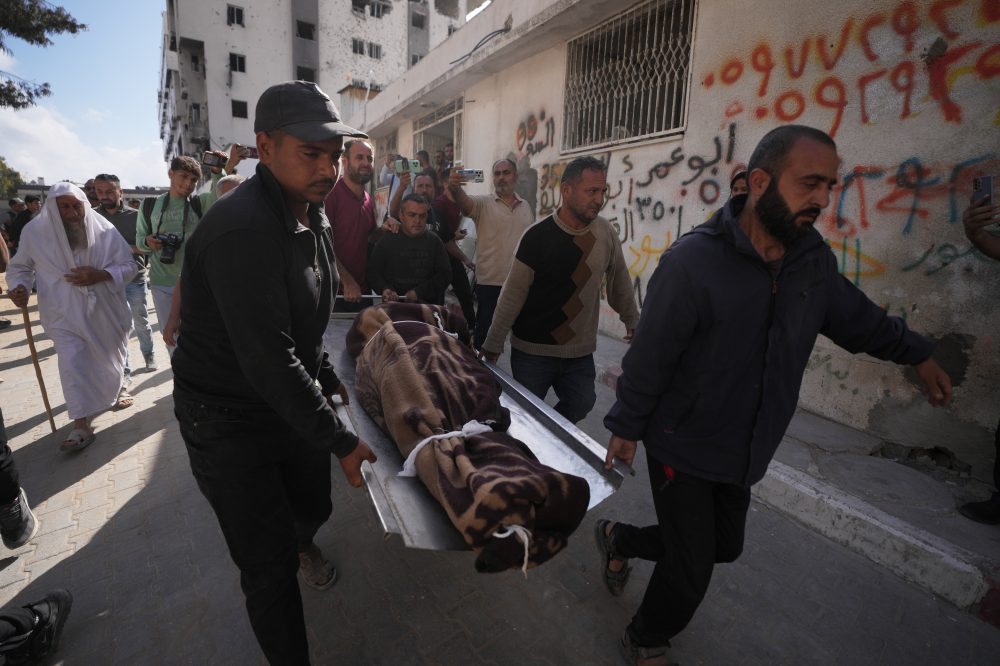
Images from AFP captured mourners transporting al-Haddad’s remains on a stretcher covered with a Hamas banner through the debris of a destroyed structure.
Military sources revealed that within the previous two weeks, they had also eliminated two Hamas operatives connected to the October 7 invasion. These individuals were named as Iyad Muhammad Al-Matouq and Khaled Muhammad Salem Jouda.
In related developments, Hamas leadership voting concluded without a decisive outcome, leading to arrangements for additional balloting, according to Ynet’s reporting. Neither candidate achieved success in the initial voting round between Khalil al-Hayya and Khaled Mashal, the primary rivals for organizational leadership.
A 42-year-old government worker named Saeed in Sanaa hasn’t received steady pay in years. Every morning, he looks at his cell phone not hoping for work or wages, but to check what little money he has left. What he usually finds is a text from his phone company asking him to donate 100 rials “to support the Missile and Drone Force” by texting code 180.
Throughout regions under Houthi control, millions of Yemenis face what opponents call an organized digital fundraising operation. While many families from the middle class can’t afford basic groceries, the phone industry has turned into a key funding source for military activities.
Though 100 rials might seem like a small amount, when collected from millions of phone users, it creates significant revenue that helps pay for weapons manufacturing and combat operations. For Saeed, that money could buy another loaf of bread for his family. The Houthis frame it as a “popular contribution” for missiles and drones used in battles and regional conflicts.
What officials call a “voluntary donation” appears to be much more extensive. It shows a planned approach to managing resources in Houthi-controlled areas, taking money from financially struggling Yemenis to fund military expenses while increasing the divide between humanitarian requirements and defense spending.
The problem goes beyond the text messages on Saeed’s phone. Behind the 100-rial donation request linked to code “180” and similar numbers is a daily fight for survival.
“When I receive a message asking me to support the ‘missile force,’ I feel like my phone is no longer a communication tool—it has become a mandatory piggy bank for the Houthis,” Saeed said bitterly. “They do not ask whether I can afford food for my children. Instead, they force me into a war I have nothing to do with. How can I donate to missile production when I cannot even buy a sack of flour?”
A United Nations Panel of Experts report, S/2023/833, shows these collections aren’t random but part of what the document calls a “resource extraction system” that brings in hundreds of millions of dollars each year without financial oversight or transparent government budgeting.
The document details how money from this essential industry gets redirected to weapons production, essentially making regular phone customers unwilling funders of military actions that reach beyond Yemen’s borders into the Red Sea and other areas.
Abdulwasea, a technical engineer at a mobile phone company, explained how this “money printer” works in the industry: “We are not running marketing campaigns—we are implementing technical military orders.”
“As soon as a military operation against targets in Saudi Arabia or Israel is announced, we receive instructions to send the messages. These codes are linked to a direct deduction system, and the money is transferred at the end of each day to designated accounts.”
This system targets millions of customers with relatively small amounts—about 100 rials each—which can create billions in available cash within hours. The engineer said this quick money flow helps fund drone programs and missile development by taking advantage of complete control over phone infrastructure and turning technology meant to connect people into a financing tool for extended conflicts.
Street conditions reflect what’s happening to mobile phone accounts.
In his retail store on a busy Sanaa street, Abdulwahid observes not only his customers but also the changes forced on his business with each new event introduced by the Houthis.
“My shop has shifted from being a source of income into a channel for funneling money to supervisors,” Abdulwahid said. “We do not pay zakat and taxes just once—we pay them repeatedly, under labels such as ‘supporting the frontlines’ or ‘Martyr’s Week.’ Even cleaning fees, municipal charges, and business licensing costs have multiplied several times over, without any improvement in services.”
These actions aren’t isolated incidents by individual people, but part of a planned strategy designed to drain the private sector and reshape the economy to benefit the war authority. A report by the Sana’a Center for Strategic Studies indicates the Houthis gathered nearly $1.8 billion annually in taxes and fees from areas under their control.
This alternative system doesn’t stop at current taxation; it also goes after companies and banks retroactively, demanding financial records going back to when they were established to collect taxes supposedly unpaid for decades, with the money directed toward funding the “war effort” rather than paying government worker salaries.
The reports also show that these practices have damaged the regular business sector in favor of a new group of “war profiteers” connected to the Houthis, who use the system to expand their power. Meanwhile, independent small business owners like Abdulwahid face two harsh choices: accepting the collection system or risking financial ruin and leaving the market.
A field study conducted for this report included a random group of 50 people, including phone users and wholesale and retail merchants in markets throughout the capital.
The results showed the severity of the crisis. About 98% of participants—48 people—said the ongoing collections directly contributed to higher prices for essential goods and declining buying power, claiming that war effort fees consume money that would otherwise be spent on food and medicine for their families.
Fear also influenced the responses. Two participants refused to talk or share any views, worried that the survey team could be connected with the Houthis and assigned to watch for opposing voices. Their refusal showed widespread distrust and fear of punishment.
In the end, Saeed’s battle to get bread and Abdulwahid’s fear of losing his business meet at the same place.
After more than ten years of war that destroyed Yemen and made the “government sector salary” a distant memory from a more stable time, Yemenis now find themselves caught in a new pattern of collections that goes beyond funding domestic battle lines to supporting broader regional conflicts.
Yemen, once a nation seeking a political answer to its crisis, has increasingly become, critics say, a testing site for a “trench economy”—a financial system that thrives on crises and uses religious and nationalist feelings to justify taking citizens’ savings.
While missiles fired across the region send political and military messages, the clearest message for people like Saeed and Abdulwahid shows up on a phone screen or payment receipt: Even the fight for daily bread has become fuel for wars that ordinary Yemenis neither chose nor expect to benefit from and may lead to more poverty.
President Trump has labeled Iran’s most recent nuclear proposal as “garbage,” rejecting what sources describe as an offer containing some nuclear concessions. The President maintains his position that highly enriched uranium must be removed from Iran and that the nation must be prevented from developing nuclear weapons. Iran continues to assert that its nuclear program serves peaceful purposes only.
Diplomatic discussions between the United States and Iran have reached an impasse amid a fragile ceasefire, with escalating tensions threatening to plunge the Middle East back into active conflict and extend the global energy crisis that emerged from the ongoing dispute.
In related developments, President Trump announced that the United States maintains close surveillance of Iran’s nuclear materials through Space Force technology capable of tracking individual movements near storage facilities in real-time. He emphasized that securing these materials represents a top priority and issued warnings of decisive military intervention should Iranian forces attempt to access them, calling on Tehran to honor existing nuclear agreements.
These developments unfold against a backdrop of failed negotiations, continued Iranian provocations, and American efforts to counter Iran’s aggressive maritime operations.
The situation comes as President Trump has recently returned to Washington following a meeting with Chinese President Xi Jinping.
China has announced its active involvement in mediating the Iranian conflict, working with Pakistan to develop a peace proposal designed to establish a ceasefire and reopen crucial waterways, especially the Strait of Hormuz. This effort demonstrates China’s ambition to expand its influence in Middle Eastern diplomatic affairs.
Iran maintains control over the Strait of Hormuz, a critical shipping route that previously handled one-fifth of global oil transport before the conflict began, while the United States continues blocking Iranian ports.
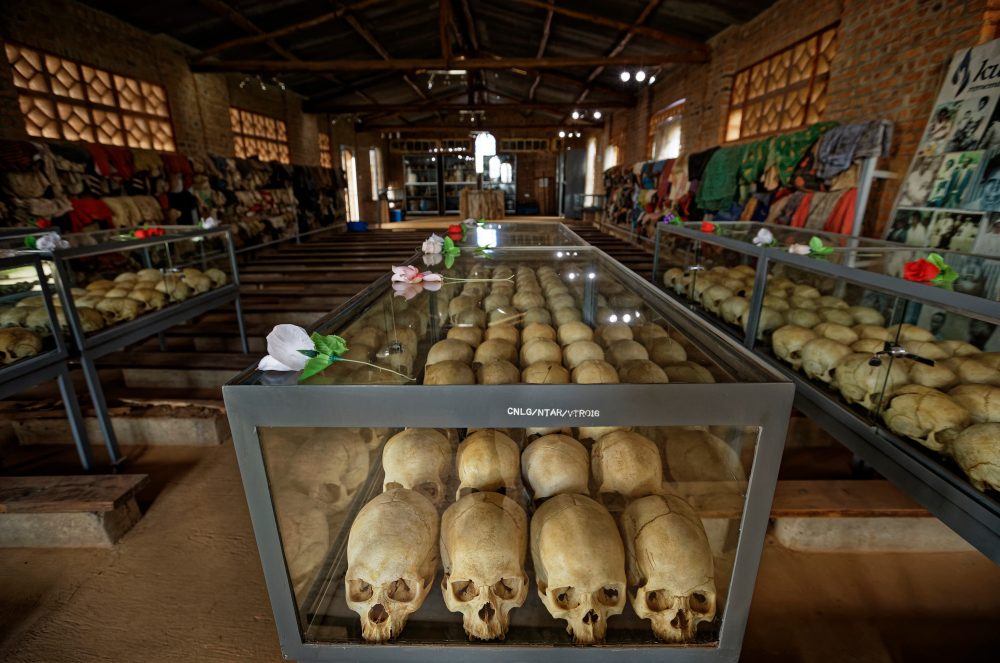
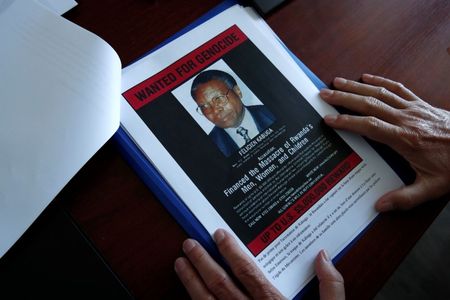
A 91-year-old man facing charges related to the 1994 Rwandan genocide has died at a hospital while being held in custody in The Hague, Netherlands, according to a U.N. court announcement made Saturday. This comes three years after judicial officials determined he was mentally incompetent to proceed with his trial.
Félicien Kabuga faced allegations of funding and promoting the systematic slaughter of Rwanda’s Tutsi population. Legal proceedings against him commenced in 2022, almost thirty years following the 100-day period of violence that claimed 800,000 lives.
Court officials ruled in 2023 that he could not continue facing trial due to his dementia diagnosis, announcing they would create a framework to proceed with evidence collection while removing any possibility of a conviction.
The U.N. International Residual Mechanism for Criminal Tribunals announced Saturday that Kabuga passed away during his hospital stay in The Hague, with the medical officer at the U.N. Detention Unit receiving immediate notification.
Officials have launched an inquiry to determine the specific circumstances surrounding his death, according to the court’s statement.
Authorities issued a warrant for Kabuga’s arrest in 2013 and offered a $5 million reward for information leading to his capture. French authorities apprehended him in 2020, leading to the start of his trial two years later.
The charges against Kabuga included genocide, promoting genocide, plotting genocide, along with persecution, extermination and murder. He entered a plea of not guilty. A conviction would have resulted in a potential life sentence.
Following the court’s determination of his mental incompetence, he continued to be detained while officials worked to resolve questions about his potential release to any nation willing to accept him.
His legal representative stated that he would not agree to return to Rwanda, despite that country’s willingness to receive him, citing concerns about potential mistreatment.
The court’s ruling declaring him unfit for prosecution frustrated numerous genocide survivors in Rwanda, who believed his alleged crimes warranted the harshest possible punishment.
The mass killings began on April 6, 1994, following the downing of an aircraft carrying President Juvénal Habyarimana, which crashed in Kigali, the capital city, killing the leader who belonged to the ethnic Hutu majority like most Rwandans. Kabuga’s daughter had married the president’s son.
Saturday’s Eurovision Song Contest finale kicked off in Vienna despite heightened security measures and wet weather that couldn’t dampen spectator excitement — though controversy continued to swirl around Israel’s participation in the competition.
Following days of anticipation, performers representing 25 nations appeared on stage at Vienna’s Wiener Stadthalle arena, vying for Europe’s most prestigious pop music title. Global audiences tuned in to witness the 70th anniversary celebration featuring diverse acts including a Finnish violinist with fiery performances, a folk rapper from Moldova, and a metal group from Serbia, among others.
Political tensions overshadowed the milestone event for the third consecutive year, with activists demanding Israel’s removal due to ongoing Gaza conflicts and other military actions. Five nations with long Eurovision histories — Spain, the Netherlands, Ireland, Iceland and Slovenia — chose to skip this year’s competition as a form of protest.
The evening began with a cinematic opening sequence highlighting Austria’s stunning landscapes, featuring a paper boat journeying toward Vienna — a nod to 2025 Eurovision champion JJ’s tempestuous rendition of “Wasted Love.”
Last year’s victor, Austrian vocalist JJ who received operatic training, launched the live show, followed by an Olympic-style procession displaying flags of all 25 competing nations. The musical performances then commenced, with each artist having a brief 3-minute window to captivate millions of global viewers who join professional music industry juries in selecting the champion.
Saturday’s spectacular event featured hosts Michael Ostrowski, an Austrian performer recognized for his work in German-language comedic cinema, alongside Victoria Swarovski, who works as a model, vocalist, television personality, and represents the Swarovski crystal and luxury brand dynasty.
Eurovision’s leadership encouraged audiences to set aside political concerns and focus on enjoying what the director called the “brilliant, wonderful, heartfelt show” that defines the competition’s championship round.
While the contest marked its 70th year amid demands to remove Israel over its Gaza war conduct and the five-nation boycott, Eurovision director Martin Green described the event as an opportunity to “close the curtains to the outside world and dream that something else is possible” for several hours.
During a press briefing, he emphasized that Eurovision has spent seven decades providing “voice to the voiceless” and honoring marginalized groups.
A 93-year-old man suspected of playing a role in the 1994 Rwanda genocide has died while in custody at a United Nations detention facility, according to a UN court announcement on Saturday.
Lucien Kabuga had been captured in France during 2020 following more than 20 years as a fugitive before being transferred to The Hague. Court officials later determined he was mentally unfit for trial due to dementia and too sick to be sent back to Rwanda.
Since no nation agreed to take him in, Kabuga continued to be held at the UN detention facility in The Hague. Court officials have announced they will investigate the circumstances surrounding his death.
The deceased man, who previously operated businesses and owned a radio station, was considered one of the final wanted fugitives connected to the genocide. During that period, Hutu extremists murdered over 800,000 Tutsis and moderate Hutus within a span of 100 days.
Legal authorities had charged Kabuga with spreading hate speech via his radio station Radio Television Libre des Mille Collines and providing weapons to ethnic Hutu militias.
The Mechanism for International Criminal Tribunals, which announced his death, handles ongoing cases from previous UN tribunals dealing with Rwanda and the former Yugoslavia.
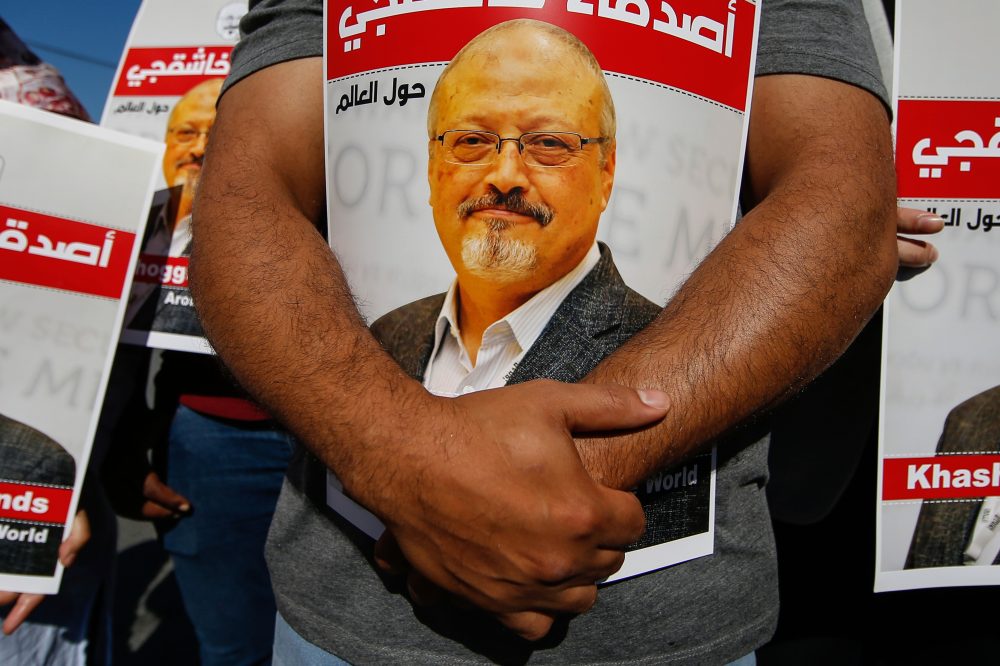
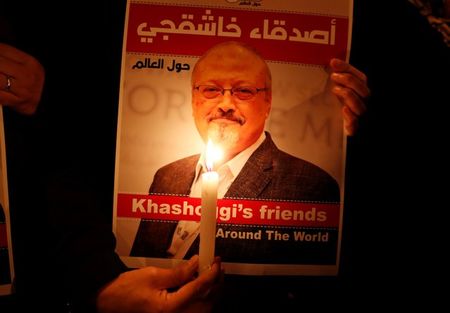
A French court will move forward with examining allegations against Saudi Crown Prince Mohammed bin Salman concerning his involvement in the 2018 murder of journalist Jamal Khashoggi, according to France’s national anti-terrorism prosecutor’s office announced Saturday.
The prosecutor’s office, referred to as the PNAT, stated that an investigating judge from the crimes against humanity unit will now handle the matter following a May 11 decision by the Paris Court of Appeal.
Trial International and Reporters Without Borders submitted the legal filing. These organizations allege the Saudi crown prince participated in torture and enforced disappearance related to Khashoggi’s death, a Saudi opposition journalist and Washington Post writer who was violently murdered at the Saudi Consulate in Istanbul during October 2018.
Khashoggi’s remains were cut apart and have never been recovered.
The PNAT explained that the Paris Court of Appeal determined the allegations were acceptable because the potential for classifying the matter as a crime against humanity — which could encompass the related offenses of torture and enforced disappearance — could not be dismissed at this point.
The prosecutor’s office acknowledged the court’s determination while noting that the decision did not contradict its own understanding of French criminal procedure laws regarding whether the organizations had standing to submit the complaint as civil parties.
The French legal action was originally submitted in 2022, while Prince Mohammed was visiting France. The crown prince had experienced international ostracism following Khashoggi’s murder but has subsequently been welcomed again by Western officials and leaders.
The initiation of a French judicial investigation does not indicate Prince Mohammed has been formally accused or that French courts have determined his guilt. It signifies an investigating judge will review whether the allegations can proceed to additional legal action.
Prince Mohammed has rejected claims that he ordered Khashoggi’s murder but has acknowledged it occurred during his leadership as Saudi Arabia’s effective head of state.
U.S. intelligence services had previously determined that he authorized the mission that resulted in the killing.
Saudi Arabia conducted a private trial regarding the murder and claimed it penalized those accountable, but human rights organizations condemned the legal process as secretive and inadequate.
ROME (AP) — Eight people sustained injuries when a vehicle struck pedestrians on a sidewalk in the northern Italian city of Modena on Saturday, with four victims in critical condition, local officials reported.
Mayor Massimo Mezzetti confirmed that while no fatalities occurred in the incident, four individuals suffered severe injuries. One woman became trapped against a storefront window and required both legs to be amputated, he stated.
According to Mezzetti, the operator of the vehicle is a 31-year-old man who was born in Bergamo and grew up in Modena’s province. Authorities have taken him into custody and are conducting interviews at police facilities while working to establish if he was impaired by substances or if his actions were intentional.
The mayor described how the vehicle moved onto one of the city’s primary roadways and “mounted the sidewalk, launching multiple individuals into the air,” before colliding with the store window.
A minimum of eight individuals sustained injuries, with four experiencing very severe trauma, the mayor confirmed. Medical facilities in both Modena and Bologna received the victims, with helicopter transport used for the most critical patients.
The operator tried to escape but was first restrained by some of the people affected by the incident, then by law enforcement officers who transported him to headquarters for interviews.
People at the scene reported that the man was carrying a knife, though he did not succeed in stabbing anyone, the mayor noted, explaining that investigators continue working to establish if the incident was intentional or connected to other factors.
“Regardless of the motivation, this represents a very grave incident,” Mezzetti stated. “Should this prove to be an attack, it would be even more severe.”
Italian Premier Giorgia Meloni described the occurrence as “extremely serious” in a social media statement and voiced support for the victims and their loved ones.
Meloni expressed appreciation to citizens who stepped in to help apprehend the suspect and commended law enforcement officials, noting she was communicating with local authorities and anticipated the suspect would face complete accountability.
Emergency responders, including police, carabinieri and financial police, arrived at the location, which was sealed off while ambulances provided care to victims on the street.
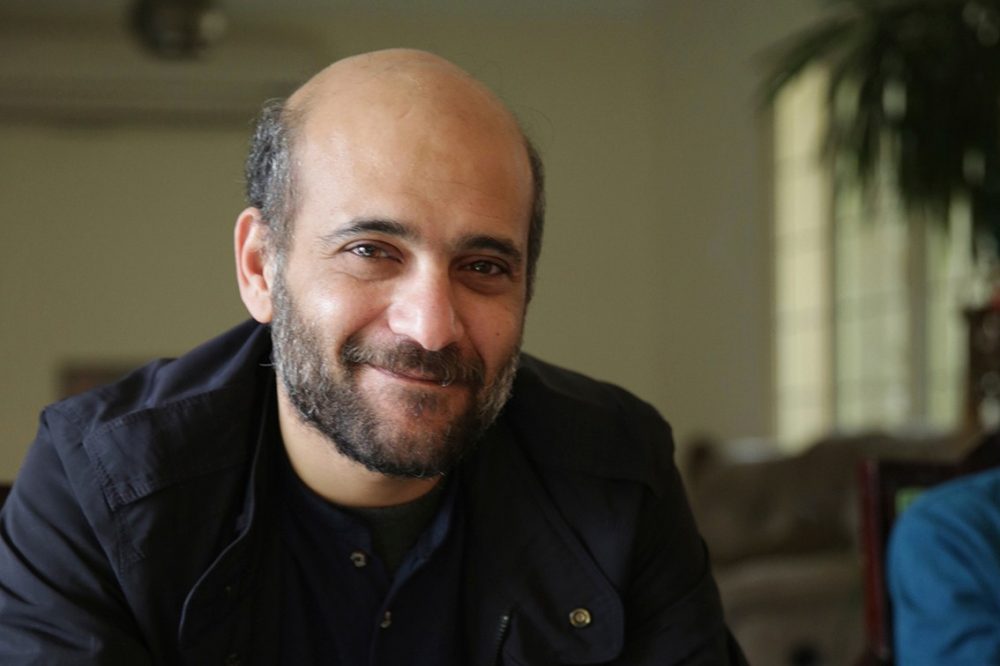
A Palestinian advocate claims French officials are working to remove him from the country, alleging he represents a security risk and targeting him because of his pro-Palestinian organizing efforts.
Ramy Shaath, age 54, released an online video statement on May 14 claiming the deportation attempt represents part of what he called a wider effort to suppress Palestinians and those supporting Palestinian causes within France.
Following the beginning of the Israel-Hamas conflict, Shaath co-founded the pro-Palestinian group Urgence Palestine. He claims French officials are pursuing him after previous legal actions were unsuccessful.
The French Interior Ministry has not yet provided a response to requests seeking comment.
In his video statement, Shaath indicated the deportation effort came after previous challenges in renewing his French residency documentation, despite having family connections in France. He further claimed his banking account was terminated without notice and his health insurance coverage was canceled, stating these actions impacted his capacity to work, travel and obtain medical treatment.
Shaath indicated he and his family plan to fight the legal proceedings in both French and European judicial systems.
Born in Egypt and Palestine, Shaath previously led the Egyptian division of the Boycott, Divestment and Sanctions campaign against Israel. He has consistently connected his Palestinian advocacy with resistance to authoritarian governments throughout the Arab region.
During a 2022 Associated Press interview following his freedom from Egyptian imprisonment, he characterized his advocacy work — spanning Egypt’s 2011 democracy movement to his involvement with the Palestinian-led boycott campaign against Israel — as “civil, nonviolent action against injustice, against inhumane treatment and against occupation as well as dictatorship.”
In 2014, Shaath established the Egyptian division of the BDS movement. Egyptian authorities detained him in 2019 and freed him in January 2022, following more than two and a half years in custody.
He stated at that time that Egyptian officials never officially filed charges against him and that he had been confined in an overcrowded, insect-infested cell before subsequently being placed alone in a room without windows.
French President Emmanuel Macron celebrated Shaath’s freedom from Egyptian imprisonment in 2022.
Shaath’s wife holds French citizenship and he has a daughter who is both French and Palestinian.
Thousands of educators flooded the streets of Portugal’s capital on Saturday, voicing their frustration with the centre-right government over inadequate compensation, slow career advancement, and poor working conditions.
The demonstration was coordinated by the FENPROF teachers’ union, which criticized government officials for failing to address concerns about insufficient wages, career stagnation, and excessive workloads. Union representatives reported thousands of participants, though law enforcement has not yet provided crowd estimates.
Last May, government officials reached an agreement with union representatives to incrementally restore over six years and six months of career progression that had been suspended following Portugal’s 2011 financial rescue package. This arrangement enabled more than 100,000 educators in public schools to advance on the salary scale, increasing their monthly earnings by several hundred euros, though no retroactive compensation was included.
Numerous educators believe these steps are insufficient. Entry-level public school teachers receive approximately 1,714 euros monthly before taxes, positioning Portugal among the lower-compensated OECD nations for beginning educators.
“I lost 60,000 euros that I will never recover. They are giving us back just a few crumbs, and we’re supposed to be happy with that? No. We need to be properly valued,” said geology teacher Catarina Pinheiro, 47, during the demonstration.
Throughout an entire career, educators’ compensation can fall 15% to 25% beneath the OECD average. Although maximum earnings reach approximately 3,700 euros monthly before taxes, achieving this level can require nearly four decades. Public sector compensation also establishes standards for private educational institutions.
Educators participating in the rally expressed that inadequate pay and sluggish advancement opportunities were creating widespread discontent throughout the profession, especially among newer staff members, and cautioned that public education systems were facing significant pressure.
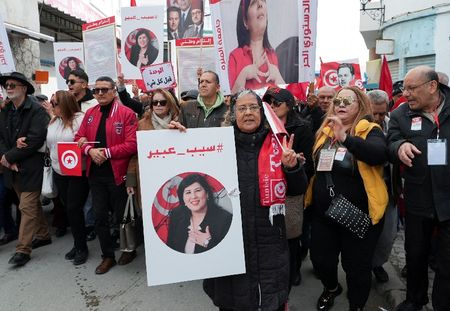
Hundreds of citizens gathered in Tunisia’s capital city on Saturday to voice their opposition to President Kais Saied, charging him with eroding civil liberties while overseeing a deepening economic and social crisis.
The demonstration took place under the rallying cry: “The people are hungry and prisons are full”.
Those who gathered demanded an end to authoritarian leadership and displayed signs condemning the detention of political figures, media workers and community activists, as worries grow about an expanding campaign against opposition voices.
Rally participants also condemned what they characterized as Saied’s inability to address the nation’s economic troubles, while employing courts and law enforcement to suppress opposition.
The North African nation is experiencing severe economic difficulties, including stagnant economic expansion, rising costs, medical and food supply shortages, budget constraints, and declining government services.
Saied, who disbanded the legislative body and started governing through executive orders in 2022, has encountered increasing condemnation from human rights organizations regarding what they describe as the destruction of the democratic framework established after 2011.
Saied dismisses these charges, stating his actions are essential to rescue the nation from disorder and corruption.
The legal profession has announced work stoppages in upcoming days over the weakening of court independence, while the media workers’ organization is planning demonstrations against the imprisonment of reporters and limits on news media freedoms.
Government officials maintain they are upholding legal standards and deny claims of political persecution.
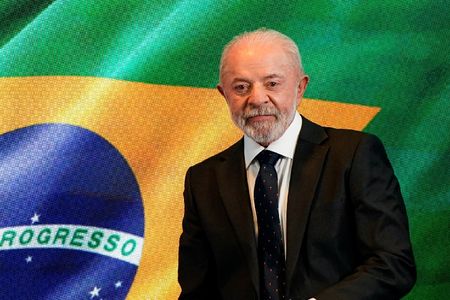
SAO PAULO, May 16 – Brazilian President Luiz Inacio Lula da Silva and Senator Flavio Bolsonaro would finish in a statistical dead heat if they faced each other in an October runoff election, new polling data from Datafolha revealed Saturday.
The survey shows both candidates would capture exactly 45% of voter support in a head-to-head matchup. Flavio is the son of former President Jair Bolsonaro.
This represents a slight shift from April’s polling, which had given Flavio a narrow 46% to 45% edge over Lula – though that difference fell within the survey’s two percentage point margin of error, making it essentially tied.
In first-round voting scenarios, the poll of 2,004 voters found Lula would capture 38% support, with Flavio finishing second at 35%.
Most interviews for this latest survey were completed before Intercept Brasil broke a story detailing Flavio’s connections to former banker Daniel Vorcaro.
The report alleges Flavio worked to secure 134 million reais ($26.5 million) from Vorcaro, who previously owned Banco Master, to fund a biographical film about his father.
Vorcaro remains behind bars as authorities investigate the scandal surrounding Banco Master’s financial collapse.
Flavio has rejected any claims of impropriety regarding his dealings with Vorcaro. Legal representatives for Vorcaro have previously refused to provide statements about the Intercept Brasil investigation.
Romanian defense officials announced Saturday that they discovered an unexploded device containing explosives in a village located in the southeastern part of the country, close to its border with Ukraine.
The NATO and European Union member nation has a 650-kilometer border with Ukraine. Unmanned aircraft from Russia targeting Ukrainian ports along the Danube river have repeatedly entered Romanian airspace, with debris occasionally landing on Romanian soil when Ukrainian defenders intercept them.
Defense ministry officials identified the device as an unguided reactive projectile, which was located in the yard of an empty residence in Pardina village within Tulcea county, according to their official statement. Authorities did not specify where they believe the projectile originated.
“Technical verifications confirmed the presence of 2 kg worth of explosives in the projectile’s body,” the statement said, adding that the area’s perimeter had been secured.
In the previous month, an explosive unmanned aircraft crashed into a residential backyard in the city of Galati, representing the initial occurrence since Ukraine’s conflict began where such an event caused property damage within Romania.
Leaders from NATO’s 14 eastern member countries stated this week that Russia’s continued airspace violations demonstrate the critical importance of strengthening the alliance’s defensive capabilities against missiles and unmanned aircraft.
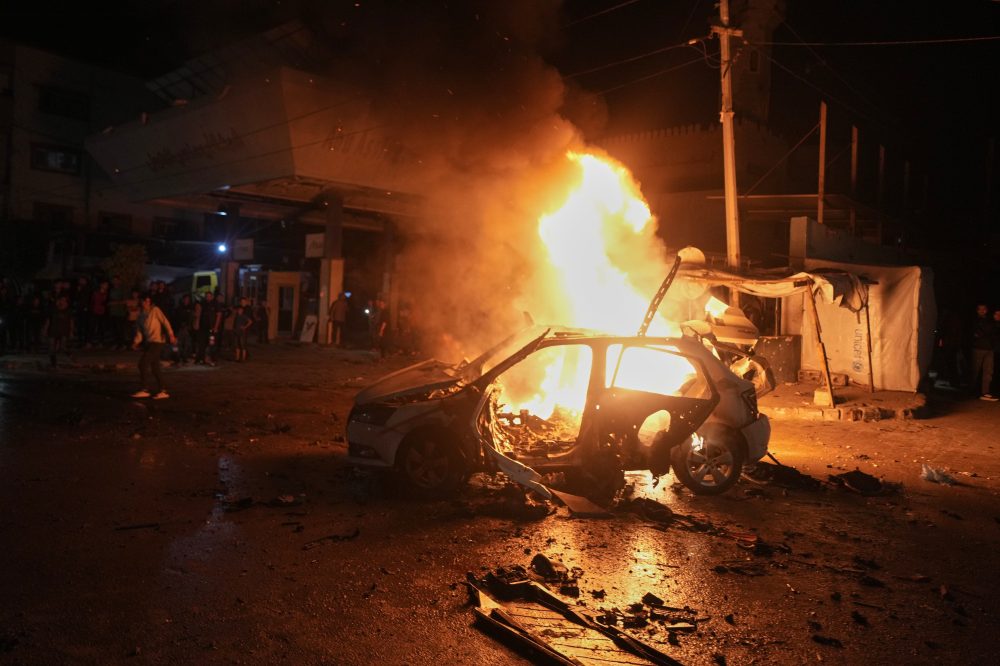
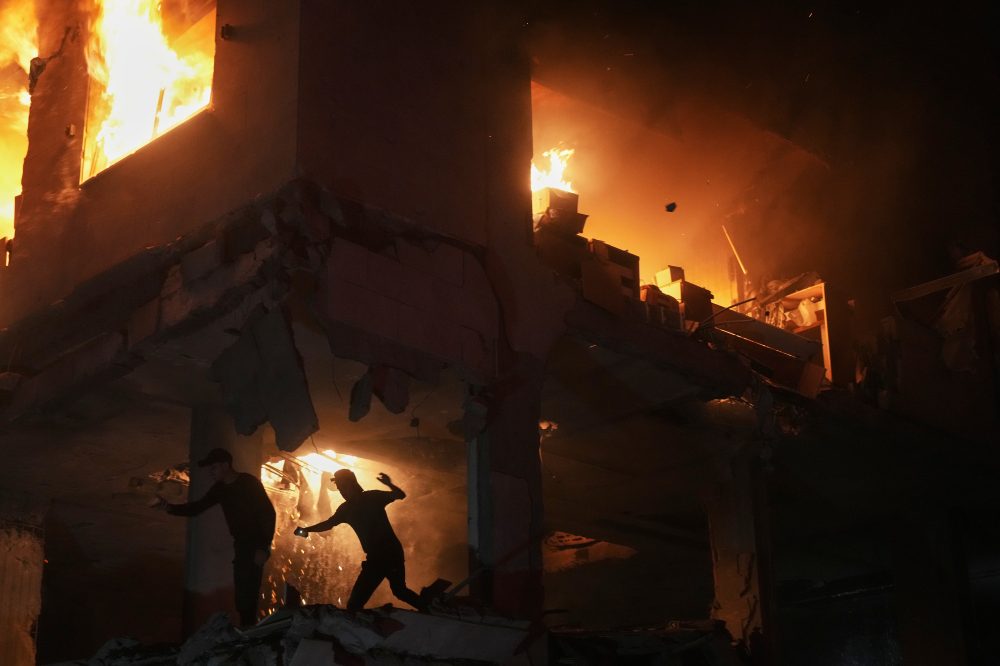
GAZA CITY (AP) — New photographs from Gaza City reveal the devastating aftermath of an Israeli military strike that resulted in the death of Izz al-Din al-Haddad, a high-ranking Hamas military official whom Israel has identified as a key planner behind the October 7, 2023 attacks. The images show fire and widespread damage at the location of the strike, with local residents responding to the scene and mourners assembling for funeral services.
This collection of photographs was assembled by AP photo editors.
A powerful earthquake measuring 6.0 on the Richter scale shook the Caribbean nation of Antigua and Barbuda on Saturday, according to the U.S. Geological Survey.
The seismic event was recorded by federal monitoring systems in the region.
An Austrian filmmaker opened up Saturday about the challenges she faced while creating her latest movie, which explores the devastating impact of child sexual abuse allegations on a family.
Director Marie Kreutzer discussed her Cannes Film Festival submission “Gentle Monster” with reporters following the movie’s debut, describing how difficult it was to find support for the sensitive project.
“I could feel that everywhere, when I went somewhere with the project, people were like, shying away,” Kreutzer explained to journalists. “I knew this was not the easy path.”
According to Kreutzer, the movie intentionally avoids providing simple solutions and instead aims to challenge viewers. “The idea of the film is to ask you questions, to ask us as a society questions,” she stated.
The drama features French actress Lea Seydoux as Lucy, a musician who relocates her family to rural surroundings before law enforcement officers arrive to detain her spouse Philip, portrayed by Laurence Rupp, for allegedly possessing and distributing illegal images involving children.
Following the shocking detention, Lucy begins questioning everything she thought she knew about her partner while worrying whether their child might have suffered harm. Cinema legend Catherine Deneuve appears as Lucy’s strong-willed mother, providing crucial emotional support during the crisis.
Kreutzer revealed that her inspiration came from news coverage of a criminal network in Germany involving similar crimes.
“I just felt helpless after reading it. And I felt that the only thing that I could do as a filmmaker, as a storyteller, is make a film about it,” the director explained.
Instead of concentrating on the accused individual, Kreutzer deliberately focused her narrative on the people surrounding him.
“This was a story about how society, how people who love someone who did this deal with it,” she noted.
Kreutzer previously brought her Austrian period piece “Corsage” to Cannes in 2022, where it screened in the Un Certain Regard section.
“Gentle Monster” now vies alongside 21 other productions for the prestigious Palme d’Or award, with winners to be announced on May 23.
TULA, Mexico (AP) — Explosive devices dropped from above and gunfire echoing through her concrete home forced 74-year-old María Cabrera and her relatives to escape into the dark mountainous terrain of central Mexico carrying nothing but what they wore.
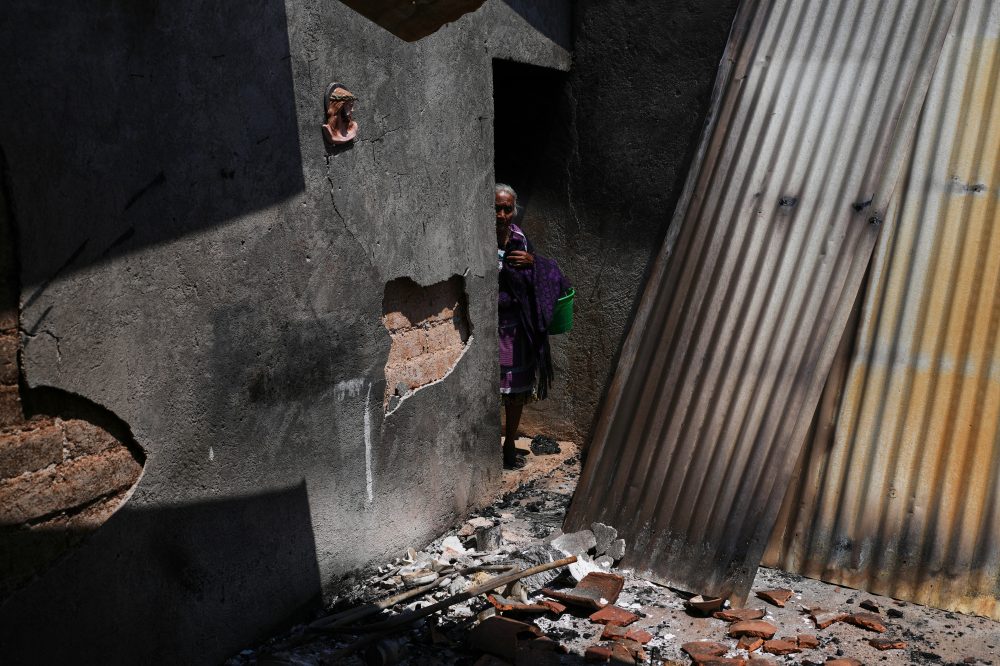
Seven days after fleeing, Cabrera sifts through the burnt remains of her belongings, recovering cookware, fabric pieces and a small wooden cross. She understands this marks her final visit to the residence where she lived for six decades.
“Oh God, why have you abandoned me,” she expressed while crying inconsolably, walking among the burned remnants of her former mattress in a tiny room with a caved-in ceiling and a damaged refrigerator nearby. “How are we going to rebuild? We don’t have money, we don’t have anything.”
She became part of an expanding population of displaced individuals in violence-plagued areas of Mexico who must abandon their residences. Researchers characterize this situation as a hidden crisis with lasting humanitarian impacts — official statistics on displaced populations remain limited, and these individuals have minimal support systems available after violence drives them away.
Cabrera escaped her small community on Friday following years of escalating criminal organization violence in Tula. This settlement of approximately 200 indigenous Náhuatl residents represents one of numerous communities in the central state of Guerrero devastated by decades of splintering competing criminal organizations fighting for territorial dominance.
During the previous week, an organization called Los Ardillos launched an assault on her community and several neighboring ones using explosive devices fired from drones, engaged in combat with local community police units, slaughtered farm animals and incinerated residences like Cabrera’s beyond recognition.
Cabrera cautiously passed bags of personal items to military personnel accompanying a small number of families returning to collect their possessions. She offered prayers while armed uniformed men loaded her belongings into a vehicle’s cargo area. During her final walk through her garden, she asked for forgiveness from the dogs and chickens she had to abandon.
“We don’t want to abandon them,” she expressed. “But we suffered through everything. We can’t live here anymore.”
A regional human rights organization, Indigenous and People’s Council of Guerrero-Emiliano Zapata, or CIPOG-EZ, calculated that no fewer than 800 individuals, including minors and elderly residents, were forcibly relocated alongside Cabrera, and three community police members — units frequently established for self-protection due to government absence — who resisted the criminal organization were killed.
The government statistics show much smaller numbers: Mexico’s administration announced on Tuesday that just 120 individuals were compelled to relocate and verified zero fatalities. One community representative staying at the basketball facility on Friday informed a local government representative that in their settlement alone they calculated approximately 280 residents had been compelled to flee.
Some households escaped into the hills without looking behind them. Hundreds found refuge beneath a neighborhood basketball facility, hoping conditions might become safe enough to eventually return to their homes. Additional families — some injured by bullets — entered automobiles, buses and trucks, dispersing to various areas of Mexico.
Footage shared on social platforms this week display groups of weeping women and children asking for assistance.
These scenes prompted the administration to send 1,200 military and police personnel to the area. Authorities report they have mostly controlled the violence, created a “safe corridor” for humanitarian assistance to arrive, and established the foundation to resolve the area’s complex conflict.
“What we do not want is a confrontation that would affect the civilian population. Above all, we must preserve people’s lives,” Mexican President Claudia Sheinbaum stated during a press briefing last week.
Opponents argue this represented another instance of government inaction and attempts to minimize the severity of the displacement crisis in Mexico. Unlike Colombia, Mexico lacks a comprehensive database of displaced individuals. Government statistics are frequently described as inadequate by organizations like the U.N. refugee agency, human rights organizations and researchers studying the crisis.
A 2025 government National Survey of Victimization and Public Security Perception calculated that almost 250,000 households were compelled to abandon their residences in 2024 alone to protect themselves from criminal activity.
From 2024 to 2025, the Ibero-American University recorded no fewer than 44,695 individuals who had escaped their homes to different regions of Mexico. Many additional people migrate to the U.S.
In a May analysis, the university observed that forced relocations are increasing in Mexico during a period when the administration has attempted to emphasize security improvements — such as significant decreases in murders — to counter threats by the administration to conduct military operations against Mexican cartels.
“There’s no more life in these communities,” stated Prisco Rodríguez, a local representative for CIPOG-EZ. “The government says people have already returned to their houses, but there’s no one here. People don’t say where they’re going out of fear … and the majority never appear.”
Cabrera and her spouse, 75-year-old Alejandro Venancio Bruno, were struggling to determine their destination. Cabrera mentioned that her children urge her to relocate with them in Mexico City, roughly 350 kilometers (220 miles) from their residence, or the state of Queretaro, and restart their lives in a different location.
However, Venancio explained that he has dedicated his life to cultivating his property, and without funds, a residence or his most precious assets — his goats — any alternative existence beyond Tula appears impossible.
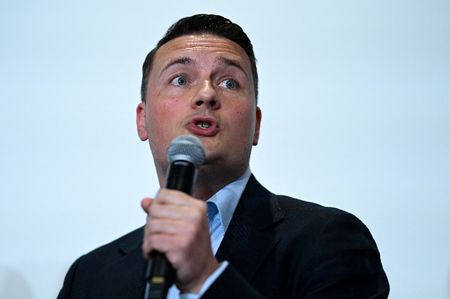
A former British health minister announced Saturday his plans to mount a leadership challenge against Prime Minister Keir Starmer, making the declaration just days after resigning from his government role and calling on Starmer to establish a timeline for stepping down.
Wes Streeting addressed supporters at a Progress group gathering for Labour Party members, stating his commitment to enter the race. “We need a proper contest with the best candidates on the field, and I will be standing,” Streeting declared during his remarks to the conference.
The announcement comes as political tensions continue within the Labour Party leadership structure in London.
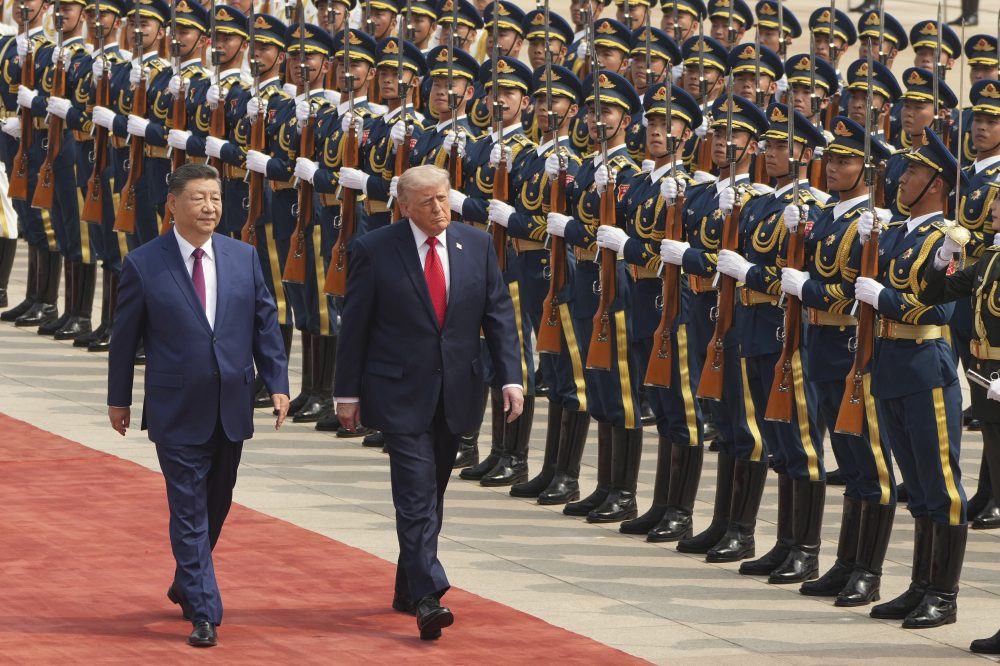
Chinese commerce officials on Saturday labeled trade agreements reached during President Donald Trump’s recent visit to Beijing as “preliminary” arrangements still requiring finalization.
The U.S. President concluded his two-day stay in China on Friday following discussions with President Xi Jinping that emphasized ceremony and diplomatic language but offered limited concrete details regarding trade and investment outcomes.
According to a commerce ministry website statement, both nations agreed to create an investment board and trade board for negotiating mutual tariff reductions on specific products, along with broader cuts affecting various goods including agricultural items.
Regarding agricultural trade, Beijing indicated both countries would address non-tariff obstacles and market access challenges.
“The U.S. side will actively promote the resolution of China’s long-standing concerns regarding the automatic detention of dairy products and aquatic products, exports of bonsai in growing media to the United States, and recognizing Shandong province as an area free of avian influenza,” the ministry stated.
“The Chinese side will also actively promote the resolution of U.S. concerns regarding registration of beef facilities and exports of poultry meat from some U.S. states to China,” officials added.
The ministry statement lacked specific company names, transaction volumes, monetary values, or completion schedules.
Saturday’s announcement represented China’s initial public assessment of trade discussions conducted this week in Beijing and Seoul, emerging as observers question the concrete achievements of Trump’s first state visit to China in almost ten years.
While Trump announced China’s commitment to purchase 200 Boeing aircraft, analysts have raised concerns about the absence of specific timelines.
The commerce ministry acknowledged arrangements regarding “Chinese purchases of U.S. aircraft and U.S. assurances on the supply of aircraft engines and parts to China” without providing additional specifics.
Officials indicated that detailed discussions continue and stated the agreements would be “finalised as soon as possible.”
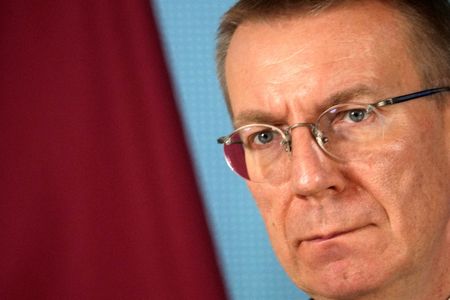
Latvia’s President Edgars Rinkevics announced Saturday his choice of opposition lawmaker Andris Kulbergs to serve as the nation’s next prime minister, following the resignation of Evika Silina.
Silina announced her departure on Thursday, leading to the breakdown of her governing coalition just months ahead of elections scheduled for October.
Kulbergs represents the United List of smaller parties, which serves as the biggest opposition group in the country’s parliament. His appointment to the top government post depends on legislative approval of both him and his cabinet members.
“Considering recent events, I think the new prime minister should come from opposition parties,” Rinkevics stated during a news conference.
The political crisis began when Silina removed Defence Minister Andris Spruds from his position last weekend following an incident where two Ukrainian drones wandered into Latvian territory from Russia and detonated at an oil storage site. Similar drone incidents have occurred recently in other NATO member countries Latvia, Estonia and Lithuania.
Latvia’s military forces acknowledged they were unable to track the drones as they entered from Russian airspace. Silina held Spruds responsible for insufficient progress in creating anti-drone defense capabilities.
Following his dismissal, Spruds’ Progressives party pulled their backing from Silina’s administration on Wednesday, eliminating her parliamentary majority and making her vulnerable to a confidence vote.
President Donald Trump’s latest statements characterizing weapons sales to Taiwan as a bargaining tool with China have sparked growing concern on the self-governing island that Beijing views as its territory.
During a Fox News interview with Bret Baier broadcast following Trump’s recent high-profile trip to China on Friday, the president made these troubling remarks.
Beijing considers Taiwan a rogue territory that must be brought back under Chinese control, using military force if needed. While the United States maintains no official diplomatic recognition of Taiwan as an independent nation—like other countries with formal Beijing relationships—America has served as the island’s primary supporter and weapons provider.
Trump now indicates this support could become part of broader negotiations.
When questioned about approving a stalled $14 billion weapons deal for Taiwan, Trump indicated the decision rests with China.
“I’m holding that in abeyance and it depends on China,” he stated. “It’s a very good negotiating chip for us, frankly. It’s a lot of weapons.”
American law requires the U.S. to supply Taiwan with defensive capabilities, and Washington considers any threats against the island as serious concerns.
William Yang, who analyzes Northeast Asia for International Crisis Group, warned that Trump’s approach of linking Taiwan arms sales to Chinese negotiations could trigger one of the island’s worst fears: becoming a bargaining item rather than a participant in discussions.
While Trump hasn’t specified what he would seek from China in exchange for blocking Taiwan’s weapons access, he has pushed Beijing to increase American product purchases and assist with Iran pressure campaigns.
Trump and Congress had previously authorized an $11 billion Taiwan arms deal in December. China responded with aggressive military exercises around the island.
During Chinese President Xi Jinping’s recent meeting with Trump, China characterized Taiwan as the most critical issue between the two nations. Russian President Vladimir Putin is scheduled to visit Beijing next week.
Xi delivered one of his most forceful warnings Thursday, cautioning Trump about potential “clashes and even conflicts” if Taiwan issues aren’t managed carefully.
Taiwan’s presidential office responded Saturday by emphasizing “that the consistent U.S. policy and position toward Taiwan remain unchanged.”
“The Republic of China is a sovereign, independent, democratic country; this is self-evident, and Beijing’s claims are therefore without merit,” stated Presidential Office Spokesperson Karen Kuo, using Taiwan’s formal designation. She expressed continued appreciation for Trump’s backing and noted that U.S. weapons sales to Taiwan are legally mandated.
Island officials also expressed unease about Trump’s demand that Taiwan’s semiconductor industry—the world’s most extensive and sophisticated—relocate to America.
“I’d like to see everybody making chips over in Taiwan come into America,” Trump told Fox News, calling such relocation “the greatest thing you can do.”
Trump has consistently urged Taiwanese semiconductor companies, which manufacture over 90% of the globe’s most sophisticated chips used in artificial intelligence, mobile devices, and defense systems, to establish American manufacturing operations.
TSMC, Taiwan’s premier chipmaker, has pledged $165 billion for an Arizona facility. Through a comprehensive trade deal with America this year, Taiwan’s administration committed $250 billion toward U.S. semiconductor investments, incorporating TSMC’s earlier pledge.
Trump also repeated previous claims that Taiwan “stole” America’s chipmaking capabilities years ago.
Although Trump didn’t modify official U.S. Taiwan policy language during his Xi summit—something many experts had worried about—he appeared to embrace some of the Chinese leader’s rhetoric about Taiwan’s leadership.
Beijing has labeled Taiwanese President Lai Ching-te a “Taiwan independence diehard” and claimed he would bring conflict and devastation to the island.
Trump and senior American officials typically avoid direct contact with Taiwanese leaders but have demonstrated support previously, such as permitting former Taiwanese President Tsai Ing-wen to stop on American territory while traveling to Latin America. Lai, approaching his presidency’s second anniversary, hasn’t visited the U.S. mainland, which some analysts view as reduced Trump administration support.
In his Fox News discussion, Trump emphasized his preference for maintaining current Taiwan-Beijing arrangements. “But they have somebody there now that wants to go independent,” he remarked, apparently referencing Lai.
“They’re going independent because they want to get into a war and they figure they have the United States behind them.” He added his reluctance to engage in distant military conflicts.
Wen-Ti Sung, an Atlantic Council fellow, suggested Trump’s concerning Taiwan statements might represent “his transactional rhetoric being turned up to the max.” “What matters more is the substance, which Taiwan is holding its collective breath for.”
Forty-two students remain unaccounted for following an assault on a Nigerian school by suspected militant fighters, according to a regional senator who spoke out Saturday.
The attack took place Friday at Mussa Primary and Junior Secondary School in Askira-Uba Local Government Area while students were attending classes, according to local residents who witnessed armed individuals taking an undetermined number of pupils.
Ali Ndume, who represents the Borno South district where the educational facility is situated, released a statement explaining that school officials told him 32 students were taken from the campus while an additional 10 were captured from nearby residences.
Military and police authorities have not yet provided responses to requests for information about the incident.
The region of Borno, which spans an area comparable to Ireland and shares borders with Cameroon, Chad and Niger, continues to serve as the central battleground for a militant insurgency led by the Boko Haram group that has persisted for more than a decade and a half.
While no organization has taken credit for Friday’s assault, Boko Haram has previously conducted comparable student kidnappings.
The Borno South senatorial district was the location where Boko Haram seized more than 270 female students in Chibok during 2014, sparking international condemnation. No other school abductions had occurred in the state since that time.
The majority of student kidnappings have occurred in Nigeria’s northwestern regions, where criminal organizations conduct abductions seeking ransom payments.
In a separate development, the presidents of the United States and Nigeria announced that a joint military operation successfully eliminated Abu-Bilal al-Minuki, who served as the global second-in-command for ISIS in Borno during the early morning hours Saturday.
LONDON — Massive crowds flooded London’s streets Saturday as two distinct demonstrations unfolded simultaneously, drawing tens of thousands of participants to rallies addressing immigration policies and Palestinian support.
Law enforcement mobilized 4,000 officers, bringing in additional personnel from beyond the capital city, promising “the most assertive possible use of our powers” for what officials described as their largest public order operation in recent years.
Authorities reported 11 arrests by 1200 GMT, shortly after both demonstrations commenced, for various violations. Officials had anticipated attendance of no fewer than 80,000 people.
Prime Minister Keir Starmer criticized organizers of the Unite the Kingdom demonstration on Friday, stating they were “peddling hate and division, plain and simple.”
Anti-Islam activist Stephen Yaxley-Lennon, who goes by Tommy Robinson, organized the immigration-focused march. Officials prevented 11 individuals they labeled “foreign far-right agitators” from entering Britain to speak at the demonstration.
A similar Robinson-led demonstration in September attracted approximately 150,000 attendees, according to police, and included a video message from U.S. tech billionaire Elon Musk. That event resulted in over 20 arrests, with authorities still pursuing more than 50 additional suspects.
Saturday’s Robinson supporters assembled in central London, displaying primarily British and English flags.
“I think that too much migration – not migration, but too much migration – is causing a lot of problems, upsetting a delicate balance here,” said Allison Parr, who also criticized net-zero environmental policies.
Official statistics show annual net migration reached nearly 900,000 in 2022 and 2023, before declining to approximately 200,000 last year following stricter work visa regulations.
Immigration concerns, particularly regarding asylum seekers arriving by small boats, have damaged Starmer’s approval ratings and strengthened the right-wing Reform UK party, whose leader Nigel Farage has distanced himself from Robinson.
Several protesters directed hostile chants toward Starmer.
Robinson, whose criminal record includes convictions for assault, stalking and other charges, encouraged supporters this week to demonstrate peacefully in what he promoted as “the greatest patriotic display the world has ever seen.”
Earlier this year, he visited the U.S., meeting with a State Department official and speaking to supporters about what he termed “the dangers of Islam” and “the Islamification of Great Britain.”
Census information revealed 6.5% of England and Wales residents identified as Muslim in 2021, increasing from 4.9% in 2011.
In a nearby area, pro-Palestinian demonstrators conducted their own march observing Nakba Day, which commemorates Palestinians’ territorial losses during the 1948 conflict following Israel’s establishment. “Nakba” translates to catastrophe in Arabic.
This demonstration also attracted opponents of the Unite the Kingdom rally, with participants carrying mainly Palestinian flags.
London has recently experienced several arson attacks targeting Jewish locations, and two Jewish men suffered stab wounds last month in an incident authorities are investigating as terrorism.
Police noted that ongoing large pro-Palestinian demonstrations — 33 since the Hamas-led attack on Israel in October 2023 — have made many Jewish residents feel too threatened to visit central London.
Though protesters expressed diverse viewpoints, police regularly arrest individuals for racially and religiously motivated public order violations, inciting racial hatred or supporting banned organizations.
Government officials stated police would detain protesters chanting “globalise the intifada,” referencing Palestinian uprisings against Israel that many British Jews consider antisemitic incitement.
Some Saturday protesters shouted “Death to the IDF,” targeting the Israeli army — rhetoric police indicated had previously justified arrests when directed at Jewish individuals.
A devastating collision between a container freight train and a public bus in Bangkok, Thailand on Saturday claimed eight lives and left 32 people wounded, according to rescue officials and a deputy transport minister.
The deadly crash occurred near the Airport Rail Link’s Makkasan station when the bus became trapped on railway tracks while stopped at a red traffic signal. Emergency responders and firefighters rushed to the scene as flames consumed the bus and surrounding vehicles, including cars and motorcycles caught in the collision.
Deputy Transport Minister Siripong Angkasakulkiat explained to media that the bus had stopped on the railroad tracks due to the red light, which prevented the crossing barriers from properly closing. The freight train, carrying containers, could not brake in sufficient time to prevent the impact.
“Eight people were killed and 32 injured, with the wounded being treated at various hospitals. All eight dead were on the bus,” the deputy transport minister stated.
Social media footage captured the moment of impact, showing the train striking the bus and pulling several other vehicles down the tracks with it.
Wanthong Kokpho, a motorcycle taxi driver who saw the accident happen, described the scene to Reuters: “The bus was stuck at a red light, so it couldn’t move. Cars were also blocked and unable to move forward.”
“The fire broke out immediately … If this had been a normal working day, the damage would have been much worse,” Kokpho added.
Emergency crews worked to extract injured passengers from the wreckage while firefighters used water hoses to combat the flames. Officials reported that the fire was eventually controlled, and teams continued cooling the area, venting gas, and searching for additional victims.
Authorities have launched an investigation into what caused the tragic incident. According to the World Health Organization, Thailand’s roadways are among the most dangerous globally due to insufficient enforcement of safety regulations.
A collaborative military mission between American and Nigerian forces has eliminated a high-ranking commander of the Islamic State organization operating in Nigeria, according to President Donald Trump.
In a social media statement, Trump announced that the early Saturday morning operation successfully targeted Abu Bakr al-Mainuki, who held a leadership position within the regional Islamic State branch in West Africa.
Nigerian officials and military leaders confirmed the mission took place in the Lake Chad Basin area, known as a operational base for Boko Haram and the Islamic State West Africa Province (ISWAP). They described the operation as a product of a newly established collaborative agreement with the United States government.
Al-Mainuki, born in 1982 in the northeastern Nigerian village of Mainok or Mainuki in Borno state, emerged as a prominent figure during the insurgency that began with Boko Haram’s establishment around 2009. Following ISWAP’s separation from Boko Haram, he rose to become a principal commander and served under Abu Musab al-Barnawi, the ISWAP leader reportedly killed in 2021.
According to a Nigerian military spokesperson, he functioned as a “key ISIS operational and strategic figure” with central responsibilities for the organization’s media campaigns, financial operations, and arms development.
Military officials also indicated that recent intelligence suggested his possible appointment as “Head of the General Directorate of States,” potentially placing him as the second-highest ranking official in the worldwide IS structure. Trump echoed this assertion, though some analysts have questioned this characterization.
The U.S. Department of State designated him as a “Specially Designated Global Terrorist” in 2023.
Nigerian leadership credited American intelligence and partnership as essential elements of the successful operation. This represents a notable shift in relations between the two nations, which deteriorated significantly last year when Trump alleged the West African country was committing “Christian genocide.”
Nigerian authorities consistently rejected accusations of Christian persecution and pursued diplomatic engagement with the United States, eventually leading to military collaboration. Following a December airstrike against IS targets, the U.S. deployed troops to Nigeria in February.
While government officials previously indicated American forces would be limited to advisory and training functions, this weekend’s mission signals an evolved approach, according to expert analysis.
“It would demonstrate to them (militants) that the American-Nigerian operation has really picked up,” said Bulama Burkati, a security analyst specializing in sub-Saharan Africa. “We know the Nigerian forces lack the basic capacity to fight violent extremist groups, especially in places like the Lake Chad region, which is densely forested.”
Multiple armed organizations maintain operations throughout the resource-abundant Lake Chad region spanning four countries, generating revenue by imposing taxes on local populations. The area’s terrain offers effective concealment from military operations.
Expert analysis indicates Al-Mainuki represents the highest-ranking militant eliminated by security forces in the West African nation. Previous militant leader deaths typically resulted from internal conflicts between rival organizations or factions.
His elimination is expected to temporarily disrupt ISWAP operations, though analysts emphasize the need for continued targeted strikes against the group.
“This kind of counterterrorism operation can disrupt the group’s finance, recruitment, and planning at the provincial level,” Burkati explained.
Nigeria confronts a multifaceted security challenge involving various organizations. Jihadi groups including Boko Haram, ISWAP, and Lakurawa operate alongside criminal networks specializing in kidnapping for financial gain. United Nations data shows tens of thousands have died in attacks since 2009, with millions more displaced throughout the nation.
Fatal violence has erupted on the Comorian island of Anjouan, where confrontations between demonstrators and police have resulted in one death and five people wounded as nationwide protests over dramatic fuel cost increases continue to spread.
The Public Prosecutor’s Office in Mutsamudu released a statement Saturday confirming the tragic incident. “The Public Prosecutor’s Office in Mutsamudu informs the public that a tragic event occurred today in Anjouan, in the Mpage area, resulting in the death of one person and five injuries,” the prosecutor announced.
The violent confrontations erupted Friday following discussions between the mayor of Mirontsy and representatives from the fishermen’s association, a group that has refused to work since Wednesday in opposition to escalating fuel costs.
Demonstrators used stones to barricade streets in Mutsamudu, Anjouan’s main city, while authorities have launched a judicial inquiry to establish how the fatality occurred.
The violence stems from a widespread work stoppage that started Monday when officials implemented a 46% increase in diesel costs and boosted gasoline prices by 35%, attributing the hikes to the Middle East conflict. Transportation employees and merchants have brought public transit to a standstill in the capital Moroni, with the National Human Rights Commission reporting that 39 individuals have been arrested since the labor action began.
In response to mounting tensions, officials have announced reductions in government travel expenses and a 40% decrease in customs fees.
President Trump’s recent diplomatic trip to Beijing this week delivered limited achievements by typical standards for U.S.-China meetings, but analysts say it demonstrated a clear advantage for China: following last year’s intense trade conflict, both nations have returned to their customary economic and strategic deadlock.
The two-day discussions between Trump and Chinese leader Xi Jinping emphasized that even following Trump’s “Liberation Day” tariffs and the subsequent trade détente reached in late 2024, Washington and Beijing remain engaged in the same competitive struggle that Trump faced when beginning his second presidential term.
From America’s perspective, this means the most concerning elements of the bilateral relationship — including what Washington views as Beijing’s mercantilist trade practices and China’s efforts to expand military influence in the Indo-Pacific region — continue without significant resolution.
However, for Xi, the situation provides some relief and a return to more manageable challenges. He seemed to characterize this shift during the week by introducing a new framework for bilateral relations that he termed “constructive strategic stability.”
China emerged with advantages, considering the step back from the Trump administration’s aggressive trade stance from early 2025, according to Scott Kennedy, a China expert at Washington’s Center for Strategic and International Studies.
“Compared to where we were a year ago, with 145% tariffs and the U.S. really trying to push China and the rest of the world to fundamentally change, we’ve had a counterrevolution and we’re back at stability,” Kennedy said.
Trump brought some of America’s most influential business leaders to the Thursday-Friday summit, including Tesla’s Elon Musk and Nvidia’s Jensen Huang, though most had limited concrete results to demonstrate beyond attending an elaborate state dinner.
The discussions also failed to obtain any public pledge from China to assist the U.S. in ending the conflict in Iran that has disrupted international markets and affected Trump’s public approval numbers.
“The summit projected stability but it left the stalemate intact,” said Craig Singleton, a China expert at the Foundation for Defense of Democracies. It “produced modest, marketable and managed outcomes, which is about all the U.S.-China relationship can bear right now.”
When asked for response, a White House official said, “President Trump leveraged his positive relationship with President Xi of China in order to bring home deliverables for the American people,” pointing to Boeing aircraft sales and agricultural deals designed to boost American exports.
A spokesperson with the Chinese embassy in Washington described the meetings between Xi and Trump as “candid, in-depth, constructive and strategic,” noting they “explored the right way for two major countries to get along with each other.”
Through last year’s trade conflict, Trump seems to have overestimated tariffs’ ability to force China into one-sided compromises, according to policy experts. Beijing responded with retaliatory tariff increases and threatened to restrict supplies of essential minerals required by U.S. industries, creating an uncomfortable standoff.
Following that period, the White House has demonstrated reluctance to accept the economic costs that would accompany using other forms of U.S. financial and technological pressure, including sanctions targeting China’s major banking institutions.
Demonstrating the shift in approach, this week’s meetings included no public discussion of many persistent U.S. demands, including calls for China to address industrial overcapacity that trading partners claim unfairly saturates their markets with inexpensive products.
China seems satisfied with the delicate ceasefire as it manages a struggling domestic economy while working to strengthen technologies it believes will provide advantages in long-term rivalry with the U.S.
Top Trump administration officials had minimized expectations for major breakthroughs even before the meeting began, indicating no urgency to extend a trade ceasefire set to expire in five months, which the leaders negotiated following discussions in South Korea in October.
A person with knowledge of the trade discussions said China sought a longer extension of the ceasefire than the Trump administration was prepared to offer, along with guarantees regarding pending U.S. investigations likely to restore some tariffs on imports that were eliminated by the Supreme Court this year.
In general, neither country offered substantial proposals for the summit, the source informed Reuters, noting that some business agreements might be reserved for autumn, when Xi is anticipated to make a return visit to the White House.
The source asked for anonymity to discuss the negotiations openly.
The summit’s limited commercial achievements stand in contrast to Trump’s 2017 China visit, when accompanying businesses signed agreements and memorandums valued at $250 billion.
This week’s meetings produced no progress on selling Nvidia’s advanced H200 artificial intelligence chips to China, likely satisfying Republican and Democratic China critics in Washington who had cautioned the administration against supporting China’s AI advancement.
While not yet confirmed, Trump announced that Boeing had completed an agreement for China to buy 200 aircraft, significantly less than the 500 that were expected and the 300 Beijing committed to purchase during the 2017 visit.
The White House official mentioned that the U.S. had created a new Board of Trade that U.S. officials had referenced as a joint mechanism to reduce tariffs on non-sensitive products, but provided limited specifics.
Wendy Cutler, a former acting deputy U.S. Trade Representative, described the economic outcomes as “way below expectations.”
For China, though, the meetings represented positive progress toward realistic competition, according to Cui Shoujun, a professor of international affairs at Renmin University in Beijing.
The summit demonstrated that Washington and Beijing are “no longer aspiring to pull China-U.S. relations back to a cooperative golden age, but instead acknowledging the long-term nature of competition and disagreement,” he said.
PARIS, May 16 – France’s national anti-terrorism prosecutor’s office announced Saturday that a magistrate has been designated to investigate the murder of journalist Jamal Khashoggi, following a court decision to accept the case for review.
The investigation will examine allegations of torture and enforced disappearance, according to the prosecutor’s office, known as PNAT. This comes after the Paris Court of Appeal determined on May 11 that complaints submitted by human rights organizations TRIAL International and Reporters Without Borders could proceed, PNAT stated.
However, a separate complaint brought by DAWN, which employed Khashoggi, was rejected by the court, PNAT noted.
Khashoggi was murdered and his body dismembered by Saudi operatives at the Saudi consulate in Istanbul during October 2018, in what U.S. intelligence agencies concluded was an operation directed by Saudi Crown Prince Mohammed bin Salman.
While the crown prince has rejected claims he ordered the assassination, he has admitted it occurred “under my watch.”
This French investigation opens another legal avenue in a case that has experienced minimal judicial progress elsewhere.
Turkey’s court system suspended its prosecution of 26 Saudi defendants in 2022 and sent the matter to Saudi Arabia, a decision that sparked criticism from human rights advocates.
In America, the Biden administration provided bin Salman with immunity following his designation as prime minister, prompting a federal court to reject a civil case filed by Khashoggi’s fiancée.
French legal statutes permit judges to investigate certain grave crimes that occur in other countries, though criminal prosecutions typically require defendants to be physically located within French borders.
The Saudi government’s media representatives have not yet responded to requests for comment.
The Israeli military announced it has eliminated a senior Hamas military commander who played a key role in planning the October 7, 2023 attacks that sparked the current Gaza conflict.
Israeli forces killed Izz al-Din al-Haddad during an operation in Gaza City on Friday, according to military officials. Haddad was described as among the remaining high-ranking Hamas military leaders who helped orchestrate the October 7 Hamas-led assault on Israel.
According to Israeli officials, Haddad had taken over leadership duties following the death of his predecessor, Mohammed Sinwar. The Associated Press confirmed Haddad’s death through his family members on Saturday.
The strike occurred while the ceasefire agreement between Israel and Hamas continues to face challenges, with unresolved matters such as Hamas disarmament creating obstacles to the deal’s implementation.
BANGKOK, May 16 – Emergency responders in Thailand’s capital report that eight people lost their lives and 25 others sustained injuries following a devastating multi-vehicle crash involving a train that ignited a deadly blaze on Saturday.
The collision involved a passenger train, a public transit bus, several automobiles, and motorcycles, according to rescue officials and police. The impact caused flames to spread rapidly through the bus and surrounding vehicles.
Emergency response teams rushed to the scene as the fire consumed the bus and spread to other vehicles in the area. Rescue workers scrambled to extract injured passengers from the twisted wreckage while firefighters deployed water hoses in an urgent effort to stop the flames from spreading further.
Authorities report that fire crews have successfully extinguished the blaze and are now working to cool down the affected area while venting dangerous gases. Search and rescue operations continue as teams look for additional victims. Officials have launched an investigation to determine what caused the tragic accident.
Following President Donald Trump’s recent threats to take control of Greenland, officials on the Arctic island have turned to Canada for assistance in strengthening their defenses.
The Canadian armed forces operate a reserve unit known as the Rangers, which has maintained a continuous presence in remote Arctic settlements for years. Officials from Greenland and Denmark have spent three years consulting with Canadian representatives about creating their own version of this force — discussions that became more pressing after Trump’s statements and increasing concerns about Russian aggression in the Arctic region.
“The rhetoric coming out of the White House has sped up efforts to rebuff the idea that Arctic communities need the U.S. to come in and save them,” said Whitney Lackenbauer, an honorary lieutenant-colonel Canadian Ranger involved in the talks, who spoke with Reuters during a recent 5,000-kilometer Arctic snowmobile trek by the Rangers. “The Nordic countries and Canada, we’re increasingly realizing we can come together in military and diplomatic ways to send a message that carries moral weight.”
As Canada works to reduce its dependence on U.S. protection for its extensive Arctic territory, Prime Minister Mark Carney has been building stronger relationships and sharing defense strategies with Nordic nations, which he considers reliable allies. This enhanced military cooperation represents part of Carney’s broader strategy to forge stronger bonds between what he terms “middle powers” in an era where America is viewed as a less dependable partner.
The White House responded that Trump’s leadership has encouraged allies “to recognize the need to meaningfully contribute to their own defense” and emphasized the Arctic’s importance for U.S. national security and economic interests.
“The administration is participating in diplomatic high-level technical talks with the governments of Greenland and Denmark to address the United States’ national security interests in Greenland,” a White House spokesperson said in an email.
Arctic partnerships are evolving as climate change increases accessibility to the region. Russia maintains significantly more military installations there than any other country, while China has recently expanded its presence in the resource-rich area, primarily through Russian partnerships. Although Carney states Canada will no longer depend on other nations to defend its territory, he identifies Russia as the primary Arctic threat — with Nordic countries enhancing their own defenses since Russia’s invasion of Ukraine.
In March, Canada joined the five Nordic nations — Denmark, Finland, Iceland, Norway and Sweden — in an agreement to enhance cooperation in military purchasing and increase defense manufacturing to address security challenges, including cyber threats. Government policy documents indicate a strategy for Greenland’s adaptation of the Canadian Rangers model should be completed by year’s end.
Canadian Foreign Affairs Minister Anita Anand told Reuters she maintains regular contact with Nordic officials regarding collective defense and Arctic security matters. While Canada’s NORAD partnership with the United States remains vital, she emphasized Canada’s focus on developing new alliances. This includes opening a Canadian consulate in Nuuk in February and inviting Nordic counterparts to visit Canada’s Arctic this year.
“We have to build something new, and it has to be a world order that is built on the values that we represent,” Danish Prime Minister Mette Frederiksen told Carney during the Nordic-Canadian summit in Oslo in March.
In April, Alexander Stubb became the first Finnish president to visit Canada in twelve years, signing multiple Arctic cooperation agreements. Stubb and Carney participated in a hockey practice on Ottawa ice, after which Stubb revealed he and Carney exchange messages nearly daily.
The two leaders sometimes discuss hockey or baseball, Stubb told reporters, but “most of the time it’s about NATO or Ukraine or Iran.”
Lackenbauer, who serves as an Arctic specialist at Trent University in Peterborough, Ontario, believes Canada should restructure its Arctic security approach similar to how Nordic countries responded after Russian forces invaded Ukraine in 2022.
“The more we can go and help Canada’s allies in northern Europe, the more hostile nations will get the message that they do not get a free pass in the Arctic,” he said.
Among the eight Arctic nations, Canada’s defense spending for the region has consistently ranked near the lowest, behind Russia, the U.S., Norway, Sweden, Denmark and Finland, according to the Arctic Business Index. Alongside Greenland, Canada has historically invested the least. Last year, Canada achieved the NATO benchmark of spending 2% of GDP on defense, approximately CA$63 billion, following repeated criticism from Trump. This marked a significant increase from a low of just 1% in 2014.
Neil O’Rourke, Director General at Canada’s Coast Guard for Fleet and Maritime Services, explained that he and a Danish defense colleague recognized years ago that during any serious Arctic incident, their first contact should be with each other.
“Up north, we’re just across the water and it makes much more sense to share resources than to get help from down south,” O’Rourke said in an interview. He noted Canada is also studying Norway’s maritime emergency vessel towing procedures.
Rob Huebert, an Arctic specialist at the University of Calgary, stressed that U.S. cooperation remains essential, highlighting America’s advanced military technology and Canada’s continued reliance on U.S. forces for northern region protection.
“If we are talking about war-fighting capability, that means working with the U.S. military,” he said.
Huebert suggested Carney’s March visit to observe a Norwegian-led NATO exercise in Bardufoss might signal a shift in Canada’s approach.
“Until very recently, Canada’s participation in NATO’s Arctic exercises in the Nordics has been very token,” he said. “But then all of a sudden because of Trump, we decide we’d better do something with the Nordics.”
LONDON (AP) — Law enforcement officials in London are mobilizing for an intense Saturday as massive crowds converge on the British capital for competing political demonstrations while thousands more gather for England’s premier domestic soccer championship at Wembley Stadium.
The Metropolitan Police will deploy armored vehicles, mounted officers, canine units, aerial drones and helicopters alongside a minimum of 4,000 personnel in an effort to prevent confrontations.
Authorities have established separate pathways to maintain distance between participants in a demonstration led by far-right activist Stephen Yaxley-Lennon, who goes by the alias Tommy Robinson, and the yearly march recognizing Nakba, the Arabic word meaning “catastrophe” that refers to the displacement of approximately 700,000 Palestinians from present-day Israel in 1948.
Nevertheless, law enforcement remains concerned about potential contact between breakaway factions from the primary demonstrations.
Legal officials have been instructed to evaluate whether signs, displays and verbal expressions documented on social platforms could constitute crimes of inciting hatred during the gatherings.
“This is not about restricting free speech,” said the Crown Prosecution Service’s director, Stephen Parkinson. “It is about preventing hate crime and protecting the public, particularly at a time of heightened tensions.”
British officials have also prevented 11 international individuals from entering the nation for the “Unite the Kingdom” demonstration.
Conservative political figures reportedly denied entry include Polish politician Dominik Tarczynski, Belgian politician Filip Dewinter, anti-Islam commentator Valentina Gomez and Dutch activist Eva Vlaardingerbroek.
“We will block those coming into the UK who seek to incite hatred and violence,” said Prime Minister Keir Starmer. “For anyone who sets out to wreak havoc on our streets, to intimidate or threaten anyone, you can expect to face the full force of the law.”
On Friday, Starmer toured the Met’s operations center to review security preparations for the demonstrations with Met Commissioner Mark Rowley and London Mayor Sadiq Khan.
Live facial recognition technology will be implemented for the first time during protest security operations, with surveillance equipment positioned in the north London area of Camden, which lies outside the “Unite the Kingdom” march path but is anticipated to be used by many event participants.
At Wembley in the northern part of the city, authorities hope the FA Cup Final between Chelsea and Manchester City, scheduled to begin at 3 p.m., will proceed without problems.
BANGKOK — At least eight people died Saturday afternoon when a freight train collided with a public bus at a railway crossing in Thailand’s capital city.
According to Thai media reports, the deadly incident occurred in the central district near an airport rail station. The Erawan Medical Center, which coordinates the city’s emergency response, confirmed the death toll of eight with more than 20 additional people suffering injuries.
Social media footage captured the moment of impact, showing multiple vehicles stopped at the railroad crossing when the freight train slammed into an orange-colored bus positioned at the front of the line. The force of the collision pulled several other vehicles down the tracks, and the bus quickly became consumed by fire. The crash also sent multiple motorcycles and their operators flying across the roadway.
Additional footage from the scene showed emergency responders entering the burned-out bus shell once firefighters had extinguished the blaze.
VIENNA, May 16 – While television viewers may hardly spot them, a dedicated crew of stage workers known as ‘ninjas’ at the Eurovision Song Contest accomplish an incredible behind-the-scenes challenge: completely changing each country’s stage setup in just 48 seconds between performances.
Despite the massive LED screen displays providing much of the visual spectacle, all 25 nations participating in Saturday’s competition finale bring their own physical stage elements that must be quickly moved on and off stage – including Finland’s set piece that actually catches fire.
The entire transformation happens in under one minute.
‘That’s the setup time these 20-odd people have to move from one ‘prop’ to the next and from one show’s set-up and dismantling to the next. It’s just mad what they manage to achieve,’ explained Christian Elgner, who serves as head of props and supervises the stage elements.
The approximately two dozen crew members must meticulously plan and practice every movement, making their accomplishment even more remarkable since most are local residents taking on the work as extra income.
‘We have to be always in a rush and we are not allowed to make any mistakes because once we make a mistake the show is over,’ explained Ahmed Abdelati, a civil engineering student from Egypt who lives in Austria.
‘I’m working here because I love music, like my other colleagues,’ he added.
Within just a few weeks, this black-clad team has transformed into a seamlessly functioning unit.
‘I’m not sure who first used that term but it’s taken off in the past three, four days: backstage ninjas. I mainly call them dancers because the (set) assembly is danced – it’s choreographed,’ Elgner noted.
‘There haven’t been any big mishaps so far. We rehearse often enough to always learn from the mishaps we have and to perfect everything.’
MOSCOW, May 16 – Moscow’s military announced Saturday that its forces have seized two settlements in Ukraine’s Kharkiv region, according to reports from the RIA state news agency.
The Defence Ministry claims Russian troops now control the villages of Borova and Kutkivka in the contested region.
The battlefield claims could not be independently confirmed by news organizations.
Sierra Leone has reached an agreement with the United States to receive hundreds of West African migrants facing deportation from America, according to the country’s foreign minister in a recent interview with Reuters.
The initial flight carrying deportees will land in Sierra Leone on May 20, bringing 25 individuals from Senegal, Ghana, Guinea and Nigeria, foreign minister Timothy Kabba announced.
“Sierra Leone signed a Third Country National Agreement with the U.S. to accept 300 ECOWAS citizens from the U.S. per year with a maximum of 25 a month,” Kabba explained, referencing the West African regional organization.
This marks the latest arrangement by the Trump administration as it works to speed up deportation processes. America has previously transported deportees to various African nations including Democratic Republic of Congo, Ghana, Cameroon, Equatorial Guinea and Eswatini.
Legal experts and human rights organizations have criticized these transfers, questioning both the legal foundation for sending people to nations where they lack citizenship and how these deportees are treated upon arrival.
Sierra Leone’s decision to only accept deportees from ECOWAS member countries mirrors Ghana’s approach. Previous Reuters investigations revealed that deportees sent to Ghana, Equatorial Guinea and other African destinations were subsequently forced to return to their home nations, despite having received court-ordered protection in America designed to prevent such outcomes.
Whether deportees arriving in Sierra Leone will be permitted to remain there remains uncertain. A government spokesperson did not provide an immediate response when asked for comment on Saturday.
Kabba declined to specify what Sierra Leone would receive in exchange for accepting the deportees. “It’s part of our bilateral relationship with the U.S. to assist with its immigration policy,” he stated.
A February report from Democrats on the Senate Foreign Relations Committee revealed that while the total expense of third-country deportations remains unknown, over $32 million has been transferred directly to five nations: Equatorial Guinea, Rwanda, El Salvador, Eswatini and Palau.
Sierra Leone and the United States have previously clashed over deportation issues. During the first Trump presidency in 2017, Washington announced that the American Embassy in Freetown would stop issuing tourist and business visas to Sierra Leonean foreign ministry and immigration officials because the government was declining to accept Sierra Leonean deportees.
The State Department has not yet responded to requests for comment regarding this new arrangement with Sierra Leone. Both the White House and State Department have maintained in the past that these deportations comply with legal requirements.
A high-ranking Hamas official confirmed to Reuters on Saturday that the leader of the organization’s military operations had been killed, following Israeli airstrikes that targeted him the previous day.
Witnesses in Gaza City reported that local mosques had proclaimed Izz al-Din al-Haddad’s “martyrdom.” His death marks the highest-profile Hamas leader eliminated by Israeli forces since an October ceasefire agreement backed by the United States was designed to end hostilities in Gaza.
The organization has not issued an official public statement confirming Haddad’s death.
Israeli Prime Minister Benjamin Netanyahu, along with his defence minister, released a joint statement Friday announcing they had targeted Haddad, though they stopped short of confirming whether the operation resulted in his death.
Netanyahu and Defence Minister Israel Katz described Haddad as a key planner behind the October 7, 2023 attacks conducted by Hamas militants that triggered Israel’s continued military campaign in Gaza.
According to their statement, Haddad assumed leadership of the group’s military operations in Gaza following Israel’s elimination of Mohammad Sinwar in May 2025, and “was responsible for the murder, abduction, and harm inflicted on thousands of Israeli civilians (and) soldiers.”
Israel and Hamas continue to face an impasse in indirect negotiations aimed at advancing U.S. President Donald Trump’s post-conflict strategy for Gaza, which seeks to conclude more than two years of warfare.
Gaza medical personnel reported Friday that the airstrikes, which hit both a residential building and a vehicle, resulted in at least seven fatalities, including three women and one child, with at least 50 people wounded. Officials have not confirmed whether Haddad was among those killed.
Israeli forces have intensified their operations in Gaza during recent weeks after suspending joint military actions with the U.S. in Iran, refocusing their efforts on the devastated Palestinian territory where military officials report Hamas fighters are consolidating control.
The Kremlin announced Saturday that Russian President Vladimir Putin will travel to Beijing for a two-day visit next week to meet with Chinese leader Xi Jinping.
The visit comes just under 24 hours after U.S. President Donald Trump wrapped up his state visit to China, where he held discussions with Xi about trade and the U.S. and Israel’s war in Iran.
According to a Kremlin statement, Putin’s May 19-20 visit is timed to mark the 25th anniversary of the 2001 Sino-Russian Treaty of Friendship.
The statement indicated the two leaders will focus on bilateral ties along with “key international and regional issues” and economic cooperation.
China-Russia relations have strengthened significantly in recent years, especially after Russia’s full-scale invasion of Ukraine began in early 2022, which left Moscow isolated internationally and dependent on Beijing for trade due to Western sanctions.
During Putin’s September 2025 visit to China, Xi greeted his counterpart as an “old friend,” while Putin also called Xi “dear friend.”
The Russian leader has plans to return to China in November for the Asia-Pacific Economic Cooperation summit in Shenzhen.
In other developments, Ukraine received the remains of fallen soldiers Saturday after an earlier prisoner exchange with Moscow.
Russia handed over 528 bodies that “according to the Russian side, may belong to Ukrainian servicemen,” according to Ukraine’s Coordination Headquarters for the Treatment of Prisoners of War.
Officials said experts will now “take all necessary measures aimed at identifying the deceased who have been repatriated.”
This follows Friday’s prisoner swap between Russia and Ukraine involving 205 prisoners of war.
Ukrainian President Volodymyr Zelenskyy described it as the initial stage of a planned exchange of 1,000 POWs from both sides. He noted some of the returned Ukrainians had been in Russian custody since 2022 and participated in some of the conflict’s most intense fighting.
Separately, Russian forces conducted overnight drone strikes against Ukraine’s southern Odesa region Saturday, according to regional officials.
Regional head Oleh Kiper reported that Russian drones hit a five-story apartment building and a single-story home, wounding two people. He added that the city’s port sustained damage.
Ukraine’s Air Force said Russia deployed 294 drones overnight, with 269 intercepted and destroyed.
Russia’s Ministry of Defense reported its forces downed 138 Ukrainian drones overnight across 14 Russian regions, including Moscow. The ministry said drones were also eliminated over the annexed Ukrainian peninsula of Crimea and the Black and Azov seas.
In the early morning hours at a Buenos Aires butcher shop in the Mataderos district, workers begin their day unloading beef from delivery trucks while wholesale customers wait in line. Inside the shop, 73-year-old owner Jorge García and his team start preparing meat orders before sunrise.
Alongside the traditional displays of red meat hanging from hooks and stacked in boxes, chicken and pork are becoming more common sights.
Beef consumption across Argentina — a nation traditionally known as one of the globe’s top beef-eating countries — has dropped to its lowest point in 20 years following economic belt-tightening policies implemented by libertarian President Javier Milei.
Data from the Agricultural Foundation for Argentina’s Development shows annual per-person beef consumption decreased to 44.5 kilograms (98 pounds) as of April 2026, compared to 49.5 kilograms (109 pounds) in the same period the previous year. This represents a significant decline from the 63.4 kilos (139 pounds) per person recorded in 2006.
“People are switching to cheaper proteins. They’re eating pork, they’re eating chicken,” García explained.
Experts point to rising beef costs, reduced cattle availability, and diminished household buying power as key factors behind this trend. Argentina’s decision to open its beef market to international commerce has also brought domestic prices more in line with worldwide rates.
“Beef moved into a completely different purchasing-power category. Workers’ wages fell far behind,” explained Juampi Quintero, a 25-year-old meat distributor who estimates his customers’ consumption has dropped by more than half.
After taking office in December 2023 facing 211% annual inflation, Milei vowed to eliminate what he termed “the cancer of inflation” through an adjustment program featuring spending cuts equal to nearly one-third of public expenditures, represented by his signature chainsaw imagery.
While the administration successfully turned around the fiscal deficit and achieved a budget surplus — an uncommon achievement in Argentina’s recent past — the social impact of these austerity policies has faced widespread criticism.
In a matter of months, Milei’s government dissolved 13 ministries, terminated approximately 30,000 government workers, suspended public construction projects, and reduced funding for essential sectors including education, healthcare, and scientific research. The administration also eliminated subsidies for basic utilities like electricity, gas, water, and public transportation.
“That affects household income because families now have to pay more for services that were previously subsidized by the state,” explained economist Camilo Tiscornia. “As a result, they have less disposable income and must give up certain more expensive goods, such as beef.”
Meanwhile, family incomes failed to keep pace with rising beef costs, further contributing to declining consumption patterns.
According to the most recent available information, registered workers saw wage increases averaging 1.8% in February, while monthly inflation reached 2.9%.
“Before, I had the freedom to buy what I wanted,” shared Alberto Brajin, a 61-year-old retiree who operates a street-side barbecue stand in Buenos Aires.
Brajin noted he must now “trade down” to less expensive protein options like chicken.
According to the Argentine Beef Promotion Institute, beef prices increased by more than 60% over the past year, reaching an average of 18,500 pesos ($13) per kilogram in Buenos Aires during May.
In July 2025, Milei’s administration lowered export taxes on beef and poultry while eliminating production quotas to boost international sales, reversing some restrictions put in place under former President Alberto Fernández aimed at controlling domestic price increases. These regulatory changes coincided with a more than 10% drop in Argentina’s beef production due to flooding and drought conditions, according to CICCRA, the nonprofit representing the country’s beef producers.
Government officials announced this week that beef exports jumped 54% in the first quarter compared to the previous year, totaling nearly 200,000 tons valued at over $1 billion. This growth followed a U.S. decision earlier this year to expand Argentina’s duty-free beef quota due to American cattle shortages.
With market liberalization, producers started selling beef — previously accessible across much of Argentina’s social hierarchy — at prices reflecting international market values.
“Previously, all meats had similar prices, which encouraged high beef consumption that did not reflect its real production costs,” agricultural consultant Iván Ordóñez noted.
As beef prices climb beyond many Argentine families’ reach, chicken and pork are emerging as more affordable protein options.
“We’ve chosen to buy pork and chicken because beef is too expensive,” stated shop owner Ruth Simon.
Chicken averages 4,900 pesos ($3.50) per kilogram, while pork ribs cost approximately 8,900 pesos ($6.30).
García, the butcher shop proprietor, mentioned he started offering chicken and pork less than a year ago after observing shifts in his customers’ purchasing patterns.
“You have to adapt,” he stated. “We can’t just sit around crying. No crying. We have to work. We have to keep our dignity. We have to fight.”
American and Nigerian military forces successfully eliminated a high-ranking Islamic State commander during a Friday operation in Nigeria, according to U.S. President Donald Trump.
The president revealed details of the collaborative mission in Africa’s largest nation through a late-evening social media announcement that provided limited specifics. Trump identified the target as Abu Bakr al-Mainuki, describing him as the Islamic State’s second-highest global commander who “thought he could hide in Africa, but little did he know we had sources who kept us informed on what he was doing.”
Intelligence officials described Al-Mainuki as a central figure in the terrorist organization’s operational structure and financial networks, who had been developing plans for attacks targeting America and American assets, according to a source who requested anonymity due to the classified nature of the information.
Nigeria’s President Bola Tinubu verified the military action and reported that Al-Mainuki died along with “several of his lieutenants, during a strike on his compound in the Lake Chad Basin.”
Records show Al-Mainuki was born in Nigeria’s Borno province in 1982 and assumed leadership of the Islamic State’s West African operations following the 2018 death of the previous regional commander, Mamman Nur, according to the Counter Extremism Project, an organization that monitors militant activities.
The Counter Extremism Project reported that Al-Mainuki operated from the Sahel region and likely participated in combat operations in Libya during the Islamic State’s presence in that North African country over ten years ago. U.S. authorities placed sanctions on him in 2023.
In his social media statement, Trump characterized Al-Mainuki as the “second in command globally” and claimed he was hiding in Africa, though security experts question the accuracy of this assessment.
Analysts indicate that Al-Mainuki served as deputy to Abu Musab al-Barnawi, who led the Islamic State West African Province until his reported death in 2021. He played a significant role in establishing ISWAP following its separation from Boko Haram in 2016.
“If confirmed, the killing of Al-Mainuki is huge because this is the first time a security agency has killed someone this high in the ranking of ISWAP,” said Malik Samuel, a senior researcher at Good Governance Africa who specializes in insurgent groups in Nigeria.
“The potential to cause chaos within the group is also there because the operation must have been carried out in the heart of ISWAP’s fortified base, which is very difficult to access.”
Trump previously authorized U.S. military strikes against Islamic State forces in Nigeria during December, though he provided minimal details about the results of those operations.
Nigerian military officials attributed the successful mission to their “recently formed U.S.-Nigeria partnership and intelligence sharing efforts.” Military spokesperson Samalia Uba stated that the operation has “disrupted a violent terrorist network that endangered Nigeria and the broader West African region.”
Nigeria continues to confront multiple armed organizations, including at least two groups with Islamic State connections, while managing a complex security emergency. Islamic State affiliates across Africa have become among the continent’s most aggressive militant organizations since the collapse of the IS caliphate in Syria and Iraq in 2017.
The United States deployed military advisors to the West African nation in February to assist its armed forces, and in March, the U.S. stationed surveillance drones there after Trump claimed that Christians were being specifically targeted in Nigeria’s ongoing security crisis.
Friday’s military action represents the most recent in a series of overseas covert operations that Trump has disclosed this year, beginning with the dramatic January overnight mission to capture and extract Venezuela’s then-leader Nicolás Maduro to the United States, followed nearly two months later by strikes that initiated the conflict with Iran.
The U.S. President announced that China’s leader has endorsed requiring Iran to reopen the Strait of Hormuz during recent discussions in Beijing, though Chinese officials have not confirmed this stance.
During his return flight on Friday following two days of meetings with Chinese President Xi Jinping, the President indicated he was weighing whether to remove U.S. sanctions on Chinese companies purchasing Iranian oil. China represents Iran’s largest oil customer.
“I’m not asking for any favors because when you ask for favors, you have to do favors in return,” the President told a reporter aboard Air Force One when questioned about whether Xi had made a concrete pledge to pressure Iran regarding the strategic waterway.
While Xi remained silent about his Iran discussions with the President, China’s foreign ministry voiced displeasure with the Iran conflict, describing it as a war “which should never have happened, has no reason to continue.”
Iran has maintained its closure of the strait, which previously handled one-fifth of global oil and liquefied natural gas shipments before U.S. and Israeli military operations began on February 28. The shipping disruption has triggered the most severe oil supply emergency in recorded history, causing petroleum prices to surge dramatically.
The February U.S. and Israeli airstrikes resulted in thousands of Iranian casualties, while thousands more have died in Lebanon during renewed hostilities between Israel and the Iran-supported organization Hezbollah.
Although the U.S. suspended its airstrikes last month, it initiated a port blockade. Tehran has declared it will not reopen the strait until the U.S. terminates its blockade. The President has warned of resumed military action if Iran refuses to negotiate an agreement.
“We don’t want them to have a nuclear weapon, we want the straits open,” the President stated while in Beijing with Xi.
Iran, which has consistently rejected accusations of nuclear weapons development, has declined to halt nuclear research or surrender its concealed enriched uranium reserves, causing frustration for the President.
Iranian Foreign Minister Abbas Araqchi reported that Tehran had received communications from the U.S. suggesting Washington’s willingness to pursue continued negotiations.
“We hope that, with the advancement of negotiations, we will reach a good conclusion so that the Strait of Hormuz can be completely secured and we can expedite the normalisation of traffic through the strait,” he informed reporters in New Delhi.
The President, who expressed diminishing patience with Iran during a Thursday interview on Fox News’ “Hannity” program, urged Tehran to “make a deal.”
Oil prices climbed approximately 3% to roughly $109 per barrel on Friday due to concerns about stalled conflict resolution efforts, while U.S. Treasury yields reached nearly year-high levels amid expectations that the Federal Reserve might increase interest rates.
Negotiations to end the war, which has become politically problematic for the President before November’s U.S. congressional elections, have stalled since last week when both Iran and the U.S. rejected each other’s latest proposals.
Iran would welcome Chinese involvement, Araqchi stated Friday, noting that Tehran was attempting to give diplomacy an opportunity but remained distrustful of the U.S., which has disrupted previous negotiation rounds by launching airstrikes.
A 38-year-old man has died following a shark attack off Australia’s western coastline on Saturday, marking the nation’s second deadly shark encounter this year, according to law enforcement officials.
The victim, whose identity has not yet been released, suffered the attack Saturday morning at Horseshoe Reef near Rottnest Island, located approximately 31 kilometers (19.2 miles) west of Perth, authorities reported.
Emergency responders transported the injured man to shore, but medical personnel were unable to save his life, police confirmed. Officials stated that a coroner’s report will be compiled regarding the incident.
Local government officials have issued warnings urging beachgoers to exercise heightened vigilance while in waters around Rottnest Island, a well-known vacation spot.
Video captured by the Australian Broadcasting Corporation from above showed law enforcement vessels, officers on scene, and an emergency helicopter equipped with medical stretcher equipment responding to the location.
This latest incident comes after a young boy lost his life in January when a shark attacked him in Sydney Harbour, following multiple shark encounters reported along Australia’s eastern coastline.
Data from Australia’s Institute of Health and Welfare indicates that the majority of shark attacks happen along the nation’s eastern and southeastern shores, with the country recording approximately 20 such incidents annually.
MADRID (AP) — Gone are the elaborate party spreads, festive decorations, and collective excitement over which performer’s extravagant act will claim victory.
For the first time in seven years, Silvia Díaz is skipping her traditional Eurovision Song Contest viewing party this Saturday evening. The annual celebration was canceled after the country’s public television network pulled out of the competition, objecting to Israel’s inclusion due to its military conflict with Hamas in Gaza. Díaz plans to stream it on YouTube instead, but only if her schedule permits.
“It’s not the same watching it alone at home as it is with friends. That’s the only thing that upsets me.”
The five-day musical competition attracted 166 million viewers last year — significantly exceeding Super Bowl audience numbers in the United States. While the country hasn’t claimed victory since 1969, the annual event typically generates months of media coverage, bringing families and friends together at homes and bars, with their representative’s performance making front-page news the following day. Citizens attending the event proudly display their national flag, dress in red attire, or occasionally sport bullfighter outfits.
The boycott was announced in December following the European Broadcasting Union’s decision to permit Israel’s participation, with Ireland, Slovenia, the Netherlands and Iceland also joining the protest. Many fans support this principled stand despite the disappointment of missing their cherished tradition.
The public broadcaster has consistently voiced opposition to Israel’s involvement. During last year’s semifinals, RTVE’s commentators mentioned Israel’s performer while simultaneously referencing Palestinian casualties from the conflict. Prior to broadcasting the final show, the network displayed “Peace and justice for Palestine” on black screens across hundreds of thousands of television sets throughout the country.
While Eurovision finals proceed in Vienna, RTVE will broadcast a special celebrating the network’s musical heritage, featuring Tony Grox and Lucycalys, the artists originally selected to represent the nation at Eurovision.
Ireland’s public broadcaster will show a documentary about rural Irish life. Slovenian viewers will see an installment of a 10-part series about Palestinians. While audiences can still access Eurovision through the European Broadcasting Union’s YouTube channel, the absence of their own country’s performer or commentary significantly diminishes the passionate atmosphere.
Israel has participated for five decades and secured four victories. Citizens gather at bars to watch and show strong enthusiasm for their country’s involvement, viewing it as validation of international acceptance and normalcy. Each year’s representative becomes a household name, and strong performances — even without winning — generate national pride.
Eurovision enthusiasts are split on this year’s boycott decision.
For Rebeca Carril, who enjoys watching archived performances from the 1960s and 1970s before her birth, the breaking point came several years ago with increased Israeli sponsorship. She refused to support their promotional activities by watching.
“I have Palestinian friends and I began to understand a little better how things worked,” said Carril, a 42-year-old marketing executive in Madrid.
Others, like Guillermina Bastida, believe music and politics should remain separate. She traveled 3 1/2 days from northern regions in a van with her two daughters to attend last year’s competition in Basel, marking her third live attendance. This year, she’ll resort to YouTube viewing.
“It’s a song festival, period,” Bastida, a 47-year-old communications professional, said by phone from Asturias province. “I also have my own stance, which is critical, but not to the point of boycotting the festival.”
Eurovision operates under the slogan “United by Music,” with organizers attempting unsuccessfully in recent years to exclude political elements. Following Ukraine’s invasion in 2022, the European Broadcasting Union expelled Russia, which remains banned. Competition regulations prohibit explicitly political lyrics or symbols, with organizers emphasizing it’s a contest between national broadcasters, not governments.
As one of the “Big Five” nations providing the most financial support to Eurovision, this absence means lost broadcasting revenue and diminished publicity and credibility, according to Jose García, co-director of a competition news website whose social media platforms collectively reach nearly 100,000 followers.
However, complete viewer abandonment is unlikely, he noted.
“It has marked the television and personal history of many people, and fans will watch it via international channels or YouTube. But it’s one thing to be able to watch it and another to agree with what’s happening,” García said.
On Vienna’s streets, the absence of the typically vibrant delegation is apparent, observed Vicente Rico after attending the first semifinal night.
“We’re a group that, just like at other events, makes its presence felt — we’re among the happiest, the loudest and the most fun,” said Rico, 40, who operates a perfumery in Madrid.
This marks Rico’s 18th Eurovision attendance, and he felt conflicted before making his annual journey because he considers the boycott morally justified. Nevertheless, the situation troubles him.
“It bothers me that Eurovision is being used as a scapegoat,” he said, pointing to inaction by international organizations and lack of boycotts at other events like the FIFA World Cup, which begins in a month.
Without his home country competing, who will Rico support?
“I think Finland is going to win, but the support for Italy is crazy,” he said. Victories by Sweden, Serbia or Australia would satisfy him.
“This year, we’re rooting for everyone except Israel.”
JERUSALEM (AP) — The close partnership between Israel and the United Arab Emirates is usually conducted behind closed doors. However, this week the relationship was pushed into public view, revealing strains within the partnership as regional warfare involving Iran spreads across the Middle East.
U.S. Ambassador to Israel Mike Huckabee first drew attention to the growing cooperation between Israel and the UAE when he disclosed that Israel had deployed Iron Dome air-defense systems and operators to help shield the UAE from Iranian strikes.
Following this revelation, Israeli Prime Minister Benjamin Netanyahu announced he had secretly traveled to the UAE during the conflict, which prompted an immediate public rejection from the Gulf state.
While Netanyahu and the Trump administration promote their regional partnerships as part of efforts to strengthen anti-Iran coalitions, Gulf nations prefer to minimize public attention on these collaborations — demonstrating how open connections to Israel continue to create significant controversy across the region.
Here’s what you need to understand about the Israel-UAE partnership:
Netanyahu’s choice to disclose his wartime journey to Abu Dhabi created waves, especially following Huckabee’s confirmation of military collaboration between the nations. Speculation emerged that Israel’s security leadership had also made visits.
The UAE’s official WAM news agency published a statement rejecting “reports circulating” about the visit. The agency stated that the country’s relations with Israel “are public and conducted within the framework of the well-known and officially declared Abraham Accords, and are not based on non-transparent or unofficial arrangements.”
The statement also rejected claims that any Israeli military delegation was hosted in the UAE.
“It complicates Abu Dhabi’s wartime-frame posture by forcing it into the open — which is why the denial was issued so quickly and worded so carefully,” said Hesham Alghannam, a Saudi Arabia-based scholar at the Malcolm H. Kerr Carnegie Middle East Center.
Although the UAE established normalized relations with Israel in 2020, its leadership prefers to maintain the partnership with some discretion.
Hostility toward the Jewish state remains widespread in Arab and Muslim nations throughout the Middle East. These negative sentiments intensified due to the Gaza conflict, which started after Hamas, a militant organization supported by Iran, launched an attack on Israel on Oct. 7, 2023, resulting in approximately 1,200 deaths and 251 hostages taken.
Israel’s subsequent military campaign in Gaza devastated large portions of the territory and has resulted in more than 72,700 Palestinian deaths, according to the Gaza Health Ministry, which does not differentiate between civilian and militant casualties. The conflict expanded regionally, with Israel conducting deadly and destructive operations against Iran-backed militants in Lebanon and Yemen, and attacking militant positions in Qatar and Syria.
“We are the ugly duckling of the Middle East,” said Dan Diker, the president of the Jerusalem Center for Security and Foreign Affairs, a conservative Israeli think tank.
Diker, who has conducted extensive discussions and built relationships with Abraham Accord nations in the region, noted that regional officials he frequently negotiated with consistently requested to maintain low profiles.
Israel and the UAE worked together militarily during the conflict with Iran. Israel benefited from establishing a defense presence in a nation geographically nearer to its primary adversary. The UAE, in return, obtained access to Israeli military technology, including the Iron Dome air-defense system.
The partnership has also provided economic advantages for both nations, with commerce between them growing consistently since 2020.
Israel, historically isolated in the Middle East, gains credibility through partnership with an Arab nation. The UAE gains influence in Washington.
The UAE became the third Arab nation, following Egypt and Jordan, to create complete diplomatic relations with Israel.
Netanyahu confronts strong domestic opposition as Israel approaches election season. He believes his standing improves when he can demonstrate to his supporters that he operates as a Middle East power broker.
The Iran conflict did not significantly boost the leader’s domestic approval. One factor that might improve it — while strengthening his strained relationship with President Donald Trump — would be additional regional powers following the UAE’s example. Israel is currently in discussions with Azerbaijan about joining the Abraham Accords.
However, if Netanyahu hoped that publicizing close Israel-UAE connections could serve as an example for other nations, he may need to moderate his expectations.
Saudi Arabia, a regional leader that has refused to join the Abraham Accords, has pursued a different strategy throughout the conflict. It has kept open communication channels with Tehran, and has backed Pakistan’s mediation efforts between the parties, said Alghannam, the Saudi Arabia-based scholar.
“The aim is not to take a posture on Israel, per se. It is to refuse entanglement in a war whose dynamics Riyadh did not set and cannot control,” he said.
“Riyadh discussing the full range of options openly, with partners, without locking into one track, is itself a strategic signal,” he said. “The regional security architecture will be designed regionally, not inherited from whatever Washington and Tehran negotiate bilaterally.”
CAIRO (AP) — Unmanned aircraft warfare has emerged as the most lethal danger facing civilians caught in Sudan’s ongoing conflict, with both government forces and the opposing paramilitary Rapid Support Forces receiving equipment from multiple nations across the Middle East and other regions, according to security analysts.
“Armed drones have now become by far and away the leading cause of civilian deaths,” accounting for more than 80% of conflict-related fatalities, United Nations human rights chief Volker Türk stated this week, urging action to halt their shipment to Sudan. These unmanned aircraft killed no fewer than 880 civilians from January through April.
Sudan’s conflict commenced in April 2023 and has resulted in no fewer than 59,000 deaths, forced approximately 13 million people from their homes and created famine conditions in portions of the nation.
During recent weeks, the RSF has conducted unmanned aircraft strikes against Khartoum International Airport and additional locations surrounding the capital, territory that government forces captured last year.
Security experts indicate that internationally-provided sophisticated drone capabilities allow the fighting factions to expand attacks on heavily populated regions, making peace negotiations more difficult and increasing concerns about a wider proxy war.
“On the battlefield, drones have emerged as a force multiplier, enabling ground offensives and weakening enemy defenses,” stated Jalale Getachew Birru, East Africa senior analyst at the U.S.-based Armed Conflict Location & Event Data project.
Government forces and RSF both deploy unmanned aircraft to control disputed areas, interrupt mobilization activities and create instability in territories held by opponents, he explained.
No fewer than 2,670 individuals, including fighters and civilians, died in 2025, representing a 600% rise in drone-caused fatalities and an 81% jump in unmanned aircraft attacks from the prior year, ACLED determined.
Unmanned aircraft strikes conducted by the fighting groups have hit civilian facilities including medical centers, dams, educational institutions, marketplaces and refugee camps.
The majority of civilian fatalities from drone strikes have taken place in the Kordofan region of central Sudan, Türk reported.
On May 8, unmanned aircraft attacks in South Kordofan and close to the city of el-Obeid in North Kordofan allegedly resulted in 26 civilian deaths. Over 70 individuals died in drone strikes on crowded areas in Kordofan during the early months of this year, the Sudan Doctors Network reported.
On Tuesday, a Sudanese advocacy organization, the Emergency Lawyers, reported that nine unmanned aircraft attacks on civilian vehicles had resulted in no fewer than 36 deaths during the previous 10 days throughout seven provinces.
The organization held both government forces and RSF responsible and noted that some drones employ visual surveillance technology able to identify specific targets, creating worries that the strikes may not have been random.
The paramilitary RFS started using drones extensively only last year, according to Gabriella Tejeda, research associate at The Soufan Center.
Government forces and RSF are working to acquire new drone variants, especially from China, but the RSF is adapting drones and “increasingly competing to acquire newer, more sophisticated models, with the UAE likely supplying them,” Tejeda explained. The United Arab Emirates has rejected claims of providing drones to the RSF.
Nathaniel Raymond, executive director of the Humanitarian Research Lab at the Yale School of Public Health, indicated the RSF receives support from foreign technology, especially from the UAE, with satellite pictures revealing its deployment of Chinese-manufactured CH-95 and FH-95 drones that are approximately the size of small aircraft.
In locations like el-Fasher city in North Darfur, where no fewer than 6,000 individuals died during three days last year, RSF drones disable communications of civilians “crying for help” and attack them when a signal is identified, Raymond explained.
The RSF would not have been able to capture the city without these technologies, he noted.
“The sophistication of how they use drones in el-Fasher is unique because it’s the first time you’ve seen this layered, hunter-killer concept of operations to kill people, basically in a kill box or trapped inside a wall, in this case to prevent them from crying for help,” Raymond stated regarding the city, where U.N. specialists said the violence showed “hallmarks of genocide.”
Government forces’ drone technology has been blamed for attacking civilian facilities like Al Daein Teaching Hospital in East Darfur, where no fewer than 64 individuals died. The military officially rejected responsibility. Two military officials at that time, however, indicated the planned target was a nearby police station.
Raymond reported there has been an “alarming increase” in government drone attacks on protected facilities like schools and markets during the previous four to six months. Government forces have insisted they do not attack civilian infrastructure.
Last month, ACLED indicated the military’s drone technology comes from Turkey, Russia, Iran and Egypt, while the RSF receives supplies through networks connected to the UAE via regional transfer locations including Ethiopia, Chad and Libya.
Earlier this month, the Sudanese government blamed neighboring Ethiopia for recent drone strikes on locations including the Khartoum airport. It accused the UAE of providing the drones. Both nations rejected the accusations.
“Ethiopia is a central partner to the UAE, so the allegations are not unfounded and reflects an attempt by the UAE to try to influence the outcome of the war,” Tejeda stated.
International drone operations may have contributed to increasing civilian casualties, but Birru and Raymond indicated that is challenging to verify.
“Both the warring parties’ battle tempo only increasing, and their backers actively still investing in the war, makes it clear that neither side is interested in a resolution,” Tejeda concluded.
President Donald Trump’s aggressive diplomatic approach that secured wins on trade and military issues during his second term has reached an impasse with Iran, potentially prolonging an 11-week crisis that continues to disrupt the world economy.
The same confrontational strategy featuring public ultimatums, harsh language and threats that yielded results elsewhere appears ineffective against Iranian leadership, raising concerns the current stalemate could continue indefinitely with repeated cycles of brinksmanship.
Trump has displayed mounting impatience with the prolonged crisis while maintaining his uncompromising stance toward Iran’s government, according to analysts.
This suggests little hope for rapid diplomatic resolution, stoking worries the standoff and its severe impact on global energy markets may persist with occasional escalations.
Experts point to Iranian leadership psychology as a key barrier, noting their need to maintain credibility domestically even after U.S.-Israeli military actions eliminated senior officials and significantly weakened the Islamic Republic’s armed forces.
Despite Iran maintaining effective control over the strategically crucial Strait of Hormuz, providing substantial negotiating power, Trump continues employing tactics marked by extreme demands, erratic behavior, contradictory messages and inflammatory rhetoric.
More critically, analysts note Trump’s determination to portray any resolution as complete American triumph regardless of actual circumstances, while demanding Iran accept total capitulation, which appears unlikely.
“That inevitably gets in the way of reaching a reasonable deal because no government, not just Iran’s, can afford to be viewed as having capitulated,” said Rob Malley, a former Iran negotiator in the Obama and Biden administrations.
The ongoing deadlock occurs as Trump confronts domestic challenges including elevated fuel costs and declining public approval following his decision to enter an unpopular conflict before November’s midterm elections. His Republican Party faces potential loss of congressional control.
White House spokeswoman Olivia Wales supported Trump’s negotiating methods, citing his “proven track record of achieving good deals” and claiming Iranian officials demonstrate growing “desperation” for agreement.
“President Trump is a master negotiator who always sets the right tone,” she said.
Trump’s most alarming statement occurred last month when he posted on social media threatening to eliminate Iran’s civilization without a deal – language administration officials told the Wall Street Journal was spontaneous and not reviewed as national security policy.
While Trump eventually agreed to a temporary ceasefire, he has maintained threatening language since his expletive-filled Easter Sunday warning about destroying Iranian infrastructure, repeating similar threats to reporters aboard Air Force One following his China visit Friday.
Last week, Trump told journalists they would recognize ceasefire collapse by seeing “one big glow coming out of Iran,” interpreted by some as nuclear weapon threats, though he insists he would never use such weapons.
Trump has directed particularly harsh language at Iranian leadership, labeling them “crazy bastards,” “lunatics” and “thugs,” while Tehran has responded with extensive mockery through graphic online content and social media campaigns.
He has consistently claimed Iran faces complete defeat despite contradictory evidence, stated they were “begging” for agreements only to have Iranians deny this, while alternating between demanding “unconditional surrender” and seeking negotiated solutions. Iranian officials have claimed victory simply by surviving military assault while demonstrating their ability to impose significant economic costs.
No internal White House efforts exist to encourage Trump toward more restrained Iran messaging, according to two knowledgeable sources speaking anonymously about internal discussions.
While polling indicates his MAGA movement largely supports him, some previous supporters have criticized the war and condemned his most extreme threats.
Many of Trump’s harshest statements, frequently posted on his Truth Social platform after midnight, have occurred during crucial moments, including last month when he suddenly announced Iranian port blockades, prompting retaliation that endangered the fragile ceasefire.
Monday, Trump rejected the newest Iranian peace proposal as a “piece of garbage.”
“The lack of strategic patience and inconsistency of the president’s rhetoric undercuts whatever message he wants to send,” said Dennis Ross, a former senior Middle East adviser in Democratic and Republican administrations.
During his Beijing trip, Trump largely avoided harsh Iran criticism while focused on important Chinese relations, given China’s role as Tehran’s ally and oil purchaser.
However, some analysts suggest Trump, who frequently speaks publicly and conducts spontaneous reporter interviews, should permanently moderate his language if seriously seeking conflict resolution.
“He talks too much,” Iran’s Deputy Foreign Minister Saeed Khatibzadeh told reporters last month during a visit to Turkey.
Trump, a former New York real estate developer who promotes himself as an expert dealmaker, has long maintained that unpredictability serves as negotiating strategy to keep adversaries uncertain.
This method has produced concessions in certain situations when pursuing tariff deals with trading partners, though he often accepts less than initial demands. In some conflicts, including rapid U.S. military action against Venezuela resulting in leadership capture and last year’s negotiations securing Gaza war ceasefire, his pressure tactics have succeeded.
With Iran, Trump, who campaigned promising to avoid foreign wars, seeks to appear threatening to force concessions on nuclear programs and other matters, analysts explain.
However, former U.S. officials experienced in Iranian negotiations say this approach will likely fail, given the entrenched nature of clerical and military institutions and the nation’s historical pride.
Trump’s threats may actually strengthen Iran’s new leadership, considered more hardline than eliminated predecessors, who trust him even less following U.S. attacks during negotiations twice in the past year, analysts suggest.
“There’s been this false perception that if you just put enough pressure on Iran, they’ll capitulate, but that’s just not how it works with Iran,” said Nate Swanson, a former State Department official who served on the Iran negotiating team until July.
Barbara Leaf, former Middle East envoy under Trump’s predecessor Joe Biden, said beyond presidential rhetoric, his Iran campaign suffers from “a giddy assumption that Iran was a Venezuela-like problem for resolution (and) wholesale misunderstanding of the regime’s inherent resilience.”
Some experts believe Trump’s approach, which he says primarily aims to prevent Iranian nuclear weapons development, could produce opposite results.
U.S. military action combined with Trump’s coercive diplomacy might encourage Iran to accelerate rather than abandon eventual nuclear bomb development for protection similar to nuclear-armed North Korea, analysts warn. Iran has consistently maintained uranium enrichment rights while claiming purely peaceful purposes.
Adding complications, Trump and Iranian officials appear operating on different timelines – the impulsive president typically wants quick agreements to move forward, while Iranian delegations historically prolong negotiations.
Abdulkhaleq Abdullah, an academic in the United Arab Emirates, a U.S. Gulf ally, said the president could moderate his language but Iranian stubbornness bears more responsibility for current deadlock than Trump’s “threats and bombastic comments”.
Trita Parsi, executive vice president of the Quincy Institute for Responsible Statecraft in Washington, said Tehran leadership may interpret Trump’s inconsistent approach as desperation and believe they can outlast him.
“In some ways, Trump plays right into their hands,” he said.
LONDON — Britain’s political leadership faces a crisis, with the individual many believe could resolve it currently lacking the necessary qualifications for the position.
At least not yet, though a pathway has emerged for Andy Burnham, Greater Manchester’s well-regarded mayor, to attempt challenging embattled Prime Minister Keir Starmer.
The situation remains uncertain, with significant obstacles ahead.
Burnham must first secure a return to Parliament before he could launch any leadership challenge against Starmer.
The prime minister, who has pledged to continue leading, finds himself under intense pressure amid declining public support and criticism of his decision-making abilities. The Labour Party suffered significant losses in recent nationwide local elections. A major Cabinet official has already stepped down, while more than 20% of the party’s House of Commons members are calling for his departure.
At 56 years old, Burnham represents Starmer’s most significant potential challenger, largely because many view him as more politically progressive than the current prime minister.
Known by the nickname ‘King of the North,’ Burnham’s Labour supporters hope this title will prove advantageous.
This reference to the beloved Jon Snow character from ‘Game of Thrones’ reflects the respect Burnham has earned through his strong advocacy for northern England’s working-class communities and traditions. The image suggests he operates outside London’s political inner circle, which resonates strongly with many northern voters.
Since 2017, Burnham has secured three substantial mayoral election victories, demonstrating his electoral appeal.
However, his track record includes setbacks. Burnham served in Gordon Brown’s Cabinet between 2007 and 2010 but suffered decisive defeats in two Labour Party leadership campaigns — in 2010 and again in 2015. During those earlier efforts, his presentation appeared rigid.
Departing from his 16-year parliamentary career allowed him to develop more natural speaking abilities and a more polished appearance. Formal business attire gave way to smart-casual clothing, frequently including sneakers.
While this might appear trivial, it helped him connect better with constituents.
More significantly, his mayoral experience transformed him into a more skilled political operator and arguably Labour’s most effective communicator.
His profile rose during the COVID-19 outbreak when he effectively represented northern England’s interests, repeatedly criticizing Conservative Prime Minister Boris Johnson for implementing ‘London-centric’ pandemic policies.
Burnham plans to resign his mayoral position if he succeeds in a special parliamentary election in Makerfield, located approximately 20 miles west of Manchester.
His path back to the House of Commons became available Thursday when Labour Party member Josh Simons announced his resignation to create an opening for Burnham. While Burnham was previously prevented from seeking another available seat earlier this year, Labour’s executive committee confirmed Friday that he could participate in the special election, anticipated within the next two months.
This contest will likely prove intense and could rank among the most significant special elections in British political history. Burnham recognized this reality.
‘I truly do not take a single vote for granted and will work hard to regain the trust of people in the Makerfield constituency, many of whom have long supported our party but lost faith in recent times,’ he stated when declaring his candidacy.
Simons won the seat by approximately 5,400 votes two years ago during Labour’s 2024 landslide that ended 14 years of Conservative rule.
Circumstances have shifted dramatically since then. Labour’s recent defeats came primarily from the rising anti-immigrant Reform UK party on the political right, with additional losses to the environmentally-focused Greens on the left. Reform captured all wards within the Makerfield constituency during local elections.
Reform’s leader, Nigel Farage, declared the party would ‘throw absolutely everything at it.’
Despite these results, Burnham can leverage his reputation for delivering results, according to Tim Bale, a politics professor at Queen Mary University of London.
‘Andy Burnham is a big name in the northwest. There will be a lot of people who would like to see him get back into Parliament, not least to take down Keir Starmer,’ Bale explained. ‘In some ways, it’s a useful test for Burnham because if he can’t beat Reform in that constituency, then quite frankly, he’s not much use to the Labour Party as leader.’
Labour has never removed a sitting leader during their time in government, though procedures exist for such action.
Should Burnham obtain a House of Commons seat, he would need to either initiate or join a leadership contest. This requires support from one-fifth — or 81 — of Labour’s 403 members. Starmer, who has committed to continuing his fight, would automatically enter to defend his leadership.
Wes Streeting was anticipated to announce his leadership bid Thursday after resigning as Starmer’s health secretary and criticizing his former superior for failing to provide effective solutions to Britain’s numerous challenges. However, he refrained from making such an announcement and, in what appeared to acknowledge Burnham’s potential candidacy, instead advocated for a ‘broad’ range of candidates to discuss the party’s direction.
On Friday, Streeting endorsed Burnham, posting on X that Labour requires its ‘best players on the pitch.’ He did not, however, explicitly state his desire to see Burnham become prime minister.
In any leadership competition, both Burnham and Streeting could seek the position. Others reportedly considering campaigns include former Deputy Prime Minister Angela Rayner, defense minister Al Carns, and former party leader Ed Miliband.
Currently, all scenarios depend on the Makerfield outcome, which could produce dramatic consequences.
‘Were Burnham to win the by-election, it’s unlikely that Keir Starmer will actually stand in that leadership contest,’ Bale observed. ‘If Burnham fails, then Starmer might feel he has a chance against Streeting and Rayner.’
VIENNA (AP) — Saturday brings the climactic finale of the Eurovision Song Contest, where heightened security measures and soggy conditions haven’t dampened fan excitement or silenced protesters demanding Israel’s removal from the competition.
Following a week of anticipation, performers representing 25 nations will compete on the Wiener Stadthalle stage for Europe’s most coveted musical prize. Global audiences numbering in the millions will evaluate diverse acts including a passionate Finnish violin player, a folk-rap artist from Moldova, and a heavy metal group from Serbia during this milestone 70th anniversary celebration.
This flamboyant, vibrant competition has drawn comparisons to soccer’s World Cup, substituting melodies for matches. Similar to international sporting events, political tensions frequently surface. For the third consecutive year, controversy surrounds demands to bar Israel due to Gaza-related conflicts and other disputes, prompting five regular participants — Spain, the Netherlands, Ireland, Iceland and Slovenia — to withdraw in protest.
Those unfamiliar with Eurovision’s blend of entertainment and political undercurrents need only examine two crowd-pleasing acts that emerged during the week’s preliminary rounds before Saturday’s championship event.
Rapper Satoshi’s “Viva, Moldova” combines “a stunning high energy performance with a subtle pro-European political message,” from a country moving toward the European Union after decades in Moscow’s orbit, said Eurovision historian Dean Vuletic. Greek artist Akylas’ song “Ferto,” or “Bring It,” provides a playful take on conspicuous consumption in a country still scarred by the economic wounds of the 2008 financial crisis.
Television audiences will likely award both acts high scores, though professional judging panels, who typically favor technical skill, may respond differently. Victory depends on combined voting from both groups, converted through a point system that puzzles even devoted Eurovision followers. The highest-scoring performer claims victory, earning their nation hosting rights for next year’s contest.
Finland leads wagering predictions with “Liekinheitin,” or “Flamethrower,” a passionate collaboration featuring pop vocalist Pete Parkkonen and classical violinist Linda Lampenius.
However, Eurovision frequently delivers unexpected outcomes.
“Eurovision has never really been a contest for big stars. It’s largely been a contest for underdogs,” Vuletic said. “People like to see the underdog on stage. They like to the artist-in-the-making on stage or an artist from a smaller, poorer country on stage.”
Australia presents an intriguing possibility, having participated since 2015 by sending established performer Delta Goodrem. Her polished moderate-tempo ballad “Eclipse” — featuring a dramatic performance where she’s lifted above a sparkling piano — has gained momentum in betting markets. Should she triumph, a European nation would likely serve as Australia’s proxy host next year.
Israeli representative Noam Bettan has received positive audience reactions inside the venue, despite four demonstrators being removed after attempting to disrupt his Tuesday semifinal appearance.
Public demonstrations condemning Israel’s participation due to its military actions against Hamas in Gaza have been more subdued in Vienna compared to the 2024 competition in Malmo, Sweden and last year’s event in Basel, Switzerland.
Organizers have scheduled a protest against Israel’s involvement before Saturday’s finale, while pro-Palestinian organizations held an outdoor performance Friday titled “No stage for genocide.”
“Inviting Israel on such a beautiful stage as the Eurovision Song Contest stage is an affront to all the people who believe in humanity, who believe in love and togetherness,” said Congolese-Austrian artist Patrick Bongola, one of the organizers. He said the concert aimed to “show the world that not all Austrians are happy with this decision.”
The five-country withdrawal represents a significant financial and audience setback for an event that organizers report attracted 166 million global viewers last year. This year’s 35-competitor lineup marks the smallest field since 2003.
Nevertheless, Eurovision plans continued growth, with a new Eurovision Song Contest Asia scheduled for Bangkok in November.
Vuletic notes that political disputes aren’t unprecedented. The inaugural Eurovision boycott occurred in 1969 — ironically by Austria, which declined to participate in Spain under dictator Francisco Franco.
“We’ve seen very politicized editions of the contest in the recent past,” Vuletic said, including the 2009 contest in Russia, Azerbaijan’s turn as host in 2012 and the 2024 competition in Sweden, marred by protests and the expulsion of a competitor for allegedly threatening a female camera operator.
“All of them were very much mired in political controversy, yet Eurovision continues,” he said.
President Trump announced Friday that a joint military operation between U.S. and Nigerian forces successfully eliminated Abu-Bilal al-Minuki, who served as the global second-in-command for ISIS.
“Tonight, at my direction, brave American forces and the Armed Forces of Nigeria flawlessly executed a meticulously planned and very complex mission to eliminate the most active terrorist in the world from the battlefield. Abu-Bilal al-Minuki, second in command of ISIS globally, thought he could hide in Africa, but little did he know we had sources who kept us informed on what he was doing,” Trump wrote in a statement posted to Truth Social.
The president also expressed gratitude to Nigeria’s government for their cooperation in carrying out the mission.
This operation comes after previous tensions between Trump and Nigeria, as the president had previously claimed that Christians in the African nation were facing persecution – allegations that Nigeria’s government has disputed.
Last Christmas Day, U.S. forces conducted strikes against what officials described as Islamist strongholds in Nigeria’s northwest region, actions that followed Trump’s earlier criticisms of the country.
A high-ranking Taiwanese official on Saturday defended the importance of American weapon sales following President Donald Trump’s statement that he remains undecided about future arms deals with the island.
Taiwan Deputy Foreign Minister Chen Ming-chi told reporters in Taipei that weapon sales from America are established under the Taiwan Relations Act and serve as a foundation for peace and stability in the region.
“Taiwan-U.S. arms sales have always been a cornerstone of regional peace and stability,” he said.
The comments came after Trump indicated Friday following his meeting with Chinese President Xi Jinping in Beijing that he had not made a decision regarding a significant weapons sale, raising questions about America’s ongoing support for Taiwan.
While the United States lacks official diplomatic relations with Taiwan, Washington serves as the island’s primary international supporter. The democratically governed territory faces territorial claims from China, and American law requires the provision of defensive weapons to Taiwan.
The Trump administration greenlit a historic $11 billion arms package for Taiwan in December. Reports indicate a second deal valued at approximately $14 billion remains pending Trump’s approval.
Chen refused to discuss specifics about the second package since it has not been publicly announced, stating that Taiwan would maintain dialogue with American officials to monitor developments.
During his post-summit remarks with Xi, Trump suggested he might discuss the proposed sale with Taiwan President Lai Ching-te, saying he needed to speak with “the person … that’s running Taiwan.”
When asked about this possibility, Chen said Taiwan needed to determine the “true intent” behind Trump’s statements.
Beijing has maintained the option of using military force to bring Taiwan under its authority and has rejected multiple dialogue offers from Lai, labeling him a “separatist.”
Chen described the Republic of China, Taiwan’s official designation, as a “sovereign and independent country.”
“And only the 23 million people of Taiwan can decide our own future through democratic means,” he stated.
LONDON, May 15 – The ruling Labour Party in Britain announced Friday that it has authorized Greater Manchester Mayor Andy Burnham to pursue a parliamentary position, opening the door for a potential leadership contest against Prime Minister Keir Starmer.
The possibility of a challenge from Burnham, who leans left politically, has intensified difficulties for Starmer, whose party experienced significant defeats in recent local elections, while also causing concern among investors as Britain’s borrowing costs rose sharply Friday by the largest amount in more than a year.
A lawmaker stepped down from his position Thursday to create an opening for Burnham to run for parliament, which he must do to be eligible to challenge Starmer for party leadership and potentially become prime minister.
Burnham had requested approval from Labour’s National Executive Committee to participate in the special election.
According to a party spokesperson, the NEC had “today given permission to Andy Burnham to stand in the candidate selection process in the forthcoming by-election for the Makerfield constituency”.
While Burnham has expressed his desire to “change Labour for the better”, he has not directly stated he will mount a challenge against Starmer, although numerous lawmakers who recently called for Starmer to announce a resignation timeline support Burnham as his replacement.
Previously this year, the NEC prevented Burnham from seeking a different position in Greater Manchester, which party progressives criticized as an effort by Starmer and his supporters to eliminate competition.
Friday’s approval ensures Burnham will not face similar obstacles from Labour, though he has not yet received official confirmation as the party’s nominee. The special election is expected to be competitive against Nigel Farage’s populist right-wing Reform UK.
The United States revealed Friday its growing interest in Guyana’s vast bauxite deposits and other natural resources for commercial ventures, as the Trump administration intensifies its focus on Latin American energy and mineral assets.
This week, U.S. Under Secretary for Economic Affairs Jacob Helberg conducted meetings with senior Guyanese leadership, including President Irfaan Ali, in the South American nation currently experiencing significant oil development.
Massive petroleum deposits found within the past ten years have elevated Guyana’s strategic significance, particularly during the worldwide energy shortage triggered by the Iran conflict. The nation’s bauxite deposits are essential for aluminum manufacturing.
The Trump administration has taken a more assertive approach toward Latin American resources, from encouraging expanded petroleum extraction in Venezuela after the U.S. military action in January, to seeking partnerships with Brazil regarding essential minerals.
In a region where energy output appeared to be dropping, Latin America is now witnessing a turnaround of this pattern, according to Benjamin Gedan, senior fellow and the director of the Stimson Center Latin America program.
“In times of global energy scarcity, there’s a great deal more focus on Latin America as an alternative stable source of supply,” said Gedan. “And Guyana is the leader of that story.”
The diplomatic visit occurs as U.S. officials express worry about the Chinese government and major corporations securing lucrative state agreements at the cost of American businesses.
Guyanese leaders have contended that American companies have shown less initiative compared to Chinese firms, which frequently provide funding and address workforce requirements for large-scale developments.
Helberg informed officials that bauxite deposits are already identified, making the U.S. interested in that industry. Presently, Chinese company Bosai Minerals holds the leading position in Guyana’s bauxite market.
“Generally speaking, we both understand that Guyana is a country with a lot of natural resources,” Helberg said of the bilateral talks.
He indicated that America could also help Guyana perform advanced geological studies to identify additional underground minerals for future extraction.
The U.S. aims to avoid repeating previous errors that allowed China to establish influence in the area, according to Jason Marczak, vice president and senior director for the Adrienne Arsht Latin America Center at the Atlantic Council.
Although Guyana likely seeks to broaden its commercial partnerships, including with China, the diplomatic mission demonstrates the nation continues as a reliable American ally in the region.
“President Ali in particular is very close to the United States and in general recognizes the importance of the U.S. as a key partner for Guyana,” Marczak said. “That’s reflected by Helberg’s visit to Guyana.”
Guyana’s Foreign Secretary Robert Persaud told The Associated Press on Friday that Guyana wants to draw U.S. investment to the mineral, oil and gas-abundant nation in upcoming months.
“The U.S. is our strategic partner and we made that clear to them but we would want value added to bauxite and other products. We are interested in processing and with improvements in energy generation,” he said.
Former President Donald Trump indicated Friday that Chinese President Xi Jinping might be willing to free a jailed pastor but suggested that securing the release of imprisoned media mogul Jimmy Lai would prove more challenging.
Speaking with reporters while flying back to the United States from China on Friday, Trump expressed optimism about one case while acknowledging difficulties with the other.
“I think he’s giving very serious consideration to the pastor,” Trump stated during the Air Force One flight, though he noted Xi had indicated Lai’s situation presented different complications.
“He told me that would be a tough one,” Trump explained.
In a separate interview with Fox News Channel’s ‘Special Report,’ Trump confirmed he had raised Lai’s case during discussions but received a discouraging response.
“I would say the response to that was not positive,” Trump told the news program.
“He went through a whole thing and I said, ‘Well, we’d appreciate if you would release him. He’s gotten old, and he’s probably not feeling too well. It would be nice.’ And I did not feel optimistic. I have to be honest with you about that one,” Trump continued.
Lai received a 20-year prison sentence in February after being convicted on two conspiracy charges involving collusion with foreign forces and one charge related to publishing seditious content.
The media executive’s imprisonment has drawn international attention regarding Hong Kong’s national security enforcement, particularly given his role as the creator of the now-closed Apple Daily newspaper. Various foreign governments and international human rights organizations have expressed criticism about how the security legislation has affected Hong Kong.
The religious leader in question is Pastor Jin Mingri, who established Zion Church and was taken into custody in November alongside approximately 30 other church pastors and employees in what represents the most significant action against Chinese Christians since 2018.
These arrests followed new regulations issued by China’s primary religious oversight agency that prohibited unauthorized internet-based preaching or religious instruction by clergy, along with banning “foreign collusion.”
The United Arab Emirates defended its military activities on Saturday, stating through its foreign ministry that any actions taken by the nation were part of protective measures designed to safeguard its sovereignty, citizens, and critical infrastructure.
The ministry’s declaration followed a Wall Street Journal report published Monday alleging that the UAE conducted military operations against Iran during the first part of April.
The UAE foreign ministry’s statement did not directly address or confirm the reported military strikes against Iran.
A former financial official from Mexico’s Sinaloa state has reportedly surrendered to United States authorities, according to a Mexican news publication.
Enrique Diaz, who previously served as the state’s finance minister, turned himself over to U.S. officials, the newspaper Reforma reported Friday. The publication cited official sources for the information.
The report has not been independently verified by other news organizations.
China’s United Nations representative expressed strong opposition Friday to a US-Bahraini proposal targeting Iran’s actions in the Strait of Hormuz, calling both the substance and timing inappropriate for advancing peace.
The proposed measure calls on Iran to stop attacks and mining operations in the strategic waterway, though diplomatic sources indicate Russia and China will likely block it through vetoes. Last month, both nations rejected a comparable US-supported proposal, claiming it unfairly targeted Iran.
In video footage shared by Pass Blue, a UN-focused news outlet, China’s UN envoy Fu Gong addressed the proposal during an unplanned interview, stating: “We don’t think the content is right, and the timing is not right.
“What we need is to urge both sides to engage in serious and good-faith negotiations that can resolve the issue. So passing a resolution at this stage, we don’t think is going to be helpful,” he explained.
Fu indicated that under China’s current leadership of the 15-nation UN Security Council, he would oppose bringing the resolution to a vote.
China’s UN delegation clarified that while the council presidency carries responsibility for scheduling votes when requested by resolution sponsors, no such request has been submitted.
The US mission to the United Nations has not yet provided a response to requests for comment.
Fu’s statements followed a two-day meeting between US President Donald Trump and Chinese leader Xi Jinping that concluded Friday. According to White House officials, both leaders agreed the strait should stay open, with Xi expressing China’s opposition to militarizing the waterway or imposing transit fees.
Xi offered no public remarks on the matter, though China’s foreign ministry expressed Beijing’s dissatisfaction with the Iran conflict, declaring: “This conflict, which should never have happened, has no reason to continue.”
Israeli military forces launched an airstrike Friday evening in Gaza targeting a high-ranking Hamas military commander, according to statements from Israeli leadership.
The strike was aimed at Izz al-Din al-Haddad, who leads Hamas’ Qassam brigades, though officials have not confirmed whether he was killed or wounded in the attack. Hamas has not issued any response regarding the strike.
Israeli Prime Minister Benjamin Netanyahu and Defense Minister Israel Katz confirmed their military conducted the operation Friday evening specifically targeting al-Haddad.
Gaza City experienced at least two separate Israeli strikes that evening. One hit a residential structure while the other struck a vehicle. Medical personnel at Palestine Red Crescent Society’s Saraya Field Hospital and Shifa hospital reported seven fatalities and dozens of wounded individuals from the attacks.
According to Netanyahu and Katz, al-Haddad played a key role as “one of the architects” behind the Oct. 7 attack.
The territory continues experiencing almost daily Israeli military action even with a fragile ceasefire in place since October. Gaza Health Ministry data shows over 850 deaths have occurred since that agreement. The Health Ministry operates under Gaza’s Hamas-controlled government but employs medical professionals who keep comprehensive records that international observers generally consider credible.
Israeli leadership warned they will persist in pursuing anyone involved in the Oct. 7 assault, during which militants killed approximately 1,200 people and captured 251 hostages. Gaza’s death toll has exceeded 72,700 since Israel began its military response to Hamas’ 2023 attack.
“Sooner or later, Israel will reach you,” their statement declared.
Local residents reported additional airstrikes following the operation against al-Haddad, though the military’s targets in those subsequent attacks remained unclear.
Both sides have accused each other of ceasefire violations since the unstable agreement took effect. Israel has continued targeting Hamas operatives within the coastal territory, most recently killing the son of Hamas’ chief negotiator, Khalil al-Hayya.
WASHINGTON — The Defense Department is reducing thousands of military personnel in Europe by stopping planned deployments to Poland and Germany rather than withdrawing forces currently stationed there, according to U.S. officials, as President Donald Trump has clashed with allies over the Iran war and demanded changes.
Multiple U.S. officials confirmed that 4,000 service members from the Army’s 2nd Armored Brigade Combat Team, 1st Cavalry Division will no longer deploy to Poland this week as scheduled. The Trump administration had initially announced it was only reducing U.S. forces in Germany, leading to questions and backlash in both Warsaw and Washington.
Two officials told The Associated Press the Poland deployment was stopped after Defense Secretary Pete Hegseth signed a directive instructing the Joint Chiefs of Staff to remove a brigade combat team from Europe. One official said military leaders were given the authority to choose which unit would be affected.
In addition to the Army combat team stationed at Fort Hood, Texas, the directive also resulted in canceling an upcoming German deployment of a battalion specialized in firing long-range rockets and missiles, the two officials said, speaking anonymously to discuss sensitive military matters.
Three U.S. officials indicated the canceled deployments were designed to fulfill a presidential directive issued in early May to decrease European troop levels by roughly 5,000. The rationale appears poorly communicated, as others stationed in Europe said they were unaware whether the stopped Poland deployment was connected to the previously announced troop reduction.
Trump and the Pentagon have stated in recent weeks they were reducing at least 5,000 troops in Germany after Chancellor Friedrich Merz said the U.S. was being “humiliated” by the Iranian leadership and criticized what he called a lack of strategy in the war.
The reduction demonstrates a widening divide between the administration and traditional European allies, with the U.S. leader repeatedly criticizing fellow NATO members for insufficient support for the Iran conflict.
Polish officials on Friday maintained that the canceled U.S. deployment to Poland, which was first reported by The Military Times and other publications, was not specifically targeting their nation but resulted from Trump’s decision to decrease troop numbers in Germany.
Polish Prime Minister Donald Tusk said he “received assurances” that the decision was logistical in nature and stated it does not directly affect deterrence capabilities and Poland’s security.
Joel Valdez, a Pentagon spokesman, said “the decision to withdraw troops follows a comprehensive, multilayered process” and argued it was “not an unexpected, last-minute decision.”
During a Congressional hearing Friday, Army Secretary Dan Driscoll and Gen. Christopher LaNeve, the Army’s chief of staff, said discussions about the stopped Poland deployment occurred over the past two weeks but the actual decision was made in recent days.
Republican Rep. Don Bacon of Nebraska said he spoke with Polish officials Thursday and they were “blindsided.”
The action also left some U.S. military personnel in Europe uninformed about how the Trump administration was reducing forces. A U.S. official based in Europe said a meeting was scheduled with 20 minutes’ notice on Monday to discuss the Poland deployment cancellation.
At that point, troops had already been deployed to Poland and some still in the U.S. were informed shortly before departure not to travel to the airport, that official said. Another official said most of the Army unit’s equipment had already reached Europe and was waiting in ports.
Democratic and Republican lawmakers criticized the reductions as conveying the wrong message to both allies and Russian President Vladimir Putin, whose forces this week launched one of the most devastating attacks on the Ukrainian capital in the 4-year-old war.
During the House Armed Services Committee hearing Friday, LaNeve said he collaborated with U.S. Gen. Alexus Grynkewich, commander in Europe of both American and NATO forces, after Grynkewich received instructions for the force reduction.
“I’ve worked with him in close consultation of what that force unit would be, and it made the most sense for that brigade to not do its deployment in theater,” LaNeve said.
Bacon called the decision “reprehensible” and said it was “an embarrassment to our country what we just did to Poland.”
Republican Rep. Mike Rogers of Alabama, who chairs the committee, said the military is required to consult with lawmakers and that did not happen.
“So we don’t know what’s going on here,” Rogers said. “But I can just tell you we’re not happy with what’s being talked about.”
A State Department official said Friday at a security conference in Tallinn, Estonia, that the U.S. reductions in Europe were “right there in black and white” but also noted that “the U.S. isn’t going anywhere.”
“We’ll continue to work with the Pentagon and work with our partners to make sure we get the right fit and right mix of what’s happening here on the ground,” said Thomas G. DiNanno, U.S. undersecretary of state for arms control and international security.
With the stopped deployments, the U.S. military presence in Europe will now return to pre-2022 levels, before Russia began its full-scale invasion of Ukraine, one U.S. official said.
Europe has been preparing for a reduction since Trump returned to the White House, with the administration warning that Europe would need to handle its own security, including Ukraine’s, going forward.
A NATO official said the U.S. decision to cancel its rotational deployment to Poland would not affect NATO’s deterrence and defense plans. Canada and Germany have increased their presence on the alliance’s eastern flank, which contributes to NATO’s overall strength, the official said, requesting anonymity in line with NATO regulations.
Ben Hodges, former commanding general of U.S. Army Europe, said the move “reinforces the perception that the United States just does things without consultation with allies,” which ultimately “damages cohesion inside the alliance.” The decision would eventually harm the U.S. defense industry as it reduces partner trust, he said.
Approximately 10,000 U.S. troops are typically stationed in Poland, the majority present in the country on a rotational basis. Only about 300 troops are permanently stationed in the country, according to the U.S. Congressional Research Service.
Polish officials had hoped they would be exempt from any cuts as Poland spends the most in NATO on defense as a proportion of its economy — around 4.7% in 2025. Hegseth has called it a “model ally” in NATO for spending so much on defense.
When Poland’s conservative president, Karol Nawrocki, visited the White House in September, Trump said he didn’t intend to pull U.S. troops out of Poland. “We’ll put more there if they want,” Trump said at the time.
The United States may bring criminal charges against former Cuban President Raul Castro, age 94, in relation to Cuba’s fatal downing of aircraft belonging to the relief organization Brothers to the Rescue in 1996.
Castro stands as one of the founding architects of Cuba’s communist system and continues to serve as a unifying force for supporters of the 1959 revolution that transformed the island nation.
Early Revolutionary Role and Military Leadership
• Castro, born in 1931, played a crucial role with his elder brother Fidel during the 1959 insurgency that overthrew American-supported ruler Fulgencio Batista and initiated Cuba’s transformation to communism.
• For many years, Castro held the position of defense minister under his brother’s leadership, establishing strong connections throughout Cuba’s military and government apparatus.
• His responsibilities included helping repel the American-backed Bay of Pigs assault in 1961 and managing Cuba’s military operations abroad, especially throughout Africa.
Rise to Leadership
• Castro’s path to power began in 2006 when Fidel became seriously ill, first taking on interim presidential duties before officially assuming the presidency in 2008.
• When Fidel died in 2016, Castro continued as the nation’s primary political authority, defying predictions that his brother’s passing would weaken the communist system.
Continued Influence Behind the Scenes
• Castro held the presidency through 2018. Upon leaving office, he kept his ceremonial rank of “army general” and maintains considerable sway over Cuba’s Communist Party, military, and government structures.
• Present leader Miguel Diaz-Canel is generally viewed as depending on Castro’s counsel for important policy choices.
• This past December 2025, Castro recommended delaying the Communist Party gathering meant to select Diaz-Canel’s replacement, pointing to the nation’s severe financial troubles. Party leadership unanimously supported his suggestion.
• Castro made his most recent public appearance on May 1 during International Workers’ Day celebrations. Dressed in military attire, he walked with Diaz-Canel and other government figures but looked tired and unexpectedly needed to take a seat during the event.
A Moscow court has issued a ruling requiring Euroclear, a Brussels-based financial clearing house, to compensate Russia’s central bank for frozen assets, according to Russian media reports released Friday.
The legal action demanded 18.2 trillion rubles, equivalent to $249.7 billion, in compensation for damages Russia claims it suffered when prevented from accessing and controlling its funds and securities held by Euroclear.
Legal representatives for Euroclear, attorneys Maxim Kulkov and Sergei Savelyev, told Russian news organization RBC on Friday that Moscow’s Arbitration Court granted the central bank’s request completely during proceedings conducted without public access.
The defense team contended that Euroclear was denied proper legal proceedings, with Savelyev stating the company plans to challenge the verdict. A spokesperson for the central bank expressed approval of the court’s ruling to RBC.
European Union authorities immobilized Russian financial holdings valued at 210 billion euros ($244 billion) through sanctions implemented following Moscow’s military action in Ukraine beginning in February 2022. Euroclear maintains custody of approximately 193 billion euros from these frozen funds.
The central bank initiated this legal challenge in December 2025. Moscow’s Arbitration Court accepted jurisdiction over the matter despite the EU abandoning its original strategy to transfer frozen Russian assets to Ukraine after Belgium refused guarantees of protection from Russian retaliation.
Instead, the European Union chose to secure 90 billion euros through capital market borrowing to extend an interest-free loan supporting Ukraine’s defense and economic requirements over a two-year period.
Russia’s central bank has denounced any utilization of the frozen assets for Ukrainian assistance as “illegal, contrary to international law,” claiming such actions breach “the principles of sovereign immunity of assets.”
CANNES, France – Iranian filmmaker Asghar Farhadi, whose work earned the first Oscar for best foreign language film from his country, expressed profound anguish Friday regarding the thousands who died during January’s violent suppression of demonstrators and current military conflict involving Iran.
Speaking to media at the Cannes Film Festival following Thursday evening’s debut of his latest work “Parallel Tales,” the Academy Award winner shared his emotional state after a recent visit to his homeland.
“I was actually in Tehran last week, and I am still carrying the impact of these events with me,” Farhadi stated. “Both are deeply painful, and neither will ever be forgotten.”
January saw widespread anti-government demonstrations throughout Iran crushed in what became the most severe suppression in the Islamic Republic’s existence. By late February, military strikes by U.S. and Israeli forces initiated conflict with Iran that has expanded throughout the Middle East region.
The filmmaker, who has primarily resided outside Iran since 2023, expressed his distress at daily reports of civilian casualties.
Farhadi achieved historic recognition when “A Separation” captured the Oscar for best foreign language film in 2012, marking the first such honor for Iranian cinema.
Five years afterward, he claimed the same award for “The Salesman,” although he refused to attend the ceremony as a protest against travel restrictions imposed on multiple Muslim-majority nations during the initial presidency of Donald Trump.
His current project “Parallel Tales,” a French-language drama filmed in Paris starring Isabelle Huppert and Vincent Cassel, competes alongside 21 other entries for the festival’s highest honor.
HAVANA, May 15 – Washington’s intention to bring criminal charges against Cuba’s former leader Raul Castro regarding the destruction of civilian aircraft two decades ago has heightened anxieties across the Caribbean island nation on Friday, as Cuba grapples with its most severe economic crisis in recent memory while facing critical fuel supply problems.
Criminal charges against the 94-year-old revolutionary figure would represent a significant intensification of the pressure tactics employed against Cuba by the Trump administration, which has characterized the island’s communist leadership as both corrupt and incompetent while demanding political transformation.
Cuban officials have not yet issued a direct response to the indictment threat, though Foreign Minister Bruno Rodriguez demonstrated resistance on Friday.
“Despite the (U.S.) embargo, sanctions and threats of the use of force, Cuba continues on a path of sovereignty towards its socialist development,” Rodriguez said in a meeting of BRICS foreign ministers.
Reuters spoke with Cuban citizens in Havana who believe criminal charges would only reverse progress in U.S.-Cuba relations, worsening the diplomatic standoff between the neighboring countries.
Sonia Torres, 59, a Havana schoolteacher, viewed potential prosecution of Raul Castro, who spent decades leading the nation’s armed forces before serving as president from 2008 to 2018, as an insult to Cuban national dignity during a period of hardship.
“Cubans must always keep moving forward,” she said. “If they try to process Raul, we’ll defend Cuba with sticks and rocks if we have to.”
Strained diplomatic ties between the two neighboring nations trace back to Fidel Castro’s 1959 communist revolution. Castro formed an alliance with the Soviet Union, then confiscated U.S.-citizen owned businesses and properties, fueling decades of tensions between the two nations.
The Trump administration has besieged Cuba since January, implementing a de facto fuel blockade, issuing threats of military action and intensifying sanctions that have compelled foreign businesses – including Canadian miner Sherritt International – to flee.
However, criminal charges against Castro would represent a pivotal moment, according to Peter Kornbluh, an author of a history of secret negotiations between Cuba and the United States, who said an indictment would likely represent “the diplomatic endpoint” to negotiations.
“This was an ultimatum: It’s do or die time,” Kornbluh said. “(The indictment) has created a fig leaf of legality for any military operations to seize or assassinate Raul Castro.”
The United States has previously used criminal cases against foreign political figures to justify military actions, and Trump has threatened that Cuba “is next” after his administration in January captured Venezuela leader Nicolas Maduro.
His government called the military raid a “law enforcement operation” to bring Maduro to New York to face criminal charges.
The younger Castro remains considered the island’s most powerful living leader and emblem of the Cuban revolution, despite no longer maintaining an official government position.
BROTHERS TO THE RESCUE
A potential Castro indictment, the U.S. Department of Justice sources said, ties back to Cuba’s 1996 shootdown of two planes operated by humanitarian group Brothers to the Rescue.
Cuba at the time defended the attack as a legitimate defense of its airspace but the U.S. position was later backed up by the International Civil Aviation Organization, which concluded the shootdown took place over international waters.
Fidel Castro said Cuba’s military had acted on “standing orders” to down planes entering Cuban airspace. He said brother Raul, then defense minister, did not give a specific order to shoot the planes.
Havana resident Eliecer Diaz, 45, said then, as now, Cuba had to defend itself in the face of U.S. aggression.
“That’s an invasion … and you have to defend yourself,” said Havana resident Eliecer Diaz, 45. “If they are now thinking of prosecuting (Raul Castro), I think that is wrong.”
Armed militants kidnapped multiple students from an elementary and middle school in Nigeria’s conflict-torn Borno state during Friday morning classes, according to local residents.
The attackers arrived on motorcycles around 9 a.m. local time and stormed Mussa Primary and Junior Secondary School in Askira-Uba Local Government Area while students were in class, said Ubaidallah Hasaan, a nearby resident.
A school teacher confirmed to Reuters that the armed assailants came on motorcycles.
“Despite some students escaping to the bushes, I can tell you many were taken away,” the teacher said.
While no organization has taken credit for the kidnapping, the incident shows characteristics typical of attacks by the Islamist militia Boko Haram.
The notorious group previously captured over 270 schoolgirls in Chibok within the same state in 2014, sparking international outrage. This marks the first school abduction in Borno state since that incident.
Neither Nigeria’s police nor military forces provided immediate comment when contacted.
The village of Mussa sits close to Sambisa Forest, which has served as a longtime base for Islamist fighters who have conducted violent operations across northeastern Nigeria for over ten years.
A local lawmaker, Midala Usman Balami, described the attack as “heartbreaking” and called on government officials to respond quickly.
Despite continued military campaigns, Borno and surrounding states continue experiencing regular attacks on schools and villages, highlighting security weaknesses in remote regions.
Armed group kidnappings have emerged as a significant security threat throughout Nigeria recently, with educational institutions frequently becoming targets, though such incidents occur less often in the northeast compared to northwestern regions.
In another Friday incident, armed men kidnapped students from Baptist Nursery and Primary School in southwestern Oyo state. Local authorities have closed area schools temporarily while police search for the kidnappers.
BAGHDAD (AP) — Military personnel from Israel established a temporary outpost in Iraq’s desert region during the recent U.S.-Israeli conflict with Iran, according to Iraqi and American officials who spoke with The Associated Press.
The Wall Street Journal initially broke the story about the covert Israeli military installation, characterizing it as a facility that housed special operations troops and functioned as a supply center for Israeli air operations.
News of the clandestine installation caused significant controversy in Iraq. Iraqi authorities reported that their military units investigated reports of an unauthorized armed presence in the Nukhaib desert region — a desolate stretch southwest of Karbala and Najaf — during early March and encountered hostile fire while approaching the site.
While Iraqi leadership has acknowledged the existence of a brief, unauthorized military presence in the desert area, they have not publicly identified it as Israeli. Nevertheless, two Iraqi security and intelligence sources, along with a high-ranking U.S. military official, confirmed the Israeli identity under anonymity due to lack of authorization for public statements.
Regarding the Israeli installation, the U.S. official noted that “base is a strong word to describe it” and characterized it instead as a “temporary staging area or camp to support operations in Iran.”
An Iraqi intelligence source reported that the Israeli unit had erected tents in the location and “its objective was to monitor rocket launches and drone activity conducted by some Iraqi militias.” Iraqi leadership believes the unit arrived through an aerial drop but remains uncertain about timing, the source explained. They also challenged characterizing the military presence as a “base.”
According to officials, a local shepherd spotted the military presence and alerted authorities.
Israeli military representatives refused to provide comment. The U.S. military had not responded to requests for comment at press time.
The United States and Israel launched attacks against Iran on Feb. 28, sparking a regional conflict that placed Iraq in a difficult position. Iraq serves as host to multiple Iran-affiliated militia groups, which conducted strikes against U.S. installations in Iraq and throughout the region, as well as against Israel. American and Israeli forces responded by targeting militia locations within Iraq.
Iraqi leadership, however, urged both parties to keep the country out of their dispute. The possibility that Israeli forces might have operated militarily within their territory without detection placed Iraqi officials in a compromising situation.
On Tuesday, Iraqi military units traveled to the desert location of the suspected Israeli installation to demonstrate to reporters that no evidence of permanent military occupation existed there.
“We believe it was a small force that came and stayed for no longer than 48 hours,” stated Gen. Abdul-Amir Yarallah, chief of the general staff of the Iraqi army during the site visit.
Maj. Gen. Tahseen al Khafaji, a spokesperson for the Iraqi defense ministry, informed the AP that on March 3, military command received intelligence about “a small enemy force in a specific area in the Najaf desert,” prompting Iraqi forces to investigate the location the following day.
“Within 25 kilometers, the force which went there faced an aerial attack, which led to the martyrdom of one of our fighters and injured two other fighters,” he stated.
Al Khafaji explained that Iraqi forces withdrew following the attack but returned the subsequent day to find no evidence of an installation and no personnel remaining.
“It is believed that the force was there for a very short time and it was a very small force,” he noted, adding that investigation efforts “did not show anything that indicates that the force was stationed there for a long time in that area.”
Airbus DS satellite imagery from March 8, examined by the AP, appears to reveal an artificial pathway carved into the terrain at the location, approximately 250 kilometers (155 miles) southwest of Baghdad. The pathway extends in a direct line through a dried lakebed from northwest to southeast, measuring roughly 1.5 kilometers (1 mile). This length would accommodate aircraft takeoffs and landings.
The closest settlement, al-Nukhaib, is located approximately 45 kilometers (27 miles) to the northwest along a route leading to the Saudi Arabian border. This distance would likely have avoided drawing significant notice, although Iraq’s airspace was busy with American and Israeli military aircraft during the active weeks of conflict with Iran.
MIAMI (AP) — Federal prosecutors are moving forward with plans to pursue criminal charges against former Cuban President Raúl Castro, according to three individuals with knowledge of the situation who spoke to The Associated Press on Friday. This development occurs as President Donald Trump considers potential military action against the communist nation.
According to one source, the proposed charges relate to Castro’s suspected involvement in the 1996 downing of four aircraft belonging to Brothers to the Rescue, a Miami-based exile organization. Castro served as defense minister during that time period.
The three sources requested anonymity as they were not permitted to speak publicly about the active investigation.
CBS initially reported on the possible charges, which would require grand jury approval to proceed.
In March, The AP revealed that Miami’s U.S. Attorney had established a specialized team of prosecutors and federal agents to develop cases against senior Cuban leadership. This followed demands from multiple south Florida Republicans to reexamine Castro’s suspected connection to the 1996 aircraft incident. The United States has secured only one conviction for conspiracy to commit murder related to this event.
While Trump works to conclude military operations in Iran, observers anticipate he may refocus on Cuba after promising a “friendly takeover” of the nation earlier this year if its government failed to welcome American investment and remove U.S. enemies.
CIA Director John Ratcliffe conducted meetings with Cuban representatives, including Castro’s grandson, during a significant diplomatic visit to the island on Thursday.
The 94-year-old Castro assumed the presidency from his brother Fidel Castro in 2011, later transferring authority to his chosen successor, Miguel Díaz-Canel, in 2019. Though he has maintained a low profile since stepping down as Cuban Communist Party leader in 2021, many believe he continues to exercise influence from behind the scenes. This is highlighted by the prominent role of his grandson, Raúl Guillermo Rodríguez Castro, who previously held confidential meetings with U.S. Secretary of State Marco Rubio.
Israeli forces announced Friday they conducted a targeted strike against the leader of Hamas’ military operations in Gaza, calling him a key architect behind the October 7, 2023 attacks that sparked Israel’s ongoing two-year military campaign in the Palestinian territory.
The militant organization has not yet provided any statement regarding the status of Izz al-Din al-Haddad, who assumed leadership of Hamas’ military operations in Gaza following Israel’s elimination of commander Mohammad Sinwar in May 2025.
This marks the highest-ranking Hamas figure Israel has attempted to eliminate since a U.S.-supported agreement in October aimed at ending hostilities in Gaza. The operation occurs while Hamas continues to strengthen its control over a narrow coastal area of Gaza that remains under its authority.
Prime Minister Benjamin Netanyahu and Defence Minister Israel Katz issued a joint declaration stating that Haddad “was responsible for the murder, abduction, and harm inflicted on thousands of Israeli civilians (and) soldiers.”
The officials stopped short of confirming whether they believe Haddad was successfully eliminated in the operation.
Medical personnel and local witnesses in Gaza reported that an aerial assault struck a residential building in Gaza City’s Rimal neighborhood, resulting in at least one fatality and multiple injuries. The identity of the deceased individual remains unconfirmed at this time.
According to the same sources, Israeli forces conducted a follow-up strike targeting a vehicle on a neighboring street shortly afterward. No immediate casualty reports emerged from this second attack.
BRUSSELS — Foreign ministers from 46 European and neighboring countries reached consensus Friday on a fresh interpretation of the European Convention on Human Rights as it applies to migration matters, including the contentious practice of establishing deportation facilities in third nations.
The political agreement emerged following requests from certain member countries for tougher measures to combat unauthorized migration and streamline deportation processes.
Human rights organizations condemned the political agreement, arguing it might relax restrictions against torture and diminish Europe’s human rights safeguards for migrants.
“The declaration underlines that states have the undeniable sovereign right to control the entry and residence of foreign nationals, and that it is both an obligation and a necessity for states to protect their borders in compliance with the Convention,” the Council of Europe said in a statement after the non-binding declaration was adopted all of its 46 members’ foreign ministers Friday at a meeting in Chisinau, the Moldovan capital.
The organization stated that countries “exposed to mass arrivals” can pursue new approaches to deter irregular migration including “third country ‘return hubs’, and cooperation with countries of transit.”
The Council supervises the European Court of Human Rights, which serves as the continent’s highest authority for protecting human rights under the convention.
The agreement might undermine both the judicial body and the convention itself, according to Chiara Catelli, a spokesperson for the Brussels-based rights group PICUM.
“Governments are effectively seeking to pressure an independent Court into weakening long-established human rights protections in order to facilitate deportations, with the risk of deporting people where they could face torture, inhuman or degrading treatment, or where they would stop receiving life-saving medical care,” she said.
“A two-tier human rights system based on migration status is an affront to the basic principle that human rights are universal,” said Eve Geddie, director of Amnesty International’s European Institutions Office.
Italy transported several dozen migrants without legal permission to stay to a “return hub” in Albania last year, marking the first time a European Union member nation sent rejected migrants to a country outside the EU that was neither their homeland nor a nation they had passed through during their journey.
Human rights advocates have described such policies as cruel and draw comparisons to the deportation strategies of United States President Donald Trump.
The EU has progressively strengthened migration policies following right-wing parties gaining control in several countries during 2024.
Last year the leaders of nine European Union countries — Austria, Belgium, the Czech Republic, Denmark, Estonia, Italy, Latvia, Lithuania and Poland — signed an open letter claiming the rights convention prevented them from expelling foreign criminals.
These countries contended that the court’s interpretation of the convention in “cases concerning the expulsion of criminal foreign nationals” has protected the “wrong people” and imposed excessive restrictions on determining who can be expelled.
European Union migration commission Magnus Brunner hailed the declaration as “an important step” toward unified migration policy.
“It strengthens our approach to a fair and firm migration policy in Europe. Migration is a shared challenge that requires shared solutions,” he said.
Following the signing of the declaration, the Council’s Secretary General Alain Berset said the Chisinau Declaration “will help to guide our own work as well as that of national authorities and domestic courts.”
BEIJING (AP) — During a three-day visit to China, President Donald Trump remained unusually reserved, avoiding reporters and limiting his social media activity. However, once aboard his return flight, he opened up about the discussions.
The president’s visit was surprisingly focused on Taiwan tensions and the possibility of establishing a fresh approach to managing the complex U.S.-China relationship.
Chinese President Xi Jinping began the intensive visit with a stern message: mismanaging relations with the self-governing Taiwan could lead to confrontation or even open warfare between the U.S. and China.
While in Beijing, Trump avoided any public response and didn’t mention Taiwan. However, during his Air Force One flight home, he indicated that Xi’s strong opposition might influence his decision on a proposed U.S. weapons sale to Taipei.
Other discussion topics included trade and the U.S. and Israel’s conflict with Iran, which had been anticipated to dominate the agenda. Throughout the visit, Trump openly praised China’s leader, though Xi didn’t return the compliments.
The president also didn’t publicly challenge China’s claim that he and Xi had reached agreement on a “constructive” new approach to managing their relationship challenges.
Key highlights from Trump’s visit:
Prior to the trip, Trump had shown increased uncertainty about Taiwan during his second term, sparking questions about whether he might reduce support for the island democracy that Beijing considers a rebellious province.
Secretary of State Marco Rubio maintained that U.S. policy toward Taiwan remained unchanged. However, concerns existed that Trump — not recognized for diplomatic subtlety — might make spontaneous comments with significant consequences for Taiwan.
Ultimately, Trump made no public statements about Taiwan, despite his Chinese counterpart emphasizing the island as the most crucial element of U.S.-China relations.
When questioned by reporters after departing China, Trump revealed he hadn’t decided whether to proceed with a substantial arms package he had previously approved for Taiwan following Xi’s objections.
Trump’s Republican administration authorized an $11 billion weapons package for Taipei in December, though it hasn’t advanced. Lawmakers also approved a $14 billion arms sale to Taiwan in January, but it requires Trump’s formal submission to Congress to proceed.
“President Xi and I talked a lot about Taiwan,” Trump told reporters aboard the presidential aircraft. He explained that China’s leader “does not want to see a fight for independence because that would be a very strong confrontation.”
“I heard him out,” Trump stated. But “I didn’t make a comment.”
Trump seemed to have difficulty remembering Taiwanese President Lai Ching-te’s name and remarked about Washington’s island policy, “The last thing we need right now is a war that’s 9,500 miles away.”
When asked about potential military intervention if China attacked Taiwan, Trump declined to answer — a response aligned with longstanding U.S. policy known as strategic ambiguity.
This policy commits the U.S. to ensuring Taiwan can defend itself against forced unilateral changes by China, but doesn’t specify Washington’s military response level should conflict arise.
The leaders apparently held meaningful discussions about the U.S.-initiated Iran conflict that has driven up global oil prices and could potentially trigger worldwide recession if prolonged.
Trump reported that Xi agrees a nuclear-armed Iran is problematic and that the Strait of Hormuz needs reopening. He claimed Xi offered assistance in finding a war resolution.
Xi and Chinese officials haven’t confirmed such an offer. China has publicly stated that solutions should “take into account the concerns of all parties on the Iran nuclear issue.”
Trump believes China should play a larger role in resolving the conflict, given its reliance on Middle Eastern oil and liquefied natural gas.
Successfully convincing Xi to increase involvement could significantly benefit U.S. efforts to find a credible Iran war exit strategy.
China announced that both leaders agreed to a new vision for “a constructive China-U.S. relationship of strategic stability.”
The Chinese Foreign Ministry stated this framework would guide relations for at least three years — Trump’s remaining term — emphasizing cooperation, limited competition, and difference management.
The concept aims “to keep the relationship on an even keel,” explained Helena Legarda of the Mercator Institute for China Studies in Berlin.
George Chen, a partner at The Asia Group consultancy, viewed this approach as advancement from Trump’s Democratic predecessor Joe Biden’s era, when relations were characterized as strategic competition.
Trump brought numerous top CEOs to China, including the aircraft maker Boeing’s head, semiconductor giant Nvidia’s Jensen Huang, and SpaceX boss Elon Musk, who previously led Trump’s federal workforce reduction efforts.
Trump claimed major agreements were reached and that China might purchase approximately 200 Boeing aircraft, but he left Beijing without concrete announcements. Earlier suggestions that Xi would commit to large U.S. soybean and beef orders remained unresolved.
Speaking to Air Force One reporters, Trump suggested China could eventually purchase up to 750 Boeing planes if initial orders succeed, with 450 General Electric engines included in potential future purchases.
Additional trade agreement details may emerge later, but as with all major bilateral accords, specific terms matter most.
During his first term, Trump used an elaborate Beijing signing ceremony to finalize dozens of deals worth approximately $250 billion. However, not all pledged agreements materialized.
From his first Beijing remarks, Trump consistently praised Xi, sometimes excessively, while Xi offered no similar reciprocation.
Trump called Xi a “great leader” and predicted they would have a “fantastic future together.”
He described being with Xi as an “honor” and called him a friend, characterizing his counterpart as “warm.”
China’s president isn’t known for being effusive. Trump himself described Xi as “all business” in a Fox News interview.
Xi did acknowledge Trump’s “landmark visit” had strengthened mutual trust. However, he used subtler charm tactics, promising to send White House rose seeds like those in his residence garden where Trump had Friday tea.
Xi explained he hosted Trump there to reciprocate the hospitality Trump provided during Xi’s 2017 visit to Trump’s Mar-a-Lago Florida estate.
VIENNA (AP) — While English has traditionally dominated the pop music landscape, its supremacy at the Eurovision Song Contest is coming to an end.
This year’s sequin-filled international music competition features performances in 25 different languages, spanning from Albanian to Ukrainian, as it builds toward Saturday’s finale in Vienna. More Eurovision artists are choosing to showcase their native languages on the global stage.
“It’s easier to talk about your feelings in your native language,” explained singer Pete Parkkonen, who represents half of the Finnish pair favored by bookmakers to claim victory with their powerful voice-violin collaboration “Liekinheitin,” which translates to “Flamethrower.”
“And the main language is love, obviously,” he added.
While Eurovision previously required contestants to sing in their nation’s official language, the rules changed in 1999 to allow performers to select any language. Many artists in subsequent years gravitated toward English to reach broader international audiences.
Research by cultural anthropologist Andrew J. Green from King’s College London revealed that between 1999 and 2024, 20 out of 26 Eurovision champions performed in English, though non-English entries have increased over the last ten years.
The trend shows dramatic growth: only three songs contained no English in 2016, with four in 2017. This year, the European Broadcasting Union reports 12 songs feature no English whatsoever, 16 are performed entirely in English, and seven blend multiple languages.
Among the 35 competing acts this year — with 25 advancing to the final round — audiences hear performances in Spanish, German, Croatian, Azerbaijani, Latvian, Lithuanian and Romanian.
Eurovision enthusiasts worldwide are discovering and singing terms like “Jalla” — a Cypriot expression meaning “more,” which titles Cyprus contestant Antigoni’s song — and “ferto,” meaning “bring it,” the name of Greek performer Akylas’ addictive party rap track.
Malta’s representative Aidan performs “Bella,” combining English and Maltese verses, thrilling supporters from the Mediterranean island.
Joseph Pace, who made the journey to Vienna to support Malta, described hearing international fans attempt Maltese lyrics as “amazing.”
“That we will listen to our language on an international stage, on a huge competition like this, it’s amazing,” he expressed.
Several entries blend various languages together.
Israel’s Noam Bettan performs the ballad “Michelle” with Hebrew, French and English lyrics. Rapper Satoshi incorporates calls in Romanian, English, Italian, French and additional languages in the energetic crowd favorite “Viva, Moldova.” Italian vocalist Sal da Vinci combines standard Italian with his native Neapolitan dialect in “Per Sempre,” his silky Eurovision contribution.
Even the United Kingdom, known for its monolingual approach, joins the multilingual movement, demonstrating British counting skills in German with “Eins, Zwei, Drei” by techno performer Look Mum No Computer.
“People want Eurovision to be different from other song contests,” noted Dean Vuletic, a scholarly authority on the competition’s background. “They look for meaning in Eurovision because it is a showcase of cultural diversity.
“It’s countries competing against each other. And we want to see meaning in their entries. We want to see them say something about the countries and the cultures that they are representing.”
Some artists acknowledge English remains valuable for broader reach. Ukrainian performer Leléka typically sings exclusively in her homeland’s language, but chose to include English in her song “Ridnym” to spread its message of hope and renewal to maximum listeners.
“It really has a very deep message that means the world to me, and I really want people to understand it,” she explained.
LIMA, Peru — Peru’s voters will decide between two distinct candidates for their country’s top office following the conclusion of the nation’s presidential primary, which determined the finalists for a June runoff contest.
The daughter of a former president, Keiko Fujimori, representing the conservative wing, will compete against Roberto Sánchez, a nationalist congressman who previously served as a trade minister, as they seek to become Peru’s ninth leader in a decade. The pair emerged victorious from a field of 35 total contenders by pledging to address rampant criminal activity, which ranks as the primary concern for citizens in this South American nation whose mineral-based economy has remained stable despite ongoing governmental upheaval.
Final tallies from the April 12 voting showed Keiko Fujimori of Fuerza Popular capturing the largest share at 17.18% of all votes cast. Roberto Sánchez of Juntos por el Perú claimed the second position with 12.03%, according to official results released Friday by the National Office of Electoral Processes, guaranteeing his advancement to the June 7 decisive round.
Significant operational problems plagued the electoral process, preventing thousands of citizens both domestically and internationally from participating on the designated voting day. Officials responded by permitting over 52,000 Lima residents to cast their ballots the following Monday. This unprecedented extension, declared after vote tabulation had already commenced Sunday night, also applied to Peruvian citizens registered in Orlando, Florida, and Paterson, New Jersey.
The electoral contest occurred during a period of escalating violent criminal activity and governmental corruption that has generated substantial voter dissatisfaction, with citizens generally regarding political candidates as corrupt and ill-equipped for executive leadership.
Numerous contenders addressed public safety fears through extensive policy proposals, including constructing large-scale detention facilities, limiting prisoner meal provisions, and restoring capital punishment for severe offenses.
Despite ongoing criminal violence and political chaos resulting from frequent leadership changes — with three different presidents since October — Peru’s economic performance has remained strong. Benefiting from its position as the globe’s second-largest copper producer, the nation achieved growth exceeding 3% in both 2024 and 2025.
The upcoming June 7 runoff will mirror the dynamics of Peru’s 2021 final election round. During that contest, Fujimori faced Pedro Castillo, a rural educator and political newcomer whom Sánchez actively endorses and whose signature wide-brimmed hat style he has adopted.
Castillo narrowly defeated Fujimori by approximately 42,000 votes through strong backing from Peru’s impoverished rural populations. His presidency lasted until December 2022, when lawmakers removed him from office following his attempt to disband the legislative branch.
In her fourth presidential campaign, Fujimori has vowed to implement harsh anti-crime measures, yet she has simultaneously supported legislation that analysts claim hampers criminal prosecutions. These laws, which her political organization endorsed in recent years, abolished pretrial detention in specific situations and increased requirements for confiscating criminal proceeds.
Conversely, Sánchez has promised to overturn these statutes. He has also committed to enhancing police investigative resources to fight extortion crimes, which have multiplied five times over the past five years.
Sánchez distinguished himself throughout the campaign by proposing economic policies that diverge from the market-oriented approach Peru has maintained for twenty years. The legislator has expressed interest in renegotiating agreements with mining corporations operating domestically, contending that government tax collection should increase. He has additionally stated that rural communities should receive ownership stakes in local mining operations and has opposed surface mining techniques. However, implementing these changes would prove challenging for Sánchez, who lacks legislative majority support.
Will Freeman, a fellow for Latin American Studies at the Council on Foreign Relations, described Fujimori as “perhaps Peru’s only remaining career politician and the only one with a real political party,” noting her nationwide organizational structure and long-term presence. While this foundation could enable her to address rising crime rates, he anticipates she would do so in a targeted manner.
“She and that party have in the past sponsored legislation against organized crime that ironically created many of the tools that prosecutors used to investigate them in the 2010s,” Freeman said, referencing the corruption cases Fujimori previously faced. “Now, they have since led the charge to destroy a lot of those mechanisms in the legislation.”
The runoff victor will take the oath of office on July 28 for a five-year presidential term.
BUDAPEST, Hungary (AP) — In a symbolic gesture on Friday, Hungary’s newly elected Prime Minister Péter Magyar personally dismantled barriers that had blocked public access to a historic government building in Budapest previously used by his predecessor Viktor Orbán.
Magyar declared that the renowned Karmelita building, situated on Budapest’s famous Castle Hill with views of the Danube river, would remain open to the public while officials determine its future use.
The historic Catholic monastery had become emblematic of Orbán’s leadership style after he ordered it sealed off from public access in 2021.
“There is no place for cordons in Hungary after the change of regime,” Magyar declared to media representatives while ceremonially opening the barriers. He emphasized that these facilities were constructed “from the money of the Hungarian taxpayers and made so beautiful with those funds.”
In April elections, Magyar and his center-right Tisza party decisively defeated Orbán, securing a two-thirds parliamentary majority that provides him substantial authority to implement significant reforms following his predecessor’s 16-year tenure.
Magyar has committed to rebuilding democratic institutions and governmental oversight mechanisms that deteriorated significantly under Orbán’s administration, while also addressing alleged corruption issues.
He has exposed lavish office renovations undertaken by previous government officials. Magyar has indicated he plans to relocate his own headquarters to the administrative district across the Danube river.
The Karmelita facility, he announced, will remain accessible for an “extensive period.” A website has already been established allowing visitors to schedule guided tours. Magyar noted that while some castle district buildings have undergone renovation, others remain under construction.
This development “is likely to generate a number of new ideas,” he stated without providing additional details.
The prime minister has pledged to rebuild his nation’s relationships with European Union allies and restore Hungary’s standing among Western democratic nations.
Magyar intends to establish a National Asset Recovery and Protection Office, a new agency responsible for investigating and attempting to recover public funds allegedly misappropriated during Orbán’s time in office.
President Donald Trump disclosed Friday that he discussed with Chinese President Xi Jinping the potential release of an imprisoned underground church pastor and Hong Kong pro-democracy activist Jimmy Lai during his recent China visit, with Xi indicating varying levels of receptiveness to each case.
During his flight home from China, Trump told reporters that Xi promised to seriously weigh the situation of Ezra Jin Mingri, an underground church pastor who was taken into custody in October amid what observers describe as China’s intensifying restrictions on religious practices.
“He said he’s gonna strongly consider the pastor,” Trump stated.
However, Trump indicated that Xi viewed Lai’s circumstances as significantly more complicated. The founder of the shuttered pro-democracy publication Apple Daily faces accusations related to anti-China activities. “He told me that would be a tough one,” Trump explained.
Both families expressed appreciation for Trump’s intervention on behalf of their loved ones.
Jin leads Zion Church, which ranks among China’s largest unofficial religious congregations that operate without government registration. These churches challenge Chinese regulations that mandate worship only occur in officially approved religious institutions.
Grace Jin Drexel, the pastor’s daughter, expressed Friday that her family and supporters felt “overjoyed” upon learning of Trump’s advocacy for her father.
“It’s truly nothing short of miraculous!” she communicated to The Associated Press. “We could not be more grateful to President Trump and his skillful administration for pressing the case!”
Even though Trump conveyed less optimism regarding Lai’s prospects, the former media executive’s daughter, Claire Lai, also thanked Trump and his team for their dedication to securing her father’s freedom.
“He has earned his reputation as liberating the unjustly detained and I am confident he and his administration will be the ones to free my father,” she told the AP.
She characterized this period as a chance for Xi to pursue “the only just and honorable thing” for Lai and demonstrate goodwill globally by freeing someone she described as devoted to Hong Kong.
Human rights advocates note that Beijing has grown increasingly reluctant to free prisoners who have challenged government authority on civil liberties during Xi’s leadership. In 2017, Chinese Nobel Prize winner Liu Xiaobo passed away at a hospital in northeastern China despite international appeals for his release to receive cancer treatment overseas.
Prior to his detention, the 78-year-old Lai frequently criticized Xi and the governing Communist Party. He received a 20-year prison sentence in February under national security legislation that Beijing implemented in 2020, which has effectively eliminated opposition voices in Hong Kong.
Lai faced conviction for conspiracy involving collaboration with foreign entities and working with others to distribute seditious materials. His pro-democracy Apple Daily publication was forced to close during a government crackdown that followed widespread anti-government demonstrations that disrupted the city in 2019.
Analysts suggest Lai’s situation represents the erosion of liberties that Beijing had guaranteed when the former British territory returned to Chinese control in 1997. International governments, including the U.S. and U.K., have expressed concerns about Lai’s case for years. However, Hong Kong officials maintain his prosecution was unrelated to press freedom issues.
Earlier this week, China’s foreign ministry characterized Lai as a central organizer of anti-China operations designed to undermine Hong Kong’s stability, emphasizing that the city’s matters constitute China’s domestic concerns.
DAKAR, Senegal (AP) — Fifteen Latin Americans have been sent by the Trump administration to the Democratic Republic of Congo, placing them in an unknown nation far from their homelands — with many having U.S. judicial protections against removal to their native countries.
The Associated Press conducted a phone interview with a 29-year-old woman from Colombia regarding her ordeal. She requested anonymity due to concerns about potential retaliation.
The following are key points from the AP’s reporting.
Each of the individuals removed had received judicial protections from American judges preventing their deportation to their countries of origin, stated U.S. attorney Alma David, representing several of them. The woman from Colombia had been granted safeguards under the U.N. Convention Against Torture in May 2025, following a federal court determination that returning her to Colombia would be unsafe due to threats from militant organizations and mistreatment by a former partner in government.
Despite these protections, she was apprehended during a standard U.S. Immigration and Customs Enforcement appointment this year and informed that an alternative nation had been identified for her placement. In under three weeks, she found herself aboard an aircraft — with restraints on her hands and feet during an approximately 24-hour charter journey. She discovered her destination was Congo just one day prior to takeoff.
A recent federal court decision determined the government likely violated legal statutes by removing another Colombian individual to Congo. The implications for the remaining cases are uncertain.
The current administration has negotiated agreements with no fewer than eight African nations to receive individuals who are not citizens of those countries — persons whose native nations refuse their return or who possess judicial safeguards against repatriation. Immigration law specialists indicate these arrangements serve as an effective workaround in U.S. immigration statutes.
The specifics of Congo’s agreement remain unknown. Unlike other participating nations that have received substantial financial payments, the Congolese leader has characterized it as an “act of goodwill,” without monetary exchange. This arrangement occurs while Washington has applied pressure on neighboring Rwanda regarding its backing of the M23 rebel faction in eastern Congo — a situation experts suggest may explain Kinshasa’s willingness to cooperate.
The Department of Homeland Security declined to address inquiries about the Colombian woman’s situation but has maintained the agreements “ensure due process under the U.S. Constitution.” The Trump administration contends they are necessary to “remove criminal illegal aliens.”
The International Organization for Migration, affiliated with the U.N., has a primary function in overseeing the deportees’ circumstances in Kinshasa. They reside in small buildings at a hotel close to the airport, with expenses paid by Congo’s government, the IOM reported. The entrances are secured and guards prevent unaccompanied departures, the Colombian woman explained.
Those removed may venture out approximately weekly, escorted by IOM personnel, with roughly 30 minutes for shopping or accessing funds. “They determine our destinations and purchases,” the woman stated.
The IOM has also outlined available choices to deportees: return to their native countries — where many encounter the persecution they escaped — with IOM support, or stay in Congo without assistance. Her legal representative, Alma David, termed these “impossible choices,” asserting the removals breached due process protections, U.S. immigration statutes, and international agreements.
The individuals arrived with three-month Congolese entry permits. The consequences when these documents expire remain uncertain. They have been informed they may seek asylum in Congo — a path none have pursued.
The woman reports feeling unsafe in her current location. The local cuisine has caused illness among several individuals. French and Lingala languages are as unfamiliar as their new environment. She remains mostly confined to her quarters, placing late-evening calls to her 10-year-old daughter in Colombia.
Human rights organizations in Congo have denounced the arrangement as a breach of international refugee protections. The Congo-based Institute for Human Rights Research characterized it as “arbitrary detention by proxy for the United States.”
The woman, who operated a dessert business in Colombia before her departure, maintains she committed no violations and simply sought safety in the United States. Instead, she remains trapped in a nation she had never known existed, with no clear timeframe or resolution.
U.S. President Donald Trump indicated Friday that a fatal Russian missile attack on an apartment complex in Kyiv, which claimed 24 lives including three children, may hinder ongoing peace negotiations regarding Moscow’s conflict with Ukraine.
Trump made these remarks while speaking with reporters during his return flight from China aboard Air Force One. The president, who has attempted unsuccessfully to mediate an end to what he has described as a senseless bloodbath, revealed that he had spoken about the conflict with President Xi Jinping, with both leaders expressing their desire to see the hostilities cease.
“It’s one that we’d like to see settled. Until last night, it was looking good, but they (the Ukrainians) took a big hit last night. So it’s gonna happen (the end of the war). But it’s a shame,” Trump stated, referring to the Russian assault.
Ukrainian President Volodymyr Zelenskiy demanded punishment for Moscow following the attack, placing red roses at the destroyed apartment building’s debris on Friday.
Russia reported that Ukrainian drones had killed four individuals, including one child, during a nighttime attack on the city of Ryazan.
Both nations claim they do not intentionally target civilian populations.
Russian President Vladimir Putin is anticipated to visit China and meet with Xi next week. Kremlin spokesman Dmitry Peskov informed reporters that specific dates would be announced shortly.
Peskov stated that Putin plans to discuss Trump’s China visit with Xi, along with bilateral relations and international issues.
Iran’s foreign minister declared that mutual distrust represents the primary barrier blocking progress in discussions aimed at ending the conflict with the United States, while expressing Friday that Tehran remains receptive to diplomatic assistance, especially from China, to reduce regional tensions.
Speaking to reporters in New Delhi, Iranian Foreign Minister Abbas Araghchi stated that conflicting signals have “made us reluctant about the real intentions of Americans.”
“We are in doubt about their seriousness,” he explained to journalists, noting that discussions could advance if Washington demonstrated readiness for a “fair and balanced deal.”
Earlier this week, U.S. President Donald Trump rejected Iran’s most recent formal offer as “garbage.” Though Iran reportedly included certain nuclear compromises, Trump has stated his goal of removing highly enriched uranium from the nation and blocking its nuclear weapons development. Iran maintains its nuclear activities serve peaceful objectives.
As discussions between Iran and the U.S. remain frozen during the unstable ceasefire, regional tensions continue escalating and risk pushing the Middle East toward renewed open conflict while extending the global energy crisis triggered by the hostilities.
Iran continues controlling the Strait of Hormuz, a critical shipping route that handled one-fifth of global oil transport before the war began, while America maintains its blockade of Iranian ports.
Following their Friday discussions, Trump and Chinese President Xi Jinping reached agreement that the strait must be reopened.
Araghchi announced Friday that Iran would welcome diplomatic support from other nations, especially China, referencing Beijing’s earlier role in helping restore relations between Iran and Saudi Arabia.
“Chinese have a good intention. So anything that can be done by them to help diplomacy would be welcomed by the Islamic Republic of Iran,” he stated.
Beijing has demonstrated limited public enthusiasm for U.S. appeals to increase involvement, despite Trump’s comments to Fox News’ Sean Hannity that Xi had offered assistance during their discussions.
Pakistan announced Thursday it continues diplomatic efforts to reduce regional tensions through ongoing discussions regarding Iran-related ceasefire proposals. However, officials declined revealing specifics about the talks or confirming whether the United States had provided a formal response.
“The clock on diplomacy has not stopped. The peace process is working,” Foreign Ministry spokesperson Tahir Andrabi informed reporters in Islamabad.
Trump has insisted on significant reductions in Iran’s nuclear operations while Iran has maintained its uranium enrichment rights.
Israeli Prime Minister Benjamin Netanyahu, who initiated the war alongside Trump on Feb. 28, has similarly demanded complete removal of Iran’s highly enriched uranium from the country.
Iran’s foreign minister stated Friday that managing its enriched uranium stockpile represents one of the most challenging topics in negotiations with the U.S.
Russia has previously proposed accepting the stockpile if Iran agrees to surrender it. Araghchi indicated Russia’s proposal isn’t currently being actively considered, but could be reconsidered if negotiations advance.
“When we come to that stage, obviously we will have more consultations with Russia and see if the Russian offer can help or not. This is not something for the time being,” he explained.
The United Arab Emirates is accelerating completion of a new pipeline enabling the Gulf federation to export additional oil without using the Strait of Hormuz route.
Sheikh Khaled bin Mohammed bin Zayed Al Nahyan, the crown prince of Abu Dhabi, instructed state oil company ADNOC to expedite pipeline construction during an Abu Dhabi executive council meeting, the Abu Dhabi Media Office announced Friday.
The state oil company currently operates a pipeline designed to transport 1.5 million barrels daily from western oil fields to Fujairah port on the Gulf of Oman.
The additional pipeline is projected to double the company’s export capacity through that port. Operations will begin next year, the media office reported.
A British man accused of attacking two Jewish men with a knife in London will face trial next March, according to court proceedings held Friday.
Essa Suleiman, 45, who was born in Somalia but holds British citizenship, faces attempted murder charges for allegedly attacking two Jewish men on April 29 in the Golders Green neighborhood of north London, an area known for its significant Jewish community.
The attack represents the most recent in a series of incidents targeting Jewish locations in the region, creating fear among local Jewish residents and prompting British Prime Minister Keir Starmer to promise enhanced protective measures.
Authorities have also charged Suleiman with a separate attempted murder count connected to an unrelated incident at a former acquaintance’s residence earlier that same day, along with charges for carrying a bladed weapon.
During his Friday appearance at London’s Old Bailey courthouse, Suleiman was not required to enter pleas for any of the four charges against him. The court scheduled his trial to begin March 1, 2027, and he will remain detained until then.
India and the United Arab Emirates established a framework for strategic defense cooperation on Friday, according to India’s foreign ministry, as both nations work to strengthen their relationship during the Iran war.
The countries also finalized agreements regarding strategic petroleum reserves and liquefied petroleum gas supply during Prime Minister Narendra Modi’s trip to the UAE, officials announced.
“The two sides have agreed on deepening defence industrial collaboration and cooperation on innovation and advanced technology, training, exercises, maritime security, cyber defence, secure communications and information exchange,” the ministry said in a statement.
Before the diplomatic visit, Indian officials indicated to Reuters that Modi would likely explore long-term energy supply agreements and request assistance in expanding New Delhi’s strategic oil reserves.
The UAE’s recent departure from OPEC last month is anticipated to increase its production capacity and benefit importing nations like India.
The ongoing Iran conflict has disrupted worldwide energy markets through the blocking of the Strait of Hormuz, affecting transportation and commerce throughout the region as Iranian attacks targeted Gulf nations, including the UAE, before a temporary ceasefire was established last month.
The petroleum agreement announced Friday involves a possible expansion of ADNOC’s crude oil storage capacity in India up to 30 million barrels, according to Abu Dhabi’s national oil company in a separate announcement. The deal also examines potential crude storage opportunities in the UAE’s Fujairah as part of India’s strategic reserve system.
ADNOC stated it would investigate expanded LPG supply and trading possibilities with Indian Oil Corp.
“India’s scale and growth trajectory make it one of the defining energy markets of our time. As demand accelerates alongside a rapidly expanding population, the strength of the UAE India energy partnership becomes ever more critical,” said ADNOC managing director and CEO Sultan Ahmed Al Jaber.
New Delhi and Abu Dhabi completed a $3 billion agreement in January for India to purchase LNG from the UAE, its third-largest trading partner, along with a letter of intent to develop a strategic defense partnership.
This development came after Pakistan, India’s regional rival, established a mutual defense agreement with Saudi Arabia last year.
Pakistan has become the primary mediator between Washington and Tehran to resolve the conflict that started with U.S. and Israeli attacks on Iran on February 28. The country has also worked to strengthen Saudi Arabia’s defenses following hundreds of Iranian missile and drone strikes against the kingdom.
Riyadh announced last month it would offer $3 billion in additional assistance to help Pakistan address a multi-billion-dollar financing shortfall related to debt repayment to the UAE.
The Indian ministry also revealed UAE investments totaling $5 billion on Friday, referencing previous agreements including Emirates NBD’s purchase of a 60% stake in RBL Bank last year for $3 billion, and Abu Dhabi’s IHC $1 billion Sammaan investment.
DAKAR, Senegal (AP) — Congo’s leader has characterized the situation as experiencing “the Congolese dream.” However, for 15 Latin American migrants sent to the African country during the previous administration’s immigration enforcement efforts, the reality resembles something far worse.
The Associated Press conducted an interview with a 29-year-old woman from Colombia who verified accounts from others sent to African countries: being transported in restraints despite having a US immigration court’s protective ruling, being confined to hotel accommodations with monitored excursions.
She faces an impossible decision: go back to her native country where she risks harm, or remain in Congo, a nation she had never known existed until her arrival.
“They treat us like we’re children,” she said as their three-month Congolese visas near an end, with no plan in sight.
“What would one do in a completely unknown place, without a place to live and without knowing what to do?” she added, speaking on condition of anonymity for fear of reprisals.
It was not immediately clear what a new U.S. court ruling, saying the U.S. likely broke the law by deporting a fellow Colombian to Congo, will mean for her.
Speaking from the hotel in Congo’s capital, Kinshasa, where she and fellow deportees remain housed, the woman provided fresh information about the central involvement of the International Organization for Migration, a United Nations-affiliated organization.
She explained that deportees can exit the hotel approximately once weekly, but only with IOM personnel accompanying them. During shopping trips or bank visits, they are rapidly escorted back to their transportation, with IOM staff maintaining constant oversight.
“They choose where we go and what we buy,” she said.
Inside the hotel, she reported, IOM workers have arranged activities including painting, music and volleyball, though many deportees have ceased taking part, tired of the repetitive schedule. She attends meals and otherwise stays in her room, placing late-night calls to her 10-year-old daughter in Colombia while worrying about their reunion.
Most notable is how IOM personnel are presenting deportees with their potential options.
Staff members have presented the woman with two alternatives: go back to Colombia, where a US judge determined she cannot be safely returned, while receiving IOM “protection and assistance,” or stay in Congo without any support.
“They are given impossible choices,” said Alma David, the woman’s U.S.-based attorney. “By deporting them to a third country with no opportunity to contest being sent there, the U.S. not only violated their due process rights but our own immigration laws and our obligations under international treaties.”
Congo joins at least eight African nations that established agreements with the previous administration to enable deportations of third-country citizens, which legal authorities describe as essentially a legal workaround for the US. Most deportees had obtained legal protection orders from US judges preventing their return to home countries, attorneys stated.
The AP has spoken with others sent to African countries who faced dangerous choices, including a gay asylum-seeker from Morocco sent to Cameroon, where homosexuality is criminalized.
The U.S. Department of Homeland Security did not respond to questions about the Colombian woman’s case, but it has asserted that third-country deportation agreements “ensure due process under the U.S. Constitution.” The Trump administration says the agreements are needed to “remove criminal illegal aliens” whose country of origin will not take them back.
The specifics of Congo’s arrangement with the previous administration remain unclear. Other nations have been paid millions to participate.
This month, Congolese President Félix Tshisekedi described the agreement as an “act of goodwill between partners,” without monetary payment. This occurs as Washington has increased pressure on neighboring Rwanda regarding its backing of the M23 rebel group that has captured cities in eastern Congo — a situation some experts suggest may explain Kinshasa’s readiness to accept deportees.
“We agreed to do so as a friendly gesture, simply because it was what the Americans wanted,” Tshisekedi said, adding that the migrants are free to leave Congo at any time.
“We understand that psychologically they must be unsettled because, at first, they dreamed of living the American dream, and now they are living the Congolese dream — in a country they probably did not know and may never even have noticed on a map of the world,” Tshisekedi said.
Human rights organizations in Congo have denounced it as a breach of international refugee law. A Congo-based Institute for Human Rights Research characterized the circumstances as “arbitrary detention by proxy for the United States.”
Current US Immigration and Customs Enforcement policy states that if a government provides general diplomatic guarantees against persecuting deportees, no additional procedures are necessary for deportation, including informing deportees of their destination, David, the attorney, explained.
“When they told me they were going to deport me, I almost fainted,” the Colombian woman said. She was told about Congo the day before the flight.
She explained she departed Colombia in 2024, after receiving threats from armed groups and experiencing abuse from a former partner employed by the government.
She traveled to Mexico, where she awaited a border appointment scheduled through the US government. Upon presenting herself at an Arizona entry point in September 2024, immigration authorities concluded she had credible fear of persecution, allowing her to seek asylum, but maintained her in ICE custody.
“You spend a year and a half locked up, living the same day over and over again. You see fights, punishments where people are locked in cells for many hours. You lose your privacy even to use the bathroom,” she said.
Some officers made racist remarks. “They made derogatory comments toward us as migrants, shouted at us all the time and sometimes denied basic things like showers as punishment,” she said.
In May 2025, a federal judge granted her protection under the U.N. Convention Against Torture, ruling she could not be safely returned to Colombia, according to court documents seen by the AP.
She submitted a habeas corpus petition and secured her release in February. She relocated to Texas and was mandated to wear a GPS monitoring device, but during her initial check-in meeting with ICE, she was detained once more.
“All they told me was that I was under detention, as they had found a third country for me,” she said.
Fewer than three weeks afterward, she was placed on an aircraft to Congo. She and fellow deportees landed on April 17 following a nearly 24-hour charter flight with their hands and feet restrained.
Currently they remain at a hotel near Kinshasa’s airport, in neat white bungalows. Congo’s government pays the expenses, the IOM stated. It remained unclear whether this would continue after the deportees’ visas expire.
The hotel entrance is secured according to one deportee’s legal representative. The Colombian woman also confirmed that security staff prevent them from leaving independently.
They were informed they could seek asylum, an option none have selected. “I don’t feel safe in Congo,” the woman said.
An IOM spokesperson stated the organization has supplied her with humanitarian aid based on evaluating her vulnerability. This includes “protection interventions, referrals, rights safeguarding and promotion of migrants’ overall well-being,” without providing specifics.
The IOM may also provide “assisted voluntary return” — covering documents, flights, transit and temporary housing on arrival — with migrants’ consent.
The IOM stated it has no involvement in deciding who gets deported and maintains the right to discontinue assistance for deportees if “minimum protection standards” aren’t satisfied.
The Colombian woman continues in uncertainty, feeling anxious. She reported the food “has made us very sick,” with ongoing stomach problems.
Local languages, including French and Lingala, are as unfamiliar as her environment.
“The worst part is having to go through all of that without having committed any crime, simply for going to another country to ask for safety and protection.”
A dramatic escape worthy of a Hollywood thriller played out in the Philippines this week, as a senator wanted for war crimes managed to slip away during a chaotic gunfight at the nation’s capitol building.
Senator Ronald “Bato” Dela Rosa, who faces charges from the International Criminal Court related to the Philippines’ controversial anti-drug campaign, vanished into the Manila darkness following an extraordinary armed confrontation Wednesday night at the Senate complex where he had been hiding for days.
The violent clash pitted two competing government agencies against each other: Senate security forces led by an official with connections to former President Rodrigo Duterte’s political faction, and National Bureau of Investigation agents working under an appointee of current President Ferdinand Marcos Jr.
This marked the second time in seven days that dela Rosa had successfully evaded NBI officers attempting to serve his arrest warrant.
The unfolding political crisis has divided the island nation for months, creating a bitter rivalry between the Marcos administration and supporters of Vice-President Sara Duterte, daughter of the former president, as international prosecutors seek justice for a drug enforcement operation that claimed thousands of lives.
The 64-year-old former police commander has shown no remorse for his involvement in the anti-narcotics efforts and has previously stated he would gladly join Duterte for trial proceedings in The Hague, where the ex-president faces accusations of crimes against humanity.
Dela Rosa emerged from months in hiding Monday to participate in a critical Senate leadership vote designed to protect the vice-president from an upcoming impeachment proceeding.
Government officials, who deny ordering forces to apprehend dela Rosa during Wednesday’s violence, are now investigating whether the shooting incident was orchestrated to facilitate his getaway. No injuries were reported.
“Duterte told me they would find it very hard to take Bato,” former attorney Nicholas Kaufman told Reuters, using the senator’s Filipino nickname meaning “rock” and noting his continued backing among security personnel. “Gunshots in a national assembly are unheard of. It points to a deep crisis in the Philippines linked to the ICC issue.”
The dramatic events began Wednesday afternoon when word spread that NBI agents were approaching the building.
The Senate chamber had recently changed hands: dela Rosa’s unexpected Monday appearance enabled a pro-Duterte group of lawmakers to gain control and install Alan Peter Cayetano as the new president.
Cayetano admitted he had personally driven his fugitive colleague to the building. Security camera recordings show the senator stumbling up stairs while NBI officers gave chase.
He shoved a female agent, according to former senator Antonio Trillanes, who witnessed the events and accompanied the NBI team serving the warrant. Trillanes explained that the NBI was assigned the arrest duty due to dela Rosa’s continuing sway over police forces.
A visibly nervous dela Rosa went live on Facebook, calling on supporters including “fellow men in uniform” to rally to his aid, warning that government agents were preparing to detain him. “Let us not allow another Filipino to be taken to The Hague,” he declared.
Around 7 p.m., Senate security chief Mao Aplasca, a retired police general and longtime friend of dela Rosa, told media his security team was “going to arrest someone” and the facility would enter “total lockdown.”
Aplasca, who had attended military academy with dela Rosa and worked under him during the drug war, later clarified he meant arresting NBI personnel.
The newly installed Senate leadership had appointed Aplasca as one of their first official acts, and he had previously prevented NBI agents from accessing the Senate during an earlier arrest attempt, Trillanes reported.
As the lockdown commenced Wednesday, Aplasca and Senate security personnel began donning protective gear. They weren’t the only armed presence: Reuters journalists observed police officers and Philippine marines carrying rifles and wearing protective helmets, summoned by Aplasca according to military officials.
Aplasca guided the armed group to an entrance of an adjacent building housing the Government Service Insurance System headquarters.
Ten minutes afterward, a barrage of gunshots rang out – dozens of rounds fired, Aplasca later claimed, after NBI agents pointed their weapons.
His team fired back with 27 “warning” rounds, he stated.
Media personnel and Senate employees scrambled for safety, including Reuters correspondents, as Senate security cut the hallway lighting while some continued live broadcasts.
“The Senate is under attack! Pls help us,” dela Rosa wrote on Facebook.
Multiple floors higher, despite the chaos below, House Secretary General Cheloy Garafil succeeded in submitting impeachment documents, setting the stage for the vice-president’s trial. She disputes allegations of misappropriating public money, accumulating unexplained assets, and making threats against Marcos, the first lady, and a former House Speaker.
By 8:30 p.m. Wednesday, the confrontation had ended. The police chief and Interior Secretary Jonvic Remulla arrived and journalists were told to leave.
Remulla said dela Rosa was “resting” in his office.
Senate security logs provided by Cayetano indicated he departed the building around 2:30 a.m. without being stopped by guards.
The NBI has offered a different account, claiming it deployed agents to the neighboring GSIS insurance facility at that organization’s request but made no attempt to enter the Senate. The GSIS has not issued any statement.
Aplasca has been placed on six-month suspension pending an official investigation. He has not responded to requests for comment.
Former senator Trillanes argued the incident demonstrated how Duterte’s supporters could “control or abuse the powers of the Senate to provide a sanctuary to one international fugitive” and strengthens the case for trying drug war cases in international courts.
The situation is “very hard to explain” and “quite embarrassing for the institutions of governance in a country,” said Dindo Manhit, founder of local research organization the Stratbase Institute for Strategic and International Studies.
The saga surrounding dela Rosa continues: Justice Secretary Fredderick Vida announced Friday that the Philippines would “definitely” honor the ICC’s arrest request and prevent him from leaving the country. Dela Rosa has submitted an emergency petition to the Supreme Court challenging the ICC’s authority.
President Donald Trump remains undecided about moving forward with a significant weapons sale to Taiwan after completing his three-day diplomatic visit to China.
During a press briefing aboard Air Force One on Friday as he returned from the trip, Mr. Trump told reporters he had not reached a decision regarding the arms transaction, though he noted he “will make a determination.”
While the Trump administration has given approval for the weapons sale, the deal has not yet proceeded.
Beijing has expressed strong opposition to the arms transaction and has indicated that America’s ties with the self-governing island represent a crucial element in U.S.-China diplomatic relations.
Mr. Trump also revealed he discussed the possibility of a three-nation nuclear agreement involving the United States, Russia and China.
Ukrainian military forces launched a drone attack on a major oil processing facility in Russia’s Ryazan region, according to statements from Ukrainian officials on Friday.
The targeted city sits approximately 120 miles southeast of Moscow. Robert Brovdi, who leads Ukraine’s drone operations, reported that his forces struck 23 military installations and facilities across Russian territory and occupied Ukrainian areas during overnight operations.
Ukraine’s military General Staff verified the assault on the oil processing plant, reporting that the strike triggered a massive blaze at the installation.
Military officials characterized the facility as among Russia’s most significant refineries, with the capability to process approximately 17 million metric tons of crude oil annually.
Ukrainian forces also targeted naval vessels at the Kaspiysk naval facility on the Caspian Sea, striking both a small missile vessel and a mine-clearing ship, according to the military statement.
A judicial ruling in Italy has established new ground by officially acknowledging a family arrangement where a four-year-old has three legal parents – one mother and two fathers. The case involves German citizens, including two married men in a same-sex relationship and a woman who acted as their surrogate mother. While this type of family structure is already permitted under German law, the Italian court’s decision now grants it legal status in Italy as well. Legal experts suggest this precedent could pave the way for similar multi-parent arrangements to gain acceptance throughout European nations, potentially influencing how polyamorous family structures are viewed legally across the continent.