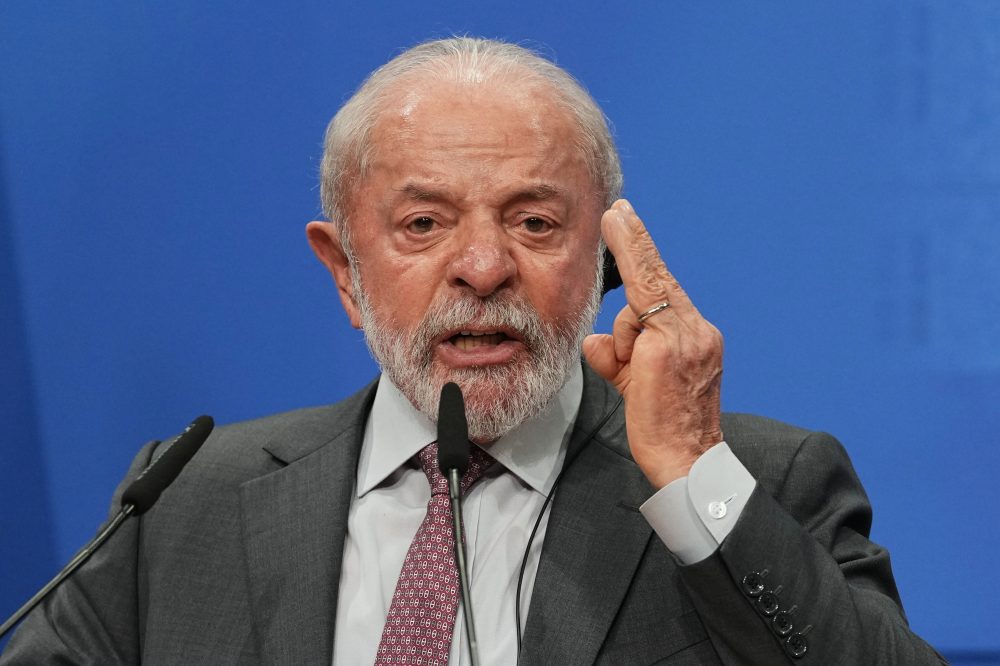
Brazilian President Luiz Inácio Lula da Silva unveiled a massive public security initiative on Tuesday, allocating 11 billion reais ($2 billion) to combat organized crime in what political observers view as an effort to strengthen his law enforcement reputation before October’s electoral contest.
The comprehensive program targets areas where Lula has faced persistent criticism from political opponents regarding his approach to public safety matters.
Key components of the initiative include intensifying efforts to stop illegal weapons trafficking, disrupting criminal organizations’ financial networks, improving murder case investigations, and upgrading the nation’s correctional facilities. Brazilian officials announced that approximately 1 billion reais ($190 million) will be allocated through December.
The funding will enable authorities to acquire sophisticated equipment including unmanned aircraft, body scanning technology, metal detection devices, cellular signal jamming equipment, X-ray systems, surveillance technology, radar systems, genetic identification tools, and transportation vehicles. The program specifically targets two major criminal enterprises: the First Command of the Capital (PCC) and the Red Command (CV).
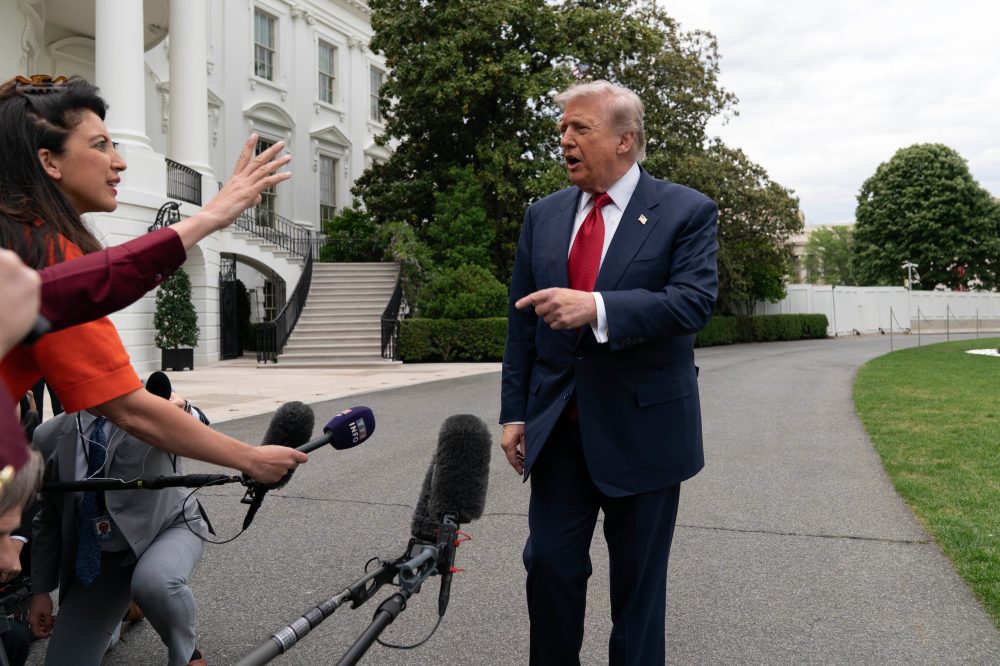
Speaking at the presidential palace in Brasilia during the program’s announcement, Lula, who is seeking his fourth presidential term, revealed he had discussed security matters with U.S. President Donald Trump during his recent Washington visit.
“I told him we had proposals on financial asphyxiation (of crime gangs), fighting money laundering. Some of the weapons (used in Brazil) come from the United States,” Lula stated. “I told him that, if he wants to be a part of this, there’s space. But he will have to work in agreement with what are decisions of Brazil’s government and Brazil’s police.”
Congressional supporters of the president indicated that opposition state governors, who oversee regional law enforcement agencies, are hesitant to utilize resources from Tuesday’s announced program.
Senator Flávio Bolsonaro and former Goias state Governor Ronaldo Caiado have consistently promoted hardline crime policies while criticizing Lula’s Workers’ Party for what they characterize as insufficient attention to public safety.
While Lula avoided responding to such criticism during the program launch, Vice President Geraldo Alckmin criticized former President Jair Bolsonaro, who has nominated his son as a presidential candidate.
“The only security policy in the previous presidency was to distribute weapons, allow weapons,” Alckmin stated. “And those end up with criminals, with organized crime. It is police who should be able to bear arms.”
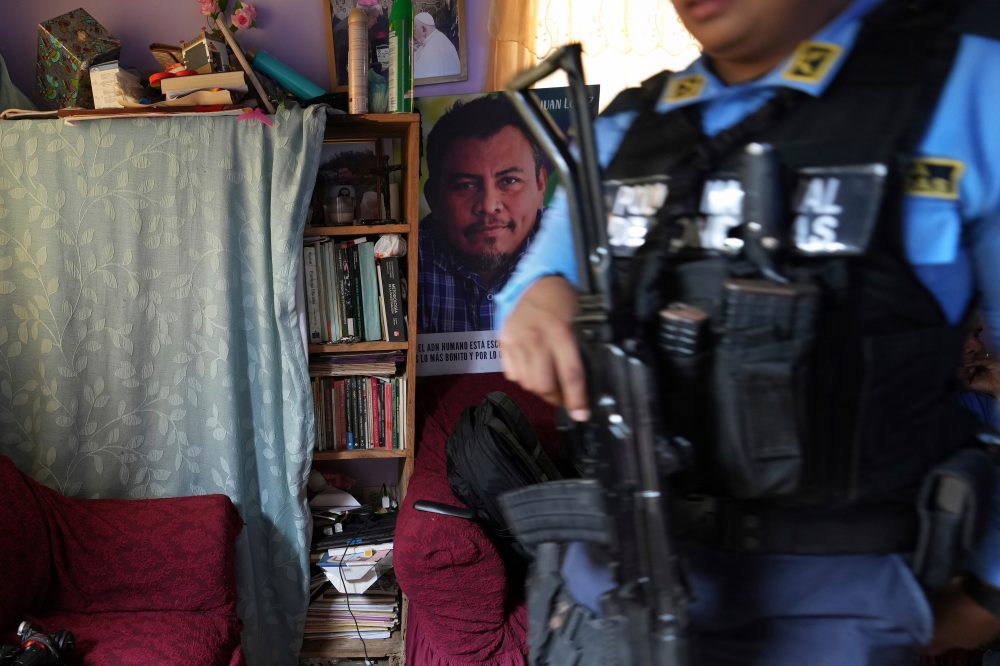
TEGUCIGALPA, Honduras — Law enforcement officials in Honduras detained three individuals Tuesday, including a former high-ranking politician, in connection with planning the 2024 murder of an environmental activist that highlighted government corruption and the dangers faced by those defending natural resources in Central America.
Former Tocoa mayor Adán Fúnez was taken into custody at his residence Tuesday as the suspected mastermind behind the killing, after years of allegations from religious and environmental groups.
The victim, Juan López, fought against corruption and spearheaded community opposition to an iron oxide mining operation in Colon, a remote area in northwestern Honduras. Activists argued the project threatened the region’s pristine forests and clear waterways, including protected conservation zones. López frequently criticized Fúnez, who backed the mining venture and maintained close ties to former Honduran President Xiomara Castro.
López demanded Fúnez’s resignation in September 2024 over corruption allegations.
Shortly afterward, a masked shooter killed the environmental and human rights advocate with six gunshots to the chest and one to the head, prompting calls for accountability from the Biden administration, Pope Francis and the United Nations. The killing also brought accusations against Fúnez, an influential figure in the region’s long-running violent land disputes. The murder recalled international outrage over the 2016 assassination of Honduran environmentalist Berta Cáceres.
More than a year after the killing, authorities arrested Fúnez alongside businessman Héctor Eduardo Méndez and Juan Ángel Ramos Gallegos. Prosecutors charged them with criminal conspiracy that violated fundamental rights.
“These three individuals are believed to be the intellectual authors of the environmentalist Juan López’s death,” Public Prosecutor’s Office spokesperson Yuri Mora told The Associated Press.
The arrests follow several other detentions made months earlier, though environmental and religious leaders had long identified Fúnez as the assassination’s orchestrator. The public trial for all three defendants is scheduled to start in June.
Environmental advocacy carries significant risks in Honduras. Activists like López frequently serve as unwelcome watchdogs in resource-abundant regions of Latin America, which ranks as the world’s most dangerous area for environmentalists, according to advocacy group Global Witness.
Global Witness recorded 117 defender deaths in 2024, with 82% occurring in Latin America. Five activists died in the small Central American country, compared to 18 the previous year, based on their latest findings. In López’s hometown of Tocoa, environmental advocates opposing the mining project have faced systematic targeting for years, with eight activists jailed for over two years in what attorneys described as retribution for their activism.
Dalila Santiago, López’s close associate and fellow movement leader, expressed surprise at Fúnez’s arrest given Honduras’ widespread culture of impunity. Santiago described the detentions as validation that their struggle for justice and land protection justified the violent consequences they endured. She emphasized that Honduran officials must pursue other responsible parties and business executives connected to the mining operation.
The Honduran mining companies — Inversiones Los Pinares, Inversiones Ecotek and their parent organization — face environmental destruction charges filed by Honduras’ Public Prosecutor’s Office following López’s murder. The companies have highlighted the hundreds of employment opportunities the mine generated and their regional economic contributions.
“We’ve been calling for justice for so long,” Santiago said. “And we need the masterminds behind this to be caught and punished.”
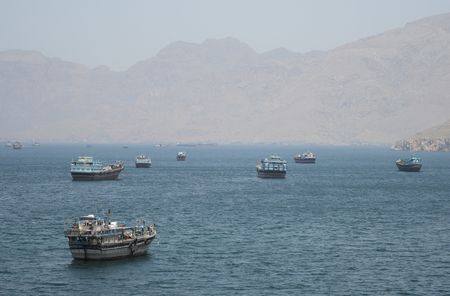
Iraq and Pakistan have negotiated separate agreements with Iran to allow energy shipments through the strategically vital Strait of Hormuz, according to five sources familiar with the arrangements, showcasing Tehran’s growing influence over critical energy transportation routes.
Regional conflict involving the U.S. and Israel has dramatically reduced energy shipments from an area that typically provides 20% of global crude oil and liquefied natural gas supplies. Recent U.S. blockades of Iranian ports have further complicated the situation. While Iran initially attempted to completely shut down strait traffic, experts say the strategy has evolved.
“Iran has shifted from blocking Hormuz to controlling access to it … Hormuz is no longer a neutral transit route, it is a controlled corridor,” said Claudio Steuer from the Oxford Institute for Energy Studies.
Iraq, which typically ships most of its crude through the strait, has been severely impacted by the closure. Pakistan, attempting to mediate the conflict, relies heavily on Gulf energy imports and has experienced dramatically higher fuel costs.
Through a previously unreported arrangement between Baghdad and Tehran, Iraq obtained safe passage for two massive crude carriers, each transporting approximately 2 million barrels of oil, which successfully navigated the strait this past Sunday.
Baghdad continues working to obtain Iranian permission for additional transits, according to an Iraqi oil ministry official knowledgeable about the original agreement and ongoing negotiations. The government aims to protect oil revenues that comprise 95% of its national budget.
“Iraq is a close ally of Iran, and any deterioration in Iraq’s economy would also damage Iran’s economic interests in the country,” the official explained.
Two additional Iraqi oil ministry officials and a shipping industry source confirmed the Tehran negotiations. All sources requested anonymity since they lacked authorization to discuss the matter publicly.
Iraqi government representatives did not immediately respond to requests for comment.
Meanwhile, two tankers carrying Qatari LNG are traveling to Pakistan following a separate bilateral arrangement between Islamabad and Tehran, two industry sources told reporters, also requesting anonymity due to media restrictions.
Pakistan previously received approximately 10 LNG shipments monthly before the conflict began and now faces high summer electricity demand for air conditioning.
Sources indicated that neither Iraq nor Pakistan made direct payments to Iran or its Islamic Revolutionary Guard Corps for the transit arrangements.
Qatar was not directly participating in the bilateral agreements, industry sources noted, though it notified the United States before the Pakistan shipments.
Pakistani petroleum and information ministries, along with Qatar’s foreign ministry, did not immediately respond to comment requests.
Additional countries are exploring similar arrangements, according to sources familiar with the discussions, as escalating energy costs and supply disruptions heavily impact economies, particularly in Asia.
“As more governments become willing to cut deals with Iran for passage, it risks normalising the idea that Iran will control the Strait of Hormuz on a more permanent basis,” explained Saul Kavonic, research director at consultancy MST Marquee.
Before the conflict, approximately 3,000 vessels traveled through Hormuz monthly. Current traffic represents roughly 5% of previous levels, shipping data indicates.
The disruption has driven Brent crude prices up more than 50% since the conflict began in late February. European and Asian LNG prices have increased between 35% and 50%.
Iran has expressed intentions to maintain strait control after the war ends. Tehran has demanded reparations, sanctions relief, and access to frozen assets as settlement conditions, which President Donald Trump called “garbage,” eliminating hopes for a conflict resolution deal.
Industry sources report Iran is formalizing its strait control. Iraq has been asked to submit documentation for each tanker to enable transit through designated maritime routes under Iranian naval supervision, one Iraqi oil ministry official revealed.
Specialized Iraqi oil ministry teams are providing Iranian authorities with comprehensive vessel information, including destinations, shipping details, ownership, and cargo specifications to prevent incidents.
A Pakistani source involved in Iranian vessel passage negotiations mentioned some procedural difficulties.
“The IRGC sometimes changes the goalposts, so it is hard to keep things on track, but we are working through it,” he said.
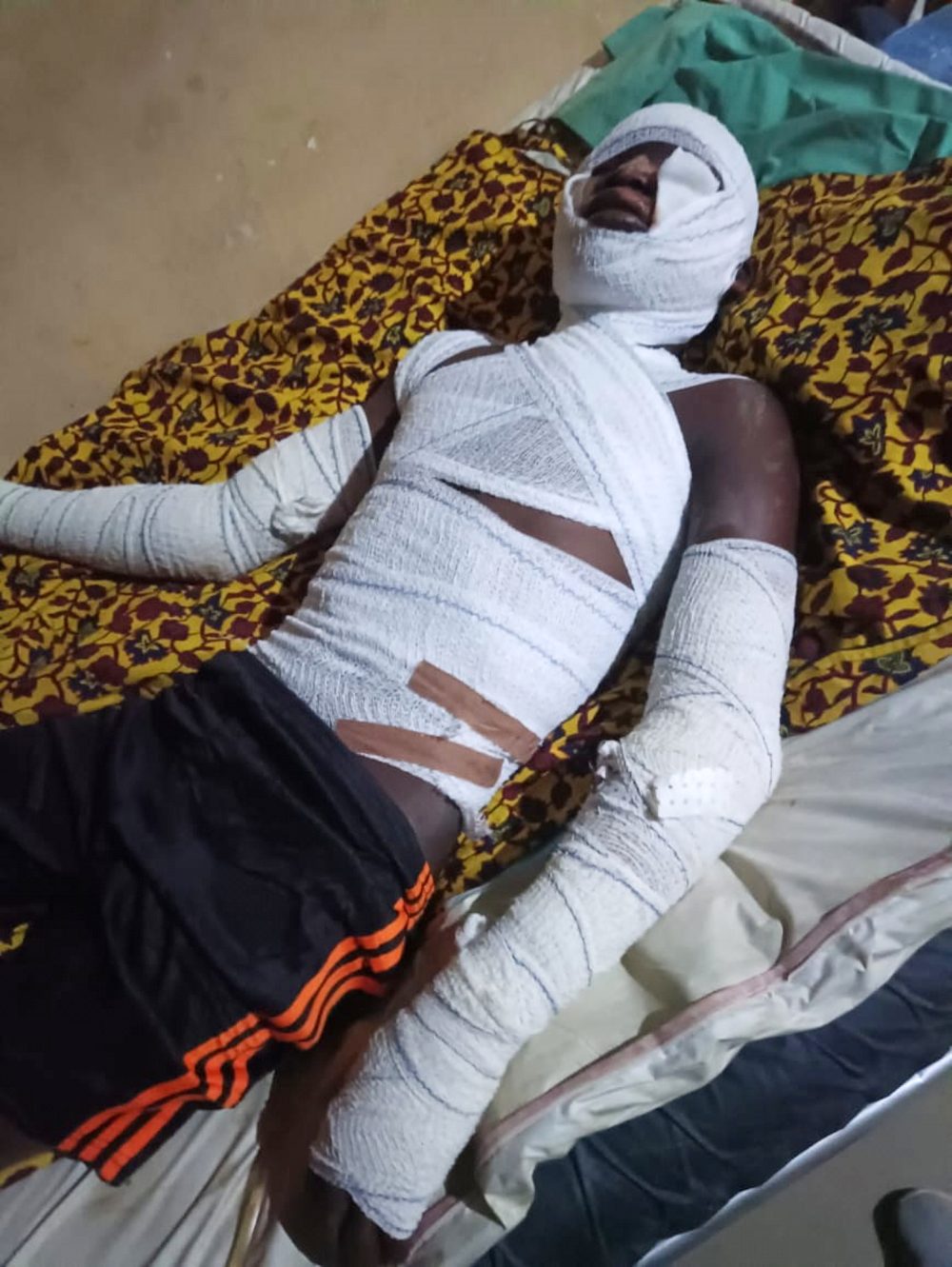
ABUJA, Nigeria — Nigerian military officials are pushing back against allegations from a human rights organization that a weekend airstrike resulted in the deaths of 100 civilians at a local marketplace, highlighting ongoing concerns about military operations targeting armed groups in the nation’s unstable northern regions.
According to a Monday statement from Amnesty International, Nigerian forces conducted an aerial attack Sunday on a marketplace located in Tumfa within Zamfara state. Ibrahim Bello Garba, a Red Cross representative in the region, verified the military operation occurred and confirmed that “multiple civilians” lost their lives in the incident.
“In one village alone, 80 people were buried and there is no evidence that any of those people killed is a bandit. They are all civilians. The majority of them are young girls and small boys,” Amnesty International Nigeria director Isa Sanusi told the AP.
While military officials acknowledged conducting aerial operations in the area, they contested the casualty reports. “No verifiable evidence of civilian casualties as being suggested in the media has been established,” according to military sources.
Maj. Gen. Michael Onoja, serving as a military spokesperson, emphasized that “Civilians are not the target, and everything is being done to avoid civilian casualties.” He noted that military operations remain active in the region.
This latest accusation adds to a growing list of incidents involving unintended military strikes affecting civilian populations in the West African country, which continues battling various militant organizations including Boko Haram.
Just last month, Nigerian air force operations resulted in an accidental strike that claimed 100 lives.
Military experts point to insufficient coordination between aerial units and ground forces as a contributing factor to these incidents, which have resulted in hundreds of civilian deaths. Government representatives maintain their operations specifically target members of armed militant groups.
The challenge of distinguishing targets becomes more complex as armed groups frequently operate among civilian populations in their areas of control.
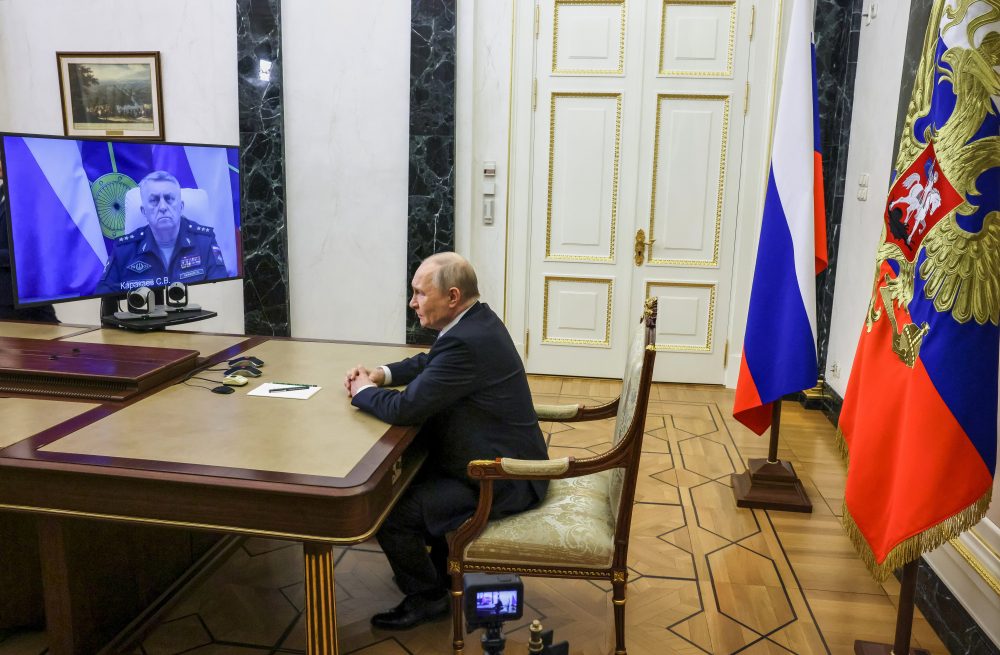
Russian President Vladimir Putin announced Tuesday that his country successfully conducted a test launch of its newest intercontinental ballistic missile, describing the weapon as part of ongoing efforts to upgrade Russia’s nuclear capabilities. The announcement came just days after Putin’s recent statements suggesting the conflict in Ukraine may be approaching its conclusion.
The nuclear-capable Sarmat missile is scheduled to begin active military service before the end of this year, according to Putin. The weapon is designed to take the place of the older Soviet-era Voyevoda missile system.
“This is the most powerful missile in the world,” Putin declared, explaining that the combined destructive capability of the Sarmat’s multiple independently targeted warheads exceeds that of comparable Western weapons by more than four times.
Putin has consistently used nuclear threats as a diplomatic tool since ordering Russian forces into Ukraine in February 2022, attempting to discourage Western nations from increasing their military assistance to Ukraine.
Following his participation in Saturday’s Red Square military parade marking the anniversary of Nazi Germany’s defeat in World War II—notably the first such parade in nearly twenty years without heavy military equipment on display—Putin stated that the Ukrainian conflict is nearing its conclusion.
Throughout his tenure since 2000, Putin has directed comprehensive modernization of Russia’s nuclear capabilities inherited from the Soviet Union, including deployment of hundreds of new land-based intercontinental missiles, construction of advanced nuclear submarines, and upgrades to nuclear-capable aircraft.
Russia’s nuclear modernization program prompted the United States to begin its own expensive arsenal upgrade initiative.
The final nuclear arms control agreement between Russia and the United States lapsed in February, marking the first time in over fifty years that the world’s two largest nuclear powers operate without restrictions on their atomic weapons stockpiles, raising concerns about an unlimited arms competition.
The Sarmat missile—known by the Western designation “Satan II”—is intended to replace approximately 40 Soviet-built Voyevoda missiles. Development of the weapon began in 2011, and prior to Tuesday’s test, the missile had achieved only one confirmed successful launch and reportedly experienced a catastrophic failure during a 2024 test attempt.
Putin explained Tuesday that the Sarmat—among several advanced weapons systems he unveiled in 2018 while asserting they would neutralize potential U.S. missile defense systems—matches the Voyevoda’s power while offering superior accuracy. The missile can achieve suborbital flight patterns, Putin noted, providing it with a striking distance exceeding 35,000 kilometers (21,700 miles) and enhanced ability to overcome potential missile defense barriers.
Among Moscow’s new weapon systems is the Avangard hypersonic glide vehicle, which can travel at speeds 27 times faster than sound. Initial units of this weapon have already been deployed.
Russia has also deployed the nuclear-capable Oreshnik intermediate-range ballistic missile, using conventional versions of this weapon twice in strikes against Ukraine. The Oreshnik’s maximum range of 5,000 kilometers (3,100 miles) allows it to strike any location across Europe.
Putin additionally revealed that Russia is approaching completion of two other advanced weapons: the nuclear-armed Poseidon underwater drone and the Burevestnik cruise missile, which operates using miniaturized nuclear reactors.
The Poseidon system is engineered to detonate near enemy coastlines, creating radioactive tsunamis. The Burevestnik possesses essentially unlimited operational range due to its nuclear propulsion system, enabling it to remain airborne for extended periods while circumventing air defense systems before attacking from unexpected angles.
Putin characterized these advanced weapons as Russia’s response to American missile defense systems developed following Washington’s 2001 decision to abandon a Cold War-era agreement that restricted missile defense capabilities.
Russian defense strategists have expressed concern that missile defense systems might encourage Washington to attempt a preemptive nuclear strike designed to eliminate most of Moscow’s nuclear forces, with the expectation of intercepting any remaining retaliatory missiles.
“We were forced to consider ensuring our strategic security in the face of the new reality and the need to maintain a strategic balance of power and parity,” Putin said.
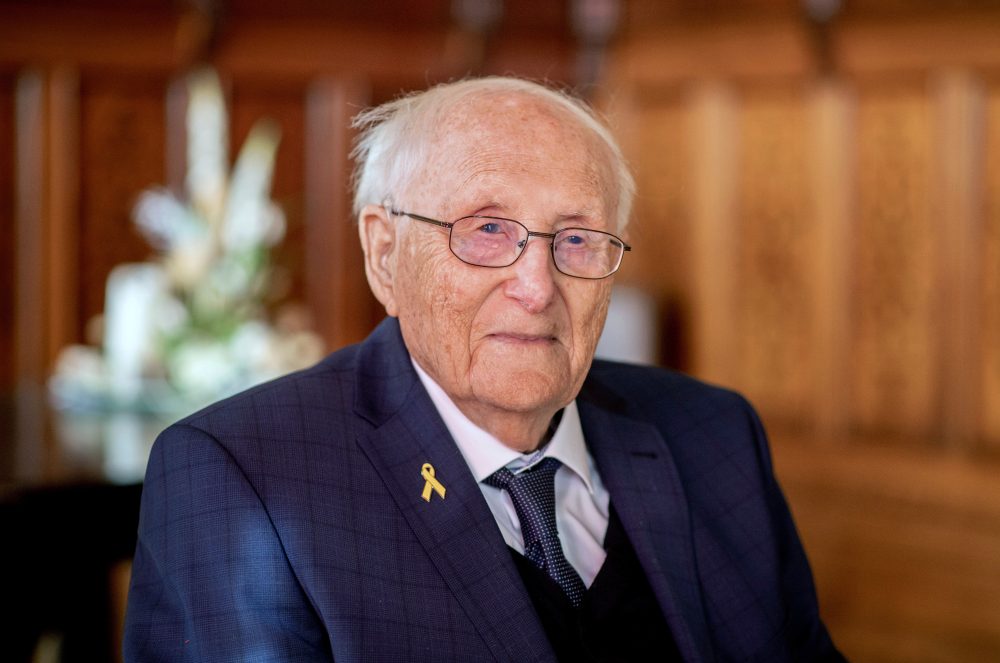
A Holocaust survivor who dedicated his final decades to educating others about the Nazi era has passed away at 101 years old in northwestern Germany, local officials announced Tuesday.
Albrecht Weinberg died in the town of Leer just weeks after celebrating his birthday and attending the debut of a documentary about his experiences titled “Es ist immer in meinem Kopf” (“It is always in my head”), which drew hundreds of attendees, according to a city statement.
“Since returning from New York to his East Frisian home 14 years ago, Albrecht recounted tirelessly and with incredible energy his terrible experiences during the Nazi era and warned again and again against forgetting,” said Mayor Claus-Peter Horst.
Born on March 7, 1925, in Rhauderfehn near Leer, Weinberg endured imprisonment at Auschwitz, Mittelbau-Dora and Bergen-Belsen concentration camps, as well as surviving three forced death marches as World War II concluded. He dedicated many years to sharing his story with high school students and community groups about the horrors he witnessed.
In a recent interview, Weinberg described how his wartime trauma continued to affect him daily. “I sleep with it, I wake up with it, I sweat, I have nightmares; that is my present,” he explained.
He expressed deep concern about preserving Holocaust memory for future generations. “When my generation is not in this world anymore, when we disappear from the world, then the next generation can only read it out of the book,” he said.
In 2017, Germany honored Weinberg with its Order of Merit, though he returned the award last year following a parliamentary vote. He protested the decision where a motion by Friedrich Merz, now Germany’s chancellor, to increase border restrictions for migrants passed with support from a far-right political party.
Israel’s German ambassador Ron Prosor honored Weinberg on social media, describing him as “a bridge — between past and present, between pain and hope, between the dead he could never forget and the young people whom he encouraged to seek the truth.”
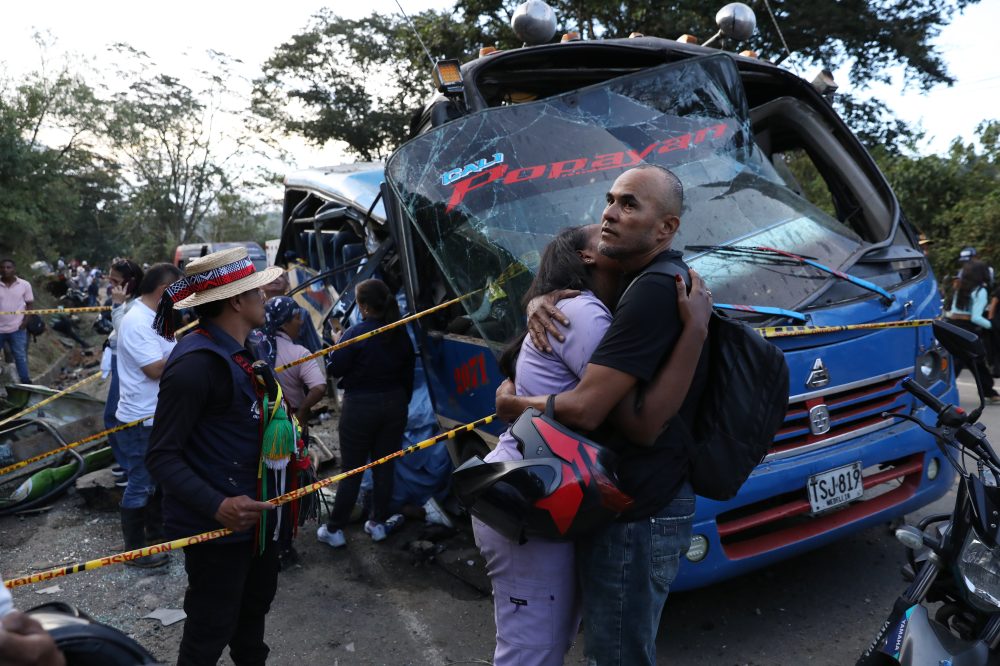
BOGOTA, Colombia – Civilians in Colombia endured their most devastating year of armed violence in a decade during 2025, according to a new report released Tuesday by the International Committee of the Red Cross highlighting the country’s worsening security crisis.
The humanitarian organization documented that forced displacement doubled last year, affecting 235,000 individuals as criminal organizations and insurgent groups battled both government forces and each other for territorial dominance. Community lockdowns enforced by rebel factions in rural towns and villages also surged by 99% compared to the previous year.
Colombia has experienced decades of warfare as insurgent movements and narcotics traffickers compete with government forces for control over remote regions, particularly strategic routes connected to cocaine smuggling operations.
While a 2016 peace agreement between Colombian authorities and the country’s most powerful rebel organization, the Revolutionary Armed Forces of Colombia (FARC), initially decreased rural bloodshed, security conditions have since declined across numerous regions. Smaller armed factions have moved to seize territories previously controlled by FARC fighters, imposing taxes on local enterprises and threatening civilians who resist their authority.
“The humanitarian situation in 2025, is the result of a progressive deterioration that the ICRC has warned about since 2018,” stated Olivier Dubois, the ICRC’s chief of mission in Colombia.
President Gustavo Petro’s government has spent the last four years attempting to curb rural violence through negotiations with surviving rebel organizations and establishing temporary ceasefires with several groups.
However, opponents argue these truces have allowed insurgent forces to reorganize, acquire weapons, and tighten their control over local populations, leading to increased recruitment of minors into criminal organizations.
Political violence has also escalated throughout Colombia, exemplified by the fatal shooting of a presidential candidate during a campaign event in Bogota last year. Government officials have attributed the assassination to one of the country’s rebel factions.
The United Nations Human Rights office in Colombia reported in February that the nation’s security conditions were experiencing significant “backsliding,” with killings of human rights advocates rising 9% during the previous year.
Tuesday’s Red Cross report also revealed that 965 individuals were killed or wounded by explosive weapons, including landmines and drone attacks, representing a 33% increase from the prior year.
The humanitarian organization called on all parties involved in Colombia’s ongoing conflict to honor civilian protections and safeguard those seeking to withdraw from hostilities.
“Respect for international humanitarian law is not optional,” the group emphasized.
A Jerusalem-based watchdog organization revealed Tuesday that it will experience its first leadership change since its founding, with current Vice President Olga Deutsch set to become CEO and president effective January 1, 2027.
NGO Monitor’s founder Gerald Steinberg, who has guided the organization for a quarter-century, will transition to the role of president emeritus while maintaining his involvement in research and writing activities.
Deutsch brings more than ten years of experience with the organization to her new role, having managed European engagement initiatives, fundraising efforts, and international partnership development during her tenure.
Speaking about her upcoming responsibilities, Deutsch expressed both reverence and determination for the task ahead. “I step into this role with humility and a profound sense of historic responsibility,” Deutsch said. “Gerald foresaw that human rights groups would weaponize their influence against the Jewish state and Jewish communities worldwide; since October 7, that warning has become reality, with the threat growing every day.”
Deutsch emphasized the organization’s continued mission to examine groups that target Israel while supplying critical information to government officials and policymakers.
“At this critical moment, NGO Monitor stands singularly positioned to expose the actors behind these campaigns, and to arm decision-makers with facts needed to inform sound policy decisions,” Deutsch said. “Together with our exceptional team, and our professional and lay leadership, I am honored to lead this mission forward.”
The organization traces its origins to 2002, when Steinberg launched NGO Monitor following the Durban Conference. The initiative emerged as what the group characterized as a counter-response to the growing political power of human rights nongovernmental organizations, especially concerning advocacy related to Israel.
NGO Monitor describes its core mission as conducting research, promoting transparency, and examining organizations and funding sources involved in human rights and humanitarian advocacy work.
Steinberg expressed confidence in the organization’s direction under new leadership. “As I transition into the role of President Emeritus, and continue with research and writing, I do so with full confidence in NGO Monitor’s future,” Steinberg said.
“Olga is distinctly qualified to lead NGO Monitor forward, and under her leadership, NGO Monitor will continue to expand the impact of its research and uphold the vision that has guided me for the past quarter century,” he added.
Culinary professionals from across Israel gathered at Tel Aviv’s waterfront to showcase their heritage through food, proving that even amid regional tensions, the spirit of celebration endures. The annual EAT Festival, running from May 11-14 at Charles Clore Park, drew massive crowds despite looming security concerns.
Roey Mantzour, who operates the Arayes catering business specializing in meat-filled pita bread, believes Israeli cuisine mirrors the nation’s character. “The food in Israel reflects who we are: smart, diverse, a gathering of exiles from all over the world who came here to live. And here, we have the best food in the world,” Mantzour explained.
Monday evening’s festival opening saw thousands of visitors flooding the seaside park, creating a lively atmosphere filled with aromatic spices, grilled meats, baked goods, and desserts. Vendors offered an extensive range of options, from traditional meat dishes and street food to plant-based alternatives, sweets, and beverages.
The event demonstrated Israelis’ determination to maintain normalcy and joy during challenging times. Families, couples, tourists, and friend groups filled the park, embracing the creative energy of Tel Aviv against the Mediterranean backdrop. Daily festivities begin at 6 p.m., featuring live music and dining as the sun sets over the coastline.
Yaniv Wahby traveled from Daliyat al-Karmel in northern Israel to serve traditional Druze specialties including stuffed grape leaves, rice-filled cabbage rolls, za’atar pastries with olive oil, and signature Druze flatbread topped with various ingredients from labneh and chocolate to fresh fruit, halva, and hummus.
Wahby’s northern community has endured significant hardship from Hezbollah rocket attacks in recent months, nearly forcing him to close his business due to decreased tourism. However, he maintained an optimistic outlook at the festival. “We really suffered in Daliyat al-Karmel. During the war, things were very difficult,” Wahby shared with The Media Line. “Now, thank God, we finally have a little breathing room. We came here, as we do every year, to create a good atmosphere and give people a chance to be happy. We’re giving it everything we’ve got.”
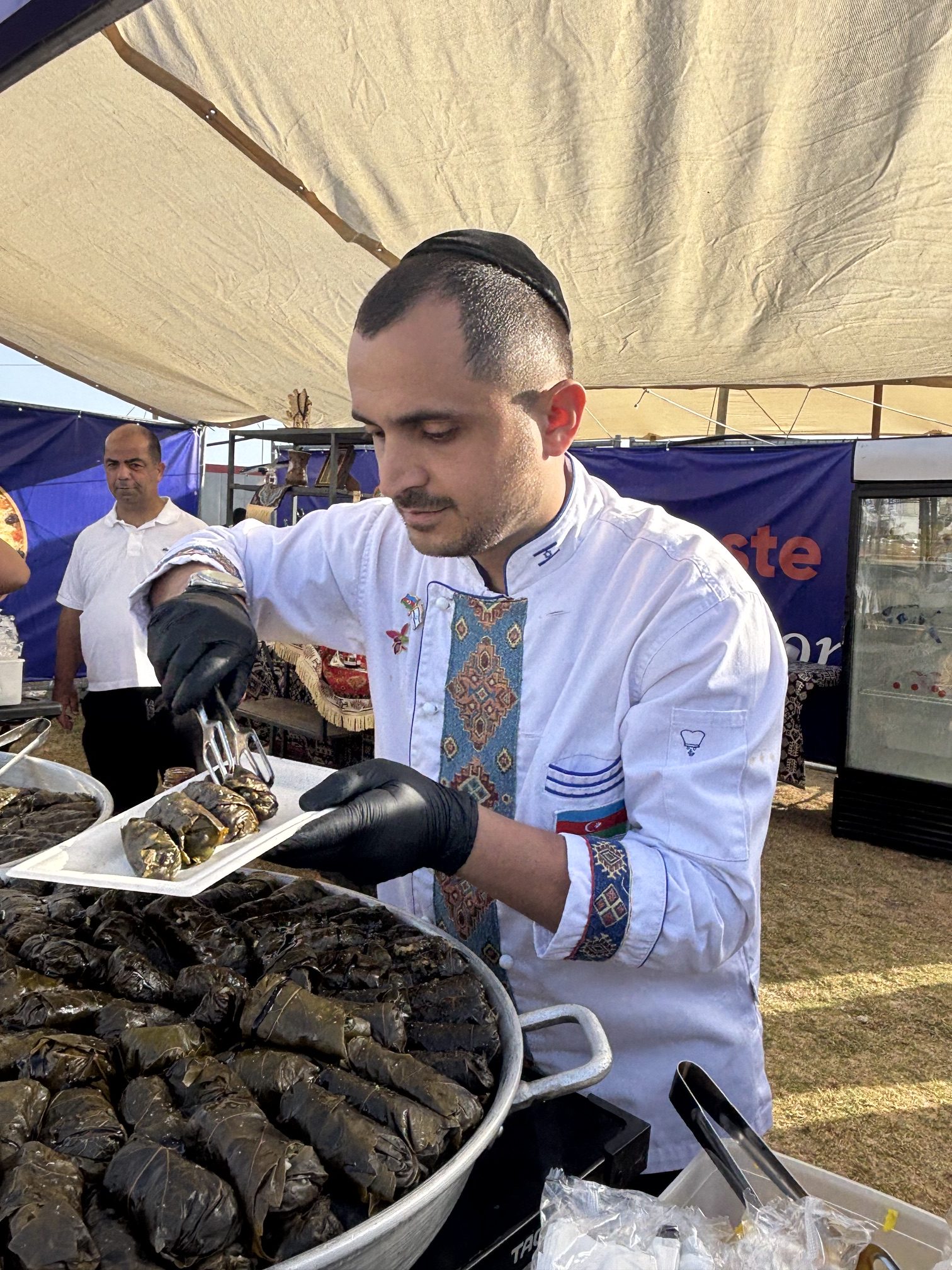
Chef Moti Yevdayev, an Azerbaijani immigrant who arrived in Israel in 1998, presented his mother’s traditional recipes while wearing colorful traditional clothing in turquoise, red, and yellow hues. “From the age of one, I was always near the tandoor oven, my aunt, my mother, and my whole family while they cooked,” Yevdayev told The Media Line. “Over the years, I grew up and decided I wanted to enter the culinary world because food is what I love most.”
Yevdayev emphasized the authenticity of Azerbaijani cooking, highlighting fresh vegetables and minimal seasoning. According to the chef, the cuisine relies primarily on salt, pepper, saffron, and “lots of love and patience.”
His featured dish, shah plov, consists of rice steamed with dried fruits, raisins, chestnuts, meat, caramelized onions, and pomegranate, all encased in dough and baked for hours. “It creates this incredible crust while everything inside steams together into one perfect bite, sweet, sour, salty, and rich,” the chef described.
Additional offerings included qutab, a grilled pastry with spinach and herbs or meat, brushed with vegan butter substitute to maintain kosher standards, and gürzə dumplings with both meat and vegetarian potato-onion versions. He also brought authentic stuffed grape leaves directly from Azerbaijan.
Currently serving as chef for the Azerbaijani Embassy in Israel, Yevdayev manages all embassy events and leads kosher culinary tours internationally. Security concerns have prevented his long-held restaurant dreams, though he hopes this year will finally allow that goal to materialize.
“Today we’re here at the festival in Tel Aviv. This is a huge dream of mine,” Yevdayev said. “We make all the food here by hand. It’s very hard work. Around 20 older women came to help cook because only they know the traditional folding, stuffing, and preparation techniques. It’s honestly beautiful to watch, almost like a movie.”
Asian cuisine was well-represented through authentic Thai and Korean food stalls. Suni Kim originally visited Israel eight years ago for the Jerusalem Marathon and fell in love with the country. After returning permanently a year later, she met her husband and now has a one-year-old child. Three years ago, she established Tel Aviv’s first Korean restaurant, Kimchi’s Korean Restaurant.
Kim’s festival offerings included authentic Korean dishes such as bibimbap, Korean barbecue, and Korean corn dogs – “anything that you see on TikTok that people love to try,” she explained to The Media Line.
Observing the packed park around her, Kim praised Israeli resilience. The people of Israel are “very, very brave. One day, there’s a tragedy, and the next day, they recover so fast. And it’s very, very impressive.”
She noted that despite living under war’s shadow, “everyone’s excited to come out for the food, so it shows the energy.”
Jerusalem’s renowned Machneyuda restaurant, established by celebrity chef Assaf Granit, sent representative Gal Hadar to the festival. According to Hadar, they participate because “the sea is here. You can get a tan. It’s not cold here,” and crucially, “The people of Tel Aviv want polenta. They don’t want to travel to Jerusalem for polenta, so the polenta comes to them.”
Machneyuda’s signature polenta with mushroom ragout and truffle oil was featured alongside buns filled with chorizo and siska, a spiced meat preparation. Hadar explained that superior siska originates from Jerusalem because “that is where the Kurdish people live and they brought their traditions and food culture there.”
When asked if Tel Aviv residents appreciate Jerusalem cuisine, Hadar responded confidently: “Yes, very much. We try our best to make them love it.”
Mantzour showcased his specialty dish of pita stuffed with kebab meat, typically fatty lamb. “We grill it over a very low flame so the pita becomes crispy while the kebab stays soft,” he described to The Media Line. “We serve it with dips like tahini, red harissa, and pickles.”
While acknowledging arayes as traditionally Lebanese, he jokingly remarked that “we took it from the Arabs like everything else.” Despite this humor, he expressed genuine pride in participating annually since the festival’s inception a decade ago.
“Tel Aviv is undoubtedly the culinary center of Israel,” Mantzour stated, emphasizing this year’s special significance. “This event is extremely important this year because there haven’t been many events since Purim. This is a very major event in Israel, and it’s important that it happens. We’re very happy it’s taking place despite the tension in the background.”
Tamir Cohen, Mantzour’s colleague, echoed these sentiments. “Food in Israel is the best therapy for us Israelis,” Cohen concluded. “Through food and culinary culture, we continue living. For us, food is the cure for all the madness we experience as a nation. We are a people constantly living through wars, but we also love to enjoy life, celebrate, and eat.”
Hadar from Machneyuda added: “Am Yisrael Chai – long live the people of Israel.”
A Palestinian-Syrian journalist’s investigation into a luxury development project in Damascus sparked controversy not for its corruption allegations, but because of the reporter’s Palestinian heritage, highlighting growing tensions for Palestinian refugees in post-Assad Syria.
When Qusai Amameh published his report about Mount Qasioun’s redevelopment plans for a five-star hotel and commercial complex, he anticipated discussions about transparency and reconstruction priorities. However, the criticism he received centered on his Palestinian identity rather than his journalism.
On May 3rd, Syria Shift, a platform allegedly connected to Syria’s Ministry of Information, released a video called “The Palestinian Filter” targeting Amameh, who serves as editor-in-chief of the Syrian platform Street. The segment focused on his Palestinian background instead of addressing his reporting content, raising fundamental questions about belonging and acceptance in modern Syria.
Fayez Abu Eid, who leads the Action Group for Palestinians of Syria, explained to The Media Line how social media has amplified hostility toward Palestinian refugees. “As political debate has moved onto social media and digital platforms, it’s become easier for criticism to cross the line into hostility, especially toward Palestinian refugees in Syria. There’s a difference between criticizing a person or a political position and blaming an entire community. When people start speaking in broad generalizations, it can fuel prejudice and deepen stereotypes,” he stated.
The controversial video sparked widespread condemnation from journalists, activists, and Palestinian rights advocates who accused the platform of encouraging discrimination and collective suspicion. Following intense public backlash, Syria Shift eventually deleted the video from its platforms.
Palestinian community members view this incident as part of a broader pattern affecting minorities in post-Assad Syria. Similar to how Alawites face scrutiny due to their association with the former regime and Druze communities encounter separatism accusations, Palestinians increasingly find themselves viewed with suspicion rather than as integral members of Syrian society.
These concerns intensified in April when Syrian security forces detained Palestinians throughout Damascus and surrounding areas following demonstrations against an Israeli law imposing death penalties for certain Palestinians convicted of terrorism-related offenses. Authorities arrested at least 30 individuals from Khan al-Shih camp alone, with additional detentions in Jaramana, al-Huseiniyeh, Rukneddine, and al-Hamah. Many were transported to undisclosed locations without official explanation.
The controversial Israeli legislation, promoted by National Security Minister Itamar Ben-Gvir, passed the Knesset on March 30th with a 62-48 vote. Palestinian leaders and rights organizations condemned the law as creating discriminatory punishment systems, and its passage triggered regional protests.
Thousands of Syrians demonstrated from Damascus to Daraa, showing solidarity with Palestinians and opposing Arab normalization with Israel. In Damascus, protesters who had gathered at Umayyad Square broke away from the main rally and attacked the United Arab Emirates embassy. The UAE subsequently condemned what it termed “riots, acts of vandalism, and assaults” at its diplomatic facilities.
US Special Envoy to Syria Tom Barrack called on Damascus to protect all diplomatic missions while continuing “the courageous work of reconciliation,” describing Syria’s regional reengagement as a defining chapter. The Syrian Foreign Ministry distanced itself from the violence, stating it did not represent the Syrian people.
Ryan Maarouf, a Syrian journalist from As Suwayda, told The Media Line that the new authorities are applying the same control strategies to Palestinians that they’ve used with other minority groups. “Just as the authorities tried to impose central control over the Druze, Alawites, and Kurds, it is natural that they would seek the same with Palestinians: ensuring full loyalty, preventing any independent political space, and eliminating any force that could be seen as a future source of concern,” he explained.
Maarouf noted that Damascus interprets Palestinian political expression through an Israeli security lens. “The Palestinian file in Syria is not only a social or legal issue. It is also tied to Israel’s security file, because any political or organizational Palestinian presence can be read by Israel as a threat, which makes the authorities even more sensitive toward it,” he said.
Following the UAE Embassy incident, some commentators broadly implicated Palestinians, with pro-government voices using the event to incite against the community and revive accusations that they represent political and security burdens. Rather than being viewed as refugees with historical Syrian connections, they were portrayed as destabilizing external forces.
Human rights organizations have warned that Palestinians are increasingly characterized either as security threats or remnants of the old regime, leading to enhanced scrutiny and social exclusion. Activists argue that the rapid resurgence of collective blame demonstrates that the Amameh case represents a wider atmosphere treating Palestinians as permanent outsiders.
Abu Eid emphasized the humanitarian toll Palestinians endured during Syria’s conflict years. “During the years of war, Palestinians in Syria paid a severe humanitarian price, even though many tried as much as possible to stay out of the conflict,” he said. “More than 7,500 Palestinians were arrested by the former regime’s security forces, around 1,500 died under torture, and the fate of more than 5,000 remains unknown to this day.”
Yarmouk camp, established in 1957 for Palestinians displaced during the 1948 Arab-Israeli war, exemplifies this suffering. Located on Damascus’s southern edge, the camp housed approximately 160,000 residents by 2011, making it Syria’s largest Palestinian refugee community. The Free Syrian Army entered in December 2012, followed by an Assad regime siege in July 2013 that cut off food and medicine supplies. Over 160 people died from starvation, and a 2018 regime offensive destroyed most of the camp, including UN Relief and Works Agency facilities.
A Yarmouk camp social worker, speaking anonymously for safety reasons, told The Media Line that while Palestinians haven’t experienced direct ground-level measures, media discourse close to authorities has become increasingly harsh. “There is a growing feeling that some voices are trying to demonize Palestinians and portray them as an obstacle to Syria’s stability, and this is causing real concern among Palestinians in Syria,” the worker said.
According to UNRWA’s 2026 humanitarian appeal, 92% of Palestine refugees in Syria—more than 384,000 people—face food insecurity, up from approximately 63% in March 2024. Additionally, roughly 30%, or more than 125,000 people, remain in protracted internal displacement.
Abu Eid confirmed that suspicion has persisted under the new government. “Even today, many Palestinians feel they are viewed with suspicion or treated through broad narratives that ignore the diversity of their positions and experiences during the war,” he said. “This feeling grows stronger when decisions affecting them are issued and then later amended or apologized for.”
These fears escalated last year following reports that official documents had replaced “Syrian Palestinian” with “Palestinian resident.” The social worker described more extensive changes: “The description ‘Syrian Palestinian’ was replaced with ‘resident Palestinian,’ and the original place of registration was removed in favor of classifying them as ‘foreigners.’ This created serious fears for us as Palestinians, because we consider ourselves Syrians as well, not only Palestinians.”
While Syrian authorities characterized these changes as technical errors, Palestinian groups viewed them as attacks on their legal identity. Abu Eid explained the community’s interpretation: “When terms like ‘Palestinian resident’ appeared instead of ‘Syrian Palestinian,’ many people did not see it as a simple technical issue. They understood it as a possible sign of a deeper change in the legal approach to Palestinians and a warning that their long-established rights could be weakened.”
Maarouf offered a more skeptical perspective: “When the label ‘Palestinian resident’ appeared instead of ‘Syrian Palestinian,’ I do not see it as merely a technical mistake, but rather as a way of testing public reaction to any future change related to the legal and social status of Palestinians.”
Palestinians in Syria have historically maintained a unique legal status. Law 260 of 1956 granted many Palestinian refugees rights similar to Syrian citizens in employment, education, public services, and residence, while preserving their Palestinian nationality and excluding them from political rights like voting or holding office.
Maarouf emphasized the deep integration Palestinians achieved over decades: “Palestinians in Syria lived for decades almost as Syrians. They served in the army, owned homes, and built full lives. Presenting them today as an external party or a temporary guest is not just an administrative issue, but a clear political message.”
This contrasts sharply with Palestinian experiences in Lebanon, where they cannot own property, practice dozens of professions, or obtain citizenship, with UNRWA reporting that over 80% live below the poverty line.
A joint April analysis by Syrians for Truth and Justice, the Syria Justice and Accountability Centre, and Justice for Life documented presidential decrees and ministerial decisions throughout 2025 that amended laws and restructured state institutions without parliamentary approval. The reclassification of Palestinians as “foreigners” has raised concerns that Damascus is adopting Lebanon’s model of permanent legal marginalization.
While the Ministry of Information launched a media code of conduct in February to regulate hate speech and promote post-Assad professionalism, critics argue that pro-government media and online networks continue treating minorities—including Druze, Alawites, Kurds, and Palestinians—through loyalty and suspicion frameworks.
This pattern has resulted in documented violence. The US Commission on International Religious Freedom stated in its 2026 Annual Report that transitional authorities “exhibited systematic and ongoing tolerance for egregious violations of religious freedom” throughout 2025, recommending Syria for Country of Particular Concern designation. On March 7, 2025, fighters loyal to transitional authorities or operating under the Ministry of Defense killed at least 1,500 Alawite civilians in two days of summary executions along the Syrian coast. A July 2025 escalation in Suwayda displaced approximately 187,000 Druze, according to Syrians for Truth and Justice.
In March, Kurdish civilians returning from Nowruz celebrations in Afrin faced attacks by groups that forced them to step on Kurdish flags while General Security personnel watched without intervention. These attacks occurred two months after a presidential decree recognizing Kurdish cultural rights and criminalizing ethnic incitement.
The Action Group for Palestinians of Syria reported that monitoring of the April detention campaign suggests several possible justifications, including alleged Islamic State affiliations, alleged connections to Assad regime remnants, and the UAE embassy attack. The Ministry of Interior had already arrested two individuals connected to the embassy incident, with spokesman Nour al-Din al-Baba accusing them of former Syrian regime ties. While some Khan al-Shih detainees were later released, others remain in custody.
Abu Eid concluded with a call for balanced recognition: “Any fair approach to Palestinians in Syria must recognize both realities at once: They are part of the Syrian social fabric, but they are also a refugee community with a unique legal and historical status. Ignoring either side makes the issue far more dangerous and unstable.”
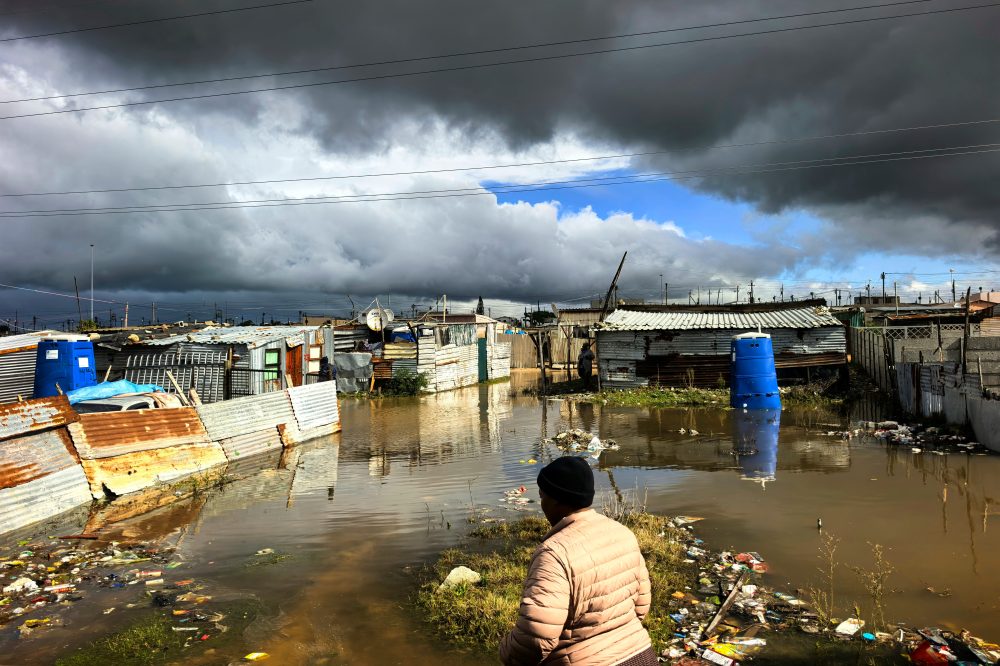
Devastating floods have swept through six provinces in South Africa, claiming the lives of at least 10 people and leaving thousands of homes in ruins since the severe weather began on May 4.
Government officials have officially declared a natural disaster in response to the widespread flooding, severe thunderstorms, powerful winds, and even snowfall that have impacted the Western Cape, North West, Free State, Eastern Cape, Northern Cape, and Mpumalanga provinces. This official designation allows authorities to access emergency funding and deploy additional resources for disaster response.
Cape Town has experienced some of the worst damage, prompting the Western Cape provincial government to temporarily shut down schools and close portions of the popular Table Mountain tourist site. Officials reported Tuesday that flooding has impacted no fewer than 26 informal settlements surrounding the city, with more than 10,000 structures suffering damage.
President Cyril Ramaphosa expressed his grief Monday over the weather-related deaths as the Southern Hemisphere enters its winter season, stating he felt “deep sadness” about the loss of life.
“Authorities are making the best use of science to pre-empt some of these events and to respond to the aftermath,” Ramaphosa said.
Climate experts warn that severe flooding throughout Southern Africa is becoming more intense due to extreme weather conditions. Mozambique, South Africa, and Zimbabwe have all experienced exceptionally heavy rainfall in recent months, creating what many consider the region’s most devastating flooding in years.
This marks the second time this year South Africa has faced such extreme weather conditions. In January, officials declared a national disaster following torrential rains and flooding in the northern region that killed at least 30 people, damaged thousands of homes, and destroyed critical infrastructure including roads and bridges.
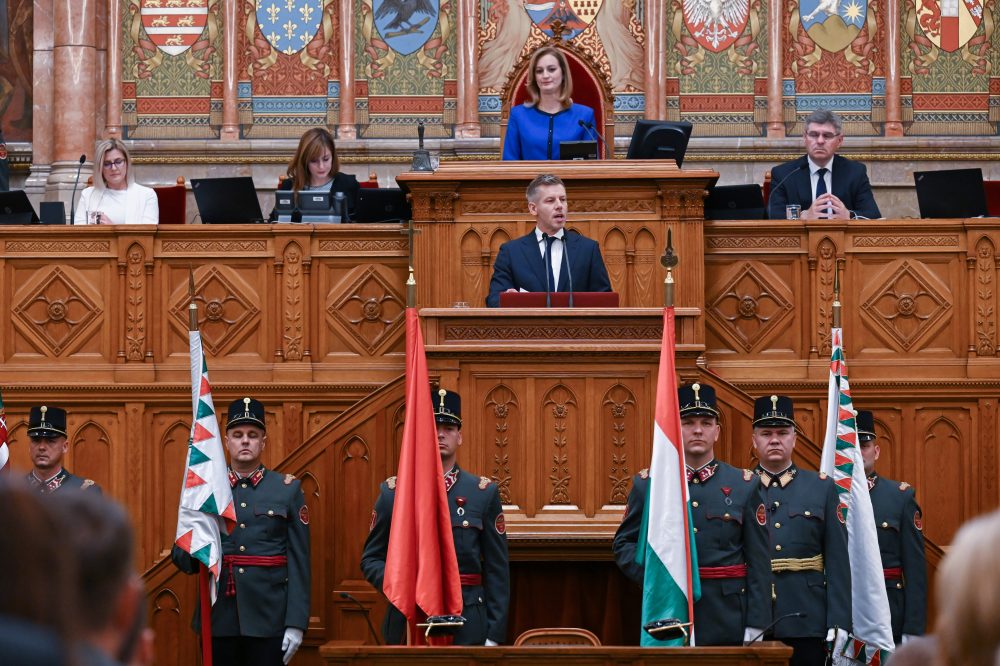
BUDAPEST, Hungary — Hungary completed its historic political transition Tuesday as Péter Magyar’s cabinet ministers officially took their oaths of office, bringing to a close Viktor Orbán’s 16-year reign over the Eastern European nation.
The ceremony installing 16 new ministers occurred just two days following parliamentary committee reviews, demonstrating the 45-year-old attorney’s determination to rapidly dismantle the political framework Orbán established during his extended tenure as leader.
Magyar’s European Union-aligned Tisza party delivered a decisive electoral victory over Orbán’s nationalist Fidesz movement last month, capturing more parliamentary support than any political organization in Hungary’s post-Communist era.
This electoral triumph provided Tisza with a commanding two-thirds parliamentary majority, positioning the party to reverse numerous policies that earned Orbán criticism as an authoritarian leader from the far-right.
Speaking after his ministers’ installation ceremony in Hungary’s legislative building, Magyar declared that “the government now being formed will be the government of all Hungarians” and “a servant of the nation and not of the prime minister,” delivering a clear rebuke to his predecessor’s approach.
“We must repair the destruction, division, backwardness and loss of trust over the past two decades by making Hungary a functioning, livable and self-reliant country again,” he stated.
The electoral results gave Tisza control of 141 parliamentary positions from the total 199 available, while Orbán’s EU-skeptical Fidesz party retained just 52 seats, falling dramatically from their previous 135. The extreme-right Mi Hazánk (Our Homeland) movement secured six positions.
Nearly 3.4 million Hungarian voters who supported Tisza anticipate Magyar will pursue accountability measures against Fidesz leadership and their business partners for alleged wrongdoing and corrupt practices during the previous administration.
Magyar intends to establish a National Asset Recovery and Protection Office, a specialized agency responsible for examining and attempting to reclaim public resources allegedly misappropriated throughout Orbán’s leadership period. He has additionally announced Hungary’s participation in the European Public Prosecutor’s Office, enabling EU investigators to examine fraud allegations and monitor how bloc funding was utilized.
The new leader has also promised to halt operations at Hungary’s state broadcasting network — commonly viewed as Orbán’s party propaganda outlet — until journalistic neutrality can be reestablished.
During his inaugural address, Magyar once again demanded that numerous Orbán appointees holding extended-term positions resign by May 31, specifically naming the president, attorney general, media authority director, and Constitutional Court chief justice.
The incoming administration will oversee 16 ministerial departments, an increase from Orbán’s final government structure of 12. Magyar has committed to substantially reorganizing governmental operations, creating independent ministries for health, environmental protection, and education that were previously consolidated under Orbán’s system.
He has also emphasized restoring democratic frameworks and legal accountability that deteriorated during Orbán’s administration, while pursuing consequences for individuals he claims oversaw and profited from systematic official corruption.
Magyar’s leadership is anticipated to reshape political relationships throughout the European Union, where Orbán frequently disrupted bloc operations by blocking important decisions, particularly regarding assistance for Ukraine.
Supporting these objectives, Magyar’s team has indicated priority efforts to release approximately 17 billion euros ($20 billion) in EU funding that was suspended during Orbán’s tenure due to rule-of-law and corruption issues. These resources are critically needed to revitalize Hungary’s economic performance, which has remained stagnant over the past four years.
In a Facebook video message Monday, newly appointed Foreign Minister Anita Orbán, a diplomatic and international policy specialist, explained her department’s main objective will be to “bring EU funds home” and “consolidate Hungary’s place in Europe and in the EU.”
Other cabinet officials installed Tuesday included Economy and Energy Minister István Kapitány, a former Shell corporation executive, and Finance Minister András Kármán, an economist and previous Erste Bank executive.
A comprehensive investigation released Tuesday reveals that Hamas and allied Palestinian militant groups employed systematic sexual violence during their October 7, 2023 attack on southern Israel, according to a detailed civil commission report.
The extensive 300-page document, called “Silenced No More,” was compiled by the Civil Commission on October 7 Crimes by Hamas Against Women and Children following two years of intensive research, witness interviews, forensic analysis, and examination of visual evidence.
Investigators reviewed an enormous collection of evidence including over 10,000 photographs and video clips, more than 1,800 hours of recorded material, and conducted over 430 interviews with survivors, witnesses, former hostages, experts, and family members of victims.
The commission documented 13 distinct patterns of sexual and gender-based violence that occurred both during the initial assault and while victims were held captive in Gaza. These included rape, gang rape, forced nudity, sexual torture, mutilation, posthumous sexual abuse, and attacks committed in front of family members. Investigators also found instances where family members were forced to commit sexual acts against each other, which the commission termed “kinocidal sexual violence.”
“The scale, coordination, and repetition of the conduct demonstrate a widespread and systematic attack against civilians in which sexual violence was deliberately used as a method of terror,” the investigation concluded.
The report details how attackers filmed, broadcast live, and shared images of abuse and killings on social media platforms and through victims’ personal accounts, weaponizing the documentation as psychological warfare against families and Israeli society.
Commission investigators determined that the documented actions constitute war crimes, crimes against humanity, and genocidal acts under international law. They called on Israeli officials and international governments to recognize sexual and gender-based violence as a separate category requiring specific criminal accountability in future legal proceedings.
These conclusions support previous findings, including a March 2024 United Nations report by Special Representative Pramila Patten, whose investigation found “reasonable grounds” to believe conflict-related sexual violence took place during the October 7 attacks and “clear and convincing information” that Gaza hostages experienced sexual violence.
During the October 7 assault, Hamas-led militants breached the Gaza border into Israel, resulting in approximately 1,200 deaths and the kidnapping of 251 hostages. Israeli officials report that hundreds of attackers were captured inside Israel following the assault. The Israeli Knesset approved legislation Monday to create a specialized court system for prosecuting October 7 defendants, including those facing charges related to sexual crimes.
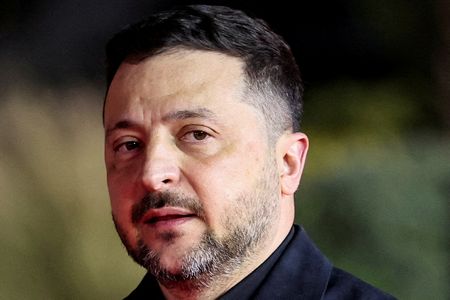
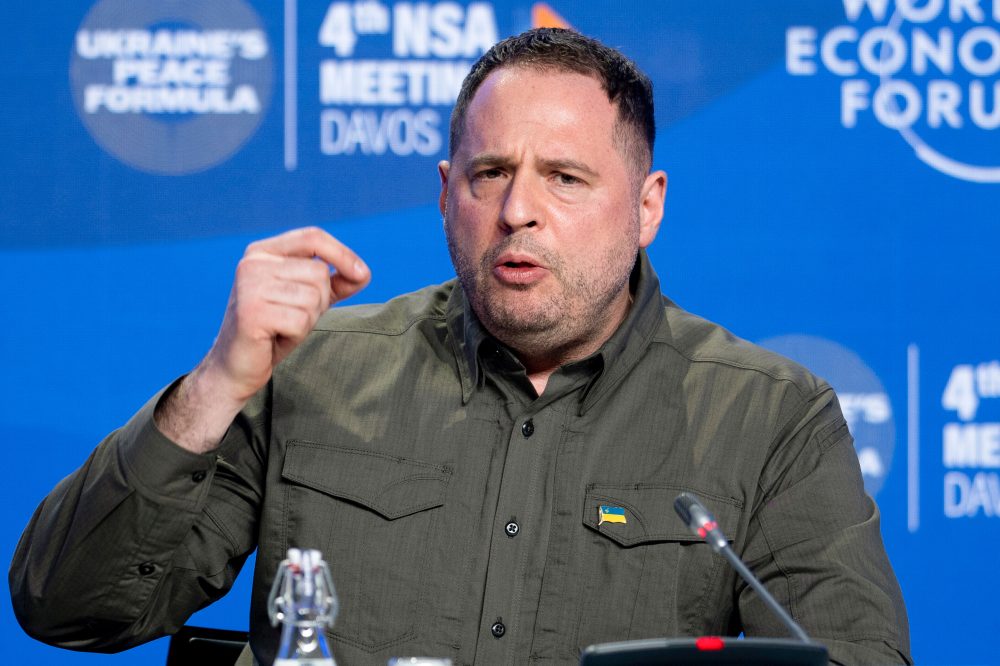
KYIV, Ukraine – Ukrainian President Volodymyr Zelensky confronts his most serious corruption crisis to date as criminal charges have been filed against his former chief of staff in a multimillion-dollar laundering operation.
While Zelensky himself has not been implicated in the extensive investigation that has shaken Ukraine since November, the allegations against his former top aide Andriy Yermak represent the closest that anti-corruption investigators have come to the president’s inner circle.
The 54-year-old Yermak, a former film producer who orchestrated Zelensky’s remarkable transformation from television comedian to wartime president, was formally designated as a suspect Monday evening in an alleged $10.5 million money laundering operation involving a luxury housing project near Kyiv.
Through his attorney, Yermak dismissed the allegations as baseless when speaking to Ukrainian public broadcaster Suspilne.
Anti-corruption court officials are currently considering prosecutors’ request to set Yermak’s bail at $4 million.
Zelensky has remained silent regarding the charges against his longtime associate, with his communications adviser stating Monday that it was premature to address the matter. The president’s office has not responded to detailed inquiries about the case.
Political analyst Volodymyr Fesenko from the Penta think tank believes the charges against Yermak may not immediately threaten Zelensky’s position but could damage his reputation if he seeks re-election post-war.
“This entire affair is a delay-action mine for President Zelenskiy that may not explode now, but later,” Fesenko stated.
The charges stem from Ukraine’s National Anti-Corruption Bureau’s extensive “Midas” investigation, which has captivated the nation as anti-graft agencies have intensified their wartime activities.
Previous revelations last year exposed an alleged $100 million energy sector kickback scheme involving Timur Mindich, a former business associate of Zelensky from his entertainment career. The scandal erupted as Russia was targeting Ukraine’s electrical infrastructure, sparking public outrage.
The controversy prompted a government reorganization that led to Yermak’s resignation in November. Mindich subsequently fled to Israel and maintains his innocence.
The investigation gained renewed attention recently when Ukrainian media outlets and opposition politicians released what they claimed were wiretapped conversations involving Mindich.
Reuters was unable to independently confirm the authenticity of these transcripts, which allegedly captured Mindich discussing a prominent Ukrainian drone manufacturer with national security chief Rustem Umerov. Umerov’s spokesperson has denied any misconduct. Ukraine’s chief anti-corruption prosecutor confirmed Tuesday that Umerov served as a witness in the “Midas” investigation.
Additional transcript excerpts reportedly feature Mindich and an unidentified woman discussing real estate matters and referencing individuals called “Andriy” and “Vova” – the latter being a common nickname for “Volodymyr.”
Opposition parliament member Oleksiy Honcharenko remarked, “This is now something that Zelenskiy himself, personally, cannot ignore.”
NABU director Semen Kryvonos informed reporters Tuesday that Zelensky has not been the focus of any investigations. Current Ukrainian law prohibits criminal investigations of sitting presidents.
The timing of these charges is particularly delicate as Ukraine continues to rely on essential Western financial assistance, which is partially tied to anti-corruption initiatives. Meanwhile, U.S.-supported peace efforts have stagnated in the conflict’s fifth year.
Some legislators, including members of Zelensky’s Servant of the People party, view the Yermak case positively as evidence of Ukraine’s commitment to combating corruption.
Parliamentary foreign affairs committee chairman Oleksandr Merezhko noted, “Partners see that Ukraine has an independent anti-corruption system that is performing its function.”
Despite increased attention on corruption issues, Zelensky’s public support has remained relatively steady in recent months, with approximately 58% of Ukrainians expressing trust in their president, according to May 4 data from the Kyiv International Institute of Sociology.
However, a May 6 survey revealed that 54% of respondents consider corruption a greater threat to Ukraine’s future than the ongoing war with Russia when forced to choose between the two.
Kyiv residents interviewed Tuesday expressed mixed reactions of concern and wariness.
Valentyna Nevoyt, 70, commented, “Clearly the president is involved, because it can’t be that people near him were in very close contact and he didn’t know anything about what they were doing.”
Currency exchanger Natalia Chernilevska, 53, acknowledged the risk of Zelensky becoming personally implicated while praising his wartime leadership.
“For me, Zelenskiy is an example of a good leader of the country who is fighting to the end,” she said.
BEIRUT (AP) — Lebanon’s Hezbollah leader is pushing his country’s government to abandon upcoming face-to-face negotiations with Israel, arguing such meetings favor the enemy and demanding a return to indirect diplomacy.
The two nations are set to begin two days of Washington-hosted discussions this Thursday, aiming to halt the current conflict that erupted two months ago after the Iran war and address the broader relationship between these longtime enemies who have been fighting since Israel’s establishment in 1948.
In a letter to his organization’s leadership, Naim Kassem argued that face-to-face negotiations serve Israel’s interests and represent “concessions by Lebanese authorities.” He insisted Lebanon’s leadership should return to indirect diplomacy with Israel, similar to previous approaches that led to the November 2024 ceasefire agreement.
Third-party mediators typically facilitate indirect negotiations.
Kassem also declared that disputes over Hezbollah’s weapons stockpile remain a domestic Lebanese matter and should not be included in discussions with Israel. Lebanon’s government has pushed for the militant organization’s disarmament following the latest fighting that began in early March, declaring all military operations by the group unlawful.
Lebanese officials have also called for an end to hostilities, Israeli forces leaving Lebanon, Lebanese military deployment south of the Litani river, freedom for Lebanese prisoners in Israeli custody, and the return of displaced civilians to their communities.
Kassem announced Tuesday that his organization stands ready to work toward achieving these five government objectives.
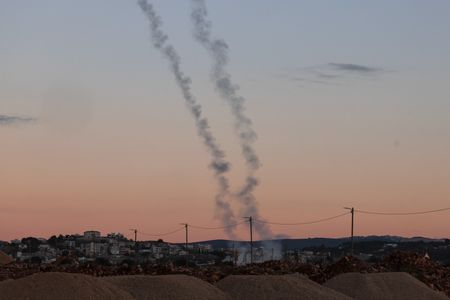
Even with the U.S.-mediated ceasefire that took effect April 17, both Israel and Hezbollah continue launching daily strikes against each other.
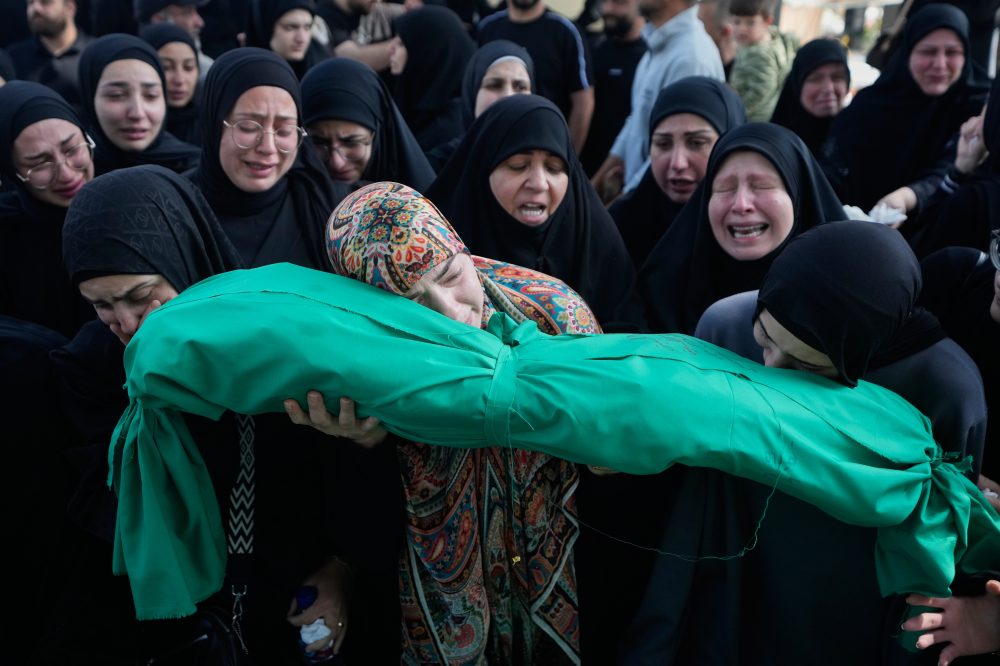
Lebanese Health Minister Rakan Nassereddine reported Tuesday that 380 people have died and 1,122 have been injured since the ceasefire began.
He noted that since the current war started March 2, when Hezbollah launched rockets into northern Israel two days after U.S. and Israeli strikes on Iran, Lebanon’s casualties have reached 2,882 killed and 8,786 wounded.
Starting early Tuesday, Israeli warplanes conducted strikes across southern Lebanon and hit the village of Sohmor in the eastern Bekaa Valley, according to the state-run National News Agency. The agency reported that airstrikes on Jibchit village resulted in three deaths and four injuries Tuesday.
Israeli forces had previously warned residents of Sohmor and four southern Lebanese villages to evacuate.
The National News Agency also reported that Israeli troops entered portions of the southern village of Deir Mimas along the Litani River and destroyed a solar-powered water pumping station serving the community. The agency said the 5 a.m. (0200 GMT) explosion caused extensive damage.
Israeli military officials shared images of soldiers positioned along the Litani River but did not specify exact locations.
Hezbollah released a statement claiming its fighters targeted Israeli forces Tuesday morning near the Litani River in Deir Seryan village using rockets, though no additional information was provided.
Also Tuesday, Hezbollah acknowledged that one of its military leaders died in an airstrike near Beirut last week. The organization published a photograph of Ahmed Ghaleb Balout, describing him as a commander who dedicated most of his life to combat.
Balout died May 6 during an airstrike on a Beirut suburb.
This marked the first airstrike near Beirut since the ceasefire took effect.
Israeli military officials announced Thursday they had eliminated Balout, whom they identified as a leader in Hezbollah’s elite Radwan Force, along with two additional militants.
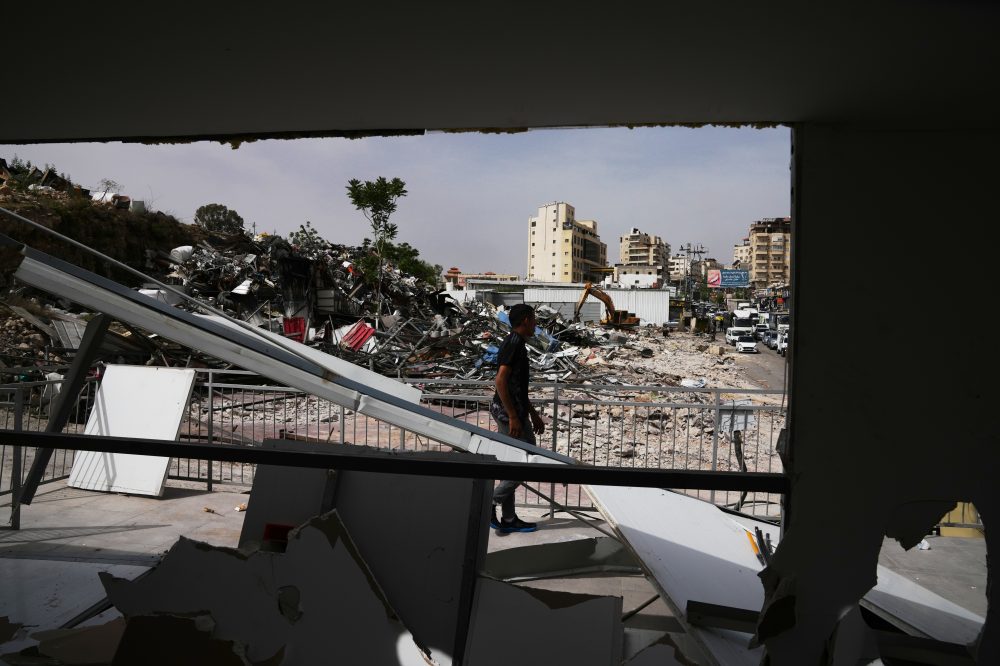
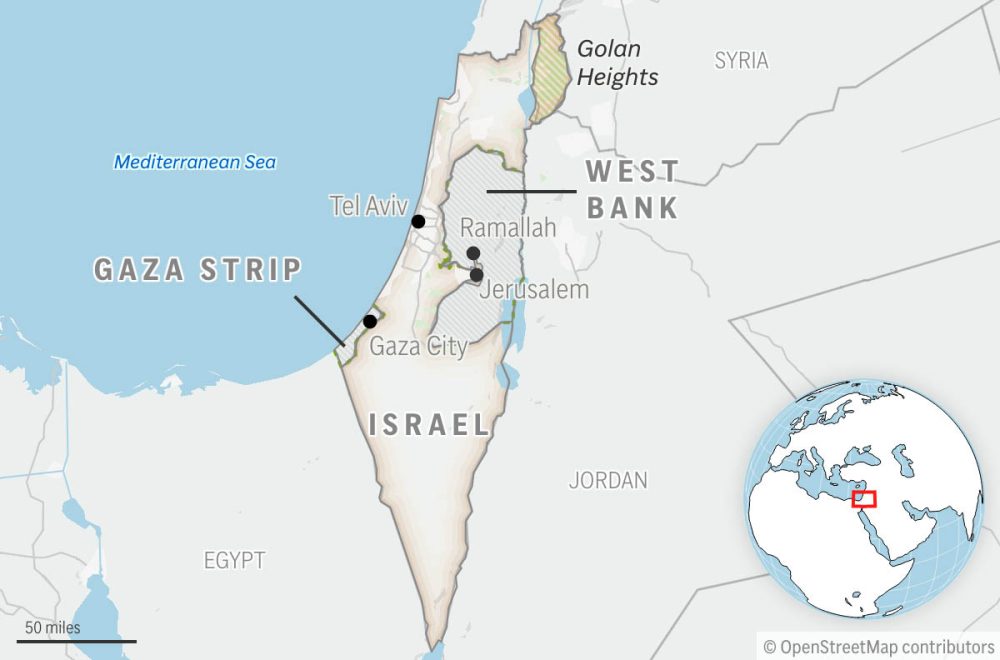
Israeli construction crews demolished approximately 50 Palestinian businesses this week in al-Eizariya, a town located southeast of Jerusalem, as part of preparations for a disputed road construction project in the occupied West Bank.
Israeli officials maintain the demolitions are necessary to construct a roadway that will benefit Palestinian communities. However, Palestinian leaders contend the road represents part of a larger strategy to redirect Palestinian vehicles away from a new highway designed to connect Israeli settlements in the region.
The construction falls within the E1 corridor, a strategically important West Bank area that Israel is developing in ways that Palestinian officials say would block the creation of a future Palestinian state.
“The shops that were demolished are where Israel is planning to build a new road that will divert all Palestinian traffic to that road so that they can close down the whole area of E1 for Palestinians,” explained Hagit Ofran, who leads the anti-settlement organization Peace Now.
The destruction occurred on Tuesday in al-Eizariya, coming less than one week after some business owners received evacuation orders for structures built without official permits. Legal representatives filed appeals reaching Israel’s Supreme Court, but the demolitions proceeded regardless.
Israeli officials stated the demolished structures, which included automotive service centers, metal recycling facilities, and produce vendors, were constructed illegally and that property owners had received warnings for “several years” about potential enforcement action.
COGAT, the Israeli military agency responsible for civilian matters in the West Bank, announced the buildings were blocking the planned roadway intended to link Palestinian communities.
Israeli authorities describe the new transportation network as a solution to traffic problems that will enhance living conditions for Palestinian residents in the region.
Human rights organizations and the internationally recognized Palestinian Authority argue the demolitions connect to Israel’s broader plans to restructure transportation infrastructure and establish separate roadway systems based on Israeli versus Palestinian identification. They claim Israel’s proposed tunnel-and-bypass system will force Palestinian drivers off a main Israeli highway connecting West Bank settlements to Jerusalem, effectively blocking access to significant portions of the territory.
Several of the destroyed businesses had partially obstructed walkways and access routes into the community. Palestinians maintain that obtaining legitimate building permits from Israeli authorities is virtually impossible, even while Israeli settlement construction continues expanding rapidly.
Mohammad Abu Ghalieh, a 48-year-old business owner, expressed shock at having to rebuild following the demolitions.
“Forty-eight years of night and day to build something for his children and himself, and in one day and one night, everything was gone,” he stated.
Daoud al-Jahalin, who leads a nearby village council, reported that over 200 families would lose their sources of income.
The E1 development generates particular controversy because it extends from Jerusalem’s outskirts far into the occupied West Bank, separating the cities of Ramallah and Bethlehem while restricting Palestinian movement between northern and southern areas.
Israeli leadership and settlement critics alike acknowledge the E1 initiative would create obstacles for establishing a connected Palestinian state throughout the West Bank. Israel plans to construct approximately 3,500 residential units adjacent to the current Maale Adumim settlement.
Israel took control of the West Bank during the 1967 Middle East conflict. The global community largely views Israeli settlement development in occupied territories as violations of international law and barriers to peace.
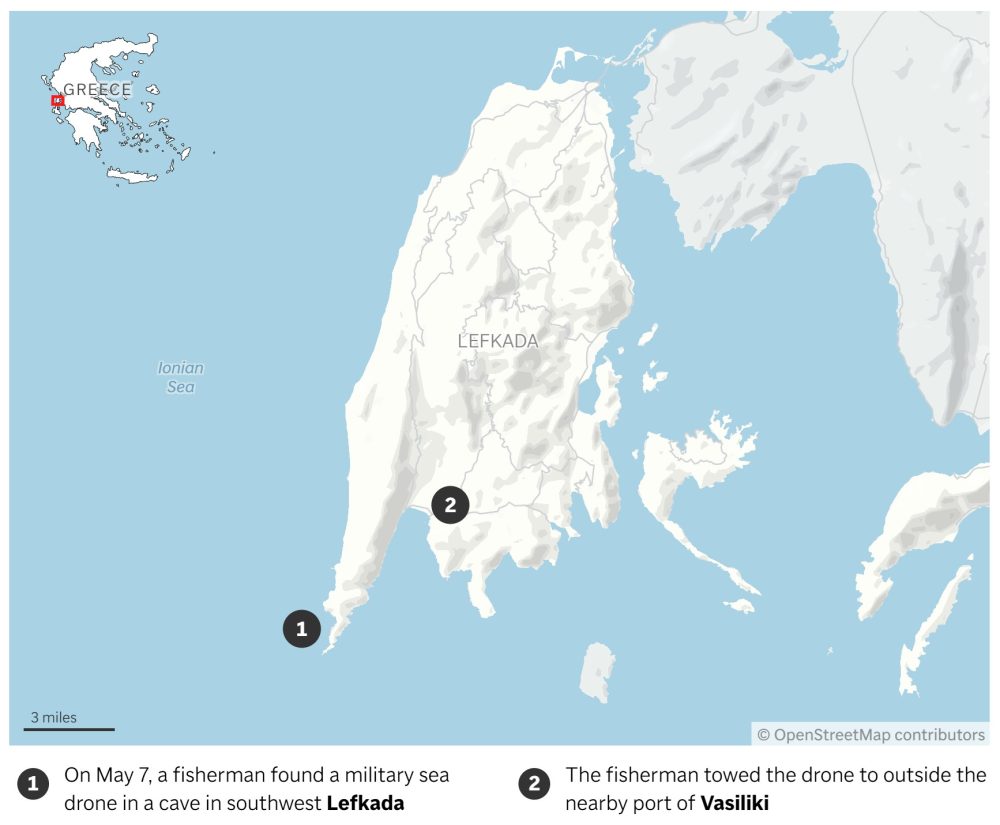
ATHENS, Greece — Greek defense officials confirmed Tuesday that an explosive-laden military drone discovered on a Mediterranean island last week was manufactured in Ukraine, with authorities describing the situation as an “extremely serious” threat to regional maritime safety.
The unmanned watercraft was located by a fisherman inside a coastal cave on Lefkada island on May 7, who then pulled it toward a nearby harbor. Greek naval forces transported the device to a mainland military facility the following day for examination before safely disposing of the explosives, according to Greece’s state broadcaster ERT.
“We have certainty now that it is a Ukrainian USV,” stated Greek Defense Minister Nikos Dendias, using the military term for unmanned surface vehicle.
Ukrainian officials have not yet responded to requests for comment on the matter.
Speaking to European Union defense ministers during a Brussels meeting, Dendias indicated he would address the matter with both his European counterparts and Ukrainian leadership directly.
“You understand that the presence of that USV — the drone, the sea drone — affects the freedom of navigation and affects also the security of navigation,” Dendias explained. “This is an extremely serious issue.”
Ukrainian forces have deployed similar waterborne drones against Russian naval targets in the Black Sea region, recently expanding operations to target oil transport vessels as part of efforts to disrupt Moscow’s energy export capabilities.
While Greek officials provided limited additional information about the drone’s specifications, naval specialists noted similarities to Ukraine’s Magura-class vessels — a design created by Ukrainian intelligence services.
The island of Lefkada sits along a heavily trafficked shipping route connecting Greece and Italy, frequented by tourist vessels, commercial ferries, and cargo ships.
“It appears that the (drone) suffered some malfunction and was moving in an uncontrolled way,” explained Stefanos Gikas, Greece’s deputy maritime affairs minister, during a Monday television interview. “So this craft — a black thing without navigation and carrying explosives — could have struck a tourist vessel.”
The escalating drone warfare between Ukrainian and Russian forces has resulted in numerous incidents affecting NATO and European Union territories, primarily involving suspected Russian drones violating member nation airspace.
“They are violating our airspace. And it’s very clear that inside the European Union we should rearrange our capacities, our capabilities, in order to decrease this type of violations,” Romanian Defense Minister Radu-Dinel Miruța told reporters in Brussels Tuesday.
“It is very important to understand that this is a common threat,” he added. “It is happening on the entire eastern flank.”
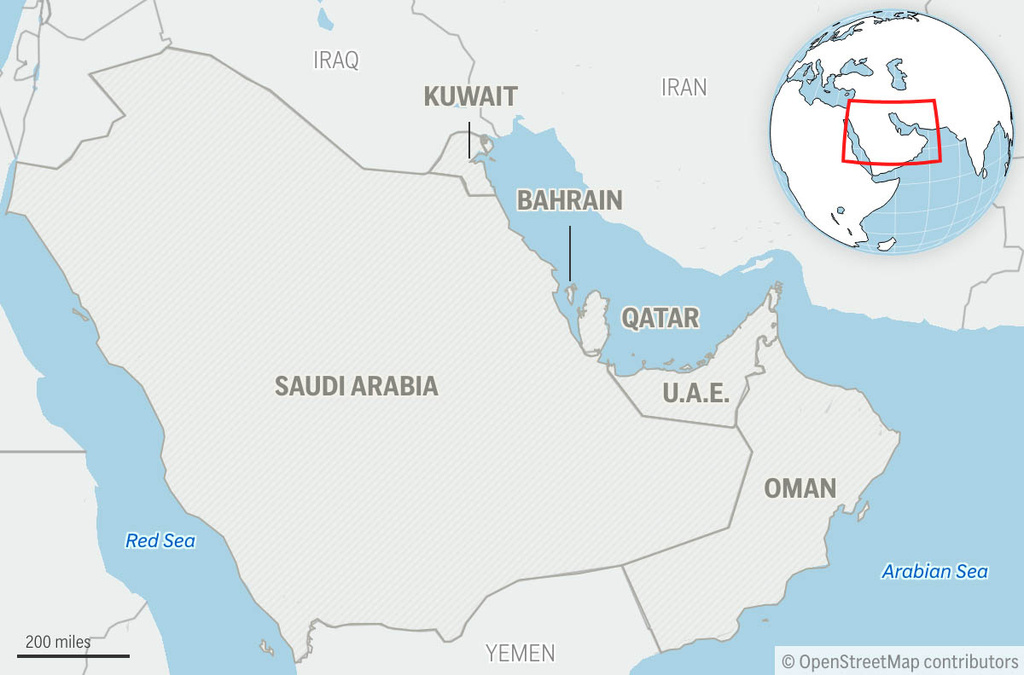
Kuwait has formally accused Iran of orchestrating a military assault on one of its strategic islands earlier this month, claiming that Iranian Revolutionary Guard forces attempted to infiltrate territory that houses a major Chinese-backed port development.
The Middle Eastern nation announced Tuesday that six armed Iranian paramilitary operatives tried to breach Bubiyan Island on May 1, located in the northwestern section of the Persian Gulf near the borders with Iraq and Iran.
According to Kuwaiti officials, the infiltration team planned to execute “hostile acts” on the island, though authorities did not specify the exact nature of the intended operations.
Kuwaiti security forces successfully intercepted four of the attackers, while two managed to flee during the confrontation. One Kuwaiti security officer sustained injuries during the incident, which was initially reported on May 3 without details about Iranian involvement.
The detained suspects have been identified as two Revolutionary Guard naval captains, one Guard naval lieutenant, and one Guard army lieutenant, according to Kuwaiti authorities.
Bubiyan Island serves as the location for the Mubarak Al Kabeer Port, currently under development as part of China’s extensive “Belt and Road” infrastructure initiative. This same port facility has previously been targeted during regional conflicts involving Iran.
The timing of Kuwait’s allegation appears significant, as it coincides with President Trump’s scheduled diplomatic visit to Beijing for discussions with Chinese President Xi Jinping. Iran is expected to be among the key topics during their summit, particularly given China’s history of purchasing Iranian oil despite international sanctions and Beijing’s concerns about the ongoing energy crisis caused by regional instability.
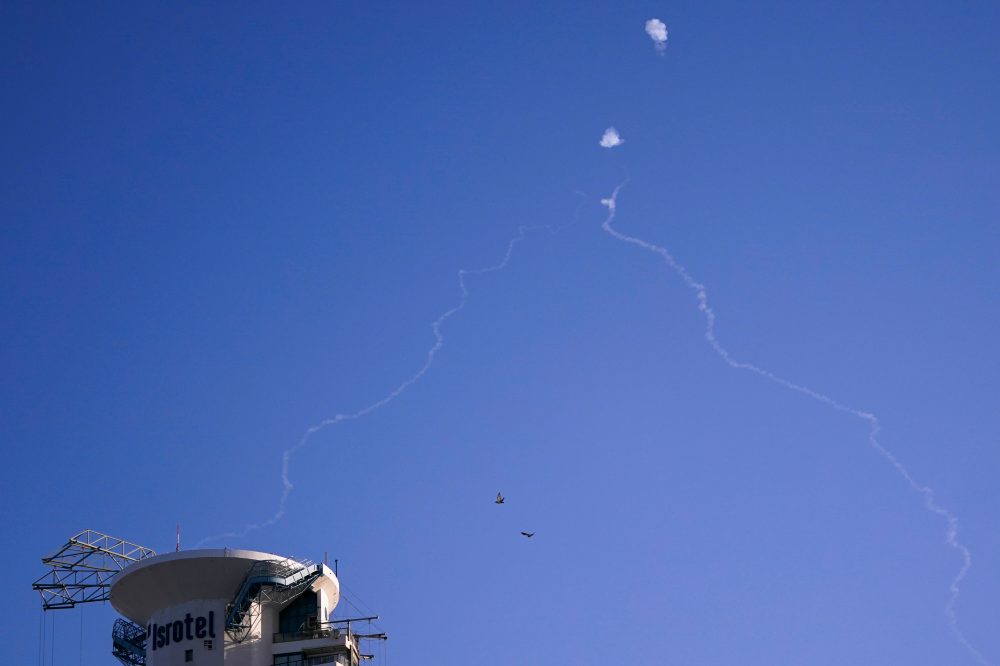
Meanwhile, U.S. Ambassador to Israel Mike Huckabee revealed another significant military development in the region during a Tel Aviv conference. “I’d like to say a word of appreciation for United Arab Emirates, the first Abraham accord member,” Huckabee stated. “Just look at the benefits. Israel just sent them Iron Dome batteries and personnel to help operate them.”
This marks the first public confirmation of Israeli military deployment to the UAE, highlighting the strengthening defense partnership between the two nations that established diplomatic relations in 2020. The UAE has been seeking to reassure investors and residents about security following Iranian missile and drone attacks even after regional ceasefires.
The ambassador expressed optimism about expanding regional cooperation, saying he was “very optimistic” that additional Middle Eastern countries would soon join the Abraham Accords for formal diplomatic recognition of Israel.
However, Huckabee acknowledged the challenges facing regional diplomacy, noting that many Arab states remain angry about Israel’s extensive military operations following Hamas’s 2023 attack, which have resulted in widespread destruction in Gaza and Israeli control over territories in Lebanon and Syria.
“The Gulf states now understood they will have to make a choice — is it more likely they will be attacked by Iran or Israel?” Huckabee asked. “They see that Israel helped us and Iran attacked us. Israel is not trying to take over your land, and is not sending missiles to you.”
In related regional developments, Bahrain announced Tuesday that prosecutors have sentenced at least two dozen individuals on charges including espionage and conspiracy with Iran’s Revolutionary Guard. Three defendants received life sentences, while others got shorter terms on Iran-related charges.
The narrow Strait of Hormuz remains under Iranian influence, and diplomatic negotiations between Washington and Tehran appear stalled, raising concerns about potential renewed conflict in the strategically vital region.
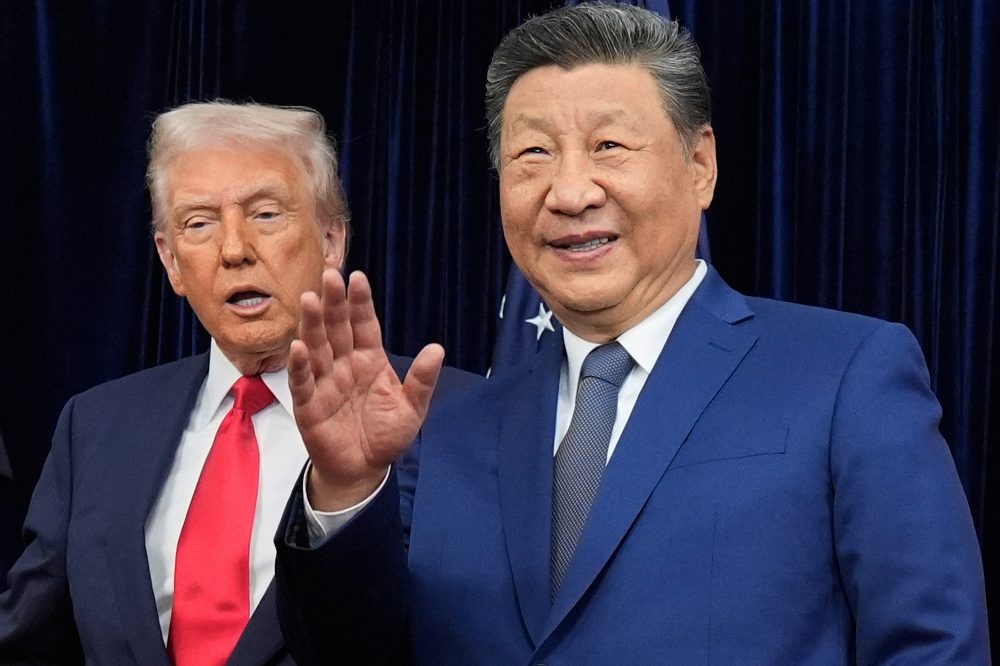
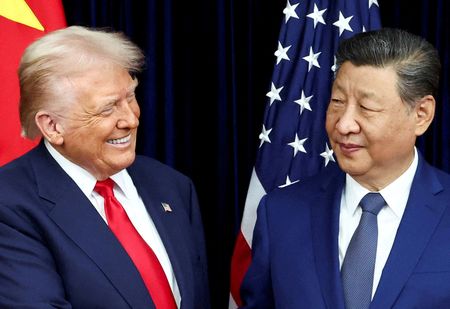
WASHINGTON – A crucial diplomatic meeting between President Donald Trump and Chinese President Xi Jinping is taking place in Beijing on May 14th and 15th, drawing international attention as the world’s two largest economies work to navigate escalating global tensions.
The two-day summit agenda covers numerous contentious issues, including commercial disagreements, technology concerns and artificial intelligence developments, Taiwan’s security situation, Middle East ceasefire initiatives, and allegations regarding China’s relationship with Iran. The leaders will also address agricultural trade deals, Boeing aircraft transactions, export restrictions, and collaborative efforts to combat fentanyl and other illegal drugs.
Experts suggest major diplomatic victories are improbable, though both nations hope to avoid additional deterioration in their relationship. The Taiwan question represents perhaps the most delicate discussion point – reports indicate Beijing seeks to make the self-ruled territory a central focus of negotiations, while certain American allies worry about a deal-making approach regarding Taipei. Retired Rear Admiral Mark Montgomery cautioned that Taiwan could be “on the menu” during the diplomatic talks. China’s foreign minister has called on the U.S. to “make the right choices” regarding Taiwan, while American officials maintain their policy remains unchanged and caution that any forced modification of Taiwan’s current situation would create regional instability.
The situation involving imprisoned Hong Kong media executive Jimmy Lai is anticipated to arise during discussions – Lai’s relatives hope Trump will urge Xi to secure his freedom. The White House has emphasized America’s ongoing military assistance to Taiwan, highlighting recently authorized defense equipment transactions.
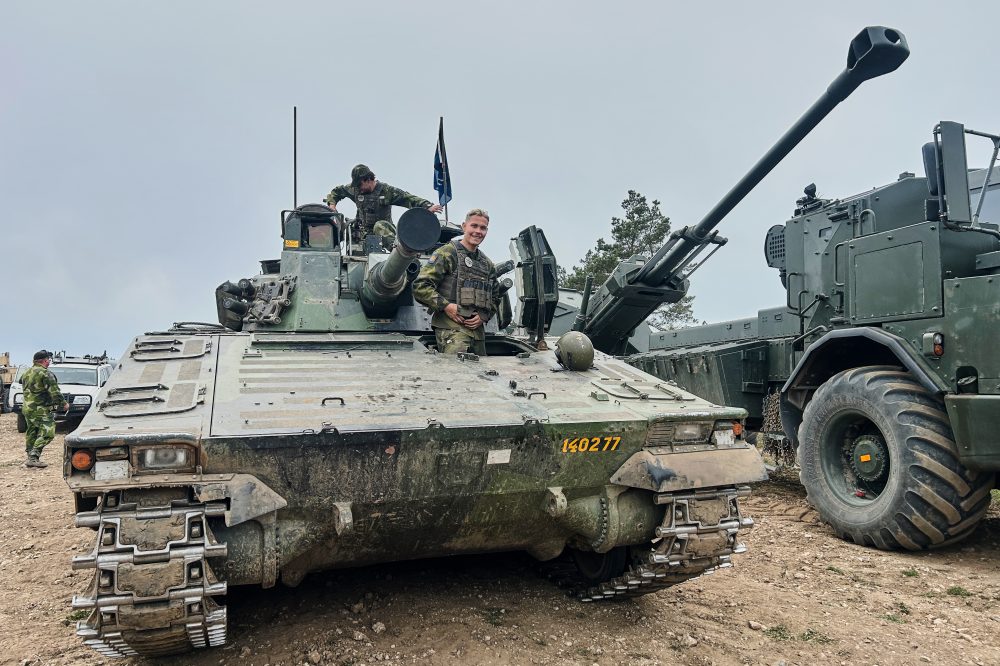
GOTLAND, Sweden — Military leaders from NATO nations gathered this week on a strategic Swedish island to conduct war games simulating an attack by an unnamed adversary massing forces near the alliance’s eastern frontier. In a notable development, Ukrainian military advisors joined the exercise to share their battlefield expertise in drone combat.
The Associated Press observed the Swedish-organized training exercise as European nations grapple with dual challenges: escalating Russian aggression and uncertainty about America’s continued NATO commitment.
The military simulation, which included American personnel, addressed real-world security concerns. An Associated Press investigation has documented Russia’s intensified sabotage campaign across Europe, featuring cyberattacks on vital infrastructure and widespread disinformation operations.
Exercise planners designed a scenario where Gotland island faced electrical blackouts and food supply disruptions from sabotage attacks, examining potential NATO responses before triggering Article 5, the alliance’s mutual defense provision.
“In theory, it could happen tomorrow,” said Rear Adm. Jonas Wikström, director of the exercise.
Swedish Defense Chief Gen. Michael Claesson acknowledged America’s crucial military role in European security, explaining that “any change in the American presence” impacts alliance capabilities. He emphasized to the AP that despite President Trump’s announced European troop reductions, interpretations “as the Americans are leaving — and they are not” miss the mark.
Nevertheless, European defense officials are closely monitoring the Trump administration’s NATO policies. Trump has previously characterized the alliance as a “paper tiger” and recently ordered at least 5,000 American troops withdrawn from Germany, threatening additional removals.
The president has also criticized NATO partners for failing to support America in Iran-related conflicts, while U.S. air defense systems and missiles have been relocated from Europe to the Middle East, creating potential security gaps. Several European countries have been informed of delays in their American weapons purchases.
Claesson dismissed suggestions that recent initiatives — including a “hybrid navy” partnership among Nordic, Baltic, British and Dutch forces — represent preparation for reduced American support.
However, he noted, “everything that offers European allies freedom of action is good.”
Britain and Norway are also developing joint frigate capabilities, according to Marte Gerhardsen, state secretary at Norway’s Defense Ministry.
Since Trump’s January 2025 return to office, he has suspended intelligence sharing with Ukraine and occasionally supported Moscow’s positions in war-ending negotiations.
During this week’s exercises, Ukrainian forces demonstrated their combat experience and potential value as future NATO members.
Ukrainian drone specialists invited to train Western troops in aerial warfare tactics decisively defeated Swedish forces during simulations, a 24-year-old pilot reported to the AP.
“They stopped the training three times” to allow troops tactical adjustments, but in actual combat “they would have been dead,” explained the pilot, identifying himself by his military call sign Tarik.
Swedish personnel show promise but require improved drone technology and tactics, while commanders need enhanced understanding of unmanned warfare, said another pilot using the call sign Karat.
He detailed operating small, first-person-view attack drones against Russian positions on front lines. Drone operators sometimes receive reconnaissance support but often work “blindly.”
Western military personnel cannot comprehend the reality, he added: “You need to see this with your own eyes.”
All Western forces must “learn rapidly” in drone operations and countermeasures, with Ukrainians offering the “fastest” learning opportunity, Claesson stated.
“What they’ve taught us is you have to really focus on your survivability and how you can’t be detected,” explained U.S. Brig. Gen. Curtis King. Simultaneously, Western nations must develop “deep” detection systems for long-range drone identification.
This expertise is critically needed along NATO’s Russian border, where recent months have seen multiple drone violations, including Ukrainian aircraft diverted by Russian electronic jamming.
The objective involves creating integrated systems allowing radar from various manufacturers and countries to share threat data, King explained. While this process has begun, “we’re not there yet.”
Exercise planners selected Gotland island due to its strategic Baltic Sea position between Russian-controlled Kaliningrad — where Moscow has deployed missiles — and mainland Sweden.
“If you control Gotland, you pretty much control the central part of the Baltic Sea,” Claesson observed.
The Baltic Sea serves as Russia’s economic lifeline, with “shadow fleet” vessels transporting oil and liquefied natural gas that funds Moscow’s Ukrainian war effort.
Following the Cold War’s end, Sweden essentially eliminated Gotland’s military presence, but Russia’s 2022 Ukrainian invasion prompted reconsideration and reinforced military deployment. Sweden and Finland both joined NATO in 2024.
“A very reasonable scenario” involves Russian President Vladimir Putin using Gotland to challenge NATO by seizing a small portion of alliance territory to test collective response, Claesson suggested.
NUEVA VENECIA, Colombia — Standing in his small speedboat, Jhon Cantillo pulls up a dense mass of bright green aquatic vegetation and points toward the endless expanse of water now blanketed by the invasive plant.
The thick vegetation creates an almost solid green carpet across the water’s surface when viewed from above. Below the surface, lengthy stems dive deep into the water column with roots stretching toward the bottom, making complete removal nearly impossible.
This environmental disaster is playing out in Colombia’s Cienaga Grande de Santa Marta, an enormous coastal marsh system located roughly 19 miles from Santa Marta on the Caribbean shoreline. What once served as a crucial transportation route and fishing ground has transformed into what local leaders call an ecological emergency as thick plant growth strangles the waterways.
“What we’re seeing here today is a problem. One that affects not only movement or fishing, but the community as a whole,” said the 32-year-old Cantillo, who works as an environmental and social advocate in the Cienaga Grande de Santa Marta region.
Local residents report that the rapidly expanding invasive species from Asia — known scientifically as Hydrilla verticillata — has taken over the wetland during the past twelve months after initially emerging around mid-2025. The thick plant growth, which community members call “horse tail,” is blocking traditional fishing paths, jamming waterways and preventing access to areas where people gather freshwater, while increasing expenses for communities that depend almost completely on the lagoon for survival.
The Cienaga Grande de Santa Marta represents one of Colombia’s most critical fishing habitats, functioning as breeding grounds for numerous marine species.
In Nueva Venecia and Buenavista — two remote fishing villages constructed almost completely on wooden platforms above the water — vast areas of previously open water now lie beneath the invasive vegetation. Both communities exist largely as informal settlements without access to many essential government services.
Nueva Venecia — established in 1847 as a fishing village — houses approximately 4,500 residents in roughly 500 brightly painted dwellings. Buenavista, which developed during the 1950s, contains about 1,150 people living in 163 equally colorful structures, where residents navigate between homes, businesses and educational facilities using small watercraft and canoes.
“A year ago, there were canoes fishing here. Teachers and students crossing the lagoon. Today, what we see is a problem,” Cantillo said.
The consequences are spreading throughout these already struggling communities. Fishing yields have declined, transportation has grown more challenging and households are experiencing increased expenses as they must purchase drinking water.
In Nueva Venecia, a local fisherman worked without a shirt under the intense midday sun, removing dried pieces of vegetation from his fishing equipment, which he had spread in the sunlight to facilitate cleaning.
“We can’t work because of this plant,” said 61-year-old Santander Cueto. “It doesn’t let us cast our nets — everything gets tangled.”
Tasks that were once simple now require much more time to complete.
“The lagoon’s completely covered. There’s nowhere left to fish,” said Demóstenes Guerrero, 58, a fisherman and representative of a fishing association in Buenavista.
In certain locations, community groups venture out in wooden vessels to carve narrow pathways through the densest plant growth, creating channels for canoes to navigate without fouling their motors. These activities require intensive labor and depend primarily on community volunteers, and must be repeated every few days since the quickly growing vegetation rapidly blocks the passages again.
The marsh system covers approximately 1,600 square miles of lagoons, mangrove forests and wetlands — roughly equivalent to Los Angeles — and has held UNESCO biosphere reserve status since 2000.
The Cienaga Grande de Santa Marta receives water from the Magdalena River — one of Colombia’s primary waterways — which transports untreated sewage from throughout much of the nation, explained Julián Arbelaez, a water and sanitation engineer working in the area.
This influx of nutrients, including nitrogen and phosphorus, establishes perfect conditions for invasive plants when water movement slows in wetland environments like this one.
“That load causes the river to enter a state of eutrophication,” Arbelaez said, describing a phenomenon where excessive nutrients promote accelerated plant development.
The plant growth is also preventing access to cleaner water sources. Community members normally travel by boat to gather freshwater from channels linked to the Magdalena River, but many of these pathways are now obstructed. Consequently, Arbelaez explained, people are increasingly obtaining water nearer to their residences — frequently in locations contaminated by raw sewage.
Community members report that another invasive species, Eichhornia crassipes, which remains on the water’s surface, has existed in the lagoon for an extended period and also interferes with fishing and transportation, although its effects have been less dramatic.
Local officials say modifications in water circulation have also contributed to the emergency, with freshwater now controlling areas where saltwater previously helped control or eliminate Hydrilla verticillata.
Sandra Vilardy, a Universidad de los Andes professor with a doctorate in ecology who has studied the region for approximately two decades, explained that research remains limited regarding how the plant arrived and that current theories are still hypothetical.
She indicated that maritime shipping represents one of the most probable introduction methods, with the vegetation possibly entering through major river networks before expanding into wetlands via smaller boats and dredging operations. Another possibility, she noted, involves the disposal of aquarium plants into waterways, a frequent source of biological invasions worldwide, though she observed this explanation seems less probable given the area’s environmental characteristics.
“This is a monster in terms of growth,” Cantillo explained, detailing how it expanded from minimal presence early last year to encircling entire communities within months.
Attempts to eliminate the plant can actually worsen the problem, since pieces can separate and spread to new areas. Community members say removal efforts have been mostly restricted to small-scale manual clearing by fishermen and occasional test programs by government agencies, with no successful comprehensive solution implemented.
The emergency is now causing some residents to contemplate relocating permanently.
“We now face a risk that we didn’t have 20 or 25 years ago — the risk of mass displacement,” Cantillo said.
Demonstrations and highway blockades have occurred as anger increases over what locals characterize as an inadequate and delayed government response.
Alfredo Martínez, director of CORPAMAG, the regional environmental agency, stated that Hydrilla verticillata lacks official classification as an invasive species in Colombia and that national management protocols remain under development. He reported that monitoring and removal activities are proceeding with local community participation, noting that no additional expansion has been detected since March and that reduced water levels may be limiting its growth.
César Rodríguez Ayala, a community leader in Nueva Venecia, described how the emergency is impacting virtually every element of daily life.
“If the fisherman can’t work, the shop doesn’t sell,” he explained. “We are living a very difficult situation, economically and environmentally.”
Although mechanical removal techniques are available, complete elimination appears unlikely in the near future due to expensive costs and restricted resources, according to Cantillo.
“We are part of Colombia too,” Rodríguez stated. “We live on the water, but we also deserve to be seen — and helped — in a moment like this.”
The United Nations children’s agency announced Tuesday that 70 young people have died in Palestinian territories outside of Gaza since the beginning of 2025, averaging approximately one death per week, with more than 800 additional children sustaining injuries.
According to UNICEF, the majority of casualties in the West Bank and East Jerusalem resulted from gunfire using live rounds, though some children were also stabbed, physically assaulted, or attacked with pepper spray.
“These are not isolated incidents. They point to a sustained pattern of the worst kind of violation — violations against children,” spokesperson James Elder said during a press conference in Geneva following his recent trip to the West Bank.
Elder reported that Israeli forces were responsible for 93% of the child fatalities recorded since January 2025. The remaining deaths resulted from attacks by settlers, unexploded weapons, or unintentional strikes by Palestinian forces.
Israeli military officials had not provided a response to requests for comment at the time of the report. Human rights organizations have documented an escalation in violence targeting Palestinians by both Israeli settlers and military personnel beginning in 2023.
International consensus, including the United Nations and most nations worldwide, considers Israeli settlements in West Bank territory seized during the 1967 conflict to be in violation of international law, though Israel challenges this interpretation.
Uganda’s longtime leader Yoweri Museveni took the presidential oath on Tuesday, beginning his seventh consecutive term and solidifying his control over the East African nation for nearly 40 years.
The 81-year-old former rebel commander secured victory in January’s presidential race, capturing 72% of votes in an election overshadowed by violence and claims of electoral misconduct.
During his inauguration address, Museveni highlighted his administration’s economic achievements since assuming office in 1986. He pointed to projections showing the nation’s economy could experience growth exceeding 10% in the coming fiscal year as the country prepares to launch oil production.
Questions about who will eventually replace Museveni continue to grow. Many observers believe he is positioning his son, General Muhoozi Kainerugaba, to take over leadership, though Museveni has publicly rejected claims that he is preparing Kainerugaba for the presidency.
Opposition figure Bobi Wine, the popular musician-turned-politician who came in second place in Uganda’s last two presidential contests, remains in exile in the United States. Wine fled the country following a military assault on his residence after the election.
The Islamic State terrorist organization has taken responsibility for a fatal assault on Syrian government troops in the country’s eastern region, marking the group’s first deadly strike against the current Syrian administration since February.
The Monday assault in Hasakah province resulted in the deaths of two Syrian army personnel, underscoring the persistent security challenges facing President Ahmed al-Sharaa as he works to strengthen governmental control across Syria, nearly eighteen months after removing Bashar al-Assad from power.
Syria’s official news outlet SANA initially reported that two military personnel died and additional soldiers sustained injuries when unidentified attackers targeted a military transport vehicle in the Hasakah countryside on Monday.
Through its Amaq News Agency, Islamic State released a short declaration stating that their operatives had “killed and wounded six members of the apostate Syrian army” in an ambush conducted in the same region.
During the height of Syria’s civil conflict ten years ago, Islamic State maintained control over approximately one-fourth or more of Syrian territory before being driven out by a coalition led by the United States along with other opposing forces.
Al-Sharaa previously fought against Islamic State during his time leading the al Qaeda-affiliated Nusra Front throughout the civil war period. He broke away from al Qaeda in 2016.
Under al-Sharaa’s leadership, the Syrian government became part of the American-led coalition fighting Islamic State last year.
In February, Islamic State announced a renewed campaign of operations targeting al-Sharaa’s administration and executed multiple attacks, including one assault that resulted in the deaths of four Syrian government security officers near Raqqa.
Voters across the Bahamas cast their ballots Tuesday in a surprise election that could make history, as Prime Minister Philip Davis attempts to secure back-to-back terms for the first time in nearly 30 years.
Davis and his Progressive Liberal Party face off against the Free National Movement, headed by Michael Pintard, in a contest that centers on economic concerns and housing challenges affecting island residents.
The election caught many by surprise, coming months before the originally scheduled October date. Davis made the decision to move up the vote to avoid potential disruptions from the Atlantic hurricane season, according to an official from his administration. This marks the second consecutive snap election, following the September 2021 vote that initially brought Davis to office.
Forty-one House of Assembly positions are up for grabs, representing a two-seat increase from the previous election based on recommendations from the independent constituencies commission. Davis enters the race with significant momentum, as his party controlled 32 of the previous 39 legislative seats, while the opposition seeks to reclaim control after their 2021 loss.
Economic pressures have dominated campaign discussions, with voters expressing frustration over increasing living expenses, wages that haven’t kept pace, and ongoing difficulties finding affordable housing. The International Monetary Fund highlighted these concerns in a 2025 analysis, recognizing government housing initiatives while suggesting additional public investment might be needed.
In response to voter concerns, Davis eliminated value-added taxes on grocery store food purchases in the months leading up to the election, though opposition leaders dismissed this as inadequate relief for struggling families.
Two races have captured particular public interest. In Garden Hills, current representative Mario Bowleg faces a challenge from Rick Fox, the former NBA champion who won three titles during his professional basketball career and is now running under the FNM banner.
Meanwhile, former Prime Minister Dr. Hubert Minnis, whom Davis defeated in 2021, is mounting an independent campaign for a seat he has represented for almost 20 years. Minnis chose to run independently after his former party, the FNM, declined to endorse his candidacy.
Security officials in eastern Libya report they have successfully rescued 120 migrants from human trafficking facilities and sent them back to their home countries, while also discovering three bodies along the Mediterranean coastline.
The Ajdabiya security directorate released details showing that an Egyptian migrant who had fled captivity and was discovered wandering exhausted in the coastal community of Bishr provided crucial information that guided law enforcement to where the other victims were being detained.
According to the official statement issued late Monday, the Egyptian escapee had been confined alongside fellow Egyptians and migrants from various other countries “inside a den used to torture migrants and blackmail their families.”
Libya has served as a major pathway for migrants escaping war and economic hardship seeking passage to Europe through perilous journeys across desert terrain and Mediterranean waters since Muammar Gaddafi’s government fell during a NATO-supported rebellion in 2011.
The nation’s oil-based economy also attracts desperate migrants looking for employment opportunities, but widespread security problems across the vast territory leave these individuals exposed to exploitation and violence.
The rescue mission to liberate the imprisoned migrants spanned nearly two weeks, according to the Ajdabiya security directorate.
While in captivity, the victims had been “forced to plead for help under whippings and beatings, while their suffering is documented in videos sent to their families to extort money from them,” officials stated.
The remains of two migrants from Bangladesh and one from Egypt were discovered along the coastline in Bishr, situated approximately 122 kilometers (76 miles) west of Ajdabiya, authorities reported. A vessel was also located on the beach.
Officials released photographs that appeared to show rescued migrants seated on floors following their recovery from the traffickers, along with images of identification documents, marine engines, blue water storage containers and wooden boats in various stages of completion.
Authorities indicated they also dismantled a small boat manufacturing operation and have issued arrest orders for human traffickers who remain at large.
The rescued migrants have been returned to their countries of origin, though specific details about the deportation process were not disclosed.
Student demonstrators took to the streets of India’s capital on Tuesday following the government’s decision to void a critical medical school entrance examination after officials found evidence that test questions had been compromised.
The National Eligibility cum Entrance Test, administered on May 3 to approximately 2.3 million aspiring medical students nationwide, was officially canceled by India’s federal National Testing Agency on Tuesday. Agency officials stated the examination’s integrity had been compromised and announced plans to schedule a replacement test.
Members of the National Students’ Union of India, affiliated with the opposition Congress party, gathered in New Delhi to voice their outrage over the situation. Video footage captured protesters shouting demands for justice, with some attempting to breach police barriers set up around the demonstration area.
Union President Vinod Jakhar called for the “strictest possible action” against individuals responsible for the security breach and demanded Education Minister Dharmendra Pradhan step down from his position. Jakhar stated the protesters had lost confidence in the current government’s ability to handle the situation properly.
This marks the second time in recent years that the medical entrance examination has faced similar security issues. In 2024, test questions were also compromised in certain regions of India, though officials chose not to invalidate and reschedule the exam at that time.
VIENNA – The Eurovision Song Contest launched Tuesday evening in Vienna under a cloud of political tension, as Israel’s participation sparked boycotts from five nations over the ongoing Gaza conflict.
What has traditionally served as a lighthearted celebration of pop music and theatrical performances for seven decades now finds itself at the center of international controversy stemming from Israel’s military campaign in Gaza following the Hamas attack on October 7, 2023.
Public broadcasting networks from Spain, the Netherlands, Ireland, Iceland and Slovenia have withdrawn from this year’s competition, reducing participation to just 35 entries – the fewest since 2003. The boycotts are also expected to significantly decrease viewership from last year’s 166 million viewers, which exceeded the Super Bowl’s 128 million audience.
Demonstrators numbering approximately 500 gathered for the first planned protest Tuesday afternoon, with tension clearly visible throughout the Austrian capital ahead of the 9 p.m. semi-final broadcast.
Vienna’s Social Democratic Mayor Michael Ludwig responded forcefully to earlier pro-Palestinian demonstrations, declaring: “We won’t let ourselves be terrorised into silence.” His comments came after protesters disrupted a concert where he was speaking by blowing whistles.
“Unfortunately we will need large security measures because of people like you, for example. That will incur great expense, but we will nevertheless hold a festival of togetherness, I can promise you that,” Ludwig stated.
Shoura Hashemi, co-director of Amnesty International Austria, criticized Ludwig’s response on social media, calling his remarks toward peaceful demonstrators “unbearable, false, divisive” and demanding an apology.
Austrian government officials have shown strong support for Israel, while pro-Palestinian demonstrations remain relatively small. Additional protests are scheduled throughout the week, with organizers expecting up to 3,000 participants total.
Law enforcement officials warn that unplanned demonstrations could emerge, particularly during Saturday’s finale. However, cold weather with rain and temperatures staying below 64 degrees Fahrenheit may limit crowd sizes.
Irish broadcaster RTE referenced their December statement calling participation “unconscionable” when explaining their absence from the competition.
The conflict began when at least 1,200 people, primarily civilians, were killed during the October 7 Hamas attack. Israel’s subsequent military response has resulted in more than 72,000 Palestinian deaths, mostly civilians, while devastating much of Gaza.
Last year’s Israeli representative was Yuval Raphael, who survived the October attack and finished second thanks to strong public voting support.
This year’s Israeli contestant, Noam Bettam, carries no apparent political messaging but received an official warning Saturday for posting videos encouraging viewers to vote for him the maximum 10 times permitted.
Contest Director Martin Green expressed hope that boycotting nations would eventually return to the competition.
“They are members of our family, right? We miss them,” Green told reporters, adding: “We remain in dialogue to see if we can find pathways for them back.”
NAIROBI, Kenya — At Tuesday’s Africa Forward Summit, French President Emmanuel Macron unveiled massive new investment commitments while emphasizing that respect for sovereignty would define France’s evolving relationship with African nations.
The French leader detailed investment plans totaling 23 billion euros ($27 billion) targeting multiple African sectors such as energy, artificial intelligence, and agriculture. According to Macron, French businesses will contribute 14 billion euros ($16.4 billion) of this total, while African organizations will provide the remaining 9 billion euros ($10.5 billion).
Macron described the summit as representing a fundamental change in how the European country relates financially to African nations, particularly those with colonial histories tied to France.
Kenyan President William Ruto, whose country jointly hosted the gathering with France, emphasized sovereignty repeatedly throughout his address on the summit’s concluding day. He stressed that Africa had moved beyond European dependence toward relationships built on mutual respect between equal partners.
“New partnerships between the African nations and France must not be built on dependency but on sovereign equality, not on aid or charity but on mutually beneficial investment, and not on extraction or exploitation but on win-win engagements,” Ruto stated.
The conference, scheduled to conclude Tuesday with a declaration expected to receive signatures from all 30 participating heads of state and government, occurs during heightened tensions between France and several former colonies, particularly in West Africa.
For decades, France maintained what critics called Françafrique—a colonial-era system of economic, political and military influence that included stationing thousands of troops throughout regions under its former control.
Following sustained criticism from leaders and opposition movements in Mali, Niger and Burkina Faso, who characterized France’s approach as condescending and heavy-handed, the country has pulled back most of its military presence. The troop withdrawal from Senegal concluded in July.
Macron pledged that Paris would honor each African nation’s independence, stating that “sovereignty and autonomy is shared, and your success is our success.”
The French president outlined his country’s revised approach as centered on collaborative goals, noting that “the days of offering assistance are behind us.”
“I’d like to focus on co-investment,” he explained.
Macron praised the strong unity displayed by African leaders as “an image of a united continent with a shared agenda.”
LONDON — The political future of British Prime Minister Keir Starmer appears increasingly uncertain following devastating losses for his Labour Party in recent local elections.
The electoral setbacks may represent the breaking point for a leader already facing criticism over his controversial choice to name Peter Mandelson as Britain’s envoy to Washington, given the seasoned politician’s connections to Jeffrey Epstein.
Multiple Labour members of Parliament are demanding Starmer’s resignation and calling for a leadership race to select his replacement, who would assume the role of prime minister.
Despite the mounting pressure, Starmer maintains he will remain in his position, and no official leadership challenge has been initiated.
Though no obvious favorite has emerged to succeed Starmer, several prominent figures are being discussed for the position:
At 43, Health Secretary Wes Streeting has earned recognition as among the administration’s most effective speakers and has spearheaded efforts to reform Britain’s struggling National Health Service, a cornerstone government promise.
Speculation about his prime ministerial ambitions intensified last year when Starmer’s supporters reportedly informed British news outlets that the prime minister would resist any leadership challenges, with much of the conjecture focusing on Streeting.
The lawmaker, who entered Parliament in 2015, firmly rejected suggestions he was scheming against Starmer, dismissing such claims as “nonsense.”
Former deputy prime minister Angela Rayner has distinguished herself through her unique background and personal journey. Raised in public housing, she became a teenage mother and left education at 16.
The 46-year-old Rayner worked extensively with labor organizations before winning her parliamentary seat in 2015 and represents the party’s progressive wing. She quickly advanced through Labour’s leadership hierarchy during their opposition years and secured the deputy leadership in 2020.
While Rayner commands substantial party backing, she was compelled to leave government last year after acknowledging insufficient tax payments on a property transaction. She continues to await results from an official investigation into that matter.
Following the controversy surrounding Epstein-related documents and Mandelson, Rayner spearheaded a parliamentary uprising that forced the government to transfer authority to Parliament’s Intelligence and Security Committee for determining which materials should be made public.
Former Cabinet member Andy Burnham, who serves as the well-regarded center-left mayor of Greater Manchester, has been viewed as a potential challenger to Starmer. However, his leadership chances suffered when Labour prevented him from running as their parliamentary candidate in a February special election.
According to established tradition, the prime minister must hold a seat in Parliament. Burnham’s allies prefer postponing any leadership competition to allow him time to regain Commons membership through a special election.
The 56-year-old Burnham held significant positions in earlier Labour administrations, including culture secretary and health secretary roles.
Energy Secretary Ed Miliband previously led the Labour Party, though his five-year tenure as opposition leader concluded with the party’s 2015 electoral loss. While the 56-year-old Miliband has publicly dismissed interest in resuming the position, he remains among the Cabinet’s most seasoned members.
Home Secretary Shabana Mahmood, 45, manages one of government’s most challenging portfolios, supervising immigration policy and public safety matters. Her efforts to strengthen border security and combat illegal immigration have earned favor among Labour’s more conservative members.
MANILA, Philippines — A former Philippine police chief turned senator declared Tuesday that he will resist any efforts to transfer him to the International Criminal Court for prosecution, denying he ever supported unlawful killings during his time leading the nation’s police.
The ICC in The Hague made public Monday an arrest warrant for Senator Ronald dela Rosa, who previously served as the country’s top police official and implemented former President Rodrigo Duterte’s violent anti-narcotics operations that resulted in thousands of deaths among primarily low-level drug suspects.
The warrant, initially issued in November, accuses dela Rosa of committing murder as a crime against humanity involving “no less than 32 persons” during the period from July 2016 through late April 2018 in the Philippines.
“If there are charges I must address, I will confront them in our domestic courts rather than before international authorities,” dela Rosa stated to journalists at the Senate, which placed him under “protective custody” Monday following his return after being absent for several months.
“I will pursue every available legal option,” he declared, making a direct appeal to President Ferdinand Marcos Jr.: “Don’t bring me to The Hague.”
Following his 2016 presidential victory, Duterte appointed dela Rosa, a trusted supporter, to lead the national police, which carried out the harsh anti-drug initiative.
Dela Rosa previously commanded police forces in Davao, the southern city where Duterte served as mayor for many years and established his reputation for aggressive crime-fighting tactics.
“My responsibility was to oversee the anti-drug campaign, and that campaign was never intended to eliminate people,” dela Rosa explained when questioned about the extensive casualties.
“When police officers faced life-threatening situations, naturally they had to protect themselves,” dela Rosa stated.
Duterte’s presidency concluded in mid-2022. He was taken into custody in March of last year and is currently held by the ICC in the Netherlands, where he awaits trial for alleged crimes against humanity related to multiple deaths during his enforcement campaigns.
In 2019, Duterte removed the Philippines from ICC membership, which human rights advocates claim was an attempt to avoid accountability. However, the court maintained it still has authority over offenses committed while the Philippines remained a member nation.
When questioned about whether the Philippines would execute the ICC’s arrest order for dela Rosa, government representatives indicated they were prepared and might transfer him to the international court’s authority, similar to Duterte, under Philippine legislation designed to address crimes against humanity including genocide.
“We are obligated to ensure that all individuals who should be held accountable face responsibility,” Communications Undersecretary Claire Castro stated during a press conference.
Dela Rosa cannot claim immunity from arrest while participating in official sessions or remaining within the Senate premises because the alleged crimes were severe and carry lengthy prison sentences, Castro explained.
Law enforcement has stationed nearly 350 officers around the Senate building, raising alarm among dela Rosa and supporting senators, though officials emphasized they were positioned to maintain order rather than assist in any potential arrest of the senator.
French parliament members are scheduled to vote this week on controversial legislation that would permit physician-assisted suicide for citizens seeking to end their lives with medical assistance. The practice has gained acceptance throughout much of Western Europe, with Switzerland leading the way as the first country to legalize such procedures.
Religious leaders and pro-life organizations across France are calling on citizens to contact their elected officials to oppose the measure. Critics of the proposed law argue that elderly individuals and people with disabilities would become vulnerable targets under the legislation.
British Prime Minister Keir Starmer is clinging to power as mounting pressure builds for his resignation following devastating local election defeats for his Labour Party.
Numerous Labour Party members of Parliament are demanding Starmer step down from leadership. A potential resignation could occur following Tuesday’s Cabinet meeting if his ministers inform him he has insufficient party backing.
Starmer suffered a significant setback when a junior minister became the first government official to resign from his administration. Despite the pressure, Starmer remains determined to continue in his role.
Health Secretary Wes Streeting, widely rumored to be positioning himself for a potential leadership bid against Starmer, remained silent as he departed the Cabinet meeting at Downing Street.
“Wes Streeting, do you want the job, or not?” someone shouted from the street. “Are you measuring the curtains?”
Streeting was among top officials who avoided answering numerous questions shouted by reporters gathered outside.
Business Secretary Peter Kyle expressed backing for the beleaguered Prime Minister, telling media that Starmer demonstrates “really steadfast leadership” as he exited the Cabinet meeting.
Kyle indicated the meeting focused on economic matters and societal challenges. He mentioned traveling to Brussels to strengthen UK-European Union relations, which aligns with goals Starmer outlined Monday in a speech designed to regain public confidence.
A government official stated that no formal leadership challenge against Starmer has been initiated.
“The prime minister talked about the challenges we faced as a country, the crisis in the Middle East and the impact on the cost of living here,” Science, Innovation and Technology Secretary Liz Kendall told reporters after leaving the Cabinet meeting.
“This government will do what we were elected to do, which is serve the British people. The prime minister has my full support in this,” Kendall stated.
“There is a process to challenge the leader. Nobody has made that challenge,” she added.
Treasury chief Rachel Reeves canceled her scheduled appearance at a London risk summit following the Cabinet meeting. Treasury minister Lucy Rigby will replace her at the event.
Housing Secretary Steve Reed encouraged Labour colleagues to rally behind Starmer amid resignation calls, posting on social media during the Cabinet session.
“This is not a game,” Reed wrote on X. “This instability has consequences for people’s lives. The people who will be hurt most will be those that elected us less than two years ago. We must unite behind the Prime Minister.”
Starmer reinforced his determination to remain in office Tuesday despite growing demands for his departure.
The Prime Minister acknowledged to Cabinet ministers his responsibility for the severe losses his center-left Labour Party experienced in last week’s nationwide local elections, while declaring his intention to continue fighting.
Starmer noted that procedures exist for removing a leader, but none have been activated.
“The country expects us to get on with governing,” he stated. “That is what I am doing and what we must do.”
Starmer lost his first government member Tuesday as pressure mounted for his resignation following electoral defeats.
Housing, communities and local government minister Miatta Fahnbulleh resigned and called on Starmer “to do the right thing for the country” by establishing a timeline for his departure.
Fahnbulleh, a junior minister considered to be from the party’s left wing, expressed pride in her service but criticized the government for failing to demonstrate the vision, urgency and reform mandate voters had provided.
The next national election isn’t required until 2029, but British political system permits parties to replace leaders mid-term without calling a general election.
The most straightforward scenario would involve Starmer announcing his resignation plans, which would trigger a Labour leadership contest. Such an announcement might occur if Cabinet members inform him during their regular Tuesday meeting that his party support has eroded too significantly.
Should Starmer refuse to resign, he could face challenges from one or more Labour parliamentarians.
KUALA LUMPUR, Malaysia — Rescue operations continue in Malaysian waters as authorities work to locate 14 Indonesian nationals still unaccounted for following a deadly boat accident that left nearly two dozen survivors.
Officials from Perak state’s maritime division reported that 23 individuals were pulled from the water on Monday when a local fishing crew discovered them floating near Pangkor Island. The maritime office confirmed the victims were likely undocumented immigrants traveling by sea.
According to Perak maritime chief Capt. Mohamad Shukri Khotob, the fishing boat crew immediately requested emergency assistance after discovering the people in distress during pre-dawn hours. He confirmed that search efforts, which launched Monday, will persist until every missing person is found. Officials estimate the vessel was transporting 37 people total.
Mohamad Shukri revealed that investigators believe the group began their journey from Kisaran, Indonesia on May 9, with plans to reach various Malaysian destinations including Penang, Selangor, and Kuala Lumpur.
The surviving passengers have been transferred to marine police for interviews and processing.
Indonesia has historically served as a major source of migrant workers traveling to Malaysia in search of improved employment prospects. Dangerous sea crossings using overcrowded, substandard boats are common among those attempting unauthorized entry, frequently resulting in tragic accidents and fatalities. Malaysian industries, particularly plantation agriculture and construction, rely heavily on Indonesian laborers.
LONDON — British Prime Minister Keir Starmer is refusing to step down from his position on Tuesday, pushing back against mounting pressure following his party’s disappointing electoral performance.
During a meeting with his Cabinet, Starmer acknowledged his accountability for the significant defeats his Labour Party experienced in the recent local elections held throughout the United Kingdom, while declaring his intention to continue leading.
The Prime Minister emphasized that formal procedures exist for removing a party leader, and those mechanisms have not been activated.
“The country expects us to get on with governing,” he said. “That is what I am doing and what we must do.”
The political pressure intensified Tuesday when Starmer’s administration suffered its first resignation. Miatta Fahnbulleh, who served as minister for housing, communities and local government, announced her departure and called on Starmer “to do the right thing for the country” by establishing a timeline for his exit.
Fahnbulleh, a junior minister aligned with the party’s progressive wing, expressed pride in her government service while criticizing the administration’s performance. She argued the government has failed to deliver on the transformational vision, urgency and reform mandate that voters provided.
“Nor have we governed as a Labour Party clear about our values and strong in our convictions,” she said.
LONDON – British Prime Minister Keir Starmer stood firm against mounting pressure to step down Tuesday, informing his cabinet ministers that he intends to continue leading the government despite two days of political turmoil and increasing demands for his resignation following devastating election results.
During a cabinet meeting, Starmer – who has held the position for under two years – reiterated his stance that while he accepts accountability for one of the Labour Party’s most crushing electoral defeats, no formal process has been initiated to challenge his leadership.
“The past 48 hours have been destabilising for government and that has a real economic cost for our country and for families,” Starmer addressed his ministers, according to statements from his Downing Street office.
“The country expects us to get on with governing. That is what I am doing and what we must do as a Cabinet.”
Financial markets showed a modest positive response to Starmer’s remarks, with British government bonds experiencing slight gains, though they continued to trade lower overall for the day.
Starmer’s determined stance contrasts sharply with sentiment within much of his Labour Party.
Tuesday saw a junior minister step down, following the earlier departure of several ministerial assistants from the government. Over 80 Labour members of parliament have openly demanded he establish a timeline for his resignation to allow the party to transition to new leadership in an organized fashion.
On Monday, Starmer attempted to strengthen his position by pledging to pursue more decisive and urgent action in addressing Britain’s numerous challenges.
He had argued that the British public would not forgive the center-left Labour Party for engaging in a leadership battle, particularly just two years after securing a commanding parliamentary majority that was expected to end the political instability that has plagued the nation since the Brexit vote a decade ago.
BEIRUT/JERUSALEM – An intensifying unmanned aircraft conflict between Hezbollah and Israeli military forces in southern Lebanon is threatening to derail ongoing diplomatic efforts aimed at establishing regional peace, as Washington and Tehran continue negotiations over broader Middle East stability.
The Iranian-supported militant organization has dramatically escalated its use of inexpensive First Person View kamikaze drones in recent weeks, fundamentally altering the nature of hostilities that commenced when Hezbollah began launching attacks against Israel on March 2, following the start of U.S.-Israeli military operations against Iran.
These fiber-optic cable-controlled unmanned vehicles can bypass Israel’s sophisticated electronic jamming systems, allowing them to strike Israeli forces positioned throughout southern Lebanon during an unstable ceasefire that took effect April 16, one week after the broader regional conflict paused.
Hezbollah has released video documentation of more than 45 FPV drone strikes, with 28 occurring during the nearly four-week period since the ceasefire halted Israeli bombardments of Lebanon’s capital, though Israel reported targeting a Hezbollah leader there Thursday.
The temporary peace agreement has resulted in Israeli ground troops maintaining control over a buffer zone extending up to six miles from the border, creating concentrated targets in territory familiar to Hezbollah operatives and leaving forces exposed to such precision attacks.
Video evidence from before the ceasefire showed unmanned aircraft striking stationary targets and military vehicles including tanks and construction equipment, with Israel reporting no fatalities. However, since the truce began, Hezbollah has shifted focus toward targeting soldier groups, conducting five documented attacks that resulted in three Israeli military deaths and one contractor fatality according to Israeli reports.
Israel has responded with at least two lethal FPV drone operations against Hezbollah personnel in April, releasing their own aerial footage allegedly showing militant fighters at close range.
The tactical deployment of FPV attack drones originated years ago thousands of miles away in Ukraine, where battlefield positions are protected with defensive netting against Russian drone assaults, and Ukrainian operators are monitoring Hezbollah’s techniques.
“They are amateurs, but they are learning,” stated Dmytro Putiata, a drone warfare specialist with Ukraine’s Unmanned Systems Brigades.
REGIONAL IMPLICATIONS
Iranian officials and Pakistani mediators maintain that any U.S.-Iranian peace framework must include cessation of Israeli military operations in Lebanon to prevent escalation that could restart the broader regional conflict.
U.S.-facilitated direct negotiations between Lebanon’s government and Israel are scheduled to resume Thursday and Friday, though advancement has been limited. Israel demands Lebanon disarm Hezbollah, a requirement that risks renewed violence in a nation that endured civil war from 1975 to 1990.
Youssef el-Zein, Hezbollah’s media relations chief, indicated the organization believes continued Israeli military losses from FPV drone operations could compel an Israeli withdrawal more effectively than diplomatic talks, which Hezbollah rejects.
Israeli forces currently operating in southern Lebanon represent “an opportunity, and not a threat,” as they become easier targets, el-Zein explained.
“We know the enemy’s supremacy, but we also know their points of weakness. We are taking advantage of the points of weakness to create that balance,” el-Zein told journalists.
A Hezbollah military commander revealed that a dedicated drone unit collaborates with the group’s acquisition team to obtain components from multiple markets. These parts undergo inspection for potential Israeli tampering, according to a Lebanese military source familiar with Hezbollah’s drone operations. The organization has maintained heightened vigilance since Israel sabotaged and detonated thousands of their communication devices in 2024.
Hezbollah’s initial FPV video documents an attack from March 22, three weeks into the conflict. The first footage revealing drone components, including explosive warheads, dates to April 11.
“The drones shown in the imagery all show systems assembled from parts commonly made by Chinese enterprises and sold freely on the online marketplaces,” explained Konrad Iturbe, a Spanish-based drone specialist with experience operating and modifying commercial quadcopters.
TECHNICAL CAPABILITIES
A standard drone costs under $400, according to both the Hezbollah commander and an Israeli drone expert. Reuters confirmed attack locations across Lebanon’s entire border region, demonstrating widespread deployment capabilities.
The April 11 footage showed a Russian PG-7L high-explosive anti-tank warhead mounted on the aircraft, according to an unnamed Ukrainian drone operator and a foreign security official monitoring Hezbollah’s unmanned systems. While Hezbollah already possessed these warheads, adapting them for drone use created extended-range precision weapons, the foreign official noted.
When questioned about potential Russian drone expertise assistance, el-Zein stated the group relies on internal specialists.
Established in 1982 with Iranian Revolutionary Guards Corps support, Hezbollah possesses tens of thousands of rockets and precision missiles. The organization began developing drone capabilities in 2004 and deployed them during conflicts in 2006 and 2024.
The Ukrainian drone operator assessed that Hezbollah pilots appeared to have received several weeks of training. The April 11 footage’s spool was consistent with containers holding approximately six miles of fiber-optic cable connecting aircraft and operator – a connection the Hezbollah commander described as crucial.
“The objective is that Israeli radar systems cannot detect them, effectively blinding the enemy,” the commander stated.
ISRAELI COUNTERMEASURES
Israeli Prime Minister Benjamin Netanyahu has acknowledged the drone threat as problematic. “A few weeks ago, I ordered the establishment of a special project to thwart the drone threat… It will take time, but we are on it,” Netanyahu said May 3.
Israeli military forces report nearly daily explosive drone launches against their positions in southern Lebanon. Israel’s Army Radio indicates up to 40 troops have been injured in these attacks.
An Israeli defense official explained that the aircraft are difficult to detect and neutralize due to their small size and “low and slow” flight patterns executed by Hezbollah crews with intimate terrain knowledge.
ALMA, an Israeli research organization, noted that Hezbollah’s ceasefire-period attacks predominantly utilized drones, with video distribution creating “significant psychological impact.”
Israeli critics argue solutions should already exist. The defense official, speaking anonymously about sensitive matters, said no immediate fix was available.
Israel’s defense establishment has studied the Ukrainian drone threat for over a year, the official said. New defensive measures could be implemented within weeks to months.
While advanced technological solutions undergo development, low-tech approaches like protective netting will be deployed, and rifle enhancements are expected to improve drone neutralization capabilities, the defense official indicated.
Israeli forces have also utilized their Iron Dome missile interception system and enhanced radar detection, according to a senior military official. A newly developed drone interception system tested by the Air Force in April failed, the official reported.
Both officials agreed that targeting Hezbollah drone crews represents the most effective defense. Israel published video April 13 showing a target covering his face as a drone approached, and another April 29 targeting a fighter on a motorcycle. Israel has not released images of its own drone operations.
Iturbe observed that some Hezbollah pilots have progressed from simpler fixed-angle flying to diving, accelerating and striking vehicles from above.
“Lesson clearly learned here,” he noted.
However, Hezbollah videos show drones primarily targeting armored vehicles rather than personnel, with limited consecutive strikes on single targets or secondary drone or surveillance footage.
“Individual clips of vehicles being struck are great for political videos, but do not necessarily translate into military effect,” forensic imagery analyst William Goodhind observed.
BEIJING, May 12 – As President Donald Trump prepares to travel to Beijing this week for discussions with Chinese President Xi Jinping, American officials anticipate potential agreements involving energy and agricultural trade.
Trade barriers have significantly affected commerce between the two nations.
Below are the current import fees China has placed on American products:
• Crude oil faces a 20% fee, combining China’s 10% targeted levy on American crude oil implemented in February with an additional 10% charge applied to all American imports.
• Liquefied natural gas is subject to a 25% fee, which includes a 15% charge on American LNG from February plus the 10% broad import fee.
• Propane and ethane carry an 11% total fee, incorporating China’s existing 1% import charge on these products and the 10% fee on all American goods.
• Coal faces fees ranging from 28% to 31%, depending on the coal’s volatile content. This includes China’s standard 3% to 6% import charge, a 15% retaliatory fee on American coal from February, and the 10% general import levy.
• Soybeans are charged 13% total, combining the 10% fee on all American imports with a 3% most-favored-nation rate for soybean imports.
• Beef encounters fees between 22% and 77%, including a 12% most-favored-nation rate and the 10% general American import fee. When imports surpass quota limits, an additional 55% charge applies under a system Beijing established in December to protect its domestic cattle sector.
MANILA – The Philippine House of Representatives has launched a second impeachment effort against Vice President Sara Duterte, just over a year after the first attempt was dismissed due to constitutional issues.
The renewed charges target Duterte, who is the daughter of former President Rodrigo Duterte, for allegedly misappropriating government money, acquiring wealth without explanation, and making threats against President Ferdinand Marcos Jr., his wife, and a previous House Speaker.
Duterte has rejected all charges against her. Her legal team has called the accusations “defective” and labeled the impeachment process a “fishing expedition.”
Senate Trial Process
According to Philippine law, after the House approves impeachment charges, the matter goes to the Senate, where senators act as jurors in a trial overseen by the Senate president. However, the path forward may face complications.
In 2025, senators took the rare action of sending a Duterte impeachment case back to the House over constitutional questions. Previous impeachment efforts have also stalled when officials stepped down before completion, including the 2001 trial of then-President Joseph Estrada, which ended when prosecutors abandoned the proceedings.
Changed Political Dynamics
Legislators proceeded with the new complaint only after waiting for a mandatory one-year pause on filing similar charges to expire, removing a key legal barrier that blocked the previous case. This timing has increased the likelihood of a complete Senate trial.
However, the political environment has transformed significantly.
Before the House vote, Duterte supporters in the Senate orchestrated a leadership change that placed Alan Peter Cayetano, a strong Duterte family supporter, in the Senate president role. This means he will oversee any impeachment trial.
The political maneuvering was highlighted by Senator Ronald dela Rosa’s unexpected return to Senate sessions after months of absence, arriving specifically to cast the crucial vote supporting Cayetano, who previously ran alongside Duterte’s father.
Dela Rosa, another close Duterte associate, had been absent from public duties since November while facing legal challenges connected to an International Criminal Court probe into the anti-drug campaign he led as police chief.
University of the Philippines political science professor Jean Encinas-Franco explained that Senate leadership could significantly impact the proceedings’ direction.
“If you are the Senate President or a senator belonging to the majority, you will have the political space to manoeuvre the proceedings of impeachment in a way that will favour whoever your patron is,” she stated.
Conviction Prospects Uncertain
Whether Duterte’s critics can secure enough votes for conviction remains unknown.
Impeachment supporters claim the evidence is substantial and could lead to a guilty finding. However, recent changes in Senate leadership and political alliances have created uncertainty, with Duterte supporters appearing to wield considerable power in the chamber.
Political experts note that loyalties in Philippine politics shift frequently, and senators may adjust their stances considering the 2028 presidential race, which Sara Duterte has announced she will enter.
President’s Response
President Marcos has maintained distance from the impeachment initiative, stating that the process falls under Congressional authority, though the case has developed amid growing tensions between him and Duterte.
A Marcos administration communications official on Tuesday avoided directly supporting an impeachment trial but indicated that accusations should undergo proper legal review.
The official emphasized that accountability applies to everyone, and hearings are necessary to determine the facts.
Impeachment History
Duterte joins a small group of high-level Philippine officials who have faced impeachment, including former President Joseph Estrada, an ombudsman, former Supreme Court Chief Justice Renato Corona, and a former elections commission chairman.
Corona was the only official successfully convicted. The ombudsman and elections chief resigned following their impeachments, while Estrada’s 2001 trial collapsed when prosecutors withdrew.
Conviction Requirements
Removing an impeached official requires approval from two-thirds of the Senate, meaning at least 16 of the 24 senators must vote to convict.
A conviction would force Duterte from office and could bar her from future public positions, potentially derailing any presidential ambitions.
Should the vice president be removed, the president would nominate a replacement from Congress members, requiring majority approval from both legislative chambers voting independently.
Authorities in Germany have opened an investigation following the fatal shooting of a federal police special forces officer during a training exercise on Monday evening.
The incident occurred at a military training facility located in Putlos, a town in northern Germany, according to a police statement released Tuesday.
Preliminary evidence points to the shooting being accidental in nature, officials said in their announcement of the investigation.
The victim was a member of Germany’s federal police special operations unit who was participating in a shooting exercise when the fatal incident took place.
DELMARVA – The United States Ambassador to Israel disclosed Tuesday that Israel deployed Iron Dome missile defense systems along with military personnel to the United Arab Emirates during Iran-related conflicts.
Ambassador Mike Huckabee’s revelation highlights the deepening military cooperation between Israel and the UAE, two nations that share concerns about Iranian threats, while a fragile ceasefire continues to hold. The strategic Strait of Hormuz remains under Tehran’s influence, and US-Iran diplomatic talks have stalled, creating potential for renewed hostilities.
Speaking at the Tel Aviv Conference in Israel, Huckabee, who previously served as Arkansas governor and sought the presidency, praised the partnership that emerged from diplomatic agreements.
“I’d like to say a word of appreciation for United Arab Emirates, the first Abraham accord member,” Huckabee stated during his conference appearance. “Just look at the benefits. Israel just sent them Iron Dome batteries and personnel to help operate them.”
The UAE, consisting of seven emirates along the Arabian Peninsula, established formal diplomatic ties with Israel in 2020.
UAE officials have not yet responded to requests for comment regarding Huckabee’s statements.
The ambassador expressed confidence that more regional nations would join the Abraham Accords, the landmark 2020 agreement that also brought Bahrain into formal relations with Israel.
Nevertheless, numerous Arab nations remain angry over Israel’s extensive military operations following Hamas’s 2023 assault, which devastated Gaza and targeted Iranian-backed groups throughout the Middle East. Israeli forces currently occupy portions of both Lebanon and Syria.
“The Gulf states now understood they will have to make a choice — is it more likely they will be attacked by Iran or Israel?” Huckabee questioned. “They see that Israel helped us and Iran attacked us. Israel is not trying to take over your land, and is not sending missiles to you.”
KYIV, Ukraine — Ukrainian anti-corruption authorities have officially designated the former chief of staff to President Volodymyr Zelenskyy as a suspect in a significant financial crimes investigation.
The National Anti-Corruption Bureau of Ukraine and the Specialized Anti-Corruption Prosecutor’s Office revealed Monday evening that Andriy Yermak faces suspicion in a purported money-laundering operation involving 460 million hryvnia, equivalent to approximately $10.5 million.
Authorities stated through a Telegram post that their inquiry remains active.
This development falls one level below filing formal criminal charges against Yermak, who stepped down from his position in November. He had served as Ukraine’s primary representative in discussions with the United States and departed amid a controversy that created the most serious challenge to Zelenskyy’s administration since Russia launched its comprehensive military assault.
The probe creates significant political embarrassment for the Ukrainian president as he advocates for his nation’s European Union membership, an endeavor expected to span several years. Widespread corruption remains among the primary barriers hindering Ukraine’s EU acceptance.
Yermak had been among Zelenskyy’s most trusted advisors, with the president repeatedly refusing demands to dismiss him, and wielded considerable influence within the administration.
While Zelenskyy has remained silent regarding the anti-corruption agencies’ declaration, his spokesperson Dmytro Lytvyn stated “the investigation is ongoing, it’s early to draw conclusions.”
According to investigators, Yermak allegedly participated in washing illicit funds through building developments in the vicinity of Kyiv, Ukraine’s capital city. Authorities conducted a search of his residence in November. No additional suspects have been identified.
A determination regarding potential formal charges against Yermak may require several more months.
When Yermak announced his departure, Zelenskyy described the move as restructuring the presidential administration and expressed gratitude for Yermak’s contributions to peace negotiations.
PESHAWAR, Pakistan (AP) — An explosive device attached to a rickshaw detonated Tuesday at a marketplace in northwestern Pakistan, claiming the lives of at least nine individuals and injuring over 24 others, according to law enforcement officials. The incident marks another escalation in ongoing regional violence near the Afghanistan border.
The deadly blast occurred in the Lakki Marwat district within Khyber Pakhtunkhwa province, confirmed local police commander Azmat Ullah. Among the fatalities were two traffic enforcement officers and one woman, Ullah reported.
While no organization has yet taken credit for the bombing, investigators are expected to focus on the Pakistani Taliban, formally called Tehrik-e-Taliban Pakistan or TTP. This militant organization operates independently from but maintains ties with Afghanistan’s ruling Taliban and has stepped up attacks on Pakistani security personnel in recent years.
Tuesday’s bombing follows closely after a devastating assault just days earlier that claimed 15 police officers’ lives through a combination suicide bombing and armed attack on a security installation in the neighboring Bannu district. That incident prompted Pakistani officials to formally protest to a high-ranking Afghan diplomatic representative.
Pakistani officials attributed Saturday’s deadly assault to TTP forces.
For years, Pakistan has maintained that Afghanistan’s Taliban leadership provides safe haven for TTP fighters. Afghan authorities have consistently rejected these accusations, insisting they prevent militants from using their territory to stage cross-border attacks.
The frequency of militant attacks within Pakistan has increased dramatically in recent years, creating diplomatic friction between the neighboring nations.
Both the TTP and similar extremist organizations have become increasingly aggressive since the Afghan Taliban regained control of Kabul in 2021.
Cross-border tensions have remained high between Pakistan and Afghanistan, with violent confrontations resulting in hundreds of casualties since late February. Chinese mediators facilitated peace negotiations between both countries in early April, though intermittent border skirmishes persist at reduced levels compared to earlier periods.
BRUSSELS, May 12 – European Commission President Ursula von der Leyen announced Tuesday that the European Union is developing new rules to restrict social media companies’ operations as part of an effort to safeguard young users.
Speaking in Copenhagen, von der Leyen stated that harm to young people from social media platforms isn’t accidental “but the result of business models that treat our children’s attention as a commodity.”
The EU leader said her organization is focusing enforcement efforts on major platforms including TikTok, X, and Meta’s Instagram and Facebook properties.
“We are taking action against TikTok and its addictive design, endless scrolling, autoplay and push notifications. The same applies to Meta, because we believe Instagram and Facebook are failing to enforce their own minimum age of 13,” von der Leyen explained.
European officials have also initiated legal action against X regarding its Grok artificial intelligence system, which they say has been used to generate inappropriate sexual content involving women and minors.
Von der Leyen indicated that later this year, the Commission plans to address “addictive and harmful design practices” including “attention capture, complex contracts, subscription traps.”
The EU chief also supported implementing strict age restrictions that would prevent younger teenagers from accessing social media platforms entirely.
“The question is not whether young people should have access to social media, the question is whether social media should have access to young people,” she stated.
A federal court in Australia has mandated that mining company Fortescue pay A$150 million ($108 million) in damages to an Indigenous community for cultural harm resulting from unauthorized iron ore extraction on their ancestral territory.
This ruling represents one of Australia’s most substantial financial awards ever issued under native title legislation that acknowledges Indigenous peoples’ rights and connections to specific land areas.
Federal Court Justice Stephen Burley determined that the mining company, established by billionaire Andrew Forrest, inflicted “significant damage” on the cultural heritage of the Yindjibarndi people in Western Australia.
According to Burley’s findings, Fortescue’s Solomon Hub Project, the company’s primary iron ore extraction facility in Western Australia, had “completely destroyed” 124 heritage sites that the company had previously identified, while numerous additional sites suffered substantial harm.
LONDON, May 12 – The extended military confrontation between the United States and Iran is creating widespread economic disruption around the world, challenging the stability of international financial systems in multiple ways.
Asian markets are experiencing some of the most severe impacts, with regional currencies plummeting since U.S. and Israeli forces launched attacks against Iran in February. The region faces particular vulnerability because approximately 80% of oil transported through the Strait of Hormuz typically heads to Asian destinations.
Indonesia’s rupiah reached an all-time low on Tuesday, joining other Asian oil-importing nations like India and the Philippines, whose currencies have also dropped to unprecedented levels. For several weeks, central banks across the region have been stepping into currency markets either directly or through state-controlled banks, searching for additional tools to address the crisis. South Korea, Thailand, and Malaysia are also experiencing currency pressures.
“Central banks will be reluctant to sell down reserves,” explained Mitul Kotecha, who leads Asian foreign exchange and rates strategy at Barclays. “As such, we’re probably going to see more creative measures to support their respective currencies.”
Japan faces particularly acute challenges as the conflict adds new stress to the yen, which was already weakened by the country’s low interest rate policies and concerns about Prime Minister Sanae Takaichi’s debt-financed economic growth strategy. Since Japan relies on Middle Eastern sources for roughly 95% of its oil imports, the currency remains extremely vulnerable to rising energy costs. Government officials have stepped in as the yen approached 160 per dollar to discourage speculation.
“With oil prices spiking higher, traders naturally attacked the yen, since this is a low-yielding currency, but also one whose fundamentals is most adversely affected by high oil prices,” noted Thierry Wizman, a global foreign exchange and rates strategist with Macquarie Group.
Market experts believe intervention efforts are unlikely to stop the yen’s decline unless the conflict subsides and interest rates increase quickly.
The global food supply faces new threats just as price instability was beginning to calm following the 2022 disruptions caused by Russia’s invasion of Ukraine. A new wave of problems appears imminent as the Middle Eastern conflict restricts fertilizer availability and drives up energy costs – issues that could worsen if the El Nino weather pattern returns. The Baltic shipping index has climbed to its highest point since 2023.
Developing nations, where food represents a larger portion of inflation calculations, will likely face the most severe consequences.
“Elevated food prices are a problem across the world, but particularly in economies where food makes up a large share of the inflation basket or food supplies are reliant on imports,” said James Pomeroy, a global economist with HSBC.
American consumers are experiencing direct impacts at gas stations, where average prices have climbed from approximately $3 to more than $4.50 per gallon, according to AAA data. These fuel costs are being closely monitored as they could influence President Trump’s approach to potential negotiations before November’s midterm elections.
“If that continues to go up and we head towards $5, there’s going to be a lot of unrest domestically, and that might force Trump to change tack again on the war with Iran,” said Guy Miller, chief market strategist at Zurich Insurance Group.
The energy crisis is driving up costs for household items manufactured from oil or natural gas, including toothpaste and laundry detergent. Market analysts are tracking rising inflation expectations that might prompt central banks to increase interest rates. The European Central Bank’s Consumer Expectations Survey revealed that one-year inflation expectations surged to 4.0% in March from 2.5% in April.
Aviation companies are confronting their most serious challenge since the 2020 COVID-19 pandemic forced global lockdowns. Jet fuel costs have increased nearly 84% since the conflict began, with shortages expected if hostilities continue. Spirit Airlines, an ultra-low cost carrier, shut down operations this month, blaming rising fuel expenses for its collapse.
While some airlines suggest supply disruption risks may be decreasing, the sector continues to underperform. European airline stocks have fallen roughly 14% this year, contrasting with a 3% gain in broader markets.
Major bond markets initially stabilized after early conflict-related selling forced traders to adjust rate forecasts. However, new vulnerabilities are appearing that analysts warn could escalate. Britain faces additional political risks that are intensifying pressure on its government bond market.
The crucial U.S. Treasury market shows 10-year yields near 4.40%, approximately 40 basis points higher than pre-war levels. Rising U.S. yields also threaten to pressure emerging markets that base their borrowing costs on Treasury rates.
“There is a danger zone for equity markets and credit markets if we get yields above the 4.5% level on 10-year Treasuries,” Miller explained. “That has tended to be disruptive.”
LONDON — British Prime Minister Keir Starmer finds himself fighting to keep his position after his Labour Party experienced devastating losses in recent local elections that, if replicated nationally, would result in the party being voted out of office entirely.
Although Labour secured an overwhelming electoral triumph in July 2024, the party’s approval ratings have plummeted, with much of the criticism directed at Starmer personally.
Multiple factors have contributed to this decline, including strategic policy errors, what critics see as a lack of clear direction, Britain’s economic difficulties, and concerns about his decision-making abilities — particularly his choice to name Peter Mandelson as Britain’s ambassador to the United States despite Mandelson’s connections to convicted sex offender Jeffrey Epstein.
While the next nationwide British election isn’t required until 2029, the UK political system permits parties to replace their leaders during their term without calling a general election.
Numerous Labour members believe the only path to restoring the government’s standing and countering challenges from both conservative and progressive opponents is for Starmer to step down immediately.
“We have to change and we have to do it quickly,” stated Labour lawmaker Catherine West. “We have to lay out a timetable and we have to turn this ship around.”
However, replacing a leader presents significant challenges. Labour, in contrast to the primary opposition Conservative Party, lacks a tradition of removing its leaders. Several pathways exist for Starmer’s departure, though some are more feasible than others.
The most direct approach would involve Starmer declaring his intent to step down, which would initiate a leadership election within Labour. Such a resignation might occur if Cabinet members inform Starmer he has lost party support, or if government officials resign in protest.
Should Starmer choose to resign, the Cabinet and Labour’s governing committee would likely select a temporary leader to serve as prime minister, presumably someone not seeking the permanent Labour leadership position. Deputy Prime Minister David Lammy could serve in this capacity.
According to Labour’s procedures, leadership candidates must secure backing from one-fifth of the party’s House of Commons members — currently requiring 81 supporters.
Candidates meeting this requirement must then obtain endorsement from 5% of local constituency organizations, or from at least three affiliated groups such as labor unions and cooperative organizations.
Party members and affiliates would then select the leader through a ranking system. Victory requires the first candidate to achieve more than 50% support.
King Charles III would subsequently invite the winner to become prime minister and establish a new government.
Starmer has maintained he will not resign, arguing such action would “plunge the country into chaos.”
If Starmer refuses to step down, he could face challenges from fellow Labour parliamentarians.
West became the first to act, announcing Saturday her intention to seek the party leadership if the Cabinet failed to remove Starmer by Monday. West admitted she lacks the necessary 81 colleagues’ support to trigger a leadership contest, with her action appearing designed to pressure more prominent potential candidates to act.
Unlike the Conservative Party, which has historically removed leaders including Margaret Thatcher in 1990 and Boris Johnson in 2022, Labour lacks this precedent. No Labour prime minister has ever been forced out, though Tony Blair announced his resignation plans in 2007 following a series of minor resignations.
Potential challengers would need to satisfy the eligibility requirements mentioned above, but Starmer would automatically appear on the ballot.
Those believed to have leadership aspirations include Health Secretary Wes Streeting and former deputy prime minister Angela Rayner, who resigned last year after admitting insufficient tax payments on a property purchase. An investigation into that matter continues.
Andy Burnham, Greater Manchester’s well-regarded mayor, is widely viewed as among the strongest potential candidates. However, he currently cannot run because he’s not in Parliament. Earlier this year, Labour leadership prevented him from competing in a special parliamentary election.
Nevertheless, if Starmer signals his intention to retire — perhaps at Labour’s September annual conference — arrangements could be made for Burnham’s return to the House of Commons. A Labour member in a secure seat could resign, creating another opportunity for Burnham. However, winning such a special election presents challenges, given recent local election outcomes.
European lawmakers announced Tuesday they have struck a preliminary agreement designed to bolster the continent’s pharmaceutical supply chain by ramping up domestic drug manufacturing and decreasing reliance on foreign suppliers.
The proposed legislation focuses on vital medications including antibiotics, insulin and vaccines, with goals of expanding manufacturing capabilities across European Union member nations.
The agreement comes as the European Union faces mounting pressure to secure reliable access to essential medications, particularly as American pricing strategies continue to create turbulence in the global pharmaceutical industry.
Before these new regulations can take effect, both the European Parliament and European Council must give their final approval to the proposed measures.
Last month, European Medicines Agency Director Emer Cooke called on regional officials throughout the EU to strengthen their collaborative efforts in securing drug access for patients across the bloc.
An explosion at a marketplace in northwestern Pakistan resulted in seven fatalities on Tuesday, according to a senior law enforcement official.
The deadly incident occurred in Lakki Marwat, where the blast claimed the lives of two police officers and five civilians, authorities confirmed.
The explosion took place in the market area of the northwestern Pakistani town, though details about the cause of the blast have not yet been released by officials.
PYONGYANG, North Korea – In a nation historically plagued by famine and nuclear tensions, residents of North Korea’s capital are now confronting an entirely different challenge: finding somewhere to park their cars.
Pyongyang is witnessing an unprecedented explosion in private vehicle ownership, leading to the country’s first traffic jams and forcing officials to construct new parking facilities and electric vehicle charging stations, according to three recent visitors and satellite analysis conducted by Reuters.
The emergence of automobile culture in one of the globe’s most sanctioned and economically isolated countries is remarkable. Evidence appears throughout the city – hotel parking areas overflow with vehicles that spill onto neighboring streets, cars crowd around the Gold Lane bowling center and Rakrang Market shopping area. North Korean leader Kim Jong Un acknowledged this development in April when he toured an automotive service facility, examining various vehicles that were deliberately covered with silver tarps to hide their brands.
While official trade records don’t reflect this automotive surge due to United Nations sanctions prohibiting car exports to North Korea, Chinese customs information reveals skyrocketing shipments of related products like tires, mirrors, and lubricants, indicating rising demand for automotive components as more North Koreans begin driving.
This automotive revolution follows recent modifications to North Korean legislation that officially recognized private vehicle ownership within the last two years, permitting licensed drivers to purchase one car per family through government-approved dealerships. Vehicle ownership remains primarily limited to elite citizens and the entrepreneurial class called donju, according to regional experts.
Reuters investigated how Pyongyang’s emerging automobile obsession is changing the city and China’s role – as the world’s largest car exporter – in meeting this demand. Journalists analyzed numerous satellite photographs and confirmed social media posts displaying increased traffic and foreign vehicles in North Korea, while interviewing more than ten sources including business leaders, diplomatic officials, and recent country visitors.
Peter Ward, a research fellow at Seoul’s Sejong Institute think tank, explained that North Korea’s automotive policies represent part of a wider effort to bring private economic activities under government oversight. Kim has permitted personal car ownership because it directs consumer spending through state enterprises – vehicles sold by government dealers, serviced by state providers, and refueled at government gas stations.
“It thus stimulates consumption, and also regularizes what previously was a burgeoning black-market trade,” Ward told Reuters.
North Koreans’ driving enthusiasm is transforming more than Pyongyang’s street appearance. Some experts believe it’s also increasing reliance on China, North Korea’s primary trading partner and the source of most vehicles now filling its streets.
China’s foreign ministry informed Reuters that China and North Korea maintain friendly neighborly relations with normal trade exchanges. The ministry avoided directly addressing Chinese vehicle flows to North Korea but stated China requires companies to conduct trade “lawfully and compliantly.”
North Korea’s Beijing embassy and its United Nations mission in New York did not respond to inquiries about the country’s vehicle surge.
Pyongyang license plates were historically blue or black, signifying state or military ownership. However, yellow plates designated for private cars are becoming commonplace, two recent visitors reported.
Aram Pan, a Singapore photographer operating a North Korea-focused Instagram account, said he was amazed to encounter a traffic jam in Pyongyang during October, his 20th country visit.
“Main roads have become bottleneck points simply because there are now too many cars,” he said. “I definitely saw over a hundred yellow-plated cars.”
Most vehicles Pan observed were Chinese brands, he noted.
A foreign business person who regularly visits North Korea reported that central Pyongyang parking has become challenging, with many spaces informally managed by attendants collecting fees. In October, state media showed Kim touring a new hospital featuring an underground parking garage – a feature the businessman described as unusual in the capital.
Electric vehicle infrastructure remains limited, but charging stations for electric taxis have started appearing, according to the businessman and a diplomat.
The exact number of private cars on North Korean roads remains unclear. However, five-digit license plates have recently emerged. One video and one image posted on Chinese social media since March by foreigners in North Korea, verified by Reuters, display vehicles with yellow plates and registration numbers in the 10,000s.
Jung Chang-hyun, a North Korea analyst and director of Seoul’s Korean Peace and Economy Institute think tank, told Reuters the total private car count in North Korea could exceed 20,000 within the next year.
United Nations sanctions targeting North Korea’s nuclear and missile programs have prohibited vehicle supplies to the country since December 2017. Officially, China exported only two vehicles to North Korea last year, customs data indicate, compared to more than 3,200 in the year the ban began.
However, Chinese exports of automotive-related products to North Korea have increased dramatically compared to pre-pandemic levels. New tire shipments for passenger cars reached nearly 193,000 units in 2025, rising 88% from pre-COVID averages, while rear-view mirror exports nearly quadrupled. Lubricating oil and grease shipments increased more than 150%.
Vehicles continue entering North Korea through unofficial channels along the 1,400-kilometer Chinese border, multiple sources told Reuters. This occurs despite a Chinese smuggling crackdown in recent months, according to two individuals.
Lu Ming, a used-car dealer in China’s northeastern Jilin province, explained that vehicles bound for North Korea change ownership multiple times before border crossing, with a small group of experienced smugglers managing final delivery. Lu said some cars he has sold have reached North Korea but he doesn’t trade directly with importers. Once a car leaves his lot, he said, he cannot control its resale or final user.
Video and photo content posted on social media between late 2024 and early 2026 by nearly a dozen Pyongyang residents and visitors, verified by Reuters, show foreign-brand vehicles at service centers and on city streets. The cars include models from Chinese manufacturers Changan, Chery and Geely, plus European brands like BMW and Audi.
“In the past, you could point to a particular brand” as most popular in North Korea, said Joung Eun-lee, a researcher at the Korea Institute for National Unification, a South Korean government-funded think tank. “But recently, the variety has become so wide that it is difficult to identify a single dominant one.”
Prices range from $5,000 to $30,000 for various new and used, gasoline and electric models, Joung said, citing border region trader information. She shared photographs with Reuters taken from the Chinese side last year, showing more than 30 vehicles parked along the North Korean border in Hyesan city, one of several entry points.
Audi and BMW told Reuters they conduct no business activities in North Korea and their importers and dealers are contractually required to comply with sanctions. Both German manufacturers said they were unaware of their vehicles operating in Pyongyang. Audi added it has no control over used cars in private ownership.
Changan, Chery and Geely did not respond to requests for comment about their vehicles’ presence in North Korea and their sanctions compliance measures.
On Pyongyang’s increasingly crowded streets, the cumulative impact of all imported cars is unmistakable.
“It’s crazy how dense traffic has become,” said the foreign businessman. “Yellow plates are everywhere.”
French defense contractors Thales and ArianeGroup announced this month they have completed the inaugural test launch of their new long-range rocket launcher system, the FLP-t 150.
The companies released a joint statement confirming the successful trial, saying “This first flight test validates the studies and underscores the value this first complete system offered.”
According to the announcement, the new rocket launcher system is capable of striking targets at distances exceeding 150 kilometers, or approximately 93 miles.
The successful test comes as France continues to expand its military capabilities amid growing global security concerns. Last month, French officials announced plans to increase defense spending by an additional 36 billion euros, equivalent to about $39 billion, through 2030.
This significant budget increase is part of France’s updated military planning legislation, which aims to expand the country’s nuclear weapons capabilities while also increasing missile and drone inventories.
France is moving forward with these defense investments despite facing one of the largest budget deficits in the eurozone. Officials cite increasing security threats from ongoing conflicts in Ukraine and the Middle East, as well as questions about future U.S. involvement in NATO under President Donald Trump’s leadership.
ArianeGroup, which partnered on the rocket launcher project, is jointly owned by aerospace companies Airbus and Safran.
Six workers were hospitalized Monday evening after a blaze erupted at a Mexican oil refinery operated by the country’s state-owned petroleum company, Pemex officials announced.
The fire broke out in a cooling tower at the Salina Cruz refinery located in Oaxaca, according to company statements released late Monday. Pemex officials confirmed that crews successfully extinguished the flames and brought the situation under control.
Company representatives stated that the six individuals who sustained injuries during the incident were transported to local medical facilities for treatment. Officials emphasized that residents living in areas surrounding the refinery face no danger from the fire.
Financial markets continue to swing between optimism and pessimism as diplomatic efforts to resolve the ongoing Middle East conflict remain at an impasse, with recent breakdowns in negotiations pushing oil prices upward and strengthening concerns about rising inflation.
President Donald Trump described ceasefire negotiations with Iran as being “on life support” following Tehran’s rejection of the most recent American proposal to end hostilities. This development has created a cautious atmosphere among investors who believe both nations want to avoid escalating military actions.
Although a temporary ceasefire that began on April 7 initially boosted market confidence, the continued stalemate in discussions between Washington and Tehran is now creating pressure in specific market sectors.
Government bond yields are climbing worldwide as investors prepare for interest rates to remain elevated longer than expected to combat inflation driven by higher energy costs.
European markets are fully anticipating two quarter-point interest rate increases from the European Central Bank through September, with approximately 75% odds of a third hike before year’s end. Meanwhile, traders have completely eliminated expectations for any Federal Reserve rate reductions this year.
These conditions have strengthened the U.S. dollar due to safe-haven buying, though gains remain limited as investors continue hoping for a breakthrough in negotiations soon.
Today’s U.S. inflation report will be closely watched as investors examine how the conflict has affected consumer prices. Germany will also release final April inflation figures after preliminary data showed price increases.
This information may highlight Europe’s continued vulnerability due to its energy dependence, particularly with the critical Strait of Hormuz essentially closed for ten weeks since fighting began.
European stock futures indicate a weaker opening as negative sentiment spreads, with the STOXX 600 index still trading roughly 4% below pre-conflict levels and trailing other global markets that have recovered on artificial intelligence enthusiasm.
Tuesday’s key economic releases include Germany’s April inflation data and May economic sentiment survey, along with the U.S. inflation report.
VIENNA (AP) — The 70th Eurovision Song Contest launches Tuesday with its first semifinal round, though controversy surrounding Israel’s participation casts a shadow over the celebrated musical competition.
Vienna has been decorated with hearts and the event’s “United by Music” theme as performers from 35 nations prepare to vie for Europe’s top musical honor this week. However, five countries — Spain, Ireland, the Netherlands, Slovenia and Iceland — have chosen to skip the competition in protest of Israel being allowed to participate.
Multiple pro-Palestinian rallies are scheduled throughout Eurovision week in Vienna, prompting authorities to implement enhanced security measures. Police officers from throughout Austria have been stationed in the capital, with additional support from German law enforcement.
Security concerns were heightened after a 21-year-old Austrian man pleaded guilty last month to planning an attack on a Taylor Swift concert in Vienna in 2024, admitting he had sworn loyalty to ISIS. Austria’s DSN intelligence chief Sylvia Mayer warned that “the terror threat posed by Islamist terror groups, as well as Iran-affiliated groups, is still at a high level.”
Israeli performer Noam Bettan will compete alongside 14 other acts for votes from television audiences and national panels during Tuesday’s semifinal at Vienna’s Wiener Stadthalle arena. The top 10 performers advance to Saturday’s championship round, joined by 10 qualifiers from Thursday’s second semifinal. The United Kingdom, France, Germany and Italy receive automatic spots as major financial contributors to the contest, while Austria advances as the host nation after winning last year.
Bettan hopes to advance Israel to Saturday’s finale with his ballad “Michelle,” following Israel’s second-place finish in 2025. Similar to last year’s Israeli representative Yuval Raphael, Bettan has rehearsed performing while facing hostile crowd reactions.
Finland enters as the betting favorite with “Liekinheitin” (“Flamethrower”), an energetic collaboration between violinist Linda Lampenius and pop artist Pete Parkkonen.
Tuesday’s semifinal also features Greece’s Akylas performing the crowd-pleasing party-rap number “Ferto” (“Bring It”); Portuguese group Bandidos do Cante with their emotional track “Rosa”; and Senhit representing San Marino with “Superstar,” a celebratory anthem featuring Boy George as a guest performer.
Eurovision has historically served as a platform for friendly — and occasionally sharp — national competition, but recent years have seen increasing difficulty separating entertainment from political tensions. Russia faced expulsion in 2022 following its comprehensive invasion of Ukraine.
Both the 2024 competition in Malmo, Sweden, and last year’s event in Basel, Switzerland, witnessed pro-Palestinian demonstrations demanding Israel’s removal over its military actions against Hamas in Gaza and accusations of improper vote solicitation campaigns.
After organizers refused to exclude Israel, the five boycotting nations announced their withdrawal in December.
The European Broadcasting Union, Eurovision’s governing body, has strengthened voting procedures following vote manipulation allegations, reducing individual voting limits from 20 to 10 votes and implementing stricter monitoring for “suspicious or coordinated voting activity.”
Dean Vuletic, who wrote “Postwar Europe and the Eurovision Song Contest,” remains optimistic about the competition’s resilience.
“We’ll see demonstrations, but we’ll also see a lot of colorful events going on which will really represent what Eurovision is about, which is bringing Europeans together,” he said.
“If you look at the history of Eurovision, it’s gone through so many crises, so many political challenges, so many geopolitical changes in Europe, and it’s always managed to survive.”
Israel’s Knesset voted late Monday to establish a specialized military court that will prosecute Palestinian fighters involved in the devastating October 7, 2023 Hamas assault, with lawmakers describing the measure as necessary for national healing.
The Hamas-led attack, spearheaded by elite “Nukhba” commandos, marked the deadliest day in Israeli history and the most severe assault on Jewish people since the Holocaust. The violence claimed at least 1,200 lives, predominantly civilians.
In response, Israel launched a military campaign against Gaza that has resulted in more than 72,000 Palestinian deaths, mainly civilians, while devastating large portions of the territory.
Israeli authorities are currently detaining an estimated 200-300 fighters captured during the initial attack – though exact figures remain classified – who have yet to face formal charges.
The newly authorized military tribunal will operate in Jerusalem with a three-judge panel and may also prosecute additional suspects apprehended in Gaza who are believed to have participated in the attack or mistreated Israeli captives.
The legislation received broad support from 93 of the Knesset’s 120 members, demonstrating unusual political consensus in Israel.
During the October 7 assault, militants breached Gaza’s border barriers and attacked Israeli communities, military installations, highways, and a music festival. Beyond the killings, the attackers seized 251 hostages and transported them to Gaza.
Both ruling coalition and opposition legislators co-authored the bill, designed to guarantee prosecution of all perpetrators under Israeli criminal law for what the legislation characterizes as crimes against the Jewish people, crimes against humanity, and war crimes.
Court sessions will be open to the public, with significant hearings transmitted live. While defendants will appear in person only for crucial proceedings and participate via video for others, attack survivors will receive in-person courtroom access under the new statute.
Ya’ara Mordecai, an international law scholar at Yale Law School, expressed reservations about due process protections within the military court framework and warned of potential risks that atrocity trials could become politicized or symbolic “show trials.”
Knesset member Yulia Malinovsky, who helped draft the legislation, defended the law as guaranteeing fair and legal proceedings.
“They will be sentenced by Israel’s judges, not by the street or by what we all feel,” Malinovsky stated before the vote. “At the end of the day, what makes us great is our spirit, our resilience, ability to cope and withstand this immense pain.”
Israel’s criminal code permits capital punishment for certain charges the militants will likely confront. Any death sentence would automatically trigger a defendant’s appeal under the new law.
Adolf Eichmann, a key architect of the Nazi Holocaust who was captured by Israeli operatives in Argentina, remains the last person executed in Israel when he was hanged in 1962. While military courts in the occupied West Bank possess authority to impose death sentences on Palestinian defendants, they have never exercised this power.
A separate March law making death by hanging the standard penalty for Palestinians convicted in military courts of fatal attacks has faced domestic and international criticism and is anticipated to be overturned by the Supreme Court.
Hamas Gaza spokesperson Hazem Qassem denounced the new legislation, claiming it “serves as a cover for the war crimes committed by Israel in Gaza.”
The International Criminal Court is investigating Israel’s Gaza war conduct and has issued arrest warrants for Prime Minister Benjamin Netanyahu and former Defense Minister Yoav Gallant, along with three Hamas leaders who have all been subsequently killed by Israel.
Israel is also defending against a genocide case at the International Court of Justice. Israeli officials dismiss these allegations as politically driven and maintain that their military operation targets Hamas rather than Palestinian civilians.
Secretary of State Marco Rubio conducted phone conversations with foreign ministers from Australia and Britain on Monday, focusing on Iran and the critical shipping corridor known as the Strait of Hormuz, according to State Department officials.
During his discussions with Australian Foreign Minister Penny Wong and British Foreign Secretary Yvette Cooper, Rubio addressed “Iran and ongoing efforts to restore freedom of navigation in the Strait of Hormuz,” the State Department announced in separate statements following the calls.
The conflict with Iran has essentially shut down the strategic waterway, creating what officials describe as the most significant energy market disruption in recorded history. Prior to hostilities, approximately 20% of the world’s oil and liquefied natural gas shipments traveled through this vital passage.
Tehran has prevented virtually all vessels from transiting the strait except for Iranian ships. Meanwhile, President Donald Trump has established his own blockade targeting Iranian ports.
Trump has consistently criticized Western allies, claiming they have not provided adequate support to the United States in the conflict that commenced when American and Israeli forces struck Iran on February 28.
Iran retaliated with attacks against Israel and Gulf nations that house American military installations. The combined U.S.-Israeli operations against Iran, along with Israeli military actions in Lebanon, have resulted in thousands of casualties and displaced millions of people.
Speaking on Monday, Trump described a ceasefire agreement with Iran that was established over a month ago as being “on life support.”
The United States, Australia, and the United Kingdom have all implemented sanctions targeting Iranian networks and individuals, both before and during the current conflict.
Malaysian maritime authorities have initiated an extensive search and rescue mission following the sinking of a vessel carrying undocumented Indonesian migrants off the nation’s western shoreline on Monday, leaving 14 people unaccounted for.
The emergency response began after a local fisherman notified officials early Monday morning upon spotting victims in the waters near Pangkor island, according to Perak state maritime director Mohamad Shukri Khotob.
Twenty-three Indonesian nationals, including seven women, were pulled to safety by a fishing boat in the area and transported to a marine police dock for processing and questioning, Mohamad Shukri reported.
Preliminary findings revealed the vessel had been transporting 37 individuals when it went down. The boat had left Kisaran, Indonesia on May 9, with passengers planning to reach various Malaysian locations including the capital Kuala Lumpur and northwestern Penang island.
“As of now… the remaining victims have yet to be identified and search operations are continuing,” Mohamad Shukri said.
Such maritime disasters frequently occur in the waters separating Indonesia and Malaysia, typically involving overcrowded vessels transporting workers seeking employment opportunities in Malaysian agricultural operations and manufacturing facilities.
Migrant advocacy groups report that between 100,000 and 200,000 Indonesians attempt this dangerous crossing annually, with many recruited by human trafficking organizations and facing abuse upon arrival.
RAMALLAH, West Bank (AP) — A Palestinian family describes being forced by Israeli settlers to dig up their elderly father’s freshly buried remains from their village cemetery in the northern West Bank, with settlers claiming the grave site was positioned too near a recently government-approved settlement.
According to Mohammed Asasa, his family had properly coordinated with Israeli military officials before burying his 80-year-old father Hussein in the cemetery of their village, which shares the Asasa name. The family says their ancestors have been laid to rest in this clearly designated burial ground for generations.
Last Friday’s confrontation demonstrates the growing power that extremist settlers have accumulated over the last four years under Israel’s present administration, as well as the military’s failure or reluctance to stop settler aggression and land grabs.
Asasa explained that following the funeral service, armed individuals from the neighboring Sa-Nur settlement appeared and demanded the family remove the body, asserting the territory belonged to their settlement located less than half a kilometer away.
“While we were receiving condolences at home, some young men from the village came running and told us that the settlers were digging at the grave we had just buried at the cemetery,” he said. “When we reached the cemetery we found it filled with settlers and the army surrounded by them.”
The villagers chose to remove the remains themselves after settlers made threats to excavate the grave using bulldozer equipment. Video footage captured them transporting the body away from the cemetery under military supervision, while apparent settlers watched from higher ground.
“This had never happened before,” he said. “You have no other choice.”
Israeli military officials stated that troops responded to reports of confrontations at the location and seized digging equipment from settlers. The army maintained they did not compel the family to relocate the remains, but provided protection during the transfer to another nearby cemetery. Military sources did not indicate whether any arrests were made.
Sa-Nur was evacuated by Israel in 2005, though settlers opposing that evacuation have worked for years attempting to rebuild it as an unauthorized outpost. Israel gave new authorization to the settlement in 2025 and formally reopened it last month with an official ceremony featuring multiple government ministers. Prime Minister Benjamin Netanyahu’s current administration includes numerous settler movement leaders and supporters.
Palestinian authorities and most international observers view all West Bank settlements in occupied territory as violations of international law and barriers to achieving peace, though Israel challenges these characterizations.
President Donald Trump’s current administration has cultivated close relationships with settler representatives, marking a departure from previous U.S. policies.
Asasa expressed uncertainty about future burial arrangements following these events. “Are we going to go around the neighboring villages asking for a place to bury them?” he asked.
In a separate incident, Israeli forces fatally shot a Palestinian man on Monday whom police described as carrying a rifle near a refugee school on Jerusalem’s outskirts.
Police reported the man was killed after stepping out of his vehicle while holding a military-style weapon. The Palestinian Health Ministry in Ramallah identified the victim as 30-year-old Ayman Al-Hashlamoun from Kufr Aqab in northern Jerusalem. Officials said his remains are being held by Israeli authorities.
The shooting occurred outside a United Nations Relief and Works Agency school in Kufr Aqab, close to the Qalandia refugee camp, during a period of increased violence throughout the occupied West Bank as Israel approves additional settlements and modifies administrative policies for areas under its jurisdiction.
United Nations Office for the Coordination of Humanitarian Affairs data shows at least 45 Palestinians have been killed by Israeli forces or settlers as of May 3.
A Brazilian activist arrived back in São Paulo on Monday after spending 10 days in Israeli custody, making serious allegations about his treatment while detained.
Thiago Avila was part of an international aid mission called the Global Sumud Flotilla that departed from Spain on April 12, aiming to deliver humanitarian supplies to Gaza and challenge Israel’s naval blockade. Israeli naval forces stopped the flotilla at sea, arresting Avila and Spanish citizen Abu Keshek while directing over 100 other pro-Palestinian demonstrators to Crete.
Israeli authorities held the two men on charges including providing assistance to enemies and communicating with terrorist organizations. Both men rejected these accusations. They were freed on Saturday and transferred to immigration officials for removal from the country.
Speaking to media at São Paulo-Guarulhos International Airport, Avila described his experience in harsh terms. “My return was simply a correction of a serious violation. I was kidnapped by Israel, I wasn’t imprisoned,” he stated.
The activist described enduring various forms of mistreatment alongside Abu Keshek, while claiming Palestinian detainees in adjacent cells faced even harsher conditions.
Israeli officials rejected torture allegations made by Adalah, a human rights organization that provided legal representation for the men during Israeli court proceedings. Israel maintained that all actions taken followed proper legal procedures.
Both the Spanish and Brazilian governments have condemned the detention as illegal.
At the airport, with supporters displaying banners urging Brazil to sever diplomatic relations with Israel, Avila made political statements. “We need to defeat (Israeli Prime Minister) Netanyahu and (U.S. President) Donald Trump, we need to defeat the war criminals,” he declared.
Hamas, the Palestinian militant organization that governs Gaza, is classified as a terrorist group by Israel and many Western nations.
The current conflict began with Hamas’s October 7, 2023, assault on Israel, sparking a war that has displaced most of Gaza’s residents and created widespread dependence on humanitarian assistance that aid organizations say is not arriving quickly enough.
KAMPALA, Uganda — After four decades leading Uganda, President Yoweri Museveni begins his eighth term in office Tuesday at age 81, in what many believe could be his final presidency.
However, the Museveni family’s grip on power may continue through his son, army chief Gen. Muhoozi Kainerugaba, who supervised extensive military parade preparations for his father’s inauguration ceremony. Russian-manufactured Sukhoi fighter aircraft roared above Kampala’s official ceremonial venues during the multi-day rehearsals.
Millions of Ugandans have never experienced leadership under anyone other than Museveni, and many now recognize his presidency is approaching its conclusion. The key questions revolve around how the transition will unfold and whether it will proceed peacefully during his remaining time in office.
Kainerugaba appears positioned to assume control and has publicly expressed his intention to follow his father as president, recently stating the mission cannot be stopped.
Political observers identify two potential routes for his ascension: either an unconstitutional military takeover led by Kainerugaba, or constitutional changes allowing the ruling party’s legislative supermajority to select him as Museveni’s replacement. Electoral victory seems unlikely for Kainerugaba, who would face opposition leader Bobi Wine, the former entertainer who challenged Museveni twice and disputed the January election results.
Parliamentary Speaker Anita Among pledged last month that legislators would support Kainerugaba’s presidential ambitions.
“For the sake of MK, just assure MK that we will do whatever it takes,” Among told lawmakers celebrating the general’s birthday, using Kainerugaba’s initials. “In the 11th parliament, opposition got swallowed. In the 12th parliament, it is going to be walloped.”
Beyond the speaker, numerous officials have rushed to demonstrate loyalty to Kainerugaba. While these actions reflect their desire for political survival, they also highlight Kainerugaba’s emergence as Uganda’s effective leader as his aging father increasingly depends on the army chief to wield authority.
“Many Ugandans close to power have learned this lesson. That the president is old and exhausted, both intellectually and physically,” wrote Andrew Mwenda, a close ally and friend of Kainerugaba, in The Independent online newspaper last month. “He has a limited ability to monitor many things across a large spectrum of sectors.”
The 52-year-old Kainerugaba enlisted in the military during the late 1990s, and his advancement to military leadership has sparked controversy, with opponents calling it the “Muhoozi Project” designed to prepare him for the presidency.
Both Museveni and Kainerugaba previously rejected claims of such a plan, but recent developments over the past two years suggest hereditary succession may be the president’s preferred option.
With Museveni refusing to announce retirement plans and facing no internal party opposition, many analysts believe the military will play a decisive role in selecting his replacement.
“While people are waiting for the legal transition from Museveni, the de facto transition has already happened,” said Angelo Izama, an analyst who runs the Uganda-based Fanaka Kwawote think tank. “Kainerugaba, more than the president, is the final voice on defense and security matters.”
Those close to Kainerugaba portray him as a committed military leader who avoids flashy displays of wealth. He completed military education in both the United States and Britain before commanding a presidential guard unit that later expanded into an elite special forces division.
Beyond his military responsibilities, he established a political organization called the Patriotic League of Uganda, attracting supporters from government ministers to business leaders.
Unlike his father, Kainerugaba lacks Museveni’s public appeal and down-to-earth approach that helped maintain power through political negotiations and even recruiting former opponents into government service. Kainerugaba adopts a more aggressive stance, frequently making inflammatory social media statements that cause controversy. He has authorized corruption arrests of several generals, including former personal friends.
Museveni originally seized power through force in 1986, leading guerrilla fighters committed to democratizing Uganda following years of turmoil and civil conflict. He initially argued that Africa’s main issue was leaders who refused to step down. Later, he modified his position, claiming his criticism targeted leaders who extended their rule without electoral approval.
While Museveni, a U.S. partner on regional security matters, receives credit for maintaining relative peace and stability, critics point to growing authoritarian tendencies that contradict his early democratic promises. Constitutional term and age restrictions have been eliminated, and political opponents have faced imprisonment or marginalization.
Recently, legislators approved controversial legislation ostensibly aimed at preventing foreign interference, though critics worry it will damage non-governmental organizations and opposition movements.
The new law prohibits “agents of foreigners” from receiving grants or financial assistance from external sources exceeding 400 million Ugandan shillings — approximately $110,000 currently — within twelve months without interior ministry approval.
Wine’s National Unity Platform party criticized the legislation as “unconstitutional, irrelevant and brought in bad faith to further persecute those with divergent views.”
BEIJING — President Donald Trump and Chinese leader Xi Jinping are set to hold a crucial summit meeting as both nations describe their relationship as generally stable in recent months, with plans to maintain that stability moving forward.
However, numerous complex issues remain unresolved in what many consider the world’s most important bilateral relationship, with no clear resolution on the horizon.
Experts anticipate limited major progress on longstanding tensions between the two superpowers, which include technological competition and disputes over Taiwan, where the United States serves as the primary supporter. The ongoing conflict involving Iran is expected to join the discussion topics, as China has taken on an unofficial mediation role.
“Both nations agree that maintaining U.S.-China stability matters,” explained Henrietta Levin, a senior fellow for the Freeman Chair in China Studies at the Center for Strategic and International Studies in Washington. “Beyond maintaining stability, determining the relationship’s future direction becomes more challenging, which is why this meeting will likely produce minimal concrete results.”
Here are the key issues at stake:
The economic conflict between China and the United States began during Trump’s initial presidency but intensified significantly in April of last year on what Trump termed “Liberation Day,” when he imposed 34% tariffs on Chinese imports. China responded with retaliatory tariffs and additional restrictions, including limits on rare earth mineral exports. The escalating conflict saw tariffs climb as high as 145%.
Recognizing that such extreme tariffs were unsustainable, both countries agreed to a trade ceasefire, suspending many punitive economic actions. The leaders previously met in South Korea in October and extended their truce for an additional year. China agreed to buy soybeans from U.S. farmers, while America reduced tariffs by more than half.
“China’s approach involved promoting stability through pushback,” said Fudan University professor Zhao Minghao, who specializes in international relations. “Both nations could potentially announce a comprehensive trade deal this time. However, this wouldn’t end the conflict, and any agreement will include specific conditions.”
Last year’s ceasefire failed to address fundamental underlying issues and didn’t restore previous trade relationships. China has implemented new export permit requirements for rare earth materials that can be tightened whenever necessary.
Additionally, “there’s been insufficient intensive dialogue that has marked previous summits,” noted Wendy Cutler, Asia Society vice president and former U.S. trade negotiator.
China introduced new regulations in April establishing a framework for identifying and countering foreign actions targeting Chinese businesses. Under these rules, China’s Ministry of Commerce instructed affected companies, including a petroleum refinery purchasing Iranian crude oil, to disregard U.S. sanctions.
While some anticipate the sides might announce an extended trade truce, observers note continued targeted actions. “It’s a delicate ceasefire,” Cutler stated.
The White House announced Sunday plans to discuss establishing a new “Board of Trade” to maintain ongoing economic dialogue between the countries.
America implemented restrictions on advanced computer chip exports to China and related technology, including manufacturing equipment, during Trump’s first administration.
Nvidia, the California-based leading advanced chip designer, has urged Trump to permit exports to China. Company founder Jensen Huang argues that selling chips would create Chinese AI company dependence on American technology.
However, expanding chip export restrictions may drive China toward greater self-sufficiency. “China’s position has shifted somewhat, appearing more concentrated on developing its domestic chip sector rather than continuing dependence on advanced U.S. chips,” Zhao commented in written statements.
Two weeks prior to the meeting, Chinese Foreign Minister Wang Yi told U.S. Secretary of State Marco Rubio during a phone call that bilateral relations have stayed generally stable, but Taiwan represents the “greatest risk” to their ties. China indicated again Thursday that Taiwan would be a primary discussion topic.
Few anticipate resolution of the Taiwan situation, which has persisted since China and Taiwan separated during a civil war in 1949. While Beijing claims Taiwan, the island operates as a self-governing democracy.
Tensions have escalated since Taiwan elected Tsai Ing-wen as president in 2016. Her Democratic Progressive Party maintains Taiwan is functionally independent and sovereign. Beijing has ceased communication with Taiwan’s government and recently began sending military aircraft and naval vessels near the island in nearly daily exercises.
Taiwan’s current President Lai Ching-te also belongs to the DPP. Beijing has repeatedly criticized Lai, even portraying him as a “parasite” in military exercise propaganda.
U.S. law requires ensuring Taiwan can defend itself, but America officially maintains “strategic ambiguity,” leaving unclear whether the U.S. would intervene militarily if China attempted to reclaim Taiwan by force. Trump recently mentioned discussing Taiwan arms sales with Xi, raising additional questions about American support for Taiwan.
“One option involves China and the U.S. adopting ‘reciprocal restraint,’ such as reducing American arms sales to Taiwan in exchange for fewer mainland military exercises targeting Taiwan,” Zhao suggested.
As the world seeks an end to the Iran war that has disrupted the global economy, this conflict will likely arise in discussions.
China has openly criticized both the United States and Israel regarding the war. Additionally, given its strong political and economic connections with Iran, some view it as an unofficial mediator capable of influencing Tehran. Beijing has remained cautious so far, preferring minimal deep involvement.
“I don’t believe China has any desire to resolve Middle East problems the U.S. has created for itself,” said Levin from the Center for Strategic and International Studies.
Days before the summit, U.S. Treasury Secretary Scott Bessent urged China to pressure Iran to reopen the Strait of Hormuz, claiming Beijing’s Iranian oil purchases fund terrorism.
“Let’s see if China — let’s see them step up with some diplomacy and get the Iranians to open the strait,” Bessent said on Fox News. “Iran is the largest state sponsor of terrorism, and China has been buying 90% of their energy, so they are funding the largest state sponsor of terrorism.”
Crude oil markets experienced upward movement during Tuesday’s early Asian trading session as diplomatic efforts between Washington and Tehran continue to face significant obstacles, maintaining concerns about global energy supply chains.
Brent crude futures climbed 30 cents to reach $104.51 per barrel, representing a 0.29% increase, while U.S. West Texas Intermediate rose 31 cents to $98.38, marking a 0.32% gain by 0002 GMT. Both oil benchmarks had already posted substantial gains of nearly 2.8% during Monday’s session.
President Donald Trump characterized the current ceasefire arrangements with Iran as being “on life support” during Monday remarks, citing fundamental disagreements on multiple critical issues including ending military operations across all theaters, lifting U.S. naval restrictions, allowing Iranian petroleum exports to resume, and providing financial restitution for conflict-related damages.
Iranian officials have also stressed their authority over the Strait of Hormuz, a crucial waterway that facilitates approximately one-fifth of worldwide oil and liquefied natural gas transportation.
Tim Waterer, chief market analyst at KCM Trade, explained in an email statement: “As long as the US-Iran negotiations remain inconclusive and physical flows through the Strait of Hormuz stay restricted, we should see prices holding above $100.”
Waterer further predicted: “A genuine breakthrough toward a peace deal could trigger a sharp $8–12 correction, while any escalation or renewed blockade threats would quickly push Brent back toward $115+.”
Supply interruptions caused by the strait’s near-complete closure have forced petroleum producers to reduce their export operations, with a Monday Reuters survey revealing that OPEC’s April oil production dropped to its lowest point in more than twenty years.
Saudi Aramco’s chief executive Amin Nasser issued a warning Monday that export disruptions through the strategic waterway could postpone market stabilization until 2027, potentially eliminating approximately 100 million barrels of weekly oil production.
The Trump administration revealed plans Monday to release 53.3 million barrels from the U.S. Strategic Petroleum Reserve through lending arrangements, aimed at moderating volatile oil market conditions.
Maritime tracking information indicated that an SPR crude shipment is currently traveling toward Turkey, representing the first such delivery to that Mediterranean country.
Additionally, with Trump’s scheduled meeting with Chinese President Xi Jinping approaching, Washington implemented sanctions targeting three individuals and nine entities, including businesses operating in Hong Kong, the United Arab Emirates, and Oman, for enabling Iranian petroleum shipments to China.
The Wall Street Journal reported Monday that UAE forces executed military operations against Iran, including an early April strike on a refinery facility located on Iran’s Lavan Island. According to the report, UAE officials have not publicly confirmed these military actions.
MEXICO CITY – Educational leaders across Mexico have decided to maintain their traditional academic schedule for the 2025-2026 school year, backing down from a controversial proposal that would have cut the term short due to World Cup considerations.
On Monday, federal and state education officials reached a unanimous decision to stick with the standard 185-day academic calendar, according to Education Minister Mario Delgado. This means students will continue attending classes until the regularly planned conclusion date of July 15.
The reversal came after President Claudia Sheinbaum called for the change, while also addressing concerns from countless Mexican families who structure their daily lives around the established school schedule, Delgado explained.
While the main calendar remains intact, education officials noted that individual states retain flexibility to make localized modifications when facing exceptional situations, such as severe weather conditions or complications stemming from World Cup activities.
The education minister had initially suggested wrapping up the academic year on June 5 rather than the traditional July 15 date, pointing to rising temperatures and the desire to reduce logistical strain in cities hosting the international soccer tournament, which Mexico will jointly present alongside the United States and Canada.
JERUSALEM (AP) — Israel’s parliament unanimously passed legislation Monday establishing a specialized court system with power to impose death sentences on Palestinians found guilty of participating in the October 7, 2023 Hamas assault that sparked the ongoing Gaza conflict.
The Knesset voted 93-0 in favor of the measure, with 27 members either absent or choosing not to vote. The overwhelming support demonstrates broad consensus for holding accountable those responsible for what became Israel’s most devastating attack in its history.
Civil rights organizations have condemned the legislation, arguing it creates an easier pathway to capital punishment while eliminating important protections for fair legal proceedings. Under the new system, defendants may appeal their verdicts, but these appeals must go through a separate specialized appeals court instead of standard appellate channels.
The law allows a panel of judges to impose death sentences through majority decision and mandates that proceedings be broadcast live from a Jerusalem courthouse, drawing parallels to Adolf Eichmann’s 1962 war crimes trial, which was also televised.
Eichmann’s execution by hanging marked Israel’s last use of capital punishment, though the death penalty technically remains legal for genocide, wartime espionage, and specific terrorism charges.
Critics worry that broadcasting trials before establishing guilt could transform serious legal proceedings into public spectacles. They also question whether evidence presented might have been obtained through coercive interrogation techniques.
The conflict erupted when Hamas-led fighters invaded Israel on October 7, 2023, resulting in approximately 1,200 deaths and 251 people taken hostage. Israel’s subsequent military campaign in Gaza has resulted in more than 72,628 Palestinian fatalities, including at least 846 deaths since the ceasefire began last October.
These casualty figures come from Gaza’s Health Ministry, which does not distinguish between combatants and civilians but reports roughly half the victims were women and children. United Nations agencies and independent analysts generally consider the ministry’s data reliable, despite its connection to Hamas-controlled governance.
Israeli military operations also eliminated hundreds of militants during fighting in the coastal territory and captured numerous suspects now held in Israeli facilities awaiting trial.
Coalition member Simcha Rothman, who co-sponsored the bill, described the unanimous support as evidence that Israeli legislators can unite “around a common mission.”
Multiple Israeli human rights organizations, including Hamoked, Adalah, and the Public Committee Against Torture in Israel, acknowledged Monday that “justice for the victims of October 7 is a legitimate and urgent imperative,” but emphasized that accountability “must be pursued through a process which includes rather than abandons the principles of justice.”
This legislation differs from a March law that authorized death penalties for Palestinians convicted of killing Israelis, which drew international condemnation as discriminatory and inhumane.
The earlier law only applies to future cases and cannot be used retroactively against October 2023 suspects.
The Public Committee Against Torture in Israel reports that approximately 1,300 Palestinians from Gaza remain in Israeli detention without formal charges. Since October 2023, at least 7,000 Gaza Palestinians have been held in Israeli custody, with 5,000 subsequently released.
The 1,300 figure excludes those detained on suspicion of participating in the October 7 attack or involvement with hostage-taking.
According to a Wall Street Journal report published Monday, the United Arab Emirates has been conducting covert military operations against Iran, sources with knowledge of the situation told the publication.
The operations, which UAE officials have not publicly confirmed, reportedly included an assault on an oil refinery facility located on Iran’s Lavan Island in the Persian Gulf, the Journal reported. The publication indicated this particular operation occurred during the first week of April.
Reuters has not been able to independently confirm these claims at this time.
WASHINGTON – Federal officials on Monday imposed financial penalties on a dozen individuals and businesses accused of facilitating Iran’s petroleum exports to China, the Treasury Department announced.
The sanctions target three individuals and nine companies operating across multiple countries, with four entities located in Hong Kong, four in the United Arab Emirates, and one in Oman.
Monday’s action follows similar penalties imposed Friday against people and organizations that helped Iran acquire weapons and components for manufacturing drones and ballistic missiles.
The timing comes just ahead of a scheduled meeting between President Donald Trump and Chinese leader Xi Jinping, where Trump plans to urge China’s cooperation in resolving tensions with Iran and reopening the strategically important Strait of Hormuz.
According to Treasury officials, the Office of Foreign Assets Control’s latest designations focus on individuals and organizations that assisted Iran’s Islamic Revolutionary Guard Corps in selling and transporting Iranian petroleum to China through shell companies established in countries with lenient economic oversight.
Treasury Secretary Scott Bessent indicated the Trump administration plans to intensify economic pressure on Tehran to cut off funding streams that support Iran’s weapons programs, nuclear activities, and regional proxy groups.
“Treasury will continue to cut the Iranian regime off from the financial networks it uses to carry out terrorist acts and to destabilize the global economy,” Bessent said.
JERUSALEM (AP) — Military officials have sentenced two Israeli service members to prison time following an incident where they vandalized a statue of the Virgin Mary in southern Lebanon, with one soldier inserting a cigarette into the statue’s mouth while another captured the act on camera.
The image, showing the service member with a cigarette hanging from his own lips, spread rapidly across social media platforms and generated significant international criticism. This incident represents another example of actions by Israeli military personnel that have been characterized as anti-Christian behavior in southern Lebanon, where Israel conducted ground operations this year targeting the Iranian-supported Hezbollah organization.
Military authorities announced that the soldier who posed for the photograph will serve 21 days behind bars, while his counterpart who took the picture faces a 14-day sentence.
According to military spokesperson Lt. Col. Ariella Mazor, who posted on X, the armed forces “views the incident with great severity and respects freedom of religion and worship, as well as holy sites and religious symbols of all religions and communities.”
This controversy emerged just days following another incident where photographs showed an Israeli soldier attacking a fallen crucifix statue with an ax in the southern Lebanese community of Debel, drawing sharp criticism from international officials, religious authorities, and Israeli political figures. Military leadership also imposed prison sentences on personnel involved in that separate incident.
Israeli military units gained control over southern Lebanon during the recent Israel-Hezbollah conflict, which commenced on March 2 after the Iranian-backed Lebanese organization launched rockets across the border two days following the beginning of hostilities between the U.S., Israel, and Iran. Israeli forces have maintained their presence despite an ongoing ceasefire agreement.
Military officials also reported Monday that a soldier serving as a driver was killed during operations near the border region, bringing the total number of Israeli military deaths in the area to 18 since the Iran conflict began.
According to Israeli military statements, their operations focus exclusively on structures that served as Hezbollah strongholds. However, the extensive damage has raised concerns among Lebanese government officials and civilians that many people forced from their homes during the recent fighting may have no place to return to if the current fragile ceasefire continues.
NETHERLANDS — Venezuela’s acting leader Delcy Rodríguez firmly dismissed President Donald Trump’s suggestion that he might make Venezuela America’s 51st state, declaring her nation will remain independent.
Rodríguez made these statements Monday while speaking to reporters at the International Court of Justice in The Hague, where final arguments were being heard in Venezuela’s territorial dispute with Guyana over the resource-rich Essequibo region.
“We will continue to defend our integrity, our sovereignty, our independence, our history,” Rodríguez stated. She emphasized that Venezuela is “not a colony, but a free country.”
The Venezuelan leader’s response came after Trump told Fox News he was “seriously considering making Venezuela the 51st US state,” according to a social media post by Fox News co-anchor John Roberts. The White House has not yet commented on Trump’s statement.
Trump has previously made similar remarks regarding Canada.
Despite rejecting the statehood comments, Rodríguez noted that Venezuelan and American officials have maintained contact and are pursuing “cooperation and understanding.”
During the court proceedings, Rodríguez argued that political negotiations, rather than judicial decisions, should settle the longstanding territorial conflict with Guyana over Essequibo.
The disputed territory spans 62,000 square miles and represents two-thirds of Guyana’s landmass. The region contains valuable deposits of gold, diamonds, and timber, plus sits adjacent to offshore oil fields producing approximately 900,000 barrels daily.
This oil production rivals Venezuela’s own output of roughly 1 million barrels per day and has elevated tiny Guyana into a major energy player in South America.
Venezuela’s territorial claims date back to Spanish colonial times when the jungle region fell within its borders. However, an 1899 arbitration decision by British, Russian, and American officials established the current boundary along the Essequibo River, largely favoring Guyana.
Venezuela maintains that a 1966 Geneva agreement to resolve the dispute invalidated the 19th-century arbitration. But in 2018, three years after ExxonMobil discovered significant oil reserves off Essequibo’s coast, Guyana asked the International Court of Justice to confirm the 1899 boundary decision.
Tensions escalated in 2023 when Rodríguez’s predecessor, Nicolás Maduro, threatened military annexation of the region following a referendum on incorporating Essequibo as a Venezuelan state. Maduro was captured January 3 during a U.S. military operation in Caracas and transported to New York to face drug trafficking charges, to which he has pleaded not guilty.
While avoiding mention of the referendum, Rodríguez told the court that the 1966 Geneva agreement was designed to facilitate bilateral negotiations between Venezuela and Guyana. She criticized Guyana’s government for making an “opportunistic” decision to seek judicial resolution.
“At a time when the mechanisms established in the Geneva agreement were still fully in force, Guyana unilaterally chose to shift the dispute from the negotiating arena to a judicial resolution,” she explained. “This change was not accidental; it coincided with the discovery in 2015 of the oil field that would become world-renowned.”
Last week’s opening statements featured Guyana’s foreign minister, Hugh Hilton Todd, telling international judges that the dispute “has been a blight on our existence as a sovereign state from the very beginning.” He noted that 70% of Guyana’s territory hangs in the balance.
The court will likely require several months to issue its final, legally binding decision.
Venezuela has cautioned that its participation in the proceedings does not constitute acceptance or acknowledgment of the court’s authority over the matter.
Hundreds of displaced Haitians found themselves sleeping on streets near the capital’s main airport Monday after weekend gang battles forced them from their homes in Port-au-Prince.
Among those seeking refuge along the highway was 56-year-old Monique Verdieux, who escaped after witnessing armed groups setting fire to homes in her community. Her family members fled in separate directions, leaving her uncertain of their whereabouts.
“I am now sleeping in the street,” Verdieux explained, emphasizing that returning home remained too dangerous.
The violent confrontations between rival gangs broke out during the weekend throughout multiple northern districts of Haiti’s capital, forcing displaced residents onto the roadway that connects to Toussaint Louverture International Airport.
Criminal organizations have seized control of over 90% of Port-au-Prince following President Jovenal Moïse’s murder at his residence in July 2021. Law enforcement officials report these groups have broadened their criminal operations beyond the capital, engaging in theft, abductions, and sexual violence throughout rural areas. The country has remained without a president since the killing occurred.
During the past two weeks, Haiti’s Barbancourt rum company along with two major beverage bottling firms have raised alarms about worsening security near the Port-au-Prince airport, where flight operations face significant limitations.
The businesses issued a joint declaration Sunday criticizing the government’s crisis response as “largely insufficient,” while highlighting how deteriorated road conditions around the airport hinder Haitian security personnel from effectively patrolling the vicinity.
“You cannot secure an airport if you allow the roads around it to degrade,” their statement declared.
Initial international military personnel connected to a United Nations anti-gang mission reached Haiti in April to assist in combating persistent violence.
The U.N. Security Council granted approval in late September for deploying a 5,550-member peacekeeping force, though the complete contingent has yet to arrive on the Caribbean island.
Research published this year by the International Organization for Migration revealed that gang-related violence has uprooted more than 1.4 million Haitians, with roughly 200,000 currently residing in overcrowded and underfunded displacement camps throughout the nation’s capital.
Medical facilities in Port-au-Prince’s Cite Soleil district cleared out patients on Monday while the international aid organization Doctors Without Borders suspended operations as armed gang violence that started two weeks ago worsened during the weekend.
The humanitarian group, known internationally as MSF, reported that hundreds of local residents fled to their medical facility for safety, where a security guard was wounded by gunfire that entered the hospital grounds. A separate medical facility reported moving newborn babies from their intensive care ward to safety.
During a comprehensive CBS 60 Minutes interview, Israeli Prime Minister Benjamin Netanyahu cautioned that Israel and the United States maintain their commitment to preventing Iran from acquiring nuclear weapons, suggesting military operations could restart if diplomatic approaches prove unsuccessful. He emphasized that the ongoing conflict has fundamentally altered Middle Eastern power dynamics.
When questioned about whether the conflict with Iran had concluded, Netanyahu responded: “I think it accomplished a great deal, but it’s not over because there’s still nuclear material, enriched uranium that has to be taken out of Iran.” He highlighted that uranium enrichment facilities require dismantling, Iran’s proxy network continues operating, and Tehran persists in ballistic missile development. “There are still enrichment sites that have to be dismantled. There are still proxies that Iran supports.”
The Israeli Prime Minister indicated that President Trump shares his position that Iran cannot be permitted to maintain nuclear weapons capabilities. Referencing discussions with President Trump during both 2016 and the 2024 campaign period, Netanyahu recalled the president consistently stating: “We cannot let Iran have nuclear weapons.”
According to Netanyahu, while sanctions and economic measures during Trump’s initial presidency temporarily slowed Iran’s nuclear advancement, they ultimately proved insufficient. “They went back to enrichment. They went back to full, their full efforts on nuclear, to develop a nuclear weapon,” he explained. Netanyahu claimed Iran was “very close” to acquiring nuclear weapons before Israeli and American operations struck their infrastructure.
When pressed about methods for removing enriched uranium from Iran, Netanyahu avoided detailing military strategies but mentioned President Trump’s belief that the material could be physically extracted through an agreement. “If you have an agreement and you go in and you take it out, why not?” he stated. He consistently declined to elaborate on potential military contingencies, noting only that both nations could “reengage them militarily” when necessary.
Netanyahu characterized Iran as experiencing its greatest weakness since the 1979 Islamic Revolution, citing economic damage, internal divisions, and public unrest that have destabilized the regime. “There are fissures in the regime,” he observed, noting that some officials worry about economic collapse and potential popular uprisings. He credited combined US-Israeli attacks on petrochemical facilities, steel plants, and missile infrastructure with substantially weakening Tehran.
However, Netanyahu avoided predicting regime change definitively. “Is it possible? Yes. Is it guaranteed? No,” he stated. Drawing parallels to the Soviet Union’s collapse and communist Romania’s fall, he noted that authoritarian governments often seem stable until experiencing sudden collapse.
The Prime Minister revealed that Israeli intelligence has extensively infiltrated Iran and conducted what he termed “surgical attacks” on scientists, commanders, and senior officials. Nevertheless, he dismissed suggestions that Israeli operations alone could spark a revolution. “One out of 100 Iranians is in the secret police,” he said, describing the regime as relying on terror and oppression.
Netanyahu also challenged New York Times reporting suggesting he privately assured President Trump that joint operations could guarantee regime change. He emphasized both leaders understood the risks and uncertainties involved. “There was danger in action,” he said, “but there’s greater danger in not taking action.”
Regarding the Strait of Hormuz situation, Netanyahu commended the United States’ blockade approach against Iran, describing it as “a brilliant move.” While acknowledging that Iran’s shipping threats created worldwide economic disruption, he said Tehran miscalculated the repercussions. “They should have understood that that would eventually cause … a reaction that was very powerful,” he commented.
Concerning Lebanon, Netanyahu claimed Israel had eliminated over 90% of Hezbollah’s missile and rocket arsenal, which he said previously totaled 150,000 projectiles targeted at Israeli cities. “Hezbollah is basically a proxy of Iran,” he stated, accusing the organization of controlling Lebanon. He reported Israel had created a security zone in southern Lebanon to prevent another large-scale infiltration similar to the October 7 Hamas attack.
Netanyahu dismissed the concept that any ceasefire with Iran should automatically include Hezbollah. “They want Hezbollah to stay there and continue to torture Lebanon,” he said regarding Tehran’s stance. When asked if he would accept such conditions even under President Trump’s pressure, Netanyahu answered: “No.”
The Israeli leader argued that weakening Iran would similarly weaken Hezbollah, Hamas, and the Houthis. “The whole scaffolding of the terrorist proxy network that Iran built collapses if the regime in Iran collapses,” he said, while acknowledging the process would take time.
Addressing Gaza, Netanyahu admitted Hamas had failed to fulfill previous commitments to disarm and demilitarize under earlier agreements. “Hamas promised to do it, and they violated the deal,” he said. While weapons production and smuggling operations had been significantly curtailed, Netanyahu stated: “The disarmament and the demilitarization of Hamas has not been done.”
He pledged Israel would ultimately ensure Hamas could no longer endanger Israeli civilians. “We are not going to let Hamas ever threaten Israel again,” he declared, adding that Israel preferred achieving this objective “the easy way” if possible.
Netanyahu firmly rejected allegations that Israel was conducting indiscriminate attacks in Gaza and Lebanon. “We’re as discriminating and surgical as any army has ever been in history,” he asserted, claiming Israel had taken exceptional steps to warn civilians through phone calls, leaflets, and text messages. He blamed Hamas and Hezbollah for intentionally positioning themselves among civilian populations.
The Prime Minister also contended that Israel was losing the “social media war,” particularly among younger Americans. He alleged foreign governments and coordinated “bot farms” were manipulating online conversations to undermine Israel support and damage US-Israel relations. “While we were fighting the physical military battle on seven battlefields … we were completely exposed on the eighth front, the media war,” he said.
Netanyahu expressed his desire for Israel to eventually eliminate American military aid completely and replace it with joint defense and technology partnerships. “I want to draw down the American support for Israel to zero,” he said, proposing collaborative projects involving missile defense, intelligence, and advanced technologies. “We’ve come of age,” he added, citing Israel’s technology economy and expanding regional relationships.
The Prime Minister also suggested several Arab nations were pursuing closer strategic cooperation with Israel following the Iran conflict. “Let’s strengthen our alliance with Israel,” he said some regional leaders were privately communicating. Netanyahu connected these developments to the Abraham Accords and expressed belief that new partnerships involving energy, artificial intelligence, and defense cooperation were achievable.
Regarding Chinese and Russian support for Iran, Netanyahu said China had provided “a certain amount of support on particular components of missile manufacturing,” while characterizing Russian assistance during the conflict as limited and inconsistent.
Near the interview’s conclusion, Netanyahu rejected claims that he pursued war for political gain. Before October 7, he noted, he was often criticized for being too militarily restrained. However, after Hamas’ attack, he determined Israel faced a coordinated effort by Iran and its proxies to eliminate the Jewish state. “It’s not going to happen. Not on my watch,” he concluded.
A well-known Arab Israeli activist is taking steps toward launching a political party for Israel’s next national elections, according to reports from The Jerusalem Post. Yoseph Haddad is reportedly discussing a potential collaboration with Fleur Hassan-Nahoum, who previously served as Jerusalem’s deputy mayor.
This development represents a potential transition from advocacy work to electoral politics for Haddad as Israel gears up for elections that must occur by October at the latest. Sources familiar with Haddad’s plans provided details to Israeli media outlets about the emerging political venture.
Haddad has become one of Israel’s most recognizable Arab voices in public diplomacy efforts. The Christian Arab hails from Nazareth and served with the Israel Defense Forces’ Golani Brigade, where he sustained severe injuries during the 2006 Second Lebanon War. Following his military service, he established Together Vouch for Each Other, a group dedicated to advancing Arab participation in Israeli society.
Recent months have brought growing speculation about whether Haddad might leverage his public recognition and substantial social media presence to secure parliamentary representation. Israel Hayom reported that Haddad has begun concrete preparations for political entry, including consultations with an attorney who specializes in establishing political parties. Associates of Haddad informed the publication that “Big things are coming.”
Polling data from the Midgam Institute, commissioned by Haddad supporters and published by Israel Hayom in February, suggested a Haddad-led party might secure four parliamentary seats – sufficient to meet Israel’s minimum threshold for representation. The survey indicated such a party could attract supporters from Likud, Otzma Yehudit, and former Prime Minister Naftali Bennett’s Bennett 2026 party, which is running alongside Yair Lapid’s Yesh Atid on the Together list. Haddad’s entrance into the political arena could potentially shift the dynamics between Prime Minister Benjamin Netanyahu’s coalition and opposition forces.
When the February polling results emerged, Haddad stated, “All options are on the table.”
Hassan-Nahoum, a British-born politician, held the position of Jerusalem deputy mayor from 2018 through 2023 and previously served on the Jerusalem City Council. She currently works as a special envoy for trade innovation within the Foreign Affairs Ministry and holds the role of secretary-general for Kol Israel, a World Zionist Congress faction.
A political alliance between Haddad and Hassan-Nahoum would presumably target voters interested in a Zionist, civic-minded agenda emphasizing Arab involvement in Israeli public service, national duty, and fostering a more encompassing Israeli national identity. The success of such a parliamentary campaign will ultimately hinge on organizational capacity, financial resources, strategic partnerships, and navigating Israel’s challenging electoral requirements.
Israeli parliament members are pushing forward with legislation to establish specialized courts for prosecuting those accused in the October 7 attacks, arguing that current anti-terrorism laws weren’t designed to handle such a massive and historically significant assault.
The proposed legislation, developed through rare cooperation between governing coalition and opposition members, would create dedicated court procedures for October 7 defendants. This includes specialized judicial panels, modified evidence rules, faster proceedings, public documentation, enhanced victim rights, and potential death penalties for the most serious offenses. The bill’s creators emphasize this is distinct from National Security Minister Itamar Ben-Gvir’s separate efforts to broaden death penalty applications for terrorists.
According to materials from the bill’s sponsors, the legislation centers on three primary objectives: swift, focused, and uncompromising legal proceedings; giving victims a voice; and ensuring permanent historical record. The sponsors position this proposal not just as legal machinery but as a moral and historical statement designed to transform the prosecution of alleged October 7 attackers into justice for future generations.
During a press conference, opposition parliament member Yulia Malinovsky from Yisrael Beitenu declared alongside Constitution, Law and Justice Committee Chairman Simcha Rothman and Justice Minister Yariv Levin: “This is the modern Eichmann trial. Just as there was Nuremberg and later Eichmann, this is what this law creates.”
Israel has executed only two individuals in its history: IDF officer Meir Tobianski in 1948, who was convicted by military tribunal during the Independence War and later cleared posthumously in 1949, and Adolf Eichmann in 1962, a key Holocaust architect. By referencing Eichmann and Nuremberg, the bill’s supporters are positioning the October 7 trials as more than criminal cases—they’re framing them as national documentation and historical judgment.
Rothman characterized the legislation as an extraordinary moment of political cooperation around an incident he said couldn’t be handled as routine criminal proceedings.
“This is not a partisan event, and not a personal event,” Rothman stated. “It is a national event.”
He noted that legislators who “normally cannot agree on which side the sun rises and which side it sets” collaborated in “complete harmony” on this bill.
“The October 7 massacre was not an attack on a specific community or a specific individual,” Rothman explained. “It was an attack on the entire Jewish people standing against enemies who seek to destroy it.”
Parliament members presented the bill as addressing an assault they believe standard criminal procedures cannot properly manage. The proposed system aims to handle large defendant numbers, sensitive evidence, victim participation, public access, and long-term preservation of trial records.
The legislation would cover crimes committed by enemy attackers from October 7 through October 10, 2023, defining relevant offenses as war crimes, crimes against humanity, and crimes against the Jewish people.
Levin identified the primary challenge as preventing proceedings that would extend for years under standard criminal procedures. “If these proceedings were conducted at the normal pace of legal proceedings in Israel, it would take an extraordinarily long time before they reached a conclusion,” Levin said.
The justice minister explained that drafters worked to build a system that would operate faster while maintaining process credibility. “We invested enormous effort and thought into creating the optimal combination between the desire to work efficiently and the need to preserve the essential principles required for a fair trial,” he stated.
The proposed system would feature main trial panels with three judges, including at least one district-level judge. Appeals would go before three-judge panels led by retired Supreme Court justices alongside senior district-level judges.
The case scale represents one reason lawmakers cite for needing separate procedures. Levin said Israel faces “hundreds of defendants” and legal questions that standard trials aren’t equipped to handle.
“There are solutions here for very complex questions, including how to conduct a trial when there may be 20, 30, or 40 defendants in the same case,” Levin noted.
Rothman confirmed the exact suspect number remains classified but acknowledged the scope has expanded as investigations progressed.
“When we began this process, the numbers were in the dozens,” he said. “As time passed, more intelligence was uncovered, more investigations matured, and the numbers developed.”
The bill would permit courts to modify standard procedural and evidence rules when needed to uncover truth in exceptionally large cases while maintaining proceeding fairness. Sponsors cite examples including written testimony in limited situations, preliminary proceedings before single judges, and rules to help manage indictments with multiple defendants.
The proposed system also emphasizes public memory unusually strongly. Proceedings would be recorded, archived, and accessible through a dedicated digital platform, creating records for courts, Israeli society, and future generations.
“We wrote into the law that the trial will be filmed and broadcast,” Malinovsky said. “There will be a dedicated website and archives in order to preserve the memory.” Malinovsky suggested part of the purpose involves forcing renewed international focus on October 7.
“The world forgot October 7,” she stated. “The media forgot. People moved on to other issues. These trials will remind the world what happened.”
Levin opened the event by characterizing the legislation as a moral obligation to those killed, injured, kidnapped, and left behind.
“For the memory of the murdered, for their families, for the wounded, for the hostages, and for the entire people,” Levin said, “we must fulfill our highest moral obligation and bring the perpetrators of the massacre to justice.”
The legislation would expand protections and rights for victims and grieving families, including rights to receive proceeding information, privacy protection, separation from defendants when needed, and access to public broadcasts and trial documentation.
Malinovsky described the legislation as parliament’s response to a day when many Israelis felt helpless.
“We are not soldiers,” she said. “We are legislators. This is our battlefield.”
The proposal includes capital punishment provisions. Rothman said the law would allow courts to impose the harshest penalties available under Israeli law.
“The law says clearly that the harshest punishments in Israel’s legal system will apply, including the death penalty,” Rothman stated.
The system would require political-level determination before executing death sentences: The defense minister, after consulting the justice minister, would decide implementation timing and method. Implementation regulations would need approval from the Knesset Constitution, Law and Justice Committee and the Knesset.
Nevertheless, Malinovsky emphasized that decisions would remain with judges.
“In the end, these are decisions of Israeli judges,” she said. “The entire system is built so the process will be efficient and fast, but while preserving the principles of justice, including public proceedings and victims’ rights.”
That balance—speed, documentation, punishment, and due process—will likely be central to legal debates over the measure. Special evidence rules, accelerated proceedings, filmed trials, and capital punishment could draw examination from legal experts, civil liberties advocates, and international observers, even with broad political Knesset support.
The proposal includes an unusual legal representation provision. The state wouldn’t provide representation through Israel’s public defender system as standard practice. If defendants lack lawyers, courts could appoint private defense attorneys to ensure fair trials, with attorney fees paid from tax funds Israel transfers to the Palestinian Authority rather than directly from Israeli taxpayers.
Another sensitive issue involves a proposed amendment preventing October 7 massacre participants from release in future prisoner or hostage deals.
“We believed it would not be appropriate for participants in the October 7 massacre ever to be released in any future agreement,” Malinovsky said. “This is also a very clear moral statement.”
Such provisions would carry political and diplomatic weight. Israel has repeatedly released convicted prisoners in past exchange deals, and legal restrictions on future releases could affect government flexibility in hostage negotiations or future agreements.
Rothman acknowledged the clause raised legal and political difficulties, including within coalition and opposition, but said he would support it.
“I know there are complexities surrounding this proposal for many reasons,” Rothman said. “But I will support it, and I will call on my colleagues in the coalition to support it as well.”
The legislation would also adjust detention periods to investigation and prosecution needs, modifying certain deadlines and mechanisms to reflect October 7 case scale and complexity.
The lawmakers defended the bill against expected legal challenges and international criticism. Levin said the framework was drafted considering how trials would be viewed internationally, especially in the United States and other Western nations.
“There are countries in the world that support terrorism and support Hamas regardless of what happens,” Levin said. “We certainly do not act according to their dictates.” Still, he argued most countries would understand the need to prosecute attackers. “I think that in other countries there is understanding and agreement that these terrorists must stand trial. Both for justice and for the future.”
“When people see how these proceedings are conducted, they will recognize them as fair trials,” he added.
Malinovsky said she doesn’t expect Israel’s High Court of Justice to strike down the law, arguing it was drafted with legal advisers and relevant state bodies.
“When you know how to legislate wisely, and you understand the limits of power, you reach the desired result,” she said. “This law is balanced.”
The proposal also outlines logistical and security frameworks around trials, including dedicated Israel Prison Service security units for military courts, detention facilities and budgets, information-sharing mechanisms among justice and security agencies, and centralized defendant and witness registries, subject to legal restrictions.
Rothman said the bill expects support from approximately 110 Knesset members, an unusually high number in Israel’s divided 120-member parliament.
“This is the Knesset at its best,” he said. “If I was elected for this law and for this moment, then I feel I fulfilled my mission.”
For the bill’s sponsors, the legislation represents a historic justice framework following the deadliest attack in Israeli history. For Israel’s legal system, it may become a test of whether exceptional procedures, public memory, victim rights, capital punishment, adapted evidence rules, security logistics, and fair-trial guarantees can coexist within one courtroom.
Israeli military authorities announced Monday the death of Staff Sgt. (Res.) Alexander Globenyov, age 47, from Petah Tikva, who died following a drone strike near the Lebanese border. The explosive devices, launched from Lebanese territory, detonated within Israeli boundaries in what military officials characterized as another ceasefire violation by Hezbollah.
The 47-year-old reservist worked as a primary vehicle operator within the 6924 Transporters Battalion. Military sources report that Globenyov lost his life when one of multiple unmanned aircraft exploded in the border region during the assault.
In a heartbreaking interview with Ynet studio, his mother Flora Globnyov remembered her son as “a very good person.”
“He was my only son, I have no one now. He had golden hands. He was an athlete. We came to Israel in 1996,” she told reporters. “They told us it happened at the border; he was at the base. We spoke two days ago for the last time. I was afraid. I was in touch with him, and he said everything was fine.”
The grieving mother revealed that Globenyov is survived by two children – an infant daughter just 8 months old and a teenage son of 15.
“What will I do now? My life is over,” she expressed in her grief.
President Trump firmly dismissed Iran’s counter-proposal to an American peace initiative on Monday, declaring their terms unacceptable.
In a post on Truth Social, Trump stated: “I just read the response from Iran’s ‘representatives.’ I don’t like it – completely unacceptable!”
According to diplomatic sources speaking to Lebanese outlet Al-Mayadeen, Iran’s counter-proposal contained several key demands: termination of economic blockades, authority over the Strait of Hormuz shipping corridor, removal of U.S. economic sanctions, and access to frozen Iranian assets. The sources indicated Iran’s proposal also featured provisions regarding a Lebanese ceasefire, which they characterized as among Tehran’s non-negotiable conditions.
Meanwhile, America’s position has emphasized unrestricted navigation through maritime corridors and suspension of Iran’s uranium enrichment activities.
The same diplomatic sources revealed that Iran suggested continuing future discussions through written correspondence via Pakistan. Iran’s reported framework also outlined a 30-day negotiation period following any halt in hostilities to resolve outstanding issues. Sources emphasized that Iran demanded any Washington agreement must trigger immediate warfare cessation upon announcement.
According to the source, Iran’s draft demanded “an immediate end to the war and a guarantee that it will not be attacked again.” The source additionally noted Iran sought prompt termination of maritime blockades once preliminary agreements are signed.
A high-ranking Iranian official speaking to Al Jazeera characterized Tehran’s response as “realistic and positive,” explaining it prioritized ending regional warfare, “especially in Lebanon,” while addressing disputes with Washington.
On Sunday evening, Trump posted on Truth Social that Iran “has been playing games with the United States and the rest of the world for 47 years (delay, delay, delay!).”
He continued: “For 47 years, the Iranians have been ‘squeezing’ us,” killing US citizens in roadside bombs, executing tens of thousands of their own citizens and “laughing at our country, which is now great again. They won’t be laughing anymore!”
Lebanon’s Prime Minister Nawaf Salam indicated Sunday his nation would be willing to explore a peace deal with Israel, provided specific conditions are satisfied, though he emphasized the government’s top priority remains halting current combat and establishing a withdrawal schedule for Israeli military forces from Lebanese soil.
During a television interview with Al-Arabiya, Salam explained that ongoing discussions with Israel focus on Lebanon’s requirement for “a clear agenda for Israeli withdrawal.” He noted that Beirut’s stance continues to prioritize “stopping hostilities and ending the war.”
“The majority of Lebanese support negotiations to stop the war,” he stated.
The Prime Minister characterized Lebanon as having been unwillingly drawn into conflict, saying the country “did not choose the war, but was dragged into the confrontation between Iran and the United States.” His remarks came amid continued exchanges of fire between Israel and Hezbollah, despite a US-brokered ceasefire announced in April, while Washington works to prevent the Lebanese conflict from expanding into a broader regional war involving Iran.
Salam described the devastation in southern Lebanon’s city of Bint Jbeil as having “become a copy of Gaza” due to extensive damage, and reported that 86 Lebanese villages remain under Israeli control. Israeli officials maintain their southern Lebanon operations target Hezbollah positions near the border to protect northern Israeli communities from future threats. Lebanese authorities insist complete Israeli military withdrawal must occur before any permanent agreement can be established.
The Lebanese administration has worked to position diplomatic efforts as a means to end warfare without characterizing it as normalization with Israel. Earlier this week, Salam stated Lebanon wants “peace, not normalization with Israel,” reiterating that a withdrawal timeline represents Beirut’s basic requirement. He also indicated Lebanon plans to consolidate weapons under government control, a stance that would directly confront Hezbollah’s autonomous military capabilities.
The two nations technically remain in a state of war with no formal diplomatic ties. Recent US-facilitated discussions in Washington have examined security frameworks, military pullbacks, and potential ceasefire structures, though Salam has indicated circumstances aren’t ready for senior-level political negotiations.
Costa Rica’s newly sworn-in President Laura Fernández Delgado has informed Israeli President Isaac Herzog of her intention to relocate Costa Rica’s Israeli embassy from Tel Aviv back to Jerusalem, sources from Herzog’s office confirmed Friday.
This diplomatic shift would undo a 2006 policy change implemented by former President Óscar Arias, who had moved the embassy from Jerusalem to Tel Aviv to align Costa Rican foreign policy with international standards and strengthen relationships with Arab nations.
The discussion took place during a meeting in San José following Fernández’s presidential inauguration ceremony, which Herzog attended as Israel’s official representative. According to Herzog’s office, this marked Fernández’s inaugural official presidential meeting.
For many years prior to 2006, Costa Rica had operated its Israeli embassy in Jerusalem. The relocation to Tel Aviv was part of broader international diplomatic practice, as most nations maintain their Israeli embassies there due to ongoing disputes over Jerusalem’s final status in the Israeli-Palestinian conflict. Israel claims Jerusalem as its capital, while Palestinians view East Jerusalem as the future capital of their proposed state.
Fernández officially began her 2026-2030 presidential term on Friday, taking over from outgoing President Rodrigo Chaves. Her administration is anticipated to maintain many of Chaves’ policy priorities, particularly emphasizing security matters and strengthening relationships with the United States. During the inauguration events, Herzog conducted meetings with multiple regional and international dignitaries.
Herzog’s diplomatic schedule included discussions with Spain’s King Felipe VI, Chilean President José Antonio Kast, Honduran President Nasry Asfura, Guatemalan President Bernardo Arévalo, and Dominican President Rodolfo Abinader Corona.
Reflecting on his Latin American visit, Herzog expressed his impressions before departing for Israel. “I was moved to see the depth of appreciation for Israel, the great interest in its capabilities, and the recognition of its unique contribution to humanity,” Herzog stated.
He further commented on regional diplomatic trends, saying, “In contrast to many voices on the international stage, a positive trend of change, tightening of ties, and deepening of cooperation with Israel is evident in Latin America.”
During his stay, Herzog also participated in Shabbat morning services at San José’s Centro Israelita Sionista de Costa Rica, where he performed the Haftarah reading and spoke to the assembled congregation.
Haiti’s Prime Minister announced Monday that deteriorating security conditions will prevent the Caribbean nation from conducting its scheduled August presidential election, as violent gangs continue to terrorize the country.
Prime Minister Alix Didier Fils-Aime made the announcement during a radio interview, stating that safety concerns make it impossible to proceed with voting as planned. The Caribbean’s most populated country has been waiting nearly ten years for a presidential election.
“It is clear that the security conditions are not met at the level for us to have elections in August,” Fils-Aime told Le Nouvelliste newspaper’s editor-in-chief during the Magik9 radio broadcast.
The Prime Minister expressed hope for conducting elections before year’s end, adding: “I would like for elections to happen by the end of the year. On February 7, we would have an elected president.”
Fils-Aime assumed leadership from a transitional presidential council this past February 7, a date traditionally significant for Haiti’s power transitions, though leaders often ignore this timeline to extend their rule.
The electoral process has faced numerous postponements as armed criminal organizations have strengthened their grip on the capital city and expanded into Haiti’s rural and central regions. This violence has resulted in thousands of deaths and forced more than one million residents from their homes in recent years.
Haiti’s previous president, Jovenel Moise, was murdered in 2021 after postponing elections. His assassination created a leadership void that allowed already powerful gangs to gain control over nearly all of Port-au-Prince.
The deteriorating security situation has hampered election preparations, as criminal groups solidify partnerships and extend their reach throughout the country, making it nearly impossible for officials to ensure legitimate and fair voting procedures.
Meanwhile, both the United Nations and United States have linked their promises to assist Haiti’s security forces with the government’s commitment to conducting elections.
Voter registration was supposed to begin April 1, and the electoral council had set August 30 for the first round of voting, with a runoff scheduled for December. More than 280 political organizations received approval to participate.
“We are not going to hand an encyclopedia to the population to choose from,” Fils-Aime explained. “Choice is a good thing but too much choice is not necessarily what is needed. I would love for us to have elections with 10 to 15 presidential candidates.”
The Prime Minister indicated his administration is negotiating with political organizations regarding electoral regulations, though he remains unsatisfied with the council’s proposed election budget.
Business leaders have recently reported increased gang attacks nationwide. Delphine Gardere, who leads the 154-year-old Rhum Barbancourt distillery, confirmed that one of her workers was fatally shot overnight in the capital city.
CAPE TOWN, South Africa — South African lawmakers announced Monday they will form an impeachment committee to examine four-year-old accusations that President Cyril Ramaphosa engaged in serious misconduct by concealing the robbery of more than $580,000 in cash that was hidden in furniture at his wildlife ranch.
The announcement comes after the nation’s highest court ruled Friday that Parliament’s 2022 decision to halt impeachment proceedings against Ramaphosa violated constitutional procedures.
During that earlier vote, Ramaphosa’s African National Congress held a parliamentary majority. Lawmakers voted to stop the proceedings despite an independent investigation that found evidence suggesting the president failed to properly notify police about the theft and attempted to secretly conduct his own recovery efforts.
Last week’s Constitutional Court decision stated that proper procedure required the 2022 independent investigation to be sent to an impeachment committee for additional review.
Removing the leader of Africa’s largest economy would need backing from at least two-thirds of the 400 Parliament members, as outlined in the Constitution.
The multi-party impeachment panel must complete its investigation before any impeachment vote can occur. Monday’s parliamentary announcement did not specify a timeline for this process.
Following a historic 2024 election, Ramaphosa’s ANC lost its parliamentary majority and now leads a coalition government comprising 10 parties. He could still survive impeachment if his party members support him.
The controversy severely tarnished the image of a president who assumed office in 2018 promising to fight corruption after ten years of government scandals under previous leader Jacob Zuma.
The accusations first surfaced when a former state security agency director visited a police station in 2022, alleging the president committed money laundering and other crimes related to the stolen funds. It later became known that the 2020 theft had been kept hidden.
Ramaphosa has maintained his innocence, explaining the U.S. currency came from legitimate buffalo sales at his ranch. Questions persisted about the money’s origin and why it was concealed in a sofa.
The 2022 independent investigation concluded there was “legitimate doubt” about the money’s source, with some evidence suggesting the amount exceeded Ramaphosa’s claimed $580,000. The report also found that Ramaphosa used his presidential security chief and others to “surreptitiously” pursue the theft suspects.
“President Ramaphosa maintains that no person is above the law and that any allegations should be subjected to due process without fear, favor or prejudice,” his office stated Friday after the court ruling that revived the scandal.
A German humanitarian rescue vessel came under gunfire from Libyan coast guard ships on Monday after pulling approximately 90 migrants from a dangerously overcrowded wooden boat in the Mediterranean Sea, according to the aid organization operating the ship.
The German nonprofit Sea-Watch reported that its vessel, the Sea-Watch 5, was attacked following a rescue mission conducted around 8 a.m. GMT on Monday, roughly 27 miles off Libya’s coastline. According to the organization, the approaching ships “fired live ammunition, first a single shot and then a burst of 10 to 15 rounds, and ordered the ship to stop.”
Officials from Libya’s government in Tripoli have not responded to requests for comment regarding the incident.
Libya’s coastline serves as a primary launching point for migrants attempting to cross the Mediterranean from North Africa in small vessels, with thousands perishing during these dangerous voyages.
According to Sea-Watch, approximately 30 crew members and the rescued individuals were on board during the attack and experienced genuine fear for their safety. The crew broadcast a mayday distress signal and notified both Italian and German officials, subsequently issuing a second emergency call when two additional Libyan coast guard vessels appeared in the vicinity.
An Italian coast guard representative confirmed they received notification of the incident. “This appears to be a security incident, for which the relevant bodies and authorities have been informed, including the vessel’s flag state (Germany),” stated spokesperson Roberto D’Arrigo, noting the ship was operating within the search-and-rescue zone under Libyan authority when the confrontation occurred.
The search-and-rescue zone represents the area where local authorities manage responses to maritime emergencies.
Italian coast guard officials later escorted the Sea-Watch 5 away from the area, with the vessel proceeding north toward the Italian port of Brindisi, which authorities designated as a safe harbor.
Sea-Watch spokesperson Julia Winkler expressed concern for passenger and crew safety, urging European governments to take action against what she characterized as an assault by forces “paid and legitimized by them.”
The European Union maintains an arrangement with Libya’s government aimed at decreasing migrant flows through the country. Since 2015, the EU has provided Libya with 700 million euros ($824 million), with much of this funding directed toward strengthening border control measures.
Sea-Watch confirmed that all individuals aboard the migrant vessel were successfully rescued.
The aid organization emphasized that hostile encounters have continued during rescue missions in this region, referencing comparable incidents from recent years.
In August of last year, humanitarian organization SOS Mediterranee reported that Libya’s coast guard opened fire on their vessel, the Ocean Viking, while it searched for a migrant boat in distress in the Mediterranean.
Italy’s migration strategy in the central Mediterranean has historically depended on collaboration with Libya to prevent departures, including providing support, training and equipment to Libyan coast guard forces for intercepting migrant vessels.
Critics, particularly humanitarian organizations, argue this arrangement has intensified conflicts with rescue groups and subjected migrants to mistreatment when intercepted and returned to Libya, while also creating confrontations between Libyan patrol units and NGO ships.
THE HAGUE, Netherlands — Dutch authorities have formally charged a 37-year-old man with terrorism in connection with a bombing at the headquarters of the nation’s ruling political party, officials announced Monday during a court hearing that extended his detention for another two weeks.
The explosive device detonated on May 8 after being inserted through a mail slot at the D66 party offices, a centrist political organization. While no injuries occurred, the blast happened while approximately 30 young party members were conducting a meeting inside the building. Prime Minister Rob Jetten described the attendees as shaken but physically unharmed during his weekly press briefing.
Authorities have not disclosed the suspect’s identity, following standard Dutch privacy laws, and he was taken into custody immediately following the incident. Officials report that the man has remained silent regarding his reasons for the attack.
“The man is suspected of causing an explosion with terrorist intent. An explosion targeting the headquarters of a political party instills fear in a part of the population. For this reason, the terrorist motive has been charged,” The Hague Public Prosecutor’s Office stated in their official announcement.
Speaking to media representatives on Friday, Jetten, who assumed office in February, dismissed the intimidation attempt. “It was pretty futile if you think you can intimidate politicians with these kinds of actions,” he said.
This marks the second assault on the same downtown Hague facility within twelve months. Last September, the building suffered damage during a violent right-wing protest that turned destructive, occurring just weeks before the country’s national elections.
The Eurovision Song Contest is implementing significant changes to its voting system after facing criticism over Israel’s ability to rally public support in last year’s competition, which was already marked by boycotts over the country’s participation.
The European Broadcasting Union, which oversees the 70-year-old musical celebration, has established new guidelines for 2026 aimed at preventing “disproportionate promotion campaigns” following concerns raised by multiple national broadcasters about the previous year’s results.
Israel’s entry “New Day Will Rise” secured an exceptionally high 83% of its total points from public voting, ultimately finishing second in the overall competition. In contrast, Austria’s winning song “Wasted Love” received only 41% of its points from the public and depended heavily on jury votes to claim victory.
Social media activity from Israel’s foreign ministry X account during last year’s semi-final actively promoted voting for singer Yuval Raphael, specifically noting that “you can vote up to 20 times.”
Eurovision Song Contest Director Martin Green explained the reasoning behind the rule changes without directly addressing the Israeli posts. “We saw some activity last year which we could describe as disproportionate marketing and promotional activity that we felt was out of sync with the nature of the show, so we put some rules in about that,” Green stated in an interview with Reuters.
The updated regulations reduce the maximum number of votes per caller from 20 to 10, with voters identified through their payment methods to prevent abuse.
This past Saturday, Green issued a formal warning to Israel’s national broadcaster KAN regarding online videos posted by this year’s contestant Noam Bettan that instructed viewers to “vote 10 times for Israel.” Officials determined that directly soliciting the maximum number of votes violated both contest rules and the competition’s spirit.
KAN responded by stating it “follows all EBU rules” and characterized the videos as “an independent initiative carried out by the artist’s close personal team, without any prohibited financing, similar to activities conducted by other contestants as well.”
Israel has not provided a direct response to questions about its promotional strategies from the previous year, though the country has frequently claimed it faces unfair global criticism, particularly since the Gaza conflict began.
These developments highlight the ongoing challenges Eurovision faces in managing what the EBU describes as the world’s largest and most complicated television voting system.
Green emphasized that encouraging diaspora support is common practice among participating nations. “All countries ask their people, particularly their diasporas – because of course you can’t vote for your own country in your own country – to get behind (them). It’s a sport. We are the Olympics of music, so there’s nothing unusual about that,” he said during Friday’s interview.
The European Broadcasting Union is now encouraging viewers to distribute their votes among multiple songs while implementing additional fraud prevention measures.
Despite the new restrictions, determined voters can still potentially cast up to 30 votes by using all three available payment methods: online, text message, and phone calls.
Juan Moreno-Ternero, an economics professor at Pablo de Olavide University in Seville, Spain, who authored a 2022 academic study on Eurovision voting patterns, acknowledged the inherent challenges in any voting system. “You can always find pros and cons for almost any protocol,” he noted. “All voting rules, no matter what, are subject to manipulation.”
THE HAGUE, Netherlands — The International Criminal Court made public Monday an arrest warrant targeting a high-ranking Philippine senator connected to the brutal anti-narcotics campaign conducted under former President Rodrigo Duterte, which reportedly resulted in the extrajudicial executions of drug suspects.
The court document, initially issued under seal in November, accuses Ronald Marapon dela Rosa, who previously headed the Philippine national police force and served as a Duterte confidant, with crimes against humanity involving the murder of “no less than 32 persons” during a period spanning July 2016 through late April 2018.
Duterte, dela Rosa, and additional law enforcement leaders have rejected claims they sanctioned the executions of drug suspects, maintaining these individuals were fatally shot after purportedly posing threats to officers. Throughout his presidency, Duterte publicly and consistently issued death threats against drug suspects.
According to the court filing, judges determined after reviewing prosecutorial evidence that dela Rosa “made essential contributions to committing the alleged crime” of murder and designated him as an “indirect co-perpetrator.”
Dela Rosa made a surprise appearance at the Philippines Senate Monday following a summons related to a fresh inquiry into the suspected extrajudicial executions. Officers from the National Bureau of Investigation attempted to pursue dela Rosa upon his Senate arrival but were unsuccessful in apprehending him as he rushed into the legislative chamber seeking sanctuary among his senatorial colleagues.
Former Philippines Senator Antonio Trillanes displayed the warrant to reporters in Manila Monday, with the ICC subsequently verifying its legitimacy.
Dela Rosa previously held the position of national police commander under Duterte and was the initial official to implement the violent anti-drug initiative that resulted in thousands of deaths, primarily among small-time suspects. Philippine law enforcement authorities have called upon dela Rosa to present himself for questioning regarding his involvement in the Duterte administration’s killings.
Duterte faced arrest in March of the previous year and remains in custody in the Netherlands on crimes against humanity charges. These accusations also relate to the lethal anti-drug operations he authorized during his tenure. While he contests the charges, judicial officials have determined sufficient evidence exists to proceed with his trial. No trial date has been established, and Duterte has been absent from multiple court proceedings citing health issues.
The mass killings of predominantly poor drug suspects occurred both during Duterte’s tenure as mayor of Davao city in the southern Philippines and following his 2016 presidential inauguration. The deaths resulting from police operations drew concern from human rights organizations and Western nations, particularly the United States.
MADRID – A married couple with American and German citizenship received prison sentences of nearly three years each after a Spanish court found them guilty of confining their three children to their residence for more than three years following pandemic-related anxieties about the outside world.
Spanish authorities convicted both the father and mother on Monday of family abandonment and inflicting psychological damage on their children. However, the court dismissed more severe unlawful detention charges that prosecutors had pursued, which could have resulted in 25-year sentences.
The father holds German citizenship, while the mother possesses dual nationality from both Germany and the United States. Court officials have withheld their identities to safeguard their children – a pair of nine-year-old twins and one 11-year-old.
The court mandated that each parent compensate their children with 30,000 euros (approximately $32,000) per child and removed their parental rights for a minimum of three years and four months.
Authorities took the couple into custody in April 2025 after uncovering that the children had spent several years living in unsanitary conditions at a residence on the outskirts of Oviedo, a northern Spanish city. The children had not attended formal schooling during this period.
The mother’s attorney, Javier Muñoz, defended the family’s situation, stating the children received home-based education and maintained “a stable family life” while being properly nourished.
Muñoz indicated that his clients, who have remained in custody since their arrest, felt “moderately satisfied” with the court’s decision but are contemplating an appeal of the verdict.
A court in Bolivia issued a contempt ruling against former President Evo Morales on Monday when he did not show up for a scheduled hearing, according to local media reports from La Razon.
The former leader, who ran Bolivia from 2006 until 2019, was supposed to appear in court to face criminal charges involving the trafficking of a minor.
The contempt citation adds another legal complication for Morales, who has been dealing with various legal challenges since leaving office.
BRUSSELS — Foreign ministers from the European Union’s 27 member nations broke through years of political stalemate Monday, unanimously approving fresh sanctions targeting both Hamas leadership and Israeli settler groups operating in the West Bank.
Following the Brussels meeting, EU foreign policy chief Kaja Kallas announced on social media that violence and extremism must face repercussions. “It was high time we move from deadlock to delivery,” she stated.
While ministers stopped short of implementing more aggressive economic measures advocated by certain European nations and withheld immediate specifics about the new restrictions, French Foreign Minister Jean-Noël Barrot confirmed the decision encompasses sanctions against Hamas leaders plus key figures and organizations within Israel’s West Bank settler movement.
“The European Union is sanctioning today the main Israeli organizations guilty of supporting the extremist and violent colonization of the West Bank, as well as their leaders. These most serious and intolerable acts must cease without delay,” Barrot wrote on social media Monday.
“It is sanctioning the main leaders of Hamas, responsible for the worst antisemitic massacre in our history since the Shoah during which 51 French people lost their lives, a terrorist movement that must imperatively be disarmed and excluded from any participation in the future of Palestine,” Barrot added.
International observers, Palestinian officials, and human rights organizations have increasingly sounded alarms about escalating violence throughout the West Bank, where young Palestinian men face mounting casualties amid widespread arson, property destruction, and forced displacement of agricultural communities near settlement areas in the occupied territory.
United Nations Office for the Coordination of Humanitarian Affairs data shows at least 40 Palestinians have died since January began, with a record 11 killed by settlers — exceeding the total settler-related deaths for all of 2025 by two.
The unified EU decision reflects new political dynamics following Hungarian Prime Minister Viktor Orbán’s removal from office last month after governing Budapest for 16 years. Orbán, a vocal ally of Israeli Prime Minister Benjamin Netanyahu, had consistently blocked previous attempts to sanction Israeli settlers for West Bank activities.
Orbán’s April electoral defeat to Péter Magyar enabled Monday’s sanctions approval, “validates the notion that Orbán was blocking them single-handedly,” according to Martin Konečný, who leads the Brussels-based European Middle East Project.
These sanctions may represent a pivotal shift in EU-Israel relations. Growing criticism of Netanyahu’s government regarding its operations in Gaza, the West Bank, Lebanon, Syria and Iran had driven multiple European governments — particularly Spain, Ireland and the Netherlands — to pursue such penalties.
“You can’t just turn a blind eye,” Luxembourg Foreign Minister Xavier Bettel commented before the meeting.
Nevertheless, EU diplomats could not reach consensus on more forceful measures to pressure Israel, such as prohibiting West Bank settlement products or suspending crucial trade agreements.
“There’s so much that you can and should be doing, and so to get stuck in this question of adding a few more settlers is missing the big picture,” said Hugh Lovatt, a fellow at the European Council on Foreign Relations. “The EU’s narrowed the scope of action now to individuals and to a few entities, and in doing that it’s ignoring the far more systemic issues at play.”
Claudio Francavilla, Human Rights Watch associate EU director, called the sanctions “a step in the right direction, but so many more needed for the EU to comply with international law.”
Italian Foreign Minister Antonio Tajani indicated before the Brussels gathering that his government required additional time to examine a French-Swedish proposal for cutting West Bank settlers off from EU markets, essentially withholding Italian backing for the initiative despite rising domestic political pressure.
Dutch Foreign Minister Tom Berendsen noted that individual countries could independently ban settlement products should the Brussels process remain stalled.
The EU’s upcoming Foreign Affairs Council meeting later in May will concentrate on trade matters.
“We have been talking about measures for too long,” Spanish Foreign Minister José Manuel Albares Bueno said in Brussels. “Let’s move on to a vote and stop saying that there is no qualified majority for it. Let’s see how many of us are in agreement and who is not.”
BOGOTA, Colombia — Native organizations throughout the Amazon basin and Latin America plan to deliver a message Monday to the United Nations, calling attention to how organized criminal activity is fueling violence and environmental harm in rainforest communities. The groups are asking governments to tackle illegal mining, drug trafficking, and logging operations without deploying heavy military presence in Indigenous territories.
The correspondence, directed to U.N. member nations and departments including the U.N. Office on Drugs and Crime and the U.N. Permanent Forum on Indigenous Issues, describes how criminal operations are spreading throughout Amazon regions and other Indigenous lands in Latin America, putting communities, natural ecosystems, and local leadership at risk.
Those signing the correspondence say criminal expansion is damaging Indigenous leadership structures and endangering communities that have historically protected some of Earth’s most biologically diverse ecosystems.
The request comes as Indigenous communities throughout the Amazon basin face increasing pressure from both growing criminal operations and government security responses. Over recent years, unlawful gold extraction, timber harvesting, and narcotics trafficking have penetrated further into isolated rainforest areas in nations like Brazil, Peru, Colombia, and Ecuador, introducing violence, mercury pollution, and forest destruction.
International human rights organizations and U.N. specialists have expressed alarm about increasing attacks on Indigenous leaders and environmental activists connected to conflicts over territory, natural resources, and criminal enterprises throughout the Amazon. Global Witness reports that no fewer than 2,253 land and environmental advocates have been murdered or vanished worldwide from 2012 to 2024, with Latin America representing the majority of incidents.
In Peru, five individuals face trial for the 2023 murder of Indigenous advocate Quinto Inuma Alvarado, who had consistently exposed illegal timber operations and drug trafficking in his territory. Human rights organizations say most comparable murders in the region remain unprosecuted.
Raphael Hoetmer, Western Amazon Program Director at Amazon Watch, an environmental and Indigenous rights advocacy organization, said the correspondence demonstrates increasing concern among Indigenous organizations as these dangers grow.
“More and more Indigenous Peoples are experiencing the violence and impacts of illicit economies in their territories, so it is higher on the agenda,” he told The Associated Press in written comments. “Even four years ago this was not a central topic for most of our partners, but now it is one of the central topics for the wide majority.”
Hoetmer said criminal expansion is increasingly influencing daily life throughout large Amazon areas.
“The expansion and control of organized crime and violent conflict is taking over more and more of the Amazon, becoming a risk to their ways of living and to the global climate,” he said.
The correspondence warns that these situations are not only causing environmental harm but also undermining Indigenous leadership and territorial authority.
Unlawful gold extraction specifically has emerged as a significant cause of forest loss and mercury pollution throughout Amazon regions, while armed organizations and trafficking operations have attempted to control important river passages and Indigenous territories.
“Drug trafficking in the Amazon often connects with illegal mining, logging and land grabbing — a criminal ecosystem where environmental degradation disproportionately impacts local populations and Indigenous people,” said United Nations Office on Drugs and Crime Deputy Director of Operations Jeremy Douglas in written statements to AP.
“Pushing back requires territorial protection, prioritizing environmental crimes, and cooperation against transnational organized crime networks active across the Amazon,” he added.
When providing the statements, the U.N. agency noted it had not yet reviewed the Indigenous organizations’ correspondence and that the response should not be considered an endorsement of its contents. UNODC said its Latin American offices are collaborating with Indigenous communities and national authorities to strengthen territorial protection and fight environmental crimes connected to organized criminal operations.
The AP also reached out to the U.N. Permanent Forum on Indigenous Issues for comment, but did not receive a response by publication time.
The document received signatures from major Indigenous organizations including the Coordinator of Indigenous Organizations of the Amazon River Basin, known as COICA, Brazil’s Indigenous umbrella organization APIB, Peru’s AIDESEP and Ecuador’s CONAIE, along with dozens of regional Indigenous federations and international advocacy organizations.
Ercilia Castañeda, vice president of Ecuador’s largest Indigenous organization, the Confederation of Indigenous Nationalities of Ecuador, or CONAIE, said governments have increasingly addressed organized crime and illegal mining through militarization that has failed to solve the crisis in many Indigenous territories.
“Militarization has not provided answers,” she said.
Rather, she said, some communities have experienced displacement, fear, and psychological damage.
“It has affected their relationship with the land, with the water, with sacred sites, with their spiritual life,” she said. “We are talking about a deterioration of the identity and life of Indigenous peoples.”
Herlín Odicio, vice president of Organización Regional AIDESEP Ucayali, or ORAU, an Indigenous organization representing communities in Peru’s Amazon region of Ucayali, said organized crime organizations have increasingly modified their operations in Indigenous territories.
“Organized crime in Indigenous territories has changed its strategies significantly,” he said in a call with AP. “They no longer make direct threats. Now they use other strategies.”
Odicio said criminal organizations are increasingly integrating themselves into local political frameworks and campaigns to maintain control and continue operations in Indigenous territories.
He said criminal expansion has severely impacted Indigenous communities, where poverty and lack of government services leave many susceptible to recruitment into illegal operations.
“They recruit young people to work as ‘mochileros,’” he said, referring to people used to transport drugs or supplies through remote areas. “Then, in the end, when they no longer want them or do not want to pay them, they kill them.”
Odicio also warned of increasing sexual exploitation of Indigenous girls in communities and border regions affected by criminal organizations, some as young as 13 and 14, he said.
In the correspondence, organizations say government responses focused mainly on military force risk worsening conditions for Indigenous communities if they fail to acknowledge Indigenous territorial rights and self-governance systems.
“In light of this situation, it is essential that responses to organized crime and illicit economies do not translate into new processes of militarization, criminalization, or the subordination of Indigenous governance systems,” the letter says.
The correspondence asks the U.N. Permanent Forum on Indigenous Issues to conduct a dedicated study on organized crime and illicit economies in Indigenous territories and urged U.N. agencies to include Indigenous perspectives in anti-crime and anti-corruption policies.
“We are talking about a deterioration of the identity and life of Indigenous peoples,” Castañeda said.
LONDON – The United Kingdom announced sanctions Monday against a dozen individuals and organizations allegedly connected to Iran, claiming they participated in hostile activities including attack planning and financial operations aimed at destabilizing Britain and other nations.
The sanctions target suspected members and affiliates of what British officials have identified as the Zindashti criminal network, along with multiple currency exchange businesses and financial operators.
British authorities stated the network engaged in Iranian-supported hostile operations, including making threats, planning or carrying out attacks against individuals and property in the UK and internationally.
Iran has consistently rejected claims of involvement in attacks or conspiracies within the UK and other nations.
The sanctions notice indicates some individuals face penalties for direct participation in hostile actions, while others are accused of supplying financial services or additional material assistance to enable such activities.
The punitive actions, detailed in an official government sanctions announcement, encompass asset freezes, travel restrictions and orders barring individuals from serving as company directors.
British officials said the sanctioned financial organizations had delivered services to people and groups connected to destabilizing operations, enabling Iran-linked networks to transfer and obtain funding despite international sanctions.
In recent weeks, law enforcement announced investigations into potential Iranian connections to a string of arson incidents targeting Jewish facilities in London, which triggered counter-terrorism investigations and alerts about hostile actions by Tehran or affiliated groups.
The UK elevated its national terrorism threat assessment to “severe,” representing the second-highest level, as police and government officials cautioned about increased attack risks and mounting concerns regarding hostile activities tied to foreign governments, including Iran.
European Union foreign ministers on Monday firmly dismissed Russian President Vladimir Putin’s proposal that former German Chancellor Gerhard Schroeder could serve as Europe’s representative in potential future security negotiations with Moscow.
Putin had indicated over the weekend that he believed the conflict in Ukraine was nearing its conclusion and expressed willingness to discuss new European security frameworks, with Schroeder as his preferred negotiating partner.
However, EU foreign ministers gathering in Brussels for their scheduled meeting expressed serious doubts about Russia’s genuine commitment to ending the conflict and engaging in authentic peace discussions for Europe.
The ministers completely rejected any involvement from Schroeder, who has maintained employment with Russian state enterprises and developed a personal friendship with Putin over the years.
EU foreign policy chief Kaja Kallas explained the obvious conflict of interest to reporters: “It’s clear why Putin wants him to be the person – so that actually … he would be sitting on both sides of the table. If we give the right to Russia to appoint a negotiator on our behalf … that would not be very wise.”
Germany’s Europe minister, Gunther Krichbaum, stated that Schroeder, who led Germany from 1998 to 2005, lacks the qualifications to serve as an “honest broker.”
“He is, and certainly has been, heavily influenced by Mr Putin. Close friendships may be legitimate anywhere in the world, but they do not help one to be perceived as an impartial mediator,” Krichbaum explained.
Since Russia’s invasion of Ukraine in 2022, the European Union has maintained a strategy of diplomatically isolating Moscow through comprehensive sanctions and minimal high-level political engagement.
Despite this approach, some European officials have begun advocating for direct EU engagement with Russia as U.S.-led peace efforts show limited advancement, particularly as Washington shifts focus to the conflict involving Iran.
European Council President Antonio Costa revealed last week that he has been consulting with fellow EU leaders “to organise ourselves and to identify what we need” for eventual discussions with Russia when “the right moment” arrives.
Ukrainian Foreign Minister Andrii Sybiha suggested the EU could participate in negotiations that would be “complementary” to U.S.-led talks, though he provided no additional specifics.
“We could talk about (a) new role of Europe,” Sybiha told Brussels reporters. “We have mainstream peace talks under the leadership of the U.S.A. and we need this track … but Europe could play also its role.”
Kallas and several other ministers emphasized that the EU should first intensify pressure on Russia and establish clear negotiating objectives before considering any discussions or selecting representatives.
“It’s not about choosing someone,” said Lithuanian Foreign Minister Kestutis Budrys. “We should get to the basics and the basics is to get our tools ready to pressure Russia.”
Austrian Foreign Minister Beate Meinl-Reisinger supported greater EU involvement in Russian negotiations and appointing a negotiating team.
“But we will decide that – Russia won’t decide it,” she declared.
WASHINGTON — A pivotal diplomatic meeting between President Donald Trump and Chinese leader Xi Jinping is scheduled for May 14th and 15th in Beijing, with discussions potentially determining the trajectory of relations between the world’s two economic superpowers amid escalating international tensions.
The diplomatic discussions will cover a broad range of contentious issues including commercial disagreements, technology and artificial intelligence policies, Taiwan’s security situation, Middle Eastern peace initiatives, and China’s alleged connections to Iran. Additional topics on the table include agricultural trade agreements, Boeing aircraft transactions, export restrictions, and collaborative efforts to combat fentanyl and other illegal drugs.
Political experts suggest the likelihood of significant diplomatic victories remains minimal, though both countries seem committed to preventing further deterioration of relations between the globe’s dominant economic powers.
The situation surrounding Taiwan is anticipated to emerge as one of the most delicate subjects during negotiations. Reports indicate Beijing wants the self-governing territory to feature prominently in the conversations. Some advocates for Taiwan express concern that President Trump might adopt a more business-oriented stance regarding American support for Taipei. Former Rear Admiral Mark Montgomery has voiced worries that Taiwan might become a bargaining chip in discussions between the two leaders.
China’s Foreign Minister Wang Yi has recently called on the United States to “make the right choices” regarding Taiwan to preserve bilateral stability. However, Secretary of State Marco Rubio maintains that American policy remains unchanged, cautioning that any forced alteration of Taiwan’s circumstances would create regional and global instability.
The White House emphasizes ongoing American military assistance to Taiwan, highlighting that the Trump administration has authorized billions in defense equipment sales and aircraft components for the island’s protection.
The situation of imprisoned Christian publisher and Hong Kong democracy advocate Jimmy Lai is also expected to arise during the summit. The 78-year-old activist’s family members have expressed hope that President Trump might help secure his freedom from detention. Trump has indicated his intention to discuss Lai’s case directly with Xi Jinping during their meetings.
OSLO, Norway — A Norwegian court announced Monday it will issue its decision next month in the criminal case against the stepson of Norway’s future king, who faces serious charges including rape that have brought unwanted attention to the royal family.
The Oslo District Court scheduled June 15 as the date for announcing the verdict in the prosecution of Marius Borg Høiby.
Following six weeks of legal proceedings that concluded March 19, prosecutors have requested a prison term of seven years and seven months for Høiby, who maintains his innocence regarding the rape accusations.
The 29-year-old defendant is Crown Princess Mette-Marit’s son from an earlier relationship and serves as stepson to Crown Prince Haakon, who stands in line to inherit Norway’s throne. Authorities have brought 40 criminal charges against him, including four separate rape counts spanning from 2018 through 2024.
Legal representatives for Høiby, who holds no royal status or ceremonial responsibilities, argued that prosecutors lack sufficient evidence to prove the rape allegations. The defendant has acknowledged guilt for various minor infractions, including possessing illegal drugs, transporting 3.5 kilograms of marijuana in 2020, violating traffic laws, and breaking court-ordered restrictions regarding a former romantic partner. He has also partially confessed to certain violent acts and making threats while challenging crucial elements of those accusations, particularly regarding his intentions.
Høiby’s legal team contends that an 18-month maximum sentence would be fitting for the offenses he has accepted responsibility for. They maintained that their client has endured exceptional media scrutiny because of his family ties to royalty, which they claim has influenced how the public views the case.
As this legal drama has unfolded, Mette-Marit has encountered separate criticism this year regarding her past associations with deceased convicted sex offender Jeffrey Epstein. These connections have prompted questions about her decision-making abilities, although she faces no allegations of criminal behavior.
BRUSSELS (AP) — European Union leaders announced new sanctions Monday targeting 16 officials and seven facilities they say have participated in Russia’s systematic removal of tens of thousands of Ukrainian children from their homes.
The sanctioned facilities are accused of indoctrinating the children or preparing them for military service with Russian forces or pro-Russian groups operating within Ukraine.
The latest round of penalties brings the total number of individuals and organizations facing EU sanctions related to these child abductions to more than 130.
European Union headquarters stated that the asset freezes and travel restrictions were implemented because these officials and institutions are considered “responsible for actions undermining or threatening the territorial integrity, sovereignty and independence of Ukraine.”
Estimates suggest that approximately 20,500 children have been illegally removed or forcibly relocated to Russia or Russian-controlled areas in eastern Ukraine since Moscow began its full-scale military assault in early 2022.
European officials report that many of these children have their Ukrainian heritage and culture systematically erased, receive Russian citizenship documents, and are placed in adoptive families. Others face forced enrollment in indoctrination programs or military training facilities.
“Russia is trying to erase their identity,” said Latvian Foreign Minister Baiba Braže during Monday’s meeting with European counterparts in Brussels, where the sanctions received approval. “When you look at the Genocide Convention, it’s one of the features of the genocide crime. So, it’s very serious.”
The International Criminal Court has issued a warrant for Russian President Vladimir Putin’s arrest on war crimes charges, holding him personally accountable for these forced relocations.
While approximately 2,200 children have been returned to Ukraine, the identification process remains extremely challenging. Young children who were taken can become difficult to recognize after just a few years. The process of bringing them home is traumatic, and some children face difficulties readjusting upon their return.
On Monday, the EU joined Canada in hosting a gathering of the 47-nation International Coalition for the Return of Ukrainian Children, aimed at increasing diplomatic pressure on Russia and building support for efforts to locate and track those who have been taken.
“War has really many faces, but stealing the children is really one of the most horrific,” said EU Enlargement Commissioner Marta Kos before the meeting. “We should stop this, and Russia should pay.”
Monday’s sanctions target individuals including camp directors, government officials, and military personnel overseeing youth programs.
Among the 16 people named was Lilya Shvetsova, who runs the “Red Carnation” facility in occupied Crimea. The EU stated she oversees “activities aimed at shaping the political and ideological views of children present at the facility, including Ukrainian children.”
Like others facing sanctions, she was found to be “supporting and implementing actions and policies contributing to the deportation, forced transfer, forced assimilation, including indoctrination, or militarized education of Ukrainian minors.”
Diplomatic efforts between Iran and the United States hit another roadblock Monday as negotiations to end their ongoing conflict stalled, while a fragile ceasefire continues to deteriorate with both nations trading fire in recent confrontations.
The escalating tensions have also involved attacks on maritime vessels and Gulf region nations, along with renewed clashes between Israel and Hezbollah, the Lebanese militant organization.
President Trump dismissed Iran’s latest diplomatic response on Sunday, declaring it “TOTALLY UNACCEPTABLE!”
The president is scheduled to visit Beijing later this week for a postponed meeting with Chinese President Xi Jinping. However, China’s significant economic relationship with Iran, combined with ongoing trade disputes and tariff disagreements dating back to Trump’s previous presidency, may complicate the discussions, despite Trump’s history of publicly praising the Chinese leader.
The current volatility threatens to plunge the Middle East back into full-scale conflict and extend the global energy crisis triggered by the dispute. Iran maintains control over the critical Strait of Hormuz shipping route while America continues its blockade of Iranian ports.
Trump plans to use his upcoming China visit to encourage Xi Jinping to apply pressure on Iran for diplomatic concessions to break the current deadlock. China serves as Iran’s largest purchaser of sanctioned oil, providing Beijing with considerable influence over the situation.
The president’s rejection of Iran’s proposal centers on concerns that lifting the blockade before addressing Iran’s nuclear activities would remove a crucial bargaining chip from future negotiations.
Meanwhile, the ongoing standoff has created ripple effects in global markets, with oil prices climbing more than 2% following Trump’s announcement. World stock markets showed mixed results Monday after Wall Street achieved new record highs.
As Trump prepares for his Beijing summit, questions remain about various contentious issues on the agenda, including trade relations, the Iran situation, and Taiwan’s status. The president has indicated he may also raise the case of imprisoned pro-democracy activist Jimmy Lai during his discussions with Xi.
A former justice minister from Poland who is wanted on criminal charges in his home country has made his way to the United States after receiving political asylum in Hungary, according to reports from Warsaw.
Zbigniew Ziobro served as a prominent member of the nationalist conservative Law and Justice party, which controlled Poland’s government from 2015 through 2023. During that period, the administration gained political influence over Poland’s court system by appointing sympathetic judges to senior positions and retaliating against critics through disciplinary measures or relocations.
Ziobro revealed in January that Hungary had granted him asylum under the leadership of nationalist Prime Minister Viktor Orbán.
Speaking to the Polish right-wing news outlet Republika on Sunday, Ziobro confirmed his arrival in America the day before, which happened to coincide with the swearing-in ceremony in Budapest for Orbán’s replacement, Péter Magyar, who won against the veteran leader in last month’s election. According to Polish news service PAP, Ziobro stated he was traveling with documentation provided as part of his asylum status.
Poland’s current Prime Minister Donald Tusk took office in late 2023 with plans to reverse the judicial reforms implemented by the previous administration, though these efforts have faced resistance from two consecutive presidents who support the nationalist right.
Last October, prosecutors sought to remove Ziobro’s parliamentary protection so they could file charges against him. The allegations include misappropriating funds designated for violence victims, specifically for acquiring Israeli Pegasus spying technology.
Tusk’s political party maintains that Law and Justice illegally deployed Pegasus to monitor political rivals during their time in office. Ziobro maintains his actions were within legal bounds.
The national prosecutor’s office announced Monday through social media that they are tracking Ziobro’s location and examining whether others helped him in “escaping and avoiding criminal responsibility, thus hindering the probe into the justice fund.”
Justice Minister Waldemar Żurek posted on X Sunday night that Poland had canceled Ziobro’s travel credentials, including his diplomatic passport, and that Warsaw plans to question both the United States and Hungary regarding the legal foundation for Ziobro’s departure from Hungarian soil and entry into America.
Ziobro’s international movement could strain relations between Warsaw and Washington.
Polish Foreign Ministry representative Maciej Wewiór told The Associated Press that “we don’t want this issue to become political.”
“Our relationship with the U.S. goes much deeper than what happens with Ziobro,” he said. “But we do want our citizen to eventually return to Poland and face justice.”
Pakistani officials called in Afghanistan’s top diplomat Monday to formally complain about a deadly suicide bombing that claimed the lives of 15 police officers in the country’s northwestern border region.
The Pakistani government is pointing fingers at the Tehrik-e-Taliban Pakistan (TTP), commonly called the Pakistani Taliban, for Saturday’s devastating attack. Pakistani leaders have repeatedly accused Afghanistan’s Taliban rulers of providing safe haven to the TTP, which maintains close ties to the Afghan Taliban despite being a distinct organization. Afghanistan’s government rejects these allegations, insisting it prevents militant groups from launching attacks on neighboring countries from Afghan territory.
According to Pakistan’s Foreign Ministry, officials presented their complaint to Afghanistan’s charge d’affaires, stating that “a detailed investigation into the incident, along with evidence collected and technical intelligence” showed the attack was “masterminded by terrorists residing in Afghanistan.”
The ministry also warned that Pakistan “reserves the right to respond decisively against the perpetrators of this barbaric act,” according to their official statement.
Afghan officials have not yet responded to the diplomatic protest.
The deadly assault occurred in Bannu district within Khyber Pakhtunkhwa province, where an explosive-packed vehicle driven by a suicide bomber struck near a security checkpoint while armed accomplices provided support. The blast sparked intense gunfire between militants and security forces. Authorities report that some officers died during the firefight, while others perished when portions of their building crumbled from the explosion. The attack also left four officers injured.
A recently established offshoot of the Pakistani Taliban called Ittehad-ul-Mujahideen Pakistan has taken credit for the assault. Pakistani authorities maintain this group operates as a cover organization for the broader Pakistani Taliban movement.
The country has experienced an uptick in extremist violence over recent years, with officials attributing much of the bloodshed to TTP activities.
Relations between Pakistan and Afghanistan remain strained, with border conflicts resulting in hundreds of casualties since late February. Chinese mediators facilitated peace discussions between Afghan Taliban and Pakistani representatives in early April, yet intermittent cross-border skirmishes persist, albeit with reduced frequency compared to previous months.
BRUSSELS – The European Union announced new punitive measures Monday against Russian officials and organizations accused of systematically removing Ukrainian children from their homeland.
The sanctions target 16 individuals and seven organizations connected to what the EU Council describes as the unlawful forced deportation of Ukrainian minors, according to a statement released Monday.
European officials estimate that Russia has forcibly relocated approximately 20,500 Ukrainian children since the conflict began.
The EU Council stated these deportations represent serious violations of international law and infringe upon children’s basic rights, with the goal of eliminating Ukrainian cultural identity and damaging future generations.
Among the organizations now facing sanctions are federal agencies connected to Russia’s Education Ministry, according to the Council’s announcement.
The sanctions also target government officials and political figures from Russian-controlled territories, as well as directors of youth facilities and military-focused patriotic groups.
Under the new measures, those sanctioned will have their assets frozen, while European citizens and businesses are prohibited from providing financial support or economic resources to them. Individual targets also face restrictions on traveling to EU countries, the Council explained.
Political chaos continues to engulf Italy’s Culture Ministry as Minister Alessandro Giuli terminated two top officials following public backlash over the rejection of funding for a documentary project.
The dismissals represent the most recent upheaval in a department that has experienced significant instability under Prime Minister Giorgia Meloni’s conservative administration, which has been working to transform Italy’s traditionally left-leaning cultural establishment.
According to Italian news outlets, Giuli removed Emanuele Merlino, who directed the ministry’s technical secretariat, along with Elena Proietti, who managed the minister’s private office. While no formal announcement was made, high-ranking government officials verified the terminations on Monday.
The controversy erupted after the ministry rejected financial support for a film documenting the story of Giulio Regeni, an Italian university student who was abducted, tortured and murdered in Cairo during early 2016. Italian authorities have accused Egyptian security personnel of responsibility for his death.
Giuli characterized the funding rejection as “unacceptable” and claimed he was unaware the decision had been made.
Sources indicate Merlino lost his position due to his role in the funding controversy, while Proietti was reportedly dismissed for missing a scheduled departure for an official trip to New York last month.
Both dismissed officials have remained silent about their terminations, and the Culture Ministry has refused to provide statements.
The two figures held significant positions within right-wing political circles, prompting opposition leaders to characterize their removals as evidence of increasing discord within Meloni’s governing coalition, particularly following their loss in a justice reform referendum in March.
“This is the sign of a coalition riven by internal wars, score-settling, clashes between factions and competing leaderships,” said Sandro Ruotolo, the culture spokesman for the centre-left Democratic Party.
The current crisis represents just the latest disruption to plague the Culture Ministry during Meloni’s tenure, including the 2024 resignation of Giuli’s predecessor, Gennaro Sangiuliano, followed by a series of sudden dismissals and departures.
Since assuming power in 2022, Meloni has worked to expand conservative influence throughout Italy’s major cultural organizations, including theaters and museums.
The transformation has encountered significant obstacles. Last month, conductor Beatrice Venezi, who maintains close ties to Meloni’s Brothers of Italy party, was removed from her role as musical director at Venice’s La Fenice opera house after publicly criticizing the orchestra for nepotism.
Meanwhile, the renowned Venice Biennale art exhibition has become embroiled in scandal after a government appointee permitted Russia’s return to the event, sparking anger from both Giuli and Meloni, who viewed the decision as a betrayal of Ukraine during the ongoing conflict.
BRUSSELS, May 11 – European Union regulators are holding separate conversations with two major American artificial intelligence companies, OpenAI and Anthropic, according to a Commission representative who spoke Monday.
Commission spokesperson Thomas Regnier told reporters that officials appreciate OpenAI’s willingness to cooperate, particularly the company’s offer to provide access to its newest artificial intelligence technology. Meanwhile, the Commission has conducted four to five separate meetings with Anthropic, though conversations about potential access to that company’s AI systems have not yet begun.
During his daily news conference, Regnier explained the different stages of engagement with each company. “With one (OpenAI), you have a company proactively offering to give access to the company. With the other one (Anthropic), we have good exchanges though we’re not at a stage where we can speculate on potential access or not,” Regnier stated.
The conflict involving Iran has now stretched into its 11th week, lasting more than double the timeframe initially anticipated when President Donald Trump first authorized military action against the nation.
Hopes for a peaceful resolution that emerged last week were dashed over the weekend after Trump characterized Iran’s latest diplomatic response as “totally unacceptable.”
The ongoing standoff centers around Tehran’s nuclear program and its grip on the Strait of Hormuz, a critical waterway that remains largely closed to oil tankers and commercial vessels.
Global oil markets reacted sharply to Trump’s overnight statement, with prices spiking almost 5% before moderating slightly. Brent crude was trading around $104 per barrel, putting pressure on stock markets that had been performing strongly.
Despite energy sector concerns, the artificial intelligence boom and semiconductor rally continue to capture investor attention. South Korea’s technology-focused KOSPI index demonstrated this trend with a more than 4% surge on Monday.
U.S. stock futures showed little movement in early Monday trading, following another week of record highs for the S&P 500. Friday’s April employment data reinforced market optimism, joining other labor indicators that suggest the conflict hasn’t significantly impacted job growth yet.
However, employment effects may emerge with a delay, and elevated gasoline prices could eventually affect consumer spending.
Chinese stock markets gained ground ahead of this week’s scheduled meeting between Trump and Chinese President Xi Jinping, set to begin Thursday. The energy crisis has pushed Chinese producer and consumer prices higher than expected, potentially complicating the diplomatic discussions.
Treasury Secretary Scott Bessent is traveling to Tokyo today for discussions with Japanese government officials.
In the United Kingdom, Prime Minister Keir Starmer faces mounting pressure from his Labour Party colleagues following disappointing local election results. Despite weekend speculation about a potential leadership challenge, Starmer stated he would not resign and delivered remarks Monday intended to rally party support.
This week’s domestic economic calendar includes existing home sales figures for Monday, with April inflation data taking center stage Tuesday. The Senate may also vote Monday on Kevin Warsh’s nomination as the next Federal Reserve Chair, as current Chair Jerome Powell’s tenure ends Friday.
Major corporate earnings reports this week include technology companies Cisco and Applied Materials.
Chinese export activity accelerated in April as manufacturers worked to fulfill orders from artificial intelligence companies and other businesses stockpiling materials amid concerns that the Iran situation could drive global supply costs higher.
China’s trade surplus with the United States has expanded to $87.7 billion this year, a figure that will likely feature prominently in next week’s Trump-Xi summit discussions aimed at extending last year’s trade agreement.
Today’s key economic releases include U.S. existing home sales data and the Conference Board Employment Trends Index, both scheduled for 10 a.m. Eastern. A three-year Treasury note auction is set for 1 p.m. Eastern.
TEL AVIV – The executive leading Israel’s primary missile defense contractor announced Monday that the Iron Dome system has achieved remarkable success rates approaching 99% in stopping incoming projectiles from militant organizations.
Speaking at a Jerusalem Center for Security and Foreign Affairs gathering, Yuval Steinitz, who heads the government-owned Rafael Advanced Defense Systems Ltd, revealed that militant groups have launched approximately 40,000 rockets toward Israel following the Hamas attack in October 2023.
“Iron Dome intercepted most of them with success rates that (are) not 100% but close to 100%. It’s around 98%, even 99%, so it’s not perfect, but almost,” Steinitz stated during his presentation.
Regarding Iranian ballistic missile strikes, Steinitz reported that roughly 1,500 missiles were launched at Israel across two separate attack waves in 2024, with “only several dozens” managing to evade the defense system.
The Rafael chairman emphasized that Israel maintains adequate supplies of interceptor missiles to continue operations.