
TAPACHULA, Mexico — Desperate family members are combing Mexico’s southern coastline searching for 40 migrants who disappeared while attempting a treacherous sea voyage toward the United States border on Christmas Eve 2024.
Among the missing is Elianis Caridad Morejón Pérez, a young woman from Cuba who made her last phone call to her mother before boarding a vessel in San José El Hueyate, a community in Chiapas state. Her final words indicated she had secured a life jacket and was preparing to depart on what smugglers call one of the most hazardous maritime routes for migrants.
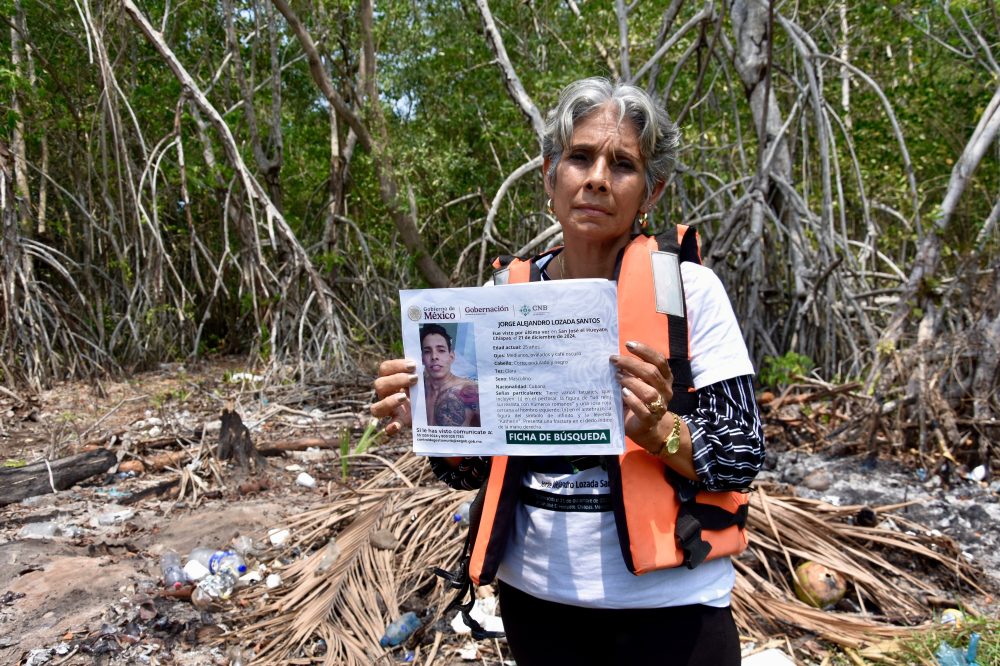
This month, her mother Isis Pérez traveled to the same border village near Guatemala to conduct her own investigation. Joined by other family members of the vanished migrants from Cuba, Honduras and Ecuador, they examined the San José El Hueyate dock, took boats along the Pacific shoreline, and questioned local business owners and residents.
While Pérez gathered no definitive leads, multiple locals remembered that before the second Trump presidency began in January 2025, numerous vehicles regularly brought migrants to the area for ocean transport.
That migration pattern dropped significantly last year as the United States intensified deportation operations, returning migrants to their origin countries or transferring them to third nations that agreed to receive them.
“As family members, we live in constant torment and anguish, longing to find them,” said Óscar Hernández, a Honduran man who traveled to Chiapas in hopes of locating his brother, who is among the disappeared.
The International Organization for Migration’s Missing Migrants Project has documented 11,475 migrant disappearances or deaths along the South America to United States corridor since 2014, with more than half occurring within Mexico.
A recent IOM analysis identifies multiple smuggling harbors operating since 2021. The typical pattern involves migrants boarding small dual-engine vessels in Puerto de Ocós, Guatemala, then making stops for fuel and supplies at Chiapas ports including Puerto Madero, San José, Barra de Zacapulco, and Paredón. The journey concludes with arrivals in Salina Cruz or Huatulco, Oaxaca, where travelers continue northward overland.
Family members of some missing persons say the 40 migrants who vanished in late 2024 were rushing to reach America before U.S. President Donald Trump’s second term began, worried he would eliminate the more lenient immigration approaches of his Democratic predecessor, Joe Biden.
Among the disappeared were Cubans Meiling Álvarez Bravo, 41, and her 15-year-old son, Samei Armando Reyes Álvarez.
“On Dec. 21, 2024, at 8 a.m., she told me they were going to have breakfast because they were about to cross toward Mexico City by boat,” recounted Julia Margarita Bravo Díaz, Meiling’s mother and the boy’s grandmother.
The mother and teenager had flown from Cuba to Nicaragua before making an overland journey through Honduras and Guatemala into Mexico. According to relatives of four missing individuals, the pair initially had no knowledge their route to the U.S. border would involve ocean travel.
Locating missing individuals in Mexico presents enormous challenges on land, but becomes exponentially more complex at sea, explained Ana Enamorado, coordinator of the nonprofit Regional Network of Migrant Families.
From July through November 2025, the Mexican Navy conducted rescue operations for 22 migrants — six from ocean shipwrecks and 16 from coastal areas as they prepared to depart from Chiapas. Responding to these dangers, Mexican officials announced in March they had expanded ocean surveillance operations with Guatemalan authorities to combat both narcotics trafficking and unauthorized migrant movement toward North America.
The mothers and family members of the 40 migrants who disappeared in late December 2024 acknowledge that while they must return to their home nations, their investigation will continue from a distance.
“We are leaving with heavy hearts but with the hope of finding them,” said Pérez. “We ask that you help us search, help us find them.”