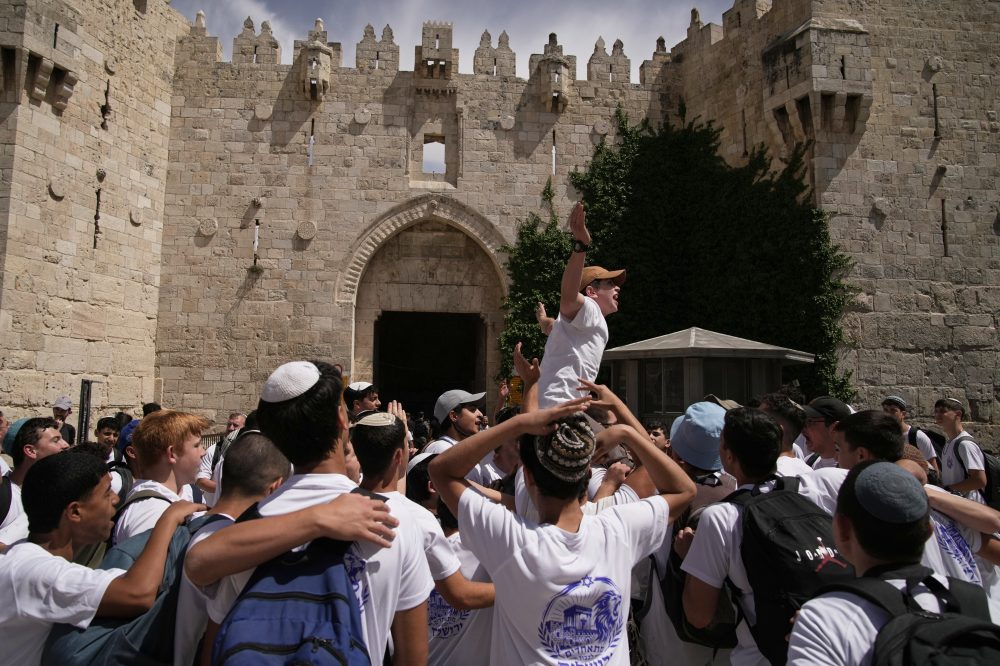

JERUSALEM (AP) — The ancient city of Jerusalem was preparing Thursday for the arrival of tens of thousands of ultranationalist Jewish participants in an annual procession through Palestinian neighborhoods in the Old City, an event that has historically featured racist chanting and violent incidents.
The demonstration marks Jerusalem Day, celebrating Israel’s seizure of east Jerusalem during the 1967 Middle East conflict, including the Old City and religious sites held sacred by Jewish, Christian and Muslim faiths. The same march triggered an 11-day conflict in Gaza four years earlier.
The event occurs as Israel’s far-right administration, which includes settler leaders in important roles, approaches upcoming elections and seeks to energize its political supporters.
Earlier Thursday, far-right National Security Minister Itamar Ben Gvir made a provocative appearance at Jerusalem’s most contentious religious location, home to the Al-Aqsa Mosque, Islam’s third most sacred site. The location is known to Jews as the Temple Mount, site of ancient biblical temples and Judaism’s most holy place. The appearance risked escalating tensions already high in the city following two and a half years of nearly continuous warfare and unstable truces.
During his Thursday appearance, Ben Gvir displayed an Israeli flag while singing and declaring “the Temple Mount is in our hands,” echoing the renowned words of an Israeli paratrooper commander from 1967 who announced Israeli control over sections of the Old City during intense combat.
Ben-Gvir has made repeated appearances at the disputed Jerusalem hilltop location during tense periods.
The parade frequently results in violent clashes between ultranationalists and Palestinian inhabitants of the Old City. Previous events have featured crowds shouting phrases such as “Death to Arabs” and “May your villages burn.”
The procession path goes straight through the Muslim Quarter of the Old City, beginning at Damascus Gate and continuing down a marketplace normally filled with Palestinian shoppers. Early Thursday morning found the street deserted, as Palestinian families stayed indoors while merchants secured their businesses with heavy locks, shutting down early for protection.
Fighting erupted when groups of young participants entered the Old City ahead of the official march, meeting Palestinians in the Christian quarter. Chairs were thrown between the groups. Members of Standing Together, an Israeli-Palestinian peace organization, intervened to halt the confrontation, according to video shared by the group.
“When we put our bodies on the line, it oftentimes reduces the violence because settlers are less willing to attack when there are Jews there or when we document what’s going on,” said Ori Shaham, the group’s international spokesperson.
Tag Meir, another organization opposing extremist Jewish violence, conducted their yearly “flower march” before the crowds arrived, distributing flowers to merchants before they closed early.
Jerusalem Police created a restricted area for media coverage of the event. During previous marches, crowds have attacked journalists.
Jerusalem remains central to the Israeli-Palestinian dispute. Both sides view the city as essential to their national and religious heritage. It represents one of the most difficult aspects of the conflict and frequently becomes a source of tension.
Israel views all of Jerusalem as its eternal, unified capital. The international community does not recognize its annexation of east Jerusalem. Palestinians seek an independent nation with east Jerusalem as their capital.