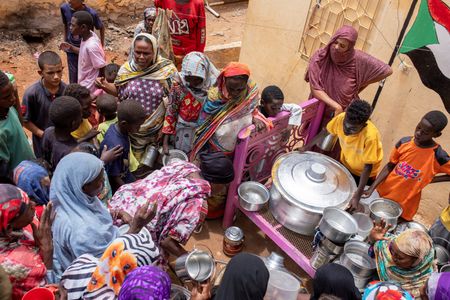

Nearly 19.5 million people in Sudan are experiencing severe food shortages, representing more than 40% of the nation’s population, according to new findings from an international hunger monitoring organization, as a devastating three-year conflict continues to reshape the crisis.
The prolonged war in Sudan has made widespread hunger and starvation its defining characteristic, with estimates suggesting hundreds of thousands have died while the conflict has destroyed the nation’s economy and farming systems, forcing 14 million people from their homes.
The new figures from the U.N.-backed Integrated Food Security Phase Classification (IPC) show a modest decrease from autumn projections of 21.2 million affected people, though 14 regions across North Darfur, South Darfur, and South Kordofan states continue facing famine conditions, with 135,000 residents enduring what officials describe as “catastrophic” hunger levels.
These threatened regions include the urban centers of al-Fashir and Kadugli, which experienced famine conditions last year primarily due to blockades imposed by the Rapid Support Forces. However, the RSF successfully captured al-Fashir in October, essentially evacuating the city, while government forces lifted the Kadugli blockade earlier this year.
Unmanned aircraft attacks have emerged as the dominant military strategy in Sudan, replacing traditional ground operations. Combat continues across the Kordofan region and Blue Nile state, with drone strikes claiming at least 880 civilian lives since January, according to the U.N.’s human rights office. These aerial attacks have specifically targeted civilian facilities including marketplaces, medical centers, and electrical infrastructure.
“Ongoing hostilities – especially around major supply routes, such as El Obeid in North Kordofan – and the possibility of renewed siege‑like conditions continue to heighten risks,” the IPC said in a statement.
Approximately 825,000 children are projected to experience severe acute malnutrition as violence, restricted access, and funding reductions have complicated relief operations across much of the nation, the IPC reported. Sudan’s upcoming rainy season, typically starting around July and overlapping with the challenging planting period, is anticipated to further deteriorate conditions.
Additional regions facing potential famine include areas in North Darfur sheltering refugees from al-Fashir, such as Tina, Um Baru, and Kernoi, which have experienced both drone bombardments and ground fighting as the RSF strengthens its territorial control.
The broader regional Iran crisis also poses additional threats to the situation, driving up costs for food, fuel and fertilizer while reducing prospects for a productive harvest season this year.