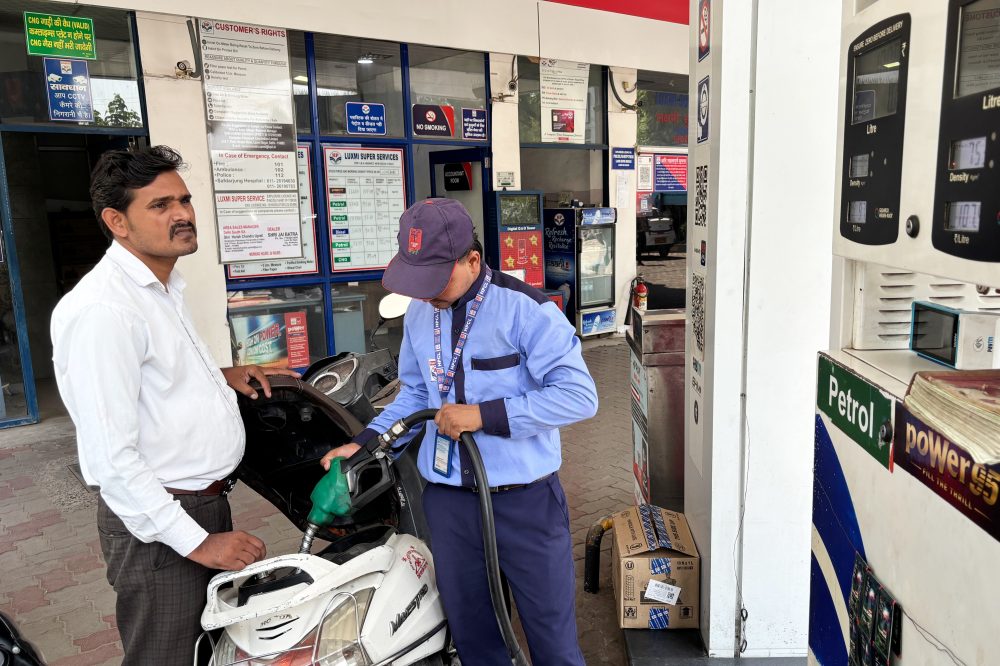

India implemented a 3 rupee ($0.03) per liter increase in fuel costs Friday as officials work to balance losses caused by escalating worldwide oil prices.
The capital city of New Delhi now sees gasoline priced at 97.77 rupees ($1.17) per liter, with diesel reaching 90.67 rupees ($1.09) per liter.
The nation depends on imports for approximately 90% of its oil supply and has faced significant challenges from climbing energy costs and distribution problems connected to the Iran war and the Strait of Hormuz closure. Until this point, the country had resisted increasing consumer fuel costs despite dramatic rises in energy expenses, positioning it among the final major economies to transfer elevated crude prices to buyers.
These cost adjustments occurred just days following Prime Minister Narendra Modi’s call for Indians to embrace voluntary conservation efforts.
During a Sunday address, Modi encouraged citizens to work from home when feasible, restrict international travel, and decrease gold purchases. He characterized fuel preservation and foreign exchange conservation as acts of “patriotism,” while promoting increased public transit usage, ride-sharing, and reduced fertilizer consumption.
Political opposition figures noted that Modi’s request came only after a significant state election cycle had finished, pointing out that fuel costs remained stable throughout the campaign period.
This week also saw India implement higher import tariffs on gold and silver at 15% as an attempt to reduce demand for imports that deplete foreign currency reserves.
The nation’s currency has dropped to historic lows recently as elevated oil costs have intensified import pressures and strained foreign exchange holdings.
India’s capital has emerged as the first state to implement conservation policies.
New Delhi officials announced fuel conservation initiatives Thursday, featuring required remote work days for certain government workers. Delhi Chief Minister Rekha Gupta explained the 90-day initiative seeks to decrease official fuel consumption and motivate residents to depend more heavily on public transit rather than personal vehicles.
The strategy requires employees capable of remote work to stay home twice weekly, while private businesses receive encouragement to voluntarily implement comparable policies.
The country has also expedited ethanol integration in gasoline as part of efforts to decrease crude oil dependency.
The majority of filling stations nationwide now offer gasoline mixed with 20% ethanol, with officials proposing expanded use of fuels containing 85% or complete ethanol in suitable vehicles.
Energy specialists noted that biofuel blending can provide protection from global energy disruptions but may further strain already diminishing groundwater supplies, encroach on agricultural land designated for food production, and affect older vehicle engines.