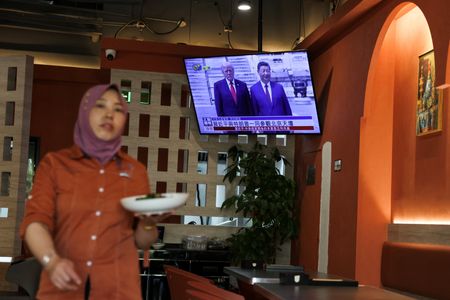

When Presidents Donald Trump and Xi Jinping gather for an elaborate state dinner in Beijing this Thursday, the menu will likely showcase Huaiyang cuisine – a regional Chinese cooking style from the Shanghai area celebrated for its gentle flavors, precise preparation techniques, and focus on seasonal ingredients.
China has long leveraged food’s symbolic power during significant official occasions and visits from important foreign dignitaries. The country’s modern history of food shortages and political upheaval that led to years of widespread rationing transformed meals into powerful status symbols within Chinese society.
“One of the key strengths of Huaiyang cuisine is its broad appeal. Its flavours are widely acceptable and accessible to most people … including international guests,” said Shi Qiang, executive chef at Gui Hua Lou, an upscale Huaiyang cuisine restaurant in Shanghai.
“From the overall philosophy of Huaiyang cuisine, state banquets are not centered on luxury ingredients, they don’t rely on expensive items, extravagance is simply not the focus.”
As one of China’s eight primary regional cooking traditions, Huaiyang cuisine has consistently taken the spotlight at important diplomatic gatherings. The cuisine appeared at the 1949 “founding banquet” marking the establishment of the People’s Republic, China’s 50th anniversary celebration feast in 1999, and a 2002 dinner where then-President Jiang Zemin hosted visiting U.S. President George W. Bush.
Culinary moments have also created unexpected viral incidents during foreign officials’ Chinese visits in recent years. In 2023, former U.S. Treasury Secretary Janet Yellen made light of consuming “magic mushrooms” at a Yunnan-style restaurant in Beijing, while then-U.S. Vice President Joe Biden dined at a modest Beijing establishment known for its fried liver in 2011.
China even developed a chicken preparation named for U.S. top diplomat Henry Kissinger, presented to him during his confidential 1971 visit, and meals served to foreign leaders frequently become “set banquets” offered by local dining establishments.
Notable Huaiyang specialties include soft, bouncy “lion’s head” pork meatballs, Yangzhou fried rice, “squirrel fish” prepared with deep-frying and sweet-and-sour coating, and “wensi tofu” – tofu cut into thousands of thin strips.
The cooking style emphasizes ingredients from the Yangtze river region such as freshwater fish, eel and bamboo shoots, using light seasoning to showcase natural flavors.
“It’s great for banquets because it’s lighter than the food of Shandong in China’s north, not spicy like the foods of the southwest (like Sichuanese), and more approachable and less reliant on exotic ingredients than Cantonese, the big cuisine of the south,” said Christopher St. Cavish, a food writer based in Shanghai.
“In the most basic description, it’s ‘safe’. It’s the equivalent of serving chicken at a banquet in Washington, DC. No one is going to get offended or find it too hot to eat or too exotic to try.”
When Trump previously visited China in 2017, his hosts prepared Huaiyang-influenced dishes including braised vegetables in broth and stewed beef with tomato – acknowledging his preference for well-cooked steak.