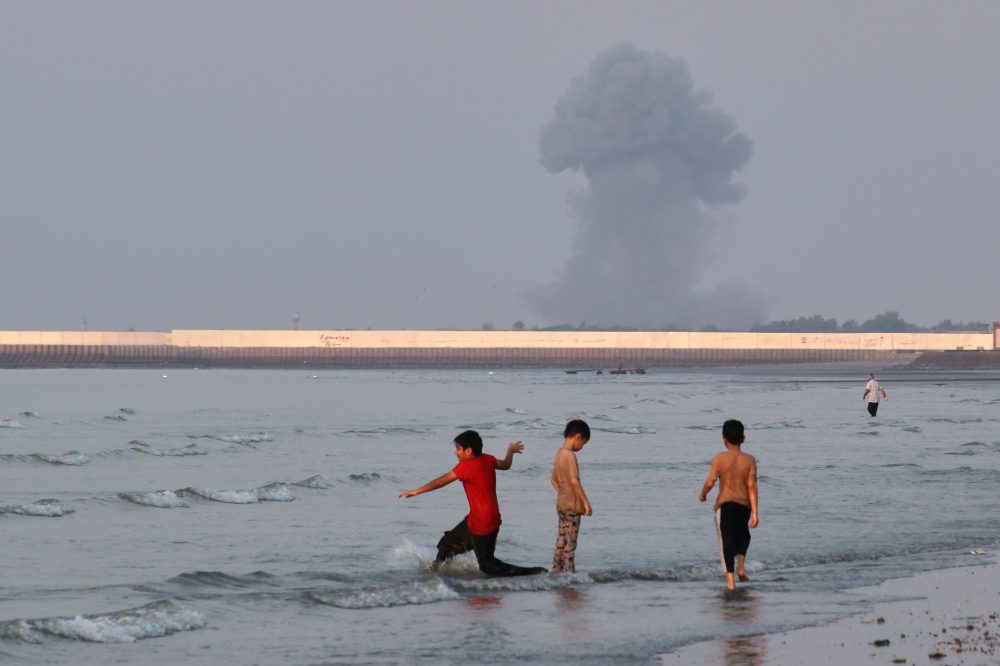
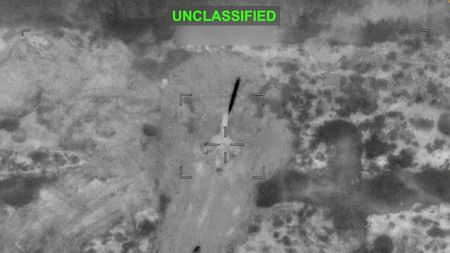
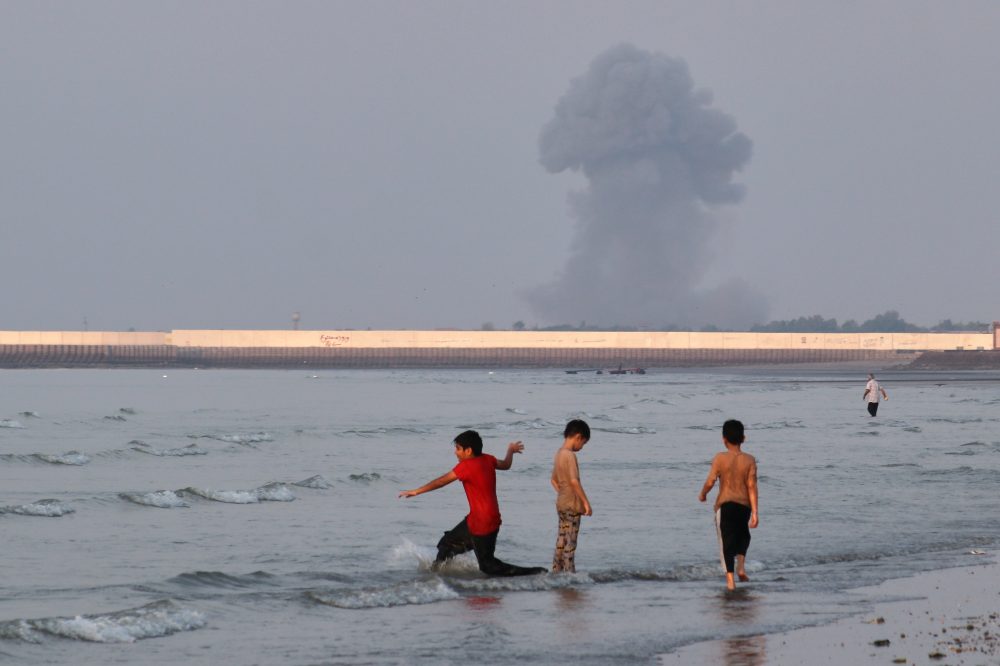
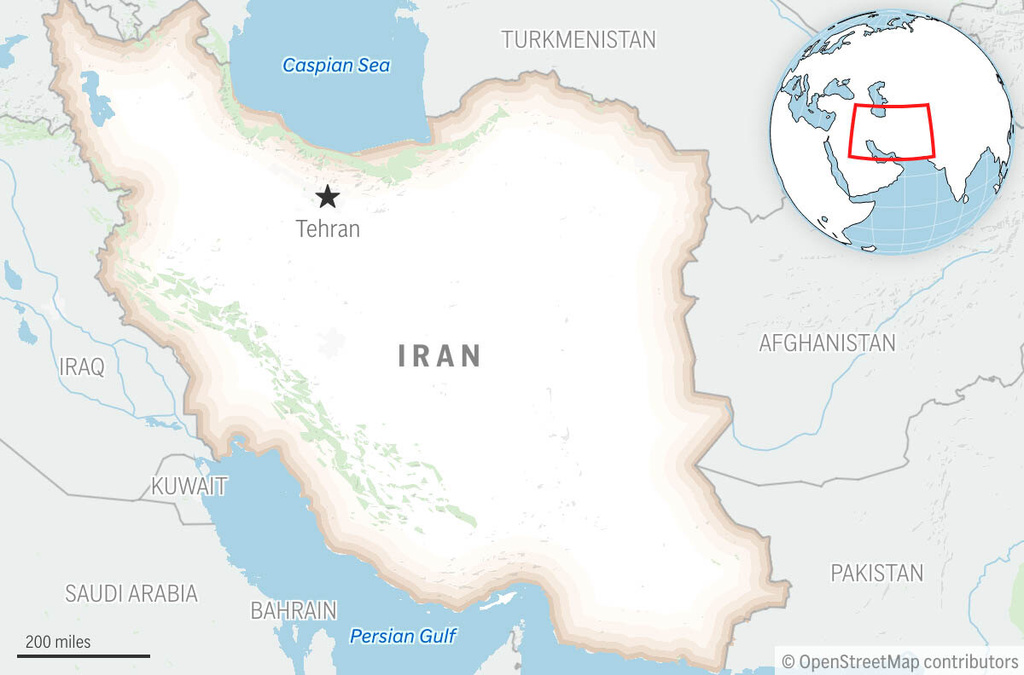
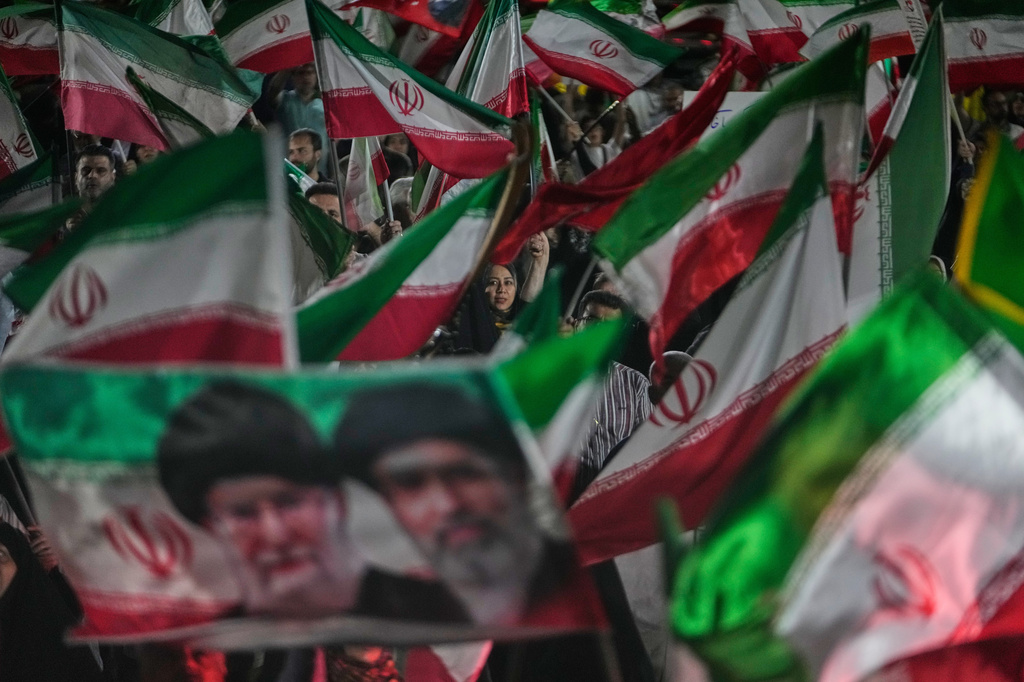
Iran’s Islamic Revolutionary Guard Corps announced Tuesday that it fired ballistic missiles at a U.S. air base located in Jordan, while simultaneously urging Jordanian citizens to push for the removal of American military installations from their country.
In a statement distributed through Fars News, the IRGC addressed the Jordanian people directly: “You know very well that not only do we not have any enmity with your country, but we also love you, the noble people, who understand the pain and oppression of the Palestinian people more than any other nation.”
Jordan’s military responded to the attack, announcing Tuesday that its forces intercepted and destroyed four missiles that crossed into Jordanian airspace from Iranian territory, according to the country’s state news agency.
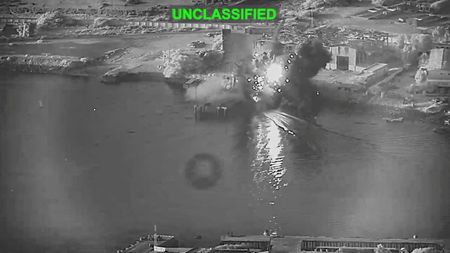
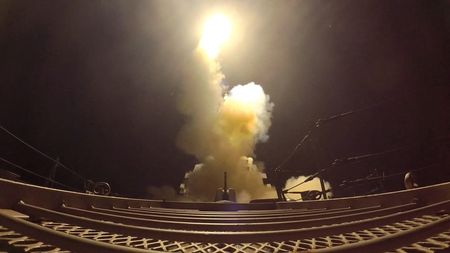
Meanwhile, U.S. Central Command completed its latest round of strikes against Iran — a campaign carried out under orders from President Donald Trump. The five-hour assault marked the third straight night of American attacks on the country.
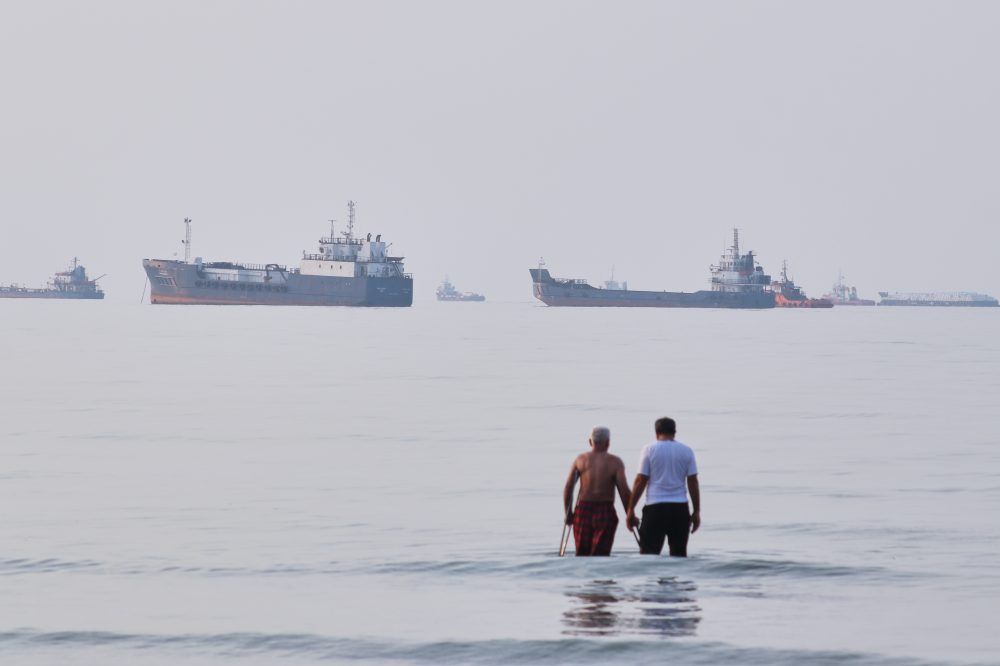
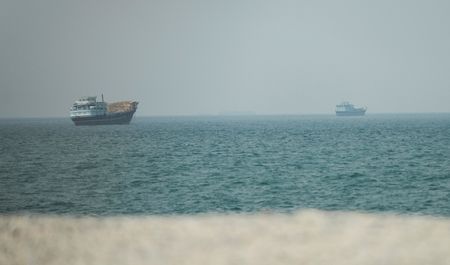
As the strikes unfolded, Trump moved to reinstate a naval blockade on Iranian shipping and floated the idea of charging a 20% fee on all cargo traveling through the Strait of Hormuz — a critical global waterway. Iranian media reported that several cities were hit during the U.S. strikes, with four people wounded and rescue teams deployed to affected areas.
Speaking on the “Hugh Hewitt Show” earlier Monday, Trump made clear his intentions: “Very hard tonight, and we’re going to hit them hard tomorrow. And there’s not a damn thing they can do about it.”
The renewed hostilities follow Iran’s weekend announcement that it was closing the Strait of Hormuz, a move that rattled global energy markets and cast doubt on any interim agreement to pause the ongoing conflict.
Trump had posted on Truth Social earlier Monday: “The Hormuz Strait is OPEN, and will remain OPEN, with or without Iran. We are reinstating THE IRANIAN BLOCKADE.” He added: “The U.S.A. will be, from this point forward, known as ‘THE GUARDIAN OF THE HORMUZ STRAIT’, but as such, and as a matter of FAIRNESS, will be reimbursed, at the rate of 20% on all cargo shipped.”
Iran’s senior military command pushed back, saying the U.S. has no authority over the waterway’s future. Iranian Foreign Minister Abbas Araqchi took to X to assert that Tehran is — and will remain — the strait’s true guardian, sarcastically responding to Trump’s proposed fee: “20% is of course too much. We will be fair.”
Before the conflict erupted in February, roughly one-fifth of the world’s daily oil and gas traffic moved through the Strait of Hormuz — more than 15 million barrels of fuel worth at least $1.2 billion every day. A 20% levy on that cargo could bring in approximately $240 million daily.
The United Nations shipping agency came out against Trump’s toll proposal, stating it opposes fees on internationally navigated straits and noting there is no legal foundation for imposing mandatory charges on vessels passing through.
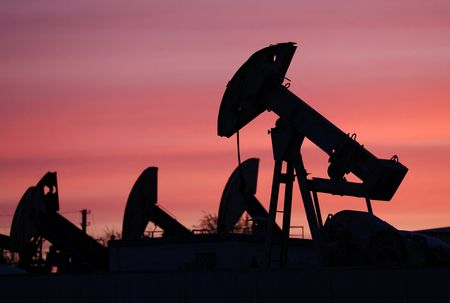
Oil prices climbed nearly 3% on Tuesday, reaching their highest point in four weeks, driven by the reimposed U.S. naval blockade and growing fears about disruptions to global energy flows through the strait.
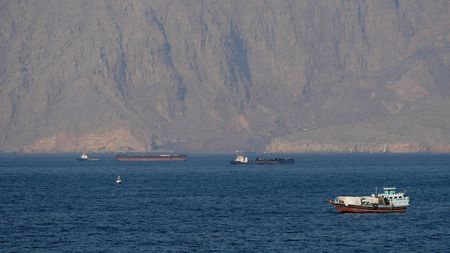
The UAE Ministry of Defense reported Monday that Iranian cruise missiles struck two Emirati oil tankers as they traveled through the southern lane of the strait in Omani territorial waters. The United Kingdom Maritime Trade Operations agency separately reported that a tanker had been struck by an unidentified projectile approximately 40 nautical miles northeast of Oman’s Qalhat, though it was unclear whether that incident was the same one described by the UAE.
The IRGC claimed it had hit and disabled two “offending” supertankers in the strait after the vessels allegedly ignored repeated warnings and switched off their navigation systems. The IRGC did not identify the ships or confirm whether they matched those mentioned by the UAE. It accused the U.S. of “inciting vessels to use an illegal route” and warned that working with the “aggressor enemy” would result in damage, delays in reopening the waterway, and a potential global energy crisis.
The U.S. Navy-led Joint Maritime Information Center announced that a blockade of Iran would take effect at 8:00 p.m. GMT Tuesday, applying to all vessel traffic regardless of flag and covering Iran’s entire coastline, including its ports and oil terminals. Officials noted the blockade would not interfere with neutral transit through the strait to non-Iranian destinations, and that humanitarian shipments would be allowed through after inspection.
The current conflict traces back to February 28, when the U.S. and Israel launched attacks on Iran. Iran retaliated with strikes on Israel and Gulf states hosting American military bases. The fighting has resulted in thousands of deaths and the displacement of millions of people.
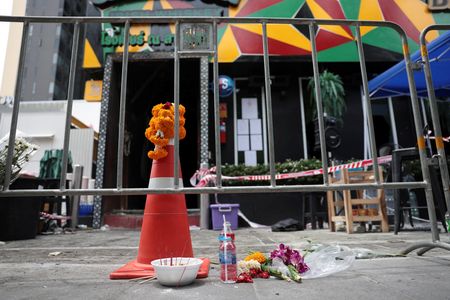
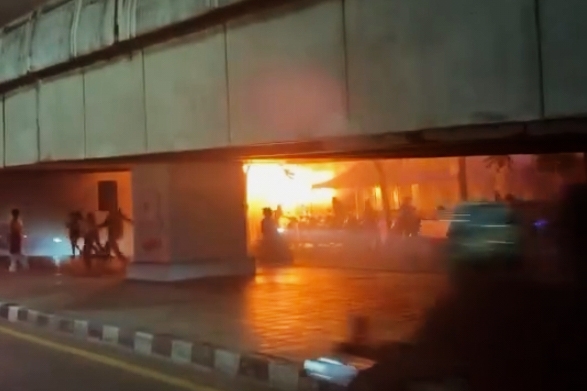
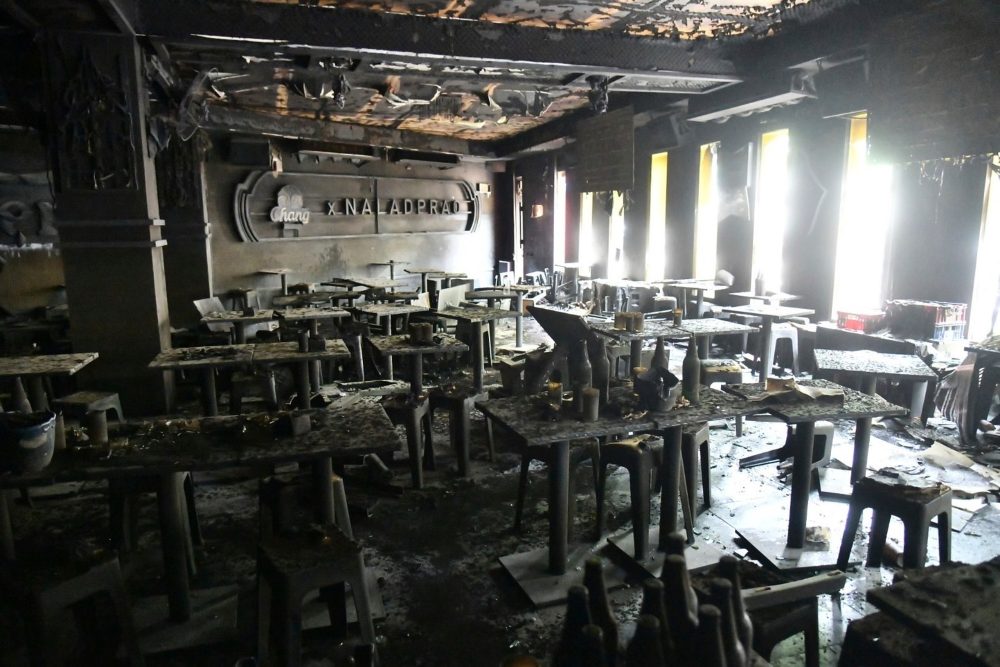
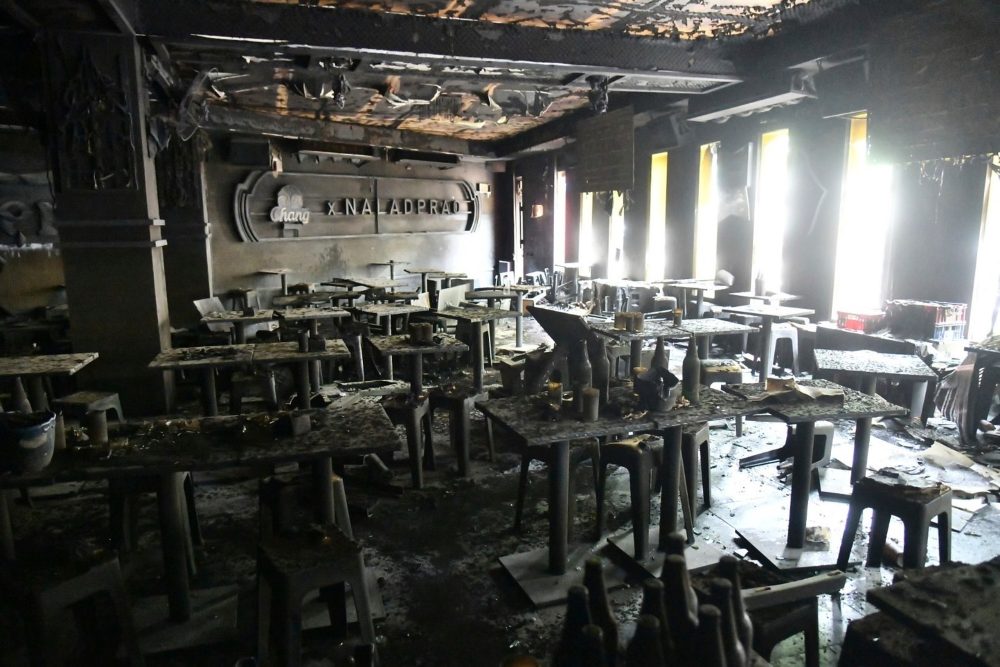
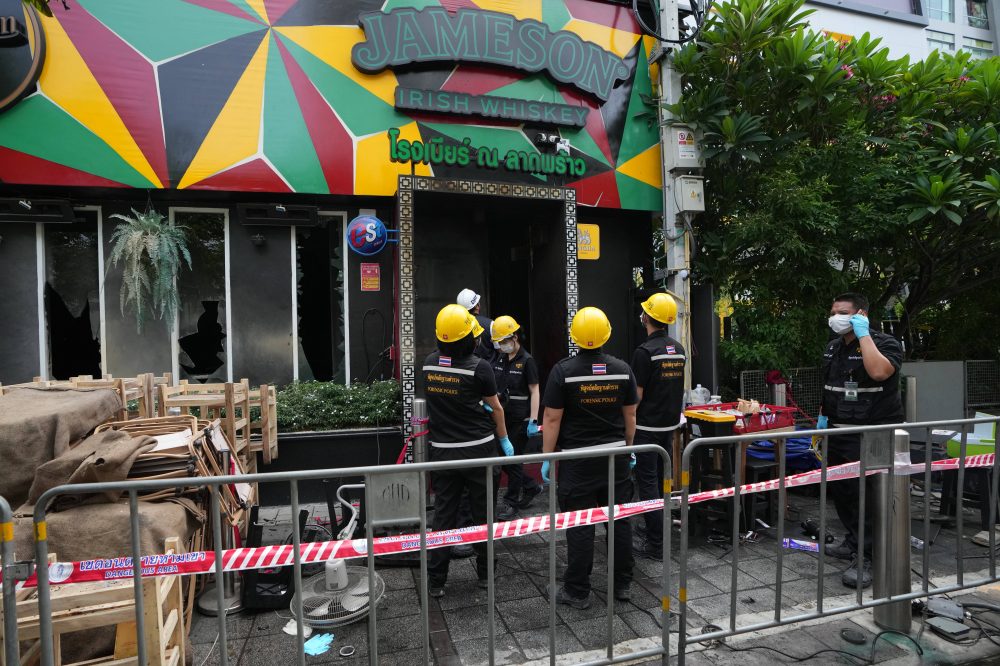
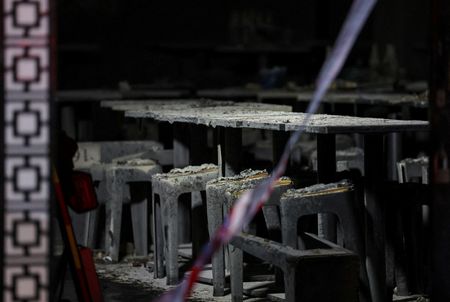
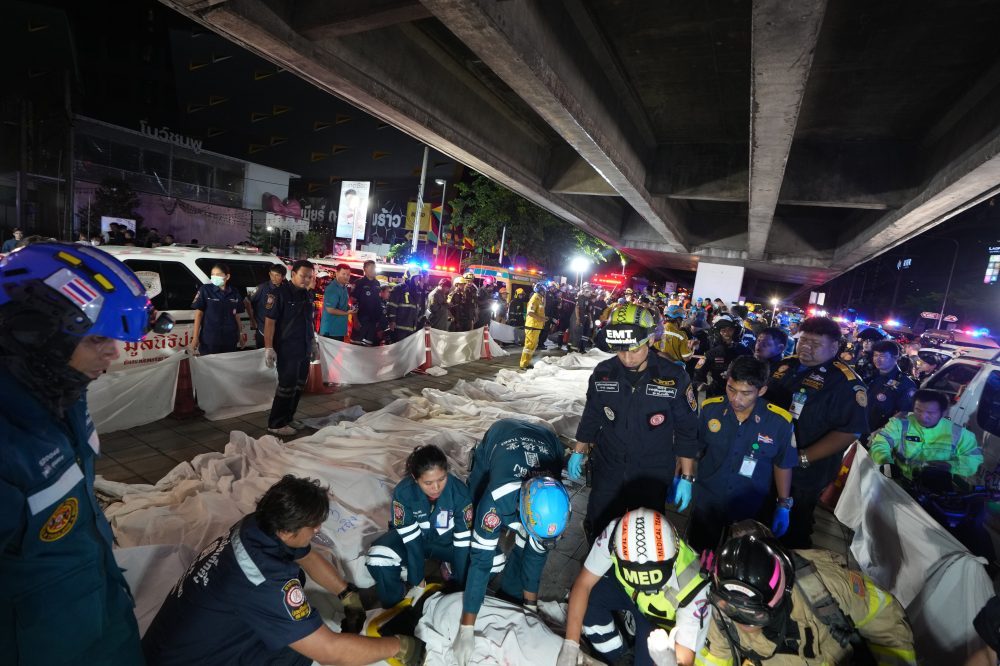
The death toll from a catastrophic fire at a Bangkok live music pub has climbed to 30, Thai officials confirmed Tuesday, as the city’s governor pledged stricter safety enforcement and police launched an investigation into potential negligence and safety violations.
The fire broke out just before midnight Sunday, ripping through the Rong Beer Na Lat Phrao pub in Bangkok’s northern Chatuchak district. Witnesses described an explosion followed by a horizontal burst of flames and thick smoke that quickly consumed the single-story building.
As of Tuesday, 24 people remained in critical condition. Dozens of others who received treatment had been released from hospitals, though three people who had been admitted following the fire later died, officials said.
The pub sits at a busy intersection near train stations and two shopping malls and is part of a cluster of similar bars that draw large weekend crowds. The venue offered food, drinks, live music, and televised football matches.
Investigators believe an electrical short circuit in a ceiling-mounted air conditioning unit may have started the fire. The pub had undergone a safety inspection back in April. Police are now looking into whether emergency exits were blocked and whether flammable materials were used for stage decorations and soundproofing.
Bangkok governor Chadchart Sittipunt addressed reporters at a press conference Tuesday, saying, “We’ve set up a committee to investigate the truth, what should be improved and what rules should be changed.” He added, “We will do more random checks.”
Police said 34 individuals had been questioned so far, and that charges would be considered once all facts and evidence were collected. The pub’s owner is reportedly among those currently receiving treatment in an intensive care unit.
At a Bangkok morgue Tuesday, rescue workers were filmed moving a victim’s coffin as television cameras rolled and journalists crowded the scene. Grieving family members and friends arrived to claim their loved ones’ remains.
Outside the pub, relatives mourned the victims while forensic investigators worked to gather evidence from the fire scene.
The pub posted an apology on its Facebook page, stating it was fully cooperating with the investigation. “We apologise deeply over the very sad events that took place and express our condolences to the families of those who lost their lives and send our support to those injured,” the post read. The message drew hundreds of comments, many expressing anger and raising questions about the venue’s safety practices. The pub did not respond to phone calls or requests for comment regarding the preliminary investigation findings.
Thailand has a troubling history of deadly fires at entertainment venues. While such establishments are required to undergo fire safety inspections, those protocols are not always strictly followed. A nightclub fire in Chonburi in 2022 killed at least 13 people, and a New Year’s Eve blaze at a crowded Bangkok club in 2009 left 65 dead and roughly 200 injured — an incident that later revealed corruption and widespread safety violations.
In Bangkok’s well-known Khaosan Road backpacker area — packed with bars and nightclubs and located about 10 kilometers (6 miles) from the fire site — tourists said they were saddened by the tragedy but felt no personal safety concerns.
“It doesn’t worry us. All the places that we’ve been have been very safe,” said Connor McLernon, 30, a visitor from Boston.
His travel companion, Patricia Bello McLernon, 31, said she believed the fire was an isolated incident. “It’s just an unfortunate accident that happened and I don’t think that should deviate anybody from visiting,” she said.
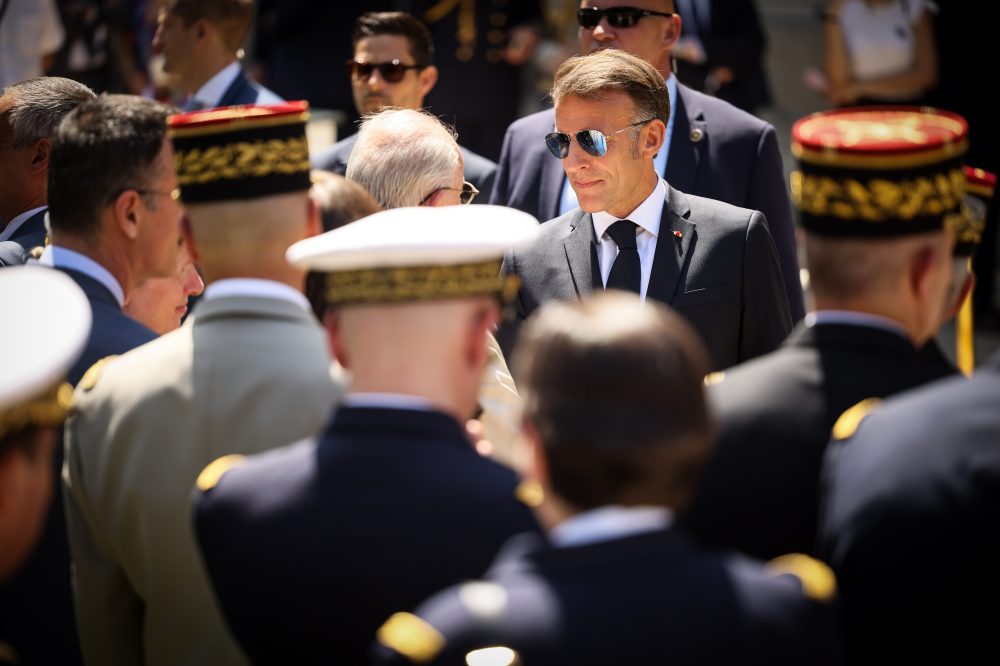
PARIS — France’s annual Bastille Day celebration this year carries a message that extends well beyond French borders. Soldiers and warplanes from nations across Europe are participating in Tuesday’s grand parade through the streets of Paris, in a deliberate display of support for Ukraine and a demonstration of European military capability.
For President Emmanuel Macron, this marks his final Bastille Day in office, and he is using the occasion to host roughly 30 fellow world leaders. The gathering appears designed to signal to both Russian President Vladimir Putin and U.S. President Donald Trump that Europe stands united and is taking its own defense seriously.
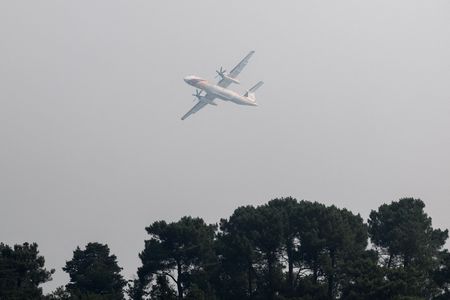
At the same time, the country’s biggest national holiday is being disrupted by rapidly spreading forest fires and a dangerous heat wave — the third such event in France this year — leading officials to cancel traditional fireworks displays and firefighters’ balls in several areas.
Bastille Day falls on July 14 each year, marking the date in 1789 when Parisians stormed the Bastille fortress and prison, an act that helped ignite the French Revolution. That revolution ultimately toppled the monarchy and led to the executions of King Louis XVI and Queen Marie-Antoinette.
Today, the holiday holds a central place in French life. Presidents use it to celebrate national achievements and pride, local mayors organize village festivals, and families come together for holiday meals.
The highlight of the day is the parade beneath the Arc de Triomphe and down the Champs-Elysees — the very event that inspired U.S. President Donald Trump to organize his own military parade last year.
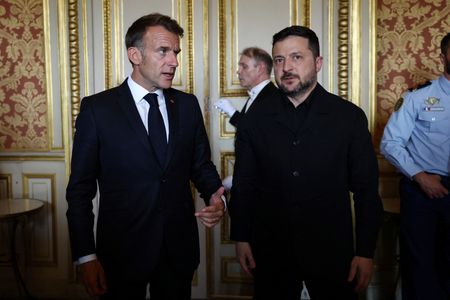
Ukrainian President Volodymyr Zelenskyy will stand alongside Macron and approximately 30 other heads of state or government in the designated viewing area.
Ukrainian soldiers will march along the historic cobblestone avenue, and Ukrainian co-pilots who received training in France will fly two Mirage 2000B fighter jets side by side with French air force pilots.
Speaking Monday evening, Macron called it a “great honor” to welcome “all the partners in the coalition of the willing and our Ukrainian friends who will march with us and illustrate its strategic reawakening and our unity.”
The parade will open with approximately 500 soldiers representing the “coalition of the willing” — a group of countries that have committed to assisting with Ukraine’s security after the war ends.
Military aircraft from Germany, the United Kingdom, Croatia, Poland, Denmark, Greece, Sweden, Norway, Spain, and Italy will participate in the aerial portion of the event.
This year’s parade will set a new record for troop participation, with 6,800 soldiers marching — up from 5,810 in 2025.
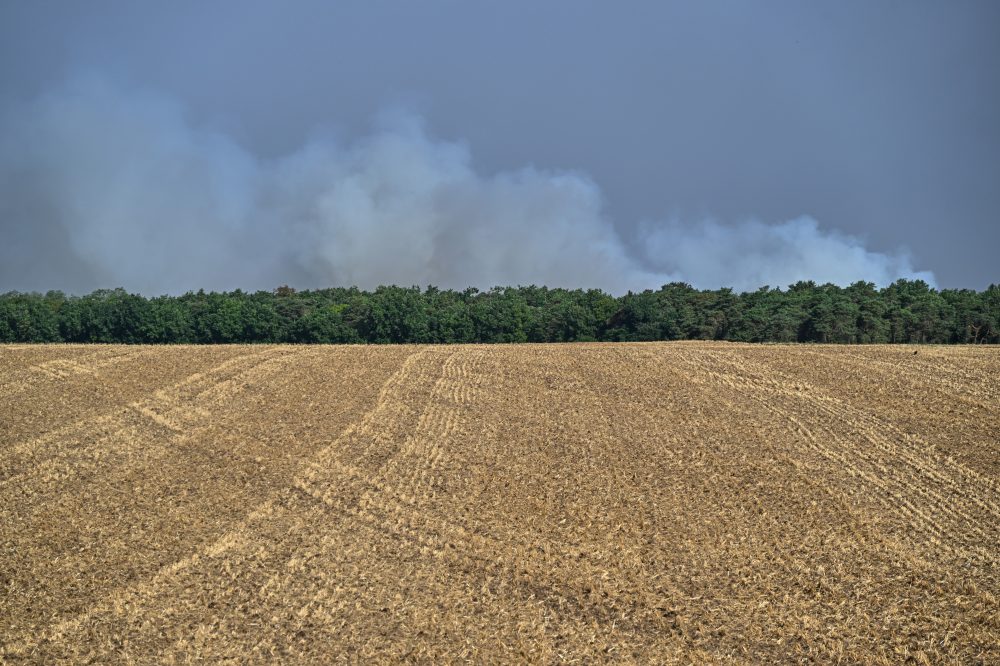
Wildfires are currently burning in the Fontainebleau forest south of Paris and in regions of southern France. In response, authorities in several areas, including Paris itself, have prohibited fireworks and the traditional firefighters’ balls typically held around Bastille Day. The Eiffel Tower’s drone light show was not affected and went ahead Monday night as planned.
DUBAI, United Arab Emirates — American forces carried out strikes against Iran in the early hours of Tuesday, just hours after President Donald Trump declared that the United States is “reinstating” a blockade on Iran in the Strait of Hormuz. Trump also floated the idea of charging other nations’ ships a fee for safe passage through the strait — a dramatic reversal of longstanding American policy backing freedom of navigation on international waters.
Iran wasted no time responding, launching attacks on Bahrain, Jordan, and two oil tankers linked to the United Arab Emirates that were traveling through the strait. One mariner was killed and eight others were wounded in the tanker strikes. The UAE threatened to strike back against Iran, potentially pulling the country — home to both Abu Dhabi and Dubai — into direct combat with Tehran.
At the heart of the conflict is a struggle between Iran and the U.S. for dominance over the strait, which in peacetime carried roughly one-fifth of all globally traded crude oil and natural gas. Benchmark Brent crude oil prices climbed to a one-month high of more than $84 per barrel in early Tuesday trading — still far below the nearly $120 peak reached at the height of the conflict, but high enough to threaten rising costs worldwide.
The U.S. military’s Central Command announced strikes on locations near Abu Musa, Bandar Abbas, Bushehr, Chahbahar, Jask, and Konarak, saying the targets included Iranian “coastal defense systems, missile and drone sites and maritime capabilities.” Iran confirmed that strikes occurred near those areas but did not immediately release any figures on casualties or damage.
“These strikes will continue imposing a heavy cost on Iranian forces and degrade their ability to attack innocent civilians and commercial shipping in the Strait of Hormuz,” the U.S. military stated.
Shortly after the military’s announcement, Trump described the operation as “another major attack.”
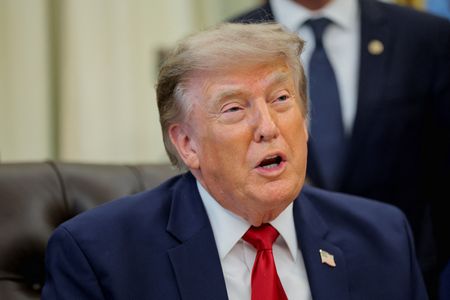
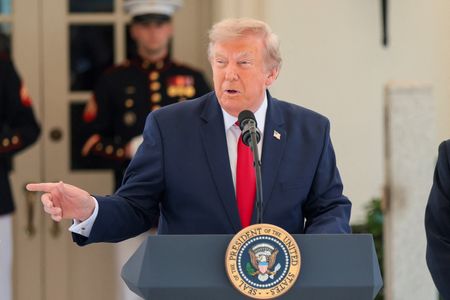
“We’re hitting them very hard. And it’ll continue, and we’ll see what happens,” he told reporters in the Oval Office. “We’re knocking out all of their offensive capability and we’re controlling the straits. We’re putting the blockade back.”
Trump also expanded on his proposal to collect tolls from ships transiting the strait — a reversal of a position he had previously taken against such charges.
“We’re protecting a very rich portion of the world,” he said. “We’re spending money. And so, what we’ve done is, we are going to be reimbursed for protection.”
This marks a significant departure from prior U.S. policy, which held that the strait should be freely open to all vessels — as it was before the U.S. and Israel attacked Iran on Feb. 28. Any move by either the U.S. or Iran to impose transit fees would run counter to international norms on freedom of navigation and could trigger further economic disruption well beyond the Middle East region. The U.S. Navy has championed freedom of the seas dating back to the Barbary Wars and the War of 1812.
The UAE’s Defense Ministry confirmed early Tuesday that Iran struck two tankers in the Strait of Hormuz, firing two cruise missiles at vessels identified as the Mombasa and the Al Bahiyah. Both tankers caught fire as a result of the attacks, though crews were able to extinguish the flames.
Iran’s paramilitary Revolutionary Guard took responsibility for the strikes, claiming the two vessels “ignored repeated warnings.”
“They chose to pass through a minefield and were subsequently targeted and disabled,” the Guard stated.
The UAE’s Defense Ministry identified the casualty as one Indian national and said six other Indians and two Ukrainians were among the wounded. The ministry issued a stern warning, saying: “The UAE reserves its full right to respond to this escalation and to take all necessary measures to protect its territory, its citizens and residents.” The Emirates used similar language prior to launching earlier attacks against Iran during the conflict. Residents in Dubai reported hearing fighter jets overhead Tuesday morning.
Bahrain also faced renewed missile attacks early Tuesday as part of Iran’s retaliation. Missile warning sirens sounded three separate times, with authorities urging the public to take shelter. No immediate reports of casualties or damage emerged from those strikes.
Jordan’s military said it intercepted four Iranian missiles, according to a statement carried by the country’s state-run Petra news agency. Jordan, which hosts American forces, has faced repeated attacks from Tehran in recent days.
The U.S. Embassy in Abu Dhabi and the U.S. Consulate in Dubai informed American citizens early Tuesday that consular appointments were canceled through Wednesday, citing “the regional security situation.”
On Monday, Trump told conservative radio host Hugh Hewitt that the agreement reached last month was “built to test” Iran, adding that “when you’re dealing with sleazebags (agreements) don’t mean much.” He added, “They didn’t honor the test.”
Iran maintains it has the right to oversee traffic through the strait and to potentially collect fees under the terms of the interim peace deal — a claim the U.S. rejects. The American military and the United Nations’ International Maritime Organization have worked to establish an alternate shipping lane through the strait along Oman’s coastline, outside Iranian jurisdiction. Iran has attacked ships using that route, arguing the U.S. is violating the interim deal. American forces have responded with strikes on Iran, which has in turn launched attacks on U.S.-allied Arab nations.
Recent exchanges of fire had already raised serious questions about the durability of the interim peace agreement. Washington had previously lifted a blockade it put in place in mid-April as part of that deal, which also called for the strait to be fully reopened.
“We are reinstating the THE IRANIAN BLOCKADE,” Trump posted on social media. “All other countries will have fair and open use of the Strait.”
Trump said the U.S. would be “reimbursed” at a rate of 20% of the value of cargo to offset “any and all costs necessary to do the job of providing safety and security.” The U.S. military announced the blockade of Iranian ports would resume at midnight local time Wednesday in Dubai.
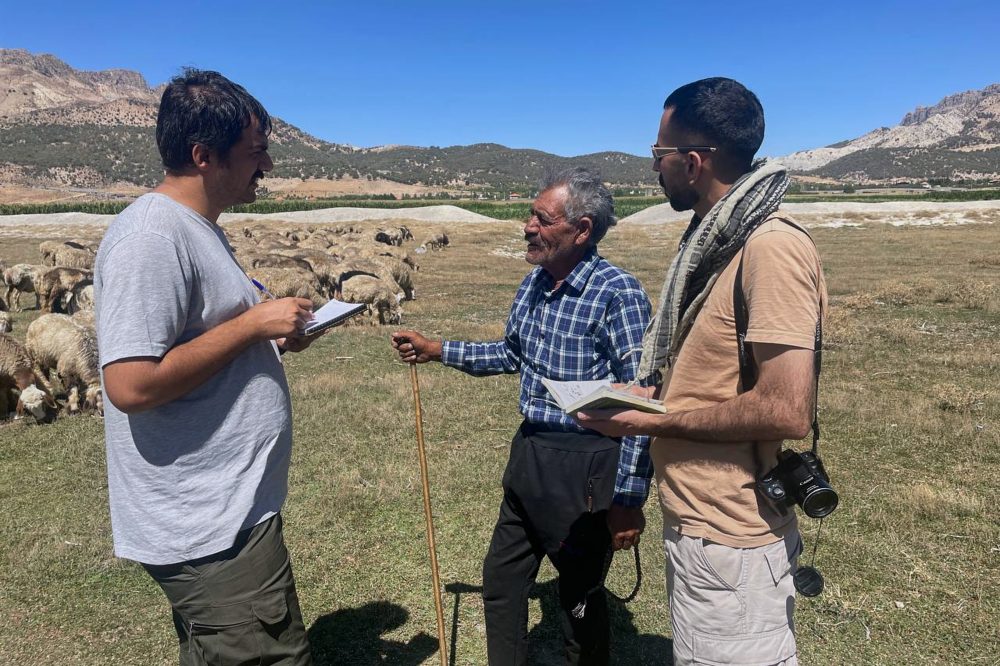
CAIRO (AP) — Shortly after the U.S. and Israel launched military operations against Iran, a veterinarian and bird-of-prey researcher named Reza Kiamarzi set out on a difficult climb into the mountains near his home city of Isfahan in southern Iran. His goal was to locate nests of endangered falcons tucked high in the rocky cliffs.
The military strikes earlier this year happened to fall during the breeding season for two of Iran’s most prized falcon species — the Saker and the red-naped Shaheen — both among the fastest birds on the planet. Kiamarzi knew of two nests situated near military installations that had been hit, and he was determined to find out whether the blasts, ground vibrations, and noise had disrupted birds that were either laying eggs or rearing their young.
“It’s a long climb to the foot of the cliffs. And then we have to rock climb to reach the nests,” Kiamarzi said.
The ongoing conflict and a worsening economic crisis are heaping additional burdens on conservationists already working hard to protect Iran’s remarkable but threatened wildlife. For years, these groups have faced the dual challenges of climate-related threats to the country’s fragile ecosystems and the economic toll of decades of international sanctions.
Roughly two and a half times the size of Texas, Iran is home to a remarkable variety of plant and animal life spread across diverse climate zones. The northern regions along the Caspian Sea are lush and heavily forested, while the Persian Gulf coast is arid and hot. The country sits between two major mountain ranges — the Zagros and the Alborz — and serves as a vital migration corridor and rest stop for birds traveling between Eurasia and Africa, giving conservation work there a significance that extends well beyond Iran’s borders.
According to a 2024 report by Iran’s Environment Department, at least 86 animal species face the threat of extinction within the country. That list includes the Asiatic cheetah, Persian fallow deer, brown bear, leopard, black bear, Persian onager, the great bustard, and multiple species of birds of prey.
“It’s a big question how much longer we and other conservation NGOs can keep working. We’re waiting every moment to see what happens,” said Iman Ebrahimi, founder of a conservation organization based in Isfahan called AvayeBoom — a Persian phrase meaning “The Earth’s Cry.”
Kiamarzi reported that he did find the falcon nests and that the birds were still there. However, he is continuing to analyze his observations to fully understand how the bombing may have affected the falcons.
Even before the war, falcon populations in Iran were declining largely because of smuggling. Iran’s currency, which has lost more than half its value over the past year, made the illegal trade in these birds even more appealing — smugglers sell the prized hunting birds to buyers in Arab Gulf countries who pay in hard foreign currency, Kiamarzi explained.
There is a certain irony in the situation: during peacetime, military zones had actually become some of the safest places for falcons to breed. “It’s a secure area no one dares get close to, not poachers and smugglers,” he said.
U.S.-based Iranian wildlife expert Jamshid Parchizadeh has expressed concern that airstrikes targeting military installations in remote desert and mountain locations have damaged habitats that endangered cheetahs and other large predators depend on.
“These strikes in far-flung places are causing habitat degradation. Definitely this causes water and land pollution, soil contamination, destruction of land cover,” he said.
Parchizadeh, who specializes in Iran’s large carnivores, spent years studying the habitats and population declines of Asiatic cheetahs, Persian leopards, and brown bears before leaving Iran in 2022. He currently works at Michigan’s Department of Fisheries and Wildlife.
“Bombing causes wildlife disturbance for the bears, the leopards who live in the mountains — and that animal forever leaves that area from fear,” he said.
Iran’s water-scarce environment is particularly vulnerable to disruption, Parchizadeh noted. Over the past two decades, the country’s population has grown from approximately 73 million to more than 93 million people, intensifying pressure on already limited water supplies that have suffered from mismanagement and prolonged drought.
The war has also made it nearly impossible to access key wildlife sites on islands in the Persian Gulf. Even with a preliminary ceasefire agreement in place, the U.S. and Iran have continued military exchanges in the area, which is home to Iran’s vital oil and energy infrastructure.
“Unfortunately, two of the most important islands of the Persian Gulf for biodiversity are small islands along Iran’s key oil islands,” said AvayeBoom’s Ebrahimi.
He noted that reports indicate an oil slick reached at least one location near the tiny uninhabited island of Shidvar — a critical nesting ground for turtles and tens of thousands of birds.
Iran has a long cultural history intertwined with its wildlife. Traditional Persian carpet-weaving and artwork frequently featured animal imagery, including the Persian lion — a species that has not been spotted in the country in more than 70 years.
Iran was among the first nations in the world to establish an environmental protection body, creating its Environment Department just one year after the United States launched its own agency in 1970. However, restrictions on development in protected areas — which tend to be located in poorer, rural communities — have frequently created friction with local residents.
The Arjan protected area, a large stretch of land containing significant wetlands in the southern province of Fars, was originally set aside in the 1970s as part of a project to reintroduce the Persian lion into the wild. That effort was abandoned following the 1979 Islamic Revolution. Residents of the village of Dasht-e Arjan have since complained that the protected status has hurt their local economy, according to Ebrahimi.
Four years ago, AvayeBoom launched a community awareness campaign around the Arjan area, organizing workshops and local events. The campaign chose the ruddy shelduck — a waterfowl with striking orange feathers that locals already recognized — as its symbol. A mural of the bird was painted on a wall in a main town in the area.
After a ceasefire took hold in April, AvayeBoom members returned to the village and found that the campaign had significantly boosted recognition of the bird and improved overall environmental awareness among residents.
“Despite the war, the majority of people considered the environment, the nearby wetlands they have and the wildlife there very important to them,” said Fateme Kazemi, the CEO of AvayeBoom.
Recent years of anti-government protests and now the war have also led to tighter security measures. A wildlife photographer who documents birdlife along the Persian Gulf coast said she had stopped taking photographs in recent months due to safety concerns. She spoke without giving her name, citing fear for her security.
“One of the real dangers for protecting the environment is people losing their connection with nature,” she said. She added that she intends to resume her work once the peace agreement with the U.S. appears stable.
AvayeBoom, which was founded more than a decade ago in Isfahan, has undertaken conservation projects spanning Iran’s mountains, forests, deserts, and extensive wetlands. But the organization depends on local donors who are themselves being squeezed by Iran’s ongoing currency crisis. International sanctions effectively prevent Iranian nonprofits from receiving funding from foreign donors, Ebrahimi explained.
“The first thing we are worried about is that the economic situation will make protecting the environment not a priority,” he said.
Yet despite the weight of sanctions, security restrictions, and war, Ebrahimi said his organization has not given up. “Our doors haven’t closed and we’ve continued with our work,” he said.
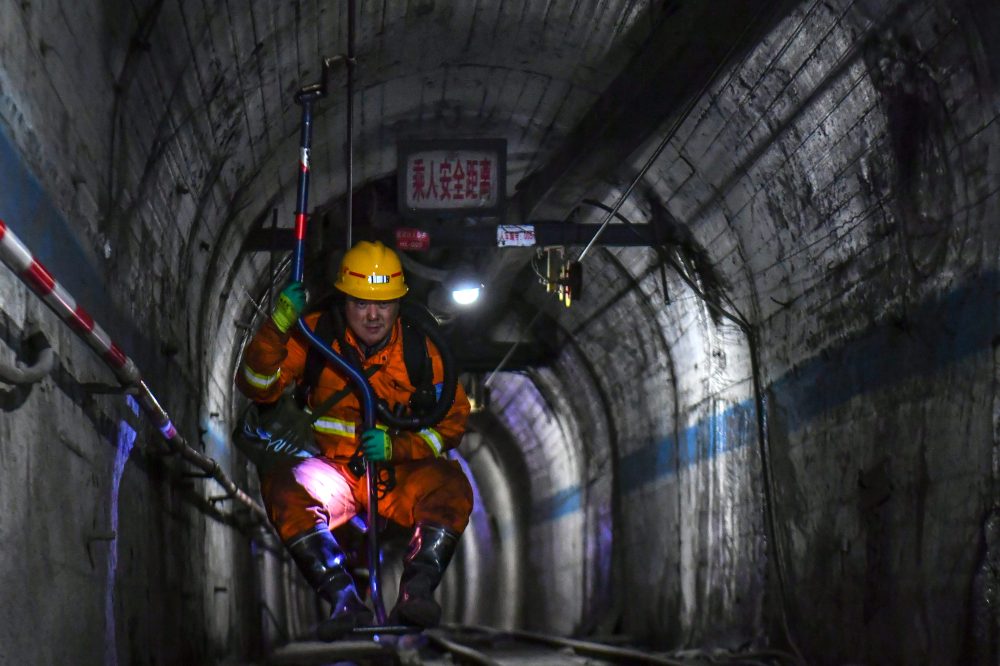
BEIJING — China’s top mine safety official overseeing one of the country’s leading coal-producing regions is now under investigation for corruption, following a gas explosion in May that killed 82 miners.
Hu Haijun, who serves as director of the Shanxi Bureau of the National Mine Safety Administration, is suspected of committing serious violations of both discipline and law, according to an announcement made Monday evening by the government’s Central Commission for Discipline Inspection.
A short notice published on the commission’s website offered no additional details about the specific nature of the alleged violations.
Hu also holds the title of Communist Party chief within his bureau, making him the highest-ranking official swept up in a growing investigation into Shanxi province’s coal mining sector, according to Caixin, a Chinese business publication.
Following the May explosion — described as China’s deadliest mining accident in recent years — authorities launched a sweeping inspection of the industry. While mine safety in China has seen improvement over time, it continues to be a persistent concern, as does workplace safety more broadly across the country.
The mine where the explosion occurred was operated by the Shanxi Tongzhou Coal and Coke Group. China’s National Mine Safety Administration had placed the facility on a list of disaster-prone coal mines back in 2024.
Despite China’s significant expansion of wind and solar energy, coal remains a central part of the country’s energy supply. Shanxi province, home to roughly 800,000 mine workers, produced approximately 1.3 billion tons of coal last year — accounting for nearly one-third of China’s total coal output.
Officials in Bangkok confirmed Tuesday that the death toll from a massive fire at a city music bar has risen to 30.
According to Bangkok city authorities, more than 70 people are still receiving hospital treatment following the disaster, and 24 of those patients are listed in critical condition.
The fire erupted late Sunday night at the Rong Beer Na Ladprao bar, located in the northern part of the Thai capital. It took firefighters approximately 30 minutes to get the blaze under control. The incident is being called the deadliest fire Bangkok has seen in 17 years.
The bar, which translates its name in Thai to mean a brewery or beer hall, advertised a capacity of up to 600 customers. It remains unknown exactly how many people were inside the venue when the fire broke out Sunday evening.
Police reported that the majority of those who died were discovered in windowless restrooms, where victims appear to have fled in an attempt to escape the flames. Investigators are now working to determine what caused the fire and whether the establishment was operating in accordance with safety regulations.
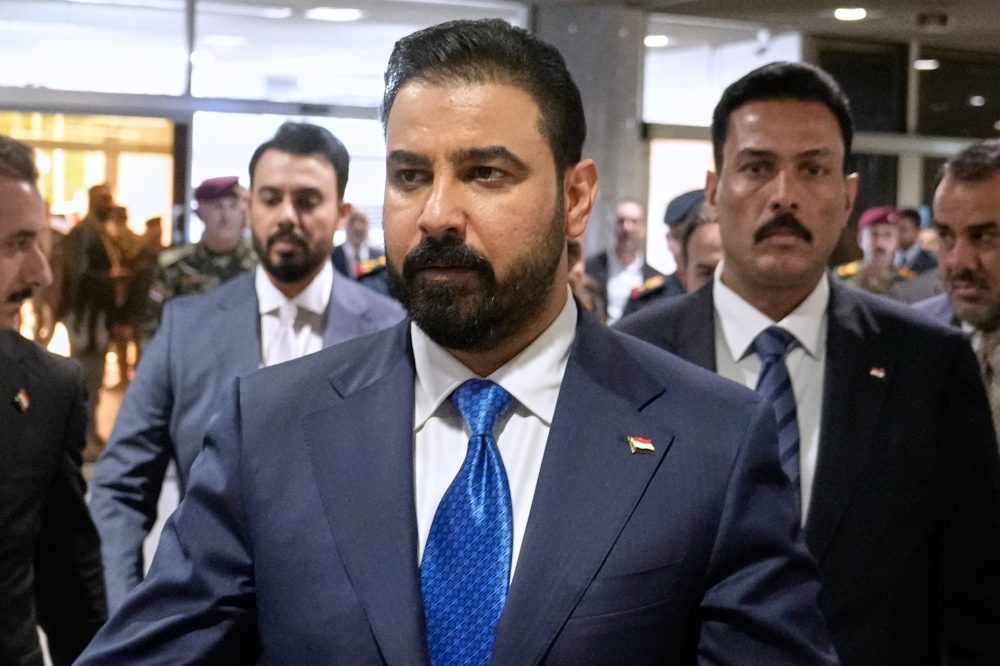
WASHINGTON (AP) — President Trump opened the doors of the White House on Tuesday to Iraq’s newly appointed leader, Prime Minister Ali al-Zaidi, a meeting that comes after Trump played a significant role in supporting al-Zaidi’s rise to power.
Al-Zaidi, a businessman who had never held political office before, emerged as a compromise choice for Iraq’s top government post following a prolonged stalemate after last year’s parliamentary elections. When al-Zaidi was officially named prime minister-designate in April, Trump took to social media to celebrate, calling it the “beginning of a tremendous new chapter between our Nations — Prosperity, Stability, and Success like never seen before.”
However, Trump’s involvement in shaping Iraq’s leadership began well before that announcement.
Iraq’s most powerful parliamentary coalition, the Coordination Framework — a grouping of Shiite political parties aligned with Iran — had initially thrown its support behind former Prime Minister Nouri al-Maliki. The Trump administration considered al-Maliki to be too closely tied to Tehran. Trump publicly voiced his opposition to al-Maliki and threatened to cut off American aid to Iraq if he were appointed, warning that “if we are there to help, Iraq has ZERO chance of Success, Prosperity, or Freedom.”
The shadow of Iran is expected to hang heavily over Tuesday’s discussions. Iraq has been facing mounting pressure to dismantle a network of militias backed by Iran that operate within its borders — some of which carried out attacks on American military bases and diplomatic facilities following the U.S. and Israel’s military campaign against Iran that began in February. The Iraqi government has officially set a deadline of the end of September for non-state armed groups to lay down their weapons, but some of the most powerful militia factions have publicly stated they have no plans to comply.
A Trump administration official, speaking anonymously ahead of the Oval Office meeting in order to discuss internal strategy, said the U.S. would make “informed” decisions based on how seriously Iraq pursues the disarmament of those Iran-backed groups.
Renad Mansour, who serves as director of the Iraq Initiative at the Chatham House think tank, offered his assessment of how the talks are likely to unfold. He said he expects that “the U.S. will put significant pressure on al-Zaidi” to move forward with disarmament during the Washington visit, adding that al-Zaidi is likely to respond by saying, “‘But I need support — intelligence support, technical support, armed support.’”
Mansour also raised concerns about the risks involved. “There is a scenario in which, if the Iraqi government starts going after these groups, they will also go after the government,” he said. “And this is a scenario that I think that the Iraqi government is apprehensive about.”
Al-Zaidi’s path to the premiership was not without complications. He previously served as chairman of Al-Janoob Islamic Bank, one of the financial institutions that Iraq’s central bank banned in 2024 from conducting transactions in U.S. dollars. That action came amid American pressure on Iraq to crack down on money laundering and the funneling of funds to Iran — yet Trump still extended his support to al-Zaidi.
Since taking the helm of Iraq’s government, al-Zaidi has made anti-corruption efforts a centerpiece of his administration. His government has launched raids and arrested dozens of current and former lawmakers and officials on corruption charges, including several individuals connected to former Prime Minister Mohammed Shia al-Sudani.
Al-Zaidi’s delegation traveling to Washington includes both Iraqi business leaders and government officials. His office released a statement saying the visit is intended to “strengthen economic and development partnerships, attract investment, and expand the role of U.S. companies in implementing infrastructure projects,” as well as to grow the energy sector in the oil-rich country.
WASHINGTON (AP) — For months, President Donald Trump has pursued every available option to force Iran to fully reopen the Strait of Hormuz — launching airstrikes, imposing naval blockades, conducting negotiations, and even threatening to destroy a “whole civilization.” But so far, none of it has been enough.
According to defense and foreign policy experts, restoring the flow of oil tankers through this critical Middle East shipping lane to prewar levels would likely demand a far larger fleet of U.S. warships — or possibly tens of thousands of American troops deployed on Iranian soil. Even with ongoing military exchanges, Iran retains the ability to strike ships in the narrow Persian Gulf corridor using drones and missiles concealed across a country roughly one-third the size of the continental United States.
“Iran has been preparing for this type of asymmetric conflict for decades now,” said Jason H. Campbell, a senior fellow at the Middle East Institute and a former Pentagon official. “I think they’re starting to demonstrate why no other U.S. president since Reagan has elected to engage at this level of conflict with Iran, because they have that ability to completely disrupt the Strait of Hormuz.”
On Monday, Trump announced that the U.S. is reinstating its blockade of Iranian ports and will require other ships to pay for safe passage through the strait. Iran has claimed authority over the waterway, which under normal circumstances carries roughly 20% of the world’s oil supply. Both sides have traded fire over the past week in a series of clashes that raise fears of a return to full-scale war.
The situation highlights the difficult position Trump finds himself in: commercial shipping through the strait remains choked off, oil prices are on the rise again, and Iran has given no indication it plans to back down. The conflict has grown unpopular with many Americans and could become a factor in the upcoming midterm elections, particularly as fuel prices climb.
“They thought the situation was under control, and now they’re seeing renewed escalations, and the markets responding negatively to this,” said Eric Lob, a nonresident scholar at the Carnegie Endowment for International Peace’s Middle East program and a professor of politics and international relations at Florida International University.
“It’s really a kind of test of wills to see how much economic pain the Iranians are willing to absorb and then how much economic pain and even political liability this could be for Trump and the Republicans heading into November,” Lob added.
Before joining the Middle East Institute in Washington, Campbell worked as a researcher at RAND, where he helped the U.S. military run simulated war-game scenarios involving Iran.
“The things they’re doing now are precisely the types of things that were discussed and came up in really all of these types of situational scenarios,” Campbell said.
He explained that Iran manufactures components for its weapons at multiple dispersed facilities to lower the risk of losing them in an attack. Iranian military units frequently act on their own initiative without waiting for direction from Tehran, and they avoid concentrating in one location — which limits the effectiveness of airstrikes.
“It’s very difficult to envision any scenario where you could satisfactorily secure the Strait of Hormuz absent ground forces,” Campbell said.
He estimated that securing the strait would require tens of thousands of troops — not just to destroy Iran’s concealed weapons stockpiles, but also to take control of hundreds of miles of coastline and large areas of inland territory. Those troops would almost certainly face insurgent-style attacks, and assembling such a force would take several months and come with “very high costs,” Campbell said.
Trump pushed back Monday evening, insisting that “the strait is open. It will be open,” and claiming the U.S. has made meaningful progress in weakening Iran’s military capabilities over the past few months. Iran, for its part, vowed to resist any American interference in the strait.
Experts say another possible approach would be expanding the U.S. naval escort program — having warships guide civilian vessels through the strait — though that option also carries significant challenges and expenses.
The U.S. ran a similar escort operation during the 1980s, when Iran targeted commercial shipping during its war with neighboring Iraq. At the time, the U.S. — which had been backing Iraqi leader Saddam Hussein with intelligence, weapons, and other support — escorted Kuwaiti oil tankers that had been reflagged as American vessels.
Replicating that effort today would demand a large number of warships at a time when the U.S. fleet is considerably smaller than it was four decades ago, said Michael Eisenstadt, a former U.S. military analyst who now leads the Military and Security Studies Program at the Washington Institute for Near East Policy.
“You’d still need a very large chunk of the U.S. fleet being dedicated to this on an open-ended basis,” Eisenstadt said. He noted that the environment today is far more complex, given Iran’s expanded arsenal of advanced drones and missiles.
“If we were to do what we need to do in order to make this work, which might involve putting people ashore in order to clear anti-cruise missile and drone launch sites, the losses of U.S. service members can go up, and if you’re going to do an escort operation also, the losses can potentially go up,” Eisenstadt said.
Commercial ships have been steering clear of the strait’s traditional routes due to fears about Iranian mines. Iran has demanded that vessels travel along a path near its own coastline and has suggested it could collect fees under a potential interim agreement to end the conflict. Increasingly, ships have been taking a southern route along Oman’s coast, guided by U.S. drones and aircraft as part of an overwatch operation.
Capt. Tim Hawkins, a spokesman for U.S. Central Command, said mine-clearing operations are continuing along some of the traditional routes through the strait, but noted that “alternative pathways have been open.”
Even the southern route has not been enough to stop Iranian attacks on ships, prompting the U.S. military to strike Iranian air defense systems, radar installations, missile and drone equipment, and small boats.
But according to Noam Raydan, a senior fellow at the Washington Institute for Near East Policy who focuses on energy and maritime risks in the Middle East, Iran doesn’t even need to fire a single weapon to disrupt commerce in the strait.
“They don’t need to launch drones and missiles — they can just use the marine radio channel to make some threats,” Raydan said. “And this in itself is enough to scare off a lot of seafarers.”
Clayton Seigle, a nonresident scholar in energy security at the Center for Strategic and International Studies, argued that the Trump administration has failed to follow through on early promises to use military force to protect shipping — commitments that later became a liability.
“Those naval escorts, U.S. warships, larger commitments like boots on the ground never came because I think that the rhetoric got a little ahead of our risk tolerance,” Seigle said. “And when push came to shove, the United States was not ready to deploy its Navy, to deploy its other military forces in the capacity that would be needed to even have a shot at neutralizing those threats.”
The U.S. military announced late Monday evening that American forces have wrapped up their most recent round of strikes on Iran, carried out by U.S. Central Command earlier in the day under orders from President Donald Trump.
In a statement posted to X, Central Command reported that “during the five-hour mission, U.S. forces successfully struck military targets across Iran including Bushehr, Chah Bahar, Jask, Konarak, Abu Musa, and Bandar Abbas.”
This latest round of attacks represents the third consecutive night of U.S. military strikes against Iran. President Trump also announced he was reinstating a blockade on Iranian shipping, while proposing a 20% fee for providing security in the Strait of Hormuz.
Iran’s top joint military command pushed back against Trump’s proposal, stating that the U.S. has no authority over the future of the waterway and would not be permitted to intervene there.
Iran had previously announced over the weekend that it was closing the strategically critical waterway.
The conflict between the two nations traces back to February 28, when the U.S. and Israel launched strikes on Iran. Iran responded with its own attacks targeting Israel and Gulf states where U.S. military bases are located.
The combined U.S.-Israeli strikes on Iran, along with Israeli military actions in Lebanon, have resulted in thousands of deaths and the displacement of millions of people. The war has also sent oil prices sharply higher and caused significant turbulence in financial markets worldwide.
Australia’s internet safety regulator has declared that major technology companies — including Apple, Meta, and Google — have “significant gaps” in how they handle child sexual abuse and the rising threat of online sexual extortion, according to a report released Tuesday.
The country’s online safety watchdog, eSafety, said in a new transparency report that digital platforms are not deploying existing tools capable of identifying well-known manipulation scripts used by sexual extortion criminals.
eSafety Commissioner Julie Inman Grant did not mince words about the lack of action. “In several cases, we have provided these platforms with evidence of how their services are being colonised by criminals to devastating impact, with clear guidance on how to stem the abuse,” she said. “Even when we’ve laid this out, we haven’t seen adequate responses, despite the technology being readily available.”
Google, Meta, Snap, Microsoft, and Apple did not respond to requests for comment.
The report arrives on the heels of legislation introduced in June that would give eSafety greater authority to take tech companies to court for failing to follow Australia’s ban on social media use by children under 16. Australia made history as the first nation to enact such a ban, and countries including Britain and several European nations are now pursuing similar policies.
Australia has also been scrutinizing the safety of children on chat and gaming platforms. Back in April, eSafety asked certain online gaming companies to explain how they shield children from grooming by sexual predators.
In 2024, eSafety directed eight technology platforms to submit reports every six months detailing their compliance with Australia’s “Basic Online Safety Expectations” — rules focused on detecting and preventing child sexual exploitation and abuse.
This latest release is the third in a planned four-part series and centers on sexual extortion — a form of online blackmail in which perpetrators share or threaten to share intimate material unless victims meet their demands.
The first report in the series set a baseline for comparison, while the second raised red flags about companies’ failure to proactively identify abusive content.
Between July and December 2025, eSafety received more than 2,000 complaints related to sexual extortion, with young men between the ages of 18 and 24 being the most frequently targeted group. A separate eSafety study conducted last year found that more than one in ten teenagers aged 16 to 18 had experienced sexual extortion, and more than half of those victims were first targeted before they turned 16.
Investigators found that the same criminal tactics kept appearing across multiple extortion cases, yet companies consistently failed to catch them. The report stated that “responses from the companies show there are serious gaps in the use of available technologies like language analysis that can identify well-known coercion scripts used by sexual extortion offenders.”
The report also flagged problems with reporting tools: “Gaps in reporting tools also persist across services like WhatsApp, iMessage, Discord and Google Messages, with some services lacking clear, accessible ways for users to report sexual extortion or child abuse or failing to provide dedicated reporting categories for these harms.”
Additionally, the regulator noted that technology already exists to better detect livestreamed child sexual abuse, but it is not being consistently put to use.
Some progress was acknowledged. Google and Snap have taken steps to proactively identify known child sexual abuse material, Discord has begun blocking links to abusive content, Meta has introduced new tools to detect grooming behavior, and Microsoft has started detecting live abuse during video calls.
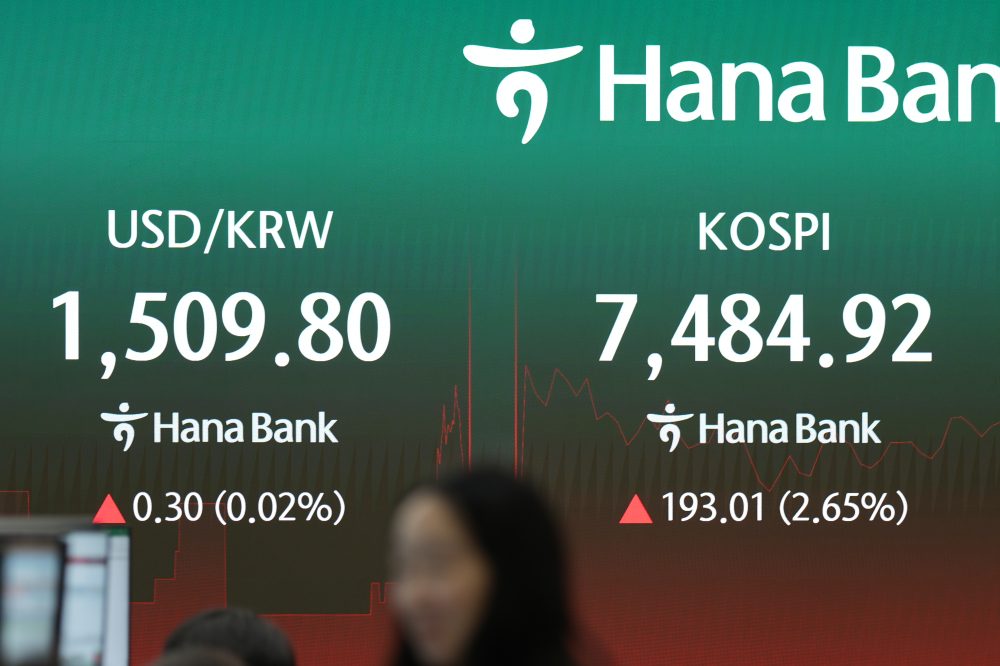
South Korea announced Tuesday that it is moving quickly to accelerate artificial intelligence investments as part of a broader push to strengthen its economy, raising its 2026 growth outlook to a five-year high of 3.0% on the strength of a worldwide semiconductor surge.
The country’s finance ministry, in semi-annual economic policy plans, projected next year’s growth at 3.0% — the best performance since 2021 and a significant jump from the previous forecast of 2.0%, as well as last year’s modest 1.1% growth rate.
The ministry outlined three key goals for its economic policies, including pushing the economy’s potential growth rate up to 3% from its current estimated level of below 2%.
To help reach that target, the government plans to accelerate three “mega projects” announced last month, focusing on semiconductor development, AI data centers, and physical AI investments.
Earlier this week, officials revealed plans to boost 2027 budget spending by at least 10%, bringing total spending to more than 800 trillion won — roughly $532.73 billion — with priority given to those mega projects. The increased spending would be supported by stronger tax revenues flowing in from the semiconductor industry.
“While robust economic indicators, such as exports, driven by a semiconductor boom are clearly opportunity factors, there remain tasks that our economy needs to overcome at the same time,” said Vice Finance Minister Lee Hyoung-il.
The nation, which ranks as Asia’s fourth-largest economy, recorded its strongest quarterly growth in nearly six years last quarter, fueled by surging chip exports as global demand for AI technology continues to climb.
The ministry also set long-term targets, including positioning South Korea among the world’s four largest exporters and raising gross national income per capita to $50,000, up from an expected $40,000 this year. The country currently sits among the top five exporters globally.
Officials also pledged steps to address ongoing challenges, including stubborn inflation, a weakened currency, and elevated bond yields tied to the Middle East conflict. Planned measures include fuel price caps, extended foreign-exchange regulatory relief, and low-cost policy loans in the second half of the year.
Inflation is now forecast at 2.6% for 2026, higher than the earlier projection of 2.1% set in January, largely due to elevated oil prices. That would outpace the 2.1% inflation rate seen in 2025 and mark the fastest pace since 2023.
Looking further ahead, the ministry projected 2027 economic growth at 2.2%, with inflation also expected to come in at 2.2% that year.
Global oil prices surged 2% on Tuesday, hitting a four-week peak as tensions between the United States and Iran intensified in the Strait of Hormuz, raising fresh concerns about the stability of energy supplies worldwide.
Brent crude futures gained $1.68, or 2%, reaching $84.98 per barrel by 0051 GMT. U.S. West Texas Intermediate crude also climbed $1.65, or 2.1%, to $79.79 per barrel. The gains follow an extraordinary 9.6% single-day spike in Brent crude during the previous session — the largest daily increase since May 2020.
Prices are now at their highest point since the two nations signed a memorandum of understanding on June 17 to bring their conflict to an end.
The latest flashpoint came Monday when two tankers belonging to the United Arab Emirates were struck by Iranian cruise missiles in the southern lane of the Strait of Hormuz, within Omani territorial waters. The UAE Ministry of Defence confirmed the attack, which killed one Indian crew member and left eight others injured.
U.S. President Donald Trump told reporters that the United States had brought back its blockade of Iranian shipping. He also stated that he expected other nations benefiting from U.S. protection in the strait to help cover the cost of those efforts.
Tim Waterer, chief market analyst at KCM Trade, described the situation as a significant new risk for energy markets. “The latest escalation, including the U.S. reinstatement of the blockade and Iranian responses, has clearly injected fresh risk into the market,” he said. “While a full closure hasn’t occurred, the competing objectives of both sides have made the supply picture highly uncertain,” Waterer added.
U.S. Central Command reported that it launched a third straight night of strikes against Iran. Meanwhile, Iran’s semi-official YJC news agency reported early Tuesday that seven explosions were heard in the port city of Bandar Abbas, with two additional blasts reported on Kish Island.
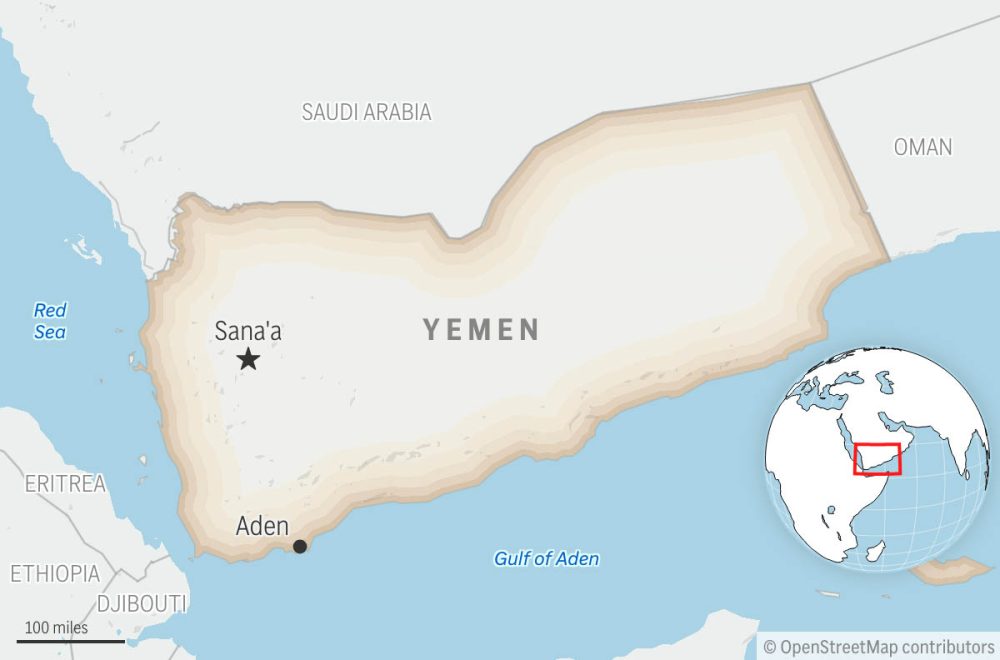
Adding to regional instability, Yemen’s Houthi movement launched missiles toward Saudi Arabia after accusing the kingdom of striking an airport under Houthi control on Monday.
Simon Wong, a portfolio manager at Gabelli Funds, warned in a note that “if the Houthis extend their attacks to Saudi’s crude products in the Red Sea, it could put (further) uncertainties on crude flows from the region.”
On the domestic supply front, a preliminary Reuters poll conducted Monday suggested that U.S. crude oil stockpiles likely declined last week, while gasoline and distillate inventories were expected to have increased.
BAGHDAD — Iraq’s newly installed prime minister, Ali al-Zaidi, is making a push for large-scale American investment in his country’s energy sector during a White House visit this week, following the damage the Iran war inflicted on Iraq’s oil output and government revenues.
The visit, scheduled from July 13 to July 18, reflects Iraq’s growing effort to broaden its international partnerships as a way of managing the instability that has plagued the region, according to analysts.
The move marks one of the most direct efforts in recent memory to draw major U.S. investment into a sector that has long been controlled by Chinese, Russian, and European companies. Iraqi officials, however, push back on the idea that Baghdad is pulling away from its close relationship with Tehran in order to grow closer to Washington.
“The Iran war was a turning point,” said Baghdad-based political analyst Ahmed Younis. “It highlighted the risks of overreliance on any single regional partner.”
Younis added that Zaidi “views energy as the fastest route to deeper cooperation with Washington.”
According to Iraqi and U.S. officials, the strategy involves talks with Chevron about major upstream oil projects, backing for U.S.-supported power and liquefied natural gas ventures, security assurances for American operators in Iraq’s semi-autonomous Kurdistan region, and renewed planning for export pipelines that would connect Iraq to Mediterranean markets.
Among the deals already approved by Zaidi’s cabinet is an agreement with U.S.-based HKN Energy to develop the Himreen oilfield in northern Iraq. The government has also given the green light for the Electricity Ministry to finalize a broad cooperation deal with General Electric focused on expanding Iraq’s power generation and transmission systems.
Zaidi has stated that his government intends to “significantly” boost oil production within three years, according to a release from his office. He made those comments while meeting in Washington with Iraqi business leaders and members of the Iraqi Christian community, encouraging them to invest in areas such as education, healthcare, and petroleum products.
These energy deals are expected to be central to discussions between Zaidi — a multimillionaire who took office in May — and U.S. President Donald Trump, who has expressed strong support for the new Iraqi leader.
“We have directed the Ministries of Oil, Electricity and Communications to give priority to reputable American companies working in energy, telecommunications, technology, and development,” Zaidi said in a statement released before the trip.
Despite the optimism, analysts caution that pulling in enough investment to develop oilfields and address long-standing infrastructure problems will be a difficult task.
An internal government document reviewed by Reuters showed that in early June, Iraq’s cabinet instructed the state-run Basra Oil Company to waive certain regulatory requirements for U.S. energy firms currently in talks about energy projects.
“The recent decisions regarding Chevron, U.S. operators in the Kurdistan region, and other U.S. energy projects reflect a deliberate policy shift,” said Mohammed Abbas, a former manager at the state-run Basra Oil Company who now works as an energy consultant. “Zaidi is using Iraq’s energy sector to strengthen ties with Washington and to reverse a perception among some U.S. energy majors that Iraq is a challenging environment for large-scale investment.”
Four Iraqi oil officials who are familiar with the ongoing talks — involving companies including Chevron, ExxonMobil, HKN, and others — said the effort reflects Baghdad’s wider goal of deepening economic cooperation with the United States.
Iraq faces a challenge common to many oil-producing nations: trying to attract investment and grow production while remaining bound by output limits set by the OPEC+ group. Despite holding some of the world’s largest crude oil reserves, Iraq has struggled to raise the revenues needed to support its rapidly expanding population.
Talks with Chevron have become one of the most closely watched parts of Iraq’s strategy. Earlier this year, Chevron entered exclusive negotiations with Iraq over the massive West Qurna-2 oilfield after Baghdad moved to replace Russia’s Lukoil as the operator — a deal that could hand the American company control of one of Iraq’s top-producing assets.
Several Iraqi lawmakers and analysts said the government’s energy push is designed to send a message to Washington that Iraq has become a more appealing place for large-scale investment, after years marked by security concerns, red tape, and legal disputes.
Security conditions have improved considerably since Islamic State was defeated roughly a decade ago, though occasional drone strikes and regional tensions still present risks to energy infrastructure. Iraqi officials say protections around key oil facilities have been strengthened since the Iran conflict, with new measures intended to reassure foreign energy companies.
“Prime Minister Zaidi comes from a business background and understands that winning over American energy companies, especially amid fragile regional security, is no easy task,” said Murad Ismael, a lawmaker and member of Iraq’s parliamentary oil and gas committee.
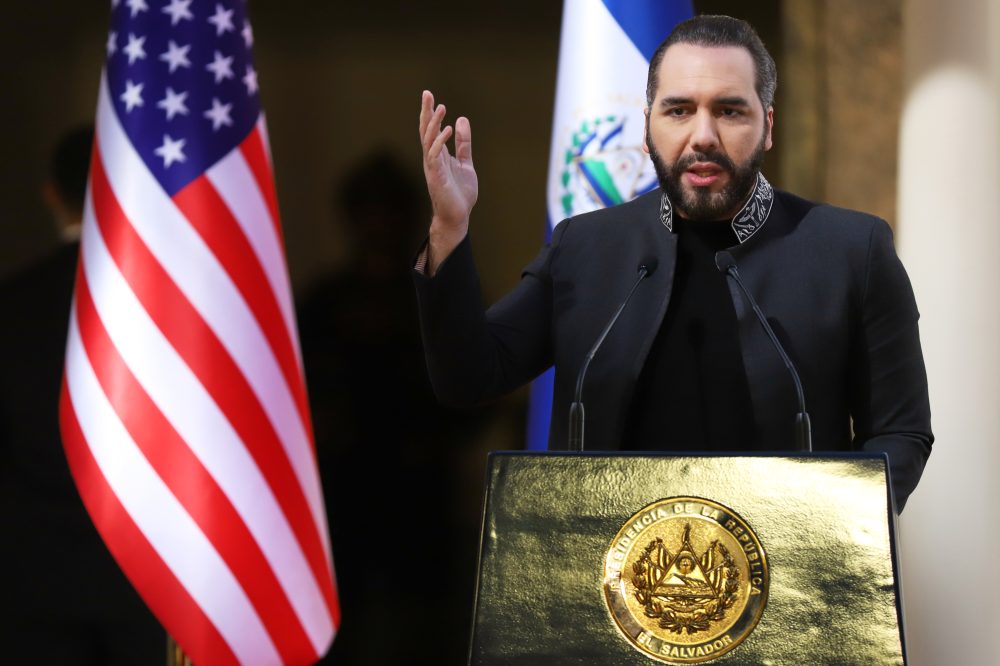
SAN SALVADOR — El Salvador’s ruling party has officially nominated President Nayib Bukele to run in the February 2027 presidential elections, setting the stage for what would be his third consecutive term in office — a prospect that lawyers and human rights advocates say is deeply troubling.
Bukele’s party, Nuevas Ideas, which holds a supermajority in the country’s legislative assembly, conducted its internal elections on Sunday and announced the outcome via Twitter on Monday. Vice President Félix Ulloa is set to join the ticket once again as Bukele’s running mate.
Bukele, who is 44 years old, first took office in June 2019, making him the youngest president in the region at the time. He has maintained strong public approval throughout his tenure.
His February 2024 reelection victory — in which he captured nearly 85% of valid votes — drew sharp criticism from constitutional scholars who argued it violated a constitutional prohibition against consecutive reelection. Critics further allege that Bukele unlawfully replaced judges on the country’s constitutional court and removed the attorney general in an effort to consolidate his grip on power.
A ruling by the constitutional court in September 2021 had permitted presidential reelection, but only for a single additional term.
The legislative assembly, under the control of Bukele’s party, then went further in July 2025, passing a constitutional amendment allowing unlimited presidential reelection. The reform stripped away penalties — including loss of citizenship rights — for those who advocated for presidential reelection, and removed the ban on running for president if a person had served in the previous term.
The same constitutional overhaul also lengthened the presidential term from five years to six and moved the next presidential election up to 2027. Under the prior constitution, a former president could only seek reelection after being out of office for at least 10 years.
Bukele has stood behind the constitutional changes pushed through by the assembly. He argued that “90% of developed countries allow the indefinite reelection of their head of government and nobody bats an eye,” and said that when a small, impoverished country like El Salvador attempts the same, “it suddenly becomes the end of democracy.”
Many Salvadorans have credited Bukele’s hardline security approach — including a four-year state of emergency that has resulted in the imprisonment of more than 90,000 people — with dramatically cutting homicide rates and improving public safety. In 2015, El Salvador recorded one of its most violent years, with 6,656 murders and a homicide rate of 106 per every 100,000 residents.
By the end of 2025, government figures showed the country had reached a historic low of just 82 homicide cases for the entire year.
However, human rights organizations report that more than 500 people have died while in custody since the state of emergency began, with most deaths attributed to health-related causes and some linked to violence inside prisons.
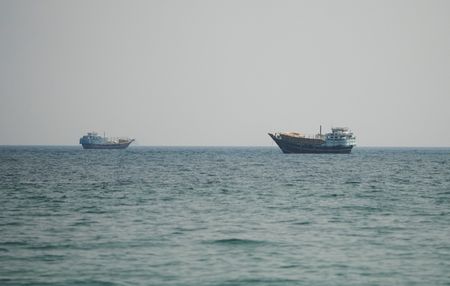
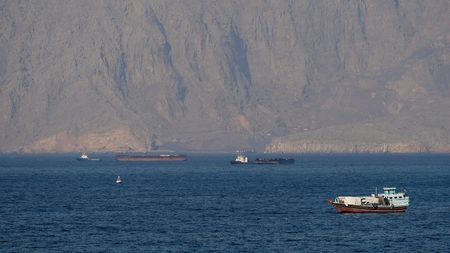
A narrow, elbow-shaped waterway in the Middle East has become the central battleground in an escalating conflict between the United States and Iran. The Strait of Hormuz, long considered a safe and reliable corridor for the world’s oil and natural gas supplies, is now at the heart of a high-stakes power struggle.
Iran has been working to assert dominance over the strait by claiming that an interim ceasefire gave it authority to set the terms for how ships travel through the waterway. It has threatened and fired upon vessels that didn’t follow its preferred route, using that leverage to gain an upper hand in negotiations with the U.S.
On Monday, President Donald Trump pushed back hard. He reimposed a blockade on Iran and declared that the United States controls the strait — even announcing that the U.S. would charge ships a fee for safe passage, a tactic that mirrors what Iran had previously attempted.
Trump posted on Truth Social that the U.S. “will be, from this point forward, known as THE GUARDIAN OF THE HORMUZ STRAIT.”
Iran’s paramilitary Revolutionary Guard, which oversees the country’s ballistic missile program, fired back. “We will not allow a rogue and child-killing army from the other side of the world to continue its illegal interference in it,” the Guard said Sunday.
The back-and-forth comes as both nations have been ramping up attacks against each other in and around the strait, raising fears of a return to full-scale war.
The strait runs along the coastlines of both Iran and Oman. The international community has long viewed it as a free-to-use waterway open to all nations. But after the U.S. and Israel attacked Iran on Feb. 28, Tehran declared sovereignty over the strait — a move that rattled global energy markets and pushed prices higher.
Under the United Nations Convention on the Law of the Sea, established in 1982, no country has the right to claim international waters, and all ships are entitled to unimpeded passage. While neither the U.S. nor Iran has formally ratified that convention, experts say it still applies.
Marc Weller, director of the International Law Program at the University of Cambridge, explained it this way: “That doesn’t matter, because this has become part of universal custom, so all states can rely on it under all circumstances.”
Despite international law, both countries have been using their respective strengths to influence traffic through the strait. Raymond Waid, who leads the maritime industry group at law firm Liskow & Lewis in New Orleans and is a former Navy officer, put it plainly.
“You have two nations, both of which are very capable — the U.S., because it has the most powerful Navy in the world, and Iran, which is geographically well positioned to disrupt commerce throughout the Strait of Hormuz — (and) can exercise a significant degree of control,” Waid said.
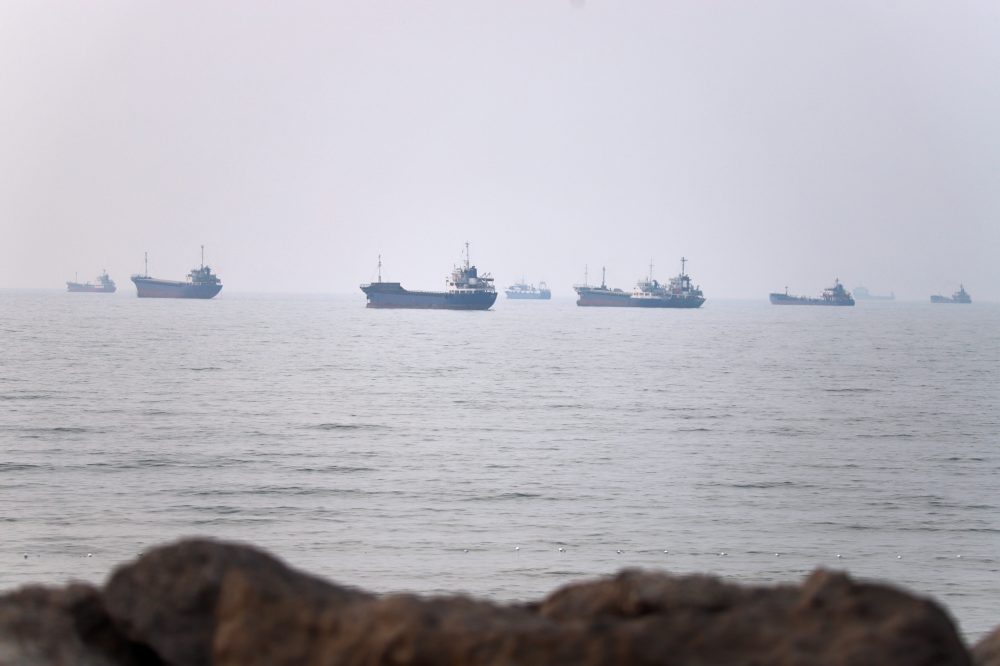
The impact on shipping has already been dramatic. Maritime data agency Kpler reported that crossings through the strait dropped by roughly 52% between Friday and Monday compared with the same period the week before. On Sunday, only about 14 ships passed through — a stark contrast to the roughly 130 ships that made the crossing daily before the war began.
Iran exploited its geographic advantage early in the conflict by attacking ships and, in some cases, demanding payment to let vessels through. Even the threat of drone or speedboat attacks was enough to keep many ships away.
After an interim ceasefire was reached last month, Iran required ships to register with a newly created Persian Gulf Strait Authority to have their crews and cargo reviewed. Iran also insisted that ships travel along a route near its own coastline rather than a southern path along the Omani coast, where U.S. military forces had been escorting vessels. The central portion of the strait has been mined by Iran, leaving that route largely impassable.
Tehran is suspected of attacking ships that chose the Oman route. The United Kingdom Maritime Trade Operations Center, which issues maritime security alerts, reported receiving information about six ships attacked near Oman since June 25.
The two countries have been at odds over what exactly was agreed to in the interim ceasefire. U.S. officials say the deal required the strait to be reopened while longer-term negotiations continued. Iranian officials, however, say a clause in the agreement gave them the right to manage ship traffic — and that as long as they didn’t charge fees for 60 days, they could set the operating conditions.
The interim agreement itself stated that Iran would “make arrangements using its best efforts for the safe passage of commercial vessels with no charge for 60 days only from the Persian Gulf to the Sea of Oman and vice versa.” It also called for Iran to “conduct dialog with the Sultanate of Oman to define the future administration and maritime services in the strait.”
On Monday, the U.S. announced it would impose a 20% toll on cargo shipped through the strait to cover “any and all costs necessary to do the job of providing safety and security to this very volatile section of the World.” That position represents a sharp reversal — the U.S. had previously opposed such fees — and experts say any attempt by either country to charge tolls would violate international norms on freedom of navigation.
The U.S. plan closely mirrors an earlier Iranian proposal that Washington had criticized, in which Iran suggested it might charge fees of up to $2 million per vessel.
Weller, the international law expert, said fees for specific services in international straits can be legally permissible under certain conditions. He pointed to Chile, which collects fees in the Strait of Magellan for pilotage and safety services. But he drew a clear line.
“A fee would be possible, but it has to be a fee commensurate with the actual service granted,” Weller said. “So it’s not anything Iran should earn money off. It’s not $2 million per vessel or something like that.”
The International Maritime Organization, the United Nations agency responsible for international shipping safety and security, said it was waiting to learn more details about Trump’s proposal but confirmed its position against passage tolls had not changed.
Late Monday, Iran’s Foreign Minister Abbas Araghchi used Trump’s announcement to mock the U.S. president while simultaneously legitimizing Iran’s own position. In a post on X, Araghchi wrote: “POTUS is absolutely right. Whoever provides secure and safe passage of commercial vessels through the Strait of Hormuz should be compensated for this service … 20% is of course too much. We will be fair.”
DUBAI, United Arab Emirates — The United States launched a fresh wave of military strikes against Iran on Monday, just hours after President Donald Trump announced that Washington is reimposing a blockade on Iran and — in what appears to be a major reversal in policy — plans to charge vessels for safe passage through the Strait of Hormuz.
The announcements come as Iran has claimed it holds control over the vital waterway, and as the renewed fighting raised fears of a return to full-scale war between the two nations.
U.S. Central Command confirmed on social media that American forces had launched the new round of strikes against Iran.
“These strikes will continue imposing a heavy cost on Iranian forces and degrade their ability to attack innocent civilians and commercial shipping in the Strait of Hormuz,” the U.S. military stated.
Shortly after the military’s announcement, Trump described the action as “another major attack.”
“We’re hitting them very hard. And it’ll continue, and we’ll see what happens,” Trump told reporters at the Oval Office. “We’re knocking out all of their offensive capability and we’re controlling the straits. We’re putting the blockade back.”
Trump also elaborated on the administration’s apparent change of direction regarding tolls for ships passing through the strait — a stance that contradicts what the U.S. had previously said it would not do.
“We’re protecting a very rich portion of the world,” Trump said. “We’re spending money. And so, what we’ve done is, we are going to be reimbursed for protection.”
Until now, U.S. policy held that the strait should remain freely open to all shipping without fees — a standard that had been in place before the U.S. and Israel launched attacks on Iran on February 28. Experts say any attempt by either the U.S. or Iran to impose passage fees would violate international norms on freedom of navigation and could trigger broader economic disruption well beyond the Middle East region.
Global oil markets reacted sharply to the news. The price of Brent crude oil — the international benchmark — jumped 7.8% to $81.92 per barrel on Monday, though that figure remains well below the nearly $120 per barrel reached at the peak of the conflict.
Trump Says Iran Failed a Test
Earlier in the day, Trump spoke with conservative radio host Hugh Hewitt, saying the agreement reached last month was “built to test” Iran, and adding that “when you’re dealing with sleazebags” agreements “don’t mean much.”
Trump said he had questioned why the U.S. was pursuing a ceasefire deal rather than working toward a comprehensive agreement first. Last week, he declared that ceasefire “over.”
“They didn’t honor the test,” Trump said.
Recent exchanges of fire, triggered by Iranian attacks on ships, had already cast serious doubt on the interim peace arrangement. As part of that deal, Washington had lifted a blockade it originally put in place in mid-April, and the agreement had called for the strait to be fully reopened to all vessels.
“We are reinstating the THE IRANIAN BLOCKADE,” Trump wrote on social media. “All other countries will have fair and open use of the Strait.”
Trump said the U.S. would be “reimbursed” an amount equal to 20% of the value of cargo passing through, intended to offset “any and all costs necessary to do the job of providing safety and security.”
The U.S. military announced that the blockade of Iranian ports will resume Tuesday at 4 p.m. Eastern time.
WASHINGTON — President Trump told reporters Monday that the United States is actively striking Iran’s military capabilities tied to the Strait of Hormuz, as military operations between the two nations continue to escalate.
Speaking from the Oval Office, Trump confirmed that the U.S. military is carrying out new strikes against Iran. However, he also made clear that he has not closed the door on reaching a diplomatic settlement with Tehran.
The president also raised a separate concern, suggesting that Iran may have positioned drones in Cuba.
“If they do have that, and they might very well have that, we’ll take care of it,” Trump said.
He continued: “We’re not going to have a problem. We’re not going to allow that to happen so it could be that they are storing some. We’re looking into it now.”
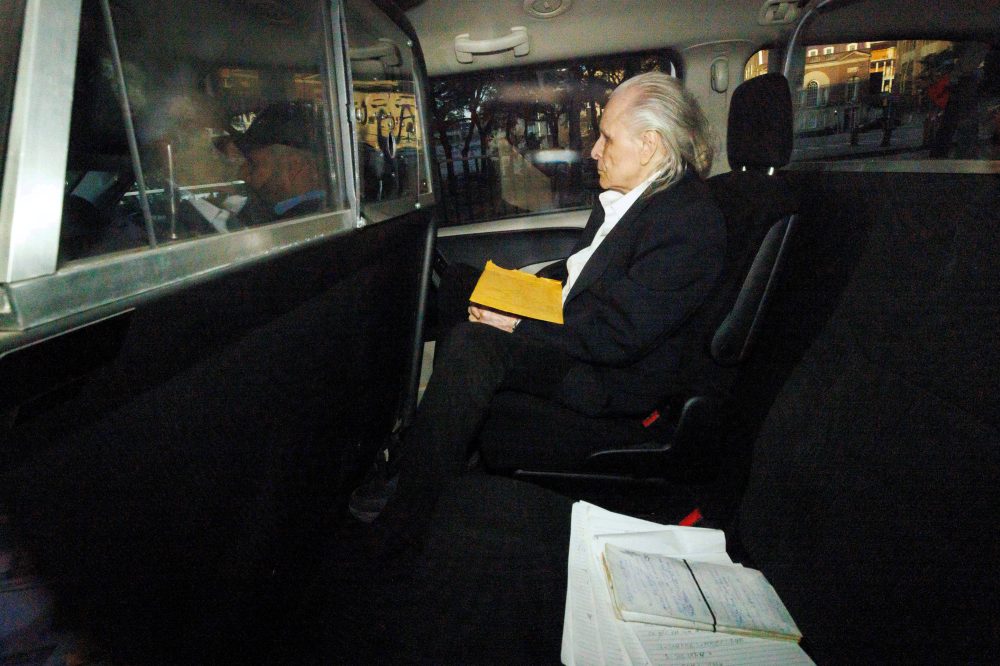
Canadian clothing industry figure Peter Nygard, founder of the once-powerful Nygard International fashion brand, entered a guilty plea Monday to charges of sexual assault and forcible confinement in Quebec — adding to a growing list of legal troubles that have brought down his global empire.
The 84-year-old participated in the proceedings via video from an Ontario prison, where he is currently serving an 11-year sentence handed down after a Toronto jury found him guilty in 2023 of sexually assaulting four women. He also faces potential extradition to the United States on federal racketeering and sex trafficking charges.
Quebec Crown prosecutor Jérôme Laflamme told reporters the guilty plea came as a surprise, arriving just before what was supposed to be a 10-day judge-only trial. “Mr. Nygard’s change of heart was quite sudden,” Laflamme said, noting that the complainant had been ready to take the stand.
Prosecution evidence, which the defense did not dispute, showed that Nygard exploited his status as a well-known fashion designer to lure young women. The victim, whose identity is shielded by a publication ban, was 18 years old when she first encountered Nygard at a bar. She had aspirations of becoming a fashion model.
The two later met for lunch at her place of work to talk about her career prospects. He then invited her to his Montreal penthouse apartment, claiming he had left his keys behind. Once inside, he locked her in the bedroom and sexually assaulted her.
Court documents also reveal that Nygard offered the victim a chance to relocate to the Bahamas, promising a lavish lifestyle — but only if she agreed to have sex with him and other women. These events occurred between November 1997 and November 1998.
Quebec prosecutors filed charges against Nygard in 2022, including one count each of sexual assault and forcible confinement.
Nygard, who came to Canada from Finland as a child, built a worldwide fashion business and was known for hosting extravagant parties at his Bahamas estate, called Nygard Cay. His empire unraveled after a wave of sexual assault allegations triggered investigations in both Canada and the United States.
Judge Nathalie Fafard allowed prosecutors to present evidence from Nygard’s Toronto conviction, citing similarities between the two cases.
Defense attorney Gerri Wiebe explained that Nygard opted not to fight the Quebec charges given his upcoming extradition proceedings to the United States. She also argued that his deteriorating health makes any transfer potentially life-threatening.
American prosecutors allege that over roughly 25 years, Nygard used his fashion company, its staff, and its financial resources to recruit women and underage girls across the United States, Canada, and the Bahamas for sexual exploitation. Nygard has pleaded not guilty to those U.S. charges.
Sentencing in the Quebec case has been put on hold while a medical assessment is conducted. The case is scheduled to return to court on October 2, when attorneys are expected to present a joint sentencing recommendation. Wiebe noted that the United States cannot seek Nygard’s extradition until his Canadian legal matters are fully resolved, meaning the sentencing delay keeps him in Canada for now.
LONDON — The British government announced Monday that it intends to eliminate a legal loophole that has been standing in the way of deporting a convicted grooming gang leader back to Pakistan.
Shabir Ahmed led a gang based in Rochdale, in northern England, and was sentenced to prison in 2012 after being found guilty of multiple child sexual offenses, including rape. He served 14 years behind bars. His release earlier this month drew sharp criticism from some lawmakers, and at least one of his victims publicly expressed fear for her personal safety following his release.
The so-called “grooming gangs” scandal has roots going back roughly 20 years. It surged back into the national spotlight last year after Elon Musk publicly criticized Prime Minister Keir Starmer over his handling of these cases during his time as director of public prosecutions. Starmer pushed back against those criticisms, though he did not mention Musk by name.
After his conviction, Ahmed had his British citizenship revoked. However, a legal provision barred his deportation to Pakistan, the country where he was born. That provision prevents the removal of citizens from certain countries who arrived in the United Kingdom before 1973.
Interior minister Shabana Mahmood described Ahmed as a “vile grooming gang leader” and confirmed that the government’s proposed legal amendment would allow Commonwealth citizens to be deported if they have been convicted of serious offenses.
Mahmood also noted that Ahmed’s actual removal from the country depends on Pakistan agreeing to accept him.
The grooming gangs scandal centered on organized groups of men, the majority of Pakistani heritage, who deliberately targeted vulnerable children — many of whom were already known to social services — by providing them with alcohol and drugs before sexually exploiting them.
The 2012 trial of the Rochdale gang, which resulted in convictions for Ahmed and eight other men, drew widespread media attention and was a turning point in bringing this issue into public awareness across Britain.
WASHINGTON — President Donald Trump declared Monday that the United States intends to strike Pickaxe Mountain inside Iran, issuing a direct warning to Tehran that American military pressure will not let up.
Speaking during an appearance on the Hugh Hewitt Show, Trump said bluntly, “We’re going to take out Pickaxe Mountain. Tell the Iranians to be ready.”
Trump went on to describe the site as something the U.S. is actively monitoring, adding that Iranian nuclear efforts continue to suffer setbacks. “We’re watching (Pickaxe Mountain) closely. We see no activity there. They’re not doing well with their nuclear situation. Every time we hear about it, we blow it up. So they don’t like talking about it. But we’ll probably give Pickaxe a shot relatively soon,” he said.
Pickaxe Mountain sits near Iran’s heavily damaged Natanz uranium enrichment facility. The site is considered heavily fortified, featuring two deeply buried tunnel complexes that military experts say are beyond the destructive reach of even the most powerful bunker-busting bombs currently in the U.S. military’s arsenal.
Earlier in the day, Trump also announced that the United States is reimposing a blockade on Iranian shipping in the Gulf and pledged to keep the Strait of Hormuz open — though he indicated there would be a cost for passage — following an exchange of missile and drone attacks between the two countries.
Trump did not hold back when describing what Iran could expect in the coming hours. “We’re going to hit them very hard tonight and we’re going to hit them hard tomorrow. And there’s not a damn thing they can do about it,” he said during the same radio interview.
JERUSALEM — A United Nations official is accusing the Palestinian militant group Hamas of actively disrupting the delivery of humanitarian aid inside the Gaza Strip, adding to the suffering of civilians already caught in a devastating war.
In a statement released late Sunday, the U.N.’s humanitarian coordinator for the Palestinian territories revealed that relief workers were forced to suspend operations on Saturday after armed individuals entered a food distribution site in northern Gaza and physically attacked two truck drivers at a World Food Program warehouse.
U.N. Deputy Special Coordinator for the Middle East Peace Process Ramiz Alakbarov issued a stern warning about the pattern of behavior. “These incidents are not isolated. They are completely unacceptable and reflect an increasingly dangerous pattern of intimidation, violence and obstruction, including smuggling attempts, targeting and abusing humanitarian operations,” he said.
Alakbarov went on to say: “They are placing humanitarian workers at risk, disrupting the delivery of life-saving assistance, and further constraining the ability of humanitarian organizations to operate at a time when civilians across Gaza continue to face immense and pressing humanitarian conditions.”
Hamas pushed back against the accusations on Monday. The group’s media office stated that its police forces were carrying out a legitimate law enforcement operation after receiving tips that smuggled cigarettes and mobile phone components had been hidden inside aid parcels.
“The incident at the World Food Programme (WFP) food distribution center in the Abu Rashid area of Jabalia Refugee Camp was neither a ‘raid,’ an ‘attack,’ nor an ‘obstruction’ of humanitarian work, as falsely claimed,” Hamas said in its statement.
The conflict in Gaza began more than two and a half years ago when Hamas launched an attack on Israel on October 7, 2023. Since then, Israel’s aerial and ground campaign has left much of the territory in ruins and displaced nearly all of its two million residents, most of whom are now living in tents or damaged structures along a narrow coastal strip that Hamas still controls.
Israeli forces currently hold more than 60% of the territory, including all entry and exit points. Negotiations aimed at disarming Hamas and withdrawing Israeli troops from Gaza have stalled repeatedly over recent months.
A Chinese-born American scientist who conducted U.S.-funded research on detecting North Korean nuclear explosions has spent nearly two years behind bars in China, where he now faces espionage charges — a situation his wife and advocacy groups say amounts to wrongful detention.
The case involves Youlin Chen, a 54-year-old Boston resident who became a U.S. citizen in 2011. His situation, being reported publicly for the first time, adds another layer of friction to an already strained relationship between the two nuclear powers, even as President Donald Trump works to keep diplomatic ties stable in the wake of last year’s trade war.
Secretary of State Marco Rubio officially designated Chen as “wrongfully detained” on March 19, making securing his freedom a top U.S. priority. According to his wife, Yufang Rong, the Trump administration has chosen not to announce this publicly in order to leave room for behind-the-scenes diplomacy.
A U.S. source with knowledge of the case, speaking anonymously to discuss sensitive diplomatic matters, said the administration remains “focused on gaining his release from his unjustifiable detention.”
Rong said she has been informed by both the White House and State Department that during Trump’s state visit to Beijing in May, the president raised Chen’s detention directly with Chinese leader Xi Jinping, who pledged to look into it. However, Rong said Xi’s government has taken no action since then.
The U.S. source did not directly confirm that Trump brought up Chen’s case with Xi, but noted that the two leaders share a “very good personal relationship” and that “this is one of many facets in the U.S.-China relationship. No one issue is defining.”
Chen is currently the only American held in China who carries the wrongful detention designation, according to his wife and hostage advocacy organizations.
In an interview, Rong said she is deeply worried that Chinese authorities have already decided to find her husband guilty before his trial even begins. Espionage convictions in China can carry sentences ranging from lengthy prison terms up to life — or even the death penalty in cases considered especially serious.
“I believe they will convict him no matter what and the trial will be behind closed doors,” Rong said. She is also a seismologist but does not work on her husband’s research.
The Foley Foundation, a group that advocates for Americans held abroad and has been monitoring Chen’s case, estimates that at least 12 Americans are unjustly held in China, including those under exit bans. Elizabeth Richards, the group’s director of hostage advocacy, is among those tracking Chen’s situation.
Deputy White House press secretary Anna Kelly said: “President Trump has been clear that he wants every American detained abroad to return home, and he has reunited over 100 individuals with their families since taking office this term.”
The Office of the U.S. Special Presidential Envoy for Hostage Affairs and the Chinese embassy did not respond to requests for comment.
Questioned More Than 100 Times
Rong said U.S. embassy officials have visited Chen on multiple occasions, but Chinese authorities are always present during those visits, making it impossible for him to speak openly. A Chinese attorney she hired was not permitted to meet with Chen until more than 13 months into his detention.
According to Rong, Chinese officials have interrogated her husband more than 100 times, focusing specifically on his research into the seismic signatures produced by North Korean nuclear test blasts.
Eric Lebson, a former U.S. national security official whose hostage advocacy organization, Global Reach, is advising the Chen family, believes China is attempting to exploit Chen’s expertise to improve its ability to hide underground nuclear weapons tests. The technique in question, known as decoupling, involves detonating a device inside a large underground cavity to reduce the detectable shock waves it creates.
Lebson said nuclear testing experts consulted by his group expressed similar concerns.
The Trump administration accused China in February of using this very technique to conceal a low-yield underground nuclear test conducted on June 22, 2020. China, which has signed but not ratified the 1996 Comprehensive Nuclear-Test-Ban Treaty — as has the U.S. — denies carrying out that test.
Lebson noted that Chen works for a U.S. government contractor and has never held a security clearance or done classified work. His research into the seismic waves generated by North Korean nuclear tests was funded by the State Department and the Air Force Research Laboratory, conducted in partnership with Chinese academics, relied on publicly available Chinese data, and can be found online.
Reuters reviewed a December 2020 paper authored by Chen that analyzed the magnitude of North Korea’s six known nuclear test explosions and explored ways to tell their seismic signatures apart from those of earthquakes. The paper’s cover page states it was prepared for the State Department’s arms control bureau and was “approved for public release.”
Human rights organizations have pointed out that under China’s state-secrets law, authorities have sweeping power to retroactively classify previously public information — such as government statistics — as national security secrets, which could implicate anyone who used or shared that data.
Arrested at the Airport
Chen was taken into custody by Chinese state security agents on November 5, 2024, at Beijing International Airport just as he was preparing to board a flight back to Boston. He had been visiting family and delivering lectures about his research at two universities, according to Rong and Lebson.
Rong said that in the early weeks of his detention, Chen was subjected to “harsh conditions,” including being made to sit on a hard stool all day without being allowed to stand, read, or exercise. He was also unable to get medications he needs for diabetes and other health conditions.
Since those early days, Rong said it has become harder to get information about how he is being held. What she does know is that he has lost between 30 and 40 pounds (approximately 13.6 to 18.1 kilograms), receives inadequate food with little protein, fruit, or vegetables, and is given only low-quality medications.
Chen was formally charged with espionage on May 1, 2025, though his trial has not yet taken place. The case is expected to come up again when Xi visits Washington in September, a trip Trump has said is planned.
U.S. Senator Ed Markey, a Massachusetts Democrat who led two other senators in a December 17, 2025, letter urging Rubio to grant Chen the wrongful detention designation, said he is “deeply concerned about Dr. Chen’s safety and wellbeing.”
“It is my hope that increased attention on his unjust detention will force the Chinese government to do the right thing and release Dr. Chen,” Markey said in a statement.
JOHANNESBURG — In the span of just one month, South Africa has deported or voluntarily repatriated more than 53,000 African immigrants as part of a government crackdown that has unfolded alongside a series of sometimes violent protests targeting foreigners.
South African Justice Minister Mmamoloko Kubayi announced Sunday that more than 80% of those sent home were citizens of Malawi. Authorities did not provide a breakdown distinguishing between those formally deported and those who chose to leave voluntarily.
Multiple African nations have contributed aircraft and buses to help bring their citizens home amid a sharp rise in anti-immigrant sentiment in South Africa in recent months. The climate has led to attacks on foreigners and left communities across the country on edge.
South African police reported arresting 350 individuals on charges related to public violence, intimidation, and unauthorized immigration checks — a troubling trend in which groups of South African civilians have been stopping migrants and demanding they show documents proving their legal status in the country.
Authorities are currently investigating the deaths of at least three migrants — two from Mozambique and one from Malawi. Nigeria has stated that two of its citizens were killed during anti-immigrant protests, though South African officials have denied those deaths were connected to the unrest.
While immigrants from Malawi, Zimbabwe, and Mozambique made up the largest share of those deported or repatriated, South African officials confirmed that citizens of Nigeria, Uganda, and Kenya were also among those removed.
Last month, South African President Cyril Ramaphosa unveiled new measures to tighten border security and strengthen enforcement of immigration laws in what is considered Africa’s most developed economy. He acknowledged the growing tensions, which were fueled by anti-migrant groups claiming — without evidence — that immigrants are responsible for South Africa’s high unemployment rate and rising crime.
President Ramaphosa also cautioned citizens against taking matters into their own hands following reports of vigilante-style attacks on migrants.
Anti-migrant groups had set June 30 as a self-imposed deadline for undocumented immigrants to leave the country — a deadline the government formally rejected. Despite that, the date prompted thousands of Malawians to gather at a temporary immigration processing site in the eastern city of Durban seeking to return home. Officials said some left voluntarily, while others were officially deported for lacking proper documentation.
An additional 20,000 or more migrants were deported or repatriated through a temporary immigration center established in the northern border town of Musina, officials said.
South Africa has historically drawn migrants from neighboring African nations due to its relative economic prosperity, a dynamic that has periodically sparked tensions. In 2008, more than 60 people were killed in violence directed at foreigners, and there have been other episodes of anti-immigrant violence since then.
Sabina Tadera of the Southern Africa Network for Immigrants and Refugees, an organization that advocates for immigrant rights, said some of the Malawians who gathered at temporary camps were actually in South Africa legally but were fleeing out of fear of being attacked.
SAO PAULO — A Brazilian Supreme Court justice has issued a 90-day ban preventing Senator Flavio Bolsonaro from visiting his father, former president Jair Bolsonaro, according to a court ruling released Monday.
Justice Alexandre de Moraes issued the order after determining that a letter penned by the former president — which the senator then posted on social media over the weekend — violated the conditions of Jair Bolsonaro’s house arrest. Those conditions include a prohibition on using social media, either personally or through someone else acting on his behalf.
The timing could prove damaging to Senator Bolsonaro’s political ambitions. The senator has been positioning himself as a presidential candidate to challenge President Luiz Inacio Lula da Silva in Brazil’s upcoming election, with the first round set for October 4 and a possible runoff on October 25.
The letter from the former president was written against a backdrop of tension between Senator Bolsonaro and his stepmother, former first lady Michelle Bolsonaro. In the letter, the ex-president called on family members to move past their differences, writing that it was time “to set aside any differences, and have everyone commit to supporting” his son’s presidential campaign.
Neither Senator Flavio Bolsonaro nor representatives for the former president offered a response to requests for comment.
Jair Bolsonaro was convicted last year and sentenced to more than 27 years behind bars after being found guilty of plotting to overthrow President Lula following his loss in the 2022 election. He was subsequently moved to house arrest due to health concerns.
PARIS — French President Emmanuel Macron announced Monday that France will permit Ukraine to manufacture French-made cruise missiles, precision-guided bombs, and air defense interceptor missiles, following Ukraine’s orders for advanced Franco-Italian air defense systems and Rafale fighter jets.
Speaking at a news conference after a gathering of roughly 25 world leaders in Paris, Macron described the agreement reached with Ukrainian President Volodymyr Zelenskiy. “Earlier this afternoon President Zelenskiy and I agreed on a roadmap between our two countries, implementing what had been agreed in principle last November regarding our bilateral defense cooperation,” Macron stated.
The announcement represents a historic first — France has never previously agreed to license military production to Ukraine. The move is intended to help Ukraine boost its weapons stockpiles as Russia continues to escalate its attacks on the country.
The licensed production will focus on three key weapons systems: AASM precision-guided air-to-ground bombs, Aster air defense interceptor missiles, and SCALP long-range air-launched cruise missiles — a weapon that Britain also manufactures.
Macron added that radar systems would also be transferred to Ukraine. He noted that Zelenskiy had placed an order for next-generation SAMP-T air defense systems, which would follow the delivery of an older version of the system along with a batch of missiles.
Additionally, 16 Rafale fighter jets are set to be delivered, with the goal of having them operational over Ukrainian skies by 2028 or 2029, Macron said.
The French president also revealed that Ukraine’s allies have agreed to launch military exercises in countries bordering Ukraine. The drills are part of a broader plan for a multinational force that would be deployed once a ceasefire with Russia is reached.
LONDON — The U.S. military is set to begin enforcing a full maritime blockade against Iran beginning Tuesday, according to an announcement made Monday by the U.S. Navy-led Joint Maritime Information Center (JMIC).
According to an advisory issued by the center, the blockade will take effect at 8:00 p.m. GMT on July 14 and will apply to all vessel traffic approaching or departing Iran’s ports, oil terminals, and coastal waters — regardless of what country’s flag a ship is flying.
The center made clear the consequences for ships that do not follow the restrictions: “Any vessel suspected of entering or departing the blockaded area without authorization is subject to interception, diversion, and capture. Non-compliant vessels may be legally compelled with force.”
Despite the sweeping nature of the blockade, the JMIC noted that neutral ships passing through the Strait of Hormuz on their way to or from destinations outside of Iran will be allowed to continue without interference.
MOSCOW — Russian liberal politician Boris Nadezhdin, who has been a vocal opponent of Moscow’s military campaign in Ukraine and previously sought to challenge President Vladimir Putin at the ballot box, was taken into police custody Monday before being released the same day.
Nadezhdin, 63, shared on his Telegram channel that officers brought him to a police station in Dolgoprudny, a town on the northern outskirts of Moscow where he resides. After being held for several hours, he was let go and told to appear in court later this week. He faces an administrative charge of displaying “extremist symbols,” an offense that could result in a fine or up to 15 days behind bars.
The accusation traces back to a 2023 online interview in which Nadezhdin briefly held up a photograph of the late opposition leader Alexei Navalny, who at the time was serving a 19-year prison sentence on extremism charges that were widely viewed as politically motivated, according to Zona.media, an independent digital news outlet.
Navalny died on February 16, 2024, in a remote Arctic penal colony. Russian officials maintained he fell ill after a walk and died of natural causes. However, five European nations issued a joint statement earlier this year claiming Navalny was poisoned by the Kremlin using a rare and deadly toxin found in the skin of poison dart frogs.
Just three days ago, Russia’s Justice Ministry added Nadezhdin to its list of “foreign agents” — a label that carries deeply negative associations in Russia and subjects those named to heightened government oversight.
A former member of parliament with liberal leanings, Nadezhdin had publicly demanded an end to the fighting in Ukraine and attempted to enter the 2024 presidential race against Putin. He was ultimately blocked from appearing on the ballot after Russia’s Supreme Court ruled that more than 9,000 signatures collected by his campaign were invalid, which was enough to disqualify him from running.
Despite the “foreign agent” designation — which legally bars him from seeking office — Nadezhdin has stated his intention to run as an independent candidate in September’s parliamentary election.
Since Russian forces entered Ukraine in February 2022, authorities have dramatically intensified their suppression of dissent and freedom of expression. Rights organizations, independent news outlets, civil society groups, LGBTQ+ activists, and certain religious communities have all been targeted. Hundreds of individuals have been imprisoned, and thousands more have left Russia altogether.
BUDAPEST, Hungary — Hungary’s Parliament cast votes Monday to approve a constitutional amendment that would force President Tamás Sulyok out of office, as the country’s new leadership works to undo the political framework built by autocratic former Prime Minister Viktor Orbán.
Current Prime Minister Péter Magyar and his pro-European, center-right Tisza party swept to power in a landslide victory last April. With a two-thirds majority in Parliament, the party now has the authority to make constitutional changes and reverse many of the policies Orbán put in place over his 16 years in power.
The amendment, described as a measure to “restore rule-of-law democracy,” cleared Parliament by a vote of 139 in favor and six opposed, out of 199 total seats. Tisza lawmakers rose to their feet in applause following the vote, while members of Orbán’s far-right Fidesz party had boycotted the session altogether.
Sulyok has five days to sign the amendment before it becomes law. He has not yet indicated whether he intends to do so, but Tisza has made clear it will pursue impeachment proceedings if he refuses. Sulyok has previously rejected Magyar’s calls for him to step down voluntarily.
Magyar has maintained that Sulyok failed in his duties as president by not pushing back against what he describes as antidemocratic actions taken by the Orbán government. Magyar made removing Sulyok a central campaign promise and has pointed to his party’s decisive election win as a voter mandate to follow through.
Speaking at a news conference after the vote, Magyar said the passage of the amendment meant his government had “started the transformation of the Orbán legal system.”
“With this vote today, we have closed an era,” he said. “We asked for and received a completely clear mandate from the Hungarian people to do this.”
Beyond removing Sulyok, the amendment also includes judicial reforms, establishes an office to investigate potential financial misconduct during the Orbán era, and sets a 12-year term limit on members of Parliament.
Fidesz has denounced the amendment as an “unprecedented” attack on Hungary’s democratic order. The party organized a protest last week drawing roughly 3,000 people in opposition to the changes, though Orbán himself did not appear.
On Monday, Orbán posted a photo of Magyar on Facebook with the caption “Democratic Hungary: 1990-2026” — referencing the period since Hungary moved away from state socialism. Orbán was traveling to the United States on Monday to attend the final three matches of the World Cup.
Hungary’s presidency is largely ceremonial, but the president does hold the power to sign legislation into law and can refer bills passed by Parliament to the Constitutional Court for review. Supporters of the new government have expressed concern that Sulyok, appointed during the Orbán years, could use that authority to block their agenda.
Since taking office in May, Magyar’s government has moved swiftly to dismantle what he calls Orbán’s “mafia” — removing political appointees and heads of institutions seen as having enabled Orbán’s rule. The government suspended the news operations of Hungary’s public television and radio, which Magyar has described as a “propaganda factory” for Fidesz, and shut down Hungary’s Sovereignty Protection Office, an agency Orbán’s critics viewed as a tool for silencing dissent and independent media.
Before Monday’s vote, Fidesz caucus leader Gergely Gulyás said the amendment “breaks up the legal system, undermines the rule of law and restricts democracy.” Gulyás also announced he would step down as caucus leader, since the amendment’s new 12-year term limit would bar him from returning to Parliament in the next national election.
Fidesz supporters organized a candlelight vigil outside Hungary’s parliament building Monday evening, protesting what they called the “tyranny” of Magyar’s government.
LONDON — The United Nations’ maritime authority announced Monday that it stands firmly against tolls being imposed on ships traveling through international waterways, issuing the statement after U.S. President Donald Trump declared plans to reinstate a naval blockade on Iran and levy a 20% fee on all cargo moving through the Strait of Hormuz.
Trump made the announcement via a post on Truth Social, stating the process would get underway immediately. He provided no additional details in the post.
A spokesperson for the U.N.’s International Maritime Organization said the agency was tracking the situation closely. “We are aware of the post and awaiting more details,” the spokesperson said.
The agency made its position on the matter clear: “We have always been consistent on our stance on fees — IMO stands firmly against charging fees for passage through straits used for international navigation. There is no legal basis through which to introduce mandatory tolls simply to transit through a strait.”
Officials within the global shipping industry voiced alarm over the announcement, saying they believe such a policy would run counter to international law. One industry official, who chose not to be named, questioned the practical impact of Trump’s proposal. “How is this going to make it safer to sail through and what guarantees will this give?” the official said in response to the post.
Ukrainian Prime Minister Yulia Svyrydenko officially stepped down Monday, submitting her resignation to the nation’s parliament, according to the chamber’s speaker.
Parliament Speaker Ruslan Stefanchuk announced the development on social media platform X, stating, “Parliament will consider this matter in the near future in accordance with the established procedure.”
The process of forming a new government could potentially get underway as soon as Tuesday, following the established parliamentary procedures for such a transition.
KYIV — Ukraine’s parliament is preparing to vote on a new government this week following President Volodymyr Zelenskiy’s surprise decision to remove Prime Minister Yulia Svyrydenko from her post — a move the president says will inject fresh leadership into the country, but one that has drawn sharp criticism from opponents who fear it could fuel disorder during a pivotal phase of the war.
Zelenskiy made the unexpected announcement Sunday, saying Svyrydenko — who had been in office for only one year — would be replaced. The news immediately set off a wave of speculation about who would step into the role as Ukraine continues to face intensified Russian attacks.
According to lawmakers posting on social media, the leading candidates for the prime minister position include Serhiy Koretskyi, who heads the state-owned oil and gas company Naftogaz; Energy Minister Denys Shmyhal, who previously served as defence minister for six months; and current Defence Minister Mykhailo Fedorov.
Zelenskiy posted photos of individual meetings with each of the potential candidates following his announcement of Svyrydenko’s removal. Under Ukraine’s political system, the president nominates a prime minister, who then selects most of the other cabinet members — all of whom must receive parliamentary approval.
The president stated Sunday that he is pursuing “renewal” at the top levels of government and law enforcement. He said the changes are meant to strengthen Ukraine’s push for more air defense systems from its allies, advance the country’s bid to join the European Union, and prepare for anticipated Russian strikes on the power grid during the coming winter.
Many observers consider Koretskyi the frontrunner for the top job. Placing the well-regarded technocrat in charge would put a focus on energy security — a growing priority as Russian attacks on infrastructure have repeatedly left Ukrainian towns and cities without heat or electricity.
Kyiv-based political analyst Volodymyr Fesenko said other experienced crisis managers could also receive cabinet positions in the reshuffling, pointing to Kharkiv Mayor Ihor Terekhov — whose city is a frequent target of Russian strikes — as one such possibility.
Defence Minister Fedorov was also cited as a strong contender given his central role in Ukraine’s war effort. However, Fesenko, who works with the Penta Centre think tank, cautioned that pulling Fedorov away from the defence portfolio could jeopardize important military reforms at a time when Ukraine is fighting for the upper hand against Russia. Some opposition lawmakers echoed that concern.
Ukraine has been conducting long-range strike operations targeting Russia’s oil sector and battlefield supply lines. Fedorov, who has guided the military’s technological development since taking the defence post in January, has also committed to overhauling the country’s recruitment system to address a shortage of soldiers.
Opposition lawmaker Inna Sovsun of the Holos party said she was “very frightened” by the possibility of new instability within the defence ministry.
“Previously, Denys Shmyhal was the minister for half a year, he promised something, started to fulfill it and was fired,” she wrote on Facebook. “If the same story repeats itself with Mykhailo Fedorov, it will not be funny at all.”
Parliamentary procedures to establish the new government could get underway as early as Tuesday.
Sunday’s announcement is the latest in a series of wartime leadership overhauls under Zelenskiy. The most recent came late last year, when he replaced longtime chief of staff Andriy Yermak with a well-known spy chief after Yermak became linked to a major corruption investigation. That probe — known as the “Midas” investigation — remains ongoing and has caught up a number of senior officials, keeping pressure on Zelenskiy’s administration.
Despite the turbulence, public confidence in Zelenskiy has held relatively steady over the past year at roughly 60%, according to the Kyiv International Institute of Sociology. With elections suspended under martial law, reshuffles represent one of the few tools Zelenskiy has to shake up his leadership team.
Opposition lawmaker Dmytro Razumkov, a former parliamentary speaker who served under Zelenskiy, told Reuters that the president’s “Sunday blitzkrieg” is unlikely to produce meaningful change. He repeated a common criticism of the Zelenskiy administration — that it leans heavily on a tight inner circle of loyalists.
“This … will most likely be a replacement of the same faces and simply a movement of beds around the house,” Razumkov said.
BRUSSELS — The European Union announced Monday that it has coordinated a major international aid effort, securing 900 million euros — approximately $1 billion — to support recovery in Gaza. The bloc worked alongside 65 governments and organizations, including the White House and the United Nations, to assemble the fund.
The announcement was made by the EU’s top diplomat, Kaja Kallas, following a meeting of the Palestine Donors Group held in Brussels.
“The EU is the most credible supporter, for the Palestinian people. We are the largest donor and the strongest backer of the two-state solution,” Kallas stated.
The Brussels gathering marked the second meeting of the Team Gaza Initiative, a program launched by the EU to build international support for rebuilding efforts in the densely populated coastal enclave, which is home to roughly 2 million people. The initiative focuses on restoring essential services such as sanitation and agriculture in the region, which has been devastated by ongoing conflict.
DAKAR — Domingos Simoes Pereira, a prominent opposition figure and former Prime Minister of Guinea-Bissau, was returned to prison last Friday after the West African nation’s military court ordered his re-incarceration, according to statements from his family to Reuters.
The junta that took control of Guinea-Bissau through a coup last year had previously released Pereira — who leads the revolutionary PAIGC party — back in February. That release was seen as an effort to ease tensions with ECOWAS, the West African regional bloc.
Following his release, Pereira had remained under house arrest while facing suspicion of economic crimes.
In a written statement sent to Reuters via email, Pereira’s family said military authorities are now accusing him of having a role in an alleged coup attempt that occurred in October 2025. The family firmly pushed back against those accusations, stating that Pereira had not been “engaged in violent or unconstitutional acts.”
Pereira was first detained on November 26, when a group of army officers seized control of the government just before presidential election results were set to be announced.
His family reported that no court date has been scheduled and expressed serious worry about his physical wellbeing and personal safety while in custody.
When asked about the situation, a government spokesperson directed all questions regarding Pereira’s case to the military court, which was not available for comment.
Following the coup, Guinea-Bissau’s electoral commission announced it was unable to finish counting last year’s election results. A new election has since been scheduled for December 6.
Israel has officially confirmed that its national elections will take place on October 27, the date established by law, after Prime Minister Benjamin Netanyahu’s coalition announced Sunday that no changes would be made to the election timetable.
Coalition head Ofir Katz appeared before a parliamentary committee Sunday and stated that the October 27 date would stand. There had been uncertainty surrounding the timing after Israel’s parliament, the Knesset, voted in May to disband — a move that had raised the possibility of an earlier election being called.
Knesset Legal Adviser Sagit Afik clarified that the parliament would formally dissolve on July 17, with citizens casting their ballots on October 27 — the latest date allowed under Israeli law.
Speaking during a Knesset House Committee session, Afik said: “The current Knesset will complete its full term and will not be dissolved [early]. The election date remains as established by law — October 27.”
The confirmation carries significant historical weight. It marks the first time Israel will conduct a national election on its legally scheduled date since 1988. Additionally, Netanyahu’s government is on track to become the first Israeli administration to serve out a complete term since 1973.
Israel’s 37th government came to power on December 29, 2022, following the collapse of the previous government led by Naftali Bennett and Yair Lapid. Netanyahu’s Likud party assembled the governing coalition alongside ultra-Orthodox and far-right political parties.
The October election will determine the composition of the 120-seat Knesset, and current polling points to a closely divided political environment. Surveys suggest Netanyahu and his political allies would fall short of winning a parliamentary majority if the election were held today.
Meanwhile, the Zionist opposition bloc — an anti-Netanyahu alliance that does not include Arab-majority or ultra-Orthodox parties — is polling right at the edge of securing a majority in the Knesset.
Egyptian President Abdel-Fattah el-Sisi and UAE President Sheikh Mohamed bin Zayed Al Nahyan came together Sunday in Egypt’s New Alamein City for high-level discussions centered on growing tensions across the Middle East and the close partnership between their two countries.
According to the Egyptian presidency, the two leaders reviewed the current state of affairs throughout the region and the serious challenges it faces. Both called for ongoing consultation, coordination, and collaborative efforts between Egypt and the UAE going forward.
Sheikh Mohamed flew into El Alamein earlier that day and was personally greeted at the airport by el-Sisi. The Egyptian president welcomed his counterpart as “a dear guest in his second home, Egypt,” according to a statement from the Egyptian presidency. El-Sisi also spoke to the special place the UAE and its leadership hold among Egyptians, characterizing the relationship between the two nations as one built on deep historical roots and a strong strategic partnership.
Sunday’s summit comes after el-Sisi traveled to the UAE back in May, when the two presidents held discussions in Abu Dhabi. During that earlier visit, the two leaders were also spotted together at Yas Mall.
The timing of Sunday’s meeting was significant, as it took place against a backdrop of renewed conflict between the United States and Iran. The two countries exchanged a fresh round of attacks Sunday involving navigation rights in the Strait of Hormuz — this despite a memorandum of understanding that Washington and Tehran had signed in mid-June.
With that flare-up in mind, el-Sisi and Sheikh Mohamed directed much of their conversation toward ways to prevent additional escalation in the region and keep communication between Egypt and the UAE firmly in place.
The Egyptian presidency noted that both leaders underscored the critical importance of close consultation and continued joint action as the Middle East works through its current period of instability.
A high-ranking United Nations official publicly accused Hamas on Monday of blocking humanitarian aid deliveries in the Gaza Strip, putting relief workers at risk and making an already dire situation even more dangerous for those trying to help civilians.
Ramiz Alakbarov, the UN Deputy Special Coordinator for the Middle East Peace Process, said he “strongly” condemned what he described as interference by Gaza’s de facto rulers in humanitarian operations.
According to Alakbarov, Hamas’s conduct had “endangered humanitarian personnel, intimidated workers delivering life-saving food assistance and disrupted life-saving humanitarian operations.”
Among the specific incidents cited, armed individuals connected to Hamas reportedly forced their way into a food distribution site and a World Food Programme warehouse located in Jabalia in northern Gaza, where they allegedly assaulted truck drivers carrying critical supplies.
Alakbarov made clear that these were not one-off events. “These incidents are not isolated” and “reflect an increasingly dangerous pattern of intimidation, violence and obstruction, including smuggling attempts, targeting and abusing humanitarian operations,” he stated.
He warned that the ongoing interference is preventing aid from reaching civilians throughout Gaza, who are already enduring severe hardships.
Hamas officials pushed back against the UN’s claims. Meanwhile, Israeli defense officials have pointed to the reported pattern of obstruction as evidence that the group continues to exploit humanitarian spaces for its own purposes.
A ceasefire between Israel and Hamas took effect in October, ending roughly two years of fighting that began when Hamas launched its attack on Israel on October 7, 2023. However, the agreement’s second phase — which was supposed to include Hamas disarming and Israeli forces gradually pulling back from Gaza — has been stalled for months.
Israeli forces have expanded their foothold in Gaza during that time and now control more than 60% of the territory. Hamas retains control over the remainder. In a notable development last week, Hamas announced it was disbanding the 15-member governing body that had run the Gaza Strip for nearly two decades.
Ship traffic through the Strait of Hormuz has dropped to a two-month low, according to shipping data released Monday, as back-and-forth military strikes between the United States and Iran — along with attacks on vessels — continue to create dangerous conditions in the critical waterway.
Industry sources say a growing number of ships are turning off their public AIS tracking transponders, which makes it nearly impossible to get an accurate count of how many vessels are actually passing through the strait.
Based on the data that is available, oil and gas tanker traffic fell to its lowest point since May 25, according to analysis from Kpler.
Ship broker Gibson issued a stark warning in a recent report: “Should the renewed escalation in the strait lead to another prolonged closure of Hormuz, the world will find itself in a much tougher spot.” The broker added, “With global inventories rapidly depleted in recent months, this is a recipe for much tighter supply, higher prices and significant downside risk for tanker markets.”
Ship-tracking data from LSEG and MarineTraffic showed the Sea Faith oil products tanker was among a handful of vessels visible near the Iranian side of the strait’s entrance Monday, headed toward Sohar. An Iranian-flagged products tanker called the Niki was also tracked moving toward the strait’s entrance from the Iranian side later that day.
President Donald Trump said Monday that the United States would likely take control of the Strait of Hormuz and should be compensated for managing the crucial passage.
The U.S. Navy-led Joint Maritime Information Center stated in a Sunday advisory that commercial traffic through the Strait of Hormuz “continued at reduced levels,” adding that “traffic patterns continued to reflect operator caution following recent attacks.”
Satellite imagery from July 11 reviewed by Reuters showed at least three pairs of tankers conducting ship-to-ship transfers off the coast of Oman in the Gulf of Oman. These transfers — where oil is moved from one vessel to another — have allowed for faster delivery of oil to ships that don’t need to pass through Hormuz. The practice has been in use since the conflict began on February 28.
One shipping official summed up the situation Monday, saying, “Some ships are slipping in and out.” The source also noted, “This has to be viewed as a managed conflict now similar to the Houthis in the Red Sea” — referring to the Yemeni militia that effectively shut down traffic through the Bab al Mandeb waterway for nearly two years before declaring a ceasefire in 2026.
The U.S. and Iran are offering conflicting accounts of the strait’s status. U.S. forces carried out another round of strikes against Iran on Sunday, hitting dozens of targets across multiple locations using precision munitions, according to Central Command. President Trump said Sunday that the Strait of Hormuz remains open to commercial traffic, while Iran had previously declared the strait closed after a vessel traveled on an unapproved route and was struck.
Iran’s Revolutionary Guards announced Monday that their naval forces stopped two ships in the Strait of Hormuz overnight by disabling their systems, though they did not identify the vessels involved. Additionally, a container ship suffered damage Sunday from an unidentified projectile that sparked a fire in its engine room, according to the Joint Maritime Information Center.
Shipping data from Kpler confirmed that only six vessels crossed the strait on Sunday — the lowest weekly figure in five weeks. Among those that exited were the Very Large Crude Carrier Humanity, carrying 2 million barrels of Iranian oil, and the Capetan Andreas, transporting roughly 500,000 barrels of Kuwaiti oil products. Three empty tankers entered the Gulf to take on oil. The majority of vessels disabled their transponders while making the crossing.
No liquefied natural gas tankers were visible on tracking data entering the strait over the weekend. One tanker controlled by the Abu Dhabi National Oil Co. was recorded exiting the strait between July 10 and July 12, with the vessel bound for Dahej port in India, according to Kpler data.
BRUSSELS — The European Union announced Monday it will provide €120 million — roughly $137 million — to bolster the air defense capabilities of Moldova, a small nation caught between the ongoing conflict in Ukraine and its western neighbor, EU member Romania.
The EU’s governing body confirmed the decision in an official statement: “The Council today adopted an assistance measure worth €120 million under the European Peace Facility in support of the Armed Forces of the Republic of Moldova to enhance the country’s air defence capabilities.”
The move comes amid strained relations between Moldova and Russia, which have deteriorated sharply since Moscow launched its invasion of Ukraine. Last November, Moldova reported that Russian drones had crossed into its airspace, raising alarm about the country’s vulnerability.
Moldova occupies a unique and delicate position in the region — sandwiched between Ukraine to the east and Romania to the west. The country has a Romanian-speaking majority population alongside a significant Russian-speaking minority. For decades, political leadership there has shifted back and forth between those who favor deeper ties with Europe and those who prefer closer relations with Moscow.
The European Union moved on Monday to expand its existing sanctions against Russia, this time targeting those responsible for cybercrime activities and human rights abuses — and the list includes one of Russia’s most widely used social media platforms.
VKontakte, a popular social media app, along with its subsidiary Communication Platform LLC, were added to the EU’s sanctions list. The two companies were cited for their involvement in building and operating an application called MaxApp, which runs on Russian smartphones under the oversight of the FSB, Russia’s federal security agency.
MaxApp comes pre-loaded on every mobile device sold within Russia. EU member nations stated that the application has been used as a tool to suppress critics of Russia’s military campaign against Ukraine, as well as individuals who shared content that Russian authorities have deemed prohibited.
The sanctions also reached three other companies — Citadel, VAS Experts, and Norsi-Trans. These firms are involved in producing, developing, and selling the hardware and software that make up a surveillance system capable of monitoring phone calls, emails, text messages, and social media activity. The EU stated that this surveillance network is used to target journalists, political opposition figures, minority communities, and everyday citizens.
Additionally, the EU imposed sanctions on officers belonging to Russia’s military intelligence agency, known as the GRU, as well as cybercriminals and companies that the EU says are actively working to undermine stability across Europe.
The EU also pointed a finger at the FSB, accusing the agency of directing what it described as “a variety of cyber threat groups.”
CAIRO (AP) — Iranian-backed Houthi rebels in Yemen are reporting that Saudi airstrikes struck Sanaa International Airport on Monday. The internationally recognized Yemeni government confirmed the strikes, saying they were carried out to prevent an Iranian aircraft from landing at the facility.
The conflict between the two sides has been ongoing for years. A Saudi-led coalition operating out of Yemen’s southern region, which includes the internationally recognized government, has been engaged in a prolonged fight against the Houthis, who control much of the country’s north.
Saudi Arabia did not immediately confirm that it had conducted any airstrikes in Yemen, and government officials there did not respond to requests for comment.
Gen. Taher al-Aqili, the defense minister for Yemen’s internationally recognized government, posted on X that the airport’s runway was targeted specifically to stop a plane carrying a Houthi delegation that had been in Iran attending the funeral of Supreme Leader Ayatollah Ali Khamenei.
Before the strikes were carried out, al-Aqili released a video warning against allowing Iranian aircraft to enter Yemeni airspace. “At this moment, we say that our patience has run out. Accordingly, we will respond appropriately to this treacherous and brutal act, and we will confront and deal with the hostile aircraft violating Yemeni airspace and sovereignty by all available means,” he stated.
According to the Houthis, the plane altered its flight path and touched down instead at Hodeida Airport. No immediate reports of damage at Sanaa International Airport were available.
Houthi military spokesperson Brig. Gen. Yahya Saree posted on Telegram that Saudi Arabia’s actions marked what he described as an “end to the de-escalation phase.” He added that “this aggression will not go unanswered or unpunished.”
Yemen’s defense ministry ordered the evacuation of the airport and surrounding areas following the strikes.
Rashad al-Alimi, the head of Yemen’s ruling Presidential Leadership Council, said Iran had requested to operate a flight through Iranian airline Mahan Air, traveling from Tehran to Sanaa, to bring the Houthi delegation back home.
LONDON (AP) — Authorities in the United Kingdom announced Monday that the death of former British politician Ann Widdecombe is now being treated as a terrorist act.
A 28-year-old man who had been held on suspicion of murder was rearrested Monday on suspicion of committing, preparing, or instigating acts of terrorism, according to Counter Terrorism Policing South East.
Initially, Devon and Cornwall Police stated they did not believe the killing was connected to terrorism and saw no indication that it was politically motivated.
However, the head of National Counter Terrorism Policing, Laurence Taylor, explained the shift: “We now have new information and evidence that means Counter Terrorism Policing is now leading the investigation. We are pursuing multiple lines of inquiry to establish the motivation for this attack.”
Widdecombe, 78 years old and a former member of Parliament, was discovered dead last week at her secluded rural home in a village in southwest England. Authorities have not revealed a cause of death, stating only that she had suffered “serious injuries.”
Her death sent shockwaves through British political circles, where Widdecombe had been a prominent and outspoken figure for many years, widely recognized for her strong personality and socially conservative positions on issues including abortion and LGBTQ+ rights.
The suspect has not been publicly identified because no formal charges have been filed. He was taken into custody on Saturday in South Yorkshire county in northern England, a location more than 200 miles — approximately 320 kilometers — from the village of Haytor, situated on the edge of Dartmoor National Park, where Widdecombe’s body was found on Thursday.
Investigators believe Widdecombe was attacked at approximately 12:30 p.m. on Wednesday. Concern grew when she failed to show up for a scheduled television interview that same afternoon.
Widdecombe served as a lawmaker in the House of Commons from 1987 to 2010, holding positions that included prisons minister under Prime Minister John Major’s Conservative government in the 1990s.
After leaving Parliament, she became a familiar face on British reality television, appearing on programs including “Strictly Come Dancing” and “Celebrity Big Brother.”
She later aligned herself with the Brexit Party, briefly serving as a member of the European Parliament before the United Kingdom formally exited the European Union in 2020. More recently, she had become associated with the anti-immigration Reform UK party, frequently appearing in media as a spokesperson.
Those who knew her personally described a contrast between her forceful political rhetoric and her warmth and humor in private life.
One hundred thirty-five days into the Iran War, hopes for a diplomatic end to the conflict appear to be fading fast. President Donald Trump declared Monday that “we’re taking over the Strait of Hormuz,” just one day after boasting that “we bombed the hell out of them.” Iran, meanwhile, made its own claim to control of the once-freely navigable waterway, following retaliatory strikes it launched against Bahrain, Kuwait, Qatar, Jordan, and Oman.
The standoff over the strait intensified after Iran attacked a container ship there on Sunday. The Strait of Hormuz is a vital passage for international oil and gas shipments, and Iran has asserted authority over it since the United States and Israel launched the war on Feb. 28.
Mohammed Mokhber, an adviser to Iran’s supreme leader Mojtaba Khamenei, made Tehran’s position clear in a post on X. “We defend it so that in the future, for the passage of our ships, we are not forced to pay tribute to the enemy!” he wrote. “Retreating from this vital matter has no place in the mind of any friend of Iran.”
Trump shared the U.S. stance during an appearance Monday on Fox News Channel’s “Fox and Friends.” He also revealed that an 11-hour meeting on Sunday had appeared to yield progress — “everything was agreed to” — but that Iranian negotiators later called back saying “they had to make a couple of changes.” Trump did not provide further details.
Back in Washington, Congress is resuming work following its summer break, but the Senate is doing so under the shadow of the death of Sen. Lindsey Graham. Graham died Saturday after suffering a tear in his aorta, leaving Republicans with only 51 Senate members. The situation is further complicated by the fact that Mitch McConnell is still recovering from his own health issues, and South Carolina’s governor must now appoint someone to fill Graham’s seat on an interim basis.
Graham’s passing adds more uncertainty to Trump’s already difficult congressional agenda. It also removes a significant voice of support for Ukraine. Graham had been a strong advocate for Ukrainian President Volodymyr Zelenskyy, consistently pushing Trump to take a harder line against Russian President Vladimir Putin. Officials in Kyiv are now grappling with the loss of one of their most prominent American allies.
WASHINGTON — President Trump announced Monday that the United States plans to take over control of the Strait of Hormuz and expects to be paid by other nations for doing so.
Speaking during a phone interview on Fox News’ “Fox & Friends” program, Trump laid out his vision for American control of the strategically important waterway. “We’re going to keep the strait, and we’ll probably run it. We’ll become the guardian of the strait. Maybe we’ll call it the guardian angel of the strait. And we should be reimbursed for that,” he said.
The Strait of Hormuz serves as a critical passage for global oil supplies, and control over it has emerged as a central flashpoint in the ongoing conflict. Iran’s effective blockade of the strait has sent energy prices climbing and raised alarm about inflation worldwide.
Trump made clear he expects financial compensation for the U.S. role. “We’re going to guard it. We’re going to get paid for guarding it — a lot of money,” he said, adding, “We’re going to be reimbursed, because the other nations are very wealthy. They’re on our side, and we can’t be expected to do that for nothing.”
The president also expressed frustration over what he described as a broken agreement. “We had a deal. It was a done deal, and then they broke it. They always break it. We’ve had 10 deals with these people, and so we’re just going to hit them very hard,” Trump said.
Iran announced the waterway’s closure on Saturday, citing what it called an unauthorized transit. On Sunday, Tehran said the suspension of passage would remain in place until “stability and calm” were restored, with permits to be issued at that point.
Iran’s Revolutionary Guards issued a statement Monday warning that the only path to restoring normal shipping through the strait was for the U.S. to end its military involvement in the waterway. The statement cautioned that “continued interference could lead to greater incidents in the global oil and gas sector.”
Over the weekend and into Monday, U.S. and Iranian forces traded heavy missile and drone strikes. Tehran claimed it had targeted U.S. military installations throughout the Gulf region while keeping the strait shut, a move that pushed oil prices even higher.
The recent escalation represents a significant intensification in both the frequency and geographic scope of attacks over the past week. It has cast serious doubt on an interim agreement reached last month between the U.S. and Iran, which had aimed to reopen the strait and pause hostilities while both sides pursued an additional 60 days of negotiations.
For the third year in a row, Muhammad has claimed the top spot as the most popular name chosen for baby boys in England and Wales, according to 2025 data.
The name’s continued dominance on the charts is viewed as a small but telling sign of how significantly the Muslim immigrant community has grown in the United Kingdom — and how deeply those families remain connected to their religious identity.
The trend also points to a broader demographic shift, offering a glimpse into which communities are currently seeing the highest birth rates across the country.
At the same time, Christianity in the UK continues its long-running decline, making the rise of faith-driven naming traditions among Muslim families all the more notable by comparison.
LONDON — The British government revealed Monday that a proxy group operating under Iran’s direction was responsible for a string of arson and vandalism attacks targeting Jewish locations across the United Kingdom.
Officials announced they are outlawing the Islamic Movement of the Companions of the Right, also known as IMCR or Harakat Ashab al-Yamin al-Islamia, in response to the attacks. The government is also moving to ban Iran’s powerful paramilitary force, the Revolutionary Guard, citing it as a threat to national security.
Once Parliament passes the supporting legislation — which the government expects to happen by the end of this week — anyone who carries out sabotage on behalf of these organizations could face a sentence of up to life in prison.
Security Minister Angela Eagle stated that the IMCR has claimed credit for seven attacks on British soil. The group posted online taking responsibility for multiple arson incidents at Jewish sites in London over recent months, including fires set at synagogues and Jewish charity ambulances, as well as an attack on a Persian-language media outlet that had been critical of Iran’s government. No injuries were reported in any of the fires.
“Sitting behind IMCR were members of Iran’s Islamic Revolutionary Guard Corps Qods Force, who almost certainly directed IMCR attacks across Europe,” Eagle said. The Quds, or Jerusalem, Force serves as the Guard’s overseas operations unit.
The IMCR emerged online earlier this year and has also taken credit for attacks on synagogues in Belgium and the Netherlands.
Law enforcement officials and intelligence analysts have noted that Iran-backed proxy groups are increasingly responsible for attacks throughout Europe, with most incidents aimed at Jewish communities and Persian-language media outlets that oppose Iran’s Islamic government. These groups typically recruit members of criminal organizations to execute acts of sabotage and other hostile activities.
Also announced Monday, British authorities said they are designating the GRU Volunteer Corps — a group under the control of Russia’s military intelligence agency — as a national security threat. According to officials, the group conducts foreign intelligence gathering and covert hostile operations on behalf of Russian military intelligence.
The new measures are intended to make it easier for police and intelligence services to go after what authorities are calling “thugs for hire” — individuals who carry out work for these proxy organizations.
“We have already taken tough action against the Iranian regime and those linked to it, and against Russian operatives and networks targeting our country. These new powers will make it easier to prosecute and lock up anyone carrying out their dirty work here in Britain,” Prime Minister Keir Starmer said in a statement.
The bans are being implemented under a new UK law that took effect last week, which gives the government expanded authority to act against proxy organizations conducting hostile activities on behalf of foreign states.
Earlier this month, two Romanian men were sentenced to prison for stabbing a journalist from a Persian-language television station — an attack the presiding judge said was carried out on behalf of the Iranian state.
Iran had not issued any comment in response to the announcements as of Monday.
The European Union designated the Revolutionary Guard a terrorist organization back in January, following Iran’s violent crackdown on domestic protests.
A South Korean court handed down a two-year prison sentence Monday to ousted former President Yoon Suk Yeol, finding him guilty of unlawfully receiving doctored opinion polls at no cost from a political broker — polls that may have helped him secure his party’s nomination ahead of the 2022 presidential race — in exchange for political favors.
This conviction is just one of seven separate trials now facing the former conservative leader, who was removed from power after a short-lived declaration of martial law in December 2024 set off what has been described as South Korea’s most severe political crisis in decades.
Just last week, South Korea’s Supreme Court upheld a seven-year prison sentence against Yoon — the first of his cases to reach the nation’s highest court since his removal from the presidency.
Yoon has challenged several of his convictions in court, including a life sentence handed down in February tied to the most serious rebellion charge stemming from his failed attempt to seize power. His legal team announced Monday they would fight the latest ruling as well, stating it was not supported by adequate evidence.
The Seoul Central District Court determined that Yoon broke the country’s political funding laws. Political broker Myung Tae-kyun received a sentence of one and a half years on the same charge.
Myung was alleged to have carried out 14 opinion polls on Yoon’s behalf between June and October of 2021, using falsified data, in what prosecutors say was an effort to boost Yoon’s chances of winning his party’s presidential nomination before his general election victory in March 2022.
The broker had wanted a former lawmaker, Kim Young-sun, to become the conservative People Power Party’s candidate in the 2022 legislative by-election. According to the court, Yoon used his influence within his party to push for that outcome as payment for the manipulated polling data.
Yoon’s unexpected martial law announcement, made late at night on December 3, 2024, lasted only a matter of hours before lawmakers forced its reversal. Members of the legislature physically broke through a perimeter of armed soldiers and police at Seoul’s National Assembly and voted to strike down the measure, compelling Yoon’s Cabinet to rescind it.
The liberal-dominated legislature impeached Yoon later that same month, and the Constitutional Court later formally removed him from office. After a brief release from custody earlier in 2025, he was re-arrested in July of last year and has remained detained while facing multiple criminal proceedings.
LONDON — The United Kingdom’s government announced Monday it is using new state-threat powers to crack down on Iran’s Islamic Revolutionary Guard Corps and a second Iran-linked organization, following a wave of antisemitic incidents carried out on British streets.
The newly applied powers would essentially make it illegal to support either group while also expanding the authority of police and intelligence services to address any threats connected to them.
Prime Minister Keir Starmer addressed the move directly, stating: “These new powers will make it easier to prosecute and lock up anyone carrying out their dirty work here in Britain.”
The IRGC has long operated as an elite military branch loyal to Iran’s Supreme Leader, having been founded in the aftermath of the 1979 Islamic Revolution. The organization is already subject to British sanctions.
The second group named, the Islamic Movement of Companions of the Right, has claimed responsibility for seven separate attacks targeting Jewish and Israeli communities as well as Persian-language media outlets. Among those incidents was an antisemitic arson attack on March 23 that destroyed four Hatzola ambulances in the Golders Green area.
In addition to the two Iranian-linked organizations, Britain also applied the new powers to Russia’s GRU military intelligence agency.
All of the designations are subject to parliamentary approval before they can officially go into force.
JOHANNESBURG — A 45-year-old British citizen suspected of murdering his wife and two daughters at their home in England has been arrested in Johannesburg after purchasing an illegal firearm, South African police revealed.
Ndodana Mkhanyisi Tshuma, a British national of Zimbabwean heritage, appeared before a Johannesburg magistrate’s court on Monday. He was remanded in custody until July 22 so that authorities can determine whether he is in South Africa lawfully.
South African authorities have charged him with illegal possession of a firearm — an offense that can carry up to 15 years in prison for first-time offenders. The court will also weigh whether Tshuma should be extradited to Britain to face murder charges there.
British prosecutors have given police the go-ahead to charge Tshuma with three counts of murder after the bodies of his wife, 42, and his two daughters, aged 15 and 5, were discovered at the family’s residence in Bedfordshire earlier this month.
Tshuma had departed Britain through Heathrow Airport before the victims were found, according to South African police.
South African police spokesperson Athlenda Mathe told reporters that investigators believe Tshuma purchased the weapon shortly after arriving in the country. “According to our investigation, after landing in South Africa on July 5, he then went to one of the townships and he bought this particular unlicensed firearm,” Mathe said. “It is our suspicion that this … firearm was going to be used to end his life.”
Mathe confirmed that South Africa had received a provisional extradition request from Britain, though officials are still awaiting the full formal documentation.
She also noted that Tshuma’s own family members in South Africa assisted police in tracking him down. “His family did not harbour him. … They played a very pivotal role,” Mathe said.
Southeast Asia’s regional alliance, ASEAN, is drawing scrutiny from analysts who warn that renewed engagement with Myanmar’s military-backed government could grant it political legitimacy while producing little to no real progress toward peace.
Foreign ministers from the Association of Southeast Asian Nations gathered in Bangkok on Sunday for an informal meeting with Myanmar’s top diplomat — the first face-to-face encounter of its kind since the military staged a coup in February 2021 and was subsequently banned from the bloc’s high-level summits.
While officials characterized the Bangkok gathering as a chance for Myanmar to update its neighbors on conditions within the country, Richard Horsey, senior Asia adviser at Crisis Group, raised a pointed concern: the meeting could be normalizing political ties before any real progress has been made.
“It would be a mistake for ASEAN to accept Myanmar back into the fold without getting anything meaningful in return,” Horsey said.
The meeting is being seen as a critical test of whether ASEAN will stand behind its own peace blueprint or allow Myanmar’s military-aligned leadership to reclaim regional standing without taking genuine steps to end the conflict — such as freeing political prisoners including Nobel laureate Aung San Suu Kyi or restoring full democratic governance.
Myanmar has been engulfed in turmoil since Aung San Suu Kyi’s democratically elected government was removed from power in the February 2021 coup. The junta’s violent crackdown on nationwide protests ignited an armed resistance movement that has since grown into a full-scale civil war.
In April 2021, ASEAN agreed to a “Five-Point Consensus” calling for a halt to violence, dialogue between all parties, humanitarian aid, and the appointment of a special envoy. However, the military government refused to implement the plan, leading ASEAN to exclude it from top-tier meetings and limit Myanmar’s participation to non-political representatives.
Last week, Myanmar’s military-dominated parliament approved a motion urging the country’s new government to push back against the Five-Point Consensus, labeling it interference in internal affairs, according to the state-run Global New Light of Myanmar newspaper.
Opposition groups — including the exile-based National Unity Government and ethnic armed organizations such as the Karen National Union — issued a joint statement Saturday expressing alarm over the foreign ministers’ informal meeting. They called on ASEAN to broaden its engagement to include all major democratic political stakeholders inside the country.
The human toll of the conflict has been devastating. An estimated 100,000 people have lost their lives, more than 3.6 million have been forced from their homes, and the country’s economy has been severely damaged. Aung San Suu Kyi remains under house arrest with her location undisclosed, while numerous senior members of her party and other opponents of the junta have been imprisoned or barred from political life.
Analysts cautioned that ASEAN may be giving away too much leverage by engaging with Myanmar’s leadership in Naypyitaw before meaningful conditions are met.
“The central question is whether the organization will uphold its own agreed framework or permit re-engagement with the military regime without requiring meaningful implementation of the Five-Point Consensus,” said Ye Myo Hein, a senior fellow at the Southeast Asia Peace Institute.
Thailand’s Foreign Minister Sihasak Phuangketkeow pushed back on suggestions that Sunday’s discussions represented a shift in ASEAN’s stance. “This process of engagement does not mean any change in our basic position as reflected in the Five-Point Consensus, but it does mean achieving towards engagement, listening, and being realistic about what can be achieved,” he said.
The BBC Burmese service reported that Sihasak was planning to hold separate informal meetings with some ethnic armed organizations and the National Unity Government, though no official confirmation of those talks has been provided by officials or the opposition groups themselves.
The signs of warming relations come roughly six months after a phased election organized by the junta — an election that critics and Western governments dismissed as a staged process meant to preserve military control behind a civilian facade. That process concluded in April when a pro-military parliament chose former junta chief Min Aung Hlaing as president, formalizing the grip on power he had held since the coup.
Analysts warned that moving too quickly toward re-engagement would erode ASEAN’s ability to push its peace agenda and hold influence over Myanmar’s government. “Once the regime secures the regional legitimacy it seeks without meeting any meaningful conditions, ASEAN will have far fewer tools to encourage compliance with the Five-Point Consensus or promote a genuine political dialogue,” Ye Myo Hein said.
HAVANA — Most evenings, 39-year-old Frank Alfonso climbs to the rooftop of his apartment building to escape the stifling heat that comes with Havana’s ever-more-frequent power outages. But when the rain swept in last Friday afternoon at the same moment Cuba’s entire national electrical grid went down, even that small escape was taken from him.
Alfonso lives in one of thousands of aging tenement buildings across Havana called “solares” — structures that have been carved up over the decades into tiny living spaces. Now six months into a U.S.-imposed oil blockade, residents of these buildings are enduring extended stretches without power as Cuba’s worn-out infrastructure struggles to keep the lights on with dwindling fuel supplies.
“We didn’t even realize this time that the whole grid had collapsed, because we were already in a blackout,” Alfonso said.
Over the course of more than 24 hours this past weekend, as the system failure stretched across much of the island, Reuters followed Alfonso and his neighbors through what has become an ordinary part of their lives: existing without electricity.
NO POWER MEANS NO WATER
Just next door to Alfonso’s unit, 51-year-old Yunaisi Durruti sat in an armchair late Friday night, the glowing tip of her cigarette the only source of light in the room. Her biggest worry wasn’t the heat or the darkness — it was water.
Her faucet had been dry for a full week. The pump that moves water from the ground-floor cistern up to her second-floor apartment’s tank runs on electricity, and during the brief windows each day when power does come on, the cistern is typically already empty due to routine water shutoffs.
Durruti originally came to Havana as a young woman to study culinary arts, and later spent ten years working in the kitchen of a beachside resort operated by the Spanish hotel company Melia. That chapter of her life is behind her now. She works as a security guard, and after each shift she travels to her parents’ home in a part of the city that sees fewer blackouts — just to shower, prepare food, and wash her clothes. Her own refrigerator sits empty, since there’s no point keeping food that will only spoil.
Melia has since announced it is pulling out of Cuba following tightened U.S. sanctions imposed this spring.
Durruti noted that Cuba’s deep-rooted tradition of neighbors looking out for one another has helped soften the blow of the shortages — but only to a point.
“Everyone can share a small bucket of water,” she said. “But in this crisis, more than that is impossible.”
A PROPHECY FULFILLED
Cuba’s electrical grid and broader infrastructure have been declining for years, but residents of the tenement building said the power cuts that used to be occasional have become relentless in recent months since the oil blockade took hold.
On Saturday afternoon, 28-year-old Thalía Castillo sat nursing her three-month-old son, Thayler, while a small rechargeable fan worked to keep the heat and mosquitoes away from the infant in their ground-floor apartment.
Castillo and her husband, Lazaro Herrera, had been among the lucky ones — for a while. A power station sent by Castillo’s grandmother living in the United States had kept their apartment running for several hours after the grid went down. But the charge eventually ran out. A frozen package of meat — another item made possible by their U.S.-based family — was slowly thawing in the freezer, and every few hours Castillo wiped away the pooling blood seeping into the refrigerator.
Small figurines representing Yoruba deities lined their kitchen. Herrera serves as a priest — called a babalawo — in the Afro-Cuban faith tradition, which is widely observed across the island. Each new year brings a set of prophecies delivered by community elders. This past January, the forecast spoke of upheaval and conflict.
“Everything has come true, so far,” Herrera said.
A BRIEF MOMENT OF LIGHT
Just before 9 p.m. Saturday, Alfonso hurried back to the building. The power was still out — but Argentina’s World Cup quarterfinal match against Switzerland was about to kick off, and he wasn’t about to miss it.
Since the tournament began, Alfonso and Herrera had worked out a solution for the repeated blackouts: they mounted Herrera’s television on a rack outside and ran it off a generator from across the street.
By the time the match started, several dozen residents from the building and the surrounding neighborhood had gathered in the street around the screen. An older woman from the second floor perched on the front steps, scolding younger viewers who wandered into her line of sight. When Argentina scored its opening goal, the crowd erupted in cheers.
The rest of the street — stretching all the way to Havana’s waterfront boulevard — remained completely dark.
BRUSSELS (AP) — The president of the European Commission spoke out Monday in favor of placing limits on how children can access social media, as a special EU advisory panel released a report recommending that platforms be off-limits to children under 13 until technology companies can demonstrate their services are safe.
Concerns about the impact of social media on young, still-developing minds have been fueling a wave of new laws around the world. Countries including Australia, the United Kingdom, Turkey, and Indonesia have enacted bans preventing children under 15 or 16 from using platforms such as TikTok, YouTube, and Instagram.
European Commission President Ursula von der Leyen, who holds a medical degree, laid out her concerns about children’s exposure to social media and stated that children under the age of 3 should have no screen time whatsoever.
“I believe we need to consider phased and gradual access for different age ranges because childhood won’t wait and once it’s gone, we can never give it back,” von der Leyen told reporters.
She drew comparisons to other age-gated activities: “Just as we don’t give our children keys to the car before they have their license, or we do not let them buy alcohol until they are legally allowed. We need to set the age at which they can, the children can, legally access social media,” she said.
Von der Leyen also singled out infinite scrolling as one of the “addictive” features that technology companies need to address.
While she stopped short of naming specific age thresholds beyond the restriction for toddlers, the European Commission — the EU’s executive body — is expected to put forward a formal proposal for the bloc’s 27 member nations to consider in the coming months. Von der Leyen’s policy positions carry significant weight among EU member countries.
The special panel, which was created to examine child safety in the digital space, delivered its findings to the EU chief on Monday. The report concluded that when it comes to online safety, “the burden of proof needs to be on providers, not regulators, parents and children.”
“Until they demonstrate that their services are safe by design, social media and other digital services providers should have restricted access to children under the age of 13 in the EU,” the report stated. Its findings are expected to play a significant role in shaping von der Leyen’s next steps.
The panel also recommended that EU member countries consider “further precautionary age restrictions” for children who are older than 13.
Ukrainian President Volodymyr Zelenskyy arrived in Paris on Monday to sit down with approximately two dozen European leaders committed to supporting Kyiv as the conflict with Russia stretches into its fifth year.
At the same time, European foreign ministers gathered separately in Brussels, where discussions were expected to focus on Ukraine’s ongoing needs and the broader threat Russia poses to the continent.
Both Ukraine and its European allies are eager to build on recent Ukrainian battlefield gains and push Russian President Vladimir Putin toward peace talks. However, Moscow has shown no sign of willingness to compromise, despite a year of diplomatic efforts by the Trump administration.
Analysts and Western officials say Ukraine’s growing drone capabilities have given it a significant advantage in recent months. Strikes on Russian supply lines behind the front have slowed the Russian military’s progress and made advances increasingly costly for Moscow.
Ukrainian forces have focused heavily on cutting off supplies to Crimea, sparking what observers describe as the worst fuel shortage on the Black Sea peninsula since Russia’s illegal annexation of the territory in 2014. These strikes have also undermined the Kremlin’s claims that Russia is winning the war.
Zelenskyy has been pushing to fast-track a joint European effort to develop anti-ballistic air defense systems capable of intercepting Russia’s attacks on Ukraine’s power infrastructure.
Following the latest wave of overnight Russian attacks across Ukraine, Zelenskyy posted on social media Monday: “Everyone in the world sees that Ukraine needs more air defense, more protection of life.”
U.S. President Donald Trump announced last week that he would grant Ukraine a license to manufacture Patriot air-defense systems — a move that could represent a significant turning point for Kyiv. Still, experts and Ukrainian officials caution that converting that commitment into actual weapons systems would likely require years of work.
The Paris gathering, organized under the so-called Coalition of the Willing — a group of more than 30 nations backing Ukraine — was expected to draw around 25 heads of state and government. The unusually high number of attending leaders was seen as a strong signal of long-term support for Ukraine and a warning to Moscow as Russia continues to test European resolve.
French Foreign Minister Jean-Noël Barrot announced Monday that France would summon the Russian ambassador and impose sanctions on Russian hackers. He told BFMTV-RMC that the actions stem from “a vast cyber campaign aimed at sabotage and espionage, carried out by Russia in about 10 European countries.”
The war’s reach has also extended beyond Ukraine’s borders. Moldova’s Ministry of Foreign Affairs reported Monday that a drone launched during Russian overnight strikes on Ukraine’s Odesa region crashed and detonated on Moldovan soil, calling the incident “serious and unacceptable.”
Zelenskyy made the trip to Paris following the death of U.S. Sen. Lindsey Graham, one of Ukraine’s most vocal supporters in Washington. He also departed amid a significant and still-unfinished reshuffling of his government, which included Prime Minister Yulia Svyrydenko stepping down on Sunday.
Ukraine has continued striking deep inside Russian territory using domestically developed long-range drones and missiles, at times matching or surpassing the volume of aerial attacks launched by Russia.
Moscow Mayor Sergei Sobyanin reported that Russian air defenses shot down 350 Ukrainian drones heading toward Moscow since late Sunday, including 50 near the capital itself. Andrei Vorobyov, who leads the region surrounding Moscow, said 81 Ukrainian drones were intercepted overnight.
Vorobyov also reported that three people were killed and three others injured by a Ukrainian strike on the Pionersky settlement near Istra in the western Moscow region, with five private homes catching fire.
Ukraine’s air force, meanwhile, reported that Russia launched 134 long-range strike drones and three guided missiles at Ukrainian territory. Air defenses successfully intercepted or jammed all three missiles and 123 of the drones, though six drones caused damage at five separate locations.
In the southern Ukrainian city of Zaporizhzhia, more than 70 people were hospitalized following a series of recent Russian strikes that damaged 11 apartment buildings, according to military administration head Ivan Fedorov.
Russia’s Federal Security Service claimed it foiled a Ukrainian plot to strike the Ukrainka air base in the far eastern Amur region and the Shagol air base in the Chelyabinsk region in the southern Urals. The agency said small drones were smuggled into Russia’s western Bryansk region via air balloons and larger transport drones, then transported by car to locations near the targeted bases by Ukrainian operatives. Authorities said they arrested Ukrainian agents and associates and seized 24 drones, describing the alleged scheme as part of a series of planned strikes “unprecedented in its scale and the level of threat.”
Just over a year ago, a Ukrainian covert mission known as Operation Spiderweb reportedly destroyed or damaged nearly one-third of Moscow’s strategic bomber fleet by smuggling drones into Russian territory, according to Ukrainian officials.
BRUSSELS — The European Union announced sanctions Monday against Russian military intelligence officers, hackers, and private companies, condemning what it described as a years-long campaign of cyber espionage aimed at weakening the bloc.
The sanctions target nine individuals and four organizations accused of ties to an online spying network that the EU says has been attacking governments and conducting sabotage operations against critical infrastructure — including heating and power plants — since 2010.
The European Council released a statement saying those hit by the sanctions “contribute to Russia’s efforts to destabilize the EU, its member states and international partners.” The espionage and sabotage activities have been traced to at least nine countries.
The names of the specific individuals and organizations were not included in the official statement.
According to the European Council, the countries targeted include France, Germany, Poland, Cyprus, the Netherlands, Austria, Slovakia, Romania, and Finland, “among others.”
French Foreign Minister Jean-Noël Barrot announced that France plans to call in the Russian ambassador within the coming days. Speaking to French BFM television, he explained that the cyber operations are designed “either to capture information, or sabotage the operation, for example, of railway infrastructures as it was the case in Poland.”
The EU’s actions focused specifically on the 16th Centre of Russia’s Federal Security Service, known as the FSB. The bloc stated the FSB has been “controlling a variety of cyber threat groups” and has “conducted a wide range of malicious cyber activities with growing severity.”
Several nations have previously accused Russia of using cyberattacks and disinformation campaigns to interfere in elections.
In April, Sweden announced that a pro-Russian group with connections to Russia’s security and intelligence services was responsible for a cyberattack on a heating plant the previous year. That announcement came on the heels of warnings from officials in Poland, Norway, Denmark, and Latvia that Russia has been systematically targeting critical infrastructure throughout Europe.
AVON, France — A wildfire burning through the famous Fontainebleau forest south of Paris forced residents out of their homes and brought train and highway travel to a halt on Monday, adding to a growing list of wildfires scorching western Europe during a relentless summer heat wave.
The Fontainebleau forest is a historically significant and heavily visited destination located roughly 70 kilometers — about 42 miles — from the French capital. The surrounding region is home to the Fontainebleau Chateau, a palace once favored by Napoleon, and draws large numbers of tourists and day-trippers from Paris and elsewhere.
Hundreds of firefighters were sent to battle the blaze, and two water-dropping aircraft were brought in to help from the air. Regional fire service spokesperson Paul Laurain shared updates with public broadcaster France-Info as crews worked to bring the fire under control.
Train service to and from Paris’s busy Gare de Lyon station had been thrown into chaos late Sunday but was gradually recovering by Monday morning. A stretch of the heavily traveled A6 highway heading southeast out of Paris was also closed due to fire danger.
The Fontainebleau fire is just one piece of a larger crisis unfolding across France. Wildfires in the southern part of the country have already burned thousands of hectares since last week, putting a strain on firefighting resources and even forcing changes to the route of the Tour de France cycling race.
France is currently in the grip of its third heat wave of the summer. Temperatures have climbed past 40 degrees Celsius — 104 degrees Fahrenheit — across western and central parts of the country, with Paris seeing temperatures around 37 C, or roughly 98 F.
Across the border in Spain, the situation remains grim following a deadly wildfire that tore through a remote expat community in the country’s south last week. A 93-year-old British national died Sunday in a hospital from injuries suffered in the Los Gallardos fire, bringing the total death toll to 13. Ten people were still unaccounted for as of Monday.
Spanish Prime Minister Pedro Sánchez was expected to travel to the fire zone Monday. Regional officials said the blaze had been contained by Sunday after burning through approximately 70 square kilometers — about 27 square miles — of forest and farmland, an area larger than the island of Manhattan.
Extreme heat, strong winds, and a prolonged lack of rainfall have combined to create dangerous fire conditions across Spain, allowing small blazes to explode in size before they can be stopped.
The fires are unfolding against a backdrop of long-term climate change. According to the European Union’s Copernicus Climate Change Service, Europe is the fastest-warming continent on Earth, with temperatures rising at twice the global average rate since the 1980s.
Thai authorities are working to determine the cause of a deadly fire at a Bangkok music bar that left at least 27 people dead and dozens more injured — the latest in a long history of catastrophic blazes at nightlife venues across the globe.
Fire safety experts say the high number of casualties may reflect problems commonly seen in past entertainment venue disasters, including inadequate safety measures. The fire broke out at the Na Ladprao music bar shortly before midnight Sunday and appeared to race quickly across a ceiling covered with flammable decorative materials before cutting off the main entrance. Local media reports indicate that packed conditions inside the bar, blocked escape routes, and widespread panic made it harder for people to get out.
Witness videos posted online captured the bar engulfed in flames while thick black smoke poured from the front entrance and people rushed to escape. Images and footage recorded at the scene Monday showed Thai investigators picking through the burned-out structure, with the worst destruction visible overhead. Large portions of the ceiling had been reduced to charred ruins, while the floor below — tables still holding beer bottles — was buried under ash and debris.
Thailand Prime Minister Anutin Charnvirakul said a musician who had been performing at the bar told him he noticed smoke rising from a circuit breaker near the stage just before the power cut out. An explosion followed, and the bar quickly filled with dense smoke.
Thai officials said investigators would look into what materials were used in the ceiling and whether any emergency exits were blocked at the time of the fire. A Google image from February appeared to show plastic plants decorating the ceiling above the stage.
Lee Young Ju, a fire safety professor at South Korea’s Kyungil University, said the fire may have been triggered by an electrical fault — possibly tied to audio or lighting equipment or faulty wiring — that then spread rapidly along the ceiling.
Royal Thai Police chief Kittharath Punpetch said investigators are also looking beyond the ceiling materials and overhead wiring. Police are examining whether gas canisters stored in the kitchen may have played a role in fueling the blaze.
Huang Xinyan, a professor at Hong Kong’s Polytechnic University, said video from the fire site suggests the bar contained combustible foam materials, had no sprinkler system, and featured small exits that may have slowed evacuation. He noted that plastic ceiling decorations may have been combined with foam soundproofing materials, potentially accelerating how fast the fire grew.
Professor Lee cautioned, however, that even if sprinklers had been present, it’s uncertain they would have slowed a fire burning along the ceiling, since sprinkler systems are not built to fight fires spreading overhead.
The Bangkok disaster is the most recent in a troubling pattern of deadly fires at entertainment venues around the world. On New Year’s Day, a fire tore through a bar in the Swiss ski resort town of Crans-Montana, killing around 40 people and injuring more than 100. A 2013 nightclub fire in Santa Maria, in southern Brazil, claimed more than 200 lives.
Huang said the Bangkok fire may share similarities with the Switzerland blaze, pointing out that such venues tend to be packed with flammable soundproofing materials and overcrowded with patrons, both of which can drive up the death toll.
Professor Lee said high casualty numbers in entertainment venue fires often come down to large crowds crammed into relatively small spaces, making rapid evacuation nearly impossible. He noted that these venues frequently don’t have enough exits, and most people inside only know the main entrance they used to get in. Loud music and alcohol can also leave patrons less alert and slower to react when danger strikes.
Jiang Liming, another professor at Hong Kong’s Polytechnic University, pointed out that bars typically have few large windows and exits can quickly become overwhelmed by panicked crowds trying to escape all at once.
“Once there was a rapidly growing fire, large (numbers) of casualties might occur due to high density of people and fast accumulation of smoke,” Jiang said.
Kong Ha-song, a disaster prevention professor at South Korea’s Woosuk University, said death tolls in bar and nightclub fires are frequently made worse because these spaces can resemble a “maze,” with beer crates, tables, and other items blocking hallways and exit paths. He also noted that emergency exits are sometimes kept locked to prevent theft or unauthorized entry.
Thai police chief Kittharath said the single-story bar had four exits in total, but investigators were looking into whether the two rear exits were blocked or otherwise unusable at the time of the fire. One exit near the restrooms — where most of the victims were discovered — had a table pushed in front of it, while another exit near the kitchen had a damaged sign and a sliding door with its handle missing.
A massive fire ripped through a music bar in Bangkok late Sunday night, killing at least 27 people and leaving 25 others in critical condition — making it the deadliest fire the Thai capital has seen in 17 years.
The blaze broke out at the Rong Beer Na Ladprao bar, located in a northern section of the city, just before midnight. Photographs from the scene showed panicked patrons running from the single-story building as flames burst through it and thick black smoke rose into the night sky. Scattered shoes left behind by people desperate to escape were visible in images taken after the fire was extinguished.
Bangkok city officials reported that firefighters managed to get the blaze under control within roughly 30 minutes. By Monday morning, forensic teams had cordoned off the area and were carefully searching through the charred wreckage to determine what started the fire.
The destruction was evident from the street — windows had been blown out, and the sidewalk was covered in debris including burned television sets, speakers, and a scorched electric guitar. Through the shattered windows, gutted tables could be seen inside, some still holding empty beer bottles.
Thai national police chief Kittharath Punpetch, who visited the site Monday morning, said the majority of the victims were discovered in windowless bathrooms near a rear exit. He believes people may have retreated there to escape the flames in the main hall. He noted that the exit had not been used, possibly because a table set up in the hallway to sell candy blocked the path, or because the darkness made it impossible to find.
Kittharath also said that access to another exit near the kitchen may have been narrowed by shelving units and lockers. He added there were indications that at least some exit doors may have been locked.
Investigators are zeroing in on the ceiling above the performance stage, where materials believed to have been used as decorations were discovered. Police plan to look into whether flammable materials were used in the building’s interior and how electrical wiring was run across the ceiling.
Prime Minister Anutin Charnvirakul told reporters that a musician who had been performing at the bar described seeing smoke coming from a circuit breaker near the stage just before the power went out. The performer said an explosion followed, and thick smoke rapidly filled the venue.
Bangkok’s Erawan emergency services center confirmed 73 people were injured in total, with 25 in critical condition. Bangkok Gov. Chadchart Sittipunt said the majority of deaths resulted from smoke inhalation, and that authorities are working to identify victims, many of whom were not carrying identification.
Buddhist monks came to the site Monday morning to pray for those who lost their lives, while nurses distributed face masks to nearby residents to shield them from lingering smoke and fumes. A registration station was also established to collect information from family members arriving at the scene in search of loved ones.
Singer Sukanya Wongwongwai said she had been performing at a nearby venue when she heard about the fire and rushed over, as several of her bandmates had been playing at the bar that night. She said one of them died, three were taken to the hospital, and one remains unaccounted for.
“From what I heard from people who were inside, when the fire started everything went dark. The power was out and there was smoke everywhere, so they couldn’t locate other people,” she said.
The tragedy follows a 2022 fire at a music bar in eastern Thailand that killed 14 people. More than a decade earlier, 66 people died and over 200 were injured when fire broke out during a New Year’s Eve celebration at the Santika nightclub in Bangkok on January 1, 2009 — a blaze believed to have been ignited by an indoor fireworks display.
A Singapore court has delayed the case of a 19-year-old French student who faces criminal charges after posting a video of himself licking a straw from a juice vending machine and returning it to the dispenser.
Didier Gaspard Owen Maximilien had been widely anticipated to enter a guilty plea Monday on charges of mischief and public nuisance. However, the proceedings came to a halt when prosecutors requested additional time to determine whether a conviction would result in the revocation of his student pass, which would impact his ability to continue his education in Singapore. The judge adjourned the matter to July 30.
According to authorities, Maximilien carried out the act at a shopping mall on March 12. After the video spread rapidly across social media, he was formally charged on April 24. He has remained enrolled at a Singapore business school while released on bail.
If convicted of mischief, he could face up to two years in prison, a fine, or both. The public nuisance charge carries a lighter penalty — up to three months behind bars, a fine, or both.
IJooz, the company that operates the juice vending machine involved in the incident, filed a police report following the stunt. The company responded by sanitizing the machine and replacing all 500 straws inside it. IJooz has also announced plans to upgrade its machines with safety improvements, including individually wrapped straws and compartments that only open once a purchase is completed.
Singapore is a small and densely populated city-state known for its strict rules around public conduct and cleanliness. The country enforces regulations such as limits on chewing gum and stiff penalties for littering and vandalism.
LONDON — The British government on Monday unveiled a new wave of sanctions directed at Russian cyber networks, holding them responsible for efforts to destabilize nations across Europe.
In an official statement, the government declared: “Today’s action targets 24 individuals and entities behind the destructive cyber and hybrid operations including cybercriminals involved in proxy networks linked to the Russian Intelligence Services.”
The statement went on to say: “This includes sanctioning GRU senior leadership figures Vyacheslav Stafeyev, Ivan Senin and Ivan Kasyanenko for their role in directing GRU cyber and hybrid threat operations.”
More than 400 firefighters battled through the night to contain a wildfire raging in the historic Fontainebleau forest, located south of Paris, as French authorities dispatched two water-bombing aircraft Monday to help bring the blaze under control.
The fire ignited near a highway close to Fontainebleau, a site famous for one of France’s most celebrated royal palaces — a former hunting lodge and seasonal home for past French monarchs. By midnight, hot winds had driven the flames across more than 800 hectares, the equivalent of roughly 1,980 acres.
Situated just 70 kilometres — about 43.5 miles — from Paris, the fire forced authorities to shut down the A6 highway, a major route connecting Paris to Lyon and southern France. Separate smaller fires in the region also disrupted high-speed rail service.
“The fight continues today,” the French fire service announced on social media platform X. Residents in the area were also put on notice that the Canadair water-scooping aircraft would need to draw water directly from the River Seine, which runs through the heart of Paris.
The wildfire is one of many scorching parts of Europe as the continent endures its third extended stretch of dangerously high temperatures this summer. Scientists widely attribute the growing frequency and intensity of such fires to climate change, which has left large portions of continental Europe severely dry.
Wildfires have already burned through areas of France, Spain, Portugal, and Greece, destroying thousands of hectares of land. In Spain’s southeastern Almeria province, the death toll from a separate fire climbed to 13 over the weekend following the death of a 93-year-old British woman from burn injuries.
A heatwave in late June is believed to have killed thousands across Europe, with countries recording more than 10,000 excess deaths. The extreme temperatures also knocked out power, forced school closures, and shattered temperature records in France, Spain, and Britain.
Lasse Vestergaard, chief physician at Denmark’s Statens Serum Institut — the organization that hosts EuroMOMO, a Europe-wide system for tracking mortality — described the numbers as alarming. “To have this kind of excess at this time of year is unusual. It’s really high,” he said. “It is difficult to explain this high excess mortality by anything but the extreme heat,” Vestergaard told Reuters.
BRUSSELS — The European Commission is preparing to roll out a proposal that would place limits on children’s access to social media, according to an announcement made Monday by Commission President Ursula von der Leyen.
Speaking to reporters in Brussels, von der Leyen emphasized the importance of allowing children to experience life outside of digital platforms before technology begins to define them.
“Our children need time in the real world. Time to play, time to build friendships, time to make mistakes. Time to shape their own identity, their own personality, before an algorithm shapes them instead,” she said.
Von der Leyen also framed the issue in a way that shifts the focus from children’s behavior to the platforms themselves, stating: “This is not about whether children can access social media. It is about whether and when social media can access our children.”
The Commission is expected to formally present the proposal after the summer period.
China’s economy likely lost momentum in the second quarter of this year, as soft domestic demand undercut the gains made by strong export performance during a period of global oil market turbulence — and that slowdown is now driving expectations that Beijing will roll out new economic support measures.
The world’s second-largest economy is wrestling with a growing gap between supply and demand. Robust industrial production, fueled in part by exports tied to the artificial intelligence sector, stands in sharp contrast to declining consumer spending and private investment, compounded by a long-running slump in the property market and unpredictable global oil prices.
A Reuters survey of 54 economists projects China’s gross domestic product grew 4.5% compared to the same period last year during the April-to-June stretch — a notable step down from the 5.0% growth recorded in the first quarter. That figure also falls below the 4.7% that economists had anticipated in an earlier Reuters poll conducted in April, and sits at the bottom edge of Beijing’s official full-year growth target of 4.5% to 5%.
Analysts at Goldman Sachs described the situation in a written note: “Growth has become more uneven: exports continue to support headline activity, but domestic demand has softened notably.” They added, “Moreover, the boost from exports has not translated into a stronger labour market or meaningful profit improvement, limiting the pass-through from external demand to domestic growth.”
China’s export figures, scheduled for release on Tuesday, are expected to show continued solid growth in June, though at a slightly reduced pace. Companies have been rushing shipments to the United States ahead of potential new tariffs, capitalizing on the AI-driven demand surge and cutting prices aggressively to attract budget-conscious buyers around the world.
Financial markets are keeping a close eye on a Politburo meeting anticipated for late July, which could offer signals about upcoming policy moves for the remainder of the year. However, analysts do not expect Beijing to take dramatic action unless growth deteriorates more significantly, given that exports remain resilient and Chinese officials are focused on reining in excess factory output to combat deflation.
Looking ahead, the Reuters poll projects GDP growth will tick up slightly to 4.6% in the third quarter before easing back to 4.5% in the fourth. On a quarter-over-quarter basis, the economy is expected to have expanded just 0.9% in the second quarter, compared to 1.3% in the first three months of the year.
For all of 2026, China’s GDP growth is forecast to cool to 4.6%, down from 5.0% last year, with a further dip to 4.4% projected for 2027. The Chinese government is scheduled to release its official second-quarter GDP figures alongside June data on retail sales, industrial output, and investment on July 15 at 0200 GMT.
Economists widely expect China to lean on government spending to cushion any further economic deceleration. The country’s central bank has limited flexibility to make major interest rate moves, even after the recent easing in oil prices. Beijing has set a budget deficit target of roughly 4% of GDP for 2026 and plans significant bond issuance to support growth.
The government is also expected to ramp up fiscal spending after a slowdown in the second quarter that followed a front-loaded burst of support earlier in the year.
Capital Economics wrote in a note that “China’s growth should pick up over the second half of this year as fiscal support ramps up,” but cautioned that “domestic overcapacity will remain entrenched, leaving China’s economy reliant on exports for growth.”
According to the Reuters poll, analysts expect China’s central bank to hold its key policy rate — the seven-day reverse repo rate — steady for the rest of 2026. The weighted average reserve requirement ratio is also expected to remain unchanged in the third quarter, with a possible 20-basis-point reduction in the fourth quarter. The central bank has kept both policy rates and reserve requirements on hold since May 2025, relying instead on short-term liquidity measures to maintain supportive funding conditions while it overhauls its broader monetary policy approach.
On inflation, polled analysts estimate Chinese consumer prices will rise about 1.2% this year — below the government’s approximately 2% target — with that pace holding steady into 2027.
Russia’s Defense Ministry announced Monday that its forces had carried out an attack on the port of Chornomorsk in Ukraine, located near the city of Odesa, resulting in significant damage to the facility.
According to the ministry’s statement, the strikes targeted port infrastructure being used to offload military supplies, as well as fuel storage tanks and a warehouse storing ammunition.
Russian forces also reportedly struck two ferries and a container ship during the operation.
Ukrainian agricultural company Kernel Holding announced Monday that it had halted all operations at Chornomorsk after its facilities there suffered extensive damage during Russian missile and drone attacks that took place over the nights of July 10 through July 12.
As of Monday, Ukrainian authorities had not issued any public response to Russia’s claims.
The strikes come amid growing tensions in the more than four-year conflict between Russia and Ukraine. Moscow has signaled it may further escalate the war after Ukraine targeted Russian oil refineries and tankers in recent weeks, a campaign that has triggered severe fuel shortages within Russia.
India has turned down a quick trade agreement with the United States and is digging in for a better deal, according to officials and analysts familiar with the situation. Prime Minister Narendra Modi’s government is drawing confidence from new trading partnerships, improved economic conditions, and recent political victories at home.
Months of negotiations between the two countries failed to produce even a limited interim agreement during U.S. Trade Representative Jamieson Greer’s visit to New Delhi last month — despite expectations from both sides that a narrow deal was close.
The talks broke down because Washington did not offer guarantees on India’s core demands: a tariff edge over rivals like China and a promise of no additional U.S. levies once a deal is struck, according to an Indian government official familiar with the negotiations.
“Our position is clear — we don’t intend to rush into a deal that is not on favourable terms or compromise on red lines like ceding ground on agriculture,” the official said.
The U.S. had been hoping for swift trade concessions from the strategic partner as President Donald Trump prepares to roll out new tariffs expected to take effect later this month. India’s refusal to budge risks higher duties on its exports and extended uncertainty for businesses in both countries.
The day after the Greer talks concluded, Indian Trade Minister Piyush Goyal publicly stated that any U.S. deal would not move forward unless India is guaranteed an advantage — a clear signal that New Delhi is not feeling pressure to act quickly, even with higher tariffs looming.
Currently, most Indian goods entering the U.S. face a 10% tariff, in line with most other countries. But the Trump administration is expected to announce steeper tariffs later this month through trade investigations into what it calls excess industrial capacity — a charge India has denied.
Washington has also already proposed tariffs of up to 12.5% on dozens of countries, including India, over claims those nations failed to stop trade in goods produced using forced labor.
A U.S. source familiar with the negotiations said Washington’s view is that India must make its own concessions to earn the preferential trade treatment it has been seeking.
Both the Indian official and the U.S. source spoke on condition of anonymity because the negotiations are confidential. Neither the Indian trade ministry nor the Office of the U.S. Trade Representative responded to requests for comment.
A U.S. official, also speaking anonymously, said Washington is still engaged with India and expects an agreement to be reached eventually, though no timeline was given. The official also noted that India has at times been slow, bureaucratic, and difficult during negotiations — suggesting a quick resolution is unlikely.
When asked about the impasse, White House spokesman Kush Desai said: “The Trump administration continues to productively engage with Indian officials to finalise a historic trade deal that puts Americans and America First.”
India’s position at the negotiating table has been strengthened by several economic developments. Between April and June, India’s total goods exports climbed roughly 15% compared to the same period a year ago, helped by higher petroleum prices, despite disruptions from the war on Iran.
Exports to Gulf countries have bounced back to pre-war levels, jumping to $5.3 billion in May from $2.62 billion in March, as traders found alternative shipping routes. Exports to the United States also edged higher, reaching $17.29 billion during April and May combined.
India is also expanding its reach in other major markets. A free trade agreement with the United Kingdom is set to take effect this month, and a deal with the European Union is anticipated by early next year.
“Indian negotiators have gained some leverage in the talks, given its strong economy, diversification initiatives with other partners, and its strategic standing in the world,” said Wendy Cutler, senior vice president at the Washington-based Asia Society Policy Institute and a former U.S. trade official.
An interim peace deal between the U.S. and Iran has also eased oil prices, improving India’s economic outlook, according to Goldman Sachs economist Santanu Sengupta. The bank raised its 2026 growth forecast for India to 6.8% and lowered its inflation and current-account deficit projections — giving New Delhi more economic breathing room to hold out for better terms. A weaker rupee has additionally boosted the competitiveness of Indian exporters.
India is also keeping a close eye on potential legal and political challenges to U.S. trade actions. A coalition of 22 Democratic state attorneys general has already filed objections to the Trump administration’s proposed tariffs stemming from the forced labor investigations.
Trade analysts say the legal uncertainty surrounding U.S. tariffs, combined with Modi’s recent state election victories, have given India more reason to resist a rushed agreement.
Senior figures within Modi’s Bharatiya Janata Party have publicly argued that any trade deal must protect Indian farmers and small businesses — two politically powerful groups that New Delhi has historically shielded in trade negotiations.
“India realises that delaying — or even abandoning — a rushed deal may be more prudent than locking into obligations whose costs could far exceed any temporary tariff relief,” said Ajay Srivastava, founder of the Global Trade Research Initiative and a former trade negotiator.
A South Korean court handed down a two-year prison sentence Monday to former President Yoon Suk Yeol, finding him guilty of illegally accepting opinion polling services valued at 270 million won — roughly $179,800 — from a political broker without paying for them, according to local media reports.
The Seoul Central District Court determined that Yoon broke political funding laws when he received 14 separate rounds of polling at no cost. The court also found that he later used his political influence to secure a nomination for a former lawmaker as a way of repaying the broker.
Yoon had pushed back against the accusations, maintaining that he never asked for the polls and made no promises in exchange for them.
The ruling stood in contrast to earlier court decisions involving former first lady Kim Keon Hee, which had concluded there was no evidence of a quid pro quo arrangement tied to the same polling services.
Yoon’s legal team has the option to appeal Monday’s decision.
The 65-year-old former president is currently entangled in eight separate legal cases. Among the most serious, he is appealing a life sentence handed down in February after a court convicted him of leading an insurrection connected to his brief declaration of martial law in 2024.
Adding to his legal woes, the South Korean Supreme Court last week issued a final ruling upholding a seven-year prison sentence against him for interfering with authorities who attempted to arrest him.
BUDAPEST — Hungary’s parliament is expected to pass a constitutional amendment on Monday that would remove President Tamas Sulyok from office, as new Prime Minister Peter Magyar continues his push to dismantle the political infrastructure left behind by former leader Viktor Orban.
Magyar, whose party Tisza swept to power in a landslide election this past April, ending Orban’s 16-year grip on the country, described Sulyok in a Saturday Facebook post as a “puppet” of the former premier. Magyar announced that parliament would vote on the constitutional change Monday, and warned that if Sulyok fails to sign the legislation within five days, impeachment proceedings would be initiated.
While Hungary’s president holds limited authority — primarily the ability to veto or request reviews of legislation — the office carries significant symbolic weight.
Tisza holds a supermajority in parliament, giving it the power to amend the constitution and reverse changes made under Orban’s government that Magyar says undermined democratic institutions. The party has already moved quickly on several fronts, including suspending news broadcasts on state-run television and radio last week as part of a broader effort to make public media more independent.
Sulyok served a decade as a Constitutional Court judge before parliament appointed him to the presidency in 2024. He has maintained that he has no political agenda and has pushed back against the amendment, requesting a review from the Venice Commission — an advisory body under the Council of Europe that evaluates whether constitutional changes meet democratic standards. The Venice Commission has declined to comment on the matter.
Orban’s Fidesz party staged a protest in support of Sulyok last Thursday, though Orban himself did not attend.
Before the vote, Magyar is expected to address parliament at 1:00 p.m. local time. The legislation being considered would also cap lawmakers’ terms at 12 years and states that its purpose is to ensure “the preconditions for the restoration of constitutional democracy.”
The amendment would bring Sulyok’s term to an immediate end, citing the public’s “serious loss of confidence” in him. Parliament would then elect a replacement president to serve either until a new constitution takes effect or for a maximum of five years, whichever comes first. Magyar’s government has indicated it plans to pursue broader constitutional reform this autumn.
A fire at a beer hall in Bangkok, Thailand’s capital, has left at least 27 people dead and dozens more injured, sparking an investigation into what caused the blaze and why the death toll was so high — including whether emergency exits may have been blocked.
The fire at Na Ladprao bar in northern Bangkok ranks among the deadliest club fires in Thailand since New Year’s Day 2009, when 67 people lost their lives in a nightclub blaze.
The tragedy is a grim reminder of a long history of deadly fires at bars, nightclubs, and music venues across the globe. Here is a look at some of the worst:
January 2026: On New Year’s Day, a fire tore through a bar at the Swiss ski resort of Crans-Montana in the early morning hours, killing 41 people and injuring more than 100.
December 2025: A fire swept through a popular nightclub in Arpora village in India’s Goa state, claiming the lives of 25 people, including kitchen workers and tourists.
March 2025: A fire and subsequent stampede at the packed Pulse club in Kocani, North Macedonia, killed 63 people — most of them young partygoers — and left more than 200 injured. The fire was triggered by a pyrotechnic flame that spread across the club’s roof.
April 2024: A fire at the Masquerade nightclub in Istanbul, Turkey, trapped workers inside while the venue was shut down for renovations. Twenty-nine people died. The club was located on the ground and basement floors of a 16-story residential building.
October 2023: A fire that began at a nightclub in the southeastern Spanish city of Murcia spread to two neighboring clubs, resulting in 13 deaths.
January 2022: A nightclub in Sorong, in Indonesia’s West Papua province, caught fire after two groups clashed inside the building, killing 19 people.
January 2022: A fire at Liv’s Nightclub Yaouba in Yaounde, the capital of Cameroon, triggered a series of explosions that killed 17 people. Government officials attributed the fire to fireworks.
December 2016: Thirty-six people died when fire broke out at a converted warehouse in Oakland, California, known as the “Ghost Ship,” which served as both a residence and an event space for artists. The blaze erupted during an electronic music and dance party and spread so rapidly that people were trapped on an illegally built second floor.
October 2015: A pyrotechnics display by a rock band at the Colectiv nightclub in Bucharest, Romania’s capital, sparked a fire that killed 64 people and injured roughly 190 others.
January 2013: More than 200 people were killed in a fire at the Kiss nightclub in Santa Maria, a city in southern Brazil. Investigators determined that soundproofing foam on the ceiling ignited and released toxic gases that rapidly killed those attending a university party.
December 2009: An indoor fireworks display set off a blaze at the Lame Horse nightclub in Perm, Russia, when the sparks ignited a plastic ceiling adorned with branches. About 152 people died.
January 2009: An indoor fireworks show following a New Year’s countdown ignited a fire at the Santika club in Bangkok, Thailand, killing 67 people and injuring many more. Victims perished from burns, smoke inhalation, and being crushed in the chaos.
September 2008: A fireworks display at the overcrowded King of Dancers nightclub in Shenzhen, China, ignited the ceiling and triggered a deadly stampede. Forty-four people were killed.
December 2004: In Buenos Aires, Argentina, a flare set fire to ceiling foam at the packed Cromagnon Republic club, killing 194 people. Club owner Omar Chaban was later sentenced to 20 years in prison for causing the fatal fire and for bribery, while others involved received lesser sentences.
February 2003: One hundred people died and more than 200 were hurt when fireworks used by a performing band ignited flammable foam inside the Station nightclub in West Warwick, Rhode Island.
January 2001: Fourteen people were killed and more than 200 injured in a fire at a cafe in the Dutch town of Volendam, where patrons were ringing in the New Year.
December 2000: A fire blamed on a welding accident killed 309 people at a disco in the central Chinese city of Luoyang.
Sam Neill, the New Zealand actor who became a household name playing paleontologist Dr. Alan Grant in the dinosaur blockbuster “Jurassic Park,” has passed away at the age of 78.
His family shared the news on social media, saying Neill’s death occurred in Sydney and was “sudden and unexpected but blessed by the fact that Sam remained cancer free.” Just this past April, Neill had publicly announced he had beaten blood cancer.
Throughout his career, critics praised Neill as “versatile” and “reliably excellent.” He took on leading roles across a wide spectrum of genres — from a submarine officer in the 1990 action-thriller “The Hunt for Red October” to portraying the anti-Christ in 1981’s “Omen III.”
He also appeared alongside Holly Hunter in the Oscar-winning “The Piano” (1993) and opposite Meryl Streep in 1988’s “Evil Angels,” which was also released under the title “A Cry in the Dark.”
Neill was born in Omagh, a town in Northern Ireland, under the name Nigel John Dermot Neill. He relocated to New Zealand at age seven when his father, a New Zealander, left the army and chose to return to his homeland.
At 11 years old, he adopted the name Sam. In his 2023 memoir “Did I ever tell you this?,” he explained the reasoning: “to land in a primary school with a plum in the voice and Nigel for a name was asking for trouble.” He wrote that Sam was “easy to say, sounds friendly, sounds a bit blokey and has a touch of Labrador about it.”
By his own description, he was a “wonky, nerdy, unsporty, stuttering boy,” but school theater gave him his first taste of performing. He landed small parts in school productions, including playing a bridesmaid in “The Pirates of Penzance.” As he recalled in his memoir, “I liked getting a laugh.”
His career got its start with the low-budget New Zealand film “Sleeping Dogs” in 1977, which drew enough attention to open doors for higher-profile roles in Australia. Even as his international profile grew, Neill regularly returned to New Zealand to work. Among his most cherished roles at home was the grumpy Hector in the 2016 film “Hunt for the Wilderpeople,” directed by Taika Waititi.
He came close to a very different kind of fame in the mid-1980s when he screen-tested for the role of James Bond. However, he admitted his heart wasn’t in it and that he felt uncomfortable throughout the daylong audition. “You never want to be the Bond that no one likes — that’s a fate worse than death,” he once said on an Australian breakfast television program.
Over the course of his career, Neill received three Golden Globe nominations and two Primetime Emmy nominations. He took home three Australian television awards, including one in 2025 for “The Twelve.”
In 2022, after declining the honor for years, Neill accepted a knighthood recognizing his outstanding contribution to film. He said he agreed to accept it because he believed it was important for all the arts to receive recognition. “Acting might look easy, but it’s actually very hard. In fact, if it looks like it’s easy, it means that the actor is doing something very hard, very well,” he said.
Neill was married and divorced twice. In his later years, he divided his time between Australia and his vineyard in New Zealand’s Central Otago region. He launched his wine label “Two Paddocks” in 1997, producing Pinot Noir from land he owned there — a pursuit he called both thrilling and demanding.
He delighted fans on social media by regularly sharing photos of animals on his farm, many of which he named after celebrity friends, including a hen named Laura Dern and a bull named Graham Norton. He had also recently spoken out publicly against a proposed new mine in the area.
MOSCOW — Russia’s Federal Security Service, known as the FSB, announced Monday that it had stopped a large-scale Ukrainian plot to strike two military air bases located far inside Russian territory, according to state news agency TASS.
TASS reported the FSB’s statement indicating that Ukrainian intelligence operatives had been planning attacks on the Shagol air base, situated in Russia’s Ural mountains region, and the Ukrainka air base, located in Russia’s far east. Officials stated that those involved in carrying out the attacks have since been detained.
According to the FSB, Ukraine’s plan involved using balloons and unmanned drones to transport containers packed with smaller drones into Russia’s Bryansk region. From there, the drones were intended to be moved overland to the two targeted military installations.
The disrupted plot bears a striking resemblance to an earlier 2025 attack that successfully struck Russian military air bases — including the Ukrainka facility — which the United States said resulted in the destruction of roughly 10 Russian aircraft.
New Zealand actor Sam Neill died unexpectedly on Monday at the age of 78, not long after recovering from cancer, according to a statement released by his family.
Tributes began pouring in from around the world following the announcement of his passing.
Australian Prime Minister Anthony Albanese took to social media to honor the actor, writing: “Wry and dry, thoughtful and laconic, Sam fought illness with the same dignity, humour and conviction that gave strength to his every performance. He will be much mourned and long remembered. May he rest in peace.”
New Zealand Prime Minister Christopher Luxon also paid his respects online, saying: “Sir Sam Neill was one of the greats. He started out when there was barely a film industry in this country to speak of. For more than fifty years he took New Zealand stories to the world and his talents helped make our film industry into what it is today – one of our greatest cultural exports.”
U.S. and Iranian forces have traded heavy missile and drone strikes, with Iran targeting American military facilities across multiple Gulf nations and again declaring the critical Strait of Hormuz closed — a move that sent global oil prices climbing.
Iran’s Revolutionary Guards announced Monday that they had struck U.S. military installations in Bahrain and Kuwait, taken out radar systems in Oman, and hit fuel storage and ammunition depots at Prince Hassan Air Base in Jordan. The attacks were described as a response to the latest wave of American strikes.
The exchange represents the most recent chapter in an ongoing cycle of attacks and counter-strikes, as Iran attempts to assert authority over shipping through the Strait of Hormuz. Military analysts noted that this latest barrage was more intense and far-reaching than previous rounds.
The U.S. military reported that its forces struck Iranian air-defense systems, coastal radar installations, missile and drone capabilities, and small watercraft during Sunday operations, deploying aircraft, naval ships, and drones.
The renewed fighting has cast serious doubt on the future of an interim agreement between the two countries, signed just last month, which was designed to reopen the strait and bring an end to the conflict following an additional 60 days of diplomatic negotiations.
In a brief phone call with Reuters on Sunday afternoon, President Donald Trump commented on the weekend’s military activity against Iran. “We’re beating them up,” he said.
Over the past week, Trump has indicated he views the ceasefire as effectively finished, though he has left open the possibility of further talks.
Iran’s lead negotiator, Mohammad Baqer Qalibaf, took to X on Sunday with a pointed message: “The era of one-sided deals is OVER. We told you: keep your word or pay the price. Reality is knocking.”
The conflict, which began when the U.S. and Israel launched military action against Iran on February 28, has created widespread instability throughout the Gulf region. Iran has struck American bases in multiple countries, and its effective blockade of the strait has driven energy costs higher and contributed to global inflation.
In a Monday statement, Iran’s Revolutionary Guards declared that the only path to restoring normal shipping through the strait was for the U.S. to halt its military operations in the waterway. They warned that “continued interference could lead to greater incidents in the global oil and gas sector.”
Brent crude oil prices jumped 4.3% on Monday, reaching $79.31 per barrel, though that figure remains well below the highs seen earlier in the conflict.
Rising fuel costs, particularly at the gas pump, carry significant political weight for Trump as November’s congressional elections approach.
U.S. officials reported that roughly 20 ships had been escorted through the strait in the prior 24-hour period, though vessel tracking services showed minimal maritime traffic actually moving through the waterway.
Iran has been working to establish a permanent toll system for ships passing through the strait, which before the war carried one-fifth of the world’s oil and liquefied natural gas shipments. Iran has warned ships not to sail through without its approval.
Late Saturday, Iran announced it had closed the waterway after firing a warning shot that struck a vessel traveling on what it called an unauthorized route. On Sunday, it reported disabling a second ship.
Iran’s newly established Persian Gulf Strait Authority said Sunday that passage through the strait was not currently possible, citing what it called “recent illegal movements of the United States military forces in the region.” The authority said permits would be granted “as soon as stability and calm are restored.”
The U.S. — which earlier in the week revoked a license that had exempted Iranian crude oil sales from sanctions — maintained that its forces were in position to protect freedom of navigation despite what it characterized as “aggression, harassment, threats, and arbitrary declarations” from Iran. “Iran does not control the strait. Traffic is flowing,” U.S. officials stated.
The U.S. Navy-led Joint Maritime Information Center repeated its guidance that, despite serious security risks, an “expanded” southern route near Oman remained open for two-way ship traffic.
On Saturday, U.S. Central Command reported that American forces had struck 140 Iranian military targets, with more than 300 total targets hit over three nights that week, aimed at degrading Iran’s ability to threaten civilian mariners and commercial vessels in the strait.
Iran’s Revolutionary Guards said over the weekend that they had destroyed a command-and-control center and drone storage facilities in Jordan, hit a U.S. radar site and rocket launcher systems in Kuwait, attacked U.S. aircraft carrier support and refueling platforms in Oman, and destroyed a jet maintenance center and command facility in Qatar.
South Korea’s government announced Monday that it intends to put together a record-setting budget of more than 800 trillion won — equivalent to approximately $530.97 billion — for the 2027 fiscal year, with the windfall from a thriving AI chip sector helping to make it possible.
Budget Minister Park Hong-keun made the announcement during a national fiscal strategy meeting, explaining that the spending plan would be funded through a combination of increased tax collections and cuts to existing expenditures. The proposed figure represents a significant jump from the current year’s spending plan of 727.9 trillion won, not counting any supplementary budgets.
The government identified three so-called “mega-projects” as top fiscal priorities: investments in semiconductor chips, AI data centers, and physical AI technology. Officials said funding for these initiatives would come largely from a sweeping overhaul of current spending programs rather than depending entirely on new tax revenue.
President Lee Jae Myung pledged that the government would use every tool at its disposal to keep corporate investment plans on track.
“Additional tax revenue coming at this time is a precious resource to be used at a golden time when global AI dominance will be determined,” Lee said.
Budget Minister Park added that the government plans to restructure roughly 50 trillion won in spending — double what was done the previous year — by reviewing both discretionary and mandatory expenditures and eliminating programs that have underperformed.
South Korea also announced the creation of a Future Response Fund, a strategic investment vehicle designed to channel tax revenues that exceed long-term projections into four key areas: opportunities for youth, economic growth engines, regional development, and talent cultivation.
New Zealand actor Sam Neill, widely recognized for his iconic performances in “Jurassic Park” and “The Piano,” passed away Monday at the age of 78, according to a statement from his family.
Neill died in Sydney, and his family described the death as “sudden and unexpected” in a message shared on the actor’s social media accounts. No specific cause of death was given.
Back in 2023, Neill had publicly revealed a diagnosis of angioimmunoblastic T-cell lymphoma, a rare form of non-Hodgkin lymphoma. Despite that battle, his family noted he “remained cancer free” at the time of his death.
Throughout his career, Neill was celebrated as a polished and adaptable performer, equally at home in art-house cinema and major Hollywood productions. He famously evaded velociraptors in the blockbuster “Jurassic Park” and portrayed Holly Hunter’s husband in the critically acclaimed drama “The Piano.” Neill was among a generation of actors and directors — including Paul Hogan, Mel Gibson, Geoffrey Rush, Russell Crowe, Jane Campion, Peter Weir, and Gillian Armstrong — who rose to international prominence during a creative surge in Australian filmmaking that began in the late 1970s.
HANOI, Vietnam — The remains of 15 Indian tourists who lost their lives in a deadly speedboat accident off the coast of southern Vietnam last week were transported back to India on Monday.
The vessel, which was carrying 32 Indian tourists along with four Vietnamese crew members, capsized near the shore on Saturday afternoon shortly after departing from Hon May Rut Ngoai island, located near Phu Quoc — Vietnam’s largest island — according to authorities.
The boat’s captain, Nguyen Hong Hai, 57, is now under investigation on suspicion of violating waterway transportation safety regulations, according to state media reports.
A flight carrying the victims’ remains departed from Ho Chi Minh City and was expected to arrive in Mumbai late Monday, the Indian Embassy in Hanoi announced via social media. The embassy indicated that home state authorities were asked to help coordinate further transportation for the families. Among those killed, ten were from Tamil Nadu state, three were from Andhra Pradesh, and two were from Kerala.
The tourists were part of a company-sponsored trip organized by Lava International, a manufacturer of smartphones and consumer electronics, for its employees, distributors, and retail partners, according to a statement from the company.
The Indian Embassy had previously reported that 16 survivors were discharged from the hospital and had begun making their way back to India, while one person remained hospitalized in critical condition in Vietnam.
Hon May Rut island sits roughly 10 kilometers, or about 6 miles, south of Phu Quoc, a well-known beach destination that draws millions of visitors from both within Vietnam and abroad each year. Both locations are celebrated for their white sand beaches and crystal-clear waters.
India has become one of the fastest-growing sources of tourism for Vietnam in recent years.
New Zealand actor Sam Neill has passed away suddenly at the age of 78, his family confirmed in a statement released Monday.
The family shared the news through Neill’s Instagram account, writing: “The loss was sudden and unexpected but blessed by the fact that Sam remained cancer free.”
Neill, widely recognized for his starring role in Jurassic Park, had publicly announced just this past April that he had successfully beaten stage-three blood cancer following medical treatment.
ATHENS, Greece — When Christopher Nolan’s big-screen take on “The Odyssey” hits theaters Friday, it arrives with enormous worldwide buzz — and a fair share of debate over who was chosen to play its iconic roles. But in Greece, where Homer’s ancient epic is a cornerstone of education, the reaction is far more measured.
Discussions about adaptations of classic works often center on how faithfully they stick to the original. Yet in a nation where Homer’s tale is part of every school curriculum, many Greeks point out that the story has survived for close to 3,000 years not in spite of being reinterpreted, but because of it.
“What we want children to understand is that every new creation is exactly that — a new creation,” said Filippos Mantzaris, a teacher who instructs seventh graders on “The Odyssey.”
The film features Matt Damon in the role of King Odysseus alongside a roster of well-known Hollywood performers. It follows Homer’s framework: a king’s long journey home from war, navigating gods and monsters, only to discover his palace has been taken over by rivals vying for his throne.
In Greece, “The Odyssey” is part of the standard seventh-grade curriculum in every classroom across the country.
In Mantzaris’ class, students enthusiastically discuss Odysseus’ clashes with mythical creatures and the various trials he faces. The lessons push students to weigh the hero’s cleverness against his physical might, wrestle with whether revenge can be morally justified, question whether a war-weary king is truly someone to admire, and debate whether his slaughter of his wife’s suitors was right. Through role-playing activities, children are asked to put themselves in Odysseus’ shoes.
“It’s an amazing literary text, with which children can identify, perhaps see Odysseus in themselves, but also see their own homeland,” Mantzaris said.
Twelve-year-old Kyriakos Agapiou, a student in Mantzaris’ class, said the poem taught him “that everything is possible and we should never give up.”
Farm scientist Nikos Varelas took his 4-year-old son to see a stage version of the story after the two had already read youth editions of both “The Iliad” and “The Odyssey” together at home.
“It is our duty as parents, as Greeks,” Varelas said.
Actor Manos Pintzis, who played Odysseus in that local theatrical production, said bringing the story to life on stage helps young audiences connect with mythology in ways that reading alone cannot achieve.
“You don’t tell a child, ‘Just read the story because you have to,’ because the child will resist when something is forced on them,” Pintzis said. “When the child sees all of this unfolding before their eyes — that becomes a valuable step toward learning, to willingly learn what they’re expected to study.”
Back in the United States, particularly in conservative circles, much of the pre-release discussion has focused less on Nolan’s storytelling and more on his casting decisions. Elon Musk declared that Nolan had desecrated “The Odyssey” after Black actress Lupita Nyong’o was announced as Helen of Troy — even though Musk had not yet seen the film. Conservative commentators, including Matt Walsh, argued the movie placed identity politics above artistic merit, drawing comparisons to past backlash over the casting of Black and Latino actors in beloved roles.
In an interview with The Telegraph, Nolan responded that criticism “comes with the territory,” and added that “these conversations that happen before people see the film — they’re always irrelevant, because no one having them knows what the film actually is yet.”
Nolan also told the AP that his goal was to make the film accessible and relatable, and “not look back to sort of past Hollywood versions of how to take on the ancient world.”
“You want to question people’s assumptions about how things should be portrayed in movies and what those are based on,” he said. “There’s a challenge to that and a risk to that. But my hope is that by creating a cohesive world, people understand the world as they watch the movie and they feel they understand it.”
In Greece, however, that controversy has gained little traction. Greeks are well accustomed to seeing non-Greek actors portray figures from their ancient history. Scotsman Gerard Butler famously shouted “This is Sparta!” as King Leonidas in “300.” Oklahoma native Brad Pitt took on the role of Achilles in “Troy.” Ireland’s Colin Farrell played Alexander the Great, with Angelina Jolie cast as his mother. And Anthony Quinn’s portrayal of a Greek character in the 1964 film “Zorba the Greek” remains one of the most cherished screen performances in the country’s memory.
Nolan’s cast continues that tradition, featuring Nyong’o, Damon, Tom Holland, Anne Hathaway, Robert Pattinson, Zendaya, and Charlize Theron, with narration provided by rapper Travis Scott.
One exception to Greece’s general indifference is the small nationalist party Niki, which has spoken out against both the casting and a Greek government decision to provide approximately 6 million euros — roughly $6.9 million — in subsidies to support filming in Greece. The party accused Greek taxpayers of being made to fund what it called the imposition of “woke-type ideology” on Greek history and cultural identity, citing Musk’s comments in support of its position.
Greece’s Culture Minister Lina Mendoni pushed back sharply on that criticism.
“It is not the state’s role to dictate to a creator how they should artistically interpret a work or a myth,” she told the Greek popular culture magazine Lifo. “Can we seriously be having a conversation about whether the state should censor Christopher Nolan?”
Christos Tsagalis, a professor of ancient Greek literature at the Aristotle University of Thessaloniki, said that in the end, audiences will decide whether Nolan’s interpretation succeeds. What truly counts, he said, is whether the film captures something essential about one of the greatest stories ever told.
Homer’s works have lasted through the ages by transcending their origins and becoming part of a shared human experience, Tsagalis said.
“I think it’s wonderful that something that is created at a specific point in time by a given people is shared by so many people across the globe… It’s shared culture,” he said.
“It’s a fascinating story,” he added. “It is like a movie.”
Oil prices surged and stock markets across Asia fell broadly Monday following a series of military exchanges between the United States and Iran that have reignited concerns about global energy supplies.
Brent crude, the international benchmark for oil pricing, climbed 3.9% to $78.96 per barrel. U.S. benchmark crude rose 4% to reach $74.26 per barrel.
Both oil benchmarks had recently returned to pre-war levels after the two nations reached a temporary agreement to pause hostilities and oil tankers resumed passage through the Strait of Hormuz. That progress was reversed over the weekend when Iran attacked a container ship in the strait, setting it on fire and leaving one crew member unaccounted for. In response, the U.S. launched multiple waves of airstrikes on Iran that continued into Monday morning. Iran then struck back by targeting multiple countries throughout the Middle East.
U.S. stock futures retreated in response to the escalation. The contract tied to the S&P 500 dropped 0.4%, the Dow futures fell 0.3%, and the Nasdaq composite futures slid 1%.
Across Asia, Tokyo’s Nikkei 225 dropped 1.1% to 67,786.86. South Korea’s Kospi fell sharply, declining 5.6% to 7,060.69. South Korean memory chipmaker SK Hynix, which had surged 13% in its Wall Street debut on Friday, tumbled 10.6% in Seoul trading. Its larger competitor Samsung Electronics also fell, dropping 6.7%.
Hong Kong’s Hang Seng bucked the regional trend, edging up 0.1% to 24,202.41. China’s Shanghai Composite index fell 1.2% to 3,947.34, and Australia’s S&P/ASX 200 dipped 0.3% to 8,777.00.
On Friday, U.S. stocks had finished higher, driven by continued investor enthusiasm for companies benefiting from the artificial intelligence boom. The S&P 500 gained 0.4%, the Dow Jones Industrial Average rose 0.3%, and the Nasdaq composite added 0.3%. Nvidia was the biggest single contributor to Friday’s S&P 500 gains, rising 4%.
SK Hynix made its Wall Street debut Friday afternoon after raising approximately $26.5 billion by selling American depositary shares at $149 each. The company’s stock in Seoul had already surged more than 600% over the past year, fueled by surging demand for computer memory tied to the AI boom. However, concerns have grown that AI-related stock valuations may have risen too far and that massive global spending on chips and data centers may not generate enough productivity and profit growth to justify the investment.
Those concerns have caused significant volatility among AI-related stocks, which have become some of Wall Street’s most influential due to their enormous market sizes.
Investors are also turning their attention to the upcoming corporate earnings season, when companies will report their spring profits. Firms across multiple sectors will need to show strong profit growth to support their current stock prices, which remain near record highs. Next Tuesday alone, major banks including Bank of America, Citigroup, JPMorgan Chase, Goldman Sachs, and Wells Fargo are all scheduled to release earnings.
The ongoing conflict with Iran is adding uncertainty to the economic outlook by threatening to push energy prices higher, which could fuel broader inflation. Elevated bond yields have already been pressuring financial markets globally, as rising oil costs and persistent inflation could prompt the Federal Reserve and other central banks to raise interest rates. While higher rates can help bring inflation under control, they also slow economic growth and weigh on investment values across the board.
Western allies are convening in Paris on Monday with the goal of securing additional air defense pledges for Ukraine, as ammunition shortages have left the country increasingly exposed to Russian ballistic missile attacks — even as momentum on the ground has shown some signs of shifting.
Ukrainian President Volodymyr Zelenskiy is attending the Coalition of the Willing meeting alongside at least 25 other world leaders. The gathering is part of a broader effort that includes developing a unified position that could be presented to Russia, as well as working out security guarantees to support any future peace agreement.
The Paris summit follows closely on the heels of a NATO meeting that sought to demonstrate transatlantic unity and lasting support for Ukraine.
Over the weekend, Russia carried out missile and drone strikes on Ukraine, killing eight people and wounding dozens more, according to officials. Zelenskiy responded by urging allies to speed up weapons deliveries to Kyiv.
French Foreign Minister Jean-Noel Barrot addressed the urgency of the situation in an interview with Ouest-France newspaper on Sunday. “The ballistic missiles launched by Vladimir Putin are deliberately targeting civilian zones and June was one of the most murderous months since the start of the war,” he said.
Russia maintains that it only strikes targets with military significance and denies deliberately attacking civilians.
A French presidency official, speaking to reporters, said the summit’s primary focus would be anti-ballistic missile cooperation. That includes efforts to obtain more U.S. Patriot interceptors, advance the deployment of the Franco-Italian SAMP-T air defense system, and explore how European and Ukrainian defense industries might develop alternative solutions.
One possibility being considered involves multiple European countries working together on a system that would work alongside SAMP-T and/or Patriot, with Ukraine playing a meaningful role in its production.
Ukraine’s stockpiles of munitions for its air defense systems are critically low, and the country has been largely unable to intercept ballistic missiles — which travel at several times the speed of sound — over the past month. Ukraine has been pressing allies for more supplies and has also urged Europe to collaborate with it on developing its own anti-ballistic missile defense system.
As Russian strikes have intensified, Ukraine has also stepped up drone attacks deep inside Russian territory, focusing on oil infrastructure and weapons manufacturing in an effort to weaken Moscow’s economic capacity to sustain the war.
Leaders at the summit will also discuss ways to cut into Russia’s revenue streams, particularly targeting the so-called “shadow fleet” — tankers with murky ownership structures used to ship Russian oil while evading international oversight.
The European Union is also expected to adopt a 21st package of sanctions against Russia in the coming week.
French President Emmanuel Macron has indicated there will be announcements on Monday, some of them bilateral, potentially involving joint arms production agreements.
Macron also said the coalition could announce joint military exercises as part of broader efforts to make the concept of a future multinational force in Ukraine a practical reality rather than just an idea.
“What must be remembered is that the MNFU consists of land, air, sea and training. All of these pillars are intended to be tested continuously, to varying degrees, with all participants in order to guarantee their credibility,” the French presidency official said, adding: “It’s not a question of conducting exercises in Ukraine.”
DUBAI, United Arab Emirates — Missile alert sirens blared across Bahrain for the second time Monday as Iran struck back against the United States following a new wave of American airstrikes targeting Iranian territory.
Residents of the island nation, which serves as home base for the U.S. Navy’s 5th Fleet, were warned to seek shelter immediately. No immediate reports of casualties or damage were available following Monday morning’s attacks.
The U.S. military announced it had concluded its most recent round of strikes against Iran after hitting dozens of targets. Iran’s paramilitary Revolutionary Guard confirmed it had begun launching retaliatory strikes in response.
The conflict escalated after the United States launched multiple waves of strikes on Iran stretching into Monday morning. The military action followed an Iranian attack on a container ship in the Strait of Hormuz over the weekend, which set the vessel on fire and left one crew member missing.
Iran’s state media confirmed the latest strikes on Iranian soil early Monday, reporting explosions at several locations and acknowledging at least one death.
The U.S. military’s Central Command said its forces struck dozens of sites, including air defense systems, radar installations, missile and drone equipment, and small boats. The command also addressed the central issue now threatening to reignite the broader conflict — control of the Strait of Hormuz, through which a fifth of the world’s traded oil and natural gas once flowed.
A devastating fire tore through a popular pub in Bangkok, Thailand’s capital city, killing 27 people and leaving 22 others in critical condition, according to officials speaking on Monday.
The tragedy is far from an isolated incident. Thailand has experienced numerous deadly fires over the years, with some of the most notable incidents listed below:
December 29, 2024: A hotel fire near Bangkok’s well-known backpacker district claimed the lives of three foreign nationals — one each from the United States, Brazil, and Ukraine.
October 1, 2024: A school bus transporting more than 40 students and teachers on a field trip burst into flames on the outskirts of Bangkok, killing at least 23 people.
July 30, 2023: An explosion involving firecrackers inside a warehouse in the southern province of Narathiwat, which shares a border with Malaysia, left 12 people dead and more than 100 injured.
August 5, 2022: Fire engulfed the Mountain B night club in the Sattahip district of Chonburi, located roughly 180 kilometers (about 110 miles) southeast of Bangkok. At least 13 people were killed and 35 others were hurt.
July 5, 2021: An explosion at a factory in Samut Prakan province resulted in the death of one firefighter, injuries to 29 people, and the evacuation of thousands of nearby residents.
January 1, 2009: A fire broke out at a Bangkok nightclub packed with New Year’s revelers, killing at least 65 people and injuring more than 200 others.
July 11, 1997: At least 90 lives were lost when fire ripped through a 16-story beachfront hotel in Pattaya, approximately 200 kilometers (about 125 miles) southeast of Bangkok. Authorities determined that a cooking gas explosion in the hotel’s ground-floor cafeteria ignited the blaze, which spread with alarming speed.
May 10, 1993: One of Thailand’s deadliest industrial disasters unfolded at toy manufacturer Kader Industrial in Nakhon Pathom, where a fire killed 188 workers and injured nearly 500 more.
BRUSSELS — European Union foreign ministers are gathering Monday to assess how much backing exists among member nations for new steps to restrict trade with Israeli settlements in the occupied West Bank, according to diplomats and officials familiar with the discussions.
The talks will center on a confidential document prepared by the European Commission that outlines three possible approaches: an import licensing system, steep tariffs designed to discourage trade, or an outright ban. A senior EU diplomat and a European official confirmed the existence and general contents of the paper.
The EU has historically found it difficult to make sweeping decisions on Middle East policy, largely due to deep and longstanding disagreements among its 27 member nations — especially when it comes to the Israeli-Palestinian conflict.
However, pressure within the bloc to act on the settlement issue has intensified in recent months, driven by growing violence from Israeli settlers and mounting frustration with Israeli Prime Minister Benjamin Netanyahu’s government, which has continued to expand settlements in the region.
The EU took action in May, imposing sanctions on four organizations and three individuals over what it characterized as serious and systematic human rights violations against Palestinians in the West Bank.
In July 2024, the International Court of Justice issued an advisory opinion stating that Israel’s occupation of Palestinian territories and its settlement activity in the West Bank are illegal. The court also said that other nations should take steps to avoid trade or investment relationships that help sustain that situation.
Israeli Foreign Minister Gideon Saar previously called efforts by some European governments to act on that advisory opinion “shameful.”
United Nations bodies and the majority of countries around the world consider Israel’s West Bank settlements to be illegal. Israel disputes this position, viewing the land as contested territory and pointing to a Jewish historical presence in the region spanning thousands of years.
One diplomat, speaking anonymously to discuss the confidential internal process, described what to expect from Monday’s session: “I think what you will see on Monday is a discussion on the options, and we will get a bit of a picture of where everybody is.”
Diplomats noted that no formal vote or binding decision on any specific measure is anticipated from Monday’s meeting.
The divisions among EU members also touch on the procedural question of how any decision would be reached. Some diplomats argue that a trade ban could be approved with a qualified majority — meaning at least 15 EU member states representing 65% of the bloc’s population. However, the Commission’s paper appears to suggest that a ban might require unanimous agreement among all members, a threshold that would make approval far less likely.
European Commission spokesperson Paula Pinho confirmed that the paper was shared with member countries but declined to discuss its specific contents.
A deadly highway crash in the Mexican state of Jalisco claimed nine lives and left approximately ten people injured on Sunday, according to Civil Protection authorities. The collision was caused by a tractor-trailer and involved multiple vehicles.
Two of the victims who lost their lives were minors. Among the injured, two members of the National Guard sustained serious injuries and were rushed to Magdalena Hospital in Guadalajara for treatment.
Video footage shared on social media by local news outlets captured the aftermath of the wreck, showing multiple vehicles engulfed in flames along a highway that connects the cities of Guadalajara and Tepic.
All four of the injured American citizens were reported to be in minor condition. “Four patients in minor condition, all U.S. citizens, were transferred to the Arboledas Hospital in Guadalajara by a private ambulance from the highway,” Jalisco Civil Protection said in a statement.
DUBAI, United Arab Emirates (AP) — American forces launched multiple rounds of strikes against Iran on Sunday, responding to an Iranian assault on a container ship in the Strait of Hormuz that ignited the vessel and left one crew member unaccounted for. Iran struck back by targeting Bahrain, Kuwait, Qatar, Jordan, and Oman — the nation sharing the other side of the strait that Tehran has been pushing to partner with in controlling ship traffic through the waterway.
The U.S. military released a statement saying its goal was to reduce Iran’s capability to freely attack commercial vessels passing through the vital strait. That statement followed a third wave of strikes that extended from late Sunday night into early Monday morning inside Iran.
Iranian state media acknowledged the latest round of attacks early Monday but reported no deaths or harm to civilian infrastructure in the regions near the strait. Whether any military targets were successfully hit remained unclear at that time.
The initial strikes Sunday morning came in direct response to Iran’s attack on a container ship in the waterway the previous day. Iran then launched retaliatory strikes against Gulf Arab nations, setting off a cycle of escalating violence that pushed ongoing peace negotiations between Tehran and Washington dangerously close to falling apart.
A second round of U.S. strikes followed later Sunday. The governor of Qeshm Island, located near the strait, told Iran’s state-run IRNA news agency that projectiles had been fired at military targets without causing any casualties. Residents also reported hearing explosions in the coastal city of Bandar Abbas and in Hajiabad, a city to the north.
A U.S. official, speaking without authorization to comment publicly on military activities, said a limited number of strikes were aimed at missile and air defense systems as well as paramilitary Revolutionary Guard watercraft.
The conflict comes as Iran and the U.S. are roughly halfway through a 60-day interim agreement designed to lead to a permanent end to the war. The Strait of Hormuz — long regarded as an international waterway and a critical corridor for the world’s oil and natural gas supply — has become a major point of contention in negotiations that now appear at serious risk of breaking down.
United Nations Secretary-General António Guterres warned that “a return to full-scale hostilities would have catastrophic consequences,” according to an official statement.
Earlier Sunday, the U.S. military reported hitting approximately 140 targets, which included missile and drone launch sites, weapons storage depots, communications equipment, and other facilities. The intensity of the attacks surpassed those seen in recent days. Over the past week, the U.S. has conducted three rounds of airstrikes on Iran in response to attacks on ships traveling through the strait via a route along Oman’s coast, which ships have been using to avoid Iranian territorial waters.
“We bombed the hell out of them last night,” President Donald Trump said in an interview on NBC’s “Meet the Press.”
Semiofficial Iranian news outlets reported that a navy officer was killed in the strikes. Iran retaliated by attacking regional nations that host U.S. military personnel, while maintaining its position that it alone must control the strait and may require ships to pay fees to pass through it.
“The era of one-sided deals is OVER,” wrote Mohammad Bagher Qalibaf, the speaker of Iran’s parliament and a key negotiator. “We told you: keep your word or pay the price. Reality is knocking.”
Iran declared the strait closed until the situation stabilizes and warned it could strike “additional enemy bases in the region” if attacks continued. The U.S. military and President Trump both maintained that the strait remained open for navigation.
The U.S. military reported that more than 140 ships had passed through the strait over the previous week. A multinational organization under U.S. Navy oversight said vessel traffic was continuing “at reduced levels” along routes near both Oman and Iran, noting that nearly 140 ships had been transiting daily before the war began.
Prior to the war, roughly one-fifth of all globally traded oil and natural gas moved through the strait. Iran’s control over the waterway triggered a worldwide energy crisis, though oil prices have fallen sharply from wartime peaks of $120 per barrel.
Qatar’s military announced it had intercepted incoming Iranian fire, with explosions also reported in the neighboring United Arab Emirates. Three individuals, including a child, sustained injuries from shrapnel during the interception, according to Qatar’s Interior Ministry.
Missile alerts were triggered in Bahrain, which is home to the U.S. Navy’s 5th Fleet.
Kuwait’s Defense Ministry reported that three northern land border posts and an offshore drilling platform operated by the Kuwait Oil Company were damaged, with one worker injured.
Three Iranian missiles struck locations across Jordan, causing minor damage but no reported injuries, according to Jordan’s state news agency.
Oman’s state news agency reported that drones hit sites along the waterway — just one day after Oman and Iran had held talks about the strait and agreed to keep talking. The strait runs through the territorial waters of both Iran and Oman. Oman called in the Iranian ambassador to formally protest the strikes, the first such diplomatic action since the war began, and labeled Iran’s actions “irresponsible.”
The Cyprus-flagged container ship struck by Iran sustained “significant engine room damage,” according to the U.S. military. Oman’s maritime authority said it rescued 23 crew members, but one remained missing. India’s foreign ministry identified the missing individual as an Indian national.
The United Kingdom Maritime Trade Operations center, which operates under British military oversight, confirmed the ship had been traveling along Oman’s coastline at the time of the attack.
Iran’s Revolutionary Guard claimed that multiple vessels “disregarded our warnings” and failed to follow what it described as an approved route, saying one ship “was struck by a warning shot and brought to a stop.”
Iranian state media subsequently reported U.S. strikes across the country, including in southern Iran in the province nearest the strait and at military installations in a province close to Tehran.
President Trump suggested last week that the interim ceasefire deal was “over,” but mediating nations including Pakistan, Qatar, and Egypt have continued working toward a resolution. A regional official involved in the mediation effort, speaking anonymously to discuss the sensitive talks, said efforts to preserve the ceasefire continued on Sunday. Pakistan confirmed that its foreign minister spoke by phone with Iran’s top diplomat and called for “de-escalation” from both sides.
Iran’s new supreme leader, Ayatollah Mojtaba Khamenei, who had not been seen publicly since the war began, issued his first statement Saturday since the funeral of his father, Ayatollah Ali Khamenei. He vowed that Iranians would seek revenge for his father’s death, which occurred in the war’s opening strikes on February 28.
Some buildings quietly hold history within their walls. At Berggasse 6 in Vienna, Austria, that history is anything but quiet.
The structure, built in the mid-1850s, is owned by the Catholic Schottenstift Abbey. Its ground floor is home to a pizzeria run by a Palestinian owner. And from 1896 to 1898, the building served as the residence of Theodor Herzl, one of the founding figures of modern Zionism. Adding yet another layer to its complex past, several Jewish residents connected to the building were later deported and killed during the Holocaust.
A commemorative plaque honoring Herzl stands near the building — unveiled by Israeli President Isaac Herzog just one month before the October 7 massacre. The plaque has since been vandalized with red markings.
Where Zionism Became a Movement
On January 6, 1897, Herzl wrote in his diary: “The road from Palestine to Paris is beginning to pass through my room.” Though he lived at the address for only two years, his apartment in Vienna’s 9th District became a critical hub for the push to establish a Jewish state.
Dr. Daniel Polisar, executive vice president and co-founder of Shalem College in Jerusalem, described the apartment’s significance to The Media Line: “In a very real sense, his home was also the central office of the Zionist movement. But you could also say that from his home, he built the Jewish state. A large number of the most important meetings took place there. A lot of the most important work took place there. A lot of his writing took place there.”
Polisar, who served as the founding chairman of the National Council for the Commemoration of the Legacy of Theodor Herzl, called the period Herzl spent at the building “the peak of his activity.” During those years, Herzl launched the newspaper Die Welt, organized the First Zionist Congress in Basel in 1897, and later coordinated activities for the newly established World Zionist Organization — including hosting its executive meetings — all from that address.
Herzl also received diplomatic figures there. A diary entry dated December 13, 1896, included a letter in which he offered to welcome Prussian Minister of War Julius von Verdy du Vernois to his home to argue the case for a Jewish state. He also met with Jewish community leaders including Dr. Joseph Samuel Bloch, an Austrian parliamentarian and rabbi; Rabbi Sigmund Gelbhaus, a Galicia-born scholar then active in Vienna; Sigmund Mayer, a Viennese Jewish merchant and communal leader from Pressburg; and J. K. Poznanski of Łódź, a wealthy Russian Polish Jewish industrialist.
The Residents Who Never Escaped
Decades after Herzl moved out, the building became linked to a far darker chapter. At least three Jewish residents were deported from Berggasse 6 and murdered during the Holocaust.
Hugo and Irene Roden were deported on July 14, 1942, to Terezín — the ghetto and concentration camp located in what is now Czechia. Of the 1,009 people on their transport, 950 perished, including Hugo. Irene was among 59 survivors of Terezín, but she was later sent to Auschwitz, where she was killed. The exact dates of their deaths remain unknown.
Three days after the Rodens were deported, Camilla Tandler was also removed from the building. She died at Auschwitz, her date of death also unknown.
Heinrich and Adele Kurtz, who had lived in the building in 1919, applied in 1939 for permission to emigrate to Mandatory Palestine, where Jewish immigration was controlled by British authorities at the time. They never made it to safety. Heinrich was transported from Terezín to Treblinka in September 1942, where he was killed. Adele died on February 23, 1942 — four months before her husband was deported from a different Vienna address. The cause of her death is not known.
A Palestinian Owner Beneath It All
Today, the closest most visitors can get to Herzl’s former apartment is Pizzeria Valentino, the restaurant occupying the building’s ground floor.
The irony of the address is hard to miss. The work Herzl did in the floors above, nearly 130 years ago, helped shape the life of the restaurant’s current owner — Hakim Hadid, a Palestinian.
In the very building where Zionism evolved from an idea into an organized political movement, Hadid keeps a framed photograph of himself with Yasser Arafat, the longtime leader of the Palestine Liberation Organization and later president of the Palestinian Authority. Hadid said he had known Arafat since the age of 12, through an uncle who had a close relationship with the former leader.
When asked how he felt about the building’s history, Hadid told The Media Line simply: “Not good.”
Born in Nablus, the 67-year-old Hadid moved to Libya as an infant. He later came to Vienna to pursue a master’s degree at the Technical University of Vienna, but left the program after two years. He has now worked at the pizzeria for 43 years, spending the last 18 as its sole owner.
Hadid said visitors — including Israelis — frequently stop in to ask about the building’s past. He said he simply wants to be left in peace, adding that he sometimes gets the sense that people want him gone, and that Israelis “have already taken my house” in the West Bank. He also questioned why so much attention was paid to Herzl’s brief stay, given that he himself had been at the location for roughly four decades longer.
In his back office, taped near a printer, hangs a newspaper photo of Israeli Prime Minister Benjamin Netanyahu beneath the German headline “Haftbefehl gegen Netanjahu” — which translates to “Arrest Warrant for Netanyahu.”
Despite the weight of his personal history, Hadid said he believes peace between Israelis and Palestinians is possible — a Palestinian state existing alongside a Jewish one. He views Israel as an “illegal” state, but acknowledges the reality that it is not going away.
He summed up his view of coexistence not as something warm, but as something unavoidable.
“We cannot kill all the Israelis,” Hadid said.
Interview translation provided by Prabhu Guptara and Clemens Öllinger.
French counterterrorism prosecutors launched a formal investigation on Sunday after police uncovered a military-style rifle, a loaded handgun, and ammunition inside an abandoned car parked near a synagogue in Sarcelles, a suburb north of Paris with a well-known Jewish population. The discovery triggered the evacuation of roughly 300 people on Saturday night.
Domestic intelligence officials tipped off police to the suspicious vehicle on Rue Henri Dunant at approximately 9:30 p.m., citing concerns it could be connected to a potential attack targeting the Jewish community. Officers set up a security perimeter and cleared out patrons from nearby restaurants and a movie theater while bomb-disposal experts examined the car.
No explosives were found inside the vehicle. According to French reports, investigators recovered a rifle loaded with seven rounds and a handgun containing 10 rounds. The operation wrapped up just before midnight. As of the latest reports, no arrests had been announced, and authorities were working to identify anyone linked to the vehicle and determine why the weapons were left there.
French Interior Minister Laurent Nuñez confirmed that investigators had recovered “a long firearm, a military-grade weapon.” When asked whether authorities believed an attack had been imminent, he responded, “We simply don’t know.”
Nuñez clarified that the vehicle was found in the general area of the Great Synagogue of Sarcelles, not directly outside it. The surrounding neighborhood also includes restaurants and entertainment venues, leaving investigators uncertain whether the synagogue, another nearby location, or no specific site had been chosen as a potential target.
Sarcelles has historically been home to one of France’s most prominent Jewish communities and has faced antisemitic incidents in the past, including attacks on Jewish-owned businesses during protests in 2014.
The investigation comes amid an ongoing struggle with antisemitism in France. The Interior Ministry recorded 1,320 antisemitic incidents in 2025 — a 16% drop from 2024 — but that figure remains significantly higher than levels seen before the October 7, 2023, Hamas attack on Israel and the subsequent war in Gaza.
Authorities have not established a motive and have not confirmed that any attack was actually being planned.
VINA DEL MAR, Chile — A member of the Chilean navy who was off duty drove his personal vehicle into a crowded open-air market in the coastal city of Vina del Mar on Sunday, leaving several people dead, according to an official statement from the navy.
Video footage shared on social media, captured by a residential security camera, appears to show the moment the vehicle slammed into the market stalls. Additional videos show the driver being hurried into a nearby police car as furious bystanders chased after him.
“The accident resulted in the deaths of several people and left others with injuries of varying severity,” the navy said in its statement, noting that the branch is working alongside authorities to determine exactly what led to the crash.
While the navy did not specify the exact number of fatalities, local media in Chile reported at least six people had died. Hospital officials at Gustavo Fricke Hospital confirmed five injured individuals — among them two babies — were admitted with various traumatic injuries that were not considered life-threatening. Two additional injured people were treated and released.
“At this stage of the evaluation, they are stable and out of life-threatening danger, but of course they are still awaiting the completion of all the examinations required in these cases,” said Denise Cataldo, the hospital’s deputy director.
Interior Undersecretary Máximo Pavez confirmed that the navy member — the sole person detained in connection with the incident — tested negative on a breathalyzer.
Col. Jorge Guaita, the police prefect for Vina del Mar, told reporters that the driver claims to have no recollection of what happened, and that investigators have not yet determined the cause of the crash.
“Witness statements from people who saw the crash indicate that the vehicle was traveling in the correct direction of traffic, at high speed,” Guaita said. He added that the car jumped onto the sidewalk and spun around before coming to a stop. “Fortunately, the bus stop brought it to a halt. Otherwise, it might have continued forward and caused even more damage,” he said.
Some witnesses told local media they believe the driver may have lost control after a collision with another vehicle.
Chilean President José Antonio Kast addressed the tragedy on X, writing that the incident had plunged “the entire country in mourning.” He added: “All state institutions are working to assist those affected and to establish with complete clarity the responsibilities for this painful event.”
The Caupolican market, where the crash occurred, is a large open-air market held every Thursday and Sunday in the upper section of Vina del Mar. It features more than 1,000 vendor stalls along with informal sellers in the surrounding streets, and typically draws large crowds of shoppers.
A woman named Melissa arrived in South Africa a decade ago, taking whatever jobs she could find and sending money back to her family in Zimbabwe. This month, she began packing her bags.
“I am planning to go back home, because I’m no longer safe in this country,” she told The Media Line. She noted that many of those departing had been living there legally. “Some of us have papers, but now we are forced to go.”
Melissa is one of tens of thousands of foreign nationals who have departed South Africa as anti-immigrant demonstrations, scattered violence, and fears of further unrest have rippled across the country. What started as a domestic dispute over immigration has grown into a full-blown diplomatic crisis for a nation whose post-apartheid foreign policy has long championed Pan-African unity.
Several neighboring countries — including Ghana, Mozambique, Malawi, Zimbabwe, and Nigeria — have assisted their citizens in returning home while voicing alarm over their safety. By early July, Malawi reported bringing back more than 38,000 of its nationals, while Zimbabwean officials said more than 60,000 citizens had returned during the unrest and stepped-up immigration enforcement.
Anti-immigrant groups set June 30 as a deadline for undocumented foreigners to leave, following weeks of confrontations and attacks. Mozambique reported that five of its citizens were killed in Mossel Bay in late May. Ghana and Nigeria each raised concerns about the deaths of their nationals, while thousands of migrants lined up at consulates, temporary camps, and repatriation centers.
March and March, the most prominent group within a coalition of more than 20 anti-immigrant organizations, organized demonstrations across South Africa on June 30. Its leader, Jacinta Ngobese-Zuma, has consistently pushed back against characterizations of the movement as xenophobic.
“We don’t care if it’s white people, Chinese or anyone else,” Ngobese-Zuma said at a June 24 press briefing in Midrand. “We just want people to be in the country legally.”
President Cyril Ramaphosa met with protest organizers ahead of June 30 and urged them to pursue their grievances through lawful means. In a weekly letter released by the Presidency on June 29, Ramaphosa acknowledged that South Africa’s immigration system needed “substantial reform” and said the government was working to strengthen border security and crack down on undocumented immigration. He also cautioned that private citizens and groups cannot take on powers that belong to the state.
Police and military personnel were deployed across the country on June 30.
Deputy National Police Commissioner Tebello Mosikili told reporters at a July 1 press conference that officers recorded 120 marches that day. Of those, 108 remained peaceful while 12 required police intervention.
In Johannesburg’s Alexandra township, one person was shot and killed late on June 30 as residents looted shops owned by foreigners. A separate shooting in Hillbrow, in the heart of Johannesburg, left two people wounded. Police arrested more than 900 individuals on charges that ranged from public violence and robbery to immigration violations and harboring undocumented migrants.
On July 3, Ramaphosa informed Parliament that 3,405 members of the South African National Defense Force had been deployed beginning June 28 to assist police.
The unrest has also sparked questions about how South Africa’s internal tensions square with its long-held Pan-African foreign policy commitments.
Chrispin Phiri, spokesperson for the Department of International Relations and Cooperation (DIRCO), told The Media Line that the government does not believe the unrest signals an abandonment of those principles.
“Our commitment to the continent remains foundational to our foreign policy identity,” Phiri said. “We do not see our historical role as a champion of Pan-African solidarity as diminished by localized tensions, but rather as being tested.”
DIRCO views the unrest, he said, “not as an ideological failure of Pan-Africanism, but as an urgent domestic governance issue that requires a human-rights-centric response.”
Since the end of apartheid, South Africa has sought influence through the African Union and the Southern African Development Community, while holding up human rights and international law as cornerstones of its foreign policy.
Loren Landau, a migration scholar at the University of Oxford and the University of the Witwatersrand, told The Media Line that the protests reveal something deeper than frustration over immigration policy.
“My greatest takeaway from the marches and the lead-up to them is that they are less about immigration and more about the nature of South African politics,” Landau said, “and the degree to which it has become captured by people willing to use the language of hate, threats of violence, and actual violence to shape the country’s political future.”
“Politicians who lack genuine or practical solutions to economic inequality, poverty and unemployment are using immigration to advance their political careers,” he argued.
Phiri said the government is working to resist populist pressures while defending its regional standing.
“As Minister Lamola has recently articulated, we reject populist or xenophobic narratives that seek to turn Africans against each other,” he said. “Our standing relies on our ability to openly confront these internal social challenges while remaining steadfast in the AU and SADC agendas.”
Ronald Lamola, the minister of international relations and cooperation, expressed that position in a May 8 statement after Ghana requested a debate at an African Union summit on what Accra described as xenophobic attacks against African nationals in South Africa.
XenoWatch, a research project at the University of the Witwatersrand, has documented 1,321 xenophobic incidents since 1994, including 698 deaths and the displacement of nearly 129,000 people.
John J. Stremlau, an honorary professor of international relations at the University of the Witwatersrand, told The Media Line that political calls for tougher immigration enforcement cannot simply be brushed aside.
“We live in a world of nation-states,” he said. “South Africa has experienced an inflow of people who are desperate for work. South Africa remains one of the most unequal societies in the world, so political pressure to restrict illegal immigration is understandable.”
“Personally, I wish South Africa could afford to receive more refugees, but it can’t,” he added.
Even so, Stremlau made clear that economic and political pressures do not justify attacks on migrants.
“The violence itself is not understandable,” he said, connecting part of the political climate to Zulu nationalism and figures including former President Jacob Zuma and his MK party.
The diplomatic friction has been intensified by conflicting accounts of deaths involving foreign nationals.
Nigeria raised concerns over the deaths of two of its citizens in separate incidents involving South African security personnel in April. In early May, Nigerian Foreign Affairs Minister Bianca Odumegwu-Ojukwu called the deaths “utterly condemnable and unacceptable” and demanded that justice be served.
South African police said on July 7 that one of the men, Nnaemeka Matthew Andrew Ekpeyong, collapsed after being arrested by officers during a drug-related operation at his apartment in Pretoria. Police said the death had no connection to anti-migrant violence. The Independent Police Investigative Directorate is looking into the matter, and South Africa has asked Nigeria to submit evidence regarding allegations against its security forces through official diplomatic channels.
Ghana has also disputed South Africa’s account of the death of one of its citizens. Ghanaian authorities identified the man as Bashiru Isak, 40, and said he was killed in Cape Town during the period of the June 30 protests, calling for an independent investigation.
South African police said they had no record of a murder in Khayelitsha matching Ghana’s description and asked for more details. Police said the Ghanaian death they were investigating involved Kwabena Boagen, 35, who was shot on June 29 in Nyanga, outside Cape Town. They characterized that case as suspected extortion-related violence rather than a xenophobic attack.
Justice Minister Mmamoloko Kubayi has said police records showed no deaths during the June 30 demonstrations.
Phiri confirmed that DIRCO had received formal communications from several African governments regarding the safety of their citizens.
“Receiving these concerns is standard diplomatic practice during periods of social friction,” Phiri said. “We welcome this direct engagement, as it allows us to counter disinformation with verifiable facts about our domestic stabilization efforts.”
On July 7, Ghana postponed high-level bilateral meetings with South Africa that had been set for August.
Ghana’s minister of state for government communications, Felix Kwakye Ofosu, told Reuters that anti-migrant violence risked overshadowing the meetings, which Ghana was scheduled to host and which Presidents John Dramani Mahama and Cyril Ramaphosa were expected to co-chair.
Phiri pushed back against reports framing the postponement as a diplomatic snub directed at Ramaphosa.
“We want to explicitly correct the record here. There was no ‘snub.’ Neither the Presidency nor DIRCO requested a formal state visit that was subsequently declined by Accra,” he said. “We recognize that relations have experienced some strain due to broader concerns over anti-immigrant rhetoric on the continent.”
He added that Minister Lamola remained in “continuous, constructive communication with his Ghanaian counterpart to strengthen our historical bilateral bonds.”
The diplomatic strain actually began before the June 30 demonstrations. In May, African ambassadors and high commissioners did not attend South Africa’s Africa Day celebration.
The protests have not stopped since June 30. Ngobese-Zuma had promised weekly demonstrations for six months, and protesters returned to the streets in Johannesburg, Soweto, and Durban on July 9.
Reuters journalists in Alexandra reported that protesters entered or tried to force open homes and businesses while searching for suspected undocumented migrants, removing some individuals and handing them over to police.
Among those taken was a Malawian woman carrying a child. A Zimbabwean man told Reuters he held legal status under the Zimbabwe Exemption Permit.
Some flyers promoting the July 9 demonstrations advertised a “peaceful march” followed by “door to door.”
The government has repeatedly stated that only official state authorities have the legal power to arrest, deport, or determine a person’s immigration status.
South Africa’s migrant population is deeply woven into the construction, agriculture, retail, and transportation sectors. United Nations data from 2024 estimated that 2.6 million international migrants live in South Africa, making up roughly 5% of the population. A 2018 study by the Organisation for Economic Co-operation and Development and the International Labor Organization estimated that immigrants contribute about 9% of the country’s gross domestic product.
Landau warned that the reputational damage from the unrest could hurt South African companies doing business elsewhere on the continent.
“South African businesses will find it harder to operate because their brand has been damaged,” he said. “Many countries now have alternatives, and I think they will increasingly choose non-South African options where possible.”
Landau described the June 30 security deployment as “unfortunately necessary” but said authorities had allowed tensions to fester through an extended period of inaction.
“It came after a long period of non-response,” he said.
The long-term solution, he argued, requires broader negotiations “about how migration can strengthen the regional economy for everyone.”
Meanwhile, South Africa is ramping up immigration enforcement. Justice Minister Kubayi said at a July 12 briefing that 53,449 foreign nationals had been processed for deportation or repatriation as of the previous day. Authorities deported 4,898 people in June alone.
As for Melissa, her mind is made up. After a decade in South Africa, she is heading back to Zimbabwe.
“My family calls me every day and tells me to come home as soon as I can,” she said. “So now I’m going back to Zimbabwe and starting over. I know it won’t be easy. Even finding work there is difficult.”
Sheikh Hamad bin Khalifa Al Thani, the former Qatari emir who steered his nation from a regional player to a major international force across 18 years of rule, passed away at the age of 74, according to state media reports released Sunday. Qatar’s government-run news agency confirmed the death but offered no information regarding the cause.
Sheikh Hamad came to power in 1995 by ousting his father, Sheikh Khalifa, in a peaceful palace coup. He governed the country until June 2013, when he voluntarily stepped aside and transferred authority to his son, Sheikh Tamim bin Hamad Al Thani — a relatively rare act of voluntary abdication in the region.
Throughout his tenure, the energy-wealthy nation grew its global footprint considerably. Among his most notable achievements was the founding of the Al Jazeera satellite news network. Qatar also made significant overseas investments, including a stake in London’s Harrods department store, and won the bid to host the 2022 FIFA World Cup.
Sheikh Hamad charted an independent course in foreign affairs, cultivating relationships with Iran, Hamas, and Egypt’s outlawed Muslim Brotherhood — moves that created friction with certain regional neighbors and Western partners. At the same time, Qatar became home to a critical Pentagon logistics hub following the September 11, 2001 attacks and the subsequent U.S.-led military campaigns in Afghanistan and Iraq.
Qatar also carved out a role as a neutral mediator in several international disputes, including conflicts involving Sudan’s Darfur region, rival Lebanese political factions, and the competing Palestinian groups Hamas and Fatah.
In October 2012, Sheikh Hamad made history by becoming the first head of state to set foot in the Gaza Strip since Hamas had taken control five years prior. During the visit, he pledged $400 million in development projects and investments. Earlier, in 2007, he had met with Israel’s then-Foreign Minister Tzipi Livni at the United Nations General Assembly. Qatar had permitted Israel to maintain a trade office in its capital, Doha, until closing it in response to Israeli military operations in Gaza in late 2008.
When the Arab Spring swept the region, Qatar dispatched warplanes to support NATO-led operations against forces loyal to Muammar Gaddafi in Libya and provided both military assistance and financial backing to Libyan rebel groups. The country also emerged as a leading political supporter of opposition forces fighting then-President Bashar Assad in Syria.
In the period just before his abdication, Sheikh Hamad oversaw the formal opening of an official office for Afghanistan’s Taliban in Qatar, a move that eventually paved the way for negotiations between the Taliban and the United States.
When Sheikh Hamad announced he was stepping down, he addressed the Qatari people with a message of optimism: “The future lies ahead of you, the children of this homeland, as you usher into a new era where young leadership hoists the banner.”
Jordan and Bahrain found themselves increasingly entangled in the widening fallout from renewed US-Iran hostilities this weekend, as Iran unleashed another round of missiles and drone strikes targeting American military facilities and countries where US forces are stationed — a response to sweeping US military strikes carried out inside Iran.
The latest round of fighting represents a major escalation of clashes that first reignited on July 8 and 9, and has effectively gutted the memorandum of understanding that Washington and Tehran had signed on June 17. Iran once again announced that the Strait of Hormuz was closed to traffic, though the United States disputed that claim, stating that commercial shipping continued to move through the waterway.
US forces conducted strikes targeting Iranian missile installations, naval assets, communications infrastructure, and a range of other military targets. The conflict is placing mounting pressure on Gulf governments, which are struggling to maintain a careful balance between their own security needs and the demands of regional diplomacy.
The United States carried out its third round of military strikes against Iran early Sunday morning, aiming to weaken Tehran’s capacity to threaten sailors and commercial ships in the region. The action came after Iran’s Islamic Revolutionary Guards Corps attacked a container ship traveling through the Strait of Hormuz, according to the US military.
In response to the American strikes, Iran reported multiple explosions across several locations in its southern territory, while the IRGC announced it had targeted US military and logistics facilities in Qatar, Kuwait, Jordan, and Oman using missiles and drones.
US Central Command stated that the latest round of American strikes was a direct response to the Iranian attack on the GFS Galaxy, a Cypriot-flagged container ship passing through the Strait of Hormuz. The crew was forced to abandon ship and take to a lifeboat following the attack.
“A civilian crew member is missing, and a fire broke out on the ship, causing significant damage to the engine room, preventing it from continuing its voyage,” US Central Command said in a statement.
The Revolutionary Guards later announced they had also struck a second vessel they claimed had violated their border in the strait.
The US military accused Iran of violating a memorandum of understanding between the two countries, stating that “the strikes are intended to continue degrading its ability to attack sailors and commercial vessels.”
US Defense Secretary Pete Hegseth took to X to respond, writing, “Iran made a poor choice, and now it is paying the price.”
Iranian media outlets reported explosions in Bandar Abbas, Sirik, Qeshm Island, and Chabahar. Three blasts were recorded in Bandar Abbas and two in Sirik, both located in southern Iran near the Strait of Hormuz. Iran’s PRESSTV also reported explosions in Bushehr and Asaluyeh. The IRGC said US forces struck multiple military bases, communication towers, and infrastructure along Iran’s southern coastline.
The IRGC claimed to have hit Al Udeid Air Base in Qatar, saying it destroyed a “fighter jet maintenance center and command and control center.” The group also said it attacked a US military radar installation in Kuwait as part of its retaliatory operation.
In Jordan, the IRGC claimed it destroyed a command and control center along with hangars housing MQ-9 drones at Prince Hassan Air Base. The group further announced it had “destroyed American-owned logistics centers supporting ships and refueling docks for aircraft carriers at the port of al-Duqm in Oman.”
Qatar confirmed it had intercepted a missile attack after explosions were reported in its capital, Doha. The country’s Defense Ministry said it was continuing to manage the ongoing missile threat, while the Interior Ministry elevated the security alert level and instructed residents to stay inside, avoid going outdoors, and keep away from windows and open areas.
Qatar’s Interior Ministry reported that three people, including a child, suffered injuries from falling shrapnel during the interception of Iranian attacks.
The United Arab Emirates announced that its air defense systems were “currently operating against a missile and drone threat from Iran.” Bahrain’s Interior Ministry also reported attacks and air raid sirens, with Arab media outlets confirming additional explosions in the country.
Jordan’s military reported that three missiles fired from Iran landed within its borders, resulting in no deaths and only minor property damage. The Jordanian military issued a firm statement: “Jordan’s forces will not allow the kingdom’s airspace or territory to be turned into a conflict zone and will deal firmly with any threat to the state’s sovereignty, territorial integrity and the security of its citizens.”
Adding to the regional tension, the Revolutionary Guards Navy declared the Strait of Hormuz closed until further notice after firing a warning shot at a vessel it said was attempting to pass through an unauthorized route. The IRGC stated the closure would remain in place “until American interference in the region ceases,” warning that any “wrong move by the enemy will be met with a severe response.”
Iranian Parliament Speaker Mohammad Bagher Ghalibaf shared a photo on X showing Article 5 of the memorandum of understanding between Iran and the United States, along with a pointed message: “The era of one-sided deals is over. We told you: keep your word or pay the price. Reality is knocking on the door.”
Article 5 of the agreement reads: “Iran will act and make every effort to ensure safe passage of commercial vessels free of charge for 60 days only from the Persian Gulf to the Sea of Oman and vice versa. Iran will conduct dialogue with the Sultanate of Oman to define the future administrator and maritime services in the Strait of Hormuz.”
A devastating fire broke out at a pub in Bangkok in the early hours of Monday morning, claiming the lives of at least 27 people before emergency crews were able to extinguish the flames, according to officials.
Video footage posted online by first responders captured the massive blaze shooting out of the front entrance of the Na Ladprao pub, located in the northern section of the Thai capital. Thick black smoke could be seen rising into the night sky as people scrambled to escape. Emergency crews reported receiving the call about the fire near midnight.
Thailand Prime Minister Anutin Charnvirakul spoke to reporters at the scene, confirming the death toll of 27 and noting that multiple injured victims had been transported to area hospitals. He stated that authorities are actively working to determine what caused the fire.
Anutin relayed an account from a musician who had been performing at the venue that night. According to the prime minister, the performer told him he noticed smoke coming from a circuit breaker close to the stage just before the power cut out, followed by an explosion and a rapid buildup of thick smoke throughout the building.
Anutin also noted that many of the victims were discovered near the restrooms at the rear of the pub.
It took firefighters roughly 30 minutes to bring the fire under control. Images taken after the blaze show the pub’s interior left in ruin, with charred furniture and extensive damage throughout.
This is not the first time Thailand has experienced a tragedy of this kind. In 2022, a fire at a music pub in the eastern region of the country took 14 lives. And going back more than a decade, 66 people were killed and over 200 others were injured during a New Year’s Eve celebration on January 1, 2009, at the Santika nightclub in the Thai capital — a fire believed to have been ignited by an indoor fireworks display.
CARACAS — The number of lives lost following two devastating earthquakes that hit Venezuela on June 24 has climbed to 4,490, according to an announcement made Sunday by National Assembly President Jorge Rodriguez via his Telegram account.
The official injury count remains at 16,740, unchanged from previous reports. Rescue teams have pulled 6,462 people to safety since the twin disasters struck.
According to the latest figures, 17,907 people have been displaced from their homes as a result of the earthquakes.
A fire that swept through a Bangkok pub in the early hours of Monday morning claimed the lives of at least 27 people, according to the Associated Press, which cited officials familiar with the situation.
Thailand’s Prime Minister Anutin Charnvirakul stated that the cause of the fire has not yet been determined and remains under active investigation, the AP reported.
While full details were not immediately available, reports from Sky News indicate the fire is believed to have originated at a pub located in Bangkok’s Chatuchak district.
Local media in Thailand identified the establishment as Rong Beer Na Lat Phrao, a venue that Sky News described as a popular gathering spot in the area.
The United States military has carried out a sweeping series of strikes against Iranian military installations near the Strait of Hormuz, following a missile attack by Iran’s Revolutionary Guard that severely damaged a commercial cargo vessel.
U.S. Central Command reported that the Cyprus-flagged container ship sustained a fire and major damage to its engine room as a result of the Iranian missile strike, leaving the vessel unable to continue its journey. One civilian crew member is still unaccounted for.
In response to the attack, American forces hit approximately 140 Iranian targets using precision-guided weapons launched from aircraft, drones, and naval ships. Among the sites targeted were radar installations, facilities used to store missiles and drones, launch sites, and air-defense systems.
CENTCOM stated that the goal of the operation was to diminish Iran’s capacity to pose a threat to commercial vessels passing through one of the globe’s most vital maritime corridors.
The military exchange follows demands from the Trump administration that Iran ensure safe passage through the Strait of Hormuz. Rather than comply, Iran’s Revolutionary Guard declared the waterway closed in the wake of the cargo ship incident, alleging the vessel had disregarded warnings to change course.
Iran has additionally fired drones and missiles toward Qatar, the United Arab Emirates, and Jordan as part of its retaliatory actions.
Despite Iran’s claims that the strait is closed, President Trump and U.S. military officials maintain that the Strait of Hormuz remains open to international shipping traffic.
JERUSALEM — Israel’s national election is set to take place on October 27, the country’s ruling coalition confirmed Sunday, marking the first time voters will head to the polls since Hamas carried out its devastating 2023 attack and the military conflicts that followed in Gaza, Lebanon, and Iran.
There had been some uncertainty about the exact election date after the Israeli parliament voted in May to dissolve itself, which opened the door to the possibility of an earlier vote. But coalition head Ofir Katz put that speculation to rest, telling a parliamentary committee Sunday that the election would proceed on the October 27 date already established under Israeli law.
A string of opinion polls indicates that Netanyahu’s coalition — made up of nationalist and religious parties — is likely to lose the upcoming vote. Even so, his political opponents have yet to establish a clear route to forming a government, and the political situation could still change before ballots are cast.
Netanyahu made a political comeback in 2022, leading what was described as Israel’s most right-wing government in the country’s history. But his reputation on national security took a serious blow when Hamas launched its surprise assault on October 7, 2023. More recent polling shows widespread public dissatisfaction with Netanyahu over the outcome of the conflict with Iran.
Completing a full four-year term is uncommon in Israeli politics. Netanyahu holds the distinction of being the country’s longest-serving leader and has repeatedly demonstrated a remarkable ability to survive political setbacks.
The United States carried out a series of military strikes against Iranian missile and air defense systems in the region surrounding the Strait of Hormuz, according to a report published Sunday by Axios.
A senior U.S. official told Axios that the strikes hit multiple locations in the area. In addition to the missile and air defense systems, American forces also targeted small speedboats operated by Iran’s Islamic Revolutionary Guard Corps, known as the IRGC.
Iran’s official state news outlet, IRNA, reported Sunday that missiles were fired in the direction of Qeshm Island, according to the agency’s account of the incident.
The news agency described the attack as being carried out by the “enemy,” though it did not identify a specific party responsible. IRNA also stated that no injuries or deaths were reported as a result of the missile launches.
DAMASCUS, Syria — Syria’s newly formed legislature convened for the first time on Sunday since the removal of former President Bashar Assad, as the country takes steps to rebuild its political institutions after years of conflict and one-family rule.
The 210-seat People’s Assembly is made up of two distinct groups: two-thirds of the members were chosen through electoral colleges, while the remaining one-third were directly appointed by interim President Ahmed al-Sharaa. The body is expected to serve for 30 months as the nation prepares for future democratic elections.
The opening of parliament signals that Syria is pressing forward with creating new legislation as it works to recover from decades of harsh rule under the Assad family dynasty and a catastrophic war that claimed the lives of roughly half a million people.
Addressing the assembled lawmakers, al-Sharaa declared, “After liberating our homeland and regaining our freedom, we are all moving toward consolidating the state.”
Following an oath-taking ceremony, the legislators chose Abdul Hamid al-Awak to serve as speaker of the assembly. According to Syria’s state-run SANA news agency, al-Awak hails from the northeastern Hassakeh province and spent a decade working as a judge within the Justice Ministry. Reports indicate he was among a number of Syrian officials who broke away from the Assad government during the early stages of the uprising and subsequently relocated to Turkey.
PARIS — French President Emmanuel Macron issued a stark warning Sunday about the return of what he called the “demons of antisemitism” — a dark force he said has long haunted France and continues to threaten it today.
The French leader joined others in unveiling a statue dedicated to Capt. Alfred Dreyfus, a Jewish military officer whose false conviction for treason in the 1800s laid bare deep-seated anti-Jewish prejudice within France. Sunday’s ceremony marked 120 years to the day since France’s highest court cleared Dreyfus of all wrongdoing — and that same court is now where his statue stands.
The day’s events were shadowed by a serious security incident just hours before the ceremony. Police evacuated approximately 300 residents from the Paris suburb of Sarcelles after intelligence officials discovered a suspicious vehicle near a synagogue. The vehicle was found to contain a military-grade weapon. Sarcelles is home to a large Jewish community, and prosecutors launched a terrorism investigation into the matter.
French Interior Minister Laurent Nunez confirmed the vehicle held what he described as a “long military weapon,” while noting that investigators have not yet determined whether the Jewish community was the intended target.
France has the largest Jewish population in Europe and experienced a sharp increase in antisemitic incidents — including threats, property destruction, and physical attacks — in the wake of the Hamas assault on Israel on October 7, 2023, and the conflict in Gaza that followed.
Israeli Prime Minister Benjamin Netanyahu and U.S. Ambassador to France Charles Kushner both criticized Macron, claiming his decision to recognize Palestine last year has contributed to rising antisemitism.
Speaking at Sunday’s ceremony, Macron said, “We know that the old demons of antisemitism have never completely disappeared from our country,” and called for constant vigilance to stop acts that “target people because of who they are.”
Dreyfus was a Jewish French army captain who was convicted of treason in 1894 on fabricated charges that he had leaked military secrets to Germany. He was sentenced to life in prison. Prominent voices of the era, including celebrated novelist Emile Zola, publicly argued that Dreyfus had been used as a scapegoat by the French military establishment.
On July 12, 1906, France’s Court of Cassation — the country’s highest court — overturned his conviction and exonerated him completely. Macron announced that July 12 will now be observed as a national day of commemoration honoring Dreyfus’ innocence, beginning this year.
Following his exoneration, Dreyfus returned to military service and went on to serve in World War I. He passed away in 1935.
Among those attending Sunday’s ceremony was Dreyfus’ 99-year-old grandson, Charles. “I must sadly admit that I would not have imagined, at my age, seeing antisemitism resurface with such virulence in our country,” he said.
Despite his grief, Charles Dreyfus said he felt what he described as “the deep joy” of witnessing his grandfather’s statue placed outside the Palace of Justice — a sculpture depicting Dreyfus standing tall, holding a broken sword.
DEIR AL-BALAH, Gaza Strip — At least five Palestinians, including a 9-year-old child, lost their lives Sunday due to Israeli military fire in Gaza, with several others wounded, according to local health officials.
A drone strike targeted a blacksmith shop in the Sabra neighborhood of Gaza City, claiming the lives of at least four people and injuring one more, according to officials at Shifa hospital, where the victims were transported.
The Israeli military confirmed it carried out a strike in that area, stating it had hit what it described as “terrorist infrastructure,” though it offered no further details.
Following the initial strikes, Palestinian residents received evacuation orders from the military. Approximately one hour later, a second round of heavy airstrikes hit the same blacksmith shop location.
In a separate incident that same day, 9-year-old Tala Abu Matar was killed by Israeli gunfire at a displacement camp in central Gaza, according to Gaza’s Health Ministry. The Israeli military stated it had no knowledge of that incident.
While Israeli strikes have dropped off significantly since a ceasefire went into effect on October 10, they have continued on a near-daily basis. Israel’s military maintains that its strikes target Hamas and other armed groups, frequently claiming those individuals were planning attacks. However, many civilians have also died as a result.
Since the ceasefire began, at least 1,098 Palestinians have been killed — including at least 260 children — according to Gaza’s Health Ministry. Five Israeli soldiers have also died during that same period.
The conflict traces back to the October 7, 2023 attack carried out by Hamas-led militants, which killed approximately 1,200 people in Israel and resulted in 251 individuals being taken hostage. Israel’s military response has since killed 73,221 Palestinians, according to the Health Ministry, which operates under the Hamas-led government but is staffed by medical professionals. United Nations agencies and independent experts generally consider its records to be reliable. The ministry does not separate civilian from militant deaths, but notes that women and children account for roughly half of all fatalities.
Talks between Israel and Hamas over moving into the second phase of the ceasefire remain largely at an impasse. Key sticking points include the disarmament of Hamas and plans for rebuilding Gaza. More than 2 million residents remain displaced, with large numbers living in overcrowded tent camps that lack basic services or sheltering in the ruins of destroyed buildings.