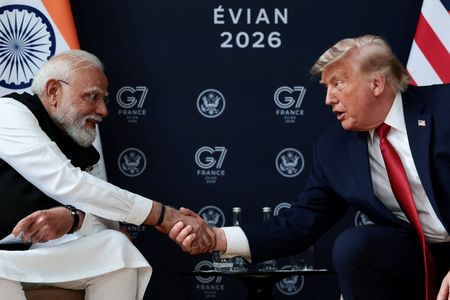

India has turned down a quick trade agreement with the United States and is digging in for a better deal, according to officials and analysts familiar with the situation. Prime Minister Narendra Modi’s government is drawing confidence from new trading partnerships, improved economic conditions, and recent political victories at home.
Months of negotiations between the two countries failed to produce even a limited interim agreement during U.S. Trade Representative Jamieson Greer’s visit to New Delhi last month — despite expectations from both sides that a narrow deal was close.
The talks broke down because Washington did not offer guarantees on India’s core demands: a tariff edge over rivals like China and a promise of no additional U.S. levies once a deal is struck, according to an Indian government official familiar with the negotiations.
“Our position is clear — we don’t intend to rush into a deal that is not on favourable terms or compromise on red lines like ceding ground on agriculture,” the official said.
The U.S. had been hoping for swift trade concessions from the strategic partner as President Donald Trump prepares to roll out new tariffs expected to take effect later this month. India’s refusal to budge risks higher duties on its exports and extended uncertainty for businesses in both countries.
The day after the Greer talks concluded, Indian Trade Minister Piyush Goyal publicly stated that any U.S. deal would not move forward unless India is guaranteed an advantage — a clear signal that New Delhi is not feeling pressure to act quickly, even with higher tariffs looming.
Currently, most Indian goods entering the U.S. face a 10% tariff, in line with most other countries. But the Trump administration is expected to announce steeper tariffs later this month through trade investigations into what it calls excess industrial capacity — a charge India has denied.
Washington has also already proposed tariffs of up to 12.5% on dozens of countries, including India, over claims those nations failed to stop trade in goods produced using forced labor.
A U.S. source familiar with the negotiations said Washington’s view is that India must make its own concessions to earn the preferential trade treatment it has been seeking.
Both the Indian official and the U.S. source spoke on condition of anonymity because the negotiations are confidential. Neither the Indian trade ministry nor the Office of the U.S. Trade Representative responded to requests for comment.
A U.S. official, also speaking anonymously, said Washington is still engaged with India and expects an agreement to be reached eventually, though no timeline was given. The official also noted that India has at times been slow, bureaucratic, and difficult during negotiations — suggesting a quick resolution is unlikely.
When asked about the impasse, White House spokesman Kush Desai said: “The Trump administration continues to productively engage with Indian officials to finalise a historic trade deal that puts Americans and America First.”
India’s position at the negotiating table has been strengthened by several economic developments. Between April and June, India’s total goods exports climbed roughly 15% compared to the same period a year ago, helped by higher petroleum prices, despite disruptions from the war on Iran.
Exports to Gulf countries have bounced back to pre-war levels, jumping to $5.3 billion in May from $2.62 billion in March, as traders found alternative shipping routes. Exports to the United States also edged higher, reaching $17.29 billion during April and May combined.
India is also expanding its reach in other major markets. A free trade agreement with the United Kingdom is set to take effect this month, and a deal with the European Union is anticipated by early next year.
“Indian negotiators have gained some leverage in the talks, given its strong economy, diversification initiatives with other partners, and its strategic standing in the world,” said Wendy Cutler, senior vice president at the Washington-based Asia Society Policy Institute and a former U.S. trade official.
An interim peace deal between the U.S. and Iran has also eased oil prices, improving India’s economic outlook, according to Goldman Sachs economist Santanu Sengupta. The bank raised its 2026 growth forecast for India to 6.8% and lowered its inflation and current-account deficit projections — giving New Delhi more economic breathing room to hold out for better terms. A weaker rupee has additionally boosted the competitiveness of Indian exporters.
India is also keeping a close eye on potential legal and political challenges to U.S. trade actions. A coalition of 22 Democratic state attorneys general has already filed objections to the Trump administration’s proposed tariffs stemming from the forced labor investigations.
Trade analysts say the legal uncertainty surrounding U.S. tariffs, combined with Modi’s recent state election victories, have given India more reason to resist a rushed agreement.
Senior figures within Modi’s Bharatiya Janata Party have publicly argued that any trade deal must protect Indian farmers and small businesses — two politically powerful groups that New Delhi has historically shielded in trade negotiations.
“India realises that delaying — or even abandoning — a rushed deal may be more prudent than locking into obligations whose costs could far exceed any temporary tariff relief,” said Ajay Srivastava, founder of the Global Trade Research Initiative and a former trade negotiator.