
Southeast Asia’s regional alliance, ASEAN, is drawing scrutiny from analysts who warn that renewed engagement with Myanmar’s military-backed government could grant it political legitimacy while producing little to no real progress toward peace.
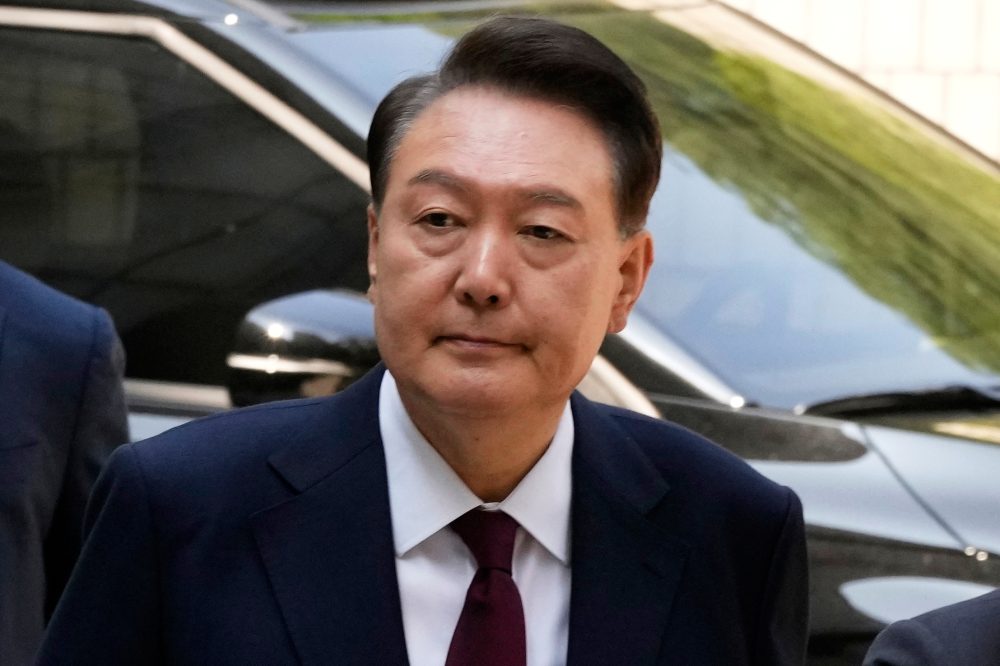
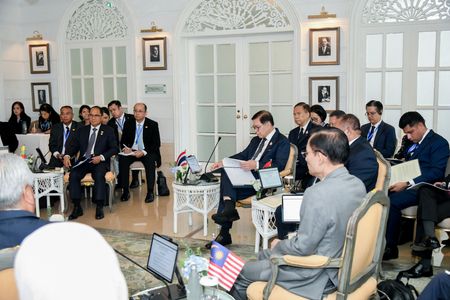
Foreign ministers from the Association of Southeast Asian Nations gathered in Bangkok on Sunday for an informal meeting with Myanmar’s top diplomat — the first face-to-face encounter of its kind since the military staged a coup in February 2021 and was subsequently banned from the bloc’s high-level summits.
While officials characterized the Bangkok gathering as a chance for Myanmar to update its neighbors on conditions within the country, Richard Horsey, senior Asia adviser at Crisis Group, raised a pointed concern: the meeting could be normalizing political ties before any real progress has been made.
“It would be a mistake for ASEAN to accept Myanmar back into the fold without getting anything meaningful in return,” Horsey said.
The meeting is being seen as a critical test of whether ASEAN will stand behind its own peace blueprint or allow Myanmar’s military-aligned leadership to reclaim regional standing without taking genuine steps to end the conflict — such as freeing political prisoners including Nobel laureate Aung San Suu Kyi or restoring full democratic governance.
Myanmar has been engulfed in turmoil since Aung San Suu Kyi’s democratically elected government was removed from power in the February 2021 coup. The junta’s violent crackdown on nationwide protests ignited an armed resistance movement that has since grown into a full-scale civil war.
In April 2021, ASEAN agreed to a “Five-Point Consensus” calling for a halt to violence, dialogue between all parties, humanitarian aid, and the appointment of a special envoy. However, the military government refused to implement the plan, leading ASEAN to exclude it from top-tier meetings and limit Myanmar’s participation to non-political representatives.
Last week, Myanmar’s military-dominated parliament approved a motion urging the country’s new government to push back against the Five-Point Consensus, labeling it interference in internal affairs, according to the state-run Global New Light of Myanmar newspaper.
Opposition groups — including the exile-based National Unity Government and ethnic armed organizations such as the Karen National Union — issued a joint statement Saturday expressing alarm over the foreign ministers’ informal meeting. They called on ASEAN to broaden its engagement to include all major democratic political stakeholders inside the country.
The human toll of the conflict has been devastating. An estimated 100,000 people have lost their lives, more than 3.6 million have been forced from their homes, and the country’s economy has been severely damaged. Aung San Suu Kyi remains under house arrest with her location undisclosed, while numerous senior members of her party and other opponents of the junta have been imprisoned or barred from political life.
Analysts cautioned that ASEAN may be giving away too much leverage by engaging with Myanmar’s leadership in Naypyitaw before meaningful conditions are met.
“The central question is whether the organization will uphold its own agreed framework or permit re-engagement with the military regime without requiring meaningful implementation of the Five-Point Consensus,” said Ye Myo Hein, a senior fellow at the Southeast Asia Peace Institute.
Thailand’s Foreign Minister Sihasak Phuangketkeow pushed back on suggestions that Sunday’s discussions represented a shift in ASEAN’s stance. “This process of engagement does not mean any change in our basic position as reflected in the Five-Point Consensus, but it does mean achieving towards engagement, listening, and being realistic about what can be achieved,” he said.
The BBC Burmese service reported that Sihasak was planning to hold separate informal meetings with some ethnic armed organizations and the National Unity Government, though no official confirmation of those talks has been provided by officials or the opposition groups themselves.
The signs of warming relations come roughly six months after a phased election organized by the junta — an election that critics and Western governments dismissed as a staged process meant to preserve military control behind a civilian facade. That process concluded in April when a pro-military parliament chose former junta chief Min Aung Hlaing as president, formalizing the grip on power he had held since the coup.
Analysts warned that moving too quickly toward re-engagement would erode ASEAN’s ability to push its peace agenda and hold influence over Myanmar’s government. “Once the regime secures the regional legitimacy it seeks without meeting any meaningful conditions, ASEAN will have far fewer tools to encourage compliance with the Five-Point Consensus or promote a genuine political dialogue,” Ye Myo Hein said.