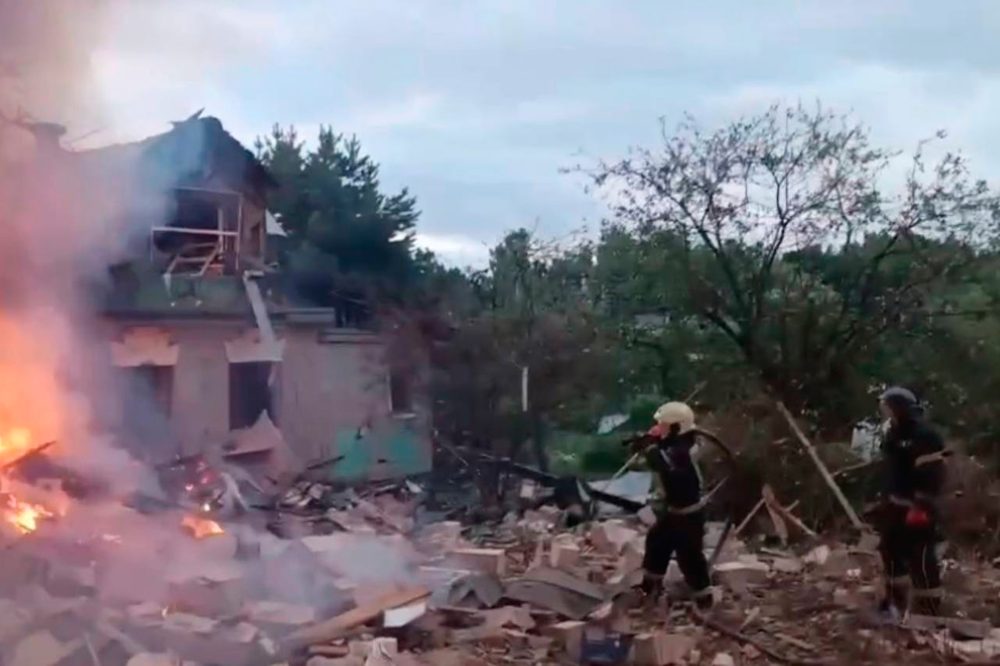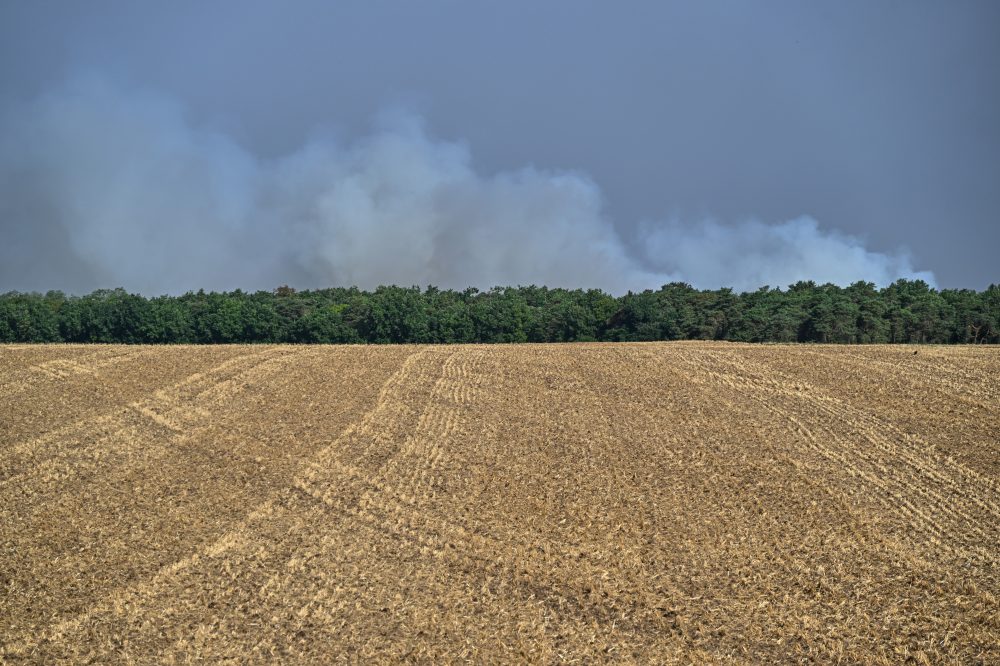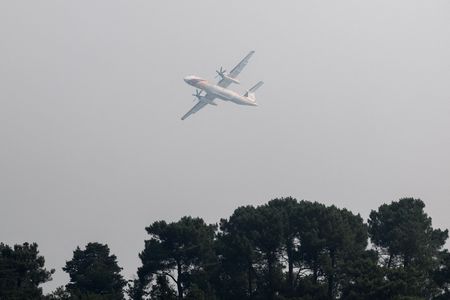

More than 400 firefighters battled through the night to contain a wildfire raging in the historic Fontainebleau forest, located south of Paris, as French authorities dispatched two water-bombing aircraft Monday to help bring the blaze under control.
The fire ignited near a highway close to Fontainebleau, a site famous for one of France’s most celebrated royal palaces — a former hunting lodge and seasonal home for past French monarchs. By midnight, hot winds had driven the flames across more than 800 hectares, the equivalent of roughly 1,980 acres.
Situated just 70 kilometres — about 43.5 miles — from Paris, the fire forced authorities to shut down the A6 highway, a major route connecting Paris to Lyon and southern France. Separate smaller fires in the region also disrupted high-speed rail service.
“The fight continues today,” the French fire service announced on social media platform X. Residents in the area were also put on notice that the Canadair water-scooping aircraft would need to draw water directly from the River Seine, which runs through the heart of Paris.
The wildfire is one of many scorching parts of Europe as the continent endures its third extended stretch of dangerously high temperatures this summer. Scientists widely attribute the growing frequency and intensity of such fires to climate change, which has left large portions of continental Europe severely dry.
Wildfires have already burned through areas of France, Spain, Portugal, and Greece, destroying thousands of hectares of land. In Spain’s southeastern Almeria province, the death toll from a separate fire climbed to 13 over the weekend following the death of a 93-year-old British woman from burn injuries.
A heatwave in late June is believed to have killed thousands across Europe, with countries recording more than 10,000 excess deaths. The extreme temperatures also knocked out power, forced school closures, and shattered temperature records in France, Spain, and Britain.
Lasse Vestergaard, chief physician at Denmark’s Statens Serum Institut — the organization that hosts EuroMOMO, a Europe-wide system for tracking mortality — described the numbers as alarming. “To have this kind of excess at this time of year is unusual. It’s really high,” he said. “It is difficult to explain this high excess mortality by anything but the extreme heat,” Vestergaard told Reuters.