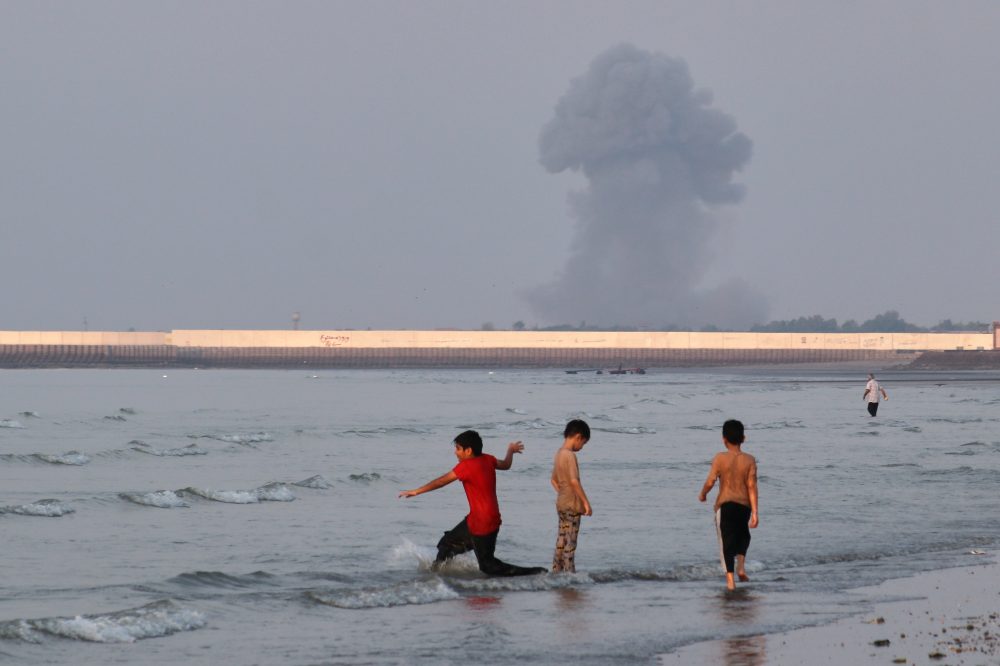

A narrow, elbow-shaped waterway in the Middle East has become the central battleground in an escalating conflict between the United States and Iran. The Strait of Hormuz, long considered a safe and reliable corridor for the world’s oil and natural gas supplies, is now at the heart of a high-stakes power struggle.
Iran has been working to assert dominance over the strait by claiming that an interim ceasefire gave it authority to set the terms for how ships travel through the waterway. It has threatened and fired upon vessels that didn’t follow its preferred route, using that leverage to gain an upper hand in negotiations with the U.S.
On Monday, President Donald Trump pushed back hard. He reimposed a blockade on Iran and declared that the United States controls the strait — even announcing that the U.S. would charge ships a fee for safe passage, a tactic that mirrors what Iran had previously attempted.
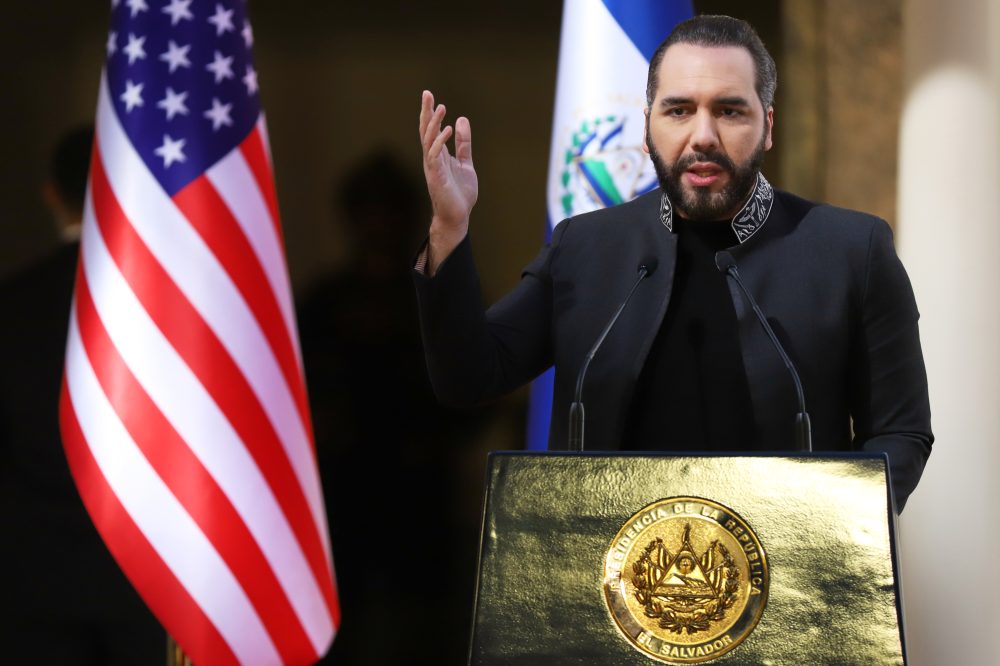
Trump posted on Truth Social that the U.S. “will be, from this point forward, known as THE GUARDIAN OF THE HORMUZ STRAIT.”
Iran’s paramilitary Revolutionary Guard, which oversees the country’s ballistic missile program, fired back. “We will not allow a rogue and child-killing army from the other side of the world to continue its illegal interference in it,” the Guard said Sunday.
The back-and-forth comes as both nations have been ramping up attacks against each other in and around the strait, raising fears of a return to full-scale war.
The strait runs along the coastlines of both Iran and Oman. The international community has long viewed it as a free-to-use waterway open to all nations. But after the U.S. and Israel attacked Iran on Feb. 28, Tehran declared sovereignty over the strait — a move that rattled global energy markets and pushed prices higher.
Under the United Nations Convention on the Law of the Sea, established in 1982, no country has the right to claim international waters, and all ships are entitled to unimpeded passage. While neither the U.S. nor Iran has formally ratified that convention, experts say it still applies.
Marc Weller, director of the International Law Program at the University of Cambridge, explained it this way: “That doesn’t matter, because this has become part of universal custom, so all states can rely on it under all circumstances.”
Despite international law, both countries have been using their respective strengths to influence traffic through the strait. Raymond Waid, who leads the maritime industry group at law firm Liskow & Lewis in New Orleans and is a former Navy officer, put it plainly.
“You have two nations, both of which are very capable — the U.S., because it has the most powerful Navy in the world, and Iran, which is geographically well positioned to disrupt commerce throughout the Strait of Hormuz — (and) can exercise a significant degree of control,” Waid said.
The impact on shipping has already been dramatic. Maritime data agency Kpler reported that crossings through the strait dropped by roughly 52% between Friday and Monday compared with the same period the week before. On Sunday, only about 14 ships passed through — a stark contrast to the roughly 130 ships that made the crossing daily before the war began.
Iran exploited its geographic advantage early in the conflict by attacking ships and, in some cases, demanding payment to let vessels through. Even the threat of drone or speedboat attacks was enough to keep many ships away.
After an interim ceasefire was reached last month, Iran required ships to register with a newly created Persian Gulf Strait Authority to have their crews and cargo reviewed. Iran also insisted that ships travel along a route near its own coastline rather than a southern path along the Omani coast, where U.S. military forces had been escorting vessels. The central portion of the strait has been mined by Iran, leaving that route largely impassable.
Tehran is suspected of attacking ships that chose the Oman route. The United Kingdom Maritime Trade Operations Center, which issues maritime security alerts, reported receiving information about six ships attacked near Oman since June 25.
The two countries have been at odds over what exactly was agreed to in the interim ceasefire. U.S. officials say the deal required the strait to be reopened while longer-term negotiations continued. Iranian officials, however, say a clause in the agreement gave them the right to manage ship traffic — and that as long as they didn’t charge fees for 60 days, they could set the operating conditions.
The interim agreement itself stated that Iran would “make arrangements using its best efforts for the safe passage of commercial vessels with no charge for 60 days only from the Persian Gulf to the Sea of Oman and vice versa.” It also called for Iran to “conduct dialog with the Sultanate of Oman to define the future administration and maritime services in the strait.”
On Monday, the U.S. announced it would impose a 20% toll on cargo shipped through the strait to cover “any and all costs necessary to do the job of providing safety and security to this very volatile section of the World.” That position represents a sharp reversal — the U.S. had previously opposed such fees — and experts say any attempt by either country to charge tolls would violate international norms on freedom of navigation.
The U.S. plan closely mirrors an earlier Iranian proposal that Washington had criticized, in which Iran suggested it might charge fees of up to $2 million per vessel.
Weller, the international law expert, said fees for specific services in international straits can be legally permissible under certain conditions. He pointed to Chile, which collects fees in the Strait of Magellan for pilotage and safety services. But he drew a clear line.
“A fee would be possible, but it has to be a fee commensurate with the actual service granted,” Weller said. “So it’s not anything Iran should earn money off. It’s not $2 million per vessel or something like that.”
The International Maritime Organization, the United Nations agency responsible for international shipping safety and security, said it was waiting to learn more details about Trump’s proposal but confirmed its position against passage tolls had not changed.
Late Monday, Iran’s Foreign Minister Abbas Araghchi used Trump’s announcement to mock the U.S. president while simultaneously legitimizing Iran’s own position. In a post on X, Araghchi wrote: “POTUS is absolutely right. Whoever provides secure and safe passage of commercial vessels through the Strait of Hormuz should be compensated for this service … 20% is of course too much. We will be fair.”