
CAIRO (AP) — Shortly after the U.S. and Israel launched military operations against Iran, a veterinarian and bird-of-prey researcher named Reza Kiamarzi set out on a difficult climb into the mountains near his home city of Isfahan in southern Iran. His goal was to locate nests of endangered falcons tucked high in the rocky cliffs.
The military strikes earlier this year happened to fall during the breeding season for two of Iran’s most prized falcon species — the Saker and the red-naped Shaheen — both among the fastest birds on the planet. Kiamarzi knew of two nests situated near military installations that had been hit, and he was determined to find out whether the blasts, ground vibrations, and noise had disrupted birds that were either laying eggs or rearing their young.
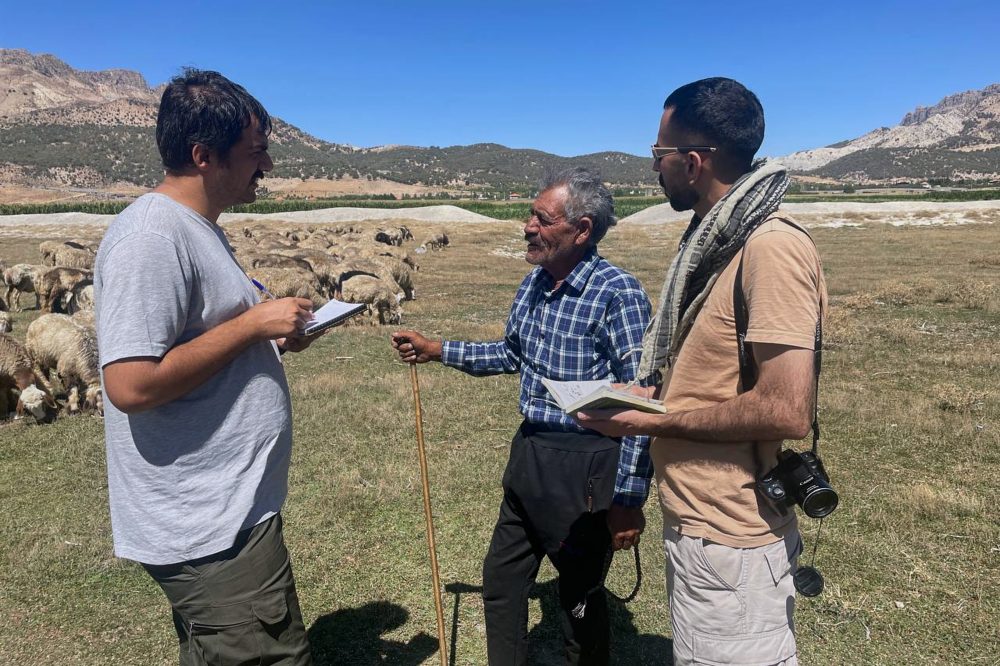
“It’s a long climb to the foot of the cliffs. And then we have to rock climb to reach the nests,” Kiamarzi said.
The ongoing conflict and a worsening economic crisis are heaping additional burdens on conservationists already working hard to protect Iran’s remarkable but threatened wildlife. For years, these groups have faced the dual challenges of climate-related threats to the country’s fragile ecosystems and the economic toll of decades of international sanctions.
Roughly two and a half times the size of Texas, Iran is home to a remarkable variety of plant and animal life spread across diverse climate zones. The northern regions along the Caspian Sea are lush and heavily forested, while the Persian Gulf coast is arid and hot. The country sits between two major mountain ranges — the Zagros and the Alborz — and serves as a vital migration corridor and rest stop for birds traveling between Eurasia and Africa, giving conservation work there a significance that extends well beyond Iran’s borders.
According to a 2024 report by Iran’s Environment Department, at least 86 animal species face the threat of extinction within the country. That list includes the Asiatic cheetah, Persian fallow deer, brown bear, leopard, black bear, Persian onager, the great bustard, and multiple species of birds of prey.
“It’s a big question how much longer we and other conservation NGOs can keep working. We’re waiting every moment to see what happens,” said Iman Ebrahimi, founder of a conservation organization based in Isfahan called AvayeBoom — a Persian phrase meaning “The Earth’s Cry.”
Kiamarzi reported that he did find the falcon nests and that the birds were still there. However, he is continuing to analyze his observations to fully understand how the bombing may have affected the falcons.
Even before the war, falcon populations in Iran were declining largely because of smuggling. Iran’s currency, which has lost more than half its value over the past year, made the illegal trade in these birds even more appealing — smugglers sell the prized hunting birds to buyers in Arab Gulf countries who pay in hard foreign currency, Kiamarzi explained.
There is a certain irony in the situation: during peacetime, military zones had actually become some of the safest places for falcons to breed. “It’s a secure area no one dares get close to, not poachers and smugglers,” he said.
U.S.-based Iranian wildlife expert Jamshid Parchizadeh has expressed concern that airstrikes targeting military installations in remote desert and mountain locations have damaged habitats that endangered cheetahs and other large predators depend on.
“These strikes in far-flung places are causing habitat degradation. Definitely this causes water and land pollution, soil contamination, destruction of land cover,” he said.
Parchizadeh, who specializes in Iran’s large carnivores, spent years studying the habitats and population declines of Asiatic cheetahs, Persian leopards, and brown bears before leaving Iran in 2022. He currently works at Michigan’s Department of Fisheries and Wildlife.
“Bombing causes wildlife disturbance for the bears, the leopards who live in the mountains — and that animal forever leaves that area from fear,” he said.
Iran’s water-scarce environment is particularly vulnerable to disruption, Parchizadeh noted. Over the past two decades, the country’s population has grown from approximately 73 million to more than 93 million people, intensifying pressure on already limited water supplies that have suffered from mismanagement and prolonged drought.
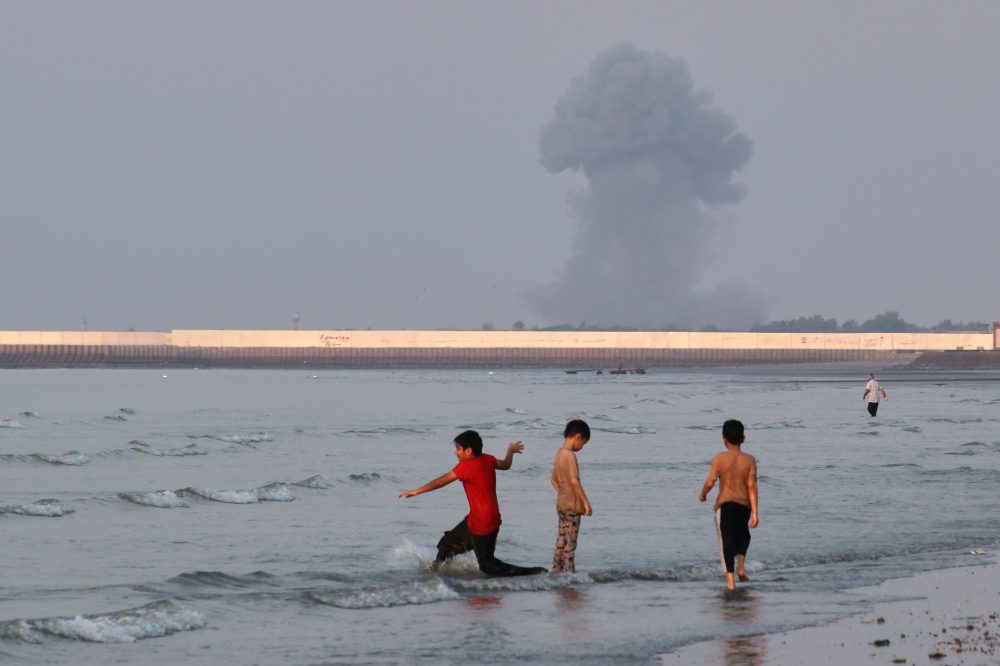
The war has also made it nearly impossible to access key wildlife sites on islands in the Persian Gulf. Even with a preliminary ceasefire agreement in place, the U.S. and Iran have continued military exchanges in the area, which is home to Iran’s vital oil and energy infrastructure.
“Unfortunately, two of the most important islands of the Persian Gulf for biodiversity are small islands along Iran’s key oil islands,” said AvayeBoom’s Ebrahimi.
He noted that reports indicate an oil slick reached at least one location near the tiny uninhabited island of Shidvar — a critical nesting ground for turtles and tens of thousands of birds.
Iran has a long cultural history intertwined with its wildlife. Traditional Persian carpet-weaving and artwork frequently featured animal imagery, including the Persian lion — a species that has not been spotted in the country in more than 70 years.
Iran was among the first nations in the world to establish an environmental protection body, creating its Environment Department just one year after the United States launched its own agency in 1970. However, restrictions on development in protected areas — which tend to be located in poorer, rural communities — have frequently created friction with local residents.
The Arjan protected area, a large stretch of land containing significant wetlands in the southern province of Fars, was originally set aside in the 1970s as part of a project to reintroduce the Persian lion into the wild. That effort was abandoned following the 1979 Islamic Revolution. Residents of the village of Dasht-e Arjan have since complained that the protected status has hurt their local economy, according to Ebrahimi.
Four years ago, AvayeBoom launched a community awareness campaign around the Arjan area, organizing workshops and local events. The campaign chose the ruddy shelduck — a waterfowl with striking orange feathers that locals already recognized — as its symbol. A mural of the bird was painted on a wall in a main town in the area.
After a ceasefire took hold in April, AvayeBoom members returned to the village and found that the campaign had significantly boosted recognition of the bird and improved overall environmental awareness among residents.
“Despite the war, the majority of people considered the environment, the nearby wetlands they have and the wildlife there very important to them,” said Fateme Kazemi, the CEO of AvayeBoom.
Recent years of anti-government protests and now the war have also led to tighter security measures. A wildlife photographer who documents birdlife along the Persian Gulf coast said she had stopped taking photographs in recent months due to safety concerns. She spoke without giving her name, citing fear for her security.
“One of the real dangers for protecting the environment is people losing their connection with nature,” she said. She added that she intends to resume her work once the peace agreement with the U.S. appears stable.
AvayeBoom, which was founded more than a decade ago in Isfahan, has undertaken conservation projects spanning Iran’s mountains, forests, deserts, and extensive wetlands. But the organization depends on local donors who are themselves being squeezed by Iran’s ongoing currency crisis. International sanctions effectively prevent Iranian nonprofits from receiving funding from foreign donors, Ebrahimi explained.
“The first thing we are worried about is that the economic situation will make protecting the environment not a priority,” he said.
Yet despite the weight of sanctions, security restrictions, and war, Ebrahimi said his organization has not given up. “Our doors haven’t closed and we’ve continued with our work,” he said.