
U.S. and Iranian forces have traded heavy missile and drone strikes, with Iran targeting American military facilities across multiple Gulf nations and again declaring the critical Strait of Hormuz closed — a move that sent global oil prices climbing.
Iran’s Revolutionary Guards announced Monday that they had struck U.S. military installations in Bahrain and Kuwait, taken out radar systems in Oman, and hit fuel storage and ammunition depots at Prince Hassan Air Base in Jordan. The attacks were described as a response to the latest wave of American strikes.
The exchange represents the most recent chapter in an ongoing cycle of attacks and counter-strikes, as Iran attempts to assert authority over shipping through the Strait of Hormuz. Military analysts noted that this latest barrage was more intense and far-reaching than previous rounds.
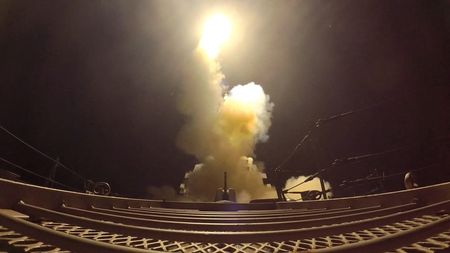
The U.S. military reported that its forces struck Iranian air-defense systems, coastal radar installations, missile and drone capabilities, and small watercraft during Sunday operations, deploying aircraft, naval ships, and drones.
The renewed fighting has cast serious doubt on the future of an interim agreement between the two countries, signed just last month, which was designed to reopen the strait and bring an end to the conflict following an additional 60 days of diplomatic negotiations.
In a brief phone call with Reuters on Sunday afternoon, President Donald Trump commented on the weekend’s military activity against Iran. “We’re beating them up,” he said.
Over the past week, Trump has indicated he views the ceasefire as effectively finished, though he has left open the possibility of further talks.
Iran’s lead negotiator, Mohammad Baqer Qalibaf, took to X on Sunday with a pointed message: “The era of one-sided deals is OVER. We told you: keep your word or pay the price. Reality is knocking.”
The conflict, which began when the U.S. and Israel launched military action against Iran on February 28, has created widespread instability throughout the Gulf region. Iran has struck American bases in multiple countries, and its effective blockade of the strait has driven energy costs higher and contributed to global inflation.
In a Monday statement, Iran’s Revolutionary Guards declared that the only path to restoring normal shipping through the strait was for the U.S. to halt its military operations in the waterway. They warned that “continued interference could lead to greater incidents in the global oil and gas sector.”
Brent crude oil prices jumped 4.3% on Monday, reaching $79.31 per barrel, though that figure remains well below the highs seen earlier in the conflict.
Rising fuel costs, particularly at the gas pump, carry significant political weight for Trump as November’s congressional elections approach.
U.S. officials reported that roughly 20 ships had been escorted through the strait in the prior 24-hour period, though vessel tracking services showed minimal maritime traffic actually moving through the waterway.
Iran has been working to establish a permanent toll system for ships passing through the strait, which before the war carried one-fifth of the world’s oil and liquefied natural gas shipments. Iran has warned ships not to sail through without its approval.
Late Saturday, Iran announced it had closed the waterway after firing a warning shot that struck a vessel traveling on what it called an unauthorized route. On Sunday, it reported disabling a second ship.
Iran’s newly established Persian Gulf Strait Authority said Sunday that passage through the strait was not currently possible, citing what it called “recent illegal movements of the United States military forces in the region.” The authority said permits would be granted “as soon as stability and calm are restored.”
The U.S. — which earlier in the week revoked a license that had exempted Iranian crude oil sales from sanctions — maintained that its forces were in position to protect freedom of navigation despite what it characterized as “aggression, harassment, threats, and arbitrary declarations” from Iran. “Iran does not control the strait. Traffic is flowing,” U.S. officials stated.
The U.S. Navy-led Joint Maritime Information Center repeated its guidance that, despite serious security risks, an “expanded” southern route near Oman remained open for two-way ship traffic.
On Saturday, U.S. Central Command reported that American forces had struck 140 Iranian military targets, with more than 300 total targets hit over three nights that week, aimed at degrading Iran’s ability to threaten civilian mariners and commercial vessels in the strait.
Iran’s Revolutionary Guards said over the weekend that they had destroyed a command-and-control center and drone storage facilities in Jordan, hit a U.S. radar site and rocket launcher systems in Kuwait, attacked U.S. aircraft carrier support and refueling platforms in Oman, and destroyed a jet maintenance center and command facility in Qatar.