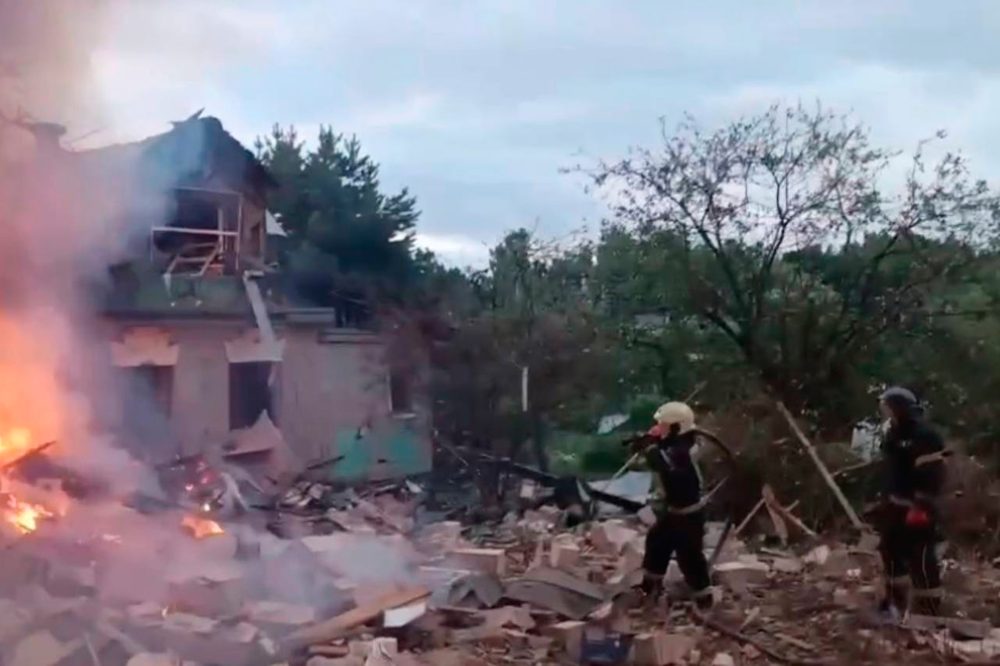

Ukrainian President Volodymyr Zelenskyy arrived in Paris on Monday to sit down with approximately two dozen European leaders committed to supporting Kyiv as the conflict with Russia stretches into its fifth year.
At the same time, European foreign ministers gathered separately in Brussels, where discussions were expected to focus on Ukraine’s ongoing needs and the broader threat Russia poses to the continent.
Both Ukraine and its European allies are eager to build on recent Ukrainian battlefield gains and push Russian President Vladimir Putin toward peace talks. However, Moscow has shown no sign of willingness to compromise, despite a year of diplomatic efforts by the Trump administration.
Analysts and Western officials say Ukraine’s growing drone capabilities have given it a significant advantage in recent months. Strikes on Russian supply lines behind the front have slowed the Russian military’s progress and made advances increasingly costly for Moscow.
Ukrainian forces have focused heavily on cutting off supplies to Crimea, sparking what observers describe as the worst fuel shortage on the Black Sea peninsula since Russia’s illegal annexation of the territory in 2014. These strikes have also undermined the Kremlin’s claims that Russia is winning the war.
Zelenskyy has been pushing to fast-track a joint European effort to develop anti-ballistic air defense systems capable of intercepting Russia’s attacks on Ukraine’s power infrastructure.
Following the latest wave of overnight Russian attacks across Ukraine, Zelenskyy posted on social media Monday: “Everyone in the world sees that Ukraine needs more air defense, more protection of life.”
U.S. President Donald Trump announced last week that he would grant Ukraine a license to manufacture Patriot air-defense systems — a move that could represent a significant turning point for Kyiv. Still, experts and Ukrainian officials caution that converting that commitment into actual weapons systems would likely require years of work.
The Paris gathering, organized under the so-called Coalition of the Willing — a group of more than 30 nations backing Ukraine — was expected to draw around 25 heads of state and government. The unusually high number of attending leaders was seen as a strong signal of long-term support for Ukraine and a warning to Moscow as Russia continues to test European resolve.
French Foreign Minister Jean-Noël Barrot announced Monday that France would summon the Russian ambassador and impose sanctions on Russian hackers. He told BFMTV-RMC that the actions stem from “a vast cyber campaign aimed at sabotage and espionage, carried out by Russia in about 10 European countries.”
The war’s reach has also extended beyond Ukraine’s borders. Moldova’s Ministry of Foreign Affairs reported Monday that a drone launched during Russian overnight strikes on Ukraine’s Odesa region crashed and detonated on Moldovan soil, calling the incident “serious and unacceptable.”
Zelenskyy made the trip to Paris following the death of U.S. Sen. Lindsey Graham, one of Ukraine’s most vocal supporters in Washington. He also departed amid a significant and still-unfinished reshuffling of his government, which included Prime Minister Yulia Svyrydenko stepping down on Sunday.
Ukraine has continued striking deep inside Russian territory using domestically developed long-range drones and missiles, at times matching or surpassing the volume of aerial attacks launched by Russia.
Moscow Mayor Sergei Sobyanin reported that Russian air defenses shot down 350 Ukrainian drones heading toward Moscow since late Sunday, including 50 near the capital itself. Andrei Vorobyov, who leads the region surrounding Moscow, said 81 Ukrainian drones were intercepted overnight.
Vorobyov also reported that three people were killed and three others injured by a Ukrainian strike on the Pionersky settlement near Istra in the western Moscow region, with five private homes catching fire.
Ukraine’s air force, meanwhile, reported that Russia launched 134 long-range strike drones and three guided missiles at Ukrainian territory. Air defenses successfully intercepted or jammed all three missiles and 123 of the drones, though six drones caused damage at five separate locations.
In the southern Ukrainian city of Zaporizhzhia, more than 70 people were hospitalized following a series of recent Russian strikes that damaged 11 apartment buildings, according to military administration head Ivan Fedorov.
Russia’s Federal Security Service claimed it foiled a Ukrainian plot to strike the Ukrainka air base in the far eastern Amur region and the Shagol air base in the Chelyabinsk region in the southern Urals. The agency said small drones were smuggled into Russia’s western Bryansk region via air balloons and larger transport drones, then transported by car to locations near the targeted bases by Ukrainian operatives. Authorities said they arrested Ukrainian agents and associates and seized 24 drones, describing the alleged scheme as part of a series of planned strikes “unprecedented in its scale and the level of threat.”
Just over a year ago, a Ukrainian covert mission known as Operation Spiderweb reportedly destroyed or damaged nearly one-third of Moscow’s strategic bomber fleet by smuggling drones into Russian territory, according to Ukrainian officials.