
The United States carried out its third round of military strikes against Iran early Sunday morning, aiming to weaken Tehran’s capacity to threaten sailors and commercial ships in the region. The action came after Iran’s Islamic Revolutionary Guards Corps attacked a container ship traveling through the Strait of Hormuz, according to the US military.
In response to the American strikes, Iran reported multiple explosions across several locations in its southern territory, while the IRGC announced it had targeted US military and logistics facilities in Qatar, Kuwait, Jordan, and Oman using missiles and drones.
US Central Command stated that the latest round of American strikes was a direct response to the Iranian attack on the GFS Galaxy, a Cypriot-flagged container ship passing through the Strait of Hormuz. The crew was forced to abandon ship and take to a lifeboat following the attack.
“A civilian crew member is missing, and a fire broke out on the ship, causing significant damage to the engine room, preventing it from continuing its voyage,” US Central Command said in a statement.
The Revolutionary Guards later announced they had also struck a second vessel they claimed had violated their border in the strait.
The US military accused Iran of violating a memorandum of understanding between the two countries, stating that “the strikes are intended to continue degrading its ability to attack sailors and commercial vessels.”
US Defense Secretary Pete Hegseth took to X to respond, writing, “Iran made a poor choice, and now it is paying the price.”
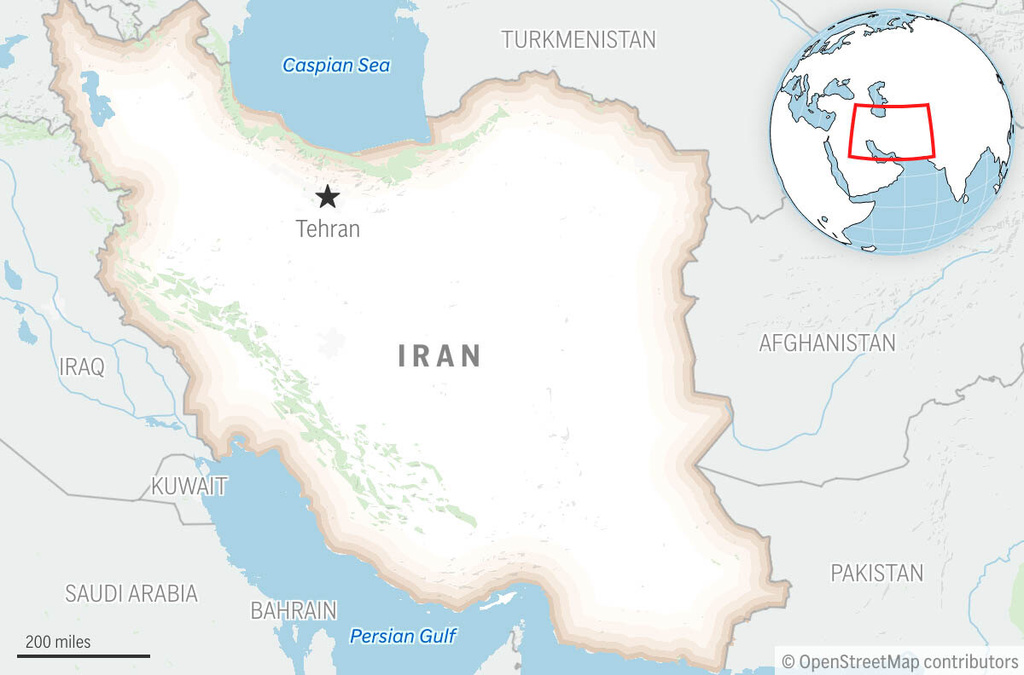
Iranian media outlets reported explosions in Bandar Abbas, Sirik, Qeshm Island, and Chabahar. Three blasts were recorded in Bandar Abbas and two in Sirik, both located in southern Iran near the Strait of Hormuz. Iran’s PRESSTV also reported explosions in Bushehr and Asaluyeh. The IRGC said US forces struck multiple military bases, communication towers, and infrastructure along Iran’s southern coastline.
The IRGC claimed to have hit Al Udeid Air Base in Qatar, saying it destroyed a “fighter jet maintenance center and command and control center.” The group also said it attacked a US military radar installation in Kuwait as part of its retaliatory operation.
In Jordan, the IRGC claimed it destroyed a command and control center along with hangars housing MQ-9 drones at Prince Hassan Air Base. The group further announced it had “destroyed American-owned logistics centers supporting ships and refueling docks for aircraft carriers at the port of al-Duqm in Oman.”
Qatar confirmed it had intercepted a missile attack after explosions were reported in its capital, Doha. The country’s Defense Ministry said it was continuing to manage the ongoing missile threat, while the Interior Ministry elevated the security alert level and instructed residents to stay inside, avoid going outdoors, and keep away from windows and open areas.
Qatar’s Interior Ministry reported that three people, including a child, suffered injuries from falling shrapnel during the interception of Iranian attacks.
The United Arab Emirates announced that its air defense systems were “currently operating against a missile and drone threat from Iran.” Bahrain’s Interior Ministry also reported attacks and air raid sirens, with Arab media outlets confirming additional explosions in the country.
Jordan’s military reported that three missiles fired from Iran landed within its borders, resulting in no deaths and only minor property damage. The Jordanian military issued a firm statement: “Jordan’s forces will not allow the kingdom’s airspace or territory to be turned into a conflict zone and will deal firmly with any threat to the state’s sovereignty, territorial integrity and the security of its citizens.”
Adding to the regional tension, the Revolutionary Guards Navy declared the Strait of Hormuz closed until further notice after firing a warning shot at a vessel it said was attempting to pass through an unauthorized route. The IRGC stated the closure would remain in place “until American interference in the region ceases,” warning that any “wrong move by the enemy will be met with a severe response.”
Iranian Parliament Speaker Mohammad Bagher Ghalibaf shared a photo on X showing Article 5 of the memorandum of understanding between Iran and the United States, along with a pointed message: “The era of one-sided deals is over. We told you: keep your word or pay the price. Reality is knocking on the door.”
Article 5 of the agreement reads: “Iran will act and make every effort to ensure safe passage of commercial vessels free of charge for 60 days only from the Persian Gulf to the Sea of Oman and vice versa. Iran will conduct dialogue with the Sultanate of Oman to define the future administrator and maritime services in the Strait of Hormuz.”