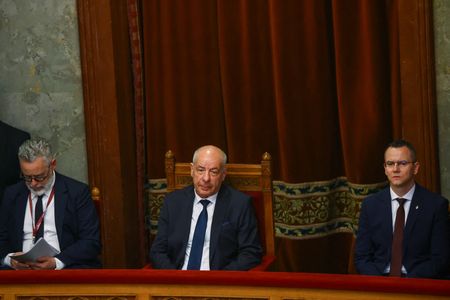

BUDAPEST — Hungary’s parliament is expected to pass a constitutional amendment on Monday that would remove President Tamas Sulyok from office, as new Prime Minister Peter Magyar continues his push to dismantle the political infrastructure left behind by former leader Viktor Orban.
Magyar, whose party Tisza swept to power in a landslide election this past April, ending Orban’s 16-year grip on the country, described Sulyok in a Saturday Facebook post as a “puppet” of the former premier. Magyar announced that parliament would vote on the constitutional change Monday, and warned that if Sulyok fails to sign the legislation within five days, impeachment proceedings would be initiated.
While Hungary’s president holds limited authority — primarily the ability to veto or request reviews of legislation — the office carries significant symbolic weight.
Tisza holds a supermajority in parliament, giving it the power to amend the constitution and reverse changes made under Orban’s government that Magyar says undermined democratic institutions. The party has already moved quickly on several fronts, including suspending news broadcasts on state-run television and radio last week as part of a broader effort to make public media more independent.
Sulyok served a decade as a Constitutional Court judge before parliament appointed him to the presidency in 2024. He has maintained that he has no political agenda and has pushed back against the amendment, requesting a review from the Venice Commission — an advisory body under the Council of Europe that evaluates whether constitutional changes meet democratic standards. The Venice Commission has declined to comment on the matter.
Orban’s Fidesz party staged a protest in support of Sulyok last Thursday, though Orban himself did not attend.
Before the vote, Magyar is expected to address parliament at 1:00 p.m. local time. The legislation being considered would also cap lawmakers’ terms at 12 years and states that its purpose is to ensure “the preconditions for the restoration of constitutional democracy.”
The amendment would bring Sulyok’s term to an immediate end, citing the public’s “serious loss of confidence” in him. Parliament would then elect a replacement president to serve either until a new constitution takes effect or for a maximum of five years, whichever comes first. Magyar’s government has indicated it plans to pursue broader constitutional reform this autumn.