Two Eastern European allies have acknowledged they are engaged in preliminary talks regarding enhanced participation in NATO’s nuclear deterrence strategy, which relies on American nuclear assets stationed across Europe.
These early-stage conversations about broadening America’s nuclear deterrence capabilities in Europe could provide reassurance to continental partners about ongoing U.S. military commitment, particularly as President Donald Trump has pursued efforts to decrease his nation’s traditional defense presence in Europe.
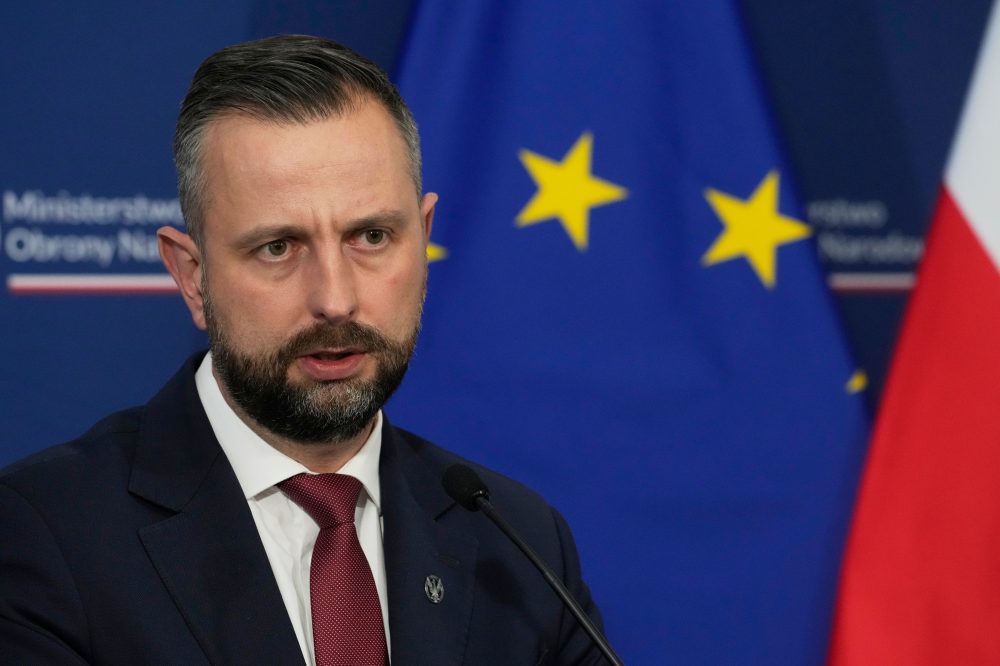
“We are talking, in order to create better conditions for nuclear deterrence and for Poland to play an important role in that,” Polish Deputy Defense Minister Paweł Zalewski told Polish Radio on Wednesday.
However, Poland has rejected any intentions to house nuclear weapons directly. Such an arrangement would be “an extremely serious matter, which is serious in terms of political consequences,” he stated.
“Discussions are indeed taking place. I do not want to go into details at this point as they are classified, but discussions are ongoing, and Lithuania is certainly not standing on the sidelines,” Lithuanian Defense Minister Robertas Kaunas said Tuesday, according to press agency BNS.
Both defense officials responded after unnamed sources told the Financial Times on Tuesday that America had indicated willingness to position components of its nuclear arsenal in additional European nations, beyond the six currently believed to accommodate nuclear weapons.
The Financial Times reported that Poland and the Baltic nations of Estonia, Latvia and Lithuania, the NATO members situated nearest to Ukraine, showed interest in possibly accommodating bases for U.S. dual-capable aircraft, which can deploy either conventional or nuclear warheads.
The Pentagon refused to provide comment, though a Defense Department official noted the U.S. and NATO “continuously assess the security environment” and work to maintain effective deterrents. The official lacked authorization for public statements and spoke anonymously.
America has positioned nuclear weapons across multiple European nations for decades as part of its security commitments to NATO partners.
In recent years, Russia’s conflict against Ukraine and the wider threat Moscow presents to NATO have sparked conversations about possibly expanding U.S. nuclear cooperation with Europe.
“Work to assess and potentially adapt NATO’s nuclear deterrence posture has been ongoing for several years and is not linked to any decision taken by the U.S. to adjust its conventional posture in Europe,” an official responsible for NATO communications but not authorized for public identification told the AP.
NATO’s nuclear sharing arrangement encompasses U.S. nuclear weapons positioned in Belgium, Germany, Italy, the Netherlands, Turkey and Britain, along with dual-capable aircraft operated by both America and its partners. America retains complete authority over the nuclear weapons.
Poland has demonstrated readiness to join the U.S. nuclear deterrence initiative since Russia’s comprehensive invasion of Ukraine began in 2022, with former president Andrzej Duda even endorsing the accommodation of nuclear weapons. The present administration headed by Donald Tusk has shown greater restraint, discussing only expanded involvement in nuclear deterrence.
America, though, has consistently suggested that positioning nuclear weapons in NATO’s eastern member countries would prove overly provocative toward Russia, Artur Kacprzyk, a nuclear deterrence analyst with the Polish Institute of International Affairs in Warsaw, told the AP.
“There might be a middle ground there, which could be called ‘nuclear sharing light’. You would have, for example, Polish planes, certified for carrying U.S. nuclear weapons, but the weapons won’t be deployed in Poland. This aircraft from the east could be a sort of backup if, let’s say, German or Dutch aircraft are destroyed before they can use those nuclear weapons.”
Earlier this year, Poland announced it would join several European countries in supporting France’s initiative of coordinating its nuclear deterrence activities with European allies. France has remained the sole nuclear power within the European Union since Britain’s departure from the organization in 2020.
The French-led cooperation is “complementary” to U.S. deterrence, Kacprzyk noted, but it possesses a different character.
Britain, Germany, the Netherlands, Belgium, Greece, Sweden, Denmark and Norway also have expressed interest in the French initiative, which permits temporary deployment of France’s nuclear-armed aircraft to partner countries. It also enables partners to join France’s deterrence exercises and allows allies’ non-nuclear forces to participate in France’s nuclear operations.
Polish Defense Minister Władysław Kosiniak-Kamysz informed Polish broadcaster TVP on Tuesday that nuclear deterrence would be addressed during a NATO meeting in Brussels on June 18. He indicated both the French initiative and the U.S. program are components of those efforts.
Expanding nuclear cooperation in Europe might assist America in balancing conventional reductions but cannot completely replace the forward deployment of conventional forces, particularly in nations sharing borders with Russia, Kacprzyk stated.
“Communicating ‘I might risk nuclear war to defend an ally but I don’t want to send my soldiers into the fight’ is a conflicting signal,” he explained. “You need coherent signals at all levels of deterrence.”
Lebanon’s Currency Stays Steady While War Devastates Broader Economy
Exchange rate remains near 89,500 to the dollar, though reserves, banking sector, households, and public trust face severe pressure
Lebanon’s currency has maintained stability at approximately 89,500 to the dollar despite ongoing warfare that continues to deplete the nation’s reserves, destroy infrastructure, and drive an already battered economy further into turmoil.
Economic experts operating independently caution that this stability results from artificial management rather than authentic economic improvement. The central bank, Banque du Liban (BDL), has maintained strict control over Lebanese-pound availability, while government officials have implemented emergency budget restrictions. Meanwhile, financial institutions and currency exchange operations face intense regulatory oversight. These combined efforts have temporarily avoided another currency collapse, though they don’t indicate structural economic healing.
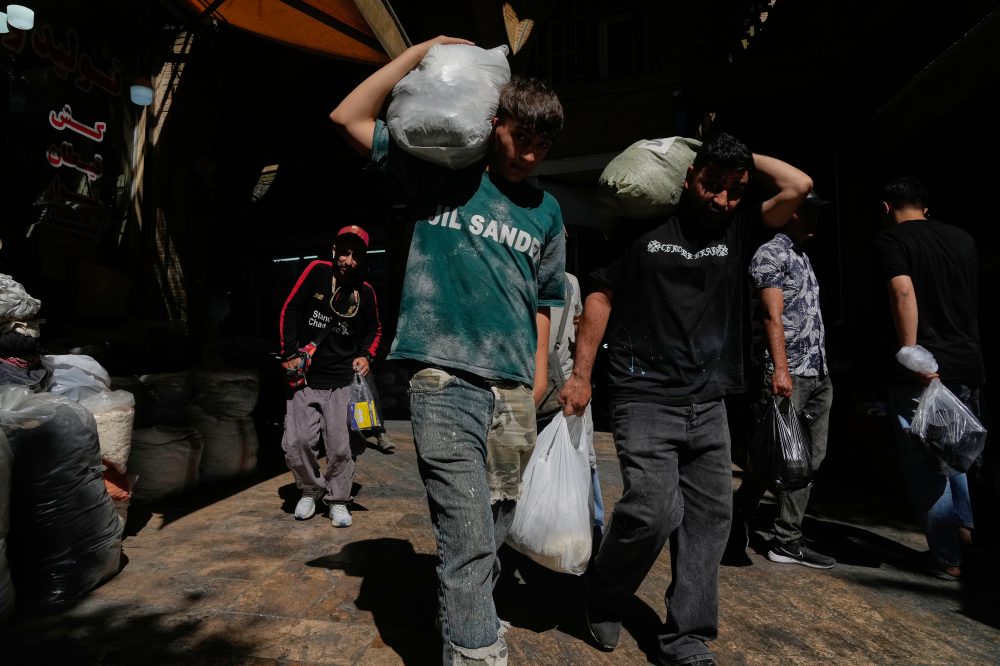
Prior to the 2019 financial meltdown, an official exchange rate of 1,507.5 pounds per dollar provided economic stability on paper. That era has ended. The current black market rate of approximately 89,500 pounds per dollar has become the practical exchange rate for everyday transactions, influencing tax calculations, import duties, government and private sector wages, business accounting, and routine cash exchanges. This rate’s consistency shouldn’t be mistaken for systemic improvement; it merely demonstrates that recent wartime fears have been managed while underlying problems persist unresolved.
Government Budget Position and Economic Reality
Finance Minister Yassine Jaber has stated publicly that Lebanon is in a stronger position to protect its currency because the government began this active military engagement with stricter budgetary controls and unprecedented cooperation between the Finance Ministry and central bank.
Based on official Finance Ministry budget records, the 2026 government budget was constructed around income and expenses of approximately $6 billion, up from roughly $5 billion in the 2025 budget legislation. Government data indicate this increase reflects improved tax collection, increased public fees, and higher customs income. This represents part of a governmental effort to restore public finances following years when extreme inflation rendered government accounting practically impossible.
Economic analysts provide an important warning: Much of this budget improvement comes from aggressively revaluing government operations following the collapse of the previous exchange rate system. Since taxes, fees, and duties now operate within a heavily dollarized monetary environment, the budget looks more logical on paper than during the crisis’s worst periods. However, independent economists stress that Lebanon hasn’t recovered genuine fiscal power or income-producing ability.
The extended military engagement threatens to quickly exhaust this limited budget buffer. In a Reuters statement from May, Jaber estimated that the ongoing conflict could reduce Lebanon’s actual gross domestic product (GDP) by 7% to 10% in 2026, creating direct and indirect economic harm reaching $20 billion. This escalating catastrophe occurs while Lebanon continues paying enormous costs from the 2024 hostilities. In a preliminary evaluation, the World Bank determined the 2024 fighting caused $3.4 billion in physical destruction and $5.1 billion in immediate economic losses, subsequently calculating total recovery and rebuilding requirements at $11 billion.
Rapid Reserve Depletion
The expense of sustaining this controlled exchange rate appears directly in the central bank’s financial records. Based on official BDL data reported by Lebanese financial institutions, foreign reserve holdings reached approximately $12.07 billion in mid-February. By that month’s conclusion, BDL records indicated they had decreased to $11.88 billion. By mid-March, official numbers revealed an additional decline to $11.66 billion, representing roughly $408 million lost within a single 30-day period. By April’s end, central bank records showed reserves had fallen further to about $11.43 billion.
While financial specialists note that using reserves during wartime represents standard procedure, Lebanon’s structural crisis makes this pattern extremely hazardous. The remaining buffer is minimal, politically controversial, and overshadowed by the legacy of a financial collapse that eliminated the banking system’s trustworthiness. Domestic banks remain severely damaged, account holders are prevented from accessing their life savings, and public faith in government institutions is virtually absent. Each dollar used to maintain short-term exchange stability today represents one less dollar available for future rebuilding or protection against an even more severe geopolitical crisis.
Harmful Effects of Liquidity Restrictions
The central bank’s primary method for exchange rate protection involves harsh limitations on Lebanese-pound availability. The basic economic principle is straightforward: To attack or short the pound, speculators require substantial amounts of local currency. By restricting local cash supply, BDL makes speculation extremely costly. Bank Audi’s recent Lebanon Economic Report verified that this approach maintained currency stability during 2026’s first quarter despite significant war losses, while cautioning about increasing pressure on available foreign-currency reserves.
Compliance and financial specialists question this policy’s long-term viability, observing that it functions like an economic tourniquet. Restricting local liquidity severely constrains the productive economy. Companies encounter serious credit shortages and payment delays, while regular households cannot access business loans or their own frozen savings.
The human and market impacts are devastating. While exchange rate displays appear stable, store owners must price items aggressively in foreign currency, employees receive payment in weakened pounds, and typical families struggle to afford rising costs for housing, healthcare, fuel, and education. Currency stability differs from economic wellness; the pound isn’t collapsing, but citizens are suffering. Account holders haven’t been compensated, destroyed neighborhoods aren’t being reconstructed, business credit has vanished, and widespread poverty continues worsening. Lebanon has frozen the visible symptoms of its crisis while underlying damage expands.
Ongoing Banking Crisis and Compliance Protections
International financial organizations have repeatedly warned Lebanese officials that temporary exchange rate management cannot replace comprehensive structural reform. The International Monetary Fund (IMF) has demanded thorough bank restructuring, a formal medium-term budget framework, a reliable national debt resolution plan, and a solid strategy to safeguard small depositors. In an official briefing, IMF mission chief Ernesto Ramirez Rigo declared that Lebanon’s continuing banking collapse completely blocks economic activity and credit distribution, warning that inadequate reform legislation would permanently trap the country.
The unsettled financial deficit within the banking sector represents the nation’s most serious economic injury. Prime Minister Nawaf Salam’s administration has tried to advance draft legislation addressing the catastrophic gap created by the 2019 crash. International news reports suggest this financial shortfall was estimated above $70 billion in 2022 and is now believed significantly higher. While Salam has defended the proposed plan as a reasonable attempt to restore confidence and distribute losses fairly, critics from all perspectives have attacked the strategy. Commercial banks oppose the capital requirements they must accept, depositors worry they’re being sacrificed again, and independent economists warn that incomplete measures will fail to restore credit markets.
During this deadlock, a crucial protective layer has developed through a strict transaction framework. The Compliance Shield—the collaboration among BDL, commercial banks, and the Salim Khalil Financial Company—represents a fundamental mechanism. By enforcing strict transparency and compliance requirements for foreign exchange transactions, it prevents illegal or untraceable capital from entering the official system. This compliance shield is credited with dramatically reducing the extreme, chaotic exchange rate variations experienced in earlier years.
International Sanctions Pressure
International sanctions directly connect to Lebanon’s economic survival and its fragile relationship with the global financial system.
Recent actions by the US Treasury Department targeted senior security officials accused of manipulating Lebanese government institutions to protect political and armed-group interests. These targets included Brig. Gen. Khattar Nassereddine, head of security analysis at the General Security Directorate, and Col. Samer Hamadeh of Lebanese Army Intelligence. Washington accused Nassereddine of sharing government intelligence with Hezbollah and blocking international disarmament efforts. In an official statement, US Treasury Secretary Scott Bessent said Hezbollah remains a designated terrorist organization that must be completely disarmed.
The political reaction in Beirut was swift and deeply divided. The Lebanese Army Command released a strong public statement emphasizing that its officers remain loyal exclusively to the state, noting that Washington provided no advance notice. Political groups aligned with Hezbollah strongly criticized the designations as obvious political pressure and foreign meddling.
Beyond the political controversy, financial compliance specialists warn that these sanctions’ real threat is systematic. Lebanon already faces increased scrutiny by the Financial Action Task Force, the international anti-money laundering monitor. This official grey-list classification places enormous pressure on the government to address serious structural weaknesses in combating terrorist financing and illegal capital movements.
For a nation heavily dependent on imports, cash transfers from overseas communities, and legitimate dollar transactions, this represents an existential threat. Lebanese commercial banks depend on foreign correspondent banks to process international payments and maintain legitimate trade. If international financial institutions determine that Lebanon’s compliance protections are failing and the jurisdiction poses too much risk, the legal financial system could be isolated. Money transfers would slow dramatically, compliance expenses would increase sharply, domestic companies would struggle to pay international suppliers, and families could be prevented from receiving essential funds from relatives overseas. This would push the government deeper into an unmonitored cash-based economy.
Jaber captured this troubling reality in an unusually frank ministerial statement earlier this year: “Lebanon has become a cash economy, and the real question is whether we want to stay on the grey list, or sleepwalk into a black list.”
This explains why the central bank and cabinet continue emphasizing public compliance messaging. They’re attempting to demonstrate to foreign correspondent banks and international regulators that legal exchange channels are protected against sanctioned actors, anonymous wealth, and illegal flows. The currency protection and the anti-money laundering and counterterrorism financing compliance effort are essentially the same battle: an effort to keep Lebanon financially accessible.
Long-term Viability Assessment
For regular citizens, this managed exchange rate provides a false sense of security. The pound isn’t actively spiraling, government pensions are being distributed, and consumer prices aren’t experiencing the violent daily fluctuations witnessed during the economic collapse’s early phases. Nevertheless, the overall situation remains dire. The country is impoverished, heavily reliant on unstable remittances, lacking a functioning banking sector, and dangerously vulnerable to every military escalation.
The current exchange rate protection continues only because the central bank is depleting limited foreign reserves, restricting private-sector liquidity, implementing extremely restrictive compliance measures, and depending on temporary, repriced budget balances. Independent analysts determine that none of these protective tactics can replace comprehensive banking restructuring, actual GDP growth, legal debt resolution, or authentic political stability.
If the current military conflict escalates, if liquid reserves fall below critical levels, or if necessary structural reform legislation remains blocked in a divided parliament, this artificial stability will quickly collapse. Lebanon has succeeded in preventing its currency from becoming the immediate crisis point, but the government is running out of time while its banks, political system, and the war continue dragging the fundamental economy toward structural collapse.
UNITED NATIONS — In a closely watched election Wednesday, Portugal and Austria successfully secured positions on the influential yet fractured UN Security Council, beating out Germany in an intensely competitive campaign.
The council’s 10 non-permanent positions are allocated to different global regions, with the General Assembly selecting five nations annually through confidential voting to serve two-year terms. These countries join the council’s five permanent members who hold veto power: the United States, Russia, China, Britain and France.
In another competitive contest, Kyrgyzstan emerged victorious over the Philippines following four voting rounds in the 193-nation General Assembly, winning 143-49 to earn its first-ever council membership.
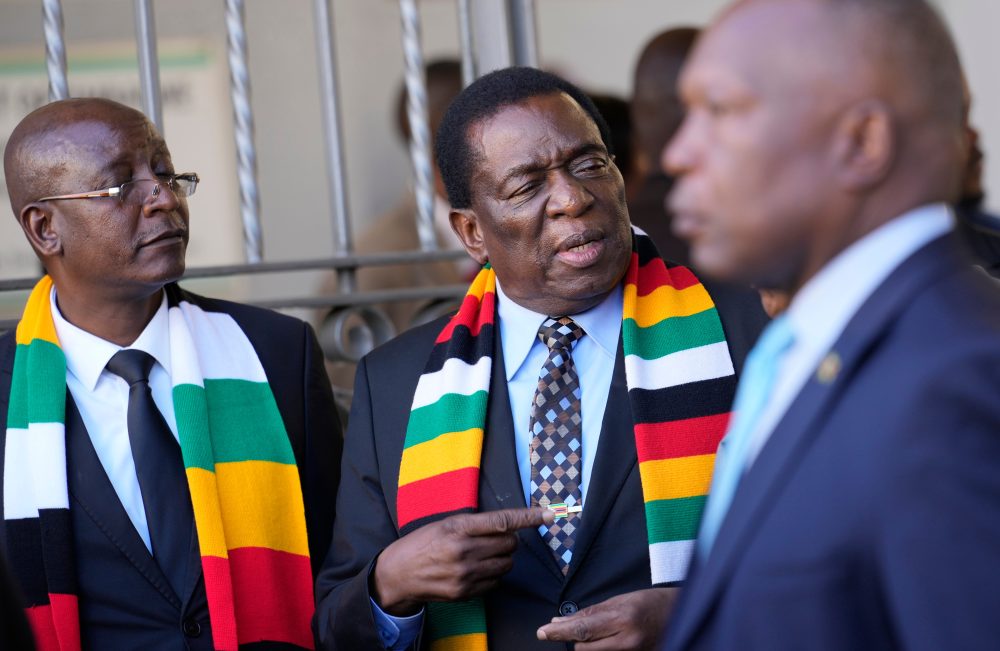
Zimbabwe, representing Africa, and Trinidad and Tobago, the Caribbean representative, faced no competition and each secured election with over 180 votes.
For the two Western nation slots, Portugal earned 134 votes while Austria captured 131 votes. Germany, Europe’s economic leader with six prior council terms, managed only 104 votes.
Austria’s foreign ministry described the victory as the culmination of a 15-year effort and called it a “strong international sign of confidence” in their nation.
The newly elected members will begin their terms January 1st, taking over from Denmark, Greece, Pakistan, Panama and Somalia.
While the UN Charter tasks the Security Council with maintaining global peace and security, it has struggled with three major ongoing conflicts due to vetoes — Russia’s regarding Ukraine and the United States, as Israel’s strongest ally, frequently concerning Gaza and Iran.
Reform efforts spanning decades have attempted to update the Security Council to mirror today’s geopolitical landscape rather than the post-World War II structure from 80 years ago when the UN formed. Despite repeated failures, another reform initiative is currently underway.
Acclaimed filmmaker Wim Wenders announced Wednesday that he is removing his 1975 film “The Wrong Move” from circulation due to nude scenes involving actress Nastassja Kinski, who was just 13 years old during production.
The actress, now 65, has requested that Wenders reedit the movie. In an interview last month with German publication Sueddeutsche Zeitung, she stated: “That was my first film, he was my first director and he didn’t protect me.”
The celebrated director, known for creating “Paris, Texas” and “Wings of Desire,” released a public apology directed at Kinski.
“I recognize that Nastassja Kinski should have been better protected back then,” Wenders stated. “For that, I apologize to you, Nastassja, unreservedly, no ifs and buts.”
“The Wrong Move” served as Kinski’s acting debut. The daughter of actor Klaus Kinski, she portrayed a seemingly silent teenage acrobat in the film, which follows Rüdiger Vogler’s character, an aspiring writer traveling across Germany. During one scene, Kinski appears topless.
According to Wenders, he is “withdrawing it from all current forms of distribution and exhibition,” which encompasses streaming platforms and television broadcasts. The Wim Wenders Foundation, his nonprofit organization, holds ownership rights to the film.
The movie will stay unavailable until both parties reach a mutual agreement, Wenders explained. He plans to initiate “a broad dialogue” involving Kinski, the German Film Academy, and additional cinema organizations.
“It is necessary for our society to find appropriate ways of dealing with controversial film works from the 20th Century and to face new learning processes and inclusive perspectives regarding cinema,” Wenders commented.
When contacted by The Associated Press on Wednesday, representatives for Kinski did not provide an immediate response.
During last week’s German Film Awards ceremony, Wenders discussed his dilemma regarding the movie. Addressing the audience at Germany’s version of the Academy Awards, Wenders expressed concern that retroactively modifying the film “sets a precedent that affects you all, and then it becomes possible with all your films later on.”
Kinski later collaborated with Wenders again in his 1984 production “Paris, Texas,” though she has consistently expressed concerns about her early experiences in filmmaking. She also appeared without clothing in “To the Devil a Daughter” and “Stay As You Are” when she was 14 and 17 years old, respectively.
In a 1997 interview with W Magazine, Kinski reflected: “If I had had somebody to protect me or if I had felt more secure about myself, I would not have accepted certain things. Nudity things. And inside it was just tearing me apart.”
DAMASCUS, Syria (AP) — Crowds have gathered at a memorial tent in Damascus to pay respects to a former national chess champion and her family, whose deaths have been confirmed more than a decade after they vanished during Syria’s civil conflict.
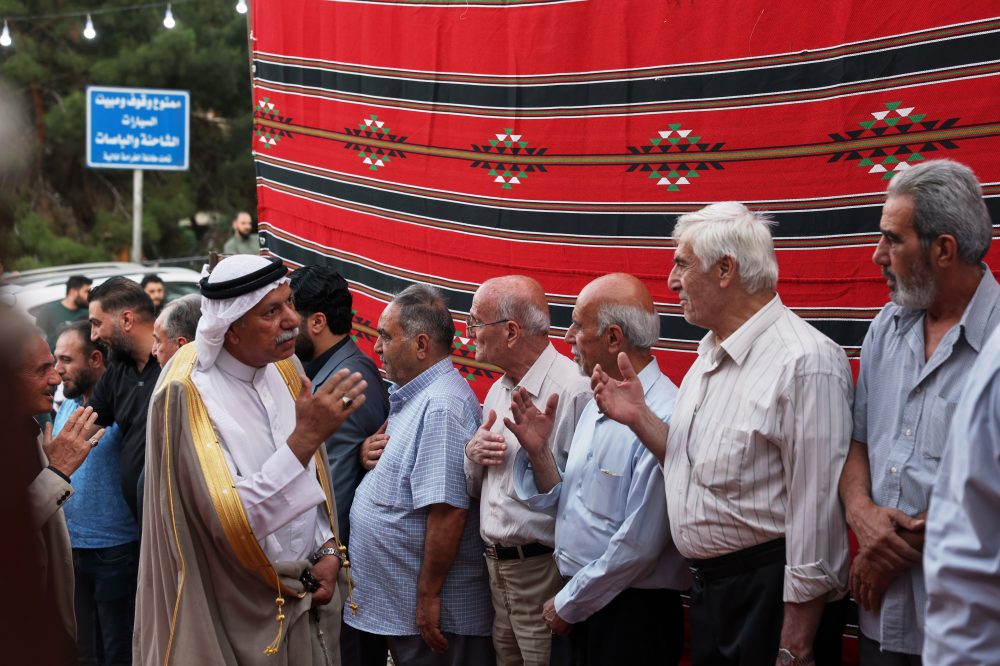
Family members of Rania al-Abbasi revealed Sunday that they had obtained proof she and her family were murdered by government-aligned forces soon after being taken into custody in 2013. They established a large memorial tent in the capital on Tuesday and Wednesday for mourners to offer their condolences.
“We had hope. We’ve been looking for them for 13 years in every way possible,” Rana’s brother Wael al-Abbasi said in an interview with The Associated Press. “Then we got the horrible news that they were killed the same day they were arrested.”
The disappearance of Rana al-Abbasi, who worked as a dentist and faced allegations of supporting opposition forces, gained significant attention throughout Syria. This week’s discoveries have dominated local news coverage, with family photographs circulating widely on social platforms. Many citizens are calling for capital punishment for those responsible.
Mohammad Shukri, Syrian minister of religious affairs, paid a visit to the memorial tent in the Rukneddine neighborhood on Tuesday, stating that the nation’s new leadership is ensuring those responsible face justice. “They must get their punishment,” he said.
Over 100,000 individuals disappeared in territories once under the control of forces supporting former President Bashar Assad, who was recently removed from power, with many believed to have perished under torture administered by the nation’s extensive security apparatus. The actual figure may be even greater, as numerous Syrians were too frightened to file complaints during Assad’s rule. Assad is now living in exile in Russia, and some people are finally stepping forward seeking information about their missing relatives.
Throughout the initial phase of Syria’s uprising, which began with democratic demonstrations before evolving into full-scale civil war, countless people lost their lives, with many fates remaining unknown. The prolonged conflict resulted in the deaths of nearly half a million people.
The truth about the al-Abassi family emerged after authorities captured a former intelligence operative allegedly connected to the murders, according to surviving relatives. Amjad Yousef had been featured in footage that surfaced four years earlier, apparently depicting him and associates executing dozens of individuals during the nation’s civil strife.
The al-Abbasi family was presented with additional video evidence, kept from public view, displaying the children’s bodies after what appeared to be strangulation or fatal beatings.
Wael al-Abbasi explained that his brother-in-law, Abdul-Rahman al-Yassin, was taken into custody on March 9, 2013, while his spouse and children were detained four days afterward.
“We were holding on to hope to find one or two of the kids (alive),” he said.
Yousef, the former intelligence operative, was apprehended by Syria’s new government in April in the central province of Hama, where he had been in hiding. He has remained under interrogation since his capture.
Wael al-Abbasi described viewing footage where Yousef was speaking and directing the camera toward the children in a dim space that appeared to be within a detention facility.
“He was filming the kids and naming each one of them. Those were our kids, there was no room for doubt that it’s them, they were even wearing the same clothes,” he said.
The children ranged in age from 1 1/2 to 14 years old. They were identified as Ahmad, Dema, Najah, Intisar, Alaa and Layan. He noted that several of them showed signs of facial injuries.
The brother expressed his desire for Yousef and other participants in the killings to face trial and execution. “They’re criminals and we have proof of that through videos. We want the whole chain, all the way up to Bashar Assad. We want them all to hanged.”
Following Assad’s removal from power, multiple senior officials from his administration and security forces have been arrested, with some facing legal proceedings.
Al-Abbasi’s cousin, Doa’a al-Abbasi, mentioned that the family had feared the children might have been sold into trafficking, but they now understand what truly happened.
“What is this brutality? What is this hatred? They waited for them to come home from school so he can kill them,” she said, referring to the children. “There are many people like Amjad Yousef and we hope they will all be held accountable.”
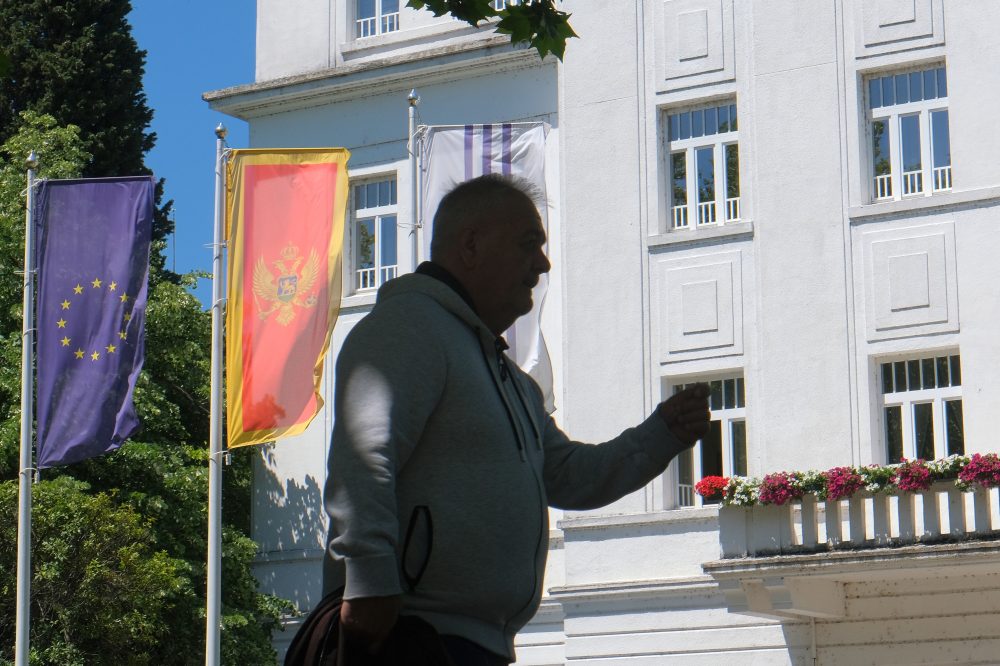
PODGORICA, Montenegro — Montenegrin officials turned away 87 Serbian nationals at the border Wednesday, determining they presented security risks before a scheduled European Union conference with Western Balkan leadership.
The group touched down in Tivat, a coastal community, aboard a chartered Air Serbia aircraft earlier Wednesday. Law enforcement officials said they targeted the flight as part of heightened security protocols before Friday’s conference bringing together senior EU officials and Balkan leadership.
“As part of the activities aimed at preserving a stable security environment, the security services identified persons of security interest,” Montenegro’s police and its National Security Agency said in a statement.
Security officials had “gathered operational data and intelligence that indicate without a doubt that the presence in Montenegro of the individuals in question would pose a risk for internal and national security,” according to the statement.
Police photographs showed the individuals possessed communications gear and signs displaying ‘Serbia wins,’ a campaign message associated with populist Serbian President Aleksandar Vucic and his ruling Serbian Progressive Party. Vucic is scheduled to participate in the Tivat conference, taking place in the Adriatic Sea resort community.
News outlets in Montenegro and Serbia reported the group contained recognized pro-government supporters who have faced allegations of assaulting student protesters during more than a year of demonstrations against Vucic.
Montenegrin law enforcement stated several individuals had arrest histories and had participated in “numerous high-risk public gatherings.” Officials in Montenegro also seized two buses.
Serbia provided no immediate response.
Vucic has recently declined to participate in Montenegro events commemorating the 20th anniversary of the nation’s separation from Serbia and has publicly backed pro-Serbian political groups in Montenegro that opposed the country’s NATO membership and favored stronger Russian relationships.
The Tivat conference will examine membership possibilities for six Western Balkan nations seeking EU entry — Albania, Bosnia-Herzegovina, Serbia, Kosovo, North Macedonia and Montenegro. Each country sits at varying points in the EU admission process.
The EU has lately worked to promote reforms among candidate nations amid concerns about expanding Russian and Chinese influence.
AMSTERDAM — An Amsterdam court delivered an initial win for Greenpeace on Wednesday, declining to dismiss the environmental organization’s lawsuit against a US fossil fuel pipeline company.
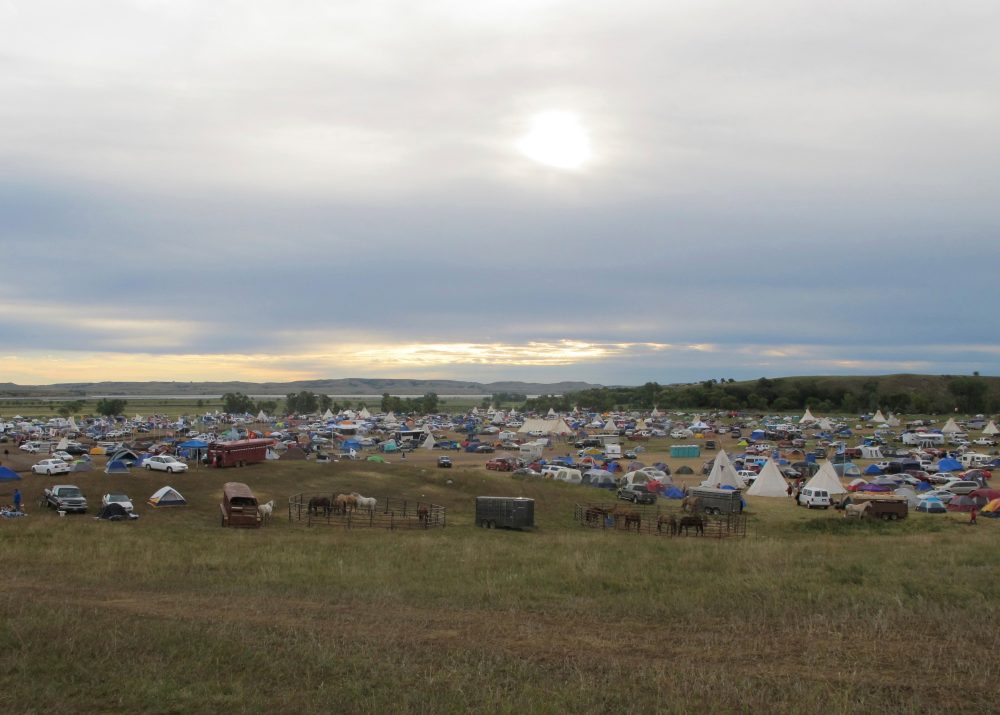
The environmental group, which operates from the Netherlands, filed the legal action last year seeking to challenge a massive $345 million judgment related to demonstrations against the Dakota Access oil pipeline. A North Dakota jury had previously held Greenpeace responsible for substantial damages to the Texas-based Energy Transfer company.
Greenpeace responded by taking their fight to Amsterdam District Court, claiming the North Dakota legal action was improper and harmed the organization’s standing.
“Energy Transfer has been engaging in blatant attempts to silence free speech, erase Indigenous leadership of the Standing Rock movement, and punish solidarity with the ongoing, peaceful resistance to the Dakota Access Pipeline,” stated Greenpeace’s executive director Mads Christensen on Wednesday.
Energy Transfer challenged the Amsterdam court’s authority to handle the matter, but judges determined that since Greenpeace operates its headquarters from the Dutch capital, the case could proceed.
A North Dakota judge announced in February that he would require Greenpeace to pay damages, an amount the environmental organization claims it cannot afford. Greenpeace has indicated it plans to challenge that ruling.
A Colombian attorney running for president has publicly thanked U.S. President Donald Trump for backing his campaign as the country prepares for a crucial runoff election that reflects the region’s political shift toward conservative leadership.
Abelardo de la Espriella, who received the highest number of votes in Colombia’s initial election round, responded Wednesday to Trump’s endorsement of his candidacy. The race is being watched closely as a measure of the area’s movement toward right-leaning politics.
On his Truth Social platform, Trump gave his “complete and total endorsement” to de la Espriella, describing him as an “intelligent, strong and tough leader” who faces off against a “radical leftist Marxist” in the June 21 runoff. Trump also posted on social platform X that he expects improved relations between the two nations if the conservative candidate defeats progressive Iván Cepeda.
“With my head held high and a heart full of patriotic gratitude, I receive your words and your steadfast support,” responded de la Espriella, nicknamed “El Tigre” or “The Tiger,” in a post on X. “Thank you, Mr. President!”
This marks another instance of Trump supporting foreign political candidates, a strategy that has faced pushback from critics who argue the United States should avoid interfering in other nations’ internal political processes. Trump previously endorsed Honduras’ National Party presidential candidate Nasry “Tito” Asfura, who subsequently won his race. He also supported libertarian President Javier Milei in Argentina during legislative contests that were crucial for that leader’s political goals.
The endorsement highlights current friction between Washington and Bogota, as diplomatic ties have deteriorated during Colombian President Gustavo Petro’s tenure. The nations have clashed over immigration issues, Israel’s military operations in Gaza, and drug enforcement approaches, especially concerning the destruction of narcotics vessels in Caribbean waters.
Petro criticized Trump’s involvement in the Colombian race and called on voters to make independent choices to avoid becoming “anyone’s slaves or colony.”
“When a country intervenes in the decisions of another country, freedom dies,” Petro posted on X.
Despite Colombia remaining America’s top export destination and historically being Washington’s key regional partner, diplomatic relations have significantly deteriorated under the present Colombian leadership.
De la Espriella possesses both Colombian and American citizenship, supports Trump, and belongs to the Republican Party. Though lacking previous electoral experience, he captured 43.74% of votes in the first presidential round, while Sen. Cepeda — a Petro ally — received 40.90%, based on initial tallies.
The candidate states his positions match American policies, especially concerning narcotics enforcement. He has pledged to eliminate thousands of hectares of coca cultivation — cocaine’s primary ingredient — and stop drug trafficking destined for the United States.
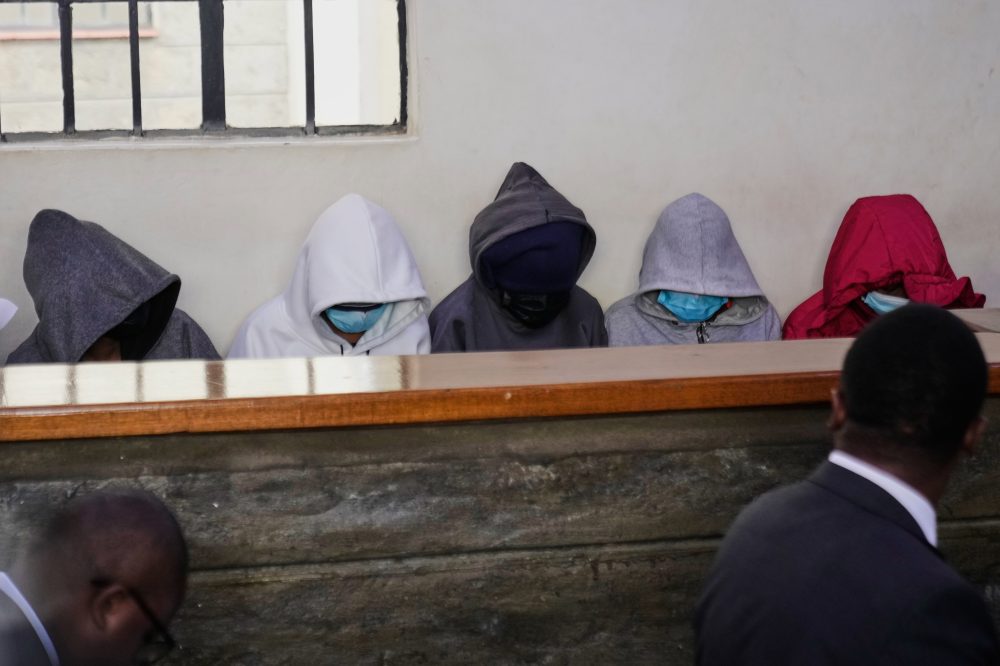
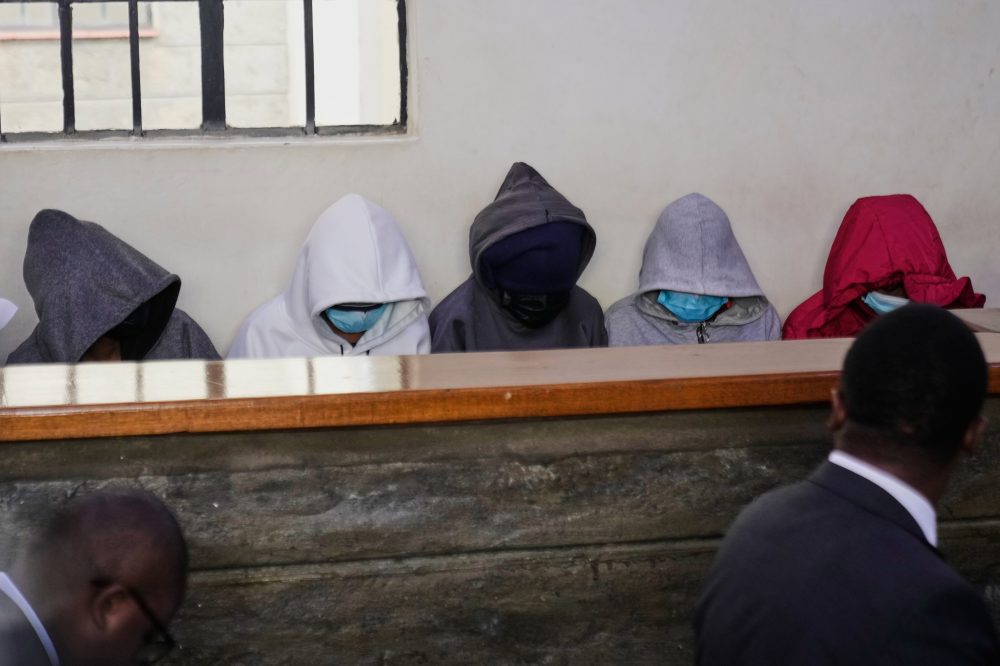
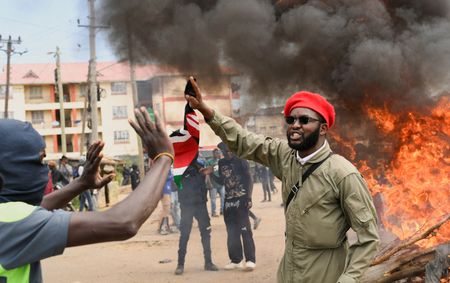
NAIVASHA, Kenya — A court in Kenya has authorized law enforcement to detain nine female students for three weeks while investigators continue examining their alleged involvement in a deadly dormitory fire that claimed 16 young lives at a girls’ boarding school.
The judicial ruling in Naivasha determined that the students will remain at a children’s facility during the 21-day period, allowing authorities to finish their investigation before deciding on formal charges in this case that has captured nationwide attention in the East African country.
The deadly blaze occurred on May 28, sweeping through a dormitory at Utumishi Girls School that accommodated 202 students. Authorities determined that the school matron did not unlock an emergency exit, compelling all residents to flee through just one doorway.
The nine suspects had been held by police for six days before the court hearing. During questioning, investigators learned the fire began when someone ignited a mattress positioned near the dormitory’s exit using matches and paraffin. Officials have not disclosed any motivation behind the alleged attack.
Law enforcement made the arrests following interviews with students and examination of security camera recordings that allegedly capture some students starting the fire within the dormitory building.
Hezron Mogire, representing the nine accused students, argued before the court that investigators lacked “compelling reasons” to justify the 30-day detention period they had requested.
“Nonetheless, the court has taken a different view. We have already briefed our clients, and they are well informed,” he said.
Mbogo Macharia, the attorney representing families of the 16 victims, urged authorities to conduct a complete investigation during the three-week timeframe.
“During that time, it is expected by the courts, by the nation, and also by us as the victims that the investigations will have concluded, we will have gotten the answers that we very much want to hear, and we will have found a way forward in respect to finding justice for the victims,” he said.
DNA testing results to identify some remains that were severely burned are anticipated later Wednesday.
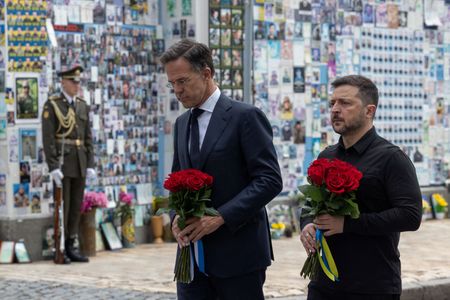
NATO’s top official issued a dire warning Wednesday to young Russians contemplating military service, telling them they face almost certain death if they enlist in the ongoing conflict in Ukraine.
Speaking from Kyiv during a press conference, NATO Secretary General Mark Rutte delivered his message directly to potential Russian recruits and their loved ones, stating “You are being sold a raw deal.”
Rutte painted a grim picture of what awaits Russian soldiers, explaining “Men like you who join the fight — you won’t be trained. Equipment they’ll provide you with is substandard. There is a very high chance you’ll die or be wounded while you’re out there.”
The NATO leader’s warning grew even more stark as he continued: “And odds are, that if you are wounded, you will be left to suffer in the mud and die.”
According to Rutte, Russia is suffering “absolutely staggering” casualties in the conflict, with over 30,000 Russian military personnel dying each month — statistics he has referenced previously.
To put these losses in perspective, the NATO chief explained “This means losing more men in one month than the Soviet Union did in 10 years in the 1980s in Afghanistan.”
Addressing potential recruits directly, Rutte emphasized the personal nature of these statistics: “That’s not abstract. That will probably be you.”
Russia continues to characterize the conflict as a “special military operation” and offers substantial compensation to those who enlist. Moscow has consistently maintained that NATO’s expansion eastward following the Cold War’s end — along with Ukraine’s potential alliance membership — represents a fundamental threat to Russian national security.
A horrific murder case in southern Italy has claimed the lives of four migrant workers, sparking renewed concerns about the exploitation of immigrant laborers in the country’s agricultural sector.
The victims were discovered Monday inside a charred van at a gas station in Amendolara, located in Italy’s southern Calabria region. Security footage captured two individuals igniting the vehicle before fleeing the scene.
Alessandro D’Alessio, the public prosecutor overseeing the case, described the unprecedented brutality to media on Wednesday. “In 30 years of work, I have never seen such cruelty,” he stated.
The lone survivor, Taj Mohammad Alamyar, recounted how the workers were being transported home by their two Pakistani supervisors following a day of strawberry harvesting. According to Alamyar, the supervisors stopped at the gas station but instead of filling up, they poured gasoline on the vehicle and ignited it after trapping the passengers inside. He managed to escape through the trunk.
“We started screaming, but they opened the back door and threw a lighter inside. In an instant, it was hell,” Alamyar told La Repubblica newspaper.
Roberto Occhiuto, who serves as Calabria’s regional president, emphasized that the incident should prompt serious reflection across Italy. “It is an appalling story, which shakes our consciences and raises profound questions about the tragedy of migration, the value of human dignity, and the responsibilities a civilised society must assume toward the most vulnerable,” he commented.
The exploitation of immigrant workers represents a persistent challenge throughout Italy, sometimes resulting in fatal outcomes. Data from the Placido Rizzotto Observatory think tank indicates that approximately 30% of agricultural workers operated without proper documentation in 2023.
In media appearances, the survivor appeared with bandaged hands and right arm. He identified three of the deceased as fellow Afghans, with the fourth victim being Pakistani.
Authorities from Castrovillari have taken two foreign nationals into custody on charges of multiple and aggravated murder. The suspects’ identities have not been released, and Reuters was unable to secure statements from them.
According to Alamyar, tensions arose between the fruit pickers and their supervisors over compensation disputes. The workers had been promised daily wages of €45 ($52) for eight-hour shifts but claimed they had not received any payment since April 20.
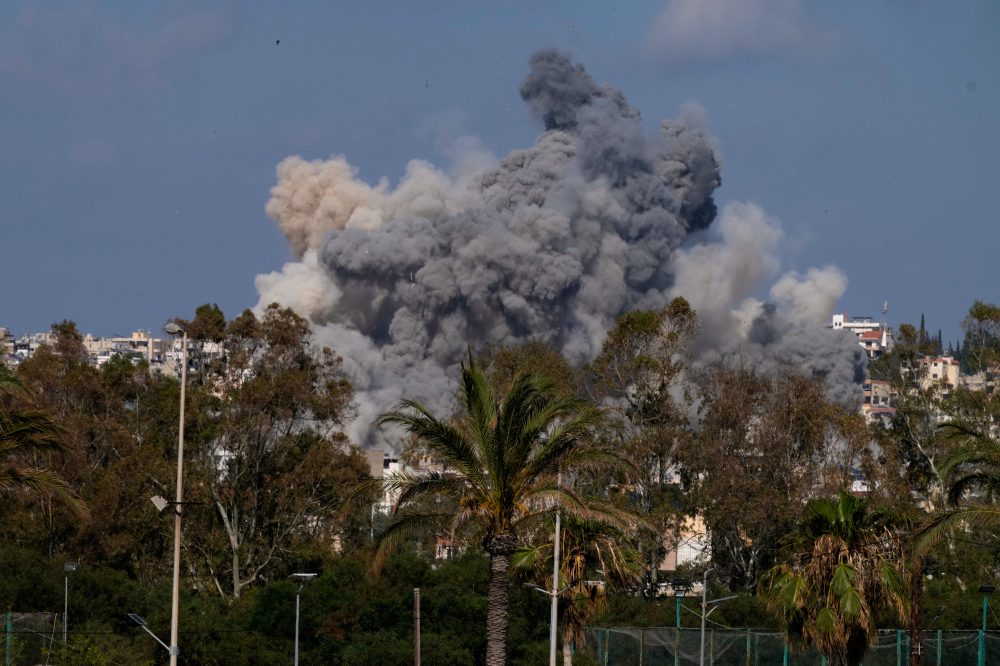
Israeli military forces successfully intercepted rockets launched by Hezbollah into Israeli territory on Wednesday, according to military officials, while Lebanese security sources reported an Israeli strike on a vehicle near Beirut, putting pressure on a U.S.-brokered agreement designed to reduce cross-border attacks.
In a statement, the Iran-backed Hezbollah organization confirmed it had launched multiple rockets targeting an Israeli military position in northern Israel, marking the first announced cross-border missile strike since Monday.
Lebanon has become a central focus of regional tensions this week, as the possibility of increased conflict threatens diplomatic efforts to establish an agreement between Iran and the United States. Tehran maintains that Israel must cease attacks on Lebanon as part of any deal.
Fighting has persisted in southern Lebanon following Monday’s announcement of the U.S.-brokered agreement, when President Donald Trump revealed he had requested Israeli Prime Minister Benjamin Netanyahu avoid conducting a major operation against Beirut, while Hezbollah, through intermediaries, committed to avoiding attacks on Israel.
On Tuesday, Israeli Defense Minister Israel Katz warned that Israel would target Hezbollah-controlled southern areas of Beirut if northern Israel came under attack.
Israeli military officials confirmed they had intercepted two rockets that entered Israeli airspace from Lebanon.
“Only the successful interception by the IDF (Israel Defense Forces) prevented what could have been a deadly attack on civilians, including children,” stated Michael Leiter, Israel’s ambassador to Washington, in a social media post.
Leiter explained that Israel had agreed to avoid striking Beirut under the condition that Hezbollah cease its attacks on Israel, calling Wednesday’s rocket fire a “blatant violation of that understanding.”
Earlier in the day, Israeli forces reported intercepting a hostile aircraft entering Israeli territory, which a military spokesperson indicated was likely a drone launched by Hezbollah.
Lebanese security sources reported Israeli drone attacks on at least 10 vehicles throughout Wednesday, including one strike on a car traveling on the main coastal highway in the Khalde area, located several kilometers south of Beirut, which injured two individuals.
This represented the nearest attack to Beirut since Trump requested Israel refrain from targeting the Lebanese capital.
A separate Israeli strike on a road near the coastal city of Tyre resulted in six deaths, according to the Lebanese health ministry, which identified the victims as four Syrians and two Palestinians.
The health ministry also reported that an Israeli strike on an ambulance killed two medical workers in the town of Chehour.
The Lebanese army announced that an Israeli airstrike killed one of its soldiers while he was traveling on a road in the southern region.
The Israeli military did not immediately respond to Reuters’ inquiries regarding these strikes.
Trump’s diplomatic initiatives on Monday were intended to prevent further escalation of the conflict that has continued since March 2, when Hezbollah began attacking in support of Iran, which was facing U.S.-Israeli military action.
Iran has insisted on a ceasefire in Lebanon as a component of any agreement with the U.S. to end the broader conflict, and has indicated in recent days that it might intervene directly to support Hezbollah if Israel maintains or increases its attacks in Lebanon.
On Monday, Iran’s military warned residents of northern Israel to evacuate if Israel attacked Beirut.
Israel conducted heavy bombardments of Beirut’s southern suburbs, called Dahiyeh, early in the conflict but has executed only two strikes there since Trump announced a Lebanon ceasefire in April.
Hezbollah reported conducting 13 operations against Israeli forces on Tuesday in southern Lebanon, where Israeli troops maintain a self-declared security zone.
Israeli military officials issued fresh evacuation warnings to residents of six villages and towns in southern Lebanon, instructing them to leave their homes due to planned operations against Hezbollah.
More than 3,500 people have died in Lebanon from Israeli attacks since March 2, including 711 women, children and medical personnel, according to Lebanon’s health ministry. The ministry’s statistics do not distinguish how many fighters are included in the death toll.
Israel reports that 26 of its soldiers and four civilians have been killed in Hezbollah attacks since March.
Representatives from the Lebanese and Israeli governments were scheduled to meet in Washington on Wednesday for a second straight day of discussions, marking their fourth direct meeting arranged by the U.S. since the conflict began.
The Lebanese government is participating despite opposition from Hezbollah.
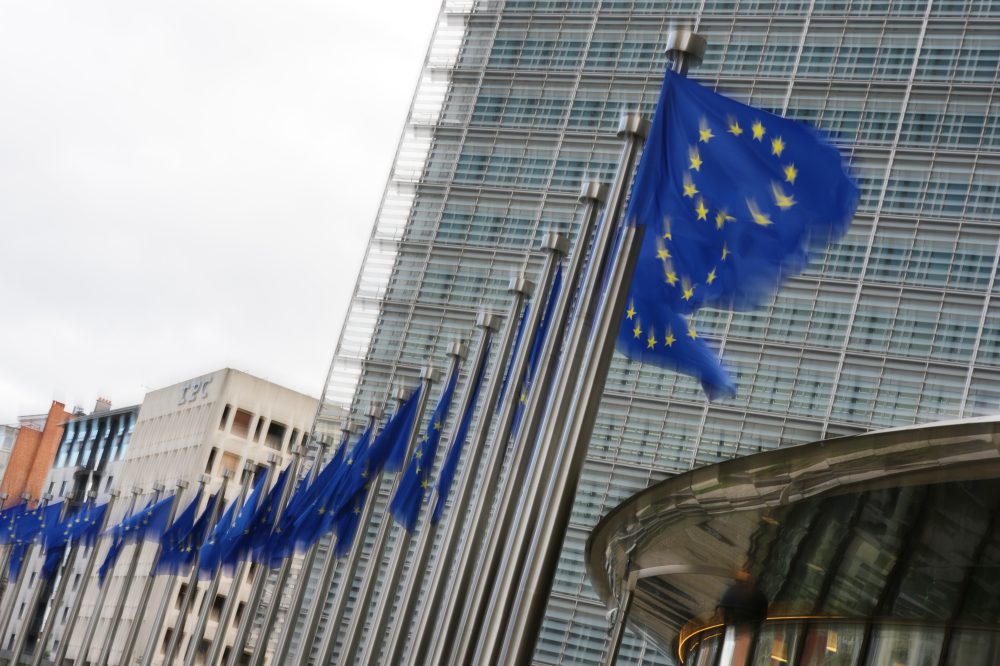
BRUSSELS (AP) — Concerned about excessive dependence on American technology companies for artificial intelligence and cloud services, along with Asian nations for semiconductor production, European Union officials are taking action to reduce these dependencies.
On Wednesday, the 27-member union announced a comprehensive “tech sovereignty” initiative designed to cultivate domestic European alternatives to major technology corporations and their hardware.
These initiatives from Brussels have become increasingly urgent as officials express concern about reliance on foreign technology providers, warning such dependencies could be used as weapons against European interests. These concerns became more concrete when the Trump administration imposed sanctions on the International Criminal Court’s chief prosecutor, resulting in Microsoft terminating his email access and raising alarm about potential “kill switches” embedded in American technology services.
“Europe wants to be in the position to make its own choices, avoiding risky dependencies on single dominant suppliers, one company or one third country,” European Commission Executive Vice-President Henna Virkkunen, who oversees tech sovereignty, told reporters in Brussels.
“Because we live in a world where geopolitics and technology go hand in hand. Those who champion technological innovation will shape the future, and we must ensure that Europe plays a leading role in this.”
Central to this initiative is an extension of the EU’s 2023 Chips Act, designed to further enhance domestic semiconductor manufacturing by reducing bureaucratic barriers for chip manufacturing facilities and developing a comprehensive European semiconductor industry.
Europe’s susceptibility to the global semiconductor supply chain concentrated in East Asia became apparent last year during a corporate dispute at Nexperia, a Chinese-owned chipmaker based in the Netherlands.
The initiative also emphasizes supporting domestic cloud computing and artificial intelligence development, including plans to increase Europe’s data center capacity threefold within the next five to seven years. The EU aims to expand these facilities to meet growing demands from the artificial intelligence surge, which is increasing the need for cloud computing infrastructure.
The executive branch’s proposals must still undergo review and approval by the European Parliament and the Council of the European Union.
LONDON, June 3 – The United Kingdom’s foreign ministry announced Wednesday that it has called in Russia’s ambassador following a Russian drone attack that struck a residential building in Romania, a NATO member nation, last week.
Foreign minister Yvette Cooper has denounced the incident, which took place during Russia’s assault on Ukraine and left two people wounded in the Romanian city of Galati. Cooper stated that Britain remains united with its allies in protecting NATO territory.
“Russia’s later brutal bombardment of civilians in Ukraine comes afters its violation of NATO airspace last week, hitting a residential building in Romania,” Britain’s foreign ministry said in a statement.
“Injuring innocent civilians on NATO territory is unacceptable and a stark reminder of the threat that Ukrainian civilians are having to endure on a daily basis.”
A major international economic organization released findings Wednesday showing that extended interruptions to Middle East energy flows caused by the Iran conflict could devastate economies worldwide, triggering recessions in multiple nations while fueling rising prices and job losses.
Asian nations relying heavily on oil, fuel, and natural gas from the Persian Gulf would face the most severe impacts, according to the Organization for Economic Cooperation and Development study. Energy shipments have been drastically reduced due to the Strait of Hormuz closure amid threats of Iranian attacks. Developing nations where citizens dedicate larger portions of their earnings to energy and food costs would also experience major hardships, the OECD reported.
However, the effects of dramatically increased energy costs and inflation would reach every corner of the globe. Worldwide economic expansion would fall to depths typically seen only during major crises such as the COVID-19 pandemic and the financial collapse of the late 2000s. The OECD’s extended disruption projection shows global growth declining from 3.4% in the previous year to 2.1% this year and 1.8% in 2027, potentially driving various economies into recession territory or close to it.
An alternative OECD projection examining a shorter-term disruption, where Gulf energy production and transportation resume pre-conflict levels by mid-year, would see growth decrease to 2.8% this year before recovering to 3.1% the following year.
“The global economy entered 2026 with robust momentum, but the outlook has weakened significantly since the start of the conflict in the Middle East, with effects likely to be felt for some time,” OECD Secretary-General Mathias Cormann said. “The longer the disruptions last, the larger the economic and social costs become.”
Cormann cautioned that government expenditures designed to offset energy expenses should target those with the greatest need and remain temporary, preventing excessive government borrowing while maintaining incentives for energy conservation.
Although violence has erupted repeatedly, an announced ceasefire between the US and Iran technically remains active. However, continued shipping dangers mean that Strait of Hormuz traffic has dropped to minimal levels, declining over 90% from pre-war volumes. This has interrupted approximately one-fifth of global crude oil and fuel product supplies, along with natural gas shipments.
The OECD findings follow a UN analysis cautioning that elevated energy costs will affect nearly a billion people in developing countries and small island nations dependent on fuel imports, creating difficult choices between paying energy expenses and funding crucial public services. Over 30% of residents in these regions already survive below the extreme poverty threshold, defined as living on $3 or less daily.
The OECD operates as an international governmental organization and policy forum comprising 38 democratic nations with market-driven economies, based in Paris.
Romania’s foreign minister announced Wednesday that multiple NATO allies are working to strengthen air defense systems along the alliance’s eastern border following a drone strike on Romanian territory last week.
During a visit to Paris, Oana Toiu explained that the incident involving a Russian-identified drone that struck a residential building would speed up ongoing NATO efforts to enhance surveillance and response capabilities. The focus includes improving radars, fighter aircraft, and anti-drone technology.
“Our top priority is to increase capabilities,” Toiu stated, noting that Romania had already provided NATO with a comprehensive list of defense needs prior to the drone incident.
NATO allies are now evaluating ways to supplement Romania’s current air monitoring and defense infrastructure, particularly along its 650-kilometer border with Ukraine. The proposed reinforcements may include additional military assets from partner nations, such as aircraft participating in NATO’s air policing operations, along with enhanced radar systems designed to detect low-altitude drones.
France, which commands NATO’s battlegroup in Romania with approximately 1,400 personnel, is in discussions about providing additional radar and air monitoring support. Other nations including Britain, Italy and Spain have indicated their readiness to increase their contributions to air defense missions, according to Toiu.
The United States may contribute specialized radar and surveillance technology rather than deploying large numbers of troops.
“There is a common understanding that we need to strengthen the eastern flank, not just in Romania. This is a conversation we’re having with the Baltics and all countries on the eastern flank,” Toiu explained.
Romania described these measures as temporary solutions while the country pursues comprehensive defense modernization. Bucharest has designated approximately 2 billion euros for upgrading air defense and monitoring capabilities over the coming years, but will “need to rely on allied support to cover the gaps” in the interim, Toiu said.
The Russian-manufactured drone breached Romanian airspace last week and crashed into a structure in Galati, a city near the Ukrainian border, injuring two civilians.
While Toiu said Romania has no evidence the incident was deliberate, she emphasized that Russia bears full responsibility for the violation.
Romania is also developing private sector anti-drone initiatives and collaborating with Ukraine on a 200 million euro project to construct a facility that will manufacture systems to counter low-cost aerial threats commonly used in the ongoing conflict.
Maritime industry executives are warning that even if the U.S. and Iran reach an agreement to end hostilities and reopen the Strait of Hormuz, vessels currently trapped in the Gulf cannot safely depart without concrete safety guarantees.
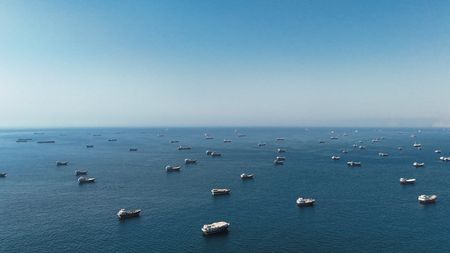
The ongoing three-month conflict has left hundreds of ships and approximately 20,000 seafarers stranded in the region, with the Strait of Hormuz remaining mostly inaccessible. Recent fighting has put additional pressure on an already fragile ceasefire agreement.
Rene Kofod-Olsen, group CEO of V.Group, a major international ship management company overseeing roughly 800 vessels, revealed that his company has 13 ships currently stuck in the Gulf, with half being tankers. Speaking at the Posidonia shipping conference in Athens, he described the challenging situation facing the industry.
“You are in a situation where you supposedly have a ceasefire,” Kofod-Olsen explained during the maritime event. “But you still have kinetic activity,” he added, referencing ongoing drone and missile attacks.
According to Kofod-Olsen, restoring shipping traffic to normal levels—which previously saw an average of 125 vessels transiting through Hormuz each day—will require firm guarantees of safe passage backed by international involvement.
“I don’t believe that global shipping by definition will go through in a material way the Strait of Hormuz before those things are actually guaranteed,” Kofod-Olsen stated.
Industry leaders attending the Athens conference reported that while supply deliveries to crews in the Gulf continue and crew rotations within the region remain possible, the ongoing conflict is creating mounting challenges.
Alex Gregg-Smith, president for marine and offshore operations at Bureau Veritas, a leading ship safety certification company, explained the broader impact on the industry. “Ship owners are having to operate in irregular frameworks, which can be difficult or challenging for the industry, difficult and challenging for insurers as well,” Gregg-Smith told reporters.
“It’s putting pressure on the owners’ operations,” he added.
Dwain Hutchinson, managing director of the Bahamas maritime registry, reported that 14 vessels flying Bahamas flags, carrying more than 900 seafarers, remain in the Gulf. This count includes smaller offshore vessels that typically operate in the area under normal circumstances.
While prioritizing crew safety and welfare, the flag registry has not imposed restrictions on ships entering the region. “We think that’s an owner’s decision and we hope that they will review the risk and take a balanced decision for operation in the region,” Hutchinson explained.
Evangelos Marinakis, founder and chairman of Capital Maritime & Trading Corp, a major global tanker operator, shared his company’s experience during the TradeWinds ship owners’ forum in Athens. His organization “were lucky enough” to avoid having any vessels in the Gulf when the conflict began on February 28.
“In case something happens, a casualty, we wouldn’t be able to take such a risk,” Marinakis told the forum attendees.
HONG KONG — Police in Hong Kong detained a performance artist Wednesday as he attempted to create a memorial display for those killed in Beijing’s 1989 Tiananmen Square crackdown, marking another instance of the territory’s diminishing freedom of expression.
Sanmu Chen was stopped while attempting to attach a thin red thread to a street sign in Causeway Bay, a bustling commercial area near a park that previously hosted annual candlelight ceremonies on June 4 to honor those who died when the government ended student demonstrations in Beijing in 1989.
For many years, Hong Kong remained the sole location within China where large public remembrance events for the crackdown could take place. However, these once-enormous yearly gatherings were prohibited in 2020 amid the COVID-19 pandemic, and public demonstrations marking the Tiananmen Square deaths have grown increasingly restricted in the territory recently.
Chen revealed his thread measured 6.4 meters in length, seemingly referencing the June 4 anniversary date.
Officers detained and searched Chen’s belongings before releasing him. When a journalist questioned him about his red thread demonstration following his release, Chen explained it was intended to honor the deceased.
“It’s abnormal when people monitor you when you are saying or doing something,” he told reporters.
Chen has faced detention at least twice on June 3 in previous years. In 2024, authorities briefly held him after he appeared to trace the Chinese characters for “eight nine six four” — numbers representing the crackdown date — in the air with his hand.
Law enforcement also detained Chen on the same date in 2023 in the same vicinity, where he called out “Hong Kongers, do not be afraid. Don’t forget tomorrow is June 4.”
As evening approached, another artist, Chan Mei-tung, positioned herself outside a nearby retail store displaying a balloon shaped like a question mark. Officers swiftly intervened and accompanied her to the subway station.
Under the leadership of then-leader Deng Xiaoping, Chinese forces were deployed to Beijing’s Tiananmen Square to suppress weeks of student demonstrations during the night of June 3-4, 1989. Military personnel used live ammunition, resulting in hundreds and potentially thousands of deaths, including several dozen soldiers.
Yearly memorial services in Hong Kong’s Victoria Park previously drew tens of thousands of participants annually until authorities banned the gathering in 2020 during the initial year of the coronavirus outbreak.
This occurred during the same year Beijing implemented a national security law in the territory following extensive anti-government demonstrations in 2019. Since that time, officials have progressively suppressed opposition voices. Numerous prominent activists faced arrest while several outspoken media organizations ceased operations. Dozens of civil society organizations dissolved, including the group responsible for organizing the vigils.
Three former vigil coordinators faced charges in 2021 for inciting subversion under the national security law. Two of the former organizers proceeded to trial and await a verdict, potentially in July. Upon conviction, they could face up to 10 years imprisonment. Their co-defendant pleaded guilty, which typically leads to reduced sentencing.
Both Hong Kong and Beijing officials stated the security law is essential for the city’s stability. Hong Kong authorities emphasized the law explicitly requires that human rights be respected and protected while maintaining national security.
Following the end of COVID-19 restrictions, pro-China organizations established a carnival at the former vigil location. Some individuals who attempted to honor the event near the site on June 4, the crackdown’s anniversary date, faced detention.
The five-day carnival commenced Wednesday. The subdued commemorations in Hong Kong highlighted the erosion of civil freedoms promised by Beijing when the former British territory returned to Chinese control in 1997.
While public remembrance diminished in Hong Kong, international communities have assumed responsibility for preserving these memories through vigils and demonstrations in cities including London and Canada.
BERLIN (AP) — Officials in Germany announced Wednesday that they discovered more than 8 metric tons of cocaine hidden inside a shipping container labeled as carrying cocoa beans, leading to the arrest of two suspects in Spain.
Customs officials in Germany valued the confiscated cocaine at approximately 500 million euros ($582 million) on the street market after the seizure at the North Sea port of Wilhelmshaven.
The narcotics were confiscated on Feb. 9, while the suspects were taken into custody in El Ejido, located in Spain’s Almería province, on May 14.
According to investigators’ statement, the container originated from West Africa and was headed to Spain. Rather than finding cocoa beans, authorities discovered more than 400 packages covered in black foil, with each package holding approximately 20 compressed cocaine blocks.
German authorities destroyed the illegal cargo before allowing the container to continue to Barcelona. Law enforcement tracked down two individuals believed to be the operation’s organizers and apprehended them when the container was being transferred.
According to the statement, one suspect managed an import business and had previously been connected to another cocaine smuggling case by Spanish customs officials. Both individuals may face imprisonment in Spain if prosecuted and found guilty.
DHAKA, Bangladesh — A unique albino buffalo weighing 1,500 pounds and sporting a distinctive tuft of golden hair has become an unlikely celebrity at Bangladesh’s national zoo after being named for its resemblance to the U.S. president.
The unusual pale-colored animal first gained attention when a farmer observed similarities between its blonde hair and the distinctive appearance of Donald Trump. After footage of the horned mammal spread rapidly across social media platforms, visitors began traveling from throughout Bangladesh to the farm near Dhaka to witness the spectacle firsthand.
Originally destined for slaughter during the Muslim festival of sacrifice, the buffalo was relocated to the capital city’s zoo by government order due to security considerations. Now, despite scorching temperatures, large groups of spectators are making the journey to observe the animal.
On Tuesday, onlookers crowded against the barriers surrounding the buffalo’s habitat, capturing video with mobile devices while parents lifted young children onto their shoulders for improved visibility.
Zoo staff provided special care for the creature, styling its hair to one side and spraying it with water for cooling while fans provided additional relief from the heat.
“There is a resemblance to Donald Trump in its eyes, hairstyle, and skin color,” said Mohammed Nasim, a student in Dhaka. “And just as Donald Trump has a distinctive personality and lifestyle, this buffalo, after going viral, is now living a similar kind of life, enjoying a lot of attention and special treatment.”
According to local news outlets, the display originally featured signage reading “Donald Trump,” which has subsequently been taken down. The zoo curator lost his position on Saturday, although no official explanation was provided for the termination.
The naming choice clearly upset some observers.
“Giving a farm animal the name of one of the world’s most influential leaders was certainly the wrong thing to do,” said Dhaka resident Mohammad Joynal Adedin, who visited the zoo to see the buffalo anyway. “It seems disrespectful. I think the farmer who did this made a poor decision.”
The buffalo had been purchased in preparation for Eid al-Adha, known as the “Feast of Sacrifice.” When Home Minister Salahuddin Ahmed directed police to take custody of the animal, officials provided a refund to the purchaser.
“Since before Eid, I had been seeing posts on Facebook saying that ‘Donald Trump’ would be sacrificed. Later, I heard that instead of being sacrificed, it had been placed in a zoo,” said Mohammad Habibur Rahman, a visitor to the zoo from the southwestern Bangladeshi city of Jashore.
“So, I thought I would come to the zoo and see ‘Donald Trump’ for myself,” he said.
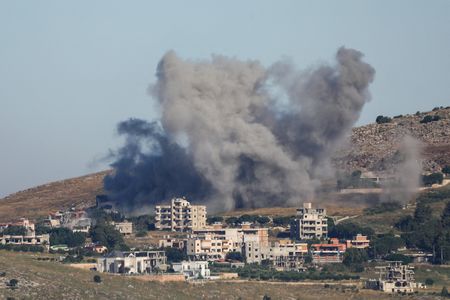
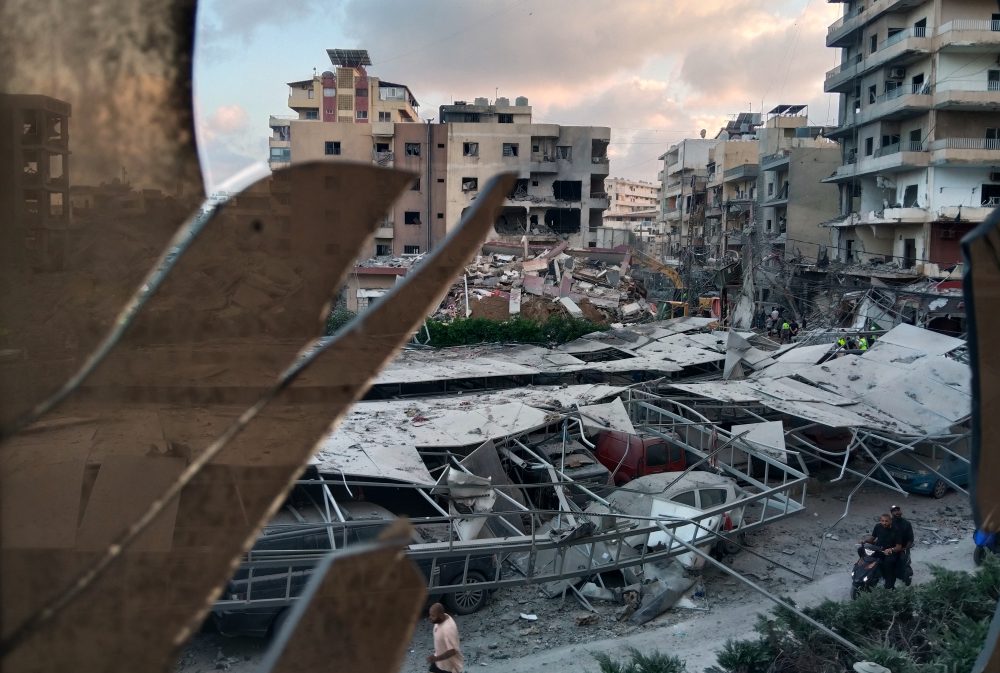
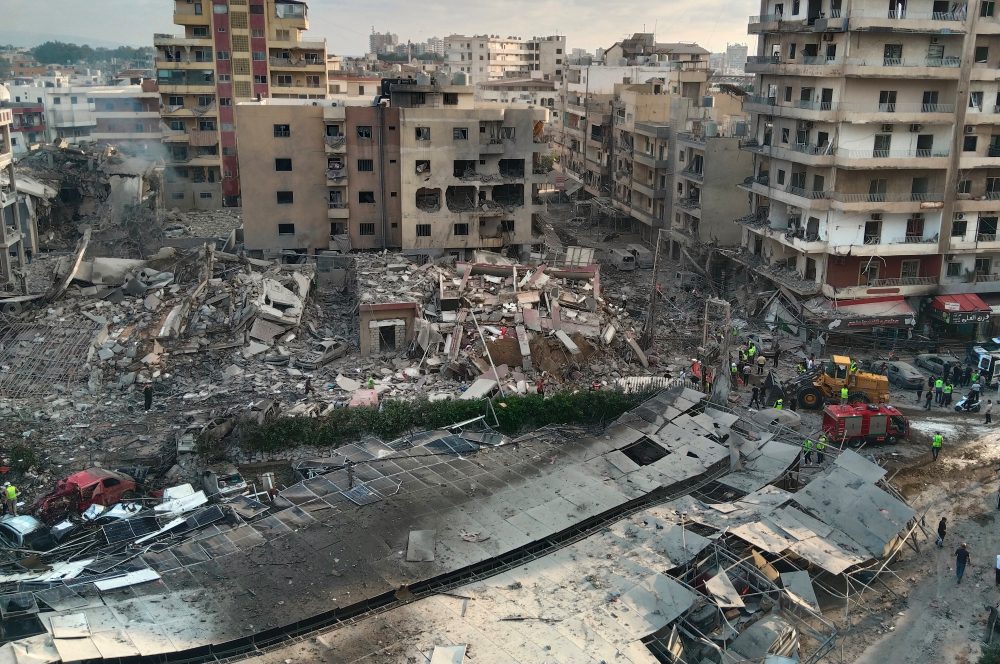
BEIRUT (AP) — Israeli forces conducted a drone attack Wednesday on a vehicle traveling along a major roadway south of Beirut, occurring just hours before the continuation of ceasefire negotiations between Lebanon and Israel in Washington.
The attack in Khaldeh occurred without advance notice, and officials could not immediately confirm whether the targeted individual was killed. Israeli forces typically state they are targeting Hezbollah militant group members in such drone operations.
Lebanon and Israel established a U.S.-mediated deal on Monday in which Israeli forces agreed to halt strikes on Beirut’s southern neighborhoods while Hezbollah committed to stopping attacks on northern Israeli territory. This arrangement came just hours after Israeli officials announced plans to conduct strikes throughout the densely populated urban areas near Lebanon’s capital, which would have represented the heaviest bombardment since a temporary ceasefire took effect on April 17.
The State Department reported that meaningful progress occurred during Tuesday’s initial round of discussions. Lebanese officials are seeking to expand the ceasefire agreement to encompass the entire nation. Israeli leadership demands the immediate disarmament of Hezbollah before ending military operations in Lebanon and removing forces from numerous villages and towns.
Shortly following the Khaldeh attack, Israeli military officials announced they had intercepted what they described as a hostile aircraft approaching from southern Lebanon, though they did not immediately attribute it to Hezbollah. Hezbollah has not taken responsibility for any cross-border attacks since the agreement was reached.
Israeli military operations continued across southern Lebanon, particularly in and surrounding the damaged cities of Tyre and Nabatiyeh. During overnight strikes, two attacks near Tyre resulted in the deaths of four Syrians and two Palestinians.
Israeli forces issued overnight warnings to Christian communities in the coastal city of Tyre that Hezbollah operatives were present among them. Numerous Lebanese Shiite Muslims had relocated to these areas recently because they had been protected from aerial attacks along the Mediterranean coastline.
Following the warning, Lebanese military forces moved into Tyre’s Christian district to prevent potential Israeli attacks and demonstrate that Hezbollah maintains no armed presence in the region.
Israeli ground forces began an invasion of southern Lebanon following the outbreak of the current conflict on March 2, when Iran-supported Hezbollah launched rockets toward northern Israeli territory in solidarity with Iran. Israeli military units have advanced further into Lebanese territory over recent days, while Hezbollah continues to claim responsibility for rocket and drone strikes.
The current fighting between Israeli forces and Hezbollah has resulted in 3,468 deaths in Lebanon and forced 1.2 million people from their homes. According to the office of Israeli Prime Minister Benjamin Netanyahu, at least 27 Israeli soldiers and one defense contractor have died in or near southern Lebanon. Two civilians have also been killed in northern Israel.
Among the 27 casualties was a soldier in southern Lebanon, whose death was reported late Monday by Israeli military officials. They noted that seven additional soldiers were wounded in the same incident, with three suffering severe injuries.
Hezbollah’s deployment of difficult-to-detect fiber-optic drones has proven lethal against Israeli military forces, who are finding it challenging to counter these weapons.
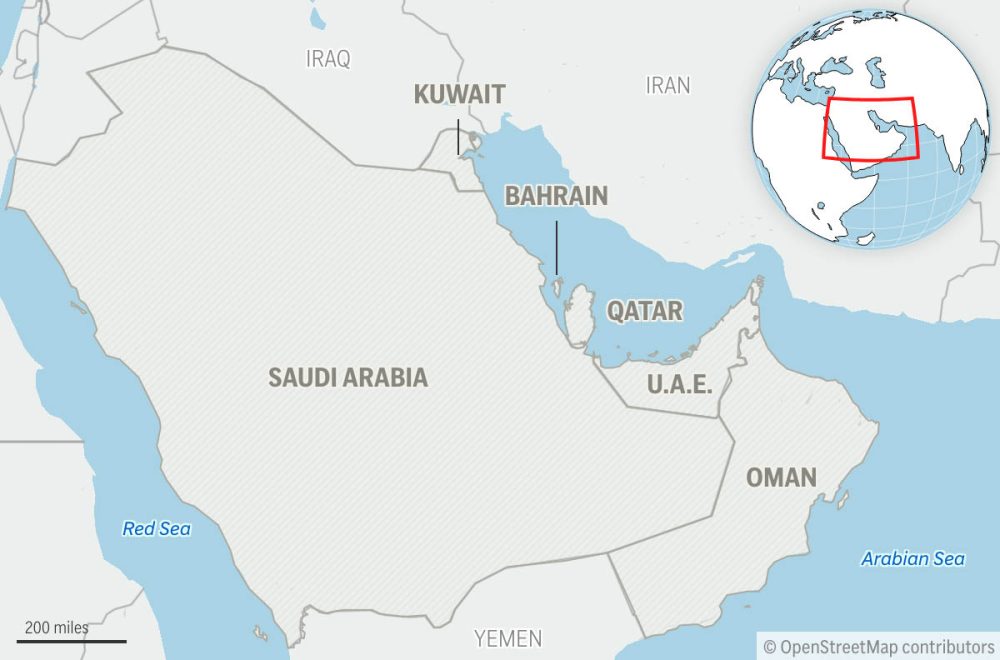
Kuwait temporarily closed its primary airport Wednesday following Iranian drone strikes that severely damaged the facility and left one person dead — marking the most recent escalation in ongoing military exchanges between Tehran and Washington that continue to challenge a delicate ceasefire agreement.
The attacks occurred as semi-official Iranian news outlets reported that the nation had ceased communication with mediators regarding ceasefire extension talks in the conflict involving the U.S. and Israel. A regional official indicated Tehran demanded enforcement of the Lebanon truce before resuming negotiations. U.S. President Donald Trump disputed claims that talks had stopped.
These negotiations have continued for weeks, while repeated military exchanges in the Gulf area and Israel’s expanding Lebanese conflict continue to complicate diplomatic efforts.
Meanwhile, Iran continues controlling the Strait of Hormuz — a vital pathway for global oil and natural gas transportation — while the U.S. maintains its blockade of Iranian ports, keeping worldwide fuel costs elevated and extending the conflict’s impact beyond the immediate region.
Defense Ministry spokesperson Brig. Gen. Saud Abdulaziz Al-Otaibi reported that “a number of hostile drones” struck Kuwait International Airport’s passenger terminal, causing extensive damage and wounding “a number of individuals.”
Kuwait’s Foreign Ministry later confirmed at least one fatality.
Government media announced Kuwait Airways halted operations. Aviation officials reported the airport partially resumed service later Wednesday, with Kuwait Airways flights restarting from an undamaged terminal. Other airline operations remained suspended.
The facility had only resumed operations Monday after shuttering early in the conflict.
The U.S. military reported Iran launched two missiles toward Kuwait that broke apart during flight, and confirmed it had “downed multiple drones” targeting American personnel in the nation.
Military officials also stated U.S. and Bahraini forces stopped missiles directed at the Gulf kingdom, which houses the U.S Navy’s 5th fleet. Bahrain’s Defense Ministry confirmed its forces intercepted and eliminated three missiles and several drones launched by Iran.
The U.S. military announced it conducted strikes against an Iranian military ground control facility on Qeshm Island in the Strait of Hormuz, responding to the attacks on Bahrain and Kuwait.
Iran’s paramilitary Revolutionary Guard confirmed targeting the 5th Fleet headquarters and U.S. military installations in another nation, though it didn’t specifically mention Kuwait. The organization stated these strikes retaliated for attacks on Qeshm Island.
Iran’s Foreign Ministry denounced the U.S. strikes on Qeshm Island, reporting a telecommunications tower was hit, along with other previous attacks. Officials labeled them “acts of aggression” that violated the ceasefire terms.
A senior Emirati diplomat urged Wednesday for “a firm, unified, and cohesive Gulf position” against Iran following the attacks.
“This aggression does not target a specific state, but rather all of us,” Anwar Gargash posted on the X platform.
Iran’s Fars and Tasnim news agencies, both considered close to the Guard, stated that Iran’s negotiators ceased communicating with ceasefire mediators as tensions escalated in Israel’s separate but connected battle against the Iranian-supported Hezbollah militant organization in Lebanon.
A regional official participating in mediation efforts, speaking anonymously to discuss the negotiations, informed The Associated Press that Iran had not communicated Tuesday after stating that Lebanon ceasefire enforcement was necessary for continued negotiations.
Trump described reports of halted talks as “false and erroneous.”
“The conversations between us have been going on continuously, including four days ago, three days ago, two days ago, one day ago and today,” Trump stated in a social media message. “Where they lead, one never knows, but as I told Iran, ‘It’s time, one way or another, for you to make a Deal.”
Israeli forces have advanced deeper into Lebanon than at any point in over twenty-five years — despite a nominal ceasefire existing between Israel and Hezbollah.
Lebanon has become a critical obstacle in Trump’s efforts to secure a ceasefire agreement with Iran.
Tehran demands that any broader potential truce in the conflict must also end the Lebanese fighting. Israeli Prime Minister Benjamin Netanyahu prefers keeping the issues separate and faces significant domestic pressure to attack Hezbollah while preparing for upcoming fall elections.
The conflict has revealed tensions between close allies Israel and the U.S., with the U.S. advocating for restraint while Israel seeks to increase military pressure on Hezbollah.
A person knowledgeable about the situation described a “tense” conversation between Netanyahu and Trump earlier this week. The individual spoke anonymously because they lacked authorization to speak publicly. The person provided no additional details about the call.
Conservative candidate Keiko Fujimori is making her fourth attempt to win Peru’s presidency in a runoff election taking place this Sunday, banking on her law-and-order platform during a period of increasing violence to overcome a divisive family political history.
The 51-year-old politician earned the largest portion of votes during April’s initial election round with 17.17% of the vote. Her opponent will be leftist congressman Roberto Sanchez, who barely claimed the second position with 12.03% support.
This marks Fujimori’s fourth presidential campaign. During her previous attempt in 2021, she lost to leftist Pedro Castillo, who was subsequently ousted from office following his attempt to disband Congress. Castillo has given his backing to her current opponent while imprisoned.
The weight of her family name presents a significant obstacle for Fujimori. Her deceased father, Alberto Fujimori, led Peru from 1990 through 2000. While supporters praised him for establishing national stability, critics condemned his authoritarian approach. He served 16 years behind bars for human rights violations during his time in office.
Following years of separating herself from her father’s political record, Fujimori has begun embracing it more openly, now accepting his reputation as an authoritative leader. She presents herself as the candidate most capable of restoring peace and order while Peru faces increasing murder and extortion rates, which rank among voters’ primary worries.
“We will work with financial institutions … to identify, track and block money from extortion,” she stated during a runoff debate.
However, her political party seeks to highlight differences between Fujimori and her father. Luis Galarreta, her vice-presidential running mate, explained that the elder Fujimori deeply distrusted political parties, frequently forming new organizations for each campaign instead of establishing permanent institutions.
“Keiko is different,” Galarreta told Reuters during an interview. “She believes in having a strong, formal party organization — building institutional political structures.”
Keiko Fujimori endured years of investigation regarding campaign funding accusations, which were dismissed last year. She was detained awaiting trial on two occasions between 2018 and 2020, spending approximately 18 months incarcerated.
Galarreta explained that this experience transformed her perspective, making her more thoughtful, mature and concentrated on family matters.
“We talk a lot about a ‘new Keiko,’” Galarreta explained. “She is more open, more herself, as a person, as a friend.”
Galarreta characterized Fujimori as “chancona” — a Peruvian word meaning studious and diligent — explaining he has witnessed her assisting her two daughters with homework and preparing their meals, even during an intensive campaign period.
Her imprisonment also created surprising personal changes. “She really loves cats now,” Galarreta noted. Fujimori developed an affection for them during her jail time because they helped control rodents.
“She didn’t like cats before, and now she has four.”
Fujimori began her public career as a young person, functioning as unofficial first lady starting at age 19 throughout her father’s administration after her parents divorced.
She subsequently pursued business administration studies in the United States and built her own political foundation. In 2006, she won election to Congress with the largest vote count ever achieved by a Peruvian legislator. She suffered defeats in three presidential runoffs by small margins to various opponents in 2011, 2016 and 2021.
Although experienced, one of Fujimori’s greatest obstacles continues to be her high disapproval rating, though recent polling indicates it has improved in recent months. Data from pollster Ipsos Peru shows 40% of voters in May indicated they would absolutely not vote for her in a runoff, declining from approximately 59% before the initial round.
Beyond her family history and continuing resentment over the corruption charges, critics claim her right-wing Popular Force party — a powerful presence in Congress — has consistently prevented reforms. Hundreds of left-wing supporters and civil society organizations demonstrated in Lima on Saturday opposing Fujimori.
“The anti-Fujimori vote is the factor that explains why Keiko Fujimori has fallen short of the presidential palace in three consecutive elections,” stated historian and analyst Daniel Parodi.
“I sense that this anti-vote has declined — the question is by how much.”
Israeli military forces stopped what they called a hostile aircraft that entered northern Israel from Lebanon on Wednesday.
Military officials did not connect the drone to Hezbollah, and the Iran-backed organization has not taken responsibility for what happened.
Lebanon had announced a limited ceasefire agreement between Hezbollah and Israel that would require Israel to stop strikes on Beirut’s Hezbollah-controlled neighborhoods and Hezbollah to end attacks on Israel, though the deal does not bring the conflict to a close, according to Lebanon’s embassy in Washington.
British authorities confirmed Wednesday that an aircraft went down in a field located in Devon, in the southwestern region of England, with emergency responders currently at the location of the ongoing incident.
News outlets in Britain, referencing police sources, indicated that the downed aircraft was operated by the Royal Navy.
Officials from the Ministry of Defence have not yet provided a response when contacted for additional information about the incident.
British officials have strongly criticized violent outbreaks that occurred during a demonstration in Southampton over the December murder of teenager Henry Nowak, who was restrained with handcuffs as he died while his attacker remained at the scene.
Demonstrators threw chairs, beverage cans, stones and flares at law enforcement officers during Tuesday evening’s protest in the southern English coastal city, where hundreds had gathered following Nowak’s killing in December.
The teenager’s death has sparked discussions about law enforcement practices and blade-related violence, while generating allegations from far-right groups and political figures claiming the justice system shows prejudice against white individuals.
“The Nowak family made a powerful call to us all yesterday to not let Henry’s death be used to create further division, hatred or tension,” she said. “There can be no justification for hijacking this tragedy to stir up violence and disorder. Those responsible can expect to face the full force of the law.”
The perpetrator, 23-year-old Vickrum Digwa, who is Sikh, made false accusations that he had been racially attacked by Nowak, an 18-year-old white male. When law enforcement arrived at the scene, they initially considered the wounded teenager a suspect before discovering his injuries and attempting life-saving measures.
Digwa received a murder conviction and was sentenced Monday to life imprisonment with a mandatory minimum of 21 years. The presiding judge stated he found no evidence that Nowak had made racist remarks toward his attacker.
Following the court proceedings, authorities released footage showing officers disregarding Nowak’s pleas for help when he reported being stabbed and repeatedly stated he was unable to breathe.
Prime Minister Keir Starmer expressed being disturbed by the video evidence and said there are questions requiring answers about how “accusations of racism informed the decision-making in this case.”
The Independent Office for Police Conduct, which examines allegations of law enforcement misconduct, is investigating the actions of officers from the Hampshire and Isle of Wight Constabulary. The National Police Chiefs’ Council announced it would examine its anti-racism policies following this incident.
Following the court hearing, the victim’s father, Mark Nowak, emphasized the case was not about racism or religion, stating he hoped his son’s death would contribute to improved public safety rather than being exploited to generate “further division, hatred or tension.”
However, Nigel Farage, leader of the anti-immigration Reform UK party, characterized the incident Tuesday as evidence of alleged two-tier policing — a common far-right argument suggesting ethnic minorities receive preferential treatment over white individuals.
Farage encouraged people to respond to the situation with “pure cold rage,” and declared “white lives matter just as much as Black lives.” X owner Elon Musk and British far-right activist Tommy Robinson have also voiced anger about the crime.
Some political figures have proposed prohibiting Sikhs from carrying ceremonial blades, called kirpans. The judge noted that Digwa possessed a small kirpan but also carried an 8-inch (21-centimeter) sheathed Sikh dagger that served as the murder weapon against Nowak.
Ukrainian forces conducted a drone assault on an oil facility in St. Petersburg, causing fires to break out, President Volodymyr Zelenskyy announced Wednesday, coinciding with President Vladimir Putin hosting a major international economic summit in the Russian city.
According to Zelenskyy’s social media posts, the unmanned aircraft traveled over 1,000 kilometers (600 miles) to reach their target. Dark smoke clouds billowed above the city’s port area following the strike.
Russian officials confirmed that Ukrainian drones targeted the city’s infrastructure but declined to offer additional specifics. St. Petersburg’s airport temporarily halted flights during the night due to the assault. Officials also disrupted mobile internet access.
Putin is scheduled to address attendees Friday at the St. Petersburg economic summit, which the Kremlin considers a high-profile gathering, though major Western business leaders and government officials have avoided the event since Russia’s invasion of Ukraine more than four years ago. This year features Saudi Arabia as the special guest nation, with plans to send a substantial business contingent.
The attacks present an embarrassing situation for Putin, coming weeks after he was forced to scale back Moscow’s annual Victory Day parade over concerns about potential Ukrainian drone strikes.
These strikes occurred one day following a large-scale Russian drone and missile bombardment of Kyiv and other Ukrainian locations, resulting in at least 22 civilian deaths and 138 injuries, as Moscow carried out its promises to intensify regular attacks.
As the battlefield remains relatively static due to drone activity hampering troop movements, both nations have increasingly turned to long-range strikes for tactical advantage. The conflict that began with Russia’s invasion of its neighbor has now entered its fifth year with no resolution apparent.
Ukraine’s strategy focuses on reducing Russia’s petroleum output, which provides crucial financing for Moscow, while also disrupting weapons manufacturing.
Ukraine has consistently attacked oil installations at St. Petersburg’s port and surrounding harbor facilities.
Overnight Ukrainian drone operations also struck the Kronstadt naval facility, a historic base for Russia’s Baltic Fleet, plus a weapons manufacturing facility in Russia’s Tambov region, located 600 kilometers (370 miles) from Ukraine, Zelenskyy reported.
Russia’s Defense Ministry reported that air defense systems destroyed 354 Ukrainian drones during the night.
In the Russian-occupied section of Ukraine’s Donetsk region, a Ukrainian attack struck a bus traveling from Moscow to Crimea, causing seven deaths and 11 injuries, according to Kremlin-appointed Donetsk leader Denis Pushilin.
In the Smolensk region, two firefighters died in a Ukrainian drone strike, regional governor Vasily Anokhin reported. He stated that two additional firefighters and one local resident sustained injuries.
Russia launched 198 long-range drones against Ukraine during the night, Ukraine’s air force reported, with defensive systems neutralizing 189.
Officials in Ukraine’s northern Sumy region reported that during the past 24 hours, one civilian died and 15 others were wounded, including three children, from Russian attacks.
In southern Kherson, Russian nighttime bombardment and drone attacks killed an 86-year-old woman and injured five others, regional authorities stated.
MELBOURNE, Australia — Three judges on an Australian appeals court have delayed their ruling on whether an Indigenous activist can move forward with genocide charges against Britain’s King Charles III related to the treatment of Australia’s native peoples.
Uncle Robbie Thorpe, age 68, brought his case to Victoria state’s Supreme Court of Appeal after two lower courts denied his attempt to file a private prosecution against the monarch through Melbourne Magistrates’ Court. The title “uncle” serves as a respectful designation for Indigenous community elders in Australia.
Thorpe’s legal challenge claims the king, who serves as Australia’s head of state, along with the Australian government and its institutions, continue perpetrating genocide against Indigenous populations by preserving systematic disadvantages across various socioeconomic areas, leaving them as the nation’s most marginalized minority group.
Indigenous Australians represent 4% of the nation’s population. Government data shows they experience shorter lifespans compared to other Australians, face more severe health challenges, and encounter higher rates of incarceration and unemployment than other demographic groups.
Speaking with The Associated Press, Thorpe indicated that if his legal remedies in Australia are exhausted, he plans to bring the matter under the Genocide Convention before the International Criminal Court in the Netherlands.
“It’s clear that they’re unwilling, unable, reluctant to deal with these international legal issues like genocide,” Thorpe told the AP prior to the court session, speaking about Australia’s judicial system.
During the proceedings, he informed the judges that Indigenous people continue dying because their disadvantaged status in Australia keeps worsening.
“The Crown is responsible for all this mess,” Thorpe stated. “Australia’s got away with genocide of Aboriginal people since they arrived here.”
British colonization of Australia began in 1788, with violent seizure of Indigenous territories occurring without any treaty agreements.
“They totally failed to prevent (genocide). That’s the crime here. They failed to prevent genocide knowingly and they failed to punish anyone for it,” he continued.
Colonial authorities penalized Indigenous people for using their native languages and following their cultural practices in efforts to convert them to Christianity and Western ways. Multiple generations of Indigenous children were removed from their families under assimilation policies that have since been discredited.
For his court appearance, Thorpe donned a traditional possum-skin coat and brought a feather from an Australian wedge-tailed eagle, which holds significance as an Indigenous totem.
He asked the court to address him as Uncle Robbie or by his tribal designation Djuran Bunjileenee.
Justice Karin Emerton, who presides over the court, honored his request by calling him Uncle Robbie.
Court documents listed the king’s full name as Charles Philip Arthur George Windsor.
According to court filings, Thorpe seeks to bring charges against the king using Indigenous law that dates back over 65,000 years, state common law, and federal criminal statutes.
When dismissing Thorpe’s appeal last year, a judge determined that a magistrate lacked authority to consider Indigenous law and that genocide did not constitute an offense under common law.
The judge also ruled that any genocide prosecution under federal law would require approval from the federal attorney-general.
After Wednesday’s two-hour court session, Emerton announced that the three-judge panel would announce their decision at a future date.
Should Thorpe’s case fail, his remaining legal avenue would be Australia’s High Court before potentially seeking prosecution of the king in The Hague.
BERLIN – A German government representative announced Wednesday that possibilities for diplomatic communication between Russia and European nations concerning Ukraine are beginning to emerge, emphasizing the importance of creating an effective dialogue framework that Europeans view as credible.
The representative noted there are clear signs that the E3 Group – consisting of Germany, France and Britain – will maintain a significant position in these potential discussions.
Russian military progress has decelerated throughout this year, while Ukrainian forces have stepped up battlefield pressure and expanded their campaign of extended-range attacks within Russian territory, including strikes in St Petersburg on Wednesday before President Vladimir Putin’s yearly economic forum.
The chief of staff for Ukrainian President Volodymyr Zelenskiy has described reaching an agreement to conclude the conflict by winter as a “realistic” possibility.
The German representative stated that current military developments suggest any dialogue efforts will require months rather than weeks to develop, stressing the importance of ensuring such talks proceed with Ukraine’s complete consent.
Working together – rather than competing – with the United States, whose mediated discussions have stagnated as Washington concentrates on Iran, must also serve as a fundamental principle, the official noted.
Germany and other European nations have dismissed a proposal from Russian President Vladimir Putin suggesting that former German chancellor Gerhard Schroeder could serve as their representative in potential future negotiations with Moscow.
Wednesday marked the 95th birthday of a revolutionary leader who continues to wield influence in one of the world’s remaining communist nations.
The younger brother of Fidel Castro became a household name through his participation in the 1959 uprising that transformed Cuba. Following his brother’s eventual departure from power, he took the helm as the island nation’s president, serving in that capacity for over a decade.
While he officially stepped back from political life in April 2021, he maintains his position as general of Cuba’s Revolutionary Armed Forces, holds a National Assembly seat, and reportedly plays a key role in the deteriorating relationship with the United States, which has recently brought criminal charges against him.
The man dubbed the “hero of the Republic of Cuba” entered the world on June 3, 1931, in the small eastern Cuban community of Birán. Born as the fourth among seven siblings to a Cuban mother and Spanish father.
His early education took place in Santiago de Cuba before relocating to Havana for university law studies. During this period, he became heavily engaged in student activism, working against the Fulgencio Batista dictatorship.
In 1953, he participated in an assault on military installations in Santiago de Cuba as part of an unsuccessful attempt to topple Batista’s government. Following his arrest, imprisonment, and subsequent release, he escaped to Mexico and joined the rebel movement that would eventually succeed in removing Batista from power.
Following the successful 1959 uprising, he was named minister of Cuba’s Revolutionary Armed Forces and supervised military operations across Africa and Latin America that drew criticism from some Republican politicians in the United States.
Numerous Cubans, including María Cristina Barrio Ramos, a 62-year-old educator from Havana, expressed appreciation for his contributions.
“He gave us everything so that we could be free,” she said. “We owe our freedom and dignity to him.”
October 1965 saw his appointment as second secretary of the Central Committee of Cuba’s Communist Party. During the announcement, Fidel Castro expressed pride in the appointment.
“It is a privilege for me that, in addition to being an extraordinary revolutionary figure, he is a brother,” Castro said as his sibling stood up and smiled as the crowd around him applauded.
Fidel Castro frequently spoke highly of his younger brother: “Everyone who gets to know him and become close to him realizes his humanism, his great character, and his feelings; they are surprised by the image of Raúl as belligerent, aggressive and harsh, when they see the feelings of friendship, affection, and love he is capable of having for people. And he has been a great mentor and a great educator.”
When Fidel Castro’s health deteriorated in 2006, his brother assumed temporary leadership in late July before being formally elected president by Cuba’s National Assembly in February 2008.
During his presidency, he demonstrated more progressive policies than his older brother, permitting private business operations while former U.S. President Barack Obama eased restrictions on money transfers and family visits, plus authorized American travel to Cuba under specific circumstances.
By 2015, diplomatic ties between the United States and Cuba were reestablished with embassy reopenings. Obama visited Cuba to meet with Castro the following year, which also saw the resumption of commercial air service between the nations.
A memorable moment from a 2016 press conference in Havana showed Castro attempting to lift Obama’s left arm, which remained limp in a widely circulated photograph.
His administration also negotiated with Russia’s leadership in June 2014, resulting in the elimination of 90% of a massive debt inherited from the Soviet era.
In 2018, he transferred presidential duties to Miguel Díaz-Canel, ending decades of Castro family control over the government.
His announcement in April 2021 that he would not pursue additional political positions marked his formal retirement, after which his public appearances became infrequent.
Since leaving active politics, he has maintained a low profile while reportedly continuing to exercise influence from behind the scenes.
His grandson and security detail member, Raúl Guillermo Rodríguez Castro, had discussions with U.S. Secretary of State Marco Rubio during a Caribbean summit this year. Both Cuban and American officials have acknowledged ongoing talks, though relations remain strained.
His most recent public appearance occurred at a May 1 demonstration attended by thousands of Cubans. Wearing his characteristic olive green military uniform, he stood alongside Díaz-Canel with his grandson positioned behind him.
Nearly three weeks later, American authorities filed criminal charges against him related to the 1996 destruction of civilian aircraft operated by Miami-based exiles over Cuban territorial waters. The charges include murder and aircraft destruction.
While government officials and supporters have criticized the indictment, he has not publicly responded.
Leading up to his birthday, social media featured the hashtag #RaúlesRaúl, referencing a leader who, like his brother, has traditionally avoided birthday celebrations, monuments, and statues.
The Cuban Embassy in the U.S. noted on X: “Not many people have the privilege, the health, the stoicism — and if you like, you can also add: that quintessentially Cuban stubbornness — to reach the age of 95.”
Meanwhile, Cuba’s Communist Party shared multiple videos Tuesday on X featuring Cubans expressing admiration for Castro.
“To talk about Cuba, you have to talk about Raúl,” said Digna Guerra, director of the island’s national choir. “He represents Cuban identity, he represents the Cuban people, he represents the revolution, which for us has immense significance. … Thank you for existing.”
Police in Delhi, India report that a devastating hotel fire claimed the lives of at least 21 people on Wednesday, marking one of the deadliest blazes in the nation’s capital in recent years.
The deadly incident occurred at a hotel situated in the Malviya Nagar area of south Delhi, according to authorities. This neighborhood is known as a residential district that attracts many students and young working professionals.
Emergency responders have successfully rescued at least 40 individuals from the burning structure, police confirmed.
News footage captured the building engulfed in flames with thick smoke pouring from the structure and blackened walls visible as local residents gathered in the narrow street to watch the emergency unfold.
The video also documented two individuals leaping from upper floors of the burning building.
Local administration official Jitendra Kumar explained to the media that investigators believe the fire originated from a restaurant operating on the building’s first floor. “There was reportedly a restaurant operating on the ground floor of the building … it is most likely that the fire was connected to that restaurant,” Kumar told reporters.
Prime Minister Narendra Modi expressed his grief over the tragedy, calling the deaths heartbreaking while offering his sincere sympathies to families who lost loved ones and hoping for quick healing for those injured in the incident.
ST PETERSBURG, Russia, June 3 – Ukrainian forces launched a drone assault on an oil export facility in St Petersburg just hours before President Vladimir Putin’s major economic forum commenced in what appears to be an effort to humiliate the Russian leader and demonstrate the reach of Ukraine’s military capabilities into Russia’s major urban centers.
The assault targeted Putin’s birthplace and the site of his signature economic conference – a high-profile event meant to draw international investment and present Russia in a favorable light – as the conflict between the two nations continues to intensify with no clear resolution on the horizon after more than four years of fighting.
Smoke could be seen rising from the historic downtown area where the oil export facility was damaged, and Reuters journalists on the ground reported hearing powerful explosions throughout Wednesday morning.
Ukrainian President Volodymyr Zelenskiy acknowledged that his forces had carried out the attack on the fuel facility and revealed they had also hit a military installation near Russia’s second-largest city.
Alexander Beglov, the governor of St Petersburg, reported that unidentified “infrastructure objects” were damaged across three separate areas of the city. Alexander Drozdenko, governor of the broader Leningrad region, stated that defensive systems had intercepted 59 drones during the overnight assault.
Pulkovo airport in the city was forced to briefly halt flight operations according to Russia’s aviation authority, while local media reported that over 30 flights faced delays or cancellations.
JAKARTA, Indonesia — Law enforcement officials conducted a search of Indonesia’s National Nutrition Agency headquarters on Wednesday, just one day after the country’s president dismissed the agency director overseeing a massive free meals initiative.
Officials from the Attorney General’s Office did not specify whether their search was connected to any criminal probe.
The nutrition initiative fulfilled a campaign pledge by President Prabowo Subianto and was designed to combat malnutrition by providing meals to approximately 90 million children and expectant mothers. However, the program has faced significant backlash over expensive costs and incidents where students became ill after consuming the provided food.
On Tuesday evening, Prabowo dismissed agency director Dadan Hindayana and appointed Nanik S. Deyang, previously the deputy director, as his replacement.
“Some issues relate to discipline in following standard operating procedures, while others relate to discipline in implementing governance, including discipline in maintaining food quality as stipulated by the National Nutrition Agency,” Minister of the State Secretariat Prasetyo Hadi said.
Despite the leadership change, Hadi stressed the administration remained dedicated to continuing the nutrition program. “Services to the public must not be disrupted in any way,” Hadi told reporters Tuesday after the firing.
Throughout Wednesday, Attorney General’s Office investigators conducted their search of the agency headquarters, preventing staff members from entering the building.
“We are still in the process of searching at the National Nutrition Agency,” said Mochamad Jeffry, the office’s acting spokesperson. He did not disclose what case was being investigated in connection with the search.
The nutrition initiative carries an estimated price tag of $28 billion extending through 2029. While Prabowo intended to address malnutrition and support agricultural producers by buying their crops, skeptics have raised concerns about the program’s financial sustainability and practical implementation across a sprawling nation of over 282 million residents.
A deadly blaze tore through a mixed-use building in New Delhi on Wednesday, claiming the lives of at least four people and leaving several others injured, according to local authorities.
The structure, located in the Malviya Nagar area on the city’s south side, contained a restaurant at street level with apartment units on the upper floors. Fire official Abhilash Malik reported that emergency responders successfully evacuated 37 individuals from the burning building.
Emergency crews have since brought the blaze under control, though the cause of the fire remains under investigation.
Rescue teams recovered four bodies from the scene, according to Jitendra Kumar, a senior administrative official. At least seven injured victims were transported to area hospitals for medical care.
Such incidents occur frequently throughout India, where construction regulations and safety standards are routinely ignored by both developers and occupants.
A royal pardon has officially freed Thailand’s former Prime Minister Thaksin Shinawatra from all remaining legal obligations, cutting short his four-month probation period that began in May.
The 76-year-old billionaire, who wielded significant influence in Thai politics for over twenty years, had been released from a Bangkok detention facility last month amid enthusiastic crowds. Questions remain about whether he will continue influencing the Pheu Thai Party, a member of the current governing coalition, although his relatives have indicated he may withdraw from political activities.
King Maha Vajiralongkorn’s pardon order appeared in the Royal Gazette late Tuesday night and took effect Wednesday. Under Thailand’s constitutional monarchy system, the monarch holds ultimate authority over criminal pardons.
The royal decision coincided with Queen Suthida’s birthday celebration and extended to qualifying inmates who satisfied certain criteria. Thaksin met the requirements for complete release since he was already on probation with less than twelve months left to serve.
The former telecommunications executive established his political party in 1998 and led the country from 2001 until military forces removed him from power in 2006 during his overseas travel.
His removal sparked almost twenty years of political division, even as parties supporting him consistently regained control during his voluntary exile. His populist agenda gained strong backing from lower-income citizens, especially in northern and northeastern rural areas, but his appeal and occasionally authoritarian approach created significant rifts with urban elites, monarchy supporters, and military leadership.
Thaksin walked free on May 11 after completing eight months of a twelve-month term for corruption-related offenses. His parole terms included wearing an electronic monitoring device and an original four-month probation schedule.
Attorney Winyat Chatmontree verified to The Associated Press that Thaksin has been completely discharged from legal requirements, though noted that removing his monitoring bracelet involves additional procedures requiring several days.
His imprisonment followed convictions on charges related to exploiting his official position for personal business advantage and unlawfully authorizing a state lottery program that resulted in government financial losses.
He initially received an eight-year prison term in 2023, but the king reduced this to one year, and he received medical permission to serve his time in a suite at Bangkok’s Police Hospital.
Following public complaints about preferential treatment, the Supreme Court ordered in September 2025 that Thaksin must complete his sentence in regular prison facilities.
Tensions in the Persian Gulf reached a new boiling point Wednesday when Iranian forces launched missile and drone attacks that damaged Kuwait’s main airport, prompting flight cancellations and diversions across the region.
The assault on Kuwait International Airport’s T1 terminal resulted in injuries and significant infrastructure damage, according to the state news agency, which cited aviation officials. Kuwait Airways halted all operations following the strike.
Meanwhile, Bahrain’s military successfully shot down three incoming missiles and multiple drones targeting the kingdom.
U.S. Central Command reported that several Iranian missiles aimed at Kuwait either fell short of their targets or disintegrated during flight. American forces also intercepted three missiles directed at Bahrain and destroyed Iranian drones threatening commercial vessels and U.S. personnel in Kuwait.
In response to Iran’s attempted attacks, U.S. military units conducted retaliatory strikes on Qeshm Island, located close to the strategically vital Strait of Hormuz.
Iran’s state-controlled media claimed the elite Islamic Revolutionary Guard Corps (IRGC) targeted the U.S. Fifth Fleet headquarters in Bahrain, along with an airbase and helicopters in an undisclosed regional nation.
The IRGC justified its missile and drone launches as retaliation for what it characterized as an American assault on a communications facility south of Qeshm.
However, Central Command dismissed these claims, stating that all Iranian attacks were unsuccessful and that U.S. forces remained prepared to counter “unwarranted Iranian aggression.”
The violence comes as peace negotiations between the two nations have hit an impasse. While both countries announced a preliminary agreement to cease hostilities last week, no formal accord has been finalized.
Iranian outlets reported that Tehran has suspended communication with Washington for several days, but U.S. President Donald Trump contradicted this claim on social media.
“The conversations between us have been going on continuously, including four days ago, three days ago, two days ago, one day ago, and today,” Trump posted.
Since mid-March, Trump has consistently indicated he is nearing a comprehensive agreement to end the warfare and enable discussions on complex matters, including Iran’s nuclear ambitions.
Trump has identified preventing Iran from obtaining nuclear weapons as his administration’s primary objective. Iran maintains it is not pursuing nuclear weapons and insists its atomic activities serve civilian purposes.
Iran is demanding access to billions in frozen oil revenues, exemptions for crude oil sales, removal of U.S. port blockades, and continued control over the strait, which previously handled one-fifth of global oil and natural gas shipments before the conflict began.
Iranian media reported that the IRGC’s naval forces struck a ship called the Panaya with missiles, claiming this was payback for an alleged U.S. attack on an Iranian oil tanker near Hormuz.
“Disrupting the security of the Strait of Hormuz will carry a heavy price for the U.S. military,” the IRGC warned through state media.
U.S. Secretary of State Marco Rubio informed congressional lawmakers Tuesday that America would only consider lifting sanctions if Iran completely abandons its nuclear program.
“The war is over,” Rubio stated during a heated discussion with Democratic Senator Cory Booker of New Jersey, who expressed disagreement.
The broader conflict has also intensified fighting between Israel and Lebanese militant group Hezbollah, with Israeli forces conducting their most extensive Lebanese operation in a quarter-century.
Despite a U.S.-brokered partial ceasefire announced Monday, Israel continued bombing southern Lebanese communities Tuesday, according to Lebanese security officials.
The ongoing violence has failed to comfort many Lebanese civilians, with 1.2 million people forced from their homes. An Israeli surveillance drone hovering over Beirut Tuesday kept residents anxious.
“Every time we return to our homes, there is a warning for us to be displaced again,” said Faten Al Chehime, who fled to a refugee camp Monday from Beirut’s southern neighborhoods, just two weeks after returning home.
The conflict, which began February 28, has claimed thousands of lives, primarily in Iran and Lebanon, while causing worldwide economic disruption through rising energy costs.
On Tuesday, MSC, the world’s largest shipping company, reported that two projectiles hit one of its vessels while docked at Iraq’s Umm Qasr port the day before.
The IRGC claimed responsibility for this attack, calling it revenge for a U.S. strike against an Iranian ship in the Gulf of Oman.
The United Nations children’s agency UNICEF warned of an expanding humanitarian emergency as rising transportation costs and supply chain breakdowns are blocking critical aid deliveries to regions from Gaza to Nigeria.
Kuwait’s international airport was targeted by Iranian drones and missiles during the early morning hours on Wednesday, resulting in casualties and prompting officials to redirect air traffic, according to Kuwait’s state news agency.
The assault inflicted “severe damage” on the airport’s T1 building, the news agency reported, quoting the General Civil Aviation Authority.
Earlier, the U.S. military reported that two Iranian missiles aimed at Kuwait either fell short of their target or disintegrated during flight, while three missiles directed at Bahrain were stopped by American and Bahraini defense forces.
According to U.S. Central Command, Iran fired ballistic missiles at neighboring countries in the region, but none successfully reached their intended targets.
American forces retaliated by launching strikes against Qeshm Island following Iran’s attempted attacks and successfully neutralized several Iranian ballistic missiles and drones.
MOSCOW, June 3 (Reuters) — Russian leader Vladimir Putin has delivered a stark ultimatum to longtime partner Armenia: continue pursuing European Union membership and lose access to discounted Russian energy supplies.
Putin delivered this warning ahead of Sunday’s parliamentary elections in Armenia, where polling indicates the party of Western-oriented Prime Minister Nikol Pashinyan is expected to secure victory.
This threat carries real weight. The landlocked nation of 3 million people maintains deep historical connections with Russia spanning centuries and relies heavily on Moscow economically. Russia has already implemented temporary restrictions on key Armenian exports leading up to the election.
However, Putin’s ultimatum also reveals Moscow’s growing challenges. As Russia continues its prolonged conflict in Ukraine after more than four years of warfare, the country is engaged in an escalating global effort to preserve its international influence.
With Moscow’s attention concentrated on Ukraine, both the European Union and United States have been actively pursuing traditional Russian partners and challenging Moscow’s interests across multiple regions.
Russian influence faces challenges from Cuba and Venezuela to Serbia and Central Asian nations, and even extends to west Africa where Moscow’s military assists in fighting Islamic militants.
Armenia has historically benefited from Russian financial support and hosts a Russian military installation. Last month, the country signed a partnership deal with the United States, and Pashinyan received strong backing from President Donald Trump.
The former Soviet republic also enacted legislation last year establishing a framework for potential EU membership.
“Of course we are deeply concerned about the Armenian authorities’ policy of rapprochement with the Euro-Atlantic community whose core policy is directed against Moscow,” Maria Zakharova, Russia’s Foreign Ministry spokeswoman, told reporters.
“The Anglo-Saxons are openly boasting about ‘detaching’ Armenia, as they say, from the bear hug of ‘authoritarian Russia’.”
Russian military commentators and experts describe a coordinated Western campaign to diminish Russian presence throughout the South Caucasus region, which includes Armenia.
“In such conditions, the question of adapting Russian strategy (to embrace soft power and economic levers) becomes key,” said Russian analytical Telegram channel “The Secret Chancery”, which has over 400,000 followers.
A government source indicated Moscow recognizes that nations like Armenia are “all waiting to see how the war (in Ukraine) ends” while some are establishing alternative relationships as Moscow remains focused elsewhere.
Armenia’s decision to host European leaders, including Ukrainian President Volodymyr Zelenskiy, last month proved to be Moscow’s breaking point.
Subsequently, Russia imposed temporary import restrictions on numerous Armenian products, threatened to eliminate subsidized oil, gas and diamond exports, suggested Armenia’s potential removal from the Eurasian Economic Union trade organization, and withdrew its ambassador for discussions.
Dmitry Medvedev, the outspoken deputy chairman of Russia’s powerful Security Council, also hinted that Armenia’s prime minister could, if not careful, suffer the fate of Bolshevik revolutionary Leon Trotsky whom Josef Stalin had killed with an ice pick.
Meanwhile, Trump, whom Moscow anticipated would pressure Ukraine toward peace negotiations, has instead focused on three traditionally Russia-friendly nations — Iran, Venezuela and Cuba.
While Trump’s policies have increased oil prices, providing some economic relief for war-strained Russia, they have also highlighted Moscow’s limited ability to assist longtime allies. Cuba has received just one Russian oil delivery thus far.
Across Europe, Moscow faces what it describes as an increasingly antagonistic continent that is rearming while offering EU membership prospects to countries previously under Russian influence.
Putin ally Viktor Orban lost power in Hungary in April, leading to the unlocking of billions of euros in EU funding for Budapest. Serbian President Aleksandar Vucic, another Russian ally, is under pressure, with moves under way to abolish visa-free entry for Russians as Belgrade seeks EU membership.
Moscow also confronts pressure in Transdniestria, a Russian-controlled separatist territory internationally recognized as part of Moldova, whose leadership seeks EU membership.
Russia expresses concern about expanding Western influence in Central Asia, while in the South Caucasus Putin attempts to repair strained relations with oil-rich Azerbaijan, which has developed stronger Western connections recently.
The United States has recommended implementing a 12.5% additional tariff on goods imported from India, citing concerns that the country has not adequately prevented imports produced through forced labor.
This recommendation emerged during the second day of a three-day trade negotiation session in New Delhi, where Indian trade officials are meeting with a U.S. delegation headed by Assistant USTR Brendan Lynch.
According to a 92-page report released Monday by the U.S. Trade Representative’s office, India “has failed to impose and effectively enforce a forced labour import prohibition.” The report characterized the South Asian country’s policies as unreasonable and detrimental to U.S. commerce.
“The failure of our most important trading partners to address the importation of goods made with forced labour is unacceptable,” U.S. Trade Representative Jamieson Greer stated.
“This creates a dynamic where American workers are forced to compete globally on an unlevel playing field,” Greer added.
India’s commerce ministry has not yet provided a response to requests for comment regarding the proposal.
The recommendation stems from a Section 301 unfair trade practices investigation, as the Trump administration works to reconstruct emergency tariffs that were overturned by the Supreme Court in February.
The proposal groups India with 54 other countries that do not have forced-labor import restrictions and would therefore be subject to the higher proposed duty.
Six additional countries, including Canada, Ecuador and the European Union to Indonesia, Mexico and Pakistan, maintain such restrictions but would face a reduced 10% tariff for inadequate enforcement.
Ajay Srivastava, founder of Global Trade Research Initiative, suggested the determination could face challenges, noting that the USTR investigation focused on whether India prevented imports connected to forced labor from other regions, rather than examining forced labor in Indian exports.
“The proposed tariffs are viewed as part of broader U.S. pressure tactics, and India should treat Section 301 actions and the India–U.S. bilateral trade agreement negotiations separately,” he stated.
A government source from India had previously indicated to Reuters that New Delhi intended to discuss the Section 301 investigation with Lynch’s delegation and pursue tariff relief within the framework of broader bilateral trade negotiations.
The USTR report additionally highlighted India’s role as an intermediary in cotton supply chains connected to Chinese forced-labor inputs.
Seven people died and eleven others sustained injuries when a drone struck a passenger bus in Russian-occupied territory in eastern Ukraine’s Donetsk region on Wednesday, according to officials installed by the Kremlin.
Denis Pushilin announced on the Telegram messaging platform that the attack targeted a bus traveling from Moscow to Simferopol in Russian-controlled Crimea.
Russian authorities have launched a criminal probe into the incident, with the State Investigative Committee classifying it as “a terrorist attack,” according to TASS news agency reporting from the Committee’s spokeswoman, Svetlana Petrenko.
The bus attack follows a major aerial assault by Russia on Kyiv Tuesday, which Moscow claimed was retaliation for a fatal strike on a dormitory in Russian-held Luhansk territory. Ukrainian President Volodymyr Zelenskiy warned that additional Russian attacks could be approaching.
The Solomon Islands’ newly appointed Prime Minister Matthew Wale announced Wednesday that his government will examine the controversial security agreement his country signed with China.
The agreement, finalized in 2022 during former Prime Minister Manasseh Sogavare’s administration, has sparked concern among U.S. officials and allies like Australia over the possibility of Chinese naval forces establishing a military installation in the South Pacific region.
Prior to his parliamentary election victory on May 15, Wale had advocated for making the agreement’s terms publicly available.
Speaking Wednesday, Wale revealed he had only recently received a copy of the document after he had “removed certain people from key positions.” He declined to name the individuals involved.
“I haven’t had a good look at it. I’ve had a look at it,” Wale told journalists in Australia’s capital city Canberra.
“I’ve been praying and fasting about it. … There is a nondisclosure clause in it, so I couldn’t show it to you right away. But we are going to be reviewing (the treaty), as we are reviewing other security agreements that we have with many other countries,” he continued.
Wale made these comments during his inaugural international visit since assuming leadership of the 700,000-person nation located 2,000 kilometers (1,200 miles) northeast of Australia.
During the visit, Wale and Australian Prime Minister Anthony Albanese revealed plans for their nations to develop a comprehensive strategic agreement that would strengthen bilateral relations across security and economic matters.
Unlike his predecessor Jeremiah Manele, who had opposed Australia’s attempts to strengthen ties, Wale indicated both governments had agreed to “reset” their relationship.
“We acknowledge that there’s been some problems in the past few years,” Wale stated.
Albanese expressed his view that Australia, not China, should serve as the Solomon Islands’ main security ally.
“We have said very clearly we want Australia to be the security partner of choice in our region and we want the Pacific family to look after our security in this region,” Albanese declared.
Wale agreed that regional self-reliance for security was “the direction we want to take.”
Under the bilateral arrangement, China has supplied police training personnel to the Solomon Islands. Since the nation lacks military forces, its police force handles expanded security responsibilities typically managed by defense organizations in other countries.
The Solomon Islands delivered a significant diplomatic victory to China in 2019 when Sogavare’s administration shifted official diplomatic recognition from Taiwan to Beijing, acknowledging the self-governing island that China considers part of its territory.
Citizens of Switzerland appear poised to vote down a referendum measure that would establish a population ceiling of 10 million residents, a new opinion survey indicates.
Worries about Switzerland’s rapidly expanding population, which rose from 7.3 million in 2002 to 9.1 million last year, and the strain on public services have driven backing for the measure.
The referendum, scheduled for June 14, would require that the permanent resident population stay below 10 million through 2050 and would terminate Switzerland’s freedom of movement agreement with the European Union.
The survey, conducted by GFS Bern for public broadcaster SRG between May 19 and May 27, found approximately 52% of 19,400 participants opposing the measure, while 45% expressed support. The remaining respondents were undecided.
An earlier survey from late April revealed Swiss voters were evenly divided, with 47% supporting and 47% opposing the proposal.
The Swiss government opposes the measure, which was introduced by the right-wing Swiss People’s Party (SVP), arguing it would harm relations with the EU, Switzerland’s primary trading partner, and damage the economy.
Those backing the proposal have expressed worries about infrastructure strain, especially regarding housing, transportation, schools and hospitals, due to increased immigration.
Additional arguments from supporters include using immigration restrictions to safeguard the environment from population growth and to reduce crime and violence.
Those opposing the measure worry about potential conflicts with the EU that immigration limits would create, while others argue Switzerland requires foreign skilled workers.
Cambodia is turning to an infrequently utilized United Nations arbitration method called “compulsory conciliation” to address a decades-long maritime boundary disagreement with Thailand and access what officials believe are billions of dollars worth of oil and natural gas deposits.
THE NATURE OF THE CAMBODIA-THAILAND DISAGREEMENT
Both Cambodia and Thailand have claimed ownership of approximately 26,000 square kilometers of ocean territory in the Gulf of Thailand for over 25 years.
The contested maritime region is believed to contain nearly 12 trillion cubic feet of natural gas and substantial oil deposits valued at roughly $300 billion.
In 2001, the neighboring Southeast Asian nations entered into an agreement aimed at creating a framework for joint development of energy resources in what was termed the “overlapping claims area.”
However, Thailand’s government last month ended the agreement unilaterally with Cambodia, fulfilling a campaign promise made by Thai Prime Minister Anutin Charnvirakul after two periods of fatal conflict occurred along a disputed land border in the previous year.
UNDERSTANDING COMPULSORY CONCILIATION
Cambodia revealed on Tuesday that it had initiated a compulsory conciliation procedure under the United Nations Convention on the Law of the Sea (UNCLOS).
This compulsory conciliation serves as a dispute resolution tool that any nation that has signed the convention may use against another signatory.
Both nations select two conciliators for a panel called the Conciliation Commission, which subsequently chooses a fifth member to serve as chairperson.
The commission examines the facts and legal standing of each nation to provide a series of non-binding suggestions, which are also forwarded in a report to the UN secretary general.
PREVIOUS USAGE
To date, the UN-supported mechanism has been employed only by East Timor, also called Timor Leste, to successfully settle a long-standing maritime disagreement with Australia.
East Timor officially began the procedure on April 11, 2016 by providing notice to Australia, which agreed to participate in the process just weeks afterward.
In early March 2018, after less than two years of discussions, both countries executed a maritime boundary agreement at UN headquarters, with the UN chief present.
UPCOMING STEPS IN THE PROCEDURE
Cambodia has assigned its foreign minister, Prak Sokhonn, to serve as its representative for the proceedings, while also naming Danish diplomat Peter Taksøe-Jensen and French academic Jean-Marc Thouvenin to the Conciliation Commission.
Taksøe-Jensen led the commission that conducted the discussions between East Timor and Australia.
Thailand has 21 days after receiving the notification to name its conciliators, or Cambodia may ask the UN Secretary General to select them on Bangkok’s behalf, according to a statement from the Cambodian government.
Thailand’s Anutin stated on Tuesday he was unaware that Cambodia had started the compulsory conciliation procedure, noting that his government would apply UNCLOS principles in its future actions.
Thailand has not yet decided when it will move forward, he informed reporters.
Once four commission members are selected, they must choose a chairperson within 30 days before beginning additional proceedings.
KHARTOUM, Sudan — Three survivors of Sudan’s brutal civil war have shared their harrowing experiences of captivity, sexual assault, and extortion at the hands of armed fighters who demanded thousands of dollars for their release.
A 38-year-old survivor, now living safely in the capital city, described two days of torture before her captors forced her to contact family members by phone. “I thought about seeking justice one day,” she told reporters, showing photographs of her injuries sustained during her September ordeal. The Associated Press does not identify individuals who report sexual assault.
According to the United Nations, sexual violence represents one of the “most defining features” of Sudan’s conflict, which has entered its fourth year. International officials report that sexual assaults have dramatically increased since fighting began, with many victims subjected to sexual slavery and ransom demands reaching $10,000.
Three survivors spoke with reporters after being connected through aid workers familiar with their situations. All three identified members of the paramilitary Rapid Support Forces as their attackers, though verification of their accounts proves difficult in a nation where discussing sexual assault remains heavily stigmatized.
While the U.N. and human rights organizations have documented sexual assault by all warring factions and their allied groups, they report that the RSF has committed the majority of such crimes, particularly around Khartoum, in Darfur, and throughout Gezira state. South Kordofan has emerged as another area of concern as fighting spreads. The RSF has not responded to inquiries about abductions or assaults.
The 38-year-old woman recounted fleeing her home in el-Fasher in September, just weeks before RSF forces captured the besieged Darfur city in what the UN characterized as bearing “hallmarks of genocide.” After losing her soldier husband and caring for her wounded brother, RSF fighters ambushed their group during evacuation.
She described how fighters separated women and children from men, searching males for shoulder marks indicating military service before forcing everyone to undress. When RSF members attempted to execute her brother, she offered herself as a substitute.
Bound and beaten, she was transported with four other women and teenage girls to a deserted village. For two days, she said multiple men repeatedly assaulted her and the other captives, who remained tied up, naked, and without food or sanitation.
“I was thinking about ending my life,” the woman said through tears.
On the second day, her captors demanded approximately $1,500 for her release. After she transferred her entire bank balance of about $200, they forced her to contact relatives through Facebook. When her cousin sent money, the fighters tortured her during phone calls to extort additional payments, pressing metal objects against her fingernails while she screamed.
The torture and sexual assault continued for hours during these calls until her captors finally accepted roughly $700 for her freedom. She continues to worry about other women unable to pay ransoms.
According to Hala Alkarib, regional director of the Strategic Initiative for Women in the Horn of Africa, women who cannot secure ransom payments remain in captivity and eventually vanish.
Sudan experts note that while the RSF has historically used kidnapping for ransom, the practice has expanded significantly during the current war. The Armed Conflict Location and Event Data Project, a U.S.-based research organization, reports that ransom incidents, including those involving sexual assault, have surged nearly 195% from the war’s beginning through May, with RSF fighters responsible for most cases.
Mohamed Younis, a conflict analyst specializing in Sudan, predicts ransom demands will increase as the paramilitary organization splinters following high-level defections.
A second survivor, age 30, described continued captivity even after ransom payment. Despite a relative in the United States transferring about $1,250, her captors refused her release until one fighter secretly helped her escape at night.
Abducted from a Khartoum market in 2024 during RSF control of the city, she spent two weeks confined with other women, forced to perform domestic labor, tend livestock, and sometimes bathe the fighters. “They never missed a day… I have nightmares,” she said of nightly sexual assaults.
The third woman reported being taken near Dilling in South Kordofan, held for nine days, sexually assaulted once, and beaten before her family secured her September release through payment.
Mental health professionals note that ransom demands create both financial and psychological trauma for families, forcing them into debt as they sell jewelry, vehicles, and homes to raise funds.
“The situation of these families is fragile,” explained Thuria Komi, director of Bait Al Mohaba, a local organization supporting women including sexual assault survivors. Her group lacks sufficient funding to provide necessary services, including medical treatment assistance.
Recent policy changes have affected international support. The current U.S. administration halted funding for the United Nations Population Fund, which provides support for sexual and gender-based violence victims, eliminating over $370 million in grants across more than 25 countries including Sudan. Officials cited allegations about past coercive abortions in China that UNFPA has called baseless.
Sudan continues receiving more than $220 million this year from the U.S. for other humanitarian assistance, according to U.N. data.
Now reunited with her brother in a displaced persons camp, the 38-year-old survivor struggles with ongoing health issues. Medical professionals diagnosed internal bleeding and fluid accumulation from her trauma, but she cannot afford necessary surgery.
While she finds purpose mentoring other women and girls in the camp, the debts owed to those who helped secure her freedom weigh heavily on her mind. Some of her rescuers have since died in the continuing conflict.
“Even those who died, I want to return it to their children or give it as charity on their behalf,” she said. “So I can feel at peace.”
An Israeli official is disputing claims that President Donald Trump hurled profanity and personal insults at Prime Minister Benjamin Netanyahu during a phone call Monday regarding Lebanon military operations, contradicting a published media account.
“Trump did not get into personal insults with Netanyahu,” said the Israeli source with knowledge of the conversation, explaining that any tension in the discussion centered on “the statements by each side” following their talk.
The disputed account, published Monday by Axios, described a phone call between the two leaders that reportedly grew heated over Israel’s military operations in Lebanon and ceasefire discussions.
According to the Axios story, which cited two administration officials and another source, President Trump expressed opposition to Israeli plans to destroy buildings in Beirut while targeting Hezbollah commanders, allegedly asking Netanyahu: “What the f*ck are you doing?”
The media report also claimed President Trump referenced his past support for Netanyahu regarding the prime minister’s legal issues in Israel. Axios reported that President Trump told Netanyahu: “You’re f*cking crazy. You’d be in jail if it weren’t for me. I’m saving your ass. Everyone hates you now, and everyone hates Israel because of this.”
The news outlet said White House tensions escalated after Iran threatened to withdraw from talks with Washington due to Israeli military actions in Lebanon. The story indicated that US and Iranian representatives are in discussions about a comprehensive agreement that would include measures to stop the Lebanon fighting.
While the report stated US officials support Israel’s right to defend against Hezbollah attacks, they expressed worry about the extent of Israeli operations in Lebanon. Axios quoted a senior US official saying Netanyahu responded to President Trump: “Okay, okay, just make sure everything is handled.”
The Prime Minister’s Office refused to provide comment on the details contained in the Axios story.
Netanyahu subsequently offered a different characterization of the discussion, stating he had informed President Trump that Israel would conduct strikes in Beirut if Hezbollah maintained its attacks on Israeli territory. He also indicated that military actions in southern Lebanon would continue and that Israel’s stance remained unchanged.
The choice to cancel the planned Beirut strikes prompted backlash from multiple Israeli political leaders. Former Israel Defense Forces chief of staff and Yashar! Party leader Gadi Eisenkot characterized President Trump’s involvement as “a humiliating demand, one that is blatantly unreasonable.” Eisenkot also stated Netanyahu “is the man who preached morals to everyone about the basic need to be a prime minister and know how to say ‘no’ to the President of the United States.”
Opposition leader Yair Lapid condemned Netanyahu for what he viewed as treating Israel like a US protectorate. Lapid also demanded a “powerful response” to rocket attacks from Lebanon, stating that “the responsibility for the security of Israeli citizens lies solely with the Israeli government.”
The Israel Defense Forces reports eliminating a Hamas leader who allegedly played a role in the October 7 kidnapping of an American-Israeli hostage and three others from a roadside bomb shelter.
Military officials identified the target as Yousef Ayesh Awad Ramadan, a leader within Hamas’s Nukhba force. The IDF states that Ramadan was involved in capturing American-Israeli hostage Hersh Goldberg-Polin, along with Eliya Cohen, Alon Ohel and Or Levy, after the four individuals had taken shelter during the Hamas-led assault near Re’im Junction.
Video evidence that spread across social media platforms captured Goldberg-Polin being transported in a vehicle following a grenade blast that had injured his arm while he remained in the protective shelter.
Military sources indicate that Ramadan had been developing “advanced attack plans against IDF soldiers and Israeli civilians” throughout the conflict and in recent periods. The IDF characterized him as a continuing danger to military personnel conducting operations in Gaza.
The operation was launched after intelligence reports suggested immediate risk from Hamas fighters in the region, according to military officials.
The IDF reports that two Hamas militants who were targeted during the mission had tried to assault Israeli troops before the strike was executed. Military leaders described the response as targeted strikes against the threat.
“Prior to the strike, steps were taken to mitigate harm to civilians, including the use of precise munitions and aerial surveillance,” the IDF said.
The announcement of Ramadan’s elimination prompted a public statement from Alon Ohel, one of the individuals taken hostage from the Re’im Junction shelter.
Ohel, who gained freedom in October 2025 through the Gaza ceasefire agreement, responded to the military action through an Instagram message.
He encouraged the military to maintain its operations against Hamas and called on the IDF to persist in fighting “until the last terrorist.”
WASHINGTON — Despite skepticism from Congress and growing tensions in the Middle East, Secretary of State Marco Rubio expressed hope Tuesday for renewed nuclear negotiations with Iran.
Speaking to lawmakers, Rubio indicated that Iranian officials have shown willingness to discuss nuclear issues they previously refused to consider. However, he cautioned that this development doesn’t guarantee successful outcomes or an acceptable agreement.
The Secretary’s positive assessment stands in stark contrast to recent reports from two semiofficial Iranian news outlets suggesting Iran has ceased all communication with mediators. These reports emerge as Israel has issued threats to bomb Beirut during its ongoing conflict with the Hezbollah militant group, casting uncertainty over the already fragile ceasefire.
While Rubio declined to speculate on potential results from any future negotiations, his remarks signal a diplomatic opening despite the volatile regional situation that continues to complicate international efforts to address Iran’s nuclear program.
PAJU, South Korea (AP) — In a rain-soaked ceremony at a former military installation, dozens of Korean adoptees from across North America and Europe attached ceramic name plates to a memorial wall, holding onto hope that their birth mothers might discover them after years of separation.
The adoptees secured their personalized ceramic markers to wire mesh covering a stone wall at Omma Poom Park — which translates to “mother’s embrace” — located in Paju, South Korea, under misty conditions.
Over 900 markers, hanging like undelivered correspondence, create a silent tribute to decades of widespread family separations that produced what may be the globe’s most extensive adoptee diaspora.
“There are so many tiles that hang, and yet that is merely a small fraction of us that exist,” said Nicole Rieth, adopted to Michigan when she was 4 months old, in January 1989.
“As far as connecting with my birth mother, it’s not about gleaning specific information from her or even necessarily seeking a relationship. I’ve just always wanted to know who I looked like, because I’ve never had that before.”
Every marker, created by hand through an artist’s work, displays the adoptee’s name, year of birth and place of birth. Different colors represent adoption decades, with most showing red and sky blue for the 1970s and 1980s, when international adoptions reached their highest numbers. White markers represent adoptees who passed away before achieving reunions.
A single plastic-covered message hung among the markers, placed by unnamed parents seeking a child called “Bora.”
“You are not alone. You have a mother and a father,” it said. “I’m so sorry and I love you.”
Paju, positioned close to the North Korean border and formerly home to American military installations, holds extensive memories of international adoptions, which started following the 1950-53 Korean War with biracial children born to Korean women and American soldiers, who faced social rejection domestically.
Adoption numbers increased dramatically during the 1970s, when attention turned to fully Korean children, usually born to single mothers or families facing poverty. Thousands were transported yearly to Western nations for decades through the mid-2000s, including over 6,600 annually during the 1980s, when Seoul’s previous military government actively worked to decrease population burdens.
Omma Poom opened in June 2025 following a multi-year effort by Paju-based photographer Lee Yong-nam and Me & Korea, an adoptee support group.
Lee, 72, said his interest in adoption issues grew from searching for a Black-Korean childhood friend likely adopted to America.
“Adoptions continued unchecked and now the pain is surfacing,” he said of the visitors, who are mostly younger than the war generation.
On elevated ground above Omma Poom, a former American army structure functions as a museum, housing approximately 1,000 personal pages — each containing an adoptee’s photograph, birth date and letter to a birth mother.
One of the profiles belongs to Angela Lee-Pack, adopted to Canada in 1971 at age 2.
“I think about you every day and only wish the best for you,” she wrote to her Korean mother. “I hope one day I will be able to know who I am.”
Growing up in Ontario, Lee-Pack says she endured severe abuse from her adoptive mother, including being locked in a closet without food. She says she was later abused in another home, left at 15, and struggled for years before finding stability as an adult.
Lee-Pack has visited South Korea twice while searching for her birth mother, putting flyers across Seoul and Jeonju.
During her first trip in 2019, a man reached out, believing Lee-Pack was the daughter of a late uncle. The lead unraveled slowly and painfully. The man later found a woman in her 70s whose background appeared to match. But she denied giving up a child and refused contact. Lee-Pack collapsed in her hotel room and cried.
“Every time I look in the mirror I wonder who she is and what she looks like,” she said of her birth mother. “The thoughts never end.”
Rieth says that becoming a mother to two sons led her to begin looking for her birth mother.
According to her adoption file, Rieth was the third child of a couple who relinquished her shortly after her birth in 1988, citing financial hardship during a time when Seoul was actively pressuring families to have fewer children.
Rieth began searching for her biological family in 2024, but letters her adoption agency sent to her birth mother’s last known address went unanswered.
She is now pursuing another search through the National Center for the Rights of the Child, a government office. She wants her sons to know the heritage she grew up without.
“I kind of don’t want to allow myself to hope because the whole journey has been a roller coaster of hoping, finding something out, and diving down into hopelessness, getting a glimmer of a maybe,” she said. “And yet I want to exhaust every effort … so that there are no regrets.”
During the peak of adoptions, authorities largely ignored rampant fraud, including illegal child procurements from hospitals and orphanages and manipulation of children’s origins. Many were falsely labeled as abandoned orphans to ease placements with Western families.
The deception left generations of Korean adoptees not knowing who they were, where they came from, whether they had been loved, abandoned or stolen.
On the other side were birth mothers pressured to surrender children born out of wedlock, separated from them without consent, or left searching for decades before learning they had been sent overseas under falsified records.
The gathering at Omma Poom came shortly after a group of birth mothers asked South Korea’s Truth and Reconciliation Commission to investigate the alleged illegal adoptions of their children, adding to hundreds of fraud and abuse claims filed by adoptees.
Adopted in 1993 to Michigan, Jalyn Smith’s agency in in 2021 located her birth mother, who, according to the file, had relinquished Smith after separating from her biological father. The woman declined contact.
Five years later, Smith is pursuing the search again.
“Hanging it up, I felt proud,” Smith said about her name on Omma Poom’s wall. “I feel proud to be part of this community, though it comes with a lot of conflicting feelings of sadness and anger and grief.”
Israeli and Lebanese representatives have commenced their fifth series of diplomatic discussions since April at the U.S. State Department in Washington, while combat between Israeli forces and Hezbollah persists despite a ceasefire declaration made Monday evening.
The diplomatic sessions are occurring while military exchanges continue and following statements from a high-ranking Hezbollah leader on Tuesday declaring the organization’s refusal to accept any limited ceasefire arrangement with Israel.
An unnamed Lebanese diplomatic source, speaking to The Associated Press under anonymity protocols, indicated that Beirut maintains its dedication to the diplomatic process regardless of current tensions and active conflict.
Lebanese officials are demanding Israeli forces withdraw from Lebanese soil and cease military strikes. Israeli authorities maintain their military actions are essential because Hezbollah has failed to disarm according to commitments made in a 2024 ceasefire accord.
The current disagreement centers on a reported American-supported framework requiring Hezbollah to stop attacks against northern Israel while Israel would avoid targeting Beirut’s southern neighborhoods.
Mahmoud Qomati, who serves as deputy head of Hezbollah’s political council, stated the organization would decline such a proposal.
Based on reporting from Lebanon’s National News Agency, which referenced a written declaration from Qomati obtained by AFP, the Hezbollah representative indicated the group would reject the proposed framework and cautioned that Israeli operations against Beirut’s southern areas would prompt a more forceful retaliation.
Qomati warned that any Israeli “aggression against” Beirut’s southern suburbs could lead to “a deeper and stronger response” from Hezbollah.
These statements emerged while diplomatic initiatives in Washington continued seeking solutions to end the hostilities.
Qomati’s declaration also seemed to contradict earlier reports suggesting Hezbollah had agreed to a restricted arrangement specifically addressing attacks on northern Israel and the situation in Beirut’s southern districts.
Even as negotiations proceed, military confrontations between Israel and Hezbollah persist, with both parties disagreeing over necessary conditions for establishing a comprehensive ceasefire.
Former President Donald Trump announced his support Tuesday for Abelardo De La Espriella, a right-wing lawyer seeking Colombia’s presidency in an upcoming runoff election against leftist senator Ivan Cepeda this month.
Writing on his Truth Social platform, Trump emphasized the significance of the electoral outcome. “The results of this Election are very important to the future of Colombia and its relationship to the United States,” Trump stated in his post.
The endorsement comes as Colombia prepares for its presidential runoff election featuring the two candidates with opposing political ideologies.
Marcelo Salinas, who served as Bolivia’s defense minister, stepped down from his position on Tuesday according to local news outlets, after prolonged civil demonstrations and widespread protests that have disrupted traffic in the nation’s principal cities throughout the past month.
An official from the ministry verified Salinas’ departure to Reuters.
Citizens across South Korea headed to polling stations Wednesday for mayoral and local elections that political observers are watching as a key indicator of how much backing President Lee Jae Myung has after completing his first year leading the nation’s liberal administration.
Polling data indicates Lee’s Democratic Party is positioned to capture more victories than the conservative opposition People Power Party, which continues to struggle with internal divisions roughly 18 months following former conservative President Yoon Suk Yeol’s controversial martial law declaration.
Political analysts say that with such favorable conditions, the DP needs to achieve an overwhelming win and secure critical contests like the Seoul mayoral race to provide Lee with significant momentum.
“The conservatives’ support base has been fractured and weakened in the wake of Yoon’s impeachment, while the liberals’ support base has grown stronger. Considering that, results of the elections will determine whether their dominance would prolong for a considerable time,” said Jeong Han-Wool, director of the Korean People Research Institute.
Voters are selecting candidates for 16 mayoral and provincial gubernatorial positions on Wednesday, with the PPP currently holding 12 of those seats. Additionally, 14 new lawmakers will be elected to the 300-seat National Assembly through special elections.
Voting began at 6 a.m. local time at approximately 14,300 locations nationwide and will conclude at 6 p.m. The election commission reports that roughly 44.6 million people are eligible to participate.
Initial polling suggested the DP could secure as many as 15 of the 16 available positions. However, more recent surveys indicate that opposition or independent contenders have narrowed the margin with their DP opponents or even moved ahead in five to seven contests.
The DP benefits from continuing public anger over Yoon’s December 2024 martial law decision that triggered a major political upheaval. Additionally, the relatively new Lee administration may still enjoy voter goodwill rather than facing attempts to limit its authority, according to Choi Jin, director of the Seoul-based Institute of Presidential Leadership.
Choi explained that a decisive DP triumph would mean capturing at least 12 races. He emphasized that the party must also secure the highly competitive Seoul mayoral contest or the Lee administration would face “a tremendous blow.”
The Seoul competition features the DP’s Chong Won-o, a former Seoul district head whose political profile grew after Lee commended his leadership last October, running against incumbent mayor and prominent political figure Oh Se-hoon from the PPP.
“A Seoul mayor isn’t a post that someone whose campaign solely relies on the president’s coattails can afford,” Oh told reporters Tuesday. “Our country would be safer when the rival forces keep each other in check than one side controlling every things. Please, leave Seoul, the last stronghold, in our hands.”
During a Tuesday press briefing, Chong stated he anticipated Seoul residents would issue “a stern verdict” on Oh regarding what he characterized as the mayor’s incompetent and irresponsible leadership approach.
Lee will mark his first anniversary in office Thursday, maintaining approval ratings above 60%. He secured victory in a special election held after the Constitutional Court decided to remove Yoon from office due to his martial law implementation. A Seoul district court found Yoon guilty of rebellion in February and imposed a life sentence.
Yoon’s removal created significant internal conflict within the PPP between reform-minded members who supported the DP-led impeachment effort and Yoon supporters who tried to defend the former leader.
Han Dong-hoon, who leads the reform faction and was ultimately kicked out of the PPP, is among those seeking one of the 14 parliamentary seats in the special elections. Polling shows Han with a narrow advantage over the DP’s Ha Jung-woo, a former Lee adviser on AI, in a Busan race in the nation’s second-largest city in the southeast.
Jeong noted that a Han win might enable anti-Yoon reformers to reorganize and become a new conservative movement in South Korea. However, Choi suggested Han’s victory could deepen conservative divisions as Yoon supporters might feel threatened and become more unified in response.
UNITED NATIONS (AP) — The head of the United Nations has outlined three alternative approaches to continue efforts toward resolving the long-standing conflict between Israel and Lebanon’s Iran-supported Hezbollah fighters once the current 8,100-strong UN peacekeeping operation in southern Lebanon concludes on December 31.
Each proposal submitted to the UN Security Council by Secretary-General Antonio Guterres would maintain UN military oversight of the Israel-Lebanon border, assist Lebanese military forces in expanding their presence nationwide, and enhance diplomatic initiatives to halt the ongoing violence that continues despite an existing ceasefire agreement.
For many years, UN peacekeeping forces have served a crucial function in overseeing security conditions in southern Lebanon, an area where Hezbollah maintains strong influence. In recent months, six peacekeepers have lost their lives.
Following pressure from the United States and its ally Israel, the Security Council unanimously decided in August 2025 to end the peacekeeping operation called UNFIL and directed Guterres to develop alternatives for enforcing a 2006 resolution that concluded a month-long conflict between Israel and Hezbollah.
That resolution calls for Hezbollah to give up its weapons, Israeli military withdrawal, and full deployment of Lebanese army forces as the country’s only armed force. These requirements remain unfulfilled.
In his Monday correspondence to the Security Council, Guterres emphasized that the repeated clashes between Israel and Hezbollah demonstrate the urgent need to enforce the 2006 resolution, which serves as the roadmap to peace.
The secretary-general described UN military oversight of the UN-established border between Israel and Lebanon, called the Blue Line, as “paramount.”
Across all alternatives, he explained, “a uniformed United Nations presence working to facilitate de-escalation, dialogue, liaison and coordination, and support for the Lebanese Armed Forces would be necessary.” The UN military component would work alongside the enhanced UN special coordinator for Lebanon, who would maintain leadership of efforts to implement the 2006 resolution.
Guterres outlined three alternatives for the UN military presence, with personnel numbers ranging from 5,525 down to 1,980, including some unarmed military observers. He noted the largest deployment would be capable “to most credibly observe developments along the length of the Blue Line.”
UN spokesman Stephane Dujarric informed reporters Tuesday that the secretary-general anticipates the Security Council will reach a decision promptly.
WASHINGTON — The United States announced new financial penalties Tuesday against Iran’s top cryptocurrency trading platform and three additional digital asset exchanges, continuing the Trump administration’s strategy to apply economic pressure on Iran amid current military conflicts with the U.S. and Israel.
The penalties target Nobitex, Iran’s biggest digital currency firm, along with its chairman and co-founder, Amir Hossein Rad. According to Treasury officials, Nobitex handled over half of all Iranian cryptocurrency transactions in the previous year and plays a key role in Iran’s extensive network for circumventing sanctions.
These financial restrictions arrive as two semi-official Iranian media outlets reported Tuesday that Iran has ceased discussions with intermediaries regarding extending a ceasefire in the conflict involving the U.S. and Israel.
U.S. President Donald Trump has challenged this assertion and stated that negotiations remain active.
Treasury officials allege that Nobitex has transferred assets and money overseas to protect government resources following the beginning of U.S. military actions in Iran. Attempts to contact Nobitex representatives via email were unsuccessful.
American authorities assert that Iran depends significantly on digital currencies and similar assets to bypass sanctions. Treasury Secretary Scott Bessent stated at the Reagan National Economic Forum this month, “We have seized about a billion dollars of their crypto.”
The Trump administration’s newest action represents one of several steps designed to impose economic hardship on Iran. The administration has also established secondary financial penalties against nations conducting business with individuals, companies, and vessels under Iranian influence — including partners like the United Arab Emirates and rivals like China. Financial institutions have been cautioned about processing Iranian funds.
Additionally, last week the U.S. placed sanctions on Iran’s recently established Persian Gulf Strait Authority, an organization designed to oversee maritime traffic through the strategic Strait of Hormuz. Treasury officials describe this agency as a “scheme to extort international shipping.”
Simultaneously, U.S. military forces have intercepted commercial ships attempting to breach a U.S.-coordinated blockade of Iranian harbors. The U.S. initiated this blockade on April 17 following Iran’s effective closure of the strait after Middle Eastern hostilities commenced with U.S. and Israeli attacks on Feb. 28.
BOGOTA, Colombia (AP) — European Union election monitors have rejected Colombian President Gustavo Petro’s allegations of voting irregularities following Sunday’s heated presidential contest, describing the ballot counting process as conducted in a “transparent, orderly and fluid” manner.
Mission leader Esteban González Pons stated that none of the 12 presidential hopefuls approached his team with concerns about voting problems. A runoff election is set for June 21 between attorney Abelardo de la Espriella and Sen. Iván Cepeda, who received the highest vote totals.
Cepeda, who represents Petro’s Historical Pact party, declined Sunday to accept preliminary vote tallies showing him in second place, stating he would await the comprehensive count supervised by judicial officials and notaries before commenting. Before Cepeda’s remarks, Petro posted on X platform claiming 800,000 people were unlawfully added to voting lists. Over 23 million citizens voted Sunday, with de La Espriella capturing 43.7% and Cepeda earning 40.9%, according to official tallies.
By Monday, Cepeda moderated his position, noting that election watchers from his party had not discovered “irregularities of a sufficient dimension to speak of fraud.” He also predicted victory over de La Espriella in the runoff and proposed a debate.
Petro, who is constitutionally barred from seeking another term, reinforced his fraud allegations Tuesday through another X post, claiming without evidence that 885,000 voters registered past a March 31 cutoff date.
The president additionally alleged that certain polling locations recorded unusually high ballot numbers.
Colombia’s National Registrars Office, responsible for election administration, announced Monday evening that after reviewing 99.98% of polling stations, they found only a tiny 0.06% difference from Sunday’s preliminary count.
The EU monitoring team stated Tuesday they examined randomly chosen vote tallies from across Colombia and compared them with actual ballots, discovering no discrepancies.
“We can discard any manipulation of data in the quick count and in the final count,” González Pons declared.
Colombian election law requires judges, not the president, to verify and certify results, usually within two weeks.
Political watchers have cautioned that Petro’s unsupported fraud claims might deepen political divisions and encourage violence before the June 21 runoff.
Conflicting messages emerged this week regarding U.S.-Iran relations, with a high-ranking Iranian military official declaring that armed conflict with America cannot be avoided while President Donald Trump maintained optimism about reaching a diplomatic solution in the coming days.
Mohammad Jafar Asadi, who serves as deputy head of Iran’s central military command known as Khatam al-Anbiya, dismissed any possibility that his country would comply with American demands, according to reports from Iranian state television.
“The United States demands our total surrender, and the Iranian nation will never surrender,” Asadi stated. “Without surrender, war is inevitable.”
These comments stand in stark contrast to President Trump’s optimistic outlook regarding ongoing diplomatic discussions.
During a Monday telephone conversation with ABC, President Trump predicted that a peace deal with Iran could be finalized “over the next week.” He emphasized that reaching an agreement through negotiations would be more desirable than pursuing military action.
“It’s not an easy thing for them. It’s actually not easy from our standpoint either. But we’re getting what we need to get,” President Trump explained.
The president noted that while he had previously suggested on May 24 that a memorandum of understanding was close to completion, he has not yet signed off on the document because “I still have to get a few more points.”
These divergent positions emerged as hostilities persist between Washington and Tehran in the strategically important Strait of Hormuz region.
Iran’s Revolutionary Guard announced Monday that it had fired a cruise missile at the MSC Sariska V, describing the targeted ship as having connections to both the United States and Israel. The organization claimed this attack served as payback for an American strike against the Iranian commercial vessel Lian Star in the Gulf of Oman. Maritime officials from Britain reported that the MSC Sariska V suffered damage from a major explosion in waters near Iraq.
This latest incident occurred as military confrontations between Iran and the United States have intensified around the crucial shipping corridor. Both nations have conducted military operations in recent days, with disagreements centered on control of the Strait of Hormuz, a waterway that handles 20% of global oil and gas transportation.
A deadly stabbing incident involving a British teenager has sparked intense discussions about law enforcement practices and racial dynamics after video emerged showing police restraining the victim while dismissing his pleas for help.
Henry Nowak, an 18-year-old student, was fatally wounded in December, but the case gained widespread attention this week following the sentencing of his attacker and the release of disturbing footage from the scene.
Vickrum Digwa, 23, who is Sikh, received a life sentence with a minimum 21-year term Monday after being convicted of murder. Digwa had falsely told responding officers that Nowak, who was white, had racially attacked him.
Law enforcement personnel responding to the scene in Southampton, a coastal community in southern England, initially accepted Digwa’s account. However, court proceedings revealed that Digwa had fabricated the racism allegations.
Prime Minister Keir Starmer expressed his revulsion at the footage and questioned how “accusations of racism informed the decision-making in this case.”
Demonstrators assembled outside Southampton’s police headquarters to voice their outrage over Nowak’s death.
Video evidence shows the university student lying on the ground, informing officers of his stab wounds while they restrained his arms and attempted to force him upright. He repeatedly stated he was unable to breathe.
“You’ve been stabbed? Whereabouts?” an officer said in the video. “Don’t think you have, mate.”
Following the court proceedings, the victim’s father, Mark Nowak, emphasized that the tragedy wasn’t centered on racism or religion, expressing hope that his son’s death would contribute to improved street safety rather than fostering “further division, hatred or tension.”
However, Nigel Farage, leader of the anti-immigrant Reform UK party, characterized the incident Tuesday as evidence of so-called two-tier policing — a far-right assertion that ethnic minorities receive preferential treatment over white individuals.
Farage urged people to respond with “pure cold rage,” demanding an end to “anti-white prejudice” and promoting the concept “that white lives matter just as much as Black lives.”
Home Secretary Shabana Mahmood dismissed claims of differential policing standards across communities and appealed to Parliament members not to “allow this murder to turn communities against one another.”
Mahmood acknowledged public shock over the tragic footage and emphasized the government’s commitment to dramatically reducing knife-related violence.
She appealed for restraint while the Independent Office for Police Conduct examines the actions of Hampshire and Isle of Wight Constabulary officers. She noted that online misinformation had resulted in death threats against an uninvolved officer.
“Misinformation and inflammatory commentary is making a dreadful situation even worse,” she said. “We must all together condemn it.”
Two years prior, a stabbing attack that claimed three young lives and injured 10 others at a dance class in northern England triggered nearly a week of widespread unrest after social media users incorrectly identified the teenage perpetrator as a Muslim asylum-seeker. The violent confrontations with law enforcement primarily targeted migrants and Muslims.
The British-born attacker’s parents were Rwandan Christians, and while investigators couldn’t determine his motivation, they ruled out terrorism. Authorities discovered materials about Nazi Germany, the Rwandan genocide and car bombs on his electronic devices.
In Nowak’s case, the first-year University of Southampton student had been socializing with friends when officers arrived at what was reported as an assault. Nowak was visible on a driveway, supported by someone who mentioned he had blood in his mouth.
Digwa stood close by and informed officers he had also sustained injuries, indicating his allegedly swollen eyelid. He alleged that Nowak had removed his turban and grabbed his hair.
Following Nowak’s restraint, officers positioned him on his side while searching for stab wounds. He appeared unconscious when an officer announced his arrest for assault and recited his legal rights.
Upon discovering his injuries, officers removed the handcuffs and began CPR, according to police statements.
Digwa faced conviction for murder at Southampton Crown Court.
Judge William Mousley told Digwa he rejected the claim that Nowak made racist remarks toward him.
“You are the only person to make that claim and it is completely at odds with his previous character,” he said.
In Britain, where firearm possession faces strict regulation, knives frequently serve as weapons in violent incidents and face similar restrictions. Generally, individuals cannot carry bladed implements except pocketknives with cutting edges under 3 inches. However, Sikhs may carry ceremonial knives called kirpans for religious purposes.
Mousley noted that Digwa possessed a small kirpan, which Sikhs are religiously required to carry, but also had an 8-inch sheathed Sikh dagger that served as the murder weapon. He stated that the religious connection of the weapons had put other Sikhs at risk.
“Your actions have stirred up racial tension in Southampton and across the country which have made many Sikhs worried about their own safety even though they have done absolutely nothing wrong,” the judge said.
Law enforcement officials apologized to Nowak’s family and stated that Digwa’s deception had misled responding officers.
“It is devastating the officers did not believe Henry when he said he’d been stabbed and couldn’t breathe,” Police and Crime Commissioner Donna Jones said. “The details of the police response raises serious concerns about police impartiality, fairness and judgment.”
Digwa’s mother, Kiran Kaur, 53, was found guilty of assisting an offender after attempting to conceal the murder weapon. Her sentencing is scheduled for July 17.
A diplomatic exchange between President Donald Trump and Prime Minister Benjamin Netanyahu has drawn attention after Trump expressed gratitude for Israel’s decision to cancel a planned military strike in Beirut, though private reports suggest their conversation was far more contentious.
Trump posted on Truth Social about his discussion with Netanyahu, stating he had requested the Israeli leader avoid conducting what he characterized as a significant operation in Lebanon’s capital city.
“I had a conversation with Bibi Netanyahu today, asking him not to go into a major raid of Beirut, Lebanon. He turned his Troops around. Thank you Bibi!” Trump wrote.
The president also revealed he had reached out to Hezbollah through intermediaries and stated the organization had committed to ceasing hostilities.
“I also had a conversation with representatives of the leaders of Hezbollah, and they agreed to stop shooting at Israel, and its soldiers,” Trump posted.
“Likewise, Israel agreed to stop shooting at them. Let’s see how long that lasts — Hopefully it will be for ETERNITY!” he added.
Israeli military sources indicated that no forces were actually en route to Beirut on Monday, despite earlier announcements from Netanyahu and Defense Minister Israel Katz that the Israel Defense Forces would strike Hezbollah infrastructure in and near the Lebanese capital.
Even with the ceasefire declaration, Israel noted that Hezbollah deployed drones against forces in southern Lebanon, causing alert sirens to sound in northern Israel. The IDF retaliated with attacks on Hezbollah locations.
According to an Axios report, Trump and Netanyahu had an intense disagreement about Israel’s military tactics and the ceasefire agreement. The report, citing two administration officials and another source, described Trump questioning plans to demolish buildings in Beirut to target Hezbollah commanders, asking Netanyahu: “What the f*ck are you doing?”
The report indicated Trump also mentioned his previous support for Netanyahu regarding legal matters in Israel, telling the prime minister: “You’re f*cking crazy. You’d be in jail if it weren’t for me. I’m saving your ass. Everyone hates you now, and everyone hates Israel because of this.”
Axios reported that White House frustration grew after Iran threatened to withdraw from negotiations with Washington due to Israeli activities in Lebanon. The United States and Iran are currently in talks about a comprehensive memorandum of understanding that includes provisions to end the fighting in Lebanon.
Sources indicated that US officials back Israel’s right to defend against Hezbollah attacks but have disagreements about the extent of IDF operations in Lebanon. A senior US official quoted by Axios said Netanyahu replied: “Okay, okay, just make sure everything is handled.”
The Prime Minister’s Office refused to provide an official comment on the details reported by Axios.
Netanyahu subsequently offered a different version of their conversation, stating he had told Trump that Israel would conduct strikes in Beirut if Hezbollah continued launching attacks into Israeli territory. He also indicated that operations in southern Lebanon would proceed and that Israel’s stance remained unchanged.
Multiple Israeli political leaders openly condemned the choice to abort the planned Beirut strikes. Former IDF chief of staff and Yashar! Party leader Gadi Eisenkot described Trump’s instruction as “a humiliating demand, one that is blatantly unreasonable.” Eisenkot noted that Netanyahu “is the man who preached morals to everyone about the basic need to be a prime minister and know how to say ‘no’ to the President of the United States.”
Opposition leader Yair Lapid criticized Netanyahu for behaving as if Israel were a protectorate of the United States. Lapid also demanded a “powerful response” to the rocket fire from Lebanon, stating that “the responsibility for the security of Israeli citizens lies solely with the Israeli government.”
Israeli Parliament members are scheduled to cast secret ballots this week for the nation’s next state comptroller in what has transformed from a routine selection process into a significant challenge for Prime Minister Benjamin Netanyahu’s coalition unity.
The competition features two contenders: former Supreme Court Justice Yosef Elron and attorney Michael Rabilo, who maintains strong connections to Netanyahu. The victor will take control of one of Israel’s most crucial watchdog positions, overseeing audits of government departments, public institutions, and state actions during a period when wartime choices, governmental operations, and institutional confidence face intense political examination.
During Monday’s faction gatherings, opposition leaders centered their discussions on the position’s autonomy and whether the incoming comptroller could effectively investigate the very administration currently attempting to influence the selection process.
Opposition Leader Yair Lapid stated that Elron could help rebuild the office’s reputation specifically because he isn’t associated with the left. “I believe that not only in the opposition, but also in the coalition, there will be people who say to themselves that our role in this building is to serve the State of Israel and its interests,” Lapid said.
Lapid characterized Elron as “a respected Supreme Court justice” and “someone politically identified with the right,” suggesting he could rebuild “the importance and prestige” of the State Comptroller’s Office. He drew a distinction with Rabilo, whom he labeled “Netanyahu’s personal lawyer,” and maintained that Netanyahu’s favored nominee might protect the prime minister from upcoming oversight.
Yisrael Beitenu party chairman Avigdor Liberman indicated he would honor the custom of a private, confidential vote but clearly stated he would not back Netanyahu’s selection. “We will preserve the Knesset tradition regarding personal votes,” Liberman said. “But I can already reveal one thing: I will not vote for the prime minister’s candidate.”
Yair Golan, chairman of The Democrats, avoided naming specific candidates but connected the ballot to what he characterized as a broader trend in government selections, declaring that anyone whose “loyalty is to the king and not to the kingdom will have to go home.”
The confidential voting occurs while Netanyahu’s coalition already faces tension over the military draft controversy. Should Rabilo prevail, Netanyahu can demonstrate that his alliance remains unified during crucial moments. A loss would indicate that dissatisfaction within the coalition has progressed beyond public rhetoric into concrete opposition.
The Kingdom of Bahrain has imposed an immediate ban on its citizens traveling to Iraq and Iran, according to an announcement from the country’s Ministry of Interior.
Officials from Bahrain’s Ministry of Interior made the declaration through the state news agency BNA, stating the restriction was put in place to ensure national security and protect the wellbeing of Bahraini nationals.
“Due to the continued tense security situation resulting from the repercussions of the sinful Iranian aggression, and in order to safeguard national security and the safety of all citizens, the Ministry of Interior announces the decision to ban citizens from traveling” to Iraq and Iran, the ministry said.
The travel prohibition will continue “until further notice,” according to ministry officials, who also cautioned that authorities plan to pursue enforcement action against anyone who defies the ban. Bahraini officials stated they will implement appropriate measures against “violators” of the order.
This move comes amid escalating regional instability throughout the Middle East and follows Iranian attacks that hit targets within Bahrain during the latest period of conflict.
Weapons including missiles and drones from Iran hit vital infrastructure throughout the nation, sparking significant blazes at a fuel storage facility in Muharraq Governorate and at the kingdom’s primary oil refinery located on Sitra Island.
Military installations linked to US forces were also hit during the assault. Officials from Bahrain reported that facilities housing American personnel, such as the US Navy’s Fifth Fleet headquarters and Sheikh Isa Air Base, were struck in the opening round of attacks.
Residential neighborhoods were also impacted by the strikes, Bahraini authorities confirmed. The bombardment caused deaths and forced thousands of residents from their homes.
Iranian Foreign Minister Abbas Araghchi issued a stern warning Monday following Israel’s decision to expand military operations against Hezbollah, claiming the actions violate existing ceasefire agreements after Prime Minister Benjamin Netanyahu and Defense Minister Israel Katz authorized the Israel Defense Forces (IDF) to target Hezbollah positions in and around Beirut.
Through a social media post on X, Araghchi stated: “The ceasefire between Iran and the US is unequivocally a ceasefire on all fronts, including in Lebanon,” and clarified that breaking the agreement on one front would constitute a violation across all areas.
The Iranian official cautioned, “The US and Israel are responsible for the consequences of any violation.”
These threats emerged as Israeli leadership indicated plans for expanded operations against Hezbollah. On Monday morning, Netanyahu and Katz announced that Hezbollah command centers in Beirut’s Dahieh neighborhood would no longer receive protection from Israeli military strikes.
“There will be no situation in which Hezbollah attacks our cities and citizens while the terror headquarters in Dahieh remain off-limits,” Netanyahu declared in a recorded statement.
The Prime Minister also noted that Israeli military units were broadening their activities in southern Lebanon while focusing on Hezbollah facilities.
“We are continuing to deepen our operations on the ground in southern Lebanon, eliminating Hezbollah strongholds. Hezbollah is on the run. We are determined to restore security to the residents of the north, just as we did for the residents of the south,” Netanyahu stated.
Previously, Israel had avoided attacking the Lebanese capital following requests from the Trump administration.
During a separate military event, Katz announced that the IDF was maintaining both aerial and ground campaigns against Hezbollah while making “significant gains” against the organization.
“If there is no quiet in the north, there will be no quiet in Beirut … We will not allow a situation in which our communities and citizens are harmed while calm is maintained in Beirut,” Katz declared.
Katz outlined the military’s goal to “turn the Litani area into a zone under IDF security control, free of weapons and terrorists.”
These escalating threats occurred while combat between Israel and Hezbollah persists despite ceasefire arrangements and active negotiations in Washington.
A key disagreement centers on Hezbollah’s unwillingness to surrender weapons, despite ceasefire terms mandating the armed organization relinquish its arsenal.
A member of Israel’s parliament has formed a new legislative group dedicated to exploring the possibility of future peace and diplomatic relations with Lebanon, making the case that Israel should reach out directly to Lebanese communities seeking stability and freedom from armed group control.
Dr. Akram Hasson leads the newly established Caucus for Peace Between Israel and Lebanon, which he chairs. He tells The Media Line that his motivation stems from years of observing what he views as a nation held captive by Hezbollah’s influence.
“Lebanon was taken hostage by Hezbollah,” Hasson told The Media Line. “It does whatever it wants there. It destroyed the Switzerland of the Middle East. It threatens Lebanon’s president, it threatens the government, and of course it harms the residents of northern Israel.”
The parliamentary group has modest structure but broad ambitions, calling for diplomatic, economic, and civilian cooperation, assistance for northern Israeli communities, and a wider regional approach to shared security threats. Hasson notes that his proposal to create the caucus received approval within days of submission, which he interprets as evidence that fellow lawmakers recognize the value of maintaining political dialogue beyond the current reality of rockets, evacuations, and border conflict.
His position centers on viewing Lebanon through the lens of its various communities rather than solely through its armed groups – communities he believes have genuine interests in stability, economic recovery, and reduced Iranian influence in their country.
“The Lebanese people, in the latest survey, the Druze, more than 80%, want peace and relations with the State of Israel,” Hasson said. “Seventy-two percent of the Christians also want peace with the State of Israel, and there are Sunnis there who want it too. So the time has come for us to strengthen this alliance.”
Hasson clarifies that the caucus does not replace official government diplomacy or indicate that formal negotiations are currently happening. Rather, he describes it as a political and public platform designed to provide legitimacy and visibility to Lebanese figures who might support normalization but fear retaliation from Hezbollah. His stated objective is encouraging them to speak more openly, both within Lebanon and among Lebanese communities living abroad.
“I want to encourage every person on the Lebanese side who seeks peace and believes in peace to stand up and say what he thinks, like in the latest survey, and begin to apply pressure,” Hasson said. “Because in the end, if the people want peace and security and freedom, nothing can stand in the way of that will.”
The political complexities are clear. Israel and Lebanon have no peace treaty, and Hezbollah remains the primary armed force along the Lebanese side of their shared border. For Israelis living in the north, this has created concrete challenges. The ongoing conflict has transformed border towns and surrounding communities into an active front line, featuring evacuations, missile and rocket attacks, Israeli military strikes in Lebanon, and persistent concerns about escalation.
Hasson contends that precisely because of this instability, Israel should start preparing for the possibility that border dynamics may not always remain as they are today. He mentions that his first speech in Arabic from the parliament podium was addressed to the Lebanese people and demonstrated respect for a society he characterizes as educated, sophisticated, and unwilling to be defined by terrorism.
“The Lebanese people are a people of books, a people of culture,” he said. “They do not want terrorism, and they do not want Hezbollah there. They are suffering terribly from them.”
The parliament member’s vision remains far from official policy at this point. He speaks openly about a future where embassies might operate in Beirut and Tel Aviv, connecting this concept to Prime Minister Benjamin Netanyahu’s broader rhetoric about a “new Middle East.” Hasson suggests that if regional alignments continue shifting, Lebanon could eventually join a larger group of countries engaging Israel openly.
However, the most significant aspect of his proposal may not be the diplomatic end goal, but rather the comparison he makes with Israel’s existing peace agreements. When asked whether relations with Lebanon might one day mirror Israel’s relationship with Jordan, Hasson offered a more ambitious assessment.
“In my opinion, normalization with Lebanon would be better than with Jordan,” he said.
He contends that the peace with Jordan, while strategically valuable, has remained distant and unbalanced. Israel provides Jordan with water, Israeli business leaders have invested there, and Israeli tourists travel east, Hasson notes, but the relationship has not created the type of mutual public acceptance he would hope to see in a future agreement.
“You do not see one tourist from Jordan in Israel,” Hasson said. “They do not contribute anything to us. On the contrary.”
For Hasson, the key difference lies between Hezbollah and Lebanon as a whole. He highlights particularly Druze and Christian voices, as well as historical memories of contact across the border, including periods when Lebanese workers entered Israel.
“Lebanon is a completely different people,” he said. “They do not have that hatred. They do not teach jihad.”
Yet there exists a significant gap between frustration with Hezbollah and public support for normalization with Israel. In Lebanon, even people who resent Hezbollah’s power may avoid expressing anything that resembles support for peace with Israel. War memories, internal Lebanese politics, the Palestinian issue, and fear of being accused of collaboration all influence the situation.
Hasson does not claim Lebanon is prepared to sign an agreement immediately. His argument is more focused: Israel should not wait for official diplomacy to exist before communicating with Lebanese who may already be thinking differently.
The caucus documentation outlines potential areas of cooperation, including tourism, trade, infrastructure, industry, energy, agriculture, innovation, environmental collaboration, and support for local authorities in northern Israel. Hasson believes both sides could benefit from a practical peace centered on economic recovery and border stability.
“We can contribute to Lebanon’s economy,” he said. “It is win-win. Everyone, in the end, will bless this important step.”
He also frames the issue as one that should not be limited to either the Israeli right or left. Peace, he argues, can gain support across Israel’s political spectrum if presented not as rhetoric, but as a security achievement that protects Israeli citizens and weakens Iranian-backed terrorism.
“The people of Israel know how to unite and rise above themselves when there is real peace, and when they know it will bring security to all the residents of the State of Israel,” Hasson said. “I know many people in Israel, both on the left and on the right, who, when they hear about peace, real peace and not talk and slogans, will support it.”
The initiative emerges at a time when the concept of “peace” has largely vanished from Israel’s wartime political discourse, replaced by terms such as deterrence, victory, pressure, disarmament, and security control. Hasson attempts to reintroduce it, but in a format anchored less in traditional peace advocacy and more in the language of regional power, anti-Iranian alignment, and Israeli security interests.
This may represent the caucus’s political opportunity. It does not ask Israelis to ignore Hezbollah. It begins with Hezbollah as the primary obstacle. It does not present Lebanon as already prepared for peace. It argues that segments of Lebanon may be ready, or could become ready, if they are strengthened and if Hezbollah is forced to retreat from its current position.
“We are stronger,” Hasson said. “We are the only ones standing against Hezbollah. And in the end, we can eliminate this terrorism, because the Lebanese state, as a state, as a government, as a presidency, cannot do much against Hezbollah.”
The caucus remains a parliamentary initiative, not a diplomatic process. Its significance lies elsewhere: an Israeli parliament member is attempting to bring into the legislature a conversation that typically remains in private meetings, research forums, or military assessments. Hasson wants parliament to address directly the possibility that Lebanon’s future may not be permanently connected to Hezbollah’s present.
Whether that message can reach Lebanese audiences, and whether anyone there can safely respond to it, remains unclear. Hasson believes the situation is less rigid than it appears.
“We want a real Middle East,” he said. “A Middle East without terrorists, without people who believe in jihad and brainwashing, and cause enormous damage to the Arab and Muslim population in the world. That is the final goal.”
A parliamentary committee in Israel voted unanimously Monday to move forward with legislation that would dissolve the government and pave the way for early elections.
The House Committee of the Israeli parliament approved the dissolution bill by an 8-0 margin, sending the measure to the full parliament for its initial reading.
Should the full parliament approve the legislation, it would return to committee for additional preparation before undergoing second and third readings. Final passage would establish a timeline for scheduling a national election and officially begin the country’s 2026 election cycle.
Coalition Chairman Ofir Katz outlined a potential voting period spanning from September 8 to October 20. He noted that ongoing talks are focused on identifying a date within this window that all parties can accept.
Monday’s committee action follows the parliament’s initial endorsement of the dissolution measure. Lawmakers supported the bill unanimously with a 110-0 vote before sending it to the House Committee for additional legislative work.
According to the country’s legal framework, national elections must occur within five months after final approval of the dissolution legislation. Using this timeline, voting would need to happen by October 27 at the latest, making mid-to-late October the final practical window for holding elections.
Political negotiations have also addressed when elections might take place. Media reports indicate that ultra-Orthodox political parties prefer scheduling the vote for early September, during the weeks before the High Holidays.
Prime Minister Benjamin Netanyahu has reportedly discouraged the ultra-Orthodox parties from pursuing a September election timeline. According to reports, he has privately cautioned that such timing would “endanger” the right-wing bloc’s prospects for electoral success.
TRUJILLO, Peru — Along Peru’s northwestern Pacific coastline, market vendor Gladys Saavedra watches warily as unfamiliar faces approach the small marketplace where she and other women workers face a grim reality: collectively pay $300 monthly to criminal extortionists or face devastating consequences.
When the women at the Trujillo market refused the demands last June, criminals torched their workplace. The vendors protested and demanded government protection in the following days, but received no help. This lack of response came as no shock to Saavedra, whose home was bombed with explosives during another extortion scheme in August 2024.
As Peruvians prepare to choose their next president in Sunday’s runoff election, this escalating gang violence has become voters’ primary concern. Many citizens will venture to polling locations with deep anxiety about becoming crime targets during their journey.
“You can’t even stick your head out for fear of being shot,” Saavedra, 49, said.
While extortion first appeared in Trujillo over two decades ago, the criminal activity has exploded across Peru during the past five years. Government statistics show extortion reports jumped fivefold to 28,948 cases in the previous year, while homicides doubled to reach 2,226 in 2025.
Law enforcement officials and security analysts link the criminal organizations’ growth in Trujillo to their connection with unlawful gold mining operations. These groups initially earned money by offering protection services to illegal miners in nearby areas, then invested those profits in hiring assassins, purchasing firearms, and expanding their urban influence.
Government figures reveal that illegal mining produces roughly $7 billion each year, significantly exceeding the approximately $1.2 billion generated annually through drug trafficking.
Transportation companies became the initial extortion targets, with drivers facing death if payments weren’t made. These workers remain prime victims, as at least 239 drivers were murdered nationwide last year, according to the independent Observatory of Crime and Violence.
More than half of those killed operated motorcycle taxis, commonly used in city outskirts where paved roads are scarce. However, bus driver murders have sparked transportation strikes and public demonstrations.
Security specialists connect organized crime’s growing influence in Peru to profits that long-established criminal organizations earn from illegal gold extraction in the Andes and Amazon regions. Peru exported 100 tons of illegally extracted gold in 2025, nearly equaling the 109 tons of legally mined gold it exported.
In a Trujillo district that produces one-fourth of the nation’s footwear, union representative Máximo Varas reported that approximately 1,500 small business operators in the shoe industry make payments to extortionists to continue operating.
“Everyone pays — even I get extorted. No one is safe,” he said.
Throughout Trujillo, numerous buses, restaurants, corner shops, nightclubs, and educational institutions display stickers on their building fronts. These markers include puma images, crosses, and Batman symbols. Law enforcement officials explained that these stickers signal businesses have made extortion payments. Authorities sometimes patrol Trujillo removing these markers and replacing them with police stickers.
Business owner Iván Díaz, 58, believes violence has grown “unreasonably” in Trujillo. Criminals disguised as law enforcement officers abducted him from his workplace in 2023, holding him captive for 11 days. To secure a $250,000 ransom, his kidnappers severed portions of two fingers on his right hand and transmitted torture videos to his relatives to “advance the payment.”
“I had to adapt to reality and keep a cool head,” Díaz said.
Courts sentenced four members of the criminal organization Los Pulpos to life imprisonment in May for Díaz’s kidnapping. This group originated in Trujillo during the 1990s and later spread operations into neighboring Chile.
The Ministry of Economy calculated in July that criminal activity costs Peruvians approximately $5 billion annually. This amount encompasses government investment in police operations plus private expenditures on surveillance equipment and security personnel.
Peru’s peripheral neighborhoods lack paved streets, clean water, and electrical service, but most critically, they lack police presence. By comparison, affluent municipalities like the capital’s San Borja, where both presidential candidates — conservative Keiko Fujimori and progressive Roberto Sánchez — reside, maintain large numbers of uniformed officers plus additional private security forces patrolling their areas.
Security professionals argue that fighting crime requires eliminating corruption within the national police force, which employs approximately 130,000 officers, plus substantial funding for investigations.
An investigator working on organized crime cases, who requested anonymity because he lacks authorization to speak with media, told The Associated Press that technology limitations prevent police from tracking phones linked to digital payment systems that criminals use for collecting extortion money.
Congressman-elect and former police officer Harvey Colchado stated that each of the nation’s 70 police investigative divisions received $29,000 monthly budgets five years ago, but currently operate without funding as the government redirected money to other purposes. He noted this problem worsens due to recent legislation supported by both Fujimori’s and Sánchez’s parties that complicates criminal prosecutions.
The legislation Colchado mentioned removed preliminary detention in specific situations and increased requirements for seizing criminal property and conducting searches.
“This is a cancer,” Saavedra said. “(Police) don’t have the resources to trace the calls, to know where the messages are coming from. That’s the only way to stop it.”
The city of Trujillo in Peru is grieving for victims lost to violent criminal activity that has swept through this urban center. Local entrepreneurs face mounting challenges as gang-related extortion spreads throughout numerous communities across this South American nation.
Public safety concerns have become a dominant issue as Peru approaches its presidential runoff election this Sunday, affecting how citizens conduct their everyday activities and view their nation’s prospects.
Statistics reveal a dramatic escalation in criminal activity over recent years. Extortion incidents have multiplied five times in the last half-decade, with nearly 29,000 cases documented in 2025. Homicides have similarly escalated, more than doubling during this timeframe, as officials report 2,226 fatalities occurred in the previous year.
Organized crime syndicates are increasingly focusing on small-scale entrepreneurs, including transportation workers, marketplace sellers, and various business operators, forcing them to make routine payments to continue their operations.
The consequences reach well beyond financial damage. Throughout Peru, citizens report experiencing persistent feelings of insecurity as explosive attacks, abductions, murders, and intimidation tactics have escalated dramatically.
Nearly every Peruvian appears to have personal connections to criminal victimization. Community members and family members have faced extortion demands to maintain their businesses, or have suffered kidnapping or murder.
Discovering bodies in public areas or recovered from remote locations has become a regular occurrence.
Certain districts see businesses posting markers showing they comply with extortion demands, while other establishments spend significant amounts on private protection services due to insufficient police coverage.
Specialists in public safety link the expansion of criminal organizations to revenue from unauthorized mining operations and additional illegal enterprises, combined with persistent underfunding of police investigative departments and obsolete equipment. They additionally cite recent legislative modifications that have complicated authorities’ ability to arrest suspects, confiscate criminal proceeds, and eliminate criminal organizations.
PARIS, June 2 – The French President and Rwanda’s leader joined together on Tuesday to dedicate a new memorial in Paris honoring those killed in the 1994 genocide targeting Tutsis in Rwanda.
The French President stated the memorial positions the Tutsi genocide “at the heart of our capital and our history,” describing it as “the culmination of a long and painstaking quest for the truth.”
During a May 2021 trip to Rwanda, the French President acknowledged his nation’s role in the Rwandan genocide and expressed hope for forgiveness, attempting to repair relations following years of Rwandan claims that France played a role in the 1994 massacre of approximately 800,000 people — primarily ethnic Tutsis. He did not, however, offer a formal apology.
This followed findings from a commission appointed by the French President that determined in March 2021 that France had been blinded by colonial perspectives regarding events preceding the genocide and carried “serious and overwhelming” responsibility for not anticipating the massacre.
The memorial, located along the Seine river in central Paris, is called “L’Archive.” Portuguese artist Grada Kilomba created the design, which features two black monuments and includes an engraved dedication to the hundreds of thousands of men, women, and children killed between April and July 1994.
MOSCOW – Russia’s major economic conference, officially called the St. Petersburg Economic Forum, begins Wednesday with an unusual mix of American attendees drawn to Moscow’s stance against what they call “anti-wokery” and its promotion of “traditional values.”
Several notable U.S. figures are scheduled to participate in the event:
CANDACE OWENS
The conservative social media personality and podcast host, known for her sharp criticism of Israel, U.S. aid to Israel, feminism and other topics, will address a panel about managing parenting responsibilities in large families while maintaining career success. The 37-year-old currently faces a prominent defamation case in the U.S. brought by French President Emmanuel Macron and his spouse Brigitte over false statements Owens made claiming Brigitte was born male.
“I have been wanting to go to St Petersburg for a very, very long time just as a Christian in general just to see some of those cathedrals and churches,” Owens stated before her journey.
STEVEN SEAGAL
The former action movie star and martial arts practitioner has maintained a longtime appreciation for President Vladimir Putin, who granted him Russian citizenship in 2016. Seagal currently serves as a special representative for Russia’s Foreign Ministry focusing on humanitarian connections with the United States and Japan.
The frequent Russia visitor endorsed Moscow’s 2014 takeover of Ukraine’s Crimea region as “very reasonable,” became a member of a pro-Kremlin political organization in 2021, and has expressed support for Russia’s military action in Ukraine. He is scheduled to participate in a cultural discussion panel.
RODNEY MIMS COOK JR.
As Chairman of the U.S. Commission of Fine Arts, Cook is managing U.S. President Donald Trump’s disputed White House ballroom addition project and is leading the official American delegation to the conference.
According to the Kremlin, he represents the first U.S. official to participate since 2017/18, and the first since Russia deployed tens of thousands of soldiers into Ukraine in 2022. Cook will participate in discussions about U.S.-Russian cultural exchange.
Speaking to Russia’s TASS state news service before the conference, Cook explained he was attending as a cultural minister and Christian rather than in a political capacity. He mentioned his previous work helping restore Russian churches and on Tuesday presented a religious icon to a male monastery in St. Petersburg.
ANDREW AND TRISTAN TATE
Andrew Tate shared footage of himself and his brother receiving a musical Russian greeting at Moscow’s airport before the forum. However, the siblings, known for keeping their supporters uncertain about their plans, have not yet confirmed they will attend the conference.
Both have faced criminal investigations in Romania on allegations including human trafficking since December 2022, though neither case has reached trial. They also confront charges in Britain including rape, actual bodily harm and human trafficking. Both deny any wrongdoing.
The brothers are former kickboxers holding both U.S. and British citizenship. Andrew Tate, who describes himself as a misogynist, has attracted millions of online followers by advocating an extremely masculine lifestyle that critics argue involves degrading women.
Canada is pushing the United States and Mexico to extend their trilateral trade pact for an additional 16 years, timing the request as U.S. President Donald Trump renews his rhetoric about incorporating Canada as America’s 51st state.
On Tuesday, Dominic LeBlanc, Canada’s minister for U.S. trade, dispatched correspondence to United States Trade Representative Jamieson Greer and Mexico’s Secretary of Economy Marcelo Ebrard expressing Canada’s position on the matter.
“The Agreement is highly beneficial to each of our countries and to the integrated North American economy,” LeBlanc wrote.
The correspondence arrives before the planned July assessment of the United States-Mexico-Canada Agreement, known as USMCA, which represents the current version of a North American trade framework that has connected the three nations’ economies since the early 1990s.
Both LeBlanc and Canada’s Chief Trade Negotiator, Janice Charette, traveled to Washington on Tuesday for discussions with Greer. LeBlanc has previously cautioned that the trade pact might face yearly assessments and suggested such uncertainty could be an aim of the Trump administration.
Trump shared “51st State!” on social media Monday, linking to coverage about Canada potentially entering a technical recession. U.S. Ambassador to Canada, Pete Hoekstra, subsequently shared the same post.
“I can’t believe I have to say this again, but Canada will never be the 51st state. Canada is not for sale,” Ontario Premier Doug Ford posted in response on Tuesday.
Prime Minister Mark Carney admitted to some economic challenges in Canada while entering Cabinet meetings Tuesday. Carney noted that the U.S. maintains roughly 30 trade disputes with Canada versus nearly 60 with Mexico.
The United States has the option to exit the agreement with six months’ notice, implement yearly reviews moving forward, or approve another 16-year extension.
“There is a possibility of a new partnership there,” Carney said.
The USMCA has protected Canada and Mexico from many of Trump’s protectionist policies since numerous goods from both nations fall under the free trade framework. However, certain targeted tariffs on products like aluminum continue to harm the interconnected North American economic system.
Trump’s repeated suggestions about making Canada the 51st state have angered Canadians, leading to significant numbers canceling travel plans to the United States.
IRBIL, Iraq — A major Iran-backed armed faction in Iraq announced Tuesday that it plans to transfer its weaponry to government oversight, representing a significant development in the new administration’s push to bring independent militias under state authority.
Asaib Ahl al-Haq announced the establishment of a committee to manage this transition, which will include cataloging its personnel, armaments and equipment while coordinating with the armed forces’ commander-in-chief. The organization framed this choice as responding to appeals from Iraq’s leading Shiite religious authority and the Iran-aligned Coordination Framework, Parliament’s dominant bloc that controls Iraqi politics.
The Middle Eastern conflict has highlighted the weakness of Iraq’s governmental structures and their insufficient capacity to control these organizations. A separate standoff between Washington and the militias has intensified the situation, with groups functioning as extensions of Iran’s regional efforts and increasing attacks on U.S. interests in Iraq until a fragile ceasefire agreement was established in April.
The initial major development occurred one week prior, when prominent Shiite cleric Muqtada al-Sadr announced his Saraya al-Salam militia, alternatively called the Peace Brigades, would separate from his political organization and merge with state institutions.
Facing Washington’s pressure, Prime Minister Ali al-Zaidi has been attempting to establish state control over armaments. Al-Zaidi, a 40-year-old banker who took office last month, has positioned a state weapons monopoly as central to his agenda. The Trump administration has cautioned against any government influenced by Iran-linked groups and connected defense cooperation and funding to initiatives aimed at controlling them.
Numerous Iran-backed militias receive funding through Iraq’s state budget and are integrated within the security structure, though they remain outside government authority. This situation has attracted criticism from the United States and other nations that have suffered from their attacks and argue Baghdad has not taken sufficient action.
Multiple armed groups allied with Iraq’s Coordination Framework have adopted different positions regarding efforts to place weapons under state oversight. Two significant organizations, Kataib Hezbollah and Harakat al-Nujaba, have opposed disarmament, connecting the matter to Iraq’s sovereignty and foreign military presence.
Kataib Hezbollah praised other groups’ decisions to place weaponry under state control but stated its own military operations will persist as part of what it calls “resistance work.” In a recent statement from its Abu Mujahid al-Assaf social media channel, the organization indicated it would provide coordination with the Popular Mobilization Forces instead of surrendering weapons.
The PMF, a state-supported coalition of primarily Shiite armed organizations, was established in 2014 to combat the Islamic State group. Many of its constituent groups maintain independent command structures and Iranian connections.
A Bahrain court issued a life imprisonment sentence Tuesday for a National Intelligence Service agent connected to a detainee’s death while in government custody.
According to Bahrain’s state news agency, the verdict followed an investigation that determined the unnamed intelligence officer caused the detainee’s death. Authorities brought charges in April that included “assault resulting in death.”
While the public prosecutor’s special investigative unit withheld the victim’s identity, the timing corresponds with Mohamed al-Mousawi, a 32-year-old Shiite Muslim. Family members received his body showing bruises, burns and cuts, according to witnesses present at the morgue and funeral. An Associated Press interview with a Physicians for Human Rights forensic specialist revealed the injuries were consistent with blunt force trauma and torture.
Al-Mousawi was part of a larger group detained or prosecuted for demonstrations backing Iran or espionage-related charges during the conflict’s peak, when Iranian missiles targeted Bahrain. The Sunni-led nation with a Shiite majority hosts the U.S. Navy’s Fifth Fleet. Officials have characterized the predominantly Shiite demonstrators as Iranian agents.
Human rights organizations criticized the arrest operations and called for a probe into Al-Mousawi’s death.
The Bahrain Institute for Rights and Democracy declared Tuesday that the life sentence was insufficient, calling for openness regarding the officer’s identity and the events leading to Al-Mousawi’s death.
Bahrain’s administration has rejected claims of sectarian bias, stating that officials have operated within legal bounds and that independent organizations examine abuse allegations.
HARARE, Zimbabwe (AP) — A constitutional amendment proposal was presented to Zimbabwe’s Parliament on Tuesday by the nation’s justice minister, seeking to prolong the presidency of the 83-year-old leader and change the electoral system from direct public voting to legislative appointment.
The legislation would postpone upcoming 2028 elections by two years and keep President Emmerson Mnangagwa in office until 2030. Additionally, it would increase the duration of terms for the president, MPs, councilors and mayors from five years to seven years.
The proposal has intensified political discord in a nation where government opponents frequently face detention or intimidation.
Justice Minister Ziyambi Ziyambi stated last week that he plans to finish the legislative procedures and secure Parliamentary approval by June’s conclusion, allowing Mnangagwa to enact the law afterward.
Mnangagwa has held office since 2017 after the widely-supported military-assisted removal of his former mentor and long-serving leader, Robert Mugabe, who passed away in 2019.
The governing ZANU-PF party maintains a Parliamentary majority and has developed positive relationships with a segment of the divided opposition.
Opponents maintain that lengthening presidential terms necessitates a public referendum. Advocates respond that Parliament has authority to approve these modifications since the two-term restriction would stay intact, despite each term becoming longer. Zimbabwe’s Constitutional Court has not yet decided on multiple legal challenges against the proposal.
DAKAR, Senegal (AP) — A political crisis is brewing in Senegal after dismissed Prime Minister Ousmane Sonko declared his majority party will refuse to join the newly formed government following months of disputes with President Bassirou Diomaye Faye, creating concerns about governmental paralysis in a nation already struggling with overwhelming debt burdens.
Sonko and Faye were once political partners within Pastef, which stands for Patriotes Africains du Sénégal pour le Travail, l’Éthique et la Fraternité in French. Under Sonko’s leadership, the party commands a commanding parliamentary presence with 130 seats in the 165-member legislature.
“We are entering a real opposition dynamic,” stated Babacar Ndiaye, a political analyst at the Senegal-based Wathi think tank on Tuesday, noting that Pastef could pursue a no-confidence vote against the newly installed government, potentially triggering a governance crisis.
The cabinet unveiled Monday by newly appointed Prime Minister Ahmadou Al Aminou Lo excludes any prominent members from the majority party or Sonko’s close political allies, who had previously controlled important ministerial positions.
According to Sonko, who stated that Pastef would “not participate in this government due to points of disagreement” with both Faye and Lo, he was dismissed along with all cabinet members in May after prolonged friction with the president.
Despite their previous alliance when they assumed power in April 2024, Faye and Sonko have publicly clashed over crucial policy matters in recent months, particularly regarding negotiations for International Monetary Fund financing.
The West African nation confronts an escalating debt emergency and increasing living costs, ranking among Africa’s most indebted countries by debt-to-GDP ratio. An official government review conducted last year uncovered previously unreported obligations totaling $13 billion left by the former administration.
A Scottish political party executive admitted to stealing more than $540,000 from party funds to finance personal purchases including gaming systems, luxury timepieces, and a recreational vehicle, according to court proceedings Tuesday.
Peter Murrell, 61, who previously served as chief executive of the Scottish National Party and was married to former Scottish leader Nicola Sturgeon, appeared at Edinburgh’s High Court where prosecutors outlined his elaborate theft scheme. Prosecutor Alan Cameron explained how Murrell fabricated invoices and altered financial records to conceal his crimes.
The stolen funds, taken from an account containing membership dues and member contributions, financed an extensive array of purchases. Court documents showed Murrell bought two vehicles, a recreational vehicle, and high-end merchandise including timepieces and crystal glassware. His shopping list also included ordinary household goods such as yard equipment, electric dental care devices, and bathroom cleaning tools.
Cameron explained that Murrell exploited his authority over the party’s financial accounts to conduct his spending scheme. To avoid detection, he mislabeled his purchases in the party’s financial tracking system — including recording a $4,136 robotic grass-cutting machine as “legal fees.”
Last week, Murrell entered a guilty plea to embezzlement charges covering the period from 2010 through 2022. Sturgeon, who headed the SNP for ten years, has firmly denied any involvement in Murrell’s criminal activities, stating she was “deceived, misled and betrayed.” The couple announced their divorce last year.
Authorities arrested Sturgeon in June 2023 during the financial investigation, though police later cleared her of wrongdoing. Murrell awaits sentencing later this month.
Prosecutors detailed Murrell’s purchases by category, revealing the scope of his spending. He acquired a recreational vehicle that was incorrectly invoiced as a “van” and never made available to other party members. His luxury purchases included $57,474 worth of Amazon orders using SNP credit cards, encompassing PlayStation and Nintendo gaming systems, a Super Mario video game, cutlery sets, kitchen equipment, and premium Montblanc writing instruments.
Additional high-end purchases included luxury leather products and office supplies from London’s Smythson store, an ornate silver wine coaster falsely categorized as “leadership expenses,” two premium Bremont timepieces recorded as “event merchandise,” and salt and pepper mills from Lalique.
Murrell’s vehicle purchases involved buying a Volkswagen Golf in 2016 with $22,220 in party money, later trading it for a Jaguar while claiming the expense supported party events. In 2021, he sold the luxury car and kept approximately $63,844 for himself.
LONDON (AP) — Britain’s leadership announced Tuesday its commitment to maintaining net-zero objectives while facing energy supply challenges from international conflicts, establishing a plan to slash the nation’s greenhouse gas emissions by 87% compared to 1990 levels over the coming 15 years.
Britain established a legally mandated objective in 2008 to reach net zero carbon emissions by 2050. Legal requirements force the administration to create emission limits for upcoming five-year periods following a rigid schedule.
Energy Secretary Ed Miliband announced the administration will follow recommendations from its independent Climate Change Committee regarding the 87% objective for the upcoming period spanning 2038 through 2042.
Officials contend that transitioning toward renewable energy sources will shield the nation from fuel cost volatility experienced during the Russia-Ukraine conflict and Middle Eastern tensions.
“As Britain faces the second fossil fuel shock of the decade, the only way to protect family and business finances is to drive for clean homegrown power that we control,” Miliband said.
Researchers indicated the objective positions Britain to achieve its 2050 net zero commitment, although Tuesday’s declaration lacks specific implementation details.
“I think this is very good news as a milestone to net zero at 2050. But, alongside the ambition, we need both a coherent joined-up plan to achieve it and a delivery board — independent of government, politics and the (Climate Change Committee) — tasked with making it happen,” said Martin Siegert, professor of geosciences at the University of Exeter.
Opposition Conservative and Reform UK parties contend the administration should reduce renewable energy objectives and increase North Sea oil and gas extraction to decrease Britain’s reliance on foreign energy sources.
Conservative Party energy spokeswoman Claire Coutinho said that the emissions target “will make us weaker, poorer and send everyone’s energy bills even higher.”
Defense exports from Israel soared to an unprecedented $19 billion in the past year, representing a 30% jump from the previous year, according to Tuesday’s announcement from Israel’s Defense Ministry.
The ministry reported that over half of last year’s transactions were large-scale agreements worth $100 million or higher, with total sales more than doubling over the past five years. This growth occurred amid international condemnation of Israel’s military operations in Gaza and conflicts with Hezbollah and Iran.
The ministry declined to reveal the identities of purchasing nations.
Industry officials indicate that nations publicly committed to avoiding Israeli defense contractors are still discreetly making purchases. Analysts explain that governments seek Israeli equipment because it has been proven in combat situations, allowing them to witness the effectiveness of weapons and systems in active use.
Defense Minister Israel Katz stated: “There is a clear and unmistakable thread connecting the (army’s) battlefield achievements across all fronts, the extraordinary capabilities of Israel’s defense industries, and the success of Israeli defense exports around the world.” He emphasized that these rising numbers strengthen Israel’s standing as a major defense technology leader while creating an obligation to continue advancing innovation.
The Defense Ministry highlighted anti-drone technology as a key area for future development, noting challenges faced during conflicts with Iran. These unmanned aircraft present detection difficulties for radar systems designed to track fast-moving missiles and can be confused with birds or aircraft.
The recent Defense Tech Expo held in Tel Aviv demonstrated increasing global demand for Israeli military equipment, with companies displaying weapons and gear influenced by recent military engagements. However, the event also exposed tensions between military technology promotion and political controversy over its application, as demonstrators criticized Gaza’s extensive damage as experimental testing for Israeli armaments.
Israel’s Defense Ministry maintains that its equipment serves to protect the nation and its citizens, rejecting claims that combat zones are used as testing facilities.
Missile, rocket, and air defense systems comprised over 25% of last year’s sales, matching the previous year’s pattern, according to ministry data. The ministry also noted significant growth in observation and optronics systems sales. Optronics involves electronics using optical, infrared, or ultraviolet radiation for applications including rifle targeting systems.
Research from the Stockholm International Peace Research Institute published in March revealed that Israel has overtaken the United Kingdom in global arms export market share for the first time, establishing it as the world’s seventh-largest weapons supplier.
Nine students charged with orchestrating a fatal fire at a girls’ boarding school in central Kenya faced a judge Tuesday as authorities requested additional time to complete their investigation into the deadly incident.
The High Court in Naivasha, located 90 kilometers (55 miles) west of Nairobi, the capital, announced it would decide Wednesday whether to allow the detention of the accused students for an additional month while the probe continues.
The devastating blaze occurred on May 28 at Utumishi Girls School, sweeping through a dormitory that housed 202 students. According to investigators, the school matron was unable to unlock an emergency exit, forcing all students to flee through just one door.
The nine accused students have remained in police custody for five days. During questioning, authorities learned the fire began when someone used a matchstick and paraffin to ignite a mattress near the dormitory exit. Officials have not yet disclosed any motive for the attack.
DNA testing results to identify some victims whose bodies were severely burned are scheduled to be released Wednesday.
Security camera footage recovered from the destroyed dormitory captured six students igniting the fire just before other students awakened and rushed to escape the flames that ultimately injured 79 people.
Following this tragedy, five additional school fires have broken out across the nation, and the Kenya Red Cross has responded to 37 school fires since January began. None of these other incidents resulted in deaths or injuries.
School fires occur frequently in Kenya, where educational facilities often suffer from overcrowded classrooms and dormitories while lacking accessible firefighting equipment. The most devastating incident happened in 2001 when 67 students perished in Machakos County, while the latest fatal fire occurred in 2024, claiming 21 children’s lives in Nyeri County.
Previous cases have involved students deliberately setting fires at their schools due to disciplinary conflicts.
Cambodia’s leadership has submitted formal documentation to a United Nations maritime authority requesting mandatory mediation in a sea boundary conflict with Thailand, the country’s Prime Minister Hun Manet announced Tuesday.
The contested waters are thought to hold substantial reserves of natural gas and other valuable energy resources that both nations claim.
Cambodia’s move to involve the U.N. Convention on the Law of the Sea, known as UNCLOS, follows Thailand’s decision last month to cancel a 25-year-old agreement between the two countries designed to address competing maritime boundary claims.
Thailand withdrew from the pact unilaterally in May as diplomatic relations deteriorated following significant military confrontations along their shared land boundary last year.
The armed conflicts from the previous year generated nationalist sentiment, creating political demands for Thai Prime Minister Anutin Charnvirakul to end the maritime agreement.
During a live television appearance on TVK state broadcasting, Hun Manet announced that his administration had provided official notification to both Thailand and the U.N. secretary-general to initiate mandatory mediation procedures under UNCLOS protocols.
“Cambodia has never violated the sovereignty of other states,” he said.
“At the same time, we are unwaveringly determined to defend Cambodia’s sovereignty. Today, we continue to honor that responsibility, not through force, but through international law; not through unilateral action, but through peaceful engagement.”
The timeline for when the dispute might be resolved remains uncertain.
Anutin addressed the development by informing media representatives that Cambodia’s initiative did not pose concerns for Thailand. He had earlier stated that Thailand would pursue maritime boundary solutions following UNCLOS frameworks, though he disagreed with Cambodia’s approach of forcing mediation.
UNCLOS decisions do not legally bind participating nations, despite both countries having signed the international treaty.
Thailand has historically opposed allowing external parties to resolve territorial matters rather than handling them through direct bilateral negotiations. The country has maintained that a 1962 International Court of Justice decision granting Cambodia control of the mountaintop Preah Vihear temple near their border was unjust, contributing to persistent tensions between the neighboring nations.
RAMALLAH, West Bank (AP) — Multiple ceasefire agreements have been declared with considerable publicity across Gaza, Lebanon and Iran. Yet military operations persist throughout these regions.
Over recent weeks, Israeli military units have seized additional territory in Gaza while eliminating two senior Hamas leaders and more than a dozen other individuals. In Lebanon, Israeli forces took control of a Crusader fortress during the weekend in what represents their furthest advance in 26 years, while Hezbollah continued launching rockets toward northern Israel.
Combat in Lebanon displayed no signs of diminishing Tuesday, following U.S. President Donald Trump’s announcement that both parties had committed once more to reducing tensions.
The United States and Iran have exchanged military strikes, including incidents on Monday, while attempting to negotiate a more permanent peace agreement. Iran continues controlling the Strait of Hormuz, sustaining a worldwide energy crisis, as the U.S. works to strengthen its maritime blockade of Iranian harbors.
While none of the combating factions have formally abandoned their ceasefire commitments, the concept is quickly becoming meaningless.
Trump promoted the October Gaza ceasefire as a significant diplomatic achievement that might lead to Middle Eastern stability. However, despite ending two years of comprehensive warfare and securing the freedom of all remaining captives from Hamas’ Oct. 7, 2023, assault, no additional advancement has occurred.
Hamas continues to maintain its weapons, while Israeli forces have moved forward instead of retreating. An international peacekeeping force remains absent, a replacement Palestinian government stays uncertain, and rebuilding the extensively destroyed region has not commenced.
Hundreds of thousands of Palestinians continue living in deplorable temporary shelters, enduring sewage odors and rodent problems, while fearing Israeli military strikes.
The U.S. and Israel hold Hamas responsible, claiming its unwillingness to surrender weapons has delayed progress. Hamas charges Israel with repeatedly breaking the ceasefire, including through consistent strikes that have resulted in at least 932 Palestinian deaths, including women and children, since implementation, according to local medical authorities.
Throughout Gaza and Lebanon, Israel maintains it reserves the authority to attack when facing perceived dangers or when suspected fighters attempt to cross sometimes unclear battle lines — boundaries that shift as forces capture additional ground.
Israel currently occupies approximately 60% of Gaza, up from roughly half when the ceasefire was established, and Prime Minister Benjamin Netanyahu recently announced plans to capture more territory.
A Lebanon ceasefire established in April has minimally affected combat between Israel and the Iran-supported Hezbollah, especially in southern Lebanon, where they continue exchanging fire as Israel expands its control of Lebanese land.
During the weekend, Israeli forces planted their flag atop Beaufort castle, representing their furthest penetration into southern Lebanon since concluding the 1982-2000 occupation. Hezbollah retaliated with extended rocket strikes into northern Israel.
Israel had maintained conducting attacks following an earlier 2024 ceasefire. Hezbollah had stopped firing until the U.S. and Israel struck Iran on Feb. 28, triggering the broader conflict. Hezbollah never formally endorsed the April ceasefire but promised compliance if Israel stopped its attacks and departed Lebanon.
Israel declares it will continue military operations until rocket and drone threats against its northern communities are eliminated, either through its own efforts or by the Lebanese government disarming Hezbollah. This appears increasingly unlikely as fighting has intensified, despite ongoing Israeli-Lebanese talks.
Iran has simultaneously requested a Lebanon ceasefire as part of any agreement with the United States.
A broader ceasefire established in early April involving the U.S., Iran and Israel aimed to conclude the regional conflict and reopen the Strait of Hormuz, a vital shipping route whose blockade caused petroleum prices to surge, creating economic hardship well beyond the area.
Iran initially declared the strait’s reopening after the ceasefire agreement, but decided to close it again following the U.S. naval blockade implementation. Trump demands Iran reopen the waterway and make substantial compromises regarding its controversial nuclear program, while Iran seeks a permanent war conclusion, blockade removal and sanctions relief.
Both parties seemed near an agreement last week but failed to finalize one. Trump has consistently threatened to restart warfare if Iran doesn’t abandon its highly enriched uranium reserves, while Iranian representatives state they won’t discuss nuclear matters until achieving a more stable truce.
The parties have continuously exchanged attacks in the strait, with the U.S. responding to what it describes as threats to commercial vessels or its own personnel, and Iran retaliating with missile and drone strikes on Gulf nations hosting American troops.
On Monday, the U.S. reported bombing radar and drone facilities in Iran after Tehran destroyed an American drone over the weekend. Iran subsequently claimed it attacked American personnel in Kuwait with missiles, which the U.S. says it intercepted.
In a statement published on X, U.S. Central Command declared it “will continue to protect our forces from Iranian aggression while supporting the ongoing ceasefire.”
Economic conditions in Iran have deteriorated to levels not witnessed since the 1940s, as the nation’s Central Bank released data Monday showing inflation has skyrocketed to historic proportions.
The bank’s report marks the first time officials have formally recognized what Iranian citizens already experience daily when shopping for groceries, paying taxi fares, or seeking medical care: their currency has been devastated by ongoing warfare and the uncertainty surrounding potential escalation.
According to the Central Bank data, consumer prices for a standard basket of goods and services climbed 77.2% in May compared to the previous year. The monthly increase from April alone was 8.5%. Essential items including medicine, transportation, tobacco, and communication services saw even steeper price jumps of 113.8% year-over-year.
The last time Iran experienced comparable economic hardship was in 1942, when British and Soviet forces occupied the country and seized control of its railway system, creating severe food shortages. Combined with poor agricultural yields, this led to widespread hunger and disease outbreaks that claimed many lives.
A domestic research organization, the Bamdad Institute of Economic Studies, characterized the current inflation figures as “an unprecedented rate since World War II.” The Central Bank itself did not comment on the historical significance of these numbers.
The economic deterioration stems from multiple factors, including military strikes that have damaged Iranian businesses and oil facilities this year. Additionally, a U.S. naval blockade continues to intercept Iranian oil shipments bound for international markets, cutting off a crucial revenue stream. Tax collections have also declined as businesses struggle even during periods when fighting has paused.
The Iranian rial has experienced catastrophic devaluation, falling from 32,000 per dollar in 2015 to more than 1.7 million per dollar currently.
“We will definitely have higher prices,” Iranian President Masoud Pezeshkian cautioned in May. “We are fighting and we must accept this hardship.”
Historical precedent suggests such economic pressure could trigger widespread civil unrest. Food price increases in 2017-2018 led to demonstrations that resulted in over 20 deaths and hundreds of arrests. Later protests over gasoline subsidies reportedly killed more than 300 people. Earlier this year, currency-related demonstrations became the most significant challenge to the Islamic Republic since the 1979 revolution.
Despite efforts by hardline groups to maintain morale through weapons training and public ceremonies, experts warn that new protests could emerge if families can no longer afford basic necessities.
“I have no doubt that if Trump leaves (Iran without a formal peace deal) … most probably, we will see something like January by the end of summer because of the economic and social situations,” analyst Mohsen Jalilvand said in a video published by Iran’s Fararu news website.
Tehran-based economist Saeed Leilaz, speaking to The Associated Press, warned that annual inflation in Iran could reach 80%.
“Iran’s society cannot tolerate above 25%” annual inflation, he said.
A dramatic increase in gang violence involving children has prompted Sweden to consider an unprecedented response: imprisoning 13-year-olds convicted of serious crimes.
The Scandinavian nation has witnessed a dramatic escalation in gang-related violence over the past ten years, with criminal organizations increasingly using minors to carry out shootings and bombings. This trend has distinguished Sweden from other European nations and created a challenging dilemma for officials dealing with violent juvenile offenders.
The current administration, which took office in 2022 and faces a competitive election this September with crime as a central concern, argues that previous lenient policies have proven ineffective. Their solution involves lowering the age of criminal accountability from 15 to 13 and placing convicted minors in specialized detention facilities instead of social services programs.
Criminal organizations in Sweden generate approximately 185 billion Swedish crowns ($20 billion) annually through drug trafficking, large-scale fraud, and theft operations. Law enforcement officials estimate these groups include 17,500 active members and 50,000 associates. These networks exploit social media platforms to recruit teenagers and sometimes children as young as 11 to execute violent crimes throughout the Nordic region.
The proposed legislation would establish Sweden’s criminal responsibility age below that of most European nations. Young offenders convicted of the most severe crimes would be housed in specialized facilities, including one designed specifically for female inmates.
“We have an emergency,” Justice Minister Gunnar Strommer declared in April.
“Last year, 52 children under the age of 15 were involved in legal trials suspected of murder or attempted murder. So we’re not talking about theft, not even assault or robbery. We’re talking about murder.”
Parliamentary representatives will decide on this legislation, which includes a five-year review provision, on June 15.
Reducing the accountability age represents just one strategy in combating gang violence, alongside extended prison terms and enhanced law enforcement authority.
The conservative administration claims its aggressive approach is producing positive outcomes. Fatal shootings decreased to 44 in 2025 from a high of 62 in 2022, while more gang members face incarceration.
However, preventing criminal recruitment of children presents a greater challenge. Officials believe imprisonment will serve as a deterrent while intensive rehabilitation programs will reduce repeat offenses.
Rosersberg prison, located north of Stockholm, is among three facilities being modified to house the most violent teenage criminals. Daily life will emphasize education, with recreational time allocated for television, video games, and gymnasium activities. Cell doors will be secured at 8 p.m. nightly.
Prison Governor Gabriel Wessman anticipates receiving the first young inmates following the summer months. The primary challenge compared to adult inmates will involve providing comfort and support to teenagers, some experiencing their first separation from parents.
“They will grow up in here,” he explained, noting the facility must guide them through adolescence. While phones are prohibited, chess instruction will help develop focus. However, emotional support remains essential.
“It’s not that uncommon in the outside world that boys at this age have soft toys,” Wessman observed. “Maybe we should see that we have one in every cell.”
Sweden’s current approach places its most serious juvenile offenders under social services supervision, but this system faces widespread criticism. According to a Swedish National Audit Office report, nine out of ten young gang members in youth facilities reoffend, with eight out of ten eventually serving adult prison sentences.
The majority government argues that imprisonment will safeguard the public, deliver justice for victims, and sever gang connections. Parliamentary voting on the legislation is scheduled for June 15.
Opposition voices express concern about the impact on these children.
“A 13-year-old is a child — one who is not even legally old enough to purchase energy drinks,” stated opposition Centre Party spokeswoman Wilma Roth. “Children under 15 who commit serious crimes should be taken into care and provided treatment, rather than being imprisoned.”
Sweden’s law enforcement and correctional officials have also expressed reservations about the proposal.
Britain and Northern Ireland, where criminal responsibility begins at age 10, are currently considering raising their threshold.
Denmark previously lowered its criminal responsibility age to 14 in 2010, but researchers determined this change had no impact on crime rates.
Stockholm University Criminology Professor Felipe Estrada Dorner acknowledged that incarcerating already disadvantaged youth could damage their future prospects, while recognizing society’s need for protection.
“We cannot have murderers walking our streets,” he stated.
British law enforcement officials are facing intense criticism following the death of an 18-year-old student who was restrained with handcuffs while dying from knife wounds after his attacker made false claims about a racist assault.
Henry Nowak lost his life following a stabbing incident in Southampton, a city in southern England, this past December. On Monday, his killer Vickrum Digwa, age 23 and of Sikh faith, received a life sentence after providing false information to authorities claiming Nowak had attacked him.
Body-worn camera recordings show Nowak on the ground stating “I’ve been stabbed” and “I can’t breathe” while a responding officer replies “I don’t think you have mate”.
Nigel Farage, leader of the anti-immigration Reform party that currently tops polling data, characterized the incident as evidence that ethnic minority rights are prioritized over those of white British citizens.
“The fear of being called racist was greater than dealing with Henry Nowak’s murder,” he stated.
“We should respond to this with pure cold rage.”
During Monday’s court proceedings, Judge William Mousley recognized that the case has generated racial tensions throughout Britain. A demonstration is planned for Tuesday evening in Southampton, with additional protests scheduled online for this week.
Cabinet Office minister Nick Thomas-Symonds described the body camera video as “harrowing” during a BBC Radio interview, stating: “The conduct of the police when you look at it at the scene is shocking”.
Digwa used a knife to attack Nowak, claiming he was allowed to carry the blade under religious exemptions that permit Sikhs to possess ceremonial daggers.
Upon police arrival, Digwa reported that his turban had been removed and that he sustained an eye injury.
The victim’s relatives described his treatment by officers as “inhumane and degrading,” though his father stated outside the courthouse that his son’s death should not be “used to create further division, hatred or tension.”
Farage drew comparisons to the 2020 death of George Floyd in the United States, which ignited the Black Lives Matter movement. Floyd had also said “I can’t breathe” while an officer pressed a knee against his neck for several minutes.
Nowak passed away shortly after being placed in handcuffs. Officers removed the restraints and began CPR once they recognized his injuries.
Hampshire Police, the responding agency that has issued an apology, is under investigation by the Independent Office for Police Conduct.
“The details of the police response raises serious concerns about police impartiality, fairness and judgement,” stated police commissioner Donna Jones, who added that investigation results would be released promptly.
BEIRUT (AP) — Eight people lost their lives in Israeli drone attacks across southern Lebanon on Tuesday, coming just one day after U.S. President Donald Trump announced that Israel and Hezbollah had reached an agreement to reduce military operations.
On Monday, Israel had issued warnings about potential strikes on Beirut’s southern neighborhoods, sparking widespread fear in Lebanon’s capital city. Thousands of residents evacuated to more secure locations while Hezbollah launched rocket attacks toward northern Israel. Israeli military forces conducted their most significant advance into Lebanese territory in over two decades, though the capital had largely avoided attacks during the previous six weeks, except for two specific operations targeting southern Beirut neighborhoods in May.
Following discussions with Israeli Prime Minister Benjamin Netanyahu and communications with the Lebanese militant organization through intermediaries, Trump later declared that “there will be no Troops going to Beirut.”
According to Lebanon’s State-run National News Agency, an Israeli drone attack struck a vehicle traveling on the route connecting the southern town of Marjayoun with Nabatiyeh city on Tuesday, resulting in the deaths of James Karam, a dentist from the neighboring Christian community of Qlayaa, and his daughter and son. Lebanese military officials reported that two soldiers sustained minor injuries when another drone attack targeted their position on a road outside the city.
The news agency documented that a drone attack on Jibchit village resulted in the deaths of two Syrian workers employed at a plant nursery, while a separate strike on the adjacent village of Toul claimed two additional lives. A fourth attack targeted a vehicle near Harouf village, killing one person.
The National News Agency also confirmed that an Israeli airstrike on Monday resulted in six fatalities in the southern village of Marwaniyeh.
Hezbollah announced Tuesday that its forces launched anti-tank missiles against Israeli troops advancing into the southern village of Hadatha, located approximately 7 kilometers (4 miles) from the Israeli border. Warning sirens activated across multiple areas in northern Israel, according to military officials, who stated that “a suspicious aerial target” was detected in the region where Israeli forces are conducting operations in southern Lebanon, with no casualties reported.
Even after a Washington-mediated ceasefire agreement established in April, both parties have maintained their exchange of attacks following Israeli operations in Lebanon, which Israel characterized as defensive measures.
These recent confrontations occurred as a second series of negotiations between Israel and Lebanon was set to begin Tuesday and Wednesday in Washington, where Lebanese representatives plan to pursue a comprehensive ceasefire agreement to prevent future hostilities. The Israel-Lebanon discussions that commenced in April marked the first such talks in over thirty years between the nations, which maintain no official diplomatic ties.
The ongoing conflict creates a significant challenge for the developing agreement to extend the ceasefire in the Iran war that began after the United States and Israel conducted strikes against the Islamic Kingdom on February 28. Tehran seeks any deal to incorporate a complete cessation of hostilities in Lebanon.
Hezbollah has declined direct negotiations, relying instead on Iranian influence.
The current cycle of violence between Israel and Hezbollah has resulted in 3,433 deaths in Lebanon and forced over 1 million people from their homes. Data from Netanyahu’s office indicates that at least 27 Israeli soldiers and one defense contractor have died in or around southern Lebanon. Two civilians in northern Israel have also been killed.
Israeli military officials reported late Monday that one soldier was killed in southern Lebanon, with seven additional soldiers wounded in the same incident, three critically.
Hezbollah’s deployment of difficult-to-detect fiber-optic drones has proven particularly lethal against Israeli forces, who continue to face challenges in developing effective countermeasures.
Four people were hospitalized Tuesday after a black bear went on a rampage at an industrial complex in northeastern Japan, marking the latest incident in what has become the country’s worst year for bear attacks on record.
According to Japan’s Environment Ministry, bear encounters have claimed 13 lives across more than 230 separate incidents in 2025, surpassing all previous annual totals for both deaths and attacks.
Emergency responders raced to the Sasakino district of Fukushima after the Fukushima Steel Works called for help, reporting that a bear had attacked two of their workers. Surveillance video captured the frightening encounter, showing the animal pursuing an employee in his 20s near the facility’s entrance before knocking him down. The footage then shows the bear entering the factory grounds and mauling a second worker, a man in his 60s.
The animal went on to attack a third victim — another man in his 60s employed at a different company nearby. An 80-year-old neighborhood resident also fell victim to the bear, according to the Fukushima City Fire Department.
Medical officials reported that while the three male victims suffered minor wounds, the elderly woman sustained more serious but non-life-threatening injuries.
As of Tuesday evening, the bear remained at large and was thought to be hiding somewhere within the second company’s premises. Armed police officers carrying long poles had surrounded the area.
Two local schools shut down operations, with Noda Elementary School switching to remote learning and posting an alert on its website warning families to “avoid non-essential outings and stay safe.”
The violent encounter has terrified local residents and brought back memories of last year’s widespread panic that prompted military deployment to Akita prefecture in northern Japan, where bears attacked more than 60 people and killed four.
Wildlife experts attribute the growing problem to Japan’s expanding bear population moving into areas where the human population is rapidly aging and shrinking, leaving fewer people with the skills to hunt the animals.
Government officials estimated Japan’s total bear population at approximately 57,800 in March. Authorities have implemented a management strategy that includes systematic culling efforts. The plan calls for tripling municipal bear control personnel to 2,500 workers over the next five years while doubling the number of bear traps deployed.
Recent bear sightings have been reported even in Tokyo’s western suburbs, particularly around the Okutama hiking region. Park authorities have responded by installing additional traps and issuing bear warnings through social media channels.
Officials have intensified public education efforts, encouraging hikers and mushroom foragers to monitor bear sighting reports and avoid outdoor activities during early morning and evening hours when the animals are most active.
Government safety guidelines recommend that anyone who encounters a bear should remain calm, move deliberately, and resist the urge to turn and run. If attacked, the manual advises victims to lie face down, curl into a ball, and protect their neck area.
“The point is to save yourself from a fatal wound,” the manual states.
BECOV NAD TEPLOU, Czech Republic – An extraordinary collection of vintage wine bottles from the late 1800s, concealed beneath a castle chapel during World War Two, is now available for public viewing after an extensive restoration process by the renowned French winery Château d’Yquem.
The remarkable find consists of 133 bottles, with most produced between 1892 and 1899. The wine collection was uncovered in 1985, hidden beneath the chapel floor at Becov castle near the German border, where it had been secretly stored by the castle’s owners at the war’s conclusion.
According to Toni El Khawand, Chateau d’Yquem Cellar Master, the underground hiding spot created ideal storage conditions for preserving the wine’s quality over decades.
Testing conducted in 2016 using a Coravin device – which extracts samples through the cork using a needle without causing damage – confirmed the wine’s remarkable preservation.
“It benefited from very good conditions of conservation, in this old chapel, I think very humid and very cold, with thick walls, and also underground so it preserved the moisture and temperature in a very constant way. Those were excellent conditions to store a wine,” El Khawand explained.
The French winery has carefully recorked multiple bottles during the restoration process, with El Khawand noting that every detail was preserved authentically, including the original dust coating on the bottles.
Becov castle previously served as the residence of the Beaufort-Spontin family before being seized by then-Czechoslovakia after the family was branded as Nazi sympathisers.
Before escaping to Austria, the Beaufort-Spontins concealed their wine collection alongside a reliquary of St. Maurus, believed to contain bones of St John the Baptist.
The discovery came about in 1984 when the family contacted American businessman Danny Douglas for assistance in recovering their hidden valuables. Douglas secretly petitioned authorities on the family’s behalf to retrieve an unspecified object from an undisclosed location.
Following negotiations with officials regarding permits, police eventually determined Douglas’s target location and the nature of the treasure he sought, ultimately leading to the collection’s recovery.
Russia’s Defense Ministry defended its large-scale overnight assault on Ukraine Tuesday, characterizing the attack as retaliation for what Moscow described as terrorist activities carried out by Ukrainian forces against Russian territory.
Officials in Ukraine reported that Russian missiles and drones bombarded the capital city and several other urban areas in the early morning hours Tuesday, resulting in no fewer than 11 fatalities and more than 100 injured civilians. The attack came after days of intelligence warnings about Russia preparing a significant offensive operation.
“Overnight, in response to terrorist acts of the Kyiv regime, the armed forces of the Russian Federation carried out a massive strike using high-precision long-range air-, land-, and sea-based weapons,” the Russian Defence Ministry said in a statement.
According to the ministry’s account, Russian forces deployed hypersonic missiles and unmanned aircraft to strike seven different Ukrainian regions, including the capital, Zaporizhzhia, and Kharkiv. The ministry claimed successful hits on infrastructure supporting Ukrainian military operations, including fuel storage sites, transportation networks, and military aviation facilities.
Moscow had issued threats the previous week, announcing plans to conduct systematic bombardments of targets in the Ukrainian capital as revenge for what Russia characterized as a catastrophic Ukrainian drone assault on a student residence facility in Russian-controlled Luhansk in eastern Ukraine, an attack that claimed 21 lives.
Ukrainian officials countered that their forces had aimed at a drone operations center in that location rather than civilian students. Speaking Monday evening, Putin accused Ukrainian leadership of beginning a fresh chapter in what he called a series of criminal acts, referencing both the dormitory incident and a subsequent attack on residential buildings in a Russian-occupied section of Ukraine’s Kherson region. Each side rejects accusations of intentionally striking civilian populations.
BRUSSELS — European Union leaders have approved sweeping changes to immigration policy that will accelerate deportation processes and permit controversial agreements to establish detention facilities in foreign countries, according to human rights organizations drawing parallels to hardline U.S. immigration enforcement.
“The new regulation will speed up the return process and increase returns of persons who have no legal right to stay in the EU,” said Nicholas Ioannides, deputy migration minister for Cyprus, which holds the rotating presidency of the 27-nation bloc.
The agreement was reached Monday evening through negotiations between the EU’s primary governing bodies — the European Commission, European Council and European Parliament — in what officials call a “trilogue” session.
Opponents have drawn comparisons between this policy and U.S. immigration strategies under the Trump administration, which established undisclosed agreements with various nations to remove thousands of individuals to countries other than their homelands. The United Kingdom had similar plans to send migrants to Rwanda, though legal challenges stalled the initiative and new leadership abandoned it upon taking office.
“The Regulation is going to create a draconian detention and deportation machine,” said Silvia Carter, spokesperson for the Brussels-based Platform for International Cooperation on Undocumented Migrants.
“Across the Atlantic, we see the violence and fear created by ICE’s brutal immigration enforcement. Europe should be learning from the harms of that model, not building its own version of it.”
The tentative agreement will now advance to EU lawmakers and national leaders, where swift approval is anticipated.
Member countries will gain authority to negotiate bilateral agreements with non-EU nations to establish deportation facilities. At least five EU countries — Germany, Austria, the Netherlands, Denmark and Greece — are currently discussing arrangements with third nations, primarily in Africa, to host “return hubs” similar to Italy’s detention agreement with Albania.
The EU has consistently strengthened migration restrictions following right-wing parties gaining control in several countries during 2024. European Commission President Ursula von der Leyen, representing the center-right European People’s Party coalition, has stated these new policies will avoid repeating the 2015 emergency triggered by Syria’s civil conflict, when approximately 1 million people sought asylum.
Driven by individuals escaping violence and economic hardship throughout Africa and the Middle East, the 2015 refugee emergency and subsequent years of unauthorized migration to Europe have sparked a conservative political shift in the region, mirroring anti-immigration attitudes that contributed to a “red wave” in the 2024 U.S. election.
Center-right political factions joined forces with far-right groups to defeat opposition from moderate and progressive parties, according to Mélissa Camara, a French lawmaker and Green Party member who described the agreement as “a historic setback” for human rights in the region.
“The legalization of return hubs outside the European Union, the green light for the detention of minors, home visits inspired by ICE practices: the legal arsenal serving a xenophobic ideology is now complete,” she said.
Advocacy organizations cautioned the legislation would significantly undermine protections established by the EU fundamental charter on human rights and create dangers for people beyond the bloc’s borders.
“This deal will give governments much broader powers to detain and deport people,” said Marta Welander, a spokesperson for the International Rescue Committee. “It looks set to normalize immigration raids, expand the use of detention in prison-like facilities outside EU territory that are essentially legal black holes, and increase the risk of people being deported to countries where they could face persecution, torture or worse.”
NAIROBI, Kenya (AP) — Kenya’s leader has publicly backed a controversial American-funded Ebola treatment center, even as legal challenges and citizen demonstrations have temporarily halted the project.
President William Ruto spoke out Monday evening in support of the disputed quarantine center planned for Laikipia Air Base, describing it as part of America’s decades-long health collaboration with his nation. He explained the facility represents just one of 24 such centers being developed to prepare for potential Ebola cases within Kenya’s borders.
Public opposition has mounted since American officials announced last week that US Ebola patients would not be permitted to return home for treatment, but would instead receive care at the Kenyan facility. The collaboration involves a $13 million American investment in the partnership.
A high court judge on Tuesday extended emergency orders first issued Friday that suspend both facility construction and any incoming foreign patients. Legal advocates from the Law Society of Kenya and constitutional group Katiba Institute brought the case, arguing Kenya’s struggling healthcare infrastructure cannot adequately serve international patients.
Making his first public remarks about the controversy, Ruto explained his decision stemmed from longstanding diplomatic ties between the nations.
“When President Trump asked the government of Kenya to support them by having a center at Laikipia Air Base, I gave the OK because it was an agreement and a partnership with friends who have worked with Kenya for 30-40 years,” he said.
The president emphasized that facilities created through this partnership would also serve Kenyan citizens should an Ebola outbreak occur domestically.
“We are a responsible government. We know what we are doing. People should relax. Politicians should avoid reckless, unnecessary talk that doesn’t mean anything,” he said.
BEIJING, June 2 – Beijing has sharply rebuked the Philippines’ top defense official following his characterization of China as a major security concern, despite recent Chinese offers of assistance during supply shortages.
The Philippine Defence Secretary Gilberto Teodoro stated to Reuters on Saturday that China continues to represent a “severe threat” and has shown no indication of genuine long-term goodwill, even as Beijing has recently provided fertilizer and fuel during war-related supply issues.
Beijing’s foreign ministry responded by claiming Teodoro’s statements show he is “solely driven by personal interests” and has ignored what’s best for his country’s citizens.
“If such individuals are allowed to act as they please, how will China continue to provide aid and supplies to the Philippines?” ministry spokesperson Mao Ning asked during a Tuesday press conference.
COPENHAGEN, Denmark (AP) — Denmark’s Social Democrat leader Mette Frederiksen will begin her third tenure as the nation’s prime minister, heading a center-left alliance of four political parties following two months of coalition talks.
The newly formed government consists of Frederiksen’s Social Democrats alongside three other parties: the centrist Moderates led by departing Foreign Minister Lars Løkke Rasmussen, the Green Left (SF), and the Danish Social Liberal Party, according to a Monday announcement from the Danish Royal House.
Speaking Monday evening, Frederiksen described the new administration as one that will serve “the people of Denmark, for the generations to come and for the animals.”
Frederiksen had triggered early elections in February, seemingly anticipating her party would gain support from her direct approach during tensions with U.S. President Donald Trump regarding Denmark’s semiautonomous Greenland territory.
The March parliamentary elections failed to deliver a clear majority for either progressive or conservative political blocs. Denmark’s proportional representation electoral system regularly results in multi-party coalition governments drawn from either the left or right side of the political spectrum.
This ruling coalition emerged after two unsuccessful government formation efforts — one led by Frederiksen herself and another by former Defense Minister Troels Lund Poulsen, who had attempted to establish a center-right administration.
The coalition’s policy agenda will be unveiled Tuesday, with cabinet appointments scheduled for announcement Wednesday.
The 48-year-old leader has governed the EU and NATO member nation since mid-2019. In the recent election, her party secured 38 seats in the 179-member unicameral legislature, representing a decline of 12 seats compared to the 2022 contest.
Frederiksen has gained recognition for her robust backing of Ukraine against Russia’s military aggression and for implementing strict immigration policies.
Responding to pressure from conservative opposition and citing concerns about potential migration increases due to the Iran conflict, Frederiksen proposed measures this year including a possible “emergency brake” on asylum applications and enhanced oversight of undocumented criminals. Her administration had previously announced plans allowing deportation of foreign nationals sentenced to one year or more for serious offenses.
During her second term, public approval declined amid rising living costs. However, she experienced renewed popularity while managing the diplomatic crisis over Trump’s interest in Greenland, which reached its peak in January with brief threats of European tariffs for nations opposing U.S. control of the Arctic territory.
The Greenland situation, which dominated government attention in recent months, played a minimal role in the campaign due to widespread consensus regarding its status within the kingdom.
In January, Frederiksen cautioned that American acquisition of Greenland would effectively destroy NATO. The crisis has since subsided.
Following Trump’s withdrawal of tariff threats against Denmark and other European nations opposing U.S. control of the Arctic island, the United States, Denmark, and Greenland initiated technical discussions for an Arctic security agreement.
Campaign discourse ultimately centered on living expenses, retirement benefits, and possible wealth taxation rather than foreign policy concerns.
A white South African political figure has sought refuge in the United States through a program established by President Donald Trump, driven by concerns about potential future persecution in his home country.
SJ Du Venage, a 56-year-old council member representing the Freedom Front Plus party in the Western Cape province, grew up with concerns about what might happen to white South Africans if political control shifted. Despite not experiencing direct mistreatment, these worries have remained with him throughout his life.
Du Venage previously served as a youth leader in the far-right Conservative Party, which had opposed ending apartheid. He is now among several Afrikaners seeking entry to the United States under Trump’s program designed to assist South Africa’s white minority, whom Trump alleges face racial persecution – claims the South African government dismisses as unfounded.
While Trump’s specific accusations about state-sponsored violence and widespread land confiscations have been debunked, Du Venage continues to feel threatened in his homeland.
“When Trump’s offer came, it was an opportunity from heaven,” Du Venage stated during an interview from his temporary residence in Saint Helena Bay, located north of Cape Town.
The life coach and former personal trainer underwent a seven-hour evaluation with U.S. Citizenship and Immigration Services in Pretoria this past February. He has since disposed of his property and fulfilled medical and security screening requirements mandated by American officials while awaiting a decision on his application.
Du Venage explained that his refugee petition centers on apprehension of future harm rather than past incidents, both of which can serve as grounds for acceptance according to the U.S. embassy. He referenced a menacing communication he received from an unknown individual after he organized a commemoration for a white farmer whose 2020 death became a source of racial tension.
“I was asked in the questionnaire who do I think wants to kill me, and I don’t really know,” he explained, believing his involvement in farm murder advocacy has made him a potential target.
While killings of white farmers represent only a small portion of South Africa’s elevated murder statistics, which predominantly impact Black citizens, these incidents have become rallying points for right-wing movements both locally and globally.
According to State Department figures, the United States has accepted over 6,000 South Africans as refugees since the previous year and recently increased the yearly limit to 17,500 to accommodate more white South Africans, even while other refugee initiatives remain suspended.
South African authorities view this arrangement as preferential treatment for Afrikaners – white South Africans primarily of Dutch ancestry – and challenge assertions that they experience widespread persecution.
“There is a very well-organised lobby in South Africa that is emphasising white victimhood, and that is being hugely emboldened by Donald Trump,” commented Fanie Du Toit, executive director of the Institute for Justice and Reconciliation, a South African research organization.
Du Toit, who belongs to “Afrikaners for South Africa,” a coalition opposing this narrative, noted that available information does not substantiate claims that white South Africans face group-based oppression or danger.
Research conducted by the institute in 2022 revealed that approximately three-quarters of white participants reported rarely or never feeling unsafe in their neighborhoods, with a comparable percentage rating their living situations favorably. In contrast, only one-third of Black participants described their living circumstances positively.
Support for emigration remains minimal even among Afrikaner political groups. Freedom Front Plus leader Corne Mulder expressed to Reuters that while he values Trump’s interest, he would prefer American assistance for Afrikaners remaining in South Africa, since few actually wish to relocate.
Du Venage, who holds a position within the party’s internal organization rather than as an elected official, anticipates challenges in adapting to American life and hopes for placement in an area with climate conditions similar to Cape Town’s.
“The feedback that we get is there is a small percentage that’s very lucky, that land in a nice place with a lot of support, but a lot of our people are really struggling,” he observed.
MOSCOW — Russian military officials announced Tuesday that their extensive nighttime bombardment of Ukraine served as retaliation for what they characterized as “terrorist acts” by Ukrainian forces, claiming they successfully hit numerous Ukrainian military installations.
Officials in Ukraine reported that Russian aerial weapons and missiles hammered the capital city and additional locations during the early morning hours Tuesday, resulting in no fewer than 11 deaths and over 100 injuries after several days of alerts regarding Moscow’s preparations for a large-scale offensive.
“Overnight, in response to terrorist acts of the Kyiv regime, the armed forces of the Russian Federation carried out a massive strike using high-precision long-range air-, land-, and sea-based weapons,” the Russian Defence Ministry said in a statement.
According to Russian officials, the military deployed advanced hypersonic weapons and unmanned aircraft to strike seven regions across Ukraine, including Kyiv, Zaporizhzhia, and Kharkiv, claiming successful hits on locations valuable to Ukrainian military operations including energy infrastructure, transportation hubs, and aviation facilities.
Moscow issued a warning the previous week that it would begin conducting “systematic strikes” against targets in Kyiv as payback for what it described as a catastrophic Ukrainian drone assault on student housing in Russian-controlled Luhansk in eastern Ukraine, resulting in 21 fatalities.
Ukrainian officials maintained they had aimed at a drone operations center in that area rather than students. Putin stated Monday night that Kyiv had “opened a new page in a series of crimes” through the dormitory attack and a subsequent strike on residential buildings in a Russian-controlled section of Ukraine’s Kherson region. Each side rejects accusations of intentionally attacking non-combatants.
NAIROBI, June 2 – Fatal violence broke out Monday in central Kenya as demonstrators rallied against a proposed United States Ebola quarantine facility planned for a military installation in the area, according to protest organizer Patrick Wahome and a security source who spoke with Reuters.
Details surrounding how the two fatalities occurred have not been disclosed. Attempts to reach Kenya’s national police spokesperson for comment were unsuccessful.
Kenya’s leader is standing firm on his decision to allow an American-supported Ebola isolation facility at a military installation in the country’s central region, describing it as part of broader national emergency planning and ongoing health cooperation with Washington.
The East African nation gave approval last week for an American proposal to build the facility at a central Kenya military airfield for U.S. citizens who might have encountered Ebola exposure.
Community members and area officials in Nanyuki, located close to the installation, organized demonstrations on Monday opposing the proposed facility. Protesters expressed concerns about potential community exposure to Ebola and challenged the decision to provide quarantine services for American nationals. The demonstration came amid increasing public opposition and court proceedings aimed at stopping the project.
In his first public comments regarding the facility, the president said such arrangements were routine and comparable to other installations already operating throughout Kenya.
“The facility that is at Laikipia Air Base is not a facility different from all the other facilities that we have across Kenya,” the president told media representatives in northern Kenya late Monday, encouraging citizens not to question the government’s emergency planning.
The Democratic Republic of Congo and Uganda are currently fighting the uncommon Bundibugyo variant of the Ebola virus in an outbreak that has claimed 48 lives and been designated a public health emergency of international concern by the WHO. The outbreak is advancing faster than the international response, which began slowly.
The Kenyan leader said he authorized the facility following a request from U.S. President Donald Trump for Kenya’s support, referencing decades of collaboration with Washington on health initiatives including HIV/AIDS, Ebola and COVID-19.
The president explained that Kenya had established isolation, monitoring and treatment centers in 23 counties, noting the facility would assist Kenyans along with international partners, including Americans, when necessary.
He rejected opposition to the proposal, stating Kenya had an obligation to prepare for potential Ebola cases, including among Kenyans residing or working in the Democratic Republic of Congo.
A court temporarily halted the plan last week following a legal challenge that argued the location could threaten public health. The president did not reference the court’s decision.
A U.S. military C-130 cargo aircraft landed in Nanyuki as late as Friday afternoon, based on flight-tracking service Flightradar24 data.
Two Nanyuki locals also reported observing military planes heading toward the base during the weekend, although Reuters could not verify whether they were American aircraft.
Kenya has strengthened border screening procedures at land and air entry points and is examining approximately 3,000 individuals daily, the president reported, noting that no Ebola cases have been found in the nation.
“We are a responsible government. We know what we are doing,” he stated.
A former U.S. submarine commander is working to solve a critical challenge facing Ukraine’s military: preventing Russian drones from crossing the Black Sea undetected to strike the port city of Odesa.
Charles Maher, who established maritime intelligence and security firm BlueShadow, has partnered with Ukraine’s defense forces to create a system managing fleets of autonomous naval vessels that would establish a defensive perimeter along the Ukrainian coastline.
“When fully deployed, there’ll be four squadrons of 12 vessels … And these squadrons will operate 10 to 12 kilometres offshore,” Maher told Reuters. He noted that the initial squadron — equipped with missiles and interceptor drones — could become operational by early 2027.
The Danish company BlueShadow joined seven other startups in showcasing innovative systems and technologies to military personnel during a recent weekend demonstration. These companies represent part of a growing network of small businesses and investment organizations that have emerged to strengthen Ukraine’s defense capabilities.
All participating companies collaborated with Defence Builder, a private sector accelerator that offers funding, guidance, and resource access to help defense technology startups expand into larger enterprises.
Line Rindvig, CEO of Defence Builder, explained that the organization provides companies with initial funding of $10,000 and a four-month acceleration program. This includes guidance on establishing solid business foundations to attract investors and military connections for product support and feedback.
In exchange, the military receives potentially affordable weapons or systems to deploy against a much better-funded adversary, while the accelerator acquires a small ownership stake in the startup.
“Business is business, but we also all serve a bigger purpose,” Rindvig said. “And it is to make sure that the solutions that are needed to win this war are getting the financial backing they need.”
Defence Builder operates as part of the Ukrainian Council of Defense Industries Investor Club, which includes approximately 25 institutions working to stimulate investment in Ukraine’s defense sector and coordinate deals.
The organization reports that publicly disclosed defense investment in Ukraine surged from merely $1.1 million in 2023 to $105 million in the previous year.
To accelerate procurement processes, military brigades can purchase products directly from manufacturers through the Brave1 Market online platform and DOT-Chain — functioning like an Amazon marketplace for weapons featuring 800 products from 200 manufacturers.
Similar to typical consumers, military units can provide product reviews.
According to Rindvig, one key focus for Defence Builder involves remote-controlled vehicles capable of operating in the “Kill Zone” surrounding the front lines, where numerous drones create increasingly hazardous conditions for human personnel.
Estonian startup Telearmy has been installing remote-control systems in frontline trucks since 2023, enabling operators to drive them from hundreds of kilometers away, according to founder Enn Laansoo.
Positioned next to a modified BRDM-2M — a Soviet-era armoured vehicle — Laansoo explained that Telearmy could retrofit virtually any battlefield vehicle.
“You cannot send any more soldiers to the front line and our technology provides that layer so the soldier doesn’t have to be there,” said Laansoo, whose company seeks capital for expansion.
Recently, Ukraine’s military has deployed “mid strike” drones to attack Russia’s supply bases, air defense systems, and critical transportation routes to the front lines. Addressing a shortage of such drones, startup Wingtech created a reusable fixed-wing bomber called the Haba, which reportedly can travel 300km (190 miles) on missions and resists jamming attempts.
After operating on the battlefield for over a year, Wingtech sought working capital to boost production and meet military demand. Rindvig noted they secured funding when an established Ukrainian defense manufacturer provided financing.
Cambodia announced Tuesday that it has notified both the United Nations and Thailand of its decision to begin a mandatory conciliation procedure under international law to resolve an ongoing maritime boundary disagreement with Thailand.
This action comes after Thailand’s government chose last month to unilaterally end a 2001 accord with Cambodia that had established a negotiation framework for the contested region in the Gulf of Thailand where both nations’ maritime territories overlap.
“We have taken this step to protect Cambodia’s sovereignty and maritime rights in accordance with international law,” Cambodian Prime Minister Hun Manet said.
Thailand’s foreign ministry has not yet responded to requests for comment.
Thailand’s decision to cancel the agreement was part of a campaign promise made by Thai Prime Minister Anutin Charnvirakul, who secured re-election in February amid rising nationalist feelings, following two deadly military confrontations between the nations last year along their contested border.
$300 BILLION IN ENERGY RESOURCES
The United Nations Convention on the Law of the Sea, known as UNCLOS, permits a mandatory conciliation procedure where a group of independent specialists can review a disagreement and provide recommendations, though their conclusions are not legally enforceable for either nation.
Thailand has previously stated it would reference UNCLOS while pursuing direct talks with Cambodia regarding maritime boundary determination.
Both nations claim roughly 26,000 square kilometers of ocean in the Gulf of Thailand, called the Overlapping Claims Area (OCA), which experts believe contains nearly 12 trillion cubic feet of natural gas and substantial oil reserves, valued at approximately $300 billion.
The oil shock from the Iran conflict has heightened the need to resolve the disagreement and access the underwater energy reserves, Cambodia’s energy minister told Reuters last week.
PROCESS TO BE OVERSEEN BY UN CHIEF
Cambodia has designated Foreign Minister Prak Sokhonn as its representative for the proceedings, along with Danish diplomat Peter Taksøe-Jensen and French academic Jean-Marc Thouvenin to serve as conciliators, according to a government statement.
“Thailand now has 21 days to appoint two of its own conciliators. The conciliators will then select a chair to finalize a conciliation commission, overseen by the UN Secretary-General,” the statement added.
Thailand has consistently refused Cambodian attempts to resolve disagreements through international bodies, including the International Court of Justice, maintaining that such matters should be addressed through direct bilateral discussions.
A truce has remained in effect between the two nations since late December after two periods of combat along portions of their 817-kilometer (508-mile) border last year, with the first ending following intervention by U.S. President Donald Trump.
Each side has blamed the other for starting the violence, which resulted in nearly 150 deaths and forced hundreds of thousands to flee their homes.
A recent examination of European corporate earnings reports shows that major companies across the euro zone are finding it difficult to increase prices despite rising costs from the Iran conflict, signaling weakened economic conditions that are restraining their ability to charge more.
Financial analysts and European Central Bank officials have been monitoring whether the region might experience another significant wave of conflict-related inflation similar to what occurred after Russia’s Ukraine invasion.
Current evidence suggests this is unlikely to happen.
An examination of 175 euro zone earnings discussions, conducted with artificial intelligence assistance, revealed that just 56 companies had implemented or were planning price increases in the near future, indicating weak consumer demand throughout the 21-nation monetary union.
This represents a dramatic shift from the nearly two-thirds of companies that raised prices immediately following the Ukraine invasion, when energy disruptions combined with post-pandemic recovery and significant government spending drove inflation to double-digit levels.
“There is a clear difference between spring 2022 and spring 2026,” ECB policymaker Olli Rehn said while discussing the findings in an interview.
“This time around, the labour market is less tight, growth is clearly more subdued, and we don’t have such strong fiscal policy stimulus for the moment,” the Finnish central bank governor added.
Euro zone inflation stood at 5.9% when Russia began its Ukraine invasion in February 2022, compared to just 1.9% at the beginning of the Iran conflict four years later. Upcoming data is anticipated to show inflation climbing to 3.2% in May.
The more challenging economic environment should reduce pressure on the ECB to implement substantial interest rate increases beyond an anticipated initial hike next week, which economists believe is primarily designed to demonstrate commitment to preventing energy-related inflation from spreading to other sectors.
“For monetary policy, the implication is that the ECB can likely afford a bit more patience,” Allianz Global Investors’ chief economist Christian Schulz said of the results.
“The case for further tightening is less clear-cut and will require additional evidence on pass-through and underlying inflation dynamics.”
The analysis examined transcripts from 175 earnings discussions held between April 2 and May 15, using an artificial intelligence system called Claude Cowork with the Opus 4.7 model to identify whether companies mentioned increased energy expenses and plans to transfer these costs to customers.
Among the 175 companies studied, 105 addressed energy costs during their earnings presentations and 91 connected these issues to the Iran conflict.
After removing financial companies, which typically view energy disruptions as broader economic issues rather than pricing concerns, 136 companies remained for analysis. Of these, 55 indicated they had implemented or were planning price increases in coming months.
Most price adjustments were concentrated among businesses directly affected by the conflict’s impact on energy and raw materials, or in industrial sectors. These included German chemical group BASF and French cablemaker Nexans.
Companies serving consumers directly have shown greater reluctance to transfer higher costs to customers. Retailers such as Delhaize have pledged to maintain low prices, while automakers including Volkswagen are focusing on reducing expenses instead.
This differs significantly from spring 2022. Using the same AI-assisted approach for earnings calls from that time period, 108 of 132 non-financial companies passed along increased costs, including many consumer goods businesses, as accumulated demand and government support strengthened the economy.
The study indicated that businesses selling to other companies found it easier to implement price increases than those dealing directly with consumers.
Among 33 industrial companies, 11 reported passing on costs, three were planning to do so, and two were implementing partial increases.
In contrast, Italian tire manufacturer Pirelli was the only company among 26 consumer goods businesses to confirm cost pass-through, with just four others considering similar actions.
Karsten Junius, chief economist at Switzerland’s Bank J. Safra Sarasin, said this difference reflected growth patterns driven more by business investment than household spending.
“The AI development and adoption race may make some companies less price sensitive such that higher input costs can be passed on more easily,” he said.
Nevertheless, economists observed that price pressures continue building in certain economic sectors and should not be overlooked.
Price increases announced by transportation companies such as Lufthansa and Deutsche Post — often through fuel surcharges — will likely contribute to broader business costs over time.
“The jury is still out on how persistent the price effects will be, and it’s far too early to sound the all-clear,” Spyros Andreopoulos, founder of the Thin Ice Macroeconomics consultancy, said.
Research from the Bank of Finland indicates that price increases in specific sectors can take between two and 15 months to affect overall consumer inflation.
The analysis also indicates that companies have learned from the Ukraine crisis experience.
Risk management strategies — securing prices through long-term or derivative agreements — have become more common since 2022, reducing the immediate need for price increases.
Leadership at 74 companies in the study reported having hedging strategies in place, compared to 68 four years earlier.
A slightly higher percentage of companies were utilizing indexation provisions, which enable automatic price adjustments when input costs such as fuel increase.
Twenty-five percent of companies planning price increases were using such provisions, compared to 22% in 2022.
The companies examined are typically large, internationally active corporations listed on the Euro STOXX stock market index, meaning they may not represent the situation of smaller businesses.
However, the results align with a European Commission survey of companies’ selling price expectations, which declined in May after rising in April and remain well below levels reached in spring 2022.
BIRAO, Central African Republic — When labor pains struck Maude Ahmad Fadala just after dark, she faced an impossible situation.
Her child was ready to be born, but she was trapped in a refugee camp, weakened by typhoid fever. The camp offered no birthing facilities, and she lacked funds for transportation. Despite her condition, she rose and began walking toward help.
Every few steps, contractions forced her to pause in agony until she could move no further.
“I gave birth in the street,” she said. “There was no doctor, no midwife, and no one holding my hand.”
This tragic experience reflects a broader crisis across sub-Saharan Africa, which faces the world’s highest population growth alongside devastating maternal mortality rates. The region accounts for 70% of pregnancy-related deaths globally, claiming approximately 182,000 mothers annually.
According to the World Health Organization, nearly two-thirds of maternal deaths worldwide happen in nations experiencing conflict or instability. For women like Fadala, who escaped Sudan’s ongoing war to seek refuge in Central African Republic, crossing borders doesn’t end their peril.
Being displaced often means skipping prenatal care, undertaking dangerous travel, and relying on weakened healthcare systems in isolated areas.
The United Nations reports that women in Central African Republic face 40 times greater risk of dying during pregnancy or delivery compared to those in the United States. The nation loses 829 mothers for every 100,000 births, making it among the world’s deadliest places to give birth.
Decades of internal warfare have left Central African Republic and its medical infrastructure in shambles. Despite abundant gold reserves, healthcare remains virtually absent outside major urban centers. One-third of residents survive on under $2 daily.
Recognizing the maternal mortality emergency, the government unveiled a 2024 initiative to boost funding for trained birth attendants and related resources. Officials haven’t responded to inquiries about the program’s progress.
Recent dramatic reductions in humanitarian funding from major donors, including the United States, have further complicated women’s access to medical care.
In Birao, a remote border town near Sudan where Fadala now lives, four local midwives supported by the U.N. Population Fund lost their positions last year when the Trump administration terminated all U.S. funding agreements with the U.N. sexual and reproductive health agency.
Across from Fadala’s tent sits an abandoned “safe space” that previously provided transportation for expectant mothers to the district hospital. This facility was among four such centers in Birao that served nearly 50,000 women. All have shuttered due to lost U.S. funding, along with two American-supported health clinics.
“Some women run the risk of dying in pregnancy situations that are not medically managed,” said UNFPA program officer Marie Justine Mamba Ibingui.
UNFPA’s Central African Republic budget has been cut in half over two years to $6.5 million, according to country director Victor Rakoto. The organization was Birao’s sole provider of reproductive health supplies.
“The risk of maternal death is going to increase if there is no solution,” Rakoto said.
The U.N. reports that conflict-affected areas like Birao account for six of every 10 maternal deaths worldwide.
The district hospital Fadala attempted to reach sits several kilometers away over unpaved roads.
During a recent visit, birthing assistant Delphine Zanabe moved between patients as dozens of women waited, packed together on hard benches in oppressive heat. Some had walked for hours to arrive. Others had endangered their pregnancies by riding motorcycles across rough terrain.
From the border area, adjacent to Sudan territory controlled by paramilitary forces battling the Sudanese military, it’s a 65-kilometer journey to the refugee camp.
“They only come when they are about to give birth,” Zanabe said. “It’s a struggle and it’s either the baby or the mother who suffers.” WHO guidelines recommend at least eight prenatal visits during pregnancy.
For refugees living in survival mode in unfamiliar territory, poverty and lack of education create additional complications. Zanabe explained these factors frequently increase women’s risk for pregnancy and delivery problems.
The maternity ward contains eight beds crammed into such a small space they nearly touch. This serves approximately 70,000 local residents plus 22,000 Sudanese refugees.
Medical staff report that 12 employees have been laid off due to aid reductions, with most coming from the maternity department.
Amna Adam Hessen had arrived the previous day with malarial fever. Her unborn baby was discovered to be in breech position, detected late because she had missed prenatal appointments. Transported by motorcycle from the refugee camp, she hemorrhaged during delivery and lost her child.
The following day, her mother, Salet, fanned her in the stifling heat.
“Giving birth here is exhausting,” she said, describing the long and difficult night.
Amna twisted with fever on the bare foam mattress, crying out, “Mama, mama.”
Zanabe expresses concern about additional humanitarian aid reductions affecting expectant mothers.
The United Nations estimates that over 40% of births in Central African Republic already happen outside medical facilities — a traditional practice that risks otherwise preventable complications.
Clara Abessendé was among the four midwives who lost their positions.
She witnessed the daily number of women arriving at the hospital triple after Sudan’s war erupted in early 2023, while staff ran short of essential supplies like antibiotics and malaria medications.
“As a result, there were more cases of infant and maternal deaths,” she said. Abessendé described feeling burdened by guilt over having to abandon her work.
“The children born in my hands … I abandoned them like that,” she said.
Katidje Idrisse Tahire represents one of the women she can no longer assist.
Tahire moved slowly through the refugee camp collecting water, carrying one child while two others walked beside her. In her ninth month of pregnancy, she was preparing for another birth.
She explained that she fled Sudan four months earlier on foot. At the border, armed men stole everything she owned. Her husband hasn’t been seen since they escaped Darfur.
“My whole body aches,” she said. “I am very tired and unwell.”
Without money, she remains uncertain whether medical care will be available when her baby arrives.
KYIV, Ukraine — Ukrainian authorities report that an overnight Russian assault using missiles and drones has claimed the lives of at least 11 people while injuring dozens more and leaving others trapped in damaged structures.
The capital city of Kyiv bore significant casualties, with four fatalities and 58 wounded, including three children, according to Ukraine’s state emergency service statement released on Telegram. Eight districts throughout the capital sustained damage to residential buildings and civilian infrastructure.
The violence extended beyond Kyiv to other regions throughout the country. In the central Dnipropetrovsk region, Russian strikes on the city of Dnipro resulted in six deaths and 36 injuries, the emergency service reported. A subsequent strike targeting first responders who had arrived at the initial attack site claimed the life of one rescue worker.
The assault damaged a two-story home and portions of a four-story apartment complex, leaving residents buried under debris from the larger structure.
Explosive sounds reverberated throughout most of the nighttime hours and continued into dawn. The capital had been preparing for another large-scale offensive for several days, following Ukrainian President Volodymyr Zelenskyy’s warning that Russia was organizing a fresh assault and his appeal for citizens to stay alert and take cover during air raid warnings.
Within the Podilskyi district, the upper levels of a nine-story structure suffered partial destruction, leaving occupants buried beneath rubble. Emergency crews continued their rescue efforts during the early morning hours while air raid sirens remained active.
Two high-rise buildings in the Solomianskyi district — one with 20 floors and another with 24 floors — sustained damage during the bombardment.
Ukrainian leadership has been appealing to international partners for additional air defense missiles to defend against Russia’s ballistic missile strikes. Although Ukraine successfully intercepts most drone attacks, ballistic missiles continue to pose a significant challenge to the nation’s defensive capabilities.
ISTANBUL (AP) — Thousands of miles away from the Argentine and Uruguayan neighborhoods where tango first emerged in Buenos Aires and Montevideo, a dedicated group of dancers in Istanbul has created their own thriving and tight-knit community.
Nightly gatherings called milongas — traditional Argentine ballroom dance sessions — take place throughout this sprawling metropolis that spans two continents, bringing people together through rhythm, motion and the intimate connection of tango dancing.
The city’s dance scene remains vibrant thanks to Turkish residents, expatriates, visiting instructors from around the world and tourists, all supported by numerous dance academies and practice spaces.
Gonca Çetin, who began as a student and has become an instructor, characterizes Istanbul’s tango scene as both inclusive and varied.
“It’s possible for everyone to find a tango environment that suits them. There’s a constantly growing and developing community,” she says.
During Istanbul’s milongas, where switching partners throughout the evening is customary, both familiar faces and newcomers enthusiastically share the same dance space.
“I believe tango is a conversation without words,” Çetin added. “What draws me to it is the unique balance between connection and freedom. Through music and embrace, I am able to communicate, create, and express my emotions in a way that feels both deeply personal and profoundly shared.”
The influence of tango in the city reaches beyond just the dancing itself.
Master craftsman Ercan Umay creates custom tango footwear by hand in his small Istanbul atelier, serving the dancers who frequent the city’s milongas and maintaining another vital aspect of tango tradition.
ŌAMARU, New Zealand (AP) — A rural community in New Zealand has transformed into an unexpected global destination for steampunk enthusiasts and their elaborate Victorian-inspired fantasies.
Each year during a four-day celebration, thousands of costumed participants descend upon this South Island town of 14,000 residents, portraying characters ranging from airship pilots to imaginary nobles. Many attendees dedicate months or years perfecting their elaborate outfits and fictional identities.
The annual gathering unfolds along a historic Victorian boulevard in Ōamaru, which has welcomed its role as an international steampunk destination.
The steampunk movement, which emerged as a recognized term during the 1980s, blends Victorian-era design elements with fantastical science fiction concepts. Enthusiasts envision an alternate reality where steam-powered technology never gave way to modern innovations, continuing to drive scientific progress and exploration. The culture emphasizes repurposed materials and handcrafted items, encouraging followers to master skills like tailoring and various handicrafts to create unique and unusual costumes.
This creative movement provides freedom to reimagine Victorian-era social norms, creating an environment where creativity knows no bounds. Festival-goers showcase brass firearms concealing toy ray guns, leather belt pouches holding delicate porcelain tea sets, and towering decorative headwear.
Unique festival attractions feature teapot races, parasol combat demonstrations, and a procession of ornately dressed participants that draws hundreds of onlookers.