
Romania’s foreign minister announced Wednesday that multiple NATO allies are working to strengthen air defense systems along the alliance’s eastern border following a drone strike on Romanian territory last week.
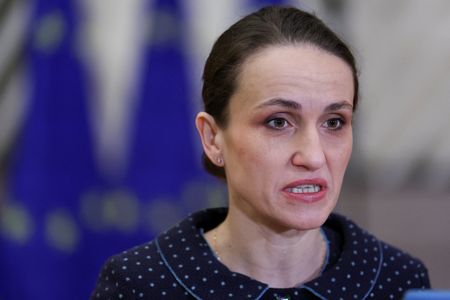
During a visit to Paris, Oana Toiu explained that the incident involving a Russian-identified drone that struck a residential building would speed up ongoing NATO efforts to enhance surveillance and response capabilities. The focus includes improving radars, fighter aircraft, and anti-drone technology.
“Our top priority is to increase capabilities,” Toiu stated, noting that Romania had already provided NATO with a comprehensive list of defense needs prior to the drone incident.
NATO allies are now evaluating ways to supplement Romania’s current air monitoring and defense infrastructure, particularly along its 650-kilometer border with Ukraine. The proposed reinforcements may include additional military assets from partner nations, such as aircraft participating in NATO’s air policing operations, along with enhanced radar systems designed to detect low-altitude drones.
France, which commands NATO’s battlegroup in Romania with approximately 1,400 personnel, is in discussions about providing additional radar and air monitoring support. Other nations including Britain, Italy and Spain have indicated their readiness to increase their contributions to air defense missions, according to Toiu.
The United States may contribute specialized radar and surveillance technology rather than deploying large numbers of troops.
“There is a common understanding that we need to strengthen the eastern flank, not just in Romania. This is a conversation we’re having with the Baltics and all countries on the eastern flank,” Toiu explained.
Romania described these measures as temporary solutions while the country pursues comprehensive defense modernization. Bucharest has designated approximately 2 billion euros for upgrading air defense and monitoring capabilities over the coming years, but will “need to rely on allied support to cover the gaps” in the interim, Toiu said.
The Russian-manufactured drone breached Romanian airspace last week and crashed into a structure in Galati, a city near the Ukrainian border, injuring two civilians.
While Toiu said Romania has no evidence the incident was deliberate, she emphasized that Russia bears full responsibility for the violation.
Romania is also developing private sector anti-drone initiatives and collaborating with Ukraine on a 200 million euro project to construct a facility that will manufacture systems to counter low-cost aerial threats commonly used in the ongoing conflict.