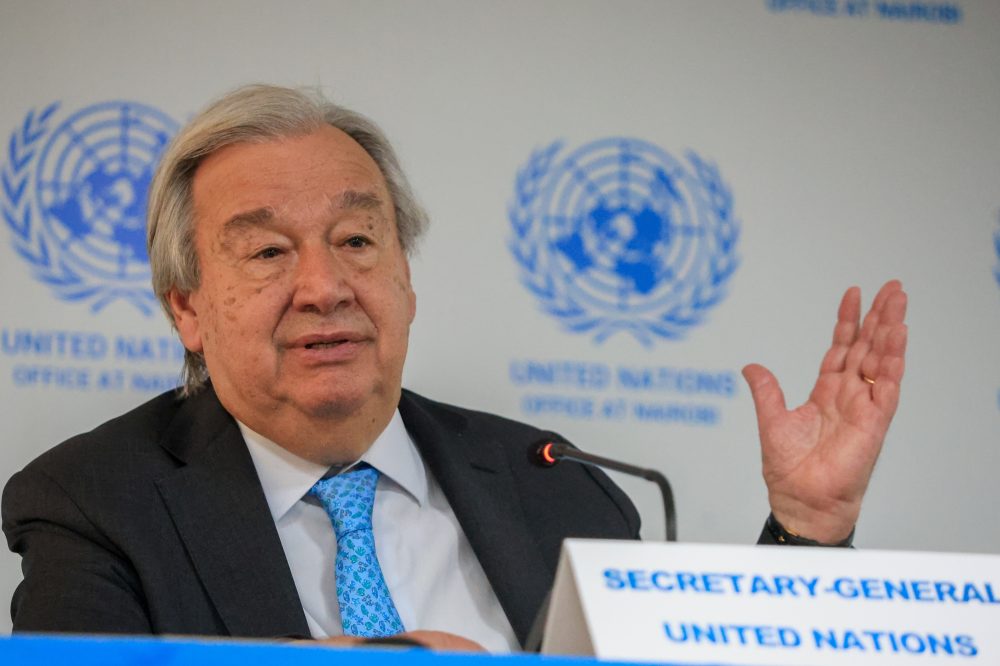

UNITED NATIONS (AP) — The head of the United Nations has outlined three alternative approaches to continue efforts toward resolving the long-standing conflict between Israel and Lebanon’s Iran-supported Hezbollah fighters once the current 8,100-strong UN peacekeeping operation in southern Lebanon concludes on December 31.
Each proposal submitted to the UN Security Council by Secretary-General Antonio Guterres would maintain UN military oversight of the Israel-Lebanon border, assist Lebanese military forces in expanding their presence nationwide, and enhance diplomatic initiatives to halt the ongoing violence that continues despite an existing ceasefire agreement.
For many years, UN peacekeeping forces have served a crucial function in overseeing security conditions in southern Lebanon, an area where Hezbollah maintains strong influence. In recent months, six peacekeepers have lost their lives.
Following pressure from the United States and its ally Israel, the Security Council unanimously decided in August 2025 to end the peacekeeping operation called UNFIL and directed Guterres to develop alternatives for enforcing a 2006 resolution that concluded a month-long conflict between Israel and Hezbollah.
That resolution calls for Hezbollah to give up its weapons, Israeli military withdrawal, and full deployment of Lebanese army forces as the country’s only armed force. These requirements remain unfulfilled.
In his Monday correspondence to the Security Council, Guterres emphasized that the repeated clashes between Israel and Hezbollah demonstrate the urgent need to enforce the 2006 resolution, which serves as the roadmap to peace.
The secretary-general described UN military oversight of the UN-established border between Israel and Lebanon, called the Blue Line, as “paramount.”
Across all alternatives, he explained, “a uniformed United Nations presence working to facilitate de-escalation, dialogue, liaison and coordination, and support for the Lebanese Armed Forces would be necessary.” The UN military component would work alongside the enhanced UN special coordinator for Lebanon, who would maintain leadership of efforts to implement the 2006 resolution.
Guterres outlined three alternatives for the UN military presence, with personnel numbers ranging from 5,525 down to 1,980, including some unarmed military observers. He noted the largest deployment would be capable “to most credibly observe developments along the length of the Blue Line.”
UN spokesman Stephane Dujarric informed reporters Tuesday that the secretary-general anticipates the Security Council will reach a decision promptly.