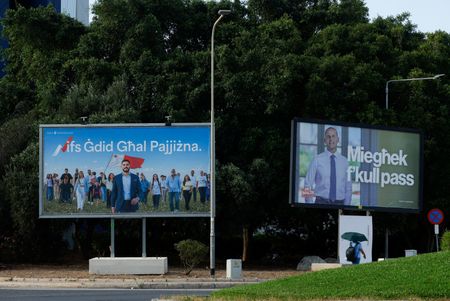
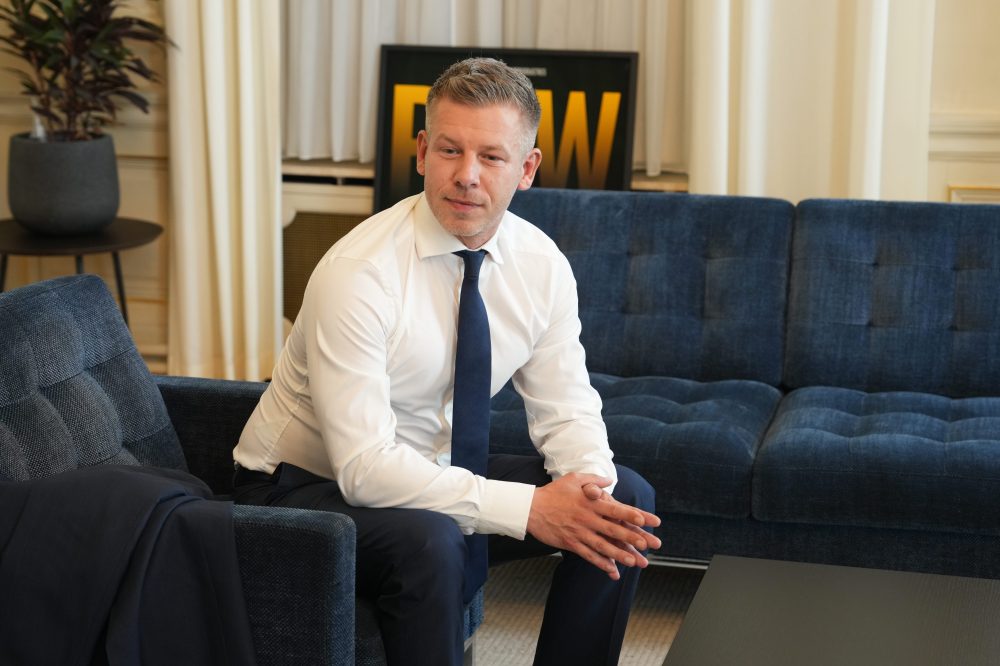
Malta’s Prime Minister Robert Abela secured an unprecedented fourth consecutive electoral victory for his Labour Party on Sunday, marking a historic achievement in the Mediterranean nation’s political landscape.
Speaking to the media following the results, Abela declared: “This is a victory of all the people based on the programme we presented for all the people.” He emphasized that the outcome demonstrated his party had “won a strong mandate” from voters.
“Let us maintain the spirit of national unity and move the country forward together,” he added.
Media outlets tracking the ballot counting reported that Labour secured a solid parliamentary majority, though the victory margin seemed reduced compared to their 2022 performance when they captured 55% of all votes.
The opposition Nationalist Party’s general secretary, Charles Bonello, acknowledged defeat in statements to TVM, the state broadcaster, while noting his party successfully reduced Labour’s majority.
Saturday’s election drew 87.4% voter participation, representing a slight increase from the 2022 general election turnout.
Labour’s campaign emphasized economic strength, governmental experience, and administrative credibility. Meanwhile, the Nationalist Party contended that citizens’ living standards had declined despite economic growth in the European Union’s smallest member state.
Abela, who took over Labour Party leadership from Joseph Muscat in 2020, is scheduled for swearing-in ceremonies Monday morning.
The United States delivered sharp criticism toward European NATO members during a weekend security conference in Singapore, though Western European representatives maintained that the alliance remains strong.
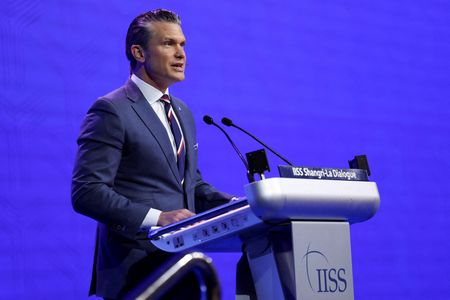
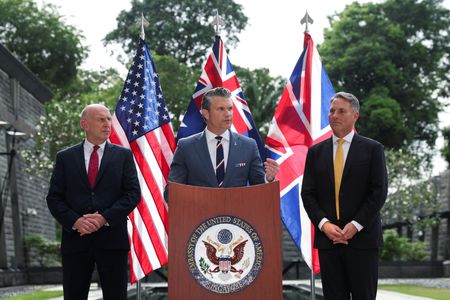
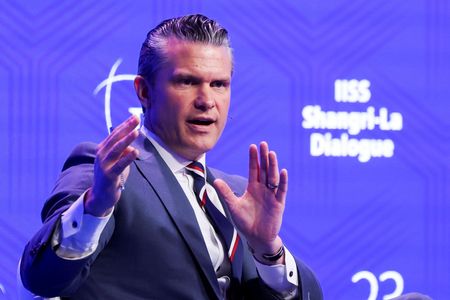
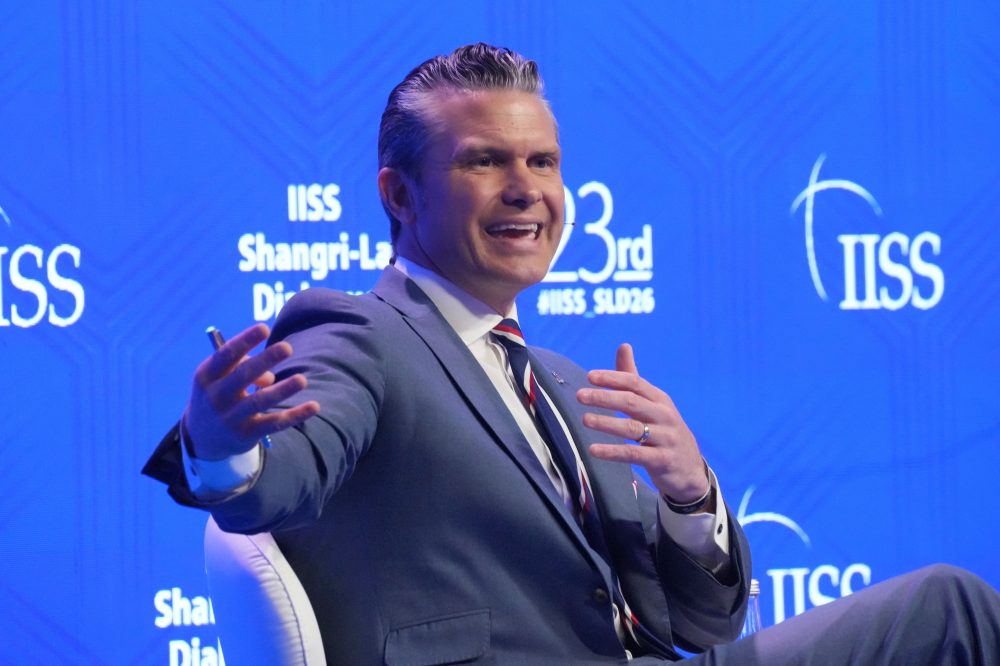
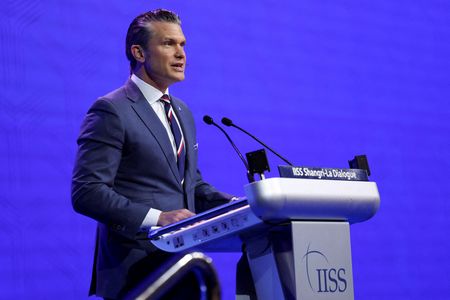
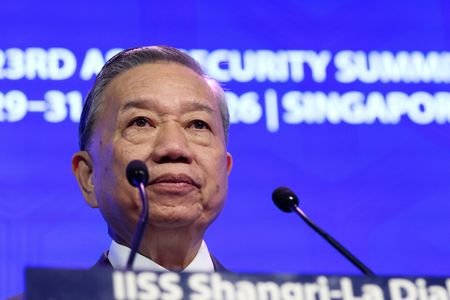
At the Shangri-La Dialogue, Defense Secretary Pete Hegseth commended Asian allies for increasing their defense budgets and working closely with Washington amid rising tensions with China.
“When our interests align, we act together with focused resolve,” he said. “When our interests diverge, we adjust pragmatically without the drama or the moralising. I think Western Europe might take note.”
“Europe and NATO have some big decisions to make,” he said.
The Trump administration has consistently criticized European nations for insufficient military spending and excessive dependence on American security guarantees, while pushing both European and Asian partners to increase defense expenditures to 3.5% of GDP.
In May, Washington revealed intentions to withdraw 5,000 military personnel from Germany, and Trump has made threats about leaving NATO entirely.
A high-ranking NATO representative minimized the significance of the American troop reduction, explaining it had been previously scheduled and would not impact alliance unity.
“In a mature alliance, if one ally which in this case is the principal stakeholder needs to redirect some power somewhere else, he can do so, and the others must be able to step in,” said Admiral Giuseppe Cavo Dragone, chair of the NATO Military Committee.
Nils Hilmer, state secretary at Germany’s Federal Ministry of Defence, indicated Berlin would continue increasing military spending independent of future U.S. force deployments.
“What we know for sure… is that there’s going to be shifts in that field,” he said. “That’s why we are about to take the security in our own hands.”
European officials also utilized the conference to assure Asian counterparts that NATO maintained effectiveness beyond its traditional region.
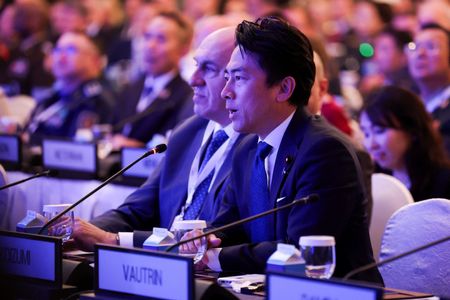
“Our credibility in Asia also depends on our robustness in Europe, defending Ukraine in the face of the Russian aggression,” said French Defence Minister Catherine Vautrin in a speech to delegates.
Additional European defense leaders contended that global security regions are becoming more connected.
“The European Atlantic and the Indo-Pacific theatres are becoming inseparable,” said Tore Sandvik, Norway’s minister of defence, noting that North Korean troops were fighting in Ukraine.
“The U.S. will be occupied in more theatres,” he said.
Despite Pentagon criticism, multiple U.S. Senators and House Representatives emphasized their efforts to reassure both European and Asian partners of continued bipartisan Congressional support.
“I’ve heard the same anxiety from everyone, not just in the region,” said U.S. Senator Tammy Duckworth. “I’ve actually got NATO allies worried about America’s commitment to the Indo-Pacific.”
However, doubt persists among conference participants regarding Europe’s progress in improving collective security investments.
“Europe has to learn how to become a player,” said Pavlo Klimkin, non-resident senior fellow at the Carnegie Endowment and a former Ukrainian minister of foreign affairs. “There is no way around it. But it could be extremely beneficial for their partnership with the United States, because the States would respect such European drive.”
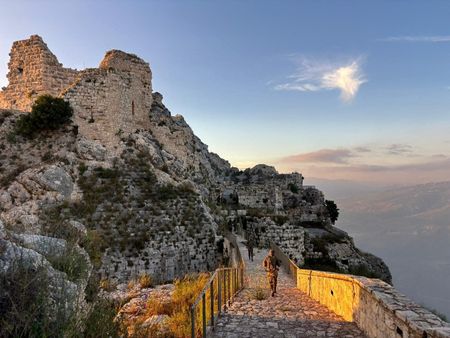
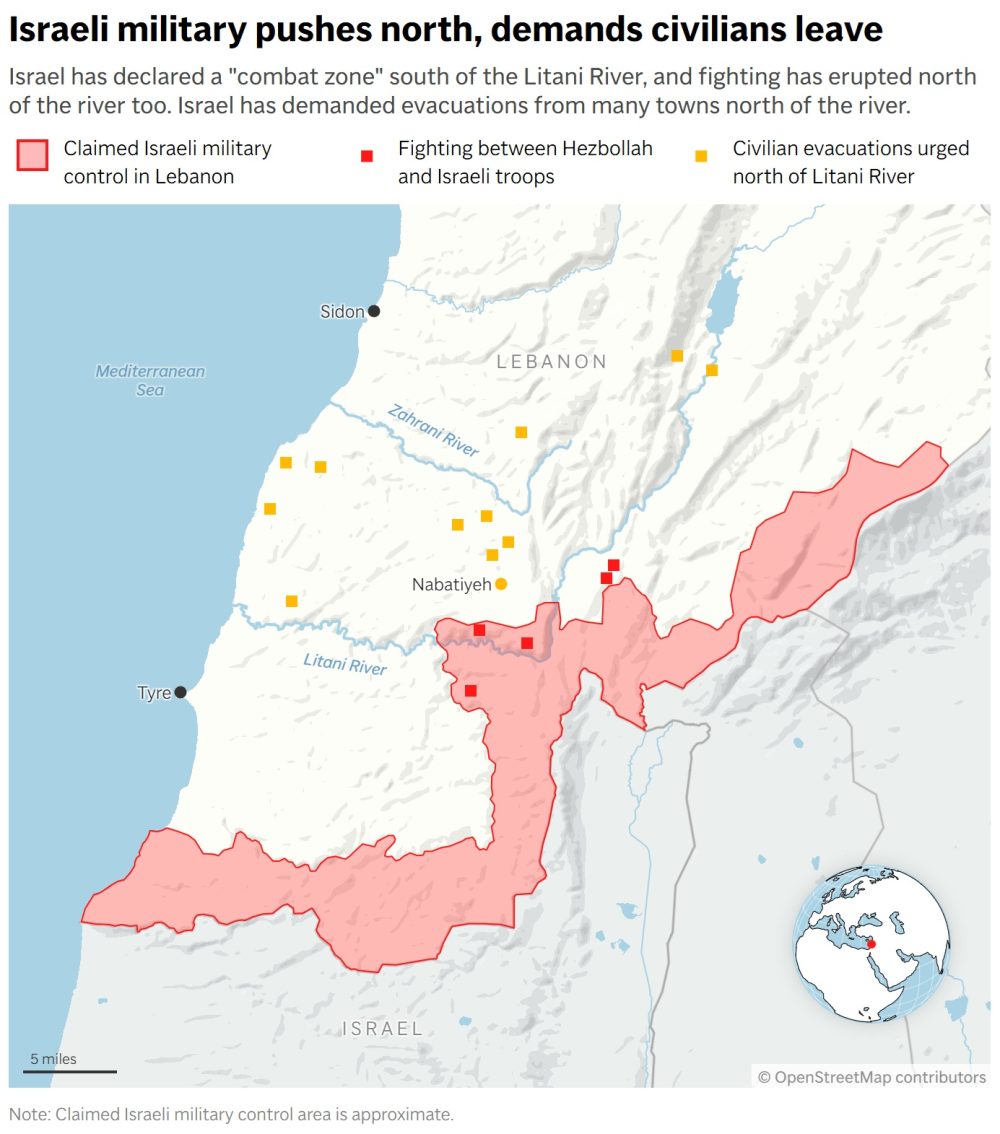
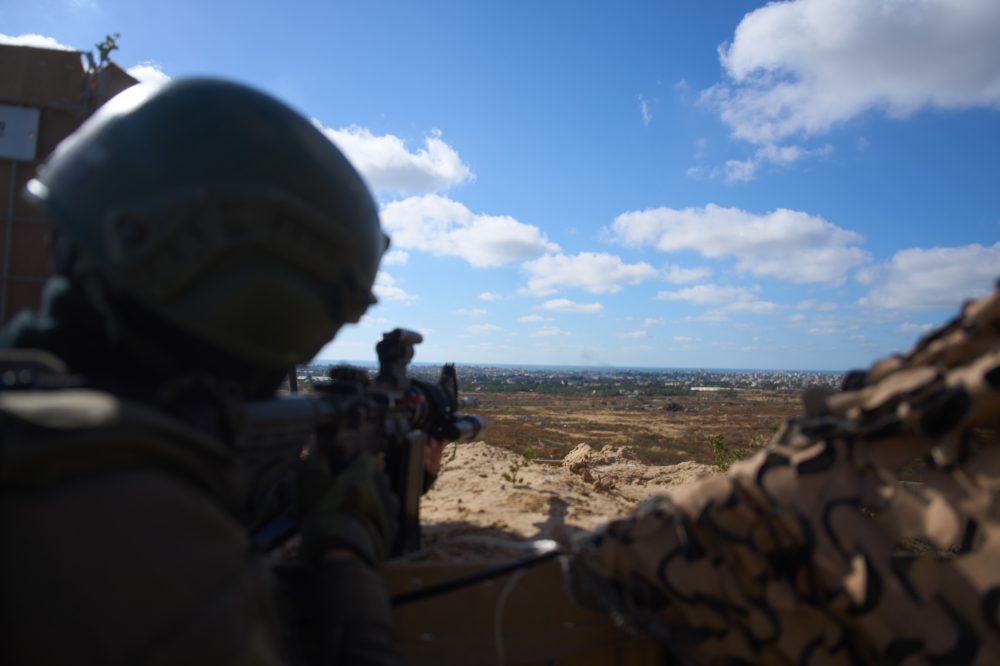
Israeli military forces have taken control of the historic Beaufort Castle and surrounding strategic territory in southern Lebanon, marking a significant advancement in operations against the Iran-backed Hezbollah organization, military officials announced Sunday.
The military action took place more than six weeks following the declaration of a ceasefire in April, and came after Saturday witnessed some of the most intense Hezbollah attacks directed at northern Israel since the truce began, leading to school shutdowns and movement limitations.
Military officials stated the mission centered on gaining control over the Beaufort Ridge and Wadi al-Saluki region, while working to weaken Hezbollah forces and the infrastructure they built on the ridge under Iranian guidance.
The military confirmed that one Israeli soldier lost his life during the operation.
Neither Lebanese officials nor Hezbollah representatives provided immediate responses to the developments.
The seizure of the centuries-old fortress and ridge expands Israel’s presence in Lebanese territory as military confrontations between Israel and Hezbollah continue despite an ongoing ceasefire in the broader conflict with Iran.
Hezbollah joined the U.S.-Israeli conflict against Iran by launching rocket and drone attacks against Israel on March 2, shortly after the Iran conflict commenced. Israel subsequently began efforts to push the Iran-supported organization away from its northern border.
The takeover of Beaufort Castle provides Israeli forces with a commanding view across much of southern Lebanon and northern Israel, an area from which attacks have been directed toward Israeli communities.
According to military statements, Hezbollah “carried out numerous attacks” from the Ridge location, and Israeli forces are now working against launching facilities in the region, which served as the origin point for “hundreds of projectiles” fired “toward Israeli civilians and IDF soldiers.”
The military also reported that Israeli forces are conducting operations near Nabatieh, described as a significant Hezbollah stronghold in southern Lebanon.
ROME, May 31 – An unauthorized fireworks display by a traffic officer during a nighttime practice session for Italy’s Republic Day parade caused dozens of ceremonial horses to panic and stampede through Rome’s streets, according to police reports.
The sudden explosions occurred just before 11:30 p.m. on Friday, frightening the horses during their rehearsal. Some animals carried mounted riders while others were being guided on foot when the chaos erupted.
Approximately 35 horses escaped onto the heavily traveled Via Cristoforo Colombo, where motorists captured video footage of the animals racing down the roadway. Recovery efforts continued through the night, with the final horse located at sunrise roughly 14 kilometers (9 miles) away from where the incident began.
Multiple riders were thrown from their mounts during the stampede. A 22-year-old soldier sustained broken ribs and a punctured lung but remains in stable condition. About 15 horses suffered injuries, though none required euthanization.
Mario De Sclavis, commander of Rome’s police force, expressed his concerns to Sunday’s Corriere della Sera newspaper, stating that the incident “discredits the image of the Corps and its officers.”
The unauthorized pyrotechnics were ignited close to the historic Baths of Caracalla, where mounted cavalry from the army, Carabinieri paramilitary force and police were practicing for the annual June 2 parade.
Authorities confirmed that a municipal policeman from the traffic emergency unit had detonated a battery of fireworks approximately 200 meters (yards) away from the horses.
Nations throughout the Indo-Pacific are rapidly strengthening their military capabilities and forging new defense partnerships as they navigate between China’s expanding military presence and uncertainties about America’s long-term regional commitment.
During Asia’s leading defense conference held Saturday, US Defense Secretary Pete Hegseth urged regional allies to take on greater security responsibilities. However, he encountered ongoing worries that American attention might be shifting away from the region due to conflicts in Iran demanding focus.
“We can do two things at one time,” Hegseth stated at the Shangri-La Dialogue in Singapore, an open forum bringing together defense leaders, military commanders, and intelligence officials from around the globe.
Japanese Defense Minister Shinjiro Koizumi expressed his belief that America’s dedication remained “unwavering,” though he recognized that certain nations might still question its determination.
During conversations with Reuters conducted alongside the yearly conference, defense ministers and military leaders from the region emphasized their drive to strengthen cooperation beyond America’s traditional security framework.
“All the defence secretaries here present are unanimous in the need to make agile and speedy upscaling of their own individual defence capabilities,” Philippines Defence Secretary Gilberto Teodoro shared with Reuters.
Teodoro characterized this effort as “buttressing” America’s conventional role, with Manila expanding defense relationships with nations including Japan, Australia, Canada and New Zealand.
“The commitment of the United States becomes more solid when more actors, at least in the deterrence phase, come in, because there is a common threat,” he explained.
Japan is establishing itself as a central point for this expanding network of partnerships.
Koizumi indicated that Tokyo seeks to serve as a “connecting point” for enhanced regional collaboration beyond China’s influence.
This past April, Japan announced its most significant revision of defense export policies in decades, eliminating barriers to international arms sales and creating opportunities for exporting naval vessels, missiles and additional military equipment.
“Japan will be even more proactive in defence equipment cooperation,” Koizumi announced at the conference. “Our aim is to ensure that each country has the capabilities it needs and to make them available when needed.”
Canada’s Chief of Defence Staff General Jennie Carignan reported that her military forces were increasing their regional involvement, working with Japan and the Philippines on cybersecurity initiatives and naval training while providing English language instruction to Indonesian military personnel.
“There is a lot of work to do in the Indo-Pacific region. And I think this is why we are seeing probably an increase of partnership across the board,” Carignan informed Reuters.
New Zealand is also evaluating stronger relationships and new military equipment. Defence Minister Chris Penk verified that Wellington is seriously examining Japanese and British ships to substitute for its aging ANZAC-class frigates.
Penk met with counterparts from Singapore, Malaysia, Australia and Britain during the conference to discuss expanding cooperation under their 54-year-old Five-Powered Defence Arrangement.
Penk, who assumed his position in April, noted opportunities for advancing the agreement “at a more intense level.”
“And so if we can find new ways to interact with others as well as maintaining those existing connections, then we’ll look to do that at the same time,” Penk stated during an interview.
While regional countries were strengthening mutual relationships, Asian leaders maintained that American dedication to the Indo-Pacific remains strong despite Middle Eastern conflicts or President Donald Trump’s “America First” approach.
“Our confidence is not swayed by reason of the involvement of the United States in Iran, for example, and in other areas,” the Philippines’ Teodoro remarked.
For Australia, Defence Minister Richard Marles characterized relations with Washington as “absolutely fundamental to our national security.”
“For both of us, the Trump administration and the Albanese government in Australia, we see ourselves as stewards of a relationship which goes well beyond us,” Marles told Reuters.
MOSCOW, May 31 – Ukrainian forces launched a series of overnight drone attacks targeting energy and industrial facilities across multiple Russian regions, according to Russian officials who reported the strikes on Sunday as part of Ukraine’s growing campaign against infrastructure targets.
The governor of Saratov, a Volga River region home to multiple oil refineries that has faced repeated Ukrainian strikes in recent years, Roman Busargin announced on Telegram that “civil infrastructure” sustained damage from the attacks.
Alexander Sokolov, governor of the Kirov region located northeast of Moscow and approximately 1,300 kilometers (800 miles) from territory held by Ukraine, confirmed that drones struck a facility within the Urzhumsky district.
Regional leaders from Rostov, Voronezh and Belgorod – all territories sharing borders with Ukraine – also confirmed attacks occurred in their areas, with authorities reporting three civilian injuries in Belgorod.
Meanwhile, on the Russian-controlled Crimean peninsula, Moscow-backed governor Sergei Aksyonov announced new limitations on gasoline sales would be implemented.
While Aksyonov did not provide reasoning for the fuel restrictions, Ukraine has maintained a months-long campaign targeting fuel infrastructure throughout southwestern Russia near the Crimean peninsula.
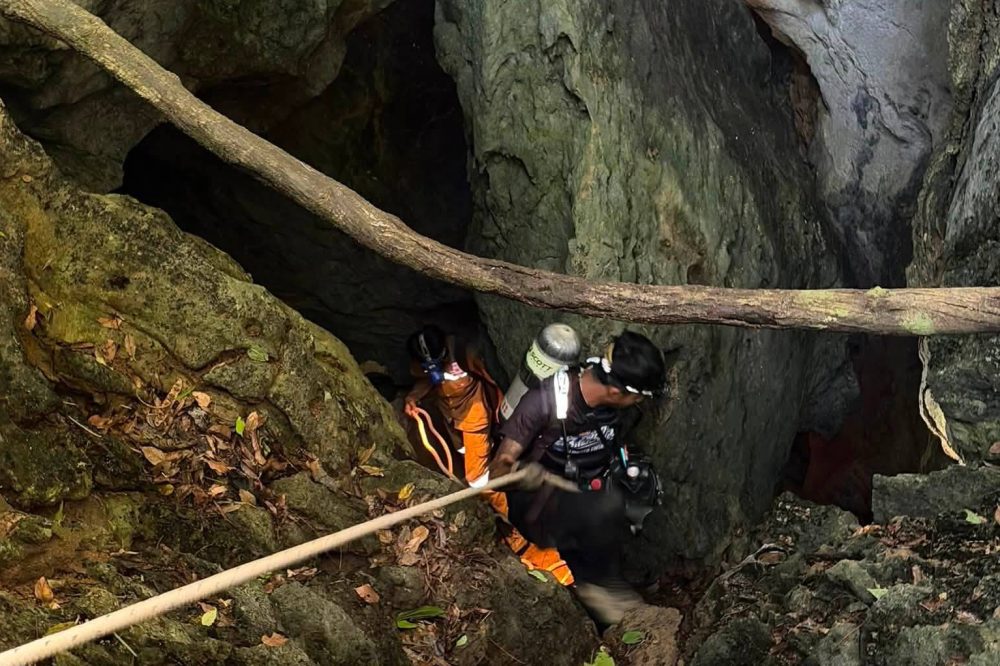
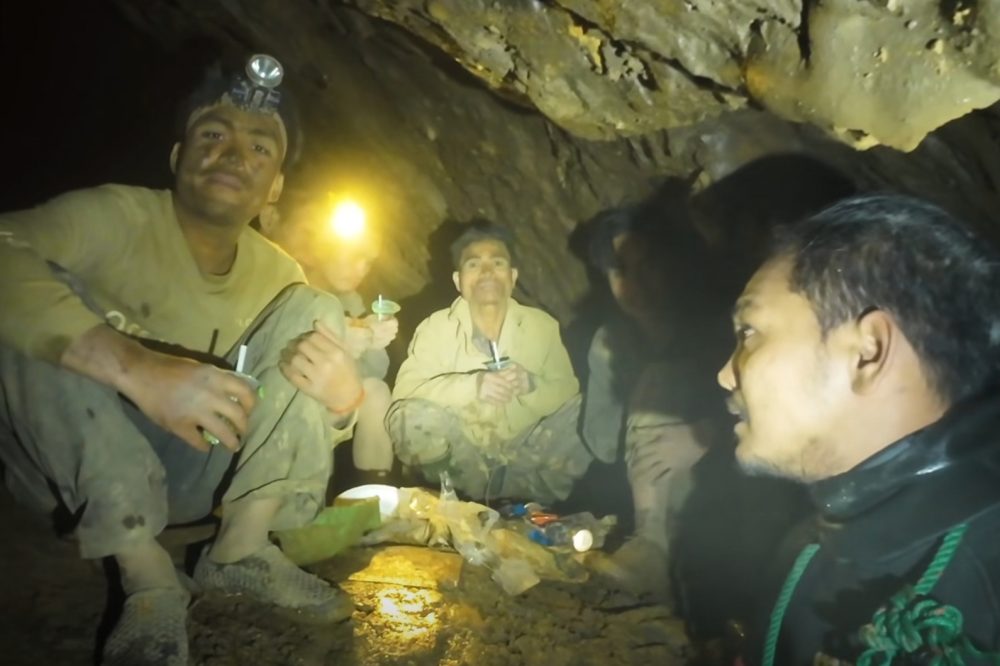
BANGKOK (AP) — Continuing rainfall may postpone rescue efforts for two individuals still missing in a water-filled cave system in Laos, following the successful evacuation of five others who spent more than seven days trapped below ground.
Finnish rescue diver Mikko Paasi, among the initial international responders at the location, informed The Associated Press that ongoing precipitation has caused water levels to rise to the cave’s second chamber, blocking diver access until pumping equipment can reduce the flooding.
According to reports, the seven local residents went into the cave system last week searching for precious minerals when a sudden flood trapped them inside. An eighth villager managed to get out and notified emergency services.
International rescue operations involving teams from Laos and Thailand have been ongoing for the past week at the remote location in Xaisomboun province, situated approximately 120 kilometers (75 miles) north of Vientiane, the nation’s capital. Diving specialists from Finland, Malaysia, Japan, Indonesia, France and Australia have joined the effort.
Multiple members of the rescue team participated in the challenging 2018 cave emergency in northern Thailand that successfully freed 12 schoolboys and their soccer coach from a flooded underground system.
Malaysian diver Lee Kian Lie, participating in the current operation, told the AP on Sunday that the evacuated individuals are receiving medical care at a nearby hospital and recovering well.
“We interviewed them about how the deeper part of the cave looks like. We will continue to search based on the information we have, and perhaps we will be able to get to the other two,” he said.
Rescue personnel report they have explored over 200 meters into the underground system and located five chambers within the cave network. The five individuals brought to safety were discovered in the fifth chamber.
Paasi explained to the AP that the survivors described a small opening in the fifth chamber that might lead to deeper sections of the cave system.
“This was the only place that we haven’t checked in the mine, where the two lost miners could still be,” he said during a video interview.
“Now there’s a theory that, through that small crack, it still continues, and there’s a sixth chamber, which gives us hope now that, if we could penetrate that small restriction, we might be able to reach the sixth chamber and then see what is there.”
The five rescued individuals were initially located on Wednesday and identified by their first names as Khamla, Mued, Ee, Ing and Laen.
The first person was brought to safety on Friday with assistance from an expert diver through a narrow flooded tunnel. The other four exited the cave on Saturday when water levels dropped sufficiently for them to walk out independently, according to rescue officials.
Online footage from Saturday posted by rescue personnel captured emotional scenes as each person emerged from the cave. Some fell to the ground at the cave opening and were embraced by workers who wept with relief. Additional scenes showed them on stretchers, covered with emergency blankets and receiving oxygen before being transported from the site.
Chinese naval forces and coast guard vessels conducted surveillance operations near a disputed South China Sea location on Sunday, following statements from Philippine officials warning that Manila continues to face threats from Beijing despite recent improvements in U.S.-China relations.
The operations took place around Scarborough Shoal, which ranks among Asia’s most disputed maritime territories and has repeatedly sparked tensions between China and the Philippines regarding territorial claims and fishing access.
The People’s Liberation Army’s Southern Theatre Command announced through a WeChat statement that its maritime and aviation forces executed combat readiness surveillance in what it called the “territorial sea and airspace” of the formation and nearby waters.
“Such patrols serve as an effective countermeasure to cope with all sorts of rights violation and provocative acts,” the command said.
Chinese coast guard officials issued a separate announcement describing law enforcement surveillance activities near Scarborough Shoal, noting they had addressed vessels conducting “illegal rights-violation activities in accordance with laws and regulations” during the current month, though they provided no additional details.
The Philippine embassy in Beijing did not immediately respond to an emailed request for comment.
The surveillance activities occurred while defense officials, military leaders and policy experts from across the Asia-Pacific region convened in Singapore for the Shangri-La Dialogue, Asia’s leading defense conference.
During an interview with Reuters at the conference, Philippine Defence Secretary Gilberto Teodoro stated that the Philippines continues facing a “severe threat” from China regarding both territorial and political matters, despite recent improvements in U.S.-China relations following a summit between Presidents Donald Trump and Xi Jinping earlier this month.
“We have no choice but really to be resilient and to stand up against Chinese aggression,” he said.
The Philippines and China have experienced numerous maritime confrontations in the South China Sea over recent years, sometimes leading to vessel collisions and crew injuries.
China asserts territorial control over nearly the complete South China Sea through a “nine-dash line” marked on its official maps that extends into the exclusive economic zones of the Philippines, Brunei, Malaysia, Vietnam and Indonesia.
Conflicts over numerous islands and formations have persisted for decades. Taiwan maintains territorial claims in the South China Sea that largely mirror China’s positions.
During 2016, the Permanent Court of Arbitration in The Hague determined that China’s territorial assertions lacked support under international law, though Beijing dismisses this ruling.
Defense officials from South Korea and Japan explored the possibility of establishing a military logistics sharing agreement during talks in Singapore, according to reports from Yonhap News Agency on Sunday.
Following discussions with his Japanese counterpart Shinjiro Koizumi at the Shangri-La Dialogue regional defense summit in Singapore, South Korea’s Ahn Gyu-back addressed reporters about the potential arrangement.
“It requires the understanding and persuasion of the citizens of both nations, and I believe we should still proceed with caution,” Ahn stated when asked about the discussions.
The defense minister was speaking about a possible acquisition and cross-servicing agreement that would enable the two neighboring U.S. allies to exchange and jointly obtain military supplies including fuel, food and ammunition.
MEXICO CITY (AP) — Hugo Rosas intentionally incorporates Mexico’s most recognizable cultural elements into his soccer jersey creations for the World Cup. His designs merge football culture with Mexican heritage to display his nation’s traditions on an international stage.
Rosas calls his newest line “Calados del Alma” or “Cutouts of the Soul.” The collection takes cues from traditional Mexican spiritual practices and papel picado, the intricate paper decorations featured at community festivals and special occasions.
“We try to create concepts that resonate with us and convey traditions that make Mexicans feel proud,” said Rosas, who has run a workshop with his brother Andrés near Mexico City since 2022. “The country’s best is reflected in papel picado, colors and town celebrations.”
The brothers’ initial jersey design featured Quetzalcoatl, the winged serpent god honored by multiple pre-Hispanic cultures. That piece continues to be Andrés’ top choice among their creations.
“Quetzalcoatl represents a balance that sees the world as a system, not as something extractive that human beings can simply benefit from,” said Andrés, who oversees the brand’s marketing. “I connect with that pre-Hispanic worldview, which is why most of our products are deeply rooted in that vision.”
Hugo’s World Cup series expands upon a previous collection he named “Ofrenda Viva,” or “Live Offering.”
The design philosophy stems from Mexico’s Day of the Dead tradition — where families celebrate and remember deceased loved ones with joy rather than mourning.
“It’s a garment resembling papel picado so that a person can offer their actions, thoughts and passions as an homage to those who are already gone,” Rosas said.
The uniforms use polyester material, allowing the fabric to be carved like papel picado while remaining durable against damage. Rosas and his crew previously tested organic materials, but found they couldn’t support the weight and design needed after manufacturing.
Creating each uniform takes up to three weeks, with the cutting and stitching process requiring eight to 10 hours of labor.
Rosas begins by selecting which cultural symbols to feature. He then calculates the dimensions and form of each element to ensure the needlework matches his creative vision. After finalizing a pattern, the workshop’s seamstresses carefully carve and stitch every garment.
The Rosas brothers maintain a small-scale operation and take pride in this method. They prioritize the attention and effort given to each piece, preserving the handmade nature of their work.
Their Mexclart brand has produced approximately 30 uniforms since the World Cup items became available in April. Hugo Rosas anticipates sales will grow as the tournament’s start date draws closer.
His other lines include one dedicated to pre-Hispanic deities. His preferred design shows Mictlantecuhtli, the Aztec god of the underworld, typically shown as a skeleton figure.
“Putting on a garment like this is like wearing a modern armor through which we can carry that pride and passion for our roots and show it to the world,” Rosas said.
He occasionally consults historical texts about Mexico while creating his patterns. But his preferred source of creativity comes from visiting Indigenous settlements where traditional rituals and practices continue today.
“If it were up to me, I’d use gold or another material that could accurately represent our gods the way our ancestors did,” he said. “All the garments we create are meant to give Mexicans the chance to bring those deities into the present.”
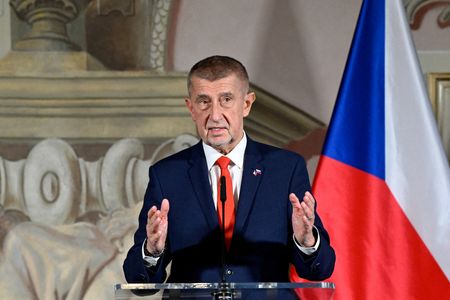
The Czech Republic’s Prime Minister has acknowledged his country will likely fall short of NATO’s military spending benchmark this year, according to a weekend interview with a major financial publication.
Prime Minister Andrej Babis stated his nation will “probably” not achieve the alliance’s goal of dedicating 2% of gross domestic product to defense spending in 2024. “We will do our best” to reach the commitment, Babis explained to the Financial Times, while pointing to budget difficulties stemming from excessive spending by the previous pro-European Union administration.
The admission highlights ongoing tensions between Babis and Czech President Petr Pavel regarding military funding. Pavel has criticized the populist leader’s administration for proposing defense spending reductions in the 2026 budget. When Pavel approved the budget in March, he expressed concerns that military expenditures were inadequate given rising security challenges and NATO obligations.
Despite the current shortfall, Babis assured that Prague remains dedicated to achieving NATO’s updated goal of spending 3.5% of GDP on defense by 2035. However, he suggested alliance members should prioritize enhancing military capabilities rather than fixating on spending benchmarks, which he argued could be easily manipulated.
This development comes as the United States signals plans to reduce American military support available to European NATO partners during major crises, according to recent reports. President Donald Trump has consistently urged NATO members to increase their defense investments, a priority that has gained urgency during the ongoing four-year conflict between Russia and Ukraine.
At a recent Asian security summit, Pentagon chief Pete Hegseth emphasized this shift in American policy, telling defense officials: “The era of the United States subsidising the defence of wealthy nations is over. We need partners, not protectorates.”
SINGAPORE (AP) — Defense leaders from allied nations emphasized the critical importance of international cooperation during a major security conference on Sunday, warning that growing global threats require unified responses even as tensions rise among traditional partners.
The discussions at the Shangri-La conference occurred one day after U.S. Defense Secretary Pete Hegseth criticized Western European nations at the same forum for insufficient defense spending commitments.
Japan’s Defense Minister Shinjiro Koizumi commended Hegseth’s dedication to the Indo-Pacific region while emphasizing the ongoing necessity for robust international partnerships.
“Division weakens deterrence, unity strengthens deterrence,” he stated during the conference organized by the International Institute for Strategic Studies.
“If gaps emerge among the United States, Europe, and allies and like-minded countries, forces which take it as an opportunity will surely come in,” he continued. “We must prevent such as situation. We must keep our cooperation going on. Now is the time to make our cooperation even stronger.”
Japan has been transforming its defense strategy as China continues rapid military expansion and modernization. Last month, Prime Minister Sanae Takaichi’s Cabinet eliminated restrictions on lethal weapons exports, marking a significant shift from its postwar pacifist stance.
China condemned this policy change, with Foreign Ministry spokesperson Guo Jiakun stating China would “resolutely resist Japan’s reckless moves toward a new type of militarism.”
Koizumi dismissed that criticism as contradictory, given China’s own military capabilities.
“Think about it, there is a country that has a huge arsenal of nuclear weapons and strategic bombers,” he remarked in English. “Japan has neither of such weapons, and yet Japan is labeled new militarism. Isn’t it strange?”
He noted that openness requires “discussion and dialogue” and expressed disappointment that China’s defense minister did not attend the conference.
During Saturday’s address, Hegseth praised several Asian partners for increasing defense expenditures while maintaining his critique of European allies, whom he accused of being “distracted by empty globalist rhetoric about the rules-based international order, while European capitals threw open their borders and hollowed out their militaries.”
“You can have all the rules you want and rules are great,” Hegseth stated. “But if you can’t back them up with hard power, the rules are not worth the paper they are written on.”
Australian Defense Minister Richard Marles told reporters during the conference that while he supported Hegseth’s view that “the rules based order needs to be underpinned by power,” he also believed strong regulations were “more important today than they have ever been.”
“We are all committed to a rules based system, because that is actually what gives, middle powers like Australia or smaller countries agency,” he explained.
He stressed that partnerships continue to be essential for regional security.
“This is a collective challenge and it demands a collective response, which is actually what the rules based order is all about,” he said.
Netherlands Defense Minister Dilan Yesilgöz-Zegerius argued that today’s conflicts have worldwide consequences requiring coordinated responses.
“A war in Europe involves drones from Iran, soldiers and ammunition from North Korea and various types of support from China,” she observed. “The lesson is clear: regional tensions are no longer regional. Our security is interconnected.”
She warned that without cooperation, middle powers risk becoming observers or the “subject of conversations,” but through alliances they can help maintain stability.
“The fact that international rules are being violated does not mean we should abandon them,” she stated.
“On the contrary, it means we must defend them more constantly and more courageously. International law may be imperfect, but history teaches us that the alternative is far worse.”
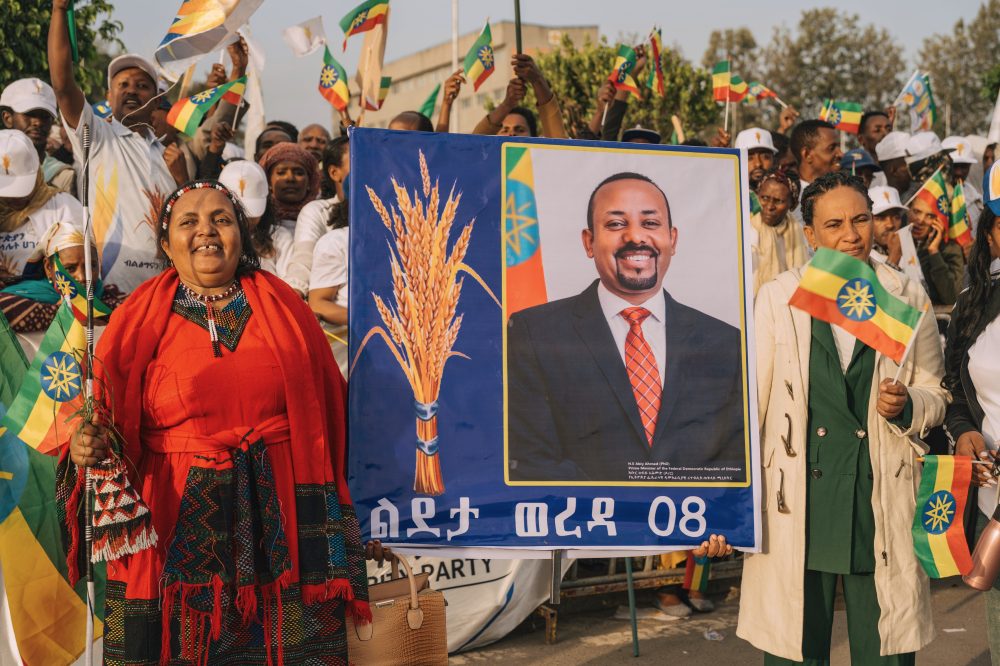
ADDIS ABABA, Ethiopia (AP) — Ethiopian citizens will cast ballots Monday in a national election where the governing party is anticipated to achieve an overwhelming victory amid a divided and weakened opposition landscape.
The Prosperity Party of Prime Minister Abiy Ahmed presently controls over 500 positions in the House of Representatives and is projected to secure a majority in Monday’s voting, guaranteeing him an additional five-year tenure.
Approximately 50 million citizens from Ethiopia’s total population of 130 million are anticipated to participate in selecting House of Representatives members, though safety concerns in heavily populated areas like Amhara and Oromia may impact voter participation.
Under Ethiopia’s electoral framework, citizens choose their representatives, who subsequently select the prime minister. Voters will additionally choose members for their regional government councils.
Key campaign issues this year center on national unity following conflicts in areas including Tigray, Oromia, and Amhara, alongside development promises as officials commit to implementing significant infrastructure initiatives.
Former Kenyan President Uhuru Kenyatta, who previously mediated Tigray peace negotiations, is directing 73 African Union election monitors.
Upon his Saturday arrival in Ethiopia, Kenyatta stressed the continental significance of Ethiopia’s electoral process, given the nation serves as home to African Union headquarters. “Ours is to call for peaceful situation as Ethiopians are known for,” he said.
Critics have charged Abiy’s government with human rights abuses targeting opposition voices and media professionals, contradicting his 2020 commitments to democratic governance and peace.
His leadership period has included the northern Tigray conflict, resulting in hundreds of thousands of deaths when federal military forces battled regional troops. Peace accords were finalized in November 2022.
Abiy received the Nobel Peace Prize in 2019 for resolving Ethiopia’s prolonged dispute with neighboring Eritrea, though relations between the nations have deteriorated, with Addis Ababa claiming Asmara backs insurgent organizations seeking to undermine stability.
Concerns exist that tensions could intensify and pull the unstable Tigray area into a surrogate conflict, while humanitarian organizations highlight critical conditions in the region.
The Tigray People’s Liberation Front — the leading political organization in Ethiopia’s northernmost Tigray territory — has been banned while maintaining regional authority and threatening to abandon the 2022 peace deal, which federal officials view as an effort to restart hostilities.
For a second consecutive election cycle, the territory will remain absent from national voting, eliminating its federal representation in Ethiopia’s 547-member parliament and further marginalizing the region amid worsening hunger and violence, plus alleged resource restrictions by central authorities.
Tigray has lacked federal parliamentary representation for six years running.
Political analyst Bayu Samuel, based in Addis Ababa, believes this election will likely be conducted fairly due to “technological advancements in the electoral process” and heightened public engagement.
Nevertheless, several opposition groups have criticized the governing party’s unfair electoral benefits.
Mistresilasie Tamerat, the youngest candidate and leader of the opposition Ethiopian People’s Revolutionary Party, describes the electoral process as “far from genuine and democratic.”
“The system favors the ruling party, and we can’t even freely operate (or) meet with our constituents,” she said.
Eyoel Solomon, a spokesperson for the main opposition Ezema party, stated his organization aims to eliminate identity-based political divisions.
“We have seen citizens being attacked because of their identity. We have seen them being persecuted simply for living in areas deemed by others not to be ‘theirs’,” he said.
While most campaign activities occurred in Addis Ababa, the capital has experienced significant military deployment in recent days.
Electoral discussions have dominated local discourse throughout the city, despite unusually subdued campaigning featuring fewer public gatherings and minimal community outreach efforts.
Election officials have designated Monday as a national holiday, shutting government facilities to promote voter participation.
More than four years after Belarus’ authoritarian leader Alexander Lukashenko permitted his longtime partner Russia to launch attacks on Ukraine from Belarusian soil, officials in Kyiv are sounding the alarm that Lukashenko might once again open his country’s borders for additional Kremlin assaults.
Though Belarus hasn’t sent its own soldiers into combat, Lukashenko has supported President Vladimir Putin’s military campaign by allowing Russia to station nuclear weapons and military facilities on his territory, while also manufacturing components for Moscow’s defense industry. This month, both nations conducted joint nuclear exercises featuring Russian weapons positioned in Belarus.
Lukashenko, who has maintained power for more than thirty years, has governed the country of 9.5 million people through authoritarian rule, systematically suppressing opposition while depending on strong Russian relationships and Moscow’s financial support to weather ongoing Western sanctions.
The growing military partnership between Moscow and Minsk is causing alarm among Ukraine’s international supporters.
During Putin’s large-scale assault on Ukraine beginning Feb. 24, 2022, Russian forces assembled in Belarus under the pretense of military exercises before racing toward Kyiv, located just 90 kilometers (56 miles) from the border.
Putin’s strategy to rapidly seize Kyiv was defeated by determined Ukrainian defense, leaving Russian tank columns stretched along narrow roadways vulnerable to attack.
Slightly more than one month into the invasion, Russian forces that experienced significant casualties and supply chain difficulties retreated from Kyiv and other captured areas in northeastern Ukraine in what the Kremlin described as a “goodwill gesture.”
During Moscow’s attempts to negotiate a swift resolution to the fighting in the early weeks, Belarus provided the venue for initial discussions between Russian and Ukrainian representatives. These negotiations later shifted to Istanbul but ultimately failed to reach an agreement.
As the fighting evolved into a prolonged conflict, Belarus has maintained a crucial role in backing Moscow’s military operations. Belarusian factories have manufactured vital components, including microchips and electronics, optical targeting systems, artillery shells, and heavy vehicles that transport Russian ballistic missiles.
Ukraine’s presidential envoy on sanctions policy, Vladyslav Vlasiuk, reported that debris from an Oreshnik ballistic missile that Russia launched at Ukraine on May 24 included microchips manufactured in Belarus. He called on Western partners to strengthen sanctions enforcement against Belarus.
Belarus has also supplied training facilities for Moscow’s forces, conducted joint military exercises, and offered its medical facilities to care for injured Russian personnel.
BELPOL, an organization of former military and law enforcement officials opposing Lukashenko, reported that Belarusian industries have become part of the Kremlin’s military apparatus. The group states that more than 500 Belarusian industrial facilities participate in weapons and ammunition production, military equipment repair, and logistical support.
“Lukashenko’s regime is quite seriously involved in the war,” BELPOL head Uladzimir Zhyhar told The Associated Press. “Lukashenko is helping Russia in every way he can.”
In the Gomel region bordering Ukraine, construction has started on a large firing range and barracks designed for substantial troop numbers, Zhyhar reported. Ukraine has been required to station many forces along the Belarus border, he noted, preventing them from engaging Russian troops along the more than 1,000-kilometer (600-mile) battle line.
Belarus, which also shares borders with NATO members Latvia, Lithuania and Poland, has accommodated some of Russia’s tactical nuclear weapons. In December, Russia announced that its newest intermediate range nuclear-capable Oreshnik missile system became operational in Belarus.
Russia has deployed a conventionally armed variant of the Oreshnik to attack Ukrainian targets three times — in November 2024 and again in January and earlier this month.
In 2024, the Kremlin updated its nuclear policy, extending the Russian nuclear shield to cover Belarus. Putin has stated that Moscow will maintain command of its nuclear weapons stationed in Belarus but would permit its partner to choose targets during a conflict.
Earlier this month, Russia and Belarus conducted extensive exercises that included delivering nuclear warheads to missile units and preparing for launches. During the exercise, a Belarusian missile team test-launched a nuclear-capable Iskander missile from a facility in southern Russia.
“Belarus lacks military sovereignty, and as soon as Moscow sees it as necessary for its strategy, Moscow will naturally use Belarus as a launchpad for a new invasion of Ukraine or some kind of armed conflict with NATO countries,” Zhyhar said, noting that Belarus offers a “very convenient springboard” for such an invasion.
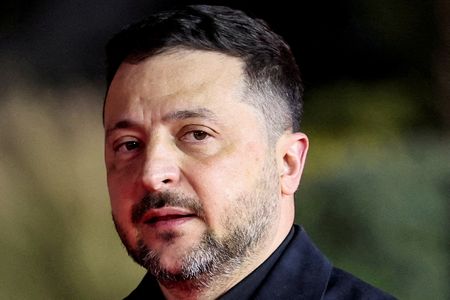
Last week, Ukrainian President Volodymyr Zelenskyy reported that his intelligence agencies had discovered Moscow recently intensified efforts to “draw Belarus much deeper into the war and launch additional aggressive operations precisely from Belarusian territory.” He indicated the target could be along the Chernihiv-Kyiv area or against a NATO country bordering Belarus.
Zelenskyy announced he directed the military and security agencies to prepare a response and reinforce northern defenses.
Lukashenko has rejected any aggressive intentions, stating Belarus will not join the conflict unless attacked.
Sergei Shoigu, Russia’s former defense minister and now secretary of its Security Council, also dismissed Zelenskyy’s assertion, characterizing it as a fear tactic to secure additional Western assistance for Kyiv.
However, indicating growing Western worry, French President Emmanuel Macron contacted Lukashenko on May 24 to highlight the dangers for Belarus of being pulled into the war, their first conversation since the invasion started. Lukashenko announced that next week he will receive a French representative for discussions on European security and possibilities of reducing EU sanctions.
Andrii Demchenko, a spokesman for Ukraine’s Border Guard Service, reported last week that while intelligence information suggests Russia has increasingly pressured Belarus to directly join the war, Ukrainian forces haven’t yet observed any accumulation of troops and weapons near the border.
Belarus’ opposition leader-in-exile, Sviatlana Tsikhanouskaya, visited Kyiv last week and stressed that “Belarus must never again become a springboard for aggression.”
“Russian tanks must never again march through Belarus to Chernihiv, Zhitomir, Rivne, or Kyiv,” Tsikhanouskaya told AP. “Ukraine is fighting for itself and for all the peoples who have lived in the shadow of empire for too long. It is fighting for the right to live in peace. And the fate of my country, Belarus, also depends on Ukraine’s success.”
According to official information, Belarus’ military forces include 48,600 personnel, a small force compared with Russia’s 1.5 million. During wartime, Belarus is prepared to mobilize 290,000, but they would require weapons and training to become battle-ready.
“The Belarusian army is unfit for offensive action,” said Alexander Alesin, a Minsk-based military analyst. “An attack from Belarus would require … mobilizing up to 500,000 troops.”
That would mean removing all the men from the national economy and then finding arms for them, he said, adding: “I consider this option unlikely.”
Ukraine has constructed heavy fortifications along the border with Belarus and deployed mines that would easily halt any attempted invasion, he said.
“Even with a small force, the Ukrainians can easily defend themselves and inflict heavy losses on the Belarusian army,” Alesin said. “From a military perspective, it’s impossible to launch an attack from Belarusian territory without suffering heavy losses.”
Lukashenko is satisfied with Belarus’ role as a major supplier of military equipment and would strongly resist direct participation in the war, he added.
“The last thing Lukashenko wants is to fight, and he’ll cling to his current position at any cost, so he can avoid fighting while profiting handsomely from the war,” Alesin said.
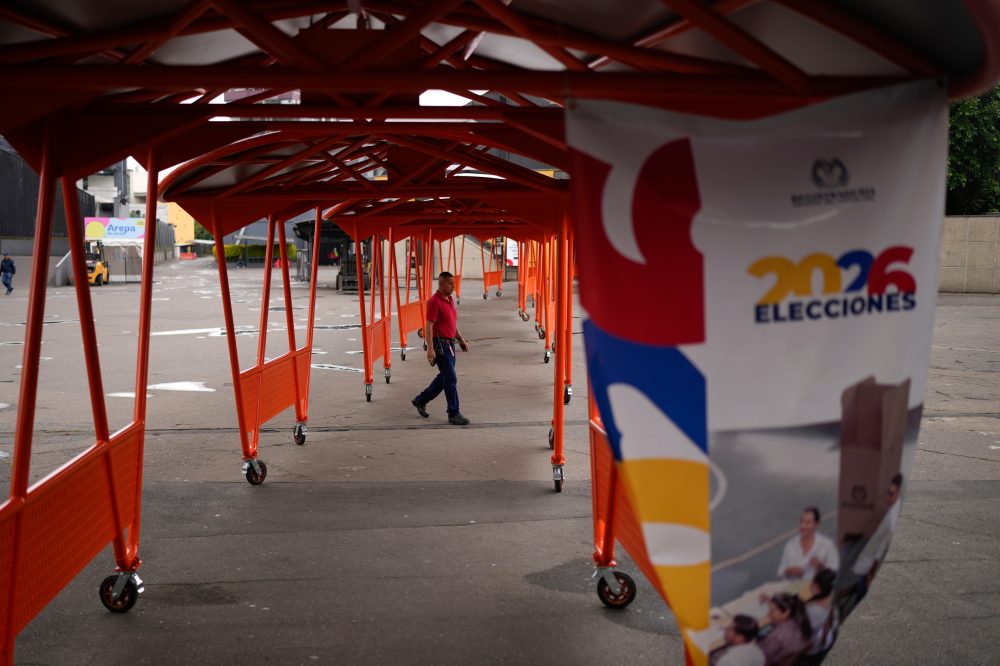
BOGOTÁ, Colombia — Citizens across Colombia headed to polling stations Sunday for the opening round of the nation’s presidential race, selecting from candidates offering sharply contrasting approaches to achieving peace in a country scarred by generations of violent conflict.
The election serves as a judgment on the policies of departing President Gustavo Petro, taking place a decade after the country reached a landmark peace agreement with fighters from the Revolutionary Armed Forces of Colombia, known as FARC.
The accord had raised expectations of ending the nation’s destructive pattern of warfare between insurgent organizations and government forces, but bloodshed has surged again recently, escalating during the campaign period. Criminal organizations have stepped up drone attacks, violent incidents have disrupted the electoral process, and in June, Miguel Uribe Turbay, a 39-year-old politician seeking the presidency, was killed by gunfire during a campaign event.
In a nation where pursuing peace has traditionally shaped political discourse, strategies for managing the ongoing conflict are again creating deep divisions among voters.
Although 14 names appear on the ballot, the contest has essentially narrowed to three major contenders.
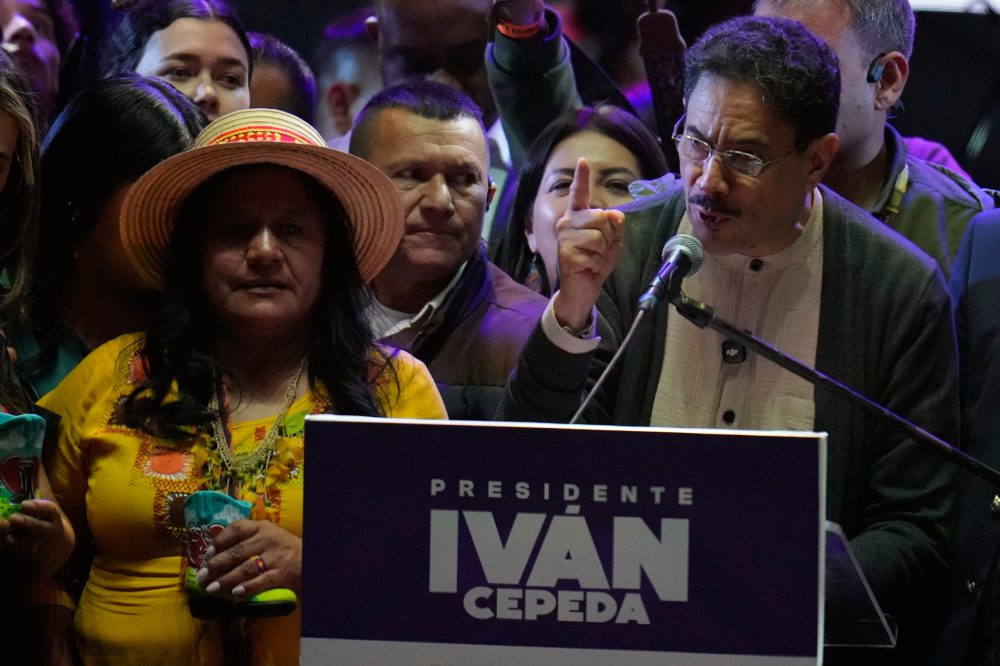
Senator and peace advocate Ivan Cepeda — an ally of Petro — has maintained a polling advantage and pledges to continue Petro’s “total peace” strategy of engaging in talks with surviving insurgent factions and establishing peace deals to address the ongoing crisis.
Despite the peace strategy’s limited success as criminal elements have exploited government ceasefires, Cepeda and Petro retain significant backing from supporters who appreciate progressive measures implemented during Petro’s administration, including increases to the minimum wage.
Challenging Cepeda are Abelardo de la Espriella and Paloma Valencia, both promising more aggressive military action against armed organizations.
De la Espriella — a flamboyant attorney nicknamed “The Tiger” — has gained momentum with voters recently by presenting himself as a political outsider eager to adopt the forceful anti-gang strategies employed in El Salvador, which dramatically decreased gang activity while drawing criticism over human rights violations.
Valencia is viewed as the political successor to Colombia’s former president and authoritarian leader Álvaro Uribe, who led the country from 2002 to 2010 with substantial backing from the United States and whose administration launched a counteroffensive against FARC insurgents that resulted in significant civilian casualties.
Both de la Espriella and Valencia have emphasized their support for U.S. President Donald Trump, despite his increasingly confrontational approach toward Latin America compared to previous U.S. leaders and his demands that countries including Colombia, Ecuador and Mexico intensify their campaigns against criminal organizations.
Should no candidate secure at least 50% of votes — an extremely uncommon occurrence in Colombia — the leading two vote recipients will compete in a runoff election in June.
Maria Eugenia, a 57-year-old seamstress who was working on a pair of jeans Friday in central Bogotá, Colombia’s capital, expressed support for an aggressive campaign against the growing number of criminal organizations, despite potential human consequences.
Though she appreciated Petro’s efforts to strengthen the nation’s healthcare system, she indicated plans to vote for de la Espriella due to escalating violence in the country’s rural regions.
“Of course, whenever you come down with a heavy hand, there’s always going to be debate,” she said. “But some people are going to have to fall to clean up what needs to be cleaned.”
Others, including 26-year-old Cristian Morales, who walked past her business, disagreed with that approach.
Though Petro’s peace initiative has fallen short in numerous areas, he explained, modifying a strategy designed to end the country’s cycles of violence was preferable to adopting another extreme position.
He indicated his intention to support Cepeda, prioritizing the candidate’s commitment to preserving Colombia’s natural environment and expanding educational opportunities over dramatic promises to eliminate the nation’s deeply rooted conflict. Morales described such a goal as something he considers “impossible” to accomplish within a single four-year presidential administration.
“The solution to this conflict isn’t aggressive confrontations. It will only end in more bloodshed,” he said. “It’s so difficult because it’s either dialogue or arms, and an internal conflict isn’t good for anyone.”
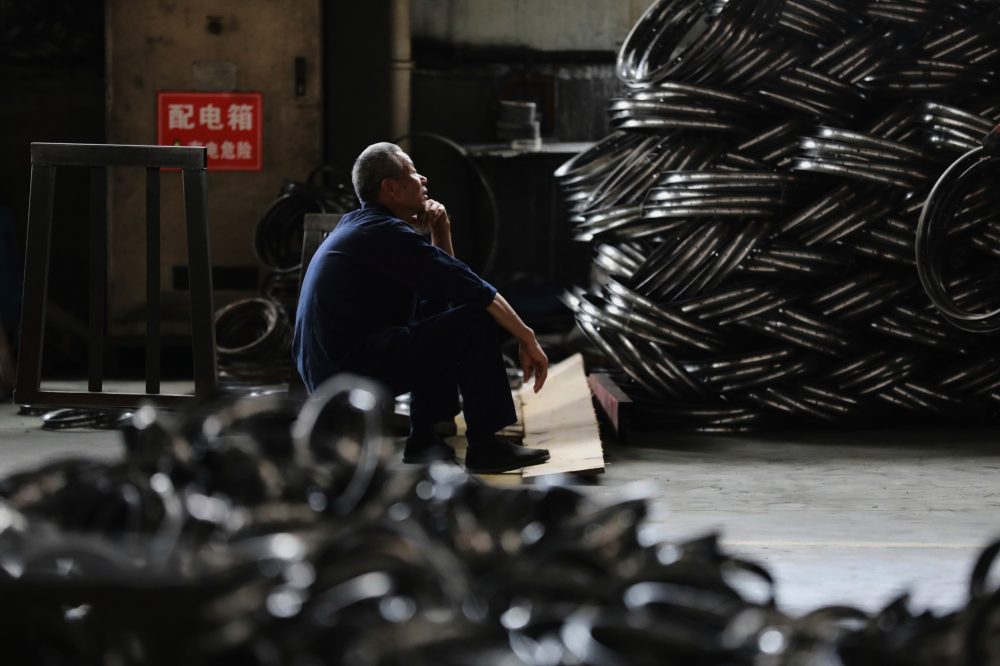
Manufacturing activity in China barely expanded during May, with new government statistics highlighting concerns about the world’s second-largest economy’s ability to maintain momentum amid international pressures.
Data from the National Bureau of Statistics showed the official manufacturing purchasing managers index declined to 50 from April’s reading of 50.3. The index operates on a 0-100 scale where numbers above 50 signal growth and figures below 50 indicate shrinkage.
Several key indicators within the report showed weakening trends. New orders fell to 49.9 from the previous month’s 50.6, while production slightly decreased to 51.2 from 51.5 in April. Raw material inventory levels also dropped to 48.6 from April’s 49.3.
Despite global energy market disruptions stemming from the Iran war, China has experienced fewer negative impacts compared to other nations dealing with rising inflation as oil costs have climbed following the Strait of Hormuz closure, a critical shipping route for one-fifth of global oil during normal times.
Economic experts note that China’s substantial oil stockpiles and varied energy supply sources have allowed the nation to largely avoid serious consequences from the conflict.
“Though the energy crisis remains the dominant headwind for Asia, China is relatively more shielded given its robust energy security set-up,” Frederic Neumann, Chief Asia Economist at HSBC bank, wrote in a research note last week.
Export markets continue playing a crucial role in China’s economic performance, according to HSBC analysis.
Although Chinese shipments to America have declined compared to the same periods last year during most recent months, international exports have shown strength, especially to European and Southeast Asian markets.
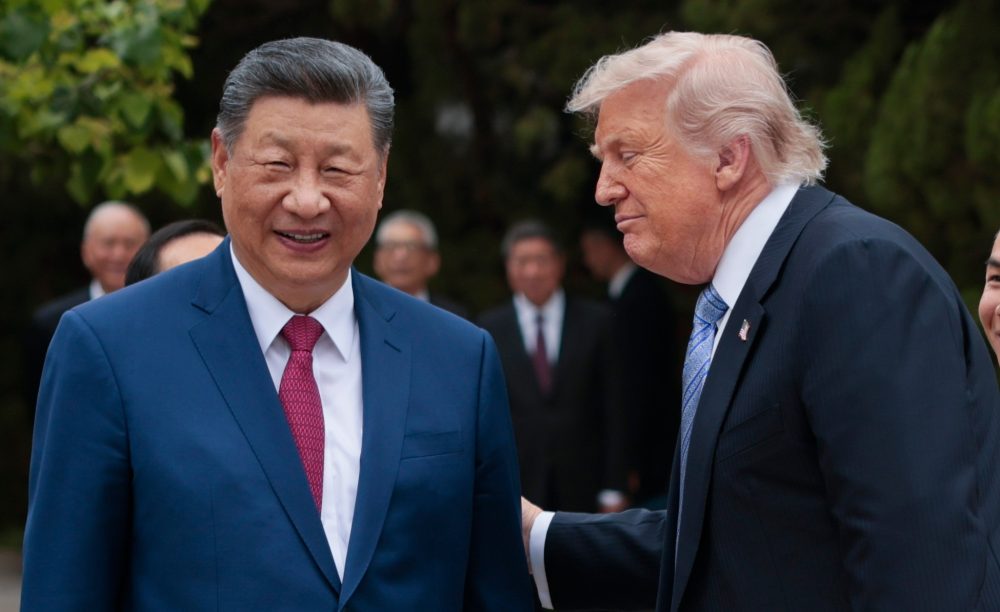
Optimism for improved U.S. trade relations has grown following President Donald Trump’s summit with Chinese leader Xi Jinping in Beijing during mid-May, when both nations agreed to establish separate trade and investment boards.
Vehicle, technology and artificial intelligence-related exports have supported growth, though some economists express broader economic concerns. Internal consumer demand continues struggling following an extended real estate sector decline that has damaged consumer confidence and investment activity.
“Domestic demand is lagging, but high-end manufacturing and exports are holding the line,” Robin Xing, Chief China Economist at Morgan Stanley, wrote in a research note last week.
Government officials have established an annual economic growth goal of 4.5% to 5% for this year. This represents the most modest target since 1991, though only marginally below the “around 5%” objective established in 2025.
Morgan Stanley analysts believe China will probably achieve its 2026 target, but oil pricing and reduced uncertainty surrounding global petroleum supplies will be critical factors influencing future economic direction.
BANGKOK (AP) — As the summer travel season approaches, escalating costs and disruptions from the conflict with Iran are putting severe pressure on Southeast Asian nations that depend heavily on tourism revenue, particularly Thailand and Vietnam.
The region’s busiest tourist period faces significant challenges as rising jet fuel expenses and uncertainty about ceasefires lead to flight cancellations and more expensive airfare.
Asian tourism hasn’t completely bounced back from the COVID-19 pandemic yet. Currently, numerous nations are dealing with how the conflict affects worldwide energy supplies and pricing, which impacts Asia most severely and earliest. Some households are reducing travel plans as expenses at gas pumps and supermarkets climb globally. Tourist crowds have decreased at destinations once famous for heavy visitation.
“With gasoline prices rising and tourism declining, how can we make money?” asked Siv Pech, a 58-year-old tuk-tuk driver in Siem Reap, home to Cambodia’s centuries-old Angkor Wat temple complex.
Tourism serves as a crucial economic foundation for numerous developing countries. It represents almost 13% of gross domestic product in Thailand and close to 9% in Vietnam, while supporting millions of jobs in Cambodia. International visitors provide essential foreign currency for import-reliant economies like the Philippines and Nepal.
These tourism revenues are more vital than ever as conflict-related oil price increases raise fuel import expenses, particularly for regions that depended on the Strait of Hormuz near Iran’s coastline as a pathway for much of their oil and gas.
The conflict will decide which tourism enterprises can endure long enough to gain from travelers’ eventual return, said Jitsai Santaputra of The Lantau Group, an energy industry consulting firm. “This, happening within five years of each other, first the pandemic and now the war, is horrible for the tourism industry,” she said.
Jet fuel shortages and climbing costs have caused Vietnam Airlines, the Malaysia-based AirAsia group, Hong Kong’s Cathay Pacific and other carriers to cut flights or re-adjust schedules.
European carriers face a squeeze from similar issues.
Airspace closures across the Persian Gulf early in the war and the intermittent closures of certain Gulf airports cut off key layover locations for Asia-bound flights or forced commercial airplanes to take longer, costlier routes.
Flight prices have increased dramatically, with airlines like Air India and Cathay Pacific implementing sharp increases in fuel surcharges.
Cathay Pacific’s fuel surcharge for medium-haul flights has jumped to 633 Hong Kong dollars ($80) from 264 Hong Kong dollars ($34) before the war. For long-haul flights, it increased to 1,362 Hong Kong dollars ($174) from 569 Hong Kong dollars ($73).
“Jet fuel prices remain at highly elevated levels” and have increased cost pressures, said Lavinia Lau, Cathay’s chief customer and commercial officer. Travelers are booking closer to their departure dates, she said, indicating growing unease.
Sandra Awodele, a freelance travel writer in the Washington area, often plans year-round international trips and hoped this summer would finally be the one she crossed Asia off her bucket list.
In March, she began planning a long-awaited vacation to Thailand, envisioning one to two weeks of exploring. Her plans hit a wall when she checked airfares.
“I looked at flight options and that’s where it ended,” Awodele said.
On the ground, rising fuel costs in tourism-dependent Southeast Asia are squeezing taxi and ride-hailing app drivers.
Pech, the Cambodian tuk-tuk driver, said he used to earn up to $20 a day toting tourists around Siem Reap. That’s plummeted to about $5 a day.
His gas bill eats half of that. The rest goes to food. “Some days, I don’t earn even a cent,” he said.
Tourism is vital for many regional economies, accounting for nearly 11% of economic activity in the Association of Southeast Asian Nations in 2019, according to the World Travel and Tourism Council.
An analysis by Moody’s Analytics estimated effects from the war would likely reduce economic growth across the Asia-Pacific region by 0.1 to 0.4 percentage points in 2026.
“The conflict will weigh on growth mainly through higher production costs and consumer prices, along with weaker external demand from trade and tourism,” said Albert Park, chief economist at the Asia Development Bank.
Higher airfares and weaker travel confidence can quickly spill over into household livelihoods and public revenues in economies where visitor arrivals are a major source of jobs, income and foreign exchange, according to a recent report by the United Nations Development Program.
Travel is often the first expense people cut when the economy worsens, said Le Tuyet Lan, who runs bed-and-breakfast properties in Vietnam’s Hanoi and Ho Chi Minh City.
In times of crisis luxury travelers tend to shift toward midrange options, midrange travelers move toward budget hotels, and the cheapest tier of the market becomes the most vulnerable.
“This will disrupt the whole industry,” she said.
Tourism in Thailand is “a big industry and we are feeling it,” said Santaputra with The Lantau Group in Bangkok, one of Southeast Asia’s most visited cities.
The number of visitors to Thailand fell 7% year-on-year in April, while European arrivals fell almost 16% and Middle Eastern arrivals sank 57%, according to the Ministry of Tourism and Sports.
In neighboring Cambodia, Sokha Sambo, owner of the popular Sambo Khmer & Thai Restaurant in Siem Reap, said the rising price of liquefied petroleum gas used for cooking has strained her budget, hindering her ability to dish out her signature green curries.
“I’m worried about gas and goods inflation. It makes the business less profitable and difficult to cover employees’ salaries,” said Sambo, who has 14 staff members.
In the first four months of 2026, the number of recorded international and domestic visitors to Siem Reap dropped by 37.5% compared to the same period last year, according to the province’s tourism department.
“This has greatly affected all of us,” Sambo said.
Chen Jiao works in an unusual profession: she helps tourists transform themselves into ancient Chinese royalty as part of a growing cultural revival among young people.
She’s among hundreds of styling professionals operating near Beijing’s Forbidden City, the former palace complex that housed rulers from China’s final two imperial dynasties, the Ming and Qing periods.
Daily, customers visit to don elaborate robes featuring phoenix embroidery and accessorize with jade jewelry, pearl ornaments, and golden nail protectors reminiscent of imperial court fashion. Artists carefully apply period makeup while arranging hair with decorative pins and tassels.
Typical sessions cost 300 yuan ($45), while premium packages can reach over 1,000 yuan (exceeding $150).
After their makeovers, clients head to the ancient fortress walls and surrounding waterways for photo shoots, sharing images across social platforms. The experience blends historical elements with contemporary touches, as some participants wear athletic shoes and designer eyewear while sipping modern beverages.
“Peak periods bring tremendous crowds, particularly during national holidays and weekend days,” Chen said.
During a recent busy period, she started her workday at 6 a.m. and completed styling for approximately 24 young women. The industry experiences steady demand year-round, with only brief slowdowns when the historic site closes, she explained.
This immersive historical fashion experience has gained momentum among youth in recent years, with Beijing’s offerings drawing primarily from the nation’s two most recent dynasties.
The Ming period lasted over 270 years before ending in 1644, during which the Forbidden City was constructed and the Great Wall was strengthened. The subsequent Qing dynasty, led by Manchu rulers, fell in 1912, concluding over 2,000 years of imperial governance.
Chen Xiao represents the tourists now flocking to Beijing’s heritage locations for these styling experiences. The university student journeyed overnight from Shandong province in eastern China during the recent Qingming festival period.
“I believe when visiting a particular place, your attire should complement the environment,” Chen said while wearing rose-colored garments typical of a “Gege,” representing a Qing dynasty princess.
The facility housing Chen Jiao’s business demonstrates this industry’s explosive expansion. Approximately four years ago, only several costume studios operated in the building. Current estimates suggest more than 100 now function there, according to regional news sources.
“Young Chinese citizens are recognizing the beauty of ancestral dress while discovering their nation’s deep cultural legacy,” said Cai Zehong, who established Hanfu Beijing, among the first organizations created by enthusiasts to celebrate Han ethnic traditions and customs.
China’s enduring fascination with period television dramas has fueled this movement.
“I’ve viewed numerous historical television series,” Chen Xiao said. “Those programs have certainly shaped my interests. Recently, I’ve become particularly fascinated with Qing dynasty history.
Liu Ruitong, a college student visiting from Hebei province, selected dark-colored Ming-era clothing.
“This style appears very refined and stately, particularly in its color scheme. I selected black because it complements the Forbidden City beautifully and harmonizes with traditional Chinese landscapes overall,” Liu said.
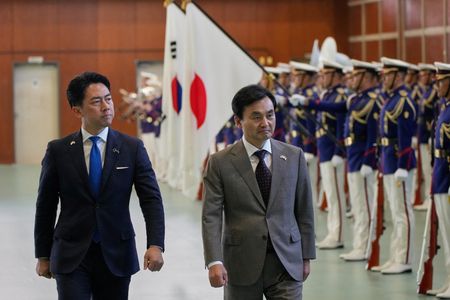
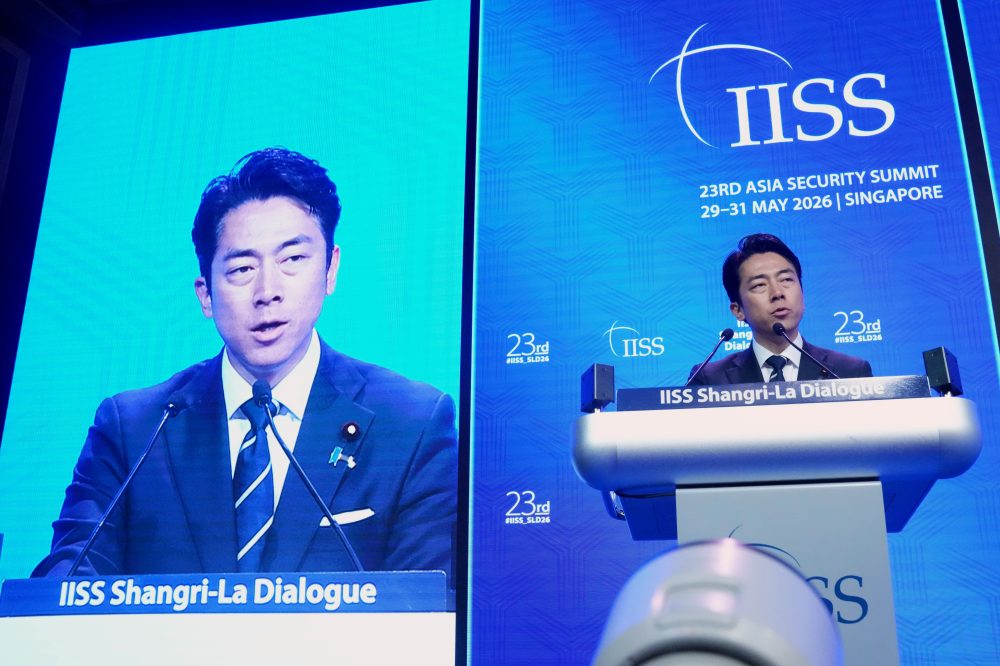
SINGAPORE – Japan’s defense minister Koizumi Shinjirō rejected claims of “new militarism” during remarks at Singapore’s Shangri-La Dialogue, the region’s top gathering for defense officials and military leaders.
Speaking on Sunday, Koizumi challenged the accusations with pointed comments directed at China. “Think about it. There’s a country that has a huge arsenal of nuclear weapons and strategic bombers. Japan has neither of such weapons, and yet Japan is labelled ‘new militarism’?,” he stated.
The defense minister emphasized Japan’s commitment to international cooperation, saying “Since the end of the Second World war, Japan has consistently respected international law, including the Charter of the United Nations, and has made sincere efforts tomaintain and strengthen a free and open international order.”
The comments come after China’s foreign ministry urged Asia-Pacific nations in May to remain alert and “jointly resist the reckless actions of Japan’s neo-militarism.”
Koizumi expressed disappointment about missing opportunities for dialogue, noting he felt “sad” about not being able to meet his Chinese counterparts at the conference.
Chinese Defence Minister Dong Jun has now skipped the Singapore security forum for two consecutive years, avoiding face-to-face meetings with international defense officials.
Manufacturing activity in China remained stagnant during May, according to official data released Sunday, as the sector faced challenges from declining domestic demand and increased production expenses.
The government’s manufacturing purchasing managers’ index (PMI) fell to 50 from April’s 50.3, hovering at the threshold that divides expansion from decline, the National Bureau of Statistics (NBS) reported. Financial analysts surveyed by Reuters had predicted the reading would hold at 50.
While production capacity increased, orders declined, with manufacturing PMI sub-categories showing production at 51.2 and new orders at 49.9. Raw material inventory levels registered 48.6 in the survey.
These PMI findings contribute to worries about economic deceleration, following information released earlier this month indicating growth pace slowed in April even as exports bounced back.
Ongoing challenges in real estate markets, job creation and household spending continue to hinder expansion, making China dependent on international demand to purchase goods from its manufacturing industries.
The Chinese government has pledged to tackle the supply-demand imbalance and established a more modest GDP growth objective for 2026, providing additional space for policy changes.
Military conflict in the Middle East, which began in late February and resulted in the practical shutdown of the crucial Strait of Hormuz, has driven energy costs higher, posing risks to manufacturer profitability as expenses climb.
A meeting between Chinese and U.S. leaders in Beijing during mid-May failed to produce an extension of the trade agreement the two nations negotiated late last year, though both countries committed to investigating opportunities for duty reductions on approximately $30 billion worth of products from each side.
External influences have affected Chinese manufacturers unevenly. Petrochemical companies and other primary industries have suffered most from rising imported material costs, while inventory building by purchasers worried about additional price increases and worldwide appetite for semiconductors and related artificial intelligence products have supported advanced manufacturing.
Technology and equipment manufacturing exceeded overall sector performance in May, recording PMI scores of 52.9 and 52.1, NBS information indicated. Operations in energy-intensive industries, however, declined.
The non-manufacturing PMI, covering services and construction sectors, increased to 50.1 from April’s 49.4, NBS data revealed.
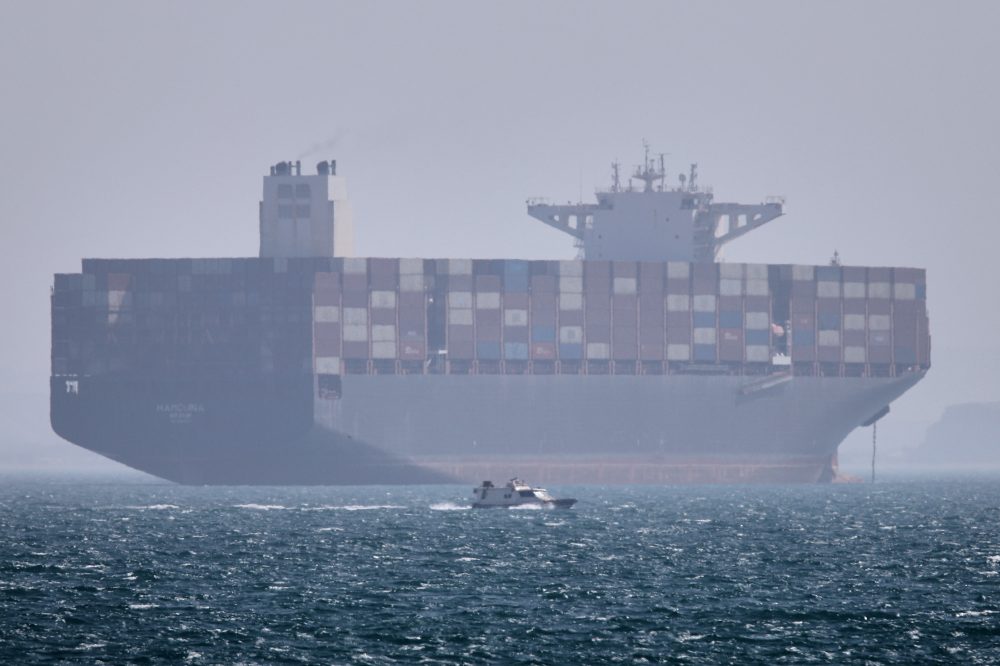
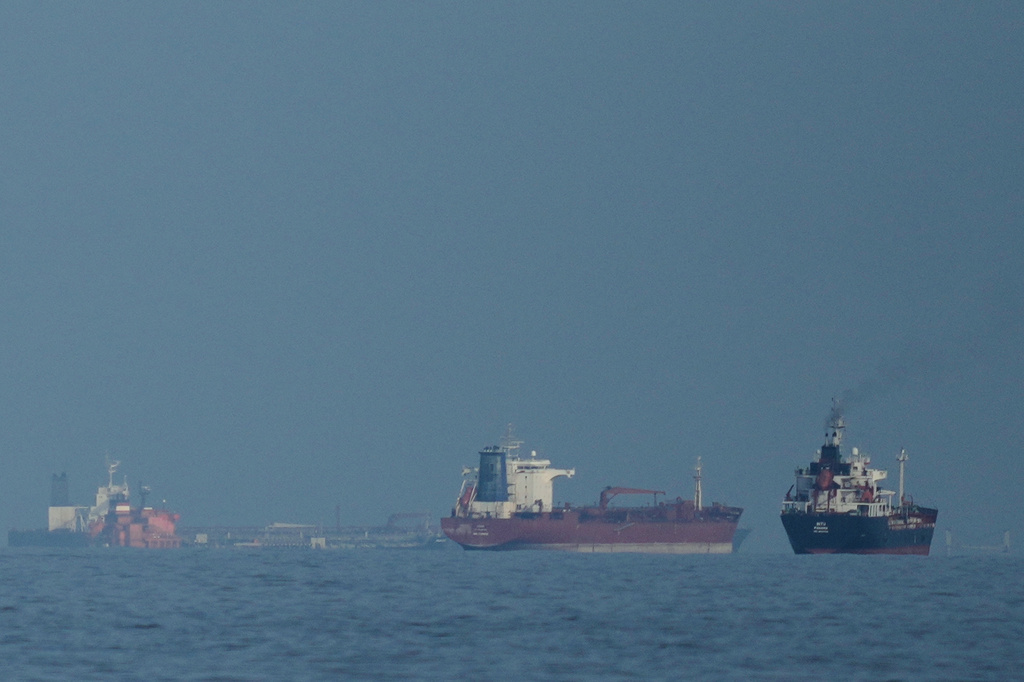
WASHINGTON — American military forces launched a missile strike against a commercial vessel attempting to violate the U.S. blockade of Iranian ports, hitting the ship’s engine room, according to U.S. Central Command officials on Saturday.
The cargo vessel Lian Star, flying under the Gambian flag, disregarded more than 20 warnings from American forces during overnight hours while attempting to reach an Iranian port, military officials reported. The vessel now sits disabled in the Gulf of Oman waters, and American forces have not yet boarded the ship, according to a U.S. official familiar with the operation who spoke anonymously about military activities.
This latest incident brings to six the total number of vessels that U.S. military forces have intercepted while attempting to violate the blockade. Military officials noted that one ship was permitted to continue its journey, while another 116 vessels have been turned away.
The blockade began on April 17 as America’s response to Iran effectively shutting down the strait following the outbreak of Middle Eastern conflict that started with American and Israeli military strikes on February 28. A tenuous ceasefire has remained in place since April 7, with the region now waiting to learn whether an agreement can be struck to extend the truce for 60 days while negotiations proceed regarding Iran’s controversial nuclear program.
The situation in the Strait of Hormuz, the crucial shipping channel between Iran and Oman, has created significant disruptions to the worldwide economy. Large quantities of oil, natural gas, and related products including fertilizer remain stuck in transit, adding pressure on both consumers and agricultural producers.
America’s blockade aims to restrict Iran’s shipping capabilities and further limit the country’s revenue streams, adding additional economic pressure to its already struggling economy.
President Donald Trump held meetings with his advisers on Friday but has not yet made a decision about proceeding with an agreement to extend the ceasefire and reopen the waterway. Iranian officials have stated that no deal has been completed.
Despite Iran’s claims that it must authorize all passage through the strait, commercial shipping has continued moving through the waterway, though at significantly reduced levels compared to pre-conflict volumes.
“Any violation of these regulations will place the security of their passage at serious risk,” Iran’s joint military command warned in a Saturday statement broadcast on state television, threatening to target any military ships that attempt to interfere.
Iran has imposed transit fees as high as $2 million, which maritime experts describe as a breach of fundamental international shipping law regarding free peaceful navigation.
Qatar’s deputy prime minister, Sheikh Saoud bin Abdulrahman bin Hassan bin Ali Al Thani, stated Saturday that his Gulf nation opposes charging transit fees, “but for certain times when they say they are going to use it for mine clearing or some usage of the fees for a temporary time, this is something that is negotiable, and it could be something that will help the transit of the Strait of Hormuz to be back to normal stage.”
A U.S. official had previously informed The Associated Press that American forces have not located or eliminated any mines in the strait.
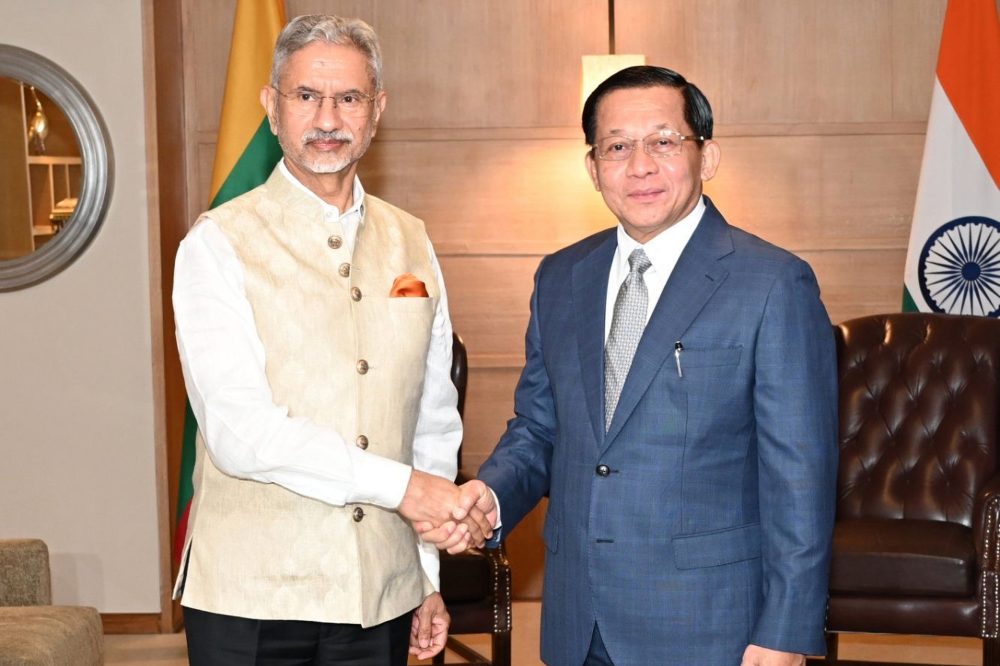
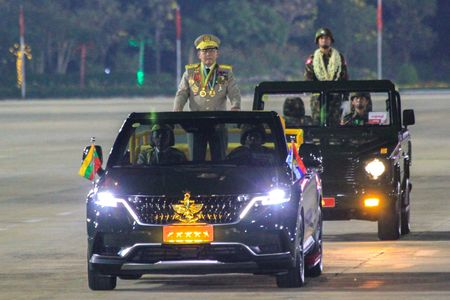
The head of Myanmar’s military-backed administration arrived in India on Saturday for official diplomatic discussions with key regional partners, according to state media reports.
Min Aung Hlaing’s journey marks his inaugural official trip to India since taking the presidential oath in April after elections that opposition voices claim were designed to preserve military control. His previous visit to India occurred in 2019 while serving as military commander.
Despite Western sanctions following the military’s 2021 overthrow of Aung San Suu Kyi’s elected administration and subsequent nationwide conflict, India has continued diplomatic relations with Myanmar’s military leadership.
According to state-controlled MRTV television, Min Aung Hlaing flew from Naypyitaw on Saturday morning, touching down at Gaya International Airport in Bihar state, close to the Buddhist pilgrimage destination of Bodh Gaya.
The broadcast indicated he would conduct discussions with India’s President Droupadi Murmu and Prime Minister Narendra Modi, along with government ministers and business community leaders, focusing on enhancing partnerships across economic, religious, cultural and social areas.
Cabinet members are traveling with the president, who will also tour significant infrastructure projects during his stay, MRTV reported.
The two nations share a 1,643-kilometer border and maritime boundaries in the Bay of Bengal. India currently shelters thousands of Myanmar refugees who escaped violence in Chin state and other conflict zones.
Myanmar holds strategic value for India’s security concerns, with both countries collaborating on border protection and intelligence operations against insurgent organizations in frontier areas.
Opposition voices have denounced the visit as providing unwarranted credibility to Myanmar’s military administration.
“We condemn India’s decision to host Min Aung Hlaing, who is a war criminal waging a campaign of terror against the Myanmar people,” said Yadanar Maung, a spokesperson for the Justice For Myanmar activist group, in an emailed statement on Friday.
She said India has long supported Myanmar’s military through military training programs and business ties.
“India must change course, stop awarding false legitimacy to the junta, stop profiting from the military’s campaign of terror against the people, and instead support the Myanmar people who are struggling and sacrificing daily for federal democracy,” said Yadanar Maung.
Northern Israel faced a barrage of rocket fire on Saturday as Hezbollah launched multiple attacks, forcing authorities to implement emergency measures including hospital relocations and educational facility shutdowns.
The Israel Defense Forces confirmed that rockets launched from Lebanon targeting the Kiryat Shmona region were successfully intercepted. Military officials later announced that another wave of rockets directed at Karmiel was also stopped, with no casualties reported from either incident.
Defense forces intercepted additional projectiles heading toward Safed and surrounding northern towns. Video footage from Nahariya captured rockets splashing into the Mediterranean Sea close to the coastline as people on the beach scrambled for cover.
Following the attacks, the IDF Home Front Command enacted enhanced security protocols throughout northern Israel. Educational institutions near the Lebanon border were shuttered, while schools in other northern areas were limited to operating only where protective shelters could be accessed quickly. Work facilities may remain open under identical shelter accessibility requirements. Outdoor public events are capped at 50 attendees, indoor gatherings at 200, and coastal areas have been shut down.
The Health Ministry declared that the Galilee Medical Center in Nahariya would transfer its operations to a fortified underground complex in response to the heightened security guidelines and ongoing rocket and drone strikes from Hezbollah.
Military sources also disclosed that forces targeted a Hezbollah artillery command facility in the Burj al-Shamali region of southern Lebanon on Friday. The IDF stated the location was occupied during the strike, with subsequent secondary explosions suggesting weapons stockpiles were housed within the building.
As Hezbollah intensified its attacks, opposition leaders Naftali Bennett, Yair Lapid and Gadi Eisenkot voiced sharp criticism of the government’s response.
“The government is returning us to the contemptible policy of containment and normalizing an intolerable and unacceptable situation,” Bennett wrote. “Over the weekend, sirens were heard every 20 minutes across the north and people were forced to seek shelter. This is not victory.”
The escalation occurred as Israeli and Lebanese military representatives began Pentagon-facilitated discussions in Washington on Friday, part of a new American-supported security coordination framework designed to prevent further escalation and strengthen the ceasefire established in mid-April.
A State Department official told Fox News Digital: “As we have continuously stated, the only path to lasting peace is through direct negotiations between the two sovereign governments.”
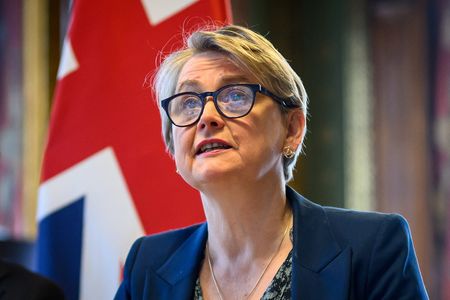
Britain’s foreign minister Yvette Cooper is scheduled to begin a diplomatic mission to Asia on Monday, with stops planned in both China and India to address pressing worldwide concerns ranging from regional conflicts to recent disease outbreaks.
During her visit to China, Cooper is set to hold meetings with her Chinese counterpart Wang Yi and Chinese Vice President Han Zheng on June 2. Following these discussions, she will head to the southern tech hub of Shenzhen for a science and technology-focused program scheduled for the following day, according to government officials.
The announcement came Sunday, following earlier reports about the planned diplomatic visit that cited multiple sources last month.
The trip builds on recent diplomatic progress between the two nations. Prime Minister Keir Starmer and Chinese leader Xi Jinping celebrated improved relations during the British leader’s January visit to China, committing to enhanced cooperation in trade, investment and technology sectors for shared benefits.
Cooper’s diplomatic tour to China and India — representing the world’s second-largest and sixth-largest economies respectively — takes place amid rising global tensions, increasing oil costs following the U.S.-Israeli conflict with Iran, and Britain’s ongoing economic challenges with slow growth.
The foreign minister is scheduled to arrive in India on June 4, where meetings are planned with External Affairs Minister S. Jaishankar along with business leaders, academic figures and government officials working on the UK-India Vision 2035 program.
Both nations established a free trade agreement last year designed to increase bilateral commerce and enhance market opportunities across various industries. However, India’s trade secretary Rajesh Agrawal noted last month that progress has faced obstacles due to London’s recent restrictions on steel imports.
According to British government officials, Cooper’s meetings “with these two major powers are expected to be focused on tackling the most significant global challenges.”
Starmer, who has faced significant approval rating challenges domestically, became the first British prime minister to visit China in eight years. His centre-left Labour government has prioritized rebuilding relationships with China as part of its foreign policy agenda.
Following a lengthy two-hour discussion in the Situation Room, President Donald Trump has not given his approval to a proposed agreement that would extend a ceasefire with Iran and begin fresh nuclear negotiations, keeping the future of any potential deal uncertain.
Despite the president’s earlier statement that he would reach a “final determination” on the proposal, the White House has made no announcement regarding a completed agreement or approved draft after the meeting concluded. Any deal being considered would need sign-off from both the U.S. president and Iran’s top leadership.
On Thursday, Vice President JD Vance announced that Washington and Tehran had developed a memorandum of understanding to end the conflict, awaiting Trump’s approval. The plan includes extending the ceasefire for 60 days and beginning fresh discussions about Iran’s nuclear program.
According to administration officials, President Trump brought together his advisers in the Situation Room to determine the terms he views as crucial for any agreement. Key among these demands are removing Iran’s stockpile of highly enriched uranium and reopening the Strait of Hormuz.
Trump posted on Truth Social: “Iran must agree that they will never have a Nuclear Weapon or Bomb. The Hormuz Strait must be immediately open, no tolls, for unrestricted shipping traffic, in both directions.”
Though administration officials suggest a deal could be possible, multiple matters remain unresolved. Remaining disagreements reportedly involve releasing Iranian assets and questions about managing and transferring nuclear materials.
Tom Barrack is departing his position as US Special Envoy for Syria as the Trump administration transitions toward establishing complete diplomatic ties with Damascus.
The Lebanese-American real estate billionaire received his appointment in May 2025 following Washington’s announcement to remove major sanctions against Damascus, maintaining his dual role as US ambassador to Turkey throughout his envoy tenure.
The Associated Press reported earlier this year that congressional members received notification about the State Department’s plans to “implement a phased approach to potentially resume embassy operations in Syria,” suggesting Barrack’s departure could pave the way for reopening the closed Damascus embassy.
Secretary of State Marco Rubio announced on X that Barrack’s special envoy term was concluding and hinted the position would not continue.
“Ambassador Tom Barrak has played an invaluable role as our Special Envoy to Syria,” Rubio stated.
“While that title is expiring, he will continue to play a leading role for the Trump Administration in both Syria and Iraq, where his expertise, relationships, and understanding of the America First agenda will continue to deliver wins on behalf of our great country,” Rubio added.
A close associate of President Trump for many years, Barrack led Trump’s 2017 inauguration committee prior to accepting diplomatic duties.
Throughout his special envoy tenure, Barrack participated in crucial elements of US strategy regarding Syria after Bashar Assad’s removal from power. His responsibilities encompassed managing sanctions relief efforts, reconstruction projects involving Turkey and Gulf nations, and collaboration against the Islamic State terrorist organization. He additionally facilitated negotiations between Syria’s government and Kurdish-led groups while supporting measures to strengthen Syrian President Ahmed al-Sharaa’s administration and expand US diplomatic relations with Damascus.
Following his 17 May meeting with al-Sharaa in Damascus, Barrack characterized Syria as “a laboratory for a new regional alliance based on diplomacy, integration and hope for the entire region”.
His service also faced opposition. In Lebanon, his comments encouraging journalists to conduct themselves in a “civilized” rather than “animalistic” fashion during a press briefing generated controversy. Syrian-Kurdish leadership also criticized him for adopting an overly “pro-Damascus” stance and applying pressure on Kurdish organizations to accept conditions promoted by al-Sharaa.
Barrack represents the fourth US special envoy to Syria over the previous 12 years. The United States has not designated an ambassador to Syria since Stephen Ford, whose service lasted from December 2011 through February 2014.
A judicial ruling in the Turks and Caicos Islands has resulted in a prison term of four years and 26 days for Michael Misick, the territory’s former premier, following his conviction in a major corruption case that spanned several years.
Authorities took Misick into custody in Brazil during December 2012 after Brazilian officials denied his request for political asylum. The charges against him included corruption, misappropriating public funds, and gaining personal profit from selling government property to development companies.
Friday’s sentencing decision imposed the four-year, 26-day prison term on Misick. Earlier in February, a court found him guilty on three bribery charges. Misick has maintained that the accusations were politically motivated.
The same court proceeding on Friday also resulted in prison sentences for former Cabinet minister McAllister Hanchell and attorney Thomas Misick, who is Michael Misick’s brother. Hanchell received a three-year sentence while Thomas Misick was given four years. Authorities placed all three men in custody, and they plan to challenge their sentences through appeals.
Michael Misick resigned from his premier position in 2009, not long after British authorities assumed temporary control of the territory’s administration and halted its constitution due to widespread corruption allegations. Direct British oversight concluded in November 2012 when the territory conducted new elections.
Venezuela’s former opposition presidential candidate Edmundo González issued a call Saturday for new presidential elections as interim President Delcy Rodríguez nears the five-month milestone of her administration following a U.S. military operation that removed Nicolás Maduro from power in early January.
The 76-year-old former diplomat received international recognition as the rightful victor of July 2024’s contested elections during a period marked by post-election turmoil and street demonstrations, with opposition groups claiming electoral fraud had occurred.
International observers validated electoral documentation demonstrating González had defeated Maduro in the voting.
Through a social media post, González declared the time has come to “build the conditions for holding presidential elections that serve as citizen instruments for change” while helping to restore institutional order and establish groundwork for governmental stability.
González’s statement arrives nearly five months after Rodríguez took control on January 5, subsequent to Maduro’s detention along with his spouse, both now facing legal proceedings in the United States.
Rodríguez, previously an associate of Maduro, received official recognition from U.S. President Donald Trump’s administration, leading to bilateral advancement on multiple agreements encompassing sanction removals, oil and energy sector discussions, and diplomatic relationship restoration.
Both Caracas and Washington have provided no signals that Venezuelan elections are approaching in the near future. U.S. recognition of Rodríguez as Venezuela’s exclusive leader has enabled her to restore connections with Western financial institutions and collaborate more openly with American business interests.
González emphasized that any electoral process must include “independent referees,” domestic and international monitoring, and political diversity among other requirements, while demanding political prisoner releases and “an end to the persecution” as essential conditions.
The opposition figure declared himself the “guardian” of his supporters’ mandate, who selected “freedom” for Venezuela during the 2024 election. González has remained in Spanish exile since September following arrest warrant issuance by Maduro’s government on conspiracy, usurpation and document falsification allegations — accusations he has strongly rejected.
González rose to prominence after being selected as replacement candidate for opposition leader María Corina Machado, who faced electoral participation restrictions.
Corina Machado held recent discussions with opposition figures in Panama, promoting democratic transition in Venezuela. She declared her intention to return by year’s end to seek the presidency.
American forces struck a ship with a missile Friday after the vessel attempted to break through the military blockade surrounding Iran, according to military officials.
U.S. Central Command announced Saturday that it launched a Hellfire missile targeting the engine compartment of the Lian Star, which flies under Gambia’s flag. The ship was traveling through international waters en route to an Iranian port located on the Gulf of Oman when the strike occurred.
Military personnel had previously issued “more than 20 warnings” to the vessel’s crew, alerting them that their journey violated the established U.S. blockade, Centcom officials stated.
Following the missile strike, Centcom confirmed the ship was “no longer transiting to Iran” but offered no additional information about the vessel’s current status.
The military blockade, which began on April 13, has successfully “redirected” a minimum of 115 vessels, according to Friday’s announcement from Centcom.
U.S. Secretary of Defense Pete Hegseth stated Saturday that American military forces remain prepared to launch additional attacks against Iran should diplomatic efforts to resolve the ongoing conflict between the two nations fail.
The continuing hostilities have driven up energy costs worldwide, particularly as Iran has largely shut down operations through the Strait of Hormuz.
Colombia’s administration on Saturday condemned Ecuador’s President Daniel Noboa for what it called intentional meddling in the country’s election after he pledged to remove trade tariffs following discussions with a Colombian presidential hopeful.
On Friday, Noboa announced after meeting with Colombian presidential candidate Abelardo de la Espriella that he planned to work together against narcoterrorism and would drop a security tax beginning June 1.
Colombia’s Foreign Ministry fired back Saturday, stating that Ecuador’s decision to lift tariffs on trade between the two nations comes from a mandate by the Andean Community of Nations and dismissed characterizing it as “a goodwill gesture by the Ecuadorian leader.”
The ministry further condemned Noboa’s statements as “deliberate interference in the electoral process” and called it “intrusion by a foreign leader” that represents a “flagrant violation of the principle of non-intervention in internal affairs.”
Colombian voters head to polling stations Sunday to choose who will replace President Gustavo Petro.
De la Espriella, representing the political movement Defenders of the Homeland, ranks among the leading contenders in polling.
Noboa has not specified whether he would stick with his plan if the ruling party candidate, Iván Cepeda, emerges victorious.
The commercial dispute between the two nations started in January when Ecuador’s president implemented what he called a security tax on Colombian goods, citing inadequate border oversight and pointing to a trade imbalance of at least $1 billion.
The levy started at 30%, slowly climbed to 50%, and eventually hit 100%. Only days before his recent statement, Noboa had announced it would drop to 75% beginning June 1st.
The Petro government, which has rejected claims of border neglect, struck back with matching actions: implementing tariffs as high as 75% on Ecuador’s products and banning energy exports to Ecuador.
The escalating conflict resulted in both nations recalling their ambassadors.
Earlier this month, the Andean Community of Nations determined that the mutual tariffs must be removed because they obstruct free commerce and set a deadline for both countries to comply. The organization is currently examining appeals challenging the decision.
American military forces have intercepted and disabled another commercial vessel attempting to violate the U.S. blockade of Iranian ports, according to a U.S. official familiar with the operation who spoke to The Associated Press on Saturday.
The bulk carrier Lian Star, flying under Gambia’s flag, disregarded repeated warnings from American forces during overnight hours while attempting to access an Iranian port, according to the official, who requested anonymity when discussing military operations. U.S. aircraft rendered the vessel inoperable in the Gulf of Oman, where it continues to drift, though American forces have not boarded the ship, the official stated.
This latest incident brings the total number of vessels stopped by U.S. military forces to six since the blockade’s implementation. One ship was permitted to continue its journey.
The American blockade commenced on April 17 following Iran’s effective closure of the strait after hostilities erupted with U.S. and Israeli attacks on Feb. 28. A tentative ceasefire has remained in place since April 7. The region and international community now wait for developments regarding a potential agreement to extend the ceasefire for 60 days while conducting fresh negotiations on Iran’s contested nuclear program.
Developments in the Strait of Hormuz between Iran and Oman have disrupted the global economy, with substantial quantities of oil, natural gas and related products like fertilizer effectively blocked from transport, intensifying pressure on consumers and agricultural producers.
The American blockade aims to restrict Iran’s shipping capabilities and further limit its revenue streams, adding pressure to its already struggling economy.
U.S. President Donald Trump conducted meetings with advisers on Friday but has not yet made a decision regarding proceeding with an agreement to extend the ceasefire and reopen the strait. Iran has indicated the deal remains incomplete.
Maritime commerce has continued moving through the strait at reduced levels compared to pre-conflict volumes, despite Iran’s claims that it must authorize all passages.
“Any violation of these regulations will place the security of their passage at serious risk,” Iran’s joint military command stated Saturday in a declaration broadcast on state television, cautioning that military vessels attempting to interfere would face targeting.
Iran has imposed transit fees reaching as high as $2 million, which maritime experts consider a breach of international maritime commerce principles regarding freedom of peaceful navigation.
Qatar’s deputy prime minister, Sheikh Saoud bin Abdulrahman bin Hassan bin Ali Al Thani, said Saturday the Gulf nation objects to charging transit fees, “but for certain times when they say they are going to use it for mine clearing or some usage of the fees for a temporary time, this is something that is negotiable, and it could be something that will help the transit of the Strait of Hormuz to be back to normal stage.”
The U.S. official previously informed the AP that American forces have not located or eliminated any mines in the strait.
The Pentagon is considering speeding up its planned military pullout from European installations and will share its strategy with alliance partners next month, according to a Saturday report from German publication Welt am Sonntag, which cited an unnamed Pentagon source.
The U.S. revealed plans in May to remove 5,000 military personnel from Germany, a decision many viewed as stemming from disagreements between President Donald Trump and European nations regarding the Iran war. Germany currently hosts approximately 35,000 active-duty American military members, representing the largest U.S. military presence in Europe.
When initially announced, Pentagon officials indicated the troop reduction would take between six and 12 months to complete.
The German newspaper’s report did not specify how significantly the timeline would be shortened or identify which military installations could be impacted. According to the publication, American officials plan to outline their strategy during next month’s North Atlantic Treaty Organization (NATO) Force Sourcing Conference.
Pentagon representatives did not immediately provide a response when asked for comment on the report.
GEORGETOWN, Guyana (AP) — A member of Guyana’s military sustained injuries during an armed confrontation with Venezuelan gunmen near the countries’ shared border, officials reported.
According to a statement from the Guyana Defense Force, their patrol boat operating on the Cuyuni River encountered hostile fire on Friday evening.
This incident represents another violent episode in a series of border confrontations that have occurred in recent years amid ongoing territorial disagreements, with Venezuela asserting claims over two-thirds of Guyana’s land. A prior assault resulted in injuries to eight Guyanese military personnel.
Both nations recently presented their cases before the International Court of Justice in The Hague regarding a disputed 62,000-square-mile (160,000-square-kilometer) area abundant in gold, diamonds, timber and additional natural resources. The contested region sits adjacent to significant offshore petroleum reserves that currently yield approximately 900,000 barrels daily.
Venezuela’s acting President Delcy Rodríguez informed the court in The Hague that diplomatic discussions rather than legal decisions should settle this longstanding territorial disagreement.
Venezuela maintains its claim to Essequibo based on historical colonial boundaries that included the area. The country contends that a 1966 Geneva agreement involving Venezuela, Britain and the former British Guiana, which became Guyana, invalidated boundary lines established by international arbitrators in 1899.
Turkey’s former opposition chief Ozgur Ozel proved his political influence remains strong Saturday, attracting tens of thousands of supporters to a demonstration in Ankara following a court decision that stripped him of his leadership position and potentially strengthened President Tayyip Erdogan’s grip on power.
Following his speech to the massive crowd – with attendance figures reaching into the tens of thousands according to private Anka news agency and opposition-aligned media – Ozel guided supporters through Turkey’s capital in response to last week’s court decision removing him from his role leading the primary opposition CHP party.
The judicial ruling invalidated the CHP’s 2023 party convention, bringing back previous chairman Kemal Kilicdaroglu – a controversial figure among party members who suffered defeat against Erdogan in that year’s presidential race.
This development may strengthen Erdogan’s prospects for continuing his leadership of more than twenty years in the NATO member nation and significant emerging economy.
Saturday saw Kilicdaroglu making his first appearance at CHP party headquarters since the May 21 court decision, where he promised to eliminate party corruption, referencing cases involving CHP-controlled municipal governments.
The removed leadership rejects these accusations, labeling them as having political motivations, which the government disputes.
While Kilicdaroglu addressed party members, Ozel spoke to a larger gathering outside the party’s Ankara regional headquarters.
“This is not an internal matter for the CHP,” Ozel declared. “This is a matter between Erdogan and the nation. On one side are the seized buildings; on the other, millions standing up for their party and their country.”
He argued the court’s decision failed to validate Kilicdaroglu’s authority and demanded an immediate party convention, while supporters shouted “Leader Ozgur!” and “Traitor Kemal!”
Ozel then guided a non-violent march to the memorial site of Mustafa Kemal Ataturk, who established modern Turkey and founded the CHP.
Ankara Mayor Mansur Yavas, viewed as a potential CHP presidential nominee alongside imprisoned Istanbul Mayor Ekrem Imamoglu – who remains Erdogan’s most significant political opponent – participated in the demonstration and also demanded a party convention.
Kilicdaroglu indicated such a gathering would occur “as soon as possible,” though he provided no specific timeframe.
Thousands of Austrian residents brought traffic to a halt Saturday on the Brenner motorway, a crucial transportation route linking Germany and Italy through the Alps, demanding relief from constant truck and tourist congestion overwhelming their communities.
Karl Muehlsteiger, mayor of Gries am Brenner, spearheaded the demonstration in one of several towns affected by the major highway that winds through the narrow Wipp Valley on massive concrete supports.
Traffic volume and pollution concerns in the valley leading to the Brenner Pass have created ongoing friction between Austria and Germany for many years. Officials in Austria’s Tyrol region have implemented different strategies to reduce traffic flow, frequently drawing criticism from German authorities.
“You are making history!” Austrian news agency APA reported Muehlsteiger declared to approximately 3,000 demonstrators who assembled on the highway at 1 p.m. for a symbolic blockade, following police closure of both corridor entrances earlier that morning. Motorists encountering the barriers reversed course and departed.
The demonstration lasted eight hours beginning at 11 a.m. but avoided the widespread disruption many anticipated, as drivers mostly followed advisories to avoid the area despite school holidays in several German regions, including nearby Bavaria.
Local media noted that railway service along the parallel route experienced heavy passenger loads.
Officials also restricted the local road connecting communities alongside the motorway to resident and local traffic only.
Meanwhile in Italy, suspected arson targeting electrical infrastructure overnight caused railway disruptions between Peri and Dolce near Verona on the Verona Porta Nuova–Brenner rail line.
Authorities are examining potential connections to radical environmental or anarchist organizations.
Colombia’s foreign ministry has leveled accusations of “deliberate interference” against Ecuador regarding Colombia’s upcoming presidential election on Sunday, following Ecuador’s decision to eliminate tariffs after discussions with a Colombian candidate.
The controversy emerged after Ecuadorean President Daniel Noboa announced Friday that his nation would eliminate bilateral tariffs beginning June 1, following an agreement reached with right-wing Colombian presidential hopeful Abelardo De La Espriella.
In a post on X, Noboa explained the tariff removal would occur after “confirming (De La Espreilla’s) willingness to promote a real and joint fight against narcoterrorism.” The Ecuadorean leader also mentioned they had reached an understanding regarding the transfer of Ecuadorean criminals currently in Colombia.
Colombia’s foreign ministry pushed back against what it called “the misleading presentation of the decision to remove the tariffs as a measure of good faith by the Ecuadorean government,” according to their official statement. However, the ministry indicated it would eliminate measures previously implemented to counter Ecuador’s tariffs.
Noboa’s office has not yet provided a response to requests for comment.
The neighboring nations have been locked in a trade dispute for several months, with Ecuador imposing tariffs due to Colombia’s alleged inability to address drug trafficking problems along their 586-kilometer (364-mile) shared border. Colombian President Gustavo Petro has disputed these claims.
De La Espriella, running as an independent candidate, will compete against Petro ally Ivan Cepeda and right-wing Senator Paloma Valencia, along with other candidates, in Sunday’s election.
Defense Secretary Pete Hegseth called on Asian nations to increase their military investments during remarks at a major security conference in Singapore on Saturday, citing concerns over China’s expanding military capabilities.
Speaking at the 22nd Shangri-La Dialogue summit, the defense secretary expressed what he described as “rightful alarm” regarding China’s military expansion efforts.
Despite his warnings about China’s military buildup, Hegseth adopted a relatively measured approach when discussing relations between the United States and China. In a notable omission, he avoided any mention of Taiwan during his address to the regional security gathering.
The defense secretary’s comments came as part of his speech to assembled leaders and officials from across the Asia-Pacific region at the annual security forum.
Israeli military forces conducted airstrikes and artillery bombardments near a historic medieval fortress in southern Lebanon on Saturday, as combat continued in communities surrounding the southern city of Nabatieh.
The Israeli military issued evacuation orders for more than twelve communities in southern Lebanon, occurring one day after Lebanese and Israeli military representatives conducted their first face-to-face discussions in decades at the Pentagon.
Lebanon’s president and prime minister met Saturday to address the situation in southern Lebanon, later releasing a statement saying they would increase their diplomatic efforts to halt Israeli destruction and bulldozing of residences and historic locations, as well as the evacuation orders.
According to Lebanon’s state-operated National News Agency, Israeli aircraft and artillery targeted areas surrounding the medieval Beaufort fortress, located approximately 15 kilometers from the Israeli border with commanding views over much of southern Lebanon. Israeli forces occupied this strategic fortress for 18 years before withdrawing from Lebanon in May 2000.
For several days, Israeli ground forces have been moving through communities near the fortress, including Yohmor and Zawtar al-Sharqieh close to Nabatieh, after crossing the strategic Litani River, which Israeli military has treated as an informal border.
Extensive territories to the south remain under Israeli military occupation, despite a U.S.-mediated ceasefire agreement from April 17.
The National News Agency documented airstrikes across various sections of southern Lebanon, including the village of Ansar where three people were killed. A drone attack on a roadway connecting Ebba village with Nabatieh injured two Lebanese soldiers, according to an army statement.
Hezbollah reported that its fighters launched rockets at Kiryat Shmona, northern Israel’s largest city on the Lebanese border. The organization stated the attack was retaliation for airstrikes that killed civilians in Lebanon. Hezbollah subsequently announced it also fired rockets toward the northern city of Safed.
Among Friday’s casualties in southern Lebanon was a Syrian family — Qais al-Bakir, his pregnant wife and their six children — who perished in an Israeli airstrike on the coastal village of Adloun, north of Tyre.
The family, members of Syria’s minority Alawite sect, had escaped to Lebanon from the central province of Hama following Bashar Assad’s fall in Syria in December 2024. Some Alawite sect members have faced revenge attacks from Islamist groups that ousted the former president.
The family was residing at a sheep farm and received no advance warning of the village strike, according to Ali al-Bakir, brother of the deceased man. He said the family intends to transport the bodies for burial in their Syrian hometown.
“He worked in farming and all he cared about was to feed his children,” his brother said.
The current Israel-Hezbollah conflict began March 2, when Hezbollah launched rockets into northern Israel two days following Israeli and U.S. attacks on Iran.
The war has resulted in 3,350 deaths in Lebanon and displaced over 1 million people.
In the Gaza Strip, a Palestinian nurse died in an Israeli strike Saturday, hospital officials reported, marking the latest death from Israeli fire since an unstable ceasefire stopped major combat in the territory last year.
The late Saturday morning strike targeted a Hamas-operated police checkpoint in the central city of Deir al-Balah. At least three others sustained injuries, according to the city’s Al-Aqsa Martyrs hospital, which treated the victims.
Israeli military representatives did not immediately respond to requests for comment.
The deceased nurse was identified as Jamal Abu Aoun, who was employed at Yafa Hospital in Deir al-Balah. His funeral took place at noon in the Al-Aqsa Martyrs hospital courtyard.
He represents the most recent Palestinian fatality in the coastal territory since a fragile October ceasefire agreement sought to end a more than two-year conflict between Israel and Hamas in Gaza.
Although major fighting has decreased, the unstable ceasefire has witnessed nearly daily Israeli fire. Israeli forces have conducted repeated airstrikes and regularly fire on Palestinians near military-controlled areas, killing at least 929 Palestinians, according to Gaza’s health ministry.
The ministry, operating under the Hamas-led government, keeps detailed casualty documentation considered generally reliable by United Nations agencies and independent experts. However, it does not provide breakdowns between civilians and militants.
Militants have conducted shooting attacks on troops, and Israel claims its strikes respond to those and other violations. Four Israeli soldiers have died since the ceasefire.
ISTANBUL (AP) — Massive crowds of demonstrators filled Turkey’s capital city Saturday, rallying behind the ousted chief of the nation’s primary opposition political organization.
A court directive issued May 21 stripped Ozgur Ozel of his leadership position within the Republican People’s Party, known as CHP. Numerous observers view this judicial action as a politically driven effort to weaken opposition forces.
Demonstrators initially assembled at Guven Park in Turkey’s capital center to listen as Ozel delivered remarks criticizing his dismissal. The crowd then accompanied him on an unplanned procession to the memorial site of Turkey’s founder, Mustafa Kemal Ataturk.
“They are attempting to replace the CHP’s elected chairman and appoint a trustee,” Ozel told supporters. “Today is the day to restart our march to power. I wish this were an internal party matter. This is not an internal matter for the CHP. This is a matter between (President) Recep Tayyip Erdogan and the nation.”
The appellate court’s decision reversed a 2023 party convention ballot that installed Ozel as CHP chief. The judicial ruling reinstated his former colleague, Kemal Kilicdaroglu, generating anger among party loyalists.
The 51-year-old Ozel took over from the 77-year-old Kilicdaroglu following 13 years of largely unsuccessful resistance to Erdogan.
Ozel has characterized the legal proceedings, which focused on supposed voting violations during the convention, as the most recent judicial assault on the CHP. Legal proceedings nationwide, primarily alleging financial misconduct in CHP-controlled local governments, have resulted in hundreds of elected representatives and party activists being arrested.
Government officials maintain that Turkey’s judicial system operates without bias and functions free from political influence.
While demonstrators assembled at Guven Park, Kilicdaroglu conducted a competing event at CHP offices in Ankara, which law enforcement officers raided the previous Sunday to eject Ozel and his allies.
Speaking to a significantly smaller audience, Kilicdaroglu criticized the former party leadership for allowing extensive financial misconduct.
The CHP currently matches the governing Justice and Development Party, or AKP, in recent polling data, and despite the next scheduled election occurring in 2028, many anticipate Erdogan will seek earlier voting.
Ozel inflicted significant damage on the AKP during 2024 local elections, consolidating the opposition’s control over major urban centers it had captured five years prior, including Istanbul and Ankara.
The CHP mayor of Istanbul, Ekrem Imamoglu, has become the most probable opponent to Erdogan, who has governed Turkey since 2003, in the upcoming presidential contest. However, he has been incarcerated since March of last year while confronting multiple criminal proceedings that could result in decades of imprisonment.
Lithuania’s capital city welcomed tens of thousands of visitors over the weekend for an extraordinary celebration dedicated to the nation’s beloved cold beet soup, transforming the entire city into a vibrant pink spectacle.
The three-day Vilnius Pink Soup Fest showcased šaltibarščiai, Lithuania’s traditional cold beet soup, with a massive coordinated “Pink Break” lunch where visitors from around the world gathered at extended tables to share the iconic dish. Event planners projected that attendees would consume over three metric tons (6,614 lbs) of kefir, a fermented milk product essential to the soup, throughout the celebration, with more than 100,000 people expected to participate.
This cooling soup serves as a summer staple for Lithuanians during the Baltic nation’s brief warm season. The traditional recipe combines beets and kefir with boiled potatoes, eggs, cucumbers and dill.
International visitors flocked to the unique celebration, including tourist Connor Holmes from the United Kingdom, who discovered the event online and believed “it was completely ridiculous in the best possible way.”
“Before I knew it, I was building a suit of pink knight armor, carrying a spoon instead of a sword, and decorating my shield with eggs, dill and potatoes,” he said. “At that point, coming to Vilnius and seeing all this craziness myself felt like the next logical step.”
The capital became an enormous pink entertainment zone as both visitors and residents donned pink attire. Additional participants celebrated wearing cucumber, egg and beet costumes while the city organized processions both on streets and along the Neris River.
Jolanta Žukienė, a teacher from Vilnius, attended the festival for the fourth consecutive year, bringing her three children and husband on Saturday.
“I can see how the number of attractions and visitors from abroad is growing, and Vilnius is becoming a real magnet for everyone who loves good food and unique experiences,” she said.
This celebration represents part of the city’s strategy to boost tourism to the Baltic nation.
“Looking at the crowds on the banks and the decorated boats, we joked that cold beet soup already dominates both land and water,” said Dovilė Aleksandravičienė, director of Go Vilnius, the city’s development agency. “Perhaps the air is next.”
Overnight drone operations by Ukrainian forces resulted in blazes at multiple Russian petroleum installations on Saturday, according to regional Russian authorities, marking another chapter in ongoing strikes against Moscow’s crucial energy sector.
Russian officials in the Rostov region reported that debris from downed drones ignited a blaze that harmed an oil storage facility and fuel tanker at Taganrog port, while administrators in the adjacent Krasnodar region documented a fire erupting at a petroleum depot in Armavir from similar causes. “Another facility of Russia’s oil industry has been reached — Armavir,” Ukrainian President Volodymyr Zelenskyy wrote on X Saturday of the attack in the Krasnodar region, noting that Armavir is “500 kilometers from our state border.” “We are rightfully bringing the war back to where it came from,” he wrote.
Ukrainian forces have broadened their medium and long-distance attack capabilities, utilizing drone and rocket systems developed within their borders to combat Russia’s 4-year-old invasion. Strikes against Russian petroleum infrastructure that serves as a crucial funding source for the invasion have become nearly routine events.
Meanwhile, Russia has employed its extended-range ballistic weapons to target Ukraine’s electrical infrastructure and bombard urban areas. The Ukrainian capital is preparing for additional intense bombardments following what the Russian Foreign Ministry described earlier this week as forthcoming “systemic strikes” on Kyiv. Zelenskyy said Thursday that he’s being “very persistent” in pressing the United States to provide his country with more Patriot air defense missiles that can counter devastating Russian ballistic missile attacks. The strikes on Russian petroleum infrastructure occurred one day after a Russian drone participating in an assault on Ukraine veered off course and hit an apartment complex in eastern Romania, wounding two individuals in the NATO member nation. The border violation heightened worries that the conflict might extend beyond the alliance’s boundaries and prompted widespread criticism throughout Europe.
Officials in the Georgian capital have opened a historic wine vault for the first time this week, revealing approximately 40,000 bottles that once belonged to Soviet dictator Josef Stalin.
The collection, now owned by the Georgian government, contains French and Georgian wine rarities stored in a repository where cobwebs hang from the ceiling and a sweet, musky aroma fills the dimly lit space.
Government officials intend to sell the collection at auction, with some bottles dating back to the early 1800s, and will direct proceeds toward establishing a wine education school within the country.
Irakli Gilauri, owner of Gilauri Wines who collaborated with the nation’s agriculture ministry on this initiative, stated the auction would help to “put Georgia on the collectors’ map.”
The South Caucasus nation promotes itself as wine’s birthplace, citing archaeological findings that show an unbroken winemaking heritage spanning 8,000 years.
Stalin, a Georgian native who ruled the Soviet Union from 1924 until 1953, had a passion for drinking and collecting wine.
His collection features bottles from Bordeaux’s premier estates that previously belonged to Russian Tsar Alexander III and his son Nicholas II. Following the 1917 Russian Revolution, Soviet forces confiscated the Imperial Romanov wine collection, with Stalin serving as its custodian while gradually incorporating his preferred Georgian wine varieties.
Wine collector Victor Chen, who made the journey from Dallas, Texas to view the collection, expressed enthusiasm while examining the dust-laden bottles containing amber-colored wine.
“I feel like you’re Indiana Jones opening up a cave: it could be nothing, it could be something,” Chen commented, making reference to the adventurous movie character.
“There’s not many things that are still historical moments at this point. And this could be one of them.”
ANHOLT, Denmark — Officials in Denmark have pulled the remains of a humpback whale onto shore after the animal’s body spent two weeks floating in shallow coastal waters following its death.
The marine mammal had become a media sensation across Germany, earning the affectionate names “Timmy” and “Hope” as news organizations provided continuous coverage of its condition after it was initially discovered near the German coastline on March 3.
Authorities discovered the whale’s body on May 14, washed up near the tiny island of Anholt in the Kattegat strait, which runs between Denmark and Sweden and links the Baltic Sea with the North Sea.
The animal’s death brought to a close several months of dramatic and sometimes controversial rescue attempts, which reached their peak on May 2 when crews loaded the whale onto a barge and attempted to transport it toward the North Sea, hoping to guide it back to its natural Atlantic Ocean environment.
Officials with the Danish Environmental Protection Agency say they plan to conduct an examination of the remains in the coming week to identify what caused the whale’s death.
On Saturday, the Danish media outlet “News5” broadcast live footage showing the carcass being pulled up onto the beach using cables connected to a truck positioned on shore.
Marine biologists remain uncertain about why the whale entered the Baltic Sea waters, which are located far from its typical living area and provide unsuitable conditions for the species. Some specialists have suggested the animal may have become disoriented while pursuing a school of herring or during its seasonal migration journey.
Recent changes to Canadian citizenship regulations have triggered a significant spike in applications from Americans seeking to obtain status through family heritage, according to new government statistics.
The revised regulations, which expanded eligibility beyond just first-generation descendants to include more distant family connections, have led to dramatic increases in monthly citizenship approvals. Government records show monthly approvals have climbed from just 275 when the updated law took effect in December 2025 to more than 1,000 additional cases each month this year.
Statistics reveal that approximately 48% of these new approvals through February came from applicants in the United States, highlighting the strong interest among Americans in securing Canadian status.
Legal experts attribute the high American participation to the longstanding connections between the neighboring nations, while also noting that many Americans view Canada as an appealing destination for living or education, particularly given recent political turbulence in the U.S.
William Hunnewell, a 41-year-old Seattle resident who submitted his application this year and anticipates a decision within nine to twelve months, explained his motivation. His great-grandfather homesteaded in Saskatchewan prior to World War One, and his grandfather was born in Canada.
“The biggest thing is it gives our family options,” Hunnewell explained. “If my kid wants to study or live in Canada, she can just go — there’s no visa, no deadlines.”
Immigration attorney Nick Berning, who practices in the United States, believes most newly approved citizens will continue residing abroad but want to maintain flexibility for the future.
“Current interest in Canadian citizenship is definitely influenced by U.S. politics,” Berning stated. “They want to stay in the U.S., but if things become untenable, they want a way out.”
Political divisions have intensified across America, with polling indicating growing dissatisfaction with the current administration. Relations between the two countries have also become strained following the imposition of heavy tariffs on Canadian products and discussions about annexing Canada as the 51st state.
Monthly approval figures from Immigration, Refugees and Citizenship Canada show steady growth: 1,140 approvals in January, 1,255 in February, and 1,405 in March under the new citizenship category.
The updated citizenship legislation came in response to a 2023 court decision that ruled restricting citizenship to only the first generation born outside Canada violated constitutional principles.
Individuals who have lived outside Canada for multiple generations can now qualify for citizenship by demonstrating ancestral connections. This expansion contrasts sharply with recent Canadian government initiatives to reduce immigration quotas.
However, Berning pointed out that new citizens who have never resided in Canada cannot automatically transfer citizenship rights to their children born in foreign countries.
A devastating highway accident in Afghanistan’s eastern region has claimed the lives of at least 22 people, including 10 children, when a transport vehicle carrying Afghan refugees overturned on Saturday. Approximately 36 others sustained injuries in the crash, with women and children comprising the majority of casualties, according to local authorities.
The fatal incident took place in Laghman province along the primary roadway connecting Afghanistan’s capital, Kabul, to Nangarhar province, according to Abdul Malik Niazai, the spokesperson for the provincial governor.
Among those who perished were 10 children and five women, while the wounded victims were transported to medical facilities in Nangarhar for treatment, Niazai reported.
Aminullah Sharif, the provincial director of public health, confirmed the death toll of 22 individuals and stated that roughly 36 people were hurt in the incident. According to Sharif, the crash happened when the transport vehicle veered into a roadside ditch after its operator dozed off while driving.
The victims were part of the large population of Afghans who have recently come back from Pakistan, following that country’s enforcement campaign against migrants that began in 2023, resulting in deportations and pressure on many to depart. Iran similarly stepped up removal efforts for Afghan migrants during this period. Millions of Afghans have since returned from both nations, including numerous individuals who were born in Pakistan and had lived and worked there for many years.
In another incident in eastern Nuristan province, a vehicle plunged from the roadway into a river on Friday evening, injuring the operator and leaving four occupants unaccounted for, provincial officials announced Saturday. Search and rescue teams were actively looking for the four missing individuals, the governor’s office reported.
Such transportation incidents occur frequently throughout Afghanistan, where roadway infrastructure is in poor condition and motorists commonly disregard safety rules.
Moscow announced Saturday that it has withdrawn its diplomatic representative from Armenia for discussions, expressing displeasure over the nation’s growing relationship with the European Union with elections approaching on June 7.
The Caucasus country, home to approximately 3 million residents, maintains a formal alliance with Russia but has been strengthening connections with Western nations in recent years, even while remaining economically tied to Moscow.
“The Ambassador of the Russian Federation to the Republic of Armenia, S.P. Kopyrkin, has been recalled to Moscow for consultations in connection with steps taken by the Armenian leadership toward rapprochement with the European Union,” Russia’s Foreign Ministry stated regarding diplomat Sergei Kopyrkin.
On Friday, a Moscow-led economic alliance of former Soviet states announced it would review potentially suspending Armenia for pursuing EU membership and urged the capital to conduct a public referendum on the matter.
Polling data for the upcoming June vote indicates that pro-Western Prime Minister Nikol Pashinyan’s political party holds a lead over opposition groups favoring Russia.
U.S. President Donald Trump has given his backing to Pashinyan, who rose to leadership following a 2018 popular uprising and secured re-election in 2021.
Armenian officials contend that Russia did not provide adequate security during military conflicts with neighboring Azerbaijan, particularly regarding disputes over Nagorno-Karabakh, a previously separatist territory with ethnic Armenian residents that Azerbaijan reclaimed in 2023.
Moscow maintains that Western nations are interfering in Armenian affairs to diminish Russian authority throughout the former Soviet territories.
Armenian officials have not yet responded publicly to the diplomatic recall announcement.
U.S. Defense Secretary Pete Hegseth called on Asian allies Saturday to increase their military expenditures in response to China’s expanding military capabilities, expressing concern about the nation’s rapid defense buildup during a major regional security conference.
Speaking at the Shangri-La Dialogue in Singapore, Asia’s leading gathering for defense officials, military leaders and diplomats, Hegseth emphasized the need for a more robust and independent network of allies to discourage aggression and maintain regional stability.
“There is rightful alarm regarding China’s historic military buildup and the expansion of its military activities in the region and beyond,” he said.
“A Pacific dominated by any hegemon would unravel the regional balance of power,” Hegseth said. “No state, including China, can impose its hegemony and hold the security or prosperity of our nation and our allies in question.”
The Pentagon chief announced that the U.S. anticipates its Asian partners to raise defense expenditures to 3.5% of GDP while committing to a $1.5 trillion investment in American military capabilities.
“Less Shangri-La, more ships, more subs,” Hegseth said, emphasizing that the region needed greater defense capability than conferences. Allies want stability, not escalation, he said.
“What they want, and what the United States delivers, is strength that is disciplined, resolve that is steady, and leadership that is confident enough to speak and walk softly while carrying a big stick.”
Despite his warnings about China’s military expansion, Hegseth adopted a moderate approach regarding U.S.-China relations, characterizing them as “better than they have been in many years,” with increased military-to-military communication helping to reduce tensions.
“We are meeting more frequently with our Chinese counterparts by maintaining open lines of military-to-military communication.”
Zhou Bo, a senior fellow at Tsinghua University and retired People’s Liberation Army senior colonel who was part of the Chinese delegation, described U.S.-China relations as “complicated.”
Nonetheless, he said Hegseth struck “a much better tone” this year than last, attributing the shift to Trump’s visit to China.
“Both sides have open channels of communication, the situation is not as exaggerated as the outside world makes it out to be,” Zhou said.
China, whose defense minister is skipping the dialogue for a second consecutive year, accused Hegseth last year of making “vilifying” remarks.
Hegseth reinforced President Donald Trump’s persistent call for allies to take on greater responsibility for their own defense expenses. Trump has specifically stated that European and NATO partners should decrease their dependence on Washington.
“The era of the United States subsidizing the defence of wealthy nations is over,” Hegseth said. “We need partners, not protectorates,” he added. “We don’t have a strong alliance unless everyone has skin in the game. No freeloading.”
Hegseth acknowledged contributions from allies including South Korea, the Philippines, Australia, Singapore, Malaysia and Thailand, and said Japan was taking concrete steps to bolster its defences.
Tokyo and Washington “must each pull our weight to strengthen the U.S.-Japan alliance,” he said.
Regarding Middle East tensions, Hegseth stated the United States remains prepared to resume military action against Iran if diplomatic efforts prove unsuccessful, as negotiators from Washington and Tehran work to resolve significant disagreements preventing an agreement.
“Our ability to recommence if necessary…we are more than capable,” Hegseth said. He added that Trump remains “patient” and is seeking a “strong deal” to ensure Iran does not obtain a nuclear weapon.
Trump said on Friday he would convene advisers in a secure White House setting to make a “final determination” on a proposal to end the Iran war.
Hegseth also dismissed concerns that the Middle East conflict would divert attention from Asia-Pacific priorities.
“We can do two things at one time.”
During his address, Hegseth did not reference Taiwan, a sensitive issue in U.S.-China relations.
When questioned about weapons sales to the island afterward, Hegseth minimized worries that a multi-billion-dollar package might be impacted as the United States reduces its weapons stockpiles during the Middle East conflict. “We feel very good about our stockpiles and how we use them,” he said.
Taiwan, which China views as its own territory, has been waiting for the U.S. to approve an arms sale that Reuters reported could be worth up to $14 billion.
Trump sowed uncertainty in Taipei by saying, after meeting China’s President Xi Jinping this month, that he was undecided on whether to approve the package.
Any decision on future arms sales would rest with President Trump, Hegseth said, signalling no shift in Washington’s longstanding approach despite recent engagement with Beijing.
“Those decisions will depend on the president and the nature of that relationship,” Hegseth said. “There’s been no change in our status.”
Three allied nations are joining forces to create unmanned underwater vehicles through their defense partnership, according to U.S. Secretary of Defense Pete Hegseth.
Speaking to reporters in Singapore on Saturday, Hegseth revealed that the United States, Britain and Australia are collaborating on this underwater drone technology as part of their AUKUS trilateral defense agreement.
The announcement highlights the ongoing military cooperation between the three countries under the AUKUS framework.
Emergency teams successfully extracted four additional individuals from a water-filled cave in Laos on Saturday, according to Thai rescue officials.
The Saturday rescue mission took place just hours following the Friday evening extraction of another person from the same flooded cavern.
All five individuals who have now been brought to safety were part of a seven-person group of Lao citizens who had ventured into the cave system located in Xaisomboun province while searching for gold. The group became stranded when floodwaters blocked their path out, leaving them stuck underground for over a week.
Vietnam’s highest-ranking official believes that strengthening relationships with neighboring China could enhance peace and stability throughout the region, despite ongoing territorial conflicts between the two nations.
Communist Party General Secretary and President To Lam shared this perspective during his inaugural interview with international media in his current position, speaking with Reuters on Friday.
“We do not pick sides,” Lam stated, emphasizing Vietnam’s balanced approach to foreign relations.
The Vietnamese leader explained that pursuing closer ties with China while working to resolve longstanding territorial disagreements in the South China Sea presents no conflict of interest.
“If we can maintain good relations and dialogue, then all disagreements can be resolved,” Lam explained through an interpreter.
“Having good relations with China, safeguarding our sovereignty and settlement of issues in the East Sea are mutually reinforcing, not mutually exclusive,” he added, referencing Vietnam’s terminology for the South China Sea.
Lam restated Vietnam’s established stance of resolving territorial disputes through international law, specifically citing the United Nations Convention on the Law of the Sea.
The territorial tensions between China and Vietnam are significant, with Vietnam claiming the Chinese-controlled Paracel islands and the complete Spratlys archipelago located further south. The Philippines, Malaysia, Brunei and Taiwan also have competing claims over this crucial shipping corridor, where military presence continues to expand, making it an increasingly volatile regional hotspot.
These comments come as Lam works quickly to elevate Vietnam’s international standing, seeking to strengthen relationships with China, the United States and other major nations while pursuing an aggressive economic growth strategy.
Lam characterized the rivalry between the United States and China as an “objective reality.”
“We do not approach our relations with major powers through the prism of security,” he noted, demonstrating Vietnam’s traditional flexible diplomatic approach known as “bamboo diplomacy.”
“We need good relations with major countries so that we can jointly address essential, important issues.”
Now serving in both the party leadership and presidential roles, Lam has become Vietnam’s most influential leader in recent decades, with his dual position enabling him to take a more active diplomatic role.
International diplomatic observers are carefully monitoring his leadership style as he develops a more assertive and adaptable stance for a country previously viewed as diplomatically reserved and careful due to its shared leadership structure.
Some experts have observed that concentrating power in a single individual could push the one-party system toward increased authoritarianism, while simultaneously allowing for quicker policy decisions.
Described as soft-spoken yet decisive, the 68-year-old Lam rose through Vietnam’s domestic security organization, an influential but discrete agency not typically associated with producing diplomatic leaders.
Lam’s Reuters interview occurred following his keynote address on Friday evening at Asia’s premier defense conference, the Shangri-La Dialogue in Singapore — marking the first time a Vietnamese party leader has delivered such a speech.
Speaking to an audience of international defense officials, military personnel, intelligence officers and scholars, Lam identified global challenges including weakening international rules and law, developmental crises involving reduced growth and climate change, and deteriorating trust between nations.
“The three crises confronting our world today are not inevitable realities that we are bound to accept,” Lam declared.
He advocated for strengthening international law, establishing inclusive and sustainable economic drivers, and promoting dialogue and openness.
During the post-speech interview in a hotel meeting room, wearing casual attire with a burgundy tie, Lam acknowledged to Reuters that his administration’s growth objectives were “ambitious and highly challenging” but expressed determination to reach them.
Vietnam aims to achieve developed, high-income nation status by 2045, targeting 10% GDP growth this year and continued double-digit increases in coming years, powered by advances in science, technology and digital innovation.
When questioned about whether the Iran crisis and other global challenges might require adjusting these targets, Lam maintained the core goals remained “within reach.”
“Our answer is clear: we will not adjust this objective downward.
“We believe there is no alternative path. If we fail to achieve this target, we will fall short of the broader development aspirations we have set for our country,” he concluded.
Air operations came to a temporary standstill at Munich Airport in southern Germany on Saturday morning following reports of a suspected drone in the airspace, according to German news outlets Focus Online and Bild.
Focus Online later reported that flight operations had resumed at the facility. However, the airport’s departure information showed that multiple flights scheduled around 10 a.m. local time (0800 GMT) experienced delays or cancellations, though not all services were affected.
Neither airport officials nor local police provided immediate responses when contacted for comment about the incident.
Emergency crews in Laos continued their mission Saturday to safely extract four villagers discovered alive inside a water-filled cave, where they have been stranded for 10 days following the successful rescue of one survivor the previous day.
The rescue operation aims to bring out the remaining four men Saturday after determining they weren’t prepared for evacuation on Friday. Teams are working to pump additional water from the cave system while simultaneously searching for two individuals who remain unaccounted for.
“One person has made it out safely, and we will not stop until the remaining four make it home too,” Norrased Palasing, a Thai cave diver participating in the operation, wrote Saturday on his Facebook page.
The first evacuation on Friday required approximately 30 minutes, according to rescue personnel. Footage captured the moment the survivor surfaced alongside a rescue diver, gasping for air before struggling through a tight, water-filled corridor and rising unsteadily. As rescue workers assisted him from the tunnel, someone could be heard cautioning others about his injured hands. Emergency responders then covered him with a foil blanket and helped him sit down.
Additional footage showed the individual exiting the cave entrance wearing a headlamp, walking shakily with support from two people who transferred him to other team members as onlookers gathered.
The group had reportedly gone into the cave the previous week searching for precious minerals when sudden flooding trapped them inside. Another villager managed to escape in time and notified authorities about the seven people left behind.
Search teams located five survivors on Wednesday, identified by their first names as Khamla, Mued, Ee, Ing and Laen. Officials have not disclosed which individual was brought to safety Friday.
The trapped men received supplies including water, soft food and thermal blankets for warmth, though video footage from inside the cave indicated their situation was worsening.
International rescue teams from Laos and Thailand have been joined by specialists from Japan and Malaysia. Additional experts from Indonesia, France and Australia have also arrived at the remote location in Xaisomboun province, approximately 120 kilometers (75 miles) north of Vientiane, the capital.
Multiple team members had participated in the complex 2018 cave rescue operation in northern Thailand that saved 12 schoolchildren and their soccer coach.
In video recorded Friday, roughly one hour before the first evacuation commenced, Thai rescuer Kengkaj Bongkawong of the Metta Tham Rescue Kalasin explained the operational difficulties they face.
The rescue team has established a base inside a large cave chamber, reachable only by navigating over 200 meters of winding, narrow, flooded passages with sharp walls. From that point, divers must travel through a submerged tunnel spanning about 30 meters to reach the stranded individuals.
“To dive in a cave, there are issues with the temperature, narrow areas, control of movement, and managing the panic of the survivor, which will be difficult, but we have to do it,” Kengkaj said.
The operation carries substantial risk as rescue teams guide survivors with no diving experience through water with zero visibility.
Video showed Thai diver Norrased and Finnish diver Mikko Paasi instructing the men on diving equipment use, including underwater breathing methods.
“All the way, breathe through your mouth only. Do not ever breathe with your nose, do you understand?” Norrased said during the session.
Emergency teams are also preparing to look for the two villagers who remain missing.
Kengkaj indicated the team intends to explore a section further inside the cave, roughly 20 to 25 meters past where the survivors were discovered. He warned, however, that the area is extensively flooded.
“That area has a lot of water. The water goes there because it’s even deeper than this place,” he said.
Regional officials in southern Russia reported Saturday that Ukrainian drone attacks overnight targeted a tanker vessel and oil storage facility in two separate cities near the Ukrainian border.
According to Rostov region Governor Yury Slyusar, who posted on Telegram, blazes at the tanker and throughout the port of Taganrog were put out without causing an oil spill. The governor reported two people sustained injuries in the port city, which is home to approximately 240,000 residents.
Mayor Svetlana Kambulova announced that a local emergency declaration, first implemented on May 27, would continue beyond its original timeframe.
In the adjacent Krasnodar region, officials from Armavir reported that a blaze at an oil storage facility within the city’s industrial area was successfully contained without any casualties. Armavir has approximately 185,000 inhabitants.
Governor Slyusar stated that regional air defenses intercepted nearly 50 drones throughout the area, with strike attempts documented across the province that shares a border with Ukraine’s Donbas region, where intense combat between Russian and Ukrainian forces continues.
Beyond the port city of Taganrog, the governor indicated that only minimal property damage occurred from the drone activity.
ATHENS, Greece — Soccer brought communities together on the streets of Greece’s capital as amateur teams prepared for their own version of World Cup competition.
Athletes competed and formed connections on neighborhood practice fields throughout Athens rather than in the massive venues hosting matches across Mexico, Canada and the United States.
The local tournament featured no premium seating or elaborate facilities — instead, migrant and Greek athletes played on municipal fields while spectators gathered along chain-link barriers as music echoed through surrounding neighborhoods.
Though teams representing Albania, Afghanistan, Cameroon, Guinea, Mali, Nigeria and Sudan won’t appear in the official World Cup, amateur athletes connected to these nations showcased their skills in Athens.
Numerous migrant athletes have been preparing for Europe’s tougher migration and asylum policies set to begin in June. However, the competition for migrant and refugee communities offered a welcome break — a festival of soccer and cultural pride.
One playing location sat near Plato’s Academy, where ancient Athenians once discussed citizenship concepts, with the Acropolis visible beyond the field. In the crowded Kypseli neighborhood, fans displayed Congolese and Ivory Coast banners while volunteers conducted drumming workshops nearby.
Squads played to African pop songs while coaches called out directions and fans applauded from the edges of the field.
Amelie Nguedia of Cameroon moved rhythmically onto the pitch before game time as teammates followed her lead, sharing laughter.
“Coming to play here is a real pleasure,” she said. “We aren’t professionals, but we love participating.”
Nguedia mentioned she would cheer for Ivory Coast during the World Cup, since Cameroon didn’t make the tournament.
Ivorian Moussa Sangare established the Kypseli Mundial tournament three years earlier, explaining he hoped to use soccer to address fear and suspicion directed at migrants in Greece.
The Mediterranean country serves as a primary entry point for migrants entering the European Union without authorization and experienced the 2015 refugee emergency. Though unauthorized border entries to Greece decreased over the past ten years, anti-migration feelings have intensified as the government implements tighter border security and promises more deportations.
“People are often afraid of migrants, but we wanted to change this narrative,” he said. “Interacting with migrants and second-generation migrants and doing things together: People change their minds through experience.”
Sangare remained constantly active during the event — organizing schedules, greeting teams, recording social media content and tidying up following games.
“For us, this tournament is like a mini–World Cup in Greece,” he said.
The scheduling of the Athens event held special meaning.
The five-week World Cup begins June 11. One day afterward, updated EU migration and asylum regulations become active, featuring stronger border enforcement and quicker deportations. Greece also plans to relocate migrant holding centers overseas to African nations.
Even with this context, Athens maintained a celebratory mood.
Games remained competitive without becoming aggressive. Rough plays prompted reactions from spectators. Coaches delivered instructions from tight sideline areas. Supporters exchanged friendly comments with opposing fans across the barriers.
Soon after, they would share moments of humor.
For most participants, the competition provided relief from everyday responsibilities. Many spend extended hours working behind the scenes in restaurant kitchens, hotels, construction projects and food delivery services throughout Athens.
“I am very proud to be playing in this tournament for the first time,” said Amissi, a midfielder from Mali, after completing a match. He is employed at a facility that builds water heaters.
Following competition among 21 teams, Nigeria’s squad captured the men’s championship, while Greek community club Fostiras earned the women’s trophy.
Head referee Chara Vogiatzidaki noted the tournament’s importance reached beyond field outcomes.
“There are so many countries and different cultures, and I think the main goal is to show respect for all communities,” she said.
“There are some teams that are technically very advanced, and others that are less so. But the important thing is that all the teams have the mindset of enjoying themselves,” Vogiatzidaki said. “That’s really beautiful.”
Delegates at Asia’s most important defense conference are asking one pressing question: “Where is China?”
Chinese Defense Minister Dong Jun has now missed the Shangri-La Dialogue for two consecutive years, choosing not to attend Singapore’s premier security gathering. His absence means missed chances to engage directly with U.S. Defense Secretary Pete Hegseth and defense officials from Australia, France, Britain, Japan and numerous other countries.
Instead of sending high-ranking military leadership, Beijing opted to dispatch a modest group of People’s Liberation Army “experts and scholars” – a significant downgrade from their typical influential representation.
The annual conference traditionally features a major address from China’s defense minister or another senior official outlining Beijing’s military philosophy and perspective on international conflicts. However, this signature presentation has been removed from this year’s schedule, just as it was in 2025.
Hegseth acknowledged the notable absence during his Saturday keynote address.
“I wish my counterpart was here at this conference, but I look forward to other options when we can cross paths and communicate, talk about things where often actions at sea or actions in the air are perceived differently,” he stated.
Australia’s Richard Marles described the situation as a missed chance for nations to engage in direct, honest discussions about regional tension points.
Despite skipping the Singapore forum, Dong Jun did hold talks with Hegseth when U.S. President Donald Trump visited China earlier this month.
Zhou Bo, a former PLA senior colonel participating in China’s delegation, minimized the significance of the defense minister’s absence.
“This is not the first time the defence minister is not attending,” he explained. “And academic delegations have come before. But it is true that the level of the delegation is relatively low this time.”
Several experts suggest Beijing made a strategic decision to avoid difficult questioning about Taiwan-related tensions and how military corruption investigations might affect China’s battlefield capabilities.
“My feeling is that they are trying to avoid tough questions,” explained Chong Ja Ian, a political scientist at the National University of Singapore.
“The question that comes up with the (Chinese) delegation, since it is so researcher heavy, is their representativeness and authoritativeness.”
Diplomatic sources indicate Beijing may have wanted to prevent a repeat of last year’s forum, when Hegseth characterized China as a regional threat and called on Asian partners to increase military expenditures.
At that time, Beijing accused the United States of unfairly demonizing China.
This year, Hegseth adopted a more moderate approach, though he warned that “no state, including China, can impose its hegemony and hold the security or prosperity of our nation and our allies in question.”
He also noted that U.S.-China diplomatic ties were in better shape than they had been for several years.
China started participating in the 23-year-old conference with typically high-ranking delegations beginning in 2007. The country sent its defense minister in 2011 and 2019, then maintained this practice from 2022 through 2024. The forum was cancelled in 2020 and 2021 because of the COVID-19 pandemic.
Bilahari Kausikan, an experienced Singapore diplomat, noted that the Shangri-La Dialogue’s main purpose has always been maintaining U.S. engagement in Southeast Asia and guaranteeing America’s defense secretary visits Singapore and the region annually.
“Whether China is represented by its defence minister is a secondary factor. It would be nice but not essential to have the Chinese defence minister here.”
The U.S. Defense Secretary Pete Hegseth called on Asian partners to significantly increase their military expenditures during a major defense conference in Singapore on Saturday, citing concerns about China’s expanding military capabilities across the region.
Speaking at the Shangri-La Dialogue, Asia’s leading gathering for defense officials and military leaders, Hegseth emphasized the need for stronger, more independent allied networks to prevent regional dominance by any single power.
“There is rightful alarm regarding China’s historic military buildup and the expansion of its military activities in the region and beyond,” he said.
The Pentagon leader warned against allowing any nation to control the Pacific, stating: “A Pacific dominated by any hegemon would unravel the regional balance of power. No state, including China, can impose its hegemony and hold the security or prosperity of our nation and our allies in question.”
Hegseth announced that the U.S. expects its Asian partners to raise defense spending to 3.5% of their GDP, while America commits $1.5 trillion to its own military investments.
The defense secretary emphasized that allies seek stability rather than conflict, explaining: “What they want, and what the United States delivers, is strength that is disciplined, resolve that is steady, and leadership that is confident enough to speak and walk softly while carrying a big stick.”
Despite his warnings about China’s military expansion, Hegseth adopted a more measured approach regarding U.S.-China relations, describing them as “better than they have been in many years,” with increased military-to-military communication helping manage tensions.
“We are meeting more frequently with our Chinese counterparts by maintaining open lines of military-to-military communication,” he noted.
Zhou Bo, a senior fellow at Tsinghua University and retired People’s Liberation Army senior colonel who was part of the Chinese delegation, described U.S.-China relations as “complicated.”
However, he said Hegseth struck “a much better tone” this year than last, attributing the shift to Trump’s visit to China.
“Both sides have open channels of communication, the situation is not as exaggerated as the outside world makes it out to be,” Zhou said.
China’s defense minister is absent from the dialogue for the second year running. Last year, China criticized Hegseth for making “vilifying” remarks.
Hegseth reinforced President Donald Trump’s ongoing position that allies must take greater responsibility for their own defense costs, stating that European and NATO partners should depend less on Washington.
“The era of the United States subsidizing the defence of wealthy nations is over,” Hegseth declared. “We need partners, not protectorates. We don’t have a strong alliance unless everyone has skin in the game. No freeloading.”
The defense secretary commended contributions from allies including South Korea, the Philippines, Australia, Singapore, Malaysia and Thailand, noting that Japan was taking concrete steps to strengthen its defenses.
Regarding Japan specifically, he said Tokyo and Washington “must each pull our weight to strengthen the U.S.-Japan alliance.”
Addressing Middle East tensions, Hegseth indicated the United States remains prepared to resume military action against Iran if diplomatic efforts fail, as negotiators from both countries work to resolve significant disagreements preventing an agreement.
“Our ability to recommence if necessary…we are more than capable,” Hegseth stated. He added that Trump remains “patient” and is seeking a “strong deal” to ensure Iran does not obtain a nuclear weapon.
Trump announced on Friday he would gather advisers in a secure White House setting to make a “final determination” on a proposal to end the Iran war.
Hegseth dismissed concerns that the Middle East conflict would divert attention from Asia-Pacific priorities, saying: “We can do two things at one time.”
When questioned about arms sales to Taiwan, Hegseth minimized worries that a multi-billion-dollar package could be impacted as the United States reduces its weapons stockpiles amid the Middle East conflict. “We feel very good about our stockpiles and how we use them,” he said.
Taiwan, which China considers its own territory, has been awaiting U.S. approval for an arms sale that Reuters reported could be worth up to $14 billion.
Trump created uncertainty in Taipei by saying, after meeting China’s President Xi Jinping this month, that he was undecided on whether to approve the package.
Any decision on future arms sales would rest with President Trump, Hegseth said, indicating no change in Washington’s established approach despite recent engagement with Beijing.
“Those decisions will depend on the president and the nature of that relationship,” Hegseth said. “There’s been no change in our status.”
Parliamentary elections commenced Saturday in Malta, with polling data indicating the ruling Labour Party is positioned to secure an unprecedented fourth consecutive term in office.
Prime Minister Robert Abela initiated the early election four years into the current five-year term, referencing future challenges facing the Mediterranean nation due to international uncertainties.
The country’s economic performance ranks among the European Union’s strongest, with 4% growth recorded last year, minimal inflation, and virtually no unemployment. Energy and fuel costs have remained frozen for nearly a decade, resulting in Europe’s most affordable rates.
Nevertheless, officials worry that Middle Eastern conflicts could increase inflation in the EU’s smallest member nation, which depends heavily on imports, and could damage the tourism sector as aviation fuel costs climb.
Multiple polling surveys have repeatedly indicated his Labour Party is positioned to secure a substantial parliamentary majority, similar to victories achieved in 2013, 2017 and 2022.
Although six political organizations appear on the ballot, Labour and the opposition centrist Nationalist Party have been the sole parties to gain parliamentary representation since 1966, with minor parties receiving under 5% of votes.
Abela has focused his campaign on economic achievements, pledging competence and stability.
The Nationalist Party under new leader Alex Borg has argued that the robust economy has failed to improve living standards.
A significant increase in migrant workers during the past decade has also sparked concerns about rising housing costs, overcrowding and strain on infrastructure and healthcare systems.
Election outcomes are anticipated around midday Sunday.
TEL AVIV, Israel (AP) — An Israeli reservist watched as his fellow soldiers celebrated enthusiastically, cheering each other on. They had just attacked a Palestinian vehicle traveling near the Israeli-controlled section of the Gaza Strip, leaving all occupants dead.
The military member said such incidents had become routine following the implementation of a fragile ceasefire in October. During his weeks of deployment in Gaza, he witnessed troops eagerly pursuing those who violated — or nearly violated — the yellow boundary line separating Israeli-controlled zones from Palestinian territories.
“It was a jungle,” the soldier, who is in his twenties, told The Associated Press. “After the ceasefire, the order was: If someone crosses the line, you shoot them.”
While diplomatic attempts to reinforce the agreement have reached an impasse, three military personnel shared with AP their experience of disorder in the war-torn region, citing unclear guidelines for engagement near the yellow boundary. The soldiers reported that some commanding officers publicly supported the ceasefire while privately expressing hopes for continued warfare in Gaza. Occasionally, forces were positioned too distantly or responded too hastily to properly identify their targets, according to one soldier — a worry also raised by a veteran whistleblower organization.
These military accounts offer an uncommon look into events within Israeli-controlled Gaza since the agreement took effect seven months prior. The soldiers — reserve forces deployed across Gaza from October through January who have since returned home — requested anonymity due to concerns about potential social isolation for their statements. They explained their motivation for speaking publicly stemmed from anger and grief over their observations.
AP has recorded instances of Palestinian civilian shootings, including children at play, near the yellow boundary. The soldiers indicated that fatal incidents seemed continuous throughout the unstable agreement.
“To call it a ceasefire is a joke,” one soldier told AP.
Following the ceasefire implementation, Israel repositioned forces to a buffer area marked by a yellow boundary, securing control over slightly more than half the territory. The agreement requires Israeli forces to execute a more complete withdrawal, though no specific timeline exists. The diplomat backed by the U.S. who supervises the truce reports that advancement has stalled due to the primary obstacle of disarming Hamas, which affects all other matters — including Israeli pullbacks and rebuilding efforts.
During this period, Israel has extended its authority over additional Gaza territory. Each side has blamed the other for ceasefire violations.
The boundary’s precise position has remained unclear and sometimes unmarked. In certain areas, yellow blocks and barrels indicate its location; elsewhere, it has occasionally gone completely unmarked.
The Israeli military brought AP this week to observe a portion of the yellow boundary in central Gaza, close to the Maghazi refugee camp. The boundary was clearly visible there, marked by a broad dirt pathway and small yellow indicators. To the east lay an empty expanse of open ground extending to a heavily defended Israeli military position approximately 500 meters distant.
An Israeli military commander stated that Hamas operates on the opposite side of the boundary and regularly dispatches individuals — both fighters and civilians — toward and across the line to evaluate the army’s preparedness and reactions.
“There is no reason for anyone to come near the line,” he said, speaking on condition of anonymity under military rules. “There’s nothing here.”
The army claims the complete boundary, spanning Gaza’s entire length, now has clear markings.
Since the ceasefire began, over 900 individuals have died in Gaza — dozens of them near or beyond the yellow boundary, according to Gaza’s Health Ministry. The ministry does not specify how many were fighters, but unarmed men and children were among the casualties.
Israel’s military has stated that most individuals killed while crossing the boundary presented a danger to troops. However, soldiers who spoke with AP and Breaking the Silence — the whistleblower organization that has gathered troop testimonies during the war — report that soldiers sometimes acted from too great a distance, too rapidly, and under excessive pressure to make accurate determinations.
Israel’s army informed AP that the zone near the yellow boundary represents a “sensitive operational environment” with posted warnings against approaching. It stated the army does not target civilians merely for approaching the boundary and that engagement rules mandate warnings before force is used. In cases involving immediate danger, forces have authorization to respond, it explained.
This marked the combat soldier’s second deployment in Gaza when the ceasefire commenced. He reported being positioned several hundred meters from the yellow boundary and witnessing multiple individuals attempting to cross it being killed by soldiers.
Soldiers conducting shootings or requesting drone attacks do not always identify who is crossing the boundary, he explained. While soldiers must provide location coordinates and obtain superior approval before attacking, delivering precise information becomes difficult as people move, he noted. He described soldiers reporting coordinates based on assumptions or the last observed location of someone.
Breaking the Silence reports that general engagement rules are extremely lenient, particularly regarding boundary crossers, with instructions in many zones being “shoot to kill.” Executive director Nadav Weiman, a veteran who served in Gaza but not during this conflict, identified distance from targets and some overeager soldiers as problematic factors.
He stated that directives and policies from military leadership “have created a reality where countless civilians have and are being killed for crossing invisible lines.”
In one testimony to Breaking the Silence, documented in interview notes reviewed by AP, a soldier describes instructions for troops regarding anyone crossing the yellow boundary: “eliminate him no matter what.”
Another soldier deployed in Gaza for weeks following the ceasefire said commanders emphasized maintaining the boundary at any cost.
“There was a general feeling that human lives are not valuable,” he said.
Regarding yellow boundary marking, the soldier reported his superiors called it “too much work,” not their responsibility, and claimed Palestinians should know its location.
Gaza deployment created emotional strain, he explained.
While snipers sometimes fired warning shots at people approaching the boundary, he said, commanders instructed troops to take greater self-protective measures. The soldier interpreted this as authorization for more lethal shooting.
He and other soldiers who spoke with AP said troops generally believed, based on leadership and peer actions, that Israel planned a permanent Gaza presence rather than eventual withdrawal.
An internal report distributed among aid organizations last month and reviewed by AP indicated that throughout Gaza, Israel has grown “increasingly proactive” with its attacks.
Independent data from the Armed Conflict Location and Event Data Project, a nonprofit based in the U.S., showed April as Gaza’s deadliest month this year and reported that documented deaths near the yellow boundary or of people who crossed it rose over 25% from January to April, increasing from 58 to 73.
This week, Israeli Prime Minister Benjamin Netanyahu announced Israel controls 60% of Gaza and indicated the next objective was advancing to 70% control.
The soldiers informed AP that conditions on the ground make the ceasefire seem nonexistent.
“We need to stop using this term,” one said regarding the word ceasefire. “It’s not serving people that want to stop the war.”
Three high-ranking European intelligence officials have revealed to The Associated Press that Russia’s spy operations are becoming increasingly bold in their attempts to obtain Western technology and military secrets, driven by economic pressure from international sanctions.
According to these officials, Moscow’s operatives are establishing fraudulent businesses, enlisting intermediaries, and using digital espionage specialists and hackers to collect intelligence that might also be weaponized against vital infrastructure.
International sanctions imposed over four years have restricted Moscow’s access to European machinery, technology, and research, while the ongoing conflict in Ukraine has strained critical industries and threatens to push the nation toward economic crisis.
Christoffer Wedelin, deputy head of operations at the Swedish Security Service, explained that Russian agents “really know what they need” and are investing “serious effort” into obtaining sophisticated machine tools, manufacturing equipment, research materials, and dual-use technology.
According to Wedelin, Russia is focusing on Sweden’s defense sector and cutting-edge research involving the nation’s most sophisticated weapons, including the Gripen fighter jet. Moscow is also attempting to acquire camera and laser technologies originally designed for civilian applications that could be incorporated into Russian military systems, he noted.
Juha Martelius, director of Finland’s Security and Intelligence Service, stated that Moscow is also attempting to acquire technology to maintain competitiveness or gain advantages over the West in coming decades.
“We’re talking about space technology, quantum … arctic technology, marine technology,” he explained, noting that space technology is something Russia requires “right now,” though he didn’t provide additional details. Nations utilize such technology for satellite imagery, communications, and navigation systems.
Martelius also mentioned that Russia requires sanctioned computer technology and software updates for machine tools.
On Wednesday, Anne Keast-Butler, director of the U.K’s signals intelligence agency, charged Russia with “relentlessly targeting” the U.K. and its European partners through technology theft and planning sabotage and assassination operations.
Swedish authorities arrested two individuals in May on charges of sanctions violations connected to a Turkish company that has shipped dozens of metalworking and metal-turning machine tools to Russia.
Wedelin warned that as these technology acquisition schemes become more sophisticated, businesses must recognize they could inadvertently become part of Russia’s military supply network.
“All of the security and intelligence services in Russia are helping out on the state’s efforts to get this,” he stated.
Moscow is also launching cyberattacks against European companies and critical infrastructure to collect intelligence, which it could use “when they get the chance and when it serves their purpose,” Wedelin explained. He referenced an attack on a Swedish power facility last year.
Russian-affiliated groups attempted to “destroy” the facility but were unsuccessful because security systems identified the breach, Wedelin said. He noted the attack was partially designed to weaken Western support for Ukraine.
Previously, Sweden’s security agencies had primarily observed reconnaissance for possible attacks, intelligence collection, or activities connected to cybercriminals. The attack represented a “switch” in Russia’s approach, Wedelin said.
“They’re no longer caring as much about potential attribution after their activities, so they are taking greater risks to achieve their goals,” he explained.
Russia’s escalating aggressive methods may indicate growing internal worries about its economy, which “is not doing well at all,” according to Kaupo Rosin, head of Estonia’s Foreign Intelligence Service.
Martelius reported that approximately one-third of Russia’s gross domestic product is currently allocated to the war effort. The conflict and resulting sanctions have reduced growth and sustained high inflation.
Russian leadership projected a budget shortfall of 3.7 trillion rubles ($52.1 billion) for all of 2026 and had already accumulated about 3.4 trillion rubles ($47.9 billion) by February’s end, Rosin reported.
The Iran war that began on Feb. 28 has provided relief by driving oil prices higher. The U.S. has issued sanctions exemptions for Russian oil sales and the U.K. reduced its sanctions to attempt lowering global fuel costs.
Higher revenues since then have probably enhanced Russia’s budget, but “it doesn’t save them,” Rosin said, adding that continued Western pressure could lead Moscow to face a financial crisis by year’s end.
Rosin said intelligence reviewed by his agency indicates a more pessimistic outlook among Russian officials over the past six months, with the narrative of “total victory” in Ukraine having disappeared. Keast-Butler, of British intelligence, reported nearly 500,000 Russian soldiers have died in Ukraine since the comprehensive invasion in 2022.
Russia and Ukraine have generally kept their battlefield casualty numbers confidential.
Stagnant battlefield progress and economic difficulties have many Russian officials privately questioning “what is this all for,” Rosin said, referencing intelligence reports.
Martelius, from Finland’s intelligence service, said that although some reports about the Ukraine war may have been “sanitized” before reaching President Vladimir Putin’s office, he believes the Russian leader understands the economic difficulties fairly well.
However, that doesn’t indicate political change will occur.
It is “very dangerous … to start analyzing Russia as if it is some country like ours,” Martelius said. “It is not.”
SINGAPORE — Defense Secretary Pete Hegseth delivered reassurances to Pacific region partners during a Saturday address, confirming America’s ongoing dedication to the area while adopting a more moderate stance regarding China compared to his previous statements.
During his presentation to international leaders, diplomatic representatives and senior security personnel at Singapore’s Shangri-La defense summit, Hegseth emphasized that the Pacific region “has profound implications for U.S. security and prosperity.” He stated Washington’s objective was to “achieve a lasting and favorable balance of power in the Pacific.”
This marked Hegseth’s second appearance at the annual gathering. During his previous participation, he drew criticism from Beijing after delivering stark warnings about China’s escalating threats, especially regarding Taiwan. He had declared that China was no longer merely expanding its armed forces to capture Taiwan, but was “actively training for it, every day.”
However, this year’s conference occurred approximately two weeks following President Donald Trump’s visit to meet Chinese leader Xi Jinping in Beijing. After that diplomatic encounter, Trump praised Xi as a “great leader” and expressed optimism about having a “fantastic future together.”
Hegseth, who accompanied Trump during the Beijing visit, revealed that both leaders had reached an understanding that China and the United States should “build a constructive relationship of strategic stability, based on fairness and reciprocity, reaffirming that while our nations will vigorously protect our respective interests, we can secure practical, mutually beneficial agreements where our interests align.”
Nevertheless, he maintained that preventing Chinese dominance over the Indo-Pacific remained a key American objective.
“There is rightful alarm regarding China’s historic military buildup and the expansion of its military activities in the region and beyond,” he stated.
“We share a clear-eyed assessment of that security environment and a mutual understanding that a Pacific dominated by any hegemon would unravel the regional balance of power and undermine the equilibrium we all seek to preserve,” he added.
Following the Xi-Trump discussions, the American president questioned Washington’s commitment to Taiwan’s defense, describing a pending $14 billion weapons package as “a very good negotiating chip for us” with China.
China maintains territorial claims over the democratically governed island, with Xi refusing to eliminate military action as an option for reunification. American law mandates providing Taiwan with defensive capabilities, though the U.S. maintains “strategic ambiguity” regarding potential military intervention if China attacks the island.
Hegseth informed attendees that there was “no change in our status” concerning Taiwan, but declined to discuss the weapons agreement.
“Any decision about future Taiwan arms sales, as the president said, will rest with him,” he explained.
He emphasized the Trump administration’s demand that allies boost defense expenditures, declaring “we need partners, not protectorates.”
He praised multiple Asian nations for their contributions while criticizing unnamed European allies who he claimed became “distracted by empty globalist rhetoric about the rules-based international order.”
“Our partners in Asia have long understood that the bedrock of a durable partnership is not based on idealistic values but on the concrete alignment of national interests,” he stated.
“When our interests diverge, we adjust pragmatically, without the drama or the moralizing,” he continued. “I think Western Europe might take note — this is a mindset we fully embrace.”
Hegseth omitted references to the Ukraine conflict or Iran during his presentation. When questioned about Iran, he simply noted that Trump had assured him that upon completion of Tehran negotiations, “any deal will be a good deal.”
Defense Secretary Pete Hegseth declared Saturday that the United States stands prepared to resume military operations against Iran should diplomatic negotiations fail to produce an agreement, as representatives from both nations continue working to overcome significant obstacles to a deal.
“Our ability to recommence if necessary…we are more than capable,” Hegseth stated while speaking in Singapore.
“Our stockpiles are more than suited for that, both there and around the globe, so we’re in a very good place,” he continued.
During his remarks at the Shangri-La Dialogue, the region’s leading conference for defense officials, military leaders and diplomatic personnel, Hegseth emphasized that America remains committed to the Asia-Pacific area despite ongoing Iranian hostilities.
“We can do two things at one time. We’re super-charging our defence industrial base so that we’re building 2X, 3X, 4X the munitions very soon to ensure that all of our (operations) plans are properly funded throughout the world,” he explained.
The Defense Secretary characterized President Donald Trump as “patient” and seeking to negotiate a “great deal” that would prevent Iran from acquiring nuclear capabilities.
Trump announced Friday his intention to convene in a secure White House location to reach a “final determination” regarding a proposal to halt the Iranian conflict, which would extend a truce established in early April for an additional 60 days while negotiators work toward a lasting resolution.
The military campaign initiated by the United States and Israel on February 28 has resulted in thousands of casualties, predominantly in Iran and Lebanon, while creating worldwide economic disruption through elevated energy costs caused by Iran’s blockade of the Strait of Hormuz.
New Zealand’s defense minister announced Friday that the country plans to gradually increase military expenditure to reach a target of 2% of GDP over the next eight years, representing nearly double current spending levels.
Defense Minister Chris Penk outlined the strategy during remarks in Singapore before the start of the Shangri-La Dialogue, Asia’s premier defense conference. He emphasized the government’s goal of maintaining consistent growth in military funding.
“As much as possible, it’s our intention to have a smooth and steady upward trajectory to 2 percent,” Penk stated during his interview with Reuters.
Penk acknowledged that spending patterns may fluctuate during periods when the country purchases major military equipment and platforms, but stressed the overall objective remains doubling New Zealand’s defense budget to strengthen military capabilities.
The defense minister assumed his role in April, taking over from Judith Collins following her retirement after an extensive political career.
These remarks follow the government’s announcement last week of NZ$1.58 billion ($924.62 million) in additional defense allocations for the 2026 budget as part of military modernization efforts.
The planned investments include acquiring two new surveillance and intelligence drones designed for operations in the South-West Pacific region and polar environments. New Zealand is also seeking long-term replacements for its aging pair of Anzac-class frigates and the multi-role vessel HMNZS Canterbury.
Essential maintenance work for the surface fleet is also in preparation phases.
Speaking during a panel at Saturday’s dialogue, Penk revealed that Wellington continues assessing British and Japanese alternatives for the frigate replacement program.
The defense spending increases are part of a broader budget that includes enhanced funding for education and healthcare, despite Prime Minister Chris Luxon’s conservative government implementing an otherwise restrictive fiscal approach this week.
Government projections show a budget deficit of NZ$15.06 billion for the fiscal year concluding June 30, 2026, representing an improvement from the NZ$16.93 billion deficit forecast in December’s mid-year review.
As a treaty partner with Australian forces, New Zealand has been expanding its presence throughout East Asia alongside Western military forces and their allies in response to China’s expanding military capabilities.
“I think the word inter-operability is an important one for us, and I would add inter-changeability, certainly with regard to Australia, who’s our nearest neighbour, but also a formal ally,” Penk explained.
“I think it’s important that we are very visibly present…in the Asian region, and we do things in conjunction with the likes of Korea and Japan,” he continued, emphasizing the importance of maintaining and exercising navigation freedoms.
Myanmar’s newly appointed president will travel to India this Saturday for his inaugural foreign trip since assuming civilian leadership, marking a significant diplomatic milestone less than two months after his transition from military junta commander.
The five-day diplomatic mission will include meetings with Indian Prime Minister Narendra Modi and represents Myanmar’s gradual re-entry into regional diplomacy, five years after neighboring countries isolated the Southeast Asian nation’s military government following their seizure of power.
India views this visit as a chance to reduce China’s substantial sway over Myanmar while pursuing access to the nation’s valuable rare earth mineral reserves and strengthening security along India’s northeastern frontier, according to policy experts.
“After changing into civilian clothes as president, Min Aung Hlaing is looking to boost diplomatic engagement across the region,” said Richard Horsey, senior Myanmar adviser at Crisis Group.
“He expects more normal ties with ASEAN,” Horsey added, referring to the grouping of 11 southeast Asian countries, “with support from Thailand and some other member states. He is also likely to visit Beijing soon to meet Xi Jinping. India is Myanmar’s other key neighbour.”
A Myanmar presidential office representative contacted by phone refused to provide details about the upcoming visit.
Indian foreign ministry spokesman Randhir Jaiswal told reporters on Friday: “All issues that form part of the gamut of relations between Myanmar and India will come up for discussion.”
The military takeover occurred at dawn on February 1, 2021, when Min Aung Hlaing removed the democratically elected civilian administration headed by Nobel Peace Prize winner Aung San Suu Kyi, triggering widespread protests that evolved into a nationwide armed resistance against military rule.
The power grab generated international criticism, including from the ASEAN alliance that prohibited Myanmar’s military leaders from attending its conferences, leaving the new military government increasingly cut off from the international community.
A catastrophic earthquake last year offered a diplomatic opportunity for Min Aung Hlaing, who attended a regional conference in Bangkok, an opening he hopes to expand following a controversial election that led to his presidency.
“He is seeking more and more regional and international respectability post-election,” said Gautam Mukhopadhaya, a former Indian ambassador to Myanmar.
Despite Beijing’s historical support and extensive investments in Myanmar, Min Aung Hlaing’s decision to make India his first international destination partly aims to offset China’s extensive influence, analysts explained.
“This has been part of Myanmar’s way of dealing with India and China, capitulating more to China and trying to sort of balance it with India,” said Mukhopadhaya.
The diplomatic trip occurs as Myanmar’s armed forces have initiated fresh military campaigns in border regions containing rare earth deposits and crucial trade corridors connecting to India and Thailand.
“Min Aung Hlaing will almost certainly seek India’s help in countering the Arakan Army and Chin armed groups,” Horsey said, referring to rebels fighting the military in Myanmar’s Chin state, which borders India, and nearby Rakhine state.
India has shown interest in accessing Myanmar’s natural resources, including efforts to obtain mineral samples with assistance from a powerful rebel group, Reuters has reported.
“The bottom line behind this visit from the Indian side is what they can get out of it in terms of raw materials, rare earths (and) business propositions,” Mukhopadhaya said.
“And that’s exactly what the Myanmar military wants, because it wants its military enterprises strengthened.”
U.S. Defense Secretary Pete Hegseth delivered a stark warning to Asian partners on Saturday, calling for increased military investments to counter China’s expanding military capabilities and prevent regional dominance.
Speaking at the Shangri-La Dialogue in Singapore, Asia’s leading defense and diplomatic gathering, Hegseth emphasized the need for stronger, more independent allied networks to discourage aggression and maintain regional stability.
“There is rightful alarm regarding China’s historic military buildup and the expansion of its military activities in the region and beyond,” he said.
Hegseth warned against any single power controlling the Pacific region. “A Pacific dominated by any hegemon would unravel the regional balance of power,” he stated. “No state, including China, can impose its hegemony and hold the security or prosperity of our nation and our allies in question.”
The Pentagon leader announced expectations for Asian allies and partners to boost defense spending to 3.5% of GDP, while the U.S. commits $1.5 trillion to military investments.
Hegseth emphasized that allies seek stability rather than conflict escalation. “What they want, and what the United States delivers, is strength that is disciplined, resolve that is steady, and leadership that is confident enough to speak and walk softly while carrying a big stick.”
Despite security concerns, Hegseth adopted a balanced approach regarding U.S.-China relations, describing them as “better than they have been in many years,” with increased military-to-military communications helping manage tensions.
“We are meeting more frequently with our Chinese counterparts by maintaining open lines of military to military communication.”
“NO FREELOADING”
Hegseth reinforced President Donald Trump’s ongoing demands for allies to bear greater defense responsibilities, similar to expectations for European and NATO partners to reduce dependence on Washington.
“The era of the United States subsidizing the defence of wealthy nations is over,” Hegseth declared. “We need partners, not protectorates,” he continued. “We don’t have a strong alliance unless everyone has skin in the game. No freeloading.”
The Defense Secretary commended contributions from multiple allies including South Korea, the Philippines, Australia, Singapore, Malaysia and Thailand, while noting Japan’s concrete measures to strengthen its defenses.
Regarding the U.S.-Japan partnership, he said both nations “must each pull our weight to strengthen the U.S.-Japan alliance.”
ARMS SALES DECISION TO TAIWAN IS TRUMP’S CALL
When questioned about weapons sales to Taiwan, Hegseth dismissed concerns that a multi-billion-dollar package might be impacted by U.S. weapons stockpile reductions due to Middle East conflicts. “We feel very good about our stockpiles and how we use them,” he said.
Taiwan, which China considers its territory, awaits U.S. approval for an arms sale that Reuters reported could reach $14 billion.
Trump created uncertainty in Taipei by stating, following his meeting with China’s President Xi Jinping this month, that he remained undecided about approving the package.
Hegseth indicated that any future arms sales decisions would remain with President Trump, showing no departure from Washington’s established approach despite recent Beijing engagement.
“Those decisions will depend on the president and the nature of that relationship,” Hegseth explained. “There’s been no change in our status.”
A devastating climbing accident on Alaska’s Mount McKinley has claimed the lives of three mountaineers from Latvia, while a fourth climber survived and was airlifted to safety, according to officials and a climbing organization from the victims’ homeland.
The tragedy unfolded Wednesday when four members of a seven-person climbing team plummeted near Denali Pass, positioned roughly 2,100 feet below the 20,310-foot peak of McKinley, which stands as North America’s highest mountain, the National Park Service reported.
Emergency crews rescued the surviving climber Thursday from a mountain basin situated at 17,200 feet elevation. The survivor was subsequently transported by air ambulance to receive medical treatment, park officials stated.
“Operations for the three remaining climbers have transitioned from a search and rescue mission to a recovery effort,” the Park Service said in an online statement, adding the agency “does not release information about fatality victims until 72 hours after next-of-kin notification.”
Park authorities provided limited additional information and did not identify the climbers’ country of origin in their official announcement.
However, the Latvian Mountaineering Association identified the three deceased mountaineers as Inese Puceka, Vija Olte, and Renars Kunigs-Salaks, based on a translation of the organization’s website statement from Latvian to English.
“This is an indescribably painful and irreversible loss for the entire Latvian climbing community,” the group said in its statement.
The mountaineering association also reported that the fourth climber who fell, Mārtiņš Bilzēns, remained in critical condition.
The expedition’s three other members, who were unharmed in the incident, safely returned to a mountain camp after assisting their injured teammates, park officials confirmed.
According to the Latvian Mountaineering Association, the three uninjured climbers intended to descend from their 17,000-foot camp with help from rescue personnel.
The mountain serves as the focal point of the surrounding park and is commonly known to area residents and Alaska Natives as Denali, which translates to “the high one” in the Athabascan indigenous language. The peak received its official designation in 1917 to honor William McKinley, the 25th U.S. president, who was killed by an assassin in 1901.
In 2015, President Barack Obama formally changed the mountain’s name back to Denali, observing that McKinley had never set foot on the mountain and had no meaningful historical ties to the peak or Alaska. The Trump administration later restored McKinley as the official designation.
The United States demanded Friday that Nicaragua immediately release Indigenous leader Brooklyn Rivera following the publication of hospital images showing him in critical condition.
Rivera, who leads the Miskito people and has faced decades of conflict with the ruling Sandinista government, has been held since September 29, 2023, during an extensive campaign targeting dissent. His relatives maintain his detention is politically motivated and assert authorities have not filed formal charges.
Several detainees have died while in Nicaraguan government custody in recent years as officials have jailed hundreds of media members, activists and political opponents.
Nicaraguan authorities announced in January they would free certain prisoners after facing pressure following the U.S. military action to apprehend Venezuela’s then-President Nicolás Maduro. However, the government has provided minimal transparency since making that statement.
“This repression, violence and inhumanity is abhorrent,” the Bureau of Western Hemisphere Affairs posted on social platform X Friday. “We reiterate our call for his and all political prisoners’ unconditional release NOW.”
On Wednesday, the administration led by co-Presidents Daniel Ortega and his wife Rosario Murillo issued a health report about Rivera, describing his condition as “delicate” while connected to a mechanical ventilator with multiple organ failure. The released photographs depicted a severely weakened Rivera attached to numerous tubes in his hospital bed.
A coalition of Nicaraguan Indigenous organizations issued a Thursday statement condemning the government for Rivera’s arbitrary imprisonment and “distorting the narrative” by alleging he was already in poor health when taken into custody.
“We know that who is responsible for this very grave situation that he is in, for the violations of human rights, is the Sandinista Ortega-Murillo regime,” they said in the statement sent to The Associated Press.
Currently, at least 47 individuals remain imprisoned in Nicaragua for political reasons, according to the Mechanism for Recognition of Political Prisoners, an organization monitoring these cases. Hundreds have been detained following a 2018 uprising that triggered a violent government response killing hundreds.
What began as demonstrations against social security system changes grew into demands for Ortega’s resignation. Ortega has governed the nation for nearly twenty years after constitutional modifications permitted his continued reelection. The suppression escalated before 2021 presidential elections, during which all competitive candidates were jailed before Ortega claimed victory. The United States does not recognize Ortega’s presidency.
Over 200 political prisoners were freed and transported to the U.S. in 2023, describing solitary confinement and physical and psychological abuse. Many developed ongoing health issues from detention conditions and currently face uncertain immigration status under the Trump administration. An additional 135 political prisoners were released and sent to Guatemala in 2024.
The Miskito population has been a particularly prickly thorn in the side of the Ortega regime, according to Manuel Prado, vice president of the Miskitu American Organization.
Rivera was instrumental in opposing Ortega’s Sandinista government during the late 1970s and 1980s, joining the armed U.S.-backed Contra movement and helping establish the northern coastal area as an autonomous region.
The resource-rich Miskito territory, containing gold and silver deposits, is crucial for the Ortega-Murillo administration’s efforts to attract international investment, especially from China.
Prado demanded Rivera’s release and voiced concern about his current physical condition.
“We do feel like Ortega will allow him to die,” Prado said.
The highest-ranking U.S. military commander for Latin America conducted discussions with Cuban military leadership on Friday, focusing on operational security issues in the vicinity of the Guantanamo Bay naval facility. This meeting represents the most recent high-level contact with the island nation as President Donald Trump intensifies his administration’s pressure campaign against Cuban leadership.
Following the successful U.S. military operation that resulted in the capture of Venezuelan dictator Nicolás Maduro during a January mission, Trump has indicated that Cuba “is next” on his list of targets. Recent months have seen the Trump administration implement an oil embargo against Cuba, deploy naval vessels to Caribbean waters, and bring federal criminal charges against a former Cuban official.
High-ranking Trump administration officials, including Secretary of State Marco Rubio and CIA director John Ratcliffe, have conducted meetings with Cuban representatives to examine potential pathways for better diplomatic relations. However, American officials have expressed disappointment with the outcomes of these discussions, resulting in additional economic penalties against Cuba’s government.
During Friday’s activities, U.S. Gen. Francis L. Donovan not only engaged with Cuban military personnel but also evaluated security conditions at the naval installation and reviewed “safety of service members and their families, and operational readiness with base officials,” according to a statement from U.S. Southern Command posted on X.
Despite ongoing tensions with Cuba’s socialist government, which Trump seeks to remove from power, the United States continues operating its military facility at Guantanamo Bay after decades of diplomatic conflict.
Currently, the U.S. military maintains several Navy vessels in Caribbean waters, including at least one amphibious assault ship, though this represents a significantly reduced presence compared to the force levels during the Maduro operation.
The Pentagon announced Friday that a fresh deployment of 1,300 sailors and Marines will soon replace the 22nd Marine Expeditionary Unit, which has been stationed in the area since last summer.
WASHINGTON — The United States has canceled the visa of a Chinese journalist employed by state news agency Xinhua, marking a direct response to Beijing’s recent expulsion of a correspondent from The New York Times.
Sources familiar with the situation confirmed the visa cancellation, speaking anonymously due to privacy restrictions surrounding visa matters. A State Department official also verified plans to revoke the journalist’s credentials.
This retaliatory action follows Beijing’s removal of Vivian Wang, who has served as a China correspondent for The New York Times. Her expulsion reportedly stems from the Taiwanese leader’s participation in a DealBook event, despite Wang having no involvement in the interview. Such direct U.S. government retaliation against China’s journalist expulsions is uncommon.
The New York Times, which initially broke news of the reciprocal visa revocation, stated the publication does not request governments to cancel media credentials or interfere with journalistic work. On Friday, the newspaper released a statement demanding Wang’s reinstatement and calling on both nations to “reverse this deterioration in journalist access.”
“The Chinese government’s decision to expel Vivian Wang is wrong,” Joseph Kahn, the paper’s executive editor, said in a statement published on the Times’ corporate website. “Her expulsion will make it even harder for our global audience to get accurate, independent and in-depth reporting about the world’s second largest economy at a critical time.”
The Chinese embassy in Washington has not yet responded to requests for comment.
Wang’s departure occurs when American media presence in China has already diminished significantly following previous credential disputes, leaving many U.S. news organizations operating with minimal staff in their Chinese bureaus.
“The number of correspondents from American media outlets allowed to work in China has now fallen to an alarmingly low level, at a time when the need for people everywhere to understand China is greater than ever,” Kahn wrote.
Beijing initiated Wang’s expulsion after The New York Times’ DealBook Summit 2025 included a recorded interview with Taiwanese President Lai Ching-te, conducted by host Andrew Ross Sorkin. During the interview, Sorkin referred to Taiwan as a country, while Lai discussed Beijing’s aggressive actions in the Taiwan Strait and pledged that “Taiwan will do everything necessary to protect itself.”
China maintains territorial claims over Taiwan, which separated from the mainland in 1949 following Mao Zedong’s communist victory in the civil war. During recent discussions with President Donald Trump in Beijing in mid-May, Chinese President Xi Jinping cautioned that China and the U.S. could “collide or even clash” over Taiwan without proper handling of the issue.
The action against The New York Times has raised concerns among other Western media outlets that might interview Lai, potentially risking their ability to report from China in exchange for giving the self-governed island a platform.
China requires all foreign journalists to obtain accreditation from the country’s foreign ministry for reporting activities, and Beijing has consistently used accreditation and visa policies to remove or exclude foreign journalists whose coverage has displeased Chinese leadership or to express dissatisfaction with coverage deemed unfavorable or hostile.
In 2020, Chinese authorities expelled three Wall Street Journal correspondents following the financial newspaper’s publication of an opinion piece titled “China is the Real Sick Man of Asia” after the COVID-19 pandemic emerged.
As relations between the U.S. and China deteriorated, the U.S. State Department designated several major Chinese news organizations as “foreign missions” in 2020. Xinhua, for instance, operates under direction from the ruling Chinese Communist Party to function as the party’s and government’s official voice, including distributing their authorized news content.
In response, Beijing severely restricted visa availability for journalists employed by U.S. media organizations.
During the first half of 2020, at least 18 foreign journalists from The Washington Post, The New York Times and The Wall Street Journal faced expulsion, according to the Foreign Correspondents’ Club of China. Many others received abbreviated visas lasting between one and three months, the organization’s annual survey indicated.
The two nations subsequently negotiated a limited agreement permitting U.S. media to deploy a small number of correspondents to mainland China. Wang was among those journalists.
Brazilian President Luiz Inacio Lula da Silva delivered sharp criticism Friday against the United States’ move to classify two major Brazilian criminal organizations as terrorist groups, denouncing the action as improper meddling in his nation’s domestic matters.
“We will not accept being treated like children, we will not accept being treated as if we were a banana republic,” Lula declared during a public appearance Friday, mentioning “a certain Marco Rubio, who said that our criminals are terrorists and that Americans can intervene.”
The announcement came Thursday when U.S. Secretary of State Marco Rubio revealed a new policy targeting Brazil’s largest criminal organizations with terrorist designations, potentially allowing for more forceful interventions. This decision followed lobbying activities in Washington conducted by the sons of far-right former president Jair Bolsonaro.
Brazilian officials characterized the designation as harmful to productive relations and a challenge to national sovereignty, while legal analysts cautioned about potential consequences for companies doing business in Brazil.
The U.S. embassy in Brazil did not immediately respond to a request for comment.
The two major organizations affected by the U.S. action, Comando Vermelho (CV) and Primeiro Comando da Capital (PCC), originated as drug trafficking operations but have broadened their activities into additional economic sectors, including extortion and controlling local supply networks in certain regions.
Legal analysts noted that due to this extensive reach, corporations might face indirect risks if they conduct operations in areas where these groups hold sway, even without direct connections.
Legal firms distributed advisories to business leaders Friday cautioning that the U.S. classification could heighten oversight of financial institutions and corporations working in sectors including agribusiness, energy, mining and telecommunications.
“Scrutiny on financial institutions is also expected to tighten. Recent examples in Mexico show how quickly the situation can escalate, with local banks cut off from the financial system,” one report by local attorneys said.
A separate analysis by international lawyers warned that companies that operate across Brazilian territory face an even steeper challenge, particularly those in agribusiness and the energy, mining, and telecommunications sectors, where exposure to the criminal factions’ economic orbit can be difficult to map and harder to avoid.
Comando Vermelho (CV) and Primeiro Comando da Capital (PCC) are both set to be formally listed as Foreign Terrorist Organizations (FTOs), effective June 5, 2026.
Financial markets displayed a subdued initial reaction, though several banking stocks declined Friday, with Brazil’s primary Ibovespa index closing down 0.7%.
During a Washington meeting with Trump this week, Brazilian Senator Flavio Bolsonaro, who is organizing a presidential campaign with his father’s support, ex-President Jair Bolsonaro, revealed he had requested the U.S. designate these organizations as terrorists.
His brother Eduardo Bolsonaro, who took part in the Washington discussions, stated that the decision had been under review in Washington but was postponed due to Lula’s policies.
Speaking with Reuters, Eduardo said he was not focused on whether such measures could sway votes in the Brazilian business community. “I am concerned with the interests of the Brazilian people. I want to destroy the Comando Vermelho, the PCC, so that Brazilians don’t go out to buy bread at the bakery and end up taking a bullet to the head.”
Lula’s administration had worked to prevent such classifications, worrying they might create pathways for future U.S. military involvement or penalties against financial institutions that unknowingly conduct business with organization members.
During his comments, Lula, who is seeking re-election in October, criticized Senator Bolsonaro for “betraying our homeland and going to the U.S. to ask for intervention in Brazil.”
Lula himself had also met with Trump at the White House to discuss ways to combat organized crime, but said at the time they did not discuss the possibility of Washington designating the CV and PCC gangs as terrorist organizations.
Friday, Lula described the U.S. decision as “disappointing” and promised to maintain focus on the domestic battle against both organizations, which control the drug trade across much of Brazil and have strengthened connections throughout Latin America.
ACCRA, Ghana (AP) — Lawmakers in Ghana have approved legislation Friday that would sentence individuals to as many as 10 years behind bars for promoting LGBTQ activities, bringing back legislation that religious organizations in the West African nation have long advocated for while human rights groups have denounced it.
The legislation, anticipated to receive President John Dramani Mahama’s signature, would also sentence individuals to three years in prison for participating in LGBTQ acts.
A previous iteration of this legislation was approved in 2024 but never received the signature of former President Nana Akufo-Addo to become law, though advocacy groups and religious organizations have persistently campaigned for a version of this bill and Mahama has signaled his willingness to support it.
Ghana becomes part of an expanding number of African nations implementing legislation that outlaws homosexuality. These laws receive widespread backing in many traditional African nations despite global criticism.
The new law prohibits “promoting, sponsoring or advocating” LGBTQ acts, along with financing LGBTQ organizations and activities. The legislation also establishes a five-year prison sentence for operating a brothel for prohibited sexual activity.
Those backing the legislation claim it safeguards what they characterize as Ghanaian family values and cultural traditions, while opponents argue it breaches constitutional rights and may promote discrimination and mistreatment of sexual minorities.
Human Rights Watch criticized the legislation and called on Ghana’s government to “uphold the international legal protections that guarantee every Ghanaian the rights to equality, nondiscrimination, freedom of expression, and privacy.”
Same-sex relationships are currently illegal in Ghana under existing colonial-era legislation that bans what it terms “unnatural carnal knowledge.” The new law, however, greatly broadens these limitations by making advocacy, support and related activities connected to LGBTQ acts illegal.
When the earlier version was approved in 2024, Ghana’s Finance Ministry cautioned that implementing it might threaten billions of dollars in international funding and assistance from development partners.
Over 30 of Africa’s 54 nations have legislation criminalizing same-sex relationships. Some laws include lengthy prison sentences exceeding 10 years, while countries such as Somalia, Uganda and Mauritania impose the death penalty.
Leaders from four major international organizations issued a warning Friday that ongoing warfare in the Middle East is placing significant pressure on worldwide energy markets and causing the greatest harm to developing nations.
The conflict between the U.S.-Israel alliance and Iran has caused disruptions to international commerce, created volatility in financial markets, and sparked worries about global energy security, especially regarding shipments through the Strait of Hormuz, a crucial passage for petroleum and natural gas transport.
While the worldwide economy has shown strength, the fighting is having an outsized impact on less wealthy nations through rising costs for fuel and fertilizer, greater economic uncertainty, and employment risks, according to the international organizations.
Leaders from these groups convened Thursday to discuss their response to the economic consequences of the conflict, according to their joint announcement.
U.S. President Donald Trump indicated he would make a decision Friday regarding a possible agreement with Iran to extend their current ceasefire, which would require reopening the shipping route and eliminating Tehran’s nuclear weapons development capabilities.
The organizations stated: “If shipping flows do not return to normal, continued rapid depletion of global oil inventories ahead of peak summer oil demand in the Northern Hemisphere would present increasing risks for fuel security, market conditions, and broader economic resilience.”
Syrian officials have taken 18 people into custody who are believed to have played key roles in the Assad government’s chemical weapons operations, as newly uncovered evidence may strengthen international war crimes prosecutions.
The arrests come alongside the discovery of chemical weapons materials and munitions that could help investigators build cases against those who oversaw the deadly program during Syria’s civil war.
Retired Brig. Gen. Mustafa al-Sheikh, a military affairs expert, explained to The Media Line that finding munitions matching those from the Ghouta and Al-Latamenah attacks represents a major breakthrough for international investigators. “Any technical match between the newly discovered materials and previously documented evidence could provide additional grounds for legal accountability and strengthen efforts to prosecute those responsible for the use of chemical weapons,” he stated.
A United Nations investigation from September 2013 found “clear and convincing evidence” that Sarin gas was used in the Ghouta area near Damascus, an assault that reportedly caused hundreds of deaths.
Former Secretary-General Ban Ki-moon called the investigation results “deeply disturbing.” The UN team concluded that “chemical weapons have been used in the ongoing conflict between the parties in [Syria], also against civilians, including children, on a relatively large scale.”
The UN investigation revealed that 85% of blood samples collected from Ghouta locations showed positive results for Sarin, while most rocket debris also contained traces of the lethal nerve agent.
“This is a war crime,” Ki-moon declared to the UN Security Council in 2013 following the report’s release. “The international community has a responsibility to hold the perpetrators accountable and to ensure that chemical weapons never re-emerge as an instrument of warfare.”
French courts have issued international arrest warrants for Bashar Assad regarding the 2013 Ghouta chemical attacks, determining that such crimes are not covered by head-of-state immunity. Additional legal actions in Germany and Sweden use universal jurisdiction principles, while the International Criminal Court cannot automatically intervene since Syria has not signed the Rome Statute.
Mohamed Katoub, Syria’s permanent representative to the Organization for the Prohibition of Chemical Weapons (OPCW) in The Hague, revealed that officials detained 18 people suspected of running and operating the previous government’s chemical weapons operations. Katoub stated that those in custody include high-ranking military, political, and technical personnel, though their names and exact positions remain undisclosed.
These detentions mark the start of what may become an extended legal and security investigation, especially as international demands persist for accountability regarding banned weapons used against civilians throughout the conflict.
Syrian officials announced a major step forward in dismantling the chemical weapons infrastructure created under former President Bashar Assad, following reports from the OPCW and Syrian authorities about discovering munitions, chemical substances, and specialized equipment connected to the program. The discoveries also included documentation that may help explain the extent of activities that stayed hidden despite years of international oversight and disarmament work.
A source within Syria’s Ministry of Defense informed The Media Line that specialized government units found raw materials, munitions, and missiles linked to the chemical weapons program used during the Syrian conflict, including weapons similar to those used in poison gas attacks throughout the war.
Search operations resulted in recovering more than 70 missiles and bombs designed for the former government’s chemical weapons program, though the OPCW indicated the materials are still being analyzed technically, according to the anonymous source.
The OPCW verified that recent inspection missions discovered dozens of munitions, chemical materials, and associated equipment across multiple Syrian locations, along with thousands of documents connected to the former government’s chemical weapons program. OPCW experts are currently conducting technical analysis of the materials.
This discovery occurs as Syria’s new leadership attempts to resolve one of the war’s most sensitive and complicated issues, while facing continued international pressure to fully reveal the status of undeclared chemical weapons supplies and ensure accountability for their use.
In the first comprehensive official statement about the findings, Syrian Foreign Minister Asaad al-Shaibani said national teams successfully located “munitions, precursor materials, as well as mixing and storage equipment,” noting that the materials were secured and moved to specialized facilities for destruction. He described the accomplishment as resulting from “months of national, intelligence, and technical work,” including gathering and analyzing information, accessing dangerous sites, and enabling OPCW inspection visits to dozens of locations connected to the former program.
Al-Shaibani also mentioned that Syrian authorities made progress in pursuing people involved in the former government’s chemical weapons program, describing these efforts as demonstrating cooperation between Damascus and the OPCW within what he termed a “new Syria” founded on transparency and international collaboration.
Syria’s mission to the OPCW reported that search operations identified sites connected to the former chemical weapons program and found munitions and materials linked to previous chemical attacks during the war. The mission stated that investigators discovered 54 aerial bombs similar to those used in the 2017 Al-Latamenah attacks and 25 ground-to-ground munitions resembling those used in the 2013 Eastern Ghouta attack, plus sarin precursor materials and equipment for mixing and storage.
Emphasizing growing international attention to the matter, US Special Envoy for Syria Thomas Barrack called the discoveries “an important milestone” in building a new Syria and strengthening international security. Barrack said uncovering remnants of the chemical weapons program represented another step toward ending what he termed the “brutal legacy” of chemical weapons in Syria. He attributed the progress to cooperation between Syrian authorities and the OPCW, with support from the United States and international partners.
“A safer, more sovereign, and more accountable Syria is in the interest of the Syrian people and the world as a whole,” Barrack stated.
The chemical weapons matter remains among the most controversial and sensitive elements of the Syrian conflict, connected to multiple attacks that prompted widespread international criticism and became central to efforts holding the former government accountable. While Syria agreed in 2013 to eliminate its chemical weapons arsenal under international supervision, the OPCW has continued finding gaps, inconsistencies, and unresolved questions about Syria’s declarations.
Observers think the recent discoveries, combined with unprecedented cooperation between Syrian authorities and international organizations, may mark a crucial moment in international accountability efforts, especially if ongoing investigations confirm previously undeclared stockpiles, equipment, or operational networks outside earlier disarmament agreements. Such findings could begin a new phase in legal investigations into one of the Syrian war’s most disputed legacies.
Military representatives from Israel and Lebanon will participate in US-facilitated discussions at the Pentagon on Friday, concentrating on border security matters, Hezbollah’s disarmament, and establishing a schedule for Israeli forces to withdraw from southern Lebanon. Washington is advancing these operational conversations through military channels.
The Friday session will address military matters such as border arrangements, security coordination, and the practical aspects of implementing future measures. Additional political conversations are planned to resume next week at the State Department.
These discussions occur while fighting continues and ceasefire violations persist along the Israel-Lebanon border.
The Lebanese Armed Forces are emphasizing the need for a definitive ceasefire structure and a schedule for Israel’s pullback from southern Lebanon. Israel is insisting on measures to disarm Hezbollah and protect the mutual border, pointing to ongoing drone and rocket attacks.
These military-to-military conversations aim to advance the 45-day ceasefire extension that was agreed upon in mid-May.
On Thursday, Israel conducted a targeted attack in Beirut against Ali al-Husni, described as the missile commander in the Imam Hussein Division, a unit connected to Iran’s Quds Force. The Israel Defence Forces (IDF) has not confirmed whether al-Husni was eliminated.
The attack came after the IDF expanded military operations in Lebanon past the Yellow Line and represented a shift in Israeli tactics following earlier signals that Israel would refrain from military action in Beirut.
Israel’s military response came after multiple Hezbollah attacks in recent weeks that resulted in several IDF casualties, along with drone strikes into Israel.
Iranian naval forces discharged warning shots at four commercial vessels attempting unauthorized passage through the strategic Strait of Hormuz, according to reports from an Iranian military-linked social media account, while diplomatic talks continue regarding a potential peace agreement between the United States and Iran.
According to the social media posting, the ships tried to navigate through the waterway “without prior coordination or authorization.” No identification of the vessels or further specifics about the confrontation were provided in the report.
The maritime confrontation happened while American and Iranian officials achieved initial agreements Thursday evening on a potential 60-day agreement aimed at prolonging the current ceasefire and initiating discussions about Iran’s nuclear program, CNN reported. The news outlet noted that President Donald Trump has not yet given his approval to the deal.
CNN reported the proposed agreement would temporarily maintain the ceasefire, restore unrestricted maritime passage through the Strait of Hormuz, and create a framework for negotiations concerning Iran’s nuclear program.
Axios reported the plan would also feature an Iranian statement pledging not to develop nuclear weapons, with subsequent talks addressing sanctions removal and access to frozen Iranian funds.
Meanwhile, Iran’s semi-official Fars News Agency announced Friday that Iranian military forces fired missiles from southern Iran at “designated targets.” Fars reported the targets remained unidentified and offered no further information about the military action.
The connection between the missile strikes reported by Fars and the maritime incident described by the Iranian military-affiliated account remained uncertain.
These events unfolded during heightened focus on maritime traffic through the Strait of Hormuz. U.S. Treasury Secretary Scott Bessent stated Thursday that the Treasury Department might take measures against Oman if that nation assisted Iran in collecting fees from ships using the waterway. Oman shares a border with the Strait of Hormuz.
Bessent’s statements came after President Trump’s Wednesday remarks cautioning Oman against disrupting shipping traffic through the strait.
“Oman will behave just like everybody else or we’ll have to blow them up,” President Trump said.
South Africa finds itself walking a diplomatic tightrope as it desperately seeks billions in Gulf investment to rescue its faltering economy while maintaining controversial ties with Iran that are making investors nervous.
The nation’s ministers spent this year traveling across the Middle East asking for financial help from oil-rich monarchies, even as South African naval forces conducted joint military exercises with Iranian ships.
The country is attempting to juggle relationships with Saudi Arabia, the United Arab Emirates, and Qatar while strengthening bonds with BRICS alliance members Russia and China. This balancing act includes pursuing a legal case against Israel at the International Court of Justice and defending its engagement with Iran under a policy of non-alignment.
“Our foreign policy of non-alignment is not anti-West or anti anyone,” International Relations Minister Ronald Lamola said at a Pretoria foreign policy event on Monday, calling it a “sovereign choice grounded in the constitution and international law.”
As Africa’s most developed industrial nation, South Africa faces severe economic challenges. Manufacturing’s contribution to the economy has dropped dramatically from approximately 23% in the early 1980s to just over 11% today. Factory output declined again recently, with steel, machinery, and automotive plants reducing both production and workforce.
Rising oil prices have worsened the situation. While the International Monetary Fund predicted in February that inflation would decrease and growth would slowly return, conflicts affecting shipping through the Strait of Hormuz have pushed Brent crude over $100 per barrel. The South African Reserve Bank now cautions that inflation could approach 5% later this year if oil costs stay high, with the rand becoming increasingly vulnerable to Gulf region developments.
The government’s debt burden has reached 77% of economic output and keeps growing. Unemployment exceeds 32%. Electrical outages and deteriorating rail and port infrastructure have forced factories to operate at roughly two-thirds capacity, hampering the export growth South Africa desperately needs.
Public Works and Infrastructure Minister Dean Macpherson traveled through the Middle East earlier this year seeking investment from Saudi Arabia, Qatar, Kuwait, and the UAE for infrastructure, logistics, and real estate projects. Government officials described the trip as part of efforts to attract external funding that the state can no longer secure independently.
Gulf nations have shown interest and possess substantial financial resources. The UAE has emerged as Africa’s biggest foreign investor, directing over $110 billion to the continent from 2019 to 2023 according to government figures. In South Africa specifically, Abu Dhabi’s International Resources Holding established a strategic partnership with the Public Investment Corporation covering mining, rail, logistics, and green energy sectors.
Saudi Arabia’s ACWA Power has investigated multibillion-dollar hydrogen and renewable energy projects with South African companies. The UAE reports its investments in the country exceeded $1.3 billion in 2024 alone.
However, South Africa’s military cooperation with Iran has created complications. Early this year, the country hosted naval exercises called Will for Peace with China, Russia, and Iran off its eastern coastline, near Indian Ocean shipping routes connecting the Middle East, Asia, and Africa.
These drills attracted significant attention in Washington, particularly since Iran participated while South Africa was simultaneously courting Gulf states that view Tehran as their primary regional adversary.
The exercises also revealed divisions within South Africa’s government. After the African National Congress lost its parliamentary majority in 2024, it now governs alongside the Democratic Alliance (DA), which supports stronger Western relationships. The DA’s defense spokesman, Chris Hattingh, argued that hosting and training with heavily sanctioned forces involved in active conflicts cannot be considered neutral. “It is a political choice, whether the government admits it or not,” he said.
Domestic and international critics have questioned whether South Africa remains truly non-aligned or is shifting toward an anti-Western stance. In January, the country abstained from a UN Human Rights Council resolution condemning Iran’s violent suppression of protesters, refusing to criticize a government it has historically supported.
“I don’t think anyone still regards South Africa as truly non-aligned,” Darren Olivier, director of the African Defence Review, told The Media Line. “It has virtually ceased military exercises with Western countries and now primarily conducts them with fellow BRICS states, while investing far more heavily in military relationships with Russia, Iran, Cuba, and China over the past decade.”
“At this point, it’s less of a complete realignment and more a case of testing the waters,” he added.
Olivier noted that consequences are already emerging. “South Africa’s closeness with Iran and Russia has already affected investment, international partnerships, and confidence in the country,” he said. “It frequently comes up in investor discussions, creates friction around trade relationships with Western countries, and has become an issue the current US administration increasingly uses against Pretoria.”
Tensions are most pronounced with Washington, South Africa’s second-largest trading partner after China. South Africa primarily exports platinum-group metals, vehicles, steel, aluminum, and agricultural products like citrus and wine to the United States. Automotive and agricultural exports depend heavily on the African Growth and Opportunity Act (AGOA), which provides duty-free access to US markets; vehicles alone represented about two-thirds of South Africa’s AGOA exports last year.
This preferential access has deteriorated as the administration of President Donald Trump allowed AGOA to expire on September 30, renewing it only in February and only through the end of 2026. The month before expiration, Washington imposed a 30% tariff on South African goods, the highest rate on the continent. Vehicle shipments to the United States dropped by approximately three-quarters in 2025, though stronger mineral exports prevented overall totals from declining.
The US Supreme Court overturned the broad reciprocal tariffs in February, and the administration replaced them with a flat rate of roughly 10% to 15%, placing South Africa on equal footing with most other exporters but far below its previous duty-free status.
Despite political tensions, Trade Minister Parks Tau informed parliament on Tuesday that exports to the United States increased from 238 billion rand ($13 billion) in 2024 to 260 billion rand ($14 billion) in 2025.
President Trump boycotted the 2025 G20 summit South Africa hosted in Johannesburg, repeating unsubstantiated claims, rejected by Pretoria, that “white farmers are being killed” and their land seized.
In January, South Africa announced it would temporarily withdraw from the group as Washington assumed the presidency for 2026. At the same Johannesburg summit that the United States avoided, the UAE committed $1 billion to expand artificial intelligence infrastructure across Africa. The most widely referenced South African government land audit determined that whites—who comprise less than 8-10% of the population—still control roughly 72% of individually held agricultural and farmland. Black South Africans, who represent more than 80% of the population, own about 4% in that category.
Siphamandla Zondi, a politics professor at the University of Johannesburg, described the ANC’s approach as principled rather than opportunistic. “South Africa’s approach to BRICS and non-alignment is rooted in long-held traditions of South-South cooperation,” he said, tracing it to the Bandung Conference and the Non-Aligned Movement.
The party frames its Israel case as both a legal matter concerning Gaza and an issue of national identity, with President Cyril Ramaphosa stating in March that South Africa “would keep defending international law under the Genocide Convention.” This position has enhanced its standing throughout the Arab world and much of the Global South, even as it concerns Western governments and investors focused on geopolitical risk.
Nigeria, Africa’s other major economy, demonstrates the limitations of a more accommodating approach. It maintained its embassy in Tel Aviv and full diplomatic relations with Israel throughout the Gaza conflict, filed no genocide case at the ICJ, and like South Africa, seeks Emirati investment; the UAE lifted a visa restriction on Nigerians in 2023 and promised billions in new investment.
However, this warmer relationship provided Abuja little benefit in Washington. The Trump administration designated Nigeria a Country of Particular Concern over the killing of Christians, threatened military intervention, and had already imposed a 10% tariff.
Meanwhile, Saudi Arabia and the UAE are rapidly expanding across Africa in ports, logistics, renewable energy, food security, and critical minerals, seeking influence beyond oil and positioning in future supply chains. However, their largest recent commitments have gone elsewhere, with tens of billions allocated to projects in Egypt and Mauritania over two years, far exceeding what the UAE has invested in South Africa.
South Africa remains one of the continent’s largest economies. It produces more platinum than any nation and supplies much of the world’s manganese and chromium, minerals that both Gulf and Western supply chains require.
The greater risk for South Africa may be less the loss of Gulf funding than developing a reputation for unpredictability among risk-conscious investors. The country is attempting to maintain positions that don’t align easily: depending on Western markets, aligning with America’s adversaries, staying close to Russia and China, and courting Gulf states that fear Iran.
“Investors want certainty and long-term predictability,” said Darren Bergman, the DA’s former shadow minister for international relations. “There is still uncertainty about where South Africa actually stands internationally, and investors dislike uncertainty.”
“The danger is antagonizing major trade partners such as the United States and possibly the European Union,” Bergman said. “South Africa has to balance both sides carefully.”
During a historic diplomatic meeting in Ottawa on Friday, China’s Foreign Minister Wang Yi told his Canadian counterpart that the nation could potentially exceed its ambitious trade expansion goals with China by 2030.
Speaking with Canada’s Foreign Minister Anita Anand, Wang Yi suggested that Canadian exports to China might grow by 100%, surpassing the country’s current objective of a 50% increase by the end of the decade. He pointed to growing momentum in bilateral relations as the foundation for this optimistic projection.
“Canada is focused on growing our economy and diversifying our trading relationships,” Anand stated during their discussions. “The Canada-China economic relationship is significant,” she added.
Wang Yi’s three-day diplomatic mission marks the first time a Chinese foreign minister has visited Canada in a decade, representing a significant step toward improving relations between the two nations. On Friday afternoon, he met privately with Prime Minister Mark Carney following a handshake ceremony.
The countries established an initial trade agreement in January that reduces tariffs on electric vehicles and canola products. This deal came during Carney’s groundbreaking trip to China, making him the first Canadian prime minister to visit the country since 2017.
As Canada’s second-largest trading partner, China plays a crucial role in Carney’s strategy to decrease his nation’s heavy dependence on the United States. Following tariff impositions by U.S. President Donald Trump on Canada, a traditional ally, Carney has pledged to double Canadian exports to alternative markets within the next ten years. His administration has negotiated over 20 economic and security agreements in the past year alone.
During a Thursday speech in New York, Carney advocated for a “new partnership” with the U.S., arguing that a stronger Canada would “help make America great again.”
The Chinese foreign minister’s Ottawa visit follows the Canadian warship HMCS Charlottetown’s routine passage through the Taiwan Strait on May 23. China expressed strong opposition on Friday to any nation’s attempts to challenge its sovereignty and security “under the pretext of freedom of navigation.”
Earlier this month, Conservative lawmaker Michael Chong traveled to Taiwan for meetings with Taiwanese President Dr. Lai Ching-te and other high-ranking officials.
In his official statement, Chong explained that his visit aimed to “show solidarity with a democracy at the front lines of intimidation from the People’s Republic of China” and to defend Canada’s sovereignty. His trip came after the Chinese ambassador to Canada issued warnings regarding politicians visiting Taiwan.
VIENNA, May 29 – Tehran and Washington are engaged in talks about prolonging their current ceasefire to pave the way for negotiations covering Iran’s nuclear activities, with the United States demanding assurances that Iran cannot develop atomic weapons.
Although most of Iran’s uranium enrichment facilities were either demolished or severely compromised during Israeli and U.S. bombing campaigns in June, intelligence suggests a significant portion of the nation’s stockpiled highly enriched uranium remains intact. This surviving nuclear material represents Washington’s primary worry as nuclear discussions approach.
Trump stated on Friday through social media that Iran must consent to having enriched uranium that was buried following previous U.S. attacks be “unearthed” and eliminated under supervision from Iran and the U.N. nuclear monitoring agency.
UNDERSTANDING HIGHLY ENRICHED URANIUM
This material represents one of two substances, alongside plutonium, capable of forming a nuclear weapon’s core.
Unlike plutonium, which requires extraction from reactor spent fuel using large, easily detectable facilities, uranium enrichment can occur through centrifuges with considerably smaller physical presence.
Among Iran’s three known operating enrichment facilities during the June Israeli and U.S. strikes, two were located below ground. The surface facility suffered complete destruction.
Uranium reaches highly enriched status at 20% purity, becoming weapons-grade at approximately 90%.
Contemporary reactors typically utilize fuel enriched up to 5%, though some require higher enrichment levels. U.S. nuclear submarine reactors allegedly operate on fuel exceeding 90% enrichment.
IRAN’S CURRENT STOCKPILE
Iran has not updated the U.N. nuclear monitoring body regarding its enriched uranium status following the June strikes, nor permitted inspectors to return to storage locations.
The International Atomic Energy Agency calculated Iran possessed these quantities when Israeli bombing commenced on June 13:
– 440.9 kg enriched up to 60%
– 184.1 kg enriched up to 20%
– 6,024.4 kg enriched up to 5%
– 2,391.1 kg enriched up to 2%
Using IAEA calculations, the 60% stockpile could produce 10 nuclear weapons if further enriched. The 20% supply would yield one weapon, while the 5% material could create 12.
Survival rates remain uncertain. IAEA director Rafael Grossi indicated his organization believes “a bit more than 200 kg” of the 60% inventory sits within an Isfahan tunnel system that seemingly escaped major damage during June attacks. Additional material was housed at the Natanz nuclear facility, according to his statements.
REASONS FOR ALARM
U.S. officials focus primarily on the 60% material due to its potential for rapid weapons development. Washington seeks its complete elimination, while Iran maintains it has no weapons ambitions.
Higher uranium enrichment levels create exponentially easier pathways for further processing. Advancing from 60% to 90% proves simpler than progressing from natural uranium to 5%.
President Donald Trump withdrew America from a nuclear agreement between Iran and world powers that previously maintained Tehran at much greater distance from bomb-making capability than currently exists. The 2018 U.S. exit triggered the deal’s collapse, prompting Iran to rapidly expand its atomic activities.
The 2015 agreement limited Iranian enrichment to 3.67%.
However, even 90% enriched uranium requires additional processing for weapons cores. Enriched uranium exists in gaseous form and must convert to metal for weaponization.
TRANSPORTATION POSSIBILITIES
Yes. Iran previously transferred enriched materials between facilities under IAEA supervision before June attacks.
During the 2015 deal and its predecessor, Iran’s uranium stocks enriched to 20% underwent dilution or conversion to reactor fuel plates before international shipment.
International transportation of nuclear materials like highly enriched uranium involves sensitive but standard procedures.
“It requires some precaution but it can be moved,” Grossi explained to PBS in March regarding the 60% material.
IRAN’S WILLINGNESS TO NEGOTIATE
Iran’s supreme leader has directed that the 60% material should remain within the country, according to two senior Iranian sources last week.
Iranian officials suggest Tehran might consider sending half the stockpile to a third nation in exchange for 5% enriched uranium, while diluting the remainder domestically.
Leaders from a Russian-dominated economic alliance issued a stern warning to Armenia on Friday, threatening potential suspension from the trade bloc due to the nation’s pursuit of European Union membership, as ongoing tensions between Moscow and Armenian officials continue to escalate.
During a summit held in Kazakhstan’s capital of Astana, Russian President Vladimir Putin joined with leaders from Belarus, Kazakhstan and Kyrgyzstan to express concerns that Armenia’s European Union membership pursuit poses “significant risks” to their economic security. The four officials directed their staff to compile a December report examining “possible consequences of suspending” Armenia from the alliance.
The leaders additionally called for Armenia to conduct a referendum allowing citizens to choose between pursuing EU membership or remaining within the Eurasian Economic Union, a trade partnership established in 2015 that facilitates unrestricted movement of goods, capital and workers. Armenia’s Prime Minister Nikol Pashinyan has previously dismissed calls for such a vote.
This threat emerges just over one week prior to Armenia’s June 7 parliamentary elections, where Pashinyan, who has held power since 2018, aims to maintain his position.
Following a U.S.-mediated agreement last year that concluded decades of conflict with Azerbaijan, Armenia has progressively worked to strengthen relationships with both the United States and European Union. Pashinyan has announced plans to pursue EU membership while his administration has halted the nation’s involvement in the Moscow-controlled security alliance known as the Collective Security Treaty Organization.
Armenia’s pivot toward Western nations has frustrated the Kremlin. Putin has cautioned Pashinyan that his nation would experience severe economic harm if it continues pursuing EU membership. Recently, Moscow threatened to halt deliveries of discounted natural gas to Armenia and prohibited imports of Armenian brandy, fruits and vegetables, representing part of the Kremlin’s strategy to influence Armenia’s election results.
Putin has stated that Armenia cannot simultaneously belong to both the EU and the Eurasian Economic Union. During Friday’s meeting, he cautioned that Armenia might lose as much as 14% of its Gross Domestic Product if it withdraws from the Moscow-controlled alliance.
Pashinyan has responded to Putin’s threats by maintaining that Armenia can currently balance its Eurasian Economic Union membership while building cooperation with the EU.
During Friday’s remarks, Putin also drew parallels between the current disagreements with Armenia and events in Ukraine, where attempts to establish an association agreement with the EU resulted in the removal of its pro-Moscow president, Russia’s takeover of Ukraine’s Crimean Peninsula in 2014, and Moscow’s backing of separatist forces in eastern Ukraine that began that same year. In February 2022, Putin launched military operations in Ukraine, initiating Europe’s largest armed conflict since World War II.
A judicial ruling in Brazil’s northern Pará state has mandated that government authorities at both federal and municipal levels take action to restore and safeguard Fordlandia, an abandoned settlement that U.S. automotive pioneer Henry Ford created in the Amazon rainforest almost 100 years ago.
Legal officials announced Friday that this ruling represents a major achievement for cultural preservation efforts.
The ghost town of Fordlandia, which currently serves as a district within Aveiro city, was constructed in 1927 by Ford Motor Co. in Pará state as an ambitious rubber production center aimed at providing a reliable source of natural rubber for automobile tires.
The settlement was planned to mirror an ideal American suburban community and at its peak became the Amazon’s third-most populous area. But plant diseases destroyed the rubber tree farms, forcing residents to abandon the community. The Brazilian government took control of the property in 1945.
Brazil’s federal prosecution office in Pará filed suit in 2015 against the nation’s Iphan architectural heritage agency and Aveiro city officials for neglecting to maintain Fordlandia. The lawsuit also sought official protected designation for the settlement.
“Fordlandia is a landmark chapter in the history of Brazil and of global industry. The project was an American effort to challenge the British monopoly on rubber, bringing cutting-edge infrastructure—including a hospital, running water, electricity and a movie theater — to the heart of the Amazon in the 1920s,” the prosecutors’ office in Pará said in a statement.
Even though the business operation failed, authorities stressed that the district continues to hold importance in Brazil’s collective heritage and deserves protection for coming generations.
A Pará judge issued orders two weeks ago requiring federal and municipal governments to rehabilitate Fordlandia. This judgment followed more than ten years of court battles.
While the district lacks formal heritage site designation, the court determined it holds historical, cultural, and architectural value that Brazil’s Constitution requires the government to safeguard.
The court order also mandates that government officials create and execute a restoration strategy for the district, with possible monetary sanctions for failure to comply.
Ghana’s legislative body voted Friday to enact new legislation that makes promoting LGBTQ activities a criminal offense, marking another step in West Africa’s increasing restrictions on sexual minorities.
The Human Sexual Rights and Family Values Bill, 2025, received approval through a voice vote following a unanimous endorsement from the Constitutional and Legal Affairs Committee, according to first deputy speaker Bernard Ahiafor.
The legislation was brought forward last year after President John Dramani Mahama assumed office. Religious leaders and other advocates had pressed lawmakers from Mahama’s National Democratic Congress party to move forward with the vote, creating pressure for the president to approve the measure.
Parliament had previously passed a similar version of this legislation in 2024 during the administration of Mahama’s predecessor, President Nana Akufo-Addo, though legal challenges prevented Akufo-Addo from signing it into law.
Friday’s approved legislation keeps current penalties of up to three years imprisonment for same-sex intimate acts. The measure also prohibits “funding, sponsorship or promotion” of LGBTQ activities, carrying sentences from three to five years in prison. Additionally, it establishes a “duty to report” requirement for prohibited LGBTQ activities to law enforcement or other officials, with violations punishable by up to three years incarceration.
The legislation also modifies Ghana’s Extradition Act of 1960 to classify violations under the new law as extraditable crimes.
Multiple West African nations have enacted similar anti-LGBTQ measures in recent months.
Senegalese President Bassirou Diomaye Faye approved legislation in March that doubles maximum prison sentences for same-sex intimate acts to 10 years while also criminalizing efforts to promote homosexuality.
Last September, Burkina Faso’s lawmakers voted to criminalize same-sex intimate acts for the first time and banned “behaviour likely to promote homosexual practices and similar practices.”
Ukrainian President Volodymyr Zelenskiy warned Friday that his country’s intelligence agencies have detected preparations for a significant Russian offensive, according to his announcement on the Telegram messaging platform.
During his evening video briefing, Zelenskiy stated: “We have intelligence information about Russia preparing a new large-scale strike.”
“Our services are responding promptly and are prepared. The Air Force and other defenders of the sky will work 24/7, as they always do,” he added.
Earlier this week on Monday, Russian officials announced plans for “systematic strikes” targeting locations in Kyiv while advising foreign nationals and diplomatic personnel to evacuate the area.
Russian authorities justified this planned action as retaliation for a drone attack that occurred last week at a dormitory facility in Ukraine’s Russian-controlled Luhansk region, resulting in 21 fatalities. Ukrainian officials have rejected responsibility for that incident.
Previous Russian bombardments targeting Kyiv and surrounding Ukrainian territories last Sunday resulted in two deaths and injured multiple civilians.
Through his Telegram message, Zelenskiy urged the international community to impose additional sanctions against Russia and emphasized the urgent need to implement previously agreed-upon air defense partnerships without delay.
Federal authorities in Switzerland announced Friday they are investigating Thursday’s stabbing incident at a Winterthur railway station as a possible act of terrorism, according to the Office of the Attorney General.
The federal prosecutor has initiated criminal charges against the suspected attacker for alleged multiple attempted murder and potential involvement with or support of a terrorist organization.
The Thursday morning assault in Winterthur, located north of Zurich, left three Swiss men wounded. One victim sustained a leg wound, another suffered a neck injury, and the third was stabbed in the thigh. Medical teams transported all three to area hospitals, with one requiring emergency surgical treatment.
Law enforcement apprehended the alleged assailant, identified as a 31-year-old individual holding both Swiss and Turkish citizenship, at the station within minutes of receiving the initial emergency report.
Authorities are currently examining the attacker’s motivations through a comprehensive investigation of the suspect’s history.
Officials stated their “main hypothesis” centers on the incident being suspected terrorism.
Law enforcement revealed Thursday that the suspect had come to police attention in 2015 for allegedly distributing propaganda materials from the extremist organization Islamic State.
A Swiss publication, Blick, reported obtaining footage that appears to show an individual fleeing the station’s main area while shouting “Allahu Akbar,” which means “God is greatest” in Arabic. Reuters has not confirmed the authenticity of this video.
Federal prosecutors emphasized Friday that the event demonstrates jihadist-inspired terrorism continues to pose a significant threat within Switzerland.
A Moscow-controlled economic alliance of former Soviet nations announced Friday it may suspend Armenia’s membership over the country’s efforts to join the European Union, demanding Yerevan hold a public vote on its future direction.
The Eurasian Economic Union made the threat following a summit meeting in Astana, where leaders from Russia, Kazakhstan, Belarus and Kyrgyzstan expressed concern that Armenia’s westward shift threatens the bloc’s financial stability.
Armenia’s Prime Minister Nikol Pashinyan skipped the gathering, citing his active campaigning for parliamentary elections scheduled for June 7. Pashinyan has been steering his nation toward closer relationships with Europe and America while publicly criticizing Moscow’s policies.
The four attending nations stated that Armenia’s western integration creates “significant risks to the economic security” of their union and announced plans to review the country’s membership status during their December meeting.
The economic bloc, established in 2015, also demanded Armenia conduct a nationwide referendum on EU membership that includes an option to remain within the Russian-led organization.
Moscow has been increasing economic pressure on Armenia in recent weeks, implementing temporary bans on agricultural products and threatening to cut off supplies of discounted oil and natural gas that the South Caucasus nation depends on heavily.
The upcoming election features Pashinyan, who advocates stronger EU and U.S. connections, competing against multiple opposition parties that generally favor Russian alignment. Polling data indicates Pashinyan’s Civil Contract party leads with approximately 30% voter support.
Russian officials have consistently maintained that EAEU membership cannot coexist with EU aspirations. Armenia enacted legislation last year formally beginning its European Union accession procedures.
Losing EAEU membership would create immediate economic disruption for Armenia’s 3 million residents. The nation’s per-capita economic output measured roughly half of Russia’s level in 2024, based on World Bank figures.
Trade statistics from Armenian government sources show Russia represented about 35% of the country’s international commerce last year, while EU nations accounted for approximately 11%. Armenia also imported 82% of its natural gas from Russia during the same period.
Military delegations from Lebanon and Israel conducted direct negotiations at the Pentagon on Friday, marking the first such discussions between the two nations in decades, even as combat operations continued in southern Lebanon.
Israeli forces advanced into the southern Lebanese village of Dibbine, located near Marjayoun, while air operations resulted in the deaths of at least six individuals. According to state media reports, five people died in aerial attacks on the villages of Deir Qanoun al Nahr and Abbasiyeh, and a municipal police officer was killed in Ebba village.
The six-person Lebanese military team met with Israeli military representatives in Washington on Friday, with the Lebanese delegation headed by Brig. Gen. George Rizkallah, the army’s operations chief. A senior Lebanese military official told The Associated Press that the goal was to establish a comprehensive ceasefire, building on the nominal truce that took effect on April 17.
The Lebanese representatives plan to request the restoration of a monitoring committee that oversaw enforcement of a previous U.S.-mediated ceasefire which ended the Israel-Hezbollah conflict in late 2024, according to the official.
A second Lebanese official, who receives regular briefings on the Pentagon discussions, confirmed that the delegation would push for full ceasefire implementation and an end to current hostilities. This official noted that successful implementation would lead to future discussions about positioning Lebanese army forces along the border and removing Israeli troops from southern Lebanon.
Both officials requested anonymity as they lacked authorization to discuss the ongoing Washington negotiations publicly.
President Joseph Aoun’s office announced he spoke by phone Friday with U.S. Secretary of State Marco Rubio about Lebanon’s situation and broader Middle Eastern developments. Aoun told Rubio that ceasefire implementation should be the primary focus, calling it “the essential entry point for transitioning to any other issues,” according to his office.
The current talks represent the first direct Lebanon-Israel discussions in Washington in over thirty years, following initial meetings held in April.
Israeli military forces issued multiple evacuation orders for southern Lebanon on Friday, compelling hundreds of families to relocate to safer northern areas.
Combat erupted between Israeli troops and Hezbollah fighters in the villages of Yohmor and Zawtar al-Sahrqieh near Nabatieh city after Israeli forces crossed the strategic Litani River, which serves as an unofficial Israeli military boundary. Extensive southern territories remain under Israeli military authority despite the April ceasefire agreement.
Hezbollah, whose fighters have engaged Israeli forces in the region for several days, issued statements claiming their members attacked Israeli troops within Yohmor.
Both villages sit near the medieval Beaufort castle, positioned approximately 15 kilometers (9 miles) from the Israeli border with commanding views of southern Lebanon. It remains unclear whether Israeli forces intend to seize the castle, located north of the Litani River.
Prime Minister Benjamin Netanyahu toured the northern front Friday and addressed military personnel. “I must tell you that there are very impressive results here. Our forces have crossed the Litani; they have advanced to controlling positions,” he stated.
“We are operating in Beirut, in the Bekaa, across the entire width of the front, and we are dealing Hezbollah a crushing blow,” Netanyahu added, referencing Lebanon’s eastern Bekaa Valley and Beirut’s southern suburbs, which Israeli air forces targeted Thursday.
The southern Lebanon violence occurred as U.S. and Iranian negotiators reportedly reached a preliminary agreement Thursday to extend the ceasefire in the three-month conflict by 60 days and begin fresh discussions on Iran’s nuclear program, according to a U.S. official with knowledge of the matter.
Iran has not yet confirmed any agreement. Vice President JD Vance acknowledged Thursday evening that a tentative deal existed but expressed uncertainty about President Donald Trump’s approval.
Hezbollah legislator Hassan Fadlallah stated Friday that any U.S.-Iran agreement would halt Israel’s Lebanese offensive. Iranian officials, representing Hezbollah’s primary supporter, have maintained that any Washington deal must end the current Israel-Hezbollah war that began March 2, when Hezbollah launched rockets into northern Israel two days after mutual attacks between Israel and Iran.
The ongoing Israel-Hezbollah conflict has resulted in 3,200 deaths in Lebanon and displaced over one million people.
Ukrainian weapons experts have discovered that a Russian Oreshnik missile launched at their country in January was actually manufactured nine years ago, challenging Moscow’s claims about the weapon being revolutionary new technology.
After analyzing debris from the strike, investigators determined the missile was built in 2017 using components that date back to 2016 or earlier, all originating from Russia or Belarus, officials announced Friday.
The Oreshnik represents a nuclear-capable weapon system with a striking distance exceeding 5,000 kilometers (3,100 miles). Russian President Vladimir Putin has claimed the missile cannot be intercepted, though numerous Western defense analysts have disputed this characterization.
Fragments collected from the limited number of Oreshnik strikes during the ongoing conflict have provided Ukrainian officials with valuable intelligence about the weapon system while raising doubts about Moscow’s promotional claims.
Ukrainian defense assessments conclude the Oreshnik represents an updated variant of the earlier RS-26 Rubezh missile, which achieved its first successful test flight in 2012.
During Friday’s briefing showcasing electronic components retrieved from Russian weapons and unmanned aircraft, a Ukrainian missile analysis specialist expressed surprise at their findings.
“We were rather surprised, because they say that this is a very new missile, but if you look at the year of assembly, it says 2017,” stated the expert, who provided only his first name Petro citing security concerns.
Moscow has deployed the Oreshnik weapon system against Ukrainian targets on at least three occasions throughout the conflict, including an attack on a community near Kyiv during an intensive aerial bombardment on May 24.
Vladyslav Vlasiuk, who serves as Ukrainian President Volodymyr Zelenskiy’s sanctions adviser, confirmed the electronic components were salvaged from an Oreshnik strike on the western city of Lviv in January. Vlasiuk noted that debris analysis from this month’s most recent Oreshnik attack remains ongoing.
Vlasiuk also reported that Ukrainian forensic teams are documenting increased replacement of Western missile technology with Chinese alternatives, describing this substitution pattern as appearing “forced.”
Despite export restrictions imposed by Ukraine’s Western partners on electronics potentially useful in missile production, Western-manufactured chips obtained through illegal channels continue appearing in Russian weapons and drone systems.
Ukrainian officials have consistently urged Western nations to strengthen enforcement mechanisms preventing electronic component shipments to Moscow.
Israeli military forces have pushed beyond Lebanon’s Litani River in an expanded ground operation against Hezbollah fighters, Prime Minister Benjamin Netanyahu announced Friday during a border visit.
The advancement occurs while American military officials facilitate discussions between Israeli and Lebanese defense officials in Washington, working to implement a U.S.-mediated peace framework aimed at ending hostilities and dismantling the Iran-supported Hezbollah organization.
These Pentagon meetings also seek to strengthen an April 16 truce agreement that has struggled to stop border violence, as Israeli aircraft continue striking southern and eastern Lebanon while Hezbollah launches drone and rocket attacks against Israel.
Military officials reported this week they had widened ground operations beyond a buffer zone their forces have controlled since April 16. During Friday’s border inspection, Netanyahu announced troops had advanced further, crossing the Litani River that runs east-west approximately 30 kilometers (19 miles) into southern Lebanon.
“Our forces have crossed the Litani and advanced to controlling positions,” Netanyahu told military personnel, according to statements from his office.
“We are operating in Beirut, in the Bekaa (Valley), across the entire width of the front, and are dealing Hezbollah a crushing blow.”
Lebanese security officials reported Israeli troops crossed the Litani near Zawtar al-Sharqiyah village Thursday before withdrawing to the river’s southern side later that day. Forces crossed again Friday, though sources described it as a limited advance at an eastern Litani position near the Israeli border.
The Lebanese conflict represents the deadliest expansion of the Iran war, displacing over 1.2 million Lebanese civilians through Israeli airstrikes and evacuation directives since March 2, when Hezbollah began attacking Israel to support Tehran.
Israeli bombardments have devastated Lebanon’s south, east, and capital Beirut since then, resulting in more than 3,200 deaths according to Lebanon’s health ministry. Israel reports 23 soldiers and four civilians killed during the same timeframe.
Initially, Israel commanded residents south of the Litani River to evacuate. Thursday brought new evacuation orders for people south of the Zahrani River — located roughly 10 kilometers north of the Litani — as the military designated that area a combat zone.
Israeli military commander Eyal Zamir told northern command troops Friday they would continue targeting Hezbollah “launch squads” and their operators and leadership at all levels.
“Wherever we identify a threat, we will strike it,” he stated, according to military-released remarks.
At the Pentagon, Israeli and Lebanese military representatives met to examine ceasefire implementation. The two nations agreed May 15 to extend the truce by 45 days, with talks scheduled to begin at 8 a.m. (1200 GMT).
An Israeli source familiar with the discussions said the countries were not expected to address Beirut’s southern suburbs, a Hezbollah stronghold where Israel claims it has largely avoided attacks due to American pressure.
A U.S. official confirmed the Pentagon talks proceeded as planned, stating: “The only path to lasting peace is through direct negotiations between the two sovereign governments.”
Israel and Lebanon have divided their American-facilitated talks into diplomatic and security components. Diplomatic sessions are planned for next week at the State Department.
JOHANNESBURG — An appeals court in South Africa heard arguments Friday in a contentious dispute over the final resting place of former Zambian President Edgar Lungu, whose body has remained unburied for nearly a year following his death.
The former Zambian leader, who served his country from 2015 to 2021, passed away at age 68 on June 5, 2025, in a South African medical facility due to an illness that was not publicly disclosed.
The delay in burial stems from an ongoing conflict between Lungu’s relatives and Zambian President Hakainde Hichilema, who had been political adversaries for years.
The current Zambian president seeks to have Lungu’s remains brought back to Zambia for an official state ceremony. His administration secured a victory in August when the Pretoria High Court ordered that the body be released to Zambian diplomatic officials for transport home.
But Lungu’s relatives opposed any funeral arrangements that would involve Hichilema due to their longstanding political rivalry, preferring instead to lay him to rest in South Africa. They challenged the court decision before South Africa’s Supreme Court of Appeal.
During Friday’s proceedings in Bloemfontein, the family’s legal representative Tembeka Ngcukaitobi contended that Zambia’s request for a state burial lacked justification because Lungu had his presidential privileges stripped before his passing. He maintained that the deceased’s widow should have the final say in burial matters.
Representing the Zambian government, attorney Ben Stoop countered that both parties had previously reached an understanding allowing Hichilema to participate in funeral proceedings and welcome international guests, but the family later abandoned this arrangement.
The panel of five justices hearing the case raised concerns about the lack of clear written evidence showing Lungu specifically wanted to be interred in South Africa, despite the possibility that he would have opposed having his political successor oversee his funeral.
The court has not announced when it will issue its decision.
Hamas issued sharp criticism on Friday following Israeli Prime Minister Benjamin Netanyahu’s announcement that his nation would increase its territorial control in Gaza, calling the move a dangerous escalation that has also alarmed Palestinian residents.
Netanyahu revealed plans to grow Israel’s controlled territory from the current 53% established under an October ceasefire agreement to an initial 70%, though he provided no specific details or timeline for the expansion.
The Palestinian militant organization, whose October 7, 2023, assault on Israel sparked two years of devastating conflict in Gaza, characterized Netanyahu’s remarks as a strategy for ethnic cleansing and the forced relocation of Palestinians.
MAJOR DISPUTES POSTPONED
Ismail al-Thawabta, head of the Hamas-run Gaza government media office, stated that “Any attempt to impose a new reality of occupation in Gaza is null and illegitimate,” emphasizing that Netanyahu’s announcement “represents a dangerous escalation.”
Despite more than eight months of ceasefire and while global focus has shifted to the conflict in Iran, Gaza’s fundamental issues persist without resolution, marked by ongoing Israeli military actions, minimal humanitarian aid delivery, and the potential for renewed major violence.
Israeli forces have already increased their controlled territory in Gaza beyond the original 53% marked by a “yellow line” in the ceasefire agreement to approximately 64%, establishing restricted zones shown in maps distributed to humanitarian organizations.
Any additional reduction of available space for Gaza’s more than 2 million residents, who are predominantly housed in temporary tent encampments throughout the small Palestinian territory, threatens to worsen the already catastrophic living conditions.
Mohammed al-Shagra, 72, from Khan Younis, expressed his frustration: “Where do we go? To the sea? There is no space.”
The agreement negotiated last year by U.S. President Donald Trump created a Board of Peace to supervise the staged ceasefire implementation and received United Nations Security Council approval.
Nevertheless, the most challenging disagreements, including Hamas disarmament, complete Israeli military withdrawal, and the structure of Gaza’s future government, were deferred to later phases of the process. Board of Peace mediators are currently engaged in discussions with both parties regarding disarmament matters.
Both Israel and Hamas have consistently blamed each other for ceasefire violations. Israeli military operations in Gaza have resulted in over 900 Palestinian deaths since the truce began, while Palestinian militant activities have killed four Israeli soldiers.
Neither Israel’s military nor the prime minister’s office provided immediate responses to Reuters’ requests for additional information and commentary regarding Netanyahu’s announcement.
A Board of Peace representative declined to comment on Netanyahu’s statement. Foreign ministries from permanent U.N. Security Council members Britain and France did not immediately respond to comment requests.
A spokesperson for Germany’s foreign ministry expressed concern about Israeli intentions to seize additional Gaza territory and opposed any permanent partition of the Palestinian region.
RISK OF FURTHER VIOLENCE
With elections approaching this year and facing criticism over Israel’s inability to achieve strategic objectives in conflicts with Iran and Lebanon, Netanyahu may be attempting to strengthen his position with voters.
Max Rodenbeck, Israel-Palestine Project Director at International Crisis Group, explained: “He’s determined to look tough in front of the electorate and he’s blamed by his opponents for having fought this seven-front war, but having won none of the wars.”
Rodenbeck warned: “Unless there’s some sort of pushback from the Trump administration it really does risk a return to something very bloody,” noting other ways Israel has intensified pressure on Hamas, including continued aid limitations on Gaza and targeted strikes against Hamas leadership.
For Gaza’s population, where virtually all residents were forced to evacuate their homes during the war and most remain in temporary tents or shelters, the possibility of increased Israeli military pressure is deeply concerning.
Mohammed al-Jundi, a displaced resident in Gaza City, questioned: “We see no ceasefire or anything and they keep advancing beyond the yellow line. For how long will the world stay silent?”
In Israel, security advocates view renewed military pressure as the sole method to compel Hamas disarmament and secure a lasting agreement.
Kobi Michael, a researcher at Israel’s Institute for National Security Studies and former strategic affairs ministry official, stated: “It looks as if we are taking a step towards another collision. But I believe this time it will be much shorter and maybe would open the path towards a new future.”
Romanian officials announced Friday that two civilians were hurt when a drone struck a southeastern Romanian city during Russia’s nighttime assault on neighboring Ukraine, an event that threatens to escalate tensions along NATO’s eastern border.
International leaders responded swiftly with condemnation and pledges of support:
ROMANIAN PRESIDENT NICUSOR DAN
“Romania is a NATO member state and will not accept, under any circumstances, that the war of aggression waged by Russia against Ukraine be transferred to its citizens.
“The unprecedented nature of the event demands a firm, coordinated and proportionate response – at national, allied and international level.”
He later stated: “I want to thank our partners for their solidarity, in the EU and NATO; this … proves there is Euroatlantic solidarity and unity.”
NATO SECRETARY GENERAL MARK RUTTE
“NATO stands ready to defend every inch of Allied territory. We will continue to enhance our readiness to deter and defend against any threat, including from drones.
“Russia’s reckless behaviour is a danger to us all. They continue to target civilians and civilian infrastructure across Ukraine. And last night showed yet again that the implications of their illegal war of aggression don’t stop at the border.”
OUTGOING ROMANIAN PRIME MINISTER ILIE BOLOJAN
“This situation is unacceptable and represents a new violation of airspace, generated by the irresponsible and unjustified continuation of the war waged by Russia in Ukraine.”
EUROPEAN COMMISSION PRESIDENT URSULA VON DER LEYEN
“Russia’s war of aggression has crossed yet another line.
“A Russian drone incursion struck a densely populated area in Romania, injuring civilians. On EU territory.
“We stand in full solidarity with Romania and its people.”
GERMAN CHANCELLOR FRIEDRICH MERZ
“Russia’s reckless drone incursion into Romania shows once again Russia’s willingness to escalate. Germany stands with our NATO Allies. The incident once again underscores the need for strong NATO posture on the Eastern flank. We are ready to defend every inch of Allied territory.”
UKRAINIAN PRESIDENT VOLODYMYR ZELENSKIY
“We are ready to support Romania in whatever way is necessary under these circumstances. We count on the European Union’s new sanctions measures against Russia to be truly strong and to make Russia feel that its strikes mean significant losses for Russia itself.”
U.S. AMBASSADOR TO NATO MATTHEW WHITAKER
“We stand with our NATO Ally Romania and condemn this reckless incursion on its territory. Our thoughts are with the injured in Galati. We will defend every inch of NATO territory.”
UK FOREIGN MINISTER YVETTE COOPER
“Russia’s violation of NATO airspace, hitting a residential building in Romania, is extremely dangerous and reckless.”
CANADIAN PRIME MINISTER MARK CARNEY
“Another escalation in Russia’s unjust war of aggression against Ukraine. This incident is a serious violation of Romanian airspace and international law by Russia.”
EU FOREIGN POLICY CHIEF KAJA KALLAS
“Russia has long ago stopped respecting borders. Moscow cannot be allowed to breach European airspace with impunity.”
POLISH PRESIDENT KAROL NAWROCKI
“I stand in solidarity with President Nicusor Dan and the entire Romanian nation. What happened is another installment of the hybrid war in which NATO’s eastern flank countries are participating.”
FRENCH MINISTER FOR EUROPEAN AFFAIRS BENJAMIN HADDAD
“Russia has not only attacked Ukraine, but also threatened the European security architecture.”
MOLDOVAN PRESIDENT MAIA SANDU
“I strongly condemn Russian drones striking Romanians in their homes. This is grave.
“Russia is a danger to all and must be stopped.”
ESTONIAN FOREIGN MINISTER MARGUS TSAHKNA
“It is clear that NATO’s deterrence and defence posture, especially air defence, must be strengthened.”
SLOVAK PRIME MINISTER ROBERT FICO
“I express my full solidarity with the Romanian government, call for restraint in making inflammatory statements, and once again urge the immediate opening of dialogue between the European Union and the Russian Federation.”
CZECH PRIME MINISTER ANDREJ BABIS
“The Czech Republic stands firmly with our alliance partners and equally condemns the ongoing Russian aggression against Ukraine.”
ITALIAN PRIME MINISTER GIORGIA MELONI
“This is a very serious act, demonstrating how this war of aggression spares no one, continuing to brutally target innocent civilians, ignoring every limit, and endangering European security.”
POLISH FOREIGN MINISTER RADOSLAW SIKORSKI
“Regardless of whether it was on purpose or the result of ineptitude, Russia is still dangerous and we must defend ourselves against it.”
BELGIAN FOREIGN MINISTER MAXIME PREVOT
“A weapon of war hitting an apartment building in an EU member state and NATO ally is a dangerous escalation that concerns us all.”
HUNGARIAN DEPUTY PRIME MINISTER ANITA ORBAN
“Yesterday’s Russian drone attack once again underlines that Europe and NATO’s unity, strength and deterrence are more important than ever.”
The United Nations has included Israel and Russia on its official blacklist of nations suspected of sexual violence in conflict areas, according to a Friday announcement that sparked Israel’s foreign ministry to declare it would cut all connections with UN Secretary-General Antonio Guterres.
The Secretary-General’s yearly report to the UN Security Council regarding conflict-related sexual violence advances beyond the previous year’s action, when Guterres warned Israel and Russia they might be included on the roster of parties “credibly suspected of committing or being responsible for patterns of rape or other forms of sexual violence.”
The current report takes that step and includes disturbing accounts of violations by Israeli and Russian military and security personnel.
Hamas, Israel’s primary adversary whose October 7, 2023, assault on southern Israel sparked the Gaza conflict, was previously included on the blacklist. Israel’s UN Ambassador Danny Danon posted on X Thursday that placing Israel alongside the militant organization represented a “new low.”
“This is a political decision! Disconnected from the facts and reality!” Danon stated in another message from the Israeli UN mission, which noted he learned of the decision during a telephone conversation with Guterres.
Russia’s UN mission has not yet provided a response to requests for comment.
Inclusion on the roster does not automatically trigger specific penalties like sanctions, though public identification and condemnation can inflict considerable reputational harm on the nations involved. Countries repeatedly listed face exclusion from UN peacekeeping missions.
Danon stated Israel had provided comprehensive responses to every accusation and had extended invitations for UN officials to visit and assess the circumstances, but they declined to do so.
“Given that Antonio Guterres has chosen to violate every standard of honesty, integrity and professionalism, Israel has decided to sever all ties with the Secretary-General’s Office and will wait until a new UN Secretary-General is appointed,” the ministry announced on X.
A replacement UN secretary-general is scheduled to be selected later this year.
When questioned about Danon’s statements during a routine briefing Thursday, UN spokesperson Stephane Dujarric responded: “I can tell you from the Secretary-General’s point of view, his door remains open to Israeli representatives, as to the other 192 member states and the two observer states.”
This year’s document stated that in 2025, “the United Nations verified multiple incidents of conflict-related sexual violence, including as a form of torture, inflicted against 14 men, seven women, nine boys and one girl from the Gaza Strip and the West Bank.”
The report indicated 13 incidents happened in 2025, with 18 occurring in 2023 and 2024.
“Violations consisted of rape, including with objects, gang rape, attempted rape, physical violence to the genitals, instances of targeted shooting of the genitals, touching of breasts and genitals, strip and cavity searches conducted without apparent security justification, forced nudity and threats of rape,” the document detailed.
“Rape and gang rape, in some cases repeated, were perpetrated against nine victims, the majority from Gaza,” it continued, noting that perpetrators included Israeli military and security personnel and occurred mainly during detention and questioning across multiple locations, including military facilities, checkpoints, and during Israeli operations in the Occupied Palestinian Territory.
The report noted that victims included journalists and human rights advocates, and that some violations were recorded on video or in photographs, including one rape incident.
The document further stated that sexual violence against female prisoners primarily involved rape threats, forced nakedness, unwanted contact, and humiliating strip searches without justification, while men and boys experienced rape, attempted rape, and genital violence.
This led to five male victims experiencing severe rectal bleeding or swelling lasting days or weeks, according to the report.
Regarding Russia, the document stated the UN human rights monitoring mission in Ukraine had confirmed 310 instances of conflict-related sexual violence committed by Russian military and security forces.
These cases, involving rape, gang rape, genital mutilation, electric shocks, and genital beatings, affected 280 men, 26 women, and four girls, the report noted.
WASHINGTON — Doubts emerged Friday regarding a proposed agreement between the United States and Iran to prolong their current ceasefire arrangement, with questions remaining about presidential backing and Iranian officials emphasizing military power over diplomatic discussions.
Vice President JD Vance announced Thursday that the two nations had reached a preliminary understanding. However, he noted that negotiators were still working through “a couple of language points” and could not confirm whether President Trump would endorse the arrangement.
Speaking on X Friday, Iranian Parliament Speaker Mohammad Bagher Qalibaf stated his nation has “no trust in guarantees or words,” only actions, declaring “no step will be taken before the other side acts.”
“We do not gain concessions through talks, but through missiles. In negotiations, we only make them understand that,” Qalibaf posted, having participated in this week’s negotiations in Qatar. He continued: “The winner of any agreement is the one who is better prepared for war the day after it is signed.”
A U.S. official with knowledge of the discussions revealed the preliminary deal would extend the current ceasefire in the three-month conflict by 60 days while launching fresh discussions regarding Iran’s nuclear capabilities.
The official, speaking anonymously without authorization for public comment, said early negotiations during the 60-day extension would address Iran’s stockpile of highly enriched uranium. The Islamic Republic currently possesses 440.9 kilograms (972 pounds) of uranium enriched to 60% purity, according to the International Atomic Energy Agency — just steps away from the 90% weapons-grade threshold.
Vance explained Thursday evening that negotiators were discussing “a couple of issues on the nuclear stuff, the highly enriched stockpile, and also the question of enrichment.” The vice president indicated talks aimed to establish broad principles regarding uranium in the preliminary agreement, with detailed terms to follow in subsequent negotiations.
While Trump’s administration initially stated preventing Iranian nuclear weapons development as a primary goal, Vance characterized the conflict’s achievements in more modest terms.
“We’re in a position where we could substantially set back their nuclear program, not just during the term of this president but over the long term,” Vance stated. “That’s a very very good thing for the American people.”
Iran, which maintains its nuclear activities serve peaceful purposes, has not publicly agreed to surrender its uranium reserves. The stockpile is reportedly stored beneath three nuclear facilities severely damaged in U.S. bombing campaigns last year.
Nuclear experts suggest Iran might accept China or Russia, both Tehran allies, as potential third parties to secure the enriched uranium. However, Trump expressed Wednesday he “wouldn’t be comfortable” with such arrangements.
The draft agreement specifies Iran cannot levy fees on Strait of Hormuz passage and must clear all mines from the crucial shipping lane within 30 days, according to the anonymous official.
Throughout the conflict, Iran has essentially blocked the strait, previously handling roughly one-fifth of global oil and natural gas trade. This closure has driven worldwide energy prices dramatically higher.
Iran reports allowing limited commercial traffic — approximately two dozen vessels daily recently, compared to over 100 daily before hostilities began. The Islamic Republic has also imposed transit fees on certain ships and created an official oversight agency this month, prompting new U.S. sanctions this week.
The proposed agreement would see America gradually end its naval blockade of Iranian ports while easing sanctions to permit increased Iranian oil sales.
Despite deal discussions, the U.S. Treasury Department added fresh sanctions targeting the Iranian military’s petroleum sales division. These new measures, initially reported by The Associated Press, continue the Trump administration’s economic pressure strategy against the Islamic Republic.
Iran demands any agreement include cessation of Israel’s military actions in Lebanon against Iranian-supported Hezbollah forces. Lebanese tensions escalated Thursday as Israel launched airstrikes on Beirut’s southern suburbs and the coastal city of Tyre, killing at least 14 people across southern regions.
Since the ceasefire implementation roughly seven weeks ago, both nations have exchanged attacks and mutual accusations of violations. However, they have avoided returning to full combat while maintaining diplomatic efforts.
Pakistan’s Foreign Minister Ishaq Dar touched down in Washington Friday to hold discussions with Secretary of State Marco Rubio regarding recent progress in Iran peace negotiations.
Initial peace discussions held in Pakistan ended without reaching a formal agreement, though Reuters reported Thursday that sources indicated Tehran and Washington had achieved a preliminary understanding to extend an April ceasefire and remove shipping limitations in the Strait of Hormuz.
President Donald Trump has not yet given his approval to the arrangement, and Iran’s Tasnim news agency confirmed Friday that no final deal has been completed, noting recent modifications to the terms.
The State Department’s official schedule shows Dar will sit down with Rubio at 10 a.m. (1400 GMT). Pakistan’s foreign ministry confirmed Dar’s Washington arrival and indicated he plans to return home the same day.
Though Dar also serves as deputy prime minister, Pakistan’s mediation efforts to resolve the Iran conflict have been spearheaded by army chief Field Marshal Asim Munir. The ongoing conflict has resulted in thousands of deaths and created worldwide economic hardship through rising energy costs.
Trump, who has commended Munir’s efforts, has consistently stated since mid-March that a war resolution appears imminent, despite limited visible progress between Washington and Tehran toward mutual understanding.
Iran continues demanding sanctions removal, asset unfreezing, and U.S. military withdrawal from the region, while the United States insists Iran must dismantle its nuclear program, which Tehran maintains serves peaceful objectives.
The most pressing concern involves reopening traffic through the Strait of Hormuz, a waterway that previously handled one-fifth of worldwide oil and gas shipments before hostilities began.
MarineTraffic data showed no oil tankers passed through the strait during the previous 24 hours, though one Chinese-flagged vehicle carrier made the crossing. The data only tracks vessels actively transmitting their locations as of 1200 GMT Friday.
Multiple supertankers and liquefied natural gas carriers departed earlier this week.
Iranian state television reported 24 vessels navigated the strait within the past day, emphasizing that no ships may pass without authorization from Iran’s Revolutionary Guards.
Pakistan previously announced that Dar’s Washington discussions with Rubio would center on bilateral relationships and “Pakistan’s efforts to promote regional peace and stability through dialogue and diplomacy.”
Vietnam’s highest-ranking official delivered a stark warning about worldwide instability during Friday’s opening of a major Asian defense conference in Singapore.
To Lam, who serves as Vietnam’s top leader, addressed the Shangri-La Dialogue by identifying three significant threats facing nations globally. According to Lam, these include the weakening of international rules and legal frameworks, developmental challenges such as reduced economic growth and environmental issues, and deteriorating trust between countries.
“The three crises confronting our world today are not inevitable realities that we are bound to accept,” Lam stated during his address. He advocated for strengthening international legal systems, establishing inclusive and sustainable economic growth mechanisms, and promoting dialogue and openness between nations.
The annual Singapore-based conference, which continues through Sunday, attracts defense officials, military leaders, intelligence directors, diplomatic personnel, policy experts, and defense industry representatives from across the globe.
Among those present were U.S. Defense Secretary Pete Hegseth and defense leaders from Australia, Britain, France, Japan, and additional countries. However, China’s defense minister was notably absent, marking the second consecutive year without Chinese ministerial participation.
Australia’s defense chief commented that China’s minimal representation at the gathering – sending only military academics and researchers rather than senior officials – represented a missed chance for meaningful international engagement.
This keynote address represents one of the most significant international appearances by a leader from the typically reserved Southeast Asian nation.
Having been appointed to the presidency last month while maintaining his position as head of the Communist Party, Lam now holds more authority than any Vietnamese leader in recent decades, positioning him for enhanced diplomatic engagement on the world stage.
American and Iranian officials worked out a preliminary agreement Thursday to prolong their current ceasefire by 60 days while launching fresh discussions about Iran’s nuclear program, a U.S. official with knowledge of the negotiations reported. Iranian officials have not yet verified any agreement. Vice President JD Vance confirmed Thursday night that negotiators had reached a preliminary deal, though he noted it remains uncertain whether President Donald Trump will give his approval.
In other developments, former Attorney General Pam Bondi will appear before House lawmakers examining Jeffrey Epstein’s sexual abuse cases, a highly anticipated testimony that brings renewed attention to the administration’s mishandled release of Epstein case documents.
Here are the latest developments:
The former attorney general is making her appearance before House lawmakers as they examine how the federal government has managed the investigations into Jeffrey Epstein.
Bondi lost her position as attorney general last month, but in her earlier congressional testimony she has shown defiance when facing lawmakers’ inquiries about how the Department of Justice managed the release of Epstein case documents. She is also joined today by Department of Justice officials — a setup Democrats have condemned.
Multiple survivors of Epstein’s abuse also gathered outside the House office room where the interview is taking place in private. They urged the committee chair, Republican Rep. James Comer, to thoroughly question Bondi.
“We want justice for the survivors, we do,” Comer told them.
Democrats may find themselves in a more celebratory spirit than typical as they convene Friday in South Carolina, a state controlled almost completely by Republicans.
The party is organizing events just days after the GOP-controlled state Senate defeated an effort supported by President Donald Trump to redraw House district boundaries to benefit Republicans this fall. That initiative was designed to remove longtime Rep. Jim Clyburn, the state’s only congressional Democrat and a party powerbroker who has served since 1993.
Friday’s events begin with the Blue Palmetto Dinner, an annual party fundraiser that usually highlights potential presidential candidates and the party’s national leaders. Kentucky Gov. Andy Beshear will serve as the main speaker.
Former Attorney General Pam Bondi is appearing before House lawmakers examining Jeffrey Epstein’s sexual abuse cases, a highly anticipated testimony that brings renewed attention to the administration’s mishandled release of Epstein case documents.
Bondi showed defiance in earlier public testimony when lawmakers confronted her about the Epstein investigation. It remains uncertain whether she will take the same stance Friday, given that she no longer leads the Justice Department. The meeting will occur in private.
The recorded interview will provide lawmakers an opportunity to seek information about the Trump administration’s management of the Epstein documents and other related issues, including the prison sentence of his former girlfriend and associate, Ghislaine Maxwell. The Justice Department transferred Maxwell to a prison camp in Texas last August.
“I think she absolutely could clear up many missing pieces if she wanted to,” said Rep. Yassamin Ansari, an Arizona Democrat on the House Oversight Committee. “Now it’s a question of whether or not she is willing to be transparent.”
A federal judge has refused to stop Trump’s executive order establishing a federal voter list and restricting mail voting, allowing for potential major changes in how American elections are conducted shortly before this year’s midterm elections.
U.S. District Judge Carl Nichols, a Trump appointee in Washington, late Wednesday dismissed the request by Democrats and civil rights groups that had contended Trump’s order would likely be ruled unconstitutional because the states and Congress, not the president, hold the authority to establish election rules. Nichols sided with the Republican Trump administration’s argument that it was premature to block the order since it has not yet been put into effect.
Nichols’ decision keeps the door open for additional challenges when the Trump administration begins to implement the president’s directive. A separate lawsuit attempting to block the executive order is proceeding in Boston. Regardless of how quickly the administration acts, no voting changes are anticipated during primary elections, which continue into next month.
Treasury Secretary Scott Bessent announced Thursday that his department has completed the design for a $250 bill featuring Trump, expecting the approval of stalled legislation in Congress to place the president on a new denomination of legal tender.
Bessent stated at the White House that authorizing the new currency will depend on lawmakers on Capitol Hill, but that “we’ve created the bill” because “we have to be prepared.”
The secretary minimized the notion that the administration is promoting the matter, despite Trump’s tendency for incorporating his name and image throughout the nation’s capital and into the commemorations of the 250th anniversary of the Declaration of Independence. However, he also maintained there is nothing improper about Trump’s image being part of the significant national celebration.
The chief federal prosecutor in Chicago rejected Thursday evening that his office had launched an investigation into E. Jean Carroll, the longtime advice columnist who has stated Trump sexually assaulted her 30 years ago, hours after several news organizations reported that the Justice Department was investigating whether she had lied during civil litigation against Trump.
The Associated Press and other news organizations, citing unnamed sources, reported that the federal prosecutors’ office in Chicago had launched an investigation into Carroll.
But Andrew Boutros, the U.S. attorney for the Northern District of Illinois, released a statement roughly 24 hours after the initial report was published saying that his office “has not opened — and has never opened — a criminal investigation into E. Jean Carroll.”
A person familiar with the matter, who spoke on condition of anonymity to discuss an ongoing investigation, initially told the AP on Thursday morning that investigators were focused on Carroll but later clarified that the actual focus was on a nonprofit that had helped fund her case.
American and Iranian officials worked out a preliminary agreement Thursday to prolong their current ceasefire in the 3-month-old war by 60 days while launching fresh discussions about Iran’s nuclear program, a U.S. official with knowledge of the negotiations reported.
Iranian officials have not yet verified any agreement. Vice President JD Vance confirmed Thursday night that negotiators had reached a preliminary deal, though he noted it remains uncertain whether Trump will give his approval.
“It’s hard to say exactly when or if the president’s going to sign,” Vance told reporters.
He added: “We’re going back and forth on a couple of language points.”
The developing memorandum of understanding emerged as the fragile ceasefire in the war between the U.S. and Iran seemed to be weakening. The most recent escalation in fighting occurred less than a day earlier, when Kuwait intercepted missiles fired from Iran, according to U.S. Central Command.
Poland’s president announced Friday his intention to have a state advisory body consider removing Ukrainian President Volodymyr Zelenskiy’s highest Polish decoration following Ukraine’s controversial decision to honor nationalist fighters connected to wartime atrocities against Poles.
The diplomatic tension arose after Zelenskiy signed an order recognizing a Ukrainian special forces unit’s battlefield contributions against Russian forces by designating it with the name of the Ukrainian Insurgent Army, known as UPA.
While Poland has remained one of Ukraine’s strongest allies throughout Russia’s ongoing invasion, this particular move has sparked outrage due to the UPA’s dark historical legacy. The nationalist group participated in the Volhynia massacres between 1943 and 1945, during which Polish authorities say approximately 100,000 Polish civilians were killed by Ukrainian nationalists. The violence also resulted in thousands of Ukrainian deaths through retaliatory attacks.
“Glorifying the UPA has provided Russian propaganda with ample oxygen for disinformation,” Nawrocki told reporters in Warsaw on Friday.
The president emphasized that backing Ukraine against Russian aggression remains a crucial strategic objective for Poland. However, he announced that the Chapter of the Order of the White Eagle, the advisory council responsible for overseeing Poland’s most prestigious and historic state award, will convene on June 8.
“I proposed that one of the items on the agenda be the revocation of President Zelenskiy’s Order of the White Eagle,” he stated, noting that “certain mechanisms” including a Chapter meeting were required before making any final determination.
Nawrocki, a conservative nationalist who has drawn inspiration from U.S. President Donald Trump, has appealed to growing fatigue among some Polish citizens regarding the substantial Ukrainian refugee population in their country. During his electoral campaign, he pledged to prioritize “Poles first.”
Poland’s foreign ministry expressed its disapproval on social media Friday, stating that redesignating the Ukrainian military unit after the UPA “wounds the memory of the victims of that organisation and strikes at the dialogue between our nations.”
When asked about Nawrocki’s statements, a representative for the Ukrainian presidency chose not to provide direct commentary.
“We’re just thankful to Poland for all the support and we hope that our independence, and Poland’s, will remain strong despite all the Russian attempts to kill it,” the spokesperson said.
For many Ukrainians, the UPA represents heroic resistance fighters who battled both Soviet and Nazi occupying forces, serving as symbols of their nation’s struggle for independence from Moscow’s control.
Zelenskiy was awarded the Order of the White Eagle in 2023 by former President Andrzej Duda in acknowledgment of his efforts to strengthen bilateral relations, promote democracy, maintain peace and security across Europe, and demonstrate “steadfastness in defending inalienable human rights.”
A Russian unmanned aircraft involved in nighttime strikes against Ukraine struck an apartment complex in eastern Romania, wounding two civilians in the NATO alliance nation, according to Romanian officials who expressed growing alarm that the four-year conflict might expand beyond Ukraine’s boundaries.
Following the incident in Galati, Romanian authorities requested expedited delivery of anti-drone technology from the military alliance, with the Foreign Ministry describing the aircraft’s path as a grave breach of international law.
This event represents the most recent in a series of unmanned aircraft episodes involving both Russian and Ukrainian drones that have troubled NATO member nations and heightened alliance tensions, prompting sharp criticism from Romania’s partners.
Gen. Gheorghe Maxim, serving as interim commander for Romania’s military joint staff, stated during Friday’s news briefing that the occurrence “is not an attack from Russia against Romania,” while noting that “Romanians should understand that Russia is a threat to the security of the countries in the area.”
Emergency responders and law enforcement arrived at the location in Galati, which sits along the Danube River close to Ukraine and Moldova’s borders.
Ukraine’s air force reported destroying 217 unmanned aircraft during Friday’s overnight period. Russia launched a total assault using 232 drones plus one ballistic missile, with strikes documented across 14 regions, military officials stated.
Romanian Defense Ministry officials confirmed radar systems monitored the drone’s movement through national airspace before it struck a building rooftop in Galati. The collision sparked a blaze, causing minor wounds to two individuals while prompting evacuations of additional residents.
Romania Describes Most Severe Incident Yet
Though Romania has previously discovered drone debris within its borders on numerous occasions since fighting began in 2022, including earlier this year in Galati during April, no injuries had occurred in previous incidents where most aircraft landed in unpopulated regions.
Responding to this latest breach, Romanian President Nicusor Dan assembled the NATO member’s highest defense council for Friday discussions regarding what he termed “the worst incident to hit the national territory” since Russia’s invasion of Ukraine, placing blame directly on Russia.
“We will have proportional measures in relation to the Russian Federation. … There is no ambiguity about the author and the cause of this assault,” Dan posted on Facebook.
The president added his concern for wounded individuals, families and residents “who experienced terrible moments in their own homes.”
Romanian forces deployed two F-16 fighter aircraft and one helicopter with authorization to engage targets, while emergency notifications reached residents in affected zones.
Airspace breaches have grown so frequent in Romania that legislators passed laws last year permitting military forces to destroy incoming drones as a final option. However, Romania has maintained restraint in shooting down wayward aircraft due to risks posed to populated communities.
Russia continues employing long-distance ballistic weapons and drones to target Ukraine’s electrical infrastructure and attack urban areas, while Ukraine prepares for additional heavy bombardments.
This latest episode compounds recent drone-related challenges facing Europe. During recent months, Ukrainian drones have struck a power facility smokestack in Estonia, damaged empty fuel storage in Latvia and been destroyed by Romanian fighter jets operating from Lithuania. Ukrainian leaders apologized, explaining the aircraft targeted military installations inside Russia but were diverted by Russian electronic interference.
Since hostilities commenced in 2022, Poland, Croatia, Romania and non-NATO nation Moldova have documented airspace violations and recovered drone wreckage on their soil.
These repeated airspace intrusions have raised concerns about air defense readiness along NATO’s eastern border.
International Partners Condemn Violation
NATO Secretary-General Mark Rutte confirmed speaking with Romania’s president and conveying the organization’s “absolute solidarity” with its partner.
Writing on X, Rutte stated he “affirmed that NATO stands ready to defend every inch of Allied territory. We will continue to enhance our readiness to deter and defend against any threat, including from drones.”
NATO partners are discussing the violation informally, though no formal session was scheduled for Friday. Romania may request official NATO consultations if it believes its territory or safety faces threats.
European Commission President Ursula von der Leyen described the incident as evidence that Russia “has crossed yet another line.” She indicated the EU would continue strengthening eastern border security while actively preparing additional sanctions against Russia, marking the 21st package to date.
“A Russian drone incursion struck a densely populated area in Romania, injuring civilians,” von der Leyen posted on social media. “On EU territory.”
Estonian Foreign Minister Margus Tsahkna attributed increased risk of such “serious incidents” to “Putin’s increasing nervousness, driven by military setbacks.”
Ukrainian Leader Seeks More Defense Systems
Ukrainian President Volodymyr Zelenskyy stated Thursday he was urging the United States to supply additional Patriot air defense systems capable of countering Russian strikes.
He cautioned that shipments to Ukraine are dangerously inadequate as the Iran war redirects and reduces U.S. inventory. “I believe (the U.S.) must act quicker. We are being very persistent,” Zelenskyy informed reporters while visiting Sweden.
U.N. Secretary-General António Guterres cautioned the U.N. Security Council that escalating and intensifying attacks threaten to spiral beyond control, creating “unknown and unintended consequences.” He noted more civilians died during this year’s first four months than during equivalent periods in the previous three years.
Guterres advocated for increased diplomacy, immediate de-escalation and “a full and unconditional ceasefire.”
Negotiators from America and Iran have struck a preliminary agreement to extend their current ceasefire by 60 days while launching fresh discussions about Iran’s nuclear program, a U.S. official with knowledge of the situation reported Thursday.
Iran has not yet publicly confirmed any agreement. Vice President JD Vance acknowledged Thursday evening that negotiators had reached a preliminary deal, though he expressed uncertainty about whether President Donald Trump would give his approval.
“It’s hard to say exactly when or if the president’s going to sign,” Vance told reporters.
He added: “We’re going back and forth on a couple of language points.”
The developing memorandum of understanding emerged as the delicate ceasefire in the 3-month conflict between America and Iran showed signs of strain. Fighting escalated less than 24 hours earlier when Kuwait shot down missiles launched from Iran, U.S. Central Command reported.
The memorandum specifies that Iran cannot charge fees for passage through the Strait of Hormuz and must clear all mines from the critical waterway within 30 days, the official said, speaking anonymously because they lacked authorization to discuss the matter publicly.
Throughout the conflict, Iran has effectively blocked the strait, which previously carried approximately one-fifth of global oil and natural gas trade. The blockade has caused oil prices to surge worldwide. U.S. Treasury Secretary Scott Bessent suggested Thursday during a news briefing that oil costs could “come down very quickly” after a deal is completed.
Iran claims it has permitted some commercial ships to pass — roughly two dozen daily in recent days, compared to over 100 daily before the conflict — but the Islamic Republic has also imposed fees on at least some vessels. The country established a formal oversight agency earlier this month, prompting fresh U.S. sanctions this week.
According to the preliminary agreement, America would slowly remove its naval blockade of Iranian ports and ease sanctions, permitting Iran to increase oil sales.
Even as news of the potential agreement surfaced, the U.S. Treasury Department announced additional sanctions targeting the Iranian military’s oil sales division. The new restrictions, initially reported by The Associated Press, continue the Trump administration’s economic pressure strategy against the Islamic Republic.
The news outlet Axios first reported details of the preliminary agreement.
A primary topic for negotiation during the 60-day ceasefire will be the fate of Iran’s highly enriched uranium, the first official indicated. The Islamic Republic possesses 440.9 kilograms (972 pounds) of uranium enriched to 60% purity, just one technical step away from weapons-grade levels of 90%, the International Atomic Energy Agency reports.
Vance indicated Thursday evening that negotiators were working to establish broad terms regarding the highly enriched uranium in the preliminary agreement, with specific details to be resolved in subsequent talks.
Vance said the ongoing discussions involved “a couple of issues on the nuclear stuff, the highly enriched stockpile, and also the question of enrichment.”
Iran has not publicly agreed to surrender the stockpile. The material is reportedly stored beneath three nuclear facilities that sustained significant damage from U.S. airstrikes last year.
Nuclear experts suggest Iran might accept China or Russia, both maintaining close ties with Tehran, as potential third parties to secure the enriched uranium. However, Trump stated Wednesday that he “wouldn’t be comfortable” with such an arrangement.
While Trump and his administration declared from the conflict’s beginning that preventing Iran from obtaining nuclear weapons was a primary goal, Vance described the war’s achievements in more measured terms.
“We’re in a position where we could substantially set back their nuclear program, not just during the term of this president but over the long term,” Vance said. “That’s a very very good thing for the American people.”
Iran, which has consistently claimed its nuclear program serves peaceful purposes, has demanded that any agreement must include ending Israel’s military operations in Lebanon against the Iranian-backed militant group Hezbollah. Tensions escalated Thursday in Lebanon as Israel launched an airstrike on a southern Beirut suburb and conducted additional strikes in the southern coastal city of Tyre. At least 14 people died across the country’s southern region.
Kuwait announced that its air-defense systems shot down incoming missiles and drones Thursday, without specifying targets. Iran claimed it had responded to earlier strikes during the week by attacking a U.S. base in an unnamed Gulf state.
The Kuwaiti Foreign Ministry denounced Iran for what it termed “blatant aggression,” while U.S. Central Command labeled the attack on one of America’s key Persian Gulf allies an “egregious ceasefire violation.” Kuwait faced repeated attacks from Iran and Iranian-backed Shiite militias in Iraq before the April ceasefire took effect.
This exchange occurred after U.S. officials reported late Wednesday that American forces conducted additional strikes against Iran, destroying four one-way attack drones that threatened the strait area and hitting an Iranian ground-control station in Bandar Abbas that was preparing to launch a fifth drone.
Iran’s paramilitary Revolutionary Guard confirmed the attack near Bandar Abbas International Airport and announced through the state-run IRNA news agency that it launched a retaliatory strike on the air base responsible for the assaults. The Revolutionary Guard did not identify whether the response targeted Kuwait, which hosts U.S. Army Central’s forward headquarters, air bases and a naval facility.
On Monday, America conducted what the Pentagon described as “self-defense” strikes against missile launch sites and minelaying boats in southern Iran.
Despite exchanging strikes and accusations of ceasefire violations, Washington and Tehran have avoided returning to full-scale warfare and continue negotiations.
Vance noted that “Ceasefires are always a little messy” but it’s “very much holding.”
Later Thursday, Iranian defenses destroyed “a hostile aircraft” near the southern city of Jam, the area’s governor, Masood Tangestani, told state broadcaster IRIB. Additional details were not immediately available.
The former leader of China’s renowned Shaolin Temple has been sentenced to nearly a quarter-century behind bars on corruption charges, according to Chinese state media reports released Friday.
Shi Yongxin, who is 60 years old, received the 24-year prison term after being convicted of embezzlement and bribery. He had been formally charged this past March following an investigation that began in July of last year.
The conviction came from a court located in Henan province in central China. Court officials determined that Shi had misused his position of authority to steal funds, misappropriate money, and engage in bribery schemes that totaled approximately 300 million yuan, which equals about $44.33 million in U.S. currency.
The criminal activity spanned almost thirty years, according to the court’s findings.
NAIROBI, Kenya — Eight female students have been taken into custody by Kenyan authorities on suspicion of deliberately setting a fatal dormitory fire, officials announced Friday. The Thursday morning blaze at Utumishi Girls School in central Kenya claimed the lives of 16 children and left 79 others with injuries.
According to the Directorate of Criminal Investigations, a division of Kenya’s national police force, the detained students are suspected of orchestrating and executing the arson attack at the boarding facility. Investigators are still working to uncover what motivated the deadly incident.
Law enforcement officials spent all of Thursday interviewing 30 students from the school. Parents were instructed to return home without their daughters and come back Friday morning. However, families found themselves waiting without clear answers about when the remaining students would be allowed to leave.
DCI spokesperson John Marete detailed the ongoing investigation in an official statement: “Investigators have conducted extensive interviews with students, teaching staff, and other witnesses, while forensic teams carry out a detailed review of available CCTV footage.”
Parents gathered at the school Friday morning expressed frustration over the lack of communication from authorities. One mother, speaking anonymously due to concerns about potential retaliation against her daughter, told The Associated Press: “We have not even been told about the eight that police have arrested. We are just here and no one is giving us any information.”
Officials have not yet revealed what may have prompted the suspected arson. Marete explained that the investigation continues: “Detectives continue to record statements and analyze all available evidence to reconstruct the sequence of events, establish the full circumstances of the incident, and determine the motive.”
The 16 victims were transported to a government hospital morgue Thursday, where DNA analysis is being conducted to confirm their identities.
School fires have become a significant safety concern for educational authorities across East Africa. Many facilities suffer from overcrowded classrooms and dormitories while lacking proper firefighting equipment. These incidents are often linked to electrical problems or students deliberately setting fires due to disciplinary conflicts.
BRUSSELS (AP) — Hungary’s newly elected Prime Minister Péter Magyar is scheduled to hold his inaugural meeting with European Commission President Ursula von der Leyen on Friday in Brussels, as he works to release billions of euros in EU funding that was suspended due to his predecessor’s undermining of democratic institutions.
Magyar’s stunning electoral victory in April brought an end to Viktor Orbán’s 16-year tenure, with Magyar campaigning partly on promises to rebuild relationships with the European Union. Orbán had previously attacked von der Leyen and other EU officials while systematically weakening Hungary’s democratic safeguards.
The EU suspended billions in financial assistance to Budapest in 2022 due to Orbán’s actions and worries about government corruption and attacks on judicial independence. The commission determined a year later that Hungary had implemented adequate reforms to justify releasing approximately 10.2 billion euros ($12.1 billion).
Following Magyar’s Tisza party securing a super-majority in parliament that will allow for rapid and comprehensive reforms, officials in both Brussels and Budapest have made releasing the funds a top priority to help revive Hungary’s struggling economy.
The frozen money consists of 10 billion euros in COVID recovery assistance and 6.3 billion euros in cohesion funding meant to support weaker EU economies. Officials are focusing first on releasing the COVID funds since they expire in August.
Magyar has stated his administration is implementing essential reforms including restoring judicial independence, protecting academic and media freedoms, and launching comprehensive anti-corruption initiatives to regain access to the funding.
The Hungarian leader has expressed confidence about reaching a deal in Brussels. In a Friday social media message, he announced his upcoming meeting with von der Leyen, writing that “we will reach a political agreement on the hundreds of billions of (Hungarian) forints in EU funding allocated to our country.”