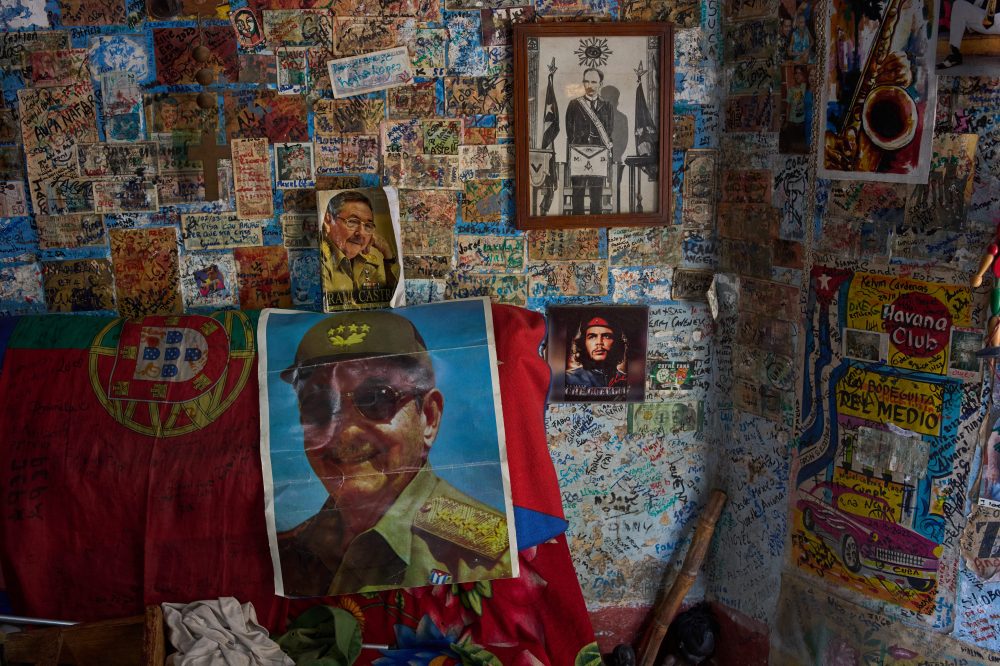

Wednesday marked the 95th birthday of a revolutionary leader who continues to wield influence in one of the world’s remaining communist nations.
The younger brother of Fidel Castro became a household name through his participation in the 1959 uprising that transformed Cuba. Following his brother’s eventual departure from power, he took the helm as the island nation’s president, serving in that capacity for over a decade.
While he officially stepped back from political life in April 2021, he maintains his position as general of Cuba’s Revolutionary Armed Forces, holds a National Assembly seat, and reportedly plays a key role in the deteriorating relationship with the United States, which has recently brought criminal charges against him.
The man dubbed the “hero of the Republic of Cuba” entered the world on June 3, 1931, in the small eastern Cuban community of Birán. Born as the fourth among seven siblings to a Cuban mother and Spanish father.
His early education took place in Santiago de Cuba before relocating to Havana for university law studies. During this period, he became heavily engaged in student activism, working against the Fulgencio Batista dictatorship.
In 1953, he participated in an assault on military installations in Santiago de Cuba as part of an unsuccessful attempt to topple Batista’s government. Following his arrest, imprisonment, and subsequent release, he escaped to Mexico and joined the rebel movement that would eventually succeed in removing Batista from power.
Following the successful 1959 uprising, he was named minister of Cuba’s Revolutionary Armed Forces and supervised military operations across Africa and Latin America that drew criticism from some Republican politicians in the United States.
Numerous Cubans, including María Cristina Barrio Ramos, a 62-year-old educator from Havana, expressed appreciation for his contributions.
“He gave us everything so that we could be free,” she said. “We owe our freedom and dignity to him.”
October 1965 saw his appointment as second secretary of the Central Committee of Cuba’s Communist Party. During the announcement, Fidel Castro expressed pride in the appointment.
“It is a privilege for me that, in addition to being an extraordinary revolutionary figure, he is a brother,” Castro said as his sibling stood up and smiled as the crowd around him applauded.
Fidel Castro frequently spoke highly of his younger brother: “Everyone who gets to know him and become close to him realizes his humanism, his great character, and his feelings; they are surprised by the image of Raúl as belligerent, aggressive and harsh, when they see the feelings of friendship, affection, and love he is capable of having for people. And he has been a great mentor and a great educator.”
When Fidel Castro’s health deteriorated in 2006, his brother assumed temporary leadership in late July before being formally elected president by Cuba’s National Assembly in February 2008.
During his presidency, he demonstrated more progressive policies than his older brother, permitting private business operations while former U.S. President Barack Obama eased restrictions on money transfers and family visits, plus authorized American travel to Cuba under specific circumstances.
By 2015, diplomatic ties between the United States and Cuba were reestablished with embassy reopenings. Obama visited Cuba to meet with Castro the following year, which also saw the resumption of commercial air service between the nations.
A memorable moment from a 2016 press conference in Havana showed Castro attempting to lift Obama’s left arm, which remained limp in a widely circulated photograph.
His administration also negotiated with Russia’s leadership in June 2014, resulting in the elimination of 90% of a massive debt inherited from the Soviet era.
In 2018, he transferred presidential duties to Miguel Díaz-Canel, ending decades of Castro family control over the government.
His announcement in April 2021 that he would not pursue additional political positions marked his formal retirement, after which his public appearances became infrequent.
Since leaving active politics, he has maintained a low profile while reportedly continuing to exercise influence from behind the scenes.
His grandson and security detail member, Raúl Guillermo Rodríguez Castro, had discussions with U.S. Secretary of State Marco Rubio during a Caribbean summit this year. Both Cuban and American officials have acknowledged ongoing talks, though relations remain strained.
His most recent public appearance occurred at a May 1 demonstration attended by thousands of Cubans. Wearing his characteristic olive green military uniform, he stood alongside Díaz-Canel with his grandson positioned behind him.
Nearly three weeks later, American authorities filed criminal charges against him related to the 1996 destruction of civilian aircraft operated by Miami-based exiles over Cuban territorial waters. The charges include murder and aircraft destruction.
While government officials and supporters have criticized the indictment, he has not publicly responded.
Leading up to his birthday, social media featured the hashtag #RaúlesRaúl, referencing a leader who, like his brother, has traditionally avoided birthday celebrations, monuments, and statues.
The Cuban Embassy in the U.S. noted on X: “Not many people have the privilege, the health, the stoicism — and if you like, you can also add: that quintessentially Cuban stubbornness — to reach the age of 95.”
Meanwhile, Cuba’s Communist Party shared multiple videos Tuesday on X featuring Cubans expressing admiration for Castro.
“To talk about Cuba, you have to talk about Raúl,” said Digna Guerra, director of the island’s national choir. “He represents Cuban identity, he represents the Cuban people, he represents the revolution, which for us has immense significance. … Thank you for existing.”