
BIRAO, Central African Republic — When labor pains struck Maude Ahmad Fadala just after dark, she faced an impossible situation.
Her child was ready to be born, but she was trapped in a refugee camp, weakened by typhoid fever. The camp offered no birthing facilities, and she lacked funds for transportation. Despite her condition, she rose and began walking toward help.
Every few steps, contractions forced her to pause in agony until she could move no further.
“I gave birth in the street,” she said. “There was no doctor, no midwife, and no one holding my hand.”
This tragic experience reflects a broader crisis across sub-Saharan Africa, which faces the world’s highest population growth alongside devastating maternal mortality rates. The region accounts for 70% of pregnancy-related deaths globally, claiming approximately 182,000 mothers annually.
According to the World Health Organization, nearly two-thirds of maternal deaths worldwide happen in nations experiencing conflict or instability. For women like Fadala, who escaped Sudan’s ongoing war to seek refuge in Central African Republic, crossing borders doesn’t end their peril.
Being displaced often means skipping prenatal care, undertaking dangerous travel, and relying on weakened healthcare systems in isolated areas.
The United Nations reports that women in Central African Republic face 40 times greater risk of dying during pregnancy or delivery compared to those in the United States. The nation loses 829 mothers for every 100,000 births, making it among the world’s deadliest places to give birth.
Decades of internal warfare have left Central African Republic and its medical infrastructure in shambles. Despite abundant gold reserves, healthcare remains virtually absent outside major urban centers. One-third of residents survive on under $2 daily.
Recognizing the maternal mortality emergency, the government unveiled a 2024 initiative to boost funding for trained birth attendants and related resources. Officials haven’t responded to inquiries about the program’s progress.
Recent dramatic reductions in humanitarian funding from major donors, including the United States, have further complicated women’s access to medical care.
In Birao, a remote border town near Sudan where Fadala now lives, four local midwives supported by the U.N. Population Fund lost their positions last year when the Trump administration terminated all U.S. funding agreements with the U.N. sexual and reproductive health agency.
Across from Fadala’s tent sits an abandoned “safe space” that previously provided transportation for expectant mothers to the district hospital. This facility was among four such centers in Birao that served nearly 50,000 women. All have shuttered due to lost U.S. funding, along with two American-supported health clinics.
“Some women run the risk of dying in pregnancy situations that are not medically managed,” said UNFPA program officer Marie Justine Mamba Ibingui.
UNFPA’s Central African Republic budget has been cut in half over two years to $6.5 million, according to country director Victor Rakoto. The organization was Birao’s sole provider of reproductive health supplies.
“The risk of maternal death is going to increase if there is no solution,” Rakoto said.
The U.N. reports that conflict-affected areas like Birao account for six of every 10 maternal deaths worldwide.
The district hospital Fadala attempted to reach sits several kilometers away over unpaved roads.
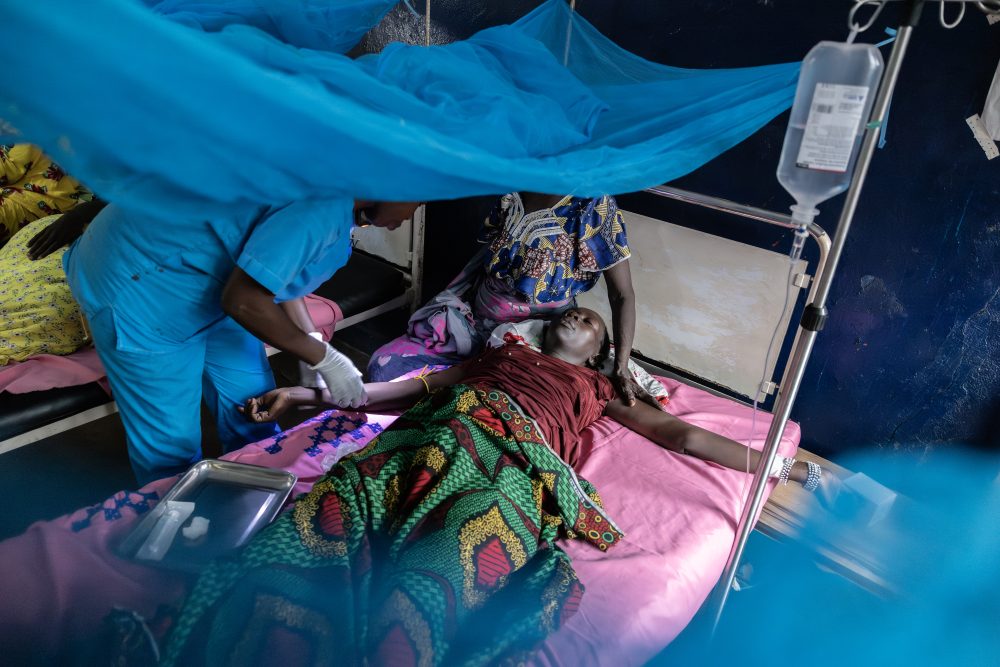
During a recent visit, birthing assistant Delphine Zanabe moved between patients as dozens of women waited, packed together on hard benches in oppressive heat. Some had walked for hours to arrive. Others had endangered their pregnancies by riding motorcycles across rough terrain.
From the border area, adjacent to Sudan territory controlled by paramilitary forces battling the Sudanese military, it’s a 65-kilometer journey to the refugee camp.
“They only come when they are about to give birth,” Zanabe said. “It’s a struggle and it’s either the baby or the mother who suffers.” WHO guidelines recommend at least eight prenatal visits during pregnancy.
For refugees living in survival mode in unfamiliar territory, poverty and lack of education create additional complications. Zanabe explained these factors frequently increase women’s risk for pregnancy and delivery problems.
The maternity ward contains eight beds crammed into such a small space they nearly touch. This serves approximately 70,000 local residents plus 22,000 Sudanese refugees.
Medical staff report that 12 employees have been laid off due to aid reductions, with most coming from the maternity department.
Amna Adam Hessen had arrived the previous day with malarial fever. Her unborn baby was discovered to be in breech position, detected late because she had missed prenatal appointments. Transported by motorcycle from the refugee camp, she hemorrhaged during delivery and lost her child.
The following day, her mother, Salet, fanned her in the stifling heat.
“Giving birth here is exhausting,” she said, describing the long and difficult night.
Amna twisted with fever on the bare foam mattress, crying out, “Mama, mama.”
Zanabe expresses concern about additional humanitarian aid reductions affecting expectant mothers.
The United Nations estimates that over 40% of births in Central African Republic already happen outside medical facilities — a traditional practice that risks otherwise preventable complications.
Clara Abessendé was among the four midwives who lost their positions.
She witnessed the daily number of women arriving at the hospital triple after Sudan’s war erupted in early 2023, while staff ran short of essential supplies like antibiotics and malaria medications.
“As a result, there were more cases of infant and maternal deaths,” she said. Abessendé described feeling burdened by guilt over having to abandon her work.
“The children born in my hands … I abandoned them like that,” she said.
Katidje Idrisse Tahire represents one of the women she can no longer assist.
Tahire moved slowly through the refugee camp collecting water, carrying one child while two others walked beside her. In her ninth month of pregnancy, she was preparing for another birth.
She explained that she fled Sudan four months earlier on foot. At the border, armed men stole everything she owned. Her husband hasn’t been seen since they escaped Darfur.
“My whole body aches,” she said. “I am very tired and unwell.”
Without money, she remains uncertain whether medical care will be available when her baby arrives.