OSLO, Norway (AP) — The Norwegian Royal Court announced Friday that Crown Princess Mette-Marit has been added to a lung transplant waiting list due to her deteriorating medical condition.
The 52-year-old princess received a diagnosis of pulmonary fibrosis in 2018, a condition that progressively damages lung tissue and creates scarring. The disease leads to severe respiratory difficulties and has no available cure.
According to the Royal Court’s Friday statement, she will halt her official royal responsibilities, and medical updates will only be shared once the transplant surgery occurs. Following her hospital release, the statement noted there would be “a longer period of rehabilitation and training” with “initially no updates” provided during that time.
Lung specialist Are Holm from Oslo’s University Hospital told Norway’s public broadcaster NRK that “The Crown Princess has had a significant worsening of her pulmonary fibrosis over the past six months. We see in the pictures that much more scar tissue has developed over the past year.”
Holm further explained, “The rule of thumb for who should be put on the list for lung transplantation is that the patient should be so sick with lung disease that we have reason to believe that the patient only has one year left to live.”
The medical specialist noted that hospital protocols determine waiting list priorities and stated it was impossible to forecast when the transplant might occur, as it depends on when a “suitable organ becomes available.” Holm mentioned current waiting periods are brief and emphasized they “follow protocol exactly in this case.”
In February, Mette-Marit issued an apology regarding the difficulties she created for the royal family amid criticism over her interactions with deceased sex offender Jeffrey Epstein, which was part of a broader statement of regret to all those she has “disappointed.”
The Crown Princess’s communications and relationships with Epstein have drawn public attention, contributing to royal family controversies as her son, Marius Borg Høiby, faced trial in Oslo in February on various charges, including rape allegations.
Høiby, 29, is Crown Princess Mette-Marit’s oldest child from an earlier relationship and holds no royal title or performs official royal functions.
Members of Britain’s royal family came together Saturday in a small English village to witness the marriage of Peter Phillips, Princess Anne’s son, to Harriet Sperling, who works as a nurse.
The wedding ceremony occurred at All Saints Church in Kemble, located near Cirencester in southwestern England. Princess Anne attended alongside her spouse Timothy Laurence, while her brother King Charles was present with Queen Camilla. Prince William and his wife Kate also participated in the private celebration, along with other prominent royal family members.
The guest list included Princesses Eugenie and Beatrice, who are the daughters of Charles’ younger brother Andrew Mountbatten-Windsor.
Phillips holds the distinction of being the late Queen Elizabeth II’s oldest grandson and currently sits 19th in line for the British throne. He makes his living as a sports management executive and does not participate in official royal responsibilities. His bride, Sperling, works as a pediatric nurse.
This marks Phillips’ second marriage, as his previous union with Autumn Kelly concluded in divorce during 2021.
PARIS, June 6 – During commemorations marking the 82nd anniversary of D-Day in Normandy, U.S. Defense Secretary Pete Hegseth delivered controversial comments on Saturday, drawing parallels between modern immigration patterns and what he termed dangerous ideological threats facing Europe.
Speaking at the Normandy American Cemetery in Colleville-sur-Mer, Hegseth connected contemporary migration issues to the historic Allied landings that began the liberation of Western Europe from Nazi control.
“Sadly, today, different European beaches are stormed by different, dangerous ideologies. Beaches in Spain, Italy, Greece and Bulgaria, boats and men arrive,” Hegseth stated during his address.
“When will European capitals do something about that invasion or is it too late? I pray not, and I believe not,” he continued.
These statements reflect broader criticisms frequently voiced by President Donald Trump’s administration regarding European policies. The administration has consistently argued that Europe struggles with inadequate defense capabilities, ineffective immigration management, excessive bureaucracy, and what it characterizes as “censorship” targeting far-right and nationalist political movements.
Immigration control has become a recurring point of tension between U.S. and European officials, with Trump and Vice President JD Vance – as recently as Friday – repeatedly condemning European nations for their handling of migration issues.
Last year’s U.S. National Security Strategy document contained stark language about Europe’s future, suggesting the continent risked “civilizational erasure” and needed significant policy changes to maintain its status as a dependable American partner.
These official statements and commentary from high-ranking Trump administration figures have fundamentally challenged long-standing assumptions about transatlantic cooperation, prompting European leadership to urgently consider reducing their dependence on American defense systems and technology.
Lithuania’s governing Social Democrat party decided Saturday to expel the populist Nemunas Dawn from their coalition government following the antisemitism conviction of the party’s leader.
The Social Democrats, who have been leading a three-party coalition with a narrow parliamentary majority, plan to approach the centre-right For Lithuania party as a replacement partner to preserve their governing majority, according to leader Mindaugas Sinkevicius.
“We were patient… but we see that the (Nemunas Dawn) chairman is getting more radical, while the country needs stability,” Sinkevicius stated to reporters following a Social Democrat leadership gathering.
In December, a Vilnius court convicted Nemunas Dawn founder and chairman Remigijus Zemaitaitis of inciting hatred toward Jews and minimizing the Holocaust through social media content. Zemaitaitis has maintained his innocence, characterizing the ruling as politically driven and submitting an appeal.
While the Social Democrats initially agreed to retain his party in the coalition during the appeals process, Nemunas Dawn opposed a government proposal in May to create new military facilities along the Belarus border. Additionally, financial crimes investigators searched Zemaitaitis’ property as part of a fraud probe, though Zemaitaitis has again proclaimed his innocence and holds no ministerial position.
The cabinet, which includes the Farmers and Greens Union as well, may undergo significant restructuring during forthcoming negotiations, Sinkevicius indicated. He hinted at potentially assuming the prime minister role from deputy Social Democrat leader Inga Ruginiene.
Stray Ukrainian drones have heightened tensions with Russia, the NATO and European Union member’s larger neighboring country, during a period when U.S. dedication to NATO’s mutual defense principles faces uncertainty.
For Lithuania previously participated in the Social Democrat coalition from 2004 through last year, when it compelled the departure of former Social Democrat leader and Prime Minister Gintautas Paluckas, who now faces illegal enrichment charges.
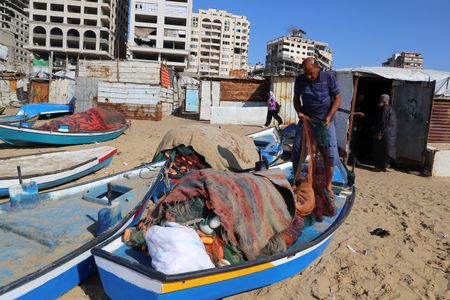
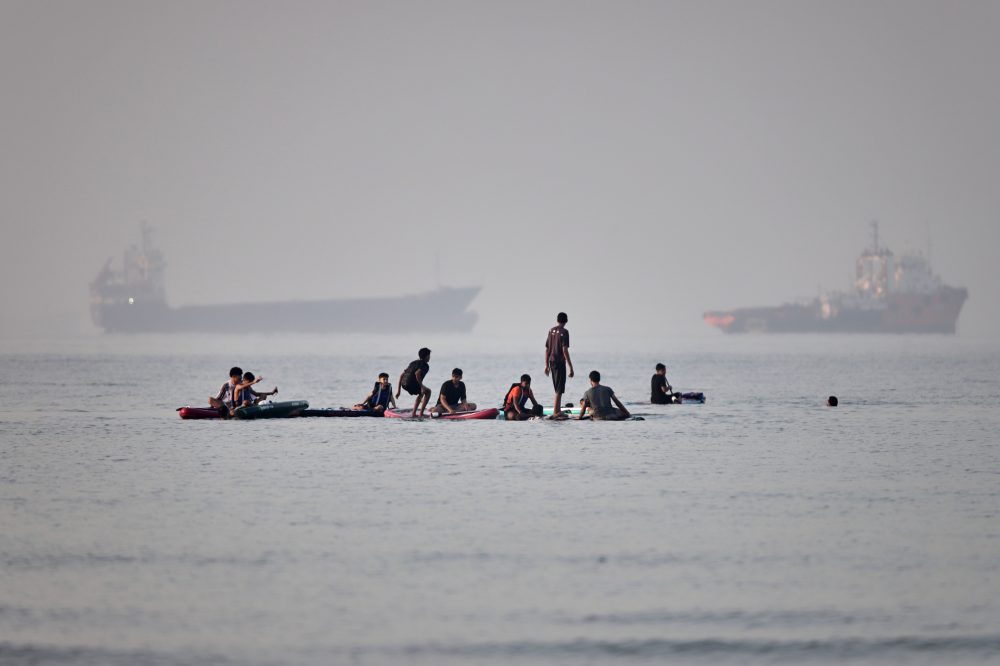
Inside a Gaza repair facility, workers are transforming small recreational boats into fishing vessels using salvaged materials including door frames and wood pulled from destroyed buildings.
These smaller boats, once used by families for leisure activities, have become essential for Gaza’s struggling fishing industry as crews work to maintain their diminished fleet.
Fishermen report that Israeli limitations on importing fiberglass and similar repair materials have made fixing their traditional, larger fishing boats both challenging and costly.
Fisherman Mohammad al-Hissi explained the dramatic price increase to Reuters: “A kilo of fibreglass in the era before the war was 50 or 60 shekels (approximately $17 or $21).” He noted that the current price has jumped to around 800 shekels.
The Israeli military agency that oversees Gaza access, known as COGAT, explained to Reuters that prohibited items include materials that could serve both civilian and military purposes. The agency did not specifically address fiberglass restrictions.
Prior to the conflict that started with attacks on southern Israel in October 2023, Gaza’s fishing crews already operated under severe Israeli limitations on their distance from shore.
Currently, fishermen report staying even closer to the coastline to avoid gunfire that they say has persisted following last year’s ceasefire agreement.
When asked about these incidents, Israel’s military stated that naval forces were implementing “maritime security restrictions” in Gaza’s coastal waters and that violations result in soldiers acting “in accordance with the rules of engagement.”
Gaza health officials report that over 900 Palestinians have died in Israeli attacks since the truce started, though these numbers don’t separate fighters from civilians. Israeli military sources confirm four of their soldiers were killed by militants during this same timeframe.
According to Gaza Fishermen Syndicate member Zakaria Baker, the local fishing industry now brings in less than 15 tons monthly – an amount that previously represented a single day’s catch before the war began.
Before the conflict, fishing provided a crucial food source for the territory.
While the hunger emergency in Gaza has improved since famine conditions were declared in portions of the densely populated area before last year’s ceasefire, aid organizations report that most children still lack proper nutrition. The United Nations documented 3,500 children receiving malnutrition treatment in April.
“We repair and maintain boats, and serve fishermen in any way we can,” said repair shop worker Musab Baker. “But we are unable to do anything apart from the small boats.”
Demonstrators in Seoul continued their second day of protests on Saturday, calling for local elections to be held again following voting problems earlier in the week.
An estimated 10,000 people assembled at the SK Olympic Handball Stadium by 5:30 p.m. local time, according to Yonhap News Agency, which cited unofficial police figures. The stadium served as a vote-counting location for Wednesday’s municipal and local assembly elections.
Reuters was unable to immediately verify the crowd size estimates with representatives from Seoul Metropolitan Police Agency.
The demonstrations were sparked by insufficient ballot supplies that blocked some qualified voters from participating nationwide, leading to the National Election Commission chief’s resignation.
Election officials reported that 50 out of 14,300 voting locations exhausted their ballot supply, while 22 additional sites had to halt voting temporarily due to delayed deliveries.
In a televised address, Seoul Mayor Oh Se-hoon called the ballot problems unacceptable and a breach of voting rights. He called for dissolving the election commission and launching a special prosecutor investigation.
Live broadcasts from YTN and Yonhap News showed demonstrators, including conservative YouTubers, shouting demands for an “election re-run,” performing the national anthem, and displaying South Korean flags.
Several protesters positioned themselves at the stadium entrance gates, preventing National Election Commission staff from departing.
The commission workers, who had remained inside the facility since Friday morning, finally managed to leave on Saturday, according to Yonhap.
The election commission has not yet responded to inquiries about their staff’s departure from the site.
The former first lady of France, Bernadette Chirac, has passed away at the age of 93, leaving behind a legacy of political influence and charitable work that spanned more than five decades.
French President Emmanuel Macron announced her death on Saturday, expressing that he and his wife Brigitte learned with “great sadness” of the loss of a woman who left her mark on French history alongside Jacques Chirac, who passed away in 2019, and transformed the lives of countless patients through her humanitarian efforts.
“A great lady of the heart has departed,” Macron said.
Throughout more than 50 years, Chirac served as the steady anchor during her late husband’s ambitious political journey — from his time in Parliament through two stints as prime minister, nearly two decades leading Paris as mayor, and ultimately winning the presidency in 1995.
Official photographs captured her distinctive presence with raised chin, perfectly styled blonde hair, and small purse in hand, projecting an image more institutional than spousal.
However, the public persona only told part of her story.
Her signature style — designer suits, dark sunglasses, distinctive voice, and sharp commentary — became woven into France’s cultural fabric.
Behind this image stood a tireless professional and shrewd political strategist who, unlike most French presidential spouses, established her own independent power base.
Born Bernadette Thérèse Marie Chodron de Courcel on May 18, 1933, in Paris, she came from a family of wealth, noble heritage, and strong Catholic values.
Her paternal lineage featured military officers, business leaders, and diplomatic figures; one uncle had worked alongside Charles de Gaulle during the war years in London.
However, her most significant life chapter began at the renowned Sciences Po university in Paris, where she encountered Jacques Chirac, an attractive and popular young man whose political ambitions would shape both their destinies.
Their wedding took place in March 1956. The marriage endured for 63 years and became, in her own words, an extended exercise in perseverance.
Jacques Chirac gained recognition for his charisma, energy, and natural ability to connect with the public. Bernadette possessed different strengths, according to political observers.
She demonstrated self-discipline, social commanding presence, religious devotion, high standards, and occasionally sharp wit.
Catholic philosopher Jean Guitton dubbed her the “last queen of France,” a characterization she seemed to embrace rather than reject.
Her husband’s well-known reputation for extramarital affairs became a public matter she eventually chose to address through sardonic humor, following considerable personal anguish.
When photographers surrounded her in Corrèze in 1998 — following speculation that Jacques Chirac had been unreachable the evening Princess Diana died because he was with an actress — she emerged from her vehicle and remarked dryly: “Calm down. I’m not Claudia Cardinale. Or Lollobrigida.”
“At first, it was hard. I was very heartbroken, and then I got used to it,” she said years later in a television documentary.
“I told myself that was how things were and that I had to accept it with as much dignity as possible.”
While assigned to maintain her husband’s rural political base in Corrèze as he pursued power in Paris, she accomplished far more than simple caretaking. She won election as municipal councilor in Sarran in 1971. Eight years later, she secured a general councilor position in Corrèze and retained that seat until 2015.
Her political clout expanded after Jacques Chirac assumed the presidency in 1995. Though France’s first lady role carries no constitutional authority, she transformed the Élysée into a venue where her endorsement carried weight.
She demonstrated loyalty, sharpness, and an unforgiving nature, recognizing that political campaigns depend not only on speeches and polling data but also on obligations, insults, and grudges.
Nevertheless, she also established a domain for female leadership within a male-dominated political environment that showed little willingness to share authority — making it subtly understood that she would not be diminished to merely “the wife of.”
Her most profound sorrow remained largely hidden from public view.
The Chiracs’ older daughter, Laurence, developed serious anorexia following adolescent meningitis and made multiple suicide attempts. She never completely recovered and died in 2016 at age 58.
This family crisis directed Chirac toward the charitable activities that transformed her public reputation.
In 1994, she assumed leadership of a medical charity that gathered donations for hospitalized children. For millions of French television viewers, the woman previously criticized for arrogance became the representative of sick children and families camping beside hospital beds.
She maintained control of the organization until 2019, when she transferred leadership to Brigitte Macron, the current president’s wife, while accepting the honorary president title.
By that point, she had established herself as a political power under her own identity.
“My husband no longer does politics, but I do,” she told reporters after Jacques Chirac concluded his presidency in 2007.
She memorably gave Dominique de Villepin, the Élysée official she mistrusted, the nickname “Nero,” while also allegedly orchestrating her husband’s reconciliation with Nicolas Sarkozy, the former ally who had politically betrayed him.
Her 2001 autobiography, “Conversation,” co-written with journalist Patrick de Carolis, achieved sales of hundreds of thousands of copies and revealed to the French public a more candid, humorous, and autonomous woman than many had previously recognized.
Following Jacques Chirac’s departure from the Élysée, his health deteriorated and his public presence diminished. Her voice stayed clearer for a longer period. When asked about his condition, according to French media reports, she responded in her characteristic flat, recognizable tone: “He keeps the dog.”
Advancing age and personal loss eventually pulled her away from public life.
When Jacques Chirac died in 2019, she had become too frail to participate in the public memorial ceremony where France and international leaders paid their respects.
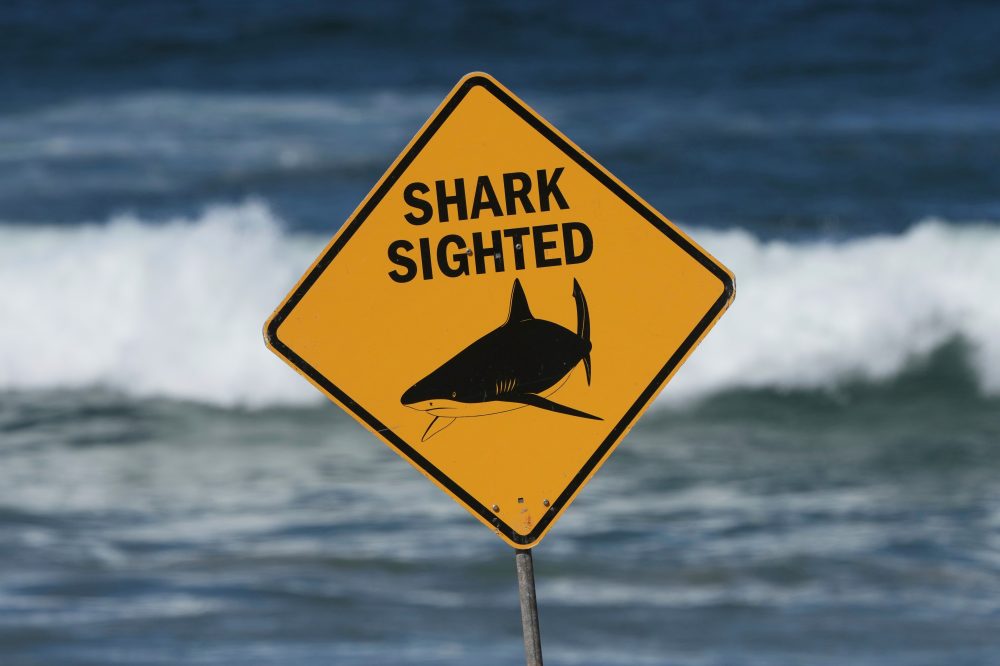
MELBOURNE, Australia (AP) — Authorities in Australia report that a spearfisher died Saturday in what marks the country’s third deadly shark encounter within a four-week period.
The victim, a 35-year-old man, was underwater fishing with relatives near Michaelmas Island close to the port city of Albany in Western Australia state when the attack occurred before midday, according to a police statement.
Family members transported the man by watercraft to Albany where emergency medical personnel were standing by, but efforts to save his life were unsuccessful, police reported. Officials believe a 4.5-meter (15-foot) white shark carried out the attack.
This cluster of three deaths represents an unusual pattern for a country that typically records approximately three shark-related fatalities annually over recent decades.
The most recent previous death happened on May 24 when 39-year-old spearfisher Michael Jensz sustained fatal head trauma during an attack along the Great Barrier Reef off Australia’s northeastern coastline. Bull sharks had been spotted in that area.
Seven days before that incident, on May 16, a four-meter (13-foot) white shark killed 38-year-old spearfisher Steve Mattabonni in waters northwest of Albany near Rottnest Island.
Earlier this year in January, Australia recorded its only other fatal shark incident when a 12-year-old boy passed away at a medical facility several days after being attacked by a bull shark in Sydney Harbor.
Emergency responders have successfully contained a warehouse fire that erupted in the early hours of Saturday morning in Anderlecht, a suburb of Brussels, according to Belgian public broadcaster VRT.
Brussels fire brigade spokesperson Walter Derieuw confirmed the blaze had been brought under control, though the origin of the fire remains unknown at this time.
Thick smoke blanketed the neighborhood as law enforcement officers equipped with protective gas masks established a perimeter around the warehouse and nearby roadways. A Reuters correspondent witnessed the evacuation of some area residents.
Derieuw advised local residents to maintain closed windows and doors due to ongoing smoke in the vicinity.
TAIPEI, Taiwan — Taiwan’s capital city zoo has taken in two endangered red pandas from China on Saturday, marking the first animal transfer between the regions in more than ten years amid ongoing political tensions.
The new arrivals include a 3-year-old male and a 2-year-old female, both of which will spend a month in quarantine before adjusting to their environment at the Taipei City Zoo prior to public display.
Zoo officials have not yet chosen names for the pair. According to the Taipei Zoo, the male panda quickly began investigating his surroundings and started eating, while the female took a more reserved approach and chose to watch from a distance.
The last time Taipei received red pandas from a Chinese zoo in Fujian province was in 2014, the Taipei Times reported. These animals naturally inhabit China, Nepal, Laos, Myanmar, and other regional countries.
As part of this exchange agreement, Taipei will provide white-handed gibbons to Shanghai, according to the Taipei Times.
Despite ongoing political strain between China and Taiwan — the self-governed island that Beijing considers part of its territory — and the absence of formal government communication, exchanges at the municipal level have persisted.
Three Lebanese military personnel died Saturday when Israeli forces struck their vehicle along the Khardali-Nabatieh road in southern Lebanon, according to the Lebanese army.
The Israeli military later stated it had attacked the vehicle after spotting what it characterized as a threat to its forces and obtaining intelligence suggesting Hezbollah was getting ready to launch attacks on Israeli troops from that location.
Israeli officials said a preliminary investigation revealed that two Lebanese army officers and a soldier were in the vehicle when it was hit, and that the matter is currently being examined.
Throughout the ongoing conflict, the Lebanese army has generally remained neutral in the hostilities between Hezbollah and Israel and has not participated in the combat operations.
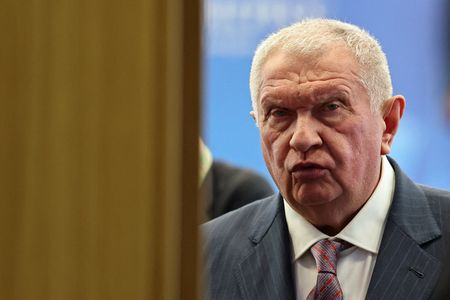
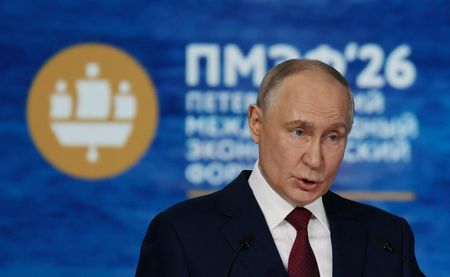
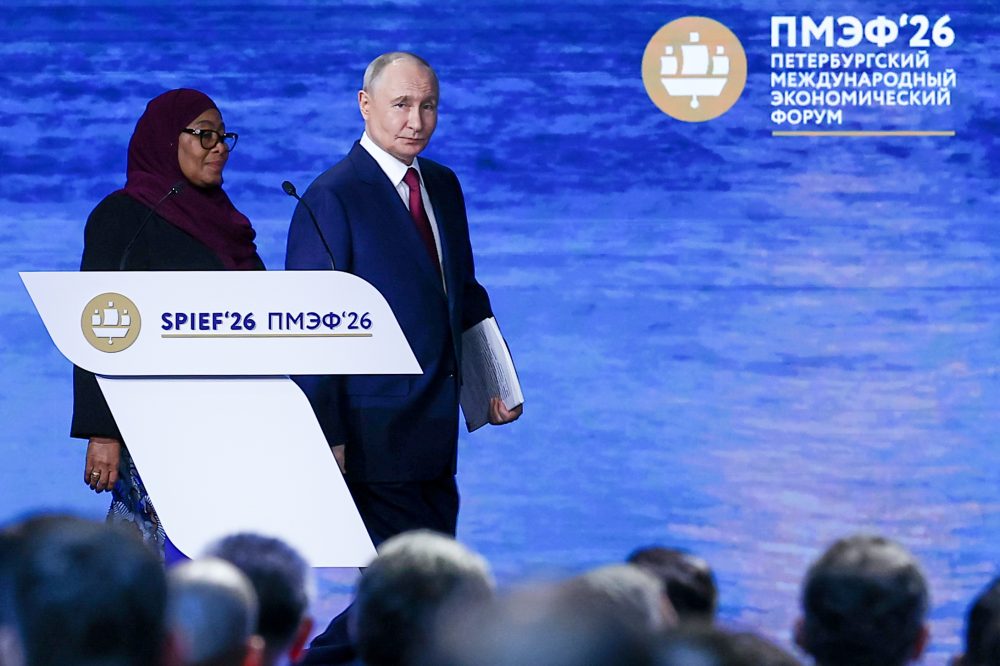
The chief executive of Russia’s state oil company Rosneft accused American energy firms Saturday of profiting from the blockade of a critical Middle Eastern shipping route.
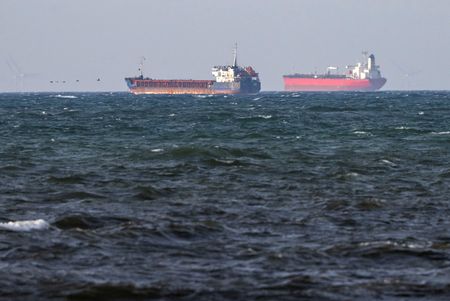
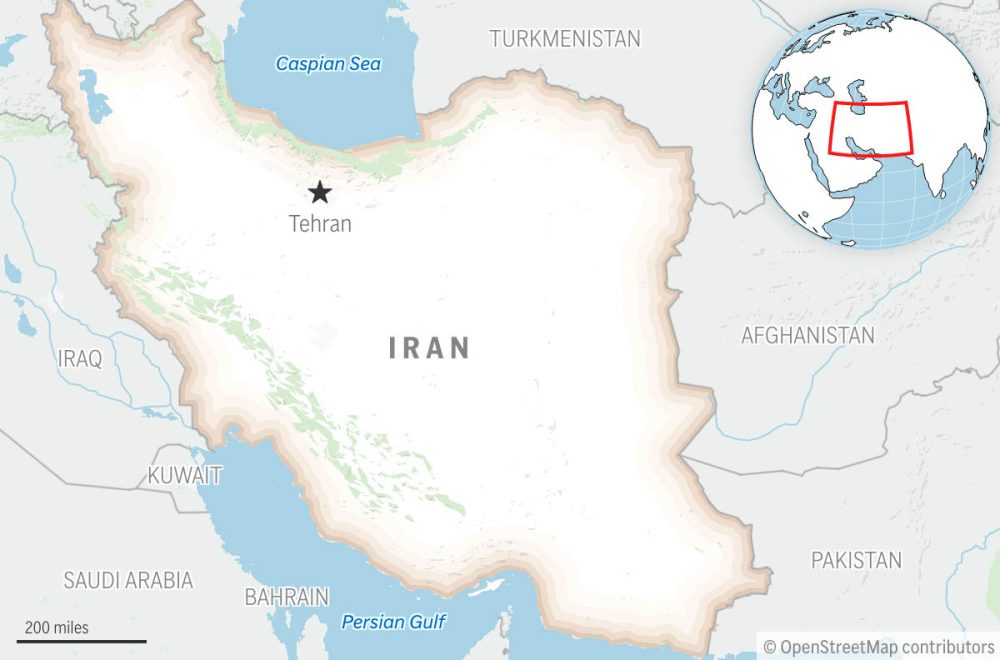
Igor Sechin made the comments during the St. Petersburg International Economic Forum, claiming that Washington is attempting to restructure worldwide energy markets for American benefit. The Strait of Hormuz has been closed since Iran blocked the waterway following U.S. and Israeli attacks that killed Supreme Leader Ayatollah Ali Khamenei in February. The United States has also imposed blockades on Iranian ports.
The strait normally handles approximately one-fifth of global oil shipments along with essential commodities like fertilizers. Its closure has disrupted international markets, driving oil costs to multi-year peaks while fueling worldwide inflation and hampering economic expansion.
“The closure of the Strait of Hormuz is an attempt to reshape global energy market regulations to benefit the United States. The measures taken to block the strait were aimed at Iran, but backfired on the entire world. The strategic risks were underestimated,” Sechin said.
“The main beneficiaries, of course, were American companies, who gained non-competitive advantages and the ability to secure high-cost supplies,” he added.
Sechin, a longtime associate of President Vladimir Putin, cautioned that other major international shipping lanes including the Malacca, Bad El Mandeb and Gibraltar straits might face similar disruption risks.
The Russian executive also criticized the OPEC+ oil producers’ alliance, arguing it has weakened following the United Arab Emirates’ departure and earlier exits by Qatar and other nations. Sechin has previously expressed doubt about Russia’s partnership with the Organization of the Petroleum Exporting Countries.
“As a result, the alliance’s production has fallen from 58 to 37 million barrels per day over the past ten years,” he said.
He noted that while most major OPEC+ members have boosted output since the 2016 agreement, Russian oil production dropped by 1.5 million barrels daily.
“This is a 15% decline that will need to be offset by necessary investments of at least ten trillion rubles. We expect that investment cooperation between the alliance’s member countries and our country will also expand,” Sechin said.
BEIRUT (AP) — Multiple Lebanese military personnel died Saturday in an Israeli airstrike in southern Lebanon, with the Lebanese army confirming that a high-ranking officer was among those killed, just days following a newly established ceasefire agreement between the two nations.
The Saturday morning strike targeted the roadway connecting Nabatiyeh city to Marjayoun town. Military officials declined to provide additional information or identify the deceased soldiers by name or military rank.
Television news outlets in the region reported that the attack claimed the lives of two military members, with one being identified as a brigadier general.
The most recent ceasefire agreement emerged from negotiations facilitated by the United States between Israel and Lebanon’s government, which holds Hezbollah responsible for pulling the nation into conflict and had attempted to disarm the group prior to the current fighting. The Lebanese militant organization has rejected the ceasefire terms.
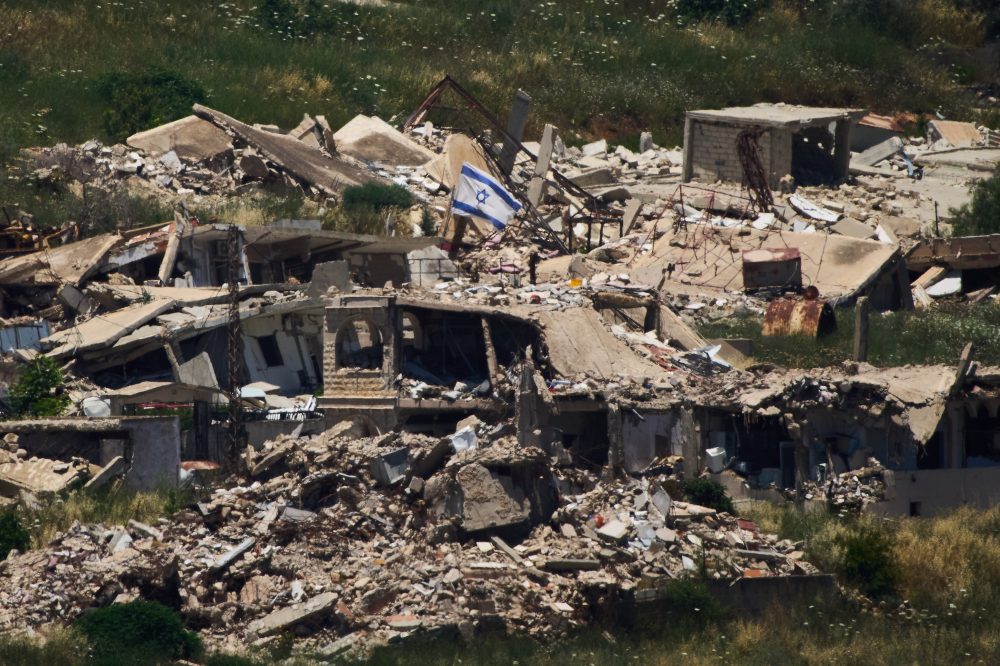
Hostilities commenced on March 2 following Hezbollah’s rocket attacks on northern Israel, occurring two days after Israel and the U.S. initiated their offensive against Iran. Israel subsequently launched a ground offensive into Lebanon and conducted extensive military operations that have forced over 1 million people from their homes. Israeli military actions have resulted in casualties among dozens of Lebanese military personnel.
Israeli forces have captured approximately one-fifth of Lebanese territory, advancing deeper into the country’s southern regions than at any point since Israel’s 1982-2000 occupation concluded.
The conflict has resulted in more than 3,500 deaths in Lebanon since fighting began. Israeli casualties include at least 29 soldiers and three civilians.
A seven-month-old Palestinian baby died after Israeli soldiers opened fire on his family’s car in the occupied West Bank, Palestinian health officials reported.
Sam Fahd Abu Haikal lost his life Friday night when troops shot at the family vehicle in the Tel Rumeida region near Hebron City, the Palestinian health ministry announced. Both parents sustained injuries in the incident.
According to the Palestinian news agency WAFA, the baby suffered critical wounds when a bullet struck his jaw – the same round that wounded his mother. He succumbed to his injuries at a medical facility. His father, Fahd Abdul Aziz Abu Haikal, who teaches at Bethlehem University, was shot in the hand. The family was traveling from Bethlehem to see relatives in Hebron when soldiers began shooting, the agency stated.
Israeli military operations in the West Bank have intensified following the October 7, 2023 Hamas assault that resulted in approximately 1,200 deaths and 251 hostages, sparking the current Gaza conflict. Israel’s military response has led to over 72,900 Palestinian fatalities, Gaza’s Health Ministry reports. The ministry operates under Hamas leadership but is considered credible by United Nations organizations and independent analysts.
United Nations officials stated last month that more than 1,000 Palestinians have died in the West Bank and east Jerusalem since fighting began, with at least 240 being children. Forty-nine people have been killed since January, according to the organization.
The baby’s burial service is scheduled for Saturday.
Military officials said preliminary findings indicate the wounded were uninvolved civilians and the matter remains under investigation.
Israeli forces stated Friday that troops fired at a car they believed was speeding toward their position in the Hebron vicinity. They reported using targeted shots, injuring three Palestinians who received medical care.
Last March, Israeli troops shot at a family vehicle in the northern West Bank, resulting in four deaths including two minors, the Palestinian Authority’s Health Ministry reported.
Israeli personnel accused of harming Palestinians face prosecution in less than 1% of cases, with indictments occurring in under 1% of 2,427 misconduct allegations filed between 2016 and 2024, Israeli rights organization Yesh Din found.
Over 700,000 Israelis reside in the occupied West Bank and east Jerusalem, areas Israel seized from Jordan in 1967 that Palestinians seek for their future nation.
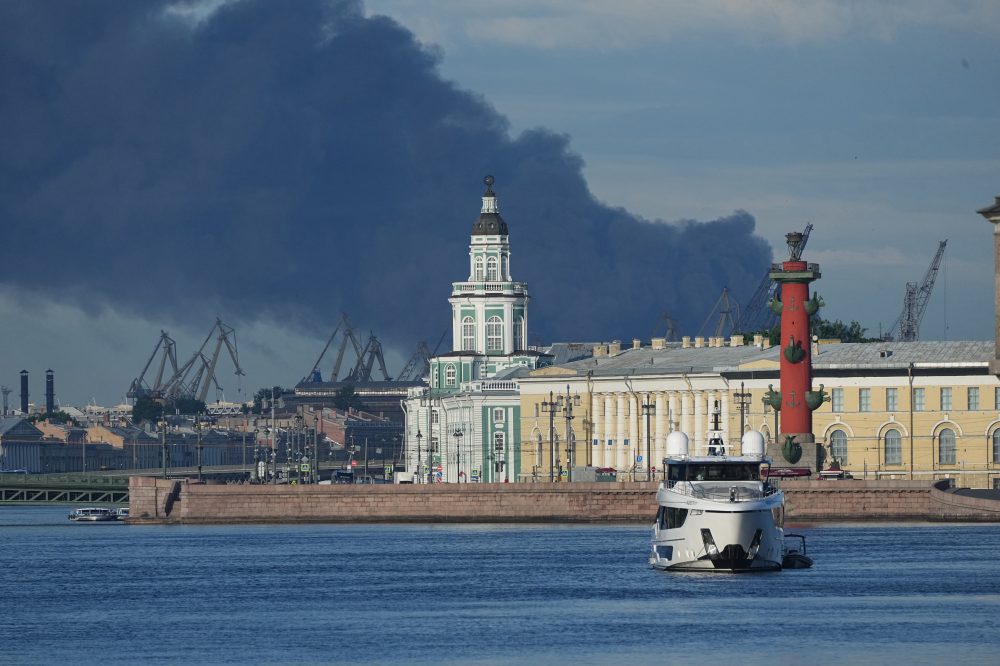
Officials in St. Petersburg warned residents to remain indoors Saturday morning following what they described as an extensive Ukrainian drone assault on Russia’s second-most populous city, highlighting Ukraine’s expanding capability to strike targets far within Russian territory.
St. Petersburg Governor Alexander Beglov urged citizens to avoid going outdoors and cautioned that mobile internet services might experience interruptions.
Regional Gov. Alexander Drozdenko reported that 141 drones were intercepted over the surrounding Leningrad region. Russia’s Defense Ministry claimed its air defense systems destroyed 376 Ukrainian drones.
While no immediate injuries were reported, this fresh assault on St. Petersburg delivers another humiliating setback to Russian President Vladimir Putin’s attempts to portray the war as a remote situation that doesn’t impact ordinary Russian citizens.
Saturday’s strike follows a Ukrainian drone operation that ignited an oil facility in the city and struck a nearby naval installation Wednesday, occurring just hours before the St. Petersburg International Economic Forum began – Putin’s yearly platform for attracting investment.
During his forum address, Putin announced Thursday that Russia would bolster its air defense capabilities to combat recent Ukrainian drone operations, which have penetrated far into his nation and overshadowed the event in his birthplace of St. Petersburg.
As the battle lines remain largely static while drone swarms impede military progress, both nations have pursued advantages through long-distance strikes.
In Ukraine, Russian forces killed one person and injured three others overnight in the Dnipropetrovsk region, striking three districts almost 30 times using drones and artillery, regional head Oleksandr Hanzha reported Saturday.
In Zaporizhzhia, five individuals required medical treatment following a Russian drone attack that ignited a fire in a parking area, according to regional head Ivan Fedorov.
Ukrainian air force officials said Saturday that Russia launched 272 attack drones against Ukraine overnight, with air defenses intercepting 249 of them.
These recent strikes occurred one day after Putin dismissed on Friday a suggestion by Ukrainian President Volodymyr Zelenskyy for direct discussions about the four-year war, stating he found “no point” in such a meeting.
Thursday’s correspondence, marking the first public communication Zelenskyy has addressed directly to Putin since Russia deployed troops into Ukraine in 2022, contained an extensive criticism of the Russian leader’s 26-year rule, along with some remarks about his age.
Emergency warning sirens wailed across Bahrain on Saturday as Iranian forces launched a coordinated missile and drone assault on Gulf nations, according to officials from the island nation’s government.
Bahrain’s foreign ministry announced that Iran had launched ballistic missiles and unmanned aircraft targeting both Bahrain and Kuwait. Officials confirmed the projectiles were successfully intercepted and demanded Iran halt its aggressive actions against neighboring Gulf states immediately.
The Saturday announcement followed Friday’s military engagement where American forces destroyed Iranian ballistic missiles and drones aimed at the Strait of Hormuz and regional allies, while simultaneously attacking several of Iran’s coastal radar monitoring stations in retaliation. This military exchange has further weakened an already fragile ceasefire with Iran.
These latest strikes occur amid intensified efforts by the Trump administration to pressure Iran into negotiating an agreement to resolve the ongoing conflict.
According to U.S. Central Command’s Friday evening social media posts, Iranian forces launched seven ballistic missiles targeting Kuwait and Bahrain. American military units successfully intercepted six missiles, while the seventh failed to reach its intended destination. Officials reported no injuries to U.S. military personnel.
The missile barrage followed an earlier incident Friday when U.S. forces destroyed four Iranian drones heading toward the Strait of Hormuz.
“The attack drones posed an immediate threat to regional maritime traffic,” U.S. Central Command stated on social media.
Kuwaiti military officials confirmed their forces were actively intercepting incoming missiles and drones targeting their territory. Meanwhile, Bahrain activated emergency warning systems and instructed citizens to seek immediate shelter at the closest safe locations while monitoring official communications.
Iran’s Revolutionary Guard claimed responsibility for targeting the Ali Al Salem airbase hosting U.S. personnel in Kuwait and the U.S. Navy’s 5th Fleet stationed in Bahrain, according to reports from the state-operated IRNA news agency.
American military operations include enforcing a naval blockade of Iranian ports as a response to Iran’s control over the vital shipping lane for worldwide oil and natural gas transportation. This situation has caused energy costs to surge and created political challenges for President Donald Trump’s Republican Party before upcoming midterm congressional elections.
U.S. Central Command reported striking the radar installations, including a facility on an island within the strait, “to defend against further attacks.”
This represents the most recent escalation in a series of retaliatory strikes that have weakened the fragile ceasefire and complicated diplomatic efforts to extend the temporary peace agreement. Earlier in the week, Iranian drone attacks severely damaged a passenger terminal at Kuwait’s primary airport, resulting in one fatality, multiple injuries, and temporary airport closure.
Even as these attacks raise fresh concerns about potential ceasefire collapse, Trump informed reporters Friday that “the situation with Iran seems to be going quite well.”
“We’re going to come out of Iran very quickly and it’s going to be very strong one way or the other, whether it’s a piece of paper or the very tough way,” Trump stated during a Wisconsin event with farmers. “The very tough way is maybe the easier way, but we’re going to come out, and your fertilizer prices are going to go way down, just like they were four months ago.”
Trump appears increasingly constrained by a conflict that has reached a stalemate. American and Iranian negotiators achieved a preliminary agreement one week ago to extend the ceasefire for 60 days and begin fresh discussions regarding Iran’s nuclear program. However, Trump has requested undefined modifications while Iranian leadership has not publicly endorsed the proposed deal.
When questioned Friday about the delayed progress, Trump told NBC’s “Meet the Press” it was because “it’s a very hard thing for them.”
“There are things they never thought they’d be doing that they’re going to have to do. They’ve got no choice, and it takes a little while,” he explained during the interview.
Trump indicated that Iranian forces retain 21% to 22% of their missile arsenal.
His administration has also highlighted the recent ceasefire agreement between the Lebanese government and Israel following U.S.-mediated negotiations in Washington. Nevertheless, the Iranian-supported Hezbollah militant organization has refused to accept the agreement, and continued attacks have placed it in greater jeopardy.
Israeli military forces conducted strikes Friday across multiple areas of southern Lebanon while issuing evacuation orders for nine villages, including one housing thousands of displaced residents from the conflict. The attacks resulted in nine deaths across six southern Lebanon locations, according to the state news agency.
Israeli military officials confirmed two soldiers sustained wounds, one critically, during Friday’s confrontation with militants in southern Lebanon.
The Lebanese conflict, where Israeli forces have captured significant portions of the south, also jeopardizes efforts to resolve the Iran war and reopen the Strait of Hormuz since Iran has insisted any permanent ceasefire must include Lebanon.
Beyond intercepting drones in the Strait of Hormuz, U.S. military personnel earlier Friday boarded a sanctioned oil tanker connected to Iran in the Indian Ocean as part of American efforts to block Iran from generating revenue through oil and other commodity sales.
The United States also imposed new sanctions targeting Iran’s energy sector, affecting multiple individuals, companies, and tankers.
A 35-year-old man lost his life Saturday following a shark attack while spearfishing with relatives off Western Australia’s coastline, according to police reports. This tragedy represents the third deadly shark encounter across Australia within a three-week period.
The victim was spearfishing Saturday morning near Michaelmas Island, located close to Albany and approximately 388 kilometers (241 miles) south of Perth, the state’s capital city, authorities confirmed. Emergency responders transported him to shore where paramedics provided treatment, but he succumbed to his wounds.
State officials reported that a member of the public observed a 4.5-meter (14.8-foot) shark of undetermined species in the waters around Michaelmas Island on Saturday. The location serves as a nature reserve with minimal visitor traffic.
The recent fatalities began on May 24 when a 39-year-old man was killed by a shark while fishing at the Great Barrier Reef. Ten days prior to that incident, a 38-year-old person was fatally attacked near an island close to Perth.
Conservation organizations report that Australia experiences approximately 20 shark encounters annually, though the overwhelming majority do not result in death. Drowning incidents at the nation’s beaches claim significantly more lives than shark attacks.
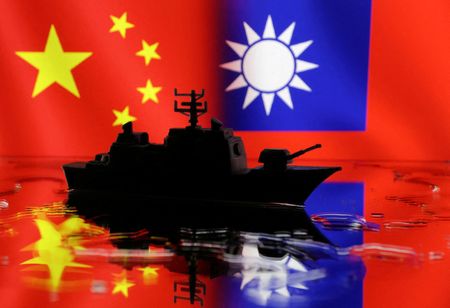
Taiwan’s maritime authorities reported Saturday that Chinese vessels conducted what they described as the first joint operation designed to challenge Taiwan’s control of remote islands in the South China Sea.
According to Taiwan’s coast guard, a Chinese coast guard vessel and an oceanographic research ship worked together near the Pratas Islands, which Taiwan controls as a national park in the northern South China Sea. The lightly defended islands have become a new focal point in China’s expanding military and quasi-military activities around Taiwan as Beijing seeks to reinforce its territorial claims.
Security analysts view these islands as particularly exposed to potential Chinese action because they sit more than 400 kilometers (250 miles) from Taiwan’s main island, positioned between southern Taiwan and Hong Kong.
Taiwan’s coast guard reported that after a Chinese coast guard vessel approached the Pratas on Friday, a Chinese oceanographic survey ship moved toward the islands on Saturday.
“This is the first observed instance of Chinese coast guard and survey vessels acting in coordination to provoke Taiwan,” the coast guard stated.
China’s Taiwan Affairs Office had not responded to requests for comment at the time of the report. Beijing views both Taiwan and the uninhabited Pratas atoll as Chinese territory, while Taiwan’s government disputes these claims, maintaining that only the island’s residents should determine their political future.
“These acts are highly provocative. The PRC is a sick bully, causing trouble across the region,” Taiwan National Security Council Secretary-General Joseph Wu posted on his X account, sharing a map that tracked both vessels’ movements.
The Chinese coast guard ship transmitted messages stating it was performing law enforcement duties and declaring that “Taiwan’s future lies in national reunification,” according to Taiwan’s coast guard, which sent its own ships to respond.
Taiwan’s vessel responded by broadcasting: “Stop undermining peace. You should return and pursue democracy — that is the proper way to serve your country.”
Taiwan’s coast guard accused China of attempting to establish a “false illusion” of authority over the waters, declaring that “Taiwan’s maritime sovereignty brooks no provocation.”
PRISTINA, Kosovo (AP) — This weekend marks Kosovo’s third parliamentary election within an 18-month span as citizens grow increasingly frustrated with an ongoing governmental stalemate in the small Balkan nation seeking closer ties with the European Union and NATO.
Sunday’s early election became necessary when Kosovo’s leading political parties could not reach consensus on a successor to former President Vjosa Osmani, whose term concluded in late March.
Prime Minister Albin Kurti’s center-left Vetevendosje party has maintained a solid parliamentary majority following December’s early election. However, presidential selection in Kosovo requires support from at least 80 members of the 120-seat Parliament, a threshold neither Kurti nor opposition forces could achieve.
As political leaders point fingers at one another for the crisis, their failure to find common ground has deepened frustration among Kosovo’s approximately 2 million voters, who prefer their government concentrate on economic issues and improving living conditions.
Vlora Kryeziu, a businessperson from the capital Pristina, laments that “the same scenario is being repeated.”
“We will for sure have the same result,” Kryeziu, 52, said. “As a citizen, I have a lot of dissatisfaction, and I think that we as a society are not doing enough to change these things.”
An inconclusive February 2025 election initially left the nation without effective governance for most of the previous year, necessitating December’s second vote.
Kosovo ranks among Europe’s newest and most economically challenged nations. The country, with a predominantly ethnic Albanian population, proclaimed independence from Serbia in 2008 after a 1998-99 conflict that concluded with NATO airstrikes compelling Serbian withdrawal.
While the United States and most EU nations have acknowledged Kosovo’s independence, Serbia and its allies Russia and China have not. Both Pristina and Belgrade have been instructed they must repair their relationship to advance their respective EU membership applications.
European Council President Antonio Costa this week urged Kosovo to end the political stalemate and unite over the goal of EU integration.
“The European Union can support Kosovo, but it cannot do Kosovo’s own homework,” he said in Pristina. “Kosovo needs strong, stable and functioning institutions capable of delivering reforms and seizing the opportunities the European Union offers.”
Prime Minister Albin Kurti has urged voters to give him another chance at Sunday’s ballot. He accused the opposition parties of creating an “artificial crisis” and forcing repeated elections despite “the strong and clear will of the people.”
Two opposition parties, the Democratic Party of Kosovo and the Democratic League of Kosovo, in turn have accused Kurti of seeking to impose complete control over all political institutions in the country.
Ex-president Osmani is now running on the LDK party list against Kurti, her former ally, after he refused to back her for a second term in office.
Political analyst Artan Muhaxhiri still does not expect a “tectonic change” compared to the previous election, when Kurti’s party won more than 50% of votes.
The political deadlock will also resume, Muhaxhiri predicted as “there are no indications that political leaders are willing to change their actual stances and narrow the existing gap.”
The prolonged crisis already has affected Kosovo’s economy that has been hit hard with the global energy crisis and rising fuel prices. The institutional vacuum also has delayed access to the EU and other international funds available for the country.
Samira Bou Saab anticipated witnessing the execution of her son’s killer, who received a death sentence. However, the convicted individual may walk free under Lebanon’s proposed comprehensive amnesty legislation, which highlights the nation’s intricate web of allegiances and disputes.
Parliament is expected to pass Lebanon’s most extensive prisoner amnesty since the conclusion of the devastating 1975-90 civil war within the coming weeks, pending presidential approval.
The proposed legislation would eliminate death penalties, shorten life sentences, and ultimately result in the freedom of convicted extremists and narcotics traffickers. However, it excludes offenses including sexual assault, human trafficking, corruption, terrorism financing, and first-degree murder. Individuals found guilty of murdering Lebanese military personnel may receive shortened prison terms.
Despite Israel’s current military operation in Lebanon targeting the Iranian-supported Hezbollah militant organization delaying legislative elections, parliament members indicate they’re moving forward with the amnesty due to prison overcrowding.
More than 3,000 inmates from nearly 8,600 total detainees would gain freedom, including individuals imprisoned without trial for a minimum of 14 years.
However, opposition to the amnesty exists within Lebanon. Families of deceased soldiers recently demonstrated by arranging numerous empty military boots outside parliament in Beirut.
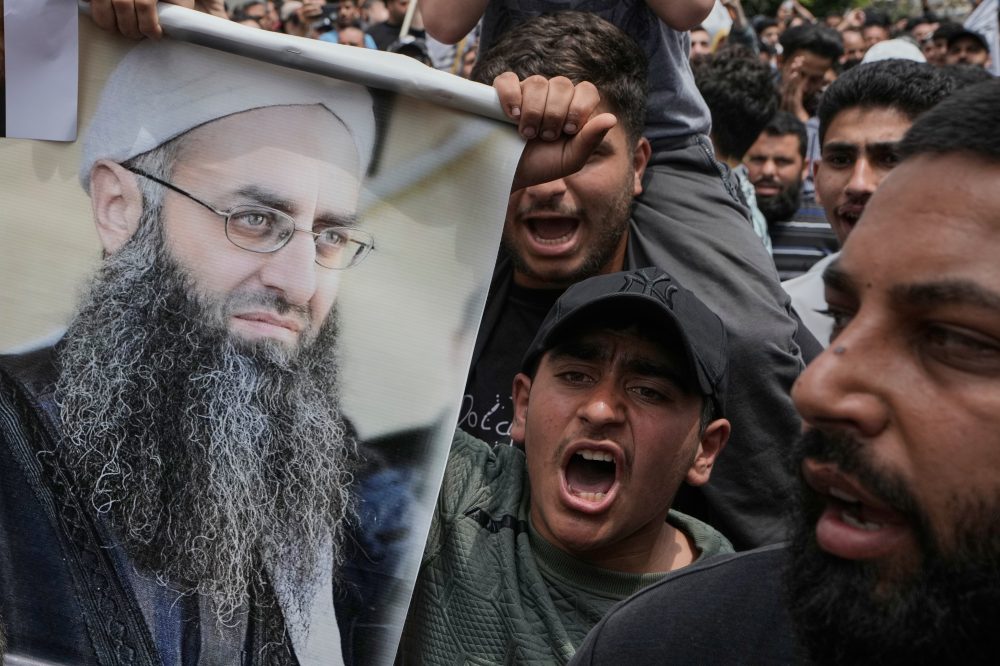
Bou Saab’s son George, an army first lieutenant, was among 18 military personnel killed during confrontations with supporters of extremist Sunni Muslim cleric Ahmed al-Assir in the southern city of Sidon in 2013.
Bou Saab questioned whether al-Assir, who has completed 11 years under a death sentence, would gain the right through the amnesty to visit his children and family “while my son is buried under the sand and his children don’t know him.” Should the legislation pass, his death sentence would be eliminated and he would serve 10 additional years.
Al-Assir’s wife criticized the amnesty, claiming her husband is an innocent casualty of a conspiracy organized by the Shiite Muslim Hezbollah, which she alleged sparked conflicts between the cleric’s followers and the Lebanese military.
“He is being executed slowly,” Amal Shamseddine stated regarding her husband’s sentence, adding, “Had there been justice in our country, they (detainees) would have been released and gone home long time ago.”
Lebanon’s previous major amnesty occurred in 1991, designed to promote reconciliation following the civil war that claimed 150,000 lives. The conflict involved numerous militias, many religiously motivated, plus Palestinian groups. Syria’s military became involved, and an Israeli invasion in 1982 reached Beirut.
Following that amnesty, most militia commanders joined Lebanon’s governing elite who were subsequently held responsible for decades of corruption and poor governance that led to economic collapse in 2019.
During the drafting of the current amnesty legislation, the nation’s profound sectarian splits became evident in the legislature. Sunni representatives demanded freedom for Islamists, while Shiite members sought release for drug dealers primarily from Lebanon’s eastern, cannabis-growing Baalbek area.
Christian lawmakers requested amnesty for hundreds of citizens who escaped to Israel following its military withdrawal from Lebanon in 2000. Many maintain connections to the Israeli-supported South Lebanon Army militia that disbanded when Israel departed.
“The draft law has entered the road of political bargains,” said lawmaker Nabil Badr, a strong supporter of the amnesty, adding that many legislators are using it to make political gains.
Maryam Younnes was 5 when she escaped with her family to Israel in 2000. She hopes the amnesty will enable her return to Lebanon, where she can reunite with her grandmother and visit her father’s grave. He had served as an SLA commander and his remains were transported to his hometown for burial after his death in 2013.
However, political factors persist.
“We will return once Lebanon is cleared of (Hezbollah), illegal weapons, and once there is peace between Lebanon and Israel,” Younnes said. Hezbollah, which formed in southern Lebanon in 1982 responding to Israel’s invasion, was permitted to retain its weapons after the civil war to combat Israeli occupation forces.
Following Israel’s withdrawal, hundreds of SLA members remained in Lebanon and received prison sentences, with some subsequently freed.
The proposed amnesty legislation states Lebanese citizens residing in Israel would be handled according to a 2011 law indicating members of the pro-Israel militia will be detained upon arrival in Lebanon and provided “a fair trial.”
But Younnes declared: “Our people are no criminals.”
As Lebanon and Israel conduct their first direct negotiations in over three decades while a new conflict develops, Younnes hopes for an eventual peace agreement with open borders.
“I am confident the situation will change and I want to return to my country,” she said.
At the Mpondwe crossing between Uganda and Congo, merchant Leah Masika watched helplessly as her plantain shipment began deteriorating in a miles-long line of stalled trucks. Water was seeping from her produce, which would become worthless within hours without movement through the checkpoint.
The businesswoman found herself waiting for official approval to move cargo through the border facility on Thursday, after authorities blocked vehicle passage as part of intensified efforts to halt Ebola’s spread across international boundaries.
“Our things are here rotting,” she said.
Following Congo’s announcement of an Ebola outbreak in eastern Ituri province on May 15, Uganda shut down its western frontier on May 28, citing mounting concerns about disease transmission. Officials permitted limited exceptions for emergency situations, including outbreak response activities, humanitarian missions, freight transport, or security operations.
However, as the epidemic in eastern Congo has seemingly accelerated beyond containment efforts, local authorities in Uganda’s border district of Kasese have imposed even stricter controls.
Business operators express irritation with the sluggish pace of truck processing. Several merchants at the Mpondwe crossing told The Associated Press that while they understand the harsh restrictions stem from Ebola concerns, they believe delaying cargo movement is unnecessarily severe.
Clearing agent Sylvia Asiimwe gestured toward a truck line extending more than a mile on Uganda’s side of the border. No fewer than seven vehicles carried fish imported from China, bound for the Congolese municipalities of Beni and Butembo.
Asiimwe emphasized that those Congolese destinations lie within North Kivu province, not Ituri where the Ebola outbreak is centered. “The fish is going to spoil,” she said. “So much money.”
The Uganda-Congo frontier spans several hundred miles and includes numerous informal crossing paths beyond official checkpoints. Commerce typically thrives along the route leading to Mpondwe, and family connections exist between the Bakonzo community on Uganda’s side and the Banande people across the border.
Mpondwe serves as Uganda’s primary checkpoint for unofficial exports, which reached an estimated value of $131 million in 2023, according to the Uganda Bureau of Statistics.
Following the recent border shutdown, some businesses closed their doors while unemployed young men sat dejectedly on stools, unable to find temporary work.
“The situation is bad,” said Ismail Mumbere, who typically sells roadside snacks on Uganda’s side. “A lot of people earn from here, in many businesses. But now the government has told us there is Ebola. Ebola has wasted our work.”
The ongoing Congo outbreak is believed to have affected more than 1,000 individuals. Confirmed case numbers remain significantly lower because many suspected patients die outside medical facilities without definitive Ebola diagnosis.
The World Health Organization declared the current outbreak a public health emergency of international concern while discouraging border shutdowns. However, the U.N. organization also recognized that adjacent countries face elevated contamination risks.
“With movement of cargo, and maybe trucks, is mobility of people, and we want to reduce that,” said Arafat Bwambale, a surveillance officer for Kasese, justifying the protective measures.
Authorities were working to prevent Congolese citizens from entering Uganda through more than two dozen footpaths along the Mpondwe frontier, he explained.
Existing vaccines and treatments for Ebola prove ineffective against patients infected with the uncommon Bundibugyo strain circulating in Congo, making this outbreak particularly concerning.
Uganda has documented 15 Ebola cases, all connected to the neighboring country’s outbreak after some Congolese individuals sought medical care in Uganda’s capital of Kampala before the epidemic was publicly known.
Health officials believe the disease had been transmitting for days or weeks before the May 15 outbreak declaration.
Uganda has experienced several Ebola outbreaks since 2000, when the illness claimed more than 200 lives.
Ebola, named after a Congo River tributary, was initially identified in 1976 during concurrent outbreaks in Congo and what is now South Sudan. Epidemics typically begin when the virus jumps from infected animals like fruit bats to humans. These species-crossing infections frequently occur when people handle and consume wild game, according to health experts.
After infecting an initial person, the virus spreads through direct contact with bodily fluids from ill or deceased patients, including sweat, blood, feces, or vomit.
Contact tracing and isolation are considered essential for controlling Ebola transmission, along with providing healthcare workers appropriate protective gear.
Bwambale, the surveillance officer, noted that the closest major hospital in Kasese maintains an isolation facility and laboratory capable of processing test samples within six hours. Recently, specimens from 41 individuals in the Kasese region tested negative for Ebola, which presents as hemorrhagic fever.
Nevertheless, officials appeared to be considering additional limitations.
An upcoming local Ebola task force meeting would likely produce “a more restricted way on how both the cargo or the trucks get into the country in a systematic way,” Bwambale said.
This prospect worries merchants who depend on the Mpondwe crossing for their livelihood.
Masika, the plantain trader, indicated she would halt new orders from Congo until the current epidemic ends. However, she faces financial ruin if her current shipment fails to reach various destinations in and around Kampala, where the fruits, whether deep-fried or boiled, are breakfast staples at local restaurants.
Masika said she cannot afford losing 50 bags, each valued at approximately $44.
“We are begging them to help us and open (the border),” she said. “We will not go back to Congo.”
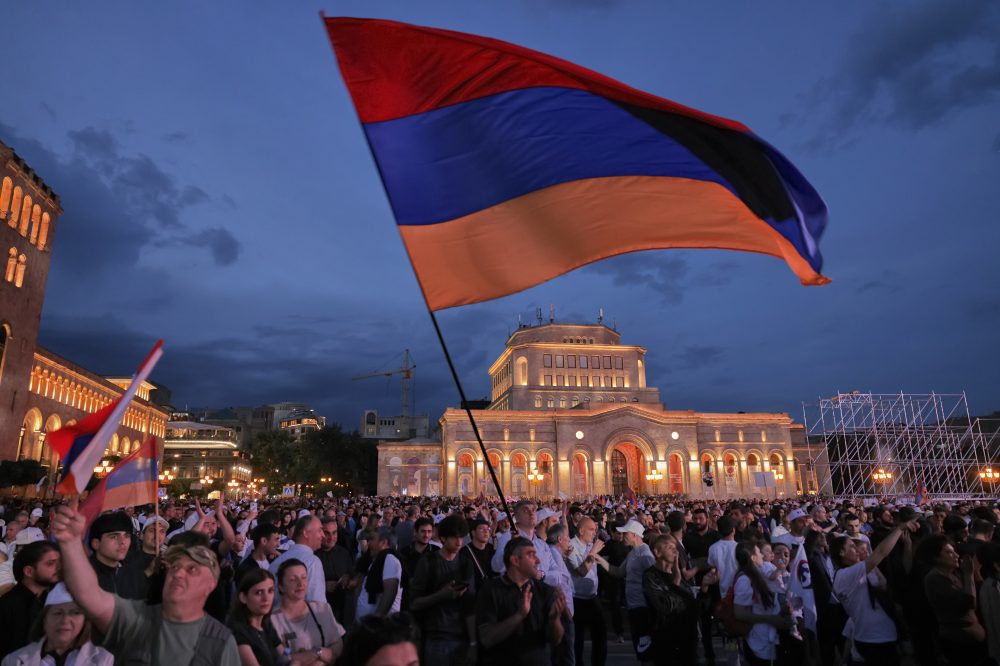
Sunday’s parliamentary elections in Armenia will serve as a referendum on the country’s international alignment as current Prime Minister Nikol Pashinyan pursues stronger connections with the European Union and United States while facing criticism for distancing the nation from its traditional Russian ally.
Political experts predict Pashinyan’s Civil Contract party will likely maintain parliamentary control, though numerous opposition groups campaigning on pro-Moscow platforms have made the Caucasus nation’s global positioning a central campaign issue.
Leading up to the vote, Russian President Vladimir Putin and other Moscow officials have cautioned Armenia that European Union membership could result in severe economic harm by severing trade relationships with Russia and its partner nations.
“These are the first elections in Armenia’s history where geopolitical orientation has become a decisive issue,” Mikayel Zolyan, an analyst and former member of the Armenian Parliament, told The Associated Press from Yerevan. “Until now, Armenia has remained within Russia’s sphere of influence, and this was taken for granted, but now, for the first time, this is being called into question.”
The relationship between Moscow and Armenia deteriorated in 2023 following Azerbaijan’s seizure of the complete Karabakh region. Ethnic Armenian forces supported by Armenia had maintained control over the mountainous territory for decades as part of an ongoing dispute between the two neighboring nations.
Armenian leaders blamed Russian peacekeepers stationed in the area for not preventing Azerbaijan’s offensive. Moscow, occupied with the Ukrainian conflict, has dismissed these claims, stating its forces lacked authority to intervene.
“It turned out that Russia’s image as a guarantor of Armenian security was not based in reality, and it all collapsed after the Karabakh war,” said Alexander Iskandaryan, director of the Caucasus Institute in Yerevan.
Pashinyan has gradually distanced his country from Moscow, becoming a member of the International Criminal Court in 2023 and halting participation in the Moscow-led Collective Security Treaty Organization in 2024.
Armenia has also formally announced its EU membership goals and served as host for the European Political Community summit in Yerevan during early May.
A decisive parliamentary victory would provide Pashinyan with the authority to advance this direction and complete negotiations with Azerbaijan.
Western countries have demonstrated potential benefits of strengthened relationships.
During August, U.S. President Donald Trump brought together Pashinyan and Azerbaijan’s President Ilham Aliyev to execute an agreement ending their multi-decade conflict and establishing provisions for a new transit route connecting Azerbaijan to its Nakhchivan territory. A February agreement could enable a U.S. company to construct a nuclear reactor in Armenia.
European Commission President Ursula von der Leyen has also stated that Europe stands prepared to fund Armenia’s energy sector and its “booming digital scene.”
Trump has supported Pashinyan, describing him as a “great friend” and a leader making his nation “strong, wealthy, and very secure!”
Armenia’s opposition remains largely controlled by pro-Russia factions, with many opposing normalized Azerbaijan relations. Leading opposition voices have demanded Pashinyan’s resignation following the Karabakh loss.
Nineteen political entities, comprising two blocs and 17 parties, are participating in the elections.
Pashinyan’s primary challenger is the Strong Armenia Party, which seeks enhanced business connections with Russia and claims Pashinyan is trying to provoke conflict with Moscow. Armenian-Russian billionaire Samvel Karapetyan leads the party while facing trial for allegedly inciting government overthrow, charges he disputes.
Additional competitors include former President Robert Kocharyan, who heads the Hayastan bloc and has accused Pashinyan of “seriously undermining” Russian relations.
Russia, maintaining a military installation in Armenia, has warned that Yerevan’s Western shift could bring severe political and economic repercussions.
Putin has drawn comparisons between Armenia’s path and Ukraine’s in barely concealed warnings, suggesting Russia’s Ukrainian conflict began with EU membership attempts.
Recently, Russia has imposed new limitations on Armenian products citing health violations, prohibiting Armenian flowers, specific cognac and wine varieties, eggplants, potatoes, dried fruits, fish and additional items.
Armenia’s participation in the Eurasian Economic Union, a Russian-controlled customs alliance, faced formal examination during a Kazakhstan meeting in May, with threats of complete suspension by December.
At the Kazakhstan gathering, governments of Russia, Belarus, Kazakhstan and Kyrgyzstan also required Armenia to conduct a referendum on remaining in their organization or pursuing EU membership. Pashinyan has dismissed the necessity for such a referendum.
Armenian government data indicates 38% of Armenia’s exports traveled to Eurasian Economic Union countries in 2025, with most destined for Russia. Comparatively, only 8% of trade reached the EU.
The Russian actions led von der Leyen to announce Thursday that the 27-member bloc would provide 50 million euros ($58 million) to assist Armenia. In her statement, she said Russia is “weaponizing” economic relationships and its import prohibition represents “nothing short of economic coercion.”
Russia maintains additional leverage over Armenia through its control of substantial portions of the country’s energy and infrastructure while providing affordable gas.
“It’s completely unrealistic to say that Armenia can somehow overcome Russian influence in a short period of time,” analyst Zolyan said.
Armenia’s civil society has also expressed concerns about what they characterize as Russian-supported disinformation efforts before the election. Moscow denies any meddling.
Daniel Ionnisyan, head of the Union of Informed Citizens, an independent election watchdog, told the AP that his organization has documented instances of Russian interference through social media campaigns, cyberattacks, vote buying and bribery of journalists.
These findings align with observations from a Parliamentary Assembly of the Council of Europe delegation that visited Yerevan in May, reporting foreign interference including illegal political funding, cyberattacks, economic pressure and direct electoral manipulation attempts.
“These hybrid tactics aim not only to sway public opinion but to secure long-term geopolitical leverage over Armenia,” the delegation said.
NEW DELHI (AP) — A satirical political movement known as the Cockroach Janata Party, which started as an internet joke but has gained millions of followers throughout India, faces its most significant challenge on Saturday when its creator is expected to spearhead a demonstration in New Delhi.
The demonstration, organized at Jantar Mantar in India’s capital city, represents the movement’s initial venture into on-the-ground political action following weeks of controlling social media platforms and capturing news attention, drawing millions of digital supporters and extensive backing from India’s youth.
Participation numbers remain uncertain. However, the demonstration will serve as an initial indicator of whether the movement can transform its digital success into wider community backing amid increasing dissatisfaction among India’s young people regarding education, employment and financial opportunities.
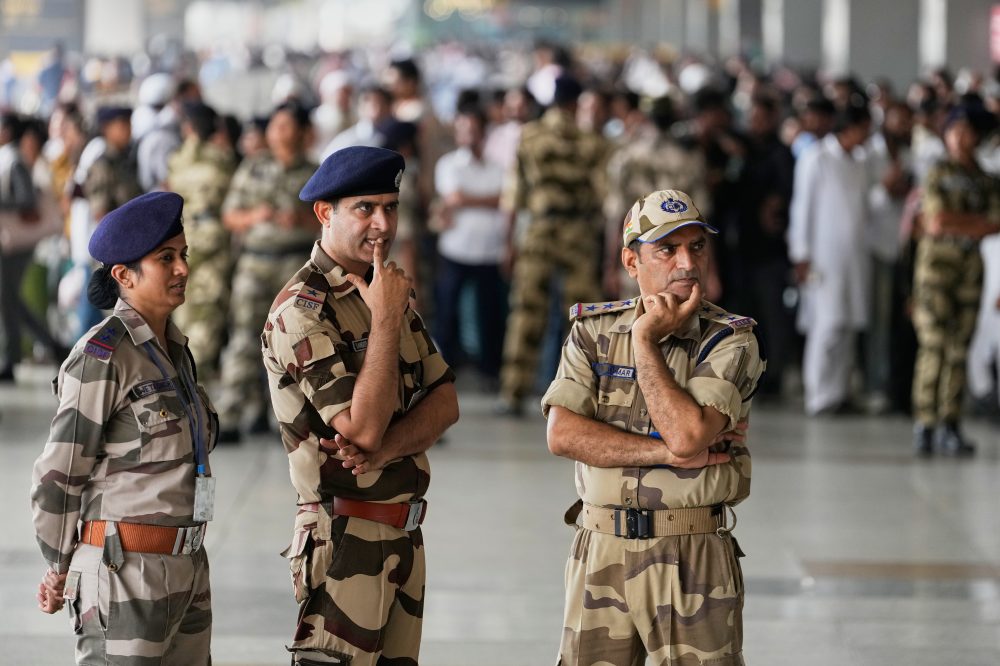
Abhijeet Dipke, who created the digital movement, is set to reach the capital from the United States on Saturday for the demonstration. Authorities positioned metal barriers at New Delhi’s international airport arrival areas.
The Cockroach Janta Party, known as CJP, started just three weeks earlier and became an unexpected platform for dissatisfaction among supporters who embrace the “cockroaches” label.
India’s Chief Justice Surya Kant compared critics and certain jobless young people to cockroaches during a May court session, creating anger among dissatisfied young Indians. Dipke, who studies political communications strategy at Boston University, transformed the slight into motivation for a satirical political organization. Within seven days of creating a website and social media presence, CJP’s Instagram account had gathered over 15 million followers.
The organization has transformed the cockroach into a sardonic symbol of persistence and political expression. Content and internet humor mocking joblessness, corruption and governmental failures have received millions of online views. Satirical CJP profiles have also embraced the cockroach as their political emblem, utilizing internet humor, fake campaign messages and comedic analysis.
The movement’s ironic approach combines self-mocking comedy with governmental critique. Followers jokingly characterize themselves as jobless, constantly online and excluded from significant power. Under the comedy exists wider criticism of Prime Minister Narendra Modi’s administration, with CJP followers claiming that regular Indians, especially younger citizens, face diminished prospects.
India’s youth represent over one-fourth of the nation’s population but encounter restricted employment options, increasing joblessness and growing disappointment with established politics. Many younger voters also criticize Modi’s governing Hindu nationalist Bharatiya Janata Party, expressing worries about increasing religious division, expanding inequality and growing financial strain.
The movement’s doubters, especially Modi’s party supporters, reject the occurrence as merely a social media stunt. They contend the movement’s digital success might not convert to street organizing and that its quick growth will probably be temporary.
The organization’s emergence reflects a comparable pattern throughout South Asia where youth movements created through social media have central positions in anti-government demonstrations, including uprisings in Sri Lanka and Bangladesh and disturbances in Nepal.
CJP leaders utilized social media during the week to gather supporters for Saturday’s march, calling for Education Minister Dharmendra Pradhan’s resignation. The request originated from an exam irregularity dispute in May that rapidly became a wider platform for dissatisfaction regarding India’s educational system and restricted employment prospects.
Attendees received encouragement to carry India’s national flag and a book, which leaders stated represented educational rights and equal opportunities for everyone. Leaders also encouraged demonstrators to stay peaceful and prevent any conflicts with authorities.
“Time to turn this tiny joke into a revolution,” the official CJP account on X posted Friday.
The movement continues to encounter substantial obstacles. During the last ten years, Indian officials under Modi have attempted to eliminate protests opposing his administration, including demonstrations against disputed citizenship laws and year-long farmers’ protests.
Certain protest movements have also encountered legal proceedings against leaders and activist detentions, which represents part of what critics characterize as a wider attempt by officials under Modi to silence opposition.
Cuba’s leadership announced plans to allow Cuban nationals to take over hotel management operations after major international hospitality companies decided to pull back from the Caribbean nation.
The policy shift comes in response to Spanish hotel company Melia’s announcement on May 26 that it would end operations at 15 of its 34 Cuban properties. This decision followed new U.S. sanctions and continued energy restrictions that have worsened the island’s economic struggles. Cuban officials have attributed widespread power outages, water shortages, supply chain disruptions, healthcare system problems, and daily life challenges to the U.S. blockade.
Other international hotel operators, including Canadian company Royalton and Spain’s Iberostar, have made similar decisions to reduce or halt their Cuban operations, creating significant challenges for the crucial tourism industry that has declined sharply since reaching its highest point in 2018.
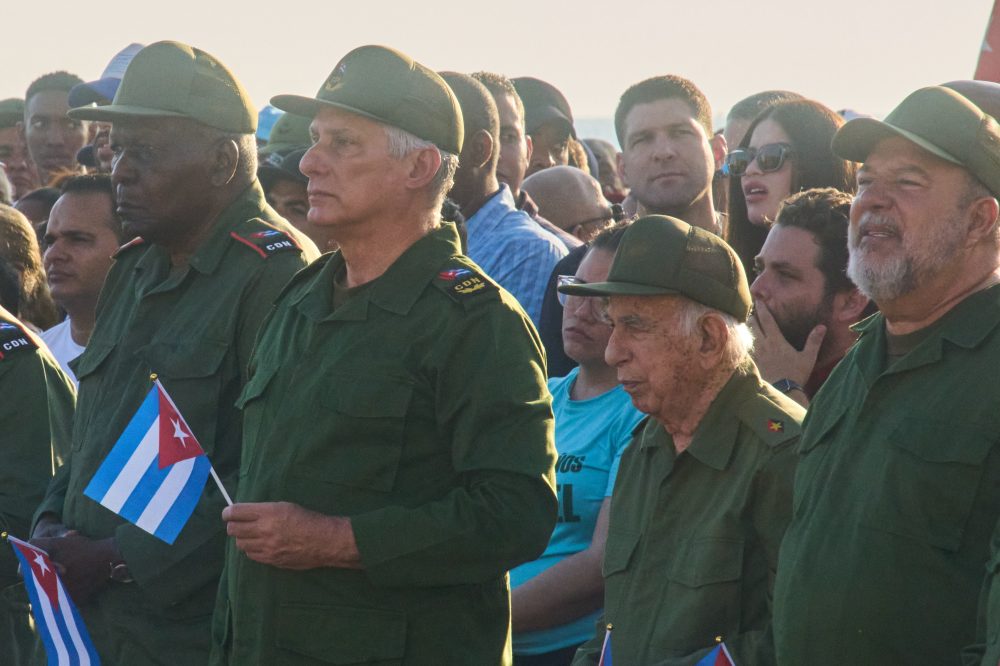
In a televised interview with a Spanish reporter aired Friday on the government’s presidential channel, President Miguel Díaz-Canel outlined the new approach.
“There will be hotels that we will have to operate more with Cuban management than with shared management with foreign entities,” Díaz-Canel said. “We are proposing different business models. We are open to Cubans who want to invest and manage hotels.”
“We have also offered these business opportunities to Cubans residing abroad,” he added.
The Melia withdrawal occurred following U.S. President Donald Trump’s executive order that broadened sanctions against Cuba. The measures primarily focused on Grupo de Administración Empresarial S.A., a business conglomerate run by the Cuban Revolutionary Armed Forces, citing national security concerns.
The executive order also impacts foreign companies by freezing assets, seizing U.S.-based accounts, and banning travel for shareholders, investors, and staff members, effectively cutting off access to the U.S. financial system.
GAESA, established in the 1990s as a Cuban business conglomerate, controls various enterprises including vehicle rentals, retail outlets, and transportation services. The organization partners with Meliá in hotel operations through its subsidiary company, Gaviota.
Meliá represented a major tourism partner for Cuba, managing approximately 14,000 hotel rooms before reducing its presence.
Cuban tourism, which peaked at 4.3 million visitors in 2019, experienced a sharp decline in early 2024 visitor numbers, dropping 48% compared to the same timeframe in 2025.
Government statistics show only 298,000 tourists visited Cuba from January through March, compared to 573,300 international arrivals during the corresponding months the previous year.
During the interview, Díaz-Canel criticized Trump and U.S. Secretary of State Marco Rubio for characterizing Cuba’s government as ineffective while simultaneously strengthening the existing embargo, calling their approach “cynical.”
The Cuban leader suggested the U.S. actions might aim to pressure Cuba enough to “provoke a social explosion that would give (Trump) a pretext for humanitarian aid to intervene in the country.”
Alternatively, he said the measures could seek to “pursue a coercive dialogue with Cuba, employing maximum pressure to economically occupy the country,” or potentially prepare for military action.
Despite earlier discussions between U.S. and Cuban representatives this year, relations have deteriorated. In late May, former President Raúl Castro faced charges in a U.S. legal filing related to his suspected involvement in the 1996 destruction of two civilian planes operated by Miami-based exiles in Cuban territorial waters.
A high-ranking American diplomat urged Taiwan on Saturday to make more strategic investments in its military capabilities, emphasizing the importance of drone technology in maintaining defense balance against China.
Taiwan’s legislature, controlled by opposition parties, recently approved just two-thirds of the $40 billion additional defense funding requested by President Lai Ching-te last month. The administration has made unmanned aircraft and other asymmetric defense systems central to its military upgrade efforts.
Officials are now working to secure approval for the rejected funding, which was designated for domestically produced systems including drones and missiles, as part of efforts to strengthen deterrence against China, which considers the democratic island part of its territory.
The United States has expressed strong support for Lai’s defense spending proposals.
At a conference in Taipei, Raymond Greene, director of the American Institute in Taiwan, emphasized America’s interest in continued military investments.
“It is critical that Taiwan not only spend more on its own defence but also spend smarter. And there is no smarter way Taiwan can deliver deterrence right away than by investing in unmanned systems,” he stated.
“The conflicts in Ukraine and the Middle East have demonstrated that drones are changing the character of warfare, offering enormous opportunities for Taiwan to re-establish the cross-Strait military balance,” Greene added.
America has historically served as Taiwan’s primary international supporter and weapons provider, despite the absence of official diplomatic relations.
However, U.S. President Donald Trump has created uncertainty for Taiwan following his recent meeting with China’s Xi Jinping in Beijing last month, stating he remains undecided about proceeding with a proposed $14 billion arms package for Taipei.
The United States, legally obligated to provide Taiwan with defensive capabilities, has maintained its policy toward the island remains unchanged, a position Greene reinforced.
“Maintaining peace and stability across the Taiwan Strait is absolutely critical for the economic well-being of the United States, Taiwan, and the entire world,” he declared.
“The United States has made clear that we oppose any forced, compelled, or coercive change to the status of Taiwan,” Greene continued.
Taiwan’s administration disputes Beijing’s territorial claims, maintaining that only the island’s residents have the authority to determine their political future.
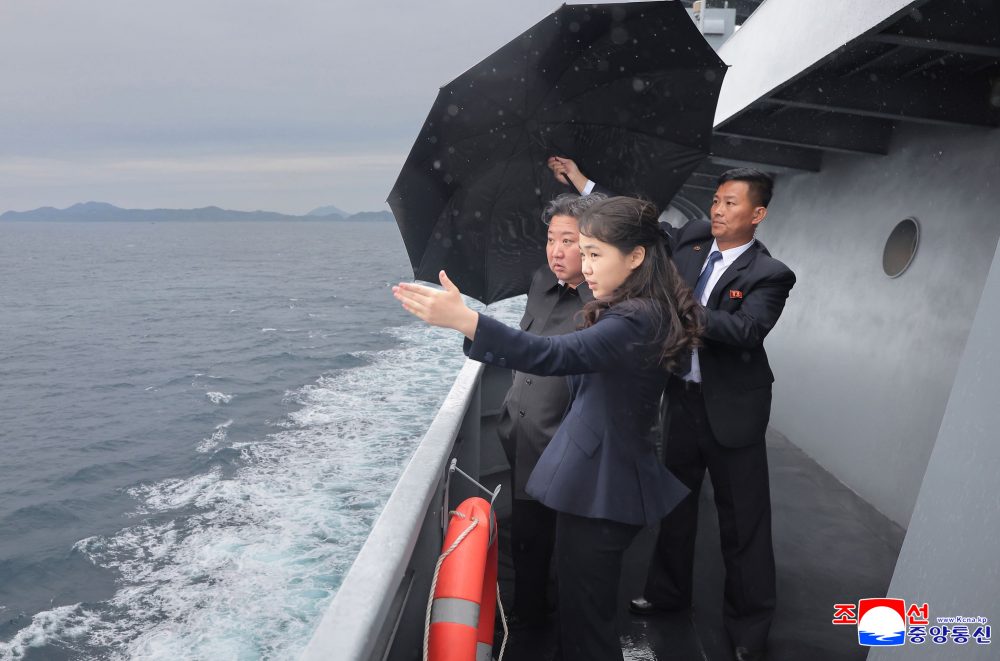
SEOUL, South Korea (AP) — North Korean leader Kim Jong Un inspected sea trials of a newly repaired naval vessel and promised to rapidly expand his nuclear-armed maritime forces, according to state media reports Saturday. The military demonstration occurred just before Chinese leader Xi Jinping’s upcoming visit to the country.
According to North Korea’s official Korean Central News Agency, Kim visited the 5,000-ton destroyer Kang Kon on Thursday during capability testing operations. Images distributed by the agency showed him joined by his increasingly visible teenage daughter, who South Korean officials believe may be named Kim Ju Ae and could be preparing for a future leadership role.
Kim Jong Un urged “rapidly developing” maritime forces that could enhance the nation’s nuclear deterrent capabilities and deliver a “deadly blow at the enemy any moment under the water or on the water,” according to KCNA. He described naval expansion as a central component of a new five-year defense strategy endorsed at a ruling party congress this year, which involves constructing larger 10,000-ton-class destroyers and creating unspecified “underwater secret weapons.”
The news agency did not include any direct statements from Kim regarding Washington or Seoul despite ongoing tensions surrounding his nuclear programs and stalled diplomatic efforts. The announcement followed confirmation from North Korean and Chinese state media that Xi would arrive in North Korea on Monday, demonstrating Beijing’s continued efforts to strengthen relationships with its nuclear-armed ally. Recently, Kim has emphasized connections with Russia, particularly by providing troops and military equipment to assist Moscow’s conflict in Ukraine.
Xi’s visit was revealed one day after North Korea displayed what South Korea’s military identified as a new uranium-enrichment facility for nuclear bomb fuel production. During Kim’s visit to the undisclosed location, he promised to grow the country’s nuclear arsenal “at an exponential rate,” which analysts believe demonstrates his goal to solidify North Korea’s nuclear weapons status before Xi’s arrival.
Kang Kon represents the second destroyer North Korea revealed last year, following the Choe Hyon, whose construction Kim praised as significant progress toward extending his nuclear-armed military’s operational reach and preemptive strike abilities. State media reported these vessels are equipped to carry various weapons systems, including anti-aircraft and anti-ship armaments plus nuclear-capable ballistic and cruise missiles, although some analysts doubt their combat readiness.
Kang Kon suffered damage during a failed launching ceremony in May last year at the northeastern port of Chongjin, prompting an angry response from Kim, who described the incident as “criminal.” North Korea announced Kang Kon was relaunched in June following repairs, but international experts question whether the vessel is completely operational. Kim has requested construction of two additional 5,000-ton-class destroyers.
Ukrainian officials reported that five civilians lost their lives during three separate Russian strikes in the southern Kherson region on Friday.
Regional governor Oleksandr Prokudin announced on Telegram that a bombardment targeting a district within Kherson city resulted in the deaths of three elderly residents in their 70s and 80s, whose remains were discovered inside their damaged residences.
According to Prokudin, another assault on a fuel station located north of the city claimed one life and left seven others wounded. Additionally, an evening drone attack in a village also situated north of Kherson resulted in the death of one man.
The Kherson region represents one of four territories that Russia claimed as its own six months following its 2022 military invasion of Ukraine.
During the initial phase of the invasion, Russian military forces seized control of large portions of the region, though Ukrainian troops later regained significant territory, including Kherson city itself. Areas under Ukrainian control face regular Russian bombardment.
Across the border in Russia’s western Belgorod Region, which frequently experiences Ukrainian strikes, local authorities reported that a Ukrainian drone hit a vehicle close to the border, resulting in the driver’s death.
Independent confirmation of these incidents by Reuters was not possible. Both Russia and Ukraine maintain they do not intentionally target civilian populations.
American military forces targeted Iranian surveillance installations on Saturday after intercepting unmanned aircraft that Tehran had directed toward the Strait of Hormuz, according to military officials, marking another escalation in the ongoing regional conflict.
Military officials believe the four unmanned aircraft were aimed at shipping vessels in the area, a U.S. official confirmed to Reuters. U.S. Central Command announced on X that American forces subsequently targeted Iran’s monitoring facilities located in Goruk and Qeshm Island, both positioned along the Strait of Hormuz.
The United States and Iran have been conducting mostly indirect diplomatic talks aimed at reaching a temporary agreement to end the three-month conflict, with more complex issues like Iran’s nuclear program set aside for future discussions.
Under any potential agreement, Tehran seeks access to billions in petroleum revenues, relief from crude export sanctions, removal of American port restrictions, and control over the strategic waterway. Iran has effectively shut down the strait, which previously handled approximately one-fifth of global oil shipments before hostilities began.
U.S. President Donald Trump faces increasing domestic pressure over rising fuel costs to conclude the unpopular conflict. He informed NBC that although most of Iran’s drone and missile production capabilities have been eliminated, Iranian forces retain access to roughly one-fifth of their missile arsenal.
“They have some missiles, they have some drones. I would say percentage wise, maybe 21%-22% of their missiles. It’s a lot of missiles, but it’s not what it was when we first attacked,” Trump told NBC News’ “Meet the Press” program, according to excerpts released by the network on Friday.
When questioned about why Iranian leadership hasn’t been more willing to negotiate despite their reported desperation, Trump responded:
“Because they are strong. They’re proud. There are things they never thought they’d be doing that they’re going to have to do, they’ve got no choice, and it takes a little while.”
Israel and the United States initiated the conflict with military strikes against Iran in late February.
In related fighting in Lebanon, the Iran-backed militant organization Hezbollah announced Friday that it had conducted two operations against Israeli forces in southern Lebanon, including near the recently seized Beaufort Castle, while Lebanese security officials reported Israeli air attacks on multiple southern Lebanese communities.
Iran has renewed its backing for Hezbollah while insisting that Israel pull back from southern Lebanon. Tehran has established a ceasefire between Israel and Hezbollah as a prerequisite for any peace agreement with Washington to resolve the regional conflict, now in its fourth month, and resume maritime traffic through the Strait of Hormuz.
The current round of hostilities between Hezbollah and Israel began in early March, two days following the U.S.-Israeli strikes on Iran. Hezbollah stated its operations were conducted in solidarity with Tehran.
Hezbollah leader Naim Qassem this week turned down a U.S.-mediated agreement between Israel and the Lebanese government to end the Lebanese fighting. The proposal failed to include Israeli withdrawal provisions and Hezbollah had been excluded from the diplomatic process.
Israel has continued its operations in southern Lebanon, declaring that its forces would not retreat or suspend activities in the country despite growing tensions with the United States.
Lebanon’s parliament speaker and Hezbollah ally Nabih Berri stated Friday he would support the organization’s withdrawal from southern Lebanon provided Israeli troops simultaneously departed territory they control in the country.
Beyond Lebanon, civilians in Gaza, northern Israel and Kuwait have all experienced attacks this week, despite U.S.-arranged ceasefires that Trump described as involving “shooting in a more moderate manner”, rather than a complete cessation of hostilities.
President Donald Trump stated Friday that he remains open to speaking directly with Taiwan’s President Lai Ching-te, despite China’s public warnings against such contact with the leader of the island nation that Beijing considers its territory.
Speaking to reporters aboard Air Force One, Trump initially floated this possibility last month following his meeting with President Xi Jinping in Beijing. He mentioned wanting direct communication with Lai while considering whether to approve a $14 billion weapons package for Taipei that received congressional authorization earlier this year.
When questioned Friday about his plans to contact Lai, Trump responded, “I’ll always talk to him,” indicating the phone conversation remains under consideration.
A direct conversation between current American and Taiwanese presidents would represent the first such communication in many decades, prompting Beijing to discourage Trump from pursuing this course of action.
In a statement to the Associated Press this week, the Chinese embassy in Washington warned that such contact could damage progress in the sensitive U.S.-China relationship. They called on the Republican administration to “handle the Taiwan question with utmost prudence” and “avoid sending wrong signals” to leaders of the democratically governed island that China considers a breakaway province.
Trump previously angered China when he accepted a congratulatory phone call from Taiwan’s then-President Tsai Ing-wen following his 2016 election victory but before assuming office.
While Trump has discussed potential direct contact with Lai, he has shown more caution regarding the major weapons package for Taiwan after hearing Xi’s concerns during their Beijing meeting. Although Congress approved the arms deal in January, it still requires Trump’s final authorization.
Last month, the president described arms sales with Taiwan as a “negotiating chip” in his administration’s Pacific region strategy.
During their recent Beijing summit, Xi cautioned Trump that the “Taiwan question” represents the most critical issue in China-U.S. relations, warning that the two countries will “have clashes and even conflicts” without careful management of this matter, according to Chinese officials.
Trump’s discussions with Xi regarding Taiwan arms sales appeared inconsistent with U.S. policy guidelines known as the Six Assurances. These non-binding principles, established in 1982 under President Ronald Reagan, have helped shape the U.S. relationship with Taipei, according to policy experts.
The second principle of the Six Assurances declares that the U.S. “did not agree to consult with the People’s Republic of China on arms sales to Taiwan.”
Secretary of State Marco Rubio told lawmakers during congressional hearings earlier this week that the United States’ Taiwan policy remains unchanged.
However, Trump’s statements have introduced uncertainty into the U.S.-Taiwan relationship, according to Craig Singleton, a China expert at the Foundation for Defense of Democracies.
“Trump’s comments about Taiwan arms sales as a negotiating chip, combined with uncertainty around a possible Lai call, have created more ambiguity than Taipei would like,” Singleton explained. “The real test is not the rhetoric. It is whether the pending arms package moves, and on what timeline.”
Should the phone call occur, Lai has indicated he would stress to Trump that peace and stability in the Taiwan Strait are vital for global security, while arguing that China acts as the “destroyer” of the strait’s peace.
Lai also said he would inform Trump that Taiwan’s growing defense spending responds to threats, and that purchasing U.S. weapons would be essential for maintaining strait stability.
Washington severed diplomatic relations with Taiwan in 1979 as part of recognizing the People’s Republic of China, and the Chinese have responded forcefully to other high-level U.S. engagements with Taiwan’s leadership.
Following an August 2022 visit to Taipei by then House Speaker Nancy Pelosi and five other Democratic lawmakers, China conducted extensive military exercises that included firing short-range ballistic missiles over the island.
Under the “One China” policy, the United States acknowledges the Chinese position that Taiwan belongs to China, while maintaining informal U.S. relations with the self-governing island.
Simultaneously, the U.S. has committed to ensuring Taipei has defensive capabilities, though Washington maintains strategic ambiguity about how far it would go militarily to counter Beijing if it chose to take Taiwan by force.
Following Trump’s Friday remarks, the Taipei Economic and Cultural Representative Office in Washington restated its position that it plans to “maintain close contact” with the U.S. on arms sales and other matters.
“We will leave it up to the U.S. to announce if there’s any arrangements for President Trump to speak with President Lai,” the office stated.
China would consider a phone conversation between Trump and Lai more provocative than proceeding with the proposed arms sale to Taiwan, said Edgard Kagan, a former U.S. ambassador to Malaysia and senior State Department official handling East Asia policy issues under Trump and President Joe Biden.
Kagan noted the significance of Trump continuing to publicly suggest such a call remains possible after China warned the U.S. administration against a Trump-Lai engagement.
If Trump decides against phoning Lai, he might create opportunity to advance new arms sales for Taipei while reducing backlash from Beijing, said Kagan, who now serves as the China Studies chair at the Center for Strategic and International Studies in Washington.
“This could give him the room to announce an arms sale, defuse the criticism that the U.S. is turning its back on Taiwan, and do it in a way that leaves the Chinese feeling there was some respect for their views,” Kagan explained.
WASHINGTON — American forces destroyed four Iranian drones heading toward the Strait of Hormuz on Friday before launching retaliatory strikes against the Islamic Republic’s coastal radar installations, military officials announced.
According to U.S. Central Command’s social media statement, “The attack drones posed an immediate threat to regional maritime traffic.” The military action is part of ongoing enforcement of a blockade targeting Iranian ports as Tehran maintains control over the critical waterway used for worldwide oil and natural gas transport, causing energy costs to surge.
The incident represents the most recent exchange in a series of escalating attacks that have put pressure on the fragile ceasefire currently in place and complicated efforts to negotiate an extension of that temporary peace agreement.
Just days ago, Iranian drone strikes caused significant damage to a passenger facility at Kuwait’s primary airport, resulting in one fatality and injuring dozens of people while temporarily shutting down airport operations.
Even as these attacks fuel growing fears that the ceasefire might fall apart, Trump maintained his confidence this week that his administration remains positioned to bring the conflict to a successful conclusion.
“We’re going to win one way or another,” Trump stated to reporters Thursday in the Oval Office.
The administration has also highlighted the recent ceasefire agreement reached this week between the Lebanese government and Israel following negotiations facilitated by the United States in Washington. However, the Iranian-supported Hezbollah militant organization has refused to accept the deal, and both parties have continued launching new attacks.
The ongoing conflict in Lebanon, where Israeli military units have taken control of substantial portions of southern territory, also poses challenges to efforts aimed at ending the Iran conflict and reopening the Strait of Hormuz. Iran has insisted that any permanent ceasefire must include Lebanon in its scope.
Israel’s security cabinet chose not to proceed with a vote on a ceasefire proposal Thursday following public opposition from Hezbollah leader Naim Qassem, with Prime Minister Benjamin Netanyahu informing ministers that “at the moment there is no agreement.”
The framework, which emerged from Israel-Lebanon discussions in Washington, calls for creating security zones in Lebanon free of Hezbollah presence and mandates the organization’s withdrawal from territories south of the Litani River.
Meeting participants reported that Netanyahu informed ministers Israel remained waiting for Hezbollah’s formal acceptance of the framework before presenting it to the government for consideration.
“At the moment there is no agreement,” Netanyahu stated, according to those present at the meeting. “Hezbollah opposes it, and therefore I am not bringing it for a decision. If it agrees, I will bring it for your approval.”
Cabinet members decided against voting on the framework after becoming aware of Qassem’s dismissal.
The Hezbollah leader had condemned both the plan and the negotiation process that created it earlier Thursday.
“The result of the direct, humiliating and disgraceful negotiations is rejected by broad parts of the Lebanese people,” Qassem stated.
He additionally criticized the framework, declaring, “The Washington declaration conditions the basic principles that America and Israel want, toward the subjugation of Lebanon to the Greater Israel project.”
The cabinet session occurred while fighting continued in southern Lebanon. Ministers learned during their meeting about the death of Capt. Eitan Shmuel Lamberg, an Armored Corps officer killed in southern Lebanon.
Reports from Ynet indicated that news of Lamberg’s death strengthened some ministers’ resistance to the ceasefire framework during their discussions.
Meanwhile, Ynet reported that Finance Minister Bezalel Smotrich contended that securing a ceasefire under present conditions would constitute a major achievement.
IDF Chief of Staff Lt. Gen. Eyal Zamir participated in just the beginning of the cabinet session and offered limited comments, according to officials with knowledge of the proceedings who spoke to Ynet.
Israeli military officials confirmed Friday that they eliminated Abed Harb, the leader of Hezbollah’s engineering operations, during a military strike in Lebanon.
Israeli forces stated that Harb supervised the engineering division and participated in operations directed against Israel Defense Forces personnel deployed in southern Lebanon.
Military officials explained that Harb led the engineering division responsible for creating and positioning explosive devices designed to injure Israeli soldiers operating in southern Lebanon.
Israeli forces also disclosed that their air force targeted a rocket launcher that Hezbollah had used to attack troops in southern Lebanon. Military officials released video documentation of the mission and confirmed the attack took place during nighttime hours.
These military actions followed a Thursday meeting of Israel’s security cabinet to review a framework developed during diplomatic discussions between Israel and Lebanon in Washington. The proposed agreement would create security areas in Lebanon free of Hezbollah presence and mandate the organization’s retreat from regions south of the Litani River.
Cabinet members did not proceed with a vote on the framework following its rejection by Hezbollah leader Naim Qassem.
Meeting attendees reported that Prime Minister Benjamin Netanyahu informed ministers the framework would not advance for approval without Hezbollah’s formal acceptance.
Netanyahu stated, according to meeting participants: “At the moment there is no agreement. Hezbollah opposes it, and therefore I am not bringing it for a decision. If it agrees, I will bring it for your approval.”
Earlier Thursday, Qassem criticized both the framework and the diplomatic process that created it.
Qassem declared: “The result of the direct, humiliating and disgraceful negotiations is rejected by broad parts of the Lebanese people.”
During the cabinet session, ministers received notification of the death of Capt. Eitan Shmuel Lamberg, an Armored Corps officer killed in southern Lebanon.
According to Ynet, news of Lamberg’s death increased resistance among certain ministers to the ceasefire framework being considered.
The session ended without any vote, as Israeli military actions in Lebanon persisted.
A Palestinian infant just seven months old died Friday evening after being struck by gunfire from Israeli forces in the Tel Rumeida section near Hebron in the West Bank, according to Palestinian health officials.
Health ministry officials named the child as Sam Fahd Abu Haikal, stating he died at the location of the incident. Both of his parents sustained injuries in the same shooting and are reported to be in moderate condition.
According to the child’s grandmother, the family’s vehicle had come to a stop after spotting Israeli military personnel and equipment ahead near Checkpoint 17. She described how gunfire was directed at their car, which the family first thought might be warning shots.
“One bullet struck my grandson, traversed his face and crossed his head, striking his mother’s cheek where it lodged,” she said, adding that the bullet had also grazed the father’s finger, and that the mother was in hospital.
Israeli military officials stated that during operations in the Hebron region on Friday, troops believed a vehicle was speeding in their direction, prompting one soldier to discharge individual rounds at the car. Military sources confirmed three Palestinians sustained wounds and received medical care.
A preliminary military investigation determined those hurt were “uninvolved civilians”, according to military statements, which noted the matter remains under examination with results to be forwarded to appropriate officials.
The Tel Rumeida neighborhood of Hebron, where Israeli settlers reside under significant military security alongside Palestinian families, has historically been a site of recurring tensions in the Israeli-controlled West Bank.
According to a European Union assessment from 2024, more than 700,000 settlers reside in East Jerusalem and the West Bank among a Palestinian population exceeding 3 million.
The office of British Prime Minister Keir Starmer issued sharp criticism Friday against U.S. Vice President JD Vance following his remarks connecting immigration to the stabbing death of a British university student who was placed in handcuffs while dying from his wounds.
Eighteen-year-old Henry Nowak lost his life after Vickrum Digwa stabbed him in Southampton, England last December. Digwa, a Sikh man, gave false statements to authorities claiming Nowak, who was white, had launched a racist attack against him. Responding officers initially viewed the injured victim as a perpetrator before discovering his wounds and attempting life-saving measures.
The 23-year-old Digwa received a murder conviction for fatally stabbing Nowak with an 8-inch Sikh dagger and was given a life sentence this week requiring at least 21 years behind bars.
Anti-immigration groups and political figures have used the incident for their causes, though both Nowak and Digwa held British citizenship. Violence erupted Tuesday in Southampton when demonstrators, including far-right participants, threw chairs, cans, stones and flares at police officers during a protest regarding Nowak’s killing.
In a Friday post on social media platform X, Vance declared there should be “righteous anger” about the murder, attributing it partially to “the mass invasion of migrants, many of whom despise the West and the people who love it.”
Starmer’s office responded by condemning those “trying to interfere in our democracy and seeking to stir up division on our streets.”
“The Nowak family are grieving after Henry’s horrific murder. They have said they do not want his death to be used to create further division, hatred or tension. We should be respecting their wishes,” the Downing Street statement read. “Our politics should bring people together even in the most terrible of circumstances. That is who we are as a country.”
Ed Davey, who leads the centrist opposition Liberal Democrats, stated “we all need to resist attempts like this to politicize Henry Nowak’s death and divide our country — whether they come from MAGA politicians like Vance or their cronies here in the U.K..”
Various politicians, including Nigel Farage who heads the hard-right Reform UK party, have argued the police handling demonstrates “two-tier” law enforcement that discriminates against white individuals within Britain’s justice system.
The U.S. State Department repeated the “two-tier” policing accusation in a Thursday X post, offering sympathy to Nowak’s family while stating that “Ideological conditioning and two-tiered policing are glaring symptoms of civilizational decline.”
British officials dismissed the “two-tier” claims, which lack support from statistical data.
The Independent Office for Police Conduct, responsible for investigating police misconduct allegations, is examining how officers responded to Nowak’s stabbing incident.
Mark Nowak, the victim’s father, has emphasized the case involves neither racism nor religion, expressing his desire for his son’s death to promote street safety rather than generate “further division, hatred or tension.”
MEXICO CITY — Various activist organizations across Mexico are strategically timing their demonstrations to coincide with upcoming FIFA World Cup festivities, aiming to amplify pressure on government officials while the world’s attention turns to the country.
Members of the nation’s educators’ union, CNTE, have shut down major roadways throughout Mexico City this week, paralyzing downtown areas as they push for improved workplace conditions. The demonstrators toppled statues depicting World Cup football stars, forced entry into a government facility, and organized an impromptu soccer game on a blocked roadway Friday. Meanwhile, international tourists have started arriving in large numbers ahead of the competition beginning June 11.
“The proximity of the World Cup places a lot more pressure on the government,” explained Abel Escalante, a 52-year-old special education psychologist who journeyed from the southern state of Chiapas to demonstrate. He was among those blocking traffic near the city’s famous Angel de la Independencia monument Friday.
These demonstrations are occurring mere days before Mexico City welcomes the tournament’s opening ceremony for the competition jointly hosted by Mexico, the United States and Canada. Beyond launching the event, the Mexican capital will share hosting duties with Guadalajara and Monterrey for multiple matches.
Additional social advocacy groups have seized upon the World Cup timing to intensify demands on Mexican President Claudia Sheinbaum’s administration during a period when officials want to project a welcoming image internationally.
“This isn’t an event for the Mexican people. Tons of people are going to come, but they’re going to be people with all this disposable income. It’s for the elites. The few average people who do go will have to scrape together all the money they have to live off of,” Escalante continued.
Sheinbaum addressed the escalating demonstrations Friday morning, stating that “the door is open” for educators to enter negotiations regarding their requests for enhanced retirement benefits.
However, she noted that protester factions who had forcibly entered a government structure Thursday were attempting to provoke an aggressive response from officials, which she pledged would not occur. She guaranteed that Mexico’s central plaza, the Zocalo, which teachers attempted to occupy for a demonstration at May’s end, would stay accessible for World Cup activities.
Advocacy organizations have criticized Sheinbaum’s administration for emphasizing World Cup festivities over urgent social issues, including rising living expenses partly driven by international tourism and the nation’s crisis of forced disappearances.
Additional groups have scheduled demonstrations in upcoming weeks as celebrations prepare to begin. This builds upon Mexico City’s strong tradition of public protest, where labor unions and advocacy organizations frequently occupy public areas for demonstrations.
Demonstrations by families seeking their vanished relatives and rural educators demanding improved working conditions have intensified as local authorities have launched efforts to enhance the city’s appearance.
Municipal workers have painted bridges in vivid purple, planted orange Mexican marigolds throughout the city, and covered streets with cartoon images of axolotls, an endangered animal that has become Mexico City’s unofficial symbol.
During the previous weekend, families searching for missing loved ones posted photographs of disappeared individuals across the city and spray-painted messages beside one of the newly painted purple bridges.
“Mexico, champion of disappearance,” the graffiti stated.
BUENOS AIRES, Argentina — Carlos Alberto Solari, the celebrated Argentine musician nicknamed ‘the Indio’ who fronted Patricio Rey y sus Redonditos de Ricota, one of Argentina’s most beloved and impactful rock bands, passed away Friday at the age of 77.
Officials report that Solari, who had been battling Parkinson’s disease for more than ten years, was discovered deceased beside an indoor swimming pool at his residence in Ituzaingó, a provincial community located approximately 30 kilometers (18 miles) west of Buenos Aires. Authorities have not released details regarding the cause of death.
The musician’s family announced his passing through social media channels, stating they plan to organize a public memorial service so admirers can pay their final respects to the rock icon. Following news of his death, supporters started congregating outside his residence, with many bringing floral tributes and donning shirts displaying his famous moniker.
‘We will grieve appropriately, play his music and, most importantly, look after each other, just as he showed us how to do,’ the family’s public statement declared.
Leading Patricio Rey y sus Redonditos de Ricota — commonly called ‘Los Redondos’ — Solari emerged as a countercultural figure for alienated young Argentines during their nation’s shift from a violent military regime to a democratic system marked by new liberties but also economic turmoil and extreme inflation throughout the 1980s.
Throughout Argentina’s materialistic surge in the 1990s, driven by the market-oriented policies of then-President Carlos Saul Menem, Solari’s powerful rock songs, energetic dance numbers and mysterious lyrics expressed a rebellious attitude toward capitalist excess and foreign influence. Los Redondos produced 10 studio recordings while avoiding major record companies to preserve their creative freedom.
Following the group’s dissolution in 2001, Solari maintained his popularity as a solo performer, creating five additional albums under his own identity that blended traditional rock with electronic elements and attracting massive audiences to venues and arenas throughout Argentina.
During a huge performance in 2016, he revealed his Parkinson’s diagnosis to the audience. ‘Mr. Parkinson is nipping at my heels. But here I am,’ he declared. The audience erupted in cheers. He subsequently stepped away from live performances, openly discussing the devastating impact of his condition in media interviews.
Honors flooded in from government officials, entertainers and football personalities nationwide.
The Argentine Soccer Association stated that Solari’s music ‘became a popular rallying cry’ and ‘echoed in the stands’ throughout the football-obsessed nation.
The Grandmothers of Plaza de Mayo, a notable advocacy organization that worked to locate family members killed or ‘disappeared’ during the 1976-83 military rule, described the performer as someone who ‘inspired society as a whole to doubt, to question and to think critically.’
Cristina Fernández de Kirchner, Argentina’s former president currently serving a corruption sentence under house arrest, shared one of his well-known lyrics on social media, widely recognized as an encouragement to live boldly: ‘Just living costs you your life.’
Solari leaves behind his spouse, Virginia Mones Ruiz, and their 25-year-old son Bruno.
CONAKRY, June 5 (Reuters) – The coalition supporting Guinea’s President Mamady Doumbouya has secured a commanding majority in the West African nation’s parliament, according to election officials who announced results Friday. The victory strengthens the former coup leader’s control over the mineral-rich country.
While final seat allocations for Guinea’s 147-member legislature remain under review, preliminary data shows the Generation for Modernity and Development (GMD) coalition and its supporters captured no fewer than 100 seats, decisively defeating competing parties.
The electoral success is expected to reinforce Doumbouya’s authority as the nation’s leader. The former special forces officer took control through military action in 2021 before securing a seven-year presidential mandate in December, though his electoral victory faced challenges from political rivals.
Election participation reached 52.87% for the parliamentary races and 58.51% for municipal contests, which occurred concurrently on Sunday for local governing positions.
The nation’s chief electoral officer, Aminata Toure, announced Thursday that political organizations have an eight-day window to contest specific outcomes, with appropriate court systems handling any disagreements.
Official final tallies will be released once all challenges are addressed.
Key opposition movements were prohibited from Sunday’s voting process. Organizations linked to former President Alpha Conde and opposition figures Cellou Dalein Diallo and Sidya Toure faced dissolution.
Diallo, currently living abroad, issued a March appeal for “direct resistance” against Doumbouya following the administration’s decision to disband his party along with 37 additional political groups.
Government officials justified the dissolutions by citing the organizations’ failure to fulfill required legal duties, including submitting mandatory financial documentation.
KYIV, June 5 – Ukrainian President Volodymyr Zelenskiy’s public correspondence proposing direct peace negotiations to end the conflict was formally directed at Russian President Vladimir Putin, but strategically crafted to resonate with attendees at this week’s St Petersburg investment forum and international audiences.
The Ukrainian leader made his letter public Thursday night while Putin was conducting briefings with international news editors at Russia’s leading business conference. One day earlier, Ukrainian drone attacks had struck an oil facility in St Petersburg, creating massive smoke plumes visible near the forum location.
According to a Ukrainian official with knowledge of the correspondence, Ukraine’s leadership believes segments of Russia’s power structure – including “officials, businessmen, and Russia’s partners” – desire an conclusion to the conflict that has caused Russia’s $3 trillion economy to remain stagnant.
The high-profile business event has showcased competing perspectives within Russia regarding the four-year conflict. Some attendees have advocated continuing military operations and preparing for extended confrontation with Western nations, while others have stressed the economic benefits of concluding a war that grows closer each week.
For several months, Zelenskiy has consistently renewed his appeals for a ceasefire and proposed meetings with Putin, which Putin has repeatedly rejected, including again on Friday.
The Ukrainian official, who requested anonymity, maintained that Zelenskiy genuinely seeks to restart diplomatic discussions.
However, Dmytro Iarovyi, associate professor at the Kyiv School of Economics who specializes in political psychology, characterized the drone attack and “performative” correspondence as a coordinated effort to influence the conference’s messaging.
Iarovyi explained the letter was designed to communicate to Russian citizens and Western administrations – especially U.S. President Donald Trump – that recent territorial advances and damaging long-distance attacks on Russia have positioned Kyiv much more favorably for any future negotiations.
“Trump always says ‘Ukraine doesn’t have any cards’,” stated Kurt Volker, a former U.S. ambassador to NATO and Ukraine envoy during Trump’s first presidency. “Well, Ukraine is now showing that it’s in a stronger position.”
Multiple rounds of U.S.-supported peace negotiations have reached an impasse, with both nations maintaining their established positions.
Putin informed the international editors that discussions with Trump in Anchorage, Alaska, last August had already outlined the requirements for ending the conflict – seemingly referencing his demands that Ukraine surrender the remainder of Donbas, its eastern industrial region and military stronghold.
However, Zelenskiy currently appears more resistant than previously to U.S. pressure for territorial concessions. His correspondence stated he welcomed American participation but emphasized that Ukrainian matters would “not be decided in Anchorage” but rather by Ukraine and Russia, noting Russia could no longer anticipate capturing all of Donbas.
A French citizen convicted of participating in an alleged conspiracy to undermine Mali’s military leadership has received a 20-year prison sentence, according to a source familiar with the proceedings on Friday. The case has further damaged diplomatic relations between the West African nation and France.
Yann Vezilier will serve his sentence in Mali after being convicted late Thursday, according to the source who requested anonymity due to lack of authorization to speak with media.
Mali’s leadership announced Vezilier’s detention last August alongside two Malian generals, claiming he worked for French intelligence to rally political leaders, civil society members and military personnel against Assimi Goita’s administration.
France’s foreign ministry rejected these claims at the time, calling them “unfounded” and stating that Vezilier’s detention violated the Vienna Convention on Diplomatic Relations.
The West African nation has faced more than ten years of turmoil driven by Islamist insurgencies in its northern desert regions and political upheaval that resulted in military takeovers in 2020 and 2021, which brought Goita to leadership.
Government and justice ministry representatives in Mali did not respond immediately to requests for comment Friday. France’s foreign ministry also declined to provide comment.
Diplomatic ties between Mali and France, which previously ruled the territory as a colony, have significantly worsened in recent years. This deterioration reflects a wider regional pattern that has also seen Burkina Faso and Niger create distance from Paris.
A 52-year-old father of six received a 21-year prison sentence on Friday for a sexual assault that took place more than two decades ago, while an innocent man spent 17 years wrongfully imprisoned for the same crime in what authorities are calling one of Britain’s most severe wrongful conviction cases in recent memory.
Paul Quinn, now 52, was convicted in April after a six-week trial at Manchester Crown Court on charges including two counts of rape, choking with intent, and grievous bodily harm. His sentence includes 21 years behind bars plus an additional three-year extended license period with release conditions upon his eventual freedom. Quinn becomes eligible for parole after serving 14 years.
During Friday’s sentencing, Justice Robert Bright addressed Quinn directly, stating: “You sat back and enjoyed your liberty at the expense of an innocent man.”
Quinn was 29 when he committed the assault and had a history of sexual offenses dating back to age 12.
The wrongfully convicted man, Andrew Malkinson, now 60, had his conviction overturned by the Court of Appeal in July 2023 when DNA evidence connected Quinn to the brutal 2003 attack on a 33-year-old woman in Greater Manchester. The victim had identified Malkinson from a police lineup.
Malkinson, who worked as a shopping center security guard when the attack occurred, was convicted in 2004 and received a life sentence with a seven-year minimum term. Because he consistently proclaimed his innocence, he remained incarcerated for ten additional years beyond the minimum sentence. Prison officials released him in 2020, though his name continued to appear on Britain’s sex offender registry.
Malkinson expressed anger that Quinn did not receive a life sentence, saying in a statement through Appeal, a British organization fighting wrongful convictions: “I hope that this man does not get parole and that he serves longer than me. Anything less is not justice.”
Improvements in genetic testing technology enabled Malkinson’s legal team and Appeal to discover Quinn’s DNA on pieces of the victim’s clothing.
Malkinson is pursuing compensation from British officials for his wrongful imprisonment and has questioned whether police improperly influenced the victim during the identification process.
Toby Wilton, representing Malkinson through law firm Hickman & Rose, stated: “While Andy is relieved this chapter of his ordeal is now closed, it is not the end of this matter as far as he is concerned.”
The case’s repercussions continue with an ongoing public investigation launched after a 2024 review revealed institutional failures that could have cleared Malkinson ten years before his actual release.
Six Greater Manchester Police officers, including five former and one current member, face investigation while two senior officials from the agency responsible for reviewing potential wrongful convictions have stepped down.
The police department has issued an apology to Malkinson.
Detective Chief Superintendent Rebecca McKendrick, who leads the current investigation, commented: “We know this outcome has come two decades too late for those impacted by this case. However, we will not allow time to be a barrier to justice for anyone who has further information about Paul Quinn and any further potential sexual offending.”
ANGURUWATOTA, Sri Lanka (AP) — A devastating blaze at a care facility for individuals with mental health needs in western Sri Lanka has resulted in the deaths of more than a dozen people, with those who survived the tragedy being transferred to a nearby facility.
The relocated survivors are now receiving care at an alternative location following the fatal incident.
This report features a collection of photographs selected by AP photo editors documenting the aftermath and relocation efforts.
Russian President Vladimir Putin dismissed the possibility of meeting with Ukraine’s leader on Friday, after receiving an open letter suggesting direct negotiations to end the conflict that has now entered its fifth year.
The Ukrainian president’s letter, distributed to multiple nations including the United States, claimed that most Russians have become weary of ongoing missile and drone strikes, rising inflation, and fuel shortages, making them ready for peace.
The letter also warned that prolonging the conflict might jeopardize Putin’s leadership, noting that historical patterns show change typically follows when Russia becomes exhausted.
During remarks at an annual economic conference where wealthy Russian business leaders voiced concerns about elevated interest rates and economic decline caused by the war, Putin questioned the sincerity of the peace overture.
“This letter contains some rather rude remarks. Was it a way to create the conditions for a face-to-face meeting or a way not to set up a face-to-face meeting? I think it was the latter,” said Putin.
When asked about the possibility of meeting with the Ukrainian leader, whom the 73-year-old Russian president deliberately avoided naming and referred to only as “the letter’s author,” Putin responded directly:
“I don’t see the point in meeting; the only point is for the Ukrainian side to halt the advance of our armed forces. But we need agreements – not for six months, not for three months, but for the long term.
“Let the experts get to work and come up with some solutions. After that, we can meet…,” the Russian leader said.
Russian military commentators have also criticized the Ukrainian letter as a calculated publicity campaign intended to fuel internal Russian dissent rather than genuinely pursue peace.
During a Thursday session with international journalists, Putin maintained his uncompromising position regarding the conflict and stated that Russian forces continue making daily battlefield gains. However, he acknowledged that U.S. President Donald Trump’s peace initiatives might halt the fighting if Kyiv demonstrates willingness to make concessions. Each side blames the other for refusing to negotiate.
The war has evolved into a prolonged battle of attrition across eastern Ukraine, resulting in substantial casualties for both armies. Despite Russia’s significant military and territorial advantages over Ukraine, Moscow controls approximately one-fifth of Ukrainian land more than four years after Putin’s decision to deploy tens of thousands of soldiers.
International sanctions combined with Ukrainian aerial attacks on Russia’s energy facilities and strategic installations have increasingly strained the country’s economic situation, bolstering arguments from business and political leaders who favor negotiating a peace settlement.
Ukraine maintains it will not retreat from its remaining positions in the eastern Donbas area and refuses to acknowledge Russian control over seized Ukrainian territories.
Russian forces launched another massive assault this week, firing hundreds of drones and dozens of missiles at Ukrainian population centers, including Kyiv, resulting in dozens of civilian deaths. Ukraine has intensified its own attacks within Russian borders, targeting oil refineries among other facilities.
Federal officials announced Friday they have sanctioned an international network accused of secretly transporting Iranian liquid petroleum gas to Asian markets while falsely labeling it as originating from Oman.
The Treasury Department’s action comes as the administration continues applying economic pressure on Iran amid ongoing diplomatic talks between the nations.
According to information released by the department, the sanctions affect 12 organizations spread across several countries – five located in the Marshall Islands, four operating from the UAE, and one based in China. Additionally, six liquid petroleum gas tankers face restrictions, with four of those vessels flying Panama’s flag.
Treasury officials stated the operation utilized shell companies in both the UAE and China, along with overseas banking arrangements, to transport millions of barrels of Iranian LPG while hiding its true source to circumvent existing U.S. restrictions.
“Treasury will continue to sever Iran’s shadow fleet, shadow banking networks, and access to global trade,” Treasury Secretary Scott Bessent said in the statement.
The sanctions package also includes measures against the Iranian currency exchange firm Mehrdad Geramian Nik and Partners Co and its executives, who officials claim facilitated hundreds of millions of dollars in foreign currency transactions for Iranian banks already under sanctions.
Russian President Vladimir Putin dismissed Ukrainian President Volodymyr Zelenskiy’s proposal for direct peace negotiations during remarks made Friday at Russia’s annual economic forum in St. Petersburg.
Putin characterized Zelenskiy’s open letter, which suggested face-to-face discussions to end the ongoing conflict, as containing inappropriate language and lacking genuine diplomatic intent.
“This letter contains some rather rude remarks. Was it a way to create the conditions for a face-to-face meeting or a way not to set up a face-to-face meeting? I think it was the second,” Putin stated.
When directly asked whether he would be willing to meet with the Ukrainian leader, Putin responded: “I don’t see any point for now.”
During a separate media session the previous day, Putin maintained his uncompromising position regarding the conflict while claiming Russian forces continue making daily territorial gains. However, he suggested that U.S. President Donald Trump’s peace initiatives might bring an end to hostilities if Ukraine showed willingness to make concessions. Each side continues to blame the other for refusing to negotiate in good faith.
Russian nationalist figures also criticized Zelenskiy’s diplomatic overture on Friday, characterizing it as a calculated publicity campaign aimed at creating internal Russian discord rather than pursuing genuine conflict resolution.
British actor Anthony Head, whose smooth voice and sophisticated demeanor made him a beloved figure in television, has passed away at the age of 72, according to his family’s announcement on Friday.
His daughters, both actresses Emily and Daisy Head, confirmed through the Press Association news agency that their father died from complications related to pneumonia.
Head first captured British television viewers’ attention during the 1980s when he starred in a memorable series of Nescafe instant coffee commercials, playing one part of a romantic duo whose relationship kept audiences guessing.
American audiences came to know Head through his portrayal of librarian Rupert Giles, the wise mentor figure in the beloved supernatural television series “Buffy the Vampire Slayer,” which aired from 1997 through 2003.
In his latest role, Head portrayed Rupert Mannion, the antagonistic former spouse of Rebecca, the character played by Hannah Waddingham, in the popular series “Ted Lasso.”
“Our grief is far greater than the hole he has left behind, but we know his legacy will live on, in the shows he was a part of, and in the audiences that love them,” his daughters said. “How lucky we are to know we are able to watch him doing what he loved, even when he is no longer with us.”
French anti-terrorism prosecutors announced Friday they have launched a preliminary investigation into allegations of torture and war crimes involving the treatment of French citizens by Israeli authorities during the interception of a Gaza-bound activist flotilla.
The flotilla participants said they were attempting to deliver humanitarian assistance to Gaza and protest Israel’s naval blockade of the Palestinian territory when Israeli forces intercepted their vessels.
According to the PNAT anti-terrorism prosecutor’s office, the investigation was initiated following a May 28 referral from the French foreign ministry under Article 40 of France’s criminal procedure code, which mandates that public officials report suspected criminal activity.
The inquiry focuses on allegations of torture and war crimes, with France’s central office for combating crimes against humanity and hate crimes, known as OCLCH, taking charge of the investigation.
Flotilla organizers claim activists faced mistreatment, with multiple individuals requiring hospitalization for injuries and at least 15 people reporting sexual assaults, including rape. All activists have since been freed from custody.
Israeli authorities have rejected these abuse allegations, and Reuters could not independently confirm the claims.
Several other Western nations, including Canada, Germany and Italy, have also criticized Israel’s handling of the activists.
Lebanon’s President Joseph Aoun delivered sharp condemnation of Iran on Friday, claiming Tehran is exploiting his nation as a negotiating tool in diplomatic talks with the United States. His remarks represent some of his harshest public criticism of Iran and its Lebanese partner Hezbollah amid the ongoing conflict with Israel.
During his CNN interview, Aoun declared that “the people of Lebanon are paying the price … for the sake” of Iran’s interests, adding that citizens were “fed up” with the Israel-Hezbollah conflict. His statements highlight the deep sectarian and political rifts within Lebanese society.
“They are using Lebanon as a bargaining chip in their negotiation with the United States,” Aoun stated regarding Iran, based on interview excerpts posted on CNN’s website. “It’s unacceptable.”
The Shi’ite Muslim organization Hezbollah, established by Iran’s Revolutionary Guards in 1982, sparked the current hostilities over three months ago by launching attacks in support of Tehran during a U.S.-Israeli offensive against Iran.
Aoun, a former military commander who now serves as head of state, belongs to the Maronite Christian community as mandated by Lebanon’s sectarian governance system.
Since parliament elected him to the presidency last year, he has advocated for Hezbollah’s peaceful disarmament. Early in the conflict, his call for direct negotiations with Israel further strained relations with the organization.
Iran has established a Lebanon ceasefire as a prerequisite for any broader peace agreement with Washington regarding the regional conflict that started with the U.S.-Israeli assault on Tehran on February 28.
On Thursday, Hezbollah turned down a ceasefire proposal that Lebanese and Israeli officials had endorsed during U.S.-facilitated discussions in Washington. The proposed agreement required Hezbollah to halt attacks and pull its forces back from southern Lebanon.
Hezbollah’s leader Naim Qassem declared in a Thursday written statement that the Washington proposal was opposed by “broad segments of the Lebanese people.”
Responding directly to Qassem, Aoun countered: “The Lebanese people are not your people.”
Lebanese officials report that Israeli military operations have resulted in thousands of deaths in Lebanon since March and forced approximately 1.2 million residents from their homes. Israeli forces currently control portions of southern Lebanon.
Nigerian officials announced Friday that 1,094 of their citizens have requested voluntary repatriation from South Africa in the wake of xenophobic violence, marking a significant increase from the 130 people who previously sought to return home.
According to Nigerian foreign ministry spokesperson Kimiebi Ebienfa, a joint screening operation involving foreign ministry representatives from both nations, along with South African immigration and police officials, is currently underway to assess eligibility for return.
“The screening by foreign ministry officials from both countries and South African immigration and police will conclude on Saturday, with only those cleared to be repatriated and final numbers and flights set thereafter,” Ebienfa told Reuters.
South African officials have agreed to waive penalties for immigration violations including visa overstays, though people facing criminal charges will not be permitted to leave, according to Ebienfa.
While Nigeria submitted its repatriation list before Ghana, Ghana received priority for the return process, Ebienfa explained. Ethiopia is scheduled next in line after Nigeria, with transportation arrangements to be finalized once the screening concludes.
Nigerian leadership has strongly criticized the violence targeting its citizens in South Africa, particularly condemning the deaths of two Nigerian nationals who were allegedly attacked by security personnel.
Russian officials announced Friday their intention to deploy a satellite internet constellation similar to Elon Musk’s Starlink system, with testing scheduled to begin within weeks and commercial service launching in 2027.
Alexei Shelobkov, CEO of Iks Holding, the firm behind the project, revealed the timeline during the St. Petersburg Economic Forum. “The good news is that it is already being created. Satellites are already being launched. In the coming weeks, we will begin testing, and as promised, it will start operating commercially in 2027,” Shelobkov stated during a panel discussion.
Military analysts have noted that recent Ukrainian drone strikes on Russian oil facilities and industrial targets have been aided by advanced AI-equipped drones capable of accessing SpaceX’s Starlink network, which offers better resistance to electronic interference.
Ukraine reported in January that Russian forces were utilizing Starlink terminals for drone navigation into Ukrainian airspace and stated they were collaborating with SpaceX to prevent such usage.
Bureau 1440, a subsidiary of Iks Holding, announced in March the deployment of its initial 16 low-orbit Rassvet satellites, with plans to expand the constellation to 900 satellites over multiple years. In comparison, SpaceX operates more than 10,000 satellites currently in orbit. Starlink services are prohibited in Russia, with penalties imposed for using the equipment.
The French president’s office announced that Emmanuel Macron will join British Prime Minister Keir Starmer and German Chancellor Friedrich Merz for discussions with Ukrainian President Volodymyr Zelenskiy on Sunday in London.
According to the Elysee’s statement, the gathering aims to maintain close cooperation on their joint commitment to backing Ukraine while applying greater pressure on Russia’s military campaign. The statement declared that “Russia is facing military, economic, and strategic failure — and persists, unsuccessfully, on the front lines in a deadly war.”
The Ukrainian president is seeking increased European leadership in efforts to end the ongoing conflict, particularly as concerns grow that U.S. President Donald Trump may be focused on Iranian issues instead.
Earlier this week, Zelenskiy published an open letter on Thursday calling on Russian President Vladimir Putin to engage in direct talks to conclude what has now been more than four years of warfare. The Kremlin confirmed Putin received the correspondence.
Speaking on Friday, Macron expressed support for direct dialogue, stating: “We have always advocated for direct negotiations between Ukraine and the Kremlin… I think that it is Ukraine and Russia who can build both a ceasefire and a peace plan. It is the Europeans who can help with this.”
During his visit to Montenegro, Merz echoed the sentiment for diplomatic engagement, saying “we are open to dialogue, what is missing is Putin’s willingness.”
ROME, June 5 (Reuters) — Italian officials made an urgent plea Friday for the freedom of two of their citizens being held in eastern Libya, who along with eight other pro-Palestinian advocates have been refusing both food and water for four consecutive days.
In May, Israeli military forces detained 430 individuals aboard 50 vessels in international waters, stopping a “Global Sumud Flotilla” mission attempting to deliver humanitarian aid to the Gaza Strip.
The individuals currently detained in Libya represent a different faction of Flotilla advocates who attempted to reach the Palestinian territory through overland routes.
Officials in the eastern Libyan city of Benghazi could not be reached for immediate response.
Italian Consul Filippo Colombo has made formal requests to local authorities seeking the freedom of the two Italian citizens and has asked for authorization to meet with them, according to the foreign ministry.
The ten prisoners have now entered their fifth day of refusing sustenance in opposition to their confinement and alleged abuse, Global Sumud Flotilla announced in a Thursday statement, noting that their physical condition is rapidly declining.
“A dry hunger strike (refusing to drink as well as eat) is rapidly fatal; without immediate intervention, this humanitarian crisis will turn into a tragedy,” the Flotilla said.
The organization reported that the volunteers are being confined in remote, non-civilian detention facilities run by the Libyan Interior Ministry, and are receiving conflicting information and empty assurances of freedom.
Global Sumud Flotilla called for immediate access by independent medical observers and foreign diplomatic personnel, along with the prompt, unconditional freedom of all volunteers.
The group has remained in custody since May 24, when the delegation came to the city of Sirte seeking to arrange safe transit for a humanitarian convoy destined for Gaza with Libyan officials.
However, all ten individuals were taken into custody on immigration violation charges.
Chinese military officials announced Friday they sent naval vessels and aircraft to observe and track a Dutch warship as it sailed through the Taiwan Strait, saying they managed the situation “effectively.”
The Dutch frigate HNLMS De Ruyter had previously drawn criticism from Beijing last week when Chinese authorities claimed the vessel unlawfully entered the Paracel Islands region in the contested South China Sea. Dutch officials responded at that time by stating their warship was navigating through South China Sea waters for diplomatic, security and economic purposes while following international maritime law.
According to the People’s Liberation Army Eastern Theater Command (ETC), the Dutch naval ship’s journey through the Taiwan Strait occurred following its operations near the Paracel Islands beginning May 27.
“Forces of the PLA ETC will stay on high alert at all times and resolutely safeguard China’s sovereignty and security, as well as regional peace and stability,” Xu Chenghua, spokesperson of the PLA Eastern Theater Command, said in a Friday statement.
Dutch naval officials were not immediately available to provide a response.
Beijing considers the strategically important and narrow strait to be Chinese territorial waters, in addition to asserting control over democratically governed Taiwan.
ST. PETERSBURG, Russia — The Russian president delivered remarks Friday at the annual St. Petersburg International Economic Forum, claiming that emerging nations have taken on a more significant position in worldwide commerce while Western nations’ economic influence has diminished.
During his address, he criticized Western countries for harming international economic stability through one-sided sanctions policies.
He argued that Western nations damaged confidence in their own monetary systems by freezing Russian financial assets overseas.
“The sanctions and blocking of Russia’s sovereign reserves have irreversibly impacted the standing of international currencies, the dollar and the euro,” he stated. “Just like Russia, any other country could lose access to their legitimate assets in dollars or euros, as well as Western financial and payment systems.”
The leader also claimed that excessive government debt has contributed to declining worldwide confidence in Western financial institutions.
“The roots of the current global turbulence lie in the transition from a vertical, hierarchical model, which served the interests of a small number of states, to a more complex, distributed and multipolar one,” he remarked. “Russia views global changes not only as a threat but also as immense opportunities. And to capitalize on them, we aim to act swiftly and pragmatically.”
The gathering occurs while Russia faces economic challenges related to the ongoing Ukrainian conflict. Government officials have implemented tax increases and expanded domestic borrowing to manage budget shortfalls.
During a Thursday media session, the Russian leader disputed claims that his nation’s economy was in serious trouble. He explained that his administration had deliberately implemented cooling measures to control rising prices.
The St. Petersburg event, often compared to the World Economic Forum in Davos, Switzerland, traditionally serves as a platform for showcasing the country’s economic progress and attracting international investment. Since military operations began in Ukraine in 2022, Western officials and business representatives have avoided attendance, prompting Russia to invite participants from other regions to support its vision of a “multipolar world.”
This year’s attendees include a substantial delegation from Saudi Arabia, along with the presidents of Uzbekistan and Tanzania and China’s vice president. Notably, a U.S. official, Rodney Mims Cook Jr., head of the U.S. Commission of Fine Arts, is participating for the first time in several years.
On Thursday, he also discussed Ukrainian drone strikes within Russian territory and promised to strengthen defensive capabilities.
“To our regret, some of them break through,” he told reporters regarding the aerial attacks. “Russia has an air defense system, we need to improve it, strengthen it, and we will do that.”
Just before the forum began Wednesday, a Ukrainian drone strike ignited an oil facility in the city and struck a nearby military installation.
The Russian leader indicated openness to Ukrainian compromise based on agreements from last year’s meeting with U.S. President Donald Trump in Anchorage, Alaska, stating that Ukraine must accept these terms to resolve the conflict, now in its fifth year.
Thursday brought a public letter from Ukrainian President Volodymyr Zelenskyy proposing direct negotiations. Zelenskyy recognized changing U.S. priorities, noting it would be unwise to wait for America to refocus on Ukraine while dealing with the Iran conflict.
From Washington, Trump expressed support for potential talks between the two leaders, calling such a meeting “great.”
Kremlin spokesman Dmitry Peskov reported that the Russian president had not yet reviewed the letter and reiterated previous statements that Zelenskyy could visit Moscow for discussions, a proposal Zelenskyy has firmly declined. Last month, the Russian leader suggested the possibility of meeting in a neutral location, but only when there is an agreement ready for signing.
Speaking Thursday, he again dismissed Zelenskyy’s calls for an immediate ceasefire, emphasizing Moscow’s preference for a complete resolution rather than temporary peace.
“Naturally, the Ukrainian side would like us to suspend the advances made by Russian troops,” he explained. “But it would be better to end the war by agreeing to the compromises that were discussed in Anchorage.”
THE HAGUE, Netherlands — A Dutch court on Friday handed down identical 47-month prison terms to three men who orchestrated the brazen theft of ancient Romanian gold artifacts from a museum.
The Northern Netherlands District Court declined to identify the convicted thieves due to privacy regulations, but stated they deserved imprisonment given “the nature and gravity” of their criminal actions.
The stolen items — the Cotofenesti helmet along with three golden bracelets representing treasured artifacts from Romania’s ancient Dacia civilization — were taken from the Drents Museum during January 2025 while part of a traveling exhibition.
Cornel Constantin Ilie, who serves as interim director of Bucharest’s National History Museum, characterized the artifacts as “relics of our historical memory, as the legacy of a civilization that continues to define us.”
Authorities recovered the helmet and two bracelets after reaching an agreement with two defendants who assisted in their return in exchange for prosecutors seeking lighter sentences. One bracelet remains unaccounted for.
“The art treasures are part of Romania’s past and are of great importance to current and future generations,” the court’s written decision stated.
Officials valued the stolen collection at 5.7 million euros ($6.6 million) for insurance purposes, though the court noted “that is just a number, whereas the importance and value of objects like these cannot be expressed in money. They are, in a literal sense, priceless.” Romania has reclaimed the recovered pieces.
The perpetrators employed an improvised explosive device and sledgehammer to force entry into the museum. Police surveillance footage released following the break-in showed three individuals prying open a museum entrance with a crowbar before an explosion occurred.
Despite only two suspects cooperating with authorities to retrieve the artifacts, the judges reduced sentences for all three defendants, determining they should all “profit from the return of the treasures.”
Norway’s top diplomat is firing back at American accusations that the Scandinavian nation hasn’t adequately addressed forced labor issues, calling the claims baseless and arguing they shouldn’t be grounds for new trade penalties.
The dispute emerged after the Trump administration this week unveiled plans for tariffs reaching 12.5% on goods from 60 nations, including Norway, citing their alleged failure to combat products made through forced labor – a characterization numerous American trade allies have disputed.
“We strongly disagree with the U.S. authorities’ assessment that Norway is not doing enough to prevent forced labour,” Norwegian Minister of Foreign Affairs Espen Barth Eide said in a statement to Reuters late on Thursday.
The foreign minister highlighted his country’s early adoption of anti-forced labor measures, stating: “Norway was among the first countries to introduce legislation to prevent forced labour in supply chains, through the Transparency Act. We have communicated this clearly to U.S. authorities.”
According to experts, business organizations, and certain human rights advocates, President Trump’s proposed tariff strategy against trading partners is unlikely to effectively combat modern slavery and might actually worsen the situation.
Twenty years of government investment have positioned Turkey as a significant supplier of military drones and defense equipment worldwide, with the NATO alliance member seeking to capitalize on this growth as Western nations boost military spending and security partnerships evolve.
The country, which previously depended heavily on international arms manufacturers, now provides military equipment to approximately 40 nations, primarily throughout the Gulf region, Africa, Asia, and portions of Europe. Customers view Turkish weapons as more affordable, quicker to obtain, and easier to modify compared to other options.
Following Russia’s military action in Ukraine, European nations are reevaluating their security dependencies and questioning the reliability of U.S. security commitments. This has led many NATO partners to view Turkey not just as a strategic military position on the alliance’s southeastern border, but also as a valuable industrial collaborator.
The Turkish government anticipates that hosting U.S. President Donald Trump and fellow NATO leaders at next month’s summit will boost arms sales and collaborative manufacturing in Western markets, especially within the European Union. Turkish companies currently encounter significant obstacles there, including defense programs limited to EU members and political opposition stemming from various diplomatic disagreements.
Trade data examined by Reuters reveals that Turkish defense sales, which include the prominent armed drones utilized by Ukrainian military forces, have increased more than threefold since 2021, reaching $10 billion in the previous year. This represents approximately 3.7% of the major emerging economy’s total export revenue.
Sales to Europe and the United States nearly quadrupled during this timeframe, totaling $5.6 billion.
This expansion demonstrates the maturation of Turkey’s domestic defense sector, which encompasses drone manufacturer Baykar, Turkish Aerospace Industries, and smaller companies like Arca Defense and Kale.
Industry experts indicate that consistent government support, adaptable supply networks, and willingness to tailor systems for customers have enabled these companies to rapidly enter markets where Western manufacturers face production limitations or extended purchasing processes.
CONFLICT CREATES CHALLENGES AND OPPORTUNITIES
Turkey’s defense agency reports the country seeks to double defense exports within two years, potentially creating essential income as it works to reduce debt and finance additional development.
Located between two significant conflicts — Ukraine to the north and Iran to the southeast — Turkey’s security interests are also involved, considering its defensive gaps in air protection and aircraft and tank engines that could be resolved through commercial and technology agreements.
Can Kasapoglu, senior fellow at the Hudson Institute, stated Turkey’s defense industry had achieved a “major leap” through exporting sophisticated systems, particularly aerial drones.
He explained that the Ukrainian conflict demonstrated modern combat relies not only on advanced equipment but also on manufacturing capacity and sustainability — areas where Turkey has established credibility.
NATO GATHERING HIGHLIGHTS CAPABILITIES
Turkey provides roughly 65% of armed drones utilized globally and serves as a significant ammunition exporter. The country also manufactures, or intends to manufacture, naval vessels, an aircraft carrier, air defense systems, and armored vehicles. Indonesia announced last year it would purchase 48 Turkish fighter aircraft currently in development.
Turkey’s goals also present political and image-related challenges. Recently, the country revealed a prototype domestic intercontinental ballistic missile at an Istanbul defense exhibition, drawing criticism from some specialists regarding practicality and messaging after a promotional video showed a theoretical launch that seemed to target North America.
Turkish representatives indicate the defense industry will be emphasized at the NATO conference in Ankara on July 7–8. Alliance leader Mark Rutte has described a scheduled defense industry forum there as NATO’s most extensive to date.
EUROPEAN OBSTACLES
U.S. demands for NATO partners to increase their defense responsibilities, including plans to remove thousands of soldiers from Germany, present both possibilities and uncertainty for Turkey, which maintains the alliance’s second-largest armed forces.
Defense Minister Yasar Guler stated in April that European allies should eliminate security arrangements excluding non-EU NATO members like Turkey, contending such policies might “harm Europe’s security and resilience more than the U.S. reduction of forces in Europe”.
Turkey remains mostly excluded from the EU’s Security Action for Europe (SAFE) programme, while certain governments have maintained distance from Ankara due to regional policy disagreements and concerns regarding democratic decline, including an extensive legal campaign against the primary opposition party.
Despite this, Turkish companies have obtained defense contracts with Poland, Spain, Portugal, and Romania, while Baykar has purchased Italy’s Piaggio Aerospace and formed partnerships with Leonardo for production.
WORLDWIDE MILITARY INVESTMENT SURGE
International military expenditure increased 24% to almost $2.9 trillion over five years through 2025, including a 75% rise in Europe, based on Stockholm International Peace Research Institute data.
During the same timeframe, Turkey’s defense agency expanded the number of supported research and development projects to over 1,400, doubling the previous amount.
Defense analyst Arda Mevlutoglu indicated conditions exist for enhanced cooperation with Europe if political barriers can be addressed.
“Europe needs solutions that can be implemented rapidly … but high-level political will is needed for this cooperation to move healthily,” he stated. “Turkey is in a process of realignment and recalibration toward both Europe and … NATO.”
PARIS (AP) — French officials faced intense criticism Friday following the suspected murder of an 11-year-old girl, with authorities under fire for failing to properly handle prior sexual assault allegations against the man now in custody.
The search for Lyhanna, the young girl identified by law enforcement, has captured nationwide attention since she vanished following school on May 29 in southwest France.
Authorities described her last-seen outfit as a striped black-and-white shirt, dark shorts, and yellow socks featuring imagery from the Japanese anime “One Piece.”
Following nearly a week of intensive searching by law enforcement and community volunteers, officials revealed Thursday that a child’s remains wearing “similar clothes” had been discovered at a remote farm location in the Gers region of southwestern France. Medical examiners have been called to conduct an autopsy.
President Emmanuel Macron expressed his outrage over the case during a diplomatic trip to Montenegro Friday, breaking from his typical practice of avoiding domestic commentary while abroad. The president described feeling “shocked” and said the incident exposed serious flaws in France’s systems.
“Things didn’t happen as they should have done. That is clear. And so it is unacceptable,” Macron said. “We cannot look her family in the face and say everything went well.”
News outlets report that a 41-year-old suspect was observed outside Lyhanna’s school in Fleurance and later captured on security footage driving with the child. According to media accounts, the man claimed to investigators he left her near the town’s public pool.
Regional prosecutor Clémence Meyer revealed this week that the suspect had been the subject of numerous prior complaints from young victims and their families, including rape accusations.
One allegation involving the sexual assault of a child at the suspect’s residence in 2020 underwent investigation, including medical examinations and police questioning, but officials dismissed the case this year citing insufficient evidence, according to the prosecutor.
The man was already under active police investigation for separate rape allegations when Lyhanna disappeared. In that ongoing case, a child claims the suspect repeatedly assaulted her at his home during 2024 and 2025, with the case moving between different legal jurisdictions, the prosecutor explained.
Meyer noted that yet another minor came forward with rape allegations against the man just this week.
Government officials have initiated a formal review of the handling of these cases. Justice Minister Gerald Darmanin announced investigators will examine delays in transferring cases between jurisdictions, reliance on paper rather than digital communication, apparent police failures to follow directives, and “why we didn’t intervene despite many months of complaints against the man.”
“It’s completely unacceptable,” Darmanin stated Thursday. “We are all terrified by this malfunction.”
The minister said the case highlights “our poor organization and without doubt, the fact that at the Justice Ministry and elsewhere, we don’t take the words of children seriously.”
LIMA, June 5 – Peru’s upcoming presidential election this Sunday may be determined by the voting power of small-scale gold miners who have thrived under relaxed regulatory oversight through a government program established in 2016 and initially scheduled to conclude in 2020.
The REINFO initiative permits these miners to function without complete environmental clearances or full operational licenses, and has seen multiple extensions as worldwide gold values climbed and the unofficial mining industry grew in scope, worth, and political clout.
Currently, approximately 500,000 unofficial miners across Peru generate roughly $11 billion in gold shipments for 2025, representing nearly half of the nation’s total output. This mining workforce creates a massive economic and voting constituency based primarily in countryside areas that may determine the outcome of Sunday’s final election round between conservative candidate Keiko Fujimori and leftist contender Roberto Sanchez.
Despite representing opposing political philosophies, both Fujimori and Sanchez are actively seeking support from small mining operations. Current polling indicates a close contest with Fujimori holding a narrow advantage. In 2021, she was defeated by Pedro Castillo by approximately 45,000 votes, representing just 0.25% of the total, while Sanchez draws backing from the same rural territories where Castillo prevailed.
The REINFO program faces expiration on December 31, though neither presidential hopeful seems prepared or capable of eliminating the initiative, which has evolved into a significant force in Peruvian governance.
Advocates describe REINFO as an essential economic support system for millions living in poverty-stricken rural communities. Opponents argue it has established protection for unlawful mining operations and criminal organizations while causing extensive environmental destruction.
A Reuters examination of REINFO registration information and voting records reveals that small miners enrolled in the program have diversified their political investments, while government officials have struggled to remove problematic participants.
The Sanchez campaign gains momentum from rural inland regions where unofficial mining operations are common. Lima and nearby metropolitan areas generally favor Fujimori, who has appealed to major mining corporations that resist the REINFO program, pledging to eliminate illegal mining while updating the unofficial sector and increasing government financing access.
As a lawmaker, Sanchez supported REINFO extension and suggested reallocating unused mining rights to small-scale operators. Mining territories helped advance him to the final round despite trailing in initial polling.
Mining represents almost 12% of Peru’s GDP, making the country a significant worldwide source of copper, gold and silver. However, numerous mining areas still lack fundamental infrastructure and government funding, an issue Sanchez has promised to tackle.
“Thirty years of mining and the mining towns are still the poorest in our country,” Sanchez told Reuters.
Magna Ismael Palomino, coordinator of CONFEMIN, Peru’s largest artisanal mining organization, stated that small-scale miners and related industry workers are supporting Sanchez. Palomino expressed desire for unused mining rights held by major corporations to be transferred to artisanal miners and wants REINFO extended for a minimum of three years.
“We’ve realized that the economic power of big mining has set the governing agenda,” Palomino said. “They dictate how small, artisanal mining should be and want it to disappear.”
By the end of 2025, almost 20 million hectares were designated for mining concessions in Peru, with more than half controlled by medium and large corporations. Only approximately 10% of this territory was actively being explored or mined, based on government and NGO information.
CONFEMIN and artisanal miners have organized demonstrations throughout mining regions supporting Sanchez. Records indicate millions of soles flowing from around 450 REINFO-connected individuals to political organizations, though contributions cross party lines and often relate to regional campaigns or self-funded efforts.
“We reject that. We have never been accustomed to financing any congressman,” Palomino said. “We self-finance our mobilizations… but we have never had that bad habit of giving money in exchange for a project becoming viable.”
Iván Arenas, a mining consultant, noted that much political backing goes unreported officially.
“There’s indirect financing through logistics, mobilization, resources,” Arenas said, referencing demonstrations organized by mining federations supporting Sanchez.
Major mining corporations claim the expanding influence of unofficial mining is distorting both the political framework and the industry.
Peru has approximately $63 billion in mining developments planned. Disputes with unofficial miners have postponed some projects, particularly the $2.6 billion Los Chancas development.
Raúl Jacob, finance vice president at Southern Copper, stated that the magnitude of unofficial mining revenues can “create or enable illegal avenues to obtain permits or certain legislation.”
Julia Torreblanca, head of Peru’s mining chamber, emphasized that political funding should be more open.
“Today, illegal mining is a more powerful economy than drug trafficking,” she said. “We need transparency on candidates and officials financed by this illegal economy.”
A Reuters analysis of more than 24,000 active REINFO permits revealed that a 2025 cleanup removing over 50,000 permit-holders charged with violations left most of the framework unchanged.
A total of 1,005 individuals whose individual permits were canceled now function as legal representatives in companies holding REINFO permits. Additionally, 1,255 companies experienced at least one permit cancellation but maintained operations with remaining permits.
The framework recovers rapidly. Approximately 2,600 legal representative appointments in current REINFO companies occurred in 2025 or 2026. Some individuals possess up to 20 permits spanning multiple companies and personal registrations. International citizens and large corporations also control multiple permits in a framework originally intended for small-scale local miners.
Compañía Minera Agregados Calcáreos holds the most permits with 35 permits despite losing 13 permits in 2025. According to Peru’s SUNAT tax agency, it is controlled by Holcim Peru, a subsidiary of Swiss cement giant Holcim, which did not respond to a request for comment.
ST PETERSBURG, Russia, June 5 – An entertainment venue in St. Petersburg, Russia has given one of its attractions the same name as a nuclear-capable hypersonic missile that Moscow has launched three times against Ukraine – the “Oreshnik.”
The rocket-shaped ride sends guests soaring upward before sending them plummeting in sudden drops that leave stomachs churning.
The naming choice has drawn criticism from some park guests.
“I don’t think it fits. The best name for it would be ‘Rocket’… I don’t understand what it’s got to do with the Oreshnik – who came up with that name?” one woman said.
Another visitor at the park on Friday shared his concerns with Reuters: “A children’s attraction should have a children’s name, that’s my personal opinion.”
The Oreshnik missile – which Russia initially launched against Ukraine in 2024, with the most recent firing occurring last month – can travel distances exceeding 5,000 km (3,100 miles). President Vladimir Putin has claimed the weapon cannot be intercepted, though Western experts have challenged this claim.
During a Thursday press conference, Putin revealed to reporters that Russia has not deployed the Oreshnik against Ukraine under actual combat circumstances, but has only conducted tests to study the outcomes. He indicated these test results would guide Moscow’s future decisions regarding full-scale deployment of the weapon, potentially targeting urban areas.
A devastating vehicle breakdown in Niger’s Sahara Desert has claimed the lives of 49 people who died from dehydration after being stranded in the harsh wilderness, local officials confirmed.
The tragedy unfolded when a transport vehicle carrying Nigerien citizens home from a religious celebration in Mali experienced mechanical failure over 80 kilometers west of Assamaka, close to the Mali and Algeria borders, according to Niger’s Agadez region governorate in a statement released Thursday evening.
Two survivors managed to escape the deadly situation by walking over 50 kilometers to find water, then continued their journey to Assamaka where they notified local authorities about the stranded group.
An investigative team dispatched by Agadez Region Governor Gen. Ibra Boulama Issa discovered the vehicle had been traveling for multiple days from Talhandek, a Malian community located approximately 300 kilometers from Niger’s border.
Officials have not yet determined what caused the mechanical failure or the duration of time passengers remained stranded in the desert.
“On the spot, the findings were particularly disturbing. Dozens of lifeless bodies were found under the immobile truck and in its surroundings,” the Agadez governorate said.
Images released by regional authorities depicted the tragic scene with bodies scattered across the desert landscape alongside personal items and clothing.
“Deprived of water and unable to repair the vehicle despite the efforts of the driver, his apprentice and passengers, travelers found themselves trapped in the heart of a hostile environment where extreme temperatures and lack of supply points make survival extremely difficult,” the governorate said.
All 49 deceased individuals were laid to rest in collective burial sites at the location where they perished, which authorities described as a “particularly delicate and emotionally exhausting task” for those who survived.
Human rights attorneys have filed a lawsuit against Equatorial Guinea with Africa’s premier human rights commission on Friday, alleging the West African country illegally forced deportees from America back to their home nations in breach of their protections.
The legal filing requests the African Commission on Human and Peoples’ Rights, which serves as the African Union’s primary human rights authority, to command Equatorial Guinea to stop all future deportations, transfers or removals while enhancing detention standards. The petition also seeks financial compensation for individuals already sent back to their origin countries.
Multiple advocacy organizations, including the Global Strategic Litigation Council coalition, are pursuing the lawsuit on behalf of 14 African migrants expelled from America to Equatorial Guinea from November 2025 through April 2026.
While the African Commission on Human and Peoples’ Rights has authority to issue rulings and emergency measures, plus refer matters to the Africa Court on Human and Peoples’ Rights, these directives lack binding power. However, advocates believe this groundbreaking case could pressure African governments accepting US deportees.
This represents the region’s first legal challenge involving individuals with legal removal protections who were nonetheless transported to countries where persecution awaits them, according to Beatrice Njeri, the Global Strategic Litigation Council’s regional litigator for Africa.
In March, the commission had previously approved a lawsuit questioning the illegal and extended detention of third-country deportees in the African kingdom of Eswatini.
One month following that decision, Eswatini’s Supreme Court determined that four men sent there could finally access legal representation after being refused in-person attorney meetings for nine months while confined at a maximum-security facility.
Through multiple frequently-classified agreements, the Trump administration expelled thousands of individuals to almost two dozen nations other than their own, according to advocates, as part of America’s extensive immigration enforcement efforts. Immigration attorneys stated the Trump administration utilized third-country deportations as a legal workaround to indirectly return asylum seekers to their origin nations.
Equatorial Guinea represents one of no fewer than eight additional African countries with which America has negotiated third-country deportation arrangements.
Last week, Equatorial Guinea officials transported six deportees to their eastern African country of origin, which attorneys characterize as “chain refoulement,” the indirect transportation of people to locations where persecution threatens them, despite legal safeguards from American courts.
The attorneys stated the migrants encounter political, religious and ethnic persecution in their origin countries, plus violence targeting sexual orientation. Some had previously faced arrest or detention by police or military forces there, with many experiencing torture and sexual violence. All had received protection from US immigration judges against being returned to their home nations under federal immigration statutes.
Following arrival in their home country, two deportees later escaped to another nation and entered hiding. Another has remained unreachable since his forced removal last week, with lawyers expressing serious concerns about his safety.
Three others were sent back to Equatorial Guinea after their origin country declined admission due to lacking proper travel documentation and receiving no advance notification of their arrival.
The migrants were subsequently returned to Equatorial Guinea, where they continue facing legal uncertainty.
“They have effectively been rendered stateless,” said Bella Mosselmans, director of the Global Strategic Litigation Council, characterizing the process as “a cycle of hell.”
Under a secretive $7.5 million agreement with Washington, no fewer than 32 individuals were expelled from America to Equatorial Guinea, which the top Democrat on the Senate Foreign Relations Committee, Jeanne Shaheen, has described as “one of the most corrupt governments in the world.”
The Associated Press documented the circumstances of deportees forced back to their home nations. It also obtained exclusive entry to a hotel converted into a detention facility for asylum seekers deported from the United States by Equatorial Guinea’s all-powerful president, Teodoro Obiang Nguema Mbasogo.
Equatorial Guinea ranks among Africa’s wealthiest nations due to its petroleum reserves. It also suffers widespread corruption and human rights violations, according to US officials.
Virtually no dissenting voices exist in Equatorial Guinea, where the government faces accusations from rights organizations and the US State Department of detaining, torturing and even executing those who dare challenge authority.
The nation’s primary foreign investors are American companies, while its military receives funding for training from the US government.
A sea-based drone connected to the ongoing conflict in Ukraine detonated Friday morning at Romania’s Constanta port along the Black Sea, though no injuries occurred, according to the country’s Defense Ministry.
The ministry reported that the device exploded on its own around 10:30 a.m., with the location already secured and cordoned off by Romania’s Intelligence Service, coast guard personnel, and defense officials.
Officials confirmed the drone did not belong to Romania’s military forces and was unrelated to recent training operations conducted by Romanian forces in the Black Sea region. Emergency responders evacuated the surrounding area as a precaution.
This maritime explosion follows another drone incident from the previous week, when a Russian aerial drone targeting Ukraine veered off course and hit an apartment complex in Romania’s Galati, a Danube port city, wounding two residents in the NATO member nation.
The head of the Department for Emergency Situations, Raed Arafat, announced during a press briefing that helicopter crews were dispatched to scan for additional drones while officials sent emergency text alerts to local residents.
“There is a possibility that there may be other drones,” he said. “We are not panicking. These are preventive measures. If there are other drones, we want to make sure there is not another explosion in an area where people are not evacuated.”
Emergency officials evacuated more than 1,300 individuals from multiple Black Sea coastal areas and shut down access roads leading to those locations.
Romanian President Nicusor Dan praised law enforcement and security agencies for acting “quickly and preventively” ahead of the blast, emphasizing that protecting lives and securing port facilities remained the top priority.
“With a military conflict on the border, it is obvious that the security environment we are in is a sensitive one, which is why we will maintain a high level of vigilance,” he said, adding that the incident is a “direct consequence of the war of aggression unleashed by Russia against Ukraine.”
These two events represent additional examples in an ongoing pattern of drone intrusions from both Russian and Ukrainian forces affecting NATO territory since Moscow began its comprehensive assault on Ukraine in February 2022.
Romanian military forces eliminated another maritime drone in Black Sea waters on Wednesday. Since the conflict began in the neighboring country, the Defense Ministry reported that Romanian naval units have destroyed nine out of 156 sea mines discovered in Black Sea waters.
French President Emmanuel Macron offered Romania assistance Friday following the explosion, stating, “We will do whatever your authorities consider as a necessity in order to protect the sovereignty of the land and the air.”
“You can count on us,” he said.
The European Union expressed “full solidarity and support to Romania,” according to European Council President António Costa on Friday.
“The EU condemns the repeated violations of airspace of Member States and reaffirms its unwavering commitment to the security of all Member States,” he said in a post Friday online. “This is the third significant security incident in Romania in recent weeks. These incidents are a direct consequence of Russia’s war of aggression against Ukraine.”
KATHMANDU, Nepal — A mountaineering guide who endured seven days on Mount Everest’s dangerous terrain was receiving medical care at a Nepal hospital on Friday, as his relatives pursued legal remedies over what they called delayed rescue operations.
The 57-year-old Dawa Sherpa was discovered Thursday moving through snow near the Khumbu Icefall area, located just beyond Everest’s base camp, seven days following his disappearance. He was transported by aircraft to Kathmandu where he rejoined his relatives. Medical staff at HAMS Hospital reported he was receiving care for frostbite, dehydration and leg injuries, though his condition remained stable during recovery.
Relatives expressed frustration over the delayed start to search operations and initiated legal proceedings against Dawa’s employer, Himalayan Traverse company based in Kathmandu, while also lodging a formal complaint with the Department of Tourism, the agency overseeing Nepal’s mountaineering activities.
“Action needs to be taken by the mountaineering department. It was negligence of the company that resulted in so much delay in starting rescue,” stated Karma Gelje Sherpa, Dawa’s nephew. “If he had been a foreign climber, rescue would definitely have been organized much faster and prompt, but he happened to be an old Nepali.”
Representatives from Himalayan Traverse were unavailable for immediate response on Friday.
Dawa was last observed around May 29 making his way down the peak, though he failed to return to base camp despite two international climbers who accompanied him successfully completing their descent. These climbers were among the final group on the mountain as the seasonal climbing period concluded and equipment was being removed.
His final known position was at Yellow Band, situated above Camp 3 at an elevation of 7,200 meters (23,622 feet). Base camp sits at 5,300 meters (17,388 feet).
Dawa had been climbing alongside British mountaineer Chris Thrall and a Polish climber whom local news outlets identified as Mariusz Chmielewski. In a social media post, Thrall explained he needed to assist the Polish climber during descent due to his deteriorating condition and frostbite injuries.
“He (Dawa) had been in death zone for 19 hours and at that point, a decision was made that we needed to descent through the Icefall,” Thrall wrote earlier this week, describing his reasoning for not ascending to search for Dawa.
Helicopter search missions dispatched to locate him proved unsuccessful.
Officials have not explained why the climbing party remained on the mountain after authorities had already removed route ladders on May 29.
Dawa’s relatives had abandoned hope for his survival and were conducting their second day of funeral ceremonies, which traditionally continue for multiple days.
The group that located him belonged to the Sagarmatha Pollution Control Committee, an organization responsible for installing ladders and ropes at the beginning of each climbing season before removing equipment and conducting cleanup operations after climbers depart.
MADRID, June 5 – Spain’s Prime Minister Pedro Sanchez on Friday rejected allegations that he was aware of a suspected conspiracy to obstruct corruption investigations targeting his Socialist Party, expressing his disappointment and anger regarding the matter.
A High Court judge recently commanded the seizure of multiple documents and digital files from party offices during an investigation focusing on Santos Cerdan, Sanchez’s former political ally who previously served as the Socialists’ organization secretary, as well as additional party members, attorneys, a business owner and a law enforcement official.
The individuals face allegations of trying to sway administrative choices and sabotage judicial processes or law enforcement activities that could impact the Socialist Party or the administration. Cerdan has rejected any wrongdoing.
“I never endorsed it, nor did I ever have any information or knowledge of something I would never have tolerated,” Sanchez stated to media members upon arriving at a European Union summit in Montenegro.
The Prime Minister described his administration as “clean” and noted that the party’s legal representatives were reviewing all court filings connected to the matter.
“My party has integrity and the corruption only involves a few people,” Sanchez declared.
The leader, who assumed office eight years ago after removing a scandal-ridden center-right administration while promising to reform politics, faces criticism even from supporters due to multiple corruption cases proceeding through Spain’s judicial system.
Sanchez has not been identified in any of the investigations and has characterized them as part of an effort to remove him from office.
A prominent Chinese Communist Party leader has been selected to lead the organization’s prestigious training academy, state television reported Friday.
Cai Qi, age 70, was named to head the central party school according to broadcasts on CCTV. The official currently serves as the de facto chief of staff for President Xi Jinping and directs the Communist Party Central Committee’s general office. His position on the seven-member Politburo Standing Committee places him among China’s most influential leaders.
The appointment means Cai will take over from Chen Xi, 72, who previously stepped down from leading the Organization Department in 2023.
Beijing houses the central party school, which serves as China’s top facility for educating high-ranking officials and developing party doctrine. Both Xi Jinping and Hu Jintao, the nation’s two most recent leaders, previously held the position of school director before rising to China’s highest office.
Pentagon officials announced Friday that American military personnel seized control of a sanctioned ship without national registration in the Indian Ocean during an overnight mission.
The Indo-Pacific Command identified the vessel as M/T DAVINA and explained the boarding operation in a social media statement.
“We will continue global maritime enforcement to disrupt illicit networks and interdict vessels providing material support to Iran, wherever they operate,” the command stated in its Friday post.
The seizure represents the latest action in escalating maritime tensions, as the United States has established a naval blockade targeting Iran’s ocean commerce. Meanwhile, Iranian forces have attacked vessels to block passage through the Strait of Hormuz, a critical shipping lane leading into the Middle East Gulf.
American naval forces have stopped numerous merchant ships and petroleum tankers in the Indian Ocean over recent months as part of these enforcement operations.
A Swedish court has determined that authorities acted within the law when they confiscated a cargo vessel in the Baltic Sea and has approved transferring the ship to Ukraine for investigation into alleged war crimes.
The vessel, known as the Caffa, was detained by Swedish police and coast guard forces near southern Sweden in March. Authorities alleged the ship was operating under fraudulent documentation and had breached maritime safety regulations due to being unseaworthy.
Legal representatives for the vessel’s owner, Caffa Shipping Limited, had contested the confiscation and requested the ship’s return, according to the court’s June 4 decision.
Ukrainian officials want custody of the vessel as part of their probe into suspected war crimes related to stealing and transporting property from territories under Russian occupation, the court stated.
“The court has confirmed that the seizure of the CAFFA, etc., was legally founded and that the vessel may be surrendered to Ukraine,” public prosecutor Hakan Larsson said in an emailed statement to Reuters.
The district court determined that the suspected activities could qualify as war crimes under Swedish legal statutes, opening the door for transferring the ship and associated evidence to Ukrainian investigators.
Larsson noted that the decision must become final before any handover occurs, explaining that the owners have a three-week window to file an appeal.
Legal counsel for Caffa Shipping did not provide immediate comment when contacted.
According to police reports from the time of seizure, most of the Caffa’s 11 crew members held Russian nationality. Ship-tracking service MarineTraffic identifies the vessel as a 96-metre general cargo ship.
Israeli military aircraft bombed multiple locations across southern Lebanon on Friday following evacuation orders issued for nine communities, including one area that had largely avoided damage and was housing thousands of war refugees.
According to Lebanon’s state news agency, the bombardment resulted in six deaths. The evacuation directives prompted hundreds of families to abandon the village of Anqoun and the Aarnaya region, located near the edge of the mainly Christian community of Maghdoucheh, close to the southern coastal city of Sidon.
These military operations occurred one day after the Hezbollah militant organization turned down the most recent ceasefire proposal between Israeli and Lebanese officials, insisting on full Israeli military withdrawal from Lebanese territory.
The Lebanese conflict, where Israeli military units have captured significant portions of the south since March 2, jeopardizes attempts to conclude the Iran war and restore access to the Strait of Hormuz. Iranian officials have insisted that any permanent peace deal must include Lebanon. Israeli Prime Minister Benjamin Netanyahu, facing upcoming elections this year, seeks to continue Israel’s military campaign until Hezbollah no longer represents a security threat.
Approximately three hours following the evacuation notices delivered by the Israeli military’s Arabic spokesperson, Israeli fighter jets bombed the communities, including Anqoun. The Lebanese news agency NNA reported that roughly 2,500 displaced individuals were taking refuge in Anqoun.
On Friday, U.N. peacekeeping forces and Lebanese military personnel were observed at a Dibbine village entrance, close to Marjayoun town, after Israeli forces retreated following heavy fighting with Hezbollah combatants.
The ceasefire proposal requires Lebanon’s military to assume security control over Lebanese zones where militants would be prohibited.
This marked the initial Israeli troop withdrawal from any southern Lebanon location since the current Israel-Hezbollah conflict started three months ago. At the village entrance, numerous destroyed homes were visible from the battles and air attacks. A peacekeeping force bulldozer was clearing the primary road into Dibbine.
Israeli forces have captured approximately one-fifth of Lebanon, advancing deeper into the country’s southern region than at any point since Israel’s 1982-2000 occupation ended. The recent ceasefire proposal emerged from U.S.-mediated negotiations between Israeli and Lebanese government officials, with Lebanon’s government accusing Hezbollah of involving the nation in warfare and attempting to disarm the group before current hostilities.
On Thursday evening, an airstrike in the southern city of Tyre resulted in three deaths and seven injuries, including three children and two women, according to the Health Ministry.
Over 3,500 individuals have died in Lebanon since the war started. The conflict has resulted in at least 29 Israeli military deaths and three civilian casualties.
GALPATHA, Sri Lanka (AP) — A devastating blaze at an unlicensed care facility for individuals with mental health conditions in western Sri Lanka has claimed its 13th victim, officials confirmed Friday, as another injured person died from burns sustained in the fire.
The charred remains of the facility in Anguruwatota, located approximately 55 kilometers (34 miles) southeast of Colombo, now stand empty with scattered eyeglass cases, medications, and reclining chairs among the debris. Survivors from the facility have been relocated to another care home in the area.
Law enforcement reports indicate 71 individuals with mental health conditions were housed at the facility when the fire broke out. Emergency responders, local residents, and firefighters managed to save 50 people, while seven required hospital treatment.
A police official from the Anguruwatota station, who requested anonymity due to lack of authorization to speak with media, confirmed Friday’s additional fatality from burn injuries.
Authorities have detained the facility’s director on charges related to causing deaths through negligent conduct. The individual appeared in court Thursday and received a week-long detention order while investigators continue their work.
Dhanuja Chathuranga, a 32-year-old staff member at the facility, told the Associated Press that investigators believe an electrical malfunction in wiring connected to a water pump sparked the blaze.
“The flames first ignited a stack of mattresses and pillows before rapidly engulfing the entire building,” he explained, noting that while staff rescued most residents, 10 individuals perished in the fire and three additional victims later died at the hospital.
Video footage from the Associated Press revealed the completely destroyed structure with burned furniture and equipment visible throughout. Television broadcasts showed emergency personnel, law enforcement, and community members battling the intense flames, while police and military officials transported survivors via bus to secure locations.
Chathura Mihudum, who heads the National Secretariat for Elders, confirmed the facility operated without proper registration as a nursing home despite receiving previous warnings about compliance with regulations.
The facility was severely overcrowded, housing 71 individuals in a space designed with sleeping arrangements for only 15 people, he noted.
Government inspectors had previously conducted visits to the institution and directed management to comply with legal requirements, though he did not provide additional specifics.
German Chancellor Friedrich Merz called on the European Union to demonstrate its capacity and commitment to welcoming new member states during a Friday gathering with Western Balkan officials in Montenegro’s coastal city of Tivat.
The drive for EU expansion has gained renewed urgency following Russia’s military action in Ukraine, as Kyiv seeks membership to solidify its place in Europe’s political center, while EU leadership views expansion as a way to limit foreign influence in neighboring regions.
However, the membership process typically involves lengthy and complicated procedures, requiring extensive negotiations and legal changes, with unanimous approval from all 27 existing EU nations needed at each stage.
“The European Union has to show that it is capable of enlarging and willing to enlarge and we want to discuss that here,” Merz stated to journalists at the Montenegro summit.
“There are, of course, a whole range of questions that we must answer, that we must answer together, but above all else, it must be clear that this part of Europe belongs within the European Union’s future,” Merz continued.
“The fact that we have not admitted any new members for 13 years now shows that there have also been shortcomings on the part of the European Union.”
Six nations from the Western Balkans are seeking EU membership – Albania, Bosnia, Serbia, Montenegro, North Macedonia and Kosovo – though each country stands at varying points in the admission process.
Montenegro, home to only 630,000 residents, is generally viewed as leading the pack and would be relatively straightforward to integrate into the EU, which encompasses 450 million people.
However, Montenegro still confronts challenges, particularly concerning judicial reform and anti-corruption efforts, with many experts considering its 2028 membership target overly optimistic.
Before the summit began, Germany and France put forward a proposal to provide prospective EU members with increased access to EU programs and the single market prior to full membership.
Last month, Merz also floated the idea of granting Ukraine “associate member” status, which would permit Ukrainian representatives to participate in EU summits and ministerial gatherings – without voting privileges – as a transitional step toward complete membership.
Thailand announced Friday it will participate in a United Nations arbitration process that Cambodia has initiated to resolve an ongoing maritime boundary disagreement, while simultaneously suspending other bilateral negotiations between the two nations.
Cambodia this week launched a mandatory conciliation procedure under the United Nations Convention on the Law of the Sea (UNCLOS), following Thailand’s decision last month to unilaterally terminate a 2001 framework agreement for discussions regarding a disputed maritime area.
The two countries have been locked in a dispute for over 25 years regarding approximately 26,000 square kilometers (10,000 square miles) of ocean territory in the Gulf of Thailand. The contested area is believed to contain nearly 12 trillion cubic feet of natural gas and substantial oil reserves, with an estimated total worth of $300 billion.
Foreign Minister Sihasak Phuangketkeow announced Friday that Thailand will dispatch two representatives to the UN-supported negotiations, though he expressed disappointment with Cambodia’s decision to also address resource-sharing issues during the proceedings.
“I told my Cambodian colleagues, ‘Why don’t we give talks a chance? Six months or something,’” he said during an interview with Reuters.
“‘If we cannot make progress, then we can agree on the next step, which of course includes compulsory conciliation, but it also includes voluntary conciliation.’”
Sihasak noted that Cambodia announced its decision to pursue the mandatory conciliation process publicly on Tuesday before formally informing Thailand.
“And since June 2, we’ve not had any discussion informally, formally with the Cambodian side.”
When contacted by Reuters, Cambodian Foreign Minister Prak Sokhonn stated that bilateral attempts to resolve the disagreement had been depleted, leading to Cambodia’s decision.
“Cambodia hopes that the Thai government will engage with this process in good faith,” he stated.
Thai Prime Minister Anutin Charnvirakul declared that despite participating in the mediation, Thailand will not engage in any other bilateral discussions, including those aimed at managing and resolving land border disputes.
“We will use UNCLOS, which means from now on there will be no more talks … or other forms of cooperation,” he stated. “We will not discuss the restoration of relations yet.”
He added that all border crossings between Thailand and Cambodia would remain closed.
Relations between the nations have been strained following two periods of severe border conflicts last year that resulted in nearly 150 deaths and displaced at least 300,000 people on both sides, though a December ceasefire remains in effect.
Sihasak, who also serves as Thai deputy prime minister, said Cambodia’s selection of mandatory conciliation, which involves a five-member panel providing non-binding recommendations, will not enhance overall relations between the countries.
“We simply don’t agree with how they approached this,” he said.
To date, only East Timor, also called Timor Leste, has successfully utilized the UN-supported process to resolve a lengthy maritime dispute with Australia, completing the process in just under two years.
“If we do this through bilateral talk in a friendly way, it may take a shorter time to reach an amicable solution,” Sihasak said. “Now, we don’t know how long this will take.”
YAWOTA, Nigeria, June 5 (Reuters) — During a typical morning, Aduke Balogun spotted a masked individual dressed in military clothing approaching her children’s school. Moments afterward, shots rang out, additional armed men emerged, and locals ran for safety.
During the mayhem, her younger daughter Feranmi, age six, managed to get away, but her older child, eight-year-old Kausarat, was among more than 30 pupils and one educator who were captured and taken into the wilderness near Yawota, located in Oyo state in Nigeria’s southwest region.
Online footage showing abducted children has been shared widely, though Balogun finds herself unable to view them, and it remains uncertain whether the videos feature students from the Baptist Nursery and Primary School her daughters attended.
“Every day, I pray and hope for their safe return,” she shared with Reuters while working at her roadside stand selling beverages, bread and snacks positioned across from the educational facility.
The attack on May 15 — along with coordinated strikes on two additional schools in the area — has shocked a territory previously viewed as comparatively secure when measured against more volatile northern regions, raising concerns that ransom-seeking criminal groups are extending their reach well beyond their usual operating zones.
Extensive abduction activities and the growing influence of armed organizations throughout Nigeria — the continent’s most populated nation — are expected to become central concerns leading up to the country’s upcoming national voting in January.
“The Oyo abductions mark a dangerous escalation from a crisis once largely confined to Nigeria’s north and Middle Belt into the southwest,” said Cheta Nwanze, partner at security consultancy SBM Intelligence. “As the 2027 elections approach, Nigerians will judge politicians primarily on whether they can keep classrooms and communities safe.”
EDUCATOR KILLED DURING ESCAPE ATTEMPT
The Nigerian administration has faced ongoing difficulties addressing security concerns for years, dealing with everything from conflicts between herders and farmers in central areas to various bandits, religious extremists and local defense groups operating throughout northern territories.
During this violence, criminal organizations regularly abduct drivers, religious leaders and school students, detaining them until ransom money is provided. SBM Intelligence reported that kidnappers received no less than 2.57 billion naira ($1.89 million) in ransom payments throughout Nigeria during the year ending in June 2025.
Two weeks following the Yawota abductions, school supplies, textbooks, lunch containers, water bottles and children’s shoes remained spread across classroom floors at the Baptist Nursery and Primary School. A police patrol vehicle sat outside, with armed personnel maintaining surveillance beneath a fig tree.
At LA Primary School, located 5 km (3 miles) from where Balogun’s daughter was taken, one educator was fatally shot while attempting to flee through a classroom window during a separate assault, according to Lamidi Waheed, an instructor at the facility.
During the third incident, six additional teachers and seven students were abducted from the Community High School in Ahoro-Esinele, Waheed reported.
Subsequently, online video appeared to show gunmen executing a teacher captured in this assault.
Reuters could not confirm the authenticity of the footage.
Due to security fears and absence of cellular networks for emergency calls, many residents of agricultural communities in Oyo’s Oriire district, approximately 300 km northeast of Lagos, Nigeria’s business center, have evacuated, local chief Tajudeen Abioye informed Reuters.
‘WE WANT OUR CHILDREN BACK’
Upon assuming office three years ago, the president pledged — similar to previous leaders — to address security issues by hiring additional military personnel and police officers, while ensuring better equipment and compensation.
Nevertheless, the Oyo incident, combined with last month’s abduction of 42 school students in the conflict-affected northeastern Borno state, has heightened examination of the administration’s security performance before the 2027 elections.
The current president will pursue reelection and is expected to begin the campaign as the frontrunner since the opposition, headed by rivals Atiku Abubakar and Peter Obi, continues to be fragmented.
Still, deteriorating security conditions may impact his electoral prospects.
No organization has taken credit for the Oyo incidents, though military officials have attributed them to Boko Haram religious militants, who typically conduct operations in the northeast.
Several security personnel sustained injuries during an initial rescue effort for the children and educators from the Community High School, chief Abioye stated.
Following that incident, officials have established communication with the abductors and eight individuals have been arrested and are assisting authorities, police spokesperson Olayinka Ayanlade reported, declining to provide additional information.
Officials have encouraged families to remain patient and avoid sharing rumors or unconfirmed videos.
Grace Ojo, whose seven-year-old grandchild was taken from the Baptist school, has a simple plea. “We don’t need money, foodstuffs or anything. We just want our children back,” she stated.
Britain’s highest-ranking military officer issued an urgent warning Friday that the nation is running short on time to strengthen its defenses against escalating Russian threats, as a critical defense spending plan remains stalled after months of delays.
Chief of the Defence Staff Richard Knighton expressed alarm about Russia’s increasingly aggressive posture during an interview with BBC Radio. “Russia is definitely raising the stakes and risks crossing a line,” Knighton stated. “We need to spend more on defence and do it faster.”
The delayed Defence Investment Plan is designed to outline funding for military hardware and services needed to bring Britain’s armed forces to “warfighting readiness.” However, news reports indicate the plan has been stuck in limbo since last year due to disagreements over spending within the government.
During a Friday visit to a drone manufacturing facility, Prime Minister Keir Starmer announced the plan would be released prior to the July 7 NATO summit, following intensive collaboration between government officials and military leadership.
“It is no exaggeration to say that we’re living in more dangerous and volatile times than at any time in my life,” Starmer declared.
U.S. President Donald Trump, who has consistently urged Starmer and other European allies to increase defense expenditures and reduce dependence on Washington for continental security, is expected to participate in the upcoming summit.
According to Knighton, the security risks and threats facing Britain have reached levels not seen since the Cold War era, requiring corresponding increases in defense investment.
“The challenge for ministers is to make those difficult trade-off decisions,” he explained.
News outlets report that military leadership has informed Starmer of a £28 billion funding gap over the coming four years, which sources say is responsible for the investment plan’s postponement.
While Starmer has committed to the most significant sustained defense spending increase since the Cold War, targeting 3% of national output during the next parliament, critics argue he has failed to deliver on these commitments.
George Robertson, who held positions as Britain’s defense secretary in the 1990s and later as NATO’s chief, criticized Starmer in April, stating there was a disconnect between his words and actions and that he was “not willing to make the necessary investment” in defense.
Knighton described how Russia has intensified its threatening behavior through increased violations of British airspace and constant “probing, challenging, testing” of defense systems, while also conducting cyberattacks, sabotage operations, and technology theft attempts.
“We do need to step up and enhance our capability as the threats from potential adversaries grow,” he emphasized.
LONDON (AP) — Andrew Mountbatten-Windsor generated income by subletting three cottages located on an estate where he resided without paying rent for twenty years, a British government spending oversight report revealed Friday.
The National Audit Office document also revealed that his daughters, Princess Beatrice and Princess Eugenie, reside in palace properties with controlled rents that are covered by their uncle, King Charles III.
According to the audit office findings, Andrew Mountbatten-Windsor earned money from leasing the cottages situated on the Royal Lodge property, where he lived near Windsor Castle for more than two decades. Documentation from a 2003 lease agreement indicates he paid only a token amount called a “peppercorn rent” for the estate, which contained a mansion with 30 rooms and eight cottages, with permission to sublet three of them.
The report did not specify the rental income amount, an exclusion that Margaret Hodge, a Labour member of the House of Lords and former head of Parliament’s Public Accounts Committee, found troubling.
“It’s shocking that the National Audit Office was not able to establish how much money Andrew Mountbatten-Windsor secured from the properties he let,” she said.
Lawmakers requested the audit office investigation after Mountbatten-Windsor lost his royal titles and was removed from Royal Lodge by his brother, the king, due to revelations regarding his association with the late convicted sex offender Jeffrey Epstein. Mountbatten-Windsor relocated this year to the king’s Sandringham Estate in eastern England.
In February, the 66-year-old former prince was detained and questioned by authorities regarding allegations of misconduct in public office. Mountbatten-Windsor has consistently denied any wrongdoing and faces no charges.
The audit office findings indicate that 11 working royals receive complimentary housing in palaces as compensation for their official responsibilities. This group includes the king and Queen Camilla, Prince William and his wife Catherine, and the king’s youngest brother, Prince Edward, and his wife Sophie.
William and Kate maintain a separate family residence near Windsor, paying annual rent of 307,200 pounds (approximately $413,000).
Eugenie’s cottage rent at Kensington Palace and Beatrice’s apartment rent at St. James’s Palace are calculated as a percentage of market value, ranging between 50% and 68% in recent years. The Privy Purse, the monarch’s personal funds, covers both rental payments.
Neither daughter is classified as a “working” royal with public responsibilities, and both maintain employment outside the royal family.
Buckingham Palace stated the audit office report “is in line with the royal household’s commitment to transparency. We hope that the findings will help correct, clarify or contextualize a number of points regarding royal properties.”
Monarchy critics pointed to these discoveries as proof the royal family fails to cover its expenses.
“It shows an absolute total contempt for the taxpayer, not only that Andrew was able to have a peppercorn rent for a gigantic property, but then to make potentially millions on the side from subletting properties,” said former Liberal Democrat lawmaker Norman Baker, a longtime critic of royal finances.
Mountbatten-Windsor appears in millions of pages of Epstein-related documents released by the U.S. Department of Justice in January, demonstrating how the wealthy financier leveraged an international network of influential contacts to gain power and sexually exploit young women and girls.
British authorities are investigating allegations that Mountbatten-Windsor shared confidential trade information with the disgraced financier during his tenure as U.K. trade envoy from 2001 to 2011. Investigators indicate they may expand their probe to include sexual misconduct allegations and have requested witnesses to step forward.
Mountbatten-Windsor has seldom appeared publicly since relocating to the Sandringham Estate, located about 100 miles (160 kilometers) north of London. He was photographed Thursday in a vehicle displaying a large facial bruise.
The Times of London reported, without naming sources, that the bruise resulted from a “nonserious medical condition.”
Hungary’s parliament will receive new anti-corruption legislation next week that officials say is essential for accessing billions in suspended European Union funding, according to Transport and Investment Minister David Vitezy’s announcement Friday.
The legislative package comes after Prime Minister Peter Magyar defeated longtime nationalist leader Viktor Orban in April elections and subsequently obtained 16.4 billion euros ($19.1 billion) in May based on commitments to eliminate Orban-era policies the EU considered harmful to democratic institutions.
Financial markets have responded positively to Magyar’s European Union-friendly approach and his commitment to prepare Hungary for euro adoption before 2030, with the forint currency and government bonds showing significant gains.
“This will be a comprehensive anti-corruption bill that also improves the transparency of Hungarian public life,” Vitezy explained to reporters. “This represents the rule-of-law criteria that will allow us to bring the EU funds home.”
The minister indicated the new laws would unlock access to 10 billion euros from the EU’s pandemic recovery program for transportation and clean energy initiatives, plus additional support for small enterprises and affordable housing development.
Under the proposed changes, Hungary’s Integrity Authority anti-corruption agency would receive expanded authority, while public officials would face stricter asset disclosure requirements with potential prison sentences of up to two years for violations, Vitezy detailed.
The government plans to allocate approximately 3.5 billion euros in EU recovery funding to the state development bank MFB for project financing while ensuring no funding is lost before the late August deadline, he added.
According to Vitezy, Hungary will also receive credit for 2.6 billion euros in previously self-funded investments through EU reimbursement, providing the government additional budget flexibility following deficit increases from substantial pre-election expenditures during Orban’s tenure.
Railway and transportation infrastructure improvements will receive 4.2 billion euros from EU cohesion funds, while higher education will benefit from an additional 2.2 billion euros that had been suspended due to concerns about academic freedom restrictions, Vitezy concluded.
Azerbaijan’s Foreign Ministry announced Friday that five citizens of the country died and three more were wounded during attacks on two cargo ships in the Sea of Azov.
The ministry, responding to inquiries about the vessels struck in Taganrog Bay, confirmed that a total of 25 Azerbaijani nationals were working aboard the ships as crew members, though the vessels themselves are not owned by Azerbaijan.
Ukraine claimed responsibility for the attacks earlier Friday, stating that its unmanned aircraft had targeted five ships operating in the ports of Mariupol and Berdyansk, along with vessels in coastal waters under Russian control.
Robert Brovdi, the commander of Ukrainian drone forces, issued a statement saying his aircraft struck dry cargo vessels and a tanker that were participating in “stealing” Ukrainian grain and moving military cargo and fuel, with the ships’ names covered over and their radar systems disabled.
Aviation safety officials in Germany have initiated a formal investigation following the failure of front landing gear on a Boeing 787 aircraft that occurred Thursday while the plane was stationed at Frankfurt airport, a spokesperson for the German Federal Bureau of Aircraft Accident Investigation confirmed.
The investigation team expects to release a preliminary report within approximately eight weeks, with a comprehensive final report anticipated in roughly one year, the spokesperson stated.
Lufthansa, the airline operating the aircraft, confirmed that multiple crew members and ground personnel sustained minor injuries and required hospitalization following the incident. Two Lufthansa workers who received brief hospital treatment on Thursday were discharged the same day.
The airline indicated that the affected Boeing 787-9 aircraft will undergo repairs once the investigation concludes.
No passengers had boarded the plane when the incident took place.
The nose gear collapse happened at 12:45 p.m. (1045 GMT) on Thursday, affecting a flight scheduled to travel to Los Angeles operating as flight LH450.
The Boeing 787-9 represents a recent fleet addition for the Lufthansa Group, which has announced plans to systematically retire older, less fuel-efficient aircraft while streamlining its overall fleet composition.
The small Himalayan nation of Bhutan has launched a financial incentive program aimed at reversing its declining birth rates by offering monthly payments to families who have more children.
Located between China and India in the eastern Himalayas, the kingdom with a population under 800,000 will provide families with monthly payments of 10,000 ngultrums (approximately $105) for each third child and any additional children born on or after June 4, 2026, continuing until the child reaches age three, according to a government announcement made Thursday.
The program will also extend benefits to eligible third and subsequent children who were born prior to that date but have not yet reached three years of age when the policy takes effect.
Cabinet Secretary Kesang Deki explained that the financial support would apply to families regardless of how many children they have beyond the second child. “They can have three, four, five, six or seven children,” she stated to Reuters on Friday.
Government data reveals that annual births in Bhutan have dropped from 11,001 in 2015 to 8,153 in 2024, representing approximately a 26% decrease, while the total fertility rate has fallen to nearly the replacement level of 2.1 children per woman during this timeframe.
According to the government statement, the combination of a shrinking and aging population along with emigration poses significant challenges for Bhutan’s workforce, communities, and economic growth over the long term.
Many young people from Bhutan are looking for opportunities in other countries, particularly Australia, as economic dissatisfaction grows within the landlocked Buddhist nation.
The government described the new initiative as demonstrating its “commitment to the welfare of mothers, children, and families, and to the long-term sustainability of Bhutan’s population.”
In a similar move, the neighboring Indian state of Sikkim introduced incentives in 2023 including year-long maternity leave for women, month-long paternity leave for men, and financial assistance for those pursuing in-vitro fertilization.
Bhutan has gained recognition for creating the Gross National Happiness index, an innovative economic measurement that incorporates elements typically overlooked by traditional gross domestic product calculations, including recreation and emotional well-being.
New Zealand’s Prime Minister Christopher Luxon announced Friday that his government plans to directly address what he called China’s “entirely inappropriate” decision to ban four legislators from Chinese territory following their visit to Taiwan.
Four New Zealand parliament members – Laura McClure, David Wilson, and Maureen Pugh from the centre-right coalition, plus Duncan Webb from the Labour party – spent five days in Taipei last month.
Following their trip, the Chinese embassy notified the legislators through an email from the Office of the Clerk that they were prohibited from entering China, Hong Kong and Macau for one year, according to parliamentary administration officials.
Speaking to reporters during his trip to Australia where he plans to meet with his counterpart Anthony Albanese, Luxon defended the lawmakers’ right to travel independently.
“We think it’s entirely inappropriate, the reaction that we’ve seen from the Chinese. We will raise that with them ourselves,” Luxon stated, emphasizing that the backbenchers were not acting as official government representatives in Taiwan and should be “free to see who they want to see.”
The diplomatic tension comes despite generally stable relations between New Zealand and China in recent years, with China serving as New Zealand’s top trading partner. However, Wellington has become increasingly vocal about Beijing’s growing presence in the Pacific region.
High-level officials from both nations have conducted numerous visits over the past three years, including Luxon’s own trip to China in 2025.
The dispute centers around Taiwan’s contested status, as China considers Taiwan part of its territory and has not dismissed using military force to gain control of the island. Taiwan’s leadership disputes Beijing’s territorial claims.
A New Zealand parliament official confirmed Thursday that a meeting occurred with Chinese embassy representatives but declined to share specifics. Foreign Minister Winston Peters directed New Zealand diplomatic staff in both Beijing and Wellington to address the issue with Chinese officials.
Australia has indicated it will also express concerns through the Chinese embassy in Canberra and Beijing.
While Luxon appreciated Australia’s backing, he characterized the dispute as a “nation-to-nation” matter between New Zealand and China.
He indicated he would emphasize New Zealand’s “one China policy” stance, which recognizes Beijing as the legitimate government and acknowledges its Taiwan claims without formally endorsing them.
A contentious telephone conversation between the U.S. president and Israeli prime minister has brought their behind-the-scenes disagreements into the public spotlight, creating political complications for the Israeli leader as he faces a challenging election cycle.
The heated exchange, which was initially reported by media outlets and later acknowledged by Trump, featured the president calling the prime minister “fucking crazy” during discussions about Israeli military operations in Lebanon.
Israeli government sources, who requested anonymity, described the conversation as one of the most confrontational exchanges between the two leaders. One source indicated that the public disclosure of the call has politically harmed Netanyahu as the country prepares for national elections.
The news website Axios first revealed details of the conversation on Monday, reporting that Trump angrily challenged Netanyahu regarding Israeli threats to resume bombing campaigns in Beirut’s southern neighborhoods. “Everybody hates you now. Everybody hates Israel because of this,” Trump was quoted as saying.
The American president instructed Netanyahu to avoid targeting Beirut after Iran indicated that Israeli military actions in Lebanon were hampering diplomatic efforts to conclude the conflict, which started with combined U.S.-Israeli operations and has become unpopular with American voters.
A high-ranking Israeli official explained to Reuters that Netanyahu had emphasized to Trump that any suspension of Israeli military plans against Beirut would only be viable if Hezbollah ceased its attacks on northern Israel. The official noted that Trump was open to this perspective.
After their conversation, Trump announced that Israel and Hezbollah had reached an agreement to halt hostilities, leading to criticism from Netanyahu’s political adversaries and some members of his own administration who accused him of surrendering Israeli independence to American pressure.
“A total protectorate,” said opposition leader Yair Lapid, suggesting Netanyahu had put Israel in the position of an American client state.
While Netanyahu, Israel’s longest-serving prime minister, has frequently disagreed with both Republican and Democratic U.S. administrations, Israel has maintained its position as Washington’s primary Middle Eastern partner.
Nimrod Goren, the president of Mitvim, an Israeli think tank, said “the differences are now very public”, unlike in the past when they were usually quietly managed behind closed doors.
Speaking to the New York Post on Wednesday, Trump acknowledged he was “a little bit perturbed” by Netanyahu’s continued attacks on Lebanon, while adding: “We’ve worked very well together.”
Trump’s choice to participate with Israel in military strikes against Iran on two separate occasions within a year seemed to represent a significant achievement for Netanyahu, who had spent years encouraging Washington to employ military force to stop Tehran’s nuclear ambitions.
However, Trump has also implemented several policies that many Israelis view as contrary to their country’s interests, including terminating U.S. military operations against Yemen’s Iran-supported Houthis, removing sanctions from Syria’s President Ahmed al-Sharaa, and directing a cessation of Israel’s 12-day conflict with Iran in June 2025.
While the United States and Israel jointly initiated the military campaign against Iran in February, Israel has not participated directly in U.S.-Iran negotiations to end the conflict. These discussions have been facilitated through Pakistan, an unusual mediator that maintains no official diplomatic relations with Israel.
The conflicts with Iran and Hezbollah have received broad support in Israel, including from supporters of Netanyahu’s political opponents, with much of the population favoring continued military action.
This contrasts sharply with American sentiment, where many voters—including members of Trump’s conservative constituency—oppose the war.
Trump has consistently stated that the U.S. is approaching an agreement with Iran to end the hostilities. Tehran maintains that any settlement must include Israel stopping attacks on its partner Hezbollah in Lebanon.
“We are basically being forced to stop,” said Israeli pollster Mitchell Barak. “We don’t have a say in this anymore.”
At the beginning of this year’s conflict with Iran, Netanyahu declared that the Iranian government would be overthrown and its nuclear and missile capabilities eliminated. He has also stated that Hezbollah, which launched attacks against Israel in March supporting Iran, must be disarmed in southern Lebanon. None of these objectives have been accomplished.
Current domestic polling consistently indicates that Netanyahu’s coalition government, described as the most right-wing in the nation’s history, would be unable to secure a majority in the next election.
According to Goren, Netanyahu is attempting to satisfy Trump’s requirements because the Israeli leader will require the president’s backing as elections approach, including a potential visit by the American leader to Israel. Prior to the Iranian conflict, Trump was widely anticipated in Israel to visit in April to receive the country’s highest civilian award. His most recent visit occurred in October.
Some Israelis expressed discomfort with the degree to which Trump appears capable of influencing Israeli military choices, Goren noted. Conversely, in the U.S., some Trump critics argue that Netanyahu wields excessive influence over American foreign policy.
Itamar Ben-Gvir, Netanyahu’s national security minister said on Thursday that there are times when an Israeli leader must know how to say “no” even to the U.S. president.
Nadav Shtrauchler, a former Netanyahu adviser, said the Israeli premier was counting on Trump’s support in the election.
“The way the war (with Iran and Hezbollah) will end will affect, more than anything, the result of the election.”
Trump has frequently offered public praise for Netanyahu and has openly urged Israel’s president to grant clemency to the prime minister, who faces corruption-related charges in Israeli courts.
Yet Trump has also publicly stressed how much Israel depends on Washington, according to his view, and has used profanity previously when discussing Israel, including publicly stating last year that Israel and Iran “don’t know what the fuck they are doing.”
Netanyahu, for his part, characterizes Trump as “the greatest friend Israel has ever had in the White House”, providing the type of public recognition that appeals to the Republican president, who is recognized for valuing personal devotion and approval.
Since the U.S. and Israel began their war with Iran, Netanyahu has occasionally mentioned that he communicates with Trump nearly every day, often describing their relationship to the Israeli public as a partnership between equals who collaborate on decisions.
When questioned about the call during a CNBC interview on Wednesday, Netanyahu compared the situation to the “best of families” where there have occasionally been “tactical disagreements” with the U.S. president.
A U.S. official informed Reuters that the phone conversation was among several in which the president has been very straightforward with Netanyahu, but emphasized that the two remain friends and close partners.
“Their conversations are pretty direct,” the official said.
Both the official and another Israeli source familiar with the U.S.-Israel relationship rejected any indication of a substantial shift in the relationship between Netanyahu and Trump.
Nevertheless, the Israeli source admitted that the disclosure of the call—and Trump’s later confirmation of it—was unhelpful to Netanyahu before an election he is projected to lose.
Shtrauchler, the former adviser to Netanyahu, argued that the perception of a disagreement with Trump was exaggerated and that the two leaders still seem to agree on most significant matters.
However, a sudden conclusion to the conflicts with Iran and Hezbollah would create a “huge problem” for Netanyahu, he noted, as many Israelis would view it as Trump having pressured him into submission.
“No one wants here to feel like we are another star on the (U.S.) flag. We want to feel independence,” Shtrauchler said.
The ongoing Middle East conflict is driving millions of people toward severe hunger as escalating fuel and transportation expenses cause food costs to soar, according to the U.N. World Food Programme’s Friday announcement. The crisis is further complicated by funding shortages that are forcing humanitarian organizations to reduce their operations.
Regional warfare erupted following joint U.S.-Israeli military actions against Iran in February, creating widespread disruption from the Gulf region extending into Lebanon. Critical maritime passages, including the Strait of Hormuz, have been affected, compelling ships to find alternate routes and severely limiting worldwide energy distribution and supply networks.
The WFP projected in March that up to 45 million individuals could experience acute food insecurity should oil prices stay near $100 per barrel through June. This prediction is becoming reality, the organization reported, as benchmark crude oil has remained above that threshold since early March began.
Communities in Afghanistan, Somalia and Sri Lanka are experiencing the most severe impacts, confronting increased challenges from elevated fuel expenses, food cost increases, reduced incomes and interrupted commerce.
Somalia is projected to have 6.5 million residents – approximately one-third of its total population – experiencing severe hunger by 2026, while Afghanistan may see 17.4 million people impacted, according to WFP data. The crisis is expected to intensify, with another 2.5 million Somalis and 2.3 million Afghans potentially facing food insecurity if current disruptions continue. Both nations depend heavily on energy and food imports.
This Middle East emergency occurs during a significant funding crisis for humanitarian organizations. The WFP anticipates serving 1.5 million fewer individuals worldwide in 2026, with an additional 9 million people losing assistance if conditions persist for six months.
Afghanistan has seen fuel price increases drive aid transportation expenses up by as much as five times normal costs, while delivery timeframes have extended from 10 days to as long as 75 days as vehicles must utilize alternative routes, the WFP reported.
Somalia faces rising jet fuel costs that are increasing operational expenses for the United Nations Humanitarian Air Service – the sole safe method for reaching remote locations, according to the WFP.
BUCHAREST, June 5 – A naval drone similar to those deployed in the ongoing Ukraine conflict exploded Friday at Romania’s Constanta port on the Black Sea, causing no injuries but prompting immediate safety measures, according to the country’s defense ministry.
Authorities ordered the evacuation of the port facility and issued warnings for residents along Romania’s Black Sea coastline to seek shelter. Two helicopters conducted aerial surveillance of the surrounding area to search for any additional drones, deputy Interior Minister Raed Arafat reported.
“We now know there is the risk of self-detonation, we have … evacuated in case there are more drones,” Arafat stated.
“We are not panicking, the measures are purely preventative.”
This detonation occurred one week following an incident where a Russian drone struck an apartment complex in Galati, a southeastern Romanian city located near Ukraine’s border, wounding two individuals. That event marked the first instance during the Russia-Ukraine conflict where a drone impacted a heavily populated area within a NATO member nation.
As both a NATO and European Union member nation, Romania maintains a 650-kilometer (400-mile) boundary with Ukraine. The defense ministry reports that 28 violations of Romanian airspace by Russian drones have occurred since Moscow initiated attacks on Ukrainian Danube River ports.
Debris from Ukrainian drones has also fallen within Romanian borders.
The United Nations announced Friday it will double its financial assistance request for Lebanon as humanitarian crises worsen during the ongoing regional conflict now in its fourth month.
The conflict expanded to include Lebanon in early March after the Tehran-backed Hezbollah militia launched rocket attacks against Israel in support of Iran, which was facing U.S.-Israeli strikes. This action triggered a significant Israeli military response involving both air strikes and ground operations.
Lebanese officials report that Israeli attacks have resulted in more than 3,500 deaths since March 2, though their figures do not separate military personnel from civilian casualties.
Israeli authorities state that Hezbollah attacks have claimed the lives of 26 soldiers and four civilians on their side since the March escalation began.
The U.N. will work with Lebanon’s government Friday to launch an updated aid request seeking an extra $331.5 million to assist 1.4 million affected individuals, raising the complete appeal to $639.9 million.
As of May 31, the organization had collected $185.9 million toward its goals.
“In the past three months, communities across Lebanon have faced an appalling situation due to the escalation of hostilities,” stated U.N. Resident and Humanitarian Coordinator Imran Riza, highlighting significant casualties, mass population displacement and severe infrastructure destruction.
“The toll on civilians is alarming and worsening by the day,” Riza added.
MELBOURNE, Australia — A defense attorney told an Australian court Friday that her client charged with enslaving a Yazidi teenager in Syria would accept electronic ankle monitoring and religious counseling as conditions of bail.
Zeinab Ahmad, 31, pursued her bail request in Melbourne Magistrates’ Court on charges of slavery. The proceedings took place Thursday and Friday, with continuation scheduled for June 15 when defense lawyer Grace Morgan plans to call a police witness.
The mother of three would reside with her daughter at her uncle Abraham Abbas’s Melbourne residence. The mechanic expressed his contempt for the Islamic State group during court testimony.
“They’re evil and they don’t represent anything to do with Islam at all,” Abbas said.
Ahmad and her 53-year-old mother Kawsar Ahmad, also identified as Kawsar Abbas, have remained in custody on slavery charges since arriving back in Australia last month from a Syrian refugee camp alongside other Australian women and children connected to IS.
A Yazidi woman claims she was held in slavery at the Ahmad family residence during 2017 and 2018 in Raqqa, Syria, which was then an IS stronghold. The alleged victim also claims she suffered rape and beatings from the defendants’ husband and father Mohammed Ahmad, who remains imprisoned in Iraq.
Morgan informed the court her client would accept religious counseling if released through a police-administered program involving a council of imams designed to combat violent extremism.
Ahmad would also submit to what’s known as a control order featuring requirements such as electronic ankle monitoring and phone surveillance.
Courts typically impose these orders on convicted terrorists nearing the completion of prison sentences who still present an unacceptable public threat. The orders limit an individual’s behavior, travel and communications for a designated timeframe.
Two police officers testified Friday that such orders cannot legally substitute for or supplement bail conditions.
Detective Senior Constable Marc Clendenning, who leads the investigation, stated that electronic monitoring of Ahmad’s location and communications would not reduce the risk to acceptable levels.
“There’s a lot of unknown information about the accused’s ideology,” Clendenning said.
“The fact of being under Islamic State for over a decade, no conditions of that nature would ameliorate the risk,” he added.
Three generations of Ahmad family members relocated from Melbourne to Syria through Turkey between 2013 and 2014.
Morgan contended that since Victoria state has never previously prosecuted such slavery charges, the trial would require more time than typical criminal cases.
Detective Sgt. Matt Archer, who supervises the Joint Counter Terrorism Team, disagreed that it would necessarily extend beyond other prosecutions but acknowledged that first-time offenses create certain legal complications.
Australian authorities located the woman who claims she was enslaved in the Kurdish region of northern Iraq in 2019. Officials were unable to electronically record her interview regarding her accusations against the Ahmad family, but she submitted a written statement, according to prosecution materials.
Morgan questioned how defense attorneys could obtain all necessary evidence and documentation through the Kurdistan Regional Government, which governs Iraq’s semi-autonomous region.
Ahmad faces two crimes against humanity charges: enslavement and use of a slave. Each charge carries a maximum sentence of 25 years imprisonment.
The Norwegian royal family announced Friday that Crown Princess Mette-Marit has been added to the nation’s lung transplant waiting list due to worsening health conditions.
The 52-year-old royal, married to Crown Prince Haakon who is next in line for Norway’s throne, received a diagnosis of pulmonary fibrosis six years ago in 2018. This chronic condition creates scar tissue in the lungs, which reduces the body’s ability to absorb oxygen effectively.
Medical officials at Oslo University Hospital indicated in December that the timing for a transplant procedure was drawing near, though at that point the crown princess had not yet been added to Norway’s recipient waiting list.
Massive crowds filled the streets of Albania’s capital city Thursday evening in the week’s largest demonstration against a proposed $1.6 billion luxury development connected to Jared Kushner’s investment company near an ecologically important section of the Adriatic coastline.
Kushner’s investment firm Affinity Partners is spearheading the massive project, which would span an Albanian island and an undeveloped coastal area adjacent to the Vjosa-Narta protected region. This southern wetland serves as crucial habitat for flamingos, seals and nesting sea turtles.
Environmental advocates are fighting the development, arguing it would impact several hundred hectares of unspoiled beaches and disrupt thousands of flamingos that breed and migrate through the region annually.
Construction preparation and heavy equipment arriving at the Vjosa-Narta location sparked local demonstrations last week, which escalated into major street rallies in the capital city.
Demonstrators assembled once more outside Albania’s Prime Minister Edi Rama’s office Thursday evening, carrying pink inflatable flamingos while shouting “revolution” and “stop the project.” One sign demanded: “Edi Rama, resign.”
“Albania is not for sale. Albania belongs to the Albanian people and we decide what we want to do here. It’s not that some corrupt politicians who run Albania can decide what they can do with our property, with the Albanian heritage, the natural heritage, a cultural heritage,” said Lindita Komani, a writer who joined the protests.
Prime Minister Rama has supported the development. Project developers have stated their commitment to “responsible stewardship and environmental enhancement.”
Albania’s Economy and Innovation Minister Delina Ibrahimaj announced Thursday that environmental impact studies are currently being prepared for the proposed development, which must fully meet environmental regulations and protect local ecosystems.
She noted that European environmental standards and Albanian legislation offer legal protections against developments that could damage the protected lagoon and surrounding wildlife areas, according to Albania’s state news agency ATA.
Kushner revealed plans for the resort development in 2024 as part of a broader investment portfolio that also involved a former military facility in Belgrade, Serbia’s capital. He abandoned the Serbian project last year after facing public demonstrations.
A Chinese state media company plans to spend more than $162 million developing an artificial intelligence system designed to promote President Xi Jinping’s political ideology, according to stock exchange documents filed this week.
Xinhuanet, which operates under China’s official Xinhua news agency, described the initiative as an ‘authoritative’ AI platform called ‘Xinhua Yudian,’ or Xinhua lexicon. The system will function as ‘an intelligent agent for learning, researching, and disseminating Xi Jinping Thought on Socialism with Chinese Characteristics for a New Era,’ company officials stated.
The AI platform will be guided by mainstream values and focused on ‘spreading the positive voice,’ while delivering current events and political news to users struggling with information overload and ‘a dilemma of trust in distinguishing truth from falsehood,’ according to the filing.
This technology initiative aligns with China’s comprehensive ‘AI+’ strategy introduced in March, which aims to integrate artificial intelligence throughout the nation’s economy. The project also builds on earlier digital campaigns to expand official state ideology’s influence among tech-savvy young people.
Chinese authorities previously launched a successful propaganda application called ‘Xuexi Qiangguo’ in 2019, which translates to ‘Study to make China strong.’ The app became so popular after its debut that it temporarily surpassed WeChat and the Chinese version of TikTok as the top download on Apple’s China app store.
The planned AI system will present key elements of Xi’s speeches to users, functioning as a politically sensitive reference tool to ensure that citations of Xi’s statements ‘in official document writing and policy interpretation are accurate and error-free.’
Built using the state news agency’s ‘pure and clean’ information database, the artificial intelligence platform will help broadcast the party’s message across all areas of Chinese society, providing additional support for ‘consolidating the ideological and public opinion foundation,’ company representatives explained.
PARIS, June 5 – France’s Prime Minister Sebastien Lecornu called an urgent meeting Friday with the interior minister, justice minister and other officials following intense public criticism over a missing child case that has exposed serious flaws in the judicial system, according to government officials.
An 11-year-old girl named Lyhanna disappeared from the small southern French community of Fleurance on May 29 after leaving her middle school that afternoon.
The man arrested in connection with her disappearance – who is the father of one of Lyhanna’s classmates – had previously been the target of multiple sexual assault complaints involving children.
Politicians across the political spectrum, from far-right leader Jordan Bardella to Green party leader Marine Tondelier, have pointed to this case as evidence of serious problems in France’s justice system and its failure to shield women and children from sexual violence.
“We have a family who is mourning. We cannot forget that,” said Gregory Bobbato, the mayor of Fleurance, during a television interview with BFM. “It’s a real dysfunction of the state, of France.”
Community members organized massive search efforts involving hundreds of volunteers after Lyhanna’s disappearance. On Thursday, officials announced they had discovered a body that is currently being identified.
“As a minister, I am terrified, and as a father, even more so, by this despicable tragedy that is unfolding,” French justice minister Gerald Darmanin told reporters Thursday evening.
Darmanin announced that both the justice ministry and interior ministry will launch a combined investigation into the system failures that allowed the complaints against the suspect to go unaddressed, including a local prosecutor’s request for an investigation that was never carried out.
The minister promised that investigation results will be released publicly and appropriate measures will be implemented.
Citizens of Peru will head to polling stations Sunday to select their nation’s ninth leader in a single decade, choosing between a conservative candidate whose father previously held the presidency and a nationalist lawmaker.
In April’s initial voting round, Keiko Fujimori and Roberto Sánchez emerged victorious over 33 competing candidates by pledging to address escalating criminal activity, which has become the primary concern for citizens witnessing murder rates climb twofold and extortion incidents skyrocket throughout this decade. However, neither candidate secured even 20% of voter support.
Sunday’s final results are anticipated to show a close race, with the ultimate winner potentially remaining unknown for several days. Election officials required over a month to formally announce that Fujimori — whose late father Alberto Fujimori was a former president later convicted of crimes — and Sánchez — who supports imprisoned former President Pedro Castillo — had won the April 12 primary.
Peruvian law requires citizens between 18 and 70 years old to participate in elections. Registration records show more than 27 million eligible voters, with approximately 1.2 million expected to submit ballots from overseas locations, primarily from the United States and Argentina.
A significant portion of these voters has indicated uncertainty about their choice.
“There is a large group of undecided voters … I think that’s where the emotionally driven anti-votes will play out the final battle,” political analyst Iván García said.
The primary worry among Peruvians centers on increasing criminal activity, especially extortion schemes, which have sparked numerous public demonstrations. Research conducted in 2025 by the state’s National Institute of Statistics and Informatics revealed that 84% of urban respondents expressed fear of becoming crime victims within the next year.
Specialists link the growing influence of criminal organizations in Peru to revenue generated by long-established gangs involved in unauthorized gold extraction operations in the Andes and Amazon regions. During 2025, Peru shipped 100 tons of illegally extracted gold, nearly matching the volume of legitimately mined gold exports.
Over the past five years, extortion reports nationwide have increased five times, totaling 28,948 incidents last year, while murders have doubled to reach 2,226 in 2025, based on government statistics.
The Ministry of Economy calculated in July that criminal activity costs Peruvians approximately $5 billion each year. This amount encompasses government investment in law enforcement operations as well as private expenditures on security cameras and protection services.
Despite crime issues and political turmoil caused by frequent presidential changes — with three leaders since October alone — Peru’s economy has remained resilient. Benefiting from its position as the globe’s second-largest copper producer, the nation achieved over 3% economic expansion in both 2024 and 2025.
At age 51, Fujimori is making her fourth bid for the presidency.
During her campaign, she has vowed to address crime with strict enforcement measures. Her platform includes deploying technology to monitor extortion activities, militarizing national borders, and expanding police and military presence in dangerous zones. She has also stated that incarcerated individuals will be mandated to work and “repay society.”
During the sole pre-runoff debate, Fujimori supported her father’s administration and vowed to eliminate crime similar to his victory over the Shining Path terrorist organization.
She told voters that should she win, they will see “cheaper chicken, affordable gas cylinders, reasonably priced fertilizers for your crops” and will “return home safe and sound.”
Recently, Fujimori has also worked to moderate her hard-line crime stance through friendly outreach to past political opponents, including former President Pedro Kuczynski, who beat her in 2016.
Kuczynski stepped down in 2018 following removal demands led by Fujimori’s political party, to whom she later offered an apology for creating instability.
“I know that throughout my political life I have made mistakes, and I have learned from them,” Fujimori said during the debate.
Sánchez, a former government minister, has worked to calm investor worries about his candidacy by stating he will not seize assets belonging to international companies extracting minerals or gas from Peru.
He has also committed to fighting police corruption and advancing reforms allowing military involvement in security operations.
During the debate, Sánchez, who enjoys strong support among rural communities, indicated openness to “all options to generate jobs and progress” while highlighting his backing of Chinese investment.
He told The Associated Press that he will seek to renegotiate mining contracts, including the one for Las Bambas, one of the world’s largest copper mines, controlled by the Chinese state-owned company Minmetals.
The 57-year-old candidate, who wears a wide-brimmed peasant hat given to him by Castillo, has also separated himself from ultranationalist ally Antauro Humala — a former military officer and brother of the imprisoned former President Ollanta Humala — who proposes applying the death penalty in corruption cases.
Registration numbers for China’s demanding national university entrance examination have plummeted this year, with 450,000 fewer students signing up compared to last year, bringing the total to 12.9 million test-takers.
The Ministry of Education released these statistics on Wednesday, showing the second straight year of declining participation in the exam scheduled to start Sunday. This follows a decrease of 70,000 registrations in the previous year from 2024.
The drop reflects both a shrinking population of college-aged youth and deteriorating employment conditions, with joblessness among 16 to 24-year-olds surpassing 16%. Economic experts anticipate unemployment rates will climb further when a record 12.7 million college graduates flood the job market this summer.
Education officials did not address the falling registration numbers but stated they would “resolutely crack down on illegal and irregular activities such as false publicity, high fees, organising fraud or cheating.”
The trend shows growing student preference for vocational training programs that typically lead directly to employment. Local news outlets reported hundreds of parents lined up at a Beijing trade school in May competing for only 30 openings. Shanghai’s vocational institutions have experienced a 15% jump in enrollment over the past three years.
The challenging job climate became evident when over 700 people applied for just two shepherd positions in remote grasslands south of Mongolia. Chinese farm owner Zuo Xiaoyong’s online job posting attracted 59 million views on Weibo, China’s version of X, within hours and drew applications from urban professionals in major cities like Shanghai and Chongqing, factory employees nationwide, and college graduates.
This massive response underscores the mounting pressure in the nation’s employment sector.
For students taking this year’s examination, education authorities have implemented enhanced security protocols, including “intelligent screening systems to prevent high-tech cheating involving devices such as mobile phones and smart glasses.”
TIVAT, Montenegro (AP) — Top officials from the European Union and Balkan nations convened Friday in Montenegro to explore expanding the EU to encompass regional countries, viewed as crucial territory for addressing security and economic challenges from Russia and China.
The EU-Western Balkans conference, taking place in the coastal Adriatic town of Tivat, brings together European officials including France’s President Emmanuel Macron, Germany’s Chancellor Friedrich Merz, and Italy’s Premier Giorgia Meloni, alongside leaders from other Balkan EU hopefuls and European Commission President Ursula von der Leyen.
Central to discussions will be Montenegro’s EU membership bid. This small, mountainous former Yugoslav republic celebrated the 20th anniversary last month of declaring independence from its union with neighboring Serbia.
Following its 2017 NATO membership, the nation of 623,000 residents has set an ambitious goal of becoming the EU’s 28th member state by 2028. The slogan “28 by 28” appears on aircraft belonging to Montenegro’s national carrier.
Brussels has established a working group to prepare Montenegro’s membership agreement — indicating that joining the bloc is achievable. The country leads other regional candidates including Albania, Bosnia-Herzegovina, Serbia, Kosovo and North Macedonia.
These nations are progressing through various phases of the membership process, with the EU recently pushing for reforms among candidate countries due to concerns over expanding Russian and Chinese influence.
Prospective members must align their legislation across 35 policy sectors or “chapters,” covering everything from judicial standards to agricultural and fisheries regulations. All 27 current EU nations must approve opening each chapter and closing it afterward.
Ukraine and Moldova also rank among roughly ten nations seeking to join the organization. Iceland plans an August referendum on whether to submit an application.
European Council President Antonio Costa will lead the summit. During his Western Balkans tour this week, he has stressed the bloc’s commitment to expansion.
With conflicts ongoing in Ukraine, Iran and the Middle East, and questions surrounding Europe’s security as the United States appears less dedicated to NATO partnerships, EU nations have prioritized strengthening military capacity and defending against an increasingly hostile Russia.
Following his Thursday meeting with Serbian President Aleksandar Vucic, Costa stated that amid “global geopolitical uncertainty and economic instability,” EU expansion is “not just an opportunity. It is a geostrategic necessity for Europe.”
Faruk Bašić, who researches at the Brussels Institute for Geopolitics, predicted the summit will accelerate Montenegro’s 2028 membership timeline while establishing new measures to prevent member states from violating EU principles.
This marks the first EU leaders’ gathering since Viktor Orbán’s surprising April defeat. Hungary’s former Russia-aligned prime minister spent 16 years undermining EU democratic and rule-of-law standards while building relationships with other authoritarian leaders.
Learning from Orbán’s democratic deterioration and his frequent use of European Council vetoes, the EU is developing alternative approaches using financial sanctions or limited single market access to pressure new members toward reform and compliance with bloc standards, Bašić explained.
“The EU is trying to find a way how to admit a country that isn’t fully ready to be admitted without losing the ability to hold it accountable after the fact,” he said, referencing Ukraine’s membership application as well as Western Balkan nations like Serbia and Kosovo.
Australian environmental officials announced Friday they had confiscated more than 100,000 prohibited live cockroaches from a commercial breeder in what authorities describe as the nation’s biggest seizure of exotic invertebrates ever recorded.
The massive collection of Madagascar hissing cockroaches and dubia cockroaches, valued at 200,000 Australian dollars ($142,000), was taken from a breeder operating in Bathurst, New South Wales state, during a May operation, the Department of Climate Change, Energy, Environment and Water reported.
Madagascar hissing cockroaches rank among the planet’s largest cockroach species, growing to lengths of 2 to 3 inches. Department photographs revealed glossy, brown creatures exceeding the size of human fingers.
These exotic insects dwarf Australia’s native cockroach species, which typically measure just 0.9 to 1.4 inches long. The continent’s subtropical climate conditions support cockroach populations, with hundreds of different species calling Australia home.
Local snake catcher Stefanie Lesser explained to the Australian Broadcasting Corp. that these oversized exotic varieties were probably marketed as economical food for reptiles since their substantial size reduced the quantity needed per feeding. Department officials recommended pet owners choose crickets or wood roaches as alternative food sources for their lizards.
Australian law prohibits importing both Madagascar hissing and dubia cockroaches. The insects cannot be legally possessed, bred, or sold regardless of how someone acquired them, according to departmental statements.
The country maintains rigorous border security measures designed to safeguard its farming industries and indigenous wildlife from invasive pest problems. Individuals caught smuggling undeclared or prohibited animals, insects, or plant materials face substantial monetary penalties.
These foreign cockroach species “have not been subject to an environmental risk assessment” and could potentially transmit diseases or threaten local wildlife populations, officials explained. Authorities warned they would pursue legal action against anyone found possessing these invertebrates.
A department spokesperson confirmed no criminal charges were filed against the Bathurst breeder. Officials stated the confiscated cockroaches would be destroyed.
A top Japanese technology official issued a stark warning Friday that the nation faces the risk of becoming an “AI colony” unless it accelerates its artificial intelligence development efforts.
Digital Minister Hisashi Matsumoto delivered the cautionary message while supporting proposed legislation that would modify Japan’s data privacy regulations. The changes would permit artificial intelligence companies to use personal information, including medical and criminal records, for training their systems without obtaining consent from individuals.
“I hope many Japanese people understand that we need to press ahead with AI development, or we’ll end up becoming an ‘AI colony’,” Matsumoto stated.
The minister emphasized the urgency behind the proposed legal changes during a news conference. “The point of this change is that, with AI development moving so fast, Japan can’t afford to fall behind,” he explained to reporters.
Opposition political groups have raised objections to the government-sponsored legislation, expressing worries about potential data security breaches. The measure successfully cleared the lower chamber of parliament last week and is currently under consideration in the upper house.
Japanese leadership has intensified initiatives to bolster domestic artificial intelligence capabilities through various means including financial subsidies, strategic purchasing programs, and regulatory adjustments. These efforts come as the nation navigates an increasingly competitive global technology landscape dominated by the United States and China.
The country has pursued partnerships with American technology firms including Microsoft and OpenAI while simultaneously supporting domestic companies such as SoftBank, Sakura Internet, and semiconductor manufacturers to expand locally-developed AI systems and computing infrastructure.
Japan’s determination to maintain competitiveness in artificial intelligence development mirrors similar concerns among governments globally, as nations worry about technological dependence on foreign entities. This week, the European Union announced a comprehensive technology independence initiative aimed at strengthening domestic cloud computing, AI, and semiconductor sectors while reducing reliance on American technology companies.
A new photo gallery captures a week of significant events across Latin America and the Caribbean, showcasing demonstrations and political developments throughout the region.
In Buenos Aires, Argentina, thousands of people took to the streets in demonstrations against femicide. Meanwhile, elderly citizens gathered in Caracas, the capital of Venezuela, demanding improved healthcare and retirement benefits. In Mexico City, educators held rallies seeking increased wages, and Chilean students engaged in confrontations with law enforcement while opposing proposed reductions to education funding.
Political activity was also prominent during this period. Citizens in Colombia participated in the initial round of presidential voting, while Peru made preparations for an upcoming runoff election. Mexico continued its preparations to serve as host nation for the 2026 FIFA World Cup.
The photo collection was assembled by photojournalist Marco Ugarte, who is based in Mexico City.
China’s top leader will make a state visit to North Korea early next week, marking his first journey to the neighboring nation in almost seven years, officials from both countries confirmed Friday.
The diplomatic trip comes just one day after North Korea revealed a new nuclear facility designed to produce bomb-making materials. Analysts believe the timing of the facility’s disclosure suggests North Korea’s leader is working to strengthen his nation’s nuclear credentials before the Chinese leader’s arrival.
State media from both nations reported the visit will span Monday through Tuesday. The Chinese leader’s previous trip to North Korea occurred in June 2019.
This visit follows recent separate meetings the Chinese leader held with U.S. President Donald Trump and Russian President Vladimir Putin in Beijing just weeks ago.
North Korea’s leader has recently focused on strengthening ties with Russia, providing military personnel and weapons to assist in Russia’s conflict with Ukraine. However, he has also been working to improve relations with China, which serves as North Korea’s primary trading partner and source of aid.
The two leaders met in Beijing during September, where they committed to mutual support and increased cooperation. The North Korean leader was visiting China’s capital to participate in a military parade alongside other international figures, including Putin.
Military officials in South Korea have identified the newly revealed nuclear facility as a uranium enrichment plant. During his tour of the facility, the North Korean leader announced intentions to strengthen his country’s nuclear capabilities “at an exponential rate.”
According to experts, the North Korean leader seeks global acknowledgment of his country’s nuclear status to pressure for the removal of U.N. economic sanctions. Analysts suggest he ultimately aims to engage in arms reduction negotiations with the U.S. to secure benefits in exchange for partially reducing his nuclear arsenal.
Trump has consistently indicated interest in restarting diplomatic talks with the North Korean leader, but North Korea has responded that the U.S. must first abandon its requirement for North Korea to eliminate its nuclear weapons before negotiations can begin.
Both Russia and China, which hold veto power on the U.N. Security Council, have previously blocked efforts by the U.S. and other nations to strengthen international sanctions against North Korea, despite its prohibited weapons testing.
During their Beijing meeting last month, Putin and the Chinese leader voiced their opposition to “foreign policy isolation, economic sanctions, military pressure and other methods of creating threats to the security” of North Korea, according to a Kremlin statement.
Adopting concepts of a “new Cold War” and a multipolar world order, the North Korean leader has pursued a more aggressive foreign policy approach by strengthening relationships with nations that are in conflict with the United States.
Malaysian Prime Minister Anwar Ibrahim’s governing alliance confronts a critical examination of public confidence following announcements this week that two states will hold unexpected elections, raising questions about potential early national voting.
Coalition partners of Anwar control the state governments in Negeri Sembilan and Johor, where legislative bodies were disbanded on Friday and Monday respectively, triggering elections that must occur within two months.
Although these regional contests won’t directly affect Anwar’s parliamentary majority at the national level, substantial defeats could damage his coalition’s standing before the next general election scheduled for early 2028. Last month, Anwar indicated he might call an early national vote if disagreements within his government continue expanding.
Officials from Anwar’s office had not responded to requests for comment by Friday.
Anwar’s governing partnership, comprising his Pakatan Harapan group, former opponent Barisan Nasional, and several smaller parties, has experienced disagreements over approaches to ethnic and religious matters in the diverse, predominantly Muslim nation. Progressive coalition members have expressed dissatisfaction with the gradual implementation of reform measures.
The prime minister has also faced demands from the previously powerful United Malays National Organisation, a Barisan component, regarding its campaign for royal clemency for former prime minister and UMNO chief Najib Razak, who received a prison sentence in 2022 for his involvement in the massive 1MDB financial scandal.
Pakatan currently controls Negeri Sembilan state, where voting wasn’t scheduled until late 2028, while Barisan oversees Johor, where elections weren’t expected until next year.
Highlighting coalition strains, Barisan announced it will compete in Johor’s state elections alone, without Pakatan backing. In Negeri Sembilan, Pakatan plans to field candidates for all 36 available positions, having secured 17 seats in the previous state contest.
Two additional states, Malacca and Sarawak, must also conduct elections in upcoming months. The Election Commission, responsible for scheduling state voting, has noted that an early general election would enable simultaneous state contests, reducing expenses.
Chinese President Xi Jinping will travel to North Korea from June 8 to 9, according to state news agency Xinhua’s announcement Friday, marking his first visit in nearly seven years as China works to strengthen relationships with Pyongyang.
The trip comes after Xi recently hosted separate summits in Beijing with U.S. President Donald Trump and Russian President Vladimir Putin last month. Trump, who held three meetings with North Korean leader Kim Jong Un during his first term, has previously indicated willingness to meet with the North Korean leader again.
Kim attended a large-scale military parade in Beijing last September, making the journey to China’s capital aboard his distinctive green armored train.
China has been working to bring Pyongyang — its sole formal treaty ally — back into closer alignment after COVID-19 restrictions halted diplomatic exchanges and the North Korean leader strengthened ties with Moscow through military support, including troops and weapons for Russia’s invasion of Ukraine.
VIENNA (AP) — International nuclear monitors have been blocked from accessing Iranian nuclear sites impacted by ongoing warfare since June, according to a classified document from the U.N. nuclear oversight body that was distributed to member nations and obtained Thursday by The Associated Press.
The International Atomic Energy Agency stated it “cannot provide any information on the current size, composition or whereabouts of the stockpile of enriched uranium in Iran or whether Iran has suspended all enrichment-related activities.”
The IAEA cautioned that it was “unable to discharge its safeguards responsibilities” required under the Safeguards Agreement of the Nuclear Non-Proliferation Treaty, emphasizing that Tehran’s compliance with Treaty obligations is “indispensable and urgent.”
Since February’s previous report, IAEA inspectors have only been able to examine one Iranian nuclear site — the Bushehr nuclear power plant, which they visited June 1-3. The facility’s operational reactor utilizes Russian-supplied uranium enriched to 4.5%, the minimal concentration required for electricity production at such installations.
This classified assessment emerges amid escalating Middle East tensions.
Iranian drones severely struck a passenger terminal at Kuwait’s primary airport Wednesday, resulting in one death and injuring dozens while temporarily shuttering the facility — marking another episode in the ongoing exchange of strikes between Iran and the U.S. that challenges a tenuous ceasefire.
The IAEA reports Iran possesses 440.9 kilograms (972 pounds) of uranium enriched to 60% purity — requiring only minor technical advancement to reach weapons-grade concentrations of 90%.
This stockpile could enable Iran to construct up to 10 nuclear weapons if it chose to militarize its program, IAEA director general Rafael Grossi cautioned in a recent AP interview. He emphasized this doesn’t indicate Iran currently possesses such weapons.
Nuclear material enriched to such high levels typically requires monthly verification under IAEA protocols.
The assessment noted Grossi’s continued “full support to the negotiations underway aimed at finding a mutually acceptable solution to issues related to Iran’s nuclear programme, and his readiness … to support an eventual agreement.”
Diplomatic discussions have continued for weeks as intermediaries pursue a more lasting ceasefire in the conflict, now entering its fourth month. These efforts face increasing pressure from Israel’s expanding confrontation with Iran-supported Hezbollah forces in Lebanon.
Iran continues controlling the Strait of Hormuz — a vital passage for global oil and natural gas shipments plus related commodities like fertilizer — while the U.S. maintains its embargo of Iranian ports. International energy costs stay elevated, with conflict impacts extending far beyond the immediate region.
Armed attackers stormed a student residence in Nigeria’s northwest region and abducted seven students, according to local police authorities.
The raid took place in the early morning hours on Wednesday in Kaura Namoda, located in Zamfara state, which has been plagued by ongoing conflict, police spokesman Yazid Abubakar reported in an official statement. One student managed to flee during the attack and is now being held in protective custody.
According to the police spokesman, authorities are uncertain about the location where the abducted students were transported, though rescue operations are currently in progress to locate the six remaining victims.
The region of Zamfara has become a center of activity for criminal organizations that conduct kidnapping operations to collect ransom payments, with student abductions becoming more frequent throughout Nigeria in recent years.
Research conducted by local news organization Premium Times revealed that no fewer than 1,900 students have been taken from 20 educational institutions since the large-scale 2014 kidnapping of more than 200 female students from Chibok in Borno state.
GUIZHOU, China — A colossal suspension bridge in China’s southwestern mountains has transformed into more than just a spectacular photo opportunity for visitors. While tourists flock to capture social media moments at the impressive structure, local communities are experiencing something much more significant: dramatically reduced travel times and unprecedented connectivity through high-speed internet infrastructure investments.
Standing 625 meters (2,050 feet) above the valley floor, the Huajiang Grand Canyon Bridge in Guizhou province holds the distinction of being the planet’s tallest bridge. The massive structure spans 2,890 meters (9,482 feet) across the canyon, featuring a central span measuring 1,420 meters (4,660 feet).
Following its September 2025 opening, the bridge has attracted thousands of visitors to the previously isolated region, where telecommunications companies are simultaneously developing advanced 5G network capabilities. This tourism boom has sparked the creation of numerous local enterprises, including retail shops, dining establishments, and guest accommodations designed for travelers.
The Associated Press participated in a recent media expedition to explore the area’s transformation.
China’s expansion of transportation networks and digital infrastructure into isolated regions has delivered significant benefits to surrounding communities through enhanced internet connectivity. Tianlong Tunpu, a historic settlement with over six centuries of history situated more than 100 kilometers (60 miles) from the bridge, exemplifies these improvements.
Founded as a military garrison during the Ming Dynasty era, this ancient community is renowned for its distinctive Dixi opera performances. These theatrical productions feature military narratives, elaborate wooden masks, and unique performance techniques that distinguish them from other Chinese opera traditions.
Local inhabitants report increasing visitor numbers, attributing part of this growth to social media platforms that enable them to showcase their community to broader audiences.