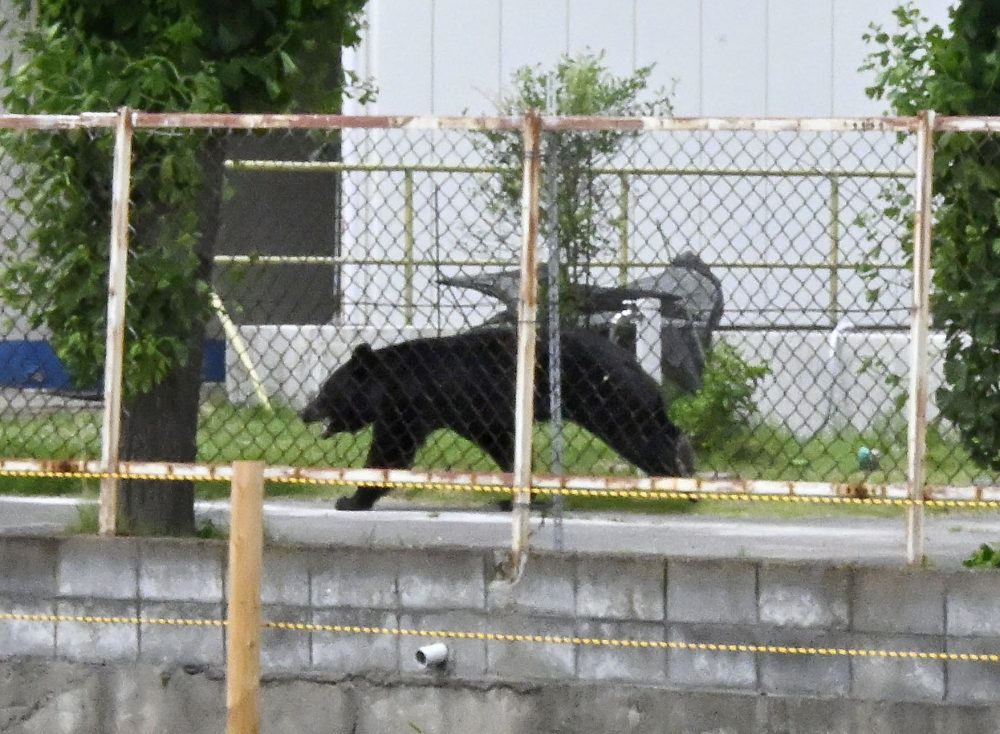

Four people were hospitalized Tuesday after a black bear went on a rampage at an industrial complex in northeastern Japan, marking the latest incident in what has become the country’s worst year for bear attacks on record.
According to Japan’s Environment Ministry, bear encounters have claimed 13 lives across more than 230 separate incidents in 2025, surpassing all previous annual totals for both deaths and attacks.
Emergency responders raced to the Sasakino district of Fukushima after the Fukushima Steel Works called for help, reporting that a bear had attacked two of their workers. Surveillance video captured the frightening encounter, showing the animal pursuing an employee in his 20s near the facility’s entrance before knocking him down. The footage then shows the bear entering the factory grounds and mauling a second worker, a man in his 60s.
The animal went on to attack a third victim — another man in his 60s employed at a different company nearby. An 80-year-old neighborhood resident also fell victim to the bear, according to the Fukushima City Fire Department.
Medical officials reported that while the three male victims suffered minor wounds, the elderly woman sustained more serious but non-life-threatening injuries.
As of Tuesday evening, the bear remained at large and was thought to be hiding somewhere within the second company’s premises. Armed police officers carrying long poles had surrounded the area.
Two local schools shut down operations, with Noda Elementary School switching to remote learning and posting an alert on its website warning families to “avoid non-essential outings and stay safe.”
The violent encounter has terrified local residents and brought back memories of last year’s widespread panic that prompted military deployment to Akita prefecture in northern Japan, where bears attacked more than 60 people and killed four.
Wildlife experts attribute the growing problem to Japan’s expanding bear population moving into areas where the human population is rapidly aging and shrinking, leaving fewer people with the skills to hunt the animals.
Government officials estimated Japan’s total bear population at approximately 57,800 in March. Authorities have implemented a management strategy that includes systematic culling efforts. The plan calls for tripling municipal bear control personnel to 2,500 workers over the next five years while doubling the number of bear traps deployed.
Recent bear sightings have been reported even in Tokyo’s western suburbs, particularly around the Okutama hiking region. Park authorities have responded by installing additional traps and issuing bear warnings through social media channels.
Officials have intensified public education efforts, encouraging hikers and mushroom foragers to monitor bear sighting reports and avoid outdoor activities during early morning and evening hours when the animals are most active.
Government safety guidelines recommend that anyone who encounters a bear should remain calm, move deliberately, and resist the urge to turn and run. If attacked, the manual advises victims to lie face down, curl into a ball, and protect their neck area.
“The point is to save yourself from a fatal wound,” the manual states.