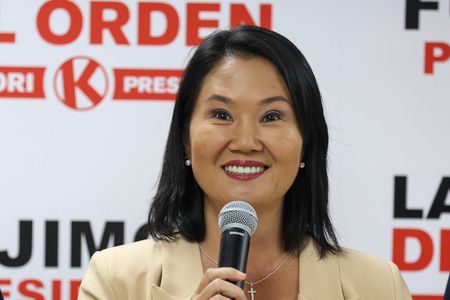

Conservative candidate Keiko Fujimori is making her fourth attempt to win Peru’s presidency in a runoff election taking place this Sunday, banking on her law-and-order platform during a period of increasing violence to overcome a divisive family political history.
The 51-year-old politician earned the largest portion of votes during April’s initial election round with 17.17% of the vote. Her opponent will be leftist congressman Roberto Sanchez, who barely claimed the second position with 12.03% support.
This marks Fujimori’s fourth presidential campaign. During her previous attempt in 2021, she lost to leftist Pedro Castillo, who was subsequently ousted from office following his attempt to disband Congress. Castillo has given his backing to her current opponent while imprisoned.
The weight of her family name presents a significant obstacle for Fujimori. Her deceased father, Alberto Fujimori, led Peru from 1990 through 2000. While supporters praised him for establishing national stability, critics condemned his authoritarian approach. He served 16 years behind bars for human rights violations during his time in office.
Following years of separating herself from her father’s political record, Fujimori has begun embracing it more openly, now accepting his reputation as an authoritative leader. She presents herself as the candidate most capable of restoring peace and order while Peru faces increasing murder and extortion rates, which rank among voters’ primary worries.
“We will work with financial institutions … to identify, track and block money from extortion,” she stated during a runoff debate.
However, her political party seeks to highlight differences between Fujimori and her father. Luis Galarreta, her vice-presidential running mate, explained that the elder Fujimori deeply distrusted political parties, frequently forming new organizations for each campaign instead of establishing permanent institutions.
“Keiko is different,” Galarreta told Reuters during an interview. “She believes in having a strong, formal party organization — building institutional political structures.”
Keiko Fujimori endured years of investigation regarding campaign funding accusations, which were dismissed last year. She was detained awaiting trial on two occasions between 2018 and 2020, spending approximately 18 months incarcerated.
Galarreta explained that this experience transformed her perspective, making her more thoughtful, mature and concentrated on family matters.
“We talk a lot about a ‘new Keiko,’” Galarreta explained. “She is more open, more herself, as a person, as a friend.”
Galarreta characterized Fujimori as “chancona” — a Peruvian word meaning studious and diligent — explaining he has witnessed her assisting her two daughters with homework and preparing their meals, even during an intensive campaign period.
Her imprisonment also created surprising personal changes. “She really loves cats now,” Galarreta noted. Fujimori developed an affection for them during her jail time because they helped control rodents.
“She didn’t like cats before, and now she has four.”
Fujimori began her public career as a young person, functioning as unofficial first lady starting at age 19 throughout her father’s administration after her parents divorced.
She subsequently pursued business administration studies in the United States and built her own political foundation. In 2006, she won election to Congress with the largest vote count ever achieved by a Peruvian legislator. She suffered defeats in three presidential runoffs by small margins to various opponents in 2011, 2016 and 2021.
Although experienced, one of Fujimori’s greatest obstacles continues to be her high disapproval rating, though recent polling indicates it has improved in recent months. Data from pollster Ipsos Peru shows 40% of voters in May indicated they would absolutely not vote for her in a runoff, declining from approximately 59% before the initial round.
Beyond her family history and continuing resentment over the corruption charges, critics claim her right-wing Popular Force party — a powerful presence in Congress — has consistently prevented reforms. Hundreds of left-wing supporters and civil society organizations demonstrated in Lima on Saturday opposing Fujimori.
“The anti-Fujimori vote is the factor that explains why Keiko Fujimori has fallen short of the presidential palace in three consecutive elections,” stated historian and analyst Daniel Parodi.
“I sense that this anti-vote has declined — the question is by how much.”