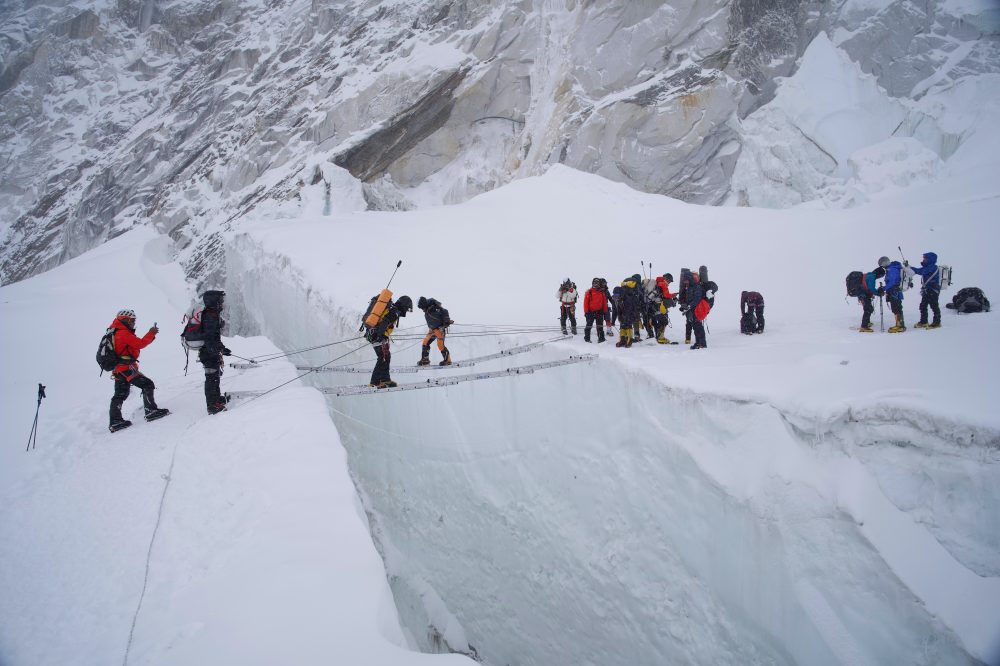
GUIZHOU, China — A colossal suspension bridge in China’s southwestern mountains has transformed into more than just a spectacular photo opportunity for visitors. While tourists flock to capture social media moments at the impressive structure, local communities are experiencing something much more significant: dramatically reduced travel times and unprecedented connectivity through high-speed internet infrastructure investments.
Standing 625 meters (2,050 feet) above the valley floor, the Huajiang Grand Canyon Bridge in Guizhou province holds the distinction of being the planet’s tallest bridge. The massive structure spans 2,890 meters (9,482 feet) across the canyon, featuring a central span measuring 1,420 meters (4,660 feet).
Following its September 2025 opening, the bridge has attracted thousands of visitors to the previously isolated region, where telecommunications companies are simultaneously developing advanced 5G network capabilities. This tourism boom has sparked the creation of numerous local enterprises, including retail shops, dining establishments, and guest accommodations designed for travelers.
The Associated Press participated in a recent media expedition to explore the area’s transformation.
China’s expansion of transportation networks and digital infrastructure into isolated regions has delivered significant benefits to surrounding communities through enhanced internet connectivity. Tianlong Tunpu, a historic settlement with over six centuries of history situated more than 100 kilometers (60 miles) from the bridge, exemplifies these improvements.
Founded as a military garrison during the Ming Dynasty era, this ancient community is renowned for its distinctive Dixi opera performances. These theatrical productions feature military narratives, elaborate wooden masks, and unique performance techniques that distinguish them from other Chinese opera traditions.
Local inhabitants report increasing visitor numbers, attributing part of this growth to social media platforms that enable them to showcase their community to broader audiences.
A leading figure from Germany’s far-right Alternative for Germany party has conducted meetings with high-ranking Russian officials, including sanctioned energy executives and advisors to Russian President Vladimir Putin.
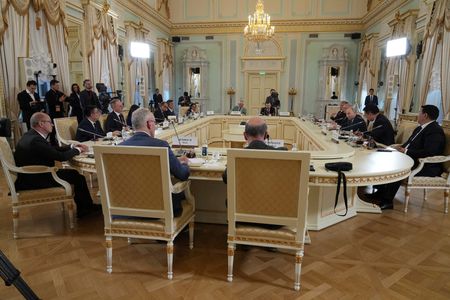
Markus Frohnmaier, who serves as the AfD’s parliamentary foreign policy spokesperson, participated in Putin’s signature economic summit in St Petersburg despite explicit warnings from Germany’s foreign ministry, which stated it “explicitly advised the AfD against these trips”.
Through posts on social media platform X, Frohnmaier revealed he had conducted meetings with Gazprom CEO Alexei Miller and Kirill Dmitriev, Putin’s special envoy for investment and economic cooperation, during Wednesday’s events.
All three individuals – Dmitriev, Miller and Gazprom – face Western sanctions related to Russia’s military conflict in Ukraine.
Frohnmaier, who has consistently advocated for Germany to restore diplomatic ties with Russia for energy supply purposes, indicated the discussion with Miller centered on pipeline infrastructure and complete restoration of Russian gas shipments to Germany.
“Germany is caught in a severe economic downward spiral, and a key driver of this is the high cost of energy,” Frohnmaier stated.
“That is why all options must be put back on the table, including the recommissioning of Nord Stream and the resumption of trade relations with Russia.”
Gazprom officials also verified the meeting occurred with Frohnmaier.
“Looking forward to building a great FUTURE together with AfD, Germany’s most popular party,” Dmitriev posted on his X account.
Germany’s economic foundation relied heavily on affordable Russian energy resources for many years. Before Moscow’s military action in Ukraine began, Russia provided more than one-third of crude oil imports and over half of natural gas supplies.
The nation has faced significant challenges recovering from the disruption caused by the Nord Stream pipeline shutdown, which suffered damage from explosions in September 2022, forcing Berlin to seek alternative energy sources urgently.
The blasts damaged both pipelines in Nord Stream 1. Nord Stream 2, which was completed in 2021, maintains one undamaged pipeline, but Germany suspended the project and operations never commenced.
Russian officials have blamed Ukraine for the pipeline attack, though Kyiv has consistently rejected any responsibility.
Current polling data indicates the AfD, presently the main opposition party in parliament, is gaining ground against Chancellor Friedrich Merz’s conservatives, who maintain a coalition with the centre-left Social Democrats.
With two significant state elections approaching in eastern Germany this September, the AfD aims to secure governmental control for the first time in Saxony-Anhalt, while polling suggests the party could capture the most votes in Mecklenburg-Vorpommern.
The party, which has also achieved notable success in recent western German elections, has criticized Merz’s robust Ukraine support and indicates it would seek to rebuild diplomatic ties with Moscow.
“At a time when many seem more comfortable with confrontation than conversation, genuine dialogue matters more than ever,” Frohnmaier posted on X following his meeting with Dmitriev.
A recent survey by Ipsos reveals that Peru’s presidential runoff election has become a dead heat between the two remaining candidates ahead of Sunday’s decisive vote.
The leftist contender Roberto Sanchez, who has connections to the previously removed and imprisoned former President Pedro Castillo, has narrowed the gap considerably and now holds 43.8% support according to the polling data released Thursday. His opponent, conservative candidate Keiko Fujimori, whose father previously served as president, captured 43.2% of voter intentions in the same survey.
The numbers show a dramatic shift from Ipsos polling conducted on May 31, which had Fujimori leading with 38% compared to Sanchez’s 35%, while 27% of respondents remained undecided at that time.
Key details from the latest polling:
• The survey was completed on June 3 with a margin of error of plus or minus 2.1%, according to sources familiar with Ipsos methodology.
• Approximately 13% of those polled indicated they would submit blank or invalid ballots.
• Fujimori, making her fourth presidential bid and known for her pro-market positions, secured victory in the initial round of voting on April 12 with 17.18% of the vote.
• Sanchez finished as the runner-up in that first round, earning 12.03% of votes cast.
Sanchez has recently adjusted his campaign approach, softening his rhetoric as the runoff approaches.
Peruvian election law prohibits the publication of polling results during the final week before a presidential election, though surveys may still be conducted as long as domestic news outlets do not report the findings.
The International Monetary Fund has chosen Alvaro Piris Chavarri to serve as its new mission chief for Venezuela, Bloomberg News reported Thursday, according to sources with knowledge of the decision.
When contacted by Reuters, the IMF declined to provide comment on personnel matters.
Piris currently holds the position of assistant director within the IMF’s African Department and serves as mission chief for Ethiopia, the IMF confirmed. His background includes heading IMF missions in Mozambique, Lebanon and China.
This selection follows Venezuela’s announcement last month that it would begin restructuring efforts after defaulting on its external debt in 2017. Analysts believe the total amount owed, which includes unpaid bonds, arbitration awards and accumulated interest, surpasses $150 billion.
Venezuela is working to rejoin the global financial community after reestablishing connections with the IMF and World Bank, relationships that were halted in 2019 due to disagreements over government recognition.
The IMF confirmed it is exploring a pathway toward conducting an “Article IV” consultation with Venezuela, indicating that engagement with Caracas is progressing toward standard economic oversight.
The discussion surrounding Israel’s ultra-Orthodox population has evolved beyond religious and political considerations into a pressing economic challenge, according to experts who spoke at a prominent policy conference this week.
As military expenditures climb toward 8% of the nation’s gross domestic product and approximately 25% of the government budget, while the ultra-Orthodox are expected to represent an increasing portion of military-age Jewish citizens, the issue has taken on new urgency.
Military service forms part of Israel’s social framework, defense costs consume an expanding portion of national resources, and the armed forces represent a shared experience for most Jewish citizens. Under these mounting pressures, ultra-Orthodox integration has transformed from a dispute about exemptions into a budgetary, military, and economic concern.
The implications are clear. As the ultra-Orthodox become a larger segment of Israel’s population, the mix of military exemptions, restricted core education, reduced male workforce participation, and political influence could burden the military, tax system, and skilled economy that Israel increasingly relies upon.
This theme permeated the Eli Hurvitz Conference on Economy and Society, hosted by the Israel Democracy Institute in Jerusalem. While the conference addressed defense spending, artificial intelligence, technology, living costs, reconstruction, healthcare, and the national budget, the ultra-Orthodox issue emerged repeatedly through discussions of human capital, labor participation, education, and public priorities.
The ultra-Orthodox community refers to Israel’s rapidly expanding religious population whose traditional male institutions focus on full-time religious study. Many ultra-Orthodox boys don’t receive the standard curriculum in mathematics, English, and science that other Israelis do; many men don’t serve in the military and enter employment late or remain outside the workforce for long periods. Ultra-Orthodox women work at higher rates, often supporting large families, but household earnings remain relatively modest.
Gilad Cohen Kovacs, a researcher at the Israel Democracy Institute who led a session on “The Economy as a Driver of Change in Haredi Autonomy,” contended that the matter also involves how a separate institutional framework affects growth, employment, and social services.
Cohen Kovacs stated that subsidies supporting the current ultra-Orthodox model total approximately 35 to 37 billion shekels annually, roughly 5.5% of the national budget. Without modifications, he cautioned, that amount could increase to more than 60 billion shekels yearly in coming decades. These numbers were part of his conference presentation analyzing ultra-Orthodox autonomy and government support.
He emphasized that the issue shouldn’t be viewed as simply transferring “money to Haredim.” In his assessment, some funding encourages behaviors that keep ultra-Orthodox men out of the workforce, while other portions strengthen what he called a parallel system of authority, educational networks, community institutions, and political influence.
A welfare system, Cohen Kovacs explained, aims to assist those unable to work, protect those who have been harmed, and enable advancement. In the ultra-Orthodox situation, he maintained, part of the subsidy supports the reverse pattern: reduced use of earning potential, partial employment, large families, and a religious study-centered lifestyle.
“These are not the conditions for which the welfare state was built,” he said.
This perspective redirects attention from individual poverty toward policy incentives that, according to Cohen Kovacs, maintain dependence and separation. His overall finding was that the present model creates a substantial cross-community transfer from non-ultra-Orthodox Jewish households to ultra-Orthodox households through tax differences, public services, subsidies, and exemptions from shared responsibilities.
Former Prime Minister Naftali Bennett also referenced research on this balance. According to Bennett, what he termed a “Zionist household”—a non-ultra-Orthodox Jewish household participating in military service and the job market—contributes about 6,000 shekels more monthly to the state than it uses or receives, while an ultra-Orthodox household receives about 4,000 shekels more monthly than it contributes. He characterized this as approximately a 10,000 shekel monthly difference between the two household categories.
The comparison brought the budget discussion from national figures to family income levels. It wasn’t presented as claiming one specific family directly supports another, but as an overall measurement of taxes, government services, subsidies, benefits, and participation in public duties.
Dr. Gilad Malach, a researcher at the Israel Democracy Institute who presented separate research on defense burdens, told The Media Line that his work examined one particular aspect of the broader subsidy discussion: security. He noted Israel typically views defense spending as a national budget matter, without examining how this burden distributes across different community sectors.
Malach said it would be “too simplistic” to attribute the disparity solely to the ultra-Orthodox community being poorer and therefore paying less tax. “You might say, ‘OK, this is a poor society, so they pay less than their share in the population,’” he said. “But we see that the gaps between them and others—it’s much more than that.”
According to Malach, the apparent security budget totals about 120 billion shekels annually, but the actual cost approaches 150 billion once hidden burdens are included: conscripts paid below their market value, delayed workforce entry, and costs to employers when reservists leave jobs for extended service.
If the ultra-Orthodox represent about 14% of Israel’s population, he said, they should bear roughly 21 billion shekels of that burden. In reality, he estimated, they contribute about 6 billion.
“So, the gap is 15 billion,” he said.
This figure carries political weight because it positions the draft discussion within a broader fiscal framework: who funds security, who serves, and who bears the indirect costs of a society structured around extended military service.
Malach was cautious not to claim the gap could close rapidly. He said the policy measures he presented could reduce it, but not eliminate it. At best, he estimated, the immediate impact could be several billion shekels, not the complete 15 billion.
“Just to make the situation less unequal, more equal than today, but not a real equality between the population,” he said.
The demographic projection was more alarming. Some forecasts, Malach noted, project the ultra-Orthodox population at around 30% of Israel’s total population within roughly four decades. The more significant figure, he added, isn’t the overall population percentage, but the proportion among draft-eligible Jews.
Among Jewish 18-year-olds, he said, the ultra-Orthodox percentage could surpass half. In his assessment, if this forecast materialized, “We won’t have manpower for an army if the situation would be that they are not serving in the army. And we can’t have a prosperous economy if so many people won’t have the ability to work in a modern labor market.”
Reem Aminoach, a senior researcher at the Institute for National Security Studies who previously served as financial adviser to the Israel Defense Forces chief of staff, told The Media Line that the problem is often portrayed as more complex than necessary.
“All you need is to cancel the deferral,” he stated, referring to the legal process that has permitted many ultra-Orthodox men to avoid conscription while remaining in religious study.
In his opinion, eliminating the deferral would create a clearer choice: service, employment, or another publicly accountable framework, rather than a system where avoiding the army also discourages work. Aminoach said the army’s requirement is practical and urgent.
“The army lacks fighters, not clerks,” he said.
Shaul Meridor, a former senior Finance Ministry official, brought the discussion from national totals to individual Israeli family level. He described a middle- or lower-middle-class family in places such as Migdal HaEmek or Dimona, with five children, one serving in Lebanon, and struggling financially. Based on figures he cited from a recent study, such a family subsidizes a comparable low-income ultra-Orthodox family by nearly 1,000 shekels monthly.
“Many times we talk about high-tech and the rich and all kinds of other people who subsidize,” Meridor said. “I am talking about socioeconomic cluster four. Whoever knows what that means understands that this is not high-tech, and these are not people sitting in Tel Aviv or Ramat Hasharon. These are people who do not finish the month.”
He said the moral question after October 7 was no longer theoretical.
“Why should a family that does not finish the month have to allocate, from money it does not have, 1,000 shekels net a month to subsidize a Haredi family that chose a different life?”
Meridor also maintained that Israel’s current policies damage ultra-Orthodox children themselves by directing them toward poverty.
“As leadership, we must not condemn Haredi children to poverty,” he said. “And that is what we are doing today.”
His suggested principle was straightforward: those who serve should receive benefits, those who don’t serve should not. Combat service, he said, should receive the most; other service should receive less; avoidance should receive nothing. But he warned that dismantling ultra-Orthodox autonomy wouldn’t happen through one major law. It would require changes in thousands of government decisions, benefits, tax rules, and allocations that currently favor institutions over individuals.
Political speakers addressed the same matter from various angles. Bennett concentrated on education and subsidies, using his remarks to criticize daycare payments for families where the father doesn’t work and doesn’t serve. He also suggested broad education reform based on a shared state curriculum, while maintaining limited community autonomy.
Avigdor Liberman, chairman of Yisrael Beitenu and a former defense and finance minister, approached the issue through coalition politics. In a discussion with Yohanan Plesner, president of the Israel Democracy Institute, Liberman contended that Israel cannot maintain higher defense spending while preserving sectoral budgets and avoiding structural reform. He said meaningful change would require a government not reliant on the ultra-Orthodox parties Shas and United Torah Judaism.
Former Defense Minister Benny Gantz provided a more measured criticism. He said parts of the ultra-Orthodox leadership were making a serious error by continuing a situation where the community takes precedence over the state. Simultaneously, he stressed that there are ultra-Orthodox who work, study, serve, and contribute to the economy, and they deserve recognition.
Meirav Cohen, a Yesh Atid lawmaker and former minister for social equality, used Jerusalem as a cautionary example. Speaking as a Jerusalem resident, she said the capital already demonstrates what occurs when integration in the army, employment, and education doesn’t advance quickly enough. Jerusalem, she said, has dropped in fewer than three decades from socioeconomic cluster five to cluster two. Every second household receives a municipal property tax discount, she said, meaning the other half must bear some of Israel’s highest municipal tax burdens.
“There is no economic model for this,” Cohen said. “You don’t need prophecies or warnings. Look at what happened to us in Jerusalem.”
The ultra-Orthodox discussion occurred during a conference focused on rising security costs and shrinking civilian spending space. Former Bank of Israel Governor Karnit Flug said in the opening budget session that Israel’s economy had demonstrated resilience, but the Israel-Hamas war had imposed a significant cost. Defense spending, she said, now reaches nearly 8% of GDP, compared with slightly more than 4% before October 7, 2023. Its budget share has increased to about one-quarter, compared with 16% before the war.
This broader fiscal context helps explain why ultra-Orthodox integration is no longer viewed solely as a dispute over religious exemptions. Israel is attempting to fund a larger defense establishment, increased rehabilitation needs, more reservist support, reconstruction in the north and south, health-system gaps, transportation infrastructure, and a technology sector facing global competition. Speakers also warned that insufficient investment in Arab society carries its own cost in lost output, making the broader point that Israel cannot afford to underinvest in any large population group while defense and rehabilitation needs are increasing.
Artificial intelligence and technology added another dimension. The Israel Innovation Authority’s 2026 report, presented at the conference, showed that technology remains Israel’s primary growth engine. In 2025, the sector contributed roughly half of the economy’s growth, reached 18.3% of GDP, accounted for 58% of exports, and employed more than 400,000 people. But the same report also warned of employment share stagnation, declining research and development jobs in Israel, activity expansion abroad, and growing pressure from currency appreciation.
This is why ultra-Orthodox integration now intersects with the artificial intelligence discussion. Israel wants to compete in a global economy based on advanced skills, data science, engineering, defense technology, and artificial intelligence. But a growing portion of its future workforce is educated in systems that often don’t provide the tools required for that economy. The point wasn’t that every Israeli must work in technology, but that the next economy will demand basic quantitative and digital skills across far more jobs.
Eli Hurvitz, CEO of the Eddie and Jules Trump Family Foundation, told the conference that children currently choosing what to study in high school will be the workforce of 2040. In an artificial intelligence-driven world, he said, mathematics, data, teamwork, and independent learning will become basic requirements for opportunity.
The challenge of ultra-Orthodox integration doesn’t fit easily into familiar categories of minority rights or welfare policy. In Israel, it connects to compulsory service, repeated wars, high defense costs, a knowledge-based economy, and a parliamentary system where sectoral parties can hold the balance of power. The ultra-Orthodox community is a growing part of Israel’s electorate, budget, labor market, and future security burden. This is why the discussion has become one of the country’s central governance tests.
The conference produced no single, comprehensive solution. Some speakers emphasized immediate enforcement of the existing draft framework. Others focused on incentives, core education, tax benefits, or direct ties between the state and ultra-Orthodox individuals rather than through community institutions. Some warned against coercion that could backfire, while others argued that decades of gradualism have failed. But there was notable agreement around one point: the status quo is no longer to be treated as a manageable inconvenience.
The discussion, as reflected in the conference sessions and interviews cited here, was dominated by economists, former senior officials, and political figures warning about the long-term costs of the current model. Representatives of the major ultra-Orthodox parties were not quoted in those sessions or interviews.
Malach expressed the warning in the most direct terms. Israel has survived enormous shocks, he said, and remains a wealthy country with a strong economy. But if current patterns continue as the ultra-Orthodox population grows, the problem will not remain a matter of resentment or budgetary imbalance. It will become a question of manpower, productivity, and national resilience.
“Right now, it’s very hard, but we are handling,” he said. “The point is that if you call today’s situation very bad, things would be worse than that.”
What emerged in Jerusalem was more than an argument over the draft. It was a broader economic assessment of who serves, who pays, who studies the skills needed for the next economy, and whether the state can continue financing separate rules for a growing part of its population. Israel’s next election may decide the coalition arithmetic. The harder question, raised throughout the conference, is whether any government will be willing to change the arithmetic of the country itself.
Authorities are requesting prolonged custody for 62 individuals taken into custody during a destructive demonstration at the residence of High Court Justice Noam Sohlberg, where protesters opposing military conscription requirements for ultra-Orthodox yeshiva students damaged property and fought with law enforcement.
The individuals in custody are set to appear at the Jerusalem Magistrate’s Court Thursday morning, where authorities will ask that they continue to be held while the investigation proceeds.
Law enforcement officials report that 65 individuals were taken into custody after the disturbances occurred. Walla news outlet indicated that 62 continued to be held and would face a judge.
The violent demonstration took place Wednesday evening as large groups of protesters gathered at Sohlberg’s residence in the West Bank settlement of Alon Shvut. Throughout the disturbance, demonstrators broke windows at the justice’s residence and car, while also destroying flower containers at the property’s entrance.
According to Ynet reporting, authorities seized drones and GoPro cameras that were in the possession of several suspects.
The demonstration stemmed from resistance among certain ultra-Orthodox activists to Supreme Court rulings regarding military service requirements. Sohlberg had recently overseen decisions mandating that the government enhance enforcement actions against those avoiding the draft, which made him a focus for protesters opposing the military service of yeshiva students.
Following the dispersal of the crowd, Magen David Adom medical personnel responded to the residence after Sohlberg reportedly became ill.
Meira Sohlberg, his wife, voiced her dismay at the destruction that occurred during the disturbance.
“How is it possible that Jews are hurting each other?” she said. “Look at this destruction, a pogrom, what is this, Kristallnacht?” according to Ynet.
Police Commissioner Danny Levy denounced the violence and directed officers to pursue those involved “to the fullest extent of the law.” Authorities stated that Levy received a briefing from Jerusalem District Deputy Commander Yishai Shalem and emphasized that lawful demonstration cannot involve violence, property destruction or assaults on government officials.
Prime Minister Benjamin Netanyahu subsequently contacted Sohlberg and denounced the incident.
United Torah Judaism chairman MK Yitzhak Goldknopf and Shas MK Yinon Azoulai similarly criticized the violence.
Subsequently, numerous ultra-Orthodox demonstrators obstructed Jerusalem’s Kikar Shabbat junction in protest of the arrests.
Michael Rabello, who has served as Prime Minister Benjamin Netanyahu’s personal attorney for many years, won election as Israel’s state comptroller Wednesday in a disputed Knesset vote marked by allegations of voting irregularities.
The attorney claimed victory in a runoff election after both candidates failed to reach the necessary vote count in the first round of balloting.
During the initial vote, former Supreme Court justice Yosef Elron garnered 60 votes compared to Rabello’s 57. Parliamentary regulations require 61 votes for a first-round victory.
The decisive second round saw Rabello prevail over Elron with a 61-57 vote margin.
Controversy erupted over claims that the voting process violated ballot secrecy requirements. News reports indicated that Likud party members faced pressure to take photos or videos of their ballots as proof they supported Rabello, despite laws mandating secret voting.
These claims drew harsh condemnation from opposition lawmakers, who characterized the ruling Likud party’s behavior as resembling a “crime organization.”
Media reports also suggested that cabinet members believed to favor Elron were called to Netanyahu’s office while voting was underway.
Due to the mounting concerns, Knesset Speaker Amir Ohana mandated a complete restart of the second voting round. Ohana declared that any directive telling legislators to document their ballots was “illegal and invalid.”
Vote totals shifted between the rounds, suggesting some parliament members altered their choices.
Opposition groups plan to challenge the election results in the High Court of Justice, citing alleged procedural violations.
Rabello’s legal work has encompassed representing Netanyahu across multiple court cases and has also included representation of Netanyahu’s spouse, Sara Netanyahu. His professional duties have extended to participating in political negotiations tied to the prime minister.
The state comptroller position functions as an independent watchdog agency answerable directly to the Knesset. This office conducts audits of government departments, oversees municipal government operations, examines political party finances, and safeguards public interests.
European Union officials on Thursday expressed broad support for restricting temporary protection access for Ukrainian men eligible for military service, according to Sweden’s migration minister.
The bloc implemented its Temporary Protection Directive following Russia’s invasion of Ukraine in 2022 to handle the massive influx of displaced individuals fleeing the conflict.
This protection program, which has received three extensions and is scheduled to end in March 2027, provides recipients with residence permits along with work authorization and social benefits access.
Sweden’s Migration Minister Johan Forssell indicated his nation backs the proposal that was deliberated during a Justice and Home Affairs session in Luxembourg. He emphasized that any new limitations would only affect future applicants for temporary protection status, while current beneficiaries would remain unaffected.
“It is essential for us to provide Ukrainians with protection, but at the same time the war needs to be fought and won. For that to happen, it is essential that more men stay in Ukraine and fight,” Forssell stated before the meeting commenced.
Any extension or changes to the current framework would require a proposal from the European Commission, followed by approval from member nations.
Current Eurostat figures show that over 4.33 million Ukrainian refugees are receiving benefits under this directive.
According to the same data, Germany accommodates the highest number of Ukrainians under this program, representing approximately 29% of the EU’s total, with Poland and Czechia following in the rankings.
WASHINGTON — The Treasury Department announced Thursday it has placed financial sanctions on Cuba’s President Miguel Díaz-Canel and four additional officials, according to documents posted on the department’s website.
Among those targeted by the sanctions is Alejandro Castro Espín, whose father is former President Raúl Castro.
The financial penalties follow President Donald Trump’s signing of an executive order that broadened sanctions against the Caribbean nation.
These latest sanctions increase economic pressure on Cuban leadership, though this marks just another instance in a long history of the United States targeting foreign leaders and their family members with similar measures.
Previous sanctions have targeted leaders including former Sudanese President Omar Bashir and former Zimbabwean President Robert Mugabe in the early 2000s, as well as more recent penalties against former Venezuelan President Nicolas Maduro and his spouse.
Officials appointed by Russia at the Zaporizhzhia nuclear facility in Ukraine claimed Thursday that Ukrainian forces conducted drone strikes against a thermal power station essential for maintaining electricity to the nuclear site.
The facility’s Russian-installed administrators reported that Ukrainian military forces carried out what they described as a “multiple attack using heavy unmanned aerial vehicles” in the vicinity of the nuclear plant.
“More than 20 drone strikes have been recorded,” the management stated.
According to the officials, the strikes targeted the thermal power facility, which they described as “site of critically important energy infrastructure that ensures the operation of the… Ferrosplavnaya-1 power transmission line.”
The administrators warned that “such attacks pose a direct threat to the reliability of the Zaporizhzhia nuclear plant power supply and once again demonstrate disregard for the principles of nuclear safety.”
Ukrainian officials have not responded to these accusations.
Russian military forces captured the nuclear facility, which contains six reactors and ranks as Europe’s largest, during the initial weeks after Russia’s February 2022 invasion. Since that time, both nations have consistently blamed each other for military actions that endanger nuclear security.
While the facility currently produces no power, it requires external electricity to prevent nuclear fuel stored at the location from overheating.
Two power lines provide grid connections, though one has remained offline since late March. The International Atomic Energy Agency has been working to establish a ceasefire that would allow repairs to the damaged line.
The IAEA reported Thursday that Russian plant management had notified them of the incident, and agency monitors stationed permanently at the site observed light smoke rising from the thermal plant area.
Rafael Grossi, IAEA director general, called for an immediate halt to attacks to avoid an extended loss of external power.
A French billionaire made his first appearance before lawmakers Thursday to outline his mission of advancing conservative and free-market principles in French politics, with the country’s presidential election approaching next year.
Pierre-Edouard Sterin, an entrepreneur who moved to Belgium to avoid French taxes, testified before senators as part of an investigation into political financing practices and whether his organizations comply with applicable rules.
“Our aim is to spread free-market, conservative ideas as widely as possible,” Sterin explained to the senators, characterizing his activities as “meta-political.”
“We hope it will, in the coming months and years, bring free-market, conservative right‑wing ideas to power in France,” he added.
The 52-year-old businessman, who had previously refused to respond to parliamentary requests to appear, rejected any suggestion of improper conduct. “There is no ongoing legal procedure, no investigation, no breach of the law,” he stated during his testimony.
Operating through an organization called Pericles, Sterin has remained largely unknown to the French public until recent years while funding various projects aligned with his political vision. Documents that appeared in the French publication L’Humanite in 2024 and later verified by Sterin revealed his objectives include combating “socialism, wokism, Islamism, immigration.”
The political influence of his network has grown, with Pericles co-founder Francois Durvye now serving as a special adviser to far-right leader Jordan Bardella, who current polling suggests leads the field for next year’s presidential race.
During his Senate testimony, Sterin, a practicing Catholic and father of five who resides in Belgium, stood by controversial immigration positions that have drawn criticism.
“I am in favour of the re-migration of foreign criminals, undocumented migrants or those unemployed for more than 12 months,” he declared, noting these views put him “to the right of the (French) far right.”
The businessman built his wealth through Smartbox, a company specializing in gift vouchers, and describes himself as a “tax exile of the François Hollande generation.”
His reference pointed to France’s Socialist leader who served as president from 2012 to 2017 and proposed implementing a 75% tax rate on millionaires. Sterin relocated to Belgium in 2012, and despite the constitutional council quickly rejecting the tax proposal, he chose not to return to France.
“Hollande doesn’t like the rich, and I don’t like the social‑communists,” Sterin remarked.
He told senators that his residence outside France has enabled him to reduce his tax burden by €100,000 to €200,000 annually, allowing him to direct larger amounts toward charitable projects within France.
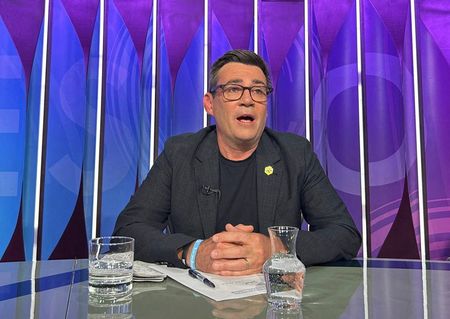
LONDON, June 4 – Greater Manchester mayor Andy Burnham indicated Thursday that he would participate in a leadership challenge against Prime Minister Keir Starmer, contingent on winning a local election scheduled for later this month.
During a BBC debate with other candidates competing for a parliamentary seat in northern England, the Labour mayor stated that the governing Labour Party requires fundamental change as it continues to lag behind in public opinion surveys.
Prime Minister Starmer, who currently holds some of the poorest approval ratings of any British leader, has pledged to defend his position. However, potential challengers are positioning themselves, including Burnham and former health minister Wes Streeting, who stepped down from his role last month in opposition to the prime minister’s performance.
When questioned about his political aspirations, Burnham, who previously made two unsuccessful bids for Labour leadership, expressed that he didn’t want to get “ahead of himself.” He emphasized that he must first secure victory in the Makerfield election on June 18 before he can mount any challenge to Starmer.
“I can’t do anything unless I’m lucky enough to get the support of people here (in Makerfield). But if I get your support, I would seek to represent you at the highest possible level,” Burnham stated during the debate.
Burnham suggested that Streeting appeared to have already “launched a leadership contest,” though the former health minister has not yet made any formal announcement.
“So if that is running, I would seek to join it. But I’d have to persuade members of the parliamentary Labour Party to do the same. So that’s the only question,” Burnham explained.
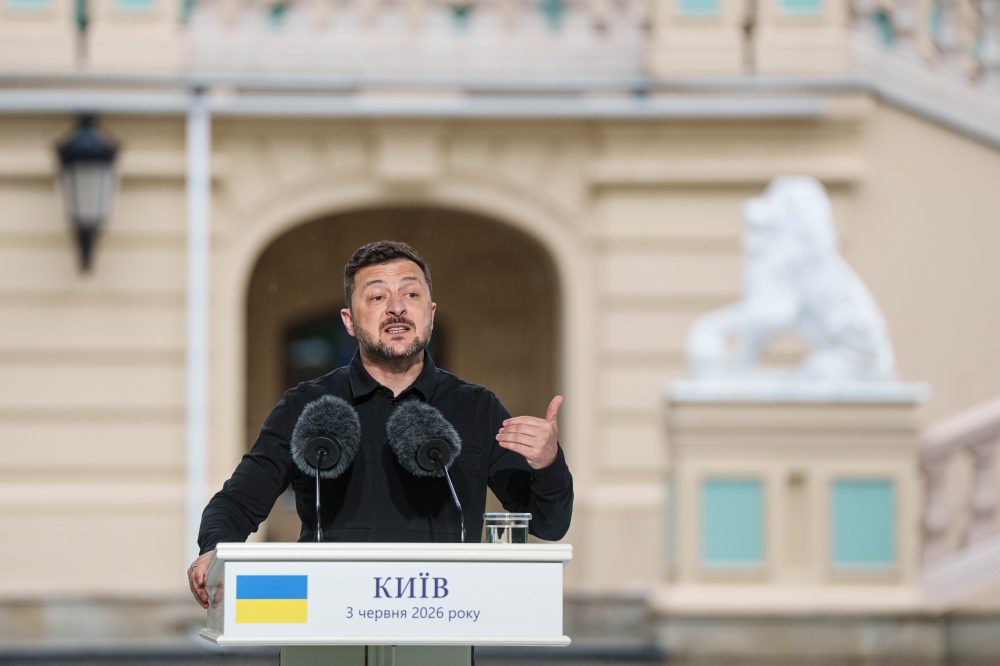
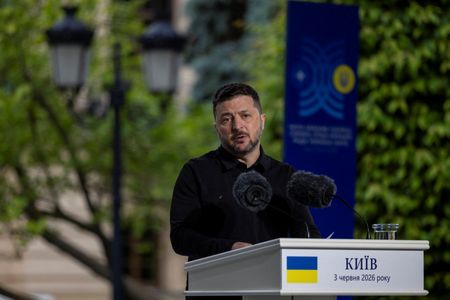
KYIV, Ukraine — In an unprecedented move, Ukrainian President Volodymyr Zelenskyy has issued a public letter directly to Russian President Vladimir Putin on Thursday, requesting face-to-face talks to resolve the ongoing conflict.
This marks the first direct written communication Zelenskyy has made public to Putin since Russia began its full-scale invasion in 2022. The letter contained a broad condemnation of Putin’s 26-year tenure in office.
Recognizing changing U.S. priorities, Zelenskyy noted it would be incorrect to merely wait for the Trump administration to refocus on resolving the Ukraine conflict while it remains concentrated on the Iran war.
“I am proposing a meeting,” Zelenskyy stated in his letter.
U.S. President Donald Trump responded positively to the proposal, saying it “would be great” if the two leaders met. “They should get it done,” Trump commented.
When questioned about what concessions he had recommended Putin make to conclude the war, Trump refused to elaborate but indicated both parties would need to make sacrifices.
“They’re going to both make compromises,” he stated. “I suggested those compromises.”
Zelenskyy seems to be capitalizing on what he views as a crucial turning point in the conflict, as Ukraine has started to recover some military advantage primarily through enhanced long-range strike capabilities that have hindered Russian progress. Meanwhile, Moscow has escalated its lethal air offensive throughout Ukraine, attempting to capitalize on Kyiv’s resource shortages and ongoing susceptibility to ballistic missile strikes.
The Ukrainian president suggested the discussions could take place in an impartial third nation, excluding both Moscow and Kyiv as potential locations. He recommended Switzerland, Turkey, or Arab nations as possible hosts for the negotiations.
“It is leaders who resolve the key issues. That has always been the case, and it always will be,” he stated. “I propose to set a clear date for such a meeting.”
According to Zelenskyy, Ukrainian intelligence suggests Russia is contemplating extending the war through 2027 and 2028, while depending more heavily on ballistic missile attacks to achieve objectives that its ground operations have failed to secure.
Zelenskyy also charged Moscow with attempting to involve Belarus more deeply in the conflict and trying to create instability around Transnistria, the Russian-supported breakaway region of Moldova.
The Ukrainian president contended that Russia is increasingly experiencing the war’s consequences, citing drone strikes far within Russian borders, economic pressure, fuel shortages, inflation, and the need for additional military conscription.
Zelenskyy reported that Russia lost more than 30,000 soldiers killed or seriously wounded in May alone, claiming Ukraine possessed “video confirmation” of these battlefield casualties and that such loss rates have continued consistently each month.
He acknowledged that Ukraine also continues to experience significant losses despite what he characterized as a favorable casualty ratio.
Zelenskyy indicated Ukraine was ready to establish a complete ceasefire throughout the negotiation period and suggested a comprehensive prisoner exchange as an initial step toward resolving the conflict.
The Ukrainian leader also demanded the return of civilians and children removed from Ukraine during the war.
“The world has not grown tired of Ukraine, as you long hoped it would. But there is growing fatigue with Russia,” Zelenskyy declared.
Ukrainian President Volodymyr Zelenskyy issued a public letter to President Vladimir Putin on Thursday, calling for face-to-face discussions between the two leaders to bring their conflict to a close after more than four years of fighting. Zelenskyy cautioned that his country remains prepared to continue its defense if no agreement can be reached.
The Ukrainian president’s office confirmed the correspondence was distributed to multiple nations, including the United States. In his message, Zelenskyy argued that most Russian citizens have become weary of Ukrainian aerial strikes, rising prices, and fuel supply problems, making them receptive to ending hostilities.
Noting America’s current focus on the Iranian situation, Zelenskyy stated “it would be wrong to simply wait until the war in Europe returns to the center of its attention.”
The Ukrainian leader emphasized that any peace process must begin where the fighting occurs, describing it as “the line from which diplomacy must begin.” He advocated for “a full ceasefire for the duration of the negotiations,” calling this “standard practice.”
Zelenskyy suggested establishing a specific meeting date and noted that multiple nations have “traditionally hosted leaders to resolve issues of war and peace,” mentioning Switzerland, Turkey and Arab world countries as potential venues.
“Do not be afraid to take the path out of this war. That is the main thing that is required of you now,” Zelenskyy addressed Putin directly.
“Ukraine proposes ending this war through direct engagement between us — and you. I am proposing a meeting… If you do not personally come to the conclusion that it is time to end this war, Ukraine will continue fighting for its existence.”
Zelenskyy also hinted that prolonged warfare might jeopardize Putin’s leadership position, writing: “It is a fact of Russian history that you know well: when Russia grows tired, change comes.”
Russian officials in Moscow confirmed they received Zelenskyy’s correspondence and indicated Putin would be informed about its contents.
Ukrainian President Volodymyr Zelenskiy announced Thursday his nation will maintain a strict schedule for European Union membership negotiations and fulfill its commitments to the 27-member organization.
The president’s remarks came one day after Cyprus, which currently holds the EU’s rotating presidency, announced it had begun preparations to launch negotiations on the initial set of discussion topics with Ukraine and Moldova. The opening chapter focuses on democratic standards and rule-of-law requirements.
“We will have a very clear schedule for moving forward in these talks, especially after changes in Hungary,” Zelenskiy said in his nightly video address.
“We have kept to the schedule and now in June we very much expect the opening of (negotiating) clusters for which Ukraine has prepared. We have done our part of the work. The next step is up to the European Union.”
The decision to advance with negotiations followed Hungarian Prime Minister Peter Magyar’s announcement that his nation had resolved disagreements with Kiev regarding the rights of Ukraine’s 100,000-strong ethnic Hungarian community.
Magyar had earlier stated that resolving the longstanding disagreement was necessary for Budapest to support Ukraine’s EU admission. His predecessor, nationalist Viktor Orban, had blocked Ukrainian EU membership efforts.
Zelenskiy has consistently advocated for Ukraine’s EU membership as a way to establish Western principles in his country during more than four years of conflict with Russia.
The president noted that Ukrainian representatives maintain daily communication with EU officials regarding membership plans, calling this contact “important for our motivation.”
Zelenskiy also mentioned that Ukraine was meeting with European officials to explore strengthening his nation’s air defense systems, coordinating Russian sanctions, and collaborative weapons manufacturing.
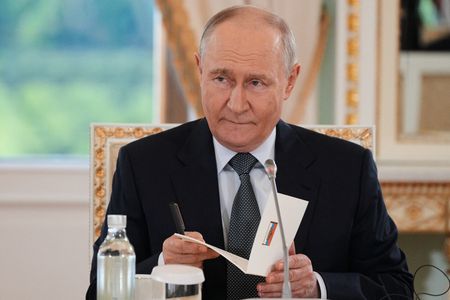
ST. PETERSBURG, Russia, June 4 – Russian President Vladimir Putin addressed topics including the ongoing Ukraine conflict, potential peace negotiations with U.S. President Donald Trump, and his possible tenure in office through 2036 during a Thursday meeting with international news agency editors.
The Russian leader met with senior editorial staff from multiple news organizations, including Reuters, in the Russian city of St. Petersburg.
Below are Putin’s statements as provided through Reuters translation.
REGARDING UKRAINE, DONBAS TERRITORY AND PEACE NEGOTIATIONS:
“One does not exclude the other. Controlling the entire Donbas region and making a deal do not contradict each other. Why do you assume that this is in contradiction?”
“Russian troops are advancing along the entire front.” Putin claimed Russian forces now hold more than 85% of the Donetsk region and maintain control over 80% of the Zaporizhzhia region.
“We are certainly ready and willing to reach an agreement with Ukraine by peaceful means. And specifically on the basis that we discussed at the meeting with President Trump in Anchorage. At that time questions were put before Russia so that we could make certain compromises. And Russia agrees to the compromises that we discussed in Anchorage. The Ukrainian side must also agree to these compromises. And the conflict will quickly come to its natural conclusion.”
CONCERNING TRUMP’S PEACE INITIATIVES
“The proposals that were made by President Trump, as I have already said, may well be the basis for peace agreements. Therefore, answering your question, whether the administration acted in the right direction or not, yes, this is a proposal that requires compromise, and compromise for both sides. For Russia, too. And we generally agreed with these compromises. We need to convince the Ukrainian side of this and that’s it. In general, I believe that they can well form the basis of an agreement between Russia and Ukraine and can put an end to this conflict.”
REGARDING REMAINING IN OFFICE UNTIL 2036
When Reuters asked whether he possessed sufficient stamina and health to serve that duration, Putin responded: “Only God knows if we have enough health – for me, for you, and for everyone gathered here, in order to live until tomorrow, the day after tomorrow, and even more so to solve some of the tasks we face, to achieve the goals that we set for ourselves.”
Putin, who has held power as either president or prime minister since 1999, noted that constitutional provisions would permit him to seek reelection in 2030 and potentially serve another term concluding in 2036 if victorious.
“Indeed, the Constitution allows me to run in 2030, but I think it’s too early to talk about it. To be honest, it’s very early. I’m not even thinking about it right now. I’m being completely honest. I don’t even think about it,” Putin said.
“The country faces a lot of large-scale and pressing issues. They need to be solved without thinking about it, but thinking about the future of Russia.”
ST. PETERSBURG, Russia, June 4 — During a Thursday gathering with top news agency editors in St. Petersburg, Russian President Vladimir Putin avoided giving a direct response when asked about his intentions to remain in office through 2036, stating the topic was premature and noting that only divine providence could determine his health and longevity.
When Reuters posed the question about whether he would continue serving until 2036 and if he possessed the physical capacity for such extended leadership, Putin responded:
“Only God knows if we have enough health — for me, for you, and for everyone gathered here, in order to live until tomorrow, the day after tomorrow, and even more so to solve some of the tasks we face, to achieve the goals that we set for ourselves.”
The Russian leader, who has held power in various capacities since 1999 as either president or prime minister, acknowledged that constitutional provisions would permit him to seek reelection in 2030 and potentially serve another full term extending to 2036.
“Indeed, the Constitution allows me to run in 2030, but I think it’s too early to talk about it. To be honest, it’s very early. I’m not even thinking about it right now. I’m being completely honest. I don’t even think about it,” Putin stated.
“The country faces a lot of large-scale and pressing issues. They need to be solved without thinking about it, but thinking about the future of Russia.”
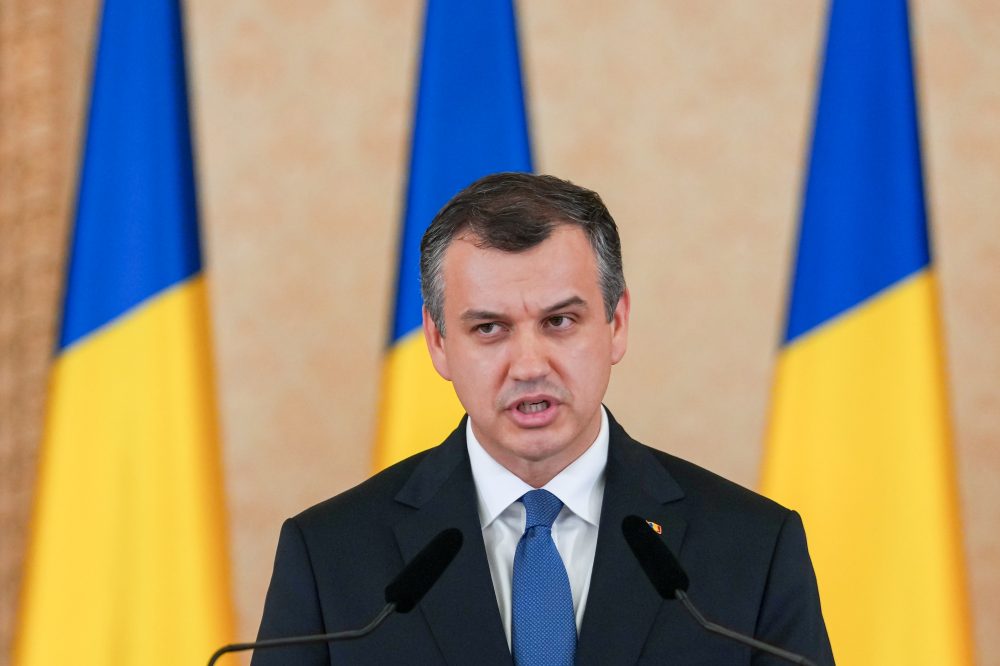
BUCHAREST, Romania — In an effort to resolve a mounting political crisis, Romania’s President Nicusor Dan selected one of his advisors Thursday to lead the country’s next government after the ruling coalition fell apart last month.
Dan tapped 44-year-old Eugen Tomac, who serves as a member of the European Parliament, to attempt forming a new administration following weeks of political uncertainty and governmental paralysis in the EU nation. Parliamentary lawmakers must give their approval to the selection.
The president explained his decision by saying Tomac possesses “independence, experience and values” that qualify him for the position.
During remarks at the presidential Cotroceni Palace in Bucharest, Dan stated: “I chose a person independent of the parties in Parliament, who has the political experience to discuss with each of the parties, because consensus from many parties is needed on many issues. It is an act of responsibility on my part, and I expect the same responsibility from the political parties.”
In his own statement at the palace, Tomac acknowledged Romania’s current difficulties on both political and economic fronts, pledging to bring before Parliament “a team of specialists, a technical government, not a political one.”
“I understand the political stakes,” he remarked. “They are legitimate and natural in a democratic state, but I know that Romania now needs national projects carried through to the end and clear objectives.”
The nomination follows by one month the no-confidence vote that brought down Prime Minister Ilie Bolojan, triggered by a motion filed by the Social Democratic Party, or PSD, which had been part of the governing coalition, alongside the nationalist opposition Alliance for the Unity of Romanians party.
As an MEP, Tomac belongs to Renew Europe, a pro-EU liberal faction. He previously held a seat in Romania’s parliament from 2012 to 2019 and received his appointment as presidential adviser from Dan in the past year.
Tomac described his goals for Romania as matching Dan’s perspective “of belonging to the European family, of strengthening the strategic partnership with the United States, of our transatlantic relationship as a whole, our relevance in NATO being a priority.”
He continued: “Economic competitiveness is very important, because only a strong economy can support the well-being that the citizens of Romania deserve.”
The country currently faces one of the EU’s largest budget shortfalls, alongside widespread inflation and a technical recession. The previous coalition took office in June 2025 with budget deficit reduction as a key goal. Bolojan had been installed to address what was considered one of Romania’s most severe political upheavals since the end of communist rule.
Within the European Parliament, Tomac serves on the culture and education committee and has participated in delegations backing Moldova’s EU membership bid. He leads the People’s Movement Party, a minor pro-European, center-right Romanian political organization that identifies as Christian democratic and classically liberal.
Political consultant Cristian Andrei, based in Bucharest, believes Dan’s choice suggests the incoming cabinet will probably feature “neutral ministers, experts from the state apparatus and from big business, but with a negotiated support from the political parties.”
“The extent to which the large political parties will be involved at lower levels of the cabinet will determine how long this experiment will last,” Andrei noted. “The president will enter the stage as a direct facilitator of a cabinet and will negotiate every political deal through a low-profile prime minister.”
The former coalition included the PSD, the National Liberal Party, the reformist Save Romania Union party, and the small ethnic Hungarian UDMR party, along with support from national minorities.
LONDON (AP) — The death of Alex Younger, former director of Britain’s MI6 intelligence service, at age 62 has prompted tributes from Prince William and Prime Minister Keir Starmer.
Younger directed the United Kingdom’s foreign intelligence operations, formally called the Secret Intelligence Service, between 2014 and 2020. He was among the earliest people in this position – designated by the code name C – to have their identity made public. Officials confirmed he had received a cancer diagnosis and passed away on Tuesday.
Nick Robinson, a BBC journalist who knew the former intelligence director personally, revealed that following his medical diagnosis, Younger had given his tumor the nickname “Putin,” referencing the Russian leader.
In 2019, Prince William completed work placements at Britain’s intelligence and security organizations to gain insight into their operations as preparation for his future role as monarch. On Thursday, the prince stated that Younger “embodied the very best of what the Secret Intelligence Service stands for – integrity, courage, and an unwavering commitment to protecting this country and its people.”
The Prime Minister described how Younger “will be remembered by the many ministers, colleagues, friends, and family for his utmost dedication to British public life and protecting our nation.”
The present MI6 director, Blaise Metreweli, praised Younger for embodying “my service’s values of integrity, courage, creativity and respect.”
“He made a lasting and distinctive contribution to our country and indeed to global security,” she stated.
A graduate of St. Andrews University in Scotland, Younger completed military service with the British army prior to beginning his MI6 career in 1991. His three-decade tenure with the intelligence service included assignments in the Western Balkans during the 1990s, which he described as work that “involved many nights drinking obscure homemade alcohol, piecing together the intentions of the parties to that conflict.”
During a 2018 address at his former university, he reflected: “I had the satisfaction of knowing that my work, along with that of many others, helped to pave the way for the eventual arrest and prosecution of war criminals implicated in the murder or displacement of hundreds of thousands of people.”
His service also took him to Afghanistan following the September 11 attacks, and he later directed counterterrorism efforts, including security preparations for the 2012 London Olympics.
In a BBC interview last year, he described the dual nature of intelligence work. He admitted there was “a kick” to being “in this play that no one knows is even going on.”
“But at the same time, it is incredibly isolating,” he explained.
He recognized that the fictional character James Bond had created both opportunities and challenges for MI6’s public image.
“He has created a powerful brand for MI6,” Younger remarked in a 2016 address. “As C, the real-life version of M, there are few people who will not come to lunch if I invite them. Many of our counterparts envy the sheer global recognition of our acronym.”
However, he added: “were Bond to apply to join MI6 now, he would have to change his ways.”
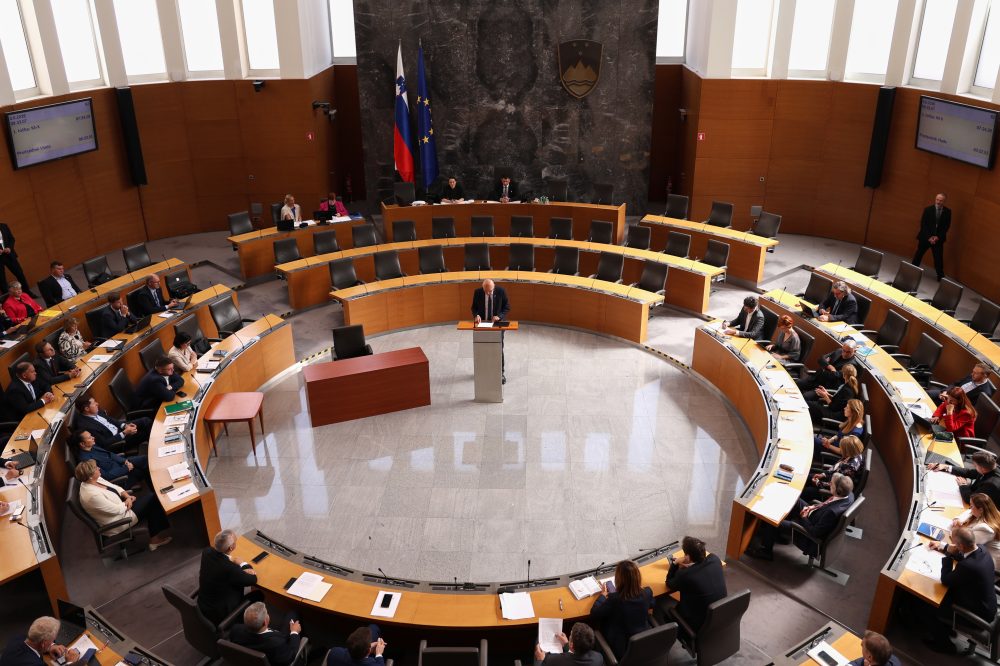
LJUBLJANA, Slovenia — Slovenia’s legislative body endorsed a new conservative administration Thursday, installing Prime Minister Janez Jansa in what represents a political shift toward the right for the small European Union nation.
Members of parliament supported the new administration by a margin of 49-30 in the 90-seat legislative chamber.
Thursday’s decision followed March parliamentary elections that failed to produce a decisive outcome. Though former liberal Prime Minister Robert Golob’s Freedom Movement secured the most ballots, he could not secure enough legislative support to form a majority.
The 67-year-old Jansa, who received his appointment as prime minister last month, joined forces with his populist Slovenian Democratic Party and other conservative parliamentary factions to create a coalition administration. The new government also receives support from the nonestablishment Truth party, which originally formed as an anti-vaccination movement during the COVID-19 pandemic.
This represents Jansa’s fourth stint in the top office. The seasoned politician has expressed admiration for U.S. President Donald Trump and maintained close ties with former populist Hungarian Prime Minister Viktor Orbán, who suffered a decisive electoral defeat in April.
Similar to Orban, Jansa took a firm anti-immigration stance during Europe’s major migration crisis in 2015, and has faced criticism for restricting democratic institutions and media freedoms during his previous 2020-2022 tenure. These actions sparked public demonstrations and drew European Union oversight.
Jansa committed that his new administration would serve “for all of Slovenia and for all generations.” During Thursday’s proceedings, he described his 15-member Cabinet as having “rich experience.”
Jansa promised to reduce taxation levels and criticized Slovenia for having “an incredibly overblown bureaucracy” when compared to other European nations. He expressed intentions to invite opposition parties to collaborate on important future matters.
The new Cabinet features Tone Kajzer, Slovenia’s former ambassador to the U.S., who received appointment as foreign minister, while Franci Matoz — Jansa’s previous attorney — was named interior minister, generating some public backlash.
Jansa, who supports Israel, has strongly criticized the Golob administration’s 2024 decision to recognize a Palestinian state. The incoming government is anticipated to repair Slovenia’s currently strained relationship with Israel.
The March 22 electoral contest faced claims of outside interference and corruption. The approximately 2 million residents of the Alpine country remain sharply split between liberal and conservative viewpoints.
FRANKFURT, Germany — A German airline confirmed Thursday that multiple workers sustained injuries when a Boeing aircraft’s front landing gear suddenly collapsed while the plane was stationed at an airport gate.
The malfunction occurred as the 787-9 Dreamliner sat parked with only crew and ground personnel aboard, prior to passenger boarding for a scheduled departure from Frankfurt to Los Angeles. Officials described the gear retraction as happening without warning, sending the aircraft’s nose plummeting several meters to the tarmac and damaging the gear compartment doors. The Los Angeles flight was subsequently scrapped.
“Several employees were injured and are currently receiving medical attention,” Lufthansa said, adding that it and relevant authorities were investigating the circumstances of the incident.
According to aviation tracking data from Flightradar24, the affected 787-9 aircraft is approximately one year old.
In a Thursday email response, Boeing acknowledged being “aware of the incident” and stated the company is “supporting our customer.”
Footage captured at the location showed the wide-body aircraft’s front wheels sliding forward as the nose section dropped multiple meters, with a nearby ground worker quickly moving to safety.
The gear bay doors separated from the aircraft when the nose made contact with the ground.
A similar occurrence happened in 2021 at London’s Heathrow Airport involving a Boeing 787’s nose landing system. The UK’s Air Accidents Investigation Branch determined that during maintenance operations on a 787-8, the nose gear retracted while testing was underway, causing the aircraft’s front section to contact the ground. Investigators concluded that a safety pin meant to prevent retraction had been placed incorrectly, enabling the gear to fold despite protective mechanisms intended to maintain extension.
TORONTO (AP) — Canada’s Prime Minister Mark Carney issued a stark warning Thursday about the potential dangers foreign artificial intelligence systems pose to his nation’s security and sovereignty.
During the rollout of his administration’s new AI strategy, Carney emphasized that this transformative technology has arrived and that Canada relies too heavily on overseas providers. He expressed concern that the nation’s dependence could leave it vulnerable to exploitation.
The prime minister had previously cautioned at this year’s World Economic Forum in Davos that powerful nations like the United States have leveraged economic ties to intimidate smaller countries. On Thursday, he highlighted how the majority of AI-related data flows beyond Canadian borders.
Similar to other forms of economic interdependence such as supply networks, Carney explained that artificial intelligence systems could become tools of coercion against Canada.
“That creates real risks that foreign entities could access Canadian data, deploy AI products that shape Canadian lives without reflecting our values,” Carney said. “And tilt the playing field against Canadian firms — while Canada lacks the leverage to push back or the ability to control.”
The administration’s strategy document observes that “AI is a game of scale that is dominated by hegemons and hyperscalers” and states this “poses a significant security and economic challenge as countries around the globe risk becoming subordinate or reliant on them.”
The plan outlines Canada’s role in guiding other mid-sized nations or allied countries through this technological transition.
“A coalition of aligned democracies, who pool research, talent, compute and procurement power, would offer a credible alternative to the dominant market actors that increasingly define the global AI landscape,” the document says.
Carney announced his administration plans to introduce new laws for enhanced data and privacy protection. He also revealed plans to construct a world-class public AI supercomputer.
“Canadian researchers train models on foreign cloud platforms. Canadian companies store sensitive data in foreign jurisdictions. Government operations rely on infrastructure Canada does not own,” the strategy says.
The document states the federal government will tackle these vulnerabilities by “building its key sovereign capabilities domestically whenever possible, while partnering with trusted allies or buying existing market solutions when appropriate.”
The strategy identified that Canada faces “a major adoption gap.” The prime minister said his administration will provide artificial intelligence education to citizens in educational institutions and community facilities through a literacy program. He explained that complimentary AI educational materials, including coursework, “will help Canadians to identify bias and misinformation — and give them the AI tools to learn and help with their careers.”
Carney noted that internationally, his nation ranks among the lowest countries in AI education, understanding and confidence. He revealed that only 12% of Canadian companies currently utilize AI technology, with even lower usage rates among smaller enterprises.
Despite stalled peace negotiations regarding Ukraine, Russia and the United States are maintaining dialogue on economic and energy matters, according to President Vladimir Putin’s special representative Kirill Dmitriev, who spoke with Reuters on Thursday.
Speaking at Russia’s largest economic forum in St. Petersburg on June 4, Dmitriev confirmed he had recent contact with American officials, stating the communication channels remain active even as Ukraine-related peace efforts have hit a roadblock.
The Kremlin announced on May 18 that Russia-Ukraine peace discussions were temporarily suspended, though Moscow anticipated they would eventually restart, with various levels of contact between Moscow and Washington continuing.
“We talked to Steve Witkoff and Jared Kushner yesterday. So the dialogue continues, and there is constant communication,” Dmitriev explained during the conference, naming the American negotiators involved.
The last conversation between U.S. President Donald Trump and Putin occurred on April 29, when they discussed implementing a brief Ukraine ceasefire to commemorate the World War Two anniversary. Dmitriev’s most recent face-to-face meeting with Kushner and Witkoff took place in April.
Following that temporary ceasefire, fighting has intensified significantly. Russian forces have launched drone and missile attacks against Kyiv and other Ukrainian cities, while Ukrainian forces have targeted refineries, ports, and industrial facilities located deep within Russian territory.
The American-brokered peace initiative, which began with Russia-U.S. discussions in Riyadh in February of last year, has reached an impasse over disputed territory in the Donbas region that remains under Ukrainian control but which Moscow demands be transferred before any settlement agreement.
According to Dmitriev, not every Russia-U.S. discussion centers on Ukraine, and both nations plan to maintain conversations about energy matters, economic issues, and worldwide stability. He indicated that three-way discussions including Ukraine could happen in the future.
“And then when the time is right, I think there will be an opportunity also for trilateral discussions, but this is more on a diplomatic track,” Dmitriev stated.
On May 18, the United States approved a third extension of a 30-day sanctions exemption that permits Russian seaborne oil purchases to assist “energy-vulnerable” nations impacted by the Iran war.
Dmitriev, who participated in discussions with the Trump administration regarding previous extensions, explained that American officials recognize how these waivers help stabilize markets during the Middle East crisis.
“Extending waivers before was good for the markets. I think the U.S. administration understands that without Russian oil, without Russian gas, it’s impossible to have stability in the energy markets,” Dmitriev commented, though he declined to predict whether another extension would occur this month.
Romania’s centrist president has selected his adviser Eugen Tomac to serve as the country’s new prime minister on Thursday, attempting to resolve a political crisis that has halted government operations, threatened European Union funding access, and caused the national currency to hit historic lows.
The previous broad pro-European coalition administration fell apart last month after the leftist Social Democrats, its largest member party, pulled their backing from Prime Minister Ilie Bolojan and aligned with far-right opposition forces in a vote of no confidence.
The government’s downfall, occurring less than twelve months after taking office, jeopardized ongoing efforts to reduce the European Union’s highest budget deficit and placed the nation’s investment-grade sovereign credit rating in danger.
The 44-year-old Tomac, who serves as a European Parliament member and heads a party without representation in Romania’s legislature, has been given a 10-day window to assemble a government and secure a parliamentary confidence vote.
His administration will be composed of technocrats, given that political parties have been unable to create a new coalition capable of achieving a parliamentary majority.
“Because parties did not get along, the only possible solution is a prime minister who is independent of the parliamentary parties,” the president told reporters.
The president outlined that a new government’s main objectives should include maintaining a pro-Western position, ensuring financial stability, implementing reforms to secure EU funding, and establishing clear budget plans for 2027.
If approved, the incoming government must rapidly execute reforms to access approximately 8.6 billion euros in EU recovery and resilience funding before Brussels’ August deadline and guarantee continued deficit reduction past 2026.
However, Tomac’s administration will likely face difficulties obtaining backing from a divided parliament for controversial reforms, including legislation establishing standards for public sector compensation.
“(The nomination) is a first attempt, we have no guarantees it will pass through parliament or that a majority has been negotiated,” stated Sergiu Miscoiu, a political science professor at Babes-Bolyai University.
“Even if it is confirmed, it will probably not be a long-lived government.”
Romania’s upcoming parliamentary election isn’t scheduled until 2028. The country has never conducted an early election, and analysts suggest the probability of one occurring now is minimal since the opposition hard-right Alliance for Uniting Romanians (AUR) currently leads in public opinion surveys.
Switzerland announced Thursday it will position approximately 4,000 military personnel within its borders to strengthen security measures while France hosts the G7 summit of world leaders next month.
The gathering, scheduled for June 15 through 17 in the French community of Evian-les-Bains situated across Lake Geneva, will draw leaders from major global economies, including U.S. President Donald Trump, along with additional high-ranking delegations.
Officials from the unit responsible for planning and managing the Swiss Armed Forces stated that the magnitude of the event and its closeness to Switzerland’s border necessitates careful coordination between civilian and military officials. Demonstrations are expected during the summit.
“The proximity to the border presents a major challenge for security authorities in the cantons of Vaud, Geneva and Valais. As a result, the Federal Council and Parliament have decided on a subsidiary security deployment of the army,” the Swiss army’s Defence Group said in a statement.
According to the announcement, military forces will be responsible for safeguarding vital infrastructure, such as Geneva Airport, strengthening border monitoring, and overseeing important transportation corridors and Lake Geneva.
The Swiss air force will also increase aerial patrol activities, implementing airspace limitations from June 10 through June 19, while deploying anti-drone technology and defenses against nuclear, biological and chemical dangers, officials added.
Ukraine has announced a significant military aircraft acquisition that will add 36 Swedish-manufactured Gripen fighter jets to its air force fleet as the nation continues defending against Russian forces.
According to Ukrainian President Volodymyr Zelenskiy’s announcement in May, the arrangement involves purchasing 20 of the advanced Gripen E models from manufacturer Saab, while Sweden will donate an additional 16 jets from an earlier generation to support Ukraine’s defense efforts.
The two nations established the framework for this transaction through a letter of intent signed last year, which opens the door for Sweden to potentially sell as many as 150 aircraft to Ukraine. Funding for the initial 20 jets comes from a €2.5 billion allocation taken from a larger €90 billion European Union loan package.
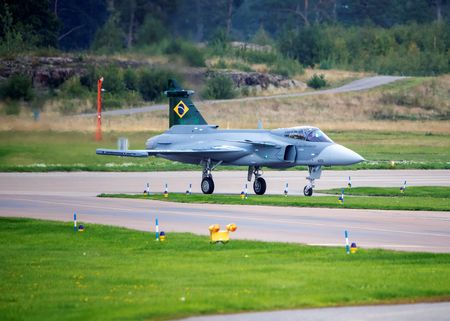
The Gripen represents a fourth-generation lightweight supersonic fighter with a single engine design. Military experts classify it as a multi-role combat aircraft capable of handling air-to-air engagements, bombing operations, and surveillance missions. Defense analysts view it as an economical alternative to more costly fifth-generation fighters like the F-35.
The aircraft takes its name from the Griffin, a creature from Swedish mythology, and has served in active duty since 1996 with multiple upgrades over the years. Sweden’s Air Force received its first Gripen E model this past October, and production has exceeded 280 units total.
Ukraine’s selection of the Gripen stems from its specific design advantages for confronting Russian forces and operating in challenging battlefield conditions. Unlike aircraft such as the F-35 that require established airbases or aircraft carriers, Gripens possess the flexibility to use any straight roadway for takeoffs and landings. This dispersal capability makes the aircraft more difficult to target while grounded.
Ukrainian officials emphasize that Gripen maintenance simplicity translates to increased mission frequency. A six-person team consisting of one trained technician and five conscripts can complete refueling, rearming, and pre-flight preparations in less than 10 minutes.
The fighter’s compatibility with weapons systems from various NATO member countries, including American JDAM and AIM-120 AMRAAM missiles, British Storm Shadow munitions, and French SCALP weapons, eliminates dependence on a single supplier nation.
Combat deployment of Gripens occurred for the first time this year when Thailand utilized the fighters during confrontations with Cambodia, according to Swedish media reports. Previously, the aircraft primarily served air policing functions, including deployment to Poland in 2025 for a NATO airspace patrol mission and enforcement of the NATO-imposed no-fly zone over Libya in 2014.
Sweden maintained neutrality until joining the European Union in 1995 and remained militarily unaligned until NATO membership in 2024, relying on Saab for air force equipment since World War Two. The decision to develop the Gripen dates back to the 1980s.
In the international fighter aircraft market, the Gripen competes against Lockheed Martin’s F-35 and F-16 models, Dassault Aviation’s Rafale, and the Eurofighter. Current operators include South Africa, Thailand, Brazil, the Czech Republic, and Hungary, with Colombia also committing to purchase the aircraft.
Technical specifications for the Gripen E include a length slightly exceeding 15 meters, a weight of 16.5 tonnes, and the capability to complete turnaround operations within 10 minutes of landing. The aircraft maintains lower operational costs per flight hour compared to competitors such as Lockheed’s F-35.
Israeli Prime Minister Benjamin Netanyahu is experiencing a sharp decline in political support from voters in northern Israel, where Hezbollah attacks have been most intense, according to a recent survey that could influence his approach to the Lebanon conflict ahead of upcoming elections.
A ceasefire deal reached Wednesday between Israel and Lebanon may not satisfy what northern residents are seeking from their leadership.
The survey conducted in May by Agam Labs at Israel’s Hebrew University, exclusively provided to Reuters, revealed that northern residents are turning away from Netanyahu’s Likud party at a faster rate than voters in other regions and are more critical of his war strategy in Lebanon.
As Iran calls for Israel to halt its military operations as part of any peace agreement it would support with the United States, the polling data demonstrates Netanyahu’s difficult position between domestic political pressures and diplomatic initiatives from Washington allies.
NORTHERN RESIDENTS SEEK HEZBOLLAH’S ELIMINATION
The upcoming general election scheduled by October could potentially remove Netanyahu’s ruling coalition from power, threatening his reputation as Israel’s most enduring political figure.
Although his administration is widely considered Israel’s most right-wing government ever, many northern voters are calling for more aggressive military action, free from U.S. pressure to conclude Middle Eastern conflicts.
In the northern city of Kiryat Shmona, where approximately half the electorate supported Likud in the previous election, eliminating Hezbollah’s threat and its almost daily rocket and drone strikes represents the primary concern.
When warning sirens sound, residents have mere moments to find safety, and local voters interviewed by Reuters expressed their desire for the Hezbollah conflict to continue until the organization is completely destroyed.
“All night there are loud explosions,” said Kiryat Shmona resident Moshe Yifrah, 45, explaining his lack of faith that a ceasefire with Hezbollah would keep his family safe. “Who would we make it with? Murderers who want to kill us?” he said.
Hezbollah initiated attacks on Israel following the Hamas assault of October 7, 2023, leading Israel to conduct an intensive military operation in Lebanon that eliminated most of the organization’s leadership and compelled it to agree to a ceasefire.
Nevertheless, Hezbollah resumed firing after Israel and the United States began a military campaign against Iran on February 28, causing Israel to restart its offensive and capture large portions of southern Lebanon.
Since October 2023, Hezbollah attacks have resulted in more than 50 civilian deaths in northern Israel, based on data from Tel Aviv University’s Institute for National Security Studies.
In Lebanon, Israeli military operations have killed over 7,500 people since October 2023, according to Lebanese official statements that do not separate civilian and combatant casualties.
Many northern voters, including Yifrah, want Israel to escalate its military efforts, which persisted despite an April ceasefire, but believe Netanyahu is yielding to pressure from U.S. President Donald Trump to reach a truce agreement.
“I’m not ashamed to say that I voted for this government, but it turns out that the one managing it is President Trump,” said Yifrah.
Trump, seeking an agreement with Iran, announced Monday that Israel and Hezbollah had agreed to reduce tensions just hours after Netanyahu authorized new attacks on Beirut’s southern areas.
Netanyahu’s political opponents immediately criticized him for compromising national security, increasing his political challenges months before the scheduled election.
“Everywhere Hezbollah is deployed it must be struck and the hands of the IDF should not be tied,” said former military chief of staff Gadi Eizenkot, a potential prime ministerial candidate, during a Monday speech.
On Wednesday evening, a new ceasefire agreement was established requiring Hezbollah to withdraw from southern Lebanon.
Netanyahu announced shortly afterward that military operations would persist despite the ceasefire.
POLITICAL OPPONENTS TARGET NORTHERN REGION
The Agam Labs survey found only 23% of northern voters indicating they would support Likud in the next election, declining from the 35% the party received in the 2022 election. Support for the broader right-wing coalition that forms Netanyahu’s government has decreased even more significantly in the north, the poll indicated.
The decline in Likud support is approximately three times greater in the north, which represents about one-fifth of the voting population, compared to other Israeli regions, and roughly 70% of northern survey participants expressed disapproval of Lebanon war management – higher than in other parts of Israel.
“We see a dramatic shift,” said Nimrod Nir of Agam Labs.
“It’s almost a mirror image of what we saw regarding the past elections, with two thirds intending to vote for the anti-Netanyahu bloc,” he added.
The leader of Kiryat Shmona’s Likud branch declined to comment on the party’s decreased polling numbers or participate in an interview.
Surrounded by verdant mountains, Kiryat Shmona had been a thriving hub for tourism and agriculture, but residents now characterize it as abandoned, with many people having departed.
Businesses were closed and a playground stood empty during a Reuters visit this week.
Netanyahu’s primary challengers are promoting aggressive messaging in the north, with Eizenkot making over 15 visits in recent weeks. Netanyahu has avoided the area.
“He should come visit,” said Yisrael Cohen, 40, who previously supported Likud but will not in the upcoming election. “The government needs to see us.”
Three British Royal Navy personnel were killed when their helicopter crashed during a training mission in southwestern England early Wednesday morning, according to military officials.
The aircraft went down in a field located in Devon County around 4 a.m. local time.
In a statement, the navy’s head General Gwyn Jenkins expressed his sorrow, saying he was “deeply saddened to share the news that three crewmembers onboard a Royal Navy Merlin Mk4 helicopter have died after it crashed in the early hours of this morning near Sourton, Devon.”
Jenkins confirmed that an investigation has been launched into the incident, with additional details expected to be released at a later time. The cause of the crash remains unknown at this point.
The Merlin Mk4 aircraft typically operates with a four-person crew and has the capacity to transport up to 24 troops. According to the Royal Navy’s official website, these helicopters serve multiple functions including anti-submarine operations, search and rescue missions, cargo transport, and maritime surveillance.
The Ministry of Defence confirmed that the families of the deceased service members have been notified of the tragedy.
British Prime Minister Keir Starmer described the fatalities as “utterly tragic.”
NICOSIA, June 4 – Cyprus lawmakers chose Annita Demetriou for another term as parliamentary speaker during Thursday’s voting, with the results offering early signals about political alliances taking shape before the 2028 presidential race.
While Cyprus operates under a presidential government structure, parliamentary coalition patterns often reflect broader voting tendencies across the nation.
Demetriou, who leads the right-wing Democratic Rally party, secured her position through support from her own party along with backing from the Democratic Party, a centrist organization that supports current President Nikos Christodoulides, and Direct Democracy, a grassroots movement established by a social media personality.
Following the May 24 parliamentary elections, two political parties that had been backing Christodoulides’s government – the socialist EDEK and centrist Dipa – lost their legislative representation. This leaves the Democratic Party as the sole group in parliament currently aligned with Christodoulides.
Military officials in Paris announced Thursday that NATO fighter jets were deployed 11 times during the past week to intercept Russian aircraft over the Baltic region, representing an unusually elevated level of aerial confrontations.
The interceptions occurred as part of NATO’s ongoing Baltic Air Policing Mission, which safeguards the airspace above Estonia, Latvia and Lithuania using rotating deployments of alliance fighter aircraft to supplement these nations’ defense capabilities. Jets are launched to respond to unidentified aircraft or those not following proper protocols.
A spokesperson for France’s armed forces, Guillaume Vernet, suggested during a weekly press conference that the spike in aerial encounters might indicate Moscow’s attempt to demonstrate military strength during the same period it held its yearly St Petersburg International Economic Forum.
“The French detachment deployed on the Baltic Air Policing mission carried out multiple interceptions of Russian military aircraft flying without flight plans or radio contact,” Vernet said, adding that the intercepted aircraft included armed fighter jets, intelligence and transport planes.
These latest incidents add to a growing pattern of military drone intrusions into the airspace of Finland, Estonia, Latvia and Lithuania, raising concerns about potential spillover effects from the ongoing conflict in Ukraine into NATO’s northern territories that border Russia.
A fragile truce between Israel and Lebanon has been extended through a new U.S.-mediated agreement announced Wednesday, though the arrangement faces significant opposition from the militant group at its center.
The accord between Israel and Lebanon comes following Israel’s most extensive military push into Lebanese territory in over 25 years, and establishes a framework for broader peace discussions scheduled for later this month.
However, the agreement contains several disputed elements, notably the establishment of experimental security areas within Lebanon where the Iranian-supported Hezbollah organization would be prohibited from operating, along with provisions calling for the group’s ultimate dissolution.
Lebanese President Joseph Aoun described the arrangement Thursday as the “last chance to enter a final and comprehensive ceasefire.” A previous U.S.-mediated accord from November 2024 aimed at stopping hostilities between Hezbollah and Israel, which began due to the conflict in Gaza, ultimately collapsed.
The announcement follows recent events where a major escalation was barely avoided through a separate Monday agreement that prevented Israel’s planned attacks on Beirut’s southern neighborhoods while Hezbollah agreed to stop striking northern Israel. However, questions persist about the current deal’s viability.
The present arrangement expands upon an initial truce established April 17 between Israel and Lebanon’s government.
Notably, while much of the agreement depends on Hezbollah’s actions, the militant organization did not participate directly in negotiations. Hezbollah’s leader, Sheikh Naim Kassem, has instead depended on Iran’s influence in discussions with Washington. Tehran has maintained that any resolution to the Iran conflict must encompass Lebanon.
Kassem harshly criticized the agreement Thursday, describing it as “Satan’s dream in heaven.” He demanded a total ceasefire and Israeli military withdrawal, arguing the deal would destabilize Lebanon and create internal divisions.
“The agreement allows Israel to take in politics what it couldn’t in war,” Kassem stated. “As long as the occupation is still present, then the resistance will continue.”
Israel maintains it is fighting Hezbollah, which it has long viewed as a significant threat, rather than Lebanon directly. Nevertheless, Israeli forces have targeted areas well beyond Hezbollah’s sphere of influence, including central areas of Lebanon’s capital city.
The Shiite Muslim armed organization formed in 1982 as a response to Israel’s occupation of southern Lebanon at that time, and has developed into one of Lebanon’s most powerful entities.
Emphasizing its perception of the group as an existential danger, Israel stated in Wednesday’s joint announcement that its security and territorial integrity “can only be achieved through the disarmament of Hezbollah and the dismantlement of its infrastructure throughout Lebanon.”
Lebanon’s endorsement of a statement characterizing Hezbollah as a threat highlights the widening rift within the country regarding the organization, and Beirut’s attempts to separate itself from Iran while strengthening relationships with Gulf nations and Washington. This approach also risks alienating Hezbollah and its supporters, primarily from the Shiite population.
The joint announcement states the ceasefire “is contingent on a complete cessation of Hezbollah fire and the evacuation of all Hezbollah operatives” from areas south of the Litani River. This river, situated approximately 30 kilometers (20 miles) north of Israel’s border, marks the boundary of a U.N.-established buffer zone from 2006 where Hezbollah is prohibited. Israeli forces have currently advanced well beyond the Litani River into southern Lebanon, displacing hundreds of thousands of Lebanese civilians.
The statement indicates Lebanon and Israel committed to “swiftly advance the creation of pilot zones in which the Lebanese Armed Forces will take exclusive control of the territory to the exclusion of all non-state actors.”
This places additional burden on Lebanon’s financially struggling military to establish authority in regions where Hezbollah maintains significant presence. Lebanon worries that an aggressive approach to disarming Hezbollah could trigger nationwide conflict, while Israel criticizes Beirut for insufficient action.
Israeli forces currently occupy substantial portions of southern Lebanon and have destroyed residential buildings and historical landmarks.
The statement also mentioned that negotiators explored a security structure that would encompass “the dismantlement of non-state armed groups, and the prevention of their reemergence.”
The specific methods for establishing these pilot zones and dismantling Hezbollah remain highly uncertain. Aoun suggested that a series of villages just north of the Litani could serve as the pilot zone.
Lebanon has emerged as a significant obstacle in efforts to expand the separate ceasefire in the Iran conflict. The joint statement declared that “all parties condemned Iran’s attacks on countries in the region, and ongoing activities that undermine stability throughout the Middle East, whether through support for proxies and all other acts of aggression.”
The document also contained explicit language aimed at separating the two conflicts.
“All countries reaffirmed that the future of the relationship between Israel and Lebanon must be decided by the two sovereign governments. They rejected any attempt, by any state or non-state actor, to hold Lebanon’s future hostage,” the statement read.
It continued that “any agreement to cease hostilities must be reached directly between the two governments, brokered by the United States, and not through any separate track.”
This language appears designed to stop Tehran from using Hezbollah and the Lebanese conflict as leverage in its own ceasefire talks.
Despite the initial truce agreement in mid-April, combat has persisted, with Hezbollah resuming attacks following Israeli strikes in Lebanon that Israel described as defensive measures.
The fighting shows little indication of decreasing. Israeli Defense Minister Israel Katz announced Thursday that Israeli forces would maintain their presence in what he termed a security zone in Lebanon, while continuing operations against Hezbollah facilities.
The military “will, at this stage, continue its fire and activity on the ground,” he stated. Katz said the arrangements reflect “the reality we have created in Lebanon so far” and could eventually result in a peace agreement with Lebanon and “real and lasting security” for northern Israel’s residents.
Thursday saw the Israeli military warn southern Lebanon residents that it was continuing to strike Hezbollah “infrastructure located in and near the area south of the Zahrani River.” The warning stated that “anyone who moves south of the river is putting their life at risk.” The Zahrani is positioned approximately 30 kilometers (18 miles) north of the Litani River.
ZAGREB, Croatia — At least four individuals lost their lives Thursday when a small aircraft went down in Croatia, according to police officials.
The aircraft crashed in the vicinity of Medulin, located on the Istria peninsula, authorities confirmed in an official statement. Reports from the HINA news agency indicated the aircraft was registered in Germany and had departed from Austria.
Images from the crash site revealed the destroyed aircraft lying in a field, with emergency responders and fire crews working at the location.
A local aviator, Nijaz Delic, described the incident to the Index news portal, stating the aircraft “spiralled (in the air) and crashed into the ground.”
Authorities have not confirmed the total number of individuals aboard the aircraft. Additional information about the incident remains unavailable at this time.
The small Balkan country of Montenegro has set an ambitious goal to join the European Union by 2028, displaying the slogan “28 by 28 – The Next EU Member” on its national airline’s aircraft.
This nation of 630,000 residents aims to become the 28th EU member state and the first new addition since Croatia joined in 2013. While Montenegro’s small size would make integration into the 450-million-person bloc relatively straightforward, achieving membership by 2028 remains a challenging target.
The country must complete demanding reforms, particularly in fighting corruption, and receive approval from all 27 current EU member states. Despite these obstacles, Montenegro gained momentum last month when the EU established a working group to prepare its membership agreement.
EU officials will meet with Western Balkan leaders this Friday in the coastal city of Tivat to discuss the integration process.
“Montenegro is the most advanced candidate country in the accession negotiations,” EU Enlargement Commissioner Marta Kos told Reuters. “Strong leadership in the country has seen significant steps forward in terms of reforms, but there is still a lot of work to do. Some of the most pressing reforms are… on rule of law and the judiciary.”
The country has undergone major changes since separating from Serbia in 2006. Montenegro’s relationship with Russia, once a close ally providing investment and tourism, has deteriorated significantly.
In 2016, officials accused Moscow of attempting a coup with Serbian extremists, which Russia denies. Tensions escalated when Montenegro joined NATO in 2017 and later imposed sanctions on Russia over the Ukraine conflict, prompting Moscow to label it an enemy state.
Milo Djukanovic, who governed Montenegro for thirty years until 2023 in various leadership roles, described the break from Russia as pivotal.
“Our primary motive is to take control of our own future, which will be European and Euro-Atlantic,” he told Reuters.
Citizens strongly support EU membership, with over 80% viewing it positively according to an April European Commission survey – a sharp contrast to growing skepticism elsewhere in Europe.
“We have a future in Europe, we should not remain a part of the Balkan quagmire,” said Novak, a 45-year-old physiotherapist from the capital who preferred not to share his full name.
Montenegro has made substantial progress, opening all 33 required negotiation areas and completing 14 of them. The country recently finished discussions on agriculture and capital movement in late 2025.
However, critical chapters on legal systems and fundamental rights remain unresolved. EU regulations prevent finalizing other areas until Montenegro meets all requirements in these key sectors.
While the country has launched anti-corruption efforts resulting in arrests and convictions of former senior judges, prosecutors and police officials, conviction rates remain low and problems continue, according to analysts.
Critics and international monitoring groups have accused Djukanovic and his Democratic Party of Socialists of corruption and organized crime connections, which they reject. These groups also cite concerns about press freedom restrictions.
“Montenegro is yet to close the chapters relating to the judiciary, which tend to be among the biggest hurdles for aspiring EU members,” said Mario Bikarski, senior Europe analyst at risk intelligence company Verisk Maplecroft. “Even closer attention is likely to be given to these by the European Commission given the backsliding of several member states on the rule of law in recent years.”
Predrag Zenovic, Montenegro’s chief EU negotiator, expressed confidence the country would satisfy these requirements on schedule.
“When the courts deliver a consolidated track record of results in… verdicts, that will be the final test,” he said.
BEIRUT (AP) — The militant organization Hezbollah turned down a new ceasefire proposal on Thursday that had been negotiated between Israel and Lebanon’s government, insisting instead on a total Israeli pullout from the region. The rejection occurred as Israeli military operations resulted in the deaths of at least four individuals, local officials reported, while a U.N. peacekeeper also died during the fighting.
In a written declaration broadcast on television, Hezbollah leader Naim Kassem stated that the proposal’s requirement for Hezbollah militants to evacuate southern Lebanon while under attack would constitute “surrender, defeat and achieving the enemy’s goals.”
“What we are concerned about is an end to the aggression, ceasefire and Israel’s withdrawal,” he said. “We did not make any commitment to any party to stop resisting as long as there is occupation,” he added.
The continued combat in Lebanon, where Israeli military units have captured significant portions of the southern region, poses challenges to efforts aimed at concluding the Iran conflict and reopening the Strait of Hormuz, a crucial passage for oil and gas transport whose blockade has disrupted the global economy.
Iran has insisted that any permanent ceasefire must include Lebanon. Israeli Prime Minister Benjamin Netanyahu, who is facing upcoming elections this year, aims to continue Israel’s military campaign until Hezbollah is no longer considered a threat. Israeli forces have captured approximately one-fifth of Lebanon since Hezbollah started launching rocket and drone strikes in support of Iran shortly after the broader conflict began.
U.S. President Donald Trump, who received unusual criticism from Congress on Wednesday, has attempted to minimize the diplomatic impasse and the inability of announced ceasefires to halt the violence, stating to reporters that in the Middle East, “a ceasefire is when you’re shooting in a more moderate manner.”
A Serbian peacekeeper lost his life, while two additional peacekeepers sustained injuries when mortar fire hit their position near Marjayoun, a town with a Christian majority that has experienced heavy fighting, according to the U.N. mission, called UNIFIL, and Serbia’s Defense Ministry.
Neither organization specified whether the mortar attack originated from Israeli or Hezbollah forces.
Lebanon’s government-operated National News Agency reported that a drone attack killed a motorcyclist and injured four individuals in the village of Maaroub. The agency stated that air attacks on the village of Sohmor in the Bekaa Valley in eastern Lebanon resulted in three deaths and additional injuries. Air strikes were also reported in other southern regions.
The Israeli military provided no immediate response, though it has cautioned people against entering areas of southern Lebanon where it claims to be targeting Hezbollah installations.
Hezbollah restarted its rocket attacks following Israel and the United States’ unexpected assault on Iran on Feb. 28. Prior to that date, Israel had consistently conducted strikes in Lebanon against what it described as militant locations, frequently resulting in civilian casualties, despite an earlier truce established in 2024.
In the southern city of Sidon, numerous residents responded to the ceasefire announcement with doubt, stating that previous agreements had been unsuccessful in ending the violence.
“Every few days a ceasefire is announced, but people keep getting killed,” said Mayada Hijazi.
“It’s all talk and no action,” said Salah Nassab. “We keep going back to our homes and then we get displaced again, back and forth. We’re very tired.”
During the current fighting, Israeli forces have advanced deeper into southern Lebanon than at any point since Israel’s 1982-2000 occupation concluded. The country now controls approximately one-fifth of Lebanese territory.
The conflict has claimed more than 3,500 lives in Lebanon and displaced over 1.2 million people. The violence has resulted in 27 Israeli military deaths and three civilian fatalities.
The most recent ceasefire declaration emerged from U.S.-mediated negotiations between Israel and Lebanon’s government, which blames Hezbollah for involving the nation in warfare and had attempted to disarm the group before the current hostilities.
The ceasefire proposal does not formally involve Hezbollah and requires Lebanon’s military forces to assume control of security areas in Lebanon where the militants would be prohibited. Hezbollah has previously stated it will only accept a ceasefire if Israel stops its attacks and starts withdrawing from Lebanese territory.
Lebanese President Joseph Aoun described the new proposal on Thursday as “the last chance to enter a final and comprehensive ceasefire.” He indicated Lebanon was prepared to implement Wednesday’s agreement upon receiving responses from relevant Lebanese factions, including Hezbollah. The United States — and Trump personally — would decide how and when the agreement takes effect, he informed reporters on Thursday.
The proposal declares that Hezbollah “is not just an enemy of Israel and an enemy of America, but that it is an enemy of Lebanon” and demands its dismantlement. The government has pledged to accomplish this previously but lacks the capacity to forcibly disarm Hezbollah.
The current agreement did not specify when Israel would withdraw from southern Lebanon but stated the U.S. would assist the Lebanese army as it works to establish control in regions where Hezbollah has maintained influence for years.
A senior Iranian general on Thursday restated Tehran’s requirement for a complete ceasefire in Lebanon and demanded Israel withdraw forces to their positions when the broader war started. At that time, Israel controlled five strategic border locations.
“Supporting the resistance in Lebanon is the duty of all of us, and eliminating Israel from the region is an achievable goal for Muslims,” Esmail Qaani, the head of the Revolutionary Guard’s elite Quds Force, was quoted as saying by the semiofficial Fars and Tasnim news agencies.
As diplomatic initiatives have consistently failed, Iran and the U.S. have engaged in combat in and around the Strait of Hormuz, which remains essentially blocked. Before the conflict, approximately one-fifth of global oil and gas, along with substantial shipments of fertilizer and other commodities, traveled through the narrow passage.
The U.S. has struck what it characterizes as Iranian threats to commercial vessels and its own military, while Iran has conducted missile and drone strikes against Gulf nations hosting U.S. forces.
An attack Wednesday on a commercial airport in Kuwait that American forces also utilize for logistics and refueling resulted in one Indian national’s death and injured more than 60 people, including passengers and workers. Iran has denied responsibility for the strike.
BELGRADE, Serbia (AP) — European Union leadership plans to explore new methods for accelerating membership procedures for six Western Balkan nations seeking to join the organization, European Council President Antonio Costa announced Thursday.
The countries of Albania, Bosnia-Herzegovina, Kosovo, North Macedonia, Serbia and Montenegro have pursued membership in the European bloc for many years without completing the merit-based approval requirements. Recent EU efforts have focused on promoting reforms within these applicant nations due to concerns about expanding Russian and Chinese influence.
Speaking at a press conference in Belgrade, Serbia’s capital city, Costa stated that “if you want to boost the trust between each other, we cannot create this feel of frustration” regarding the seemingly slow advancement toward membership. Costa clarified this doesn’t mean requirements will be reduced, “but it means how we can deliver together more rapidly.”
Friday’s summit in Tivat, a coastal community in Montenegro, will bring together senior European officials and representatives from the applicant countries. Each nation stands at varying levels of progress, with Montenegro and Albania currently ahead of the others.
Prospective member countries must align their legislation across 35 policy sectors or “chapters,” covering everything from judicial standards to agricultural and fisheries regulations. Opening and closing each chapter requires unanimous approval from all 27 existing EU member states.
The EU has additionally stipulated that Serbia and Kosovo must establish normalized diplomatic relations for their membership bids to advance.
Kosovo operated as a Serbian province until a 78-day NATO air campaign in 1999 concluded warfare between Serbian military forces and ethnic Albanian independence fighters. Serbia refuses to acknowledge Kosovo’s independence declaration from 2008.
Costa explained that “tomorrow the European leaders will discuss with the leaders of the Western Balkans how we can improve our methodology to move forward faster and better.”
“The enlargement is not a utopia but it is something that could be real in the coming years,” Costa emphasized. “For this we need to work harder and faster.”
Costa completed his pre-summit visits to Western Balkan candidate nations Thursday before departing for Montenegro. He informed Serbian populist President Aleksandar Vucic that his administration must strengthen democratic reforms and coordinate foreign policy positions with EU standards to progress.
Serbia faces potential loss of approximately 1.5 billion euros ($1.8 billion) in EU funding if it continues democratic deterioration, particularly within its court system. Officials have also demanded improvements in press freedoms and electoral conditions.
Ukraine and Moldova are also pursuing EU membership alongside the Western Balkan countries.
Serbia stands as the sole European country refusing to implement sanctions against Russia over the Ukraine conflict and continues maintaining positive relationships with Moscow, plus China, which Vucic recently visited.
“We want and we are ready to do more,” Costa stated. “But let me be clear, the pace of progress depends on Serbia’s own resolve.”
The increasingly authoritarian Vucic continues facing ongoing youth-driven street demonstrations that began in November 2024 following a train station incident in northern Serbia that resulted in 16 deaths. He committed Thursday to pursue reforms with “new enthusiasm” and maintain Serbia’s EU trajectory.
Vucic’s trip to Tivat follows Montenegro’s decision to prohibit 87 Serbian citizens from entering the country due to security concerns. Authorities reported the men possessed communication devices and signs displaying “Serbia wins,” a phrase Vucic regularly uses in public speeches.
The purpose of the men’s intended Montenegro visit remains unclear.
MELBOURNE, Australia — An Australian woman appeared in court Thursday seeking bail on slavery charges after a Yazidi witness testified she was purchased, sexually assaulted and beaten while held captive by the defendant’s family in Syria.
Zeinab Ahmad, 31, faces two slavery-related charges in Melbourne Magistrates’ Court, with proceedings set to continue Friday.
Ahmad and her 53-year-old mother Kawsar Ahmad, also called Kawsar Abbas, have remained in custody since arriving back in Australia last month from a Syrian refugee camp alongside other Australian women and children connected to the Islamic State organization.
According to Detective Senior Constable Mark Clendenning’s court testimony, the unnamed Iraqi-born Yazidi victim stated that Mohammed Ahmad — Zeinab’s father and Kawsar’s spouse — purchased her for $10,000 in 2017 within Raqqa, Syria, which was then controlled by IS forces.
Clendenning testified that Kawsar participated in acquiring the teenager as a slave, describing this as an uncommon position for women within the IS-controlled territory.
“Mohammed and Kawsar had status and privileges within Islamic State usually not afforded to others that allowed exceptions to their usual practices,” Clendenning stated.
The victim was taken to the family residence where the couple lived with their five daughters, including Zeinab, who became the witness’s roommate, according to Clendenning’s testimony.
Mohammed reportedly told the victim, “I bought you for the purpose of raping and at the same time serving the home,” Clendenning relayed. He further testified that Mohammed presented her to the household saying, “I bought her for sex and to do housework.”
Court records indicate Zeinab’s first spouse died in a drone strike in 2016, after which she wed an Egyptian IS combatant who had sustained combat injuries resulting in the loss of an arm.
Police testimony alleged Zeinab witnessed her father striking the victim and pulling her by the hair down two sets of stairs within their residence. Authorities said Mohammed, currently imprisoned in Iraq, physically abused the witness two to three times monthly in front of family members.
The victim reported Mohammed sexually attacked her “many times” despite her resistance, police testified. According to Clendenning’s account, the witness said Zeinab “did not physically hurt her, although she did threaten her very badly and ordered her to do things around the house.”
Police said Mohammed sold the victim for $10,000 in 2018, sixteen months following her purchase, telling her she was “bad” and failed to follow instructions.
The Islamic State organization has systematically persecuted Yazidis, a Kurdish-speaking ethnic and religious minority population primarily located in Syria, Iraq and Turkey.
The witness testified she was 15 when she became one of 6,800 Yazidi women and children enslaved and passed between IS members 17 times across five years until Kurdish forces liberated her in 2019.
Three generations of the Ahmad family relocated from Melbourne to Syria through Turkey during 2013 and 2014. Police allege Zeinab traveled there with her spouse in 2014.
Clendenning argued that releasing Zeinab from detention would create an unacceptable danger to public safety and welfare.
He noted she had been married to multiple IS-affiliated men and remains wed to an Egyptian IS member whose current location is unknown.
“The accused has never explicitly renounced or stated that she no longer supports Islamic State since her surrender to Kurdish forces,” Clendenning testified.
She faces two crimes against humanity charges: enslavement and utilizing a slave. Both offenses carry maximum sentences of 25 years imprisonment.
A fresh ceasefire arrangement between Israel and Lebanon, facilitated by American negotiators, has generated optimism Thursday regarding potential diplomatic advancement in the broader conflict involving the United States and Iran, despite lingering questions about implementation timing and methods.
Iran has established a Lebanese ceasefire as a prerequisite for any peace agreement with the United States, and has indicated in recent statements that direct military intervention could occur to support its ally Hezbollah if Israeli attacks in the region persist or intensify.
Lebanese President Joseph Aoun announced the newest truce would take effect within a day of approval from all relevant parties, seemingly referencing Hezbollah, which remains outside the formal agreement and has not issued public statements regarding the arrangement.
However, questions about the durability of the ceasefire emerged when Israel’s Defence Minister Israel Katz stated Thursday that military operations in Lebanon would persist temporarily and that forces would not retreat from southern areas.
The commander of Iran’s Revolutionary Guards’ Quds Force, Esmail Qaani, declared that the basic requirement would involve Israeli withdrawal to pre-war positions, according to Iranian state media reports.
Fighting between Hezbollah and Israel resumed on March 2, when the organization launched attacks in solidarity with Tehran during U.S.-Israeli military operations. The conflict has persisted through multiple ceasefire declarations from Washington since April.
GULF REGION ESCALATION
The ceasefire announcement follows increased regional violence. Iranian military units engaged in Gulf combat Wednesday during one of the most severe fighting periods since a previous truce ended major U.S.-Israeli bombardment of Iran in early April.
Iranian military forces attacked Kuwait, causing airport damage and injuring numerous individuals, officials reported, while American forces conducted operations near the Strait of Hormuz. The waterway, which typically handles one-fifth of worldwide oil and liquefied natural gas transportation, has remained mostly blocked for over three months following U.S.-Israeli strikes on Iran.
Thursday oil markets retreated from previous gains amid hopes that the Lebanese ceasefire might provide Washington and Iran with diplomatic alternatives to continued warfare.
U.S. President Donald Trump, facing pressure to reduce fuel costs, hinted at possible negotiation progress with Iran potentially occurring this weekend.
“If it happens, it could happen over the weekend,” Trump told reporters in the White House’s Oval Office on Wednesday, without elaborating on what he expected to happen within that timeframe.
Trump mentioned that negotiating parties were attempting to separate strait reopening issues from the Lebanese conflict.
IRAN DISPUTES KUWAIT AIRPORT TARGETING
Wednesday’s Kuwait attacks damaged airport infrastructure and diplomatic facilities, resulting in one death and over 60 injuries, according to Kuwaiti officials and state media.
Iran’s elite Revolutionary Guards denied targeting Kuwait’s airport and attributed the damage to failed U.S. interceptor missiles that missed their intended targets, Iranian state media reported. American military officials stated Iranian drones deliberately targeted the airport.
Iranian media reported Revolutionary Guards also struck U.S. Fifth Fleet headquarters in Bahrain and an American airbase. U.S. Central Command rejected claims its installations were hit and said Iranian ballistic missiles failed to reach regional targets.
CENTCOM announced conducting new “defensive strikes” in southern Iran, targeting missile launch facilities and Iranian vessels attempting mine deployment, and executing strikes on Qeshm Island near the strait following attempted Iranian attacks.
IRAN ESTABLISHES PEACE CONDITIONS
Last week, Iran and the United States indicated movement toward a preliminary agreement to end hostilities and reopen the strait, though both nations have yet to finalize the arrangement, which would defer more complicated negotiations.
Iran’s Supreme Leader Ayatollah Mojtaba Khamenei stated Thursday that Iran’s adversaries had suffered battlefield defeats and were now attempting to create internal discord.
“In order to confront these plans, everyone must be patient, clear-minded, maintain unity, harmony, mutual trust, and not be in agreement with the enemy,” he said in a message read on his behalf during ceremonies marking the anniversary of the death of the Islamic Republic’s founder, Ruhollah Khomeini.
Khamenei has not appeared publicly since succeeding his father, who died in an airstrike at the war’s beginning.
Beyond Tehran’s requirement for Lebanese fighting to cease, Iran also seeks access to billions in oil revenue, sanctions waivers on crude exports, elimination of U.S. port blockades, and strait control.
Trump has identified preventing Iranian nuclear weapons acquisition as his primary objective. Iran maintains its atomic program serves peaceful purposes.
A deadly aircraft accident occurred Thursday in Croatia’s northwestern Istria region, claiming multiple lives when a small plane went down close to the Adriatic coastal town of Medulin, according to reports from the state news agency Hina citing local police sources.
Preliminary reports indicate that four individuals were discovered deceased at the crash site, while rescue teams continue their search efforts for two additional people who remain unaccounted for.
Authorities from the Istrian police department were not immediately accessible for official statements regarding the incident.
Emergency response teams, law enforcement officers, and fire department personnel have been deployed to the crash location, as reported by Hina.
The aircraft had departed from Germany prior to the fatal accident, according to information published by the Index.hr news portal.
Violence erupted in Brussels on Thursday when demonstrators protesting proposed changes to the education system clashed with law enforcement officers.
Local authorities used social media to warn residents to stay away from the area surrounding the capital’s main train station. News crews on the scene documented damage including vandalized bicycles and destroyed street signs scattered across the area.
The protests targeted reforms proposed by Belgium’s French Community government, which manages education conducted in French. Under the plan, yearly costs for university students would rise to approximately €1,100 ($1,280.18) from the current €835. Additionally, high school teachers would be required to work two extra hours in the classroom each week.
Lawmakers in the French Community parliament are scheduled to consider these budget-reduction proposals in a vote scheduled for later Thursday.
The celebrated Iranian-French artist Marjane Satrapi, known globally for her groundbreaking work advocating women’s rights, has passed away at the age of 56, according to an announcement from France’s presidential office on Thursday.
“Her passing marks the loss of a leading figure of French culture and an artist devoted to freedom, whose work carried a universal message and earned her immense international acclaim,” officials from the French presidency stated.
President Emmanuel Macron and his wife “pay tribute to a remarkable artist who transformed an Iranian childhood into a universal fable,” the official statement continued.
French news outlet BFM TV and additional media sources indicated that Satrapi “died of sadness” approximately one year following the passing of her spouse, Swedish film producer and actor Mattias Ripa, based on reports from individuals close to the artist.
The French Academy of Fine Arts, where she held membership, shared their profound grief through a social media post, honoring “a passionate advocate for cinema and film education” who recently established a foundation to assist international students pursuing film studies in Paris.
Satrapi gained worldwide recognition for her black-and-white autobiographical graphic novel and subsequent film “Persepolis,” which chronicles a young woman’s experiences during Iran’s Islamic Revolution.
“Persepolis” earned the Film Critics Grand Prix at Cannes in 2007 and received the César Award for Best Adapted Screenplay in 2008, while also securing a nomination for Best Animated Feature at the 2008 Academy Awards.
The story, which chronicles her experiences growing up in Tehran as the strong-willed child of intellectual Marxists, serves to show that Iranians share common humanity with people everywhere, Satrapi explained to The Associated Press during a 2007 Cannes interview.
“What we wanted to say is, if these people scare you, look closer: They have parents, they have lovers, they have hope, they have stories,” she explained.
Iranian officials objected to the film’s Cannes screening at the time, submitting a formal complaint to the French Embassy in Tehran.
Born November 22, 1969, in Rasht, Iran, Satrapi was sent by her family to Vienna, Austria, in 1983 to complete her education due to rising extremism following the 1979 Revolution that brought Ayatollah Khomeini into power.
However, Satrapi found Austria unwelcoming and longed for her family, prompting her return to Iran in 1989 to study at Tehran University, where she completed a degree in visual communications.
Upon graduation, Satrapi determined she was prepared to depart Iran and embrace the opportunities her parents had urgently wanted to provide her ten years earlier. She relocated to France in 1994, studying in Strasbourg before settling in Paris.
Her additional graphic works include “Broderies” (“Embroideries”) and “Poulet aux prunes” (“Chicken with plums”), with the latter also becoming a film. Her directorial portfolio encompasses multiple projects including “La Bande des Jotas” (“The Gang of Jotas”) and “Radioactive” (“Madame Curie”), a biographical work about Polish scientist Marie Curie.
In 2023, Satrapi collaborated with fellow artists and scholars on the publication “Femme, vie, liberté” (“Woman, Life, Freedom”) to document the uprisings in Iran following Mahsa Amini’s death in 2022 by the “morality police.” The publication condemns the oppression and human rights violations endured by Iranian society, particularly women, under the current Iranian government, according to the foundation.
Satrapi joined the French Academy of Fine Arts as a member in 2024. She was also presented with France’s highest honor, the Legion of Honor, that year but refused the recognition, stating France wasn’t adequately supporting Iranians fighting for democratic freedoms.
“Supporting the women’s revolution in Iran cannot be reduced to photos or speeches,” she stated in a January 2025 correspondence to French officials. “When people are fighting for democracy, we should support them.”
In 2024, Satrapi received the Princess of Asturias Foundation award in Spain for communication and humanities. The institution recognized her as “an essential voice in the defense of human rights and freedom,” with judges calling her “a symbol of civic engagement led by women.”
Satrapi’s husband passed away in April 2025 at age 53. Her Instagram account contained only one final post among her previous content: “Because I have lost the love of my life.”
MOSCOW – Russian officials on Thursday criticized NATO’s involvement in military exercises taking place in Serbia, claiming the alliance is attempting to pressure the Balkan nation into submission.
The controversy centers around Serbia’s annual “Platinum Wolf” military exercise, which launched on June 1 with backing from the U.S. European command. Serbian officials describe the drill as an opportunity for participating nations to share military expertise and strengthen cooperation among the eight NATO member countries involved.
Maria Zakharova, a spokeswoman for Russia’s Foreign Ministry, alleged that NATO seeks to dominate the Balkans region and separate Serbia from its Russian ties.
“They are wrapping Serbia in the coils of their love like a boa constrictor,” Zakharova stated during a press briefing.
The tensions reflect the historically close relationship between Russia and Serbia, which dates back years and was complicated by NATO’s 1999 bombing campaign during the Kosovo conflict.
The leader of Brunei revealed significant changes to his government structure Thursday, establishing new key positions and naming two of his sons to ministerial roles, suggesting possible succession preparations in the wealthy oil nation.
This marks the first major government reorganization since 2022 and occurs while Brunei, located on Borneo island, confronts challenges from worldwide energy difficulties triggered by the U.S.-Israeli conflict with Iran.
The announcement also comes one year ahead of Sultan Hassanal Bolkiah’s diamond jubilee celebration. The monarch, who took power in 1967, holds the distinction of being the world’s longest-serving ruler.
The 79-year-old leader, who manages several government positions, has appeared publicly less frequently this year following knee replacement surgery in January.
During a television address, Sultan Hassanal stated he would maintain his positions as prime minister, defence minister and finance minister.
Prince Abdul Malik, his second eldest son, received appointment as Minister in the Prime Minister’s Office, marking his initial cabinet position.
Prince Abdul Mateen, his second youngest son who enjoys polo and has social media popularity, was named foreign minister, a position the sultan previously managed personally.
Crown Prince Al-Muhtadee Billah, his eldest son, kept his existing position as Senior Minister at the Prime Minister’s Office.
The sultan also revealed the establishment of three new ministerial positions designed to improve policy coordination throughout the government. He announced that the Primary Resources and Tourism Ministry would be restructured into the Ministry of Economy, Trade and Industry.
“This is intended to accelerate the development of priority sectors, strengthen economic diversification efforts, support sustainable economic growth and create meaningful employment opportunities,” he said.
The reorganization resulted in the greatest number of women appointed to cabinet positions to date, including the education minister and three deputy ministers.
Brunei has gained advantages from the Iranian conflict, increasing exports of crude oil, refined products and gas recently. However, the nation struggles with rising subsidy expenses to maintain some of the region’s lowest fuel prices.
Last month, Brunei implemented restrictions preventing foreign-registered vehicles with fuel tanks less than three-quarters full from entering the country, aiming to prevent cross-border smuggling and preserve domestic fuel supplies.
On Wednesday, the energy department announced that officials had formed a special committee to oversee and coordinate responses to address impacts from the Middle East conflict.
A consumer protection agency in Thailand announced Thursday it intends to file legal action against Meta’s Facebook platform, accusing the social media giant of inadequate protection against fraudulent activity.
The Consumer Council issued a statement declaring its intention to pursue litigation over Facebook’s alleged failure to prevent scammers from exploiting the platform through deceptive advertisements that target and defraud users.
The watchdog organization claims the social media company has not done enough to safeguard its user base from these fraudulent schemes operating through the platform’s advertising system.
Armed clashes erupted between Somali government forces and opposition-backed militias in the capital city of Mogadishu, with fighting continuing from Wednesday evening into Thursday morning, according to local residents who spoke with Reuters.
The armed confrontations took place as demonstrators prepared for Thursday protests challenging President Hassan Sheikh Mohamud’s choice to continue serving after his presidential term ended last month. In March, parliamentary members approved constitutional modifications that could permit Mohamud to stay in power for an additional year while delaying scheduled elections.
A former president who served from 2009 to 2012, Sharif Sheikh Ahmed, claimed that government soldiers had attacked his residence and criticized Mohamud’s administration for “illegally altering the constitution.”
“The government forces encircled and attacked my house. I am never scared of their aggressive attack, I will fight back,” he stated in a video posted to his Facebook page during the overnight hours.
Through a message on X, former prime minister Hassan Ali Khaire alleged that government soldiers deployed heavy weaponry including anti-tank armaments and drones within a crowded residential zone. Reuters could not independently confirm these allegations.
Khaire further claimed the government had launched “a sustained and indiscriminate military assault” designed to eliminate both him and Ahmed.
Neither Somalia’s information nor defense ministers answered phone calls or responded to Reuters requests for statements.
Local residents reported that combat started around 5 p.m. Wednesday and extended into Thursday morning, with thousands of government soldiers positioned throughout Mogadishu’s Howlwadag and Abdiasis neighborhoods, where they engaged in firefights with militias backing opposition figures.
“A mortar shell landed on my neighbour’s house, injuring a mother. A big house near us is also ablaze, mortars and other weapons landed on it,” resident Ahmed Ismail told Reuters early Thursday morning.
“In front of our house I see a man injured and carried by hand. Civilians keep on fleeing the war, I see them walking with kids in hand and cursing the two warring groups,” he explained.
Another witness, Mohamud Farah, reported that opposition-supporting militias destroyed at least two armored vehicles.
Somalia has faced ongoing warfare and tribal conflicts without effective central leadership since autocratic leader Mohamed Siad Barre was overthrown in 1991. The nation has also been battling an insurgency lasting nearly twenty years, led by the al Qaeda-affiliated al Shabaab organization.
The U.S. embassy in Mogadishu characterized the violence as “reckless.”
“Somali leaders on all sides have a responsibility to preserve stability and resolve differences through peaceful means,” the embassy stated in an X post.
The UK similarly called for moderation and discussion, declaring the violence unacceptable.
A Mozambican worker seeking employment in South Africa found himself running for his life just four days ago when hostile residents in the coastal town of Kleinmond demanded all foreign nationals leave immediately.
Lado Amido, 49, was forced to hide in nearby mountains for two nights after an angry group arrived at his residence and confiscated his possessions. He now joins approximately 100 other displaced immigrants taking refuge in the local municipal building.
The incident reflects a broader pattern of anti-foreigner hostility sweeping through multiple communities in South Africa’s Western Cape region, where workers from neighboring Malawi and Mozambique have been targeted by organized groups going house to house.
Recent weeks have witnessed an escalation in anti-immigrant demonstrations throughout South Africa, with some turning deadly. Officials from Mozambique confirmed that five of their nationals lost their lives during xenophobic violence in Mossel Bay over the weekend.
“On the 31st, people came to my house, knocked on the door, and then took all my belongings,” Amido explained. The job-seeker had arrived in the country in February hoping to find employment opportunities.
Many of those now seeking safety are considering voluntary return programs established by their home governments rather than remain in an increasingly hostile environment.
Anti-foreign sentiment represents a persistent challenge in South Africa, where immigrant communities frequently face blame for the nation’s economic struggles, including widespread joblessness and criminal activity.
Political leaders across party lines have historically validated these unfounded accusations to appeal to voters, particularly with local elections scheduled for later this year, despite no supporting evidence for such claims.
During a parliamentary address on Tuesday, President Cyril Ramaphosa acknowledged the migration issue while simultaneously denouncing recent xenophobic attacks. “As we work to build a safer … and more prosperous society, we need to address the challenge of migration,” he stated.
Grant Cohen, who serves as ward councillor for Kleinmond, noted that immigration officials had recently conducted inspections of local restaurants and businesses searching for workers without proper documentation.
However, Cohen told Reuters that many immigrants currently sheltering at the municipal facility possess legal status to remain in the country.
“We’ve got kids here at the moment who should be in school, who have been in school in Kleinmond… (but) now want to flee the country out of fear and intimidation,” Cohen observed.
“I don’t believe that residents should take things into their own hands,” he added.
Michael Markson, a 31-year-old from Malawi, described spending one night outdoors in the mountains after evacuating the informal community where he had resided for approximately one year.
“My landlord came telling me that I should evacuate because if they find us, they’re going to kill us,” Markson recounted about Saturday’s events.
The following day, his employer brought food supplies while they remained hidden in the wilderness after a friend contacted the boss on their behalf.
From his hiding spot, Markson witnessed a substantial crowd of demonstrators in the town center, with some brandishing knives and wooden clubs.
He now awaits financial assistance to return home, lacking the resources for travel expenses.
“In our country there’s no-good economy… (but) it’s better than living in a community where your life is under threat,” Markson reflected.
A progressive Peruvian lawmaker is adopting a more moderate stance as the country approaches its presidential runoff election this weekend, backing away from earlier proposals that had concerned business interests.
Roberto Sanchez, who captured 12.03% of votes in April’s initial voting round, trails conservative candidate Keiko Fujimori’s 17.18% as they head into the June 7 decisive election. Polling data indicates the final contest will be competitive.
The 57-year-old former cabinet member, who served under the now-imprisoned ex-President Pedro Castillo, is representing the leftist Together for Peru party. While his campaign centers on major governmental reforms, recent weeks have seen him signal a more measured approach to economic matters.
“Insisting on something that is not viable, is not sensible,” he stated to reporters recently. He recognized that international challenges, including fuel price increases due to the Iran war, were influencing his policy agenda.
Sanchez became an unexpected competitor in the initial round’s crowded field by advocating for a new constitution to create a “plurinational” state while appealing to marginalized rural and Indigenous communities.
His platform’s cornerstone involves replacing the constitution from the 1990s that was established under the late President Alberto Fujimori, who is the father of his current opponent.
“The rural vote, the Andean vote, the Quechua, Aymara and Amazonian vote were never respected,” Sanchez explained during an April Reuters interview at a party headquarters in Lima, donning a broad-brimmed straw hat that previously belonged to Castillo and represents typical headwear in certain Peruvian rural regions.
As one of the globe’s top copper-producing nations, Peru relies on mining for approximately 10% of its economic output.
Sanchez has advocated for increased government supervision of natural resources, including contract reviews, windfall taxes, and wealth taxes — policies he describes as “rebalancing” to benefit extraction communities.
“Thirty years of mining and the mining towns are still the poorest in our country,” he observed.
Should he win, his agenda would encounter obstacles in the legislature, where conservative parties maintain control.
As the campaign reaches its conclusion, Sanchez has begun tempering his rhetoric — a change highlighted by his economic advisory team.
In May, he named former economy minister Pedro Francke, viewed as more business-friendly, as a senior advisor.
Francke, who also worked under Castillo, has quickly worked to calm investor concerns, stating a Sanchez administration would encourage private investment, honor current mining agreements, and maintain central bank autonomy.
“There will be no nationalizations,” Francke declared during a televised debate. “We will respect contracts and maintain a macroeconomic policy of stability.”
Political observers note this partnership demonstrates Sanchez’s effort to attract moderate voters who fear economic disruption. However, his previous connections to figures like Antauro Humala, a nationalist imprisoned for leading a 2001 government uprising, present difficulties. While Sanchez has attempted to create distance, he risks losing support from his core supporters, according to analyst Nicholas Watson of Teneo.
Sanchez’s relationship with imprisoned former president Castillo has also troubled Peruvian investors.
Castillo, removed from office in 2022 following an attempt to disband Congress, has endorsed Sanchez. He currently faces rebellion and conspiracy charges.
Sanchez has stated he would not restore power to Castillo if elected, though he has promised to pursue Castillo’s freedom.
As Castillo’s former foreign trade minister, Sanchez has maintained Peru should stay open to international partnerships but under “just” conditions.
Coming from an Indigenous family in southern Peru, Sanchez describes his humble background and former aspiration to join the priesthood, connecting his political involvement to church-based community service.
As a Catholic, he supports abortion access only in rape cases or when maternal life is threatened, and opposes discrimination based on sexual orientation, race, or religion.
His party has recommended stronger anti-corruption initiatives, judicial changes, and enhanced military assistance for police to address increasing crime.
Sanchez faces financial crime accusations, with a prosecutor alleging he falsified statements and campaign finance documents. His legal representative disputes these claims. Local media reports indicate a judge will decide June 4 whether the case proceeds to trial.
MILAN (AP) — Numerous artists taking part in the current Venice Biennale contemporary art exhibition are considering legal proceedings unless organizers remove their names from a visitor ballot system that replaced traditional jury awards for the prestigious Golden Lions.
The Venice Biennale launched what many consider its most tumultuous and controversial edition in years on May 9, after the jury resigned to protest the inclusion of Israel and Russia. The preview week before public opening featured noisy demonstrations outside both the Israeli and Russian exhibition spaces.
Rather than traditional jury recognition, organizers implemented a visitor voting system at the two primary locations, the Giardini and the Arsenale, to select winners for best national pavilion and top participant in the central exhibition called “In Minor Keys,” developed under the direction of the late Koyo Kouoh. Winners will be announced when the event concludes on Nov. 22.
A protest letter released Wednesday criticized the voting system for its “lacked transparency and accountability,” noting that organizers ignored the artists’ initial removal request submitted on May 20. The letter also received signatures from curators and commissioners.
The artists announced they were initiating legal proceedings.
When asked to respond, the Biennale provided a May 28 correspondence to the artists, curators and commissioners stating they would maintain all names on the voting list “to guarantee all visitors have the freedom of expression,” while confirming that protest signatories would be excluded from prize consideration.
The protest letter described this approach as “a waste of time” by requesting visitors “to cast votes that cannot be counted.”
In their resignation statement, the jury specifically mentioned Russia and Israel, referencing International Criminal Court investigations into crimes against humanity related to conflicts in Ukraine and Gaza.
Those requesting removal from the visitor prize system include approximately 70 artists in the main exhibition and nearly 40 national pavilions, including Iceland, Norway and Denmark, which have spearheaded efforts to ban Russia from future Biennales following its comprehensive invasion of Ukraine.
The list also includes Austrian artist Florentina Holzinger, whose display incorporating recycled waste water from portable toilets outside the Austrian Pavilion has become among the Biennale’s most visited attractions.
A member of the British Parliament announced Thursday that she has initiated legal proceedings against Elon Musk’s artificial intelligence company xAI, claiming violation of privacy after fabricated images of her were generated through their Grok chatbot.
Jess Asato, who serves as a legislator with the governing Labour Party, alleges that an individual utilized Grok to produce unauthorized images showing her in swimwear during January, following her public criticism of deepfake pornography proliferation on the internet.
The legal action was submitted Wednesday to London’s High Court, citing improper use of personal information under the Data Protection Act.
Asato is pursuing financial compensation and aims to establish legal precedent holding companies responsible for their artificial intelligence system designs.
“Nobody would be able to walk up to me in the street and strip me and put me in a bikini, and I don’t see why anybody should be able to do that to me online, because the feeling, while it is not quite the same, is very similar,” she stated. “It is like somebody has digitally stripped me without my consent.”
Asato expressed hope that additional individuals will participate in the legal action.
Following global criticism regarding deepfake pornography, Musk’s company announced in January that Grok users would no longer be permitted to modify images of actual people by digitally removing their clothing.
Legislation enacted last year in the U.K. criminalized the creation or solicitation of non-consensual deepfake images of adults. However, Asato maintains that xAI must answer for harm already inflicted.
“Once the damage is done, the damage is done,” she explained. “If you think about any other products, like a car, for example, that might have been manufactured with a fault, it doesn’t matter if, you know, the cars get recalled and the faults are fixed and no more harm is done.”
xAI had not provided a response to requests for comment as of Thursday.
THE HAGUE, Netherlands — Authorities in the Netherlands have arrested four men as part of a major criminal investigation involving allegations that they drugged and sexually assaulted women known to them, then recorded videos of the attacks, according to police officials.
The four suspects, whose names have not been made public due to Dutch privacy laws, were taken into custody following coordinated house searches conducted throughout the Netherlands over a two-day period last week. The arrests came after Dutch authorities received information from law enforcement agencies in Germany and the United Kingdom, police announced Thursday.
“Information indicates that possibly multiple women in the Netherlands were drugged by someone in their immediate circle. Subsequently, sexual acts were performed on the victims while they were being filmed,” police said. Investigators believe the suspects used online messaging platforms to distribute images of sexual abuse and exchange techniques for drugging victims.
Authorities are still working to determine the total number of victims involved in the case. Law enforcement officials are analyzing evidence collected from mobile devices and computers confiscated during last week’s raids to identify those who may have been victimized.
“But what is clear is that this is a case with an enormous impact,” Milou van der Kolk of the Rotterdam Sexual Crimes Team said in the police statement. “As a victim, you may not know what happened to you, because you may have been drugged and were unconscious. The news that your partner or an acquaintance may have drugged you and perhaps even raped you or attempted to do so can turn your life completely upside down.”
Investigators have not ruled out additional arrests as the probe continues.
The case mirrors the recent high-profile trial in France involving Gisèle Pelicot. In December 2024, her former husband, Dominique Pelicot, along with 50 other men, were found guilty of sexually assaulting her over nearly a decade from 2011 to 2020 while she was incapacitated by drugs. He received a 20-year prison sentence, while the other defendants were sentenced to terms between three and 15 years.
Dominique Pelicot, who had been married to Gisèle Pelicot for almost five decades, admitted to secretly adding sedatives to her meals and beverages for years, allowing him to assault her and facilitate attacks by other men.
NEW DELHI (AP) — Venezuela’s acting President Delcy Rodriguez met with Indian Prime Minister Narendra Modi on Thursday as India works to strengthen relationships with oil-producing nations amid global energy supply challenges.
According to Rudrendra Tandon, a senior official in India’s foreign ministry, the discussions in New Delhi centered on enhancing energy partnerships. He noted that Venezuela has risen to become India’s third-largest source of crude oil in recent weeks.
“India is aggressively seeking new sources of crude oil and energy to strengthen its energy security,” Tandon stated, describing Venezuela as an “opportunity and is very much part of our plans.”
The leaders also discussed potential investments by Indian companies in Venezuelan industries such as mining, critical minerals, pharmaceuticals and automobiles, according to Tandon.
The diplomatic meeting occurs as India has boosted Venezuelan crude purchases over recent months, elevating the South American nation’s importance as a supplier to the world’s third-largest oil importing country.
India relies on imports for approximately 90% of its oil needs. Roughly half of these supplies travel through the Strait of Hormuz, a crucial shipping corridor that has been effectively blocked due to the Iran war.
Rodriguez also conducted meetings with India’s foreign minister, Subrahmanyam Jaishankar, on Thursday and has planned discussions with Petroleum Minister Hardeep Singh Puri. Her visit will include tours of Indian facilities in the energy, pharmaceutical and automobile industries.
COLOMBO, Sri Lanka — Twelve residents lost their lives and eight sustained injuries when flames engulfed a care facility in western Sri Lanka, authorities reported Thursday.
The blaze erupted late Wednesday evening at the facility located in Anguruwatota town. According to police spokesman Fredrick Wootler, 51 residents were successfully evacuated from the building. Wootler noted that the facility also provided care for individuals with mental health conditions.
Authorities have taken the facility’s director into custody on charges related to causing deaths through negligence. Officials are conducting a full investigation into the incident.
Video from Associated Press revealed the building’s interior completely destroyed, with burned furniture and equipment scattered throughout. Victims’ bodies were visible in the surrounding area.
Television footage from local channel Hiru captured firefighters, law enforcement officers, and community members working together to battle the intense flames. Emergency responders and military personnel helped evacuate survivors onto buses, transporting them to secure locations.
Kosovo voters will head to the ballot box this Sunday for the nation’s third parliamentary election in just a year and a half, following the inability of political factions to find common ground on selecting a new president.
The small Balkan country, recognized as Europe’s newest nation, seeks membership in the European Union but has operated without an effective government for most of the previous year as divided parliaments couldn’t first choose a speaker, then struggled to pick a new head of state.
While recent polling data isn’t available, political experts anticipate another win for Prime Minister Albin Kurti’s Vetevendosje party. Analysts note, however, that he’ll still require cooperation from opposing parties to obtain the two-thirds parliamentary support needed for presidential selection.
Kurti’s political movement captured 51.1% of votes in December’s previous election but couldn’t find consensus with other parties regarding a presidential nominee for the mostly symbolic position, leading to parliament’s dissolution in April and this upcoming snap election.
“We can have 10 rounds of elections, but if there is no political will to sit down and find a deal, there is no solution. I don’t see that will among the parties,” said Eugen Cakolli, a researcher at Kosovo’s Democratic Institute (KDI).
POLITICAL STALEMATE EXPECTED TO PERSIST
Cakolli indicated that Kurti’s party would require over 60% of the vote to guarantee the selection of their chosen candidates for parliamentary speaker and president, describing this outcome as improbable.
“This Sunday’s election may not be the only one this year and holding four rounds within two years would be the worst scenario imaginable,” he added.
The EU has called on Kosovo politicians – the nation broke away from Serbia in 2008 – to establish robust institutions capable of implementing necessary reforms for EU membership.
“The EU can support Kosovo, but it cannot do Kosovo’s homework,” European Council President Antonio Costa said during a visit to Pristina on Wednesday.
Kurti’s party initially gained power in 2021 promoting a more nationalist, welfare-oriented platform. Similar to all Kosovo parties, it maintains a pro-Western stance while opposing additional concessions to Serbia, with whom tensions persist.
Kosovo’s election commission reports that over 900 candidates representing 17 parties and three coalition groups are vying for positions in the 120-seat parliament.
Approximately 2.1 million voters have registered – exceeding Kosovo’s 1.6 million resident population because of an extensive diaspora, primarily located in western Europe and typically supportive of Kurti’s party.
Many Kosovo citizens simply desire political stability.
“I am tired of voting,” pensioner Sadri Alija said in the capital Pristina. “May Allah unite our politicians – they are only thinking of themselves.”
A U.S.-brokered ceasefire between Israel and Lebanon could open the door to resolving the larger conflict between America and Iran, according to the Trump administration.
Tehran has established an end to Lebanon hostilities as a prerequisite for any peace agreement with Washington, and has indicated in recent statements that it might intervene directly to support its ally Hezbollah if Israel continues or intensifies attacks in the region.
Lebanese President Joseph Aoun announced Thursday that the ceasefire would take effect within 24 hours once all involved parties give their approval, seemingly referencing Hezbollah, which has yet to issue a statement about the agreement.
However, questions remain about how solid the truce will be, as Israel’s Defence Minister Israel Katz stated Thursday that military operations would persist in Lebanon for now and troops would not pull back from southern areas.
The agreement follows escalated violence throughout the region. Israeli attacks resulted in at least six deaths in southern Lebanon, while U.S. and Iranian forces exchanged strikes in the Gulf on Wednesday during one of the most severe confrontations since a previous ceasefire stopped major U.S.-Israeli bombardment of Iran in early April.
Iranian forces attacked Kuwait, causing airport damage and injuring dozens, while U.S. military forces conducted operations near the Strait of Hormuz. The strait, which typically handles one-fifth of worldwide oil and liquefied natural gas transport, has remained mostly shut for over three months following U.S. and Israeli strikes on Iran.
Oil markets Thursday gave back some of Wednesday’s increases amid optimism that the Lebanon ceasefire might help Washington and Iran discover a diplomatic solution to their conflict.
U.S. President Donald Trump, facing pressure to reduce fuel costs, hinted that progress in Iran negotiations could occur as early as this weekend.
“If it happens, it could happen over the weekend,” Trump informed reporters in the White House’s Oval Office on Wednesday, without providing details about what he anticipated within that timeframe.
Trump noted that parties were attempting to separate the strait reopening issue from the Lebanon conflict.
Wednesday’s attacks on Kuwait harmed airport infrastructure and diplomatic facilities, resulting in one death and more than 60 injuries, according to Kuwaiti officials and state media.
Iran’s elite Revolutionary Guards denied firing at Kuwait’s airport and attributed the damage to U.S. interceptor missiles that missed their intended targets, Iranian state media reported.
The U.S. military disputed that account, stating that Iranian drones deliberately targeted the airport.
Iranian media indicated the Revolutionary Guards also struck the U.S. Fifth Fleet headquarters in Bahrain and a U.S. airbase. U.S. Central Command rejected claims its bases were hit and said Iranian ballistic missiles failed to reach their regional targets.
CENTCOM announced it conducted additional “defensive strikes” in southern Iran, targeting missile launch locations and Iranian vessels attempting to place mines, and carried out strikes on Qeshm Island near the strait following attempted Iranian attacks.
Last week, Iran and the U.S. indicated movement toward a preliminary agreement to end the war and reopen the strait, but both sides have not yet finalized the deal, which would postpone more complicated negotiations.
Iran’s Supreme Leader Ayatollah Mojtaba Khamenei stated in a Thursday message that Iran’s adversaries had already suffered battlefield defeats and were now attempting to create internal divisions.
“In order to confront these plans everyone must be patient, clear-minded, maintain unity, harmony, mutual trust, and not be in agreement with the enemy,” he said in a message delivered on his behalf during ceremonies marking the anniversary of the death of the Islamic Republic’s founder, Ruhollah Khomeini.
Khamenei has not appeared publicly since succeeding his father, who died in an airstrike when the war began.
Beyond Tehran’s demand for ending Lebanon fighting, it also seeks access to billions in oil revenue, sanctions waivers on crude exports, removal of a U.S. port blockade, and continued control over the strait.
Trump has identified preventing Iran from obtaining nuclear weapons as his primary objective. Iran maintains its atomic program serves peaceful purposes. In a podcast interview released Wednesday, Trump said Iran had committed to not developing nuclear weapons and that Khamenei was participating in negotiations.
Medical facilities in Gaza reported that nine Palestinians died during overnight attacks in Gaza City, as international attention remained largely focused on the conflict between Israel and Hezbollah forces in Lebanon.
Hospital officials at Shifa Hospital confirmed they received the bodies from at least four different attacks that occurred throughout Gaza City during the night.
Israeli military officials have not yet provided any statement regarding these overnight operations. Earlier this week, Israeli forces eliminated a senior Hamas military commander, coming just two weeks after similar strikes that killed that leader’s predecessor.
These deaths represent the most recent casualties in the Palestinian territory following an October ceasefire agreement that aimed to end more than two years of warfare between Israeli forces and the Hamas militant organization controlling Gaza. Despite the reduction in major combat operations, the fragile truce continues to experience nearly constant Israeli military action.
Israeli military forces have conducted numerous aerial bombardments and regularly engage Palestinians approaching military-controlled areas, resulting in over 936 deaths since the ceasefire began, Gaza’s Health Ministry reports.
The ministry operates under Hamas leadership but maintains credibility with United Nations organizations and independent analysts. Officials do not distinguish between civilian and militant casualties in their reporting.
Hamas fighters have launched armed assaults against Israeli troops, with Israel stating its military operations respond to ceasefire violations or threats against its personnel. Israeli military casualties in Gaza total four soldiers since the truce took effect.
Israel began its Gaza military campaign following Hamas’ October 2023 assault that resulted in approximately 1,200 deaths and 251 people taken as hostages.
A mountain guide from Nepal has been pulled to safety from Mount Everest after enduring nearly a week on the world’s tallest peak with no food or supplemental oxygen, according to climbing officials who described the survival as extraordinary.
The 52-year-old guide, Dawa Sherpa, had been descending the mountain with a Polish climber following an unsuccessful summit attempt when he disappeared somewhere between Camp III and Camp IV.
Climbing records show Dawa was last spotted on May 29. While his client made it back to base camp safely, officials have not explained how the two became separated during their descent.
The pair were among the final mountaineers attempting Everest during this year’s climbing season, which concluded last month.
Lama Kazi Sherpa, who works with the Sagarmatha Pollution Control Committee, reported that his cleanup crew found Dawa positioned above base camp close to the Khumbu Icefall and successfully brought him to safety. The team had been conducting post-season cleanup operations when they made the discovery.
Medical personnel transported Dawa, who was still wearing his climbing gear, from the helicopter landing area to a medical facility using a stretcher.
Family members report that Dawa is recovering and receiving medical care for frostbite along with other health issues related to his ordeal.
“He recognised me … is good and speaks,” said Mhendo Lhamo Sherpa, the guide’s daughter. “We are happy.”
The Himalayan Times reported that throughout seven days, the guide survived with “no food, no bottled oxygen, no rescue team.”
This climbing season saw unprecedented numbers, with more than 1,000 mountaineers and their guides successfully reaching Everest’s summit. The government distributed 494 climbing permits during the period.
Earlier in the season, numerous climbers found themselves stuck at base camp when a massive glacial ice formation blocked access to the summit route during April.
Vietnam’s foreign ministry has pushed back against U.S. Trade Representative findings that suggest the Southeast Asian nation has not done enough to prevent trade involving goods produced through forced labor.
Speaking at a Thursday press briefing in Hanoi, foreign ministry spokesperson Pham Thu Hang stated that the U.S. assessment “does not fully or accurately reflect Vietnam’s mitigation efforts.”
“Vietnam’s policy strictly prohibits any form of forced labour, and it complies with the regulations of the International Labour Organization,” Hang explained during the regular press conference.
The disagreement follows the Trump administration’s announcement earlier this week of proposed tariffs reaching 12.5% on goods from 60 nations, including Vietnam. The administration determined these countries had not adequately addressed trade involving forced labor products, a claim that affected trading partners have disputed.
This investigation has occurred alongside a dramatic increase in Vietnamese exports to America. During the first quarter of this year, the U.S. trade deficit with Vietnam hit $54.8 billion, ranking second only to Taiwan and exceeding deficits with major exporters China and Mexico, according to U.S. trade data.
The Trump administration has consistently expressed its goal of reducing trade deficits with other nations.
“Vietnam has been and will continue to exchange and work with the United States in a constructive and cooperative manner to resolve existing disagreements, while always trying to protect legitimate interests of workers and businesses,” Hang stated.
The Trump administration has focused on Vietnam for what it considers trade distortions through excess capacity, intellectual property violations and the use of goods from forced labour.
CANTON, Mich. — Each week, Mirvet Makki allocates a portion of her catering business profits to assist Lebanese families forced from their homes due to ongoing hostilities between Israel and Hezbollah forces.
The 47-year-old entrepreneur, who prepares traditional Lebanese cuisine including couscous dishes and kibbeh in Dearborn Heights, came to Michigan in 1990. However, her emotional ties remain strong to Bint Jbeil, her hometown village, which has become one of the most severely affected regions in southern Lebanon.
The current round of violence has touched virtually every Lebanese American family, forcing over 1 million residents to flee their homes — approximately one-sixth of Lebanon’s entire population — while claiming more than 3,500 lives. This represents Israel’s most extensive military operation in Lebanon in over 25 years.
“I was thinking, ‘What can I do for other people?’” Makki said. “So I used my business.”
Despite increasing living expenses across America, she explained, “the money I can spare personally, I’ve been sending it to family.”
Throughout metro Detroit, where Arabic script decorates restaurant storefronts, coffee shops, and bakeries along busy commercial strips, a profound sadness has settled over the community as residents monitor the distant crisis.
Similar to Makki’s experience, many community members struggle with feelings of guilt and powerlessness. Providing assistance to relatives who cannot or will not abandon their homeland becomes increasingly challenging amid Lebanon’s deteriorating economic situation.
“Honestly it’s hard. Like, what do you say?” Makki said. “They’re going to ask me what I’m doing. Let’s say I’m at work. They lost their jobs. Let’s say I tell them I’m home. They lost their homes.”
Lebanese migration to America began in the 1890s. Current census figures show approximately 625,000 Lebanese Americans residing in the United States, though alternative calculations suggest the population may reach 1.4 million.
Political perspectives regarding Lebanon’s government, Hezbollah, and Israel differ throughout the diaspora community, mirroring the divisions within Lebanon itself, where viewpoints correlate strongly with religious identity. The nation’s demographics include roughly equal proportions of Sunni Muslims, Shiite Muslims, and various Christian groups, plus a smaller Druze population.
Regardless of these disagreements, the worldwide Lebanese diaspora maintains strong homeland connections, partially through billions of dollars in annual remittances.
“There is really no Lebanese homeland without the Lebanese diaspora,” Edward Curtis, director of Arabic Studies at Indiana University, said.
Lebanese Americans frequently unite around shared concerns, such as during the 2024 presidential campaign supporting the “uncommitted movement” opposing American backing for Israel’s Gaza operations, or denouncing the Michigan synagogue incident perpetrated by a Lebanese individual in March.
“When they see suffering in Lebanon, people’s immediate reaction … is for the community to come together, raise funds, raise money, and try to help everybody as much as they can,” Akram Khater, director of Lebanese Diaspora Studies at North Carolina State University, said.
Most community members depend on mutual support networks rather than seeking federal government assistance.
Curtis noted that numerous Lebanese Americans have become frustrated with American political processes, instead choosing to “celebrate Lebanese life when other peoples are threatening its death.”
Maya Attoui, whose parents remain in Beirut, coordinates a metro Detroit charity event supporting Lebanon while increasing public awareness about the situation. Although lacking sufficient personal funds to help her extended family members, she believes an event featuring activities and speakers will generate substantially more resources.
“We don’t feel like talking, we don’t feel like cooking in our houses,” Attoui said. “We’re just 24/7 on the phone or on the news. Our heart is really melting and breaking because of whatever we see.”
While international remittances flow to nations worldwide, Lebanon demonstrates exceptional reliance on its extensive diaspora population. The nation’s financial system has collapsed dramatically in recent years, with the American dollar increasingly replacing local currency in daily transactions.
During Makki’s February Lebanon visit, she witnessed dramatic price increases firsthand. Previously, $200 covered both vehicle rental and hotel accommodations; this trip, the same amount barely purchased a single restaurant meal.
Some individuals utilize online crowdfunding platforms. Although established humanitarian organizations exist, most prefer transferring funds directly to family members.
Makki plans to limit her total contributions to $10,000 to avoid raising regulatory concerns. Beyond that threshold, she joked, “Maybe take it there myself?”
Nadia Bryant, 37, from Troy, Michigan, regularly transfers money to her half-sisters in Lebanon, who currently occupy temporary shelter after Israeli forces entered their village of Ayta ash-Shab.
Instead of using the funds personally, Bryant explained, her sisters directed the money toward helping orphaned children.
“They’re such righteous people,” Bryant said. “They are not even trying to take the money and get themselves a better house or anything. They’re like, ‘Oh, we have shelter, but this person needs a mattress.’”
Through WhatsApp, her sister shared an image of a boiling teapot positioned over flames among the scattered remains of their former residence. The message stated: “Best cup of tea since 9 october 2023.”
“I don’t even ask, ‘How are you?’ That feels so stupid to me,” Bryant said. “I ask, you know, ‘What does today look like,’ or ‘Where are you today?’”
Attoui, who organizes fundraising efforts, has repeatedly attempted to persuade her family to relocate to America since her own 2006 arrival. They refuse to depart. Additionally, the United States suspended immigrant visa processing for Lebanese citizens in late January.
“I have all my aunts and my cousins over there,” she said. “So like, how many people can you bring here?”
Iran’s Supreme Leader Mojtaba Khamenei delivered a message Thursday claiming that the country’s adversaries have shifted tactics after suffering military setbacks, now attempting to weaken public morale and create internal discord.
In his statement, Khamenei emphasized the need for national solidarity when confronting these challenges and cautioned that behaviors fostering pessimism or discouragement among citizens serve to assist hostile forces.
The statement was delivered on his behalf during commemorative events honoring the death anniversary of Ruhollah Khomeini, who founded the Islamic Republic, alongside observances of an important Shi’ite religious occasion.
MOGADISHU, Somalia (AP) — Violence broke out Wednesday night between opposition supporters and government security forces in Somalia’s capital city of Mogadishu, occurring just hours before a scheduled protest against the current administration.
Casualty numbers from the fighting were not immediately released, though the violence prompted both the United Nations and United States to call for calm as government officials and opposition leaders pointed fingers at each other for starting the conflict.
Local residents described hearing intense gunfire and explosions as battles spread across multiple neighborhoods on Wednesday.
“We heard heavy weapons fire, and people were fleeing their homes,” said Abdullahi Mohamed, who lives in the city’s Howlwadaag district. “Many families left the area looking for safer places.”
Opposition leaders stated that Thursday’s planned demonstration was meant to challenge what they describe as constitutional violations and attempts by President Hassan Sheikh Mohamud to extend his time in office. Government officials have denied these claims.
Police in Mogadishu characterized the violence as stemming from “organized attacks” conducted by armed militias connected to groups with political motivations.
“The incidents were not the organization of peaceful public demonstrations, but rather coordinated armed acts that directly threatened the security, order and stability of the capital,” the police said in a statement.
According to police, state security forces fought off attacks on their locations and began investigations to determine who was responsible for planning, funding and executing the violence.
Opposition figures claimed that security forces targeted homes associated with former Prime Minister Hassan Ali Khaire and former President Sheikh Sharif Sheikh Ahmed.
“We are under attack,” Khaire said in a statement. “For the second time in less than 24 hours, Hassan Sheikh Mohamud has directed armed forces against our peaceful gatherings.”
Khaire reported that traditional elders, politicians, and community leaders were gathered at his home when the attack took place.
Government officials disputed this version of events.
The U.N. expressed serious concern about the fighting. Secretary-General António Guterres noted that the violence caused deaths, civilian injuries, and damage to essential infrastructure.
“The Secretary-General strongly condemns all acts of violence and incitement to violence undertaken for political advantage,” he said in a statement. Guterres also called on all parties to exercise restraint, protect civilians and resolve political differences through dialogue.
The U.S. also expressed worry about the conflict. The U.S. Embassy in Mogadishu called the violence “reckless” and pushed for Somali leaders to find a peaceful solution.
“Somali leaders on all sides have a responsibility to preserve stability and resolve differences through peaceful means,” the embassy said. “Actions taken in the coming hours and days may have lasting consequences for Somalia’s security, unity, and future.”
Khaire accused the president of using government security forces against political rivals and claimed that troops trained and equipped by international allies to combat the al-Shabab extremist group had been turned against opposition members.
The fighting highlights increasing political tensions as disagreements over the nation’s electoral and constitutional future have created growing friction between government and opposition leadership. Somalia remains engaged in fighting al-Shabab while working to build stronger government institutions with help from international allies.
HAVANA — Rising temperatures and mounting concern gripped residents on a Havana street as they confronted a makeshift garbage dump sprawling across the sidewalk.
The pile contained decomposing food waste, ripped plastic bags, cardboard pieces and construction debris. Flies swarmed the area while stray cats prowled through the refuse, which emitted a foul odor carried by ocean breezes.
“What you’re looking at is depressing,” lamented María Odalys Ramírez, a 63-year-old who lives across the street from the capital’s iconic Hermanos Ameijeiras hospital. “The trash in this area, the flies, the rats, the filth — it’s completely unsanitary.”
For several months, Havana’s 2 million inhabitants — representing one-fifth of Cuba’s nearly 10 million population — have endured growing mounds of refuse on virtually every corner. Conditions worsened following a U.S. energy blockade that caused electrical blackouts, water supply disruptions and a fuel shortage that left government waste collection vehicles unable to operate.
With no regular pickup service, citizens have resorted to incinerating garbage in public areas, prompting health authorities to express concern about dangerous fumes.
Local residents worry that approaching months will bring deteriorating circumstances as summer temperatures rise and hurricane season approaches.
An extensive survey conducted by The Associated Press throughout the city documented similar conditions in neighborhoods across Havana, where locals reported sporadic garbage truck visits at best.
From downtown districts to suburban areas, vehicles, cyclists and pedestrians navigate around waste heaps. Some people sift through the debris searching for salvageable items.
Municipal data from last July showed Havana generated solid waste equivalent to roughly 12 Olympic-sized swimming pools daily. Even at that time, city services managed to collect only 57% of the total.
The “improper management of urban solid waste” has been designated as a major environmental concern in Cuba’s national strategy, according to Odalys Goicochea, an official at the ministry of science, technology and the environment.
Goicochea cautioned that the present waste collection crisis, when combined with increasing heat and approaching rainfall, threatens to make matters worse. The combination of elevated temperatures and humidity could lead to explosive growth of disease-transmitting flies and mosquitoes.
The emergency has prompted grassroots efforts to address neighborhood cleanup needs.
El Batazo represents one such program covering eight city blocks in Havana. A waste collector sounds a bell twice each day to gather pre-separated household garbage, while additional team members maintain street cleanliness.
Participants generate income by selling recyclable materials including aluminum and glass, convert organic waste into animal feed, and deposit remaining refuse in containers for eventual landfill disposal.
“The fundamental impact of this project is proving to the community that it can be done,” said Evelyn Martínez, a collaborator at El Batazo. “It is entirely possible to live in a cleaner environment, give value to what we call ‘trash’ and put it to good use.”
When Anna Yegoyan relocated from Armenia’s capital city to the mountainous northern community of Ijevan, she had to navigate rough, damaged roadways to reach her destination.
Today, she highlights freshly constructed streets and roadways as evidence of progress during Prime Minister Nikol Pashinyan’s leadership, who was raised in that area, and declares her intention to support him in Sunday’s electoral contest.
The nation has transformed into “a proper country,” stated the 40-year-old, who participated in a Pashinyan campaign event in the community of approximately 20,000 residents. “Our place in the world is more recognisable.”
Citizens will cast ballots in a parliamentary election on June 7 that will evaluate Pashinyan’s attempts to establish peace with long-standing adversary Azerbaijan and strengthen relationships with Western nations, shifting away from traditional ally Russia. He expresses his goal to transform the landlocked country of 3 million into a “crossroads of peace,” reopening borders with Azerbaijan and its partner Turkey that have been sealed for years.
Polling data indicates Pashinyan’s Civil Contract party holds the lead with approximately 30% backing, while his primary opponent, Russian-Armenian billionaire Samvel Karapetyan, who advocates for strengthened Moscow relations, follows with 6 to 11% support.
The shift from Russia represents a sensitive maneuver. Armenia exports roughly one-third of its goods to Russia and has historically relied on Moscow for energy needs. Recently, Russia – which operates a significant military installation in Armenia – has increased pressure by limiting various Armenian exports and threatening to eliminate affordable gas and oil supplies.
Yerevan’s administration has mostly minimized these concerns, though polling reveals one-third of Armenians now consider Russia threatening, ranking only behind Azerbaijan and Turkey.
Pashinyan has received strong backing from U.S. President Donald Trump, who facilitated discussions between him and Azerbaijani President Ilham Aliyev while promoting a transportation route through southern Armenia as part of peace negotiations.
European leaders are also monitoring developments closely. Seeking influence in a region positioned between Russia and Iran, Europe has clear interests in Armenia “being more sovereign, more autonomous, and more able to trade westwards,” according to Thomas de Waal, a senior fellow at Carnegie Europe.
Sunday’s election marks the first since Armenia’s 2023 military loss, when Azerbaijan reclaimed the separatist territory of Nagorno-Karabakh, causing approximately 100,000 ethnic Armenians to flee.
Pashinyan emphasizes his achievements toward peace and reopening the Turkish border, closed since 1993. However, no agreement with Baku has been finalized, and opponents argue he has surrendered too much.
“The ruling party says peace has arrived, (but this) diverts the responsibility for all the security failures we’ve had throughout the years,” said Tigran Grigoryan, director of the Regional Centre for Democracy and Security think-tank in Yerevan.
If Pashinyan cannot achieve a two-thirds parliamentary majority, his commitment to Azerbaijan regarding a constitutional referendum would become challenging to honor, potentially hampering peace initiatives.
He also confronts accusations of authoritarian behavior from opposition groups and international human rights organizations. Numerous political opponents have been arrested, including supporters of main challenger Karapetyan, who remains under house arrest for allegedly inciting power seizure.
Karapetyan and another candidate, former President Robert Kocharyan, seek to preserve positive Russian relations and caution that Pashinyan is developing excessive closeness with Azerbaijan.
During the 2021 election, Pashinyan gained backing from voters outside power centers while struggling in the affluent capital.
“Pashinyan is able to talk the language of the common people, the language people understand,” said Mikayel Zolyan, a political analyst and former member of parliament.
Since assuming leadership during the 2018 Velvet Revolution, he has presided over doubled GDP per capita, established hundreds of kindergartens, and constructed thousands of kilometers of roadway.
Such achievements hold no significance for Anahit Grigoryan, who escaped Nagorno-Karabakh with her young child after her spouse died in a military fuel depot explosion during the brief conflict.
Now 26, she resides with four family generations in a village near Yerevan, surviving on modest refugee assistance and income from selling baked goods made with eggs from her backyard poultry.
As a former Karabakh resident, Grigoryan would require Armenian citizenship documentation to participate in voting, but expressed no interest.
“I feel like my voice will not be heard,” said the mother of four-year-old Karen. “Justice, for me is not realistic…It’s very hard for me to look my mother, my grandmother, and other women who lost their kids in the eyes.”
BELGRADE, June 4 — Serbia’s intelligence service has cautioned President Aleksandar Vucic against attending a summit in Montenegro on Friday where European Union and Balkan leaders will gather, pointing to safety concerns amid escalating diplomatic tensions between the neighboring nations.
The coastal town of Tivat will host French President Emmanuel Macron, German Chancellor Friedrich Merz, and European Commission head Ursula von der Leyen on Friday as they meet with leaders from six Western Balkan nations to evaluate progress on EU membership prospects.
In a Wednesday evening statement, Serbia’s Security and Information Agency (BIA) declared that Montenegro poses significant safety risks for Vucic because of “hostile activities of foreign secret services and a presence of a criminal clan there.”
Despite the security warning, Parliament Speaker Ana Brnabic indicated that Vucic intends to proceed with his Montenegro travel plans and expects to conduct significant meetings during his visit.
The security alert follows reports from media outlets in Podgorica that Montenegro authorities on Wednesday rejected entry to an aircraft carrying 87 Serbian men who had landed in Tivat, declaring them a security concern before the EU-Western Balkan Summit.
According to the Vijesti news portal, law enforcement confiscated two buses intended to transport the group.
Diplomatic relations between Serbia and Montenegro have deteriorated due to Podgorica’s connections with Kosovo, which Serbia refuses to acknowledge, and Belgrade’s perceived interference in domestic political matters through religious institutions and political organizations linked to Vucic’s Serbian Progressive Party.
Montenegro, a NATO member nation, declared independence in 2006 after ending its union with Serbia, and contrary to Belgrade’s position, has imposed sanctions on Russia while coordinating its foreign policy with the European Union.
Serbian N1 TV reported that Serbia implemented enhanced border controls with Montenegro on Wednesday evening, resulting in extensive delays at border crossings.
Japan’s central bank is anticipated to increase interest rates this month unless severe escalation of Middle East conflicts disrupts financial markets, according to three sources who spoke on condition of anonymity because they lack authorization to comment publicly.
The sources indicate that rising energy costs from regional tensions are contributing to growing inflation pressures throughout Japan’s economy. Central bank officials plan to monitor Middle East developments and their economic impact right up until their final decision.
Financial markets are currently anticipating approximately an 80% probability that the central bank will increase its short-term policy rate from 0.75% to 1% during the two-day policy meeting concluding June 16. Such an increase would push the policy rate to heights not witnessed since 1995.
Bank of Japan Governor Kazuo Ueda nearly guaranteed a June rate increase during Wednesday remarks, signaling a clear shift toward combating inflation and suggesting more regular increases in borrowing costs ahead.
“Unless there’s a severe escalation in the conflict, the BOJ will probably hike rates in June,” stated one source knowledgeable about the bank’s deliberations, with two additional sources expressing similar views.
These comments follow a series of recent signals from the central bank that have increased expectations for a June rate adjustment, as worries about inflation risks from the Iran war drove bond yields to nearly 30-year peaks last month.
Following that development, central bank board members Kazuyuki Masu and Junko Koeda have issued warnings about increasing price pressures, suggesting they might align with three other officials favoring a rate increase as early as June.
A surge in wholesale inflation has concerned policymakers regarding how quickly businesses are transferring costs to consumers, which analysts believe will drive consumer inflation beyond the central bank’s 2% objective.
The Bank of Japan ended its decade-long massive stimulus program in 2024 and has implemented several policy rate increases, including one in December, based on expectations that Japan was approaching sustainable achievement of its inflation goal.
Escalating energy expenses from Middle East conflicts have created challenges for central bank rate decisions, driving up prices while simultaneously harming an economy that depends heavily on fuel imports.
South Korean President Lee Jae Myung’s Democratic Party dominated Wednesday’s local elections across the nation, securing 12 out of 16 major mayoral and provincial races, while the conservative People Power Party claimed four victories.
The results provide Lee’s party with extensive control over local governments one year after he took office. However, the ruling party faced a significant symbolic blow when conservative incumbent Oh Se-hoon secured another term as Seoul’s mayor.
The defeat in Seoul, the nation’s largest city and most politically significant mayoralty, dampened the ruling party’s overall success and provides conservatives with an important stronghold as they work to recover from the controversy surrounding former President Yoon Suk Yeol’s unsuccessful 2024 martial law attempt and resulting impeachment.
On the first anniversary of taking office, President Lee stated the government would “humbly accept the will of the people” and collaborate actively with local governments from all political parties.
Democratic Party leader Jung Chung-rae expressed gratitude to voters for what he described as a “great victory” across the nation, while recognizing the disappointment of the capital city loss.
“I deeply thank the people for giving the Democratic Party a great victory across the country. But it hurts that we failed to retake Seoul,” Jung stated.
During his victory address, Oh declared that Seoul voters had maintained “the great democratic principle of checks and balances” to prevent the nation from leaning completely toward one political direction.
“The key question was who would win symbolic battlegrounds such as Seoul and Busan,” explained Shin Yul, a political science professor at Myongji University.
According to Shin, Seoul voters seemed partly influenced by displeasure with the government’s housing policies, as officials attempt to moderate the capital’s overheated real estate market.
Nevertheless, the Democratic Party’s comprehensive performance, including a victory in Busan — the country’s second-largest city and traditional conservative territory — indicates Lee maintains solid nationwide backing, supported by strong exports from an AI chip surge and related stock market gains.
Prior to the election, the opposition People Power Party held 12 of the 16 major local government positions.
Fourteen parliamentary by-elections occurred simultaneously with the local races. In Busan’s Buk-A district, independent candidate and former People Power Party leader Han Dong-hoon prevailed, representing a political return for a prominent conservative who had separated himself from the party’s pro-Yoon wing.
The election faced disruption due to ballot paper shortages at several Seoul polling locations, prompting demands for accountability from Lee and both major political parties.
The shortages, documented at more than a dozen voting sites, forced some citizens to wait for hours or depart without voting, leading to extended voting hours at impacted locations.
These problems sparked demonstrations by voters and conservative organizations, including actions that blocked ballots from leaving a Seoul polling station and prevented the National Election Commission from officially validating the Seoul mayoral results as of Thursday midday.
The commission issued an apology and promised a comprehensive investigation, stating the incidents did not justify postponing the election or conducting a new vote.
Lee voiced “deep regret” regarding the ballot shortages, directing relevant organizations to identify the cause, hold responsible parties accountable, and quickly establish reliable protective measures.
KATHMANDU, Nepal — A mountain guide has been rescued alive from Mount Everest after disappearing for seven days, with a helicopter transporting him to medical care on Thursday, according to rescue teams.
Dawa Sherpa was last spotted approximately on May 29 making his way down the mountain, but failed to reach base camp despite his client successfully completing the descent. The two were among the final climbers on the peak as the season concluded and equipment was being removed.
A cleanup team discovered Dawa on Thursday morning as he crawled through the snow-covered terrain near the Khumbu Icefall above base camp, according to Pemba Sherpa from 8K Expeditions, who helped coordinate rescue efforts.
Rescue workers immediately brought him to safety and provided food and water before a helicopter arrived to transport him to medical facilities.
Despite the guide’s disappearance since the previous week, organizing a search operation was delayed. Air searches conducted earlier this week failed to locate him.
The crew that found him belonged to the Sagarmatha Pollution Control Committee, an organization responsible for installing ladders and ropes at the beginning of each climbing season and later removing equipment and cleaning the area after climbers depart.
The 52-year-old Dawa is employed by Himalayan Traverse, a small company based in Kathmandu, and was leading a Polish climber. He originates from Okhaldhunga, a town located south of Everest.
Over 1,000 climbers and their guides successfully reached Everest’s summit this May, marking the most crowded climbing season in the mountain’s history.
This year’s climbing period started later than usual due to a large ice formation blocking the path above base camp, requiring approximately two weeks to remove.
The peak, standing 8,849 meters (29,032 feet) tall, was initially conquered on May 29, 1953, by New Zealander Edmund Hillary and Sherpa guide Tenzing Norgay.
China has imposed a one-year travel prohibition on four New Zealand parliamentarians and is requesting they issue an apology following their visit to Taiwan during a parliamentary delegation, according to correspondence from China’s embassy that was shared with The Associated Press on Thursday through parliamentary channels.
While China has previously imposed sanctions on legislators from other nations for Taiwan-related activities, this marks the first instance involving New Zealand parliamentarians, Wellington’s government confirmed. China has escalated its pressure in recent years on the democratically-ruled island, which it considers part of its territory.
When contacted by the AP on Thursday, two of the affected lawmakers refused the apology demand, while the remaining two were not immediately available for comment. New Zealand’s government indicated it plans to raise concerns about these travel restrictions with China.
The parliamentarians traveled to Taipei in May, continuing a practice New Zealand legislators have maintained “for decades,” according to a statement from a spokesperson for Foreign Minister Winston Peters.
China maintains that Taipei lacks authority to engage in foreign diplomatic activities and considers visits by international lawmakers to the island as challenges to China’s territorial claims.
The spokesperson for Peters stated the officials’ trip was “not inconsistent with New Zealand’s One China policy,” which recognizes China’s position that Taiwan constitutes a Chinese province. New Zealand does not maintain formal diplomatic ties with Taiwan’s government, unlike 12 other countries globally.
Communications sent to the legislators through New Zealand’s Parliamentary Service, which the AP reviewed, indicated that China’s Wellington embassy had requested notification be given to the four officials regarding their prohibition from entering China, Macau and Hong Kong for twelve months.
The restriction could potentially be lifted if the affected lawmakers issued apologies for their Taiwan visit, the correspondence noted.
“China has consistently opposed visits to China’s Taiwan region by members of the legislatures of countries that have established diplomatic relations with China, including New Zealand, and this case is no exception,” stated a spokesperson for China’s Wellington embassy in a Thursday website posting. “The New Zealand side should not be surprised.”
New Zealand representatives in both Beijing and Wellington plan to address this issue with China “in order to express concern at this departure from past practice and to better understand it,” Peters’ spokesperson noted. New Zealand lawmakers make individual decisions about joining international delegations, and these trips typically include members from various political parties.
Laura McClure, a legislator from the libertarian ACT party, characterized the apology “demand” as “frankly insulting” and stated she would not comply.
Duncan Webb from the center-left Labour Party emphasized that New Zealand supports democratic institutions and the freedom to engage with international partners.
“If the cost of doing that is to be excluded from China for a year, I will pay that price,” Webb stated in an email response.
Wellington-Beijing relations have generally remained favorable in recent years. China serves as New Zealand’s primary trading partner, and New Zealand became the first Western nation to establish a free trade agreement with China.
In neighboring Australia, Foreign Minister Penny Wong announced Thursday that her government would also voice concerns to Beijing and China’s Canberra mission regarding the lawmakers’ restrictions.
“We agree with the principle expressed by New Zealand that members of parliament, including the Australian Parliament, are free to make their own decisions about their travel independent of government,” she informed a Senate committee in Canberra on Thursday.
“Placing pressure on parliamentarians is not appropriate,” she continued.
Chinese officials are intensifying their efforts to eliminate any public remembrance of the 1989 Tiananmen Square massacre, blocking families of victims from visiting graves on Thursday’s 37th anniversary of the deadly crackdown on pro-democracy demonstrations.
Authorities informed family members they would be prohibited from accessing a Beijing cemetery on the anniversary date, according to an individual familiar with the situation who requested anonymity due to concerns about retaliation.
For over three decades, family members belonging to the Tiananmen Mothers organization had conducted annual cemetery visits on the anniversary to deliver memorial statements while under police surveillance, according to Amnesty International.
The 1989 military assault resulted in hundreds or potentially thousands of deaths as armed forces pushed through crowds attempting to block troops from reaching demonstrators in the expansive central Beijing plaza. The Communist Party leadership’s choice to deploy military force marked a crucial turning point in China’s contemporary history, establishing that economic reforms transforming the nation into the globe’s second-largest economy would proceed without accompanying political freedoms.
In Hong Kong, law enforcement increased security measures Thursday to block any commemorative activities at or around a park that previously hosted an annual massive candlelight ceremony until restrictions began following significant anti-government demonstrations in 2019. On Wednesday, officers detained two performance artists attempting symbolic acts in separate events, including one who briefly displayed a question-mark-shaped balloon outside a retail store.
U.S. Secretary of State Marco Rubio, who recently traveled with President Donald Trump on a state visit to Beijing, released a commemorative statement. “No amount of censorship can erase the past,” it said. “Those who sacrificed to uphold their unalienable rights of free expression and peaceful assembly will be vindicated someday.”
The Tiananmen Mothers organization published their yearly justice appeal before this year’s anniversary. Their declaration, endorsed by 107 individuals, called for complete transparency about the events, victim and family compensation, and legal prosecution of responsible parties.
“The sacrifice of our family members is an indelible pain etched in our hearts. Our tears have run dry, grief is buried deep within, what remains is eternal remembrance of our family members and hatred for the crime of massacring the people,” Zhang Xianling, a group member, stated in a Facebook video message — a platform banned within China.
Amnesty expressed serious concern about China’s apparently intensifying suppression of commemoration efforts. “Banning the relatives of people killed in the Tiananmen crackdown from visiting their loved ones’ graves is a heartless act by the Chinese authorities,” Sarah Brooks, the organization’s deputy director for Asia, said in a statement.
The Beijing Public Security Bureau failed to respond to a faxed comment request.
Hong Kong officials have prohibited the vigil since 2020, initially citing COVID-19 pandemic concerns. Three vigil organizers face charges under a 2020 national security law, with one entering a guilty plea that could lead to reduced sentencing while the other two await trial verdicts.
Lawyer Chow Hang-tung, one of the defendants, announced in a recent online post that she would conduct a 37-hour prison hunger strike. “Behind the glitter of power and dictatorship lies the blood and broken dreams of ordinary people. For in amnesia lies the demise of democracy,” she wrote.
Derek Chu, a former district councilor, posted on Instagram that he visited Chow on Thursday and pledged to join her 37-hour fast in solidarity. He noted that his shop is distributing LED candles for victim remembrance.
MELBOURNE, Australia — An Australian court issued a restraining order Wednesday against a 63-year-old man, prohibiting him from contacting Norway’s Princess Ingrid Alexander or her relatives for the next two years while she pursues her education at a Sydney university.
David James Cook faced court proceedings where he received an Apprehended Violence Order lasting two years, which bars him from stepping foot on Sydney University grounds, conducting online searches about the 22-year-old royal, or reaching out to her or her family members.
These protective orders are designed to shield individuals from violent acts, threatening behavior, or persistent harassment.
Speaking to media outside the Newtown Court House in Sydney, Cook explained that the legal action resulted from correspondence he mailed to Ingrid, who holds the position of second heir to Norway’s throne.
“I sent her a card just asking for friendship, that’s all,” Cook stated to Nine News television. He continued: “I did not intentionally upset her in any way and I wouldn’t do so. She’s a nice person. I bumped into her at an event and I followed up with the card.”
Following his court hearing, Cook faced additional charges for attacking a news photographer. Police confirmed the photographer sustained minor injuries during the incident.
Authorities released Cook from custody, and he is scheduled to return to court July 17 to face the assault charges.
The princess has resided on the Sydney university campus since arriving in Australia the previous year to pursue a three-year academic program in international relations.
According to media accounts, the daughter of Norway’s Crown Prince Haakon and Crown Princess Mette-Marit recently traveled back to Norway to be with her mother, who is facing a serious illness.
Taiwan plans to dramatically expand its collection of anti-ship missiles to exceed 1,800 weapons by early 2029, according to a calculation by Reuters. The massive buildup represents the island’s effort to strengthen defenses against potential Chinese invasion or blockade threats.
This weapons expansion reflects Taiwan’s adoption of an asymmetric defense strategy, where the island seeks to counter China’s overwhelming military superiority through large quantities of cost-effective yet lethal armaments. The approach also incorporates shorter-range missiles and swarms of surface and aerial drones, according to current and former Taiwan military officers.
Military officials say Taiwan’s goal is creating a defensive force capable of surviving an initial Chinese bombardment and remaining able to attack invasion fleets or vessels attempting to blockade the island. These officers cite Ukraine and Iran’s effectiveness in using missiles and drones against more powerful opponents as proof this strategy works.
Reuters’ calculation draws from arms trade information, U.S. export approval records, defense analyst projections, and conversations with Taiwanese government representatives.
Taiwan’s parliament recently authorized an additional $25 billion for U.S. munitions purchases, funding more precision missiles with enough range to target Chinese ships in the Taiwan Strait or forces at Chinese coastal departure points.
The core of Taiwan’s anti-ship capabilities consists of U.S.-provided Harpoon missiles and locally manufactured Hsiung Feng missiles. Such a substantial weapons force would enable Taiwan to establish a “kill zone” in the Taiwan Strait, creating concentrated firepower to inflict severe casualties and potentially stop a Chinese invasion, explained Ou Si-fu, deputy chief executive officer for research at the Institute for National Defense and Security Research, Taiwan’s leading military think tank.
“Our goal is to stop them from landing and completing their mission, not to destroy every PLA ship,” Ou told Reuters, referring to the People’s Liberation Army, China’s military.
Grant Newsham, a retired U.S. Marine Corps colonel and researcher at the Japan Forum for Strategic Studies, called anti-ship missile investment a smart decision.
From China’s perspective, “one thing you’d not want to deal with are long-range precision weapons that can crack your ships in half before they even set out across the Taiwan Strait, or at any point between the Chinese mainland” and Taiwan’s shores, Newsham said. “Employed properly and with adequate numbers, these missiles are a huge problem for a Chinese invasion force.”
Military experts say China would require a massive fleet of warships and civilian transport vessels to launch an invasion across the Taiwan Strait. China operates the world’s largest navy and an enormous merchant fleet.
Taiwan’s defense ministry stated that anti-ship missiles “can establish a powerful maritime strike capability and degrade the enemy’s combat effectiveness. Details regarding their deployment involve military security and are not disclosed.”
China’s defense ministry and Taiwan Affairs Office did not respond to comment requests. A Pentagon official said they had no comment on Taiwan’s specific capabilities, delivery schedules, or potential future security assistance packages. The White House did not respond to questions.
Taiwan is seeking approval from U.S. President Donald Trump for an arms sale package worth up to $14 billion currently under consideration. Trump indicated last month he would decide soon on the sale after meeting with Chinese President Xi Jinping in Beijing. During their discussions, Xi cautioned Trump that mishandling Taiwan could trigger conflict between the two superpowers.
Beijing considers Taiwan its own territory and has never ruled out using force to bring the island under its control. Taiwan rejects Beijing’s sovereignty claims, maintaining that only the island’s residents can determine their future.
Ou and other military specialists point to Ukraine’s success attacking Russian warships and transports with missiles and surface drones in the Black Sea as proof this strategy could work for Taiwan against Chinese invasion or blockade. Iran’s continued ability to strike shipping in the Strait of Hormuz and hit other regional targets despite over a month of massive U.S. and Israeli air-and-missile attacks showed how a weaker power could maintain fighting capability, they noted.
Supporters of this warfare type argue that anti-ship missiles, especially those on ground-based mobile launchers, could be spread out and hidden around Taiwan. This would make it harder for the PLA to locate and destroy them in initial attack waves.
However, many of the island’s anti-ship missiles remain deployed on warships and at fixed ground installations vulnerable to preemptive strikes, said Yuster Yu, a retired Taiwanese naval officer who served on Taiwan’s National Security Council. “And, the Chinese know where they are,” he said.
Taiwan’s defense ministry said existing anti-ship missiles were “deployed in a mobile and dispersed manner to preserve combat effectiveness.” Missiles in fixed positions, it said, were “equipped with protective and backup mechanisms and can be converted to mobile configurations as needed to enhance battlefield survivability.”
While Taiwan’s military keeps weapon inventory sizes secret, the figure of more than 1,800 anti-ship missiles includes 450 Boeing-manufactured Harpoon missiles already delivered to the island, according to two senior Taiwanese government officials speaking anonymously.
Deliveries of another 400 of these sea-skimming cruise missiles will start this year under an arms sale worth $2.4 billion approved during the final months of the first Trump administration in late 2020. All 400 missiles are expected to arrive by the end of March 2029, according to U.S. government arms sales approval documents. The Taiwanese navy told Reuters that according to the letter of offer signed by the U.S. in 2021, the missiles would arrive on schedule.
If deliveries proceed as planned, Taiwan would possess 850 Harpoon missiles by early 2029.
By that time, the island’s military will also have approximately 1,000 or more domestically manufactured Hsiung Feng II and Hsiung Feng III anti-ship cruise missiles, according to Ou and two senior Taiwanese government officials. This would bring Taiwan’s anti-ship missile collection to roughly 1,850.
This projection of Taiwan’s anti-ship missile inventory by 2029 assumes U.S. deliveries occur mostly on time and in full. It doesn’t account for potential production delays or competing wartime demands on U.S. supplies that could slow deliveries.
One of the two senior Taiwanese officials told Reuters the delivery schedule could extend to 2030.
In separate arms agreements, Washington has also approved selling another 195 air-launched Harpoon missiles or weapons derived from this system, valued at a combined $1.36 billion, according to U.S. government approval documents and arms trade data from the Stockholm International Peace Research Institute. The two sides are still negotiating terms for these deals and no delivery date has been set, according to one of the senior Taiwanese officials.
Michael F. Miller, director of the Defense Security Cooperation Agency, confirmed during congressional testimony in March that Taiwan is America’s top priority for Harpoon deliveries.
To coordinate this additional firepower, the Taiwan military will establish a new Littoral Combat Command on July 1 to combine its coastal radars, anti-ship missiles and drones into one force.
For Taiwan’s defenders, the anti-ship missiles will support their goal of resisting an attempted invasion long enough to allow allied forces time to assist the island.
“We must always be prepared to fight a prolonged, war-of-attrition style battle,” Ou said.
A Ukrainian drone attack on a passenger train in Crimea left one person dead and three others wounded, according to the peninsula’s Russian-appointed governor Sergei Aksyonov on Thursday.
The strike targeted a commuter train operating in the region, marking another escalation in the ongoing conflict between the two nations.
The European Union rolled out an ambitious technology independence strategy on Wednesday, with one senior official celebrating by declaring “Today is Tech Liberation Day.” However, achieving genuine freedom from American technology dominance remains a distant goal, according to industry analysts.
The comprehensive strategy seeks to strengthen European technology companies while restricting access for powerful American competitors. Though representing an important milestone, the European bloc continues to lag significantly behind the United States and Asia in artificial intelligence, semiconductor manufacturing, cloud computing, and data center operations.
Ralf Wintergerst, president of German digital industry group Bitkom, described initiatives like the proposed Chips Act 2.0 as a “step in right direction,” but emphasized Europe requires concrete implementation and improved investment conditions spanning semiconductors to AI infrastructure.
“It is now crucial that these efforts do not stop at mere announcements. Europe needs to move quickly,” he said.
EU tech chief Henna Virkkunen introduced the comprehensive package that blocks American technology leaders including Amazon, Microsoft and Google from the most critical cloud computing contracts, while promoting rapid development of data centers incorporating European hardware or software components.
Regarding semiconductors, the strategy focuses less on attracting cutting-edge manufacturing facilities and more on strengthening existing capabilities surrounding leading chip equipment maker ASML, from raw materials to sophisticated packaging, while leveraging government purchasing to help emerging companies expand.
However, with limited regional technology leaders, reducing dependency will require considerable time. The bloc lacks a European equivalent to Nvidia for AI chip design, no competitor to Taiwan’s TSMC for manufacturing, and no software companies matching the scale of major American firms capable of generating demand through extensive cloud platforms.
“We will continue to rely on Nvidia and AMD for GPUs and will need to cooperate with international partners on certain AI models. This is not a weakness, but realism,” said Achim Weiß, CEO of German cloud provider Ionos.
“It must be clear that sovereignty does not mean self-sufficiency.”
The EU strategy contains minimal new funding, particularly when compared to substantial American investment and Chinese government support. This leaves financing responsibilities to member nations already facing budget constraints, while businesses confront elevated energy expenses, workforce shortages and fragmented financial markets.
“Europe cannot regulate its way into semiconductor leadership,” said Erik Rein, head of European chipmaker association ESIA, who also heads Bosch’s semiconductor business.
Mitchell Rutledge, Europe Policy Manager at the Computer & Communications Industry Association, said focusing on data center capacity was positive but Europe needed to attract investment, “not shutting it out.”
A Microsoft spokesperson said the firm shared the EU’s ambition to strengthen technological sovereignty and global competitiveness in AI, but called for an open market with “fair competition.”
Wolfgang Weber, managing director of ZVEI, the German electrical and digital industry group, praised plans for faster approvals of strategic tech projects that require state aid, though he said Europe couldn’t “force the issue.”
“Europe achieves sovereignty through its own strength, not through barriers,” he said.
The final European Commission package also avoided implementing a strict “Buy European” policy, leaving some critics arguing the measures were insufficient.
“I am sceptical that this will be sufficient to ensure long term independence from the U.S.,” said Greens/EFA European parliament member Kim van Sparrentak.
“This long delayed package finally recognises the scale of Europe’s digital dependency, but ultimately falls short.”
Others highlighted the balanced approach of the measures – practical incremental progress toward a longer-term objective.
“The package frames tech sovereignty in a more pragmatic way than previous debates often did,” Julia Hess of interface, a German technology policy think-tank, told Reuters.
Tony Blair Institute’s Director of Science & Technology, Keegan McBride, said the package was an important step, though he cautioned a retreat into a Europe-first approach would leave the continent weaker.
“Europe can’t regulate its way to competitiveness, it must build,” he said. “There’s still much more to do if Europe wants to close the gap with the U.S. and China.”
Officials in Delhi announced plans for widespread enforcement of fire safety regulations following a fatal hotel fire that claimed 21 lives on Wednesday, according to the chief minister’s office.
The deadly incident occurred at a hotel located in the Malviya Nagar area of Delhi. Among the victims were 12 foreign nationals, with media outlets reporting the fatalities included individuals from Bangladesh, Nigeria, Mozambique, and Liberia, though Reuters could not independently confirm these details.
According to media reports, the hotel was frequently used by patients receiving treatment at a nearby medical facility and their family members. The fire represents the most deadly such incident in the city since 2022.
Law enforcement officials confirmed they have filed criminal charges and taken the building owner into custody in connection with the tragedy.
In response to the incident, city leadership announced a comprehensive enforcement initiative targeting guest accommodations and other businesses that fail to meet fire safety standards and building regulations. The chief minister’s office stated in a social media post late Wednesday that non-compliant facilities will face closure and those responsible will face legal action.
Foreign Minister Subrahmanyam Jaishankar confirmed via social media that the country’s foreign ministry is coordinating with relevant diplomatic missions and providing necessary support services.
ST. PETERSBURG, Russia (AP) — A towering dark plume of smoke billowing over St. Petersburg’s horizon from a Ukrainian drone attack cast an ominous shadow as President Vladimir Putin prepared to launch his yearly display of Russia’s economic accomplishments.
As Putin was scheduled to reach his birthplace on Thursday for the St. Petersburg International Economic Forum, the Ukrainian assault from the previous day that ignited an oil facility delivered yet another humiliating setback to his attempts to downplay the consequences of the 4-year-old war and portray it as a remote occurrence with no impact on everyday Russian life.
The strike, which simultaneously targeted a naval installation near Russia’s second-most populous city on the Gulf of Finland, highlighted Ukraine’s expanding capacity to reach far into its neighboring country and proved that even the heavily fortified city of Putin’s birth faces increasing danger.
Dozens of airline flights experienced delays or rerouting at St. Petersburg’s airport, while officials disabled mobile internet connectivity in an effort to thwart drone operations.
Putin had reduced the scale of Russia’s yearly Victory Day military parade on May 9, concerned about potential Ukrainian drone attacks. Several days afterward, a large-scale drone assault on Moscow’s outskirts resulted in three deaths and exposed the capital’s susceptibility.
Kremlin spokesman Dmitry Peskov stated that Russian military forces were advancing within Ukraine “in order to prevent such attacks” similar to the St. Petersburg incident. He observed that “systematic” bombardments of Kyiv that Russia had warned about the previous week were currently taking place.
On Tuesday, Russia launched attacks against Kyiv and additional Ukrainian cities using hundreds of drones and multiple missiles, resulting in 23 fatalities and injuring 151 individuals.
Putin has utilized the forum as a platform to highlight his nation’s economic progress and attract international investment. Frequently described as Russia’s answer to the World Economic Forum in Davos, Switzerland, the event typically brings together tens of thousands of participants from across the globe.
Although Western government representatives and business leaders have avoided the forum since Putin deployed military forces into Ukraine in 2022, Russia has worked to draw more attendees from different regions to emphasize its stated objective of fostering a “multipolar world.”
Saudi Arabia, serving as this year’s special guest nation, has dispatched a substantial delegation. The leaders of Uzbekistan and Tanzania, along with China’s vice president, are also participating. A U.S. official, Rodney Mims Cook Jr., head of the U.S. Commission of Fine Arts, will attend the event for the first time in years.
Russia’s economic prospects have dimmed as the initial benefits from extensive military expenditures have diminished. The administration has implemented tax increases and expanded domestic borrowing to maintain budget deficit control.
Putin is anticipated to downplay Russia’s economic difficulties during his forum presentation, but the Ukrainian strike on St. Petersburg’s port approximately 15 kilometers (about 9 miles) from the forum’s location has emphasized the mounting obstacles created by the ongoing conflict.
In the hours before the forum commenced on Wednesday, Ukrainian drones also struck the Kronstadt naval facility located on an island in the Gulf of Finland, which has served as the headquarters for Russia’s Baltic Fleet since Peter the Great established St. Petersburg. Although the majority of the fleet has relocated to Russia’s Baltic territory of Kaliningrad, Kronstadt maintains its symbolic significance as the center of the nation’s naval heritage, featuring its historic cathedral and ancient defensive structures.
Bank of Japan Governor Kazuo Ueda has virtually guaranteed an interest rate increase this month as he adopts a more aggressive stance against rising inflation driven by Middle East conflict and energy price shocks.
During a Wednesday address, Ueda abandoned his previously cautious approach and emphasized the central bank’s willingness to combat escalating inflation that could damage Japan’s economy if allowed to continue unchecked.
This represents a fundamental change in Japan’s monetary policy direction, placing inflation concerns at the heart of interest rate decisions rather than simply focusing on reaching the stable 2% inflation target.
Most significantly, he dropped previous uncertainty regarding supply disruptions, signaling the BOJ will no longer ignore war-related inflation if it threatens to create broader economic ripple effects.
This messaging signals a new chapter in Ueda’s five-year leadership. After spending his initial period dismantling his predecessor’s aggressive stimulus measures, he’s now guiding the BOJ toward a more traditional function: maintaining stable inflation.
The BOJ ended a decade of massive economic stimulus in 2024 and has increased its benchmark rate multiple times, including in December, based on expectations that Japan was approaching sustainable achievement of its 2% inflation goal.
“Even if the situation surrounding the Middle East remains unclear, we must discuss the pros and cons of raising the policy rate if we judge that upside risks to prices outweigh downside risks to economic activity,” Ueda stated, words that strengthened widespread market expectations for a rate increase at the June 15-16 policy meeting.
His comments mirrored statements he made before December’s rate boost, when he mentioned a similar “pros and cons” evaluation.
However, this time Ueda expanded the circumstances under which rates might increase.
Previously, the BOJ’s tightening approach had been characterized as a careful, gradual withdrawal from stimulus connected to achieving consistent 2% inflation.
Ueda has now introduced an additional catalyst focused solely on inflation dangers. With companies altering their pricing strategies, he cautioned that energy disruptions could intensify price pressures.
“Unless there’s a severe escalation in the conflict, the BOJ will probably hike rates in June,” said a source familiar with its thinking, a view echoed by another source.
Ueda also warned against delaying action too long, pointing out that increasing raw material expenses are already pushing up wholesale prices and could spread more widely throughout the economy.
The shift in messaging demonstrates the BOJ’s increasing worry about building price pressures, according to veteran BOJ watcher Mari Iwashita, who considers a June rate hike certain.
“The war-induced wave of price increases has only just begun and is likely to intensify around summer,” she said. “Ueda’s remarks suggest the BOJ is bracing for the chance of being forced to raise rates in autumn, possibly at a faster pace.”
Meanwhile, Ueda attempted to ease concerns from a dovish government about potential economic harm from rate increases.
He presented policy tightening as protection against declining household buying power. Considering the administration’s resistance to higher government borrowing expenses, Ueda also promoted timely hikes as a method to maintain market confidence and prevent disruptive spikes in bond yields.
Despite the more hawkish direction, the yen kept declining, highlighting ongoing market doubt. The currency stays close to the 160-per-dollar threshold viewed as Tokyo’s intervention trigger, maintaining pressure on import costs and living expenses.
Even a June increase may not reverse the yen’s downward trajectory.
Some experts believe it will require a stronger, sustained tightening message to significantly impact the currency.
“Even if the BOJ raises rates in June, any rebound in the yen will be limited,” said Rinto Maruyama, a strategist at SMBC Nikko Securities.
Taiwan’s leadership called on China Thursday to acknowledge the violent suppression of pro-democracy demonstrators in Beijing’s Tiananmen Square 37 years ago, marking an anniversary that China continues to treat as forbidden territory.
Taiwan President Lai Ching-te used social media to address the sensitive milestone, writing: “I sincerely hope that China can face up to the June 4 incident of 37 years ago, acknowledge the truth, soothe the pain, and open the door to reconciliation and dialogue.”
The June 4, 1989 incident, when Chinese military forces fired on student-led democracy advocates in and around the Beijing square, remains off-limits for public discussion in China with no official recognition of the anniversary.
Memorial events now occur in cities outside China’s borders, including Taipei, where Taiwan’s government officials regularly use the date to criticize China. Beijing considers the democratically-run island nation part of its territory.
In his social media statement, Lai cautioned against “blindly believing” in military force and argued that responsible governments and societies should work to improve future generations’ prospects rather than employ “violence, surveillance, and other means to strangle their dreams and erase their opinions.”
China’s Taiwan Affairs Office had not provided a response to requests for comment regarding Lai’s statements.
Beijing labels Lai a “separatist” and has rejected his repeated attempts at dialogue. Lai maintains that Taiwan’s citizens alone should determine their nation’s path forward.
U.S. Secretary of State Marco Rubio also marked the anniversary Wednesday, stating that Beijing’s censorship efforts cannot eliminate recollections of the military attack. This continues the American tradition of the nation’s chief diplomat recognizing the date, which consistently angers Beijing.
“Those who sacrificed to uphold their unalienable rights of free expression and peaceful assembly will be vindicated someday,” Rubio stated.
China’s foreign ministry had not responded to requests for comment on Rubio’s remarks. Last year, Beijing condemned Rubio for his Tiananmen commentary, claiming he was “distorting” historical reality and attacking China’s governing structure.
Chinese military tanks entered Tiananmen Square in the early morning hours of June 4, 1989, ending weeks of democracy demonstrations by students and laborers.
Beijing has never released complete casualty figures, though human rights organizations and eyewitnesses estimate deaths could number in the thousands. China characterized the demonstrations as counter-revolutionary efforts to topple the ruling Communist Party.
In Hong Kong, where annual candlelight ceremonies in Victoria Park once attracted tens of thousands annually, public memorial events ended after Beijing enacted a national security law in 2020.
These vigils previously symbolized the financial center’s greater freedoms compared to mainland China, but the anniversary there now features heavy police deployment with minimal visible remembrance activities.
Multiple memorial events were planned for Thursday in various global cities, including four locations in Germany and one in Australia.
Ukrainian military forces conducted operations against two primary population centers in the Crimean peninsula under Russian control, according to Moscow-appointed regional authorities who reported the incidents early Thursday morning. The attacks occurred following a day of mutual strikes between the two nations targeting urban areas.
The Russia-appointed leader of Crimea, Sergei Aksyonov, posted on Telegram that Ukrainian military forces had struck a non-residential area of Simferopol, which serves as the peninsula’s primary administrative center. Three people lost their lives in the attack while seven others sustained injuries, according to his statement.
In Sevastopol, a major Crimean port city, the locally-installed Russian governor Mikhail Razvozhayev reported that defense systems had successfully intercepted over 20 Ukrainian unmanned aircraft.
While Razvozhayev did not report any casualties in Sevastopol, he noted that falling drone fragments caused damage to several structures. The city remained under air raid warnings for almost five hours.
Russia took control of and formally annexed the Crimean peninsula in 2014, eight years prior to launching its comprehensive invasion of Ukraine in 2022. This occurred after widespread demonstrations led to the departure of a pro-Moscow Ukrainian leader.
Regional authorities have implemented steps to address fuel supply issues following Ukraine’s intensified campaign targeting petroleum infrastructure, including facilities located far within Russian territory.
Both countries launched strikes against each other’s urban centers on Wednesday.
In the Ukrainian city of Kramatorsk, described as one of the nation’s key “fortress cities” positioned along the 1,200-kilometer front line, Russian bombardment resulted in the deaths of at least three civilians, as reported by Vadym Filashkin, who governs Ukraine’s eastern Donetsk region.
In the neighboring Dnipropetrovsk region, local governor Oleksandr Hanzha reported that Russian military actions wounded eight individuals in the vicinity of Dnipro, the region’s primary urban center.
Ukraine’s campaign against Moscow’s petroleum sector included an assault on an oil facility in St Petersburg on Wednesday. Zelenskiy stated that these strikes allow Ukraine “to end this war on equal footing.”
In Russia’s Bryansk border region, Acting Regional Governor Yegor Kovalchuk reported that a Ukrainian drone strike killed a crane operator employed by the area’s utility company.
Diplomatic efforts mediated by the United States aimed at progressing toward resolution of the conflict, which has lasted more than four years, have reached an impasse as Washington maintains its attention on the situation in Iran.
U.S. Secretary of State Marco Rubio informed a Senate subcommittee on Wednesday that the possibility of conflict escalation was “real,” representing a greater threat than existed two years earlier.
Russia announced last month its intention to conduct “systematic” attacks on targets in Kyiv as retaliation for what it characterized as a drone assault on a dormitory in the Russian-controlled Luhansk region. Ukraine has rejected responsibility for that attack.
Russian military actions against Kyiv and other Ukrainian cities resulted in 23 deaths early Tuesday morning.
Aviation officials from South Korea and China have finalized their first flight expansion deal in seven years, marking another positive development in the relationship between the neighboring countries, according to Seoul’s transport ministry announced Thursday.
During bilateral aviation discussions held in Seoul from May 27 to 28, both nations agreed to boost passenger flight allowances by 56 weekly flights, bringing the total from 608 to 664. Cargo flight permissions will also grow by 14 weekly flights, increasing from 54 to 68, the Ministry of Land, Infrastructure and Transport reported.
According to ministry officials, the expanded flight rights will facilitate additional service on popular travel corridors like Incheon to Shanghai and Incheon to Guangzhou, where current flight allocations have reached capacity for both countries.
The agreement will also open new pathway options connecting South Korea’s smaller airports, including those in Busan and Cheongju, to 10 destinations across China including Guangzhou, Chengdu, Shenzhen, Chongqing and Xian, ministry representatives stated.
Travel between the two countries has already rebounded strongly, with first-quarter passenger numbers hitting approximately 4.39 million – surpassing the pre-pandemic figure of 4.14 million, the ministry’s data shows.
Lee So-young, who serves as the ministry’s aviation policy chief, expressed optimism about the timing of the flight expansion coinciding with increased bilateral exchanges.
“We expect this agreement to help promote visits to South Korea by Chinese tourists, improve convenience for our citizens travelling to China and for import-export companies, and contribute to revitalising the economy by further boosting Korean airlines’ entry into the Chinese market,” Lee said.
The ministry indicated it will distribute the additional flight rights to South Korean carriers during the latter half of this year.
SEOUL, South Korea (AP) — North Korea’s leader Kim Jong Un revealed a new nuclear fuel production facility on Thursday, declaring his intention to strengthen the nation’s atomic weapons capabilities “at an exponential rate.”
According to the official Korean Central News Agency, the plant employs “more sophisticated technology,” though no additional specifics were shared regarding its location or when operations commenced. Images released by state media displayed what looked like an extensive centrifuge hall, suggesting the facility’s purpose is enriching uranium for weapons use.
This revelation aligns with Kim’s ongoing promises to expand the nuclear weapons program in response to what he describes as growing military threats led by the United States.
KCNA reported that Kim toured the nuclear installation on Wednesday to examine its operational metrics and future production strategy.
The news agency quoted Kim as stating that the need to strengthen the country’s nuclear war deterrent, in both quality and quantity, has intensified due to confrontations with “the most ferocious enemies,” seemingly referring to the United States and South Korea. Kim pointed to additional unidentified threats and crises as justification for enhancing North Korea’s nuclear capabilities, according to the report.
Kim asserted that North Korea’s production capacity for weapons-grade nuclear materials has more than doubled from five years ago, KCNA stated. Independent verification of this assertion is virtually impossible.
Following a meeting at the site, Kim announced that he and other senior officials “confirmed the order of priority for implementing the ambitious future plan designed to beef up our state’s nuclear forces at an exponential rate,” KCNA reported.
State media photographs depicted Kim moving through narrow pathways surrounded by densely packed rows of metallic tubes and pipes, appearing to be within a centrifuge facility. A separate image captured him discussing matters with high-ranking officials in a conference room, where a blurred diagram showing a cone-shaped item was visible on a table. The nature of the diagram, whether depicting a warhead design, remained unclear.
The facility’s announcement follows less than two years after North Korea revealed another hidden uranium-enrichment plant in September 2024, marking the first public acknowledgment of such a facility since displaying one at the primary Yongbyon nuclear complex to visiting American academics in 2010.
Kim conveyed a comparable message during his 2024 visit to that facility, demanding an increase in centrifuge numbers to “exponentially” grow the country’s nuclear stockpile and pushing for the creation of more advanced centrifuge systems.
Last September, South Korean Unification Minister Chung Dong-young stated that North Korea was running four uranium enrichment facilities in total, including the Yongbyon complex, and that they operated daily.
Nuclear weapons can be constructed using either highly enriched uranium or plutonium, and North Korea maintains facilities to produce both materials at Yongbyon.
North Korea has concentrated on expanding and modernizing its nuclear arsenal since Kim’s high-stakes diplomacy with U.S. President Donald Trump fell apart in 2019. Kim has subsequently rejected U.S. and South Korean proposals to resume diplomatic talks.
In April, International Atomic Energy Agency Director General Rafael Grossi informed reporters that his organization had verified “a rapid increase” in activities at nuclear facilities in North Korea.
MANILA, Philippines — A political standoff that forced the Philippine Senate to close for two straight days came to an end Wednesday when opposition lawmakers secured enough members to reopen the legislative chamber.
The upper house had been paralyzed since Monday when Senate President Alan Peter Cayetano and 10 supporting senators refused to attend sessions. Their absence came after two of Cayetano’s allies faced legal troubles, reducing the 24-seat chamber to 22 functioning members.
Cayetano defended his group’s boycott as a form of “protest” designed to block opposing senators from seizing leadership of the chamber. The 11 lawmakers who oppose Cayetano condemned his actions and demanded his resignation.
President Ferdinand Marcos Jr. urged the missing senators to return immediately to their duties, warning that the legislative gridlock would block critical laws needed to address an energy crisis triggered by Middle Eastern conflicts affecting the impoverished nation.
The stalemate broke when Sen. Francis Escudero, who had previously supported Cayetano, appeared at the Senate to establish the minimum attendance required for official business before lawmakers begin a scheduled multi-week break.
“The current impasse in the Senate is untenable and unacceptable,” Escudero stated, noting that “political divisions” had “become too extreme” for the chamber to operate effectively.
Writing on Facebook, Cayetano insisted he continues to hold the Senate presidency and declared that he and his remaining supporters would reject any committee leadership changes implemented by opposing senators on Wednesday.
The Marcos administration issued a statement backing Sen. Win Gatchalian, whom anti-Cayetano senators named as temporary Senate leader. “What happened in the Senate…was based on the law and the rule of law,” the administration declared.
Cayetano’s opponents accused him of desperately supporting two missing allies — Ronald dela Rosa and Jinggoy Estrada — to preserve his narrow majority leadership.
Dela Rosa, who previously served as national police chief, has gone into hiding following an International Criminal Court arrest warrant naming him as a co-conspirator with former President Rodrigo Duterte, who faces trial in The Hague for alleged crimes against humanity. Both men deny authorizing extrajudicial executions.
Estrada was taken into custody at the Senate on Monday on corruption allegations connected to a flood control project. He maintains his innocence and remains jailed pending trial.
Cayetano maintains ties to the former president, whose daughter, Vice President Sara Duterte, has blamed Marcos and his government for the “kidnapping” of her father by police and his transfer to the international court.
Senate leadership control carries significant weight as the chamber prepares to begin the July trial of Sara Duterte, who was impeached as vice president last month by the House of Representatives, which is controlled by Marcos supporters.
The vice president, who has announced plans to run for president in 2028, faces impeachment on criminal allegations including unexplained wealth and publicly threatening to assassinate the president — charges she denies but has declined to address comprehensively.
Canada’s federal government has ordered its telecommunications regulator to abandon a controversial decision that would have significantly increased financial obligations for American streaming platforms like Netflix to fund Canadian programming, according to an announcement Wednesday from the country’s culture minister.
Culture Minister Marc Miller announced that instead of implementing the fee structure, the government plans to invest hundreds of millions of dollars directly into the entertainment industry.
The policy reversal follows intense lobbying from the Motion Picture Association, which represents major streaming companies, urging Canadian leadership to reconsider the approach. U.S. Ambassador to Canada Pete Hoekstra had also pressed for the policy to be withdrawn.
The about-face occurs during ongoing negotiations between Canada and the United States regarding potential renewal of the trilateral trade pact that includes Mexico.
In May, the Canadian Radio-television and Telecommunications Commission — Canada’s counterpart to America’s Federal Communications Commission — announced it would mandate major streaming platforms contribute 15% of their Canadian earnings to domestic content production. The requirement was part of implementing the Online Streaming Act.
When questioned about whether the reversal represented another compromise to American interests, Canadian Prime Minister Mark Carney said Wednesday that officials were considering the financial impact on Canadian consumers.
“It is another step to reinforce affordability for Canadians. This is not the time to raise the costs for Canadians,” he stated.
U.S. Ambassador Pete Hoekstra praised the government’s decision on social media.
“American firms want to invest in Canada’s creative sector, and a fair, nonburdensome framework makes that possible,” Hoekstra wrote online.
Culture Minister Miller told media in Ottawa that American identification of the Online Streaming Act as a trade concern was not the sole factor behind the government’s request for the CRTC to reverse direction.
“We’re impatient to make sure that the (streaming) sector stays vital and stays supported, and that’s why we’re making that investment of $600 million Canadian (US$432 million) into the industry,” Miller explained.
The policy change has drawn criticism from some quarters.
Kyle Irving, chair of the board of the Canadian Media Producers Association, expressed concern in a statement, saying the board was still analyzing the development but “we are concerned that the federal government has sold out Canadian culture in favor of big U.S. tech interests.”
Irving questioned whether American streaming services, which earn “tens of billions” from Canadian subscribers, should be obligated to support Canadian storytellers producing domestic content.
Lebanon and Israel have reached a ceasefire agreement following diplomatic talks in Washington, the State Department announced Wednesday in a joint statement involving the United States.
The breakthrough came after negotiations between the two nations were facilitated by American officials in the nation’s capital.
SANTIAGO, Chile — Violent confrontations erupted between law enforcement and thousands of demonstrators in Chile’s capital city Wednesday as crowds gathered to oppose President José Antonio Kast’s proposed education budget reductions and cost-cutting policies.
The ultraconservative leader, who assumed the presidency on March 11, has committed to slashing approximately $6 billion from government expenditures within an 18-month timeframe to strengthen the nation’s financial position. His administration’s sweeping austerity strategy includes implementing close to a 3% reduction in funding for every government department.
These policies have faced opposition not just from rival political parties, but also from certain groups within Kast’s own governing alliance.
The demonstration was coordinated by the Confederation of Chilean Students with backing from various groups, including the Teachers’ Union, secondary school student associations, and feminist groups.
While the protest started without incident, the situation deteriorated when confrontations erupted between demonstrators and law enforcement. Police deployed water cannons and tear gas to break up the crowds, as some participants hurled stones and other projectiles. Traffic was disrupted on numerous streets and several subway stations shut down operations.
“The government sought to provoke this, to create this situation to justify repression,” Mario Aguilar, president of the Chilean Teachers’ Union, said.
Participants also voiced opposition to the administration’s National Reconstruction bill, an extensive legislative package designed to decrease government expenditures, stimulate investment and strengthen Chile’s economic performance.
The legislation, referred to as the “mega-reform” bill, received approval from the Chamber of Deputies in late May and will now move to Senate consideration.
“They want to silence us, but we are not going to stop,” said Magdalena Correa, a 21-year-old student. “They’re taking away our resources and rights, and we have to fight back.”
Neither police nor government representatives have issued statements regarding the confrontations. Nevertheless, Associated Press reporters witnessed no fewer than twelve arrests and multiple injuries throughout the disturbances.
Canada’s federal government has given the green light to relocate the final group of captive marine mammals from a closed Ontario theme park to facilities in the United States and Spain, potentially preventing the animals from being euthanized.
Thirty-four marine mammals remain at the former Marineland attraction in Niagara Falls, Ontario — consisting of 30 beluga whales and four dolphins. The park was listed for sale in early 2023 and shut its doors to visitors during late summer 2024, though no buyer has been announced.
Since closing, the former entertainment venue has been working to relocate its remaining animal population while attempting to sell the extensive grounds located near Horseshoe Falls.
In 2024, Marineland faced conviction under Ontario’s animal cruelty statutes in connection with the treatment of three black bears.
The Department of Fisheries and Oceans has approved initial permits for the whale transfer and plans to issue additional authorization documents as the relocation approaches in the coming months. Recent permits were granted under the Convention on International Trade in Endangered Species of Wild Fauna and Flora, known as CITES permits.
“I think this is a positive step forward,” said Fisheries Minister Joanne Thompson. “There’s still more work to be done, but it’s a step forward.”
Since 2019, twenty marine mammals have perished at Marineland — including 19 beluga whales and one killer whale — based on provincial records obtained through freedom-of-information requests and official announcements.
Thompson’s department stated it is working alongside the Canada Border Services Agency, Health Canada and other government branches to “ensure all requirements are met for a safe and timely transfer.”
The park stated it remains “fully committed to the safe and timely relocation of our beluga whales, and we want to be clear: this is our top priority.”
“Relocating these animals is an extraordinarily complex undertaking,” the facility said in its statement.
Officials have not determined whether taxpayer funding will support the whale relocation effort.
The marine mammals are destined for five different facilities: Shedd Aquarium in Chicago, Georgia Aquarium in Atlanta, SeaWorld locations in San Antonio and San Diego, and Oceanografic Valencia.
Mystic Aquarium in Connecticut, which received five beluga whales from Marineland in 2021, will assist with the current transfer, according to the American consortium.
John Holer, who founded Marineland, passed away in 2018. His widow, Marie Holer, assumed control of park operations and listed it for sale in 2023 before her death in 2024.
The estate has been working to dismantle the attraction, which included roller-coasters and various amusement rides.
A toddler has died from wounds suffered when powerful winds launched a bouncy castle into the sky during a church gathering at a Montreal park over the weekend.
The 3-year-old girl was among eleven people hurt when strong gusts sent the inflatable structure and a tent flying through the air on May 31 at Parc Ouellet in LaSalle, a southwestern Montreal borough, according to emergency medical officials. Six of those injured required hospitalization.
Weather officials from Environment Canada reported wind speeds reached 50 kilometers per hour (31 miles per hour) during Sunday afternoon’s church event.
Coroner Martine Lachance will examine what led to the fatal incident.
Cathy Denis, who owns a Quebec-based inflatable rental business, explained she refuses to set up or operate bounce houses when weather forecasts predict winds above 38 kilometers per hour (24 miles per hour).
“That limit is important because inflatables present a large surface area and sudden gusts can move the structures, even when they are properly installed,” she said.
This tragedy follows a pattern of similar fatal incidents worldwide. A fair in Mislata, near Valencia, Spain claimed the life of an 8-year-old girl in 2022 when winds hurled a bouncy castle several meters high, also injuring eight other children who needed medical care.
Tasmania’s Hillcrest Primary School in Devonport witnessed an even deadlier accident in 2021 when wind gusts lifted a jumping castle approximately 10 meters (33 feet) into the air during an end-of-year event, killing six children and seriously injuring three others.
A 2017 incident in Caldes de Malavella, northeastern Spain, resulted in one 6-year-old girl’s death and six other children’s injuries when an inflatable structure broke free from its anchors and became airborne. Authorities investigated whether faulty anchoring or equipment failure caused that accident.
Health Canada recommends that inflatable structure operators properly secure their equipment to prevent movement, tipping, or becoming airborne.
Research from the Public Health Agency of Canada documented 674 inflatable attraction injuries reported through the Canadian Hospitals Injury Reporting and Prevention Program from 1990 to 2009. Children ages 2 through 9 suffered the majority of injuries, with fractures making up more than one-third of all reported cases.
Additional research conducted by Toronto Metropolitan University scholars found that inflatable structures caused 42% of amusement ride injuries recorded in a U.S. injury tracking database during 2010 — exceeding any mechanical ride category.
Study lead researcher Kathryn Woodcock supported Health Canada’s operator guidelines while emphasizing that inflatable structures should remain unused when weather conditions, including strong winds, surpass manufacturer safety standards.
North Korean leader Kim Jong Un toured a recently opened facility that produces nuclear materials and demanded a dramatic buildup of the nation’s nuclear weapons program, according to state media reports released Thursday.
The leader stated that the facility’s capacity to produce weapons-grade nuclear materials has more than doubled during the past five years, and he directed officials to boost production even further to achieve the country’s long-range strategic objectives.
State media KCNA reported that Kim received briefings about new manufacturing methods that use more sophisticated technology and examined current production goals along with upcoming plans during his facility tour.
The leader justified the weapons expansion by pointing to what he described as increasing security dangers and ongoing confrontation with adversarial nations, while restating the country’s commitment to continuously strengthening its nuclear deterrent capabilities.
According to KCNA, officials held an important strategy session the same day focused on strengthening nuclear capabilities, where Kim provided direction for speeding up both the quality and quantity improvements to North Korea’s nuclear weapons stockpile.
Kim announced that the nation had reached “responsible and significant decisions,” which included establishing the timeline and protective measures for implementing what he characterized as an extensive strategy to boost nuclear capabilities “exponentially.”
The leader declared that North Korea had “set a transformative milestone for the advancement of nuclear capabilities.”
WASHINGTON – As the 37th anniversary of the Tiananmen Square incident approaches, U.S. Secretary of State Marco Rubio declared Wednesday that China’s efforts to suppress information cannot eliminate the historical memory of the 1989 events where peaceful protesters were attacked.
Speaking in advance of the June 4th anniversary, Rubio issued a statement commemorating the date when Chinese Communist Party forces were directed to assault thousands of peaceful demonstrators in the Tiananmen Square area and surrounding locations.
“On June 4, the world marks 37 years since the Chinese Communist Party ordered its troops to attack thousands of peaceful demonstrators in and around Tiananmen Square,” Rubio said in a statement.
The Secretary of State emphasized that attempts to silence discussion of the events would ultimately fail. “No amount of censorship can erase the past. Those who sacrificed to uphold their unalienable rights of free expression and peaceful assembly will be vindicated someday,” Rubio said.
A major Spanish hospitality company has become the latest international business to pull back from Cuba’s struggling tourism market, shuttering nearly half of its island operations amid escalating U.S. economic pressure.
Meliá will end operations at 15 of its 34 Cuban properties, according to the state-run website Cubadebate, delivering another significant setback to the Caribbean nation’s critical tourism industry that has been in steep decline since reaching its highest point in 2018.
The hospitality company cited “a sense of corporate responsibility and external factors that have significantly affected the operation, legality and security of these establishments” as reasons for the May 26 decision, according to Wednesday’s report.
The announcement came just weeks after U.S. President Donald Trump issued an executive order broadening economic restrictions against Cuba. The sanctions primarily focused on Grupo de Administración Empresarial S.A., a business conglomerate run by the Cuban Revolutionary Armed Forces, which the U.S. characterized as a national security threat.
The presidential directive freezes foreign company assets, seizes their U.S. accounts and bans travel by their shareholders, investors and staff members, effectively cutting off their access to American financial systems.
GAESA, the Cuban business empire established in the 1990s, controls numerous enterprises ranging from vehicle rental services and retail outlets to transportation firms. The conglomerate partners with Meliá in hotel operations through its subsidiary company, Gaviota.
The Spanish firm represents one of Cuba’s most significant tourism industry allies. Before this partial exit, the company managed approximately 14,000 hotel rooms across the island.
Companies from Spain and Canada represent the largest foreign investors in Cuba’s hospitality industry, according to Lee Schlenker, a research associate at the Quincy Institute’s Global South program, a Washington think tank.
“With the lack of international tourism, the fuel shortages, and just the broader decline since COVID…I’m sure that these companies will be rethinking their operations in Cuba with major implications for the people of Cuba, not just GAESA,” he said. “There are thousands of Cubans who work in these hotels.”
Many of the properties Meliá abandoned in scenic locations including Varadero, Cayo Santa María and Jardines del Rey resort areas “were already closed and inactive due to energy problems and the drop in demand in Cuba,” Cubadebate reported.
Cuban officials have attributed prolonged power outages, water shortages, supply chain issues, healthcare system problems and widespread daily life disruptions to the U.S. energy blockade.
Workers in Cuba’s deteriorating tourism industry expressed dismay over Meliá’s decision.
“It’s going to affect us, our families, and everyone involved in tourism. Our pay and income depend on this,” said Erich López, a driver of a green 1950s Dodge who has been driving for two decades to support his family.
For Carlos Luis Carbonel, a 62-year-old parking attendant who works in front of the giant Meliá Cohiba hotel in Havana, the situation “is going to be a blow.”
“This is terrible for everyone: for tour guides, for parking attendants, for hotel workers, for everyone,” he said.
Additional major hospitality brands including Canadian-owned Royalton and Spain’s Iberostar have reduced or halted their Cuban operations within the past week.
Cuban tourism, which peaked at 4.3 million visitors in 2019, experienced a dramatic decline in first-quarter arrivals this year, dropping 48% compared to the same timeframe in 2025.
Just 298,000 tourists visited Cuba during January, February and March, down from 573,300 international visitors in the corresponding period last year, government statistics show.
On Wednesday, workers removed the massive, recognizable signage from the Royalton Paseo del Prado hotel at Old Havana’s entrance, The Associated Press confirmed during a site visit. The 500-room Iberostar Selection — also called Tower K — the most contemporary and upscale hotel scheduled to debut in 2025, towering more than 150 meters (490 feet) high, has remained shuttered for several days.
Air carriers including World2Fly, Air France and Iberia have scrapped flights to and from Cuba.
Cuba’s Central Bank also announced Wednesday that Visa and MasterCard services on the island would be halted after foreign entities ended their relationships with FINCIMEX S.A., a Cuban financial agency connected to GAESA.
Last month, Canadian mining company Sherritt International Corp. signed a preliminary deal with Gillon Capital LLC, a family office tied to a former Trump adviser, to divest its ownership in a Cuban mining operation.
In late January, Trump warned of potential tariffs against any nation that sells or provides oil to Cuba, as his administration pushes for political and governmental changes. This action has intensified a crisis stemming from seven decades of U.S. economic restrictions.
Despite earlier talks between U.S. and Cuban representatives this year, relations have deteriorated. In late May, former President Raúl Castro faced charges in a U.S. indictment for his alleged involvement in shooting down two civilian planes flown by Miami-based exiles in 1996 over Cuban waters.
TIRANA, Albania (AP) — A large-scale beachfront development project connected to Jared Kushner, who is married to U.S. President Donald Trump’s daughter, is encountering mounting opposition from demonstrators in Albania.
Officials say the coastal development would dramatically transform the former communist country as it works to break into luxury tourism markets and pursues membership in the European Union.
However, the project — which covers an uninhabited island and adjacent waterfront property along Albania’s southern shoreline — has sparked backlash from environmental activists and opponents of longtime Socialist Prime Minister Edi Rama.
The high-end development consists of two parts: a beachfront project in the Narta Lagoon region, which serves as a protected wildlife area, and a smaller vacation complex on the nearby deserted island of Sazan, formerly a military installation during communist times.
The proposed construction of hotels, residential units, luxury homes and a boat harbor is connected to Kushner and Trump’s daughter, Ivanka Trump.
During a recent interview with U.S. podcaster David Senra, Ivanka Trump explained they stumbled upon the location unexpectedly.
“We were on a friend’s boat, and we stopped for a swim. Effectively, that’s how we found it,” she said. “We swam to the island. We went on a hike, barefoot all the way up to the top, and we were just captivated.”
An investment company connected to Kushner has received special investor designation from Albanian officials.
Albania possesses 450 kilometers (280 miles) of shoreline that stayed mostly untouched throughout decades of strict communist governance.
Demonstration groups worry that portions of this unspoiled coastline might be acquired by influential investors. Public outrage intensified after footage emerged showing an activist being pulled by private security personnel during a demonstration at the location.
The construction is scheduled within a protected natural area and one of Albania’s most important ecological regions, serving as a crucial rest stop for migrating birds traveling the Adriatic shoreline.
Demonstrators have displayed cardboard replicas of pink flamingos, representing one of the protected migrating bird types, during gatherings in the capital Tirana.
Beginning in late May, bulldozers and additional heavy equipment have moved into the region, creating entry paths, excavating sand, removing vegetation among pine forests and putting up barriers.
Environmental organizations from Albania and other European nations have denounced the activity, with one notable local organization alleging that historically protected ecosystems are being “irreversibly destroyed.”
Albania’s national anti-corruption office has verified it launched an inquiry regarding the project but has not revealed specifics.
Officials state the property designated for the project is under private ownership. However, conflicting claims have surfaced challenging the privatization process — a typical form of legal disagreement.
Rama has endorsed the project, stating it would support Albania’s goal to become a leading international tourism location.
“Albania should not be a country that fears an extraordinary project like this one, where exceptional partners have come together to invest 4 billion euros ($4.6 billion),” Rama said.
He added: “There is no chance for this investment to stop as long as I am here.”
Nevertheless, the collapse of a comparable project in Serbia provides a warning example. In November, Serbia’s Parliament approved special legislation to allow construction of a luxury development in the capital, Belgrade, to be funded by an investment firm connected to Kushner.
The next month, Serbia’s prosecutor for organized crime filed charges against four individuals, including a government minister, for misuse of authority and document falsification to help facilitate the development.
Kushner subsequently pulled out of the planned multi-million investment that would have replaced an extensive bombed military facility, a recognized heritage site whose legal protections were removed by the former officials now facing trial.
Intelligence agencies from the Five Eyes alliance, which encompasses the United States and Britain, released an alert Wednesday regarding Chinese intelligence operatives who are actively utilizing internet job sites to enlist individuals who have access to classified materials.
The advisory, titled “Safeguarding Our Secrets,” reveals that China’s military intelligence operations are employing numerous professional networking platforms and online hiring services to focus on government workers, military members, and anyone capable of accessing restricted data.
“Chinese military intelligence services ultimately seek to acquire privileged military, political and economic intelligence that can provide China with a strategic and tactical advantage over the Five Eyes,” stated the domestic security agencies from the U.S., Britain, Canada, Australia and New Zealand.
While individual nations have previously issued comparable alerts, this collaborative advisory was characterized as having no precedent. Beijing has consistently denied such intelligence gathering accusations, labeling them “pure fabrication and malicious slander.”
According to the advisory, Chinese operatives are especially focusing on individuals who work in defense, foreign relations and intelligence sectors, along with military members, particularly those deployed in the Indo-Pacific area.
Additional targets include reporters, think tank staff members, and individuals with indirect access to government information.
The document stated that operatives employed “an aggressive online recruitment strategy” with those successfully recruited then coerced into supplying confidential materials “for unspecified clients who are associated with the Chinese government.”
Recruited individuals could receive compensation ranging from several hundred to multiple thousands of dollars for each report, with higher payments offered for increasingly classified materials, according to the advisory.
The United States has previously issued alerts regarding Chinese intelligence operations using deceptive tactics to target current and former government workers, while Britain’s MI5 security agency warned lawmakers last November about Chinese operatives attempting to conduct surveillance on parliament.
BUENOS AIRES, Argentina — A horrific crime against a teenage girl has once again sparked nationwide outrage in Argentina, reviving debates over gender-based violence that first erupted more than a decade ago.
The brutal murder of 14-year-old Agostina Vega in the central city of Cordoba has triggered protests across the country, echoing the massive demonstrations that began in May 2015 following the death of pregnant 14-year-old Chiara Páez. That earlier case launched the “Ni Una Menos” (Not One Woman Less) movement that spread throughout Latin America, creating widespread awareness about femicide — the murder of women and girls based on their gender.
Agostina went to a family friend’s residence on the evening of May 23, planning to collect a present for her mother. According to preliminary autopsy findings, she was sexually attacked and strangled, with her body later cut apart using a kitchen knife.
Authorities discovered her remains in a drainage canal on Saturday, one week following her disappearance, while memorial gatherings in her home province turned violent with confrontations between demonstrators and law enforcement.
The public fury has spread nationwide in advance of Wednesday’s yearly Ni Una Menos demonstration in central Buenos Aires, strengthening calls for governmental intervention and escalating criticism of President Javier Milei.
The libertarian leader, who is aligned with U.S. President Donald Trump, has described the feminist movement as “a ridiculous and unnatural fight,” advocated for removing femicide from criminal law, and eliminated funding for gender violence victim support programs as part of his cultural agenda and budget reduction efforts.
Attorneys from the Center for Legal and Social Studies, a prominent Argentine human rights organization, have documented 63 officially recognized femicides this year. However, these advocates and others report facing significant governmental resistance in securing such classifications. Some groups have assembled lists containing over 100 names of women killed this year, contending that many deaths are incorrectly categorized.
According to Supreme Court data, reported femicides in Argentina decreased by 12% to 200 cases last year compared with 2024. Victim advocates argue this reduction doesn’t indicate less gender-based violence but rather inadequate crime classification.
“To stop calling femicides by their name, to deny the existence of gender violence — it’s an attempt to rewind the past 20 years,” said Natalia Gherardi, director of the Latin American Team for Justice and Gender, a Buenos Aires-based rights group. “I hope this reaction generated by Agostina’s case, what we show in the streets, will be enough to counter the desire to move backward.”
Following Agostina’s death, demonstrators targeted local police, igniting tires in Cordoba’s streets. Her relatives filed a missing person report the morning following her disappearance, yet more than 80 hours elapsed before a child abduction alert was sent to phones throughout the province, according to family attorney Gustavo Vaca.
The day following her death, a taxi operator reported transporting Agostina to 33-year-old Claudio Barrelier’s residence, which surveillance video verified.
Agostina’s relatives have criticized security forces for being preoccupied with potential fan violence during a significant soccer match in Cordoba that same day. Police conducted a raid on Barrelier’s home three days afterward. Barrelier, who previously dated Agostina’s mother, is currently detained as the primary suspect and maintains his innocence.
Investigators reveal his criminal background includes an arrest for abducting a young woman one year prior, though he was freed on $3,500 bail after 20 days in custody.
When confronted with allegations of delayed action, chief prosecutor Raúl Garzón stated last week that authorities “are not engaging in any self-criticism.”
Pressure mounted to classify Agostina’s murder as a femicide. Security Minister Alejandra Monteoliva has declined to make such a designation.
“A homicide, whatever its nature, is not solely defined by what happens during one hour, two hours, or three hours, where the act itself occurs,” Monteoliva told reporters Monday in her only public comments on the case.
Activists emphasize that employing the femicide classification — which mandates harsher punishments than other homicides, including mandatory life imprisonment in Argentina — is essential for successful prosecution and victim safety.
“If we don’t name the specific form of violence, if we don’t recognize it, then we can’t understand the problem in all its dimensions, and we can’t create policies to prevent and combat it,” said Lucila Galkin, director of the gender and diversity program for the Argentina chapter of Amnesty International.
Milei has conducted a cultural campaign against gender-focused policies — which he views as a harmful result of socialism.
Following Milei’s criticism of femicide laws as “legally making a woman’s life worth more than a man’s” at the Davos summit last year, his justice minister revealed intentions to eliminate the classification from legal statutes.
While that proposal stalled, his administration is currently developing legislation to increase penalties for women who file false gender-based violence reports. The measure awaits congressional consideration.
Over the past two and a half years, Milei has eliminated Argentina’s women’s ministry, closed its anti-discrimination agency, destroyed support programs for gender violence victims, prohibited gender-inclusive language in government documents, and removed funding for gender education in public schools and for government workers.
The terminated programs include Acompañar, which provided assistance equivalent to six months’ minimum wage to 350,000 women before losing funding. A 24-hour victim assistance hotline lost two-thirds of its budget and half its personnel last year. A government-funded program offering free legal aid to domestic violence and sexual abuse survivors has also been eliminated.
On Wednesday, demonstrators plan to assemble at Plaza Congreso, across from the National Congress building, continuing the annual tradition that began after Chiara Páez’s death in 2015.
Agostina’s family announced they will participate in a Cordoba demonstration that day, seeking justice for her murder under the movement that once established Argentina as a regional leader in social and legal progress on gender equality.
“I think this femicide, which caused so much pain, so much shock, also mobilized us, reminded us that this is a problem concerning all of society,” Galkin said of Agostina’s case.
“We are being forced to have conversations about issues we thought we had agreed on, a topic that we thought had been settled.”
Former Israeli Prime Minister Naftali Bennett announced a comprehensive education reform initiative on Tuesday, outlining his vision for a unified national curriculum that would serve all students across the country.
Bennett introduced his ‘From Tribes to a People’ initiative during remarks at the Israel Democracy Institute’s Eli Hurvitz Conference on Economy and Society, stating the plan would take effect if he leads a future administration.
Bennett currently heads Together, a political coalition he formed with Yair Lapid by combining his Bennett 2026 party with Lapid’s Yesh Atid movement in preparation for the upcoming election.
The next parliamentary election in Israel is set for October 27, 2026, though current efforts to dissolve the parliament could advance the voting date by several weeks.
The educational framework Bennett outlined would require all students to take core classes in Hebrew, English, mathematics, civics, Torah, and Jewish and Zionist tradition. Bennett noted that Muslim students would have the choice to study the Quran in place of Torah classes.
‘I am proud to unveil before you the most important plan that we will implement in my government: the ‘From Tribes to a People’ plan, to establish one state (public) education system for all the children of Israel,’ Bennett declared.
‘This will work according to a 60–40 method: 60 percent will be the shared subjects that everyone studies, and 40 percent — each community will be able to expand according to its wishes,’ Bennett explained.
Bennett outlined that individual schools and local governments would gain increased control over the curriculum portion not covered by the common core requirements, while the Education Ministry would shift its focus to policy development and supervision.
The former prime minister emphasized that his proposal extends beyond conventional debates about basic educational standards.
‘For all these years we said, ‘Let them study mathematics and English.’ No—that is not enough. They need to receive both the tools and the values to be part of a Jewish and democratic state,’ he stated.
Bennett described the plan as an effort to establish shared civic and cultural foundations throughout Israeli society.
‘The children of Israel will study both Einstein and Maimonides. All Israeli children and all Israeli citizens will have a shared story,’ Bennett said.
‘This will turn us from tribes into a people: one people, diverse, colorful, and wonderful, very opinionated, but a people that has a shared story. And this is how Israel will develop resilience for generations to come.’
A group of seven young Pakistani professionals has earned placement on the highly competitive Forbes Under 30 Asia 2026 list, demonstrating the nation’s expanding presence in global innovation across multiple industries.
The recipients span diverse fields including technology, science, finance, social impact, and entertainment. Among those recognized are four men – Muhammad Furqan Karim Kidwai, Sarfraz Shahid Hussain, Syed Ismail, and Fahad Shahbaz – along with three women: Maheera Ghani, Hania Aamir, and Saman Kamran.
Forbes Asia publishes this annual recognition program to identify 300 of the region’s most promising young leaders, entrepreneurs, innovators, and changemakers under age 30 across 10 different categories.
This year’s selection process involved reviewing close to 4,000 nominations from 18 countries and territories throughout the region, with evaluation criteria focusing on innovation, impact, growth potential, and leadership capabilities.
The current group represents a new wave of Pakistani talent whose achievements are earning international attention beyond their home country’s borders.
In the Finance & Venture Capital category, Kidwai and Hussain received recognition for establishing Plouton AI, a Singapore-based company that demonstrates Pakistan’s expanding influence in global financial technology innovation.
With backing from Antler Singapore, their startup creates AI-driven automation solutions designed to help medium-sized companies optimize their financial operations and enhance efficiency through smart workflow management systems.
Ismail gained recognition in the Consumer & Enterprise Technology category for co-establishing Saraaf, a startup based in Karachi.
Launched in 2021, Saraaf works to revolutionize how commodities are sourced throughout Central and South Asia by creating digital supply chain solutions for materials including cotton, minerals, and natural stone. The venture gained significant attention after obtaining a multimillion-dollar investment commitment during Shark Tank Pakistan in 2024.
Shahbaz received honors in the Social Impact category for creating the Youth General Assembly, an organization focused on empowering young people through leadership training, civic participation, and policy discussions. Since beginning operations in 2015, this program has provided thousands of young Pakistanis with opportunities to engage in governance and public policy matters.
In healthcare and science, Ghani earned recognition for her work in materials science research. As a University of Cambridge PhD graduate, Ghani has merged academic achievement with advocacy through WinSci Pakistan, a program that motivates young women to pursue STEM careers. Her work has gained international attention, including receiving the Nature Inspiring Women in Science Award.
The Entertainment & Sports category featured Aamir, an actor whose growing influence has made her one of Pakistan’s most recognizable entertainment personalities. With an extensive social media presence and rapidly expanding international audience, Aamir has emerged as a leading representative of Pakistan’s modern entertainment sector.
Also recognized in entertainment is Kamran, a filmmaker whose projects have received acclaim for addressing social and environmental topics through powerful storytelling. Her selection demonstrates increasing recognition for Pakistani creative professionals who utilize film and media to tackle important societal issues.
The representation of seven Pakistanis across various sectors demonstrates the growing diversity and development of the country’s talent base. From advanced technology startups and scientific research to youth leadership, filmmaking, and artificial intelligence, this year’s recipients represent a generation reshaping Pakistan’s international reputation through innovation and creativity.
Kidwai, who established Plouton AI alongside fellow Forbes recipient Hussain, comes from an accomplished Karachi family with strong academic and professional traditions. His father worked as a senior official with the Federal Board of Revenue, while his mother earned a master’s degree in physical chemistry. Kidwai’s siblings have also achieved high qualifications in electronics engineering, space technology, and medicine. He earned a bachelor’s degree in computer science from Habib University and completed intensive Data Science studies at Stanford University.
Speaking with The Media Line, Kidwai explained that his career started at Deloitte as a financial analyst working on IFRS 9 modeling. He subsequently founded YPay Financial, a wealth management startup, before moving into tech consulting. During this professional journey, he recognized a significant gap in financial operations, which he now addresses through Plouton AI.
Discussing the Forbes recognition, Kidwai told The Media Line, “Beyond individual recognition, it showcases the country’s ability to produce world-class founders, operators, researchers, and creators who are competing internationally.”
He observed that Pakistan has experienced stronger startup ecosystems, improved technology access, greater global educational exposure, and expanding entrepreneurial communities over the past ten years.
He emphasized that with its youthful population, strong engineering talent, and experience solving complex challenges, Pakistan could become a significant contributor to the regional digital economy with appropriate policy and infrastructure support.
Nevertheless, he identified access to capital, regulatory uncertainty, limited global networks, and talent retention challenges as major obstacles, often requiring founders to address structural problems that are less common in more developed ecosystems.
He also noted increasing involvement among young Pakistanis through entrepreneurship, technology, social programs, and public discourse, actively creating change rather than simply observing it. Kidwai concluded that this represents a broader generational transformation, with more Pakistani founders, researchers, and professionals gaining recognition on international platforms.
The Media Line also interviewed Kamran, who is currently completing producer track training in filmmaking in Busan, South Korea. Her short film “The Bed” became the sole Pakistani film screened at the Busan International Short Film Festival.
Kamran earned recognition for her contributions to films, documentaries, and music videos. Forbes highlighted her film “Gandhara: Land of Fragrance,” which was screened at an international festival, along with her collaboration with New York-based artist Wong Kit Yi on an experimental project examining fertility and ecological decline in Asia.
She informed The Media Line that she was born and raised in Peshawar before relocating to Lahore for higher education and to develop her filmmaking career. Kamran credited her mother with providing crucial support throughout her journey, consistently encouraging her goals and preventing her from giving up during challenging times.
“My passion for cinema began early through watching films and developing a curiosity about visual storytelling,” Kamran explained, adding that her interest in storytelling gradually developed into filmmaking and eventually led to directing as both a career and creative outlet.
Considering Pakistan’s future, Kamran stated that international recognition, such as the Forbes Under 30 Asia list, could help draw foreign investment and generate new opportunities for emerging entrepreneurs and creative professionals.
She emphasized that continued support for young people through education, innovation programs, entrepreneurship opportunities, and increased involvement in decision-making processes will maintain this positive momentum.
Mohsin Durrani, an analyst based in Islamabad who operates an AI-driven company, told The Media Line that for Pakistan to realistically position itself as a regional digital hub, achievements like the Forbes Asia list should be viewed as “foundational rather than the ultimate objective.”
Durrani observed that major challenges, including regulatory instability and insufficient early-stage venture capital, frequently force startups to pursue opportunities overseas. However, he noted that international recognition still validates local innovation and signals to global investors that Pakistan continues producing globally relevant startups despite domestic limitations.
He added that the 2026 Forbes Asia list reflects a potentially enduring transformation, emphasizing that Pakistan’s greatest asset is its young population, which is increasingly participating on global platforms rather than waiting for systemic domestic change.
An economist based in Islamabad and former Assistant Chief Policy at the Pakistan Institute of Development Economics PIDE, told The Media Line: “The Forbes recognition highlights Pakistan’s growing presence in global innovation, reflecting its creativity, entrepreneurial energy, scientific talent, digital capability, and cultural influence.”
She stated that the sector would benefit from startup-friendly tax policies, simplified business registration, enhanced access to funding, regulatory sandboxes for AI and fintech, stronger digital infrastructure, improved intellectual property protections, greater support for women entrepreneurs, expanded research commercialization, and more international opportunities for young professionals.
Pakistani talent possesses strong potential to drive an innovation-led economy. However, she added, this requires a supportive policy framework with stable regulation, improved access to finance, robust digital infrastructure, and enhanced university-industry collaboration.
With 26% of its population aged 15-29, she noted that Pakistan has a large, digitally connected youth demographic.
She concluded that this generational shift can only be maintained through policies and institutions that enable young talent to scale, compete, and lead globally.
A commercial flight operated by an Israeli airline was redirected to Croatia on Wednesday after Slovenian officials denied the aircraft permission to land, sparking a diplomatic controversy over alleged political interference with European Union aviation protocols.
The airline reported that flight 6H755 was mid-journey to Slovenia when officials forced the plane to alter its course. Travelers aboard the aircraft were notified while in flight that they would be landing in Croatia rather than their intended destination.
Uri Sirkis, the airline’s CEO, claimed Slovenian officials blocked the landing due to political reasons. “The Israir flight scheduled for Ljubljana had to land in Zagreb because the authorities in Ljubljana are refusing Israeli carriers to land, due to their firm political opposition to the route operated by the Israeli government. This is a blatant violation of EU air agreements,” he said.
Israeli government representatives viewed the situation as a significant violation of standard aviation protocols. Multiple Israeli agencies, including the Foreign Ministry and the Civil Aviation Authority, worked to obtain clearance for the flight to proceed to its original destination, but their efforts were unsuccessful.
The controversy occurs amid a governmental transition in Slovenia. The departing administration had been highly critical of Israel, while the new government is anticipated to adopt a more cooperative stance. Officials have not indicated whether regular flights to the Slovenian capital will restart or when normal service might be restored.
This event further complicates Israeli-European aviation relationships during a period when political disagreements regarding Israel’s actions have increasingly affected sectors beyond traditional diplomacy. Slovenia acknowledged a Palestinian state in 2024 under Prime Minister Robert Golob’s government and, the following year, declared Israeli Ministers Itamar Ben-Gvir and Bezalel Smotrich personae non gratae.
For Israeli authorities, the implications extend beyond a single redirected flight. Government representatives worry that allowing political motivations to supersede aviation treaties could encourage other European nations to adopt similar policies, potentially creating widespread disruption for Israeli airlines and travelers throughout Europe.
Kuwaiti officials are promising a strong response following a deadly drone and missile assault on the nation’s main airport that left one person dead, multiple people wounded, and caused widespread destruction to airport infrastructure, according to government statements released Wednesday.
The country’s Foreign Ministry denounced what it characterized as attacks by Iran, stating that Kuwait “categorically rejects” these strikes and pointing to Tehran as a source of regional turmoil.
Ministry officials declared the strikes constitute a “flagrant violation” of international law, the UN Charter and UN Security Council Resolution 2817 of 2026.
The ministry emphasized that Kuwait’s security, sovereignty and the safety of its citizens and residents remain a “red line that cannot be crossed,” stating that the ongoing attacks demonstrate a “systematic aggressive approach” that the nation “will neither accept nor tolerate.”
Defense Ministry officials reported that multiple drones hit Terminal 1 at Kuwait International Airport during what they termed Iranian aggression. The ministry confirmed the assault inflicted substantial structural damage to the terminal, left several people injured and claimed one life.
In response to the attack, the Directorate General of Civil Aviation implemented emergency protocols and shut down all airport operations. According to a statement distributed by the state Kuwait News Agency, officials grounded all incoming and outgoing flights while emergency protocols were put in place.
Air traffic was diverted to backup airports while officials evaluated the destruction and examined facility conditions. Officials announced that operations would stay suspended until all required protocols are finished and the airport is confirmed safe for reopening.
Airport personnel reported that Terminal 1, a major passenger facility, suffered extensive structural damage.
The assault occurred after reports of emergency warning sirens during overnight hours in both Bahrain and Kuwait, approximately one hour following a U.S. announcement that it had targeted an unoccupied oil tanker in the Strait of Hormuz while the ship was heading to an Iranian port.
The Revolutionary Guards of Iran took responsibility for missile and drone strikes throughout the Gulf region, stating that American military installations were the primary targets. CNN characterized the exchange as the most significant series of attacks in recent weeks while diplomatic talks persist regarding conflict resolution.
Previously, American military officials reported that two Iranian missiles launched toward Kuwait either failed to reach their target or broke apart during flight. They also confirmed that three missiles directed at Bahrain were stopped by combined U.S. and Bahraini defensive forces.
The Revolutionary Guards stated the attacks were in response to an American strike on Qeshm Island in the Persian Gulf. American officials have indicated that operation was a response to an Iranian attack.
Reuters had earlier documented explosions on Qeshm Island, though no subsequent reports verified whether any installations there were damaged.
All air travel at Kuwait International Airport came to a standstill Wednesday after unmanned aircraft and missiles targeted Terminal 1, leaving multiple people injured and causing extensive structural damage, officials reported.
Kuwait’s military released a social media statement explaining that “the Defense Ministry stated that several drones attacked Terminal 1 at Kuwait International Airport as part of the Iranian aggression. The attack caused significant material damage to the terminal and wounded several people, who received the necessary medical treatment.”
The Directorate General of Civil Aviation immediately put emergency protocols into action and shut down all airport activities. According to a statement distributed by the state Kuwait News Agency, officials suspended both incoming and outgoing flights while implementing crisis response measures.
Planes scheduled to land were rerouted to other airports while officials examined the extent of the destruction and reviewed safety conditions at the facility. Officials indicated that flight operations would stay grounded until all necessary safety protocols are finished and the airport receives clearance to restart regular services.
The assault inflicted major structural harm to Terminal 1, which serves as one of the airport’s main facilities for passenger traffic. Though multiple people sustained injuries, officials have not yet released specific numbers regarding casualties.
The terminal attack occurred following overnight alarm reports in Bahrain and Kuwait, roughly one hour after the United States disclosed it had targeted an unoccupied oil vessel in the Strait of Hormuz as the ship traveled toward an Iranian port.
Iran’s Revolutionary Guards took credit for missile and drone strikes throughout the Gulf region, stating that American military installations were their primary objectives. CNN characterized the incident as the most extensive series of attacks in recent weeks while diplomatic talks continue regarding conflict resolution.
Previously, the US military reported that two Iranian missiles directed at Kuwait either failed to reach their destination or disintegrated mid-flight. Officials also noted that three missiles aimed at Bahrain were successfully stopped by US and Bahraini defense forces.
The Revolutionary Guards stated their attacks were a response to an American strike on Qeshm Island in the Persian Gulf. The United States has indicated that their strike was a reaction to an Iranian attack.
Reuters had earlier documented explosions on Qeshm Island, although no subsequent reports verified whether any specific locations were damaged.
During Tuesday testimony before the Senate Foreign Relations Committee, US Secretary of State Marco Rubio revealed that Iran has demonstrated increased willingness to address nuclear program components that were previously considered untouchable in negotiations with Washington.
Speaking to lawmakers, Rubio indicated that recent conversations with Iran have encompassed topics that were once completely off the table.
“They have agreed to negotiate aspects of their nuclear program that just a month ago, just a year ago, they were refusing to even mention,” Rubio informed the committee, though he did not provide specific details about these discussions.
The secretary of state warned that advances in negotiations do not ensure a successful conclusion and noted that internal uncertainty among Iran’s leadership has made the diplomatic process more challenging.
“This is not a guarantee that ultimately it will lead to a deal that’s acceptable,” Rubio stated.
Rubio suggested that a significant development might occur in the near future, explaining: “There is the prospect before us, which could happen today, it could happen tomorrow, it could happen next week.”
The top diplomat emphasized that any easing of sanctions requested by Tehran would continue to be linked to limitations on its nuclear operations.
“Right now, everything that’s been discussed with them is that … any sanctions relief is condition-based, which means it has to be in return for the reason why those sanctions were put in place in the first place, which is their nuclear program,” he informed Congress.
Rubio noted that Iran would also need to reopen the Strait of Hormuz, a waterway that handles 20% of global oil and gas transportation.
“They have to announce very clearly ‘The straits are now open, we’re not charging a toll.’ We will help remove the mines that they put in there, and they will not fire on ships,” Rubio explained.
“The more they give, the more they would get,” he continued, later adding, “They’re not going to get it as a signing bonus.”
Regarding Lebanon peace negotiations, Rubio identified Hezbollah as the principal barrier to achieving an agreement.
“This is one of the most ironic situations in the world. The government of Lebanon and the government of Israel could sign a peace agreement tomorrow,” he observed.
“The obstacle in Lebanon is the fact that Hezbollah has embedded itself within the state, and it is the reason for all the suffering taking place there now and over the years,” Rubio declared.
He further characterized Hezbollah as “a complete and total proxy of Iran,” maintaining that the organization’s military strength relies on Iranian backing.
Azerbaijan’s state energy company SOCAR has positioned itself as a crucial intermediary in Israel’s natural gas operations, stepping in to provide alternative supplies when Israeli exports to Egypt and Jordan face interruptions, according to a new analysis.
Since October 2023, Israeli gas shipments to Egypt and Jordan have been halted and resumed three separate times. During these disruptions, SOCAR has expanded its presence across multiple layers of Israel’s energy sector simultaneously.
The Azerbaijani firm now operates the largest new exploration area in Israeli waters, owns 10% of the Tamar gas field, delivers approximately three liquefied natural gas shipments to Egypt monthly, and collaborates with a Qatari partner to restore power facilities in Syria using Azerbaijani gas transported through Turkey.
“It is our first East Mediterranean investment, and we are definitely interested in developing it further,” Vitaliy Baylarbayov, SOCAR’s deputy vice president for investments and marketing, told The Media Line at SOCAR headquarters on Monday, discussing the Tamar stake finalized in June 2025 for $510 million.
The strategic importance of these arrangements became evident during the 32-day shutdown of the Leviathan and Karish fields during the Hormuz war, marking the third significant interruption of Israeli gas exports since October 7, 2023.
Israeli energy security analyst Elai Rettig of the Begin-Sadat Center at Bar-Ilan University documented this pattern in research published May 6. Jordan, which relies on natural gas for roughly 68% of its electricity and receives more than half from Israeli pipelines, incurred an estimated $2.5 million daily in additional fuel expenses during the March-April shutdown.
Egypt’s imported LNG costs tripled in the first quarter of 2026, jumping from $560 million to $1.65 billion. While Leviathan resumed exports on April 2 and Karish followed a week later, the shift toward alternative suppliers appears permanent as Egypt and Jordan seek backup options for future disruptions.
SOCAR’s newest acquisition is Cluster I, a 660-square-mile exploration zone in northern Israeli waters, adjacent to the Leviathan gas field. Israel’s petroleum commissioner granted six exploration licenses there in October 2023, weeks after the Hamas attack froze the broader bidding process. SOCAR leads the project alongside BP and NewMed Energy, each holding roughly one-third stakes.
The Tamar field is operated by Chevron, the American oil company that also runs Leviathan. Chevron acquired both fields in 2020 through its purchase of Noble Energy and approved the Leviathan expansion in January. SOCAR’s 10% Tamar stake places the Azerbaijani state company within a Chevron-operated field.
Foreign ownership of Tamar now reaches 46%, divided among Chevron’s 25% operating share, Mubadala Energy of Abu Dhabi’s 11% stake purchased from Delek in 2021, and SOCAR’s 10% position.
Beyond exploration agreements, SOCAR’s trading division had been delivering LNG to Egypt for nine months before the contract with the Egyptian Petroleum Corporation was officially signed in Cairo on March 31. Three SOCAR shipments reached Egypt in March 2026 alone, valued at roughly $146.5 million.
Egyptian lawmaker Mohamed Fouad, who serves on the Economic Affairs Committee of the House of Representatives in Cairo, explained that SOCAR is intended to supplement Israeli pipeline gas, not replace it. Egypt’s December 2025 agreement with Israel for 130 billion cubic meters of pipeline gas over 15 years, worth roughly $35 billion, remains “structurally irreplaceable” in Cairo’s calculations, Fouad said.
What SOCAR provides instead is what Fouad calls “resilience engineering around Leviathan dependence.” SOCAR Trading increases shipments when Israeli production drops or summer demand peaks, and reduces them when Israeli supplies return to normal levels.
Egypt and ExxonMobil formalized a separate long-term arrangement at Egypt’s energy conference earlier this year. John Ardill, ExxonMobil’s vice president for global exploration, told The Media Line at the Baku Convention Center on Tuesday that the company signed a preliminary agreement with Egypt’s petroleum ministry to ship Cypriot gas through Egypt’s existing LNG terminals rather than construct new export facilities.
ExxonMobil has completed evaluation of its Glaucus gas discovery off Cyprus and is finishing assessment of Pegasus. The company recently confirmed that the gas is commercially viable. Ardill noted that moving from discovery to actual production typically requires five to 10 years.
Turkish Energy Minister Alparslan Bayraktar delivered President Recep Tayyip Erdoğan’s opening message at the Baku Forum on Monday and outlined what he called “the electricity version of TANAP,” a power line running through Azerbaijan, Georgia, and Bulgaria to southeast Europe.
Bayraktar’s proposals include a 60-mile underwater pipeline announced in May between southern Turkey and northern Cyprus, scheduled to begin operation by 2028. The pipeline can transport gas in either direction, though the Republic of Cyprus learned about it through media reports.
The Azerbaijani state oil company serves as Turkey’s largest international investor, with $19.5 billion deployed since 2008 across the STAR refinery at Aliağa, the Petkim petrochemical complex, the SOCAR Terminal container port, and a majority stake in the Trans-Anatolian Natural Gas Pipeline (TANAP).
In Syria, SOCAR has partnered with Qatari company UCC Holding and Turkey’s BOTAŞ to supply natural gas from the Caspian’s Shah Deniz field across Turkish territory to power plants in Damascus, Homs, and Aleppo, restored under post-Assad reconstruction beginning in August 2025. “We are bringing light, if you wish,” Baylarbayov said.
That same gas corridor could potentially carry Israeli gas in the opposite direction, Rettig told The Media Line. SOCAR’s exploration zone inside Israeli waters creates a buffer that shields Israeli-produced gas from political friction between Jerusalem and Ankara. By marketing the gas as Azerbaijani, SOCAR can help it reach buyers who would refuse direct purchases from Israel.
Asked whether SOCAR’s investments harm Israel, Rettig said no. The East Mediterranean is a gas-hungry region, in his view, and having multiple suppliers benefits Israel as much as it protects against Israeli supply disruptions. “SOCAR is considered a supplement rather than a competitor,” he said.
A Nigerian federal court delivered death sentences Wednesday to four gunmen responsible for a deadly assault on a Catholic church that claimed the lives of at least 50 worshippers in 2022.
The violent attack took place at St. Francis Catholic Church in Owo, located in Ondo State in the country’s southwestern region, on June 5, 2022. The assault occurred as Sunday mass was concluding, with children numbered among the victims. The attack also left numerous people injured, creating an overwhelming situation for local medical facilities.
All four defendants received convictions on terrorism-related charges, while a fifth individual was cleared due to insufficient evidence.
According to prosecution evidence, the convicted men belonged to the al-Shabab militant organization and operated from a base in Kogi State in north-central Nigeria, located approximately 200 kilometers from the nation’s capital.
This sentencing follows Nigeria’s conviction of over 300 terrorism suspects in a large-scale trial conducted over four days in April.
The West African nation continues to grapple with widespread security challenges, particularly in northern regions where insurgent activity has persisted for more than ten years and where armed organizations regularly conduct kidnapping operations for financial gain.
Several prominent Islamic extremist organizations operate in the region, including Boko Haram and a splinter group connected to the Islamic State organization, known as Islamic State West Africa Province. Additionally, the IS-affiliated Lakurawa organization maintains operations in northwestern communities near the border with Niger Republic.
An Amsterdam judge on Wednesday turned down an emergency request from a Jewish organization seeking to prevent two scheduled performances by rapper Ye, the artist previously known as Kanye West, determining the shows pose no risk to public safety.
The performer has sparked significant backlash in recent years following multiple antisemitic statements, prompting Dutch officials to face increasing demands to shut down the planned June 6 and 8 performances.
The Central Jewish Council submitted the urgent legal petition on Tuesday, contending that Ye should be prohibited from entering the Netherlands due to his expressed praise for Adolf Hitler and his sale of clothing items displaying swastikas.
The Amsterdam District Court found insufficient justification to prevent Ye from taking the stage. “There are no indications that West’s presence in the coming days will lead to concrete public order dangers,” the court said in a statement.
The Central Jewish Council voiced frustration over the decision. “The feeling we are getting is that it is okay if you are antisemitic,” Chanan Hertzberger, the organization’s chair, told The Associated Press.
Dutch legislators backed a proposal to prevent Ye from entering the Netherlands, but the country’s immigration minister indicated there was insufficient legal justification for such action. While describing Ye’s statements as “reprehensible,” Bart van den Brink told journalists last week there was “no reason to bar him.”
The 48-year-old artist was scheduled to perform his first European concerts in over ten years. In April, he was denied entry to the U.K. due to his controversial remarks, triggering multiple event cancellations. Performances in Italy and Poland have also been called off.
Over 100,000 attendees gathered in Istanbul on Saturday night for Ye’s debut performance in Turkey.
Event promoters report that 70,000 tickets have been purchased for the two scheduled concerts at the Gelredome in the eastern Dutch city of Arnhem.
In January, Ye issued an apology through a full-page advertisement in The Wall Street Journal, stating that his bipolar disorder led him to fall into “a four-month long, manic episode of psychotic, paranoid and impulsive behavior that destroyed my life.”