
Cambodia is turning to an infrequently utilized United Nations arbitration method called “compulsory conciliation” to address a decades-long maritime boundary disagreement with Thailand and access what officials believe are billions of dollars worth of oil and natural gas deposits.
THE NATURE OF THE CAMBODIA-THAILAND DISAGREEMENT
Both Cambodia and Thailand have claimed ownership of approximately 26,000 square kilometers of ocean territory in the Gulf of Thailand for over 25 years.
The contested maritime region is believed to contain nearly 12 trillion cubic feet of natural gas and substantial oil deposits valued at roughly $300 billion.
In 2001, the neighboring Southeast Asian nations entered into an agreement aimed at creating a framework for joint development of energy resources in what was termed the “overlapping claims area.”
However, Thailand’s government last month ended the agreement unilaterally with Cambodia, fulfilling a campaign promise made by Thai Prime Minister Anutin Charnvirakul after two periods of fatal conflict occurred along a disputed land border in the previous year.
UNDERSTANDING COMPULSORY CONCILIATION
Cambodia revealed on Tuesday that it had initiated a compulsory conciliation procedure under the United Nations Convention on the Law of the Sea (UNCLOS).
This compulsory conciliation serves as a dispute resolution tool that any nation that has signed the convention may use against another signatory.
Both nations select two conciliators for a panel called the Conciliation Commission, which subsequently chooses a fifth member to serve as chairperson.
The commission examines the facts and legal standing of each nation to provide a series of non-binding suggestions, which are also forwarded in a report to the UN secretary general.
PREVIOUS USAGE
To date, the UN-supported mechanism has been employed only by East Timor, also called Timor Leste, to successfully settle a long-standing maritime disagreement with Australia.
East Timor officially began the procedure on April 11, 2016 by providing notice to Australia, which agreed to participate in the process just weeks afterward.
In early March 2018, after less than two years of discussions, both countries executed a maritime boundary agreement at UN headquarters, with the UN chief present.
UPCOMING STEPS IN THE PROCEDURE
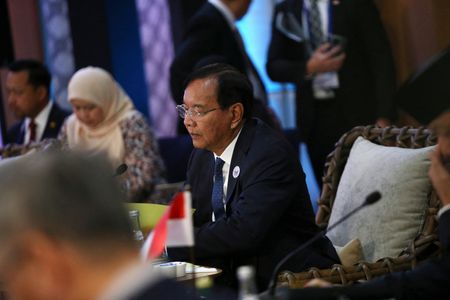
Cambodia has assigned its foreign minister, Prak Sokhonn, to serve as its representative for the proceedings, while also naming Danish diplomat Peter Taksøe-Jensen and French academic Jean-Marc Thouvenin to the Conciliation Commission.
Taksøe-Jensen led the commission that conducted the discussions between East Timor and Australia.
Thailand has 21 days after receiving the notification to name its conciliators, or Cambodia may ask the UN Secretary General to select them on Bangkok’s behalf, according to a statement from the Cambodian government.
Thailand’s Anutin stated on Tuesday he was unaware that Cambodia had started the compulsory conciliation procedure, noting that his government would apply UNCLOS principles in its future actions.
Thailand has not yet decided when it will move forward, he informed reporters.
Once four commission members are selected, they must choose a chairperson within 30 days before beginning additional proceedings.