Category: World News

  • Documentary Filmmaker Warns of Global Population Crisis

    Documentary Filmmaker Warns of Global Population Crisis

    Documentary filmmaker Stephen Shaw, creator of “Birthgap,” is sounding the alarm about a demographic crisis he believes world leaders and experts are failing to address adequately. Shaw points to dramatically declining fertility rates across the globe as a looming threat that demands immediate attention.

    According to Shaw, wealthy nations around the world — the United States included — are experiencing birth rates that fall short of replacement levels. This means women in these countries are not having sufficient children to offset the number of deaths occurring in their populations.

    The filmmaker argues that modern societies have systematically made parenthood a lower priority, a shift he warns could lead to serious repercussions in the coming years.

  • Thousands Return Home as Lebanon Ceasefire Takes Effect

    Thousands Return Home as Lebanon Ceasefire Takes Effect

    BEIRUT (AP) — An uneasy peace descended across Lebanon Friday as a 10-day ceasefire negotiated by the United States went into effect between Israel and Hezbollah, leading thousands of displaced residents to start returning home despite ongoing uncertainty, widespread devastation, and Israeli advisories warning against traveling to certain areas of southern Lebanon.

    Early Friday morning, traffic stretched for miles along the southern route toward the damaged Qasmiyeh bridge spanning the Litani River, an important crossing that connects the southern coastal city of Tyre with northern regions. Cars loaded with mattresses, luggage, and rescued possessions moved slowly through a single reopened lane that had been quickly fixed following an Israeli airstrike just one day before.

    The recent conflict between Israel and Hezbollah forced over one million people from their homes. Although Lebanese authorities advised against immediate returns, many residents began traveling toward southern Lebanon within hours of the ceasefire announcement. The truce seemed to hold steady through the night.

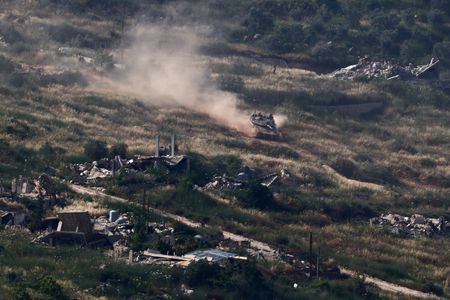
    In southern communities such as Jibsheet, small numbers of residents came back to destroyed apartment buildings and roads covered with concrete debris, bent aluminum window coverings, and hanging power lines.

    “I feel free being back,” said Zainab Fahas, 23. “But look they destroyed everything — the square, the houses, the shops, everything.”

    Many residents remained skeptical that their suffering had truly ended.

    “Israel doesn’t want peace,” said Ali Wahdan, 27, a medic walking on crutches over the rubble of the emergency services’ headquarters in Jibsheet. He was badly wounded in an Israeli airstrike that hit the building without warning during the first week of the war.

    “I wish it were different,” he said. “But this war will continue.”

    In Beirut’s southern suburb neighborhood of Haret Hreik, complete buildings had been turned to debris following weeks of heavy Israeli bombardment. Ahmad Lahham, 48, held up the yellow Hezbollah flag while standing on a pile of wreckage that had once been his apartment building, which also contained a branch of Hezbollah’s financial division, Al-Qard Al-Hassan.

    “We are at the service of the fighters,” said Lahham, expressing his dedication to the organization.

    He credited Iran and claimed its influence in discussions with the U.S. brought about the ceasefire, while criticizing Lebanon’s direct negotiations with Israel.

    “Only the Iranians stood with us, no one else,” he said, referring to Lebanon’s leaders as “the leadership of shame.”

    A municipal official in Haret Hreik reported that Israel attacked the area 62 times during the past six weeks.

    “We’ve been able to clear up the rubble of the partially damaged buildings, but for those destroyed, we will need special equipment,” Sadek Slim, the neighborhood’s deputy mayor, told a press briefing.

    The district was jammed with vehicles as people returned to inspect their properties and Hezbollah supporters rode through on motorcycles, displaying the group’s banner.

  • Kosovo Parliament Set to Send Troops to Gaza Peacekeeping Mission

    Kosovo Parliament Set to Send Troops to Gaza Peacekeeping Mission

    PRISTINA, Kosovo — The Parliament of Kosovo plans to vote Friday on deploying several dozen security personnel to an international peacekeeping mission in Gaza, marking the nation’s transition from receiving military assistance to providing it.

    Lawmakers are expected to give formal approval to a government proposal sending troops to the International Stabilization Force, a U.S.-supported program established after last year’s ceasefire agreement between Israel and Hamas.

    The ISF has not yet been deployed but will work to maintain stability and support reconstruction efforts in Gaza as part of President Donald Trump’s Board of Peace initiative, which Kosovo has agreed to join. Other participating nations include Indonesia, Albania and Kazakhstan.

    For Kosovo, joining the international mission represents significant progress since declaring independence from Serbia in 2008 — a decision Belgrade continues to reject.

    Serbia’s violent suppression of Kosovo’s independence movement led to NATO’s 1999 military intervention, which expelled Serbian forces from the region and established the ongoing KFOR peacekeeping presence.

    “Our country has been a security consumer, meaning NATO countries have contributed to the security of the Republic of Kosovo,” Defense Minister Ejup Maqedonci told The Associated Press. “Today we are entering a phase where we are becoming a provider, or exporter, of security.”

    According to Maqedonci, Kosovo will deploy several dozen officers, including explosive ordnance disposal specialists. Their responsibilities will include humanitarian assistance, security support and additional duties outlined in the Gaza force’s operational guidelines.

    “We are currently in the final preparations phase,” Maqedonci said. He noted that American officials have assisted with preparations, including troop vaccinations, visa processing and other logistical arrangements.

    Kosovo maintains approximately 4,000 security personnel who are training to form a small, professional military force compatible with NATO standards.

    Local resident Milot Hoxha, a 43-year-old musician, expressed support for the Gaza deployment.

    “We ourselves have gone through such a transition and every small help for us has been very significant,” he said. “I believe it will be the same for them, that any kind of help will be positive. I strongly support this decision.”

    Relations between Kosovo and Serbia remain strained since the war ended, with periodic violent episodes. European Union officials have attempted to mediate discussions between Belgrade and Pristina to normalize diplomatic ties, but these efforts have recently stalled.

    While the United States and most European Union members recognize Kosovo’s sovereignty, Russia and China continue supporting Serbia’s territorial claims.

  • Sri Lanka Returns 238 Iranian Sailors Home After Naval Incident

    Sri Lanka Returns 238 Iranian Sailors Home After Naval Incident

    COLOMBO, Sri Lanka (AP) — Officials announced Friday that Sri Lanka has completed the repatriation of 238 Iranian naval personnel, including 32 survivors from a vessel destroyed by an American submarine attack in the Indian Ocean.

    The Iranian warship IRIS Dena was destroyed by a U.S. submarine on March 4 as it was traveling back to Iran following participation in naval exercises hosted by India. Sri Lankan naval forces retrieved 87 bodies from the incident and provided medical care to 32 survivors. An additional Iranian vessel arrived at a Sri Lankan port in the south after its crew encountered mechanical difficulties.

    According to Defense Ministry spokesman Brig. Franklin Joseph, nearly all personnel were sent back to Iran earlier this week, with only a small number of crew members from the second vessel remaining.

    The Iranian vessel continues to be stationed at Trincomalee port on the eastern coast, with authorities yet to determine its future status.

    “I think it (Sri Lanka) has proven its policy posture not only in words but also in deeds,” said H.M.G.S. Palihakkara, a retired former foreign secretary who also served as Sri Lanka’s permanent representative to the United Nations.

    Palihakkara emphasized that the island nation maintained neutrality while following principles of legality, humanitarian concern, and international law. “All parties to the conflict have acknowledged that. It has enhanced Sri Lanka’s government’s credibility,” he said.

    The former diplomat noted that President Anura Kumara Dissanayake faced a challenging situation when he rejected two simultaneous requests on the same day — declining both American requests to use Sri Lankan territory for military aircraft operations and Iranian requests to bring warships to shore.

    The situation comes as Sri Lanka works to recover from a severe economic downturn, with both America and Iran serving as important trade relationships. The United States has been instrumental in supporting an International Monetary Fund rescue package and providing agricultural assistance to prevent food shortages.

  • Advocacy Organizations Sound Warning About Deported Salvadorans’ Wellbeing

    Advocacy Organizations Sound Warning About Deported Salvadorans’ Wellbeing

    Advocacy organizations focused on human rights are sounding the alarm about the troubling circumstances facing Salvadorans who have been sent back from the United States to their home country.

    According to these groups, individuals who are deported from America frequently vanish into El Salvador’s correctional facilities immediately upon their return or within days of arriving back in the Central American nation. Numerous deportees lose all contact with their relatives and legal representatives for extended periods, sometimes lasting several years.

    The situation has been exacerbated by policies implemented by Salvadoran President Nayib Bukele over the past four years. Bukele has continuously renewed emergency measures that suspend constitutional rights for 30-day periods, essentially establishing a police state environment that traps returning deportees within the country’s prison system, which has gained notoriety for harsh conditions.

    These emergency powers have created a cycle where deportees find themselves unable to communicate with the outside world once they enter El Salvador’s correctional facilities, leaving families in the United States and elsewhere without information about their loved ones’ whereabouts or wellbeing.

  • Beijing Defends Military Presence Near Taiwan as ‘Justified’

    Beijing Defends Military Presence Near Taiwan as ‘Justified’

    Beijing’s defense ministry issued an uncommon public statement Friday defending its ongoing military operations near Taiwan, calling them completely justified while blaming Taipei’s government for escalating regional tensions.

    The Chinese military routinely deploys naval vessels and aircraft in the waters and airspace surrounding Taiwan nearly every day, drawing sharp criticism from Taiwan’s leadership. Beijing considers the democratically-run island to be part of Chinese territory.

    Defense Ministry spokesman Zhang Xiaogang declared to media that Taiwan represents an “inalienable part of Chinese territory.”

    “The People’s Liberation Army organises training and exercise activities in the waters and airspace around the Taiwan island to safeguard national sovereignty and territorial integrity, which is entirely justified, reasonable, and a matter of course,” Zhang stated.

    The spokesman accused Taiwan’s governing Democratic Progressive Party of misrepresenting Chinese military operations, “peddling war anxiety, intimidating the people on the island, and stoking confrontation and antagonism across the Taiwan Strait.”

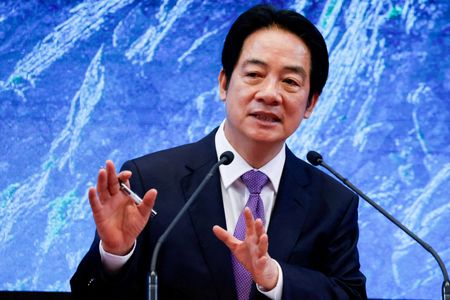
    Beijing refuses diplomatic engagement with Taiwan’s President Lai Ching-te, labeling him a “separatist.” Lai maintains that only Taiwan’s citizens should determine the island’s destiny.

    During an appearance at a military facility in southern Taiwan Friday morning, Lai emphasized that while peace remains everyone’s goal, genuine security requires military strength. He renewed his appeal for the opposition-controlled legislature to approve his stalled $40 billion defense spending package.

    “Only through continuous preparedness can we deter threats – by being ready to fight in order to avoid fighting, and by being capable of fighting in order to stop war,” Lai declared.

    Washington, which serves as Taiwan’s primary weapons supplier, has endorsed Lai’s military spending initiative.

    China has consistently demanded that the United States cease arms sales to Taiwan.

    Zhang accused Lai of using Taiwanese taxpayer funds to “pledge loyalty to and curry favour with the United States.”

    “What they truly care about is whether they can make more money, and they are not above profiting from war,” he added, referring to American officials.

  • Former Bulgarian President Leads Election Race Amid Political Turmoil

    Former Bulgarian President Leads Election Race Amid Political Turmoil

    SOFIA, Bulgaria (AP) — Bulgarian voters will head to the polls Sunday in another snap election that could elevate a leftist former president to power, coming just days after Hungarian citizens turned away from Viktor Orbán’s authoritarian agenda and the global far-right movement.

    Former President Rumen Radev’s newly formed coalition appears positioned to capture the most votes in the April 19 election, drawing support from citizens who believe he can eliminate entrenched oligarchy and corruption, while others rally behind his European Union-skeptical and Russia-friendly positions.

    In January, the 62-year-old stepped down from his largely symbolic presidential role several months ahead of his second term’s completion to pursue the prime minister position and lead the government directly.

    The ex-fighter pilot and former air force commander enjoys the highest popularity ratings among Bulgarian politicians and has pledged to provide the nation with a new beginning should his center-left Progressive Bulgaria coalition prevail in the upcoming vote.

    This weekend’s emergency election stems from the collapse of a conservative government following massive anti-corruption demonstrations in December 2025 that brought hundreds of thousands of predominantly young protesters into the streets nationwide.

    The Balkan nation of 6.5 million people holds membership in both the European Union and NATO, recently adopted the euro currency on January 1, and gained entry to the Schengen border-free zone. However, political chaos has gripped the country since 2021, when longtime conservative leader Boyko Borissov stepped down as prime minister for the third time amid widespread demonstrations against systemic corruption and inequality.

    No administration has lasted longer than 12 months since then, with each falling to either mass street demonstrations or parliamentary maneuvering, creating seven failed early elections across five years. This pattern has fostered deep institutional distrust, voter disengagement, and declining election participation.

    Bulgarian officials recently sought help from EU diplomatic services to combat Russian interference operations targeting public opinion through social media platforms and propaganda websites. This request followed expert assessments identifying active Russian influence networks designed to create social divisions.

    Polling data suggests Sunday’s voter turnout could rise from the recent average of 35% to more than 50%, driven partly by a fresh political contender entering the competition and the interim government’s efforts to restore electoral confidence through nationwide police operations, arrests, and legal proceedings targeting vote purchasing.

    Survey results indicate Radev’s coalition may secure over 30% of votes, establishing a nearly 10-point advantage over his primary challenger — Borissov, the experienced GERB party leader whose latest prime ministerial tenure ended with the December 2025 protests. Polling margins of error range from 3 to 3.5%.

    Radev has positioned himself as an adversary of the nation’s embedded criminal networks and their connections to senior political figures. During his final campaign event Wednesday, he promised to “remove the corrupt, oligarchic model of governance from political power.”

    While surveys suggest Radev will likely finish first, he will require coalition partners to establish stable governance. He has rejected potential alliances with Borissov’s GERB party and the Movement for Rights and Freedoms, whose leader Delyan Peevski faces corruption sanctions from both the United States and Britain.

    The pro-Western “We Continue the Change” bloc could serve as a domestic reform partner, with predictions placing them third at 12%-14% of votes.

    Nevertheless, substantial foreign policy disagreements may hinder such cooperation, particularly regarding Russia’s invasion of Ukraine. Although Radev officially condemns Moscow’s aggression, he has consistently opposed military assistance to Kyiv and supports renewed negotiations with Russia to resolve the conflict.

    Research center Trend analyst Evelina Slavkova believes Radev is unlikely to pursue a serious reorientation of Bulgaria toward Russia.

    “Our country has succeeded, despite all the obstacles, despite disagreements among some politicians, in building a very important set of tools that keeps Bulgaria on the right track,” she told the Associated Press.

    Slavkova emphasized that Bulgaria’s NATO and EU memberships, along with eurozone and Schengen participation, serve as “tools that allow us to be much more at ease.”

    She observed that Radev avoided providing definitive positions during campaigning, attempting to balance competing viewpoints.

    “This might be acceptable during a campaign, but when you’re running the country, you’ll certainly have to provide clear, definitive answers,” Slavkova explained.

  • Hungary’s New Leader Seeks EU Funds Frozen Under Previous Government

    Hungary’s New Leader Seeks EU Funds Frozen Under Previous Government

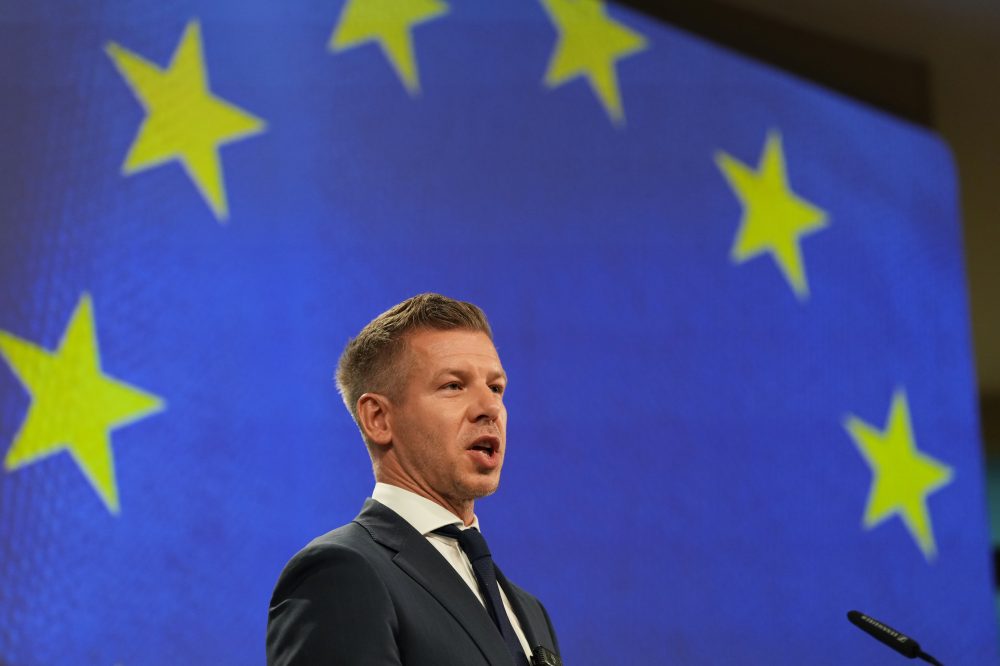
    BUDAPEST, Hungary (AP) — Representatives from the European Union gathered Friday in Hungary’s capital to meet with advisors from incoming Prime Minister Péter Magyar’s administration. The discussions center on urgent matters including financial assistance for Ukraine and releasing approximately 17 billion euros ($20 billion) in aid that was frozen during Viktor Orbán’s administration.

    While Magyar won’t assume office until May, EU leadership wants to begin discussions early to accelerate cooperation with Hungary’s new administration, according to European Commission spokesperson Paula Pinho, who spoke from Brussels Thursday.

    “The clock is ticking for a number of topics,” Pinho stated. These advance discussions happening before Magyar’s inauguration aim to “make sure that once the government is in place action can be taken, if appropriate, and that we do not waste any time.”

    The European Union suspended billions in financial support to Hungary due to corruption allegations and concerns about democratic deterioration during Orbán’s 16-year leadership. Now both EU leadership and Hungary’s new administration are working to release these funds quickly to provide crucial financial support for Hungary’s struggling economy.

    European Commission President Ursula von der Leyen posted on X Tuesday that “there is swift work to be done to restore, realign and reform” Hungary’s policies to release the blocked funding.

    “Restore the rule of law. Realign with our shared European values. And reform, to unlock the opportunities offered by European investments,” wrote von der Leyen, who faced frequent criticism from Orbán throughout his campaign.

    Magyar’s Tisza party secured a parliamentary supermajority that will allow for comprehensive and rapid policy changes. He has indicated his administration will focus on judicial independence, academic and press freedom, and anti-corruption measures to access the withheld funds.

    During his initial press briefing following his decisive April 12 victory, Magyar stated Monday that Hungary “is in a very difficult financial situation,” and his new administration’s mission will be “to bring home the money that is hers.”

    Magyar also committed to honoring a December agreement providing Ukraine with a critical 90-billion-euro loan, unlike Orbán who blocked the legislation after initially supporting it, causing frustration among EU officials and leaders across the 27-member union.

    The withheld money includes 10 billion euros from COVID recovery programs and 6.3 billion euros from cohesion funds intended to support struggling EU economies.

    Brussels and Budapest are working urgently to release the COVID funds first, as they expire in August.

    Hungary, which receives substantial EU funding, faced growing criticism for abandoning democratic principles. For over ten years, the Commission accused Orbán of weakening democratic institutions, controlling media outlets, and violating minority rights. Orbán denied these claims and called them violations of Hungary’s independence.

    In 2022, the Commission froze Budapest’s funding citing democratic regression by Hungary’s right-wing populist leadership and inadequate efforts to address corruption and ensure judicial independence. The following year, the Commission determined that sufficient reforms had been implemented to release approximately 10.2 billion euros ($12.1 billion).

    According to Zsolt Darvas, a researcher at Brussels-based think tank Bruegel, Magyar can quickly implement reforms needed to unlock the funds.

    “All the legislative work can be done in a single day if there is a will from the Tisza party to do it,” he explained. “That’s relatively straight forward and not technically difficult.”

    This would require modifying judicial selection processes and their authority.

    Darvas noted that Magyar can address the August COVID funds deadline by following Poland and Portugal’s approach of placing funds in a national development bank for future distribution.

    However, Darvas warned that Hungary has already forfeited about 2 billion euros from the 16 billion total due to the two-year suspension, and has been paying 1 million euros daily since June 13, 2024, plus a 200 million-euro penalty for Orbán’s refusal to align Hungary’s asylum procedures with EU standards.

    Darvas suggested Hungary could follow Poland’s model by maintaining restrictive migration policies while still complying with EU law to end these penalties.

    While these funds alone won’t resolve Hungary’s economic difficulties, Darvas explained that EU compliance will demonstrate the country is a reliable investment destination.

    Hungary could also access significant funding by joining the EU’s 150 billion-euro Security Action for Europe initiative (SAFE), designed to strengthen Europe’s defense capabilities as the United States reduces its security role on the continent.

    Currently, 18 of 27 EU nations have received low-interest defense loans, and Hungary qualifies for 16 billion euros through this program. Combined with other funding sources, these resources would equal roughly 15% of Hungary’s GDP, according to analysis by Jeremy Cliffe at the European Council on Foreign Relations.

  • UK PM Starmer Refuses to Quit After Ambassador Security Scandal

    UK PM Starmer Refuses to Quit After Ambassador Security Scandal

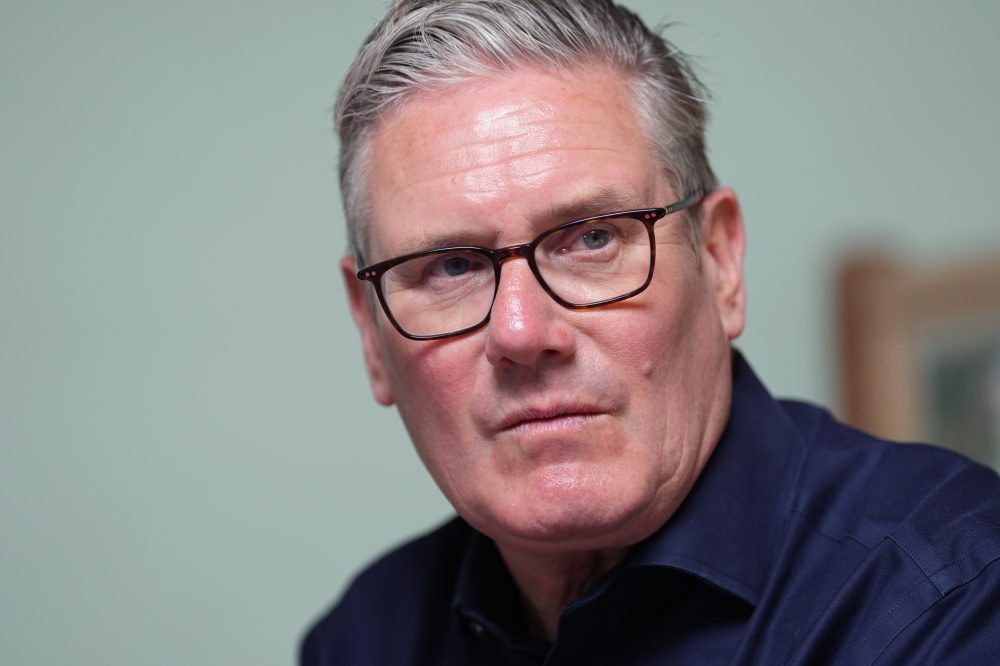
    LONDON — British Prime Minister Keir Starmer is refusing to step down following explosive revelations that his controversial choice for U.K. ambassador to the United States received the position even after security officials advised against the appointment, government sources confirmed Friday.

    According to Starmer, he had no knowledge that the Foreign Office had overridden security experts’ recommendation in early 2025 to reject Peter Mandelson for the role. Mandelson’s selection was viewed as problematic due to his previous connections with Jeffrey Epstein, the disgraced financier and convicted sex offender.

    Olly Robbins, the senior Foreign Office civil servant, accepted responsibility for the controversial decision and stepped down Thursday evening. Starmer is scheduled to address Parliament regarding this matter on Monday.

    However, this development may not resolve the threat facing the prime minister following his decision to select Mandelson, a trade specialist and veteran Labour Party figure, as Britain’s representative to the Trump administration. The calculated gamble has failed dramatically and could potentially force Starmer from office.

    Political opponents have expressed skepticism that Starmer remained uninformed about Mandelson’s security clearance failure. According to Starmer’s office, he only learned of this information earlier this week.

    Darren Jones, chief secretary to the prime minister, stated Friday that “the recommendation was to not appoint Peter Mandelson to the role,” adding that the Foreign Office disregarded this advice. While calling the decision “astonishing,” he maintained it fell within established protocols.

    Jones emphasized that no government minister received notification of the security evaluation.

    Conservative Party leader Kemi Badenoch dismissed claims about the prime minister’s ignorance as “completely preposterous.”

    “This story does not stack up. The prime minister is taking us for fools,” she stated during a BBC interview. “All roads lead to a resignation.”

    Liberal Democrat leader Ed Davey declared that Starmer “must go” if he deceived Parliament and misled the British people.

    The prime minister has consistently maintained that proper procedures were observed during the appointment process, which was publicly announced in December 2024. Mandelson assumed his Washington duties in February 2025 following security screening.

    However, government documents released in March under parliamentary pressure revealed that Starmer overlooked warning signs from his advisors. Staff members cautioned him that Mandelson’s association with Epstein, who died in custody in 2019, created potential “reputational risk” for the government.

    Starmer dismissed Mandelson in September 2025 when evidence surfaced showing he had been dishonest about the depth of his Epstein connections.

    The prime minister’s leadership encountered its most serious challenge in February following the U.S. Department of Justice’s release of extensive Epstein-related documentation, which revealed the intimate nature of Mandelson’s relationship with the financier, continuing even after Epstein’s 2008 conviction for sexual crimes involving a minor.

    Email correspondence between the two men indicated that Mandelson may have shared confidential government intelligence with the discredited financier in 2009 while serving in Prime Minister Gordon Brown’s administration — information that could have influenced financial markets.

    British authorities subsequently opened a criminal investigation and conducted searches of Mandelson’s residences in London and western England. Police arrested Mandelson on February 23 on charges of suspected misconduct in public office.

    He remains free without bail conditions while the police investigation proceeds. Mandelson has consistently maintained his innocence and faces no charges at this time. No allegations of sexual impropriety have been made against him.

    Starmer has issued public apologies to British citizens and Epstein’s victims for trusting what he now calls “Mandelson’s lies.”

  • European Union Plans to Rebuild Diplomatic, Economic Ties with Syria

    European Union Plans to Rebuild Diplomatic, Economic Ties with Syria

    The European Union is moving forward with plans to rebuild diplomatic relationships with Syria and enhance economic cooperation, according to internal documents obtained by Reuters. This represents a significant shift in policy after years of severed relations between the bloc and the Middle Eastern nation.

    A background document from the EU’s diplomatic service, distributed to member nations this week, reveals the bloc will reactivate its 1978 cooperation agreement with Syria. Additionally, formal structured discussions called a High-Level Political Dialogue will commence with Syria’s interim government on May 11.

    In a significant policy change, the European Union announced it will “reframe and adapt” its sanctions framework to maintain influence while engaging with Syrian leadership and targeting those who oppose the country’s political transition, the document states.

    Syria is working toward greater international integration under interim President Ahmed al-Sharaa, who led an Islamist rebel coalition that removed former leader Bashar al-Assad in late 2024, ending a catastrophic 14-year conflict. Most Western sanctions against the country were lifted at the end of last year.

    The document details plans for increased economic cooperation, including establishing trade and investment frameworks, mobilizing private sector funding, and supporting business environment improvements through a new technical assistance center.

    The EU also stated it would collaborate with Syrian authorities to facilitate the “safe, voluntary and dignified return” of refugees and displaced individuals.

    More than 1 million Syrian refugees and asylum seekers currently reside in Europe, with approximately half living in Germany. Their potential return has dominated discussions between European governments and Damascus since Assad’s removal in late 2024.

    The document reveals ambitions to incorporate Syria into regional connectivity initiatives, including the India–Middle East–Europe Economic Corridor, establishing the nation as a central point for transportation, energy, and digital connections.

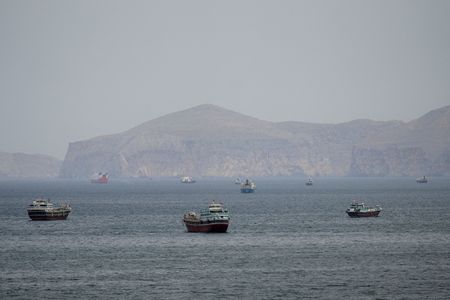
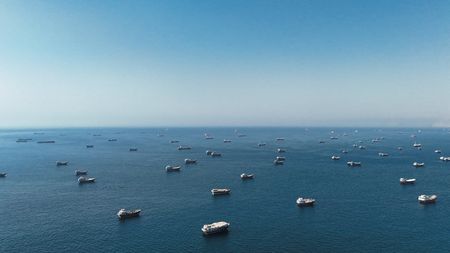
    Syria is becoming an increasingly important transit location, especially during the energy crisis caused by the Strait of Hormuz closure during the Iran conflict. On Thursday, the first tanker carrying Iraqi oil transported overland departed from Syria’s Baniyas port.

    Turkey, Syria, and Jordan have also reached an agreement to enhance their railway systems, creating a corridor connecting southern Europe to the Gulf region, Turkish transport minister Abdulkadir Uraloglu announced to Bloomberg on Wednesday.

    Regarding security matters, the document indicated the EU could provide training for Syrian police forces and institutional development within the interior ministry, along with cooperation on counterterrorism efforts and combating drug trafficking and organized crime.

    The document also emphasizes EU support for implementing a January agreement between Damascus and Kurdish-led authorities in northeastern Syria, which involves incorporating local institutions into the state structure and expanding rights for Syrian Kurds during the broader political transition.

    As a significant step in executing that agreement, Syria named the commander of the prominent YPG Kurdish forces as deputy defense minister for eastern territories in March, where U.S. forces transferred their final military base to the Syrian army this week.

  • European Commission Selects Four Firms for $212M Cloud Services Deal

    European Commission Selects Four Firms for $212M Cloud Services Deal

    The European Commission announced Friday it has selected four European technology firms to handle a massive $212 million cloud computing contract spanning six years, marking a significant step in Europe’s effort to break free from reliance on foreign tech companies.

    The contract, initially put out for bid in October 2025, went to Post Telecom from Luxembourg, Germany-based StackIT, France’s Scaleway (owned by Iliad), and Belgium’s Proximus.

    According to a statement from the EU’s executive branch, “This tender supports the Commission’s broader efforts to enhance its own sovereignty, reinforcing strategic control across key technologies and infrastructure.”

    The winning companies were chosen because they met the Commission’s Cloud Sovereignty Framework requirements, which mandates that organizations outside the EU cannot have significant influence over the technologies or services being provided, officials explained.

    EU digital chief Henna Virkkunen emphasized the importance of the decision on social media, stating: “Scaling the use of EU cloud is key to strengthening Europe’s digital sovereignty.”

    The contracts involve partnerships between the selected companies and other tech firms. Post Telecom has teamed up with OVHcloud and CleverCloud, while Proximus is heading a group that includes Mistral AI, Clarence, Thales, and S3NS, which is a joint venture between Google Cloud and data center operations.

    OVHcloud’s founder and CEO Octave Klaba celebrated the win on social media, noting that the Post Telecom partnership will serve more than 40 European Commission agencies and will help “prove there are credible alternatives in Europe.”

  • Brazilian and Spanish Leaders Host Democracy Summit in Barcelona

    Brazilian and Spanish Leaders Host Democracy Summit in Barcelona

    BARCELONA, Spain — Brazilian President Luiz Inácio Lula da Silva began a two-day diplomatic visit to Spain on Friday, where he and Spanish Prime Minister Pedro Sánchez will convene with fellow world leaders from predominantly smaller nations who share concerns about threats to democratic governance and the growing influence of far-right populist movements.

    Both Lula and Sánchez have been vocal critics of U.S. President Donald Trump, who has issued threats of punitive tariffs against their nations. The two leaders are viewed as champions of progressive political movements in their regions, where conservative populist parties have gained momentum in recent years.

    The Brazilian and Spanish leaders, accompanied by cabinet officials, gathered at a historic former royal palace in Barcelona on Friday to formalize agreements covering economic cooperation, technological partnerships, and social policy initiatives.
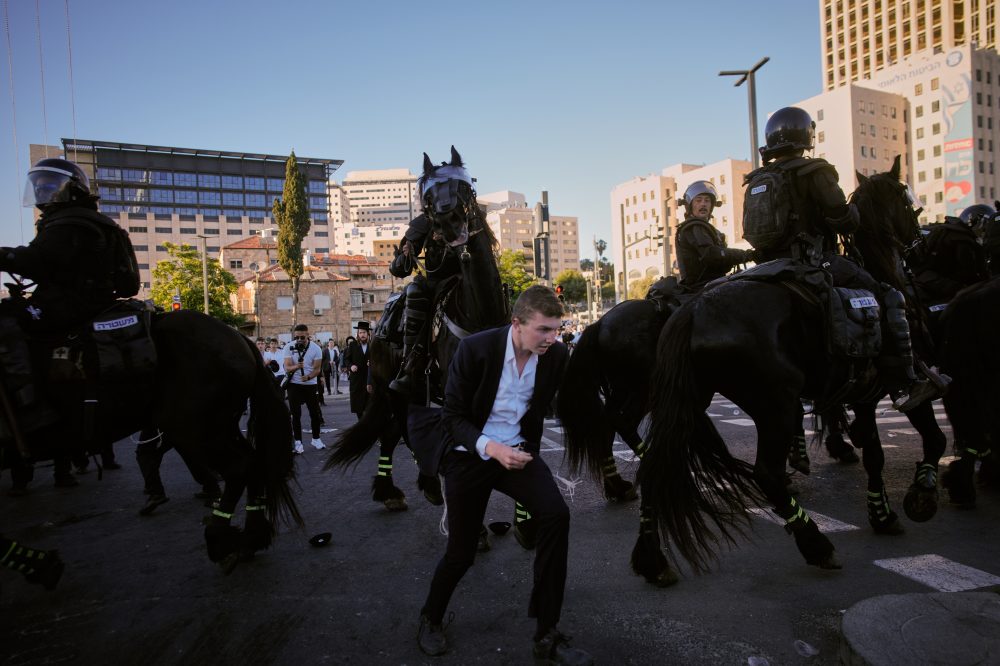
    Friday’s bilateral discussions will set the stage for Saturday’s dual conferences at a major convention facility in Spain’s second-largest city, where Lula and Sánchez will host additional world leaders.

    Saturday’s opening event marks the fourth Meeting in Defense of Democracy, an initiative established by Brazil and Spain in 2024 to create a platform for sharing strategies to counter what organizers describe as “extremism, polarization and misinformation” that weakens democratic participation. The forum’s initial sessions took place at United Nations headquarters, with last year’s gathering held in Santiago, Chile.

    Despite both leaders’ public opposition to various Trump administration positions and policies, including military actions against Iran alongside Israel, Lula emphasized that the multilateral summit should not be viewed as anti-American.

    “This is not going to going to be an anti-Trump meeting,” Lula stated in an interview with Spanish publication El País on Thursday. “We are going to discuss the state of democracy, to see what went wrong and what we have to do to repair it.”

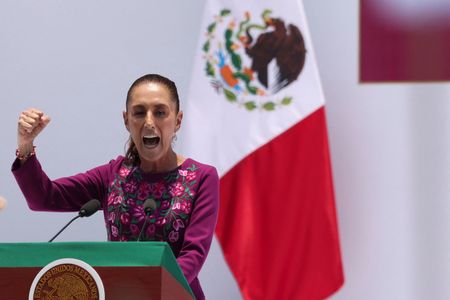
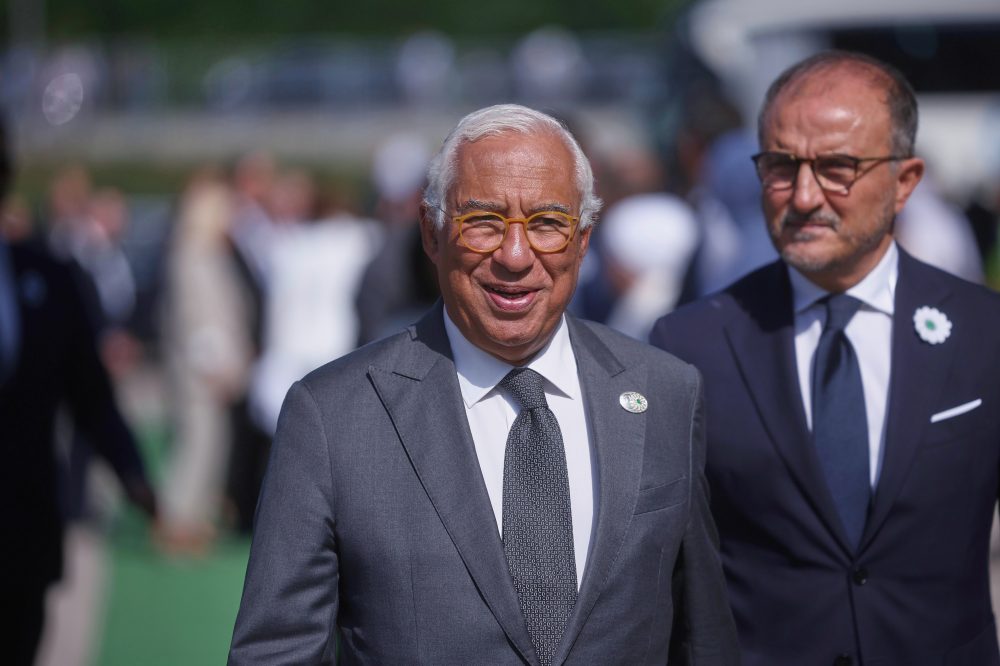
    This year’s democracy summit will feature European Council President Antonio Costa, Mexican President Claudia Sheinbaum, South African President Cyril Ramaphosa, Colombian President Gustavo Petro, and additional heads of state from nations including Uruguay, Lithuania, Ghana, and Albania.

    Sheinbaum’s attendance follows the resolution of a diplomatic tension between Spain and Mexico after King Felipe VI recently recognized that Spain’s colonial conquest of the Americas resulted in “abuse” of indigenous populations.

    As Latin America experiences a conservative political shift and increased pressure from the Trump administration, Sheinbaum has emerged as a prominent leftist leader in the region. She maintains high approval ratings in Mexico while successfully balancing diplomatic relations with Trump and defending Latin American independence on critical issues.

    Many participants from the democracy meeting will remain for the first-ever Global Progressive Mobilization, taking place at the same location later Saturday. This gathering of left-leaning politicians and policy experts originated from discussions between Sánchez and former Swedish Prime Minister Stefan Löfven, now head of the Party of European Socialists, during a European Socialist meeting last year.

    Both Sánchez and Lula will deliver keynote addresses at the progressive mobilization, which anticipates 3,000 participants, including U.S. Democratic Senator Chris Murphy. The program will include panel discussions on topics ranging from income inequality to strategies for improving electoral outcomes for progressive candidates.

    The Barcelona meetings occur during an eventful period for Sánchez, who recently returned from his fourth visit to Beijing in three years for discussions with Chinese President Xi Jinping.

    Sánchez’s administration has prohibited U.S. aircraft involved in the Iran conflict from using Spanish airspace and blocked American access to jointly operated military installations in southern Spain for Iran-related operations.

    Earlier this week, Lula issued a video statement expressing “deep solidarity” with Pope Leo XIV after Trump publicly criticized the pontiff for condemning the Iran war.

    Pol Morillas, who directs the Barcelona-based international affairs research institute CIDOB, explained that these gatherings represent an effort by established democratic leaders to demonstrate strength in response to the far-right populist movement’s successful promotion of anti-immigration and economic nationalist messages through international forums.

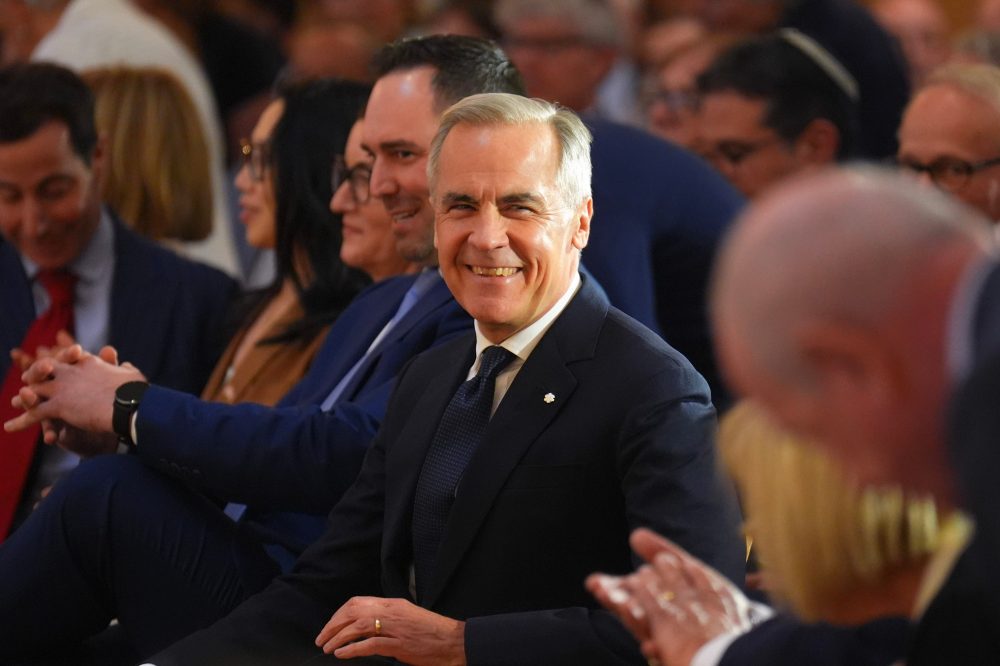
    Morillas also connects the meetings to Canadian Prime Minister Mark Carney’s influential January speech at the Davos economic forum, which emphasized the need for “middle powers” to develop new approaches for navigating a world dominated by aggressive superpowers.

    Lula, Sánchez, and other attending leaders “share the understanding that the world is not just for the great powers,” Morillas explained to The Associated Press.

  • Lebanese Residents Begin Cautious Return Home as Fragile Ceasefire Takes Hold

    Lebanese Residents Begin Cautious Return Home as Fragile Ceasefire Takes Hold

    Displaced residents of Lebanon started making their way back to their communities Friday, surveying the damage to see if their homes survived the conflict, although many hesitated to stay permanently due to concerns the newly established 10-day truce between Hezbollah and Israel might not endure.

    Massive piles of debris now occupy spaces where apartment buildings previously existed in Beirut’s southern districts under Hezbollah control, areas that suffered intense Israeli bombardment during more than six weeks of fighting that emerged from the broader conflict between the United States and Iran.

    In the southern Lebanese town of Qasmiyeh, vehicles navigated a temporary bridge spanning the Litani River, quickly constructed after the truce took effect at midnight local time (2100 GMT). Israeli forces had demolished all river crossings during the hostilities, destroying the Qasmiyeh bridge just one day earlier.

    “I inspected my home and praise God the building is still standing,” said Ali Hamza, who had just visited his house in the southern suburbs known as Dahiyeh.

    However, he explained that “people are scared to come and live, and it is impossible to live in these circumstances, and with these smells. A full return is difficult now, despite the hardship of displacement.”

    President Donald Trump revealed the ceasefire agreement between Lebanon and Israel’s governments on Thursday. Lebanon’s leadership has maintained strong disagreements with Hezbollah regarding its war participation and has pursued the group’s peaceful disarmament for the past year.

    Lebanon’s military documented ceasefire breaches by Israeli forces, including sporadic bombardment of multiple southern Lebanese communities, and urged civilians to delay returning to southern areas.

    Israeli military officials did not provide immediate response to the allegations.

    In Nabatieh, a heavily damaged southern city, some returning inhabitants declared their intention to remain permanently. Others concluded there was nothing left worth returning to.

    “There’s destruction and it’s unliveable. Unliveable. We’re taking our things and leaving again,” said Fadel Badreddine, who arrived with his wife and young son. “May God grant us relief and end this whole thing permanently – not temporarily – so we can return to our homes and lands.”

    The Iranian-backed Shiite organization Hezbollah, established by Iran’s Revolutionary Guards in 1982, began attacking in support of Tehran on March 2.

    Lebanese officials report the conflict claimed over 2,100 lives in Lebanon and displaced approximately 1.2 million people, with most evacuees belonging to the Shiite community that also suffered heavily during a 2024 war.

    Israeli authorities state that Hezbollah attacks resulted in two civilian deaths, while 13 Israeli soldiers died in Lebanon since March 2. The militant group launched hundreds of rockets and drones toward Israel throughout the conflict.

    Israel’s military operations in Lebanon had become a significant barrier to achieving the peace agreement Trump sought to conclude the war with Iran.

    Following the ceasefire announcement, Trump informed reporters that Lebanon and Israel would pursue a more permanent agreement, noting Lebanon had committed to “take care of Hezbollah.”

    Israeli Prime Minister Benjamin Netanyahu stated he had rejected Hezbollah’s requirement to remove forces that entered southern Lebanon, and would continue maintaining a comprehensive “security zone” extending to Syria’s border.

    Netanyahu emphasized that Israel’s primary objective remained Hezbollah’s complete dismantlement.

    Hezbollah declared that any ceasefire must prevent Israeli forces from operating freely within Lebanese territory. The organization issued a statement asserting that Israeli military presence on Lebanese soil provided Lebanon and its citizens the “right to resist.”

    Israeli military units have occupied portions of southern Lebanon and had pledged to retain control over territory reaching the Litani River, which flows into the Mediterranean approximately 30 kilometers (20 miles) north of Israel’s border. During the war, Israel commanded residents to evacuate the area south of the Litani.

    Israeli forces demolished Lebanese communities in the region, stating their objective was establishing a “buffer zone” to shield northern Israeli towns from Hezbollah assaults.

    Trump announced plans to invite Netanyahu and Lebanese President Joseph Aoun to the White House for “meaningful talks” between the two nations, which have technically remained at war since Israel’s establishment in 1948.

  • US Ambassador Predicts Quick Resolution to Turkey Defense System Dispute

    US Ambassador Predicts Quick Resolution to Turkey Defense System Dispute

    The United States Ambassador to Turkey, Tom Barrack, expressed optimism Friday that America and Turkey will quickly resolve their ongoing dispute regarding US sanctions imposed over Turkey’s acquisition of Russian S-400 missile defense systems.

    Speaking at the Antalya Diplomacy Forum, Barrack stated, “I think you are going to see the S-400 situation solved soon. From my boss’s point of view, acceptance into an F-35 programme is fine.”

    The sanctions were implemented by the United States in 2020 against Turkey, despite both nations being NATO allies, following Turkey’s decision to purchase the Russian defense system. As part of the penalties, Turkey was also excluded from the F-35 fighter aircraft procurement and manufacturing program.

  • British Authorities Charge Three in Failed Firebomb Attack on Iranian TV Station

    British Authorities Charge Three in Failed Firebomb Attack on Iranian TV Station

    LONDON – British authorities announced Friday that three individuals have been formally charged in connection with a failed firebombing attempt targeting the offices of Iran International television station in northwest London earlier this week.

    The suspects – two adult males and one teenager, all British citizens – face charges of arson with intent to endanger life following Wednesday evening’s incident. According to police, the group threw a burning container toward the building housing Volant Media, Iran International’s parent company, but the device landed in a parking area where the flames quickly extinguished themselves.

    No injuries occurred and no property damage resulted from the attack.

    Iran International, which operates from London and frequently criticizes Iran’s government, reported that security personnel had refused entry to a suspicious vehicle at their facility shortly before the incendiary devices were hurled at the building.

    The charged individuals are Oisin McGuinness, 21, Nathan Dunn, 19, and a 16-year-old whose identity remains protected under legal guidelines. All three are scheduled for court appearances at Westminster Magistrates’ Court on Friday. McGuinness faces an additional charge of dangerous driving.
    Law enforcement officials said the suspects’ vehicle sped away from the scene but crashed during a high-speed chase involving an armed police response team that happened to be operating in the vicinity.

    This attack occurred just one day after police apprehended two individuals suspected of attempting to set fire to a synagogue, also located in north London.

    Additionally, last month several ambulances owned by Hatzola, a Jewish volunteer emergency medical service, were deliberately set ablaze while parked near a synagogue in the Golders Green neighborhood of north London.

    While investigators have not established connections between these separate incidents, Matt Jukes, deputy commissioner of London’s Metropolitan Police, acknowledged public concerns about escalating tensions.

    “London’s Jewish communities and the Iranian diaspora in London have, in recent years, been increasingly targeted by individuals, groups and hostile states intent on spreading fear, hate and harm,” Jukes stated, adding that he recognized why overseas conflicts and rising domestic tensions would be “deeply worrying” to residents.

  • Lebanese Families Head Home After Israel-Hezbollah Truce Takes Effect

    Lebanese Families Head Home After Israel-Hezbollah Truce Takes Effect

    Lebanese families who fled their homes during the recent conflict between Israel and Hezbollah are now making their way back to their villages after a ceasefire agreement took effect on Friday.

    The truce has enabled thousands of displaced residents to begin returning to their communities after being forced to leave due to the fighting between the militant group and Israeli forces.

    The Associated Press has compiled photographs documenting the homecoming of these families as they travel back to their villages across Lebanon.

  • Armed Groups Abduct Nigerian Students Traveling to University Entrance Exams

    Armed Groups Abduct Nigerian Students Traveling to University Entrance Exams

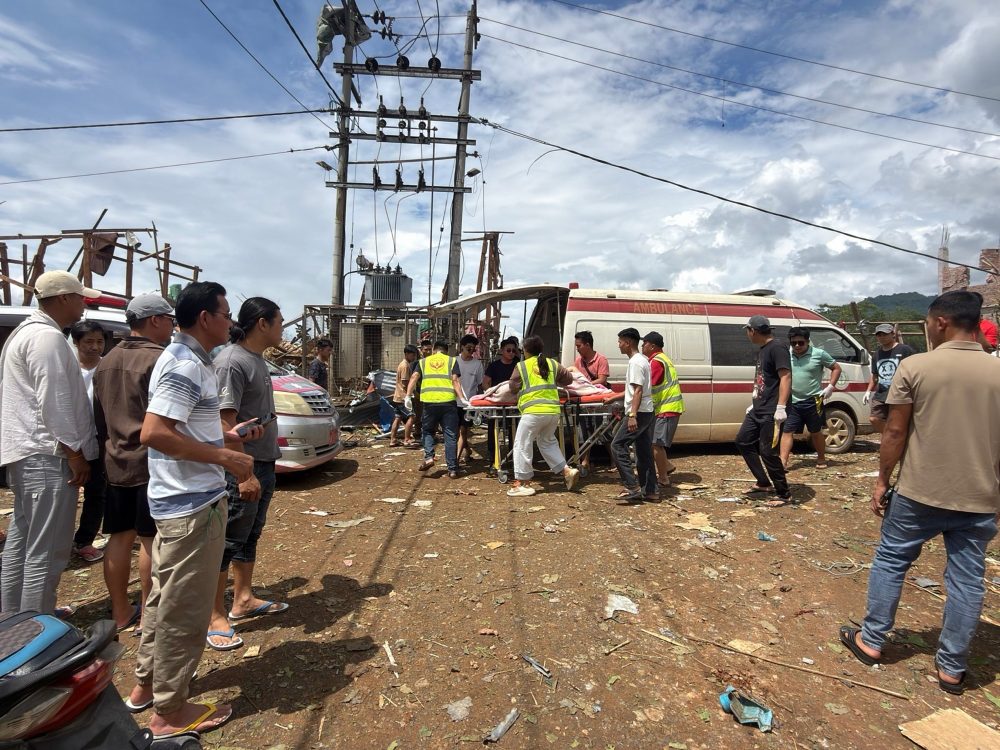
    Armed attackers seized high school students and fellow travelers in Nigeria’s Benue state on Thursday as the students were en route to take university entrance examinations, marking the first reported student kidnapping of the year in the West African nation.

    Criminal gangs and extremist groups routinely attack travelers, school children and farming communities throughout Nigeria. Officials have not identified which group they suspect carried out Thursday’s kidnapping.

    The assault took place on the Makurdi-Otukpo highway, according to Governor Hyacinth Alia, who condemned the incident as a “cowardly act.” While the governor did not specify the number of victims, news outlets in the region reported that 17 students remain unaccounted for.

    “The targeting of innocent citizens, particularly students on their way to sit for examinations, is unacceptable and stands against every norm of humanity and civil order,” Alia said in a statement.

    Law enforcement and military units have begun search and rescue missions, with the governor ordering that “no effort be spared” to find the missing individuals.

    These large-scale abductions persist despite ongoing government promises to stop such attacks, continuing to interfere with schooling, business operations, and transportation while leaving angry citizens questioning whether officials can effectively combat the security crisis.

    President Donald Trump has pointed to Nigeria’s security problems as justification for potential military intervention, claiming Christians face persecution in the country. Nigerian leadership, which includes both Christian and Muslim officials, maintains that the violence impacts followers of both faiths equally.

  • Syria Finds Weapons Smuggling Tunnel Along Lebanon Border

    Syria Finds Weapons Smuggling Tunnel Along Lebanon Border

    Syrian officials have announced the discovery of an underground passage used for illegal weapons trafficking along the country’s border with Lebanon, marking another security challenge in the historically troubled region.

    According to Syria’s Interior Ministry, authorities found the tunnel connecting rural areas south of Homs to Lebanese territory. Officials say weapons and ammunition were recovered from the tunnel and surrounding areas, suggesting an organized criminal operation was behind its construction and use.

    The find represents part of increased security efforts to stop illegal border activities, which encompass not just arms trafficking but also the smuggling of fuel, food items, and people across the frontier.

    The Syria-Lebanon border has long presented control challenges due to its mountainous, rural landscape that makes comprehensive monitoring difficult, creating opportunities for illegal crossings.

    These smuggling activities grew significantly during Syria’s years of conflict, when government control weakened in certain regions while demand for weapons rose and underground economic networks expanded.

    Years of regional instability have directly affected border security between the neighboring countries. Smuggling operations are now considered part of an alternative economic system that benefits from chaos and limited oversight, often connected to organized groups with the resources and planning capabilities to fund and execute such operations.

    From a security standpoint, finding a tunnel of this magnitude indicates smuggling methods are becoming more advanced, moving beyond traditional routes to more complex and hidden approaches. Building tunnels demands significant human resources, technical expertise, and detailed knowledge of local terrain and border pathways, suggesting professional criminal networks are involved.

    This development could create new opportunities for Syria and Lebanon to discuss strengthening security cooperation and implementing stricter border controls. While the countries have worked together on these issues before, ongoing smuggling suggests gaps remain in surveillance and intelligence sharing.

    These illegal operations serve a double purpose: they generate unlawful income for individuals and groups while damaging both countries’ legitimate economies by draining resources and creating black markets that disrupt pricing and financial stability. With both nations facing economic difficulties, stopping these activities becomes more critical.

    The current border situation raises questions about whether security measures alone can solve the problem. Experts suggest addressing underlying causes of smuggling, including poverty, joblessness, and limited economic opportunities in border communities. Without real and comprehensive development efforts, these activities may continue in different ways despite stronger security enforcement.

    The tunnel discovery between Syria and Lebanon demonstrates the scope of challenges governments face in securing borders amid complex regional circumstances. While this represents an important victory against smuggling, it also shows the need for a complete strategy combining security, development, and regional partnership to achieve lasting results.

  • US Military Reports 399 Troops Injured, 13 Dead in Iran Conflict

    US Military Reports 399 Troops Injured, 13 Dead in Iran Conflict

    US Central Command has disclosed significant American military casualties from the ongoing conflict with Iran, revealing that 399 service members have sustained injuries while 13 have lost their lives in combat operations.

    According to CENTCOM spokesperson Tim Hawkins, as reported by the Associated Press, 354 of the injured troops have been cleared to return to active duty following their treatment.

    Peace negotiations continue to face obstacles despite recent diplomatic initiatives. Officials from the United States and Iran conducted multiple discussion sessions in Islamabad, Pakistan on April 11, though both nations acknowledged the talks did not yield a sustainable peace framework. The Associated Press indicates additional negotiations could occur on April 16.

    On April 7, Washington declared a “double-sided” 14-day ceasefire agreement with Iran, characterizing the arrangement as a temporary halt to military actions.

    The military confrontation commenced on February 28 when American and Israeli forces initiated coordinated strikes against Iranian targets. Tehran retaliated by blocking maritime traffic through the Strait of Hormuz for ships linked to the United States, Israel, and nations supporting the military campaign.

    Iranian Emergency Medical Services has reported that 3,375 civilians died during US-Israeli bombing campaigns throughout 40 days of warfare.

  • Trump Brokers 10-Day Israel-Lebanon Ceasefire, Plans Historic Peace Talks

    Trump Brokers 10-Day Israel-Lebanon Ceasefire, Plans Historic Peace Talks

    President Donald Trump secured a temporary halt to fighting between Israel and Lebanon on Thursday, announcing a 10-day ceasefire that will begin at midnight Friday Israel time as part of broader diplomatic efforts between the two nations.

    The president revealed he had productive conversations with both Lebanese President Joseph Aoun and Israeli Prime Minister Benjamin Netanyahu, describing the discussions as “excellent talks.” Trump characterized the temporary truce as progress toward lasting peace and announced plans to bring both leaders together for “the first meaningful talks since 1983.”

    While Trump indicated earlier Thursday that Netanyahu and Aoun were prepared for direct discussions, two Lebanese officials later clarified that Aoun would refuse to meet with Netanyahu face-to-face unless Israel first committed to ending hostilities.

    According to Israel’s U.S. Ambassador Yechiel Leiter, “Lebanon has expressed willingness to disarm Hezbollah.”

    Israeli media reported that Netanyahu informed his security cabinet he accepted the ceasefire because Trump requested it. “Trump asked, and I agreed,” Netanyahu reportedly told his ministers. The Israeli leader also indicated his country would maintain oversight of “strategic points” throughout the 10-day period.

    The security cabinet did not formally vote on the ceasefire agreement, and several ministers reportedly voiced displeasure after learning about the decision through news coverage. Netanyahu promised to convene a security cabinet meeting to discuss the matter at a future date.

    Israeli Opposition Leader Yair Lapid condemned the move, stating: “Not for the first time, all the promises of this government collapse in the face of reality.” He continued: “The confrontation in Lebanon can end in only one way—the permanent removal of the threat to the northern communities. With this government, that won’t happen. We’ll do it under the next government.”

    Hezbollah representative Ibrahim Moussawi indicated his organization would respect the ceasefire provided Israeli military actions cease completely. “We in Hezbollah will cautiously adhere to the ceasefire on the condition that it is a comprehensive halt to hostilities against us and that Israel not use it to carry out any assassinations,” he stated.

    Moussawi also acknowledged Iran’s role, saying: “We express thanks to Iran for having applied pressure in Lebanon’s favor,” and noted that “the ceasefire would not have happened without Iran considering the ceasefire as equal to closing the Strait of Hormuz.”

  • Iran Conflict Strains Ties Between US, Europe, Vatican and Israel

    Iran Conflict Strains Ties Between US, Europe, Vatican and Israel

    International Conflict Exposes Growing Divisions Among Western Allies

    The escalating situation with Iran has become more than just a military crisis—it’s now revealing deep fractures within Western partnerships that threaten long-standing diplomatic relationships. Recent developments show mounting friction between the United States and its European partners, with disagreements surfacing over military support, diplomatic strategies, and fundamental approaches to international conflict.

    These tensions have manifested across multiple fronts simultaneously: Washington has publicly criticized European nations for insufficient backing, Italy has adjusted its relationship with Israel following incidents in Lebanon, and an unprecedented public dispute has emerged between the White House and Vatican leadership, involving key European political figures.

    Israeli Prime Minister Benjamin Netanyahu has characterized Europe’s position as more than mere strategic disagreement, describing it during Holocaust Remembrance Day as evidence of declining moral strength and weakening commitment to defending civilization.

    The current developments represent interconnected episodes where military actions, diplomatic communications, and public political statements have begun influencing and amplifying each other, creating a complex web of international tensions.

    Italian-Israeli Relations Cool Following Lebanon Incidents

    The breakdown in Italian-Israeli diplomatic relations developed gradually rather than through a single decisive moment. The situation began deteriorating when Italian forces serving with the United Nations Interim Force in Lebanon (UNIFIL) encountered problems in southern Lebanon, where they work to maintain border stability.

    An incident involving Israeli warning shots that struck an Italian UNIFIL vehicle immediately transformed from an operational concern into a diplomatic crisis. Italy, which contributes significantly to the peacekeeping mission, could not dismiss the episode as routine. Prime Minister Giorgia Meloni’s reaction—calling the incident “completely unacceptable”—marked a clear shift from careful diplomacy to direct criticism. Her additional statement demanding that “Israel’s continued attacks in Lebanon … must cease immediately” expanded her critique beyond the specific incident to encompass Israel’s broader military operations in the region.

    Foreign Minister Antonio Tajani escalated matters further by publicly condemning Israeli bombardments affecting Lebanese civilians as “unacceptable,” demonstrating that Rome’s concerns now extended beyond protecting its own forces to include broader humanitarian and legal issues. Israel responded by summoning Italy’s ambassador, mirroring Italy’s earlier decision to summon the Israeli ambassador, establishing a pattern of reciprocal diplomatic protests that signaled a transition into open disagreement.

    Following this sequence of events, Italy chose not to automatically renew its bilateral defense cooperation memorandum with Israel. The agreement, originally signed in 2003 and active since 2006, primarily serves as a framework for military collaboration including equipment procurement, joint operations, and defense industry partnerships. Its renewal process is typically administrative rather than political, usually occurring automatically every five years. In practical terms, suspending the agreement immediately doesn’t substantially change existing cooperation levels. Israeli officials attempted to downplay the impact, stating it would have “no practical effect.”

    However, the limited operational impact actually enhances the decision’s political significance. By halting a largely ceremonial agreement, Italy is communicating a shift in political positioning rather than dismantling concrete military structures.

    Leo Goretti, who leads the Foreign Policy Program at the Istituto Affari Internazionali, explained to The Media Line that the action was primarily political. “In reality, I don’t even have direct knowledge of the merits of the agreement. My impression is similar to what you have expressed, that in this case, it is a bit like Sigonella’s speech a while ago, that is, these positions are above all positions that want to send a signal to public opinion.”

    Goretti noted: “This is in line with what we said before, that is, the awareness that a change of pace is necessary on the side of the Italian position at the international level. However, it will not be easy, in the sense that we are so out of time in taking a stance, compared to other European countries.”

    From an Israeli analytical viewpoint, the move reflects longer-term trends rooted in domestic political dynamics within Italy and across Europe.

    Dr. Esther Lopatin, who directs the Center for European Studies at Reichman University, told The Media Line: “The decision by Giorgia Meloni, the prime minister of Italy, to suspend the defense agreement with Israel is not surprising at all. Over the last few years, Meloni has become increasingly critical of Israel. While in the past she claimed that the Likud party inspired her, in reality, criticism of Israel and of Benjamin Netanyahu has grown steadily over time, in line with the rising criticism within Italy itself.”

    She referenced polling data from May 2025 indicating approximately 70% of Italians hold highly critical views of Israel, with only 18% maintaining positive opinions and just 9% supporting Israel’s Gaza policies. The widening gap between public sentiment and government policy has weakened Italian support for Israel.

    Lopatin added, “Meloni wants to be liked and admired by her public, and one way to achieve this is by expressing criticism of Israel. For example, after October 7, 2023, Italy decided to impose an arms embargo on Israel due to the war in Gaza. It is politically more convenient to be critical of Israel, as this also earns her support from the left—or at least reduces criticism from the left.”

    US-Europe Divide Reflects Deep Strategic Differences

    The disagreement between Washington and European capitals regarding Iran stems from fundamental differences in strategic thinking, threat assessment, and political capabilities that the current conflict has highlighted rather than created.

    European governments have generally maintained preferences for diplomatic engagement despite escalating Iranian tensions. This approach combines normative commitments with structural limitations rather than simply representing “soft power” preferences.

    Lopatin explained that Europe’s diplomatic focus reflects both strategy and constraints. “Europe—and especially the European Union—has long believed that the best way to manage international conflicts is through diplomatic means—what is often referred to as soft power,” she said.

    “In contrast to the Americans, Europeans have traditionally argued that they do not believe in relying primarily on military force, and that the best way to handle conflicts is through negotiations and diplomacy.”

    This approach has historical foundations in EU engagement with Iran during the 1990s, when economic relationships were maintained alongside efforts to influence Tehran’s domestic policies.

    “In the case of Iran, for many years—especially during the 1990s—they promoted what was called a ‘critical dialogue’: continuing trade with Iran while at the same time trying to encourage it to respect human rights, including the rights of women and the LGBTQ,” Lopatin said.

    “In practice, this approach did not fully succeed, but many Europeans still believe we should not abandon the diplomatic track.”

    Simultaneously, Europe’s position is shaped by practical limitations. “Most EU countries are relatively small, such as Belgium, the Netherlands, and Luxembourg—countries that do not have the military capacity to fight a country like Iran. Even those that do have significant military capabilities, such as Germany, France, and Italy, lack the desire to engage in a war with Iran,” she said.

    “The average German or Italian is not willing to die so that Iran becomes a democracy. After all, this is not an existential war for Europe.”

    Trade between the European Union and Iran remains limited compared to pre-sanctions periods but continues to exist, with European governments weighing economic consequences of escalation. Lopatin cited approximate annual EU-Iran trade at around €5 billion, with Germany and Italy among the primary European commercial participants. Germany earns approximately €1.2 billion from Iranian exports and imports roughly €200 million in Iranian goods, while Italy exports around €700 million to Iran and imports about €170 million.

    “These figures show that economic considerations play a role—Europe benefits economically from its relations with Iran. In conclusion, unlike Israel, this is not an existential war for Europe,” Lopatin said.

    “Iran seeks to destroy Israel, not Italy or Germany. Looking at the economic benefits of trade with Iran, it is easier to understand the European approach.”

    NATO Faces Unprecedented Strain Over Alliance Expectations

    From Washington’s viewpoint, European restraint represents failure to meet alliance obligations rather than strategic caution. The Trump administration has characterized the issue in terms of burden-sharing, arguing that European allies have benefited from American security guarantees while refusing to support US-led efforts in the current conflict.

    A White House official, speaking anonymously, told The Media Line: “The president speaks candidly to world leaders when he disagrees with them. This is nothing new.”

    More formal communications have made underlying frustrations explicit. Anna Kelly, principal deputy press secretary at the White House Press Office, told The Media Line: “President Trump has made his disappointment with NATO and other allies clear. The United States has thousands of troops stationed in Europe—yet requests to use military bases in order to defend American interests were denied. The president has effectively restored America’s standing on the world stage and strengthened relationships abroad—but he simultaneously will never allow the United States to be treated unfairly and taken advantage of by so-called ‘allies.’”

    Olivia Wales, White House assistant press secretary, was more direct. “NATO was tested, and they failed. The United States doesn’t need help from any other country—the blockade is working perfectly, implemented by the greatest Navy in the world, while Iran’s navy is at the bottom of the ocean,” she told The Media Line.

    Lopatin said this perception shapes President Trump’s expectations. “Trump really expected Europe to assist him in the conflict with Iran, especially given that the United States has contributed to Europe’s security since the establishment of NATO in 1949, so there is a clear possibility that NATO could weaken or even begin to fall apart,” she said.

    Trump-Meloni-Vatican Triangle Creates Unprecedented Diplomatic Crisis

    The tensions reached their most public point in an interconnected confrontation involving President Trump, Meloni, and Pope Leo XIV. What might have remained a policy disagreement expanded into symbolic and ideological conflict. The crisis intensified when the president directed criticism not only at Europe generally, but specifically at Meloni and Pope Leo XIV. In an interview with Italian newspaper Corriere della Sera, President Trump responded to Meloni’s condemnation of his papal comments by saying: “She’s unacceptable. She’s unacceptable because she doesn’t mind that Iran has a nuclear weapon and would blow up Italy in two minutes if they had the chance.”

    His statements about Pope Leo were equally direct. The Washington Post reported that President Trump called the pope “WEAK on crime” and “terrible for Foreign Policy,” and said he was “not a fan of Pope Leo.” It also reported that the US president posted an AI-generated image depicting himself in a Jesus-like pose alongside the American flag. Reuters and AP both reported that the clash intensified after Pope Leo condemned the president’s threat against Iran as “truly unacceptable” and continued to insist on a message of peace and dialogue.

    Vice President JD Vance then added another dimension to the dispute. Speaking on Fox News and at a Turning Point USA event, he said it would be “best for the Vatican to stick to matters of morality” and “let the president of the United States stick to dictating American public policy.” He also said it was “very, very important for the pope to be careful when he talks about matters of theology.” AP separately reported that Leo, while avoiding direct confrontation, continued speaking about peace, dialogue, and unity across religious and political differences.

    Meloni’s response to the US president was politically significant because it marked a rare public break with President Trump, saying that Italy will always be a partner of the US but not its “subject,” also siding firmly with the pope. This mattered not only because Italy hosts the Vatican, but because Meloni had been treated as one of President Trump’s closest ideological partners in Europe. She was the only EU leader invited to the president’s second inauguration and had been widely regarded as his key European ally.

    Goretti said the rupture was predictable. “The only gluing element between the right-wing and European nationalists like Meloni is an ideological glue, but if you look at the concrete interests, they are divergent, so in any case, this relationship would have been tested in the long run,” he said.

    He added: “Returning to the theme of the Trump attacks on the pope, the first response of Giorgia Meloni was a very generic response to the limits of ambiguity, not to have a direct confrontation with Trump, but after a few hours she had to address this again and condemn what had been said.”

    Netanyahu Frames European Position as Moral Failure

    Benjamin Netanyahu’s Holocaust Remembrance Day speech connects to this broader narrative because it demonstrates how Israeli leadership now characterizes European hesitation as moral decline rather than prudent strategy. In his address at the official opening ceremony for Holocaust Martyrs’ and Heroes’ Remembrance Day, Netanyahu said Europe today was suffering from “deep moral weakness” and was “losing control over its identity, its values and its commitment to protect civilization from barbarism.” He said Europe had “forgotten so much since the Holocaust” and that Israel, alongside the United States and other allies, was defending not only itself but “the entire world.”

    These comments are not casual rhetoric. They represent an attempt to place current European criticism of Israel—whether regarding Lebanon, Gaza, or the Iran conflict—within a much broader historical condemnation. In Netanyahu’s framework, Europe has not simply chosen different strategy; it has failed a civilizational test.

    This framing reflects fundamental divergence in conflict perception. Lopatin said that was the core meaning of Netanyahu’s speech. “Iran seeks to destroy Israel, not Europe; this is the meaning behind the speech of Netanyahu,” she said.

    Vatican’s Unique Role in International Politics Under Pressure

    The dispute with the Vatican extends beyond typical Trump controversies. It matters because the Holy See maintains a distinctive position in international politics: it remains one of the few actors that can speak in explicitly moral terms while maintaining diplomatic channels across ideological divisions and conflict lines.

    Massimo Faggioli, a professor of theology and religious studies at Trinity College Dublin, told The Media Line that President Trump’s approach reflected political self-legitimization. “It is the picture of a presidency that sees itself with a religious function … it is covered with a messianic cloak. Trump believes he is the savior of America, the savior of the Middle East, the savior of the world.”

    He added: “It is a salvific vision of himself and therefore does not recognize the moral authority of anyone else who can act on what is being done in the United States.”

    By contrast, Faggioli said the Vatican’s role is stabilizing. “The pope is not interested in humiliating the United States or Trump, but in having a more stable and responsible America in its international policy and in respecting democracy and peace,” he said.

    Goretti added a geopolitical perspective. “The Vatican … is also an important diplomatic actor … which tends to try to bring conflicts to some kind of business resolution and thus to peace. If you politicize it, … you also burn bridges to those third actors who could help you to find a path to get out of this situation,” he said.

    Collectively, these developments indicate broader transformation rather than temporary disruption.

    Goretti said the shift is structural. “The US strategic interest … is progressively moving toward the so-called Asia-Pacific. … This means that NATO loses importance. You can have the maximum of values, visions, everything we want, but if the interests are divergent, notoriously, nationalists of different signs tend to clash,” he said.

    He added: “In the contemporary world, the transatlantic relationship … is destined to be resized.”

    At the same time, he cautioned against viewing the current moment as definitive. “If the day after tomorrow there are again talks in Pakistan and there is some kind of agreement, Trump will go around saying that he defeated Iran and made the most beautiful peace in the world and returns to be on good terms with Meloni as if nothing had happened. So let’s not believe word-for-word what he states in these circumstances,” he said.

    The alliances remain formally intact. But their internal balance—between strategy, politics, and legitimacy—is increasingly unstable. The Iran conflict did not create this shift. It exposed it.

  • Trump Announces Historic Israel-Lebanon Leader Meeting After 34-Year Gap

    Trump Announces Historic Israel-Lebanon Leader Meeting After 34-Year Gap

    President Donald Trump has revealed that Israeli Prime Minister Benjamin Netanyahu and Lebanese President Joseph Aoun are scheduled to hold discussions Thursday, marking what would be the first direct communication between the two nations’ leaders in more than three decades.

    Trump shared the news on his Truth Social platform, stating: “Trying to achieve a small breathing space between Israel and Lebanon. It’s been a long time since the two leaders spoke, something like 34 years. It will happen tomorrow.”

    The development comes after a series of diplomatic meetings in Washington, where US Ambassador to Lebanon Michel Issa held discussions with Secretary of State Marco Rubio. This follows earlier meetings this week between Israeli and Lebanese ambassadors as both nations appear open to dialogue, despite ongoing disagreements about negotiation terms.

    A correspondent from Saudi television network Al-Arabiya confirmed Netanyahu’s expected participation in Thursday’s conversation with Aoun. However, official Lebanese sources speaking to Kan News indicated they had no knowledge of such a scheduled meeting.

    The diplomatic efforts face significant challenges, as Lebanese leadership seeks a ceasefire before beginning formal negotiations, while Israel maintains it will not suspend military activities as a prerequisite for talks. Adding complexity to the situation, Al-Akhbar newspaper, which has ties to Hezbollah, reported that Parliament Speaker Nabih Berri opposes any direct dialogue with Israel, whether or not a ceasefire exists.

    “They came to the United States to achieve a ceasefire but returned to fight Hezbollah,” Berri stated, according to the newspaper’s reporting.

    Netanyahu convened his security cabinet Wednesday to examine potential negotiations with Lebanon, according to reports from Walla, which noted that several ministers voiced opposition to ceasefire arrangements.

    Meanwhile, a high-ranking Iranian official told Lebanese media that a preliminary agreement had emerged due to Iranian influence and would align with a ceasefire involving Tehran. These reports suggest the initiative aims to provide Iran with diplomatic gains before additional negotiations, though Jerusalem officials dismissed suggestions that an agreement was close to completion.

  • Media Groups Push Israeli Court for Faster Decision on Gaza Journalist Access

    Media Groups Push Israeli Court for Faster Decision on Gaza Journalist Access

    Several major journalism organizations are pressing Israel’s highest court to accelerate its decision regarding foreign reporter access to Gaza, claiming that ongoing restrictions on independent international news coverage can no longer be defended.

    The Foreign Press Association, along with the Committee to Protect Journalists, Reporters Without Borders, and the Union of Journalists in Israel, announced Tuesday they had submitted an urgent request to Israel’s Supreme Court. The coalition filed their emergency motion on April 13, following the court’s acceptance of the Israeli government’s most recent petition to postpone proceedings until May 24.

    According to a collaborative statement released April 15, international journalists operating independently have been barred from Gaza since October 7, 2023. The organizations characterized this 2.5-year prohibition as extraordinary and cautioned it might establish a concerning precedent for other war zones. They noted that authorities have consistently sought postponements since the FPA submitted its current legal challenge on September 10, 2024.

    Following a US-mediated ceasefire in October, the court provided the state 30 days to outline its stance on permitting journalists to enter Gaza. However, officials responded by requesting additional extensions, the statement indicated.

    While a hearing eventually occurred in January, the organizations contended that progress has since been hindered after the government received permission to file confidential documents not disclosed to the FPA. The groups dismissed justifications for ongoing delays, noting that hostages are no longer present in Gaza, a stable ceasefire exists, and no credible or specific dangers to journalists have been documented. The statement further criticized the government’s latest rationale involving conflict with Iran as irrelevant.

    The coalition highlighted that Palestinian reporters have maintained coverage from within Gaza throughout the conflict despite facing extreme hardships including starvation, forced relocation, unlawful detention, family losses, and attacks by Israeli forces. CPJ and RSF reported that over 220 Palestinian journalists have died during the war, with at least 70 allegedly targeted by Israeli military forces due to their professional activities. Additionally, two Palestinian journalists from Gaza have been unaccounted for since October 7, 2023.

    FPA chairperson Tania Kraemer stated: “This indefinite ban must end. The never-ending delays have made a mockery of the legal process. It is time for the justices to put an end to this once and for all. Let us into Gaza independently and immediately and work there alongside our Palestinian colleagues.”

    CPJ chief executive Jodie Ginsberg noted that Israel has blocked independent media access to Gaza for over 900 days and criticized the court for failing to protect press freedoms. RSF Director General Thibaut Bruttin and Anat Saragusti, who leads press freedom efforts at the UJI, also demanded a decision that would permit foreign correspondents to enter Gaza and conduct independent reporting.

    The four organizations emphasized that Palestinian journalists should not bear sole responsibility for Gaza coverage and maintained that, six months into a ceasefire, foreign reporters should no longer face exclusion.

  • Lebanon Ceasefire Holds as European Leaders Plan Strait Reopening Talks

    Lebanon Ceasefire Holds as European Leaders Plan Strait Reopening Talks

    The temporary truce between Israel and Lebanon remained intact on Friday morning, marking the first successful day of a 10-day pause in hostilities announced by President Donald Trump and accepted by both nations. This development may strengthen ongoing diplomatic efforts to broker a broader ceasefire involving Iran and the United States.

    While uncertainty remains about whether negotiators can reach a permanent agreement before the temporary truce expires, the halt in combat between Israeli forces and Hezbollah suggests some diplomatic headway has been achieved.

    Iranian representatives had insisted that stopping Israel’s conflict with Hezbollah was essential to any broader peace deal. The fighting has been between Israeli military units and the Iranian-supported Hezbollah organization operating within Lebanese borders, rather than with Lebanon’s government directly. Hezbollah released a statement declaring that “any ceasefire must be comprehensive across all Lebanese territory and must not allow the Israeli enemy any freedom of movement.”

    Israeli Prime Minister Benjamin Netanyahu stated he supported the ceasefire “to advance” diplomatic initiatives with Lebanon, though he emphasized that Israeli military personnel would remain in position.

    International diplomatic activity continued Thursday when Pakistan’s military leadership met with Iran’s parliamentary leadership, part of worldwide efforts to extend the temporary halt to nearly seven weeks of warfare.

    Peace negotiators are working to resolve three major disagreements: Iran’s atomic weapons program, control of the Strait of Hormuz waterway, and financial reparations for war-related destruction, according to a regional diplomat participating in the mediation process.

    Restoring navigation through the strait has become a top priority for American officials and the global community as an energy shortage intensifies due to the blockade of this vital petroleum shipping lane. French and British officials will convene representatives from numerous nations Friday to advance proposals for reopening the waterway, though American representatives will not participate.

    The conflict has resulted in at least 3,000 deaths in Iran, over 2,100 fatalities in Lebanon, 23 deaths in Israel, and more than a dozen casualties in Persian Gulf nations. Thirteen American military personnel have also lost their lives.

    In related developments, a South Korean oil tanker successfully navigated through the Red Sea carrying petroleum from Saudi Arabia’s Yanbu facility, marking the nation’s first such shipment since seeking alternate energy transportation routes while Iran maintains its blockade of the Strait of Hormuz.

    South Korean President Lee Jae Myung described the successful passage Friday as a “valuable accomplishment” in government efforts to address war-related challenges. The Maritime Ministry has not disclosed how many additional tankers will attempt the Red Sea route or the arrival timeline for the vessel that completed the journey. Twenty-six South Korean ships remain trapped in the strait.

    President Trump posted on social media Thursday evening that the day “could have been a historic day for Lebanon.” In a follow-up Truth Social message after the Israeli-Lebanese ceasefire began, Trump expressed hope that Hezbollah “acts nicely and well,” adding “It will be an GREAT moment for them if they do.”

    Meanwhile, BP became the fifth corporation to secure an agreement with Australia’s government to guarantee fuel imports at elevated prices caused by the Iranian conflict. Prime Minister Anthony Albanese announced the BP arrangement Friday at Viva Energy’s Geelong facility near Melbourne, which suffered fire damage Wednesday evening but continues operating at reduced capacity.

    Viva secured government backing Thursday for 570,000 barrels of diesel from Brunei and South Korea at prices that might otherwise be financially unfeasible. Australia has adequate fuel reserves contracted through May, though officials worry about potential shortages in coming months.

  • Ten-Day Lebanon Ceasefire Takes Hold as Displaced Families Begin Return

    Ten-Day Lebanon Ceasefire Takes Hold as Displaced Families Begin Return

    BEIRUT (AP) — A temporary 10-day ceasefire between Israel and Hezbollah took effect early Friday morning in Lebanon, offering the first break in weeks of intense fighting and potentially opening the door for broader peace negotiations involving Iran and the United States.
    Questions remain about whether Israel will fully halt its military operations against Hezbollah and if the militant organization will honor an agreement it had no role in creating, especially with Israeli forces maintaining control over parts of southern Lebanon.

    Celebratory gunfire echoed throughout Beirut shortly after midnight as Lebanese residents marked the start of the ceasefire, while displaced families immediately began traveling back to southern Lebanon and Beirut’s southern neighborhoods, ignoring government advisories to wait until the truce proves stable.

    President Donald Trump called the agreement a “historic day for Lebanon” during remarks in Las Vegas, while also expressing optimism about ending the broader conflict with Iran.

    “I will say the war in Iran is going along swimmingly,” Trump stated. “It should be ending pretty soon.”

    Iranian negotiators had previously insisted on ending Israel’s conflict with Hezbollah as a central requirement, having accused Israel of violating earlier ceasefire agreements through continued strikes on Lebanon. Israeli officials maintained those previous deals did not apply to Lebanese territory.

    International diplomatic efforts continued Thursday with Pakistan’s military leader meeting Iran’s parliamentary speaker to advocate for extending the ceasefire beyond the initial 10-day period.

    Global oil markets responded positively to peace prospects, though the International Energy Agency’s director warned of worsening energy shortages if Iran doesn’t reopen the Strait of Hormuz quickly. Iran shuttered this critical shipping route, which typically handles one-fifth of global oil transport, when the conflict began. Europe faces approximately six weeks of remaining jet fuel supplies, with broader economic impacts mounting as the closure continues, IEA Executive Director Fatih Birol explained to The Associated Press Thursday.

    France and the United Kingdom plan to convene dozens of nations Friday to develop strategies for reopening the strait, though the United States will not participate in these discussions.

    The regional conflict has claimed at least 3,000 lives in Iran, over 2,100 in Lebanon, 23 in Israel, and more than a dozen across Gulf Arab nations. Thirteen American military personnel have also died in the fighting.

    Israeli Prime Minister Benjamin Netanyahu stated he accepted the ceasefire “to advance” Lebanese peace initiatives, while emphasizing that Israeli military forces would remain in place.

    Israeli troops have conducted intense combat operations with Hezbollah along the border region while establishing what officials describe as a “security zone” extending 10 kilometers (6 miles) into Lebanese territory.

    “That is where we are, and we are not leaving,” Netanyahu declared in his video statement.

    Hezbollah responded by asserting Lebanese citizens maintain “the right to resist” Israeli occupation forces and that their future actions “will be determined based on how developments unfold.”

    According to the State Department, the agreement permits Israel to maintain self-defense rights “at any time, against planned, imminent or ongoing attacks.” However, Israel “will not carry out any offensive military operations against Lebanese targets, including civilian, military, and other state targets.”

    While Trump characterized the deal as a ceasefire between Israel and Lebanon, a Hezbollah representative speaking anonymously said the agreement resulted from direct negotiations between the United States and Iran.

    Israel and Hezbollah have engaged in multiple conflicts and sporadic fighting since the Gaza war began. Although Israel and Lebanon reached an agreement to end that conflict in November 2024, Israel continued nearly daily strikes claiming they were necessary to prevent the Iran-supported militant group from rebuilding strength. The situation escalated into renewed invasion after Hezbollah resumed missile attacks on Israel in response to its war with Iran.

    The ceasefire emerged following a Washington meeting between Israeli and Lebanese ambassadors and subsequent phone conversations involving Trump and Secretary of State Marco Rubio, according to White House sources.

    These represented the first direct diplomatic communications between the two nations in decades, with Hezbollah having previously blocked direct Israel-Lebanon negotiations.

    Trump contacted Netanyahu Wednesday evening, securing the Israeli leader’s agreement to a ceasefire under specific conditions, according to an official speaking anonymously. Rubio then reached Lebanese President Joseph Aoun, who endorsed the proposal. Trump subsequently spoke with Aoun directly before having another conversation with Netanyahu.

    The State Department collaborated with both governments to draft a formal memorandum outlining the truce terms.

    Pakistan’s army commander met Thursday with Iran’s parliamentary speaker as part of ongoing efforts to extend a ceasefire that has temporarily halted nearly seven weeks of warfare between Israel, the United States, and Iran.

    Despite tensions from the U.S. blockade of Iranian ports and renewed Iranian threats challenging the ceasefire, regional officials reported diplomatic progress, telling AP that the United States and Iran had reached an “in-principle agreement” to extend the truce for additional negotiations. These sources spoke anonymously due to the sensitive nature of ongoing talks.

    Mediators are working toward compromises on three primary issues: Iran’s nuclear program, the Strait of Hormuz situation, and compensation for war damages, according to a regional official involved in mediation efforts.

    Trump indicated willingness to extend the ceasefire if necessary.

    “If we’re close to a deal, would I extend?” Trump responded to reporters. “Yeah, I would do that.”

  • Beijing Uses Taiwan Opposition Voices in Digital Propaganda Campaign

    Beijing Uses Taiwan Opposition Voices in Digital Propaganda Campaign

    TAIPEI – While Chinese military forces conducted large-scale exercises around Taiwan last December, another form of warfare was simultaneously playing out across digital platforms.

    A 51-second clip appeared on Douyin, the Chinese equivalent of TikTok, showing Taiwan opposition figure Cheng Li-wun criticizing President Lai Ching-te for provoking Chinese hostility. In the video, Cheng claimed Lai was leading “all 23 million of us” in Taiwan down a “dead end, a road to death” through independence pursuits. The footage quickly spread to Facebook, YouTube and other social networks widely used in Taiwan.

    Beijing’s state-controlled media organizations are systematically highlighting Taiwan critics of the island’s governing Democratic Progressive Party (DPP), including social media personalities and politicians connected to the opposition Kuomintang (KMT), according to five Taiwan security officials and research data from IORG, a Taipei-based analysis group, shared with Reuters.

    Chinese authorities collect public remarks from prominent KMT leaders and other opposition voices that attack Taiwan’s government, then distribute them through extensive anti-DPP messaging campaigns via state media and Chinese social platforms, the data and sources indicate. These clips subsequently get redistributed and frequently repackaged for audiences on Taiwan-popular platforms like Facebook, TikTok and YouTube, plus Douyin, sometimes enhanced or presented to hide Beijing’s involvement.

    Though Beijing has previously utilized Taiwanese personalities in its propaganda efforts, it has significantly intensified this information warfare approach, Taiwan security officials noted: Recognizable voices and dialects can appear more trustworthy.

    The objective involves discrediting a government that Beijing claims seeks independence, officials explained. Additionally, as the DPP pursues $40 billion in additional defense spending, the campaign seems designed to persuade Taiwanese citizens that China’s military superiority is so vast that Taiwan’s heavy investment in American weaponry is pointless, according to IORG and three security officials.

    China’s Taiwan Affairs Office and defense ministry did not respond to inquiries regarding Beijing’s information warfare activities.

    Taiwan’s defense ministry informed Reuters it is addressing a significant surge in Chinese “cognitive warfare” by enhancing military personnel’s media literacy capabilities and psychological strength. President Lai’s office stated that cross-strait stability must be “built on strength, not on concessions to authoritarian pressure.”

    Facebook, TikTok and YouTube, all prohibited in China, failed to respond to questions about Chinese information warfare. Douyin similarly did not reply to comment requests.

    Beijing views Taiwan as part of Chinese territory and has not eliminated the possibility of military action to control it. Taiwan’s leadership rejects China’s territorial claims, asserting it already functions as an independent nation called the Republic of China, its official designation. Beijing refuses communication with the DPP government and labels Lai a “separatist.”

    As Chinese military preparations against Taiwan advance, information warfare represents part of Beijing’s approach to weaken Taiwan without armed conflict. The opposition KMT offers Beijing a significant opportunity: The party has moved toward closer Beijing relationships, hoping to prevent what it describes as a crisis worsened by DPP government provocations of China.

    Cheng, the KMT leader, met Chinese President Xi Jinping this month in Beijing, where Xi told her the KMT and Communist Party must “consolidate political mutual trust” and “join hands to create a bright future of the motherland’s reunification.”

    In a Reuters statement, the KMT said Cheng’s Beijing visit fulfilled a campaign promise and continued an established tradition of high-level KMT-Communist Party meetings. While the parties have many disagreements, both believe disputes should be settled through dialogue, it added.

    Research data provided to Reuters by IORG, also called the Taiwan Information Environment Research Center, reveals the Chinese campaign’s mechanics. The nonpartisan organization of social scientists and data experts receives partial funding from U.S. and European governments, plus Taiwan academic institutions.

    Approximately 560,000 videos were uploaded to Douyin by 1,076 accounts operated by official Communist Party media organizations during the fourth quarter of 2025. Roughly 18,000 videos addressed Taiwan. IORG employed facial-recognition technology to identify 57 Taiwanese individuals in 2,730 clips, with findings confirmed by IORG researchers and examined by Reuters.

    Videos featuring Taiwanese voices more than doubled from the previous year during October and November, while monthly broadcast time increased 164% to 369 minutes.

    Notably, among the top 25 Taiwanese personalities in Chinese videos, 13 have KMT affiliations, ranging from current legislators and party officials to former administrators under previous KMT-led governments. Two others are senior officials in a small pro-unification party, while 10 are influencers known for DPP criticism.

    Cheng, the KMT leader, ranked as the most featured Taiwanese personality in Chinese clips, appearing in 460 videos across 68 Douyin accounts and generating over five million interactions, including likes, comments and shares. The videos promoted her “peace” appeals with China, her criticism of President Lai as an “pawn” of outside forces, and her characterization of the DPP’s Taiwan independence position as destructive. After broadcasting on Chinese state media and social platforms, some clips were repackaged and posted on Taiwan-popular platforms.

    In its statement, the KMT said Cheng’s remarks reflected mainstream Taiwanese desires for peace. “Even if mainland state media tend to incorporate more Taiwanese voices, this is based on the diversity of public opinion that already exists in Taiwan,” it added.

    Multiple influencers also received heavy coverage from Chinese outlets. These included Holger Chen Chih-han, a bodybuilder popular with younger demographics, and five retired senior military officials known for criticizing the DPP and Taiwan’s defenses.

    “Happy birthday, motherland,” Chen declared on a YouTube livestream in late September, before China’s National Day. Brief segments of the broadcast, where he also stated Taiwan and China people were “one family,” were subsequently distributed by Chinese state media outlets, including China News Service.

    Chen did not respond to comment requests.

    In one China News Service video, former Taiwan Army Colonel Lai Yueh-chien alleged Chinese drones had “entered” Taiwan undetected during December military exercises. Lai also suggested China might execute a decapitation attack against “pro-independence leaders” while they slept. The video soon appeared on Facebook and YouTube.

    The claim about Chinese drones approaching Taiwan originally appeared in a video posted on a Chinese military-operated social media account, according to IORG. Taiwan’s defense ministry rejected the drone allegation.

    China News Service did not respond to Reuters inquiries. Lai Yueh-chien declined to discuss his presence in Chinese state media.

    Taiwan’s Mainland Affairs Council told Reuters the government hoped retired military officers “will be mindful of public perception” and should not repeat Beijing’s messaging. Furthermore, it added, they “must not forget the oath they once swore to be loyal” to Taiwan.

    Support in Taiwan for indefinitely maintaining current conditions has increased eight points to 33.5% since 2020, while support for maintaining current conditions but moving toward independence has decreased almost four points to 21.9%, according to a continuing annual survey series released in January by the Election Study Center at Taiwan’s National Chengchi University. The combined percentage wanting immediate unification with China or maintaining current conditions while moving toward unification has remained relatively stable around 7%.

    Whether China’s intensified information warfare is creating impact remains unclear. No noticeable change in Taiwanese attitudes toward independence or unification has occurred since 2024, according to annual survey data. This timeframe roughly matches the period of escalated information warfare studied by IORG. The DPP, China’s main political opponent in Taiwan, lost its parliamentary majority in 2024 but has captured the last three presidential elections.

    Nevertheless, the messaging bombardment “creates an environment in which China can more easily win support, because its strategy really is to lower morale, instill a sense of psychological despair, convince people they have no future in being autonomous and their best option is to join up with China,” said Bonnie Glaser, head of the Indo-Pacific program at the German Marshall Fund of the United States, a think tank receiving funding from U.S. and European governments and companies including technology and defense firms.

    Taiwan’s intelligence officials documented over 45,000 sets of fake social media accounts and 2.3 million pieces of disinformation on China-Taiwan issues last year, a January report by Taiwan’s National Security Bureau stated. It described Beijing’s information warfare goals: to worsen divisions within Taiwan; weaken Taiwanese people’s resistance will; and gain support for China’s position.

    “They want you to doubt the military and doubt Taiwan, to make you feel that no one will come to help you if war breaks out,” one Taiwanese security official said regarding China’s state media.

    A civil defense manual that Taiwan’s government distributed to households last year went as far as stating preemptively that during heightened China tensions, any claims of Taiwan’s surrender must be considered false – acknowledging that the information battle is escalating, even without military engagement.

  • Myanmar Cuts Prison Term for Former Leader Aung San Suu Kyi

    Myanmar Cuts Prison Term for Former Leader Aung San Suu Kyi

    Myanmar’s military authorities have shortened the prison term of former leader Aung San Suu Kyi, according to her legal representative who spoke with Reuters on Friday, April 17.

    The 80-year-old Nobel Peace Prize winner had been imprisoned under a 27-year term following convictions on multiple charges that her supporters describe as politically driven efforts to silence her opposition. These charges encompassed a wide range of accusations including incitement, corruption, election fraud, and breaching state secrets legislation.

    According to her attorney, Myanmar’s government has reduced her prison term by one-sixth of the original sentence.

  • Energy Crisis Sparks Nuclear Power Revival Across Asia and Africa

    Energy Crisis Sparks Nuclear Power Revival Across Asia and Africa

    NAIROBI, Kenya (AP) — Energy disruptions stemming from the conflict in Iran are prompting countries across Asia and Africa to expand their nuclear power capabilities, with some nations accelerating existing atomic energy programs while others rush to develop new ones.

    Asian countries, which rely heavily on Middle Eastern oil and natural gas imports, experienced the most severe initial impact from shipping disruptions carrying these essential fuels. African nations quickly followed, while the United States and Europe are also experiencing increased energy costs due to the ongoing conflict.

    Countries in both Africa and Asia that already operate nuclear facilities are ramping up production as they seek immediate energy alternatives, while nations without atomic power are fast-tracking nuclear development plans to protect against future fossil fuel supply disruptions.

    Atomic energy won’t provide an immediate solution to the current energy shortage. Building nuclear capabilities can span decades, particularly for countries new to the technology. However, nuclear commitments made today will likely become permanent fixtures in nations’ energy portfolios, according to Joshua Kurlantzick from the Council on Foreign Relations.

    Across Asia, the Iranian conflict is motivating South Korea to boost nuclear electricity production, while Taiwan debates bringing shuttered reactors back online. African nations including Kenya, Rwanda and South Africa are reinforcing their commitment to future reactor construction projects with renewed urgency.

    Atomic power harnesses energy released when an atom’s nucleus, typically uranium, breaks apart through fission. This process generates electricity without producing carbon dioxide emissions that contribute to climate change. However, it creates radioactive waste that poses potential hazards, making many nations hesitant about nuclear development.

    The conflict has accelerated a worldwide “nuclear renaissance,” according to Rachel Bronson from the Bulletin of the Atomic Scientists, as nations seek alternatives to volatile fossil fuel markets.

    Currently, 31 nations utilize nuclear energy, which generates approximately 10% of worldwide electricity, reports the International Atomic Energy Agency. The organization notes that 40 additional countries are either evaluating the technology or preparing reactor construction.

    Throughout Asia, where emergency energy measures include increased coal consumption and Russian oil purchases, countries with nuclear plants are working to maximize output from current reactors.

    South Korea is boosting generation at operational nuclear facilities while expediting maintenance on five offline reactors, planning May restarts.

    Taiwan and Japan are reversing policies that closed nuclear facilities following the 2011 Fukushima disaster, which occurred when an earthquake and tsunami knocked out reactor cooling systems.

    Taiwan is evaluating the multi-year process of reactivating two reactors due to the current emergency, requiring thorough inspections, safety evaluations and control system confirmations.

    Since the war began, Japanese Prime Minister Takaichi Sanae has finalized a $40 billion reactor agreement with the United States, established a nuclear fuel recycling partnership with France, and pledged nuclear cooperation with Indonesia. Japan reactivated the Kashiwazaki-Kariwa facility, the world’s largest nuclear plant, in January.

    Renewable sources like solar and wind offer better solutions for energy affordability and security, says Michiyo Miyamoto from the U.S.-based Institute for Energy Economics and Financial Analysis.

    Although the Iranian conflict is also increasing consumer and government interest in renewable energy worldwide and in Japan, record-high electricity prices combined with the current emergency are shifting Japanese public sentiment toward nuclear acceptance, she noted.

    In South Asia, Bangladesh is hurrying to activate new reactors constructed by Russia’s state nuclear company Rosatom. Officials in Dhaka expect these facilities to contribute 300 megawatts to the national power grid this summer, easing current natural gas shortages.

    Vietnam signed an agreement with Moscow in March for two Russian-designed reactors.

    The Philippines, which recently announced a national energy emergency, is also considering activating a nuclear facility constructed after the 1973 oil crisis but never operated.

    “I hope we learned our lesson,” said Alvie Asuncion-Astronomo from the Philippine Nuclear Research Institute. The Iranian conflict is “providing a needed push for nuclear.”

    Rising energy costs and power shortages across Africa, triggered by the Iranian war, are generating public demands for nuclear cooperation and renewed interest in long-term atomic energy strategies, currently underway in over 20 of the continent’s 54 nations.

    With Africa viewed as a growing atomic energy market, nuclear-capable countries including the United States, Russia, China, France and South Korea are promoting advanced technologies like small modular reactors (SMRs) as solutions to energy deficits.

    These compact reactors offer a less expensive, smaller alternative to full-scale plants.

    Supporters promote them as faster options, though projects still require years to complete. Kenya, for example, plans to bring a small modular reactor online in 2034 after beginning the initial phase in 2009.

    Last month, Justus Wabuyabo from Kenya’s Nuclear Power and Energy Agency stated that “nuclear energy is no longer a distant aspiration for African countries; it is a strategic necessity.”

    At a March summit organized by the U.N.’s nuclear oversight agency, Rwandan President Paul Kagame predicted Africa will become “one of the most important global markets” for smaller reactors in coming years.

    Compact reactors, which can provide scalable, low-emission baseline power, are viewed as solutions to Africa’s growing electricity needs, fragile power grids and excessive dependence on imported diesel fuel.

    Likewise, Loyiso Tyabashe from the South African Nuclear Energy Corporation said SMRs could “fulfill our strategic objective of positioning South Africa at the forefront of advanced nuclear technologies.”

    South Africa, home to the continent’s only operational nuclear plants, wants atomic energy to increase from approximately 5% of its current energy portfolio to 16% by 2040.

    These energy disruptions occur amid intensifying competition for African influence between Washington and Moscow.

    Russia’s Rosatom is constructing Egypt’s first reactor and maintains cooperation agreements with Ethiopia, Burkina Faso, Ghana, Tanzania and Niger, covering major projects, research facilities, uranium processing plants and training initiatives.

    While only Kenya and Ghana have joined an American-led modular reactor program, Washington is attempting to close the gap.

    The United States and South Korea hosted a nuclear conference in Nairobi last month. Ryan Taugher from the U.S. State Department said Washington is collaborating with African nations to quickly develop secure and safe civilian nuclear reactors.

    Ghana, which aims to start nuclear plant construction in 2027, is seeking international suppliers.

    Dangers including meltdowns and improper waste management persist despite growing interest. Nuclear energy development could also provide pathways to nuclear weapons production.

    Ayumi Fukakusa from the advocacy organization Friends of the Earth Japan warned that “nuclear is very risky” and will maintain countries’ dependence on imported materials like enriched uranium.

    Since nuclear programs require years to establish, governments should concentrate on expanding renewable energy for long-term security, said Rex Amancio from the Global Renewables Alliance.

    Bronson from the atomic scientists organization also noted that nuclear facilities become vulnerable during conflicts, pointing to recent cases where reactors were deliberately targeted during the Iranian war and Russia-Ukraine conflict.

    “All of this comes into the mix of how we think about energy security,” she explained. “Countries are now weighing those kinds of risks against the other risks, which Asia and Africa are seeing first and foremost, about what happens when gas and oil stops.”

  • Fatal Indonesian Helicopter Crash Claims 8 Lives on Borneo Island

    Fatal Indonesian Helicopter Crash Claims 8 Lives on Borneo Island

    JAKARTA, Indonesia — Eight people died when their helicopter went down in the dense jungles of Indonesia’s Borneo Island while traveling between commercial palm oil operations, authorities confirmed Friday.

    The Airbus H130 aircraft, operated by PT Matthew Air Nusantara, disappeared from communication systems Thursday just five minutes following its departure from Melawi district in West Kalimantan province. The flight was headed to a palm oil facility located in Kubu Raya district.

    Recovery teams discovered the aircraft wreckage and retrieved the remains of all eight victims — including two pilots and six passengers — from the heavily forested terrain in Sekadau district, the National Search and Rescue Agency and Transportation Ministry reported.

    Among the fatalities was one individual from Malaysia.

    The Southeast Asian nation, home to approximately 270 million residents across thousands of islands, continues to struggle with recurring transportation disasters involving aircraft, helicopters, and maritime vessels.

  • Decorated Australian Veteran Released on Bail in Afghanistan War Crimes Case

    Decorated Australian Veteran Released on Bail in Afghanistan War Crimes Case

    MELBOURNE, Australia — A Sydney court approved bail Friday for Ben Roberts-Smith, Australia’s most highly decorated living military veteran, following his detention on war crimes allegations connected to five deaths during his Afghanistan service.

    Judge Greg Grogin determined that the 47-year-old former Special Air Service Regiment corporal demonstrated extraordinary circumstances warranting his release from jail. Government attorneys had fought against bail, expressing concerns that Roberts-Smith might attempt to leave the country or tamper with evidence and witnesses.

    Authorities detained Roberts-Smith on April 7, filing five war crime murder charges linked to Afghan civilian deaths in Uruzgan province during 2009 and 2012.

    Under Australian legal standards, war crime murder involves deliberately killing someone not actively participating in combat during armed conflict, including civilians, captured soldiers, or injured personnel.

    Roberts-Smith received both the Victoria Cross and Medal of Gallantry for his Afghanistan service and represents just the second Australian Afghanistan veteran to face war crime prosecution.

    These charges stem from a 2020 military investigation that uncovered evidence of elite SAS and commando units illegally killing 39 Afghan detainees, farmers, and other non-combatants. Approximately 40,000 Australian service members deployed to Afghanistan from 2001 to 2021, with 41 losing their lives.

    Comparable accusations against Roberts-Smith gained credibility during a 2023 civil court proceeding where a judge dismissed his defamation lawsuit against news organizations.

    During that trial, Roberts-Smith maintained he never killed any unarmed Afghans and rejected all war crime allegations. He insisted he became a target of vindictive colleagues’ false statements and others’ resentment over his military honors.

    While the civil court determined the war crimes accusations were likely true based on probability standards, the criminal charges must meet the higher threshold of proof beyond reasonable doubt.

    Prosecutors allege Roberts-Smith personally executed two victims and directed subordinates to kill the remaining three.

    Prosecutor Simon Buchen opposed bail, calling the charges against Roberts-Smith “among the most serious known to the criminal law.”

    Buchen revealed that Roberts-Smith was “on the cusp of relocating overseas” without notifying authorities when he learned prosecutors were considering charges.

    Roberts-Smith had developed “advanced plans to relocate overseas. Consideration was being given to moving to various destinations overseas,” Buchen informed the court.

    Each conviction could result in a life sentence for Roberts-Smith, who has not yet entered formal pleas.

    Defense attorney Slade Howell argued during the bail proceedings that Roberts-Smith’s situation “may properly be described as exceptional in the sense that it is out of the ordinary.”

    “The use of domestic courts to prosecute alleged war crimes committed by a highly decorated Australian soldier deployed overseas repeatedly by the Australian government to fight a war on its behalf is unprecedented and is uncharted legal territory of the common law of this country,” Howell stated.

    Howell also noted that Roberts-Smith’s “proceedings will be beset by a multitude of delays, many of which are peculiar to these proceeding.”

    Potential delays might occur if prosecutors choose to charge additional veterans who served with Roberts-Smith, some of whom currently reside abroad, Howell explained.

    Roberts-Smith participated in the bail hearing through video connection and only spoke when the judge requested confirmation that he could properly see and hear the proceedings.

  • Missing South Korean Wolf Captured After 9-Day National Search

    Missing South Korean Wolf Captured After 9-Day National Search

    SEOUL, South Korea — A two-year-old wolf that captivated South Korea during a dramatic nine-day escape has been safely returned to his zoo home, sparking nationwide celebration and relief.

    The male wolf, called Neukgu, had tunneled his way out of his habitat at O-World zoo in Daejeon on April 8, launching an intensive search operation that gripped the entire country. Animal welfare advocates had expressed deep concerns about whether the young wolf could survive in the wild, and also feared he might be killed during capture efforts — a tragic outcome that befell a puma that fled the same facility in 2018.

    The situation became so significant that President Lee Jae Myung felt compelled to publicly address the nation, assuring citizens that police, firefighters, and military personnel were working tirelessly to bring the wolf back alive.

    Rescue teams came close to catching Neukgu earlier in the week when they located him on a mountainside near the zoo, but the clever animal managed to slip through their containment efforts. A motorist later filmed the wolf walking along a dark mountain roadway, illuminated by vehicle headlights.

    Early Friday morning, searchers finally located and sedated Neukgu on a hillside close to an expressway, following an extensive overnight operation that deployed drones, law enforcement, emergency responders, and veterinary specialists, according to municipal and zoo authorities. Medical staff discovered the wolf was in good condition upon his return, though they did need to surgically extract a fishing hook from his digestive system. No other serious health concerns were identified.

    City officials shared social media footage depicting rescue workers lifting the sedated animal from a drainage area and transporting him in a carrier, as well as scenes of his medical evaluation at the zoo facility.

    Online platforms were flooded with joyful messages, featuring phrases such as “welcome back” and “Neukgu, it’s dangerous outside the house.” Daejeon Mayor Lee Jang-woo posted on Facebook expressing his “deepest gratitude to citizens of Daejeon and also the entire nation for your support in ensuring Neukgu’s safe return.”

    Neukgu was born at the facility in 2024 and represents the third generation of wolves descended from a pack imported from Russia in 2008. This breeding program aims to reestablish wolves similar to those that roamed Korea’s wilderness before becoming extinct in the 1960s.

    O-World director Lee Kwan Jong explained that Neukgu will remain isolated from other animals while receiving specialized care until he has completely healed and readjusted.

    The zoo’s administration, which has faced criticism for multiple animal escape incidents, shuttered the facility after Neukgu’s breakout and has not announced a reopening date.

    Lee Kwan Jong stated that the zoo is conducting a comprehensive review of its safety protocols and will focus on Neukgu’s rehabilitation.

    Officials expect the famous wolf will draw massive crowds when the zoo eventually reopens to visitors.

  • Myanmar Releases Over 4,500 Inmates in New Year Amnesty

    Myanmar Releases Over 4,500 Inmates in New Year Amnesty

    Myanmar’s military government has released over 4,500 inmates from prison as part of a customary new year clemency order issued by President Min Aung Hlaing, according to state media reports on Friday.

    Officials have not disclosed the names of those set free. Family members and friends gathered outside Insein Prison’s main entrance in Yangon’s northern suburbs, waiting since early morning for their loved ones.

    No indication has emerged that former leader Aung San Suu Kyi will be among those released, nor whether the clemency will extend to the thousands of political prisoners detained for resisting military authority.

    This prisoner release follows Min Aung Hlaing’s swearing-in ceremony one week ago, after winning an election that opposition groups denounce as rigged and designed to maintain the military’s authoritarian control.

    During his inaugural address, he pledged his administration would carry out pardons that promote social healing, fairness and stability while advancing the nation’s progress.

    Government-controlled MRTV television announced that 4,335 inmates received pardons, while approximately 180 foreign nationals will also be freed and expelled from the country.

    The release conditions stipulate that any former prisoners who commit new crimes must complete their original sentences plus any additional punishment. A separate announcement revealed that death penalties were changed to life terms, life sentences were shortened to 40 years, and prison terms under 40 years were reduced by one-sixth.

    Based on that formula, Suu Kyi’s 27-year sentence would decrease by 4½ years.

    Releasing prisoners during holidays and important events is a longstanding practice in Myanmar.

    Following the military’s 2021 seizure of power, approximately 8,000 civilians have died and roughly 22,170 political detainees, including Suu Kyi, remain imprisoned, according to the Assistance Association for Political Prisoners, a human rights monitoring organization. Actual casualty figures from the continuing conflict are believed to be significantly higher.

    Numerous political prisoners face incitement accusations, a statute frequently employed to detain government and military critics that carries up to three years imprisonment. Others have been charged under anti-terrorism legislation that allows the death penalty and has targeted political and armed opposition members, reporters and other dissidents.

    The military coup sparked widespread peaceful protests, which have evolved into an ongoing civil conflict.

  • Estonian Defense Chief: NATO Alliance Will Survive Despite Recent Tensions

    Estonian Defense Chief: NATO Alliance Will Survive Despite Recent Tensions

    Estonia’s defense minister remains confident the United States will honor its commitment to protect NATO allies from Russian aggression, even as tensions within the alliance have escalated in recent weeks.

    Speaking to Reuters during a Thursday visit to Vilnius, Lithuania’s capital, Defense Minister Hanno Pevkur dismissed concerns about NATO’s future stability despite recent diplomatic friction.

    “Yes I trust the U.S. and yes I trust all our allies,” Pevkur stated when asked about American commitment to Baltic defense.

    The minister’s comments come amid heightened uncertainty about NATO’s cohesion. President Donald Trump recently threatened American withdrawal from the alliance due to European nations’ reluctance to deploy naval forces for clearing the Strait of Hormuz near Iran. Trump’s plans regarding Greenland, a territory of NATO member Denmark, have also created additional alliance tensions.

    Pevkur argued that mutual dependence makes NATO dissolution unlikely, noting that America requires European military cooperation as much as Europe depends on U.S. protection.

    “I don’t believe that NATO will collapse,” he emphasized, drawing parallels between current alliance challenges and marital difficulties.

    “There are no 50 years of purely smooth sailing. You have differences and problems, and you need to work through them,” the Estonian official explained.

    However, Pevkur acknowledged significant European military shortcomings, admitting the continent cannot currently mount an independent defense against Moscow.

    “Are we there where we want to be? No,” he conceded. “All of us (in NATO) need to invest more into defence.”

    Estonian intelligence agencies warned in February that Russia continues accumulating military supplies for future conflicts following the conclusion of fighting in Ukraine. Russian officials have dismissed European claims about potential NATO attacks as unfounded.

    Most NATO countries have failed to meet Trump’s demand for defense spending equal to 5% of national economic output, according to Pevkur. Estonia plans to allocate 5.1% of its gross domestic product to military expenses this year, ranking among NATO’s highest spenders.

    The defense minister suggested NATO should prioritize resolving Middle Eastern conflicts, arguing this approach could enable greater American focus on Ukrainian support.

    “Once it’s resolved, there is a chance to bring more U.S. focus towards Ukraine,” Pevkur noted. “For our region, that remains the main problem.”

  • Progressive Leaders Meet in Barcelona to Counter Far-Right Movements

    Progressive Leaders Meet in Barcelona to Counter Far-Right Movements

    Progressive leaders from around the world are converging in Barcelona this weekend for two major conferences designed to strengthen left-wing movements and counter the rising influence of far-right politics globally.

    Spanish Prime Minister Pedro Sanchez and Brazilian President Luiz Inacio Lula da Silva are leading the charge in organizing these gatherings, which come as international relations face disruption from recent policy changes including cuts to humanitarian assistance and military interventions.

    The first event, dubbed the “Global Progressive Mobilisation,” kicks off Friday and was conceived as a response to the significant gains made by far-right parties in the 2024 European Union elections. Organizers say the goal is to rally supporters of progressive policies and produce a joint statement outlining shared objectives, from protecting democratic institutions to advancing environmental initiatives.

    Saturday’s conference, titled “In defence of democracy,” represents the fourth such summit initiated by Sanchez and Lula in 2024 and is being hosted by the Spanish government.

    Both Spanish and Brazilian leaders have been outspoken opponents of recent U.S. policy shifts and are confronting growing far-right opposition in their own countries’ upcoming electoral contests.

    The weekend events will also feature South African President Cyril Ramaphosa and Mexican President Claudia Sheinbaum, whose attendance marks the first visit by a Mexican head of state to Spain since 2018, following years of diplomatic strain over historical colonial issues.

    Speaking from Beijing during a diplomatic visit to China, Sanchez emphasized the importance of the Barcelona meetings. “I think it’s important that progressive parties and governments unite to convey to the public, especially in Spain, that we belong to something that goes beyond domestic politics,” he said.

    The Spanish leader has pointed to recent electoral developments as evidence that far-right momentum can be halted, particularly referencing Hungary’s recent election results that saw nationalist leader Viktor Orban face defeat. “The wave can be stopped, and Hungary proves it,” Sanchez declared.

    The larger of the two gatherings is expected to draw approximately 3,000 participants over two days, including current and former world leaders, roughly 400 mayors, labor union representatives, activists, and political party officials. Spain’s Socialist Party is hosting the event, with Sanchez and Lula scheduled to deliver closing remarks.

    Giacomo Filibeck, who serves as Secretary-General of the Party of European Socialists representing 33 political parties across the continent, explained the urgency behind the initiative. “Radical forces are at play in our countries to sponsor extreme right-wing movements … we have to show there is an alternative,” he stated.

  • China Extends Railway Development Support to Vietnam Through Loans and Tech

    China Extends Railway Development Support to Vietnam Through Loans and Tech

    Chinese leadership has pledged comprehensive railway infrastructure support to Vietnam, offering financing options, technological expertise, workforce development, and industrial capacity building, according to a joint statement released Friday by China’s foreign ministry.

    The commitment emerged from discussions between Chinese President Xi Jinping and Vietnamese President To Lam during their Wednesday meeting, with China promising to encourage its companies to engage in railway development projects within Vietnam.

    The railway collaboration represents what both nations describe as a “new bright spot” in their strategic partnership, reinforcing the leaders’ push for enhanced transportation and logistics connections between the countries.

    Vietnam participates in China’s major Belt and Road Initiative, which aims to create transportation networks linking Asia and Europe through projects financed by Chinese state-backed institutions and investments.

    During their talks, Xi emphasized to Lam the importance of maintaining strong strategic focus and placing political security as a top priority. Lam concluded his inaugural international visit as Vietnam’s newly elected president on Friday.

    The leaders formalized their cooperation through 32 partnership agreements, including arrangements for railway project feasibility assessments and programs to develop skilled personnel in the sector, according to China’s official Xinhua news agency.

    Their expanded partnership will encompass additional sectors including aviation, security cooperation, technological development, renewable energy initiatives, and critical mineral resources.

    In a related business development, Vietnamese budget carrier Vietjet finalized a financing agreement this week with China’s SPDB Financial Leasing to acquire 10 C909 narrow-body aircraft manufactured by Shanghai-based COMAC.

  • France, UK Lead Global Summit to Reopen Key Oil Route Amid Middle East Crisis

    France, UK Lead Global Summit to Reopen Key Oil Route Amid Middle East Crisis

    PARIS (AP) — French President Emmanuel Macron and British Prime Minister Keir Starmer are bringing together representatives from dozens of nations Friday in an effort to restore access to the Strait of Hormuz, a vital oil shipping corridor that has been blocked due to the ongoing U.S.-Israeli conflict with Iran.

    The gathering in Paris represents an effort by countries not directly involved in the warfare to address the economic fallout from a crisis they neither initiated nor joined. Since hostilities began on February 28, Iran has essentially closed the critical waterway that typically handles one-fifth of global oil shipments.

    Notably absent from the planning process is the United States, as the initiative has been dubbed the Strait of Hormuz Maritime Freedom of Navigation Initiative. Writing on X before Friday’s conference, Macron described the shipping security mission as “strictly defensive,” restricted to non-combatant nations and to be implemented “when security conditions allow.”

    Both Macron and Starmer have been at the forefront of international campaigns to intensify diplomatic and economic pressure against Iran. Starmer has criticized Iran for “holding the world’s economy to ransom.” The situation has become more precarious following President Donald Trump’s declaration of a counter-blockade targeting Iranian ports.

    “The unconditional and immediate reopening of the Strait is a global responsibility, and we need to act to get global energy and trade flowing freely again,” Starmer stated prior to the conference.

    The French and British governments have also taken the lead in military coordination discussions, similar to the “coalition of the willing” concept developed for potential Ukraine security arrangements in case of a ceasefire in that conflict.

    French military representative Col. Guillaume Vernet indicated Thursday that the operation remains “in construction.”

    According to Macron’s administration, participating countries will contribute “each according to its capabilities,” emphasizing that options for ensuring safe transit through the strait will depend on security circumstances following a sustainable ceasefire.

    “What matters is that ship operators have all the means at their disposal to be sure their vessels will not be hit if they pass through the strait. That may require intelligence, mine-clearing capabilities, military escorts, communication procedures with coastal states, etc.,” stated a French official who requested anonymity following standard presidential office protocol.

    Sidharth Kaushal, who studies maritime power at the Royal United Services Institute, suggested that mine removal and establishing early warning systems for shipping dangers would be more realistic roles for the coalition than providing warship escorts for commercial vessels through the strait.

    “You need huge numbers of vessels for that sort of thing, which nobody has,” he explained.

    Iran specialist Ellie Geranmayeh, who serves as deputy director of the Middle East and North Africa program at the European Council on Foreign Relations, indicated that mine clearance represents an area where European nations and their allies could contribute effectively.

    “They would be a better party to do this than the United States, because once you have U.S. military doing this and lingering on Iranian shores, it creates a potential arena for Iran and the U.S. to have miscalculations and get back into a sort of military tension,” she noted.

    Britain has explored deploying mine-detection drones from the vessel RFA Lyme Bay for operations in the Hormuz region.

    The conflict has exposed the reduced capacity of Britain’s Royal Navy, which has positioned only one major vessel, the destroyer HMS Dragon, in the eastern Mediterranean. France, possessing the European Union’s strongest military force, has deployed its nuclear-powered aircraft carrier to the area along with a helicopter carrier and multiple frigates.

    Over 40 countries have participated in diplomatic or military discussions coordinated by France and the United Kingdom in recent weeks, though fewer are expected to provide military assets.

    Macron’s office announced that approximately 30 nations will participate in Friday’s discussions, including representatives from Middle Eastern and Asian countries. The complete participant list remains confidential. German Chancellor Friedrich Merz and Italian Prime Minister Giorgia Meloni are anticipated to attend personally, while others will join virtually.

    The initiative serves partly as a response to Trump, who has criticized allies for not joining the conflict and declared that reopening the strait is not an American responsibility. The president has labeled allies “cowards,” claimed NATO “wasn’t there when we needed them” and told Britain: “You don’t even have a navy.”

    “I imagine there’ll be some desire on the part of many European states, and potentially Canada, to demonstrate the ability to provide security in a way that’s distinct from if not completely separate from the U.S. and which also demonstrates a capacity for independent action,” Kaushal observed.

    “How many states actually have spare capacity to offer to this is a pretty open question.”

  • Weekly Photos: Baby Monkey Charms Mexico, Peru Holds Elections

    Weekly Photos: Baby Monkey Charms Mexico, Peru Holds Elections

    During the week of April 10-16, 2026, several compelling moments were captured across Latin America and the Caribbean.

    In Guadalajara, Mexico, an adorable infant monkey called Yuji captured widespread attention while being cared for alongside a plush toy dog serving as a maternal substitute.

    Meanwhile, voters in Peru participated in presidential elections, choosing their country’s ninth leader within a single decade of political turnover.

    In the Chilean town of Colina, mounted pilgrims participated in the traditional Quasimodo Feast celebration. This religious procession occurs on the Sunday after Easter, where participants accompany clergy members as they distribute communion to impoverished community members.

    The photo collection was assembled by photo editor Jon Orbach, who works from Mexico City.

  • Ukrainian PM Gains Renewed Confidence in US Support After Washington Meetings

    Ukrainian PM Gains Renewed Confidence in US Support After Washington Meetings

    Ukrainian Prime Minister Yulia Svyrydenko wrapped up her Washington visit Thursday with renewed optimism about American support for her nation, following what she described as encouraging conversations with senior U.S. officials, including Treasury Secretary Scott Bessent.

    In an exclusive interview with Reuters during her trip for the International Monetary Fund and World Bank spring meetings, Svyrydenko emphasized her discussions with Bessent focused on maintaining strong sanctions against Russia following its invasion of Ukraine four years ago. She stressed these penalties should remain firm without any weakening or delays.

    “I think Secretary Bessent stands with Ukraine and stands for Ukraine,” Svyrydenko stated during her sole media appearance while in the United States. “It was very friendly discussion, and he’s very supportive.”

    The Prime Minister noted that American officials clearly recognize the importance of preventing sanctions evasion and strengthening existing measures to weaken Russia’s position. While Washington briefly eased some Russian oil sanctions during supply shortages from the Iran conflict, those restrictions have since been restored.

    Despite recent diplomatic talks in Florida between U.S. and Ukrainian representatives about ending the conflict, prospects for a quick resolution appear limited. Ukraine continues demanding solid security assurances before accepting any peace agreement.

    “I dream that this war will end, but it will end … with the proper security guarantees, the proper prosperity plan, with a proper plan for the reconstruction and the recovery,” Svyrydenko explained. “That would give the opportunity for Ukrainians to live the life that they deserve because they have been fighting so hard.”

    The former economy minister highlighted strengthened U.S.-Ukraine relations through collaborative efforts on the U.S.-Ukrainian Reconstruction Investment Fund. This initiative approved its inaugural project last month and anticipates approving a second energy sector project this summer.

    With over 200 applications submitted, Svyrydenko expressed hopes the fund could expand beyond its initial three-project annual target.

    She also discussed advancement on an $8 billion IMF loan approved in February, noting an IMF staff mission will visit Kyiv in May. The international organization has shown understanding about Ukraine’s need for additional flexibility and willingness to provide support.

    The IMF relaxed certain conditions in February after recognizing significantly worsened circumstances due to persistent Russian attacks that severely damaged Ukraine’s energy systems during winter months.

    Following two days of continuous Washington meetings, Svyrydenko reported feeling reinvigorated support. “During this visit, I felt that everybody was very supportive,” she said, adding the atmosphere seemed more constructive than previous encounters.

    Ukraine received additional encouragement from a Group of Seven finance ministers’ statement pledging continued assistance, including preparation for the upcoming winter season.

    Svyrydenko expressed hope that recent Hungarian elections removing Prime Minister Viktor Orban could help advance a 20th European Union sanctions package against Russia and unlock a 90 billion euro EU loan that Hungary had previously blocked.

    She believes these developments could also accelerate Ukraine’s EU membership aspirations. “All Ukrainians feel themselves like part of the EU family, and I think they deserve to be there. So now is the right time for us to move faster and to have the fast track for our EU integration,” Svyrydenko concluded.

  • Canada Post Moving to End Home Mail Delivery for Millions

    Canada Post Moving to End Home Mail Delivery for Millions

    VANCOUVER, British Columbia (AP) — Canada’s national postal service has launched efforts to eliminate door-to-door mail delivery across the country.

    The government-owned mail carrier has started discussions with 13 communities to convert approximately 136,000 addresses from home delivery to community mailbox systems, where multiple households share a centralized pickup location. This marks the beginning of a five-year plan to eliminate home delivery for roughly 4 million addresses nationwide.

    “It’s a process that can take six to nine months from beginning to end,” Canada Post spokesman Jon Hamilton said in an interview. “Nothing will happen right away.”

    According to Hamilton, the postal service will collaborate with municipal planners and local neighborhoods to identify optimal locations for the community mailbox installations.

    Hamilton noted that among the 17.6 million addresses currently served by Canada Post, three-quarters already receive mail through some form of centralized delivery system. These residents either use community mailboxes, post office boxes, or live in apartment and condominium buildings.

    The elimination of door-to-door service would generate annual savings of approximately CDN $400 million (US$291.96 million) for Canada Post, Hamilton explained.

    The postal service has been experiencing severe financial difficulties. In November, Canada Post reported losses exceeding CDN $1 billion (US$73 million) for the first nine months of 2025.

    Hamilton emphasized that the delivery modifications would not result in employee layoffs. “This will reduce the number of letter carriers. They will have work, but it will be elsewhere,” he stated.

    Canada Post’s workforce currently includes approximately 60,000 employees.

    The initiative to eliminate home delivery is moving forward following discussions with union representatives, according to a corporate statement.

    Starting Monday, members of the Canadian Union of Postal Workers will vote on whether to approve new contract agreements with the national mail service.

    Workers have operated without a new contract since November 2023, with the union conducting two nationwide strikes and additional disruptions throughout the contract negotiation period.

    One resident from an affected community expressed support for the change.

    “It won’t actually bother me at all,” said Liane Beadon, 44, who lives in North Vancouver, British Columbia, and works remotely from home. “I think it’s a smart move in order to preserve having mail delivery and keeping costs low for Canadians.”

  • US, Philippines Partner to Create Massive Industrial Complex for Tech Security

    US, Philippines Partner to Create Massive Industrial Complex for Tech Security

    The United States and Philippines have announced a partnership to construct a massive 4,000-acre manufacturing complex, marking Manila’s entry into a Washington-backed program designed to protect artificial intelligence and semiconductor supply networks, according to the U.S. State Department.

    With this move, the Philippines joins 12 other nations participating in Pax Silica, an initiative focused on protecting the complete technology supply network, encompassing essential minerals, sophisticated manufacturing processes, computing systems and data infrastructure.

    This program represents a cornerstone of the Trump administration’s economic diplomacy approach, designed to decrease reliance on competing nations while enhancing partnerships with allied countries. Nations already participating in the agreement include Australia, Finland, India, Qatar, South Korea and Singapore.

    The planned manufacturing facility will be constructed within the Luzon Economic Corridor, a vital economic zone encompassing Manila and surrounding areas known for industrial and manufacturing operations. Under a three-way partnership agreement, the Philippines, Japan and the United States have pledged to increase infrastructure development in this corridor.

    “It is intended to serve as a staging point for a purpose-built platform for allied manufacturing,” the State Department said in a statement.

    “The two Allies are committed to strengthening shared supply chains in critical minerals, semiconductors, electronics, and other goods,” it added.

    The partnership between Manila and Washington has strengthened significantly during the presidency of Ferdinand Marcos Jr., who has aligned more closely with American interests. The Philippines, a former U.S. territory, plays a crucial role in Washington’s strategy to address China’s growing influence in the South China Sea region.

  • Seoul Denies US Anger Over Nuclear Site Comments

    Seoul Denies US Anger Over Nuclear Site Comments

    Seoul’s Unification Ministry denied Friday having knowledge of any American complaints or intelligence restrictions following reports that Washington objected to public disclosure of a previously unconfirmed North Korean nuclear facility.

    Ministry officials stated they had clarified to American counterparts that Minister Chung Dong-young’s public statements regarding a North Korean nuclear facility in Kusong were drawn from publicly accessible information, including international research studies, and believed their clarification was accepted.

    According to the Dong-A Ilbo newspaper, the United States expressed dissatisfaction to Seoul after Chung revealed during a March 6 parliamentary hearing that North Korea operated a uranium enrichment facility in Kusong, in addition to the known locations at Yongbyon and Kangson.

    The publication, referencing sources from both South Korea and the United States, reported that Washington suggested it might partially limit North Korea-related intelligence sharing with Seoul, with Chung’s statements acting as a catalyst amid broader American frustration over various bilateral foreign policy and security disputes.

    During a press conference, a ministry representative stated they had “sufficiently explained the background” of Chung’s comments following an inquiry from the American embassy in South Korea and believed “the U.S. side had accepted” their explanation.

    The representative also indicated the ministry had no knowledge of any American protest or intelligence-sharing restrictions.

    In additional statements to Reuters, the ministry noted that if any American measures existed, they did not consider them directly connected to the minister’s statements.

    The American embassy in Seoul provided no immediate response.

    Chung informed the parliamentary committee in March that North Korea had been producing weapons-grade uranium at Yongbyon, Kangson and Kusong, referencing statements by International Atomic Energy Agency Director Rafael Grossi during a board of governors meeting that month.

    However, the IAEA transcript of Grossi’s opening remarks indicates he only mentioned facilities at Yongbyon and Kangson, without any reference to Kusong.

  • Hong Kong Fire Survivors Use Robotic Legs to Reach High-Rise Apartments

    Hong Kong Fire Survivors Use Robotic Legs to Reach High-Rise Apartments

    More than four months following a catastrophic apartment fire in Hong Kong’s Tai Po district, survivors are finally getting the chance to return and salvage what’s left of their possessions.

    Fanny Mok, age 59, is utilizing robotic exoskeleton technology to assist her journey up to her 13th-floor unit, where she had made her home for three decades before the devastating November fire claimed 168 lives and forced over 4,000 people from their residences.

    “My knees hurt, I don’t have enough strength, and I get short of breath,” Mok explained. She’s currently residing temporarily in a cramped hostel room approximately 25 minutes away from her previous residence.

    Mok has been training to navigate stairs with the mechanical leg supports in a building close to Wang Fuk Court, the site where flames destroyed seven towering residential structures.

    Beginning April 20 through May 4, displaced residents will receive their first opportunity to access their former homes, with each family allocated a three-hour period to gather personal items.

    Mok joins several dozen fire victims who are utilizing the exoskeleton technology and participating in instructional courses to master their operation.

    “There’s a real need. If I were 30, I wouldn’t need it. But at 60, I genuinely do,” she stated.

    The AidVengers Federation, a non-governmental organization, is facilitating the program and requires former residents to successfully complete an examination before operating the exoskeletons, which are manufactured by Shanghai-based robotics firm Hypershell. According to the NGO, 70% of participants have passed the required test.

    Constructed during the 1980s, Wang Fuk Court housed 4,600 individuals, with over one-third of the population being seniors above 65 years old. The majority are currently residing in temporary housing throughout the city.

    The residential towers reach 31 stories high, creating a challenging ascent for many older former tenants. Additionally, residents expressed difficulty in gathering all personal possessions within the limited timeframe.

    Betty Ho, 61, who occupied a 15th-floor unit for 35 years, expressed her desire to recover money and family photograph collections documenting her life from childhood through adulthood.

    “How can you take everything you’ve lived with for decades out in just three hours? It’s basically impossible. Letting go of things is really very difficult,” Ho said.

  • Allied Nations Plan Naval Mission to Reopen Key Shipping Route After War Ends

    Allied Nations Plan Naval Mission to Reopen Key Shipping Route After War Ends

    PARIS – European leaders are spearheading international talks this Friday to organize a multinational naval operation that would restore commercial shipping through a critical Middle Eastern waterway once the current conflict comes to an end.

    The meeting, co-hosted by France and Britain with approximately 40 nations participating, aims to demonstrate to Washington that key allies stand ready to help reestablish safe passage through the Strait of Hormuz when circumstances permit.

    Since U.S.-Israeli military operations began on February 28, Iran has effectively blocked the strategic waterway to all vessels except its own fleet. This week, the United States responded by establishing a naval blockade preventing ships from entering or exiting Iranian harbors.

    President Donald Trump has repeatedly urged other nations to assist with enforcing the blockade while criticizing NATO partners for their reluctance to participate.

    European officials maintain that joining the current blockade would constitute entering the war directly. However, they have expressed willingness to contribute to keeping the waterway operational once a durable ceasefire takes effect or hostilities cease entirely.

    The proposed initiative excludes both the United States and Iran from current planning, though European diplomatic sources acknowledge any viable mission would eventually require coordination with both nations. American officials will receive briefings on the meeting’s outcomes.

    According to invitation documents distributed to participating countries, the gathering seeks to reinforce complete diplomatic backing for unrestricted maritime passage through the Strait of Hormuz while emphasizing adherence to international legal frameworks.

    Discussions will also address economic hardships affecting the shipping sector and the welfare of more than 20,000 stranded crew members and trapped merchant vessels currently unable to move through the region.

    The meeting will outline preliminary preparations for deploying a strictly defensive international military presence designed to guarantee navigation freedom once appropriate conditions exist.

    A formal statement from meeting organizers is anticipated following the talks, providing clearer details about the potential mission’s scope, though specific national contributions are not expected to be announced.

    French President Emmanuel Macron will host British Prime Minister Keir Starmer, German Chancellor Friedrich Merz, and Italian Prime Minister Giorgia Meloni in Paris for the discussions. Representatives from European, Asian, and Middle Eastern nations will participate via video link.

    China has received an invitation to join the talks, though its participation remains uncertain.

    Multiple diplomatic sources suggested the proposed mission might never become necessary if normal conditions return to the Hormuz region naturally.

    Other officials indicated that shipping corporations and insurance companies might request such a deployment during any transitional period to provide confidence in resumed operations.

    “It can involve intelligence sharing, mine-clearance capabilities, military escorts, information procedures with neighbouring countries and more,” a senior French official briefing reporters said.

    “The objective is clear, and the resources deployed will naturally depend on the situation.”

    British officials confirmed that Friday’s discussions will directly inform a multinational military planning session scheduled for next week.

  • Fatal Helicopter Crash Claims 8 Lives in Indonesian Forest

    Fatal Helicopter Crash Claims 8 Lives in Indonesian Forest

    A tragic helicopter accident in Indonesia’s West Kalimantan province has claimed the lives of all eight individuals aboard the aircraft, according to rescue officials who are now working to recover bodies and aircraft debris from the remote crash site.

    Mohammad Syafii, director of Indonesia’s national rescue agency, reported that the Airbus H130 aircraft vanished from communication systems Thursday morning just five minutes following its departure from a plantation site in the Melawi region.

    “The location of the crash or loss of contact is in a densely forested area with steep hilly terrain,” Syafii explained, noting that recovery teams have located suspected helicopter tail debris roughly 3 kilometers west of the point where radio contact ended.

    Officials have not yet determined what caused the fatal accident. Local rescue agency representatives confirmed that both crew members and all six passengers perished in the crash.

    Recovery operations continued Friday as rescue teams, supported by military and police units, worked to access the crash location through overland routes. Syafii indicated that the plantation facility was operated by Indonesian palm oil corporation Citra Mahkota, while the aircraft was owned by Matthew Air Nusantara.

  • South Korean Pianist Rebuilds Career After Stroke Leaves Him Playing One-Handed

    South Korean Pianist Rebuilds Career After Stroke Leaves Him Playing One-Handed

    SEOUL, South Korea — Following a devastating stroke that left the right side of his body paralyzed in 2012, South Korean pianist Lee Hun initially focused solely on whether he’d regain the ability to walk. The thought of returning to music seemed impossible.

    His journey back to the piano began only when a former teacher informed him about the extensive collection of compositions written specifically for left-hand performance.

    Through intensive training and determination, Lee made his return to performing as South Korea’s sole recognized professional pianist who plays exclusively with his left hand.

    Now, the 54-year-old musician faces his biggest challenge yet: performing alongside an orchestra at an international music festival scheduled for next month.

    “I’m so, so nervous I could die,” Lee shared with a smile during a recent interview with The Associated Press at his Seoul residence. “It’s just one concerto but working with an orchestra has its own difficulties.”

    The medical emergency struck in August 2012 while Lee was pursuing his doctoral studies at the University of Cincinnati’s music program. He suddenly collapsed at his residence.

    Emergency surgery saved his life, but the stroke affected approximately 60% of his brain’s left hemisphere. The damage left him unable to move his right arm and leg, and he temporarily lost his ability to speak.

    Lee returned to South Korea requiring a wheelchair. His father, Lee Hae Chang, who achieved legendary status in South Korean baseball, revealed that his son couldn’t even recognize him when he arrived home.

    “After the stroke, I didn’t even imagine paying the piano. I only thought about whether I could stand on my feet again,” Lee Hun explained.

    The situation proved challenging for his entire family, who became his daily caregivers. His mother, Poong Ok Hee, remembered frequent conflicts with her son due to his emotional instability. He frequently rejected her guidance and help.

    A turning point came during a 2013 dinner with his former instructor, Chun Yung Hae. Chun motivated him to return to piano performance, explaining that over 1,000 compositions exist for left-hand solo performance. This conversation reignited his musical passion, and Lee started practicing that very evening.

    Lee’s official return as a single-handed pianist occurred in 2016 at Seoul St. Mary’s Hospital, the facility where he underwent treatment and recovery. Following his performance of Camille Saint-Saens’ “6 Etudes for the Left Hand Alone,” Lee joined Chun for “Amazing Grace,” with Lee playing left-hand parts while Chun handled the right-hand melody. The emotional performance moved at least one audience member to tears.

    “He is a pianist so he must play the piano. He was completely hopeless and in despair, so I tried to give him some hope. But I didn’t expect him to play as well as this,” explained Chun, who previously served as dean of the College of Music at Seoul’s Kyung Hee University.

    Since his comeback, Lee has maintained a regular performance schedule, made television appearances, and published his autobiography. He now moves independently and communicates effectively in Korean.

    Korean media outlets have nicknamed him “Korea’s Paul Wittgenstein,” referencing the celebrated Austrian pianist who pioneered one-handed piano performance. Wittgenstein lost his right arm during World War I and commissioned left-hand compositions from renowned composers including Ravel, Strauss, Prokofiev, and Britten. His sibling was the famous philosopher Ludwig Wittgenstein.

    Lee’s upcoming performance on May 2 at the annual Icheon Young-Artist International Music Festival in South Korea will feature him with the festival orchestra. Their program includes Ravel’s “Piano Concerto for the Left Hand,” another piece originally commissioned by Wittgenstein.

    While acknowledging the composition’s extreme difficulty, Lee expressed his long-standing desire to perform this particular work.

    Chung Eun-hyon, who heads Lee’s representation at Tool Music, noted that Lee has shared his dream of performing this concerto. Chung described feeling deeply moved while helping “make his dream come true.”

    Lee’s artistic approach has evolved since becoming a one-handed performer. Previously, he concentrated on technical perfection to impress audiences. Currently, he focuses on communicating his emotional connection and musical interpretation to listeners.

    “He plays a sort of music that truly touches the heart of people and it’s not about finger dexterity,” observed Lee Eungkwang, who directs the cultural foundation organizing the Icheon festival.

    “I’m really curious what it was like when he played with both hands,” Lee added.

    Lee Hun maintains hope for eventually returning to two-handed performance, noting that he managed to press a single piano key with his right hand during a November 2024 concert.

    However, Dr. Koo Jaseong from St. Mary’s Hospital, who treats Lee, believes the medical outlook for regaining right-hand function and returning to two-handed performance remains unlikely.

    “I still would like to give him a round of applause to his efforts. Though rare, there have been reports of miraculous recoveries too,” Koo stated.

  • Panama Canal Authority Disputes $4M ‘Line-Jumping’ Fee Report

    Panama Canal Authority Disputes $4M ‘Line-Jumping’ Fee Report

    PANAMA CITY, April 16 – Officials with the Panama Canal Authority are disputing claims that a liquefied petroleum gas tanker shelled out $4 million to cut in line for quicker passage through the vital waterway, as conflicts in the Middle East drive increased shipping traffic to the canal.

    Canal administrators issued a statement Thursday characterizing the auction outcome as a reflection of shifting market dynamics rather than pricing established by the waterway itself, though they declined to verify the actual amount paid during the bidding process.

    “The recent outcome of an auction awarded to an LPG vessel reflects temporary market shifts and is not the result of a rate set by the Panama Canal,” authority officials stated.

    According to the canal administration, auction pricing depends on multiple variables such as shippers’ time constraints, business priorities, shipping costs, fuel expenses, and worldwide supply and demand patterns.

    Officials emphasized that auctions represent just one of multiple options for obtaining passage slots and are primarily utilized by customers requiring immediate scheduling confirmation.

    The canal authority’s response came after Bloomberg News reported Thursday that one ship had paid the substantial sum during a recent auction to guarantee expedited transit as bottlenecks along the waterway intensified.

    Vessel movement through the canal has surged as ongoing conflicts involving Iran disrupt established trade routes and compel buyers to find alternative supply sources, increasing shipments from American ports to Asian markets and other destinations.

    Canal administrators stated they continue maintaining dependable operations despite instability in international commerce and global political tensions.

    The authority also clarified that published waiting time statistics may exaggerate actual delays since their tracking system includes vessels arriving ahead of their scheduled transit windows as waiting, even when they show up early.

    Current data from Thursday showed 102 ships holding confirmed reservations for canal passage, while another 25 vessels were queued without secured time slots.

    During the initial six months of fiscal year 2026, the waterway processed 6,288 ocean-going vessel transits, representing a 3.7% increase compared to the previous year’s figures. Daily transit averages hit 34 ships in January and 37 during March, with busiest days recording more than 40 crossings.

  • International Monetary Fund Restarts Venezuela Relations After 6-Year Break

    International Monetary Fund Restarts Venezuela Relations After 6-Year Break

    The International Monetary Fund announced Thursday that it has reestablished formal relations with Venezuela, ending a suspension that lasted more than six years due to disputes over government recognition.

    Kristalina Georgieva, the IMF’s Managing Director, confirmed that the organization is now conducting business with Venezuela’s government under interim President Delcy Rodriguez’s leadership.

    Last month, the fund indicated it was starting to reconnect with the South American country by gathering fundamental economic information and evaluating the nation’s financial situation following years without official contact.

    Financial markets have made substantial investments in Venezuelan bonds, anticipating that the governmental transition could facilitate debt restructuring efforts. Such restructuring typically requires support from new IMF lending programs and accompanying data that helps determine sustainable debt levels for nations. The IMF hasn’t released a comprehensive economic evaluation of Venezuela since 2004.

    This restoration of official ties follows the Trump administration’s January operation that removed President Nicolas Maduro from power through a raid in Caracas. Subsequently, Washington has been collaborating with Rodriguez while seeking to increase American involvement in Venezuela’s petroleum and mining industries.

  • Over Half of Haiti’s Population Faces Severe Food Shortage Crisis

    Over Half of Haiti’s Population Faces Severe Food Shortage Crisis

    A devastating food emergency continues to grip Haiti as new data shows 5.8 million residents will confront severe food shortages in the months ahead, highlighting how criminal gang activity, widespread displacement, and economic turmoil are intensifying the Caribbean nation’s humanitarian emergency.

    The Integrated Food Security Phase Classification released findings Thursday revealing that more than half of Haiti’s population now experiences dangerous levels of food insecurity, with over 1.8 million citizens requiring immediate emergency food aid.

    According to the assessment, escalating violence from armed groups, economic disruptions, and constant interference with agricultural activities and market operations have driven the catastrophe. Criminal organizations have seized greater territorial control while forcing more than 1.4 million residents from their homes, creating additional pressure on already limited food resources and pushing struggling families toward starvation.

    The current projection represents a modest improvement from previous estimates of 5.91 million people experiencing acute hunger, with the emergency category also showing slight decreases. Relief organizations attribute these gains partially to food distribution programs, reduced inflation rates, and improved crop yields in certain regions.

    The World Food Programme reported that continuous food aid programs helped approximately 200,000 Haitians escape emergency hunger levels since the previous year, though relief agencies caution that recent progress remains vulnerable.

    “Fighting hunger is essential to restoring stability in Haiti. We cannot build peace if families cannot feed their children,” stated WFP Haiti Country Director Wanja Kaaria.

    Relief organizations cautioned that circumstances could worsen again without increased international support, pointing to rising global fuel costs linked to conflicts in Iran that have elevated transportation expenses and agricultural production costs throughout the region.

  • Former Brazilian Intelligence Chief Released from US Custody, Credits Trump

    Former Brazilian Intelligence Chief Released from US Custody, Credits Trump

    A former Brazilian intelligence director who was detained by U.S. immigration authorities earlier this week has been freed and is crediting President Donald Trump for his release, despite offering no proof of the president’s involvement.

    Alexandre Ramagem, who previously headed Brazil’s intelligence agency and served as a congressman, was released by Immigration and Customs Enforcement after spending two days in custody. He had been sentenced to 16 years behind bars in Brazil last September for participating in the 2023 coup attempt orchestrated by supporters of former Brazilian President Jair Bolsonaro.

    Rather than begin serving his prison term, Ramagem escaped from Brazil and has been seeking political asylum in the United States.

    “I am here to thank the U.S. government, the highest ranking members of the Trump administration,” Ramagem stated through his social media accounts. He noted that his freedom “did not require any bail payment, which is common in migration cases” such as his own situation.

    Immigration officials took Ramagem into custody on Monday while he was in Florida. That same day, Brazilian senator Jorge Seif contacted the U.S. embassy in Brazil’s capital, arguing that his political ally should be freed because he was facing persecution in his home country.

    According to local news outlets, Ramagem was set free late Wednesday evening.

    The former intelligence official had previously submitted an application for political asylum, but U.S. authorities have not yet made a determination on his request.

    Records from ICE’s online detainee system confirmed Ramagem was in federal custody on Monday. The agency has not responded to media inquiries seeking comment about the circumstances surrounding his release.

    In December, Brazil’s congress voted to remove Ramagem from his legislative seat as a direct result of his criminal conviction related to the attempted coup.

  • Peace Talks Between Moldova and Breakaway Region End Without Agreement

    Peace Talks Between Moldova and Breakaway Region End Without Agreement

    Diplomatic efforts to resolve a longstanding territorial dispute between Moldova and its breakaway Transdniestria region ended in failure Thursday, with negotiators unable to reach any agreements during talks held in the separatist territory.

    The discussions took place in Tiraspol, the main city of the pro-Russian breakaway region, as Moldova pushes forward with plans to become a European Union member by 2030. Representatives from both sides pointed fingers at each other for the lack of progress.

    Moldova’s Deputy Prime Minister Valeriu Chiveri criticized Transdniestria officials for declining to approve a joint statement about restarting official settlement negotiations.

    “We believe that this demonstrates just how serious Tiraspol views the process of a settlement,” he said.

    However, Transdniestria’s Foreign Minister Vitaly Ignatiev accused Moldovan representatives of undermining the diplomatic process. “We have seen no implementation from Moldova of a single issue on the agenda,” Ignatiev stated.

    The unrecognized territory of Transdniestria has operated independently from Moldova for over thirty years, backed by Russia but lacking international legitimacy. The region separated from Moldova prior to the Soviet Union’s dissolution in 1991, with only a short military confrontation in 1992 before relative peace was established.

    Energy issues have complicated the situation recently, as Transdniestria lost access to heavily subsidized Russian natural gas when Ukraine stopped allowing transit through its borders last year.

    Moldova escalated tensions Thursday by implementing new restrictions that prevent 1,500 Russian “peacekeeping” forces from entering the country. These troops have maintained the ceasefire between the two territories since the early 1990s.

    Additional disputes center on Moldova’s proposals to apply uniform tax policies across all regions, including extending excise taxes and other fees to the separatist area.

    Moldovan President Maia Sandu, who strongly opposes Russia and its war in Ukraine, stated last year that challenges with the separatist territory “do not mean we will put off European integration for 10 or 20 years.”

    Ignatiev recently told Russian media that Moldova cannot successfully join the EU without resolving this conflict, “as the EU does not want to import a conflict.”

  • Rising Fuel Costs Could Worsen Haiti’s Severe Hunger Crisis, New Report Warns

    Rising Fuel Costs Could Worsen Haiti’s Severe Hunger Crisis, New Report Warns

    PORT-AU-PRINCE, Haiti (AP) — A new international assessment released Thursday reveals that while Haiti’s hunger crisis may be stabilizing slightly, rising fuel costs tied to Middle Eastern conflicts could quickly undo any progress in the Caribbean nation.

    The Integrated Food Security Phase Classification, a leading global authority on food crises, projects that more than 5.83 million Haitians will experience severe hunger between March and June — representing over half the nation’s population. This marks a modest decrease from the earlier projection of 5.91 million people.

    The report also indicates that approximately 1.9 million individuals are anticipated to endure emergency-level food shortages, down slightly from the previously estimated 2 million.

    The organization attributed the marginal improvement to several factors: inflation declining from 32% to 22%, generally favorable winter growing conditions, and better road accessibility in certain regions.

    Despite these developments, the authority emphasized that these limited improvements are “insufficient” to counter the overall pattern of severe food insecurity plaguing the nation.

    “The outbreak of the conflict in the Middle East and the blockade of the Strait of Hormuz have caused a major disruption to the global food system with direct implications for Haiti,” the report said.

    The assessment also pointed to armed groups as contributors to the food emergency, noting that “violence continues to suffocate the Haitian economy and limit the transportation of goods and the movement of people, with many of the most vulnerable people forced to join armed actors in order to feed their families.”

    Food insecurity is anticipated to deteriorate further after Haiti’s administration raised fuel prices in early April — increasing kerosene costs by 40%, diesel by 37%, and gasoline by 29% due to the continuing conflict.

    The analysis emphasized that elevated fuel costs would affect transportation across the board and contribute to higher food prices.

    The majority of those experiencing emergency hunger levels reside in Haiti’s northwest areas, including Artibonite, where criminal organizations have conducted devastating attacks over recent years, destroying communities and agricultural land.

    “Fighting hunger is essential to restoring stability in Haiti. We cannot build peace if families cannot feed their children,” said Wanja Kaaria, World Food Program’s country director and representative in Haiti, who stressed the need for emergency food assistance and the rebuilding of local food systems.

    Emergency-level hunger is also prevalent in impoverished areas of Haiti’s capital, which authorities say gangs now control 72% of, down from an estimated 90%.

    The worsening food situation stems from gang violence that has forced a record 1.4 million people from their homes throughout Haiti. The assessment found that 70% of those living in displacement camps face high levels of food insecurity.

    At an overcrowded and unsanitary shelter that formerly served as a school, 25-year-old Feguens Jean explained he would have little to eat Thursday due to poor weather conditions.

    Jean makes money selling secondhand shoes to support himself and send money to his mother and sister in rural areas “for them to survive.” However, rainy conditions kept him from working.

    “If I don’t sell, I don’t eat, which means today, what I have is very little to eat,” said Jean, who was studying to be a carpenter at a technical school but was forced to become a street vendor to support himself and his family.

    Antony Joassainte, 40, lives among the hundreds of people in the overcrowded shelter with Jean. Though trained as a mason and plumber, he explained that employment is extremely difficult to find currently.

    “Nobody is building anything,” said Joassainte, the father of two children, ages 11 and 13. “I find myself having to feed a family with nothing.”

    He explained they depend primarily on bread.

    “It’s cheaper,” he said. “We have one strong meal if we can; that might be rice and beans.”

    Bernadette Toussaint, a 37-year-old mother of two boys, also worries about providing food.

    She operates a small business selling rice, beans and chicken sauce, but with rising oil prices, she’s been forced to reduce her family’s meals.

    “I cannot provide what I used to for my kids,” she said. “I don’t have a husband, and I have to depend on my business.”

  • Treasury Department Targets Nicaragua Leaders’ Sons with New Sanctions

    Treasury Department Targets Nicaragua Leaders’ Sons with New Sanctions

    The United States Treasury Department announced new financial penalties Thursday targeting two sons of Nicaragua’s ruling couple Daniel Ortega and Rosario Murillo, along with various officials and businesses connected to the nation’s gold mining sector for supporting what Washington describes as an oppressive regime.

    These financial restrictions represent part of President Donald Trump’s intensified approach toward hostile Latin American nations, marking some of the strongest U.S. pressure on the region in decades. Though Washington has consistently criticized Nicaragua for authoritarian practices, the Central American country had previously avoided the severe sanctions imposed on nations like Cuba and Venezuela.

    The Nicaraguan administration has conducted an extensive campaign against opposition voices following widespread civil unrest in 2018, which authorities suppressed through violent means.

    Maurice Ortega and Daniel Edmundo Ortega, both offspring of the co-ruling pair and government employees, represented the most prominent individuals affected by Thursday’s penalties, which the Treasury Department attributed to their governmental positions.

    Nicaraguan authorities have not yet issued a response regarding the newly imposed sanctions.

    Veteran political figure Ortega formally designated Murillo — his spouse and former deputy leader — as co-president twelve months ago. Political analysts interpreted this decision as an effort to strengthen the family dynasty’s control over Nicaragua while establishing a succession plan for their offspring.

    Treasury officials stated Thursday that the additional sanctioned entities and individuals exploited corrupt practices within the gold mining sector to enrich government accounts. The department noted that several of those penalized participated in last year’s seizure of a mining operation that included American investments.

    “The United States will not allow the illicit confiscation of American-owned assets and will continue to target revenue streams that empower the corrupt Murillo-Ortega regime,” U.S. Secretary of the Treasury Scott Bessent said in a statement.

    United Nations specialists reported last month that Nicaragua’s administration employs corruption as a mechanism to fund widespread political suppression and maintain authority.

    The Nicaraguan government has also detained political opponents, religious figures, media professionals and others, subsequently forcing them into exile while revoking hundreds of citizens’ nationality and property rights. Since 2018, authorities have closed over 5,000 organizations, predominantly religious institutions, and compelled thousands to leave the country.

    Government officials frequently claim that critics and targeted organizations operate on behalf of the United States and other adversaries to weaken their authority.

  • Iran War Sparks Global Jet Fuel Crisis, Travel Disruptions Expected

    Iran War Sparks Global Jet Fuel Crisis, Travel Disruptions Expected

    NEW YORK — An emerging aviation fuel crisis in Europe and Asia, triggered by the ongoing Iran conflict and blockade of the Strait of Hormuz, threatens to severely disrupt international air travel in the coming weeks, potentially causing increased ticket prices and canceled flights just as summer vacation season begins.

    During an exclusive interview with the Associated Press on Thursday, Fatih Birol, who leads the International Energy Agency, warned that European nations have “maybe six weeks” of aviation fuel reserves remaining and described the situation as the world’s “largest energy crisis.”

    Typically, various European nations maintain jet fuel stockpiles lasting several months, based on a recent IEA analysis.

    Aviation fuel — a kerosene-derived petroleum product — represents airlines’ largest expense, accounting for approximately 30% of total operating costs, data from the International Air Transport Association shows. Since the conflict started, aviation fuel costs have approximately doubled, with potential shortages looming.

    “Each day the Strait of Hormuz stays closed brings Europe nearer to fuel shortages,” explained Amaar Khan, who oversees European aviation fuel pricing at Argus Media. “This waterway handles roughly 40% of Europe’s jet fuel imports, yet no aviation fuel has transited the strait since hostilities began.”

    Aviation industry leaders have responded cautiously, recognizing possible fuel challenges while attempting to calm passenger concerns. However, several carriers have already transferred expenses to travelers through increased baggage charges and other service fees, higher ticket costs, or additional fuel surcharges.

    Some airlines have begun reducing flight schedules. Industry analysts predict other aspects of air service — including route flexibility and scheduling options — will likely face impacts.

    Aviation fuel originates from crude oil processing at refineries that also produce gasoline and diesel fuel.

    Airlines typically purchase jet fuel from refineries or fuel suppliers, comparable to motorists buying gas at stations, but on a vastly larger commercial scale. The fuel moves via tanker ships and pipeline systems before being stored by airlines at airport facilities.

    Individual airlines handle their own fuel procurement. When regional supplies dwindle, this doesn’t automatically mean all flights will cease. Some carriers may maintain larger reserves than competitors.

    However, available flights will likely carry premium pricing that reflects elevated fuel expenses.

    Major airlines possess advantages during regional shortages due to their financial capacity to manage high costs, noted Jacques Rousseau, managing director at financial consultancy Clearview Energy Partners.

    Currently, multiple European countries are operating with fewer than 20 days of fuel coverage, this week’s IEA analysis revealed. Reserve levels haven’t dropped below 29 days since 2020, the assessment noted.

    Should supplies fall under 23 days, actual shortages may develop at certain airports, leading to flight cancellations and reduced travel demand, the report cautioned.

    Asia-Pacific nations depend most heavily on Middle Eastern oil and jet fuel imports, with Europe ranking second, Rousseau stated.

    While European refineries produce most of the continent’s jet fuel, approximately 20-25% of normal supply has vanished due to the war, Rousseau explained.

    To address some shortfalls, America has dramatically boosted jet fuel exports to Europe, shipping roughly 150,000 barrels daily in April — six times typical volumes, Rousseau reported.

    Jet fuel availability poses less concern in the United States, a significant oil producer, he noted.

    “I tell my kids … we’re not so much going to run out of supply,” Rousseau stated. “It’s just going to cost more here, whereas in different parts of the world you could actually get to a point where there’s just no fuel.”

    The global market is losing 10 million to 15 million oil barrels daily because of the Strait of Hormuz closure, said Pavel Molchanov, senior investment strategist at Raymond James & Associates.

    “There are exactly the same refineries in exactly the same places in Asia and Europe, but if there is not enough oil for those refineries to operate, it’s going to lead to physical supply disruption,” he explained.

    Despite the IEA releasing 400 million barrels from member nations’ emergency stockpiles, this won’t provide immediate relief, he added.

    “It could take until the end of the year to get all of those barrels onto the market,” he said.

    Christopher Anderson, who teaches operations, technology and information management at Cornell University, advised travelers to expect more than simply higher ticket prices.

    “This is no longer just a fuel-price story. For airlines, it is now a network-planning story,” he explained. “Higher fuel costs matter, but so do longer routings, reduced scheduling flexibility and greater uncertainty about what demand will look like even a few weeks out.”

    Passengers may encounter “a market with later booking patterns, more schedule volatility and fewer low-fare options if this disruption lasts into the core summer season,” he predicted.

    Dutch carrier KLM and British budget airline easyJet informed AP they weren’t currently facing fuel shortages, declining further comment on the IEA’s alert.

    Nevertheless, both carriers are among those experiencing increased costs impacting their finances.

    Thursday, KLM announced plans to eliminate 160 flights next month — roughly 1% of its European route network. The carrier blamed “rising kerosene costs” and stated some flights are “no longer financially viable to operate.”

    In Thursday’s financial update, EasyJet projected a pretax loss between 540 million and 560 million pounds (approximately $731 million to $758 million) for the first half of fiscal 2026. However, CEO Kenton Jarvis reported strong overall demand — highlighting that Easter travel marked easyJet’s busiest holiday period ever.

    Lufthansa announced Thursday that labor conflicts and elevated fuel prices are compelling it to immediately close feeder airline CityLine ahead of schedule and retire its 27 older, less efficient aircraft. This decision accelerates a closure originally planned for next year.

    American carrier Delta Air Lines — which operates frequent European routes — stated Thursday it was “aware of the potential jet fuel supply issue” on the continent and monitoring developments. Delta, which purchased a Philadelphia refinery in 2012 to control its largest expense, said it anticipates no “near-term impact to our operations.”

    Additional airlines have raised concerns about climbing fuel costs, with some already transferring new expenses to travelers through ticket prices and additional fees.

    American carriers Delta, United, American Airlines, Southwest Airlines and JetBlue have all raised checked baggage charges recently.

    United CEO Scott Kirby warned staff in a recent communication that sustained high fuel prices could add $11 billion in yearly expenses. “For perspective,” Kirby noted, “in United’s best year ever, we made less than $5B.”

    Meanwhile, Hong Kong’s Cathay Pacific recently increased fuel surcharges by approximately 34% across all destinations, while Air India imposed up to $280 in additional fees on certain flights this month. Emirates, Lufthansa and KLM have similarly modified charges or fares to address price fluctuations.

  • Congo President Begins New Term, Extending Four-Decade Leadership

    Congo President Begins New Term, Extending Four-Decade Leadership

    BRAZZAVILLE, Republic of Congo — Denis Sassou N’Guesso officially began another five-year presidential term Thursday during an inauguration ceremony held at a crowded stadium in the Central African nation.

    The swearing-in event occurred in Kintélé, located north of Brazzaville, the country’s capital.

    The president secured reelection in March after capturing 94.8% of votes cast, continuing his four-decade leadership of the petroleum-wealthy nation. His competition included six lesser-known challengers.

    During his inauguration address, Sassou N’Guesso pledged he would not “betray the people who mobilized to honor him and reaffirm their support.”

    The nation faces significant economic challenges, including an extremely high debt-to-GDP ratio — a measurement comparing national debt to total economic production — along with rising unemployment among young people, according to World Bank data.

    Among African leaders, Sassou N’Guesso holds the third-longest tenure in power, trailing only Paul Biya of Cameroon and Teodoro Obiang Nguema Mbasogo of Equatorial Guinea. Constitutional changes approved through a 2015 referendum eliminated both age restrictions and term limits for the presidency, enabling Sassou N’Guesso to continue seeking office.

  • West African Nation’s Finance Chief Wins Presidential Race with 94% of Vote

    West African Nation’s Finance Chief Wins Presidential Race with 94% of Vote

    COTONOU, Benin (AP) — The Constitutional Court in Benin has officially validated the landslide presidential victory of Finance Minister Romuald Wadagni following the West African nation’s weekend voting.

    The 49-year-old Wadagni, who served as a close ally to departing President Patrice Talon, secured an overwhelming 94.27% of ballots cast in Sunday’s election. His challenger Paul Hounkpè managed to capture just 5.73% of the vote. Court officials reported that 63.57% of eligible voters participated in the election. The losing candidate has a five-day window to submit any challenges before officials announce the final outcome.

    Political observers had anticipated Wadagni’s decisive victory, largely due to backing from Talon, who is stepping down after a decade in power. Critics have alleged that Talon systematically weakened opposition forces in the lead-up to the voting.

    The leader of the main opposition Democrats party, Renaud Agbodjo, found himself barred from the race after failing to obtain required legislative endorsement under recently enacted regulations that critics claim were crafted to limit competitive candidates.

    The incoming president will face significant challenges, including rising militant activity in Benin’s northern territories. The previous year saw an unsuccessful military coup attempt targeting Talon’s government.

  • Hungarian PM Orbán Calls for Party Overhaul After Stunning Election Defeat

    Hungarian PM Orbán Calls for Party Overhaul After Stunning Election Defeat

    BUDAPEST, Hungary — Following a devastating electoral defeat that terminated his decade-and-a-half grip on power, Hungarian Prime Minister Viktor Orbán announced Thursday that his Fidesz party must undergo thorough restructuring.

    The shocking Sunday election results granted Orbán’s center-right challenger, Péter Magyar of the Tisza party, a commanding two-thirds parliamentary majority. The magnitude of this defeat has sparked questions about whether Orbán might step down from his party leadership role, which he has maintained almost continuously since the early 1990s.

    Speaking during a Thursday interview on a pro-Orbán YouTube program, the embattled leader acknowledged that “a political era has ended,” while indicating he plans to remain involved in rebuilding his party’s foundation.

    “It is more than having to change one position or two. We are in a situation where, in its former form, the right-wing community cannot continue to exist. A complete renewal is required,” he said.

    The election outcome represents a dramatic setback for Orbán, who maintains close relationships with both U.S. President Donald Trump and Russian President Vladimir Putin. He acknowledged the defeat following what he described as a “painful” electoral outcome.

    Magyar, once a loyal Orbán supporter who focused his campaign on anti-corruption measures and practical concerns including healthcare and transportation infrastructure, has committed to restoring Hungary’s damaged relationships with the European Union and NATO.

    The incoming leader is pushing for a swift transition of authority. After meeting privately with Hungary’s president Wednesday, Magyar informed journalists that the new Parliament’s opening session, where his prime ministerial election appears likely, will probably occur on May 6 or 7.

    During Thursday’s interview, Orbán described election night as an “emotional roller coaster,” revealing he experienced “pain and emptiness” following the loss.

    “I too thought that we were going to win. There were so many of us everywhere,” he said.

    Despite the defeat, Orbán emphasized that his party maintains significant support, noting that approximately 2.4 million Hungarians voted for Fidesz in the nation of 9.5 million residents.

    “Let’s not act like the whole country rejected our government,” he said.

  • China Warns Citizens to Avoid Seattle Airport After Scholars Denied Entry

    China Warns Citizens to Avoid Seattle Airport After Scholars Denied Entry

    SEATTLE — The Chinese government is warning its citizens to stay away from Seattle’s main airport, claiming U.S. border officials are systematically harassing Chinese travelers.

    China Consular Affairs reported on social media that approximately 20 Chinese academics holding valid visas were recently turned away at Seattle-Tacoma International Airport despite traveling to participate in an educational conference. The officials described the border inspection process as “unreasonable” and said the scholars were unjustly denied entry into the country.

    Representatives from U.S. Customs and Border Protection, the Chinese Embassy in Washington D.C., and the Chinese consulate in San Francisco were contacted Thursday for additional details and responses to the allegations.

    Due to what they describe as ongoing harassment of Chinese academics at the facility, China’s foreign ministry and embassy are now advising their citizens to prioritize safety when considering U.S. travel and to bypass the Seattle airport entirely, according to their social media statement.

    Chinese officials also recommended that their nationals familiarize themselves thoroughly with American entry requirements before traveling.

    “If you encounter questioning from U.S. enforcement personnel, you should deal with it calmly and rationally,” the translated social media post advised.

    According to 2019 data from the Pew Research Center, the Seattle metropolitan region housed approximately 166,000 Chinese residents, making it the nation’s sixth-largest Chinese population center.

  • Trump Announces Potential White House Meeting Between Lebanon, Israel Leaders

    Trump Announces Potential White House Meeting Between Lebanon, Israel Leaders

    WASHINGTON – Following Thursday’s announcement of a 10-day ceasefire between Lebanon and Israel, President Donald Trump revealed that he may host leaders from both nations at the White House in the coming weeks.

    The president confirmed he had conversations with officials from both countries as the temporary truce was declared, while also indicating his administration is pursuing a more comprehensive agreement.

    “It’s very exciting. I think we’re going to have a deal where we’re going to have a meeting, first time in 44 years, and Lebanon will be meeting with Israel, and they’re probably going to do it at the White House over the next week or two,” Trump stated.

    The potential diplomatic gathering would represent the first face-to-face meeting between Lebanese and Israeli leadership in more than four decades, marking a significant development in Middle Eastern diplomacy.

  • US Warns European Allies of Weapons Shipment Delays Due to Iran Conflict

    US Warns European Allies of Weapons Shipment Delays Due to Iran Conflict

    WASHINGTON, April 16 – American defense officials have notified their European allies that military equipment shipments are expected to face significant delays due to ongoing conflicts involving Iran that have strained weapons inventories, according to three individuals with knowledge of the discussions.

    The confidential briefings, shared by sources who requested anonymity due to the sensitive nature of the communications, indicate that multiple European nations will experience postponed deliveries, with countries in the Baltic and Scandinavian areas particularly affected.

    The delayed military hardware includes equipment that European governments had already purchased through the Foreign Military Sales program, though the actual delivery dates will now be pushed back, the sources confirmed.

    Representatives from the White House, Pentagon, and State Department have not yet provided responses to inquiries seeking official comment on the matter.

  • Israel-Lebanon Agree to 10-Day Ceasefire Starting Thursday

    Israel-Lebanon Agree to 10-Day Ceasefire Starting Thursday

    The United States announced that Israel and Lebanon have agreed to a temporary halt in hostilities starting Thursday at 5 p.m. Eastern Time, creating a 10-day window for peace negotiations that could potentially be lengthened if both nations consent.

    According to the State Department, this cessation of fighting represents a crucial step toward resolving the conflict that has become a significant barrier to President Donald Trump’s broader peace initiative aimed at ending the war with Iran that began in late February alongside Israel. The ongoing conflict has caused major disruptions to worldwide energy markets, driving up oil costs and threatening additional economic consequences.

    Under the terms of the agreement released by U.S. officials, Lebanon’s government must ensure that Hezbollah and other armed non-governmental organizations within its borders refrain from launching attacks against Israel once the truce begins.

    The ceasefire document states: “All parties recognize Lebanon’s security forces as having exclusive responsibility for Lebanon’s sovereignty and national defense; no other country or group has claim to be the guarantor of Lebanon’s sovereignty.”

    While Israel retains the right to defend itself against planned or active threats during this period, the nation has committed to avoiding any offensive military actions within Lebanese territory throughout the 10-day timeframe.

    Both countries have asked the United States to help mediate ongoing discussions to address outstanding concerns, including establishing clear borders between the two nations, as outlined in the ceasefire terms.

    The State Department’s released text indicates: “Israel and Lebanon affirm that the two countries are not at war and commit to engaging in good-faith direct negotiations, facilitated by the United States, with the objective of achieving a comprehensive agreement that ensures lasting security, stability, and peace between the two countries.”

  • UK PM Starmer Under Fire After Ambassador Security Clearance Scandal

    UK PM Starmer Under Fire After Ambassador Security Clearance Scandal

    LONDON — UK Prime Minister Keir Starmer is confronting mounting pressure to step down following Thursday’s disclosure that Peter Mandelson was originally rejected for security approval before being named ambassador to the United States, a position he ultimately lost due to his ties with convicted sex offender Jeffrey Epstein.

    After The Guardian broke the story, government officials acknowledged that Starmer remained unaware the Foreign Office had bypassed standard security protocols for Mandelson’s Washington ambassadorship “until earlier this week.”

    The prime minister had previously maintained that proper procedures were adhered to during the selection process and claimed Mandelson, dismissed in September 2025, had been dishonest regarding his Epstein connections.

    Upon learning of the situation, a government representative stated Starmer “immediately instructed officials to establish the facts about why the developed vetting was granted, in order to enact plans to update the House of Commons.”

    Political opponents are demanding Starmer’s resignation if parliamentary deception occurred.

    Conservative Party leader Kemi Badenoch declared Starmer is “definitely in resigning territory,” while Liberal Democrat chief Ed Davey stated Starmer “must go” if he deceived Parliament and the British people.

    Starmer’s leadership encountered its most severe challenge in February when the US Justice Department released extensive Epstein-related documentation revealing the depth of Mandelson’s association with the financier.

    Questions surrounding Starmer’s decision-making intensified after correspondence within the Epstein Files indicated Mandelson may have shared confidential government intelligence with the disgraced businessman in 2009 during his Labour government tenure.

    The prime minister has issued multiple public apologies to citizens and Epstein’s trafficking victims for trusting what he called “Mandelson’s lies.” During these statements, he consistently maintained that appropriate screening procedures for the prestigious US ambassador role were properly executed.

    Law enforcement subsequently initiated a criminal investigation, conducting searches of Mandelson’s London and western England residences. Authorities arrested Mandelson on February 23 for suspected misconduct in public office, releasing him on bail after over nine hours of interrogation.

    Mandelson maintains his innocence and faces no formal charges at this time.

    Prior to Mandelson’s arrest, Andrew Mountbatten-Windsor, previously Prince Andrew, was detained on identical charges. King Charles III’s brother also maintained close connections with Epstein.

    Despite awareness of the Epstein relationship, Starmer selected Mandelson for the ambassadorial position in late 2024. Officials valued Mandelson’s trade knowledge as crucial for convincing the Trump administration to avoid imposing substantial tariffs on British exports, a strategy that appeared successful when both nations reached a trade agreement months later.

    Starmer terminated Mandelson’s appointment in September following earlier Epstein connection revelations.

    Recently released British documentation, including vetting materials, confirmed Starmer proceeded with Mandelson’s selection despite advisories about potential “reputational risk.” Officials have committed to releasing additional documents concerning Mandelson’s appointment following parliamentary pressure.

  • American Forces Exit Syrian Air Base in Broader Military Withdrawal

    American Forces Exit Syrian Air Base in Broader Military Withdrawal

    American military personnel finished evacuating the Qasrak air base on Thursday as the final group of soldiers and equipment left the facility located in Syria’s Hasakah province, according to officials from both nations.

    Syrian forces have now assumed complete authority over nearly all military installations throughout the nation that previously housed American troops.

    Damascus issued a statement through Syria’s foreign ministry declaring that “the Syrian state’s restoration of sovereignty over areas that were outside its control, including the northeast and border regions, is the result of the Syrian government’s continuous efforts to unify the country within the framework of a single state.”

    The ministry attributed the American pullout to successful negotiations between Damascus and the Kurdish-led Syrian Democratic Forces, which had previously maintained authority over much of northeastern Syria, along with victories against remaining Islamic State fighters.

    Capt. Tim Hawkins, chief spokesperson for U.S. Central Command, verified the evacuation.

    “U.S. forces have completed turning over all of our major bases in Syria, as part of a deliberate and conditions-based transition,” Hawkins stated, noting that American military operations will “continue to support partner-led counterterrorism efforts, which are essential to ensuring the enduring defeat of ISIS and strengthening regional security.”

    Military vehicles and equipment could be observed departing the installation Thursday aboard truck convoys.

    American personnel started evacuating Qasrak in late February as part of what seemed to be a broader reduction of U.S. military presence in Syria. Earlier in February, Central Command and Syria’s defense ministry revealed that American forces had also departed the al-Tanf installation in eastern Syria near Jordan’s border.

    The military evacuation followed the completion of transferring approximately 5,700 suspected Islamic State fighters from detention facilities in northeastern Syria to Iraqi prisons, where they await trial.

    The primary objective of American troops in Syria has been preventing an Islamic State comeback. While the terrorist organization lost its final territorial holdings in Syria in 2019, dormant cells continue launching sporadic attacks across Syria, Iraq and internationally.

  • Chile Launches First Deportation Flight Under New President’s Immigration Crackdown

    Chile Launches First Deportation Flight Under New President’s Immigration Crackdown

    Chile’s newly elected President Jose Antonio Kast has begun delivering on his tough immigration campaign promises, with officials announcing Thursday that the country conducted its first deportation flight since he took office.

    According to Deputy Interior Minister Maximo Pavez, the aircraft departed from Iquique in northern Chile carrying 40 foreign nationals who were returned to Bolivia, Colombia, and Ecuador.

    Officials refused to disclose how frequently these deportation operations will occur going forward.

    “This flight, the first of many, is part of a commitment and an immigration reform plan that we have been working on since this government took office on March 11,” Pavez told the media. “From now on, we will intensify these measures through a planned approach.”

    Government records show that among those removed from the country, 15 individuals had been ordered deported by courts due to criminal convictions for offenses such as theft and narcotics violations, while the remaining 25 faced administrative immigration violations.

    During his presidential campaign, Kast frequently connected unauthorized immigration with increasing criminal activity and has since called on undocumented immigrants to depart voluntarily or face forced removal.

    Chile’s immigration service director Frank Sauerbaum reported that 2,180 Venezuelan nationals have chosen to leave Chile voluntarily since Kast won the election.

  • Peru Presidential Race Too Close to Call as Two Opposing Candidates Battle

    Peru Presidential Race Too Close to Call as Two Opposing Candidates Battle

    LIMA, Peru — Thursday’s election results from Peru revealed an extremely close contest for second and third positions, potentially requiring several weeks to determine which two candidates will advance to the mandatory June runoff election.

    A nationalist representative with ties to a jailed former president and an ultraconservative political figure advocating for capital punishment restoration are the leading contenders to challenge Keiko Fujimori, who appears certain to claim first place among the 35 presidential hopefuls from Sunday’s voting.

    Official tallies covering 93% of cast ballots showed Fujimori, the conservative offspring of discredited ex-President Alberto Fujimori, commanding 17.06% of votes — well short of the 50% threshold required to prevent a runoff.

    In second position, Roberto Sánchez, a nationalist representative and former cabinet member under jailed ex-President Pedro Castillo, captured 11.97% of votes. Following closely in third was Rafael López Aliaga, the ultraconservative ex-mayor of Peru’s capital city, Lima, with 11.91%.

    Uncertainty grew regarding which candidate would proceed to the June 7 runoff, as fewer than 8,000 votes separated Sánchez and López Aliaga according to the latest tallies.

    The two politicians represent completely opposite political philosophies.

    Sánchez, regularly appearing in his signature wide-brimmed peasant hat, has pledged significant economic reforms, including substantial increases in government expenditures, comprehensive tax system overhauls, and partial state control of Peru’s natural resources.

    López Aliaga, the ultraconservative former Lima mayor, emphasizes strict security measures, proposing Amazon region prison construction, allowing judicial anonymity, and deporting undocumented foreign residents.

    The slim vote difference is complicated by roughly 1,600 outstanding ballot counts from isolated communities and overseas locations. Furthermore, another 5,000 ballot sheets face disputes, creating an appeals procedure that may require weeks to complete.

    “In Peru, a percentage of tally sheets are always ‘challenged’ due to potential mathematical errors,” explained Álvaro Henzler, president of Transparencia, a democracy-watchdog group that deployed 4,000 observers. “When this occurs, they are sent to 60 special electoral boards for review.”

    During 2021, Peru’s electoral tribunal announced first-round outcomes 37 days following the April 11 election. However, the gap between second-place competitors exceeded 238,000 votes initially, eliminating uncertainty.

    “In this case, since the race is so tight, the contested tally sheets could end up altering the standings; that is why it is taking longer,” Henzler noted.

    Presidential candidates require over 50% of votes for immediate victory. The two highest vote-getters in the initial round proceed to the June 7 runoff.

    The victor will become Peru’s ninth president within a decade and will succeed José María Balcázar, who gained the interim presidency in February. He followed another temporary leader who was removed due to corruption charges just four months after taking office.

    In her fourth presidential campaign, Fujimori has pledged to combat crime while supporting legislation that analysts claim hinders criminal prosecutions. These laws, endorsed by her political party recently, eliminated pretrial detention in specific situations and increased requirements for confiscating criminal proceeds.

  • Former Philippine Lawmaker Arrested in Prague Over $9B Flood Control Scandal

    Former Philippine Lawmaker Arrested in Prague Over $9B Flood Control Scandal

    MANILA, Philippines — A former Philippine legislator at the center of a massive corruption investigation has been taken into custody in Prague, according to President Ferdinand Marcos Jr., who announced Thursday evening that his administration is working to bring the suspect back to the Philippines.

    Zaldy Co, who stepped down from his position in the House of Representatives this past September following accusations of financial misconduct related to flood control infrastructure projects, was apprehended by Czech authorities after entering the country with inadequate documentation, the president stated without providing additional details.

    “We are in close coordination with the Czech government to ensure that all legal processes are followed and to arrange for his return to the Philippines at the soonest possible time,” Marcos said in a statement.

    The absence of an extradition agreement between the Philippines and the Czech Republic complicates efforts to secure Co’s return, though Marcos did not specify the legal strategy his administration plans to pursue. Philippine authorities have already revoked Co’s passport and requested assistance from Interpol to track down and apprehend the affluent former representative.

    Co is among multiple high-ranking legislators, including former House Speaker Martin Romualdez and former Senate President Francis Escudero, who face allegations of receiving substantial illegal payments from flood control infrastructure contracts in a nation frequently devastated by flooding and tropical storms.

    While Co, Romualdez, Escudero and other officials have rejected the accusations, they remain under official investigation. Multiple former government engineers, public works administrators, construction company leaders and a former senator are currently in custody awaiting trial on corruption-related charges.

    Investigators have examined no fewer than 9,855 flood control infrastructure projects valued at over 545 billion pesos ($9 billion) that were scheduled for completion since Marcos assumed the presidency in mid-2022. Audits revealed that numerous projects were poorly constructed, inflated in cost, or never actually built.

    During a September congressional hearing, then-Finance Secretary Ralph Recto testified that approximately 118.5 billion pesos (nearly $2 billion) earmarked for flood control infrastructure may have been stolen through corruption since 2023.

    The enormous scope of the financial irregularities, combined with media coverage exposing the extravagant lifestyles and collections of luxury European vehicles owned by some defendants, triggered widespread anti-corruption demonstrations throughout the previous year in a nation where countless citizens continue to endure severe poverty.

  • Lebanon’s Hezbollah Demands Limits on Israeli Military Access in Ceasefire Deal

    Lebanon’s Hezbollah Demands Limits on Israeli Military Access in Ceasefire Deal

    BEIRUT, April 16 – The militant group Hezbollah issued its initial response Thursday regarding proposed ceasefire negotiations, declaring that any peace agreement must restrict Israeli military operations within Lebanese borders.

    The organization warned that continued deployment of Israeli forces on Lebanese soil would provide Lebanon and its citizens “the right to resist,” marking the group’s first public position on the potential truce discussions.

    Meanwhile, Nabih Berri, who serves as Lebanon’s Parliament speaker and maintains ties with Hezbollah, issued guidance to displaced Lebanese citizens in a written statement. Berri advised residents to “postpone their return to their towns and villages until the situation becomes clearer, in accordance with the ceasefire agreement.”

    The statements come as diplomatic efforts continue to establish terms for ending hostilities between the two sides.

  • Cuban Leader Warns Nation Ready for Conflict as US Tensions Escalate

    Cuban Leader Warns Nation Ready for Conflict as US Tensions Escalate

    HAVANA — Cuba’s leader Miguel Díaz-Canel delivered a defiant message Thursday, declaring his nation stands ready to defend itself against potential U.S. military action while emphasizing Cuba has no desire for armed conflict.

    Speaking to hundreds gathered for a rally marking the 65th anniversary of when the Cuban Revolution declared its socialist principles, Díaz-Canel addressed mounting tensions between the two nations.

    “The moment is extremely challenging and calls upon us once again, as on April 16, 1961, to be ready to confront serious threats, including military aggression. We do not want it, but it is our duty to prepare to avoid it and, if it becomes inevitable, to defeat it,” Díaz-Canel said.

    His remarks come as relations between Washington and Havana have deteriorated, with Cuba facing severe hardships due to what officials call a U.S. energy embargo.

    President Trump recently suggested his administration might turn its attention to Cuba following the conclusion of military operations in Iran.

    “We may stop by Cuba after we finish with this,” he said.

    Trump characterized the island as a “failing nation” and claimed it has “been a terribly run country for a long time.”

    The former president has previously issued threats regarding Cuba, similar to his actions in early January when U.S. forces struck Venezuela and disrupted crucial oil deliveries from that nation.

    Subsequently, Trump warned of imposing tariffs on any nation that sells or supplies oil to Cuba.

    Trump and Secretary of State Marco Rubio — whose family left Cuba in the 1950s prior to the revolution — have both criticized the island’s leadership as incompetent and oppressive.

    Díaz-Canel dismissed their statements as attempts to create a false “narrative” without basis.

    “Cuba is not a failed state. Cuba is a besieged state. Cuba is a state facing multidimensional aggression: economic warfare, an intensified blockade and an energy blockade,” said Díaz-Canel, who served as the primary speaker at Thursday’s event.

    “Cuba is a threatened state that does not surrender. And despite everything. And thanks to socialism. Cuba is a state that resists, creates, and make no mistake, a state that will prevail,” Díaz-Canel added.

    Officials from both nations have confirmed discussions are underway to address the escalating tensions, though specific details remain confidential.

    The Cuban leader highlighted accomplishments stemming from the revolution and its social programs, including universal education that has produced thousands of skilled professionals, many of whom have been compelled to leave the country due to current difficulties.

    Trump’s oil restrictions have intensified already severe conditions caused by a five-year economic downturn that began with the COVID-19 pandemic and increased U.S. sanctions designed to force political changes on the island.

    Analysts have raised concerns about a potential humanitarian emergency.

    Policies preventing Cuba from obtaining petroleum from Venezuelan, Mexican and Russian sources are worsening the population’s difficult circumstances, including extended power outages and fuel shortages.

    Thursday’s gathering honored the 65th anniversary of a significant address by former leader Fidel Castro during a previous standoff with the United States. That pivotal moment established the ideological direction the Caribbean island would follow and its resistance to Washington’s regional influence.

  • South African Opposition Leader Gets 5 Years for Gun Charges, Called Trump ‘Hitler’

    South African Opposition Leader Gets 5 Years for Gun Charges, Called Trump ‘Hitler’

    CAPE TOWN, South Africa — A controversial South African opposition leader who recently compared Donald Trump to Adolf Hitler received a five-year prison sentence Thursday for discharging a rifle during a 2018 political gathering.

    Julius Malema, head of the far-left Economic Freedom Fighters party, has sparked controversy across South Africa for years through inflammatory statements that critics say fuel racial divisions with anti-white language. His supporters view him as a champion for South Africa’s impoverished Black population.

    The politician has drawn scrutiny from U.S. officials and was highlighted in footage shown during a tense Oval Office encounter last year between Trump and South Africa’s president.

    In recent statements, Malema characterized Trump as an “Adolf Hitler of (the) modern day.”

    Malema’s controversial history began during his time leading the African National Congress youth wing from 2008 to 2012. His behavior frequently frustrated party leadership, particularly when he started openly attacking then-President Jacob Zuma, despite previously declaring his loyalty. He once stated “we are prepared to take up arms and kill for Zuma.”

    In 2010, he verbally attacked a BBC reporter, labeled him a British “agent,” and ejected him from a news conference, drawing condemnation from the ANC. Malema consistently portrays the United States and Britain as having “imperialist” and racist policies toward South Africa.

    After numerous inflammatory statements and criticism of Botswana’s leadership as a puppet government, the ANC removed him from the party in 2012.

    The following year, Malema established the Economic Freedom Fighters as a radical left-wing, anti-capitalist organization.

    His new party advocates for dramatic reforms in South Africa, including seizing land owned by white citizens and redistributing it to Black South Africans who suffered under apartheid’s racial segregation system.

    As “Commander in Chief” of the EFF, Malema’s rhetoric has been condemned for inflaming racial tensions in the diverse nation that achieved reconciliation after apartheid ended.

    “We are not calling for the slaughter of white people — at least for now,” Malema declared in one of numerous speeches targeting South Africa’s white minority population.

    He has also made derogatory comments about South Africans of Indian descent.

    Malema attracted international attention by reviving the apartheid-era slogan “Kill the Boer,” chanting it at rallies both as ANC youth leader and with the EFF. The term “Boer” refers to white farmers, and white minority advocacy groups condemn the chant as hate speech.

    Trump and his allies, including South African-born Elon Musk, have pointed to Malema’s party and the chant to support their unfounded assertions about systematic violence targeting white South African farmers.

    Video footage featuring Malema and the EFF was displayed in the Oval Office during Trump’s confrontational meeting with South African President Cyril Ramaphosa last year, when Trump challenged Ramaphosa on the farmer issue.

    The Trump administration’s claims that South Africa’s Black-majority government pursues anti-white policies has created a significant diplomatic rift between the nations.

    Although Malema and fellow EFF members hold parliamentary seats, their party has never achieved national governing power and captured 10% of votes in the most recent 2024 national election. The EFF remains outside the coalition government.

    Malema and his party have also targeted criticism at Ramaphosa and the ANC, resulting in multiple ejections from Parliament for disrupting sessions.

    In 2023, Malema and other EFF legislators wearing their signature red work uniforms rushed the stage during a presidential address, resulting in physical confrontations with security personnel.

    Malema’s firearm conviction in October came seven years after he discharged a rifle into the air at a political event.

    An organization representing South Africa’s Afrikaner white minority filed legal action that ultimately forced prosecutors to pursue charges against Malema.

    While sentenced to five years imprisonment Thursday, Malema filed an appeal and was released on bail pending the appeal process. Should the sentence stand, he would be barred from legislative service for five years following his prison term.

  • Kenyan Court Allows Toxic Waste Lawsuit Against BP to Proceed

    Kenyan Court Allows Toxic Waste Lawsuit Against BP to Proceed

    NAIROBI, Kenya — A Kenyan High Court delivered a significant ruling Thursday, allowing a major class action lawsuit against oil giant BP to move forward over claims of environmental contamination dating back decades.

    Nearly 300 residents filed the legal action in February through the Land and Environment Court in Isiolo, claiming BP’s oil exploration activities resulted in widespread toxic contamination that poisoned drinking water supplies across northern Kenya.

    According to the legal filing, the contamination included dangerous radioactive substances that infiltrated groundwater systems, leading to illness and death among hundreds of local residents and their livestock.

    “During operations at the sites, hazardous and toxic contaminants were improperly disposed, discharged and released into the environment,” the petition states.

    The controversial drilling operations took place during the 1980s under Amoco Corporation, which BP purchased in 1998. During that era, Amoco conducted unsuccessful drilling attempts at multiple locations near Kargi and Kalacha communities within the Chalbi Desert region of northern Kenya.

    The legal complaint claims that over 500 people residing close to the drilling locations succumbed to cancer and related diseases after consuming water tainted with dangerous heavy metals and cancer-causing substances. Legal documents identify specific pollutants including radium isotopes, arsenic, lead and nitrates that were allegedly placed in unprotected disposal sites or abandoned in the open.

    The lawsuit additionally targets several Kenyan government departments and agencies overseeing environmental protection, water resources, mining operations and public health, accusing them of inaction despite clear evidence of environmental damage.

    Court proceedings are set to continue in May.

    BP has remained silent on the matter and did not provide a response to requests for comment.

  • Baby Monkey in Mexico Bonds with Stuffed Dog After Mother’s Rejection

    Baby Monkey in Mexico Bonds with Stuffed Dog After Mother’s Rejection

    GUADALAJARA, Mexico — At a zoo in western Mexico, a tiny patas monkey named Yuji starts each morning wrapped around his most treasured possession: a stuffed dog that serves as his substitute mother.

    The 6-week-old primate, weighing just 1.4 pounds, depends on his plush friend for emotional support after his biological mother Kamaria abandoned him shortly after birth. The first-time parent was unable to develop the necessary maternal connection with her offspring.

    Yuji’s touching story has resonated throughout Mexico, reminding many of Punch, a Japanese macaque who became an internet sensation for his attachment to a stuffed orangutan after facing similar maternal rejection.

    However, Yuji’s situation differs from Punch’s case. The young monkey remains isolated from other primates, spending his days in a specialized enclosure at the Guadalajara Zoo’s Comprehensive Center for Animal Medicine and Welfare, known as CIMBA. A team of 12 veterinarians and biologists oversees his daily care.

    Zoo officials have not established a timeline for introducing Yuji to the facility’s colony of 12 adult patas monkeys and three other young primates. According to veterinarian Iván Reynoso Ruiz, who leads the zoo’s primate department, this transition will occur once Yuji graduates from his current milk-only nutrition to a mature diet including fruits and vegetables, likely around 6 months of age.

    The crisis began just hours after Yuji’s birth on March 3, when Kamaria displayed troubling maternal behaviors. She appeared unable to properly support her newborn, preventing the infant from maintaining the crucial grip needed for survival.

    Recognizing the emergency, zoo staff quickly intervened by removing the 443-gram newborn from his mother’s care. The fragile infant required immediate incubator treatment at CIMBA to regulate his body temperature and ensure his survival, Reynoso Ruiz explained.

    This marked the beginning of Yuji’s human-assisted upbringing, a common zoo practice designed to protect vulnerable young animals. Staff members chose his name as a tribute to a beloved Japanese manga character.

    Throughout his initial weeks, Yuji received continuous monitoring and regular bottle feedings with enriched formula.

    Zoo staff provided Yuji with stuffed companions from day one. Reynoso Ruiz noted that these toys function as maternal substitutes, offering him essential emotional security. To ensure cleanliness, caregivers cycle between three different plush animals — the original dog, plus a bear and monkey — guaranteeing Yuji always has a sanitary comfort object.

    Staff members have enhanced Yuji’s living space with developmental tools including a miniature hammock and climbing ropes. As the young monkey has gained weight and extended his sleep periods, his care team has modified his feeding routine. Yuji now begins his day with the first of four daily bottles at 7:00 a.m.

    Although both Punch and Yuji have gained social media fame, certain animal welfare advocates question the ethics of human-raised wildlife programs.

    Animal rights campaigner Diana Valencia contends that natural environments cannot be replicated artificially, stating that creatures “have the right to be born, grow, develop, and die where they belong.”

    Addressing such concerns, the Guadalajara Zoo’s primate specialist stressed that contemporary zoological facilities offer crucial protection for species facing worldwide dangers. He characterized the intervention as essential for survival, noting that Yuji would likely have died in natural conditions without this “second chance” at life.

  • China’s Embassy in Japan Accuses Authorities of Ignoring Security Threats

    China’s Embassy in Japan Accuses Authorities of Ignoring Security Threats

    TOKYO (AP) — China’s diplomatic mission in Japan issued complaints Thursday about what it calls inadequate security response from local authorities, following a series of threatening incidents that have targeted the embassy.

    According to acting Chinese ambassador Shi Yong, the diplomatic facility received threatening correspondence on March 5 from individuals identifying themselves as former law enforcement and military personnel. The letter contained threats of attacks against Chinese diplomatic facilities throughout Japan and mentioned “wiping out all Chinese” residents in the nation.

    Embassy officials posted on X that they promptly notified Japanese law enforcement about the threats but criticized authorities for not treating the situation with appropriate seriousness or implementing adequate protective measures.

    Japan’s Foreign Ministry has refused to provide comment on the allegations.

    Diplomatic relations between the nations have deteriorated following Prime Minister Sanae Takaichi’s November statement suggesting Japan might respond militarily to any Chinese aggression toward Taiwan. China responded with diplomatic and economic sanctions against Japan.

    Late in March, Japanese authorities arrested a military officer who illegally entered the Chinese Embassy grounds while carrying a blade. China formally protested the incident, prompting Japanese police to increase security measures around the diplomatic compound.

    Shi revealed that one week following the knife incident, the embassy received bomb threats through social media from someone claiming military reserve status. The threat prompted a two-hour explosive device search, though Shi did not indicate whether any devices were discovered.

    While Shi recognized that Japanese police have enhanced security around the embassy facility, he maintained that the diplomatic mission continues to face ongoing security risks.

  • US Military Deploys 10,000+ Troops to Block Iranian Shipping Operations

    US Military Deploys 10,000+ Troops to Block Iranian Shipping Operations

    WASHINGTON — The Pentagon announced Thursday that over 10,000 American service members are currently participating in naval operations designed to restrict Iranian shipping access, with military leaders warning they’re prepared to use escalating force against vessels attempting to bypass the maritime restrictions.

    According to U.S. Central Command, which is overseeing operations against Iran, 14 vessels have already reversed course during the first three days rather than challenge the naval presence.

    Maritime tracking companies report that Iranian-connected or sanctioned ships departing the Persian Gulf via the Strait of Hormuz have been observed stopping their movements, disabling radio transponders, or returning to Iranian coastal waters.

    Gen. Dan Caine, chairman of the Joint Chiefs of Staff, explained to Pentagon reporters that approaching vessels receive initial warnings before potential force escalation. The maritime restrictions are being implemented both within Iran’s territorial boundaries and in international shipping lanes, though not within the Strait of Hormuz itself.

    “Any ship that would cross the blockade would result in our sailors executing pre-planned tactics designed to bring the force to that ship — if need be, board the ship and take her over,” he said.

    Military officials have distributed radio warnings throughout the region, with Central Command releasing recordings of broadcasts informing vessels that force may be necessary to ensure compliance.

    “Vessels will be boarded for interdiction and seizure transiting to or from Iranian port,” the message said.

    Defense Secretary Pete Hegseth characterized the current deployment as utilizing “less than 10% of America’s naval power.” The operation involves 16 warships from the Navy’s approximately 300-vessel fleet, including 11 destroyers, three amphibious assault vessels, one aircraft carrier, and one littoral combat ship positioned throughout the Middle East.

    Supporting the maritime operation are various aircraft platforms along with surveillance, reconnaissance and intelligence capabilities providing real-time vessel information to Navy commanders.

    Caine emphasized the international scope of Iran’s maritime restrictions, noting that American military assets positioned globally, including Pacific operations, would pursue vessels illegally transporting Iranian petroleum or providing material assistance to Tehran.

    The Joint Chiefs chairman described the operational challenges using an analogy about the congested maritime environment around the restricted zone.

    “There is a lot out there,” Caine said. “It is like driving a sports car through a supermarket parking lot on a payday weekend, with thousands of kids in that parking lot, as you attempt to maneuver through there to get to that ship that would attempt to run that blockade.”

  • Russian Celebrity Blogger’s Viral Criticism Draws Rare Kremlin Response

    Russian Celebrity Blogger’s Viral Criticism Draws Rare Kremlin Response

    In an unprecedented move, Russian government officials have publicly responded to harsh criticism from a prominent social media personality who warned President Vladimir Putin that his people are being pushed to a breaking point.

    Viktoria Bonya, a celebrity known for her reality television appearances and massive online following, created a video message directed at Putin that has garnered over 20 million views and more than 1 million likes on Instagram this week.

    Living abroad but claiming to support Putin, Bonya delivered a stark warning about corruption and government failures in her homeland. She argued that Putin’s subordinates are concealing the truth about Russia’s genuine challenges from their leader.

    “You know what the risk is?” she said. “That people will stop being afraid and they’re being squeezed into a coiled spring and that one day that coiled spring will shoot out.”

    The influencer’s complaints covered multiple issues, including aggressive restrictions on internet access, social media platforms, and messaging applications. She also criticized the government’s delayed response to flooding in Dagestan and poor handling of a Siberian cattle disease outbreak that resulted in controversial animal culling.

    “The people are afraid of you,” she told Putin. “There is a big wall between the people and you,” she said, blaming regional governors, government officials and lawmakers for not telling Putin the truth about what was going on.

    Despite Instagram being prohibited in Russia along with Facebook, citizens can still access the platform through virtual private networks.

    Kremlin spokesperson Dmitry Peskov broke from typical protocol by addressing Bonya’s viral message directly.

    “Of course, we’ve seen it. It’s quite popular,” Peskov stated during a press briefing.

    “It touches on many topics, on each of which, as you can see – as you have seen – work is actually being done,” he said.

    “But, to be fair, a great deal of work is being done on them, a large number of people are involved, and none of this has been overlooked,” he added.

    Political observers note that portraying Putin as a well-intentioned leader misled by corrupt advisers is a familiar narrative in Russian discourse. Some critics speculate that Bonya’s appeal might have been orchestrated by authorities to create an impression of government responsiveness ahead of upcoming parliamentary elections.

    The timing of her public statements coincides with reported behind-the-scenes pressure from senior Kremlin figures and former business leaders who have expressed frustration over mobile internet restrictions and the blocking of the Telegram messaging service.

    However, Bonya maintains that her decision to address Putin publicly was entirely independent and motivated by her desire to advocate for ordinary Russian citizens.

  • Hungarian PM Viktor Orban Faces Internal Party Revolt After Election Loss

    Hungarian PM Viktor Orban Faces Internal Party Revolt After Election Loss

    BUDAPEST – Viktor Orban’s unexpected electoral loss has sparked unprecedented internal criticism within his Fidesz party, marking the first time since 2010 that loyalists have openly questioned the Hungarian Prime Minister’s political future.

    The conservative leader acknowledged defeat Sunday evening after center-right challenger Peter Magyar achieved an unexpected constitutional majority victory. This decisive win positions Magyar to potentially reverse many of Orban’s controversial judicial and legal system changes when he assumes the premiership next month.

    Though Orban has remained largely silent about his intentions moving forward, any indication he might step away from Fidesz leadership could dramatically alter Hungary’s political landscape. His office declined to provide comment when contacted.

    PARTY LEADERSHIP IN QUESTION

    The electoral outcome has created uncertainty within Fidesz ahead of their scheduled April 28 party meeting, where members plan to analyze their significant loss, according to Andras Cser-Palkovics, the Fidesz mayor of Orban’s hometown Szekesfehervar.

    Speaking to YouTube channel Partizan on Wednesday evening, Cser-Palkovics stated: “I think (Orban) does not have to resign at the moment. He should wait for the national caucus and then start assessing (the election result). Then we should have a leadership election soon in any case.” He predicted this leadership contest would occur during late summer or early fall.

    These remarks highlight the difficult situation confronting Fidesz: determining the future role of a dominant Hungarian political figure who secured four consecutive electoral victories but apparently failed to recognize changing voter preferences across generations.

    “We should have new faces in national politics. I think we need an entirely new presidency,” Cser-Palkovics explained, though he acknowledged uncertainty about who might best position Fidesz for future campaigns.

    However, other party members like Janos Pocs have expressed continued support for Orban, telling news website 24.hu that he remains the optimal choice to reinvigorate Fidesz and guide a party that still maintains backing from approximately 2.4 million voters.

    YOUNGER VOTERS SEEK CHANGE

    Zoltan Novak from the Centre for Fair Political Analysis identified two crucial elements that will determine Orban’s political survival: confidence in his capacity to rebuild Fidesz, and the potential impact of Magyar’s anti-corruption campaign on the party’s standing.

    Pre-election polling revealed strong appetite for change among younger demographics, while Orban’s support base consisted primarily of older voters – a trend that could present ongoing challenges in coming years.

    “Whether Fidesz is able to engage voters below 65 will be decisive in the next four years,” Novak explained. “If it cannot expand to younger voter groups, its fate will be sealed.”

    Magyar’s campaign promise to establish prime ministerial term limits, which could prevent Orban from seeking future office, adds another layer of complexity to the situation.

    The overwhelming margin by which Magyar’s Tisza party – established just two years ago – defeated Orban represented a “huge slap in the face” for Fidesz, according to Eurasia Group analyst Orsolya Raczova, explaining the unusual public criticism directed at Orban.

    “I do not think Orban would want to leave for the time being, but he will need to shore up his legitimacy if he wants to stay on,” Raczova observed. “I do not think Fidesz is finished, but it definitely needs a rethink and a strategic change.”

  • Bahrain Files Criminal Charges in Custody Death Case

    Bahrain Files Criminal Charges in Custody Death Case

    Bahraini authorities announced Thursday they have filed criminal charges against a member of the National Intelligence Agency following the death of a detained man whose body showed evidence of severe physical abuse.

    Officials brought charges weeks after the Interior Ministry launched an inquiry into Mohamed al-Mousawi’s death. His family received his body on March 27 showing extensive bruising, burns and lacerations.

    Five individuals who witnessed al-Mousawi’s remains at the morgue and funeral spoke with The Associated Press. A forensic specialist from Physicians for Human Rights examined photographs of the body. Those who saw the remains described evidence of beatings, cable whipping and electrical burns. The human rights organization determined the wounds were consistent with blunt force injuries and torture.

    Al-Mousawi was detained along with many others during the Iran conflict. His relatives told AP he vanished on March 19 following prayer services with two companions, who remain imprisoned. Officials later confirmed his arrest on allegations of Iranian espionage, which his family has rejected.

    Human Rights Watch and the Bahrain Institute for Rights and Democracy called for a thorough investigation. When the Interior Ministry announced its probe, officials dismissed photographs from the military hospital morgue as “inaccurate and misleading.”

    The Public Prosecution Office Thursday labeled the charges as “assault resulting in death.” Investigators examined medical documentation, video footage and interviewed witnesses who observed the body. Officials did not mention torture or identify the accused individual, but stated the person confessed to the alleged crimes and was taken into custody. Authorities maintained the original arrest was legitimate.

    In 2017, Bahrain reinstated detention authority to its intelligence service, reversing previous limitations enacted due to earlier abuse accusations as the nation intensified its ongoing efforts to silence opposition voices.

    Rights organizations claim Bahrain — a Sunni monarchy governing a predominantly Shiite population similar to Iran — exploited the conflict to suppress critics. The island nation, home to the U.S. Navy’s Fifth Fleet, endured weeks of Iranian aerial attacks before a ceasefire was established. Security forces detained longtime Shiite activists, foreign workers who recorded strikes, and protesters who mourned Iran’s Supreme Leader Ayatollah Ali Khamenei’s death or opposed American military presence.

    While authorities did not specify the charged individual’s position within the National Intelligence Agency, the Bahrain Institute for Rights and Democracy stated they believe the person was likely a security officer, based on the investigative unit’s responsibilities in examining al-Mousawi’s death.

    The organization urged officials to share their conclusions with the victim’s family and highlighted that his two companions who disappeared in March have only contacted relatives twice and could not reveal their detention location.

  • Deadly Bird Flu Strikes Ivory Coast Farm, Kills 95,000 Birds

    Deadly Bird Flu Strikes Ivory Coast Farm, Kills 95,000 Birds

    A devastating outbreak of the deadly H5N1 strain of bird flu has struck a poultry operation in eastern Ivory Coast, according to confirmation from the World Organisation for Animal Health on Thursday.

    The outbreak resulted in the deaths of approximately 95,000 birds at the facility located in the Koun-Fao district, which sits close to the border with Ghana. The Paris-based international health organization received the information from Ivorian government officials.

    This particular strain of avian influenza has been causing widespread destruction to bird populations across the globe over the past several years, devastating commercial and backyard flocks alike.

  • French President Macron Pushes for Social Media Ban for Kids Under 15

    French President Macron Pushes for Social Media Ban for Kids Under 15

    French President Emmanuel Macron delivered a direct message to high school students on Thursday, encouraging them to put down their devices and pick up books while advocating for comprehensive social media restrictions for young people.

    Speaking to students in Villers-Cotterets, France, Macron proposed implementing a complete social media prohibition for anyone under 15 years old, along with establishing monthly ‘offline days’ where everyone would disconnect from screens.

    “We left you in this jungle and it robbed you of your attention,” Macron said to the high school audience, referring to the current lack of social media regulations. “We need to slow down and help you become adults, and above all citizens.”

    “That’s why what we want to do is say that before 15 years old, no more social media. And we’d like, one day a month, to have an offline day … to show it’s possible,” the French leader explained, suggesting these screen-free periods could include reading aloud, theater performances, or other activities.

    France joins a growing movement of European countries examining social media restrictions following Australia’s pioneering ban on social platforms for children implemented last year. Rising concerns about the effects of social media on youth mental health and safety have prompted policy discussions across the continent.

    Currently, French lawmakers are debating legislation to establish the under-15 ban, though the process faces complications. While the lower legislative chamber approved a complete prohibition, senators prefer targeting only platforms deemed dangerous to children. This disagreement may prevent Macron from achieving his goal of having new rules ready for September’s school year start.

    At least twelve European nations, including Britain and Norway outside the EU, have either passed or are considering laws establishing minimum age requirements for social media use, typically ranging from 13 to 16 years old. The European Union is also developing an age verification application.

    Later Thursday, Macron planned to lead a video conference with fellow EU leaders to coordinate regional approaches. Officials said the meeting would focus on establishing a ‘digital majority’ concept in Europe, restricting access for children below specific ages while requiring age verification systems.

    Student reactions in Villers-Cotterets revealed divided opinions about the proposed restrictions.

    Fifteen-year-old Sharonn Tsimi Meyong expressed opposition, stating, “I don’t agree, younger ones will feel left out.” Fellow 15-year-old Fabien Andronic also disagreed, arguing that monitoring screen usage should remain a parental responsibility. “I like social networks, we learn a lot there,” he said.

    However, Manel Zerouali, also 15, supported protecting younger children through the ban. “On social network there is cyberbullying,” she emphasized.

    Despite their varying views on the policy itself, all students agreed that most young people would likely find methods to circumvent any ban. Australia has experienced a significant increase in virtual private network (VPN) downloads since implementing its social media restrictions, as users attempt to access blocked platforms.

    Meanwhile in Britain, Prime Minister Keir Starmer addressed social media company executives Thursday, demanding they accept responsibility for protecting children on their platforms and provide genuine safeguards rather than minor adjustments.

    “Right now, social media is putting our children at risk,” Starmer told representatives from Meta, Snap, Google, TikTok and X at the meeting’s opening, requesting concrete action plans from the companies.

    Britain is currently conducting consultations through next month regarding potential restrictions on children’s social media access, including possible bans for those under 16, usage curfews, application time limits, and restrictions on what officials describe as addictive design elements.

  • Pope Visits Cameroon to Address Deadly Separatist Conflict

    Pope Visits Cameroon to Address Deadly Separatist Conflict

    Pope Leo XIV touched down Thursday in Bamenda, located in Cameroon’s northwest region, where he will oversee peace discussions aimed at resolving a brutal separatist conflict that has taken thousands of lives over nearly ten years.

    The pontiff’s visit represents one component of his four-country African tour, designed to spotlight interfaith efforts working to resolve the ongoing crisis and provide support to countless trauma survivors.

    Fighting has escalated in recent years as government troops battle separatist armed groups seeking independence from Cameroon, a nation divided into eight French-speaking territories and two English-speaking areas.

    The western territories of Cameroon have endured continuous warfare since English-speaking rebels initiated an uprising in 2017, aiming to split from the French-speaking majority and create their own nation. This devastating conflict has resulted in more than 6,000 deaths while forcing over 600,000 people from their homes.

    The roots of this crisis trace back to World War I’s conclusion, when colonial powers divided Cameroon between British and French administration. Upon gaining independence in 1960-1961, these separate territories merged into a federal system, with French-speaking areas representing approximately 80% of both land mass and population.

    Today’s English-speaking minority comprises roughly 20% of Cameroon’s 30 million citizens, who claim systematic discrimination by the French-majority administration under President Paul Biya’s leadership. Biya has governed for more than four decades and currently holds the distinction as the globe’s eldest head of state.

    The situation reached a boiling point in 2016 when government officials tried to mandate French language use in schools and courtrooms within English-speaking territories, sparking demonstrations that security personnel brutally suppressed.

    Multiple separatist organizations drive the insurgency, with most leadership operating from foreign countries after being banned by Cameroon’s government.

    Security experts suggest this overseas presence may hinder domestic peace initiatives, as these leaders can easily secure funding and direct their supporters fighting Cameroonian military forces from abroad.

    Norwegian authorities filed charges against Lucas Ayaba Cho, who commands the Ambazonia Defense Forces and plays a central role in the conflict, accusing him of encouraging crimes against humanity in September 2024. Cho has disputed these allegations.

    This past December, an American federal jury found two people guilty of conspiring to supply money and equipment to separatist combatants.

    Belgian law enforcement detained four individuals in March during investigations targeting Belgian citizens suspected of leading separatist activities and fundraising operations.

    While Cameroon’s leadership has implemented various measures to combat the violence, a lasting resolution remains elusive.

    National discussions held in 2019 resulted in special administrative status for the northwest and southwest regions, along with recommendations regarding governance, judicial systems, and educational policy. However, many of these suggestions remain unimplemented. Critics have also questioned a disarmament and reintegration initiative for lacking openness and having minimal impact.

    Colbert Gwain Fulai, a civil society advocate from Bamenda, explained that government officials initially dismissed the conflict as disturbances caused by “a few misguided” groups in English-speaking areas.

    According to Fulai, authorities continue to reject claims of marginalization and primarily treat the situation as requiring military rather than political solutions.

    Meanwhile, separatist leadership appears “determined to double down, wagering on the absence of sustained peace efforts,” according to last year’s Crisis Group analysis. Some have established partnerships with Nigerian separatists who similarly aim to establish their own independent nation.

    Local residents and community leaders have responded to the pope’s arrival and peace conference with mixed emotions of optimism and skepticism, partly because such government-separatist peace gatherings rarely occur, with the most recent major meeting taking place in 2022.

    Lucas Asu, representing the Ambazonia Governing Council separatist organization, stated their dedication to resolving the conflict peacefully through negotiations while claiming government officials avoid meaningful discussions.

    Cameroonian government representatives have not yet responded to requests for statements.

    Morine Ngum, a mother of three whose spouse died fighting as a separatist in 2022, believes genuine progress must originate with government action.

    “I see them (the government) using this crisis as an advantage. It brings them more profit. They just want to use this pope coming to cover up things,” Ngum said.

  • Pakistan Navy Successfully Tests New Anti-Ship Missile System

    Pakistan Navy Successfully Tests New Anti-Ship Missile System

    ISLAMABAD (AP) — Pakistan’s naval forces announced Thursday they had successfully conducted a test launch of a domestically-manufactured anti-ship missile system from a naval vessel.

    According to military officials, the weapon “accurately engaged its target with high speed at extended range” during live-fire exercises observed by Chief of the Naval Staff Adm. Naveed Ashraf, alongside scientists and engineers who worked on the project.

    The new missile system features improvements over previous versions, including sophisticated guidance technology and better maneuverability capabilities designed to “evade threats, adapt to dynamic conditions and deliver with precision and lethality,” according to the military’s announcement, which described the test as a showcase of Pakistan’s precision-strike capabilities.

    Military officials stated that Thursday’s test demonstrated the navy’s dedication to preserving “credible sea-based deterrence” in conventional warfare and protecting maritime security and regional stability.

    Pakistan routinely conducts test launches of weapons systems developed within the country, with its missile development program primarily focused on addressing potential threats from neighboring India.

  • Indonesia Considers US Request for Military Aircraft Access Through Airspace

    Indonesia Considers US Request for Military Aircraft Access Through Airspace

    JAKARTA, Indonesia (AP) — Indonesian government officials are currently evaluating an American request for military aircraft access through the country’s airspace, according to statements from the nation’s Foreign Ministry on Thursday.

    The request became public knowledge through local news reports following the establishment of a Major Defense Cooperation Partnership between Indonesia and the United States, which was revealed by U.S. Defense Secretary Pete Hegseth during a Monday announcement at the Pentagon.

    “It is still under internal consideration by the government and the regulatory mechanism continues to be examined carefully. And of course taking into account … Indonesia’s national interests, airspace sovereignty and our independent and active foreign policy,” Yvonne Mewengkang, spokesperson for Indonesia’s Ministry of Foreign Affairs, told reporters.

    Indonesian Defense Ministry officials confirmed earlier this week that American authorities had submitted the overflight request and that discussions regarding the proposal remain ongoing.

    “During the deliberation process, Indonesia made several important adjustments and emphasized that the document is non-binding and does not automatically take effect, and that it still requires further discussion through applicable technical mechanisms and national procedures,” the ministry said in a statement.

  • US Military Uses Advanced Drones to Remove Iranian Mines from Key Shipping Route

    US Military Uses Advanced Drones to Remove Iranian Mines from Key Shipping Route

    The United States military has launched a sophisticated mine-clearing mission in the Strait of Hormuz, deploying cutting-edge technology including underwater drones and explosive-carrying robots to address Iran’s disruption of critical shipping lanes.

    The operation comes as America works to secure the vital waterway after Iran’s interference with maritime traffic severely impacted worldwide energy deliveries following US and Israeli military actions against Iran in late February.

    Military officials announced over the weekend that the mine-removal mission had begun, with two naval vessels navigating through the strait. Additional resources, including unmanned underwater craft, are expected to join the effort in upcoming days, though specific equipment details remain limited.

    According to previous Reuters reporting, Iran had positioned approximately twelve mines throughout the Strait of Hormuz recently, though the exact locations of these devices have not been disclosed publicly.

    President Donald Trump stated during the weekend that Iranian mine-deployment vessels had all been destroyed, though defense experts warn that Tehran might introduce additional explosive devices.

    The effectiveness of mine warfare stems from the devices being inexpensive to deploy while requiring costly removal efforts, explained Jon Pentreath, a former British navy rear admiral now working as a consultant. “Even the threat of a minefield is enough to stop ships, especially commercial ships,” Pentreath noted.

    The Navy has modernized its mine-clearing approach significantly from traditional methods. Previously, personnel-operated minesweeping vessels would directly enter dangerous areas, using sonar systems for detection and mechanical equipment towed behind ships to eliminate explosives, sometimes with human diver support. Most of this older fleet has been decommissioned.

    Current operations utilize lighter vessels called littoral combat ships, equipped with advanced mine-detection technology including semi-independent surface and underwater drones, plus remote-controlled robots that allow crews to maintain safe distances from minefields. Three such ships are currently deployed.

    A senior US official reported in late March that two of these vessels were receiving maintenance in Singapore. At that time, American mine-clearing resources in the Middle East consisted of unmanned underwater craft, four traditional Avenger-class ships, helicopters, and diving teams.

    Neither the US Navy nor Central Command provided additional information about current mine-clearing capabilities in the region when contacted.

    Intelligence suggests Iran possesses various types of maritime explosive devices, according to former naval personnel and defense specialists. These range from bottom mines that rest on ocean floors and detonate when ships pass overhead, to tethered mines anchored but floating near the surface, drifting mines that move freely with currents, and limpet mines that attach directly to vessel hulls.

    The American mission will likely involve searching for mines using unmanned surface and underwater vehicles equipped with detection sensors. When mine-like objects are identified, information is transmitted to crews operating safely outside the minefield for device identification and neutralization planning.

    Current Navy detection capabilities include sonar-equipped unmanned surface and underwater vehicles, plus helicopters for spotting near-surface mines, former naval officials report.

    For mine destruction, the Navy can deploy systems like the Archerfish, a torpedo-shaped remote-controlled device measuring approximately two meters in length. This expendable unit carries explosive charges and transmits video footage to operators through cable connections, costing tens of thousands of dollars according to manufacturer BAE Systems.

    Alternative methods include unmanned boats pulling mine-sweeping equipment that triggers detonations or collects devices, said Bryan Clark, a retired US naval officer and Hudson Institute senior fellow. Human divers are also occasionally deployed, particularly for intelligence collection purposes.

    Clark estimates that clearing the strait could require two to three weeks, with potential Iranian attacks on mine-clearing personnel possibly extending the timeline and increasing dangers. Consequently, the US military may deploy protective measures including ships and airborne drones to safeguard crews and equipment.

    “Finding and destroying mines is very time consuming,” stated US Admiral Daryl Caudle, chief of naval operations, in March. This extended timeframe leaves mine-clearing operations “vulnerable,” he added.

    Technological developments aim to accelerate mine clearance, particularly through improved detection sensors, specialists report.

    French defense company Thales claims its newest sonar technology can examine suspected mines from three different perspectives in a single pass, replacing a process that traditionally required multiple sweeps.

    Artificial intelligence improvements also enable enhanced data processing aboard unmanned vessels.

    The long-term goal involves deploying coordinated unmanned systems capable of searching, identifying, and destroying mines in a streamlined process rather than multiple separate steps.

    “That doesn’t exist today,” explained Mark Bock, a retired US Navy captain now serving as vice president of business development for Thales’ US Navy operations. “But it is what all nations are trying to achieve now.”

  • Pentagon Warns Iran: Accept Peace Deal or Face Renewed Military Action

    Pentagon Warns Iran: Accept Peace Deal or Face Renewed Military Action

    Pentagon officials delivered a stark ultimatum to Iran on Thursday, declaring that American military forces stand ready to immediately resume warfare if Tehran refuses to accept a proposed peace agreement.

    Speaking at a Department of Defense briefing, Defense Secretary Pete Hegseth outlined the administration’s dual approach of diplomatic outreach combined with military pressure against the Islamic Republic.

    “You Iran, can choose a prosperous future, a golden bridge, and we hope that you do for the people of Iran,” Hegseth stated during his remarks to reporters.

    “But if Iran chooses poorly, then they will have a blockade and bombs dropping on infrastructure, power and energy,” the Defense Secretary warned.

    American naval forces have established a comprehensive maritime blockade, preventing vessels from entering or departing Iranian ports as part of the Trump administration’s strategy to compel Tehran toward negotiations.

    Joint Chiefs of Staff Chairman General Dan Caine emphasized the military’s state of readiness, telling reporters that U.S. forces were “ready to resume major combat operations at literally a moment’s notice.”

    The naval enforcement operation targets any vessel flying Iranian colors or attempting to deliver supplies to the country, according to Caine’s briefing details.

    Vessels attempting to breach the maritime barrier face interception and warnings that “If you do not comply with this blockade, we will use force,” with enforcement extending into both Iranian territorial waters and international shipping lanes.

    According to military officials, thirteen vessels have voluntarily reversed course rather than challenge the blockade, though no ships have required boarding procedures thus far.

    Addressing Iranian leadership directly, Hegseth emphasized American military superiority, stating “this is not a fair fight, and we know what military assets you are moving and where you are moving them to.”

    The Trump administration expressed cautious optimism Wednesday about potential diplomatic progress while simultaneously threatening expanded economic sanctions should Iran maintain its current stance.

  • Middle East Conflict Highlights Britain’s Military Decline Since Cold War

    Middle East Conflict Highlights Britain’s Military Decline Since Cold War

    Recent Middle Eastern conflicts have highlighted significant shortcomings in Britain’s military readiness, intensifying pressure on Prime Minister Keir Starmer to fulfill his defense investment commitments following years of military leadership warnings about declining UK capabilities.

    The vulnerability became apparent when a British military installation in Cyprus suffered a drone attack during March fighting involving Iran. Britain’s response was notably slow – requiring three weeks to position a single warship in the eastern Mediterranean, despite once commanding the world’s most powerful navy during World War Two.

    In stark contrast, France, Greece and Italy managed to dispatch naval vessels to Cyprus within just days of the incident.

    The reduced British military presence has drawn attention from U.S. President Donald Trump, who characterized Britain’s two aircraft carriers as “toys.” His defense secretary Pete Hegseth also ridiculed what he termed the “big, bad Royal Navy.”

    Speaking Wednesday about his administration’s military record, Starmer stated his government had implemented the most significant continuous defense spending boost since Cold War times, despite being in office for nearly two years.

    Today’s British military represents roughly half its Cold War size, with army personnel at historically low levels not seen since the early 1800s.

    The Royal Navy currently maintains 38,000 service members, operating two aircraft carriers alongside 13 combined destroyers and frigates. This represents a dramatic reduction from 1991 figures of approximately 62,000 personnel, three aircraft carriers, and roughly 50 destroyers and frigates.

    The Cyprus deployment delays sparked criticism regarding the navy’s available surface vessels. HMS Dragon, a Type 45 air defense destroyer, reached the eastern Mediterranean on March 23. The Royal Navy has announced ongoing upgrades to RFA Lime Bay to enhance minehunting and autonomous technology systems since the Iran conflict began.

    This limited response contrasts sharply with the 1990-91 Gulf War deployment, when Britain sent 21 surface ships, two submarines, and 11 Royal Fleet Auxiliary vessels to the region.

    The reduced fleet size follows decades of defense budget cuts since the early 1990s, when military spending represented about 3.8% of gross domestic product compared to 2024’s 2.3%.

    Britain maintained Middle East naval presence for decades until December 2025, ending when HMS Lancaster was decommissioned in Bahrain just weeks before Iran conflict eruption.

    The Royal Navy faces additional challenges as aging frigates require retirement before replacement vessels become operational, while destroyers undergo maintenance. Thirteen new Type 26 and Type 31 frigates are scheduled for service in coming years.

    Russian threats closer to home further strain Royal Navy resources, with British warships recently spending a month tracking Russian submarines in the North Atlantic.

    Approximately one-fifth of Britain’s defense budget supports nuclear submarines, including the Trident nuclear deterrent with four Vanguard-class submarines. The Continuous At-Sea Deterrence policy ensures at least one submarine remains on patrol constantly. Dreadnought-class submarines will replace the Vanguard fleet in the early 2030s.

    The Royal Air Force operates over 150 fighter aircraft, with two-thirds being Eurofighter Typhoons and the remainder Lockheed Martin F-35s, supported by approximately 31,000 permanent staff.

    In 1991, the RAF maintained about 700 fast-jet fighters and roughly 88,000 personnel. During the Gulf War, it deployed 157 aircraft including over 80 fighters to the region.

    Prior to Iran conflict escalation, Britain positioned six F-35s in Cyprus and four Typhoons from the joint RAF-Qatar 12 Squadron in Qatar. Four additional Typhoons were sent to Qatar in early March following U.S. and Israeli strikes on Iran.

    Unlike the Gulf War when Britain actively participated in the U.S.-led coalition against Saddam Hussein’s Iraq, current involvement remains limited to what Starmer describes as defensive missions protecting regional residents, including British citizens.

    Britain’s army currently fields 74,000 full-time personnel, down from 148,000 in 1991. Main battle tank numbers have plummeted from approximately 1,200 at Cold War’s end to around 150 currently operational units.

  • Ex-Gabon PM Arrested at Home Over Decade-Old Debt

    Ex-Gabon PM Arrested at Home Over Decade-Old Debt

    Security forces in Gabon have taken into custody the nation’s former prime minister, Alain-Claude Bilie-By-Nze, a prominent opposition leader who has been critical of the current military government, according to his political party’s announcement Thursday.

    Intelligence officers from the General Directorate of Investigations detained the 58-year-old politician at his residence on Wednesday, his party Ensemble pour le Gabon (EPG) reported.

    The political organization condemned the detention as “arbitrary, brutal, and manifestly contrary to the fundamental principles of the rule of law.”

    EPG officials say their leader faces charges related to an outstanding debt of five million Central African francs (approximately $8,999) from 2008. The financial obligation stems from Bilie-By-Nze’s role in organizing the National Cultural Festival, a government-sponsored celebration of Gabon’s cultural traditions, where a contractor was never compensated and continues seeking payment.

    Bilie-By-Nze served as the final prime minister under Ali Bongo Ondimba’s administration before military forces removed the president from power in August 2023. In Gabon’s most recent presidential contest – the first following the military takeover – he finished as runner-up to current junta leader Brice Oligui Nguema.

    “We call on the authorities of the Republic to act responsibly and guarantee a peaceful democratic framework, in accordance with Gabon’s national and international commitments,” EPG said.

  • Turkey School Shooting Death Toll Climbs to 10 as Second Incident Shocks Nation

    Turkey School Shooting Death Toll Climbs to 10 as Second Incident Shocks Nation

    Authorities in Turkey confirmed Thursday that the casualty count from this week’s devastating middle school attack has reached 10 fatalities after another wounded victim succumbed to injuries at the hospital.

    The tragic incident unfolded Wednesday when 14-year-old Isa Aras Mersinli carried out a deadly assault at his middle school in Kahramanmaras, located in southern Turkey. The teenager fatally shot one teacher and eight students while injuring 13 additional people before taking his own life.

    Medical officials reported that six injured victims remained in serious condition prior to Thursday’s additional death.

    Investigators discovered the young shooter had brought five weapons and seven ammunition clips to the school, all belonging to his father – a former police superintendent who has since been taken into custody.

    This horrific event occurred merely one day following another school attack in the nearby Sanliurfa province, where a former student wounded 16 individuals at a high school before ending his own life. Most of those injured were students, and authorities have detained 20 people related to Tuesday’s incident.

    In response to these unprecedented back-to-back tragedies, Turkey’s interior and education officials convened an emergency security conference Thursday in Ankara. The meeting brought together both cabinet ministers, all 81 regional governors, law enforcement commanders, and educational administrators from across the nation.

    A disturbing detail emerged when national police revealed the Kahramanmaras shooter had displayed a photograph of Elliot Rodger as his WhatsApp profile image – referencing the California college student who murdered six people in 2014.

    Turkey’s Ministry of Family and Social Services announced the formation of a specialized team to deliver mental health assistance to affected students and families, while also launching a comprehensive review of similar violent incidents.

    Funeral services took place Thursday afternoon for the eight 11-year-old students who perished in the attack. Mathematics instructor Ayla Kara, age 55, was also laid to rest the same day.

    Cevdet Yesil, father of victim Adnan Gokturk Yesil, described his agonizing experience rushing to the school after learning of the violence. “And unfortunately we searched for our child, our son, until 5 p.m. One way or another, our security forces found him,” Yesil said. “We went to the hospital and identified (his remains). We saw he had died.”

    Hundreds of teachers and school staff demonstrated in both Ankara and Izmir, calling for enhanced campus protection measures. Such violent incidents at schools had been extremely uncommon in Turkey until this week’s attacks.

    The crisis prompted widespread concern about copycat threats, leading to the arrest of dozens of students Thursday for social media posts suggesting they might carry out similar attacks. Justice Minister Akin Gurlek reported that 67 individuals were detained for online posts targeting 54 different educational institutions.

  • Japanese TV Actor Wants to Share Food Show’s Universal Appeal Worldwide

    Japanese TV Actor Wants to Share Food Show’s Universal Appeal Worldwide

    TOKYO (AP) — What began as a quiet late-night television program in Japan 14 years ago has transformed into an international sensation, featuring a businessman in a suit discovering the pleasure of dining alone at neighborhood restaurants after work.

    Actor Yutaka Matsushige, who portrays protagonist Goro Inogashira, initially thought the series would have a brief run before disappearing. Instead, ‘Kodoku no Gurume’ has steadily built a devoted following throughout Japan and internationally, launching its 11th season this month.

    The television series draws from a beloved manga created by writer Masayuki Kusumi and illustrator Jiro Taniguchi. Last year, Matsushige expanded the concept into a feature film, serving as director, writer and star of the movie adaptation.

    ‘The drama is about a man just eating food,’ Matsushige explained at a Thursday press conference in Tokyo announcing the new season’s debut. ‘But the simple notion of “delicious” can go beyond the differences of language or ethnicity, something everyone can easily relate to.’

    The program has developed into a cultural phenomenon throughout Asia, with Matsushige building substantial followings in South Korea, Taiwan and China. Following the movie’s production in Japan, South Korea and Paris, he aims to bring the series to global audiences.

    Every installment follows Inogashira as he conducts business with clients, often small family-owned shops in local neighborhoods. After completing his work, hunger strikes and he searches for nearby dining establishments. The eating sequences adopt a documentary approach, featuring his internal thoughts as he describes the satisfaction and liberation he finds in discovering appealing restaurants with excellent cuisine.

    ‘To me, eating is about telling a story,’ Matsushige explained, noting that his role involves conveying the narrative of each restaurant while showcasing the meals and their flavors. ‘What I intend to do in this drama is to show the audience to watch, imagine and enjoy.’

    During an era marked by international tensions, Matsushige believes the fundamental act of sharing meals can foster cross-cultural understanding. He continues developing concepts for upcoming projects beyond Japan’s borders.

    When asked about potential actors for an American adaptation, Matsushige proposed Nicolas Cage, citing physical similarities to the original comic book character that he feels exceed his own resemblance.

    In a lighthearted moment with reporters, he suggested, ‘George Clooney could also be a good candidate.’

  • Pakistan to Host Second Round of U.S.-Iran Peace Talks

    Pakistan to Host Second Round of U.S.-Iran Peace Talks

    Pakistan has confirmed it will serve as the host nation for a second round of diplomatic talks between the United States and Iran, as international efforts continue to bring an end to the military conflict between the two countries.

    Pakistani officials announced their willingness to facilitate these crucial peace negotiations, though they have not yet revealed specific details about the timing or exact location where these discussions will occur.

    The announcement comes amid ongoing international pressure to maintain and potentially extend the current ceasefire agreement that has temporarily halted hostilities between Washington and Tehran.

    The first round of negotiations appears to have made sufficient progress to warrant continued diplomatic engagement, with Pakistan positioning itself as a neutral intermediary in these high-stakes international peace efforts.

  • Chinese National Gets Year in Prison for Illegal Ant Trafficking in Kenya

    Chinese National Gets Year in Prison for Illegal Ant Trafficking in Kenya

    NAIROBI, Kenya — A Kenyan court handed down a one-year prison sentence Wednesday to a Chinese citizen who admitted to unlawfully possessing wildlife after authorities discovered hundreds of live ants in his possession stored in special containers.

    Zhang Kequn received the jail term and must pay a fine of 1 million Kenyan shillings (equivalent to $7,700) after entering a guilty plea to charges of possessing wildlife without proper authorization.

    This case follows similar incidents in Kenya, where Belgian youth were previously penalized for having queen ants in their possession. These insects are sought after as food delicacies and exotic pets in European and Asian countries.

    Kequn faced charges together with Kenyan citizen Charles Mwangi, who entered a not guilty plea to the same violations and was freed after posting bail.

    According to prosecution evidence, Kequn had been obtaining the ants through Mwangi, reportedly paying 60,000 Kenyan shillings ($463) for a first shipment of 600 ants, followed by 70,000 shillings ($540) for a second batch containing 700 insects.

    Law enforcement officials apprehended both men on March 10 when they discovered them with 1,948 garden ants contained in special tubes, plus another 300 ants wrapped in tissue paper. Prosecutors stated the defendants lacked the necessary documentation required by Kenya’s wildlife protection regulations for handling or selling these species.

    In a similar case last year, two teenage visitors from Belgium faced wildlife piracy charges in what Kenyan officials identified as part of an emerging pattern involving the illegal trade of smaller, less recognized animal species. Authorities found them carrying 5,000 ants in laboratory tubes. Officials said the insects were bound for European and Asian buyers, with Kenyan authorities placing their value at 1 million shillings ($7,700).

  • Pakistani Military Leader Emerges as Key Player in US-Iran Peace Talks

    Pakistani Military Leader Emerges as Key Player in US-Iran Peace Talks

    ISLAMABAD — A brief 15-second video clip has thrust Pakistan’s influential military commander back into international focus.

    The footage, shared by Iran’s Foreign Minister Abbas Araghchi, captures Field Marshal Asim Munir stepping off an aircraft in military dress and receiving a warm embrace from the Iranian official. The Pakistani leader had journeyed to the heart of regional tensions in an attempt to reduce hostilities and organize additional diplomatic discussions between Tehran and Washington.

    While Pakistan serves as the primary intermediary between Iran and the United States, much attention has focused on Prime Minister Shehbaz Sharif and Foreign Minister Ishaq Dar, partly due to their social media posts and public statements regarding their diplomatic work. However, the military chief has emerged as another crucial player in these efforts.

    Following Pakistan’s announcement several weeks ago about its mediation role, Sharif assigned Munir to conduct private communications with both American and Iranian political and military officials to help calm the expanding regional tensions, Pakistani sources report.

    While specific information about the army chief’s activities and meetings remains limited beyond publicly released photographs, initial diplomatic efforts appear successful. Pakistan successfully persuaded both U.S. and Iranian representatives to participate in uncommon direct discussions in Islamabad last week.

    Although these talks yielded no formal accord, communication pathways have stayed active, with Munir viewed as having provided essential support, according to officials who requested anonymity due to lack of authorization to speak publicly.

    Within days of concluding the initial discussions, Pakistan continued outreach to both parties, and each side agreed to consider additional talks. To persuade Iran, Munir traveled to Tehran on Wednesday.

    “Delighted to welcome Field Marshal Munir to Iran,” Araghchi wrote on his X social media account, accompanying the video of the Pakistani military leader.

    Charles Lyons-Jones, a research fellow at the Lowy Institute, observed that while Sharif and Foreign Minister Dar “may well appear to be prominent figures in the U.S.-Iran peace talks, but make no mistake, Asim Munir is the man taking the decisions.”

    Munir, a significant figure domestically and internationally, achieved the position of Pakistan’s most powerful military leader in December when the government appointed him as both army staff chief and defense forces commander. Earlier, he received promotion to field marshal, becoming only the second military officer in Pakistani history to earn this distinction.

    “Field Marshal Munir is easily the most powerful Pakistani leader since Pervez Musharraf, giving him complete authority over military appointments, civilian government decision-making and the military’s sprawling business empire,” Lyons-Jones noted.

    Born in 1968 into a lower-middle-class household, Munir was raised in Rawalpindi and entered military service in 1986 in Pakistan-controlled Kashmir, a contested territory disputed by both Pakistan and India. His service took him throughout the country and included time in Saudi Arabia as a colonel through a long-established program where Pakistani forces assist in training Saudi military personnel. During this period, he acquired Arabic language skills and gained understanding of regional culture and politics, colleagues report.

    Munir subsequently occupied multiple senior roles and stands as the only army chief to have led both Military Intelligence and the Inter-Services Intelligence (ISI), Pakistan’s primary intelligence organization.

    U.S. President Donald Trump has referred to Munir as “my favorite field marshal,” highlighting the significance he attributes to their relationship.

    “The relationship Munir built with Trump has made Pakistan uniquely qualified to mediate peace talks between the United States and Iran,” Lyons-Jones explained. “It is, indeed, the only country in the region that enjoys strong ties to Iran, the Gulf nations and the United States.”

    Munir assumed a significant position during last year’s four-day conflict between India and Pakistan, which raised concerns about potential nuclear confrontation, before Trump announced he helped facilitate a ceasefire. Associates report that Munir played a central role in determining Pakistan’s responses to regional crises.

    When Iran conducted strikes within Pakistan’s southwestern Balochistan province earlier this year, targeting what it characterized as rebel locations, officials indicate Munir supported a measured response that included Pakistan’s retaliatory strikes against militant bases across the border.

    Likewise, after Indian strikes within Pakistan last year, following an attack on tourists in Indian-controlled Kashmir, Munir collaborated with senior military leadership on Pakistan’s response, according to Syed Mohammad Ali, a friend of Munir. Pakistani officials said these included coordinated deployment of air power, missiles and drones.

    He employed a comparable strategy along the Afghanistan border, where the nations clashed over support for militant groups targeting Pakistan.

    Those familiar with Munir consider him someone who welcomes difficult assignments. He also earns respect for his Quranic knowledge and is called “hafiz,” meaning someone who has memorized the holy book.

    “He understands Islam, he understands the Quran, and he believes in what it teaches,” Ali stated. “His concepts are very clear: he does what others fear to do.” Ali characterized Munir as a careful decision-maker. “He thinks many times before taking a decision, and once he decides, he pursues it with full dedication, leaving the outcome to God.”

    His associates noted that Munir’s Tehran visit also demonstrates Iranian leadership’s trust in him, observing that senior Iranian officials — operating under increased security concerns following U.S. and Israeli strikes — appeared publicly to receive him despite risks of revealing their whereabouts.

  • Trump Announces Historic Israel-Lebanon Leader Meeting After 34-Year Gap

    Trump Announces Historic Israel-Lebanon Leader Meeting After 34-Year Gap

    President Donald Trump has announced that Israeli Prime Minister Benjamin Netanyahu and Lebanese President Joseph Aoun will participate in direct discussions on Thursday, marking the first time leaders from both nations have engaged in such talks in more than three decades.

    Trump shared the news on his Truth Social platform, stating: “Trying to achieve a small breathing space between Israel and Lebanon. It’s been a long time since the two leaders spoke, something like 34 years. It will happen tomorrow.”

    The development comes after a series of diplomatic exchanges in Washington, where US Ambassador to Lebanon Michel Issa held discussions with Secretary of State Marco Rubio. This followed earlier meetings between Israeli and Lebanese diplomatic representatives this week, as both nations appear open to dialogue despite ongoing disagreements about preconditions.

    However, confirmation of the meeting remains unclear. A Saudi Al-Arabiya correspondent reported Netanyahu’s expected participation in Thursday’s call with Aoun, but Lebanese government sources speaking to Kan News stated they had no knowledge of such arrangements.

    The two sides continue to clash over fundamental terms for any agreement. Lebanese leadership, according to officials, wants a ceasefire established before entering negotiations, while Israel maintains it will not suspend military activities as a prerequisite for talks.

    Adding complexity to the situation, Al-Akhbar newspaper, which has ties to Hezbollah, reported that Lebanese Parliament Speaker Nabih Berri opposes any direct dialogue with Israel, ceasefire or not. The publication quoted Berri as saying: “They came to the United States to achieve a ceasefire but returned to fight Hezbollah.”

    Netanyahu convened his security cabinet on Wednesday to review potential negotiations with Lebanon. According to Walla news outlet, several ministers voiced their objections to implementing a ceasefire.

    Meanwhile, a high-ranking Iranian official told Lebanese media that a preliminary agreement has emerged due to Iranian influence and would align with a ceasefire involving Tehran. These reports suggest the initiative aims to provide Iran with a diplomatic victory before upcoming negotiations, though Jerusalem officials have dismissed suggestions that any deal is close to completion.

  • South African Opposition Leader Gets 5-Year Prison Term for Rally Gun Incident

    South African Opposition Leader Gets 5-Year Prison Term for Rally Gun Incident

    JOHANNESBURG (AP) — Julius Malema, who heads South Africa’s opposition Economic Freedom Fighters party, received a five-year prison term Thursday following his conviction for violating gun laws when he discharged a rifle during a 2018 political gathering.

    In October, Malema was found guilty on multiple charges including illegal firearm and ammunition possession, discharging a weapon in an urban area, and putting others at risk through reckless behavior.

    The controversial political leader, who heads the leftist Economic Freedom Fighters organization, faced charges along with bodyguard Anton Snyman after footage of the shooting incident spread widely online. Snyman was acquitted of all charges.

    When announcing the punishment, Magistrate Twanet Olivier explained she weighed the seriousness of his actions in deciding the sentence. “We hear daily, or weekly, of children playing in the front yards, in the street, who are caught in crossfire, random shots fired, killing people. It’s just the first time that we hear, it’s being called celebratory shots,” Olivier said.

    Throughout the legal proceedings, Malema maintained that the accusations were driven by political motivations, noting they originated from Afriforum, an advocacy organization representing white Afrikaner interests that has clashed with Malema repeatedly over the years.

    Olivier stated that both the conviction and punishment were determined exclusively by his conduct during the incident in question.

    Malema leads the nation’s fourth-largest political party and remains a polarizing personality, largely due to his organization’s platform calling for seizing white-owned property without payment and government takeover of mining operations and financial institutions.

    His profile gained international attention when former U.S. President Donald Trump displayed footage of him during a strained discussion with South African President Cyril Ramaphosa, showing Malema performing a contentious anti-apartheid anthem that some view as promoting violence against Afrikaners.

  • Ukraine’s Zelenskyy Honored with International Award for Wartime Leadership

    Ukraine’s Zelenskyy Honored with International Award for Wartime Leadership

    MIDDELBURG, Netherlands — Ukraine’s President Volodymyr Zelenskyy accepted a distinguished international honor Thursday, recognizing both his leadership and his country’s bravery in defending against Russia’s full-scale military assault that began over four years ago.

    The International Four Freedoms Award was presented by the Roosevelt Foundation, established in 1982 to recognize individuals who exemplify the four fundamental freedoms President Franklin D. Roosevelt described in his 1941 State of the Union speech: freedom of speech and expression, freedom of worship, freedom from want, and freedom from fear.

    “We pay the highest tribute to the unwavering courage and enduring perseverance of the Ukrainian people and to the steadfast and resolute leadership of their president, Volodymyr Zelenskyy,” foundation chair Hugo de Jonge stated during Thursday’s ceremony.

    Netherlands Prime Minister Rob Jetten praised Zelenskyy at the event, noting, “It speaks volumes that you only agreed to accept this award if you could do so on behalf of all the people of Ukraine.”

    Following a standing ovation from attendees, Zelenskyy requested a moment of silence to honor victims of a recent Russian overnight attack that claimed at least 16 lives and injured numerous others.

    “Dozens of people have been injured and, sadly, so sadly, there are also lives lost in Odesa, Kyiv, Dnipro. Just ordinary people, children, civilians, killed by Russian madness,” he stated, while demanding international accountability for war crimes committed in Ukraine.

    “Do not let Russia go unpunished,” he urged.

    The prestigious award has previously been given to notable figures including Nelson Mandela, the Dalai Lama, former German Chancellor Angela Merkel, and organizations such as the United Nations and the International Committee of the Red Cross.

    Other recipients this year included French rape survivor Gisèle Pelicot, who received the Freedom from Fear Award, the Committee to Protect Journalists for the Freedom of Speech Award, and Chilean activist Isidora Uribe Silva, who has cerebral palsy and earned the Freedom from Want Award for her advocacy work on inclusion, equal human rights, and gender equality.

    The foundation did not publicly identify the Freedom of Worship Award recipient due to security considerations.

    Following the ceremony, Zelenskyy scheduled a meeting with Prime Minister Jetten. The Netherlands has provided substantial support to Ukraine throughout the conflict, including Patriot missile systems and fighter aircraft. On Wednesday, Defense Minister Dilan Yeşilgöz-Zegerius announced a 248 million euro ($292 million) investment in drone technology for Ukrainian forces.

    With no additional U.S.-facilitated negotiations with Russia currently scheduled, Zelenskyy has spent the week visiting three European capitals within 48 hours, seeking commitments for continued military and financial assistance from Germany, Norway, and Italy. Ukrainian officials report that Germany and Ukraine have agreed to a defense package worth 4 billion euros ($4.7 billion), while Norway has committed 9 billion euros in aid.

    The Four Freedoms ceremony takes place annually at the New Church in Middelburg, located in Zeeland province, the ancestral homeland of President Roosevelt’s family.

  • Kazakhstan Jails 19 Activists Who Protested China’s Treatment of Muslims

    Kazakhstan Jails 19 Activists Who Protested China’s Treatment of Muslims

    A Kazakhstan court has handed down sentences to 19 activists who demonstrated against China’s harsh treatment of Muslims in the Xinjiang region, marking what human rights experts describe as an extraordinary effort by Kazakhstan to suppress dissent on behalf of Beijing.

    The 19 Kazakh citizens staged their demonstration near the Chinese border in November, where they destroyed Chinese flags and images of President Xi Jinping while demanding freedom for a Kazakh citizen being held in Xinjiang.

    Eleven demonstrators received five-year prison terms on charges of “inciting discord,” while eight others face travel and movement limitations. Attorney Shinquat Baizhan, who represents the group, verified the punishments that local news outlets also covered.

    While Kazakhs who criticize China’s Xinjiang policies have historically encountered government pressure, advocacy organizations note this marks the first instance of such a substantial number of Xinjiang protesters being incarcerated in Kazakhstan.

    “This is unprecedented,” stated Yalkun Uluyol, who researches China for Human Rights Watch. “It signals that Kazakhstan is willing to sacrifice freedom of its people to maintain good relations with Beijing.”

    Beginning in 2017, Chinese authorities implemented a severe suppression campaign in Xinjiang, forcing over one million Uyghurs, Kazakhs, and other primarily Muslim groups into detention facilities and re-education centers. While many detainees have been freed, the area continues under heavy surveillance with significant restrictions on religious and cultural expression.

    The Xinjiang situation has consistently created tension in Kazakhstan, a Central Asian nation of 20 million that depends heavily on Chinese trade. Kazakhstan’s government initiated criminal proceedings against the protesters following a formal complaint from China’s consulate in Almaty, the country’s largest city, according to Uluyol.

    The diplomatic communication, which The Associated Press reviewed, described the demonstration as “an open provocation against the national dignity of the People’s Republic of China and an insult to the Chinese Communist Party and the Chinese people.”

    China’s Foreign Ministry characterized the sentencing as an “internal affair” and commended Kazakhstan as a “friendly neighbor” that understands “China’s policies on governing Xinjiang.”

    Kazakhstan’s Foreign Ministry did not provide a response when contacted for comment.

    The convicted activists belonged to Atajurt, a group that champions the rights of Chinese-born Kazakhs experiencing persecution in China. More than one million ethnic Kazakhs live in Xinjiang, with thousands having been detained and many others still facing travel restrictions.

    Atajurt has endured ongoing pressure from Kazakhstan’s authoritarian government, which shows little patience for opposition voices. Officials detained the organization’s founder, Serikzhan Bilash, in 2019, freeing him into exile only after he agreed to cease political involvement.

    However, the Kazakh government had previously shown some tolerance for the group’s work, recognizing widespread public support in Kazakhstan for Chinese-born Kazakhs.

    This tolerance appears to be ending, Uluyol observed, as Kazakhstan strengthens ties with China and shows decreasing acceptance of groups challenging Beijing’s policies.

    Bilash warned that the arrests will have far-reaching consequences. His organization provided financial assistance to families of Xinjiang detainees, wrote advocacy letters to embassies and the United Nations, and recorded hundreds of testimonies from people searching for missing relatives.

    “The world will lose more than just a human rights organization; it will lose the biggest window into the humanitarian disaster in neighboring Xinjiang,” said Bilash, who now lives in exile in the United States.

  • Murder of Iranian Activist in Canada Reveals Deep Splits in Exile Community

    Murder of Iranian Activist in Canada Reveals Deep Splits in Exile Community

    NEW YORK (AP) — Mathematician Masood Masjoody was known for publicly accusing those he viewed as enemies. When he posted on social media last autumn that two Iranian-born activists were planning his murder, few people paid attention.

    The academic vanished in early February. Police in British Columbia discovered his remains by mid-March and filed first-degree murder charges against the same two individuals Masjoody had identified as threats.

    The news shocked Iranians living abroad, especially those who oppose both the current Iranian government and efforts to install the former monarchy’s heir as the country’s future ruler. Shortly after Masjoody’s disappearance, 10 prominent diaspora voices—mostly critics of the monarchist cause or the ongoing conflict with Iran—received a threatening message on X.

    “Soon you’ll have to find the corpses of many,” the message warned.

    The Farsi-language post, accompanied by a knife emoji, originated from a now-deleted account bearing the name SAVAK, referencing the monarchy’s notorious secret police that once suppressed opposition.

    This incident has intensified existing fractures within a diaspora split over the current war and potential future leadership should Iran’s government collapse. Those who received threats point fingers at the influential movement supporting the exiled crown prince who endorses the U.S. and Israeli-led military campaign. The two murder suspects had expressed opposition to Iran’s current regime while supporting monarchist causes in their online activity.

    Followers of Reza Pahlavi, whose father was overthrown in the 1979 Islamic Revolution, reject responsibility for such intimidation and claim Iranian government operatives are impersonating activists online. Tehran has an established record of pursuing dissidents internationally.

    Peace advocates and Pahlavi opponents describe an atmosphere of intimidation that has prompted some to contact law enforcement and modify their daily habits.

    Nik Kowsar, among those targeted in the threatening post, explained he regularly receives hostile social media messages and blocks accounts to avoid harassment.

    “But this one gave me chills,” said Kowsar, who faced imprisonment in Iran in 2000 for creating a cartoon mocking a senior cleric and currently resides in Washington, D.C. Previously serving as an unpaid advisor to Pahlavi, he has transformed into a sharp critic, alleging monarchists aim to substitute one authoritarian system for another.

    Additional Iranian activists have received comparable threats since then.

    Measuring Pahlavi’s actual support within Iran or among expatriates remains challenging.

    His January call for demonstrations drew hundreds of thousands to the streets in the most significant protests in years. Authorities responded with brutal suppression, resulting in thousands of deaths and tens of thousands of arrests.

    Pahlavi, a Maryland resident, claims readiness to take control and guide a democratic transformation following the theocracy’s fall. However, this possibility seems increasingly remote as Iran has survived weeks of military strikes and a naval embargo without signs of popular revolt since hostilities began.

    The exile community has become more divided as the monarchist movement grows “radicalized, more entrenched and more coordinated,” according to Sahar Razavi, who directs the Iranian and Middle East Studies Center at California State University, Sacramento.

    “They demand unity of voice and purity of politics and anyone who falls short of that is not just their rival but their enemy that has to be vanquished,” Razavi explained. Her center implemented additional security measures after she faced harassment for hosting a journalist some accused of supporting Iran’s government.

    A representative for the National Union for Democracy in Iran, which maintains close ties to Pahlavi, stated the exiled prince has “consistently called for civility in public discourse” and the movement bears no responsibility for antagonism toward critics.

    “The prince has, by any estimate, millions of followers. He cannot be reasonably held responsible for the comments of all of them,” policy director Andrew Ghalili wrote in an email. “Second, the Islamic Republic has a history of posing as opposition supporters online to discredit them.”

    Two additional activists mentioned in the X message reported the threat to authorities and changed their routines for protection.

    “With the latest threat after that Canadian Iranian activist disappeared, I’ll be honest with you, I freaked out,” said Alireza Nader, a Washington, D.C.-based security analyst. Nader, who previously supported Pahlavi but now openly criticizes him, said he currently avoids demonstrations and public gatherings.

    Other diaspora activists report receiving concerning threats as well.

    Chicago-based activist Ali Tarokh received a March phone call from a number belonging to a fellow Iranian immigrant. Tarokh said the caller labeled him an Iranian government agent and threatened to “go after” him. He contacted police and requested a judge issue a restraining order against the caller.

    Tarokh has criticized war supporters, highlighting the conflict’s impact on ordinary Iranians, and continues participating in peace demonstrations despite the intimidation.

    “It doesn’t matter if you tell them, ‘I agree with you, the regime has to go, but I disagree with your approach.’ There is zero tolerance,” said Tarokh, who was imprisoned for student activism in Iran and received U.S. political asylum 12 years ago.

    The National Iranian American Council, which promotes U.S. diplomatic engagement with Iran, has also experienced increased threats.

    Staff members received a January email warning they would be “responsible for all loss of lives” if they continued with an anti-war forum in Cambridge, Massachusetts. Organizers alerted law enforcement before transitioning the event online, said Etan Mabourakh, NIAC’s organizing manager.

    A subsequent message targeting the organization’s president threatened to “leave your body in the water” unless panel speakers condemned Iranian leadership.

    Some threat recipients attribute hostile online rhetoric to Pahlavi supporters. However, with Iran, Israel, the U.S., and various opposition factions seeking to promote specific narratives about the war and diaspora politics, determining the authenticity of online accounts proves difficult.

    “I have to believe that a lot of the things that we see online are not created by authentic users. But that’s not very comforting when we see people we know in real life sharing or repeating them,” said Amy Malek, a William & Mary professor researching the Iranian diaspora.

    Kowsar revealed that days before Masjoody’s disappearance, they discussed a harassment lawsuit the mathematician was pursuing against Pahlavi supporters.

    Masjoody had filed over six lawsuits since 2014, with a Canadian judge labeling him a “vexatious litigant” last year. Defendants in his final case included one person later charged with his murder, plus Pahlavi himself. In court documents filed last fall, Pahlavi stated he was unfamiliar with Masjoody and disputed the accusations.

    Kambiz Ghafouri, another recipient of the X message, said he had long worried about retaliation from Iran’s government despite living in Finland for two decades. Threats seemingly originating from within the diaspora have intensified those concerns.

    “Our lives were like hell every day in Iran,” he said.

    “But recently, especially after the death of Masood, who was my friend, we feel unsafe here.”

  • Peru Financial Markets Drop as Leftist Candidate Advances in Presidential Race

    Peru Financial Markets Drop as Leftist Candidate Advances in Presidential Race

    Financial markets in Peru experienced significant volatility this week as leftist congressional representative Roberto Sanchez advanced toward a potential runoff position in the country’s presidential election, sparking investor anxiety reminiscent of Peru’s previous experience with anti-establishment leadership.

    Sanchez, who previously served as a cabinet minister during the administration of removed leftist former President Pedro Castillo, may find himself competing against conservative leader Keiko Fujimori in a runoff election set for June 7, pending completion of official ballot tallying.

    During a Reuters interview conducted before Sunday’s election, Sanchez expressed his belief that Peru requires a “new beginning” following what he characterized as decades of marginalization of Peru’s underrepresented communities within the existing economic framework.

    “We want a new social contract, a plurinational state that recognizes the true face of Peru,” Sanchez stated during the interview at the Together for Peru party headquarters in Lima, where he displayed a wide-brimmed straw hat that he claimed had belonged to Castillo — an emblem strongly connected to the former president’s support among rural voters.

    With approximately 92% of votes tallied by Wednesday evening, Sanchez has captured roughly 12% of ballots cast, placing him in second position behind Fujimori’s 17% in an election characterized by processing delays and disputed claims of voting irregularities. The top two vote-getters will proceed to the runoff election.

    International election monitors have recognized issues with the voting process but have found no evidence supporting allegations of fraud.

    The tight competition for the second runoff position has captured investor attention. Sanchez’s late momentum in vote tallies, combined with his policy agenda including constitutional reform and mining contract renegotiation, could strengthen further as ballots from rural areas, which typically favor leftist candidates, are completely processed.

    Sanchez contends that Peru’s economic system has marginalized significant portions of the population, particularly remote and Indigenous communities.

    “The rural vote, the Andean vote, the Quechua, Aymara and Amazonian vote was never respected,” he stated.

    “We sell stones. Thirty years of mining and the mining towns are still the poorest in our country.”

    A cornerstone of his political agenda involves establishing a constituent assembly to create a new constitution, replacing the existing document established during the 1990s under Alberto Fujimori, who is the father of the current frontrunner.

    Regarding economic matters, he supports increased government oversight of natural resources and has suggested reviewing mining and gas agreements, implementing windfall profit taxes, and establishing a wealth tax.

    “We are not talking about expropriating anyone’s property,” he explained. “We are demanding justice for a people that remain poor despite living atop enormous wealth.”

    Coming from an Indigenous background with family ties to Peru’s Andean south, Sanchez has also indicated opposition to the current central bank leadership, creating unease among investors who consider the institution crucial for maintaining economic stability.

    Financial markets responded quickly to Sanchez’s electoral progress. Wednesday saw the sol currency decline 1.46% against the dollar to reach its lowest point since late September, while Lima’s primary stock index dropped nearly 5%.

    Sanchez’s electoral gains led investors to “recalibrate their positions,” according to Cesar Huiman, an analyst with Renta4 SAB, who described the candidate as “less business-friendly.”

    These market concerns are intensified by Sanchez’s strong ties to Castillo, who has provided his endorsement from behind bars.

    Castillo currently faces imprisonment on rebellion and conspiracy charges following a brief presidency that concluded with an unsuccessful attempt to dissolve Congress in 2022.

    Throughout the interview, Sanchez consistently referenced Castillo as “president,” strengthening beliefs that his campaign represents a continuation of the former leader’s agenda.

    While Sanchez stated he would not transfer power back to the former leader if victorious, he acknowledged their close alignment and regular communication. He indicated he would work toward Castillo’s release and pursue accountability for those killed during demonstrations that followed Castillo’s removal from office.

    Some political observers suggest Peru’s fractured political environment may constrain the scope of change regardless of electoral results.

    Based on preliminary results and pre-election polling projections, Peru’s legislative chambers for the 2026 to 2031 period would likely see increased representation from right-wing parties, although they would remain divided.

    “The only certainty in Peru’s chaotic 2026 election is that Keiko Fujimori has a place in the June runoff, and that Congress and the new Senate will lean strongly conservative,” stated Eileen Gavin, principal Americas analyst at Verisk Maplecroft.

    This conservative control of the legislature, she noted, indicates that economic policy will likely remain stable, helping markets move beyond immediate political uncertainty.

  • South Korean Leader Plans Historic India Visit, Then Vietnam Trip

    South Korean Leader Plans Historic India Visit, Then Vietnam Trip

    South Korean President Lee Jae Myung is preparing for a significant diplomatic journey that will take him to India and Vietnam later this month, marking a historic moment in international relations.

    The presidential trip, scheduled from April 19 through April 24, begins in New Delhi following an invitation from Indian Prime Minister Narendra Modi, according to presidential adviser Wi Sung-lac during a Thursday briefing reported on the Blue House website.

    This marks the first time a South Korean head of state has visited India in eight years, with a formal summit planned for April 20. Discussions between the two leaders are anticipated to focus on collaborative efforts in shipbuilding, artificial intelligence, and defense sectors.

    A major business component will accompany the diplomatic mission, with Lee participating in a roundtable discussion featuring corporate leaders from both nations. Industry sources tell Yonhap that approximately 200 executives will form an economic delegation for the journey.

    The Federation of Korean Industries will manage the India portion of the trip, organizing business forums, leadership meetings, and the execution of memoranda of understanding. Meanwhile, the Korea Chamber of Commerce and Industry will handle the Vietnam segment.

    High-profile corporate executives are expected to join the Vietnam delegation, including Samsung Electronics Chairman Jay Y. Lee, SK Group Chairman Chey Tae-won, Hyundai Motor Group Executive Chair Euisun Chung, and LG Group Chairman Koo Kwang-mo, according to Yonhap reporting.

    Samsung Electronics, Hyundai Motor Group, and LG Group leaders are also anticipated to participate in the India delegation.

    Both the Korea Chamber of Commerce and Industry and the Federation of Korean Industries chose not to provide comments regarding the arrangements.

    Wi explained that South Korea aims to strengthen cooperation with India on energy supply chain matters during these uncertain global times, though he did not provide specific details. The president also hopes to address challenges South Koreans face with immigration and residency processes in India.

    India represents a crucial market for South Korea’s largest corporations. Hyundai Motor is working toward an annual production goal of 1.5 million vehicles there and successfully listed an Indian subsidiary on the local stock exchange in 2024.

    Both Samsung Electronics and LG Electronics maintain manufacturing operations in India, with LG having listed its Indian division on the domestic stock market last year.

    Following the India visit, Lee will continue to Hanoi on April 21, where he will meet with Vietnam’s top leader To Lam on April 22.

    The Vietnam discussions will address advancing relationships in energy, global supply chains, and critical minerals, while Lee will also work to strengthen cultural connections between the nations, Wi noted.

    During Lam’s Seoul visit in August 2025, the leaders reached an agreement to grow bilateral trade to $150 billion by 2030, with Hanoi expressing support for increased South Korean business investment.

  • White House Plans Naval Operations in Critical Middle East Shipping Lane

    White House Plans Naval Operations in Critical Middle East Shipping Lane

    The Biden administration is initiating naval patrol operations in the strategically important Strait of Hormuz, with the stated goal of cutting off Iran’s petroleum export earnings.

    According to White House officials, the mission aims to disrupt Tehran’s ability to generate revenue from oil sales. However, defense analysts caution that maritime enforcement operations frequently prove difficult to maintain and can lead to unforeseeable outcomes.

    The Strait of Hormuz serves as a crucial waterway for global energy shipments, with approximately one-fifth of the world’s petroleum passing through this narrow passage between Iran and the Arabian Peninsula.

    Military vessels including the USS Abraham Lincoln aircraft carrier, the guided-missile destroyer USS Frank E. Petersen Jr., and the supply ship USNS Carl Brashear have been photographed operating in the Arabian Sea as part of the expanded naval presence in the region.

    The deployment represents a significant escalation in U.S. efforts to apply economic pressure on Iran through maritime operations, though experts emphasize the complex challenges involved in effectively monitoring and controlling shipping traffic in such busy international waters.

  • Opposition Leader Julius Malema Gets Prison Term for Gun Incident

    Opposition Leader Julius Malema Gets Prison Term for Gun Incident

    KUGOMPO CITY, South Africa – A magistrate’s court handed down a prison sentence Thursday to Julius Malema, a leading South African opposition figure, for discharging a rifle into the air during a political gathering.

    The prominent politician faced conviction last year on multiple weapons-related charges, including illegal firearm possession and firing a weapon in a public area, stemming from an incident that occurred in 2018.

    Malema ranks among South Africa’s most well-known political figures in the opposition movement.

  • Ukrainian President Receives Freedom Award in Netherlands

    Ukrainian President Receives Freedom Award in Netherlands

    MIDDELBURG, Netherlands – Ukrainian President Volodymyr Zelenskyy visited the Netherlands Thursday to receive a prestigious international honor recognizing his nation’s resistance against Russian aggression.

    The Roosevelt Foundation presented Zelenskyy and the Ukrainian people with the International Four Freedoms Award during a ceremony in the historic Dutch town of Middelburg. The award takes its name from a famous 1941 address by President Franklin D. Roosevelt that identified four essential human liberties: freedom of expression and speech, freedom of religion, freedom from poverty, and freedom from fear.

    When announcing the award selection in January, foundation officials stated they chose Zelenskyy and Ukraine’s citizens in “recognition for their courageous struggle for our freedom and democracy under exceptionally difficult circumstances.”

    “They are battling for the security of all Europe and defending, with their lives,” the foundation declared.

    Russia’s military assault on Ukraine, which began in February 2022, has resulted in hundreds of thousands of deaths, forced millions from their homes, and left Ukrainian cities in ruins.

    Dutch King Willem-Alexander and Prime Minister Rob Jetten attended Thursday’s award ceremony.

    The 2026 awards also recognized other champions of freedom, including the Committee to Protect Journalists for their work defending free speech, and French activist Gisele Pelicot, whose husband was found guilty of orchestrating her repeated sexual assault by strangers, receiving the Freedom from Fear honor.

    Security considerations prevented organizers from publicly identifying the Freedom of Worship award recipient, while Chilean advocate Isidora Uribe Silva earned recognition in the Freedom from Want category.

    The Four Freedoms Awards have previously honored notable figures including former United Nations Secretary-General Kofi Annan, former German leader Angela Merkel, the Dalai Lama, and the late South African President Nelson Mandela.

  • Iran-US Talks Show Limited Progress Despite Pakistani Mediation Efforts

    Iran-US Talks Show Limited Progress Despite Pakistani Mediation Efforts

    A high-ranking Iranian official announced Thursday that diplomatic discussions between Iran and the United States have achieved modest advancement through Pakistani intervention, though significant obstacles persist more than a week into a temporary ceasefire agreement.

    The Iranian official stated that the visit by Pakistan’s military leader to Tehran helped bridge some gaps between the two nations, while major disagreements continue regarding nuclear issues. “The trip of the Pakistani army chief to Tehran was effective in reducing differences in some areas, but fundamental disagreements still remain in the nuclear field,” the official explained. “More hopes have been created for extending the ceasefire and holding a second round of talks.”

    Key sticking points include Iran’s stockpile of highly enriched uranium and the timeframe for nuclear limitations. “The fate of Iran’s highly enriched uranium and the duration of Iran’s nuclear restrictions are among the highly disputed issues for which no solution has yet been found,” the official noted.

    Field Marshal Asim Munir, Pakistan’s army chief, traveled to Tehran Wednesday in an effort to prevent renewed hostilities. Pakistan previously facilitated initial peace discussions between the two countries over the past weekend.

    Pakistan’s Foreign Ministry confirmed Thursday that no schedule has been established for additional negotiations between Washington and Tehran.

    The diplomatic efforts follow failed weekend discussions aimed at resolving the conflict that began when President Donald Trump and Israel launched a coordinated strike on February 28. That action prompted Iranian retaliation against Gulf nations and sparked additional fighting in Lebanon.