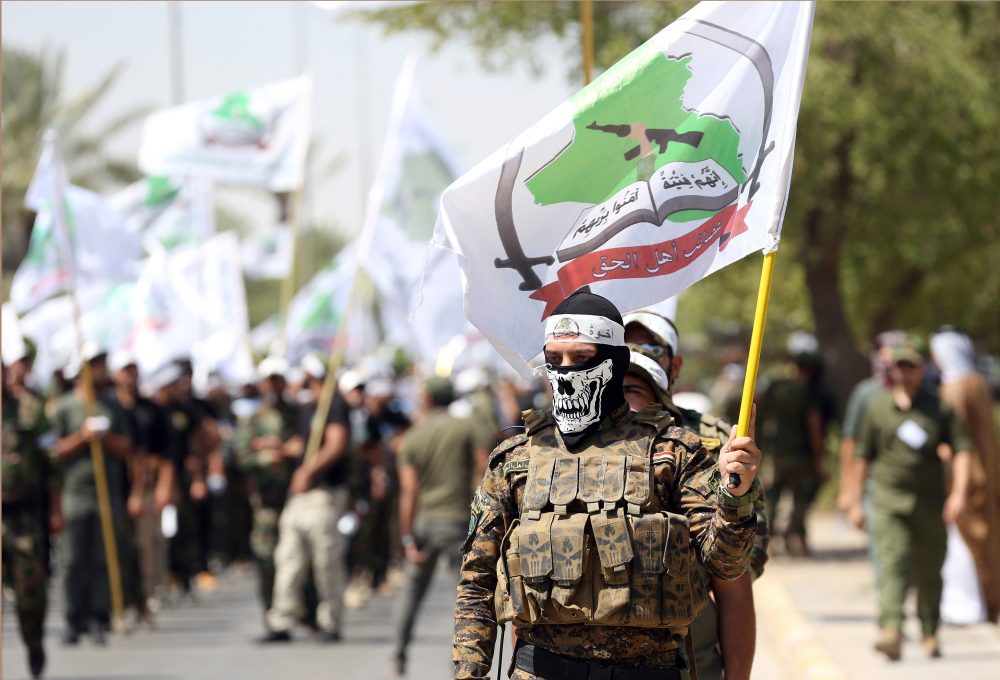

IRBIL, Iraq — A major Iran-backed armed faction in Iraq announced Tuesday that it plans to transfer its weaponry to government oversight, representing a significant development in the new administration’s push to bring independent militias under state authority.
Asaib Ahl al-Haq announced the establishment of a committee to manage this transition, which will include cataloging its personnel, armaments and equipment while coordinating with the armed forces’ commander-in-chief. The organization framed this choice as responding to appeals from Iraq’s leading Shiite religious authority and the Iran-aligned Coordination Framework, Parliament’s dominant bloc that controls Iraqi politics.
The Middle Eastern conflict has highlighted the weakness of Iraq’s governmental structures and their insufficient capacity to control these organizations. A separate standoff between Washington and the militias has intensified the situation, with groups functioning as extensions of Iran’s regional efforts and increasing attacks on U.S. interests in Iraq until a fragile ceasefire agreement was established in April.
The initial major development occurred one week prior, when prominent Shiite cleric Muqtada al-Sadr announced his Saraya al-Salam militia, alternatively called the Peace Brigades, would separate from his political organization and merge with state institutions.
Facing Washington’s pressure, Prime Minister Ali al-Zaidi has been attempting to establish state control over armaments. Al-Zaidi, a 40-year-old banker who took office last month, has positioned a state weapons monopoly as central to his agenda. The Trump administration has cautioned against any government influenced by Iran-linked groups and connected defense cooperation and funding to initiatives aimed at controlling them.
Numerous Iran-backed militias receive funding through Iraq’s state budget and are integrated within the security structure, though they remain outside government authority. This situation has attracted criticism from the United States and other nations that have suffered from their attacks and argue Baghdad has not taken sufficient action.
Multiple armed groups allied with Iraq’s Coordination Framework have adopted different positions regarding efforts to place weapons under state oversight. Two significant organizations, Kataib Hezbollah and Harakat al-Nujaba, have opposed disarmament, connecting the matter to Iraq’s sovereignty and foreign military presence.
Kataib Hezbollah praised other groups’ decisions to place weaponry under state control but stated its own military operations will persist as part of what it calls “resistance work.” In a recent statement from its Abu Mujahid al-Assaf social media channel, the organization indicated it would provide coordination with the Popular Mobilization Forces instead of surrendering weapons.
The PMF, a state-supported coalition of primarily Shiite armed organizations, was established in 2014 to combat the Islamic State group. Many of its constituent groups maintain independent command structures and Iranian connections.