
MEXICO CITY — Various activist organizations across Mexico are strategically timing their demonstrations to coincide with upcoming FIFA World Cup festivities, aiming to amplify pressure on government officials while the world’s attention turns to the country.
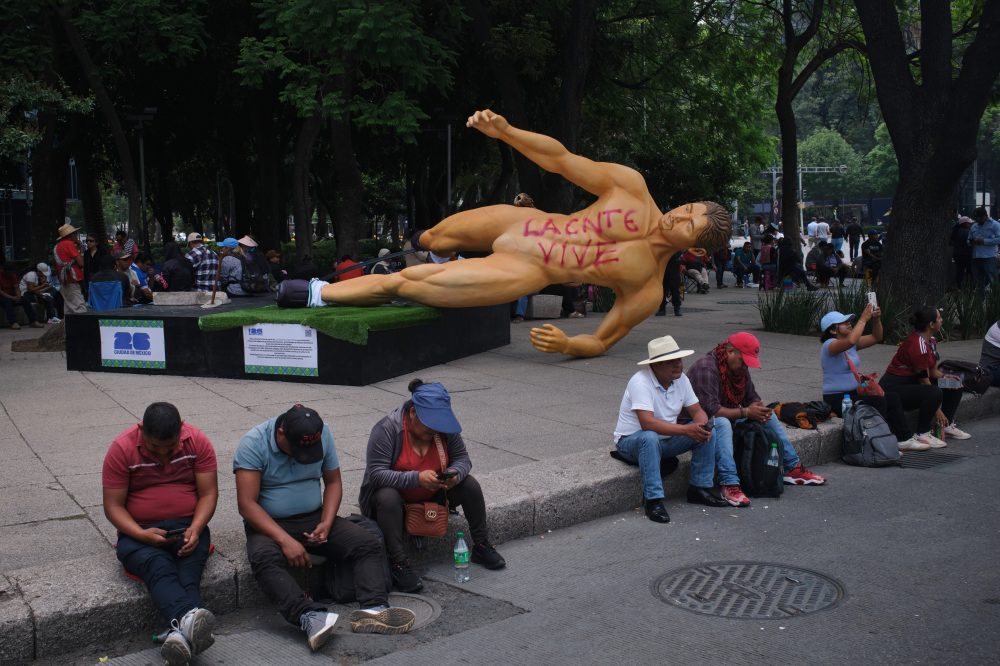
Members of the nation’s educators’ union, CNTE, have shut down major roadways throughout Mexico City this week, paralyzing downtown areas as they push for improved workplace conditions. The demonstrators toppled statues depicting World Cup football stars, forced entry into a government facility, and organized an impromptu soccer game on a blocked roadway Friday. Meanwhile, international tourists have started arriving in large numbers ahead of the competition beginning June 11.
“The proximity of the World Cup places a lot more pressure on the government,” explained Abel Escalante, a 52-year-old special education psychologist who journeyed from the southern state of Chiapas to demonstrate. He was among those blocking traffic near the city’s famous Angel de la Independencia monument Friday.
These demonstrations are occurring mere days before Mexico City welcomes the tournament’s opening ceremony for the competition jointly hosted by Mexico, the United States and Canada. Beyond launching the event, the Mexican capital will share hosting duties with Guadalajara and Monterrey for multiple matches.
Additional social advocacy groups have seized upon the World Cup timing to intensify demands on Mexican President Claudia Sheinbaum’s administration during a period when officials want to project a welcoming image internationally.
“This isn’t an event for the Mexican people. Tons of people are going to come, but they’re going to be people with all this disposable income. It’s for the elites. The few average people who do go will have to scrape together all the money they have to live off of,” Escalante continued.
Sheinbaum addressed the escalating demonstrations Friday morning, stating that “the door is open” for educators to enter negotiations regarding their requests for enhanced retirement benefits.
However, she noted that protester factions who had forcibly entered a government structure Thursday were attempting to provoke an aggressive response from officials, which she pledged would not occur. She guaranteed that Mexico’s central plaza, the Zocalo, which teachers attempted to occupy for a demonstration at May’s end, would stay accessible for World Cup activities.
Advocacy organizations have criticized Sheinbaum’s administration for emphasizing World Cup festivities over urgent social issues, including rising living expenses partly driven by international tourism and the nation’s crisis of forced disappearances.
Additional groups have scheduled demonstrations in upcoming weeks as celebrations prepare to begin. This builds upon Mexico City’s strong tradition of public protest, where labor unions and advocacy organizations frequently occupy public areas for demonstrations.
Demonstrations by families seeking their vanished relatives and rural educators demanding improved working conditions have intensified as local authorities have launched efforts to enhance the city’s appearance.
Municipal workers have painted bridges in vivid purple, planted orange Mexican marigolds throughout the city, and covered streets with cartoon images of axolotls, an endangered animal that has become Mexico City’s unofficial symbol.
During the previous weekend, families searching for missing loved ones posted photographs of disappeared individuals across the city and spray-painted messages beside one of the newly painted purple bridges.
“Mexico, champion of disappearance,” the graffiti stated.