
The chief executive of Russia’s state oil company Rosneft accused American energy firms Saturday of profiting from the blockade of a critical Middle Eastern shipping route.
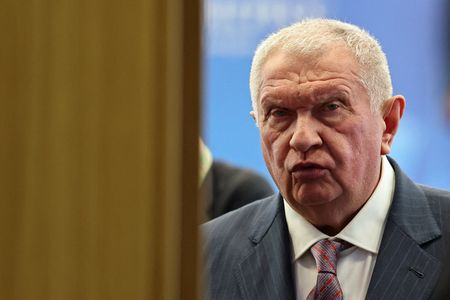
Igor Sechin made the comments during the St. Petersburg International Economic Forum, claiming that Washington is attempting to restructure worldwide energy markets for American benefit. The Strait of Hormuz has been closed since Iran blocked the waterway following U.S. and Israeli attacks that killed Supreme Leader Ayatollah Ali Khamenei in February. The United States has also imposed blockades on Iranian ports.
The strait normally handles approximately one-fifth of global oil shipments along with essential commodities like fertilizers. Its closure has disrupted international markets, driving oil costs to multi-year peaks while fueling worldwide inflation and hampering economic expansion.
“The closure of the Strait of Hormuz is an attempt to reshape global energy market regulations to benefit the United States. The measures taken to block the strait were aimed at Iran, but backfired on the entire world. The strategic risks were underestimated,” Sechin said.
“The main beneficiaries, of course, were American companies, who gained non-competitive advantages and the ability to secure high-cost supplies,” he added.
Sechin, a longtime associate of President Vladimir Putin, cautioned that other major international shipping lanes including the Malacca, Bad El Mandeb and Gibraltar straits might face similar disruption risks.
The Russian executive also criticized the OPEC+ oil producers’ alliance, arguing it has weakened following the United Arab Emirates’ departure and earlier exits by Qatar and other nations. Sechin has previously expressed doubt about Russia’s partnership with the Organization of the Petroleum Exporting Countries.
“As a result, the alliance’s production has fallen from 58 to 37 million barrels per day over the past ten years,” he said.
He noted that while most major OPEC+ members have boosted output since the 2016 agreement, Russian oil production dropped by 1.5 million barrels daily.
“This is a 15% decline that will need to be offset by necessary investments of at least ten trillion rubles. We expect that investment cooperation between the alliance’s member countries and our country will also expand,” Sechin said.