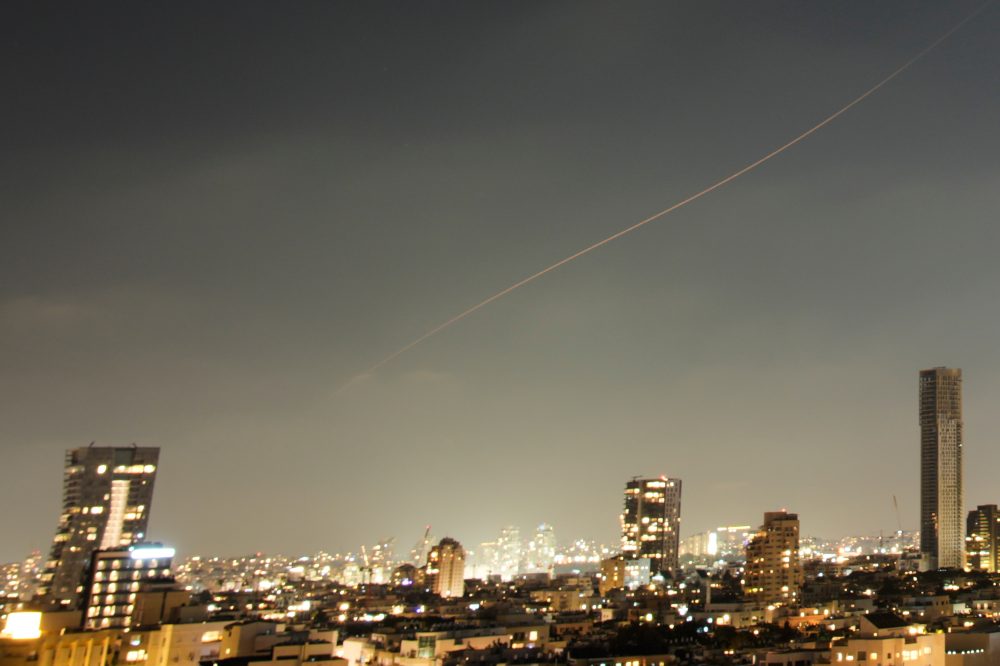
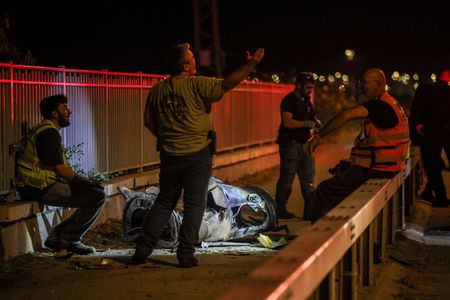
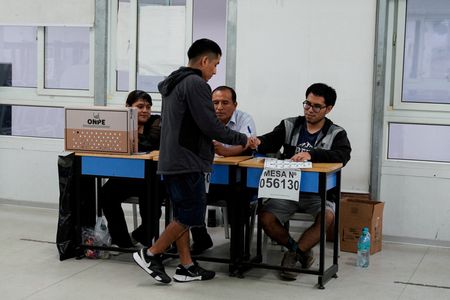
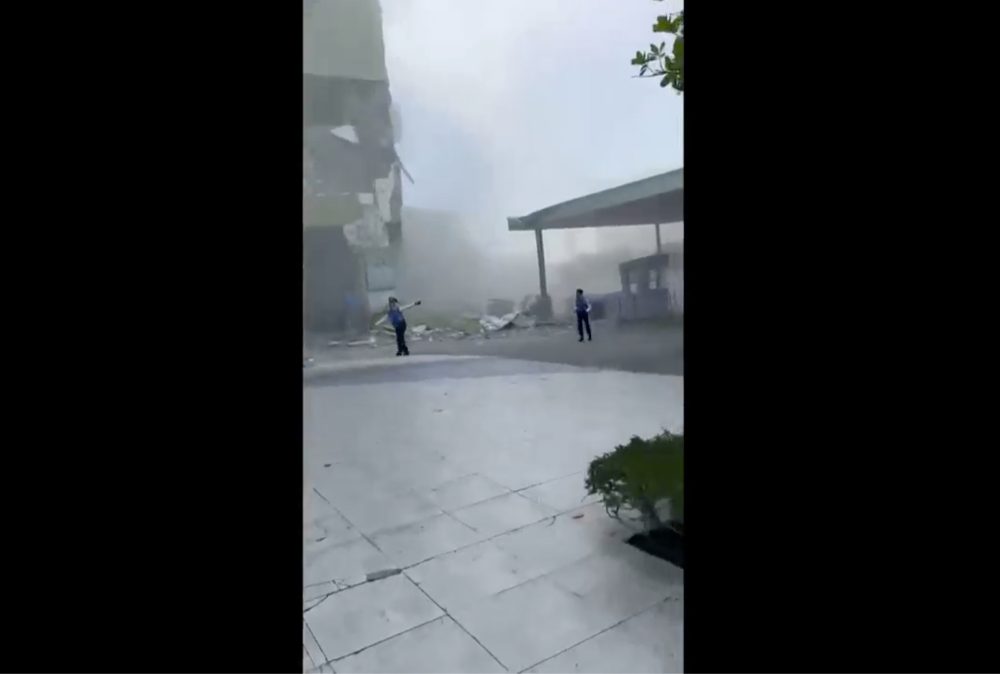
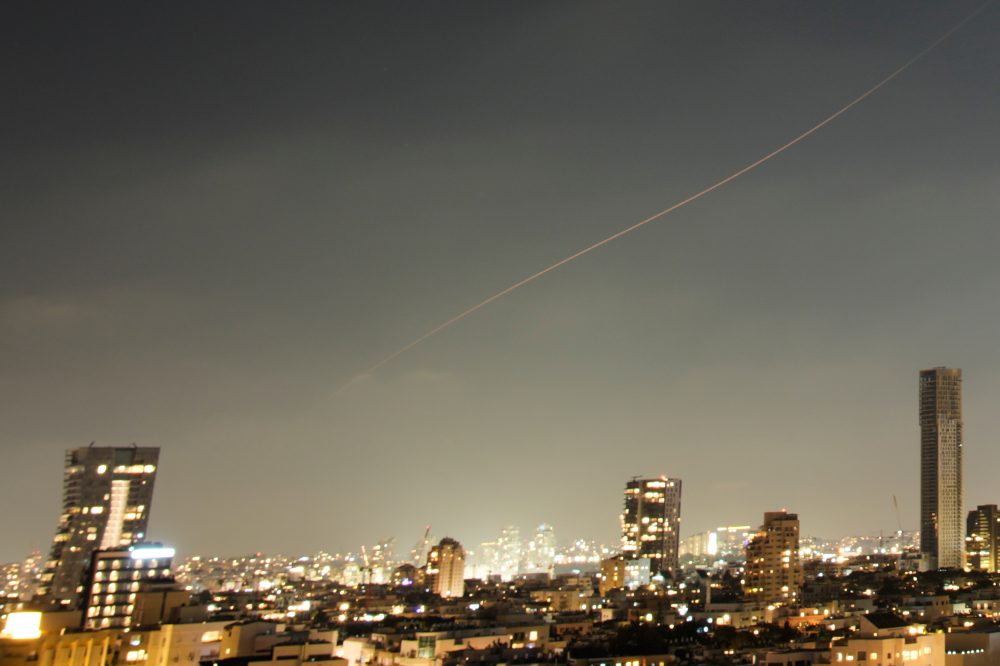
Military fighter jets from NATO successfully intercepted and destroyed an unmanned aircraft that violated Latvian airspace on Monday after crossing from Russian territory, according to the Baltic country’s military forces.
Officials have not yet determined where the drone originated from.
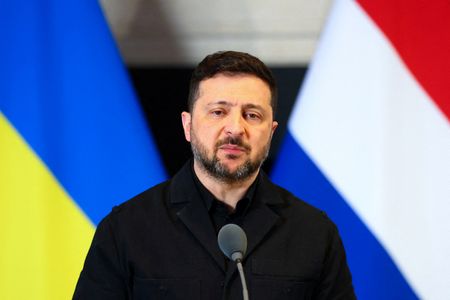
In recent months, Ukraine has increased its long-distance drone operations targeting Russia, including missions in the Baltic Sea region, where multiple Ukrainian military drones have accidentally entered the airspace of Finland, Latvia, Lithuania and Estonia.
“Allied fighter jets successfully shoot down a drone flying into Latvian airspace!,” Latvia’s army said in a post on social media X.
Earlier Monday, officials issued warnings to residents in Latvia’s eastern areas, advising them to take cover inside their homes because of the potential danger. Military officials said the alert was lifted after the drone was destroyed.
The increasing frequency of military drones accidentally crossing into airspace belonging to Russia’s neighboring countries has raised worries that Ukraine’s conflict is expanding beyond its borders into NATO’s northern territories.
In the previous month, a NATO military aircraft destroyed what was believed to be a Ukrainian drone flying over Estonia.
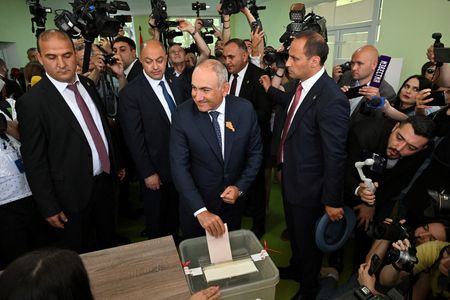
YEREVAN, Armenia — Armenia’s Prime Minister Nikol Pashinyan declared victory in his nation’s general election during the early morning hours Monday, with initial vote counts showing his Civil Contract party secured first place by capturing 49.81% of ballots cast.
The prime minister and his Civil Contract party are seeking a robust public endorsement for Armenia’s shifting foreign policy direction, which includes moving away from ties with Moscow while pursuing membership in the European Union.
Pashinyan’s primary challenger was Samvel Karapetyan, a wealthy businessman who built his fortune in Russia and currently faces house arrest on charges of promoting government overthrow. Karapetyan’s Strong Armenia bloc finished second with 23.29% of votes, though he maintains the accusations against him are politically driven.
The nation’s Central Election Commission reported that four political parties exceeded the required 4% vote threshold to gain parliamentary seats following Sunday’s voting, with some holding strong pro-Russian positions.
The Strong Armenia party led by Karapetyan advocates for strengthening commercial relationships with Russia and has criticized Pashinyan for potentially provoking conflict with the Kremlin.
Two additional parties earned legislative representation: Armenia secured 9.94% of votes while Blossoming Armenia reached exactly 4%. Election officials recorded voter participation at 59.97%.
Speaking with reporters at his campaign headquarters before official results were announced, Pashinyan stated his party achieved an unprecedented electoral success and would establish a government independently.
Senior European Union leaders offered congratulations to Pashinyan after the closely fought contest, which European observers viewed as a measure of Russian sway over the former Soviet nation.
“The spirit of the Velvet Revolution you led in 2018 is alive and well,” European Commission President Ursula von der Leyen wrote Monday on social media, referencing the widespread demonstrations initiated by Pashinyan’s advocacy that removed Armenia’s previous Prime Minister Serzh Sargsyan from power.
“We deeply value our partnership with a democratic Armenia that is drawing ever closer to Europe. Armenia can count on us,” von der Leyen stated.
European Council President António Costa similarly congratulated Pashinyan through a post on X, discussing expanded EU involvement in Armenia and the wider South Caucasus area, which connects Europe’s energy-seeking markets with Central Asian natural gas resources.
“Together, the EU and Armenia are building stronger links between people and creating new opportunities in energy, trade, and digitalization. Our strong partnership is an investment in a more peaceful and prosperous future for the region as a whole,” he wrote.
CHISINAU, June 8 – An unmanned aircraft entered Moldovan airspace during the early hours of Monday, with explosive debris later discovered in farmland close to the Ukrainian border near the eastern community of Lopatna, according to Moldova’s defense ministry.
The country’s monitoring systems tracked the aircraft entering Moldovan territory at 12:20 a.m. local time (2120 GMT) Monday, coming from the Mihailovca-Lopatna area, ministry officials reported.
“It was confirmed that fragments from an unmanned aerial vehicle were found on an agricultural field near the Lopatna locality,” the ministry stated in their announcement.
Evidence at the location showed “the previous occurrence of an explosion,” officials added.
The defense ministry referenced a Russian nighttime assault on nearby Ukraine and indicated the aircraft debris would undergo analysis to determine its source and the circumstances surrounding the incident.
“What happened underscores the risks and consequences that the Russian Federation’s war of aggression against Ukraine poses to regional security and neighbouring states,” Moldova’s foreign ministry declared in their statement.
The country has experienced multiple instances of Russian unmanned aircraft entering its airspace or wreckage falling in border regions.
On Sunday, President Maia Sandu stated that the Ukrainian conflict demonstrated her nation’s urgent need for advanced interceptor drone technology, noting that new laws would be necessary to enable their production.
British Prime Minister Keir Starmer plans to unveil restrictions on dangerous online platforms for children under 16 while preserving access to safer social media alternatives, according to a Monday report from the Times newspaper.
The prime minister, scheduled to deliver remarks later Monday, reportedly made his decision following conversations with grieving parents and after reviewing evidence from Australia, which implemented restrictions for those under 16 in December.
When questioned about the report, a Downing Street source stated: “The prime minister is not afraid about taking on the tech companies and their bosses to protect young people.”
However, a source familiar with the situation indicated that formal restrictions would not likely be announced this week. Instead, the government may provide immediate details about initiatives to stop children from creating sexualized content online that could be exploited for sextortion.
Concerns about social media’s effects on mental wellness and digital safety led Britain to conduct a public consultation on children’s social media access earlier this year, examining potential curfews, usage limits and restrictions on addictive platform features.
Several European nations are exploring stricter social media regulations for minors, including France, Denmark and Poland, while Greece announced in April that it would prohibit access for those under 15 beginning in January 2027.
According to a Sunday statement from his office, Starmer is expected to address how the government can ensure technology creates positive outcomes during his Monday speech.
Current British online safety legislation already mandates that social media platforms implement protections for children against illegal and harmful digital content.
Specialists remain split on whether complete restrictions would prove effective, while a group of young Londoners recently expressed opposition to such limitations in interviews with Reuters.
HAVANA — Cuba’s legendary vintage American automobiles, known locally as “almendrones,” are facing their biggest challenge in decades as a severe fuel shortage forces many of these iconic vehicles off the roads.
The classic gas-hungry cars, which have served as essential shared transportation and symbolized Cuban resourcefulness for generations, are now parked unused across the island due to fuel scarcity that began in January. Cuban authorities attribute the crisis to U.S. energy restrictions.
In Las Minas, a community of roughly 2,000 residents near Havana, Diriel Valdez works on rebuilding a 1951 Chevrolet Deluxe outside his humble concrete home on an unpaved street. While the wine-colored vehicle’s body remains solid and its original motor still functions, obtaining gasoline has become nearly impossible.
Valdez joins countless other Cubans relying on a government fuel reservation system through a mobile app that has ironically come to represent the very shortages it aims to address.
“I signed up in February … I’m still somewhere around number 2,800,” said the 27-year-old who runs an auto body shop from his home.
His lengthy wait would eventually yield just 20 liters (5.3 gallons) of gasoline — barely enough fuel, Valdez notes, for a trip to the coast.
The term almendrón derives from the Spanish word meaning almond, referencing the curved silhouette of the massive American sedans brought to Cuba prior to the 1959 revolution.
Throughout many years, trade restrictions, supply shortages and minimal imports transformed Cuban auto mechanics into experts at creative solutions. Motors were replaced, frames reconstructed and spare components obtained from any available source.
During a recent evening in Havana, while yet another power outage plunged most of the capital into darkness, taxi operator Leonardo Daniel González navigated a borrowed bright purple 1948 Chevrolet Fleetmaster through the unlit streets.
“These cars are passed down from generation to generation,” said González, 30. “I had one that belonged to my great-grandfather. It went from him to my grandfather, then to my father, and then to me.”
Cuba faces one of its worst energy emergencies in recent memory. Citizens, already struggling through years of economic hardship and supply shortages, now endure daily power outages lasting as long as 20 hours in certain areas of the nation.
The island generates approximately 40% of its fuel needs domestically and relies extensively on foreign supplies to operate power facilities and maintain transportation systems.
Beginning in January, the Trump administration intensified restrictions on Cuba as part of its continued pressure strategy against the island’s communist leadership. Trump has also warned of potential tariffs against nations that sell or ship petroleum to Cuba, creating additional obstacles for the country’s fuel procurement efforts. Only one Russian oil tanker has reached the island since that time.
Next to his Chevrolet in Las Minas, Valdez, the auto body shop owner, explained how the fuel crisis impacts his business. He acquired auto repair skills from his stepfather and has been fixing classic automobiles since age 13.
“People don’t want to do major repairs anymore,” he said. “A lot of them have their cars parked. They don’t have much hope that they’ll be circulating the way they used to.”
With gasoline becoming increasingly scarce through official channels, numerous motorists are accessing Cuba’s underground market, where fuel can typically be located faster, albeit at dramatically inflated costs reaching $8 per liter ($30 per gallon).
Omar Everleny Pérez, a former economist at the University of Havana’s Center of Cuban Economic Studies, explained that the nation’s transit infrastructure continues to rely substantially on almendrones since contemporary vehicles remain financially impossible for most Cubans.
“They’ve been vital to the transportation of ordinary Cubans,” he said. “Not only in Havana but throughout the country.”
While newer automobiles have become purchasable in Cuba recently, their costs remain far beyond what most government employees can afford, Pérez noted. This reality has helped maintain the elderly American vehicles in service, even as alternative transportation options begin appearing on Cuban roads.
Electric motorcycles from China have grown more prevalent. Compact electric cars are also emerging, supported by an expanding system of solar-powered charging facilities that the government promotes as part of its renewable energy initiative.
In Havana, González remains optimistic about the almendrones’ future. Despite fuel scarcity and dramatically reduced tourism, he continues earning income from the vintage Chevrolet.
“There are … several WhatsApp groups for us to find rides and so on,” said González. “But tourism in Cuba is in very bad shape.”
The political party of Armenian Prime Minister Nikol Pashinyan has captured nearly half of all votes cast in the nation’s parliamentary elections, according to official results released Monday.
Civil Contract, the governing party, received 49.81% of votes, the country’s central election commission announced.
Meanwhile, the opposition Strong Armenia party garnered 23.29% of the vote, commission officials reported.
While major technology leaders from companies like Nvidia, Intel and SK Group gathered in Taiwan last week to highlight the island’s essential role in global AI supply chains, tensions with Chinese military forces were escalating in nearby waters.
During the final day of the prominent Computex technology conference in Taipei on Friday, Taiwan’s coast guard confronted Chinese vessels in the disputed South China Sea.
“Peace in the Taiwan Strait is vital to the stability of the global economy, and the lifeline of the technology industry,” Taiwan’s coast guard announced in a message directed at a Chinese ship operating near the Taiwan-controlled Pratas Islands.
The island nation hosts TSMC, the globe’s biggest contract semiconductor manufacturer that supplies chips to Nvidia and Apple, plus Foxconn, which serves as Nvidia’s primary server producer, alongside numerous other firms throughout the AI technology sector.
Beijing considers the democratically-run island part of its territory and has intensified military activities to reinforce its territorial claims over recent years, especially during the past month.
Throughout the June 2-5 Computex conference, Taiwan’s defense ministry documented 79 Chinese military aircraft operating in the vicinity of the island, highlighting concerns about potential disruption to global AI supply networks if Beijing follows through on its threats to seize Taiwan through military action.
Chinese forces conducted another “joint combat readiness patrol” around Taiwan on Wednesday.
China’s defense ministry declined to respond to requests for comment regarding its military activities during the conference period.
Massive financial investments are flowing into Taiwan to manufacture the technology components driving the artificial intelligence boom, but significant security concerns remain, according to David Feith, senior fellow at U.S. think tank the Hudson Institute and a former U.S. Deputy Assistant Secretary of State.
“There’s an enormous security threat, and it emanates from Beijing,” he stated to Reuters on Saturday during a forum in Taipei organized by DEST, Taiwan’s National Science and Technology Council-backed think tank.
“I do think that markets globally and governments, I fear, are underestimating the risk of a crisis.”
Nvidia CEO Jensen Huang revealed last month his company intends to invest approximately $150 billion each year in Taiwan, a significant increase from the roughly $10 billion to $15 billion spent five years earlier. AMD CEO Lisa Su, who visited Taiwan shortly before the conference though she didn’t attend Computex, has announced more than $10 billion in investments for Taiwan’s AI sector.
When questioned about security concerns during his Tuesday press conference, Huang deflected the topic, stating supply chains should be as “diversified and as redundant” as possible to ensure resilience, while noting Taiwan technology companies are investing in the United States.
“However, it doesn’t change the fact that Taiwan is incredible at manufacturing, especially technology manufacturing,” he continued. “This is the epicentre of the ecosystem.”
Taiwan President Lai Ching-te addressed the security situation more directly during Computex opening remarks.
“The government will firmly safeguard peace and stability across the Taiwan Strait and is committed to maintaining the status quo,” he declared.
“This is an unwavering national policy, as well as Taiwan’s most responsible commitment to the global technology supply chain.”
The Computex conference included a military component, featuring participation from several drone manufacturers.
The president has prioritized drone technology as a central element of his military modernization strategy.
Palmer Luckey, founder of U.S. drone manufacturer Anduril Industries, which is collaborating with Taiwan on missile development, attended the conference on Thursday. He informed the official Central News Agency that approximately 30 Taiwanese companies now participate in his company’s supply networks.
“There are things in this world that only exist because Taiwan is the leader in technology, and that’s not something that I want to disappear,” he commented.
Swiss citizens will head to voting booths on June 14 to decide whether their nation should impose a 10 million person population limit in a referendum that business leaders are comparing to Brexit in terms of potential economic damage.
The population restriction proposal, backed by the right-wing Swiss People’s Party (SVP), stems from concerns that Switzerland’s growing population is overwhelming infrastructure, transportation systems, and public services while contributing to higher housing costs and increased crime rates.
Corporate leaders and employers are expressing alarm that approving the measure would restrict Switzerland’s ability to recruit qualified workers and could harm the country’s relationship with the European Union, which represents its largest export destination.
Martin von Moos, who serves as CEO of luxury hotels Belvoir in Ruschlikon and Sedartis in Thalwil near Zurich, expressed deep worry about the proposal’s implications. “As a Swiss citizen, it concerns me very much for the future of our country and its prosperity,” von Moos stated.
He emphasized his business’s dependence on international workers, saying “If we lost all of our foreign staff, the hotel simply wouldn’t function,” while noting that nearly half of his 115 employees come from other countries.
Recent polling data indicates a close contest, with 47% of respondents supporting the cap and 52% opposing it.
Switzerland’s population has expanded to 9.1 million by the end of 2025, representing significant growth from the 7.3 million residents when the country established free movement agreements with the European Union in 2002. Foreign nationals currently represent nearly 28% of the total population.
SVP lawmaker Yvan Pahud defended the proposal to Reuters, stating “Switzerland is a small country with a limited territory, and it has experienced the highest population growth in recent years.”
The referendum reflects a broader European trend of right-wing political movements capitalizing on public concerns about immigration, housing availability, and public services, similar to Britain’s 2016 decision to leave the EU and the growing support for parties like France’s National Rally and Germany’s AfD.
Business opponents warn that the population restriction could seriously harm one of Europe’s strongest economies.
Molecular Partners, a Zurich-based biotech firm where more than half of approximately 120 employees are non-Swiss, already faces challenges recruiting necessary talent.
Daniel Steiner, senior vice president of targeted radio therapeutics at the company, warned that limiting hiring to Swiss workers “would basically be a showstopper.” He added, “We may be forced to move things out of Switzerland.”
Rudolf Minsch, chief economist of business association economiesuisse, characterized the cap as a “populist attempt” to address complicated issues through an oversimplified approach. “It sells the illusion of a free lunch, and will not solve our housing or traffic problems,” Minsch explained.
Switzerland confronts demographic challenges common throughout Europe, with an aging population creating workforce concerns. Government statistics project that by 2055, the working-age population between 20 and 64 will decrease from 60% to 56%, while those over 65 will increase from the current 21% to 27%.
Critics of the population cap point to the economic contributions of immigrants, highlighting major companies like Nestle, Swatch and ABB that were established wholly or partially by foreign entrepreneurs. A 2023 Avenir Suisse study found that 39% of all company founders in Switzerland were foreigners.
Switzerland’s political system relies heavily on direct democracy, with citizens voting on national and regional matters four times annually.
The current proposal would require government action to prevent reaching 10 million people once the population hits 9.5 million, projected for 2031. The 10 million threshold is expected in 2042.
Upon reaching the 10 million limit, the government would be obligated to cancel international agreements that promote population growth, including the EU free movement accord that provides Switzerland access to European single market benefits.
Claude Maurer, chief economist at BAK Economics research institute, calculated that abandoning bilateral agreements with Brussels would reduce Swiss economic growth by 7.1% between 2028 and 2045, equivalent to losing 685 billion Swiss francs ($867 billion). He predicted slower growth and higher inflation driven by wage increases could lead to elevated interest rates.
Thomas Matter, another SVP lawmaker and banker, rejected these economic warnings as fear tactics. He argued that only one in ten immigrants possess sought-after skills and that per-capita GDP growth has declined since immigration increased.
“We are not against immigration, but it has to be moderate and controlled so we bring in the right people,” Matter explained. “Before we had qualitative immigration, now we have quantitative immigration. Switzerland is still the same size as it was in 1848, and more and more people are living in the same space.”
Major Swiss corporations including Roche, Nestle, ABB, UBS and Novartis have publicly opposed the population cap.
Roche stated its rejection of the initiative, warning that approval would “threaten agreements with the EU and exacerbate a shortage of skilled workers.” The company emphasized that “Companies depend on access to qualified workers — especially from the EU.”
Hotelier von Moos, who also leads the Swiss hotels association, predicted that some hotels would close, prices would increase, and non-European visitors would face greater difficulty traveling to Switzerland.
“We call this initiative a wolf in sheep’s clothing. It’s a simple message but it hides serious consequences,” he concluded.
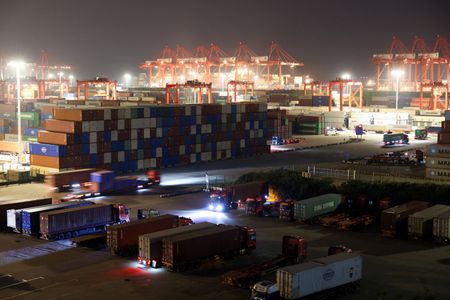
Economic forecasters anticipate that China’s overseas sales momentum picked up pace in May, bolstered by international buyers accelerating their purchasing schedules to avoid potential energy cost increases linked to Middle Eastern conflicts, combined with ongoing worldwide appetite for computer chips and artificial intelligence components.
Analysts surveyed predict the world’s second-largest economy saw its overseas shipments climb 15% compared to the same period last year when measured in U.S. dollars, based on responses from 32 economic experts polled. This represents an uptick from April’s recorded increase of 14.1%.
While the ongoing Middle Eastern crisis hasn’t yet impacted China’s export performance – a key economic growth mechanism favored by government officials – analysts believe disruption is inevitable. They expect that as international purchasers complete their inventory building and the advantages of accelerated ordering diminish while production costs climb, buyers will reduce stockpiles and delay purchases until conflicts resolve.
Expert opinions varied significantly regarding China’s international shipping performance last month. China Industrial Securities, Huachuang Securities and Zheshang Securities projected the most conservative estimates around 10% expansion, while the Economist Intelligence Unit and JP Morgan anticipated export growth would moderate to approximately 12%. ING provided the most optimistic projection of a 19.5% surge.
Additional manufacturing sector information for May revealed a steep monthly decline in new overseas orders following their peak at a two-year high in April, when facility supervisors characterized operations as “booming” during a rush by international manufacturers to secure supplies before possible cost increases, indicating the advance ordering trend may be weakening.
Robust international sales helped drive the $20 trillion economy beyond projections during the initial quarter, though progress has subsequently slowed, strengthening analysts’ worries that insufficient internal demand leaves China vulnerable should external circumstances deteriorate, potentially necessitating additional government intervention.
Incoming goods are projected to have increased by 25%, maintaining roughly the same trajectory as April’s 25.3% rate. South Korea’s overseas sales, an important indicator of China’s purchasing activity, jumped 80.9% in June, driven by semiconductors and technology components utilized in China’s production networks.
However, Chinese leadership faces mounting international criticism to strengthen domestic spending. Detractors contend the government relies excessively on bringing in components and shipping out completed products rather than encouraging internal consumption, an approach that threatens to push other developing nations out of more valuable manufacturing sectors.
The Organisation for Economic Cooperation and Development reinforced this worry recently, stating in a publication that almost 60% of Chinese companies’ “market share gains can be explained by subsidies received.”
A recent U.S. Federal Reserve study determined that China’s trade surplus – calculated relative to worldwide economic output – has exceeded 1%, surpassing the highs achieved by Japan and Germany during the late 20th century, with minimal indication of reduction. This suggests ongoing Chinese industrial excess capacity will continue reshaping global manufacturing for the foreseeable future.
A highly anticipated meeting last month between U.S. President Donald Trump and President Xi Jinping helped reduce friction but yielded no substantial progress, either regarding tariff disagreements or collaboration on resolving the Iran conflict.
China’s trade surplus is expected to reach $92.1 billion in May, rising from $84.8 billion the previous month and $51.3 billion in March.
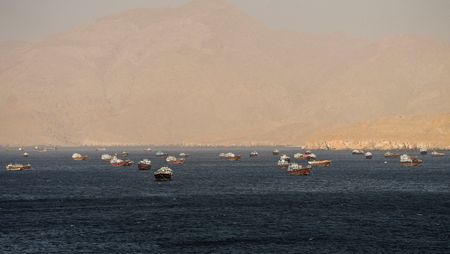
Iran’s diplomatic representative in Moscow announced Monday that the Strait of Hormuz will resume operations under revised terms established by Iranian and Omani officials, which will include charging transit fees.
Oil shipments through the waterway have been dramatically reduced due to the ongoing U.S.-Israeli conflict with Iran. Prior to hostilities, approximately one-fifth of global oil supplies traveled through this critical passage. While some tankers have recently managed to exit the Gulf, petroleum and liquefied natural gas transportation remains heavily restricted.
“Of course, this strait will be open, but with new conditions to be determined by the Iranian and Omani authorities,” Ambassador Kazem Jalali stated during an interview with Russian publication Izvestia released Monday.
“We understand that Iran and Oman provide certain services related to this strait. And fees will be charged for those services,” he explained, though he did not provide additional details.
Iranian officials have maintained that any lasting peace agreement should permit them to collect charges from vessels transiting the strait, with varying costs based on ship type, cargo contents, and current circumstances.
This stance faces strong resistance from U.S. President Donald Trump. During late May, American officials cautioned Oman against participating in any Iranian initiative to establish such tolls, and Treasury Secretary Scott Bessent reported that Oman’s ambassador assured him no plans existed to implement these charges.
Monday also saw Israel announce strikes against military installations in western and central Iran, despite reports that Trump had advised Israeli Prime Minister Benjamin Netanyahu to avoid additional attacks.
Japan, which relied on Middle Eastern sources for roughly 95% of its oil imports before the conflict began, confirmed it did not pay any fee when a Japanese-connected crude oil tanker navigated through the waterway during May.
In the war-torn Ukrainian city of Zaporizhzhia, Marharyta Nekhoroshyva experienced overwhelming terror when she first laid eyes on her newborn child. Her son arrived at only 26 weeks gestation, weighing a mere 940 grams (2 pounds), with diapers small enough to fit in an adult’s palm.
“The doctors told me that if he survived the first three days, everything would be OK,” she said, tears filling her eyes. “I don’t believe in God, but I was praying.”
Today, at 9 months old, Mark displays energy and liveliness but struggles with persistent respiratory issues that demand regular hospital visits.
Nekhoroshyva faces the challenge of managing her son’s medical needs while living under continuous threat of bombardment in Zaporizhzhia, where medical facilities cover their windows with boards due to glass regularly breaking from Russian attack blast waves. She handles this burden without her husband, who is serving in the military.
Ukrainian regions are experiencing an upward trend in early births — occurring before 37 weeks of gestation — especially in areas close to combat zones, where certain locations have witnessed rates climbing to nearly twice their pre-conflict levels since Russia’s 2022 invasion began.
Medical professionals explain that early delivery causes are multifaceted, but the severe mental and physical strain that warfare places on expecting mothers plays a role. The delicate process of sustaining these vulnerable infants becomes even more challenging amid ongoing conflict.
At Zaporizhzhia’s primary pediatric medical facility, Nekhoroshyva joins other mothers in bringing their babies to underground shelters nightly. Within these confined, poorly lit corridors, they comfort and lull their infants to sleep.
Although Ukraine sees fewer overall births due to population displacement, emigration, and wartime circumstances, early deliveries represent a growing portion of births, based on United Nations data and recent research findings.
The southern Kherson region experienced its preterm birth rate climbing from 5.4% in 2019 to 9.8% in 2025, according to U.N. statistics. The Zaporizhzhia region, also located in the south, saw increases from 5.7% in 2019 to 7.6% in 2025. Poltava, a northeastern Ukrainian region, witnessed rates climbing from 7.7% to 9.8% during the same timeframe.
Combat lines run through both Kherson and Zaporizhzhia regions, where civilian areas face regular bombardment. While Poltava sits farther from front lines, it experiences frequent aerial bombardments.
The connection between expectant mother stress and early delivery involves complexity, but expanding research indicates that extended psychological pressure raises the likelihood of early birth, according to medical experts. This may connect to heightened infection risk, a recognized catalyst for early labor, explained Dr. Andrew Weeks, a professor of international maternal healthcare at the University of Liverpool.
“Premature birth is very affected by infection,” he said. “And if you can’t get to a place where you can get appropriate diagnosis and treatment early, then actually the chance of you going into premature labor is higher.”
Ukraine faces increases not only in early births but also emergency cesarean deliveries and additional complications, stated Isaac Hurskin, spokesperson for the U.N. Population Fund.
“We’re seeing this real link between acute stress and birthing and pregnancy-related complications,” he said.
These complications may worsen a population crisis. Ukraine’s birth rate has dropped to among the world’s lowest levels, falling to approximately one child per woman during the past three years — significantly below the 2.1 replacement rate, Hurskin noted.
Within an incubator at Zaporizhzhia city’s maternity hospital intensive care unit rests an infant born at 30 weeks weighing only 700 grams (1 pound, 9 ounces) — considerably under the 2,500 gram (5 pounds, 8 ounces) threshold that the World Health Organization defines as low birth weight.
Her small form survives within the climate-controlled incubator. Intravenous tubes provide nutrition and medicine, while breathing equipment assists her lungs. A blanket covers the incubator to shield her delicate, developing vision from the ward’s bright fluorescent lighting.
Medical care concentrates on helping early babies gain weight and develop independent breathing, but potential complications are widespread, explained Dr. Andrii Lobanov, head of neonatal intensive care at Zaporizhzhia’s children’s hospital. Oxygen management requires precision due to risks of abnormal eye blood vessel development, potentially causing blindness in serious cases.
Beyond intensive care discharge, children born early frequently need ongoing medical attention — potentially lifelong — for breathing, neurological, developmental, or immune system issues.
This creates financial strain on resource-limited nations like Ukraine.
“It is very expensive and of course a country in a war situation has to decide what it’s going to spend on, so hospital services invariably get hit. Both literally and metaphorically,” Weeks said.
Warning sirens have integrated into routine operations within neonatal intensive care facilities. When alarms sound, medical staff remain with infants rather than evacuating them to shelters, understanding that relocating these fragile newborns presents greater risks. The alerts occur too regularly to halt operations each time.
Dr. Nataliia Bohuslavska, head of the neonatal unit at the maternity hospital in Zaporizhzhia, started one recent day with air raid warnings about approaching missile strikes. By afternoon, a Russian glide bomb had hit a business district, killing at least 12 people.
Medical services continued throughout: Physicians conducted two cesarean procedures and delivered an infant while treating a 42-year-old woman who lost her pregnancy after experiencing an airstrike.
The following day, a black banner flew near the hospital entrance honoring the deceased.
Bohuslavska recognizes each mother in her ward personally — understanding their complex medical situations, anxieties, and tiny infants struggling for life. She has served at this hospital for 26 years and was delivered there herself.
Warfare intensifies challenges faced by every expecting woman under her care, she explained.
“She wonders what kind of world her child will be born into, under what conditions the birth will happen, and whether it will be a moment of joy or one gripped by fear with shells exploding nearby,” she said.
Numerous mothers face this experience without support while their spouses serve in combat.
“When a patient calls to say her husband has been killed in the war, the only thing I can tell her is: ‘Come to us. We will take care of you,’” Bohuslavska said.
“We have to support her constantly, so that even in the midst of this terrible loss, she can find the strength to give new life a chance and save her baby.”
For Mariia Skladan, the moment for departure had arrived.
Her daughter, Elina, arrived in January at only 26 weeks, weighing 740 grams (1 pound, 10 ounces). Five months afterward, having grown to a robust 3 1/2 kilograms (nearly 8 pounds), physicians determined she was ready for release.
Skladan has a uncommon liver condition that doctors cautioned would make conception nearly impossible. Her pregnancy was viewed as miraculous, Bohuslavska stated.
“If there’s a war, what does it mean? Not to live?” Skladan asked. “You want to keep going.”
When she and Elina exited the maternity facility, her relatives waited with flowers. Skladan wept with happiness.
However, the comfort proved brief.
The following day, Elina returned to intensive care after developing a virus during the night.
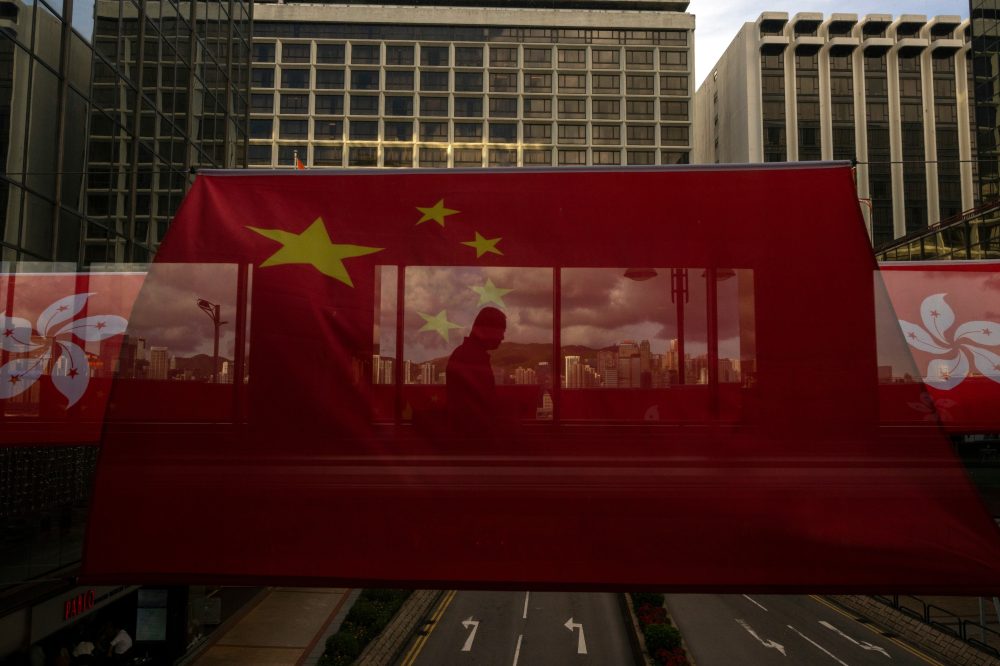
HONG KONG (AP) — Officials in Hong Kong unveiled new legislation Monday that would grant the city’s chief executive authority to classify specific criminal activities as national security violations, marking another step in the territory’s ongoing crackdown on dissent amid concerns about diminishing freedoms.
Following widespread pro-democracy demonstrations that shook the financial center in 2019, Beijing implemented a national security statute that led to the detention of numerous prominent activists. Local authorities added a second security measure in 2024, focusing on additional crimes including espionage and revealing state secrets.
Opponents argue these two security measures have undermined the Western-style freedoms Beijing pledged to preserve when the former British territory returned to Chinese control in 1997. However, officials maintain these laws are essential for maintaining stability in the city.
In documentation presented to lawmakers Monday, the Security Bureau and Department of Justice outlined subsidiary legislation to clearly establish the classification process for “other offenses endangering national security under the law” in Hong Kong.
Officials explained that when the chief executive provides certification determining that actions in a criminal case involve national security, the case would be categorized accordingly.
When defendants face charges for national security violations along with alternative charges for identical actions, those alternative charges would also be treated as national security threats, according to the proposal.
“Amid the present complicated geopolitical landscape, national security risks still exist. Stating clearly the above mechanism by way of subsidiary legislation can improve the legal system and enforcement mechanisms for Hong Kong to safeguard national security,” officials stated in their documentation.
Authorities described the legislation as intended to clarify procedural details and provide more certainty in implementing specific provisions.
“The subsidiary legislation does not involve the creation of any new criminal offense, penalty or enforcement power,” they noted.
Officials said the territory should finish the legislative process “as soon as possible” and will complete the proposed legislation after receiving input from lawmakers. The measure would become effective immediately upon publication in the official government gazette.
MANILA, June 8 – Authorities in the Philippines confirmed Monday that a powerful 7.8 magnitude earthquake claimed the lives of at least three people and left four others wounded when it struck a southern island in the archipelago nation.
Officials have not yet provided specific information regarding the circumstances of the deaths.
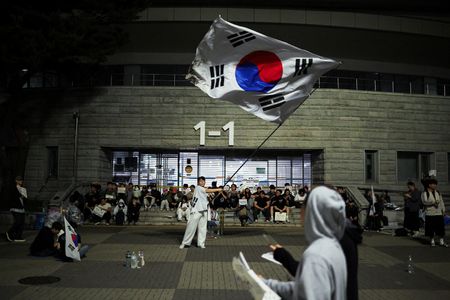
South Korean President Lee Jae Myung condemned ballot paper shortages during last week’s local elections as severely damaging his country’s standing as an exemplary democracy, expressing support for protesters who have questioned the election’s integrity.
During a Monday news conference, the president called the June 3 situation that left voters standing in line for hours awaiting ballot deliveries “just ridiculous.”
“It was probably something that’s hard for even people in a lesser developed democracy to imagine that people couldn’t vote because they didn’t have ballot papers,” the president stated. “Shocking.”
Outside a Seoul ballot counting facility, thousands of demonstrators, predominantly young adults in their twenties and thirties, have gathered to demand fresh elections.
Taking responsibility for the crisis, the leader of the National Election Commission, the independent agency responsible for overseeing the nation’s elections, has stepped down from the position.
According to the commission, ballot papers were prepared for 73% of eligible voters based on historical participation rates, but some districts experienced delays receiving supplementary ballots when supplies ran low.
The president has called for a comprehensive investigation into the ballot shortage, while the ruling Democratic Party announced plans for a nationwide inquiry.
The president argued that the constitutional independence granted to the election commission created overconfidence that revealed serious flaws in election administration.
While dismissing critics’ suggestions of electoral fraud, the president indicated some individuals might face criminal charges related to the incident.
The liberal Democratic Party performed strongly in the elections for provincial governors, mayors and local assembly positions, though opposition conservatives maintained control of Seoul’s mayoral office.
Military tensions escalated dramatically in the Middle East Monday as Israel conducted airstrikes against Iran following missile attacks from Tehran, creating the most significant hostilities since a ceasefire agreement in April and threatening to derail ongoing peace negotiations.
State television in Iran confirmed that explosions were audible in Isfahan, Tabriz and Tehran, though officials provided no immediate additional details. The Iranian missile barrage marked the first such attack on Israel since the fragile truce began in early April, heightening fears of renewed intense combat.
The Iranian response came after Israel conducted an unannounced strike on Beirut’s southern suburbs Sunday, going against Washington’s recent appeals to avoid escalation. Israeli officials stated that the Iranian-backed Hezbollah had earlier targeted northern Israel.
Missile warning sirens were activated Monday morning in Saudi Arabia near an air base housing U.S. military personnel.
The Israeli military action appeared to contradict President Donald Trump, who had advised Israeli Prime Minister Benjamin Netanyahu against further retaliation.
In a telephone conversation with The Financial Times prior to Israel’s Iran strike, U.S. President Donald Trump claimed he was directing Israeli Prime Minister Benjamin Netanyahu’s military strategy.
‘He won’t have any choice,’ Trump told the newspaper in a telephone interview. ‘I call the shots. I call all the shots. He (Netanyahu) doesn’t call the shots.’
Additional developments include:
Israeli forces reported detecting a missile from Yemen aimed at their territory Monday. Warning sirens activated throughout Israel following the Yemeni missile threat.
The Iranian-backed Houthi rebels operate from Yemen. While the Houthis have targeted Israel during the Israel-Hamas conflict and afterward, they have not been fully engaged in the Iran conflict.
Saudi Arabia activated missile warning sirens Monday morning near an air base hosting U.S. military forces. Saudi government media confirmed the alert in the Al Kharj governorate, location of Prince Sultan Air Base.
Officials provided no further information. The warning followed Israel’s strikes on Iranian targets.
In his interview with The Financial Times before Israel’s Iran operation, U.S. President Donald Trump claimed he was controlling Israeli Prime Minister Benjamin Netanyahu’s military decisions.
‘He won’t have any choice,’ Trump told the newspaper in a telephone interview. ‘I call the shots. I call all the shots. He (Netanyahu) doesn’t call the shots.’
The White House has not responded to Sunday inquiries regarding the strikes or whether they were coordinated with U.S. officials.
Iran shut down airspace surrounding Tehran’s Imam Khomeini International Airport, the nation’s primary aviation facility, following the Israeli attack.
Israeli officials confirmed strikes on central and Western Iran after receiving missile fire, while Tehran reported explosions heard across multiple cities.
Officials in the Philippines are working to confirm reports that at least five people died following a powerful 7.8 magnitude earthquake that struck the southern part of the country on Monday.
Agripino Dacera, who serves as the disaster management chief in General Santos, told reporters that crews are still working to verify the reported deaths while teams continue evaluating the full scope of destruction caused by the powerful tremor.
Israeli forces carried out early Monday morning strikes targeting military installations across western and central regions of Iran, according to military officials. The operations occurred just hours following Iran’s missile barrage directed at Israeli positions, which Tehran launched as payback for a previous strike on southern districts of Beirut.
LIMA, June 7 – Initial polling data from Peru’s presidential election reveals an extremely narrow margin between the leading candidates, with Roberto Sanchez capturing 50.3% of the vote compared to Keiko Fujimori’s 49.7%, according to early results from polling firm Ipsos.
Representatives from Ipsos characterized the razor-thin margin as a statistical dead heat between the two candidates.
The polling organization’s preliminary tally draws from a representative sample of voting locations throughout Peru. Though these numbers are not the official election results, Ipsos’ early counting methodology has proven to be a reliable predictor of final outcomes in past electoral contests.
A devastating 7.8 magnitude earthquake struck the southern Philippines during the early morning hours Monday, damaging structures in a major coastal city and prompting tsunami alerts across multiple regional coastlines.
Authorities immediately issued evacuation orders for residents to seek higher ground. No casualties have been confirmed at this time, though officials remain uncertain whether anyone was trapped or hurt when a small structure collapsed in General Santos city. This coastal community, home to over 700,000 residents, serves as a major commercial center on Mindanao island and is recognized for its tuna processing operations.
According to the Philippine Institute of Volcanology and Seismology, the earthquake’s center was located 13 kilometers (8 miles) southwest of General Santos at a depth of 10 kilometers (6.2 miles). The tremor occurred at 7:37 a.m.
The Pacific Tsunami Warning Center announced that tsunami waves reaching up to 3 meters (10 feet) could potentially impact certain Philippine coastlines. Indonesia and Malaysia faced the possibility of waves up to 1 meter (3 feet) along some of their shores.
“We advise people to evacuate to higher grounds or go further inland,” warned Teresito Bacolcol, the head of the Philippine institute, addressing those in coastal communities.
Minor sea level changes were anticipated in Taiwan, Japan, Guam, Papua New Guinea and various island nations and territories throughout the western Pacific. However, the PTWC confirmed no danger existed for Hawaii.
Manila’s DZRH radio station confirmed that the small commercial structure housing its regional office experienced partial collapse, with staff members quickly evacuating to the ground level without sustaining injuries. Officials remained unsure whether others might be trapped within the debris of the four-story office structure, as the earthquake occurred prior to standard business hours.
The tremors were also experienced by residents in north-central Indonesia, where tsunami waves measuring up to 18 centimeters (7 inches) were documented along certain shores of North Sulawesi and North Maluku provinces.
The U.S. Geological Survey reported subsequent aftershocks reaching magnitudes up to 6.5. Their measurements placed the initial earthquake at 55 kilometers (34 miles) in depth. Different agencies commonly report varying measurements immediately following seismic events.
As one of the globe’s most disaster-susceptible nations, the Philippines frequently experiences earthquakes and volcanic activity because of its position along the Pacific “Ring of Fire,” a chain of seismic fault lines surrounding the ocean. The island nation also endures approximately 20 typhoons and tropical storms annually.
Israeli forces conducted early morning airstrikes targeting military installations in Iran’s central and western regions on Monday, responding to missile attacks launched from Tehran that have heightened fears of broader regional conflict across the Middle East.
Reports from Iranian state media confirmed explosions were audible in multiple cities including Isfahan, Karaj, Tabriz and Tehran, though specific details were not immediately provided. A local witness in Tehran reported hearing at least one significant explosion from the western direction of the capital. Following the Israeli assault, Iran shut down airspace surrounding Tehran’s Imam Khomeini International Airport, the nation’s primary aviation hub.
Iranian authorities have not disclosed information regarding which facilities were targeted or the extent of any damage sustained. Iran’s paramilitary Revolutionary Guard stated that Israel employed air-launched ballistic missiles during Monday morning’s operation, but provided no additional specifics.
As the strikes commenced at dawn in Iran, the Israeli military released a brief statement declaring: “A short while ago, the Israeli Air Force struck military targets belonging to the Iranian terror regime in western and central Iran.” No further elaboration was provided.
The White House has not responded to inquiries regarding the strikes or whether they were conducted with U.S. coordination.
Recent days have seen stalled negotiations between Iran and the United States concerning the fragile ceasefire in the ongoing conflict, complicated by fighting between Israel and the Lebanese Shiite militia Hezbollah. Israel currently maintains control over southern Lebanon, advancing into territories not occupied for twenty-five years, raising concerns about potential expansion of their military operations.
Israel conducted airstrikes in Beirut’s southern suburbs on Sunday. Iran responded with its own strike against Israel, prompting Monday morning’s Israeli attack on Iran.
U.S. President Donald Trump previously stated to a Fox News Channel reporter his desire for Iran to cease missile launches and resume diplomatic negotiations. He also indicated that Israel’s Sunday strikes in Lebanon were conducted without U.S. coordination, expressing his displeasure with the action.
A senior U.S. official revealed that Trump contacted Netanyahu, urging him to refrain from immediate retaliation following the Iranian missile attack. The official, speaking anonymously regarding the private conversation, indicated Trump believed he had persuaded Netanyahu to delay action.
Trump “got Bibi to hold off for the time being,” the official stated. The official declined to provide additional call details, and Netanyahu’s office has not issued immediate comment.
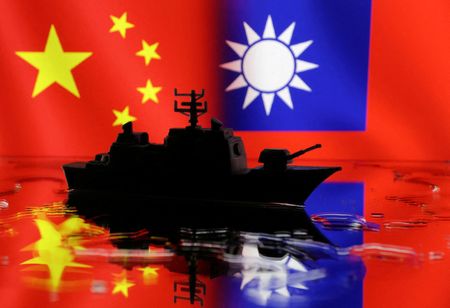
Taiwan’s Defense Minister Wellington Koo denounced Chinese Coast Guard activities in waters east of the island as aggressive actions on Monday, promising military coordination with Taiwan’s maritime forces in response.
Beijing, which considers the democratically-ruled island part of its territory, became upset last month when Japan and the Philippines announced they would start official discussions about establishing their maritime borders in what China sees as waters near Taiwan. This delimitation process involves legally defining a nation’s territorial boundaries at sea.
Chinese state media reported late Saturday that vessels had been deployed for what they called a “special maritime traffic law-enforcement operation” in eastern Taiwan waters, responding to the Japanese-Philippine border talks announcement.
Taiwan’s maritime authorities dispatched their own vessels to confront the Chinese ships and announced Sunday that they had successfully “expelled” them from restricted areas.
“First this is a provocative act, and second it is cognitive warfare,” Koo told parliament members.
“They are attempting to first claim the eastern waters as their domain, like casting a large spider’s web over the area,” he continued. “This is a serious affront to our national sovereignty.”
China’s Taiwan Affairs Office had not provided a response to requests for comment. Beijing does not acknowledge any Taiwanese sovereignty claims.
Koo explained that military forces would maintain collaboration with the Coast Guard through ongoing intelligence coordination.
“We will also carry out a very thorough and detailed division of responsibilities with them and at all times act in accordance with resource agreements to safeguard our national sovereignty and maritime security,” he stated.
Taiwan’s naval forces typically track and issue warnings to Chinese military vessels, while the Coast Guard handles monitoring of Chinese maritime patrol ships and would support naval operations during wartime.
Chinese military aircraft and naval vessels already conduct operations near Taiwan almost every day.
Taiwan is also tracking an ongoing deployment of China’s aircraft carrier Liaoning in the Western Pacific region. Koo reported the vessel was currently positioned in waters east of the Philippines.
China has not ruled out using military force to bring Taiwan under its authority. Taiwan’s leadership dismisses Beijing’s territorial claims.
President Trump declared Sunday that recent military exchanges between Israel and Iran will not derail his administration’s ongoing diplomatic efforts with Tehran, emphasizing that Israeli Prime Minister Benjamin Netanyahu “doesn’t call the shots.”
The president has pressured Israel to cease its military operations in Lebanon to create space for negotiations aimed at ending the broader conflict with Iran, even using harsh language with Netanyahu during a phone conversation last week. Despite this pressure, Israel conducted strikes in the Beirut area Sunday for the first time since the U.S. revealed a truce proposal for Lebanon last week.
Tehran responded by launching a barrage of missiles targeting Israeli locations, threatening to derail U.S.-Iran diplomatic discussions. However, Trump maintained that reaching an agreement to conclude the broader conflict remains achievable.
“It’s not going to have any impact on the deal,” Trump stated to the Financial Times. “I call the shots. I call all the shots. He doesn’t call the shots.”
Netanyahu had not issued any public statement about the Iranian missile attack five hours after it occurred.
The renewed fighting caused oil prices to surge more than 2% during early Monday trading, pushing benchmark Brent futures back over $95 per barrel.
Iran’s Revolutionary Guards reported they had aimed at Ramat David air base, located near Nazareth. Israeli military officials confirmed they detected missiles launched from Iran and that their defensive systems successfully intercepted them.
Trump, who was at his golf club in Bedminster, New Jersey for the weekend, held a phone conversation with Netanyahu on Sunday lasting just under 30 minutes, according to an Israeli official who provided no additional information. Neither the White House nor the Israeli prime minister’s office immediately responded to requests for comment.
During their call, Trump urged Netanyahu to avoid additional strikes because “we are close to doing something good in terms of a deal,” a U.S. official told Axios. The official indicated Trump had “bought a little bit of time,” according to Axios.
Just after midnight Monday, the Israeli military released a short statement quoting Chief of Staff Eyal Zamir, who said his forces had not received orders to strike Iran yet, but would act “with determination” when commanded to do so.
Throughout the U.S.-Iran negotiations designed to stop the war, Israel has maintained its military operations in Lebanon during its conflict with Hezbollah, which Israeli leaders argue should remain separate from any Iranian ceasefire agreement.
Tehran has consistently stated that any peace agreement with the U.S. must include a ceasefire in Lebanon, which Israel entered in March while pursuing Iran-supported Hezbollah militants who launched rockets and drones across the border in support of Tehran.
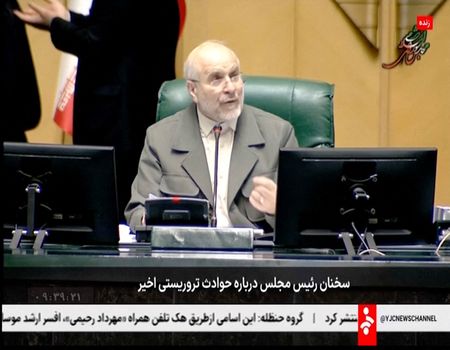
Iran’s chief peace negotiator, parliamentary speaker Mohammed Baqer Qalibaf, declared that U.S. bases and Israeli assets represent legitimate targets due to hostile actions, including the “violation of agreements over Lebanon.”
Prior to Sunday’s events, Iran had not struck Israel since a ceasefire in the wider conflict began in April, though Hezbollah has continued such attacks.
Trump has consistently claimed that Washington and Tehran are approaching an agreement to end the war.
“We’re very close to a deal, or I’m going to blow the hell out of them,” Trump said during a pre-recorded NBC News “Meet the Press” interview that broadcast Sunday to commemorate 100 days of the conflict.
Israel has never stopped its Lebanon military campaign, which has resulted in thousands of deaths and displaced hundreds of thousands from their homes. Hezbollah, which did not participate in the truce negotiations, has maintained its attacks and declares it will not surrender its weapons unless Israel stops its operations and withdraws from Lebanon.
Netanyahu explained that Sunday’s Israeli strikes on Beirut’s southern suburbs, a district called Dahiyeh that has historically served as a Hezbollah stronghold, were commanded in response to Hezbollah firing toward Israel.
The broader war has remained at a standstill since the U.S. and Israel suspended their attacks on Iran in early April, with Tehran blocking most maritime traffic through the Strait of Hormuz, the primary passage for one-fifth of global oil shipments. Washington has established its own blockade of Iranian ports.
While Washington and Tehran claim they are approaching a preliminary agreement that would reopen the strait, they have continued exchanging strikes, with recent escalations including attacks on neighboring Arab nations hosting U.S. bases.
Trump has indicated any war-ending agreement must stop Iran from creating a nuclear weapon, and he faces pressure to secure terms stricter than those reached in 2015 under then-President Barack Obama in an agreement Trump later abandoned.
Tehran’s requirements include removing U.S. and international sanctions, acknowledging its control over the strait, and releasing billions of dollars in frozen assets.
A source knowledgeable about U.S. plans informed Reuters on Saturday that Washington might make Iranian assets accessible to Gulf neighbors for repairing damage caused by Iran.
Iran’s Deputy Foreign Minister Kazem Gharibabadi stated Sunday that any such redirection of Iranian assets would be unlawful, and Tehran would respond with countermeasures.
Netanyahu faced criticism last week from political opponents regarding a new Lebanese ceasefire ahead of this year’s national election.
Officials in the Japanese city of Utsunomiya made the unprecedented decision to close all 94 elementary and middle schools under municipal control following the community’s first-ever bear encounter, according to a city representative.
The community of 500,000 people, located roughly 100 kilometers north of Tokyo, reported that residents first spotted the bear Saturday evening in a neighborhood close to a local park. The animal has not been captured and was most recently observed early Monday morning approximately half a kilometer away from one of the middle schools.
Japan has experienced a growing number of bear encounters in metropolitan areas, leading officials to establish a special task force this year focused on preventing injuries and fatalities.
Just last week, an incident in the northeastern community of Fukushima resulted in injuries to at least four individuals when a bear attacked. Surveillance video from a local steel manufacturing facility captured footage of a black bear pursuing and knocking down an employee near the building’s entrance.
While Asiatic black bears face vulnerable status worldwide, population estimates suggest their numbers in Japan have increased threefold since 2012, partly due to reduced hunting activity.
Researchers attribute the increase in bear-human encounters to climate-related reductions in natural food sources such as acorns and beechnuts, combined with rural population decline and increasing amounts of unused agricultural land that encourage bears to search for food closer to populated areas.
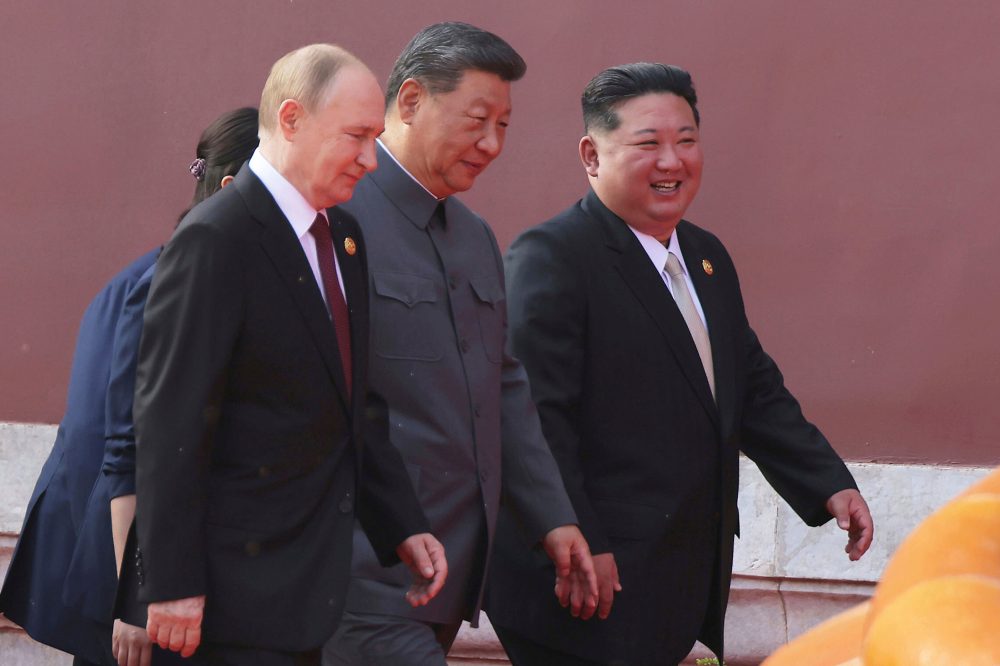
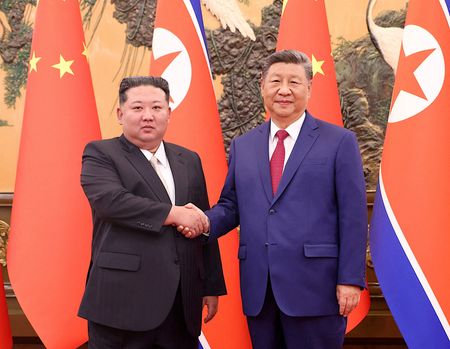
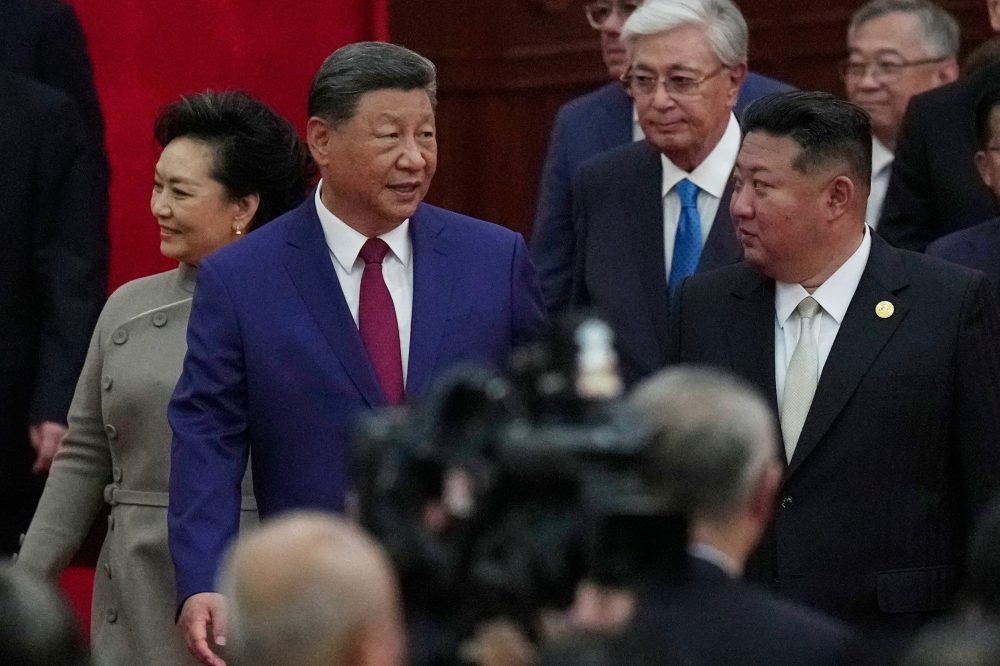
SEOUL, South Korea — Chinese President Xi Jinping is scheduled to arrive in North Korea’s capital on Monday for his first visit to the country in seven years, marking a significant diplomatic move aimed at strengthening China’s special relationship with North Korea while offering economic and political advantages.
The Chinese leader will spend two days in the country meeting with North Korean leader Kim Jong Un. This will mark their first face-to-face discussion since their September meeting in Beijing, which took place after both attended a military parade alongside Russian President Vladimir Putin and other international leaders.
Officials have not released details about what topics will be discussed. International analysts expect the meetings will significantly impact relations between the two nations and have broader implications, as both countries work to rebuild their historic partnership while facing separate disputes with the United States.
“A Chinese leader doesn’t just visit North Korea because a visit is due. Xi’s trip will have real implications for China-DPRK relations,” said Leif-Eric Easley, a professor at Ewha University in Seoul, using the abbreviation for North Korea’s full name.
The visit follows Xi’s recent consecutive meetings with U.S. President Donald Trump and Putin in Beijing last month. Xi is scheduled to meet with Trump again during a planned U.S. visit in September.
Xi aims to showcase China’s “sway over the Korean Peninsula” and “a leadership role in entire Northeast Asia in the ages of strategic competitions with the U.S.,” said Kwak Gil Sup, the head of One Korea Center, a website specializing in North Korea affairs.
China has historically served as North Korea’s primary economic supporter and key diplomatic ally. The country is thought to have avoided completely implementing U.N. sanctions against North Korea and provided secret assistance to help its struggling ally survive economically. This year represents the 65th anniversary of when both nations signed a mutual defense agreement.
However, their relationship has faced scrutiny recently, as North Korea has focused on building closer ties with Russia by providing soldiers and weapons for Russia’s conflict in Ukraine. North Korea has received economic and military support from Russia in exchange.
Reestablishing exclusive control over North Korea would provide Xi with an advantage when dealing with Trump, who has consistently stated his interest in resuming diplomatic talks with Kim, according to experts.
“Implementing U.N. Security Council resolutions and enforcing sanctions do not appear to be priorities for China,” Easley said.
In a piece published in North Korea’s primary Rodong Sinmun newspaper Monday, Xi stated that China and North Korea should enhance strategic partnership and collaborate to resist “hegemonism and coercive politics” while working toward an organized multipolar world.
Xi will likely present Kim with economic assistance packages including rice and fertilizer shipments, renewed Chinese group travel to North Korea, and collaborative economic initiatives, according to analysts.
“North Korea can’t solely rely on Russia. It needs to align with China,” Kwak said.
In a Monday editorial, the Rodong Sinmun newspaper described Xi as “the most honored state guest,” noting that the capital’s streets “are filled with an atmosphere of friendship.”
Xi may also avoid pressuring Kim about North Korea’s nuclear disarmament and instead speak generally about peace and stability on the Korean Peninsula. This approach would be crucial for Kim, who desperately wants international acceptance as a nuclear weapons state to justify calls for removing U.N. sanctions against North Korea.
“Chinese officials have taken the position of not speaking publicly about denuclearization on the Korean Peninsula while still maintaining it as a long-term goal. Kim appears to want Xi to accept North Korea as a nuclear neighbor,” Easley said.
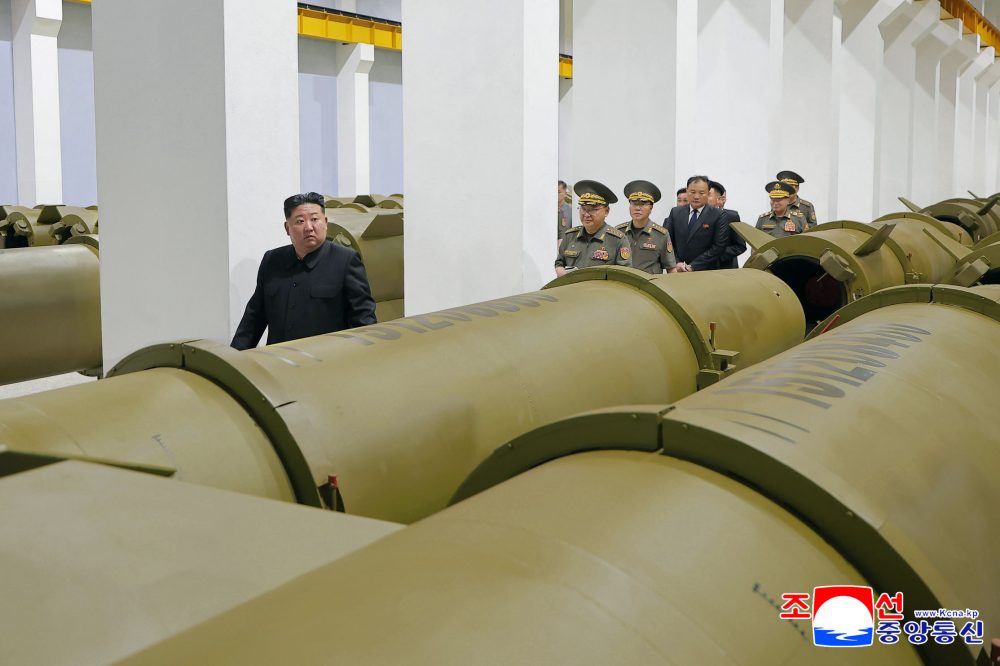
Last week, Kim revealed a new facility for producing nuclear materials and promised to strengthen the country’s nuclear capabilities “at an exponential rate.” He also watched sea trials of a new naval destroyer and demanded faster progress in developing a nuclear-equipped navy.
On Sunday, Kim’s sister and senior official, Kim Yo Jong, supported her brother’s position, describing U.S. efforts for North Korea’s denuclearization as an “escapist and anachronistic dream.”
Kim Jong Un has rejected American and South Korean proposals for negotiations and concentrated on expanding and modernizing his nuclear weapons program since his important diplomacy with Trump failed in 2019. The North Korean leader stated in September that he still maintained “good personal memories” of Trump but demanded the U.S. abandon its requirement for North Korea to give up nuclear weapons as a condition for restarting diplomacy.
Experts believe Kim would eventually seek arms reduction negotiations with the U.S. to secure benefits in exchange for partially giving up his nuclear arsenal.
A drone attack by Ukrainian forces targeted a passenger train in Crimea early Monday morning, resulting in the death of an assistant train operator and injuries to the main operator, according to Sergei Aksyonov, the Russian-appointed governor of the peninsula.
The train was traveling between Moscow and Simferopol, Crimea’s primary city, when the attack occurred. Aksyonov reported via Telegram that passengers aboard the train escaped without injury.
Moscow took control of the Crimean peninsula in 2014, years ahead of its comprehensive military offensive against Ukraine that began in 2022. The takeover followed widespread demonstrations in Kyiv that led to the departure of a pro-Russian leader from Ukraine. The region remains a favored vacation spot for Russian citizens.
Early Monday morning, drone attack warning sirens also activated in Novorossiysk, a Black Sea coastal city that serves as a crucial shipping point for petroleum and grain exports. The port city sits in Russia’s Krasnodar region, roughly two hours by car from the bridge Moscow constructed to link the mainland to Crimea, according to local officials posting on Telegram.
Recent Ukrainian drone operations targeting energy facilities have compelled Russian authorities controlling Crimea to implement stricter fuel rationing measures.
Reuters was unable to independently confirm all aspects of these reports.
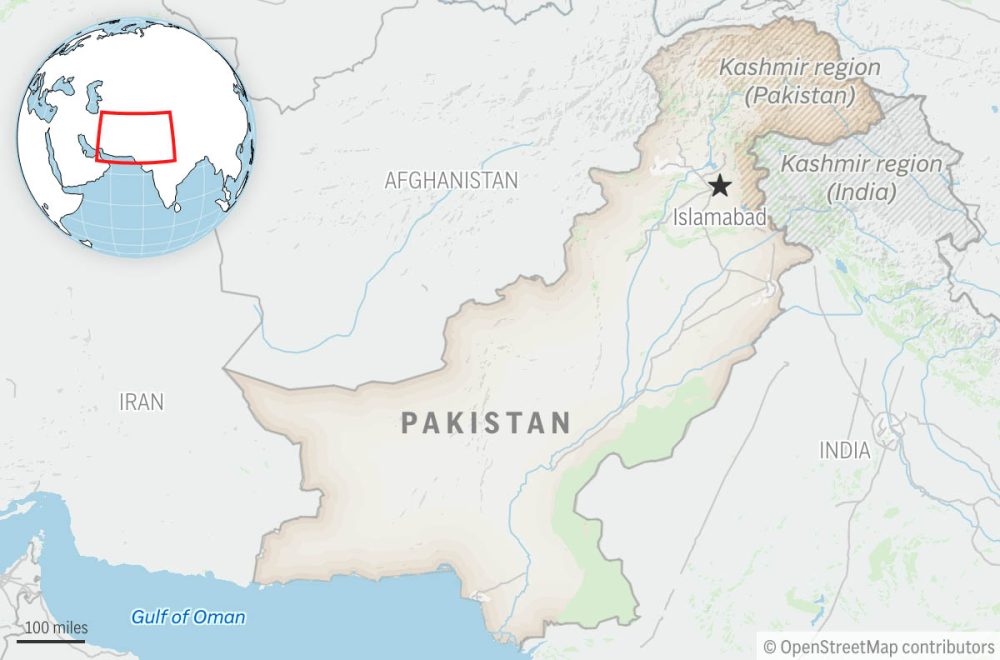
A powerful earthquake measuring 8.2 on the Richter scale hit the Mindanao region of the Philippines on Monday, according to the German Research Centre for Geosciences (GFZ).
Officials reported the earthquake occurred at a shallow depth of 10 kilometers, or approximately 6.2 miles below the surface.
The German research center initially measured the tremor at magnitude 7.3 before revising it upward to 8.2. Following the seismic event, the U.S. Tsunami Warning System issued a tsunami alert for the affected region.
JERUSALEM (AP) — The Middle East finds itself on the brink of renewed warfare as Iran launched a missile attack against Israel late Sunday, marking the first bombardment of its kind in two months following a ceasefire agreement.
An April truce between Iran and other parties has failed to extend into Lebanon, where Israeli forces continue combat operations against Hezbollah militants backed by Iran. Israeli officials maintain they are protecting northern border communities from ongoing drone and rocket attacks launched by Hezbollah.
Iranian leadership views Israel’s ground offensive, involving thousands of soldiers, along with aerial bombardments in Lebanon as violations of ceasefire terms. Tehran maintains that any agreement with the United States must include an end to Lebanese hostilities. Israeli officials reject this position.
The following timeline outlines major developments:
Initial conflict erupted when the United States and Israel launched attacks against Iran, beginning the current war.
Hezbollah joined the fighting by launching rocket attacks against Israel, prompting Israeli counterstrikes.
Officials announced a temporary ceasefire in the Iran conflict, with ongoing negotiations planned. Israel was excluded from these discussions.
Israeli forces conducted intensive bombing of Lebanon’s capital city, Beirut, resulting in more than 300 deaths during a 10-minute assault.
Direct diplomatic discussions between Lebanon and Israel took place in Washington, representing their first such talks in decades.
A temporary ceasefire between Israel and Lebanon was declared, though Hezbollah was not involved in the agreement. Combat operations quickly resumed on both sides.
Israeli ground forces launched their deepest penetration into Lebanon in more than 25 years.
Israeli Prime Minister Benjamin Netanyahu issued warnings of strikes against Beirut unless Hezbollah ceased its attacks. U.S. President Donald Trump announced that Israel and Hezbollah had agreed to reduce fighting.
Israeli drone operations in Lebanon resulted in 11 fatalities.
Both Israel and Lebanon announced agreement to restore the temporary ceasefire and establish security areas excluding Hezbollah presence.
Hezbollah’s leadership refused the ceasefire terms and called for complete Israeli withdrawal from Lebanon.
Iran’s paramilitary Revolutionary Guard declared “there will be no calm in the region” unless Israel withdraws its forces.
Israeli air operations targeting southern Lebanon killed three Lebanese military personnel.
Hezbollah resumed attacks on Israel, prompting Israeli strikes on Beirut’s southern areas, followed by Iranian missile attacks on Israel.
Iran unleashed four waves of missiles targeting northern Israel on Sunday evening, following through on threats of retaliation after Israeli military operations against Hezbollah positions in Beirut’s southern neighborhoods.
Israeli military officials confirmed on social media that missiles had been fired from Iranian territory and that defensive systems were actively working to neutralize the incoming threats. Military sources reported successfully intercepting two of the projectiles. Emergency authorities sent warning alerts to cell phones throughout affected regions and directed civilians to seek shelter in protected areas when alarms sounded.
This marks Iran’s first direct assault on Israel since a ceasefire took effect on April 8th.
Throughout the day, Iranian leadership had issued warnings that Israel would face repercussions for its attacks on Hezbollah facilities in the southern districts of Lebanon’s capital city.
Ebrahim Rezaei, spokesperson for the Iranian parliament’s foreign policy and national security committee, characterized the planned retaliation as forceful. He posted on social media: “We will give a decisive and painful response to the Zionist regime’s attack on the suburbs … Watch the sky of the occupied territories tonight.”
Mohammad Bagher Ghalibaf, speaker of Iran’s parliament and the country’s top negotiator, declared that American military installations and resources throughout the region had become “legitimate targets” after the Israeli strikes.
Regarding current diplomatic efforts, Ghalibaf posted on social media: “They are neither committed to a ceasefire nor believe in dialogue, and through the naval blockade and violation of agreements regarding Lebanon they showed that they only understand the language of power.”
Channel 12 News reported that Israeli security officials had elevated alert status following intelligence analysis suggesting Iran had previously communicated it would respond directly if Israel targeted Hezbollah’s base of operations in southern Beirut. The report indicated Tehran had signaled several days earlier that strikes in the Dahiyeh area would prompt a missile counterattack.
Israeli forces confirmed they conducted operations Sunday against Hezbollah infrastructure in Beirut’s southern districts after the organization launched attacks toward northern Israeli territory.
Meanwhile, Haim Bibas, chairman of the Federation of Local Authorities in Israel, declared that all municipal governments would transition to restricted operations starting at 10 p.m. following updated emergency directives. School activities were suspended, outdoor events were restricted to 200 participants, and indoor gatherings were capped at 500 people in locations with access to standard protective shelters.
Law enforcement officials in Greece have taken a 37-year-old Palestinian man into custody over allegations he was planning a terrorist attack targeting an Israeli-operated cruise ship scheduled to arrive in Crete this week, Cyprus Inform reports.
The suspect was apprehended Saturday evening following a collaborative investigation between Greek and Cypriot intelligence agencies. Originally from Gaza, the man had been granted political asylum in Greece and was employed at a hotel in Agios Nikolaos, Crete.
Officials say he was allegedly plotting an attack against a cruise vessel operated by Mano Maritime set to arrive at the port on Tuesday. Greek intelligence officials determined the suspected plot had not advanced beyond the planning stages.
During questioning, investigators report the man confirmed his affiliation with Hamas and acknowledged maintaining communications with people recently taken into custody in Cyprus on terrorism-related charges.
Law enforcement officials also revealed his connection to two Palestinians detained in Cyprus on suspicion of terrorism offenses. Police believe all three suspects were part of the same operational cell.
According to investigators, the men had received Hamas training together in explosive handling and deployment techniques.
The detention came after intelligence was shared from Cyprus, where officials recently made arrests linked to Hamas operations and bombing incidents in Jerusalem. The Hellenic Police stated the operation required coordination between Cypriot intelligence services, Greece’s National Intelligence Service, and the Anti-Terrorist Service.
During the investigation, security teams conducted searches at several sites across Crete and Athens. Officials confiscated electronic equipment, including a laptop computer and cell phones, as well as bank cards and laboratory materials. Authorities said chemicals and measuring devices found during the searches were suspected to be for creating explosive devices.
Greek state broadcaster ERT reported the suspect had previously leased an apartment in downtown Athens.
No additional arrests have been announced by Greek authorities. The investigation remains active as security officials analyze evidence gathered during the operation and examine the suspect’s reported connections to those detained in Cyprus.
A debate concerning Israel’s ultra-Orthodox community has evolved beyond religious and political considerations into a pressing economic question: Can the nation sustain its changing demographics?
During a major economic policy conference this week, experts examined whether Israel can maintain its current trajectory as defense expenditures climb toward 8% of gross domestic product and approximately a quarter of the national budget, while the ultra-Orthodox population is expected to comprise an increasing portion of military-age Jewish citizens.
Military service forms part of Israel’s social framework, defense expenditures consume an expanding portion of national resources, and the armed forces represent a shared experience for most Jewish citizens. As these pressures intensify, ultra-Orthodox integration appears not merely as a disagreement over exemptions or religious matters, but as a budgetary, military, and economic challenge.
The implications are clear-cut. As the ultra-Orthodox become a larger portion of Israel’s population, the combination of military exemptions, restricted core education, reduced male workforce participation, and sectoral political influence could burden the military, tax revenue, and the skilled economy upon which Israel increasingly relies.
This concern permeated the Eli Hurvitz Conference on Economy and Society, hosted by the Israel Democracy Institute in Jerusalem. The gathering addressed defense expenditures, artificial intelligence, technology sectors, living costs, reconstruction, healthcare, and government budgets. Nevertheless, the ultra-Orthodox matter repeatedly emerged, sometimes explicitly and sometimes through broader discussions of human resources, labor participation, education, and public priorities.
The ultra-Orthodox community refers to Israel’s rapidly expanding religious population whose traditional male institutions emphasize comprehensive Torah study. Many ultra-Orthodox boys do not receive equivalent core instruction in mathematics, English, and science compared to other Israelis; many ultra-Orthodox men do not perform military service, and many join the workforce late or remain outside it for prolonged periods. Ultra-Orthodox women participate in employment at higher rates, frequently supporting large families, but household earnings remain comparatively modest.
Gilad Cohen Kovacs, a researcher at the Israel Democracy Institute who delivered a presentation on “The Economy as a Driver of Change in Haredi Autonomy,” contended that the matter also involves how a separate institutional framework influences growth, employment, and the welfare system.
Cohen Kovacs stated that subsidies supporting the current ultra-Orthodox model total approximately 35 to 37 billion shekels annually, or roughly 5.5% of the government budget. Without modifications, he cautioned, that amount could increase to more than 60 billion shekels yearly in future decades. These numbers were presented as part of his conference examination of ultra-Orthodox autonomy and government support.
He emphasized that the matter should not be viewed as a simple transfer of “money to Haredim.” In his assessment, part of the funding encourages behaviors that maintain ultra-Orthodox men outside the workforce, while another portion strengthens what he characterized as a parallel system of authority, educational networks, community institutions, and political influence.
A welfare system, Cohen Kovacs explained, is designed to assist those unable to work, protect individuals who have suffered harm, and facilitate mobility. In the ultra-Orthodox situation, he maintained, part of the subsidy supports the reverse pattern: reduced utilization of earning potential, partial employment, large families, and a yeshiva-focused lifestyle.
“These are not the conditions for which the welfare state was built,” he said.
This distinction redirects attention from individual poverty toward policy incentives that, according to Cohen Kovacs, maintain dependence and separation. His broader finding was that the current arrangement creates a substantial intersectoral transfer from non-ultra-Orthodox Jewish households to ultra-Orthodox households through tax differences, public services, subsidies, and exemptions from shared responsibilities.
Former Prime Minister Naftali Bennett also referenced studies on that net balance. According to Bennett, what he termed a “Zionist household”—a non-ultra-Orthodox Jewish household integrated into military service and the labor market—contributes approximately 6,000 shekels more monthly than it consumes or receives, while an ultra-Orthodox household receives about 4,000 shekels more monthly than it contributes. He characterized this as a difference of approximately 10,000 shekels monthly between the two household categories.
The comparison brought the fiscal discussion from national budgets to family income. It was not presented as a claim that one particular family directly funds another, but as an aggregate measurement of taxes, government services, subsidies, benefits, and participation in public duties.
Dr. Gilad Malach, a researcher at the Israel Democracy Institute who presented a separate study on the defense burden, told The Media Line that his research addressed one specific aspect of the larger subsidy discussion: security. He said Israel typically treats defense spending as a national budget item, without examining how that burden is distributed across different sectors of society.
Malach said it would be “too simplistic” to explain the gap just by noting that the ultra-Orthodox public is poorer and therefore pays less tax. “You might say, ‘OK, this is a poor society, so they pay less than their share in the population,’” he said. “But we see that the gaps between them and others—it’s much more than that.”
According to Malach, the visible security budget stands at about 120 billion shekels annually, but the actual cost approaches 150 billion once hidden burdens are included: conscripts paid below their labor value, delayed workforce entry, and the cost to employers when reservists leave their positions for extended service.
If the ultra-Orthodox represent about 14% of Israel’s population, he said, they should account for roughly 21 billion shekels of that burden. In practice, he estimated, they contribute about 6 billion.
“So, the gap is 15 billion,” he said.
The figure carries political weight because it places the draft discussion within a broader fiscal equation: who pays for security, who serves, and who bears the indirect costs of a society built around lengthy military service.
Malach was careful not to claim that the gap can be closed quickly. He said the policy tools he presented could reduce it, but not eliminate it. At most, he estimated, the immediate effect could be several billion shekels, not the full 15 billion.
“Just to make the situation less unequal, more equal than today, but not a real equality between the population,” he said.
The demographic warning was more severe. Some projections, Malach said, place the ultra-Orthodox population at around 30% of Israel’s total population within roughly four decades. The more significant number, he added, is not the overall population share, but the share among draft-age Jews.
Among Jewish 18-year-olds, he said, the ultra-Orthodox share could exceed half. In his view, that projection, if realized, would mean that “We won’t have manpower for an army if the situation would be that they are not serving in the army. And we can’t have a prosperous economy if so many people won’t have the ability to work in a modern labor market.”
Reem Aminoach, a senior researcher at the Institute for National Security Studies who previously served as financial adviser to the Israel Defense Forces chief of staff, told The Media Line that the problem is often made to appear more complex than it is.
“All you need is to cancel the deferral,” he asserted, referring to the legal mechanism that has allowed many ultra-Orthodox men to avoid conscription as long as they remain in yeshiva study.
In his view, canceling the deferral would force a clearer choice: service, employment, or some other publicly accountable framework, rather than a system in which avoiding the army also discourages work. Aminoach said the army’s need is practical and immediate.
“The army lacks fighters, not clerks,” he said.
Shaul Meridor, a former senior Finance Ministry official, brought the discussion from national aggregates to the level of a single Israeli family. He described a middle- or lower-middle-class family in places such as Migdal HaEmek or Dimona, with five children, one of them serving in Lebanon, and unable to make ends meet. According to figures he cited from a recent study, such a family subsidizes a comparable low-income ultra-Orthodox family by nearly 1,000 shekels monthly.
“Many times we talk about high-tech and the rich and all kinds of other people who subsidize,” Meridor said. “I am talking about socioeconomic cluster four. Whoever knows what that means understands that this is not high-tech, and these are not people sitting in Tel Aviv or Ramat Hasharon. These are people who do not finish the month.”
He said the moral question after October 7 was no longer abstract.
“Why should a family that does not finish the month have to allocate, from money it does not have, 1,000 shekels net a month to subsidize a Haredi family that chose a different life?”
Meridor also argued that Israel’s current policies harm ultra-Orthodox children themselves by steering them toward poverty.
“As leadership, we must not condemn Haredi children to poverty,” he said. “And that is what we are doing today.”
His proposed principle was direct: those who serve should receive, those who do not serve should not. Combat service, he said, should receive the most; other service should receive less; evasion should receive nothing. But he cautioned that dismantling ultra-Orthodox autonomy would not happen through a single major law. It would require changes in thousands of government decisions, benefits, tax rules, and allocations that currently favor institutions over individuals.
Political speakers approached the same issue from different directions. Bennett focused on education and subsidies, using his speech to attack daycare payments for families in which the father does not work and does not serve. He also proposed a broad education reform built around a shared state curriculum, while preserving limited community autonomy.
Avigdor Liberman, chairman of Yisrael Beitenu and a former defense and finance minister, framed the issue through coalition politics. In a conversation with Yohanan Plesner, president of the Israel Democracy Institute, Liberman argued that Israel cannot sustain higher defense spending while preserving sectoral budgets and avoiding structural reform. He said any serious change would require a government not dependent on the ultra-Orthodox parties Shas and United Torah Judaism.
Former Defense Minister Benny Gantz offered a more cautious critique. He said parts of the ultra-Orthodox leadership were making a grave mistake by perpetuating a situation in which the community is more important than the state. At the same time, he emphasized that there are ultra-Orthodox individuals who work, study, serve, and contribute to the economy, and that they deserve respect.
Meirav Cohen, a Yesh Atid lawmaker and former minister for social equality, used Jerusalem as a warning. Speaking as a Jerusalemite, she said the capital already shows what happens when integration in the army, employment, and education does not move fast enough. Jerusalem, she said, has fallen in less than three decades from socioeconomic cluster five to cluster two. Every second household receives a municipal property tax discount, she said, meaning the other half must carry some of the highest municipal tax burdens in Israel.
“There is no economic model for this,” Cohen said. “You don’t need prophecies or warnings. Look at what happened to us in Jerusalem.”
The ultra-Orthodox discussion occurred during a conference dominated by the rising cost of security and the shrinking space for civilian spending. Former Bank of Israel Governor Karnit Flug said in the opening budget session that Israel’s economy had shown resilience, but that the Israel-Hamas war had imposed a heavy price. Defense spending, she said, now stands near 8% of GDP, compared with a little more than 4% before October 7, 2023. Its share of the total budget has risen to about one-quarter, compared with 16% before the war.
That larger fiscal picture helps explain why ultra-Orthodox integration is no longer treated only as a dispute over religious exemptions. Israel is trying to fund a larger defense establishment, increased rehabilitation needs, more support for reservists, reconstruction in the north and south, health-system gaps, transportation infrastructure, and a technology sector facing global competition. Speakers also warned that insufficient investment in Arab society carries its own cost in lost output, making the broader point that Israel cannot afford to underinvest in any large population group while defense and rehabilitation needs are rising.
Artificial intelligence and technology added another layer. The Israel Innovation Authority’s 2026 report, presented at the conference, showed that technology remains Israel’s main growth engine. In 2025, the sector contributed roughly half of the economy’s growth, reached 18.3% of GDP, accounted for 58% of exports, and employed more than 400,000 people. But the same report also warned of stagnation in employment share, a decline in research and development jobs in Israel, expansion of activity abroad, and growing pressure from the shekel’s appreciation.
That is why ultra-Orthodox integration now intersects with the artificial intelligence discussion. Israel wants to compete in a global economy built on advanced skills, data science, engineering, defense technology, and artificial intelligence. But a growing share of its future workforce is educated in systems that often do not provide the tools required for that economy. The point was not that every Israeli must work in technology, but that the next economy will demand basic quantitative and digital skills across far more jobs.
Eli Hurvitz, CEO of the Eddie and Jules Trump Family Foundation, told the conference that the children currently choosing what to study in high school will be the workforce of 2040. In an artificial intelligence-driven world, he said, mathematics, data, teamwork, and independent learning will become basic conditions for opportunity.
The challenge of ultra-Orthodox integration does not fit neatly into familiar categories of minority rights or welfare policy. In Israel, it is tied to compulsory service, repeated wars, high defense costs, a knowledge-based economy, and a parliamentary system in which sectoral parties can hold the balance of power. The ultra-Orthodox community is a growing part of Israel’s electorate, budget, labor market, and future security burden. That is why the discussion has become one of the country’s central tests of governance.
The conference produced no single, comprehensive solution. Some speakers emphasized immediate enforcement of the existing draft framework. Others focused on incentives, core education, tax benefits, or direct ties between the state and ultra-Orthodox individuals rather than through communal institutions. Some warned against coercion that could backfire, while others argued that decades of gradualism have failed. But there was a striking convergence around one point: the status quo is no longer to be treated as a manageable inconvenience.
The discussion, as reflected in the conference sessions and interviews cited here, was dominated by economists, former senior officials, and political figures warning about the long-term costs of the current model. Representatives of the major ultra-Orthodox parties were not quoted in those sessions or interviews.
Malach put the warning in the starkest terms. Israel has survived enormous shocks, he said, and remains a wealthy country with a strong economy. But if current patterns continue as the ultra-Orthodox population grows, the problem will not remain a matter of resentment or budgetary imbalance. It will become a question of manpower, productivity, and national resilience.
“Right now, it’s very hard, but we are handling,” he said. “The point is that if you call today’s situation very bad, things would be worse than that.”
What emerged in Jerusalem was more than an argument over the draft. It was a broader economic reckoning over who serves, who pays, who studies the skills needed for the next economy, and whether the state can continue financing separate rules for a growing part of its population. Israel’s next election may decide the coalition arithmetic. The harder question, raised throughout the conference, is whether any government will be willing to change the arithmetic of the country itself.
Syria’s new leadership is grappling with one of its most complex postwar security challenges: determining the fate of thousands of international combatants who participated in the country’s conflict and remain armed following the collapse of Bashar Assad’s regime.
The issue gained renewed attention after Uzbek fighters in Syria issued a statement condemning the new government’s policies toward foreign combatants and warning of potential repercussions. The declaration highlighted the mounting pressure Damascus faces as it works to establish control over military and security forces while managing various armed groups that established themselves during more than ten years of warfare.
The resolution of this situation will be crucial for Syria’s ability to regain full sovereignty, eliminate independent military networks, and maintain long-term stability.
International Combatants in Syria
Beginning in 2012, thousands of international fighters arrived in Syria from numerous nations, especially from Central Asian republics, the Caucasus region, China, Afghanistan, North African countries, and Europe. The Syrian war drew foreign recruits driven by religious and ideological motivations, with many joining armed factions and extremist organizations.
Several international groups became major players on the battlefield over time. Notable among them were the Turkistan Islamic Party, consisting primarily of ethnic Uyghur combatants from China, and the Imam Bukhari Battalion, which includes Uzbek fighters. Chechen and other Caucasian groups also held significant positions, along with international fighters formerly connected to the Islamic State organization or other extremist groups.
While exact numbers are not available, the International Crisis Group estimated in May that approximately 5,000 foreign fighters who participated in Assad’s overthrow remain armed in Syria. Other analysts have similarly estimated around 5,000, excluding family members who relocated to the country during the conflict years.
“The foreign fighters no longer represent the large military force they once were during the early years of the war,” said Orabi Abdel Hay Orabi, an expert on jihadist groups, in comments to The Media Line. “However, they still possess combat experience and organizational networks that make dealing with them a highly sensitive security issue.”
The varied nationalities and organizational connections among international fighters makes developing a unified policy approach challenging.
Most arrived in Syria during the conflict’s initial years through international recruitment networks, exploiting the nation’s security breakdown and expanding warfare. Eventually, some international groups established autonomous command structures and gained substantial military power, especially in northern Syria.
That power has diminished in recent years due to military and political changes, ceasefire agreements, the departure of some fighters to other war zones, and the dramatic decrease in foreign recruitment that marked the war’s earlier stages.
Firas Allawi, a Syrian researcher specializing in Islamist armed movements, told The Media Line that the influence of foreign fighters today cannot be measured solely by numbers.
“Many have established deep social ties within local communities over the years,” he said. “A significant number have settled with their families and become part of the social fabric in some areas, which makes any purely security-based approach to the issue increasingly difficult.”
Challenge for Damascus
Since Syria’s new government took power, the foreign fighter situation has emerged as one of the nation’s most complex postwar obstacles, with consequences for domestic security, international relations, and future military structure.
Syrian authorities have consistently stressed the government’s commitment to restoring state control, monopolizing force, and dismantling armed formations operating beyond official institutions. They consider this essential for lasting stability and rebuilding Syria’s military and security apparatus on national principles.
Meanwhile, supporters of some foreign fighters contend that many of these individuals battled throughout Syria for years and now face uncertainty regarding their legal standing, personal safety, and their families’ futures.
Damascus also faces continuous international monitoring regarding these groups’ future. Many Western and regional governments view the management of foreign fighters as a crucial measure of the government’s capacity to ensure stability and combat extremism.
Incorporation Rather Than Deportation
Currently, the favored strategy appears to be containment and gradual incorporation instead of mass expulsion or direct confrontation.
Multiple reports indicate the government seeks to integrate some foreign fighters into official military structures under Syrian leadership as part of a comprehensive plan to dismantle independent armed networks and bring them under state control.
Political analyst and security affairs expert Kinana al-Kurdi told The Media Line that integration represents the least costly option in the short term.
“Deporting thousands of fighters or engaging in large-scale confrontations with them would be extremely difficult,” she said. “Many of these individuals cannot return to their countries of origin because they face legal prosecution or security-related repercussions.”
The expulsion option encounters major obstacles. Some nations refuse to accept their citizens back, while others require immediate prosecution upon return. Many fighters also fear detention or harsh punishment in their home countries.
However, the potential for security confrontations persists if some groups resist the new arrangements or try to maintain their military and organizational autonomy.
Threats to Stability
Inadequate handling of this issue could directly impact Syria’s internal stability. Foreign fighters have extensive military expertise, and some maintain international ideological and organizational ties.
Counterterrorism experts warn that applying too much pressure on these groups, or trying to eliminate them through force, could drive some individuals back to extremist organizations or promote the creation of new underground cells beyond state control.
This situation would create concerns not only within Syria but also among neighboring nations and international partners.
Regional governments in Central Asia and elsewhere are carefully watching developments, worried that fighters might move to other conflict areas or reactivate extremist networks in their home countries.
Four Potential Outcomes
Experts outline four main possibilities for foreign fighters’ future in Syria.
The first and most positive outcome involves successful integration of foreign fighters into state institutions, enabling Damascus to enhance stability and consolidate power.
The second possibility envisions ongoing tensions and limited demonstrations without escalating to direct conflict, leaving the matter unresolved for an extended time.
A third option is that some foreign fighters depart Syria for other nations or emerging conflict areas, either independently or through specific agreements.
The fourth and most hazardous scenario would involve tensions developing into security clashes between state forces and factions rejecting integration. This development could spark a new period of instability and undermine efforts to establish peace and state authority.
Ultimately, any government strategy’s success will depend not only on security actions but also on the state’s capacity to create legal, social, and humanitarian solutions for thousands of fighters and their families, preventing this issue from becoming a persistent postwar crisis.
As Syria manages these competing possibilities, the foreign fighter situation will likely continue testing Damascus’ ability to balance security needs with state-building goals while handling international pressure and the complex aftermath of years of conflict.
Federal officials have given initial clearance for a nearly $2 billion military equipment sale to Kuwait, centered on advanced technology to combat drone attacks threatening the Gulf nation.
The State Department announced the preliminary approval for the $1.98 billion Foreign Military Sale, which would provide Kuwait with sophisticated systems to identify, monitor and neutralize unmanned aircraft threats. Officials described the deal as part of efforts to bolster the defensive capabilities of a key Middle Eastern partner.
State Department officials revealed that the proposed transaction encompasses both physical and electronic combat systems, plus monitoring, command operations and support infrastructure. Anduril Industries, a defense technology firm based in California, is anticipated to serve as the primary contractor for the deal.
The Defense Security Cooperation Agency outlined that the equipment bundle features Roadrunner-Munition and Anvil-Kinetic interception technologies designed to target threatening drones. The package also incorporates Lattice C2 software platforms and Menace tactical command centers to facilitate operational coordination.
Further components in the proposal feature extended-range Sentry observation towers, including portable and enhanced-distance models, sea-based Sentry installations, and deployment containers created to boost monitoring and identification functions. The arrangement also encompasses Pulsar electromagnetic combat systems engineered to neutralize unmanned aircraft through digital interference.
In addition to equipment, the potential transaction covers staff education, software creation, supply chain assistance, and technical guidance from both federal agencies and private contractors.
State Department representatives indicated the arrangement would equip Kuwait with both physical and electronic combat tools to counter threats from unmanned aircraft systems.
This authorization follows a pattern of significant weapons agreements the United States has pursued with Middle Eastern allies. These transactions aim to assist regional partners in deterring threats from Iran and securing vital energy facilities and ocean shipping lanes, according to the official statement.
Unmanned aircraft have emerged as a growing security concern for military bases and sea commerce throughout the region. The announcement highlighted that Iran regularly utilizes relatively inexpensive drones, forcing the deployment of costly American missile defense systems to intercept them.
The potential transaction continues to undergo the Foreign Military Sales review process. Upon completion, the package would supply Kuwait with a comprehensive anti-drone defense network covering surveillance, operational command, electronic combat, and interception technologies worth roughly $1.98 billion.
Moldova’s leader is calling for advanced drone defense capabilities as the ongoing conflict in Ukraine continues to impact her nation’s security.
President Maia Sandu announced that new laws must be passed to enable the production of high-tech interceptor drones, citing the urgent need highlighted by the war next door. The country, which aims to join the European Union by 2030, has faced repeated violations of its airspace by Russian aircraft and falling debris near border areas.
The president, who has been vocal in her opposition to Russia’s military actions in Ukraine, pointed to a recent incident where a drone hit a home in Galati, Romania, near the borders with both Moldova and Ukraine, leaving two people injured.
Speaking during a podcast with a local blogger aired Sunday, Sandu emphasized the vulnerability her constitutionally neutral nation faces.
“Those who want our country to be completely defenceless must understand that there is a risk that drones will fall on us and we won’t be able to do anything about it,” she stated.
“I have asked the government, particularly in the context of recent events, to begin introducing or preparing legislative amendments,” she added.
The proposed laws would enable both government and private sector collaboration in weapons manufacturing, while also creating opportunities for international investment in the defense sector.
Sandu revealed that her country has already begun discussions with Ukraine about drone technology, noting that Ukraine has developed significant expertise after more than four years of defending against Russian drone attacks.
“Ukrainians are the best in terms of interceptor drones,” she explained. “We will try to secure technology from there to the extent that we can with our capabilities. In order to use these technologies, we must first build up a team of experts.”
Moldova’s armed forces have been unable to respond to more than 20 separate occasions when Russian drones have entered the country’s airspace or when drone wreckage has fallen near Moldovan communities.
Iran’s Deputy Foreign Minister Kazem Gharibabadi dismissed on Sunday any notion that regional governments could seek compensation through Iranian assets, responding to reports suggesting the United States might utilize these funds to pay Gulf allies for war-related damages.
In a post on X, Gharibabadi declared that Iran’s assets were “neither war spoils for Washington nor a payment fund for its allies.”
According to a Saturday Reuters report citing a knowledgeable source, the United States plans to make Iranian assets accessible to Gulf partners for reconstruction efforts and repairs following future Iranian-caused damage.
The source indicated that America would also explore using these funds for previous damage repairs, noting that U.S. Treasury Secretary Scott Bessent had tasked a team with evaluating costs of harm already caused to Gulf allies by Iran.
Throughout the conflict, Iran conducted missile and drone strikes against multiple Gulf nations, claiming it targeted American and Israeli interests across the region.
Saturday saw Iran announce ballistic missile launches at American bases in Kuwait and Bahrain. U.S. forces reported intercepting six missiles while a seventh failed to reach its intended target. Kuwait confirmed property damage without casualties, and Bahrain advised citizens to take shelter.
Research firm Rystad Energy estimated in April that Middle East conflict reconstruction could cost up to $58 billion for energy infrastructure repairs alone.
Gharibabadi warned that any seizure, transfer, or allocation of Iranian funds without Tehran’s approval would represent “a new internationally wrongful act,” creating U.S. liability while Washington claims to pursue negotiations with Iran. He indicated such actions would trigger an “appropriate response” from Iran, though he provided no specifics.
Iran has requested partial release of its confiscated funds through a framework both nations are discussing to conclude the Iran war.
The Deputy Foreign Minister stated that certain regional governments had made their territories and facilities available “at the service of aggression against Iran” and therefore lacked standing to seek reparations. He argued these governments should fully compensate Iran for damages inflicted upon it.
Tehran’s war-ending conditions include releasing billions in frozen assets, removing U.S. and international sanctions, and acknowledging its control over the Strait of Hormuz.
A devastating bus accident in southern Iraq claimed the lives of 21 people and left 19 others injured on Sunday, according to police and health authorities. The tragedy unfolded near Nassiriya when a passenger bus crashed and erupted in flames.
Authorities report that the driver lost control of the vehicle while traveling on a highway close to Nassiriya, leading to the bus flipping over and igniting. The violent crash resulted in immediate casualties and widespread injuries.
Iraqi Prime Minister Ali al-Zaidi has called for a full investigation into what caused the deadly incident and has instructed officials to provide a comprehensive report detailing the circumstances of the accident, according to his office.
Emergency responders and medical personnel confirmed that 21 individuals died either at the crash site or after being transported to medical facilities, while 19 survivors sustained injuries in the incident.
Health authorities indicated that the majority of those hurt in the crash are fighting for their lives in critical condition, with many suffering from extensive burn injuries.
Law enforcement officials stated that investigators are working to determine what led to the fatal crash.
Such vehicular accidents occur frequently throughout Iraq, where excessive speed, deteriorating roadway infrastructure, and insufficient traffic law enforcement result in numerous deaths annually.
Israeli officials reported Sunday that Iran had fired missiles toward their territory, marking the first attack of this kind since a tentative ceasefire was established in early April, further complicating ongoing diplomatic efforts to bring the conflict to an end.
Iranian state media verified the missile launch, and residents in northern Israel reported hearing multiple explosions. Israeli military officials stated they were attempting to intercept the incoming missiles but acknowledged “the defense is not hermetic,” noting that warning sirens were activated across multiple regions.
The Iranian response followed Israel’s unannounced attack on Beirut’s southern neighborhoods on Sunday, carried out despite Washington’s recent appeals to refrain from such actions. Israeli officials described their strike as retaliation for earlier attacks by the Iranian-backed Hezbollah against northern Israeli territory.
The Israeli bombardment of Beirut occurred just days after Lebanese and Israeli officials had reached a ceasefire agreement through U.S.-mediated negotiations, although Hezbollah has refused to accept the arrangement. According to Lebanon’s health ministry, the attack on a residential structure resulted in two deaths and 20 injuries.
Iranian officials had previously stated that any assault on Beirut would trigger renewed widespread conflict throughout the Middle East region, even as Pakistan attempts to facilitate renewed dialogue between Tehran and Washington. Iran maintains that any agreement must encompass an end to hostilities in Lebanon.
Israel’s military operations and ground offensive in Lebanon targeting Hezbollah, along with the militant organization’s refusal to disarm, have hindered progress toward a comprehensive regional peace agreement. Iranian leadership insists that any settlement must address the cessation of fighting in Lebanon.
The White House has not issued a statement regarding Israel’s Beirut operation. Israeli authorities had previously announced plans to target southern areas of Lebanon’s capital on Monday, but intensive discussions through Washington prevented this action on the condition that Hezbollah cease attacks on Israeli border communities.
Hezbollah has not yet taken responsibility for the earlier Sunday attacks on Israel.
The militant group opposes the direct negotiations between Lebanon and Israel, instead backing Iran’s position that a comprehensive ceasefire arrangement between Tehran and Washington should address the Lebanese situation.
Diplomatic initiatives for a broader agreement continued Sunday as Pakistan’s interior minister traveled to Iran for official discussions, while Egypt announced that its foreign minister and his Qatari counterpart had reviewed “proposed elements” of a possible deal, though specific details were not disclosed.
U.S. President Donald Trump has not addressed the conflict on Sunday, but in a “Meet the Press” interview recorded Friday and broadcast afterward, he expressed support for “a more surgical attack on Hezbollah.” He also indicated he was “not demanding” that Lebanon be included in any comprehensive ceasefire agreement regarding the Iran conflict.
Meanwhile, Iran has maintained its control over the Strait of Hormuz while the U.S. continues blocking Iranian ports, disrupting shipments of oil, natural gas and fertilizer and causing economic strain globally.
Israeli Prime Minister Benjamin Netanyahu, facing elections later this year, intends to continue Israel’s military campaign until he determines that Hezbollah no longer represents a threat.
Pakistan’s interior minister was present in Tehran on Sunday. Mohsin Naqvi was carrying a communication to Iranian Supreme Leader Ayatollah Mojtaba Khamenei from Pakistan’s army chief Field Marshal Asim Munir, according to Iran’s state-run IRNA news agency. The message’s specific contents were not revealed.
Khamenei has remained out of public view since assuming leadership of the Islamic Republic following his father’s death on Feb. 28, the conflict’s opening day.
According to official Iranian media, Naqvi held meetings with Iranian Interior Minister Eskandar Momeni on Saturday evening and Foreign Minister Abbas Araghchi on Sunday.
Pakistani officials have indicated that Islamabad, working alongside regional partners including Qatar, Turkey and Egypt, is attempting to facilitate dialogue between the United States and Iran.
In Cairo, Egyptian Foreign Minister Bader Abdelatty and Qatari counterpart Sheikh Mohammed bin Abdulrahman Al Thani reviewed “proposed elements” of a potential U.S.-Iran agreement, according to the Egyptian foreign ministry, though no specifics were provided.
Ukraine’s president arrived in London Sunday for high-level discussions with European leaders about continued support for his country and strategies to end the ongoing conflict.
Volodymyr Zelenskiy met with Britain’s Keir Starmer at Downing Street, joined by French President Emmanuel Macron and German Chancellor Friedrich Merz for the June 7 talks.
“The main focus is our defence in the war, greater cooperation for the security of all of Europe in the area of air defence, and our shared view of diplomatic prospects,” Zelenskiy wrote on X upon his arrival in Britain.
“Europe must be part of the negotiations and must be strong.”
Starmer greeted Macron and Merz at Number 10’s entrance before the Ukrainian leader’s arrival. The three nations form an informal security partnership known as the E3, which has emerged as a key supporter of Ukraine internationally.
Speaking Friday, Macron indicated Europeans could assist both Ukraine and Russia in developing a ceasefire and peace framework.
However, each side continues to blame the other for unwillingness to make concessions.
The Ukrainian president released a public letter Thursday suggesting direct negotiations with Vladimir Putin to resolve the conflict, which has entered its fifth year, but the Russian leader rejected the proposal.
In his correspondence, Zelenskiy claimed Russians had become weary of Ukrainian missile and drone strikes, economic inflation and fuel supply issues, making them receptive to peace.
Putin dismissed the proposal as insincere and said he saw no value in meeting currently, emphasizing the need for a “long term” solution.
During Thursday discussions with international journalists, the Russian leader maintained his firm position on the conflict while suggesting U.S. President Donald Trump’s peace proposals might halt the fighting if Kyiv showed willingness to compromise.
CAPE TOWN, South Africa — The South African president delivered a national television address Sunday, vowing to take action on immigration concerns as anti-foreigner demonstrations and sentiment escalate throughout the continent’s most developed economy. Several neighboring countries have reported that their nationals are being subjected to xenophobic violence.
President Cyril Ramaphosa’s televised remarks represented a recognition of the growing discord. Organizations opposing immigration have established a June 30 ultimatum for undocumented foreign nationals to depart South Africa and have sought discussions with government officials.
The nation has experienced previous episodes of migrant-related violence, notably in 2008 when xenophobic assaults on foreigners resulted in over 60 deaths, according to international human rights organizations.
Organizations demanding stricter immigration enforcement have attracted public attention through recent demonstration campaigns. These groups contend that undocumented foreign residents worsen the country’s severe joblessness crisis and add strain to overwhelmed healthcare and educational systems.
“Many South Africans are raising difficult but legitimate questions,” Ramaphosa said. “These concerns are real. They deserve to be heard, and they deserve to be addressed.”
However, Ramaphosa emphasized that officials would not permit vigilante justice or self-help remedies.
“Only authorized government officials can act against violations of our law,” Ramaphosa added, warning that some groups were “inciting” tensions.
No official statistics exist regarding undocumented migrants in South Africa, although various assessments suggest between 2 million and 5 million people among the nation’s 62 million residents lack proper documentation.
Being the wealthiest nation in the area, South Africa has historically drawn migrants from nearby countries including Zimbabwe, Mozambique and Lesotho, along with others from Nigeria, Ghana, Malawi and Ethiopia. This migration pattern spans several decades.
Ghana, Nigeria, Kenya and Mozambique have recently reported that their nationals encounter intimidation and violence in South Africa due to their foreign status. Ghana brought approximately 300 citizens home from South Africa last month and indicated additional repatriations would be available due to reported threats.
Mozambique’s leadership announced this week that five nationals died in what officials described as xenophobic violence in Mossel Bay, a coastal town in southern South Africa.
South Africa’s coalition administration has emphasized immigration issues since forming in 2024 and reports removing over 100,000 undocumented individuals during the past two years. Ramaphosa stated Sunday that approximately 450,000 people attempting to enter South Africa without proper documentation were turned away at border crossings within the last year.
Ramaphosa acknowledged previous “weaknesses” in South Africa’s migration management and pledged “decisive” government response, while urging citizens to avoid turning against one another over immigration matters.
Military police in Israel have opened a criminal investigation into the death of a Palestinian baby who was shot and killed by an Israeli soldier in the West Bank on Friday.
Seven-month-old Sam Fahd Abu Haikal died when a soldier fired at the family’s vehicle, also injuring both of his parents. Israeli military officials confirmed the incident occurred in the occupied territory.
“Based on the findings of the preliminary examination, it was decided to open an investigation by the Military Police Criminal Investigation Division,” Israel’s military said.
“Upon its conclusion, the findings will be transferred to the Military Advocate General’s Office,” it said in a statement.
Military officials initially stated Friday that a soldier had discharged one round at a car that troops thought was speeding toward their position.
However, the infant’s father, Fahd Abu Haikal, provided a different account of events. He was behind the wheel in the Tel Rumeida area near the West Bank city of Hebron when he encountered soldiers on the roadway.
“The bullet penetrated the front windshield, went through my arm, and then struck my son in the head and my wife in the face,” Fahd told reporters on Saturday.
According to the father, he had brought his vehicle to a stop upon seeing the troops, and a soldier positioned about 10 meters ahead fired through the windscreen after the car had already halted.
Military authorities have not released the identities of any soldiers who were at the scene, and have not disclosed whether they remain on active duty.
PRISTINA, June 7 – The political party of Prime Minister Albin Kurti emerged as the frontrunner in Kosovo’s parliamentary elections held on Sunday, according to initial official tallies.
With 14.5% of ballots tallied, Vetevendosje captured 38.7% of the vote, data from the central election commission revealed.
ISLAMABAD (AP) — Pakistan-administered Kashmir’s highest court determined Sunday that a dozen assembly seats designated for Kashmiri refugees residing in Pakistan have constitutional safeguards and cannot be eliminated except through constitutional modifications.
The decision bolstered the regional administration’s stance in a conflict that has sparked weeks of demonstrations before next month’s legislative elections.
The Supreme Court of Azad Jammu and Kashmir delivered its judgment after receiving a presidential inquiry requesting clarification on constitutional matters related to the refugee representation and the forthcoming election for the 45-seat Legislative Assembly.
This significant decision eliminates legal ambiguity surrounding the electoral procedure, declaring that public safety cannot be compromised under the guise of demonstrations. The ruling followed Saturday’s arrest of numerous supporters of the Joint Awami Action Committee, known as JAAC, an organization recently prohibited by regional authorities due to alleged public safety and security concerns.
The organization has conducted violent demonstrations in previous years and announced intentions to stage another protest next week to compel the government to meet its requirements.
The disputed refugee representation is allocated for individuals who relocated to Pakistan from Indian-administered Kashmir years ago, maintaining hopes of eventual return should the enduring territorial conflict reach resolution.
Kashmir remains split between Pakistan and India, with both nations asserting complete territorial claims over the Himalayan region and having engaged in two military conflicts since gaining independence from British rule in 1947.
The tribunal determined that legislative elections must occur within constitutionally mandated timeframes and that political conflicts, demonstrations, or constitutional disagreements cannot justify postponing the vote.
The court affirmed that refugee seats possess constitutional safeguards and may only be modified through constitutional amendments.
The judges also supported the administration’s position that unresolved constitutional matters should be handled by the Legislative Assembly. While acknowledging peaceful demonstration as a constitutional privilege, the court stated that activities disrupting public life, obstructing roadways, threatening citizens, or interfering with constitutional procedures lack legal immunity.
The ruling supports the administration’s contention that it cannot eliminate refugee seats through executive measures — a stance consistently maintained by Prime Minister Faisal Mumtaz Rathore during discussions with JAAC.
Relations have deteriorated between regional authorities and the protest organization before a demonstration scheduled for Tuesday. Officials prohibited JAAC this week, claiming it threatens public safety.
Rathore stated Saturday that the administration had accommodated 36 of the organization’s 38 requests last year following negotiations between JAAC representatives, regional authorities, and Pakistan’s federal administration. He explained the remaining two requests concern constitutional matters that only the Legislative Assembly can modify.
The organization claimed Saturday that authorities killed one member when police discharged weapons. Kashmir police rejected the allegation, stating armed individuals had fired at officers overnight after being instructed to halt their vehicle.
Previous year’s confrontations between demonstrators and security personnel resulted in multiple fatalities, including law enforcement officers.
President Cyril Ramaphosa announced Sunday that South Africa will target organizations responsible for stoking xenophobic violence, as anti-immigrant demonstrations continue to damage the nation’s international standing.
Several African countries including Ghana, Nigeria, Malawi and Mozambique are bringing home citizens who became caught up in the demonstrations, some of which have escalated into violence. Officials from Mozambique reported that five of their nationals lost their lives in the unrest.
During a nationally broadcast speech, Ramaphosa declared his administration would take action against those exploiting public concerns over illegal immigration for personal gain, though he did not detail specific measures planned.
“We will act against forces who are exploiting the concerns of our people about illegal immigration to further their own political, personal and criminal agendas,” Ramaphosa stated during his televised remarks.
“We will and must not allow groups to use the legitimate concerns of South Africans to destabilize our country through inciting lawlessness and violence,” he added.
The president warned citizens against confronting people in public to check their documentation, emphasizing that only government authorities have the power to enforce immigration regulations.
Anti-immigrant violence has plagued South Africa repeatedly, with foreign nationals frequently scapegoated for the country’s economic challenges including widespread joblessness and criminal activity. Advocates for immigrant communities argue these claims are unjustified and manipulated by politicians seeking popular support.
During his address, Ramaphosa acknowledged that migrants were being unfairly held responsible for issues stemming from widespread poverty and lack of employment opportunities.
The administration is implementing various measures to handle migration issues, he explained, including tougher regulatory enforcement, comprehensive legal reforms, and collaboration with neighboring nations to tackle the underlying causes driving illegal border crossings.
Among the policy initiatives he outlined were plans to establish specialized courts for faster processing of immigration matters and modernizing the paper “green book” identification documents used by South Africans and legal residents with more advanced biometric digital cards.
Ghana’s Foreign Minister Samuel Okudjeto Ablakwa announced Saturday that his country has formally complained to the African Union regarding South Africa’s treatment of Ghanaian nationals. Ghana is documenting property losses suffered by its citizens during the attacks for potential future legal proceedings.
The White House is exploring a proposal to purchase the Chagos Islands directly from Mauritius, according to a report from the Telegraph published Sunday.
American officials have reportedly developed a plan that would circumvent the U.K. and establish a direct agreement to secure control of Diego Garcia, the report stated.
Reuters was unable to immediately verify the Telegraph’s reporting. Both the White House and the UK Foreign Office did not provide immediate responses when asked for comment.
According to the report, this purchasing proposal represents one of multiple options being developed by the White House in a document designed to offer alternatives to British Prime Minister Keir Starmer transferring sovereignty of the Indian Ocean island chain to Mauritius.
The Telegraph also reported that the White House has maintained ongoing conversations with Downing Street regarding the future security of Diego Garcia.
In April, Britain’s government suspended its agreement to transfer sovereignty of the Chagos Islands, which houses the joint U.S.-British Diego Garcia military installation that has faced criticism from Trump.
In February, Trump characterized the deal as a “big mistake.”
ROME, June 7 – Italian maritime rescue teams have pulled 10 bodies from Mediterranean waters following the capsizing of a vessel carrying migrants near Malta, according to a coastguard announcement made Sunday.
The vessel had left Libya with approximately 60 people on board before it overturned roughly 45 nautical miles east-southeast of Malta’s coastline, Italian coastguard officials reported.
“According to the latest information, a fishing boat in the area rescued around 48 people alive, out of about 60 reported to have set off,” the coastguard added.
“The Italian coastguard immediately dispatched a patrol boat to the area, which has so far recovered 10 bodies. Search operations in the area are continuing, coordinated by the Maltese authorities.”
Iran’s Parliament speaker has issued a warning that American military installations and Israeli facilities across the Middle East could face retaliation following recent developments in Lebanon and what he described as a U.S. naval blockade of Iran.
Mohammad Baqer Qalibaf, who serves as Iran’s Parliament speaker, made the statement on social media platform X after Israel conducted strikes against southern areas of Beirut, Lebanon’s capital. These targeted zones are known to be controlled by Hezbollah, which maintains close ties with Iran.
In his post, Qalibaf criticized both the United States and Israel, stating: “They are neither committed to a ceasefire nor believe in dialogue, and through the naval blockade and violation of agreements regarding Lebanon they showed that they only understand the language of power.”
The Iranian official’s comments came in response to what he characterized as American approval for Israel to intensify military operations in Lebanon, as well as ongoing naval restrictions affecting Iran.
Ukraine’s President Volodymyr Zelenskiy announced Sunday that he had traveled to Britain for high-level diplomatic discussions with key European leaders.
Zelenskiy said he would hold one-on-one meetings with British Prime Minister Keir Starmer, along with a broader discussion format that includes French President Emmanuel Macron and German Chancellor Friedrich Merz alongside Starmer.
In a post on X, the Ukrainian leader outlined the primary objectives of his visit. “The main focus is our defence in the war, greater cooperation for the security of all of Europe in the area of air defence, and our shared view of diplomatic prospects,” he stated.
Zelenskiy emphasized the importance of European involvement in future negotiations, adding: “Europe must be part of the negotiations and must be strong.”
President Donald Trump told NBC News in a recent interview that frozen Iranian assets will remain locked and sanctions will stay in place until a peace agreement is fully completed.
During the “Meet the Press” interview, Trump made clear that any relief for Iran would only happen following a finalized deal. “Comes after,” the president stated. “Yeah. If they behave, if they do a good job, we start talking. Yeah.”
The president also indicated that Lebanon’s inclusion in any short-term agreement with Tehran is not a requirement from his administration.
“I think they’d like to see it, but I’m not demanding,” Trump explained during the Friday interview taping.
Military operations involving U.S. and Israeli forces against Iran commenced on February 28, with the Trump administration working for weeks to broker a potential peace agreement. “We’re very close to a deal, or I’m going to blow the hell out of them,” Trump declared to NBC News.
Trump expressed willingness to engage directly with Iran’s supreme leader, Ayatollah Mojtaba Khamenei, who has remained out of public view since sustaining injuries during U.S. military strikes when the conflict began.
“I don’t want to say whether or not I know where he is, but there’s a good probability that I do,” the president revealed.
Senior administration officials, including Secretary of State Marco Rubio, maintain that a temporary ceasefire arrangement remains intact despite ongoing U.S. military actions against Iran, explaining to Congress last week that such strikes are defensive in nature.
Slovenia’s President Nataša Pirc Musar has leveled serious accusations against Israel, claiming the country is committing genocide against Palestinians just days after Israel revealed plans to establish its inaugural embassy in Slovenia.
The president took to social media platform X on Saturday to announce that the Palestinian flag would fly over the presidential building while condemning Israel’s treatment of Palestinians.
“The genocide against the Palestinians has not stopped, and the residents of Gaza and the West Bank are not living in peace and dignity. This is a symbol of blatant violations of international humanitarian law and human rights not only in Palestine, but also in other places in the world,” she wrote.
Her statement followed closely on the heels of Israeli Foreign Minister Gideon Sa’ar’s announcement that Israel would open an embassy in Slovenia, marking a historic first for diplomatic relations between the nations.
Sa’ar revealed on Thursday that he had directed Foreign Ministry Director-General Eden Bar Tal to start embassy preparations and begin choosing an ambassador. Prime Minister Janez Jansa and Slovenia’s parliament have already given their approval to the initiative.
“The election of Prime Minister Janez Jansa marks a new chapter in relations between Israel and Slovenia,” Sa’ar wrote. “After years of the hostility of the previous government, we now have an opportunity to rebuild, strengthen, and deepen a real partnership.”
“An Israeli embassy is more than a diplomatic mission. It is a statement of friendship, dialogue, and a shared belief in freedom, democracy, and security. We are turning today a new page.”
Jansa expressed enthusiasm for the development, posting on X that he was “looking forward to a new era in Slovenia-Israel relations.”
Reports indicate the current administration has already begun reversing previous policies by allowing Israeli aircraft to resume operations at Ljubljana airport and taking down the Palestinian flag that had been displayed at the prime minister’s office.
Just last week, Slovenia had prevented an Israir passenger plane traveling from Tel Aviv from touching down in Ljubljana, compelling the flight to reroute to Zagreb, Croatia instead.
During former Prime Minister Robert Golob’s tenure, Slovenia officially acknowledged Palestinian statehood in May 2024. The following July, Slovenia imposed sanctions on Itamar Ben-Gvir and Bezalel Smotrich.
The prior administration had also implemented a travel restriction on Prime Minister Benjamin Netanyahu, established an arms embargo against Israel, and refused to participate in the 2026 Eurovision Song Contest in Vienna due to Israel’s involvement.
A recent Channel 12 News survey reveals that Gadi Eisenkot, the former Israel Defense Forces chief of staff, has moved ahead of Prime Minister Benjamin Netanyahu in public opinion regarding who should lead the country.
The polling data shows Eisenkot’s Yashar! party making significant progress, while the former military leader has now become the top choice among respondents for prime minister. In head-to-head comparisons with Netanyahu, Eisenkot garnered 38% of support versus the current prime minister’s 35%.
When matched against other political figures, Netanyahu maintained leads over Bennett with 38% to 31% and over Avigdor Liberman with 36% to 24%.
Within opposition circles, Eisenkot outperformed Bennett with 46% preference compared to 39%. An additional eight percent indicated they favored a different candidate, while seven percent remained undecided.
If voting occurred immediately, the poll indicates Likud would continue as the nation’s dominant party, securing 23 Knesset seats with no change from prior polling. Naftali Bennett’s Together party dropped one seat to 21.
Eisenkot’s Yashar! party gained two seats and would claim 19 mandates based on the survey results. The Democrats under Yair Golan’s leadership maintained 10 seats. Both Shas and Yisrael Beiteinu earned nine seats each, with Otzma Yehudit taking eight and United Torah Judaism securing seven.
Within Arab political representation, both Hadash-Ta’al and Ra’am would obtain five seats each. Bezalel Smotrich’s Religious Zionism party stayed above the minimum threshold with four seats.
Several parties failed to meet the electoral threshold, including Benny Gantz’s Blue and White party, Yoaz Hendel’s Reservists party, and Sami Abu Shehadeh’s Balad party.
The survey demonstrated that political bloc distribution remained static from the previous poll. Opposition parties, including Arab representation, would command 69 seats, while coalition parties would possess 51.
Public opinion regarding the potential appointment of Michael Rabello, Prime Minister Netanyahu’s attorney, as state comptroller showed 45% opposition compared to 18% support.
Concerning election security, 57% of respondents expressed general worry about election integrity, while 35% indicated they were not particularly concerned.
Among opposition supporters, 53% favored a combined electoral list featuring Bennett and Eisenkot, while 33% rejected this concept and 14% remained uncertain.
Violence erupted Friday evening as Haredi demonstrators gathered at police stations in Jerusalem and Beit Shemesh, prompting law enforcement to use force to break up the crowds. The protests were organized in reaction to arrests that occurred during earlier demonstrations at Supreme Court Justice Noam Sohlberg’s residence.
Reports indicate that demonstrators assembled outside the police facilities, with some attempting to force their way inside the buildings. Local residents reported being attacked during the unrest, and eyewitnesses noted that police took several minutes before beginning efforts to disperse the crowds.
Law enforcement officials confirmed that officers were sent to both cities and employed crowd-control tactics against the demonstrators. In Beit Shemesh, protesters allegedly hurled rocks at police officers as confrontations continued.
At Jerusalem’s Lev HaBira police station, officers worked to move demonstrators away from the surrounding area. Commander Shlomi Bachar, who leads the Zion District, ordered his officers to use force against the protesters. According to Maariv, police employed batons while working to drive demonstrators back from the station.
Throughout the confrontations, protesters shouted anti-police slogans while voicing opposition to the detention of Haredi demonstrators arrested at Sohlberg’s home and the court’s decision to extend their custody.
Violent encounters between law enforcement and demonstrators continued in Beit Shemesh, where officers also employed force while attempting to restore calm to the area.
Reports suggest that police had made advance preparations for the demonstrations after communications spread through the Jerusalem Faction (Peleg Yerushalmi) community encouraging Friday evening protests regarding the arrests. Even with these preparations in place, observers noted that significant time elapsed before police began responding to the situation.
Taiwan’s maritime authorities announced Sunday they successfully removed four Chinese government vessels from restricted waters near the island after an intense confrontation involving radio warnings from both nations.
The incident occurred as China continues to view Taiwan as part of its territory, with Beijing particularly upset over recent announcements from Japan and the Philippines about beginning official discussions to establish their maritime borders in disputed waters.
Chinese state media reported Saturday evening that vessels had been deployed for what officials called a “special maritime traffic law-enforcement operation” in waters east of Taiwan, responding to the Japanese-Philippine border talks announcement.
According to Taiwan’s coast guard, the four Chinese vessels – three of which were coast guard ships – entered Taiwan’s restricted maritime zone located 30 nautical miles southwest of the island’s southernmost point on Sunday afternoon.
Taiwan responded by dispatching seven coast guard ships to confront the Chinese vessels, successfully removing all four government ships from the restricted area by late Sunday afternoon, according to an official statement.
Taiwan’s maritime authorities released audio recordings capturing the heated exchange between the two sides. In the recording, a Chinese officer can be heard stating: “These are waters under Chinese jurisdiction. Our maritime law-enforcement formation is carrying out a special traffic law-enforcement mission in the waters of the Taiwan Strait. Do not interfere with our official duties.”
A Taiwanese coast guard officer responded by challenging China’s authority in the region, stating that China lacks any “sovereign rights” in Taiwan’s eastern waters.
“If conflict occurs, your side will face sanctions from the world. Only maritime stability can ensure your country’s development,” the Taiwanese officer warned.
China’s Taiwan Affairs Office could not be reached for comment during non-business hours.
Taiwan has documented increased Chinese coast guard presence over the past two weeks, including confrontations near the Taiwan-administered Pratas Islands located at the northern edge of the South China Sea.
Chinese military forces already conduct operations in the area surrounding Taiwan nearly every day.
Taiwan National Security Council Secretary-General Joseph Wu criticized China’s actions on his X social media account Sunday, writing: “The PRC is nothing but a big fat bully,” using the abbreviation for People’s Republic of China.
China has maintained its position of not ruling out military action to gain control over Taiwan, while Taiwan’s leadership continues to reject Beijing’s territorial claims.
The United States has circulated a proposed resolution among member countries of the U.N. nuclear watchdog’s governing board, calling on Iran to provide detailed information about its nuclear facilities and uranium stockpiles ahead of this week’s scheduled meeting.
The draft document, obtained by Reuters on Sunday, requires Iran to furnish the International Atomic Energy Agency with detailed accounting of nuclear materials and safeguarded facilities within the country. The resolution also stipulates that Iran must allow the Agency complete access needed to confirm this information immediately.
The text specifically calls for Iran to supply “precise information” regarding its nuclear sites that have been damaged and its enriched uranium inventories.
Israeli forces carried out airstrikes Sunday targeting what government officials described as terrorist facilities located in the southern districts of Beirut, Lebanon, according to a joint statement from Prime Minister Benjamin Netanyahu and Defense Minister Israel Katz.
The military operation focused on the Dahiyeh area, which serves as a stronghold for Hezbollah, Israeli officials said. The strikes were conducted as retaliation for attacks launched by the group into Israeli territory, the joint statement indicated.
The controversial haircut known for being “business in the front, party in the back” took center stage in Denmark’s capital this weekend.
Thousands of enthusiastic spectators packed an outdoor venue in central Copenhagen on Saturday to witness Denmark’s annual mullet championship, where a dozen contestants showed off their distinctive hairstyles characterized by short front sections and lengthy back portions.
The wild 2026 competition, held on a stage in the heart of the city, drew over 1,000 onlookers for what organizers called the evening’s “mane” attraction.
Event founder Steffen Stiw Weber, a 37-year-old electrician, explained that the contest started four years ago following his own hair transplant procedure when he decided to grow a mullet.
Weber created the Danish competition after discovering he couldn’t participate in a similar U.S. contest due to citizenship requirements.
“I was like, OK, I have to do it on my own here in Denmark,” he said while smiling.
Judge Bobby Agren explained that participants were scored based on their haircut’s style, creativity, and overall stage presence, including their “mullet moves.”
Each participant received one minute on stage to display their unique cuts.
“I like the finesse, the twist, the nostalgia. I like it if it looks ridiculous or maybe ugly in a beautiful way,” said Agren, who operates two hair salons in Copenhagen.
“I think in our culture, when everything must … be perfect on social media and everything like that, I think that’s why people have to stand out from the crowd,” said Stiw Weber.
The competition showcased dramatic performances including alcohol consumption, breakdancing, and live musical acts. One participant even styled their mullet to mirror Denmark’s national flag.
Spectators roared and chanted throughout the event, their excitement clearly energizing the stage performers.
Following each act, judges displayed scoring cards to award points to contestants.
Construction worker Thomas Berg, 43, claimed victory after impressing judges with an energetic trampoline routine while wearing bright green athletic clothing and an orange headband to complement his mullet.
“I think it’s just funny. It’s just a big party,” said a grinning Berg after receiving his award. “It’s just nice to be a bit outside the box.”
While mullets have existed longer than professional hairstyling, the Oxford English Dictionary credits hip-hop group the Beastie Boys with popularizing the term through their 1994 song “Mullet Head” from the album “Ill Communication.”
The distinctive short-front, long-back style gained popularity among hockey players and 1980s musicians before eventually losing mainstream appeal.
Vogue magazine once labeled the mullet as “history’s most divisive hairstyle.”
However, the haircut has experienced a worldwide comeback in recent years. British publication i-D proclaimed 2020 “the year of the mullet” as pandemic salon closures and lockdown restrictions encouraged people to experiment with longer hair.
Similar mullet contests now occur globally, with Belgium hosting the European Mullet Cup just last month.
“It comes back every 20-30 years. There’s always a circular motion in fashion,” said Agren, the Denmark mullet competition judge.
Five Palestinians died and at least 16 others sustained injuries when an Israeli airstrike targeted a police station operated by Hamas in Gaza’s southern region on Sunday, according to health officials. The attack coincided with the start of renewed diplomatic efforts in Egypt aimed at preserving a fragile ceasefire agreement brokered by the United States.
Medical personnel did not specify how many of those killed or wounded were police officers. The strike targeted a police facility located next to a large camp housing displaced families in Khan Younis in the southern part of the territory. Israeli military officials had not provided immediate comment regarding the incident.
Over recent months, Israel has intensified its operations against police facilities and officers, resulting in dozens of deaths among police personnel, Hamas security officials reported.
Large-scale combat operations have been suspended since October following a ceasefire that ended two years of warfare, though negotiators have yet to finalize a comprehensive U.S.-supported plan calling for Israeli military withdrawal, Hamas disarmament, and Gaza reconstruction.
Israeli forces continue to maintain control over more than half of Gaza’s territory, having forced residents to evacuate and demolished remaining structures. Nearly all of the territory’s 2 million residents now reside in a narrow coastal area, primarily in temporary shelters or damaged structures, under Hamas administration.
The status of Hamas’ approximately 10,000 police officers has become a contentious issue in discussions about advancing U.S. President Donald Trump’s Gaza plan. Hamas seeks to incorporate them into a new police force, while Israel opposes any role for Hamas-affiliated personnel.
Egypt initiated a fresh round of ceasefire discussions with Hamas leadership and other Palestinian faction representatives, according to Hamas sources and others familiar with the negotiations. The talks are anticipated to continue for several days.
Both Israel and Hamas have repeatedly claimed the other side has broken the truce agreement. Israeli military actions in Gaza have resulted in more than 950 Palestinian deaths since the ceasefire began, while Palestinian militant operations have killed four Israeli soldiers.
The previous year’s agreement created a Board of Peace under Trump’s leadership to supervise a gradual ceasefire implementation, which received approval from the United Nations Security Council.
Nevertheless, the most challenging disagreements, including Hamas disarmament, Israeli withdrawal, and Gaza’s governmental structure, were deferred to later phases. Board of Peace negotiators have been engaging both parties regarding the disarmament matter.
Hamas informed representatives from the Board and mediating countries Egypt, Qatar and Turkey that stopping Israeli attacks in Gaza was crucial for any advancement, according to group sources and officials familiar with the discussions.
Hazem Qassem, a Hamas spokesperson in Gaza, stated on Sunday the organization remained receptive to proposals that would end Israeli attacks in Gaza and establish common ground on second-phase issues of the Trump plan. However, he argued the Board of Peace should cease being “biased” towards Israel.
Approximately 73,000 people in Gaza have died since the conflict began, with most being civilians, Gaza health authorities reported.
Israel initiated its military campaign after Hamas-led militants crossed the border, killing 1,200 people and capturing 251 Israeli and foreign hostages on October 7, 2023.
France’s Foreign Minister Jean-Noel Barrot announced Sunday that additional sanctions targeting Israeli settlers may be implemented within days as a response to increased illegal settlement expansion in the West Bank and rising settler violence against Palestinians.
Late last month, the European Union already put sanctions in place against Israeli settlers and organizations that provide support to them.
During interviews with Public Senat television and RTL radio, Barrot declined to identify which European nations might implement additional measures. However, referring to the earlier EU sanctions, he stated: “We could go further, and in the coming days, further sanctions could be imposed.”
Barrot’s statements come amid rising settler violence in the occupied West Bank and reflect growing frustration among many Western nations with Prime Minister Benjamin Netanyahu’s government, which has increased settlement activity. According to diplomats, this expansion seeks to weaken the possibility of establishing a Palestinian state.
European diplomats told Reuters on Saturday that France is collaborating with multiple countries to increase pressure on Israel through coordinated national sanctions targeting individuals connected to West Bank violence.
“I am extremely concerned about the escalation of illegal settlement activity in the West Bank and the surge in violence by Israeli settlers against Palestinians,” Barrot stated.
“This is why I have pushed for sanctions to be imposed not only on those responsible for this violence, but also on the entities, companies and organisations in Israel that are providing these extremist settlers with the means to drive Palestinians from their land, burn their crops and destroy their public buildings,” he explained.
The Foreign Minister described the earlier sanctions as “a way of calling on the Israeli government to face up to its responsibilities regarding this violence which, in my view, also undermines the authority of the state to some extent.”
On May 22, seven major Western nations urged Israel to stop expanding settlements in the West Bank and control increasing settler violence.
“Over the past few months, the situation in the West Bank has deteriorated significantly,” stated Britain, Italy, France, Germany, Canada, Australia and New Zealand in their joint declaration.
The Central African Republic has reached an agreement to receive migrants from various nations who are being deported by the United States, according to two informed sources. This marks another instance of the Trump administration establishing partnerships with African nations to expedite removal processes.
The United States has previously sent these third-country deportees to African nations such as Democratic Republic of Congo, Ghana, Sierra Leone and Equatorial Guinea through unclear agreements that Senate Democrats claim have required tens of millions in taxpayer funding. Many of these individuals had obtained legal safeguards through U.S. immigration courts preventing their return to their home countries. However, advocacy organizations argue these third-country arrangements enable the U.S. to bypass such legal protections.
The arrangement with Central African Republic was negotiated during a May 18 meeting in Bangui involving a U.S. delegation headed by Christian Jové Ehrhardt, the State Department’s deputy assistant secretary in the Bureau of Population, Refugees and Migration, according to a Central African government official.
“Central African Republic will indeed take in, within the framework of agreements with the U.S., immigrants deported by American authorities,” the official stated, requesting anonymity. A regional diplomat, also speaking confidentially, confirmed the agreement had been finalized.
Central African Republic has experienced ongoing cycles of conflict since gaining independence from France in 1960, resulting in widespread poverty among its 5.5 million residents. President Faustin-Archange Touadera, who secured a third term in last December’s election, has sought Russian assistance for security matters while also expressing renewed interest in Western partnerships regarding critical minerals.
Details regarding the number of migrants to be relocated, their countries of origin, or the timeline for deportation flights remain unclear, though court records indicate attempts have already begun. U.S. District Judge Lee Rosenthal issued a temporary restraining order on May 22 preventing the deportation of a Turkish national, noting that U.S. officials had scheduled the individual’s removal to Central African Republic for May 26.
An official from the International Organization for Migration (IOM) confirmed the agency would assist deportees upon their arrival in Central African Republic. The IOM has previously aided third-country deportees in other African locations, including Congo. The United States allocated $85 million to the IOM this year for Central African Republic operations.
The Central African presidency and State Department did not respond to requests for comment. The Department of Homeland Security stated all deportees receive complete due process and directed questions about agreement details to the State Department. Washington has maintained the deportations are legally justified.
A deadly shooting incident in central Israel on Sunday left one person dead and five others wounded in what authorities are treating as a terror attack, according to Israeli police.
The victim, a 35-year-old man, was killed by gunfire while five additional people sustained injuries during shootings that occurred at three separate locations near the occupied West Bank, police reported. Two of the wounded are in serious condition.
Law enforcement officials confirmed that the suspected shooter, identified as an Israeli Arab from the nearby city of Tayibe, was also killed. A weapon was recovered from the scene. Israeli media outlets reported that a second suspect was also fatally shot.
“Large police forces remain at the scene, and searches are continuing,” authorities stated, while asking residents to stay alert. Israel’s emergency medical services confirmed the 35-year-old victim died from gunshot wounds and characterized the incident as a drive-by shooting.
The attacks occurred close to the Palestinian West Bank city of Qalqilya. While the militant organization Hamas commended the attack, they did not take credit for carrying it out.
Following the shootings, Israeli military forces were sent to one location in central Israel and to a nearby Israeli settlement in the West Bank. Police reported they have found the vehicle believed to have been used in the attack.
Prime Minister Benjamin Netanyahu has been informed of the situation, according to his office. Hardline Finance Minister Bezalel Smotrich called for a “profound change” among Israel’s Arab community, saying they are a “dangerous and extremist breeding ground for terrorism is growing that seeks to destroy the State of Israel.”
Nigeria’s military announced Sunday that it successfully rescued 360 individuals who had been kidnapped by the terrorist organization Boko Haram in the southern portion of Borno state, located in the country’s northeastern region.
Military officials said the rescue mission took place in the Mandara mountains, an area that serves as a key stronghold for the extremist organization. The operation resulted in the liberation of numerous victims, including children, who had been taken from various communities throughout Borno state.
According to army spokesperson Haruna Sani, two infants died from exhaustion caused by the difficult mountain conditions and the harsh treatment they experienced during their extended imprisonment.
“The remaining rescued abductees were successfully evacuated to safe locations for medical care and humanitarian support, marking a major operational success and a significant setback for the terrorist group,” Sani said.
The West African nation continues to grapple with severe security issues, particularly in northern regions where more than ten years of insurgent activity and operations by armed criminal organizations conducting kidnappings for money and unauthorized mining have worsened the country’s safety concerns.
The most notable Islamic extremist organizations include Boko Haram and a splinter group that has ties to the Islamic State group and goes by the name Islamic State West Africa Province.
In the previous month, the West African nation reported that a combined military operation with the United States resulted in the deaths of 175 ISWAP militants.
According to United Nations data, the northeastern insurgency has resulted in thousands of deaths and forced millions from their homes. Security experts argue that the government has not taken sufficient action to safeguard citizens, despite repeated commitments from President Bola Tinubu to address the crisis.
Pakistan’s interior minister traveled to Tehran Sunday in a renewed effort to restart diplomatic talks between Iran and the United States, while American military forces destroyed two additional Iranian drones threatening shipping lanes in the Strait of Hormuz.
The military action occurred as the U.S. administration continues pushing Iran to reach an agreement ending the Middle East conflict, which has damaged the global economy and created the risk of food shortages in some of the world’s most at-risk nations.
The most intense combat concluded with a temporary ceasefire on April 8, though the parties have failed to reach agreement on a permanent end to hostilities.
Combat between Israel and the Lebanese militant organization Hezbollah persisted, even after last week’s announcement that a U.S.-mediated ceasefire had been prolonged.
Pakistani Interior Minister Mohsin Naqvi arrived in Tehran carrying a message to Iranian Supreme Leader Ayatollah Mojtaba Khamenei from Pakistan’s army chief Field Marshal Asim Munir, Iranian state-run IRNA news agency reported.
Khamenei has remained out of public view since assuming leadership of the Islamic Republic following his father’s death on the conflict’s opening day, Feb. 28, when the U.S. and Israel began bombing operations against Iran.
Naqvi conducted meetings with Iranian Interior Minister Eskandar Momeni late Saturday, then held discussions Sunday morning with Foreign Minister Abbas Araghchi, official Iranian media stated.
The message’s specific contents were not disclosed. Pakistani officials have indicated Islamabad, backed by regional nations including Qatar, Turkey and Egypt, has been working to resolve differences between the United States and Iran while promoting efforts to reduce tensions and ensure the Strait of Hormuz reopens.
The recent Lebanon ceasefire, announced during U.S.-mediated discussions between Israel and Lebanon in Washington last week, appeared to be failing.
The Iranian-supported Hezbollah has refused the U.S.-mediated agreement and instead supports Iran’s requirement that ending the Lebanon conflict be included in negotiations with the U.S.
Israel attacked what it described as more than 150 Hezbollah military positions during the weekend, including rocket launchers and command centers, throughout southern Lebanon.
Early Sunday, Israel detected at least five projectiles fired from Lebanon toward northern Israel, which were either intercepted or landed in unpopulated areas. Hezbollah did not immediately acknowledge launching projectiles at Israel. The militant organization did confirm it attacked Israeli forces in southern Lebanon.
Two Israeli soldiers died in southern Lebanon fighting on Saturday, the Israeli military reported.
The Lebanon fighting, where Israeli forces have captured significant portions of the south during their latest ground operation, jeopardizes efforts to end the Iran conflict and reopen the Strait of Hormuz, a critical passage for oil and gas transport. Its closure has disrupted the global economy.
Iran has insisted that any permanent ceasefire include Lebanon. Israeli Prime Minister Benjamin Netanyahu, facing elections later this year, wants to continue Israel’s military campaign until he believes Hezbollah no longer represents a threat.
Lebanon’s army commander, Gen. Rodolphe Haikal, departed for Pakistan Saturday following an invitation from Pakistan’s army chief. The Lebanese army provided no additional information and did not indicate whether this relates to Pakistan’s mediation between Iran and the U.S.
The U.S. military announced Saturday that it had destroyed multiple Iranian missiles and drones launched toward the Strait of Hormuz and Gulf Arab partners, and attacked some of the Islamic Republic’s coastal surveillance radar installations in retaliation.
“The attack drones posed an immediate threat to regional maritime traffic,” U.S. Central Command said.
Iran’s Revolutionary Guard reported it had targeted the Ali Al Salem air base, which houses U.S. forces in Kuwait, and the U.S. Navy’s 5th Fleet in Bahrain, state-run IRNA news agency reported.
The U.S. military stated there were no reports of injuries to U.S. personnel.
Earlier this month, Iranian drones severely damaged a passenger terminal at Kuwait’s primary airport, killing one person and injuring dozens.
The U.S. military has maintained its blockade on Iranian ports in response to Tehran’s control of the strait, a vital route for global oil and natural gas shipments.
Energy costs have risen sharply, creating political challenges for U.S. President Donald Trump’s Republican Party before midterm congressional elections in November.
A pair of earthquakes struck the Greek island of Evia on Sunday, registering magnitudes close to 5.0 according to information from the Athens Geodynamic Institute.
The consecutive tremors occurred on the island located northeast of Athens, causing no reported injuries. However, authorities noted some rockslides resulted from the seismic activity.
Residents in Greece’s capital city, situated approximately 80 miles away from the earthquake’s center in northern Evia, felt the ground shaking from the Sunday afternoon event.
Citizens of Peru headed to polling stations Sunday for a closely contested presidential runoff that could determine whether the South American nation joins a regional conservative movement or stands against it by selecting a leftist leader who has caused market concerns.
The choice comes down to two candidates: conservative Keiko Fujimori, whose father Alberto Fujimori served as a hardline president before being imprisoned for human rights violations, and leftist Roberto Sanchez, a cowboy-hat wearing politician who mirrors the rural messaging of jailed former President Pedro Castillo.
Recent polling data indicates both contenders are locked in a virtual dead heat.
The broader region has witnessed a conservative wave, with Chile, Argentina, Costa Rica and Ecuador all selecting right-wing leaders in recent contests, while Bolivia brought an end to twenty years of socialist governance in its most recent presidential race.
Crime has emerged as the dominant concern among Peruvian citizens surveyed by pollsters. Murder and extortion statistics have skyrocketed, sparking widespread demonstrations and ultimately leading to the removal of former President Dina Boluarte from office.
After previously attempting to separate herself from her father’s authoritarian and hardline crime-fighting approach, Fujimori secured first-round victory in April by embracing his political heritage. She drew parallels between his campaign against left-wing Maoist rebels and today’s battle against criminal organizations.
“We remember her father’s legacy and he built a good government. He ended terrorism; he ended hyper-inflation,” stated Willy Policarpo, 44, an independent worker and longtime “Fujimorista” who made the journey from the central Huancayo region to attend Fujimori’s Thursday campaign finale.
This marks Fujimori’s fourth appearance in a presidential final round. During the 2021 race, she suffered defeat by approximately 45,000 votes, representing slightly more than 0.2%, against Castillo.
Sanchez aims to duplicate Castillo’s success by concentrating on Peru’s second major political concern: economic disparity and the enormous socioeconomic gap separating the capital city of Lima from outlying rural areas.
His platform includes sweeping changes such as drafting a new constitution, restructuring mining agreements, and increasing rural investment. These proposals have found support among various groups, including the nation’s expanding informal mining community, though they have created market anxiety. Peruvian equities declined Friday as polling showed his campaign strengthening to match Fujimori’s support levels.
Political tensions remain elevated following a turbulent first round that generated fraud allegations and protest threats from both sides. The eventual winner must also navigate a divided congress that has removed three presidents over the past five years.
Voting begins at 7 a.m. local time and concludes at 5 p.m. Initial results should emerge within three hours, though final official tallies may require several weeks to complete.
TEL AVIV, Israel (AP) — Multiple gunmen carried out shooting incidents in areas adjacent to the Israeli-occupied West Bank on Sunday, resulting in one fatality and five injuries, Israeli emergency services reported.
Authorities confirmed they fatally shot one gunman. Extensive military operations involving ground troops and aerial units swept the region searching for other potential attackers. The multiple locations of the shooting incidents initially sparked fears of a coordinated assault.
Emergency response teams from Magen David Adom reported receiving initial shooting alerts from a fuel station near Kokhav Yair, a community on the Israeli side of the West Bank border, around 10:30 a.m. Additional shooting incidents were subsequently reported in Tsur Natan, Tsur Yitzhak, and near the Israeli settlement of Sal’it within the West Bank territory.
Authorities identified the gunman as a Palestinian citizen of Israel from the neighboring Arab community of Taybeh.
Local residents received orders to remain indoors while schools implemented security lockdowns, according to regional leadership.
“Since Oct. 7, the scenario we were expecting was terrorist crossing into our towns from over the boundary, I don’t think that anyone imagined that we would discover the attackers were Israeli citizens,” Oshrit Gani Gonen, the regional council head for the area that includes the towns where the shootings took place, told Israeli media.
British Prime Minister Keir Starmer is scheduled to meet Sunday evening with Ukrainian President Volodymyr Zelenskyy, French President Emmanuel Macron and German Chancellor Friedrich Merz to coordinate continued assistance for Ukraine.
Britain, France and Germany – known as the E3 European alliance – have served as major supporters of Ukraine since Russia launched its full-scale invasion in February 2022. Britain and France are spearheading the “coalition of the willing” effort aimed at providing security assurances for Ukraine during any future peace negotiations.
Sunday’s gathering follows a major Ukrainian drone assault that struck Saint Petersburg, Russia’s second-largest city, demonstrating Kyiv’s expanding capability to launch attacks far into Russian territory. Gov. Alexander Beglov reported that three individuals suffered minor injuries during Saturday’s strike, which prompted authorities to urge residents to remain inside their homes.
As the battle lines remain largely static while drone swarms prevent territorial gains, both nations have attempted to gain advantages through long-distance attacks. The conflict that began with Russia’s invasion of its neighboring country has now stretched beyond four years with no resolution in sight.
The Saint Petersburg strike, occurring fewer than 24 hours after the conclusion of the city’s premier economic forum, delivered an embarrassing setback to Russian President Vladimir Putin’s attempts to portray the war as a remote conflict that doesn’t impact ordinary Russian citizens.
Putin on Friday dismissed Zelenskyy’s proposal for a meeting, stating he sees “no point” in such discussions.
In related developments, a Russian strike Sunday claimed three lives and injured one person as they waited for transportation in Balabyne in Ukraine’s southern Zaporizhzhia region, according to regional military administration head Ivan Fedorov, who posted the information on his Telegram channel.
WASHINGTON, June 7 – More than three months have passed since President Donald Trump initiated military action against Iran, and American armed forces are now adapting to an extended period of conflict that exists somewhere between full warfare and complete peace.
Throughout naval vessels and military installations across the Middle East, American service members – including those healing from combat wounds – continue operations while engaging in periodic firefights with Iranian forces as the Navy maintains its blockade of Iranian ports. Meanwhile, the Pentagon works urgently to increase production of ammunition supplies that have been depleted, while military families at home struggle with the emotional burden of prolonged overseas assignments.
Iran has continued launching retaliatory strikes against regional U.S. allies, including Bahrain and Kuwait, with Iran conducting a ballistic missile strike against Kuwait on Friday.
Although Trump announced a ceasefire agreement with Iran in April, the military situation has evolved into a deadlock, with Iran maintaining its closure of the Strait of Hormuz to most maritime traffic while Trump warns of resuming large-scale bombing campaigns against Iran should peace talks collapse.
This ongoing threat necessitates that American forces maintain heightened combat readiness.
Such preparedness involves everything from ensuring military bases are equipped with missiles and defensive interceptors to continuously analyzing intelligence gathered from unmanned aircraft and satellite surveillance to keep target lists within Iran current in case intensive combat operations restart.
“To maintain this constant state of ‘Level 10’ alert vigilance, to be ready to go at the drop of a hat, is a very stressful and difficult operational mission,” said one U.S. official, speaking on condition of anonymity.
Joseph Votel, the former commander of the U.S. military’s Central Command, described the current conflict phase as “a very, very dangerous period for us.” He said keeping troops ready during the ceasefire is no small challenge.
“It puts on a lot of pressure on leaders to make sure that people are still at their edge,” Votel said.
Asked for comment, chief Pentagon spokesperson Sean Parnell said the U.S. military stands ready to support deployed troops “in every way imaginable.”
“The Department of War is proud of our incredible troops. Their courage, readiness, grit, and unmatched professionalism are why they are the greatest fighting force in human history,” Parnell said.
IMPACT ON SERVICE MEMBERS AND THEIR FAMILIES
American troops who are recovering from combat injuries face significant challenges as the military adapts to this prolonged state of wartime operations.
U.S. Army Reserve Sergeant First Class Cory Hicks, 37, is among those wounded who are healing from an Iranian drone strike early in the conflict that caused him to lose his pulse for several minutes.
Hit by shrapnel that cut through an artery and broke his jaw, Hicks is also dealing with the effects of a traumatic brain injury from the explosion that may affect him permanently.
“It sounded like a small prop plane coming in quick,” Hicks told Reuters. “And then it just smashed into the building and blew up. And I remember a big bright ball of flames and lots of pressure and heat, and I was out.”
Hicks is not alone in adjusting to these new circumstances. Walter Reed National Military Medical Center in Maryland, where he receives treatment, is managing a fresh wave of combat medical cases years following the conclusion of the Afghanistan and Iraq wars, Hicks said.
Approximately 400 American troops have sustained injuries during this conflict, with many suffering traumatic brain injuries similar to Hicks. More than 90% have returned to active service, according to military officials. Thirteen service members have lost their lives in the conflict.
Military families also face emotional strain amid uncertainty about events occurring during the ceasefire period.
Iranian state media regularly broadcasts assertions about strikes against American naval vessels and aircraft. On Friday, Iran claimed it fired warning shots at U.S. warships in the Gulf of Oman, an incident the U.S. military denies occurred.
“It’s just really scary not to know details of what exactly is going on,” said Yadira Dessaint, mother of a sergeant in the Army Reserve from California’s San Fernando Valley.
Dessaint asked not to identify her son for fear of retaliation by the U.S. military. She has protested for an end to the war, which has damaged Trump’s popularity.
Just one in four respondents in a May Reuters/Ipsos poll said the U.S. military action in Iran has been worth it.
Dessaint said her son has witnessed multiple attacks on his position by Iranian drones, their debris falling around him after being intercepted by air defenses.
“I tend to send a text every day: ‘Good morning, son. I love you,’” Dessaint said. “Every so often, I get ‘I love you mom’ or ‘I miss you’ or something.”
CONTINUING DANGERS
While the United States and Iran work toward a potential agreement to reopen the Strait of Hormuz, through which 20% of global oil shipments passed before the conflict began, it appears increasingly probable that any deal would extend the current ceasefire while postponing resolution of the most complex issues, including Tehran’s nuclear program.
This suggests the current tense situation and demands on American military forces will persist.
Evidence of pressure on military operations can be seen in the massive consumption of ammunition during the war. U.S. Defense Secretary Pete Hegseth said it could require years to completely restore American stockpiles of missiles and interceptors.
Tom Karako, director of the Missile Defense Project at the Center for Strategic and International Studies in Washington, D.C., said it is not just inventories that are eroding.
“Wars are expensive. They grind on the equipment and the people, as well as the missiles that are shot,” Karako said.
Back in Maryland, Hicks maintains contact with fellow American soldiers in the Middle East, some frustrated by deployments that are being extended as the conflict continues.
“They’re doing a lot better now than they were. The threat is not as bad,” he said, referring to the reduced scale of fighting.
But Hicks carries the memory of six fellow soldiers who died in the Kuwait attack that injured him, including Sergeant First Class Nicole Amor, 39.
“I was talking to Sergeant Amor when the drone hit. She was maybe 10 feet away from me,” he said. “It’s something that I’m going to have to deal with the rest of my life.”
Security forces in Nigeria have successfully liberated 360 captives from kidnappers who were holding them in a remote mountain stronghold located in Borno state’s northeastern region, military officials announced Sunday following an intelligence-driven mission.
The West African country’s administration has faced ongoing challenges for many years in addressing security threats, including conflicts between herders and farmers in central regions, as well as kidnapping operations, Islamist extremists, and community defense groups operating throughout northern areas.
The captives had been detained by militants from Jama’atu Ahlis Sunna Lidda’awati wal-Jihad (JAS) in a remote location within the Mandara mountains in the state’s southern region, according to military officials. JAS represents the Arabic designation for Boko Haram’s primary faction.
The victims had been taken from different local communities in the region during an undetermined timeframe.
A combined task force including specialized military units conducted the liberation mission, compelling JAS militants to retreat from their stronghold positions, military sources reported.
Military officials confirmed that two young captives perished from exhaustion and the severe conditions they endured while being held prisoner.
The ongoing wave of abductions and the growing influence of armed organizations throughout Nigeria — the continent’s most populated nation — are expected to become major campaign topics leading up to the presidential vote scheduled for January.
South Korea’s President Lee Jae Myung announced Sunday that he has demanded a comprehensive investigation into voting irregularities that disrupted the nation’s recent local elections, stating that both prosecutors and law enforcement will participate in the inquiry.
“As one citizen and as the president responsible for the government, I express deep regret,” he said in an X post.
The country’s local elections last week were disrupted when insufficient ballots prevented qualified voters from participating in the democratic process.
Following the controversy, the leader of the National Election Commission, an autonomous organization responsible for overseeing the election process, stepped down from their position. Despite this resignation, thousands of demonstrators have gathered outside a vote-counting facility in Seoul, demanding that the local elections be conducted again.
In his social media statement, Lee described the situation as “difficult to comprehend” and criticized the NEC’s public response and explanations as inadequate.
The president revealed that he has requested parliament to launch a fact-finding investigation and develop preventive measures to avoid similar problems in future elections. He also indicated that he has called for discussions regarding structural changes to the NEC.
A newly premiered opera in Kyiv brings to life the harrowing real-world experiences of Ukrainian mothers who embarked on a perilous 3,000-mile journey to rescue their children from Russian captivity in occupied Crimea.
The musical work, titled “Mothers of Kherson,” received backing from New York’s Metropolitan Opera and draws from actual accounts of women who departed the southern Ukrainian city following its liberation in November 2022. Their mission: to retrieve their abducted children and bring them safely home.
These determined mothers navigated around the extensive 750-mile battle zone, traveling through Poland, Belarus and Russia to reach the facility in Crimea where their children were detained.
Ukrainian officials report that approximately 20,000 children have been confirmed as taken by Russian forces throughout the four-year conflict. A United Nations commission determined in March that Russia’s deportation and forced disappearance of Ukrainian children constitutes a crime against humanity.
Russian officials reject these allegations, claiming they relocated Ukrainian children to ensure their protection.
According to Save Ukraine, an organization that coordinates rescue efforts, only 1,343 children have successfully returned home to date.
Peter Gelb, general manager of the Metropolitan Opera, expressed his belief that using artistic expression to document Russian war crimes could increase public awareness and create a permanent historical record.
“It’s just an incredibly emotional story that these mothers would basically sacrifice everything, including their lives if necessary, to get their children back,” Gelb, 73, stated. He explained that transforming their experiences into operatic form amplified the story’s emotional impact.
“It has the capability of doing something that watching the news can’t possibly do, or reading a newspaper, which is to elevate our souls,” he remarked.
Among those attending the premiere at Kyiv’s historic 19th-century national opera house was Yulia Radzevilova, one of the mothers whose experience inspired Ukrainian composer Maxim Kolomiiets’ work. She successfully returned home just over three years ago with her son Maxim, who is now 16.
“The journey was very difficult and long,” the 39-year-old shared. Watching her story performed on stage moved her to tears: “I was transported back to those times and emotions. It sounds so beautiful.”
Radzevilova’s ordeal began when a teacher arranged what was described as a two-week recreational trip to Crimea in October 2022 for children to find respite from the war. However, Maxim remained there for four months. When Yulia requested his return, officials told her she would need to collect him personally.
Maxim, who was 12 during his detention, described the facility as resembling a “prison.” Children were prohibited from speaking Ukrainian, faced physical punishment, and were required to perform morning exercises while the Russian national anthem played.
He remembered tearfully contacting his mother through Telegram: “I wanted to go home. When I saw my mother, I was so happy.”
Thursday’s presentation, coinciding with Ukraine’s memorial day for children lost in the conflict, featured selections from the ongoing composition. The complete production will debut at the Polish National Opera in October, followed by its Metropolitan Opera premiere in April 2028.
Mykola Kuleba, who established Save Ukraine, recalled his surprise when Gelb contacted him following the 2023 rescues. The two later met in Washington to discuss the artistic project.
“An opera about kidnapped children – I’d never heard of such a thing,” Kuleba noted. He described experiencing the “magical music” at the premiere as a “moment of healing” during a period when Kyiv faces frequent air attacks.
Save Ukraine continues discovering additional cases of abducted children, many whose parents were killed, detained or have vanished. Kuleba reported that rescued children described being cut off from Ukrainian cultural connections and taught to view the West as hostile.
“We will not stop. We’ll continue our rescue missions,” he declared.
Keri-Lynn Wilson, who led the premiere performance, established the Ukrainian Freedom Orchestra after the Russian invasion to highlight Ukraine’s artistic achievements globally. The Canadian conductor, who has Ukrainian heritage, believes the opera will increase awareness of Ukraine’s struggles and strength.
“Ukrainian culture and music are vital and alive and you can’t silence it,” said Wilson, who is married to Gelb.
Ukrainian authorities announced Sunday that a Russian drone attack targeted a nuclear fuel storage building located near the abandoned Chornobyl nuclear power plant, though radiation measurements at the location have remained normal.
According to statements from Ukraine’s General Staff and the country’s atomic energy agency, the strike partially demolished a building designed for receiving containers, though no nuclear fuel was being housed in the structure when the attack occurred.
Officials reported that a fire broke out following the strike but was successfully put out, with no casualties recorded from the incident.
Moscow has not issued any public response regarding the alleged strike on the facility, which sits approximately 15 kilometers (9 miles) away from the Chornobyl plant, known as the location of history’s most catastrophic nuclear accident.
“This is not the first time Russian forces are putting Ukrainian nuclear facilities at risk,” Ukrainian Foreign Minister Andrii Sybiha wrote on X.
“Russia’s nuclear blackmail and threats to nuclear safety are systemic, deliberate, and unacceptable.”
Earlier this year in February 2025, a Russian attack drone caused damage to a protective structure covering the Chornobyl reactor that was destroyed during the April 1986 disaster and subsequent meltdown. Russia has rejected claims of responsibility for that incident.
Both Ukraine and Russia have accused each other of launching attacks against the Russian-controlled Zaporizhzhia Nuclear Power Plant located in southeastern Ukraine, which stands as Europe’s largest nuclear facility.
LIMA, Peru (AP) — Citizens of Peru head to the polls Sunday to select between two candidates offering contrasting political visions, as the nation prepares to install its ninth president within a decade while grappling with escalating criminal activity.
The runoff features Keiko Fujimori, a conservative politician whose father previously held the presidency, facing off against Roberto Sánchez, a nationalist lawmaker. Both candidates advanced from an initial voting round in April where they defeated 33 other contenders, though each received less than 20% of voter support. Polling data suggests approximately 30% of the electorate has yet to make a decision.
Election officials anticipate a close contest on Sunday, and based on the previous round’s timeline, final results may take several days to determine. It required more than a month for electoral authorities to formally announce Fujimori and Sánchez as the April winners.
Peru mandates voting participation for citizens between 18 and 70 years old. Registration records show over 27 million eligible voters, with roughly 1.2 million expected to participate from overseas locations, primarily from the United States and Argentina.
April’s official tallies showed Fujimori securing 17% support compared to Sánchez’s 12%. Following more than six weeks of campaigning, a national survey by Ipsos revealed comparable backing for both candidates, with approximately 3 out of 10 respondents remaining uncommitted.
Fujimori carries associations with the authoritarian and corrupt administration of her late father, Alberto Fujimori, during the 1990s. She assumed the role of Peru’s first lady in 1994 following her parents’ marital split.
Sánchez maintains close ties to imprisoned former President Pedro Castillo, widely viewed as corrupt and ineffective. Castillo’s 16-month presidency witnessed over 70 Cabinet personnel changes.
Rising criminal activity, especially extortion schemes, represents the primary voter concern. A 2025 national survey conducted by the state’s National Institute of Statistics and Informatics revealed that 84% of urban respondents expressed fear of becoming crime victims within the next year.
Analysts link the growing influence of organized crime in Peru to revenue generated by established criminal organizations through illegal gold mining operations in the Andes and Amazon regions.
Throughout her fourth presidential bid, Fujimori has emphasized tough crime-fighting measures. Her platform includes deploying technology to monitor extortion activities, militarizing border regions, and expanding police and military presence in dangerous areas. The 51-year-old candidate has also proposed requiring prisoners to work and “repay society.”
During the sole pre-runoff debate, Fujimori defended her father’s administration and vowed to eliminate crime similar to his defeat of the Shining Path, a violent extremist organization. She assured voters that under her leadership, they could leave their homes and return without falling victim to criminal acts.
Sánchez, a former minister who has gained popularity among rural constituents, has committed to fighting police corruption and advancing reforms allowing military assistance in security operations.
The 57-year-old candidate, who wears a wide-brimmed peasant hat given by Castillo, told debate audiences he would remain open to “all options to generate jobs and progress” while highlighting his backing of Chinese investments.
He has also attempted to calm investor anxieties about his candidacy, stating he will not nationalize assets belonging to transnational companies engaged in mineral or gas extraction from Peru.
Israeli defense forces reported successfully intercepting two projectiles that entered their airspace from Lebanon on Sunday, according to military officials. Warning sirens were activated in the northern border communities of Yiftah and Ramot Naftali during the incident.
The exchange comes as fighting between Israeli forces and Hezbollah continues without resolution. The Lebanese militant organization has turned down ceasefire proposals that would tie any truce to their disarmament, demanding instead that Israel end its attacks and pull back troops from southern Lebanon before any agreement.
Iran has established a ceasefire between Israel and Hezbollah, its regional ally, as a prerequisite for any potential peace agreement with the United States.
Hezbollah joined the conflict on March 2, stating it was responding to the assassination of Iran’s Supreme Leader at the beginning of hostilities that have resulted in thousands of deaths in Lebanon and forced over one million people from their homes.
Israeli military operations in Lebanon have persisted even before the March 2 escalation, continuing despite a U.S.-mediated ceasefire agreement that began in November 2024. Israeli officials maintain their strikes target Hezbollah operatives and facilities.
Citizens of Armenia will cast ballots Sunday in parliamentary elections while the current administration faces increasing pressure from Russia as it attempts to strengthen relationships with Western nations and reduce dependence on Moscow.
The prime minister and his Civil Contract party are seeking a robust endorsement for shifting the country’s geopolitical direction. Opposition groups competing against them include several organizations that openly support closer Russian ties.
Moscow has imposed numerous trade barriers on Armenian goods in recent weeks, and senior Russian leadership, including the president, have made subtle warnings drawing parallels between Armenia’s trajectory and the path Ukraine has followed.
Armenian law enforcement announced they had issued six arrest warrants for Strong Armenia party members on Saturday, claiming they engaged in vote purchasing. The country’s Central Election Committee verified that the party would be permitted to participate after a Republic party member challenged efforts to exclude Strong Armenia based on corruption claims.
The National Assembly requires a minimum of 101 members serving five-year terms. Individual parties need at least 4% of votes to gain representation, while coalitions of three or more parties must reach 8%.
Sunday’s contest features two political coalitions and 17 individual parties. Political analysts and polling organizations widely expect the prime minister, who assumed office in 2018 after massive public demonstrations, to emerge victorious.
“I think Armenians expect, first of all, a peaceful, independent and prosperous Armenia from this election, as we have today,” said Hripsime Grigoryan, a Civil Contract member of the outgoing Parliament.
The prime minister has repeatedly emphasized the importance of maintaining balanced international relationships that preserve positive connections with the United States, Europe, Russia, and regional powers including Turkey and Iran.
Nevertheless, Western leaders have shown significantly more support for the prime minister than Moscow has. Multiple European officials and the U.S. president have publicly backed his leadership.
“Prime Minister Nikol Pashinyan, of Armenia, a great friend and Leader, is making his Country strong, wealthy, and very secure,” the U.S. president posted on social media, encouraging Armenians to “Make (Armenia) Great Again.”
This Western support has frustrated the Kremlin. During a media appearance following Russia’s Victory Day parade on May 9, the Russian president stated that if Armenians believed European Union membership would benefit them, “we will certainly have nothing to say against it.”
However, he also cautioned reporters, “We are currently living through everything that is happening in respect of Ukraine. And how did it start? It started with Ukraine’s joining or attempting to join the EU.”
In contrast to the Civil Contract party, most Armenian opposition groups favor strengthening connections with Moscow.
Strong Armenia advocates for expanding commercial relationships with Russia and has criticized the prime minister for allegedly attempting to provoke conflict with Moscow. The party’s leader is currently facing trial for supposedly promoting government overthrow, charges the Armenian-Russian billionaire dismisses as politically driven. He has directed the party’s campaign from house arrest with assistance from his nephew.
Additional opposition candidates include a former president leading the Hayastan bloc who has criticized the prime minister for “seriously undermining” Russian relations, and the Prosperous Armenia Party headed by a pro-Russian business leader.
These opposition groups have also sharply criticized the prime minister’s efforts to establish normal relations with neighboring Azerbaijan. The Armenian leader and the Azerbaijani president signed an initial agreement toward a peace settlement at the White House with the U.S. president in August.
The two nations have been engaged in a prolonged dispute over Karabakh, a separatist territory that ethnic Armenian forces supported by Armenia had controlled for decades. Azerbaijan gained complete control of the Karabakh region through a swift military campaign in 2023.
“I want this government to change because the condition of our country is getting worse,” Sahakyan Elina, a supporter of the Prosperous Armenia Party, told The Associated Press at a rally Thursday. “I don’t want to live with my enemies in unity.”
Russian authorities have implemented fresh restrictions on Armenian agricultural products leading up to the parliamentary election, prohibiting imports of Armenian flowers, specific cognac and wine varieties, eggplants, potatoes, dried fruits, fish, and additional items.
Russia claims these prohibitions stem from violations of agricultural import regulations.
The European Commission on Thursday described the move as “nothing short of economic coercion.”
“By extending export restrictions on Armenian products, Moscow is weaponizing economic relations for political pressure. We know this playbook all too well,” the commission said in a statement.
Moscow also maintains substantial control over Armenia’s energy sector and infrastructure while providing discounted natural gas, a leverage point the Russian president has emphasized during meetings with the Armenian prime minister.
The Russian president has also stressed that Armenia cannot simultaneously join the EU while remaining in the Eurasian Economic Union, a Russian-led trade organization.
“Being in a customs union with the European Union and the Eurasian Economic Union is impossible,” the Russian president said. “It’s simply impossible by definition.”
Citizens of Kosovo participated in another early parliamentary election Sunday, marking the third such vote in a year and a half as the small Balkan country struggles to break free from political gridlock while pursuing membership in the European Union and NATO.
The election became necessary when major political parties missed a March deadline to choose a successor for former President Vjosa Osmani. An initial election in February 2025 produced no clear results, leaving Kosovo without an operational government for most of the previous year and necessitating a December election.
This extended political turmoil has damaged Kosovo’s economic prospects, which were already struggling due to worldwide energy shortages and increased fuel costs. The nation, among Europe’s youngest and most economically disadvantaged, broke away from Serbia in 2008 following a 1998-99 conflict that concluded with NATO airstrikes forcing Serbian withdrawal.
The center-left Vetevendosje party, led by Prime Minister Albin Kurti, has maintained a solid parliamentary majority following December’s early election. However, selecting Kosovo’s president requires support from at least 80 members of the 120-seat assembly, demanding wider political cooperation.
Two primary opposition groups, the Democratic Party of Kosovo and the Democratic League of Kosovo, are contesting Kurti’s leadership, claiming he aims to dominate all government institutions throughout the nation.
Osmani, the former president, is campaigning with the opposition LDK faction in this election after breaking ties with Kurti when he declined to support her bid for another presidential term.
As political leaders point fingers over responsibility for the crisis, their failure to find common ground has disappointed Kosovo’s approximately 2 million eligible voters, who prefer government attention on economic issues and quality of life improvements.
Political experts predict minimal shifts in election results compared to December’s voting.
The absence of stable governance has prevented Kosovo from accessing EU and other international funding opportunities. European Council President Antonio Costa visited recently and called on Kosovo to resolve its political paralysis and focus on EU membership goals.
While the United States and most EU nations have recognized Kosovo’s independence, Serbia and its supporters, Russia and China, have not. Both Pristina and Belgrade face pressure to improve their relationship as a condition for advancing their respective EU membership applications.
North Korean leader Kim Jong Un is set to host Chinese President Xi Jinping in Pyongyang on Monday, operating from what appears to be a position of enhanced strength backed by solid Russian support, an expanding nuclear weapons program, and minimal interest in diplomatic engagement with Washington.
The Chinese leader, who heads the globe’s second-largest economy, is making his first journey to the neighboring nation in seven years as part of Beijing’s strategy to pull Pyongyang back under Chinese influence during this two-day diplomatic mission.
Last year, Xi welcomed Kim along with other world leaders to an elaborate military display in Beijing, and the two nations have subsequently restored certain passenger railway and aviation connections.
The current diplomatic gathering will likely stand in stark contrast to Xi’s previous state visit in 2019, which occurred just months following the collapse of negotiations between Kim and U.S. President Donald Trump regarding North Korean nuclear disarmament and sanctions removal.
In the years following that failed diplomacy, Kim has strengthened military and economic partnerships with Moscow, enhanced by sending North Korean forces to support Russia’s conflict in Ukraine, expanded his nation’s nuclear weapons program despite U.N. restrictions, and tightened border security to prevent citizen defections.
Ahead of Xi’s diplomatic arrival, North Korea has made several displays of military strength, revealing plans Saturday for a 10,000-ton naval destroyer and reasserting its nuclear weapons status on Sunday.
“Having Xi visit Pyongyang is a big deal and the culmination of a good couple of ‘comeback’ years for Kim,” said Andrew Gilholm, an analyst at consultancy Control Risks.
During Xi’s 2019 visit, Kim organized an extravagant welcome featuring thousands of citizens displaying cards that created Xi’s portrait and the Chinese flag, along with a musical performance of “I Love Thee, China.”
However, the relationship between both leaders has experienced tensions, especially regarding North Korea’s nuclear ambitions. Beijing has openly criticized Pyongyang’s atomic testing and urged the abandonment of its nuclear arsenal.
North Korea has remained wary of excessive dependence on China, with whom it maintains an 1,400-kilometer border. Russian backing appears to offer some strategic balance.
“North Korea is certainly gaining economically from what they’re able to provide militarily to Russia,” said John Delury, a senior fellow of the Asia Society. “That actually puts North Korea in a position where they may feel more confident to increase the volume of trade and investment with China.”
According to a regional diplomat, any meaningful results from the meeting will likely focus on economic collaboration, as North Korea launches a five-year development strategy that includes transforming tourism into a major industry and constructing additional housing.
North Korea closed its borders to international visitors in early 2020 while implementing some of the planet’s most severe COVID-19 restrictions, eliminating a small but crucial source of foreign currency.
Prior to the health crisis, Chinese visitors formed the foundation of North Korea’s tourism sector, representing approximately 90% of international tourists according to some assessments. The initial leisure travelers permitted to return following COVID were roughly 100 visitors from Russia’s Far East in February 2024, as reported by Russian regional officials and a Western tour operator.
Singapore’s foreign minister, following a recent visit, noted that North Korea has achieved economic advancement and indicated Pyongyang shows minimal interest in diplomatic engagement with either the United States or South Korea.
North Korea has abandoned reunification goals with South Korea, despite this being a longtime objective for both countries separated since the 1950-1953 Korean War. South Korean President Lee Jae Myung continues to support dialogue and has requested Xi’s assistance in these diplomatic efforts.
“Improving inter-Korean relations through the mediation of President Xi Jinping, we are hoping that President Xi would play that kind of role,” said Moon Chung-in, a professor at Yonsei University in Seoul who was national security adviser to a previous South Korean president.
Kim has established certain non-negotiable positions, particularly concerning his nuclear weapons program. Beyond Sunday’s declaration, he demanded Thursday an “exponential” growth of the nation’s atomic weapons stockpile.
Yang Moo-jin, president of the University of North Korean Studies in Seoul, predicted Kim would likely continue expanding nuclear material production, increase and position nuclear weapons, and stress the importance of strengthening Pyongyang’s nuclear defense capabilities.
“Kim is emboldened,” said Christopher Green, a Korea specialist at Leiden University in the Netherlands.
“He feels able to publicly pursue a marked expansion of North Korea’s nuclear arsenal with a confidence that comes from knowing that as long as he doesn’t foment outright instability in the region, Beijing will not try to stop him.”
South Korean President Lee Jae Myung announced Sunday his selection of Han Seongsook as the country’s next prime minister nominee, according to the presidential office.
Han currently serves as the minister for small and midsize businesses and startups. Should parliament give its approval, she would mark a historic milestone as South Korea’s first woman prime minister in two decades.
The nominee brings significant private sector experience, having previously led South Korean internet giant Naver as its chief executive. Presidential chief of staff Kang Hoon-sik indicated during a press briefing that Han is anticipated to spearhead the nation’s artificial intelligence transformation efforts.
“Han will be able to transform South Korea’s economic growth — driven by the semiconductor boom and rising exports — into inclusive growth that reaches everyone, including small and medium-sized enterprises,” Kang said.
Under South Korea’s governmental structure, the prime minister position functions primarily in ceremonial and administrative capacities within the presidential system.
In a basic tent within southern Gaza, Mostafa Shaaban constructed a crude bathroom facility for his family using whatever materials he could find. Behind a makeshift curtain, he excavated a shallow hole in the sand, surrounded it with concrete, placed a bucket without a bottom over the opening, and added an old plastic toilet seat on top.
The improvised latrine produces terrible smells and attracts swarms of insects just steps away from where his family sleeps and cooks. Weekly, Shaaban must manually remove waste from the pit. Despite these conditions, he considers it preferable to the overcrowded shared facilities used by hundreds of others in the expansive encampment.
“I did not want the kids and my wife to use any public toilet. It is humiliating,” said the 38-year-old Shaaban, who was driven from his home city of Rafah by Israeli forces two years ago and eventually settled in a tent camp in Khan Younis.
“The situation is revolting,” he said of having the toilet inside the tent, “but at least it has more dignity.”
Across the enormous temporary settlements that shelter most of Gaza’s 1.7 million displaced Palestinians, not one adequate restroom facility exists. Families without homes have been forced to create their own waste disposal systems, with some facilities serving multiple related households.
At shared camp restrooms, people of all ages form lengthy queues before using facilities separated from waiting crowds by only thin fabric or metal barriers. Women are afraid to walk to these communal areas after dark.
This creates a catastrophic health situation as terrible odors spread throughout the densely populated tent areas and sewage pools form from overflowing waste pits or people emptying their personal latrines. Rights organizations report that more than 80% of Gaza’s sewage treatment facilities have been destroyed during Israel’s military operations over the past 2 ½ years.
While some humanitarian organizations have undertaken small projects to enhance family sanitation facilities, these efforts remain limited in scope due to supply shortages. When Gaza’s reconstruction might commence remains highly uncertain.
The U.S.-backed official overseeing the ceasefire in place since October has blamed Hamas for holding up the process by failing to reach an agreement on disarmament. The ceasefire deal calls for the entry of major construction and repair equipment into Gaza even before disarmament, and so far little has entered.
“It’s the most basic right. Making a toilet is more important than food and water, because you see the insects everywhere, the smell covers everyone,” said Shaaban’s wife, Iman Mansour, who is pregnant with their third child. “We want something clean.”
Creating a latrine requires significant expense. Shaaban explained that establishing his toilet took considerable time because he needed to purchase piping for the waste hole and concrete for sealing. The concrete frequently deteriorates, requiring replacement when finances allow.
A ceramic toilet seat costs between 1,700 to 2,000 shekels ($500 to $680), making it unaffordable for most families. Even if purchased, such a seat would simply rest over the hole without flushing capability. People instead use modified chairs or bottomless containers, or squat directly over the opening.
One merchant operating from a tent in Khan Younis creates metal coverings that fit around latrine openings, offering easier cleaning and selling them for 100 shekels ($34).
At one encampment near Khan Younis, Khaled Kollab worked to clear sewage drainage and pools of contaminated water beside his shelter. His tent’s waste facility consists of a basic squat toilet without seating, constructed from salvaged materials due to financial constraints. His 3-year-old daughter, Sila, stood close by, her skin showing multiple sores.
“You go into this toilet and feel humiliation and shame,” Kollab said.
SEOUL, South Korea (AP) — For the first time in almost seven years, China’s Xi Jinping is making a journey to North Korea, providing Kim Jong Un with an opportunity to demonstrate his increasingly bold diplomatic strategy built on strengthening relationships with his nation’s historical Cold War partners.
Beijing, which serves as North Korea’s vital economic lifeline, is looking to reestablish its sway over an allied nation that has recently developed stronger connections with Russia.
This marks the initial face-to-face encounter between the two leaders since Kim made a trip to Beijing for a World War II commemoration in September 2025.
Here’s an examination of what both sides might hope to achieve from their scheduled discussions:
Following years of emphasizing Russia — sending thousands of soldiers and weapons to assist Moscow’s military campaign in Ukraine — North Korea’s leader now wants enhanced relationships with China to further escape international isolation, adopting the concept of a “new Cold War” and positioning Pyongyang as part of a coalition opposing Washington.
Throughout previous leadership periods, North Korea has consistently pursued an “equidistance” strategy with Beijing and Moscow, leveraging its two primary supporters against one another to optimize benefits.
Although Kim is gaining essential support from Russia in return for supporting its military efforts, possibly including defense technologies and assistance, he cannot deliver on his commitment to enhance his people’s quality of life without increased economic help from China, according to Koh Yu-hwan, a former president of Seoul’s Institute of National Unification.
“North Korea vows to maintain a self-reliant economic system and focus on advancing its nuclear capabilities, but in reality it’s nearly impossible to raise living standards by mobilizing internal resources alone,” Koh said.
The discussions between Kim and Xi might cover restarting Chinese tourist visits to North Korea and activating a bridge spanning the Yalu River that has sat dormant for years following its construction, Koh explained. The leaders may also explore collaborative economic development initiatives in border areas shared by North Korea, China and Russia.
Questions remain about whether Kim will eventually leverage his strengthened diplomatic position to restart dialogue with Washington after his negotiations with U.S. President Donald Trump broke down in 2019 due to disputes over sanctions against North Korea.
So far, Pyongyang has rejected Trump’s proposals to restart discussions following the American president’s return to office, demanding that Washington first abandon its requirement for North Korea’s denuclearization as a prerequisite for talks. Kim previously met Xi before his trips to Singapore and Vietnam for his meetings with Trump in 2018 and 2019, actions commonly viewed as attempts to strengthen his negotiating stance. “From North Korea’s perspective, there’s belief that having China’s backing provides a sense of security and confidence when seeking to improve relations with the United States,” said Park Won Gon, a professor at Seoul’s Ewha University.
For China, this visit represents an opportunity to draw a traditional partner back into its sphere of influence by providing potential economic incentives and food assistance, traditional resources it has historically supplied to North Korea.
“I think the Chinese are privately a little uneasy at the embrace of Kim Jong Un and Vladimir Putin, that the North Koreans have really gravitated towards very heavily towards the Russians. Part of Xi Jinping’s goal is to correct the balance,” said Mike Chinoy, a former CNN journalist and author of an upcoming book about the insular country.
Xi is conducting his first international journey in 2026 after becoming more selective about state visits following the pandemic. Following separate meetings with both Trump and Putin, this decision carries strategic significance.
“The trip ensures no one can reshape the peninsula’s security architecture without his concurrence,” Seong-Hyon Lee, a senior fellow at the George H.W. Bush Foundation for U.S.-China Relations, said.
Beijing is also taking a pragmatic approach regarding Kim’s obvious nuclear aspirations.
In April, China’s Foreign Minister Wang Yi traveled to Pyongyang and met with Kim. Analysts highlighted the missing reference to “denuclearization” from the visit’s official statement, a shift from China’s typical position calling for denuclearization of the Korean Peninsula.
“The most telling sign of the visit may be a silence: if China’s official readout omits the word ‘denuclearization,’ Beijing has effectively accepted North Korea as a nuclear state, folding the issue into its broader buffer strategy against the U.S.,” said Lee.
In return, China might pursue expanded access to the Tumen River estuary, which creates part of the boundary between the nations, and navigation privileges in waters near the Korean Peninsula’s eastern coastline.
Ultimately, Kim will likely provide Xi with an elaborate and ceremonial reception on a symbolic level, but China may struggle to gain substantial concessions from an increasingly self-assured Kim, analysts suggest.
“He’s going to give Xi Jinping a welcome befitting of the head of state of their giant neighbor, but he’s not going to play the pliant ‘little brother,’” said Chinoy.
Armenian citizens are casting their votes in a crucial parliamentary election that will determine whether the current government’s peace initiatives and pivot toward Western nations will continue following a devastating military defeat by Azerbaijan three years earlier.
Polling data indicates Prime Minister Nikol Pashinyan’s Civil Contract party maintains a commanding lead with support from as many as 32% of voters, while the pro-Russian Strong Armenia party holds second position at approximately 11%.
Since assuming office in 2018, Pashinyan has shifted Armenia’s foreign policy orientation toward Western nations and reduced dependence on Russia, the country’s historical ally, creating tension with Moscow ahead of Sunday’s voting.
Under Pashinyan’s leadership, the nation has seen its GDP per capita increase twofold, with the former journalist and opposition figure transitioning into political leadership.
“I really like how Armenia has been growing right before my eyes,” said 39-year-old voter Karine Darbinyan during a Pashinyan campaign event in Yerevan’s main square on Friday.
NAGORNO-KARABAKH DISPLACEMENT CREATES POLITICAL TENSIONS
Opposition groups and segments of the population have sharply criticized Pashinyan, claiming he surrendered to Azerbaijani demands, especially following the 2023 conflict.
In response, Pashinyan has made his peace negotiations the focal point of his campaign, highlighting the accord he reached at the White House last August with Azerbaijan, ending decades of intermittent warfare that began in the late 1980s.
The opposition landscape is largely controlled by Russia-aligned factions, including Strong Armenia, established last year by Russian-Armenian businessman Samvel Karapetyan. His platform emphasizes maintaining close ties with Russia, which serves as a major energy provider and export market for Armenia.
During a Strong Armenia campaign gathering in Yerevan last week, a supporter identifying herself only as Gayane expressed backing for Karapetyan because he would guarantee “that our Armenia remains Armenian.”
Gayane explained her family origins trace to Nagorno-Karabakh, the disputed region populated by ethnic Armenians that Azerbaijan reclaimed during the 2023 conflict. Following the swift one-day military operation, the territory’s complete Armenian population evacuated in disorder.
“We lost Artsakh, hoping it would remain with us,” Gayane stated, referencing the traditional Armenian designation for the region.
“The current authorities have taken away that hope from us. And Samvel Karapetyan has now given us new hope that we can at least preserve our Armenia and our traditions.”
Opposition figures and human rights organizations have charged Pashinyan with authoritarian behavior following the imprisonment of numerous political rivals in recent years.
Government officials have generally supported law enforcement actions against people they claim are attempting to orchestrate government overthrows.
A series of detentions leading up to the election has focused on opposition members, including parliamentary nominees from the Strong Armenia party.
Voting locations opened at 8 a.m. local time and will remain accessible until 8 p.m. Approximately 2.48 million citizens are eligible to participate in the election within the landlocked nation of 3 million residents.
The sister of North Korean leader Kim Jong Un has rejected American efforts to eliminate her country’s nuclear weapons program, describing such goals as an outdated fantasy during remarks made Sunday.
Her comments preceded the Chinese President Xi Jinping’s planned visit to North Korea for discussions with Kim Jong Un, marking his first trip to the nation in seven years.
“The U.S. assertion to backbite the status of the DPRK as a nuclear weapons state has no legally binding force and no one will be bound by the U.S. unilateral rhetoric,” stated Kim’s sister and senior official, Kim Yo Jong, referring to North Korea by its official designation.
Kim Yo Jong characterized as misleading information an American claim that President Donald Trump and Xi had agreed on shared objectives to eliminate North Korea’s nuclear capabilities during their recent summit in Beijing.
“Some officials in the United States have failed to wake from their escapist and anachronistic dream,” Kim Yo Jong declared.
Since Kim Jong Un’s diplomatic efforts with Trump ended unsuccessfully in 2019, North Korea has concentrated on expanding its nuclear capabilities. Experts believe the North Korean leader seeks international acknowledgment as a nuclear power to pressure for the removal of international economic restrictions against North Korea.
While touring a newly constructed nuclear materials facility last week, Kim Jong Un announced North Korea would strengthen the nation’s nuclear capabilities “at an exponential rate.” Sunday’s state media coverage showed Kim Jong Un had inspected a weapons manufacturing facility the day before, where he advocated for expanding the country’s missile manufacturing capabilities by 2.5 times within a five-year timeline.
In her remarks, Kim Yo Jong criticized the U.S. and South Korea for pursuing “ceaseless arms build-ups,” describing her brother’s efforts for “steadily beefing up the nuclear war deterrent for self-defense” as “an irreversible final conclusion to be carried out unconditionally.”
Experts suggest Xi’s upcoming North Korea visit primarily aims to reestablish China’s influence over North Korea, which has increasingly prioritized its relationship with Russia in recent years. They anticipate Xi will likely avoid directly addressing nuclear disarmament and instead propose economic cooperation programs during his discussions with Kim Jong Un.
North Korea has deployed military personnel and conventional armaments to Russia supporting its military campaign against Ukraine. American and South Korean officials report that North Korea has received economic and additional support from Russia in exchange.
Voters in Kosovo are participating in parliamentary elections on Sunday, marking the third such vote in just a year and a half as the nation continues to grapple with a prolonged governmental crisis where no single political party has managed to secure sufficient control.
The Balkan nation, which holds the distinction of being Europe’s newest country, maintains goals of European Union membership but has operated without an effective government for the majority of the past year. This dysfunction stems from a divided parliament that has been unable to select both a parliamentary speaker and a president.
While recent polling data is unavailable, political experts anticipate another win for Prime Minister Albin Kurti’s Vetevendosje party. Nevertheless, analysts believe he will need to negotiate agreements with rival parties to obtain the two-thirds parliamentary support necessary for choosing a new president.
In December’s previous election, Kurti’s party secured 51.1% of votes, an increase from the 42% they received in February 2025. Despite this success, disagreements with other parties over presidential candidates led to parliament’s dissolution in April and triggered this latest emergency election.
European Union officials have called on Kosovo’s political leaders to establish robust governmental institutions capable of implementing the changes required for EU membership. Kosovo proclaimed its independence from Serbia in 2008.
Kurti’s political movement initially gained power in 2021 running on a platform emphasizing nationalism and social welfare programs. The party maintains a pro-Western stance like other Kosovo political groups while rejecting additional compromises with Serbia, a relationship that continues to face difficulties.
Election officials report that over 900 candidates representing 17 political parties and three coalition groups are vying for positions in the 120-member parliament.
Registration records show approximately 2.1 million eligible voters, a number exceeding Kosovo’s domestic population of 1.6 million residents due to a substantial expatriate community living primarily throughout western Europe. This overseas population typically supports Kurti’s party.
The United States Treasury Department has extended negotiations for Hungary’s top oil and gas company, MOL, to acquire majority control of a Serbian oil firm currently owned by Russia, the Hungarian corporation announced over the weekend.
The transaction centers on acquiring a 56.16% ownership stake from Russia’s Gazprom Neft in the Serbian oil company NIS.
American sanctions were placed on NIS in October due to its Russian ownership connections, as part of wider economic measures against Moscow’s energy industry following Russia’s military action in Ukraine. The U.S. has been advocating for the removal of Russian control, with NIS obtaining multiple temporary exemptions from the American government during this period.
According to a stock exchange announcement, MOL has obtained authorization from the U.S. Treasury’s Office of Foreign Assets Control (OFAC) to extend discussions through June 16.
The company stated that talks have advanced significantly and the latest license extension will enable completion of the transaction paperwork.
MOL had previously obtained a two-week deadline extension through June 6 last month to wrap up negotiations, before seeking another extension this past Wednesday to finish the discussions.
The United States plans to redirect Iranian assets to assist Gulf nations in reconstruction efforts following damage from Iranian attacks, according to a source with knowledge of the situation revealed Saturday. This development follows Friday’s Iranian strikes against Kuwait and Bahrain.
Treasury Secretary Scott Bessent has instructed a team to evaluate costs for damage Gulf allies have already sustained from Iranian actions, the source indicated, noting that the US may utilize Iranian assets for those repairs as well.
This announcement came one day after Mohsen Rezaei, an adviser to Iran’s supreme leader, stated to CNN that any peace agreement would depend on releasing $24 billion in Iranian assets currently frozen by the United States.
The source did not detail which specific assets the Treasury Department was reviewing Saturday. The terminology describing these new measures appeared to extend beyond just frozen assets.
Peace talks seem to have reached an impasse, though a minister from mediating nation Pakistan flew to Tehran Saturday carrying correspondence for Iran’s Supreme Leader Mojtaba Khamenei, according to Iran’s semi-official ISNA news agency.
This potential redirection of Iranian assets may introduce fresh tensions to an already fragile ceasefire between the United States and Iran, which faced new challenges this weekend through military actions by both nations.
American forces targeted Iranian coastal radar installations at Goruk and Qeshm Island, both located in the Strait of Hormuz, early Saturday following the downing of Iranian-launched drones that US Central Command described as threatening maritime traffic.
Iran’s Revolutionary Guard reported retaliating against US installations in Kuwait and Bahrain, while Kuwait’s army announced Saturday it intercepted seven ballistic missiles that flew over civilian neighborhoods, causing property damage but no injuries.
Bahrain experienced warning sirens as residents received shelter advisories. Both Kuwait and Bahrain denounced the attacks.
Iran subsequently claimed successful ballistic missile strikes on US bases in both nations, though the US military stated six missiles were intercepted while a seventh failed to reach its intended target.
The US and Iran have maintained primarily indirect negotiations seeking an interim agreement to end the three-month conflict, leaving matters such as Iran’s nuclear program for future discussions.
However, reaching an agreement has proven challenging while both sides continue periodic confrontations.
Tehran seeks access to billions in oil revenues, sanctions relief on crude exports, removal of US port blockades, and control over the Strait of Hormuz. Iran has effectively closed this waterway, which previously handled approximately one-fifth of global oil transit before hostilities began.
Iranian state media confirmed Pakistani Interior Minister Mohsin Naqvi’s Saturday arrival in Tehran for discussions with Iranian officials, including Foreign Minister Abbas Araqchi. Naqvi indicated he was delivering a “special letter” from his nation’s army chief and prime minister to Iran’s Khamenei, ISNA reported.
Trump faces increasing domestic political pressure over rising fuel costs to conclude the unpopular conflict. He informed NBC that while most Iranian drone and missile production facilities had been eliminated, Iranians retained access to roughly one-fifth of their missiles.
“They have some missiles, they have some drones. I would say percentage wise, maybe 21% to 22% of their missiles. It’s a lot of missiles, but it’s not what it was when we first attacked,” Trump stated to NBC News’ “Meet the Press” program, according to network excerpts released Friday.
Following the February 28 launch of the US-Israeli military campaign against Iran, Tehran struck Gulf states housing US bases and essentially halted Strait of Hormuz shipping.
The conflict has elevated oil prices and disrupted supply chains for various goods, including humanitarian assistance.
In related Lebanese fighting, two Lebanese army officers and one soldier died in an Israeli attack on a military vehicle in southern Lebanon, the Lebanese army reported. Israeli military officials said they were investigating the incident.
Iran has established a Lebanon ceasefire between Israel and Iran-aligned Hezbollah as a prerequisite for any peace agreement with Washington.
Lebanon’s army announced Saturday that its commander, General Rudolf Haykal, departed for Pakistan following an invitation from his Pakistani counterpart, providing no additional details.
The unexpected visit drew attention given Washington’s insistence — along with Lebanese leadership including the president — that Lebanese ceasefire discussions remain distinct from US-Iran negotiations mediated by Pakistan.
Hezbollah leader Naim Qassem rejected this week a US-mediated agreement between Israel and the Lebanese government to cease Lebanese fighting. The arrangement did not include Israeli withdrawal provisions and Hezbollah had not participated in negotiations.
Israel has declared its forces would not withdraw or suspend operations in the country amid growing tensions with the US.
The sister of North Korea’s leader has declared that the nation will maintain its nuclear weapons capabilities and refuses to accept any threatening actions, according to reports from Yonhap News Agency on Sunday.
Kim Yo Jong’s statement comes as China’s President Xi Jinping prepares to travel to North Korea on Monday, marking his first visit to the country in almost seven years. The trip represents Beijing’s effort to strengthen relationships with Pyongyang, which remains China’s sole formal treaty partner.
During the visit, Xi is expected to hold discussions with North Korean leader Kim Jong Un, focusing on their nations’ relationship and shared interests, according to statements from China’s foreign ministry.
Russian military officials announced Saturday that their air defense systems destroyed 339 Ukrainian drones during a 13-hour span across multiple regions of the country, including the capital area.
According to a statement posted on Telegram by the defense ministry, the drone interceptions occurred across 13 different regions plus areas above the Black Sea, taking place from 7 a.m. to 8 p.m. local time (0400-1700 GMT).
The affected areas spanned from central Russian territories to the Leningrad and Pskov regions in the country’s northwest, according to the ministry’s list of locations where interceptions occurred.
Throughout the day, Moscow Mayor Sergei Sobyanin posted multiple updates on Telegram describing air defense operations against drones in the capital region. Unofficial tallies indicated that 14 drones were brought down in the Moscow area during the day.
The country’s aviation authority issued multiple flight suspension orders at various airports throughout the day. News agencies reported that the Black Sea resort city of Sochi received four separate flight suspension orders at different times.
A 20-year-old American college student who vanished during a family vacation in Japan has been discovered deceased in the mountains outside Kyoto, according to his mother’s social media announcement on Saturday.
James Higginbotham’s body was located in a mountainous region by volunteer search-and-rescue teams, his mother Nancy Higginbotham revealed in her Facebook post.
Authorities have not yet released information about what caused his death or additional circumstances surrounding the discovery.
“Our family is heartbroken,” she wrote. “The grief we feel is impossible to put into words.”
Higginbotham, who lived in Alabama and studied engineering at Auburn University, was last spotted departing from a Kyoto train station on May 29. His cell phone stopped working and location tracking was disabled later that evening, his mother had previously shared with Reuters.
Nancy Higginbotham had been monitoring his whereabouts through the Life360 application until that point, she explained.
His family suspected he was traveling to a hiking trail in the area. Nancy Higginbotham had earlier told Reuters that she thought her son might have “needed space.”
The family had traveled to Japan to mark James Higginbotham’s younger brother’s high school graduation celebration.
Japanese law enforcement conducted an extensive three-day search operation involving approximately 100 officers, search dogs, and aircraft, but failed to locate any evidence of his whereabouts, according to CNN’s reporting.
American military forces destroyed Iranian missiles and unmanned aircraft aimed at Gulf region targets and the Strait of Hormuz, U.S. Central Command (CENTCOM) announced Saturday, while diplomatic efforts between Washington and Tehran persist despite escalating regional tensions.
CENTCOM reported that Iran launched seven ballistic missiles targeting Kuwait and Bahrain hours after American forces destroyed four Iranian one-way attack drones heading toward the Strait of Hormuz.
“Iran fired seven ballistic missiles toward Kuwait and Bahrain hours after US Central Command shot down four Iranian one–way attack drones that were launched toward the Strait of Hormuz,” CENTCOM said Saturday local time in a statement.
Preliminary assessments showed that six of the missiles were intercepted, and the seventh failed to reach its intended target. CENTCOM said no US personnel were injured in the incident.
The command also rejected Iranian claims regarding hitting American military facilities in the Gulf. “Iranian claims of damaging US 5th fleet headquarters in Bahrain are false,” CENTCOM added. Iran’s Islamic Revolutionary Guard Corps had previously announced that it struck what it described as “enemy bases in the region.”
CENTCOM said the drones intercepted over the Strait of Hormuz represented an immediate danger to maritime activity in the area.
The command further reported that US forces targeted Iranian surveillance radar installations in Goruk and on Qeshm Island. According to CENTCOM, the strikes were carried out “to defend against further maritime attacks.”
Separately, Iran’s semi-official Mehr news agency reported Saturday that Iranian forces fired several warning shots near the Strait of Hormuz. The agency said the activity “may have been related” to the repositioning of US naval vessels operating in the region.
The developments came as discussions continued regarding a possible settlement between Washington and Tehran. CNN reported that a senior Iranian official said any prospective agreement would depend on the Trump administration releasing $24 billion in frozen Iranian assets and warned of the possibility of a broader conflict.
President Trump expressed optimism about the diplomatic track on Friday: “The situation with Iran seems to be going quite well,” President Trump told reporters during an event with farmers in Wisconsin.
“We’re going to come out of Iran very quickly, and it’s going to be very strong one way or the other, whether it’s a piece of paper or the very tough way,” he said. “The very tough way is maybe the easier way, but we’re going to come out.”
US and Iranian negotiators reached a tentative agreement one week ago to extend the ceasefire by 60 days and begin a new round of discussions regarding Iran’s nuclear program.
France is collaborating with multiple nations to implement coordinated sanctions targeting individuals connected to violence in the West Bank, according to three European diplomats who spoke Saturday.
The proposed measures would encompass asset freezes and travel bans, though the diplomats noted that final details remain under discussion and participating countries may target different lists of individuals.
This initiative emerges as violence by Israeli settlers in the occupied West Bank intensifies, reflecting growing frustration among Western nations with Prime Minister Benjamin Netanyahu’s government and its settlement expansion policies. Diplomats indicate these expansions aim to undermine the possibility of establishing a Palestinian state.
With European Union efforts to advance stronger measures against Israel facing obstacles, several countries have determined that coordinated national sanctions represent their best available approach.
“There is no unanimity at the EU level, so we have moved to discussions at the national level,” one diplomat explained.
Two diplomats indicated an announcement could come within days.
According to another diplomatic source, Britain and Norway are among the nations France is coordinating with, though the complete list of participating countries remains uncertain.
Most nations prefer not to discuss national sanctions publicly to prevent potential targets from moving assets beforehand.
Following EU sanctions implemented May 11, Israeli Foreign Minister Gideon Saar criticized the bloc for choosing “in an arbitrary and political manner, to impose sanctions on Israeli citizens and entities because of their political views and without any basis.”
On May 22, seven Western nations including France, Britain, Australia and Canada criticized the Israeli government for worsening tensions in the West Bank.
A particular concern involves Israel’s planned settlement construction east of Jerusalem, called the E1 project, which would divide the West Bank and separate it from East Jerusalem, breaking up territory Palestinians want for their independent state.
“In the face of settlement expansion and violence in the West Bank, we have already taken measures. More could follow,” a French diplomatic source stated, refusing to provide additional details.
Britain’s Foreign Office declined comment, while the Norwegian foreign ministry did not respond immediately to requests for comment.
This push for increased national-level pressure on Israel comes just before France hosts a June 12 meeting in Paris, bringing together Israeli and Palestinian civil society organizations along with approximately twelve foreign ministers.
The gathering will commemorate one year since adopting the New York Declaration, a non-binding United Nations resolution endorsed by the General Assembly that outlined a pathway toward Palestinian statehood and prompted about twelve countries, including France, to recognize a Palestinian state in September.
French officials stated they want to maintain international focus on the issue as conflicts in Iran and Lebanon shift attention from the Israeli-Palestinian dispute, while Gaza’s future remains stalled despite a fragile ceasefire.
Officials in St. Petersburg warned citizens to remain indoors Saturday morning following a massive Ukrainian drone assault on Russia’s second-largest city, demonstrating Kyiv’s expanding capability to strike targets far within Russian territory.
The drone operation occurred one day after Russian President Vladimir Putin declined a meeting proposal from his Ukrainian counterpart.
St. Petersburg Gov. Alexander Beglov reported that three individuals suffered minor injuries during the assault. He recommended residents stay inside and cautioned about potential mobile internet service interruptions, while regional Gov. Alexander Drozdenko reported that 141 drones were intercepted over the surrounding Leningrad region in what he described as an “unprecedented attack.”
Russia’s Defense Ministry reported that its air defense systems destroyed 376 Ukrainian drones.
“Last night, our drones covered a distance of about 1,000 kilometers to the St. Petersburg region — to the enemy navy’s arsenals and a base in Kronstadt,” Ukrainian President Volodymyr Zelenskyy wrote on X, adding that drones also hit an oil depot in Russia’s southern Krasnodar region.
This latest assault on St. Petersburg represents another damaging setback to Putin’s attempts to portray the conflict as a remote situation that doesn’t impact ordinary Russian life.
A Ukrainian drone strike ignited an oil terminal in the city and struck a nearby naval facility Wednesday, just hours before the start of the St. Petersburg International Economic Forum, Putin’s annual investment showcase.
During the forum, Putin announced Thursday that Russia would bolster its air defense capabilities to address recent Ukrainian drone strikes, which have penetrated deep into his country and overshadowed the event in his home city of St. Petersburg.
Putin on Friday rejected a proposal by Zelenskyy for a face-to-face meeting regarding the 4-year-old conflict, stating he sees “no point” in it. Thursday’s letter, the first public message Zelenskyy has written directly to Putin since Russia sent troops into Ukraine in 2022, was a sweeping critique of the Russian leader’s 26 years in power, as well as some taunts about his age.
In response to Putin’s dismissal of the proposed meeting, Ukrainian Foreign Minister Andrii Sybiha said Saturday that things would “only get worse for Russia.”
“Failures will get more humiliating,” he wrote on X, warning that there are “no safe places in Russia that can be exempt” from Ukrainian long-range attacks, and that the intensity of attacks “will continue to grow.”
With the front line barely moving as swarms of drones hinder advances, both sides have sought an edge by launching long-range strikes.
In Ukraine, one person was killed and three wounded overnight into Saturday in the Dnipropetrovsk region, as Russian forces struck three districts nearly 30 times with drones and artillery, regional head Oleksandr Hanzha said.
In Zaporizhzhia, seven people sought medical care after a Russian drone strike started a fire at a parking lot, according to regional head Ivan Fedorov.
Russia targeted Ukraine overnight with 272 strike drones, and air defenses shot down 249 of them, the Ukrainian air force said Saturday.
Britain’s King Charles III and Queen Camilla joined other prominent royal family members at a wedding ceremony on Saturday, wearing formal attire including elegant headwear and traditional dress clothes for the nuptials of the King’s nephew Peter Phillips.
The groom, who is the child of the King’s sister Princess Anne, exchanged vows with Harriet Sperling, who works as a nurse for the National Health Service. The ceremony took place at a church located in Kemble, a village in southwestern England.
The guest list exceeded 100 people and featured Prince William, Princess Catherine, Princesses Eugenie and Beatrice, along with additional members of the royal family.
Sperling selected a high-neck lace wedding dress created by designer Emilia Wickstead for the occasion.
The 48-year-old groom is the child of Anne and her former spouse Mark Phillips. He holds the distinction of being the late Queen Elizabeth II’s oldest male grandchild and shares a cousin relationship with William and Prince Harry.
The groom had previously divorced his first spouse Autumn Kelly, who is the mother of his two children. The couple’s plans to marry were made public the previous year.
Local residents gathered to celebrate and cheer as the bride and royal guests made their arrival. Following the service, attendees used umbrellas to shield themselves from intense rainfall while tossing rose petals at the newlyweds as they departed the church.
Cuba’s former president Raúl Castro emerged from relative seclusion to mark his 95th birthday, making his first public showing since facing criminal charges from the United States related to a deadly 1996 aircraft incident, according to official footage released Saturday.
The birthday gathering with senior government figures and military commanders at Havana’s Ministry of Interior on Friday evening provided Cuba’s leadership with a chance to demonstrate solidarity and show resistance against mounting pressure from the Trump administration targeting the economically struggling nation.
Official television coverage showed Castro wearing his signature olive-green military attire as he walked into a crowded auditorium to enthusiastic applause, accompanied by his grandson and security detail member Raúl Guillermo Rodríguez, along with current Cuban President Miguel Diáz-Canel.
Diáz-Canel offered glowing remarks about the “heroism and dignity” shown by Castro and his deceased brother, the key leader of Cuba’s revolution, Fidel Castro. He commended Raúl Castro, who held Cuba’s defense minister position for almost five decades, for his “courage and loyalty (that) made him a target from a very early age for the intelligence services of our enemies.”
Addressing recent provocations from the Trump administration more directly, Diaz-Canel cautioned that “there will be a decisive and resolute battle” should the United States follow through on invasion threats against the island nation.
“Raúl is Raúl,” he declared, repeating the phrase that has been displayed on signs throughout Havana and spread widely on social media platforms following the May 20 US criminal charges against Raúl Castro for murder — seemingly designed to rally national solidarity against the government’s perceived isolation. “Raúl is Cuba, and Cuba is untouchable.”
The Friday evening festivities, held two days following Castro’s 95th birthday, represented an uncommon public showing for the reserved yet powerful Cuban military leader. Despite officially stepping away from political roles in April 2021, Castro reportedly maintains significant political influence.
Last month’s unsealed Justice Department charges allege Castro directed the 1996 destruction of civilian aircraft operated by Miami-based Cuban exiles. This represents the most serious escalation in a series of confrontations since the Trump administration effectively eliminated Cuba’s oil access in January, worsening the island’s ongoing difficulties including power outages and healthcare system strain.
The Trump administration is calling for Cuba’s socialist leadership to free political detainees, enact substantial economic changes and alter its governing approach to prevent becoming a national security concern. Cuban officials maintain they present no danger to the United States.
Middle Eastern airlines should avoid postponing aircraft purchases despite rising costs from the Iran war, as such delays would prove financially damaging over time, according to a senior airline industry executive.
Kamil Al-Awadhi, who serves as regional vice president for Africa and the Middle East at the airline trade organization IATA, stated Saturday that he anticipates the conflict and increased expenses will not impact aircraft purchasing decisions by carriers in the region. Airlines throughout the Middle East represent significant customers for aircraft manufacturers Boeing and Airbus.
Postponing orders would be “not wise because that deferral will cost you,” Al-Awadhi explained, pointing to extended aircraft delivery schedules. His comments came during the International Air Transport Association’s yearly conference taking place this weekend in Rio de Janeiro.
Considering the extended delivery periods for Airbus’s newest single-aisle aircraft models, airlines would face years-long waits to receive their planes, Al-Awadhi noted.
“The plan is to continue where we’re going … even though this is a hiccup,” he stated.
Airlines worldwide are reducing flight schedules and increasing ticket prices and additional charges to compensate for higher operating costs, while airports across the Middle East have faced air strike attacks connected to the Iran war.
Al-Awadhi expressed concern about an Iranian assault that claimed one life at a Kuwait airport this week, causing damage to a terminal utilized by international airlines operating in the country. He estimated repairs to the terminal would require a minimum of one year.
“My personal guess, looking at the damage from the videos and pictures that were sent to me, it’s going to take ages,” he explained. “So my concern is, will the other carriers be able to go into Kuwait?”
He indicated Kuwait would need to either accelerate construction of portions of a new airport terminal or permit international airlines to use terminals currently designated for domestic carriers like Kuwait Airways.
“It will take some tough decisions and logistics to get that sorted,” he concluded.
ISLAMABAD (AP) — Authorities in Pakistan-controlled Kashmir detained dozens of activists on Saturday from a prohibited organization that has organized violent demonstrations in recent years demanding better services and expanded rights, according to officials and eyewitnesses.
The detentions occurred one day following the regional administration’s decision in Muzaffarabad, the capital of Pakistan-controlled Kashmir, to prohibit the Joint Awami Action Committee due to public safety and security worries.
The prohibition followed several weeks of disputes between authorities and the organization regarding a 38-point list of demands, which included requests for subsidized wheat and electricity. Officials stated that 36 of these demands were approved last year following discussions between JAAC representatives, regional authorities and Pakistan’s federal administration.
Faisal Mumtaz Rathore, the prime minister of Pakistan-controlled Kashmir, has stated both prior to and following the prohibition that he continues to be open to meeting with JAAC representatives to address the two outstanding demands.
JAAC has declined to cancel a demonstration march scheduled for Tuesday, continuing to demand all of its requests be met, the regional administration reported.
According to Rathore, one of the two unresolved matters involves 12 seats designated for Kashmiri refugees in the legislative assembly.
Officials have enhanced security measures before the scheduled demonstration throughout the Himalayan territory, which is split between Pakistan and India with both nations claiming complete control. The nuclear-capable countries have engaged in two of their three conflicts over Kashmir since achieving independence from British control in 1947.
Last year, confrontations between the Kashmiri organization’s supporters and security personnel resulted in multiple deaths, including police officers.
On Saturday, the organization alleged that two of its members were injured when police fired upon them. Kashmir police rejected the claim, stating that armed individuals fired on officers overnight after being instructed to halt their vehicle.
Health officials in Gaza reported that seven Palestinians died in an Israeli airstrike Saturday, including two women, as diplomatic efforts to strengthen a fragile ceasefire resumed in Cairo.
Medical personnel said the strike hit a large tent camp in central Gaza City, killing seven and injuring 15 others, including children.
A military spokesperson for Israel confirmed to Reuters that forces conducted an operation against “terrorists” but declined to provide additional information.
The attack happened while negotiators launched fresh discussions in Cairo with Hamas and other Palestinian groups about reinforcing a troubled ceasefire deal brokered by U.S. President Donald Trump. The agreement has not prevented continued Israeli military operations and has left Israel controlling more than half of the territory following the conflict that started when Hamas launched attacks on southern Israel in October 2023.
Negotiations over the second stage of the agreement, which would include disarming Hamas and withdrawing Israeli forces, have reached an impasse.
Egypt started hosting renewed ceasefire discussions Saturday with Hamas leadership and other Palestinian faction representatives, with talks expected to continue for several days, according to Hamas and sources familiar with the negotiations.
Hazem Qassem, a Hamas spokesperson in Gaza, said the discussions would concentrate on how Israel implements the first stage and finding agreement on moving forward to the second stage.
Hamas communicated to mediators from Egypt, Qatar, Turkey and representatives from Trump’s Board of Peace that stopping Israeli military actions in Gaza remains crucial for any advancement, according to group sources and officials involved in the talks.
Hamas is demanding Israel cease its attacks, permit increased humanitarian aid into Gaza and pull back to ceasefire boundaries.
Gaza health officials report approximately 950 Palestinians have died in Israeli strikes since the truce took effect. Hamas typically does not release detailed information about casualties among its fighters.
Israeli military officials state that four Israeli soldiers have died from militant attacks during the same timeframe.
Israel maintains its strikes target imminent threats and that it permits aid and supplies to enter Gaza.
Gaza health authorities report nearly 73,000 people in Gaza have died since fighting began, with most being civilians.
Israel reports that militants led by Hamas killed 1,200 people and captured 251 Israeli and foreign hostages during the October 7, 2023, attacks.
General Rudolf Haykal, who leads Lebanon’s military forces, departed Saturday for Pakistan following an invitation from Pakistan’s top military official, according to a statement from Lebanon’s army.
The trip takes place during a period when Pakistani officials are working to facilitate diplomatic solutions to the U.S.-Israeli confrontation with Iran, a conflict that has expanded to affect Lebanon as well.
Military officials confirmed the visit was arranged at the request of Haykal’s Pakistani equivalent, though they did not release additional information regarding the specific objectives or timeline of the trip.
American military forces intercepted Iranian ballistic missiles and attack drones targeting Gulf partners on Friday, while also conducting retaliatory strikes against Iranian coastal radar installations, marking another escalation in the fragile ceasefire with Tehran.
This military exchange occurred as the Trump administration continues increasing diplomatic pressure on Iran to negotiate an agreement ending the ongoing conflict.
According to U.S. Central Command’s Friday evening social media statement, Iran launched seven ballistic missiles targeting Kuwait and Bahrain. American forces successfully intercepted six missiles, while the seventh failed to reach its intended target. Military officials reported no injuries to U.S. personnel.
These ballistic missile attacks followed earlier U.S. interception of four Iranian drones heading toward the Strait of Hormuz.
“The attack drones posed an immediate threat to regional maritime traffic,” U.S. Central Command stated on social media.
Kuwait’s military confirmed their forces were intercepting incoming missiles and drones targeting their territory, while Bahrain activated emergency sirens and instructed citizens to seek shelter and follow official guidance.
Iran’s Revolutionary Guard claimed responsibility for targeting the Ali Al Salem airbase hosting U.S. forces in Kuwait and the U.S. Navy’s 5th Fleet stationed in Bahrain, according to state-run IRNA news agency reports.
American military forces are currently maintaining a blockade of Iranian ports as Tehran continues restricting the vital shipping corridor for global oil and natural gas transport, causing energy price increases and creating political challenges for President Donald Trump’s Republican Party before upcoming midterm congressional elections.
U.S. Central Command confirmed striking radar installations, including one located on an island within the strait, “to defend against further attacks.”
Trump promises a quick end to US-Iran conflict
These latest confrontations represent continued back-and-forth hostilities straining the unstable ceasefire and complicating diplomatic efforts to extend the truce. Earlier this week, Iranian drone attacks severely damaged Kuwait’s primary airport passenger terminal, resulting in one death, multiple injuries, and temporary airport closure.
Despite these attacks raising fresh concerns about potential ceasefire collapse, Trump informed reporters Friday that “the situation with Iran seems to be going quite well.”
“We’re going to come out of Iran very quickly and it’s going to be very strong one way or the other, whether it’s a piece of paper or the very tough way,” Trump stated during a Wisconsin farmers event. “The very tough way is maybe the easier way, but we’re going to come out, and your fertilizer prices are going to go way down, just like they were four months ago.”
When questioned Friday about the prolonged timeline, Trump told NBC’s “Meet the Press” it was because “it’s a very hard thing for them,” referencing their “great independence” and noting “they’re strong, they’re proud.”
“There are things they never thought they’d be doing that they’re going to have to do. They’ve got no choice, and it takes a little while,” he explained during the interview.
Trump indicated the Iranians maintain 21% to 22% of their missile arsenal.
Israeli strikes on Lebanon continue
His administration has also promoted the recent ceasefire agreement reached this week between Lebanon’s government and Israel following U.S.-mediated negotiations in Washington. However, the Iranian-supported Hezbollah militant organization has refused the agreement, and continued attacks threaten its viability.
Israeli military forces conducted Friday strikes across multiple southern Lebanon areas and issued evacuation orders for nine villages, including one sheltering thousands of displaced civilians. These strikes resulted in nine fatalities across six southern Lebanon locations, according to state news agency reports.
Israeli military officials reported two soldiers wounded, one critically, during Friday’s encounter with militants in southern Lebanon.
The Lebanese conflict, where Israeli forces have captured significant portions of the south, also jeopardizes efforts to conclude the Iran war and reopen the Strait of Hormuz, as Iran has insisted any permanent truce must include Lebanon.
Beyond the Strait of Hormuz drone interceptions, U.S. military forces earlier Friday boarded a sanctioned oil tanker connected to Iran in the Indian Ocean as America continues preventing Iran from profiting through oil and other commodity sales.
The U.S. also imposed additional energy sector sanctions targeting individuals, companies and tankers.
PARIS (AP) — During D-Day anniversary commemorations in France on Saturday, U.S. Defense Secretary Pete Hegseth drew parallels between current European migration patterns and the historic Allied invasion, suggesting that the liberty secured by World War II forces might be fleeting without proper defense.
At the Normandy American Cemetery in Colleville-sur-Mer in northwestern France, Hegseth addressed the 82nd anniversary of the June 6, 1944, Allied landings, stating that in present times, “different European beaches are stormed by different dangerous ideologies.”
“Beaches in Spain and Italy and Greece and Bulgaria. Boats and men arrive,” he said.
“When will European capitals do something about that invasion? Or is it too late?” he added. “I pray not, and I believe not.”
While the Defense Secretary avoided directly mentioning immigration, his comments reflected the current administration’s broader critique of European handling of migration issues, border security, and what American officials characterize as suppression of nationalist and far-right perspectives.
The same day, the office of British Prime Minister Keir Starmer criticized U.S. Vice President JD Vance for connecting immigration to the death of Henry Nowak, an 18-year-old British student who was fatally stabbed in Southampton, despite both the victim and perpetrator being British citizens.
Last December, the current administration’s national security strategy document cautioned that Europe confronts the “prospect of civilizational erasure” and risks becoming “unrecognizable” over the next two decades.
A Palestinian infant who died in an Israeli military shooting was buried Saturday in the West Bank city of Hebron, one day after the deadly incident that also wounded his parents.
Seven-month-old Sam Fahd Abu Haikal was interred following funeral services at a local mosque, his small body wrapped in white burial cloth and draped with a Palestinian flag. The baby died Friday when Israeli forces opened fire on his family’s vehicle in the Tel Rumeida area south of Hebron, according to relatives who witnessed the incident and the Palestinian Health Ministry.
The child’s father, Fahd, rejected suggestions that the shooting was unintentional during Saturday’s burial proceedings.
“What happened to us is not a matter of an apology. What happened is not that shots were fired by mistake and led to this tragedy,” the grieving father stated.
“To say it happened by mistake, that ‘I didn’t know you were coming here,’ or that the bullet passed through by accident — no. There is no such thing as ‘by mistake’ in this case.”
Israeli military officials have stated that troops discharged a single round after they “perceived a vehicle accelerating toward them.” The military has admitted that “uninvolved civilians” sustained injuries and indicated the matter is being investigated.
The infant’s grandmother, Firyal, described how the family had brought their car to a halt upon spotting Israeli troops in the area. She said gunfire erupted afterward, with a bullet striking their vehicle and fatally wounding Abu Haikal while injuring both parents.
“Immediately after the presence of the occupation forces, a soldier holding his weapon opened fire on us. The bullets struck the car,” Fahd recounted.
“The soldier that shot at us was 10 metres away. The bullet penetrated the front windshield, went through my arm, and then struck my son in the head and my wife in the face.”
Military authorities have not revealed the identities of the troops involved in the shooting or indicated whether those personnel remain on active duty during the ongoing investigation.
Authorities in Britain announced Saturday that six additional individuals have been arrested and charged with violent disorder stemming from protests over the December killing of a college student who was restrained by police while fatally wounded.
During Tuesday’s demonstration in Southampton, a coastal city in southern England, law enforcement officers faced a barrage of projectiles including chairs, beverage containers, stones and flares from some participants among the hundreds gathered to protest the death of 18-year-old Henry Nowak.
Widespread anger erupted across Britain and internationally after police body camera footage revealed officers placing handcuffs on Nowak just before he lost consciousness and died from his injuries.
The student’s death has ignited intense discussions regarding law enforcement practices, racial issues and knife violence throughout the United Kingdom. The perpetrator, 23-year-old Vickrum Digwa, who is Sikh, provided false information to responding officers, claiming he had been the target of a racially motivated attack by Nowak, who was white. Upon arrival, police initially considered the injured victim a suspect before discovering his wounds and attempting life-saving measures.
This week, Digwa received a murder conviction for fatally stabbing Nowak with a Sikh dagger and was sentenced to life imprisonment with a minimum 21-year term. However, anti-immigration advocates and political figures have used the incident to argue that the justice system shows prejudice against white individuals.
Prime Minister Keir Starmer described the street violence following the case as “disgraceful and completely unacceptable.” Officials have encouraged the public to respect the victim’s family’s request not to exploit his death to incite violence and civil unrest.
According to police reports, a total of 11 individuals now face disorder charges related to this week’s Southampton demonstration.
On Friday, Starmer’s office issued criticism regarding statements made by U.S. Vice President JD Vance, who attributed Nowak’s death to immigration policies. In a post on social platform X, Vance stated there should be “righteous anger” regarding the murder, which he partially blamed on “the mass invasion of migrants, many of whom despise the West and the people who love it.”
Responding to Vance’s remarks, Starmer’s office released a statement condemning those “trying to interfere in our democracy and seeking to stir up division on our streets.”
Officials at Ukraine’s Zaporizhzhia nuclear facility announced Saturday that electrical service has been reestablished to the plant following successful repairs to the Ferrosplavnaya-1 transmission line.
“All systems and equipment at the ZNPP are operating normally,” the management said via its Telegram channel.
The repair work was made possible through a brief local truce arranged on Friday by the International Atomic Energy Agency (IAEA), the U.N.’s nuclear watchdog organization.
Hours after the repair incident occurred, the Russian state nuclear energy corporation Rosatom claimed Ukraine had intentionally broken the ceasefire by launching a drone strike that wounded at least three individuals.
Russian forces captured the Zaporizhzhia facility, which stands as Europe’s biggest nuclear plant with six reactors, during the initial phase of Moscow’s military campaign in Ukraine. Since then, both nations have blamed each other for conducting military operations that threaten nuclear security.
While the facility currently produces no electricity, it requires external electrical supply to prevent nuclear fuel stored there from overheating.
This recent ceasefire marked the sixth such agreement arranged since late last year to enable power line maintenance work.
Armenian law enforcement officials detained six candidates from a pro-Russian opposition political party on Saturday, just hours before the nation’s general election was set to begin, according to state media reports.
The candidates belonged to the Strong Armenia party, which is headed by Russian-Armenian billionaire Samvel Karapetyan. Karapetyan is currently under house arrest facing allegations of attempting to incite government overthrow, charges he maintains are driven by political motivations.
The country’s ties with longtime ally Russia have become a major campaign issue in this election cycle. In recent weeks, Moscow has imposed trade restrictions on Armenian goods as a response to the nation’s increasingly closer relationship with Western countries.
Approximately 2.4 million Armenian citizens are registered to vote in Sunday’s election, which will also serve as a referendum on Prime Minister Nikol Pashinyan’s peace-building initiatives with Azerbaijan, Armenia’s historic adversary.
Recent polling data indicates Strong Armenia commands between 6% and 11% of voter support, placing it as the second-largest party behind Pashinyan’s governing Civil Contract party, which leads significantly with 24% to 32% support.
Civil rights organizations in Armenia have expressed concerns about what they describe as Russian government-backed misinformation campaigns targeting the election. Moscow consistently denies involvement in foreign electoral processes.
The state news service Armenpress reported that the Central Election Commission granted permission for investigators to pursue criminal charges against the six candidates, though specific details were not provided.
Armenia’s state Investigative Committee, responsible for the arrests, had not responded to inquiries about the reasoning behind the detentions as of Saturday.
Strong Armenia, which advocates for preserving the nation’s economic and political connections with Russia and has criticized Pashinyan for potentially provoking conflict with Moscow, had not issued an immediate statement regarding the arrests.
Earlier this week, Armenia’s Interior Ministry announced it had documented at least 78 instances of pre-election violations and arrested 44 individuals, according to local media reports. The reports did not identify which political organizations the detained individuals were associated with.
Opposition to Strong Armenia has intensified as Sunday’s vote approaches. During a special session on Friday evening, the Central Election Commission turned down a legal challenge from another opposition faction seeking to prevent Strong Armenia from participating in the election due to allegations of voter bribery and illegal campaign financing.
Strong Armenia largely rejected the lawsuit’s claims, with the party’s spokeswoman telling Armenian media outlets that the organization was “ready for all scenarios” heading into Sunday’s election.