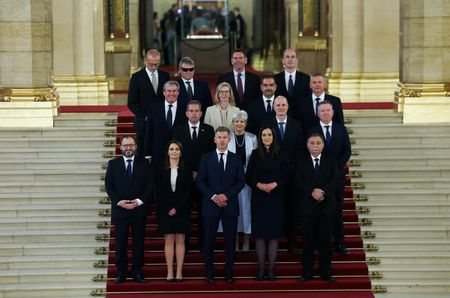

Hungary’s parliament will receive new anti-corruption legislation next week that officials say is essential for accessing billions in suspended European Union funding, according to Transport and Investment Minister David Vitezy’s announcement Friday.
The legislative package comes after Prime Minister Peter Magyar defeated longtime nationalist leader Viktor Orban in April elections and subsequently obtained 16.4 billion euros ($19.1 billion) in May based on commitments to eliminate Orban-era policies the EU considered harmful to democratic institutions.
Financial markets have responded positively to Magyar’s European Union-friendly approach and his commitment to prepare Hungary for euro adoption before 2030, with the forint currency and government bonds showing significant gains.
“This will be a comprehensive anti-corruption bill that also improves the transparency of Hungarian public life,” Vitezy explained to reporters. “This represents the rule-of-law criteria that will allow us to bring the EU funds home.”
The minister indicated the new laws would unlock access to 10 billion euros from the EU’s pandemic recovery program for transportation and clean energy initiatives, plus additional support for small enterprises and affordable housing development.
Under the proposed changes, Hungary’s Integrity Authority anti-corruption agency would receive expanded authority, while public officials would face stricter asset disclosure requirements with potential prison sentences of up to two years for violations, Vitezy detailed.
The government plans to allocate approximately 3.5 billion euros in EU recovery funding to the state development bank MFB for project financing while ensuring no funding is lost before the late August deadline, he added.
According to Vitezy, Hungary will also receive credit for 2.6 billion euros in previously self-funded investments through EU reimbursement, providing the government additional budget flexibility following deficit increases from substantial pre-election expenditures during Orban’s tenure.
Railway and transportation infrastructure improvements will receive 4.2 billion euros from EU cohesion funds, while higher education will benefit from an additional 2.2 billion euros that had been suspended due to concerns about academic freedom restrictions, Vitezy concluded.