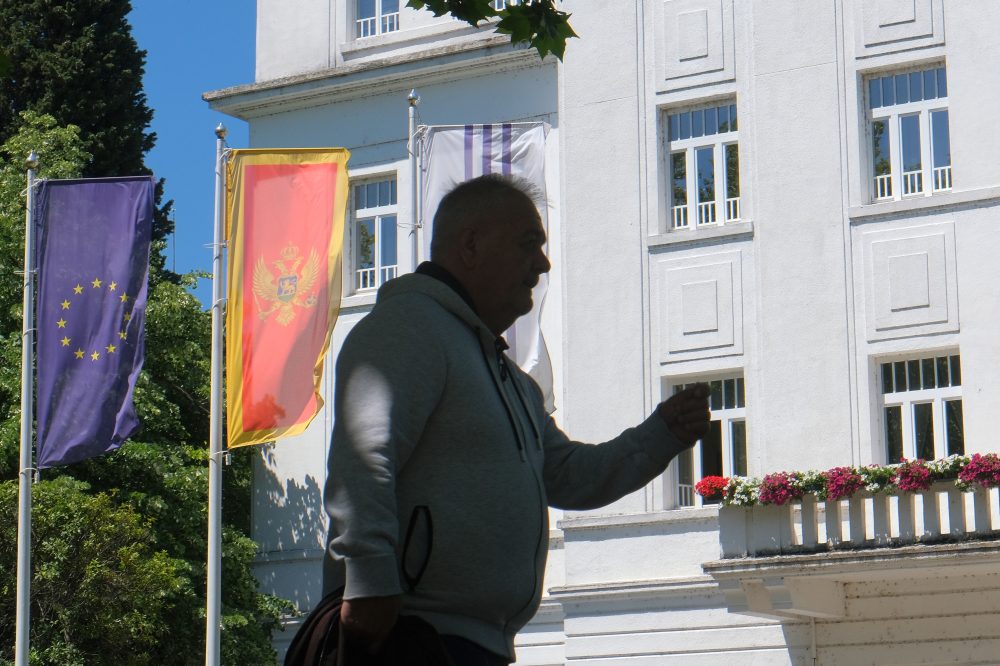

TIVAT, Montenegro (AP) — Top officials from the European Union and Balkan nations convened Friday in Montenegro to explore expanding the EU to encompass regional countries, viewed as crucial territory for addressing security and economic challenges from Russia and China.
The EU-Western Balkans conference, taking place in the coastal Adriatic town of Tivat, brings together European officials including France’s President Emmanuel Macron, Germany’s Chancellor Friedrich Merz, and Italy’s Premier Giorgia Meloni, alongside leaders from other Balkan EU hopefuls and European Commission President Ursula von der Leyen.
Central to discussions will be Montenegro’s EU membership bid. This small, mountainous former Yugoslav republic celebrated the 20th anniversary last month of declaring independence from its union with neighboring Serbia.
Following its 2017 NATO membership, the nation of 623,000 residents has set an ambitious goal of becoming the EU’s 28th member state by 2028. The slogan “28 by 28” appears on aircraft belonging to Montenegro’s national carrier.
Brussels has established a working group to prepare Montenegro’s membership agreement — indicating that joining the bloc is achievable. The country leads other regional candidates including Albania, Bosnia-Herzegovina, Serbia, Kosovo and North Macedonia.
These nations are progressing through various phases of the membership process, with the EU recently pushing for reforms among candidate countries due to concerns over expanding Russian and Chinese influence.
Prospective members must align their legislation across 35 policy sectors or “chapters,” covering everything from judicial standards to agricultural and fisheries regulations. All 27 current EU nations must approve opening each chapter and closing it afterward.
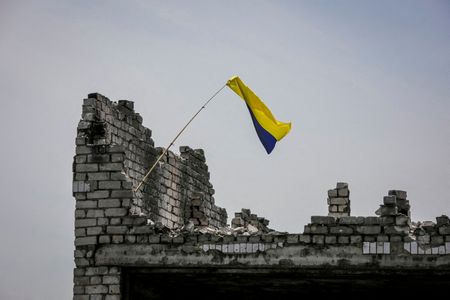
Ukraine and Moldova also rank among roughly ten nations seeking to join the organization. Iceland plans an August referendum on whether to submit an application.
European Council President Antonio Costa will lead the summit. During his Western Balkans tour this week, he has stressed the bloc’s commitment to expansion.
With conflicts ongoing in Ukraine, Iran and the Middle East, and questions surrounding Europe’s security as the United States appears less dedicated to NATO partnerships, EU nations have prioritized strengthening military capacity and defending against an increasingly hostile Russia.
Following his Thursday meeting with Serbian President Aleksandar Vucic, Costa stated that amid “global geopolitical uncertainty and economic instability,” EU expansion is “not just an opportunity. It is a geostrategic necessity for Europe.”
Faruk Bašić, who researches at the Brussels Institute for Geopolitics, predicted the summit will accelerate Montenegro’s 2028 membership timeline while establishing new measures to prevent member states from violating EU principles.
This marks the first EU leaders’ gathering since Viktor Orbán’s surprising April defeat. Hungary’s former Russia-aligned prime minister spent 16 years undermining EU democratic and rule-of-law standards while building relationships with other authoritarian leaders.
Learning from Orbán’s democratic deterioration and his frequent use of European Council vetoes, the EU is developing alternative approaches using financial sanctions or limited single market access to pressure new members toward reform and compliance with bloc standards, Bašić explained.
“The EU is trying to find a way how to admit a country that isn’t fully ready to be admitted without losing the ability to hold it accountable after the fact,” he said, referencing Ukraine’s membership application as well as Western Balkan nations like Serbia and Kosovo.