
Cuba’s leadership announced plans to allow Cuban nationals to take over hotel management operations after major international hospitality companies decided to pull back from the Caribbean nation.
The policy shift comes in response to Spanish hotel company Melia’s announcement on May 26 that it would end operations at 15 of its 34 Cuban properties. This decision followed new U.S. sanctions and continued energy restrictions that have worsened the island’s economic struggles. Cuban officials have attributed widespread power outages, water shortages, supply chain disruptions, healthcare system problems, and daily life challenges to the U.S. blockade.
Other international hotel operators, including Canadian company Royalton and Spain’s Iberostar, have made similar decisions to reduce or halt their Cuban operations, creating significant challenges for the crucial tourism industry that has declined sharply since reaching its highest point in 2018.
In a televised interview with a Spanish reporter aired Friday on the government’s presidential channel, President Miguel Díaz-Canel outlined the new approach.
“There will be hotels that we will have to operate more with Cuban management than with shared management with foreign entities,” Díaz-Canel said. “We are proposing different business models. We are open to Cubans who want to invest and manage hotels.”
“We have also offered these business opportunities to Cubans residing abroad,” he added.
The Melia withdrawal occurred following U.S. President Donald Trump’s executive order that broadened sanctions against Cuba. The measures primarily focused on Grupo de Administración Empresarial S.A., a business conglomerate run by the Cuban Revolutionary Armed Forces, citing national security concerns.
The executive order also impacts foreign companies by freezing assets, seizing U.S.-based accounts, and banning travel for shareholders, investors, and staff members, effectively cutting off access to the U.S. financial system.
GAESA, established in the 1990s as a Cuban business conglomerate, controls various enterprises including vehicle rentals, retail outlets, and transportation services. The organization partners with Meliá in hotel operations through its subsidiary company, Gaviota.
Meliá represented a major tourism partner for Cuba, managing approximately 14,000 hotel rooms before reducing its presence.
Cuban tourism, which peaked at 4.3 million visitors in 2019, experienced a sharp decline in early 2024 visitor numbers, dropping 48% compared to the same timeframe in 2025.
Government statistics show only 298,000 tourists visited Cuba from January through March, compared to 573,300 international arrivals during the corresponding months the previous year.
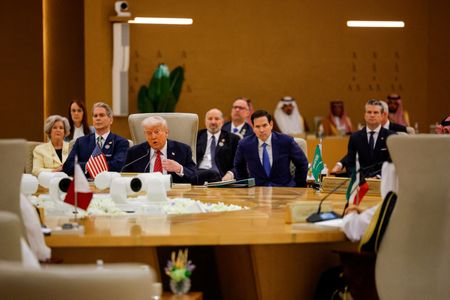
During the interview, Díaz-Canel criticized Trump and U.S. Secretary of State Marco Rubio for characterizing Cuba’s government as ineffective while simultaneously strengthening the existing embargo, calling their approach “cynical.”
The Cuban leader suggested the U.S. actions might aim to pressure Cuba enough to “provoke a social explosion that would give (Trump) a pretext for humanitarian aid to intervene in the country.”
Alternatively, he said the measures could seek to “pursue a coercive dialogue with Cuba, employing maximum pressure to economically occupy the country,” or potentially prepare for military action.
Despite earlier discussions between U.S. and Cuban representatives this year, relations have deteriorated. In late May, former President Raúl Castro faced charges in a U.S. legal filing related to his suspected involvement in the 1996 destruction of two civilian planes operated by Miami-based exiles in Cuban territorial waters.