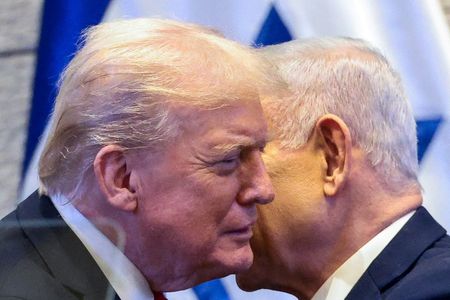

A contentious telephone conversation between the U.S. president and Israeli prime minister has brought their behind-the-scenes disagreements into the public spotlight, creating political complications for the Israeli leader as he faces a challenging election cycle.
The heated exchange, which was initially reported by media outlets and later acknowledged by Trump, featured the president calling the prime minister “fucking crazy” during discussions about Israeli military operations in Lebanon.
Israeli government sources, who requested anonymity, described the conversation as one of the most confrontational exchanges between the two leaders. One source indicated that the public disclosure of the call has politically harmed Netanyahu as the country prepares for national elections.
The news website Axios first revealed details of the conversation on Monday, reporting that Trump angrily challenged Netanyahu regarding Israeli threats to resume bombing campaigns in Beirut’s southern neighborhoods. “Everybody hates you now. Everybody hates Israel because of this,” Trump was quoted as saying.
The American president instructed Netanyahu to avoid targeting Beirut after Iran indicated that Israeli military actions in Lebanon were hampering diplomatic efforts to conclude the conflict, which started with combined U.S.-Israeli operations and has become unpopular with American voters.
A high-ranking Israeli official explained to Reuters that Netanyahu had emphasized to Trump that any suspension of Israeli military plans against Beirut would only be viable if Hezbollah ceased its attacks on northern Israel. The official noted that Trump was open to this perspective.
After their conversation, Trump announced that Israel and Hezbollah had reached an agreement to halt hostilities, leading to criticism from Netanyahu’s political adversaries and some members of his own administration who accused him of surrendering Israeli independence to American pressure.
“A total protectorate,” said opposition leader Yair Lapid, suggesting Netanyahu had put Israel in the position of an American client state.
While Netanyahu, Israel’s longest-serving prime minister, has frequently disagreed with both Republican and Democratic U.S. administrations, Israel has maintained its position as Washington’s primary Middle Eastern partner.
Nimrod Goren, the president of Mitvim, an Israeli think tank, said “the differences are now very public”, unlike in the past when they were usually quietly managed behind closed doors.
Speaking to the New York Post on Wednesday, Trump acknowledged he was “a little bit perturbed” by Netanyahu’s continued attacks on Lebanon, while adding: “We’ve worked very well together.”
Trump’s choice to participate with Israel in military strikes against Iran on two separate occasions within a year seemed to represent a significant achievement for Netanyahu, who had spent years encouraging Washington to employ military force to stop Tehran’s nuclear ambitions.
However, Trump has also implemented several policies that many Israelis view as contrary to their country’s interests, including terminating U.S. military operations against Yemen’s Iran-supported Houthis, removing sanctions from Syria’s President Ahmed al-Sharaa, and directing a cessation of Israel’s 12-day conflict with Iran in June 2025.
While the United States and Israel jointly initiated the military campaign against Iran in February, Israel has not participated directly in U.S.-Iran negotiations to end the conflict. These discussions have been facilitated through Pakistan, an unusual mediator that maintains no official diplomatic relations with Israel.
The conflicts with Iran and Hezbollah have received broad support in Israel, including from supporters of Netanyahu’s political opponents, with much of the population favoring continued military action.
This contrasts sharply with American sentiment, where many voters—including members of Trump’s conservative constituency—oppose the war.
Trump has consistently stated that the U.S. is approaching an agreement with Iran to end the hostilities. Tehran maintains that any settlement must include Israel stopping attacks on its partner Hezbollah in Lebanon.
“We are basically being forced to stop,” said Israeli pollster Mitchell Barak. “We don’t have a say in this anymore.”
At the beginning of this year’s conflict with Iran, Netanyahu declared that the Iranian government would be overthrown and its nuclear and missile capabilities eliminated. He has also stated that Hezbollah, which launched attacks against Israel in March supporting Iran, must be disarmed in southern Lebanon. None of these objectives have been accomplished.
Current domestic polling consistently indicates that Netanyahu’s coalition government, described as the most right-wing in the nation’s history, would be unable to secure a majority in the next election.
According to Goren, Netanyahu is attempting to satisfy Trump’s requirements because the Israeli leader will require the president’s backing as elections approach, including a potential visit by the American leader to Israel. Prior to the Iranian conflict, Trump was widely anticipated in Israel to visit in April to receive the country’s highest civilian award. His most recent visit occurred in October.
Some Israelis expressed discomfort with the degree to which Trump appears capable of influencing Israeli military choices, Goren noted. Conversely, in the U.S., some Trump critics argue that Netanyahu wields excessive influence over American foreign policy.
Itamar Ben-Gvir, Netanyahu’s national security minister said on Thursday that there are times when an Israeli leader must know how to say “no” even to the U.S. president.
Nadav Shtrauchler, a former Netanyahu adviser, said the Israeli premier was counting on Trump’s support in the election.
“The way the war (with Iran and Hezbollah) will end will affect, more than anything, the result of the election.”
Trump has frequently offered public praise for Netanyahu and has openly urged Israel’s president to grant clemency to the prime minister, who faces corruption-related charges in Israeli courts.
Yet Trump has also publicly stressed how much Israel depends on Washington, according to his view, and has used profanity previously when discussing Israel, including publicly stating last year that Israel and Iran “don’t know what the fuck they are doing.”
Netanyahu, for his part, characterizes Trump as “the greatest friend Israel has ever had in the White House”, providing the type of public recognition that appeals to the Republican president, who is recognized for valuing personal devotion and approval.
Since the U.S. and Israel began their war with Iran, Netanyahu has occasionally mentioned that he communicates with Trump nearly every day, often describing their relationship to the Israeli public as a partnership between equals who collaborate on decisions.
When questioned about the call during a CNBC interview on Wednesday, Netanyahu compared the situation to the “best of families” where there have occasionally been “tactical disagreements” with the U.S. president.
A U.S. official informed Reuters that the phone conversation was among several in which the president has been very straightforward with Netanyahu, but emphasized that the two remain friends and close partners.
“Their conversations are pretty direct,” the official said.
Both the official and another Israeli source familiar with the U.S.-Israel relationship rejected any indication of a substantial shift in the relationship between Netanyahu and Trump.
Nevertheless, the Israeli source admitted that the disclosure of the call—and Trump’s later confirmation of it—was unhelpful to Netanyahu before an election he is projected to lose.
Shtrauchler, the former adviser to Netanyahu, argued that the perception of a disagreement with Trump was exaggerated and that the two leaders still seem to agree on most significant matters.
However, a sudden conclusion to the conflicts with Iran and Hezbollah would create a “huge problem” for Netanyahu, he noted, as many Israelis would view it as Trump having pressured him into submission.
“No one wants here to feel like we are another star on the (U.S.) flag. We want to feel independence,” Shtrauchler said.