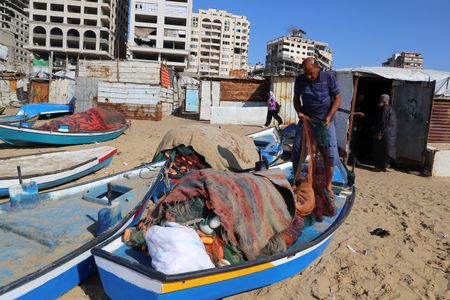

Inside a Gaza repair facility, workers are transforming small recreational boats into fishing vessels using salvaged materials including door frames and wood pulled from destroyed buildings.
These smaller boats, once used by families for leisure activities, have become essential for Gaza’s struggling fishing industry as crews work to maintain their diminished fleet.
Fishermen report that Israeli limitations on importing fiberglass and similar repair materials have made fixing their traditional, larger fishing boats both challenging and costly.
Fisherman Mohammad al-Hissi explained the dramatic price increase to Reuters: “A kilo of fibreglass in the era before the war was 50 or 60 shekels (approximately $17 or $21).” He noted that the current price has jumped to around 800 shekels.
The Israeli military agency that oversees Gaza access, known as COGAT, explained to Reuters that prohibited items include materials that could serve both civilian and military purposes. The agency did not specifically address fiberglass restrictions.
Prior to the conflict that started with attacks on southern Israel in October 2023, Gaza’s fishing crews already operated under severe Israeli limitations on their distance from shore.
Currently, fishermen report staying even closer to the coastline to avoid gunfire that they say has persisted following last year’s ceasefire agreement.
When asked about these incidents, Israel’s military stated that naval forces were implementing “maritime security restrictions” in Gaza’s coastal waters and that violations result in soldiers acting “in accordance with the rules of engagement.”
Gaza health officials report that over 900 Palestinians have died in Israeli attacks since the truce started, though these numbers don’t separate fighters from civilians. Israeli military sources confirm four of their soldiers were killed by militants during this same timeframe.
According to Gaza Fishermen Syndicate member Zakaria Baker, the local fishing industry now brings in less than 15 tons monthly – an amount that previously represented a single day’s catch before the war began.
Before the conflict, fishing provided a crucial food source for the territory.
While the hunger emergency in Gaza has improved since famine conditions were declared in portions of the densely populated area before last year’s ceasefire, aid organizations report that most children still lack proper nutrition. The United Nations documented 3,500 children receiving malnutrition treatment in April.
“We repair and maintain boats, and serve fishermen in any way we can,” said repair shop worker Musab Baker. “But we are unable to do anything apart from the small boats.”