
Britain’s highest-ranking military officer issued an urgent warning Friday that the nation is running short on time to strengthen its defenses against escalating Russian threats, as a critical defense spending plan remains stalled after months of delays.
Chief of the Defence Staff Richard Knighton expressed alarm about Russia’s increasingly aggressive posture during an interview with BBC Radio. “Russia is definitely raising the stakes and risks crossing a line,” Knighton stated. “We need to spend more on defence and do it faster.”
The delayed Defence Investment Plan is designed to outline funding for military hardware and services needed to bring Britain’s armed forces to “warfighting readiness.” However, news reports indicate the plan has been stuck in limbo since last year due to disagreements over spending within the government.
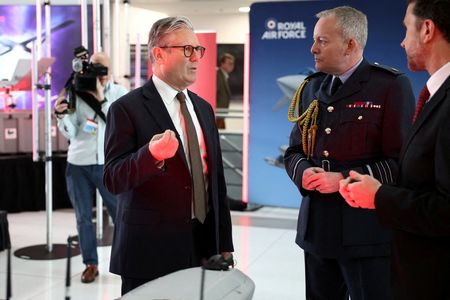
During a Friday visit to a drone manufacturing facility, Prime Minister Keir Starmer announced the plan would be released prior to the July 7 NATO summit, following intensive collaboration between government officials and military leadership.
“It is no exaggeration to say that we’re living in more dangerous and volatile times than at any time in my life,” Starmer declared.
U.S. President Donald Trump, who has consistently urged Starmer and other European allies to increase defense expenditures and reduce dependence on Washington for continental security, is expected to participate in the upcoming summit.
According to Knighton, the security risks and threats facing Britain have reached levels not seen since the Cold War era, requiring corresponding increases in defense investment.
“The challenge for ministers is to make those difficult trade-off decisions,” he explained.
News outlets report that military leadership has informed Starmer of a £28 billion funding gap over the coming four years, which sources say is responsible for the investment plan’s postponement.
While Starmer has committed to the most significant sustained defense spending increase since the Cold War, targeting 3% of national output during the next parliament, critics argue he has failed to deliver on these commitments.
George Robertson, who held positions as Britain’s defense secretary in the 1990s and later as NATO’s chief, criticized Starmer in April, stating there was a disconnect between his words and actions and that he was “not willing to make the necessary investment” in defense.
Knighton described how Russia has intensified its threatening behavior through increased violations of British airspace and constant “probing, challenging, testing” of defense systems, while also conducting cyberattacks, sabotage operations, and technology theft attempts.
“We do need to step up and enhance our capability as the threats from potential adversaries grow,” he emphasized.