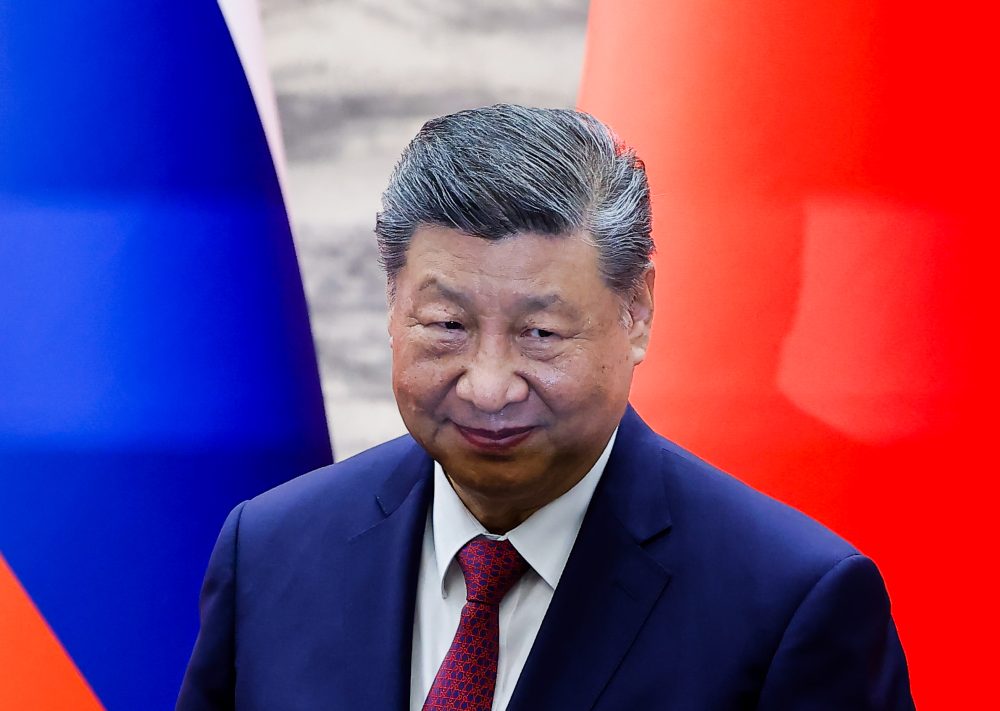

China’s top leader will make a state visit to North Korea early next week, marking his first journey to the neighboring nation in almost seven years, officials from both countries confirmed Friday.
The diplomatic trip comes just one day after North Korea revealed a new nuclear facility designed to produce bomb-making materials. Analysts believe the timing of the facility’s disclosure suggests North Korea’s leader is working to strengthen his nation’s nuclear credentials before the Chinese leader’s arrival.
State media from both nations reported the visit will span Monday through Tuesday. The Chinese leader’s previous trip to North Korea occurred in June 2019.
This visit follows recent separate meetings the Chinese leader held with U.S. President Donald Trump and Russian President Vladimir Putin in Beijing just weeks ago.
North Korea’s leader has recently focused on strengthening ties with Russia, providing military personnel and weapons to assist in Russia’s conflict with Ukraine. However, he has also been working to improve relations with China, which serves as North Korea’s primary trading partner and source of aid.
The two leaders met in Beijing during September, where they committed to mutual support and increased cooperation. The North Korean leader was visiting China’s capital to participate in a military parade alongside other international figures, including Putin.
Military officials in South Korea have identified the newly revealed nuclear facility as a uranium enrichment plant. During his tour of the facility, the North Korean leader announced intentions to strengthen his country’s nuclear capabilities “at an exponential rate.”
According to experts, the North Korean leader seeks global acknowledgment of his country’s nuclear status to pressure for the removal of U.N. economic sanctions. Analysts suggest he ultimately aims to engage in arms reduction negotiations with the U.S. to secure benefits in exchange for partially reducing his nuclear arsenal.
Trump has consistently indicated interest in restarting diplomatic talks with the North Korean leader, but North Korea has responded that the U.S. must first abandon its requirement for North Korea to eliminate its nuclear weapons before negotiations can begin.
Both Russia and China, which hold veto power on the U.N. Security Council, have previously blocked efforts by the U.S. and other nations to strengthen international sanctions against North Korea, despite its prohibited weapons testing.
During their Beijing meeting last month, Putin and the Chinese leader voiced their opposition to “foreign policy isolation, economic sanctions, military pressure and other methods of creating threats to the security” of North Korea, according to a Kremlin statement.
Adopting concepts of a “new Cold War” and a multipolar world order, the North Korean leader has pursued a more aggressive foreign policy approach by strengthening relationships with nations that are in conflict with the United States.