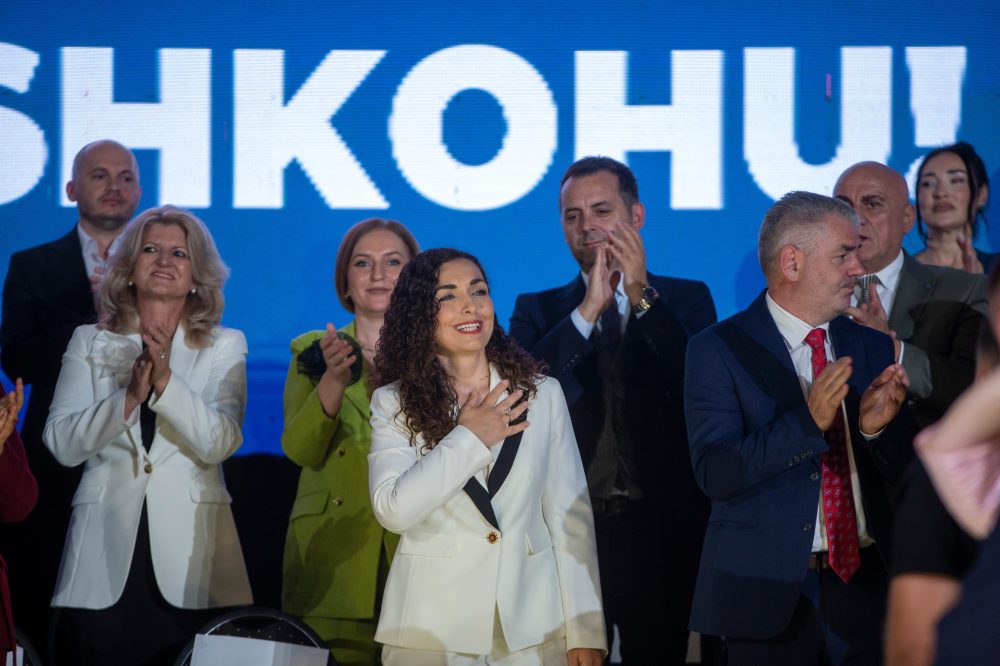

PRISTINA, Kosovo (AP) — This weekend marks Kosovo’s third parliamentary election within an 18-month span as citizens grow increasingly frustrated with an ongoing governmental stalemate in the small Balkan nation seeking closer ties with the European Union and NATO.
Sunday’s early election became necessary when Kosovo’s leading political parties could not reach consensus on a successor to former President Vjosa Osmani, whose term concluded in late March.
Prime Minister Albin Kurti’s center-left Vetevendosje party has maintained a solid parliamentary majority following December’s early election. However, presidential selection in Kosovo requires support from at least 80 members of the 120-seat Parliament, a threshold neither Kurti nor opposition forces could achieve.
As political leaders point fingers at one another for the crisis, their failure to find common ground has deepened frustration among Kosovo’s approximately 2 million voters, who prefer their government concentrate on economic issues and improving living conditions.
Vlora Kryeziu, a businessperson from the capital Pristina, laments that “the same scenario is being repeated.”
“We will for sure have the same result,” Kryeziu, 52, said. “As a citizen, I have a lot of dissatisfaction, and I think that we as a society are not doing enough to change these things.”
An inconclusive February 2025 election initially left the nation without effective governance for most of the previous year, necessitating December’s second vote.
Kosovo ranks among Europe’s newest and most economically challenged nations. The country, with a predominantly ethnic Albanian population, proclaimed independence from Serbia in 2008 after a 1998-99 conflict that concluded with NATO airstrikes compelling Serbian withdrawal.
While the United States and most EU nations have acknowledged Kosovo’s independence, Serbia and its allies Russia and China have not. Both Pristina and Belgrade have been instructed they must repair their relationship to advance their respective EU membership applications.
European Council President Antonio Costa this week urged Kosovo to end the political stalemate and unite over the goal of EU integration.
“The European Union can support Kosovo, but it cannot do Kosovo’s own homework,” he said in Pristina. “Kosovo needs strong, stable and functioning institutions capable of delivering reforms and seizing the opportunities the European Union offers.”
Prime Minister Albin Kurti has urged voters to give him another chance at Sunday’s ballot. He accused the opposition parties of creating an “artificial crisis” and forcing repeated elections despite “the strong and clear will of the people.”
Two opposition parties, the Democratic Party of Kosovo and the Democratic League of Kosovo, in turn have accused Kurti of seeking to impose complete control over all political institutions in the country.
Ex-president Osmani is now running on the LDK party list against Kurti, her former ally, after he refused to back her for a second term in office.
Political analyst Artan Muhaxhiri still does not expect a “tectonic change” compared to the previous election, when Kurti’s party won more than 50% of votes.
The political deadlock will also resume, Muhaxhiri predicted as “there are no indications that political leaders are willing to change their actual stances and narrow the existing gap.”
The prolonged crisis already has affected Kosovo’s economy that has been hit hard with the global energy crisis and rising fuel prices. The institutional vacuum also has delayed access to the EU and other international funds available for the country.