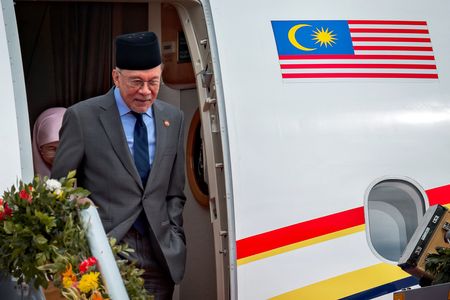

Malaysian Prime Minister Anwar Ibrahim’s governing alliance confronts a critical examination of public confidence following announcements this week that two states will hold unexpected elections, raising questions about potential early national voting.
Coalition partners of Anwar control the state governments in Negeri Sembilan and Johor, where legislative bodies were disbanded on Friday and Monday respectively, triggering elections that must occur within two months.
Although these regional contests won’t directly affect Anwar’s parliamentary majority at the national level, substantial defeats could damage his coalition’s standing before the next general election scheduled for early 2028. Last month, Anwar indicated he might call an early national vote if disagreements within his government continue expanding.
Officials from Anwar’s office had not responded to requests for comment by Friday.
Anwar’s governing partnership, comprising his Pakatan Harapan group, former opponent Barisan Nasional, and several smaller parties, has experienced disagreements over approaches to ethnic and religious matters in the diverse, predominantly Muslim nation. Progressive coalition members have expressed dissatisfaction with the gradual implementation of reform measures.
The prime minister has also faced demands from the previously powerful United Malays National Organisation, a Barisan component, regarding its campaign for royal clemency for former prime minister and UMNO chief Najib Razak, who received a prison sentence in 2022 for his involvement in the massive 1MDB financial scandal.
Pakatan currently controls Negeri Sembilan state, where voting wasn’t scheduled until late 2028, while Barisan oversees Johor, where elections weren’t expected until next year.
Highlighting coalition strains, Barisan announced it will compete in Johor’s state elections alone, without Pakatan backing. In Negeri Sembilan, Pakatan plans to field candidates for all 36 available positions, having secured 17 seats in the previous state contest.
Two additional states, Malacca and Sarawak, must also conduct elections in upcoming months. The Election Commission, responsible for scheduling state voting, has noted that an early general election would enable simultaneous state contests, reducing expenses.