
Samira Bou Saab anticipated witnessing the execution of her son’s killer, who received a death sentence. However, the convicted individual may walk free under Lebanon’s proposed comprehensive amnesty legislation, which highlights the nation’s intricate web of allegiances and disputes.
Parliament is expected to pass Lebanon’s most extensive prisoner amnesty since the conclusion of the devastating 1975-90 civil war within the coming weeks, pending presidential approval.
The proposed legislation would eliminate death penalties, shorten life sentences, and ultimately result in the freedom of convicted extremists and narcotics traffickers. However, it excludes offenses including sexual assault, human trafficking, corruption, terrorism financing, and first-degree murder. Individuals found guilty of murdering Lebanese military personnel may receive shortened prison terms.
Despite Israel’s current military operation in Lebanon targeting the Iranian-supported Hezbollah militant organization delaying legislative elections, parliament members indicate they’re moving forward with the amnesty due to prison overcrowding.
More than 3,000 inmates from nearly 8,600 total detainees would gain freedom, including individuals imprisoned without trial for a minimum of 14 years.
However, opposition to the amnesty exists within Lebanon. Families of deceased soldiers recently demonstrated by arranging numerous empty military boots outside parliament in Beirut.
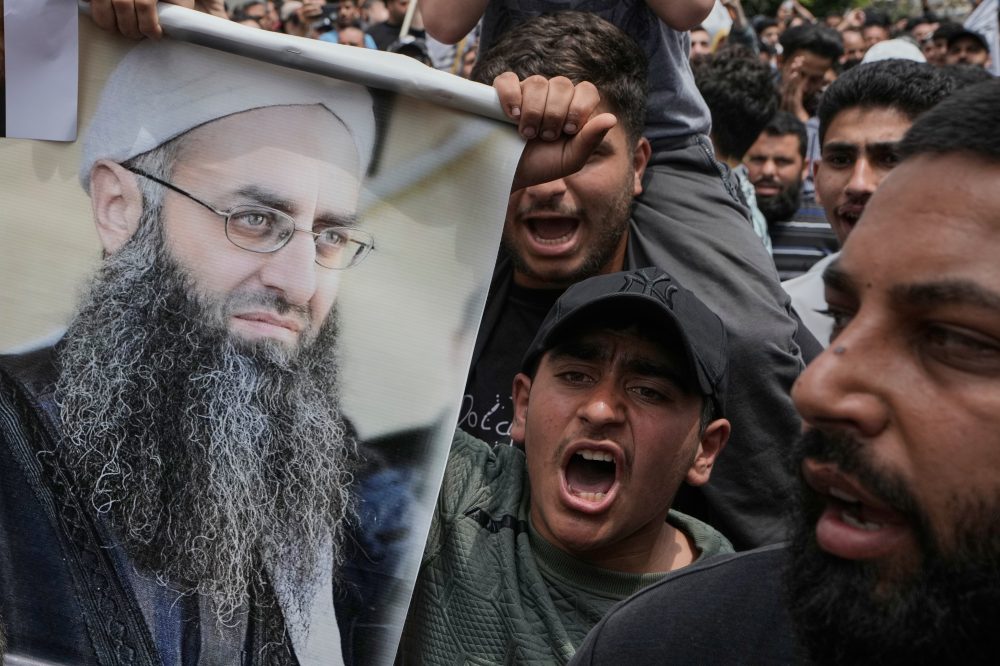
Bou Saab’s son George, an army first lieutenant, was among 18 military personnel killed during confrontations with supporters of extremist Sunni Muslim cleric Ahmed al-Assir in the southern city of Sidon in 2013.
Bou Saab questioned whether al-Assir, who has completed 11 years under a death sentence, would gain the right through the amnesty to visit his children and family “while my son is buried under the sand and his children don’t know him.” Should the legislation pass, his death sentence would be eliminated and he would serve 10 additional years.
Al-Assir’s wife criticized the amnesty, claiming her husband is an innocent casualty of a conspiracy organized by the Shiite Muslim Hezbollah, which she alleged sparked conflicts between the cleric’s followers and the Lebanese military.
“He is being executed slowly,” Amal Shamseddine stated regarding her husband’s sentence, adding, “Had there been justice in our country, they (detainees) would have been released and gone home long time ago.”
Lebanon’s previous major amnesty occurred in 1991, designed to promote reconciliation following the civil war that claimed 150,000 lives. The conflict involved numerous militias, many religiously motivated, plus Palestinian groups. Syria’s military became involved, and an Israeli invasion in 1982 reached Beirut.
Following that amnesty, most militia commanders joined Lebanon’s governing elite who were subsequently held responsible for decades of corruption and poor governance that led to economic collapse in 2019.
During the drafting of the current amnesty legislation, the nation’s profound sectarian splits became evident in the legislature. Sunni representatives demanded freedom for Islamists, while Shiite members sought release for drug dealers primarily from Lebanon’s eastern, cannabis-growing Baalbek area.
Christian lawmakers requested amnesty for hundreds of citizens who escaped to Israel following its military withdrawal from Lebanon in 2000. Many maintain connections to the Israeli-supported South Lebanon Army militia that disbanded when Israel departed.
“The draft law has entered the road of political bargains,” said lawmaker Nabil Badr, a strong supporter of the amnesty, adding that many legislators are using it to make political gains.
Maryam Younnes was 5 when she escaped with her family to Israel in 2000. She hopes the amnesty will enable her return to Lebanon, where she can reunite with her grandmother and visit her father’s grave. He had served as an SLA commander and his remains were transported to his hometown for burial after his death in 2013.
However, political factors persist.
“We will return once Lebanon is cleared of (Hezbollah), illegal weapons, and once there is peace between Lebanon and Israel,” Younnes said. Hezbollah, which formed in southern Lebanon in 1982 responding to Israel’s invasion, was permitted to retain its weapons after the civil war to combat Israeli occupation forces.
Following Israel’s withdrawal, hundreds of SLA members remained in Lebanon and received prison sentences, with some subsequently freed.
The proposed amnesty legislation states Lebanese citizens residing in Israel would be handled according to a 2011 law indicating members of the pro-Israel militia will be detained upon arrival in Lebanon and provided “a fair trial.”
But Younnes declared: “Our people are no criminals.”
As Lebanon and Israel conduct their first direct negotiations in over three decades while a new conflict develops, Younnes hopes for an eventual peace agreement with open borders.
“I am confident the situation will change and I want to return to my country,” she said.