
KYIV, June 5 – Ukrainian President Volodymyr Zelenskiy’s public correspondence proposing direct peace negotiations to end the conflict was formally directed at Russian President Vladimir Putin, but strategically crafted to resonate with attendees at this week’s St Petersburg investment forum and international audiences.
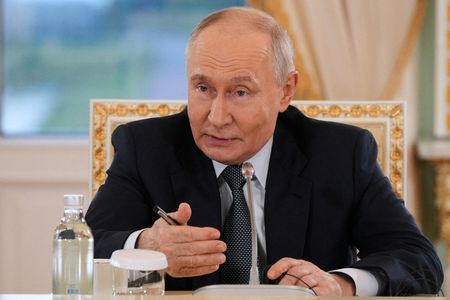
The Ukrainian leader made his letter public Thursday night while Putin was conducting briefings with international news editors at Russia’s leading business conference. One day earlier, Ukrainian drone attacks had struck an oil facility in St Petersburg, creating massive smoke plumes visible near the forum location.
According to a Ukrainian official with knowledge of the correspondence, Ukraine’s leadership believes segments of Russia’s power structure – including “officials, businessmen, and Russia’s partners” – desire an conclusion to the conflict that has caused Russia’s $3 trillion economy to remain stagnant.
The high-profile business event has showcased competing perspectives within Russia regarding the four-year conflict. Some attendees have advocated continuing military operations and preparing for extended confrontation with Western nations, while others have stressed the economic benefits of concluding a war that grows closer each week.
For several months, Zelenskiy has consistently renewed his appeals for a ceasefire and proposed meetings with Putin, which Putin has repeatedly rejected, including again on Friday.
The Ukrainian official, who requested anonymity, maintained that Zelenskiy genuinely seeks to restart diplomatic discussions.
However, Dmytro Iarovyi, associate professor at the Kyiv School of Economics who specializes in political psychology, characterized the drone attack and “performative” correspondence as a coordinated effort to influence the conference’s messaging.
Iarovyi explained the letter was designed to communicate to Russian citizens and Western administrations – especially U.S. President Donald Trump – that recent territorial advances and damaging long-distance attacks on Russia have positioned Kyiv much more favorably for any future negotiations.
“Trump always says ‘Ukraine doesn’t have any cards’,” stated Kurt Volker, a former U.S. ambassador to NATO and Ukraine envoy during Trump’s first presidency. “Well, Ukraine is now showing that it’s in a stronger position.”
Multiple rounds of U.S.-supported peace negotiations have reached an impasse, with both nations maintaining their established positions.
Putin informed the international editors that discussions with Trump in Anchorage, Alaska, last August had already outlined the requirements for ending the conflict – seemingly referencing his demands that Ukraine surrender the remainder of Donbas, its eastern industrial region and military stronghold.
However, Zelenskiy currently appears more resistant than previously to U.S. pressure for territorial concessions. His correspondence stated he welcomed American participation but emphasized that Ukrainian matters would “not be decided in Anchorage” but rather by Ukraine and Russia, noting Russia could no longer anticipate capturing all of Donbas.