
A brutal knife assault on a Belfast street has triggered two consecutive nights of violent unrest fueled by anti-immigrant anger in Northern Ireland.
The accused attacker, a 30-year-old man from Sudan who had sought asylum in the United Kingdom, made his first court appearance Wednesday at Belfast Magistrates’ Court facing charges of attempted murder, making death threats against another individual, and weapons possession.
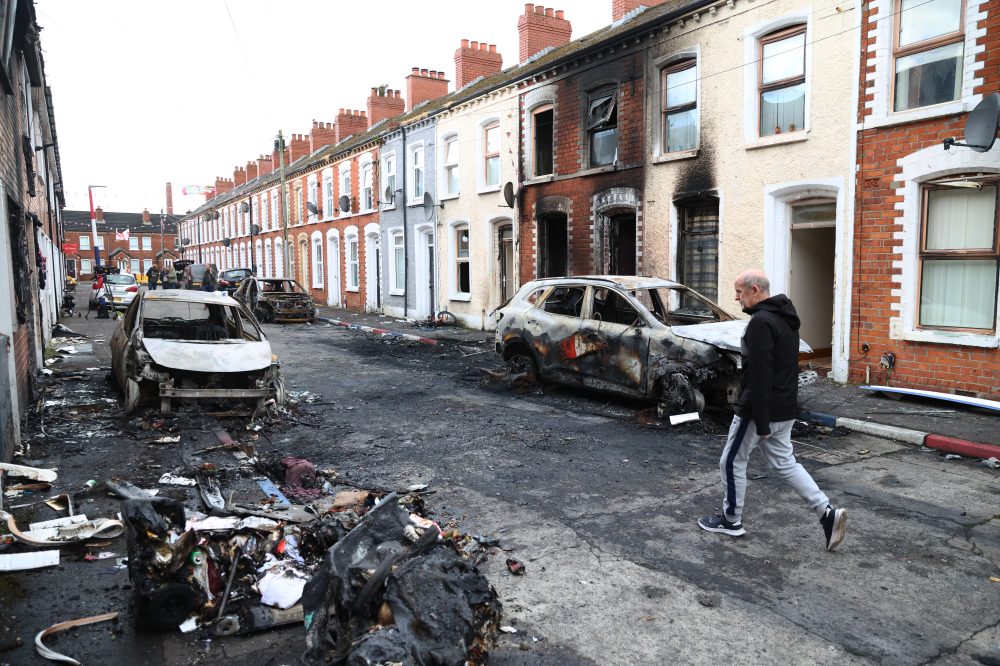
His court hearing occurred amid escalating street violence that began Tuesday when hooded rioters torched multiple residences they suspected of housing immigrants, destroyed a city bus, and bombarded officers with stones and debris. Emergency crews had to evacuate residents from blazing buildings.
According to police testimony, Hadi Alodid attacked Stephen Ogilvie with a kitchen blade, causing permanent blindness in his left eye and inflicting severe lacerations to his head, face and back.
While receiving medical treatment for an injured hand, Alodid made threats against a hospital radiologist, authorities reported.
“I’ve killed someone, I don’t know if they are dead,” Alodid stated to hospital personnel, a detective testified during court proceedings.
Investigators have not disclosed what motivated the assault but emphasized it does not appear to be terrorism-related.
Speaking through an Arabic translator, Alodid declined legal counsel and entered no plea. The court ordered him detained.
Despite government appeals for peaceful response to the crime, masked groups ignored those calls and launched projectiles at law enforcement, ignited garbage containers, and set fire to homes and cars.
Officers deployed water cannons against demonstrators who threw bricks and chunks of stone ripped from garden structures and walkways.
The violence displaced more than 24 residents from their homes.
Anselme Shima, a Belfast resident who emigrated from Congo, witnessed smoke rising from burning cars near his residence.
“I’ve lived on my street for almost 10 years, I have a good relationship with my neighbors, but last night was a horrific one,” he said. “We don’t know what to do. I’m scared. Seeing this, I’m wondering if I’m next.”
Leaders from both sides of Northern Ireland’s coalition government denounced the unrest. First Minister Michelle O’Neill of Irish nationalist party Sinn Fein called it “thuggery.”
The disturbances echoed similar riots that erupted across England and parts of Northern Ireland two years earlier following a teen’s deadly knife attack on three girls and wounding of 10 others at a dance studio near Liverpool.
The Belfast violence erupted one week after demonstrators confronted police in Southampton regarding the sentencing of a man convicted in the fatal stabbing of a college student.
Each incident involved Black or Asian perpetrators and white victims.
In the 2024 Southport girls’ deaths, the unnamed suspect was falsely portrayed on social media as a Muslim refugee. Despite police clarification that he was a British citizen born in Wales (later disclosed to have been raised by Christian parents from Rwanda), demonstrations primarily targeted migrants and Muslims.
Public anger over the Southampton fatal stabbing centered on police officers who responded to reports of a racist attack but mistakenly identified the victim, Henry Nowak, as the attacker. They initially ignored Nowak’s cries that he had been stabbed and couldn’t breathe, restraining him with handcuffs as he died.
Vickrum Digwa, who carried a ceremonial Sikh blade but used a different dagger to stab Nowak, deceived police by claiming Nowak had attacked him, Judge William Mousley stated when sentencing him to life imprisonment.
Nigel Farage, leader of the anti-immigration Reform UK party, cited Nowak’s death as evidence of alleged two-tier policing — a far-right claim that ethnic minorities receive preferential treatment over white citizens.
Government leaders and law enforcement have rejected such allegations, with many specialists arguing that British policing actually favors white individuals. A study from three years ago determined the Metropolitan Police in London, the nation’s largest department, was plagued by institutional racism.
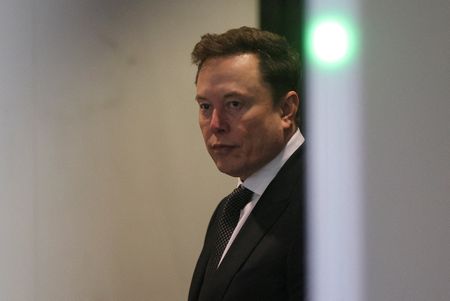
Demonstrators have been mobilized through social media by British far-right activists, including Stephen Yaxley-Lennon, also known as Tommy Robinson, and encouraged by prominent international figures including tech mogul Elon Musk.
Musk posted more than 100 messages about British politics with heavy emphasis on Nowak’s death during Digwa’s trial period and offered to finance a private prosecution of the local police department.
U.S. Vice President JD Vance, in a post on X, attributed Nowak’s death to “the mass invasion of migrants, many of whom despise the West and the people who love it.”
Prime Minister Sir Keir Starmer responded sharply to Musk and Vance, condemning individuals “trying to interfere in our democracy and seeking to stir up division on our streets.”
Public response to these stabbings demonstrates growing anti-immigrant attitudes in portions of the United Kingdom and Europe recently, driven by political discussions about asylum seekers, small-boat crossings and strain on public services.
Several political leaders highlighted the essentially open border between Northern Ireland, which belongs to the United Kingdom, and the Republic of Ireland, where the suspect arrived in Dublin from Paris before traveling north.
Maintaining free movement of people represents a fundamental element of the peace process that largely ended decades of violence called “The Troubles.” The conflict involving Irish Republican and British Loyalist militants and United Kingdom security forces claimed nearly 3,600 lives before a 1998 peace agreement.
“There is absolutely no doubt in my mind that this man should not have been in this country,” Farage said Wednesday. “He entered the country illegally. And is it any surprise that people in Belfast and elsewhere are scared?”