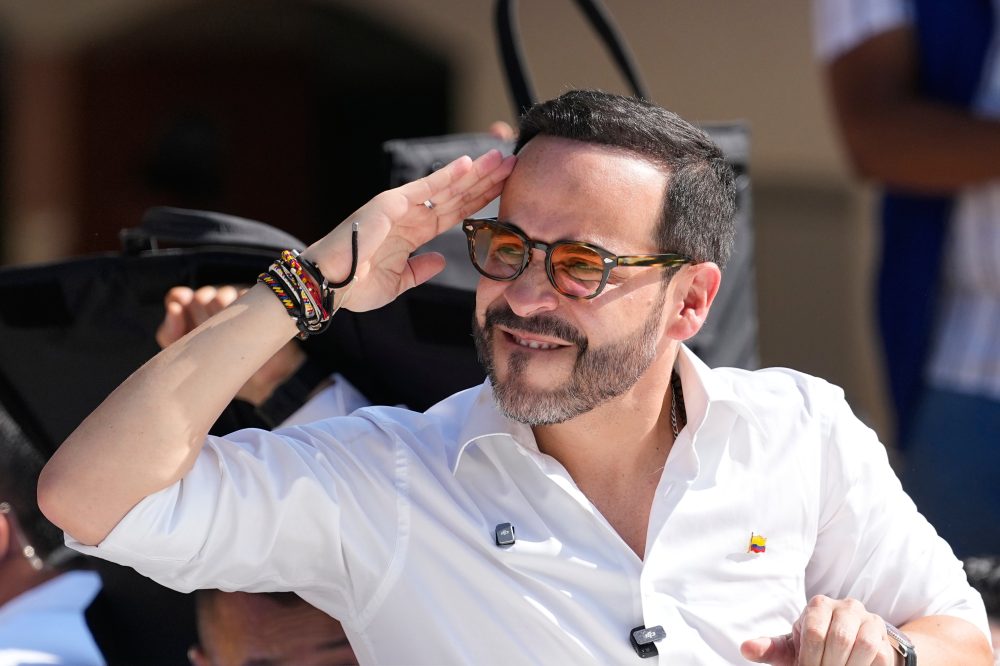

BOGOTA, Colombia (AP) — A Colombian presidential hopeful has called on prosecutors Tuesday to examine potential voter intimidation by rebel forces in outlying areas during the country’s recent election.
Abelardo de la Espriella has requested an investigation into whether armed groups forced residents of distant municipalities to cast ballots for government party candidate Sen. Iván Cepeda in the May 31 first-round voting.
According to a statement from de la Espriella’s campaign, Cepeda received over 70% support in 109 municipalities where illegal armed organizations operate, with some areas showing support as high as 97%. Cepeda’s team has not yet responded to these claims.
Sen. Cepeda, who supports President Gustavo Petro and previously belonged to Colombia’s communist party, has served as an intermediary between the government and Marxist rebel organizations. He captured approximately 41% of votes in the initial election round, which featured 14 candidates.
“These results, on their own, do not constitute definitive proof of a crime,” de la Espriella’s campaign stated after filing their complaint with prosecutors. “But they should oblige authorities to investigate if there were threats, pressures or mechanisms to coerce voters and alter their freedom.”
De la Espriella, a conservative attorney who backs U.S. President Donald Trump and goes by “The Tiger,” led the first round with 43.7% compared to Cepeda’s 40.9%. The two will compete in a June 21 runoff to determine Colombia’s next four-year leader.
A European Union election monitoring team reported receiving voter complaints about pressure from “government officials and illegal armed groups” during May’s voting, though they did not identify which candidate benefited from the alleged coercion.
Colombian voters have identified security as a primary concern, alongside corruption and healthcare system problems.
The municipalities where Cepeda achieved strong results are situated along Colombia’s Pacific coastline, a region that typically backs the current administration.
Under Petro’s leadership, a former M-19 rebel group member, Colombia has pursued peace negotiations with remaining rebel organizations through a strategy called “total peace.”
Political experts suggest rebel groups have exploited government-granted ceasefires to expand control over rural areas, where they operate cocaine laboratories, collect taxes from legitimate businesses, and intimidate opposing civilians.
Throughout his campaign, Cepeda has advocated continuing rebel negotiations while potentially modifying tactics. De la Espriella has vowed to end talks and adopt a more aggressive stance, including aerial herbicide spraying of coca crops.
Trump recently backed de la Espriella on Truth Social, calling the 47-year-old attorney a “Smart, Strong and Tough Leader” who would successfully restore “LAW AND ORDER!”
Petro responded to Trump’s endorsement on X, stating that “freedom dies” when nations interfere in each other’s domestic matters.