
President Donald Trump issued a stern warning to Iran on Wednesday, declaring the nation is taking “too long to negotiate a deal” and that “now they will have to pay the price.” The president’s remarks left unclear what specific consequences Tehran might face.
Trump’s warning followed early Wednesday airstrikes launched by the United States against Iran, which the president justified by blaming Tehran for downing an American attack helicopter. Iran responded by launching attacks against regional nations.
Iranian forces targeted Bahrain, Kuwait and Jordan – all countries that host American military personnel. This marked the second instance this week where mutual strikes have put strain on ceasefire efforts, following Monday’s exchange of fire between Iran and Israel.
The president posted his message on his Truth Social platform following the Iranian retaliation. The escalating cycle of attacks has raised concerns about how much strain the current deal can withstand before breaking down completely.
Israeli Prime Minister Benjamin Netanyahu simultaneously posted on X, reaffirming that Iran must never possess nuclear weapons and justifying Israel’s previous military actions against the Islamic Republic.
While both Iran and the United States appear to be seeking ways to conclude the conflict, Netanyahu seems committed to more ambitious objectives: toppling Iran’s religious government, dismantling its nuclear capabilities, and destroying the Iranian-backed Hezbollah organization in Lebanon. These goals could significantly complicate any potential agreement.
Despite Trump’s repeated claims that peace talks with Iran are advancing, he has consistently alternated between expressing hope and threatening to resume full-scale warfare. Iran has demonstrated remarkable endurance despite enduring weeks of intensive bombardment, counting on its capacity to effectively shut down the Strait of Hormuz – a vital channel for global oil and natural gas transport – as leverage in negotiations.
Meanwhile, Congress advanced legislation providing nearly $70 billion for immigration enforcement. The House approved the measure Tuesday in a narrow 214-212 vote, with Republicans using their majority to push it through despite Democratic opposition. The bill now awaits the president’s signature.
The White House indicates the legislation will allocate $38 billion to Immigration and Customs Enforcement, $26 billion to the Border Patrol, and an additional $5 billion for unexpected expenses. The funding is structured to ensure continuous financial support as the administration pursues its goal of deporting approximately one million individuals annually.
Economic concerns also emerged Wednesday as the Labor Department reported consumer prices climbed 4.2% in May compared to the previous year, rising from April’s 3.8% rate. Monthly price increases reached 0.5% in May, following significant jumps of 0.6% in April and 0.9% in March.
These inflation figures present challenges for both the Federal Reserve and the administration as midterm elections approach. Price increases had been moderating before widespread tariffs implemented in April 2025 made numerous products more expensive. The Iran conflict has further driven up oil and gas costs, potentially spreading price increases throughout the economy.
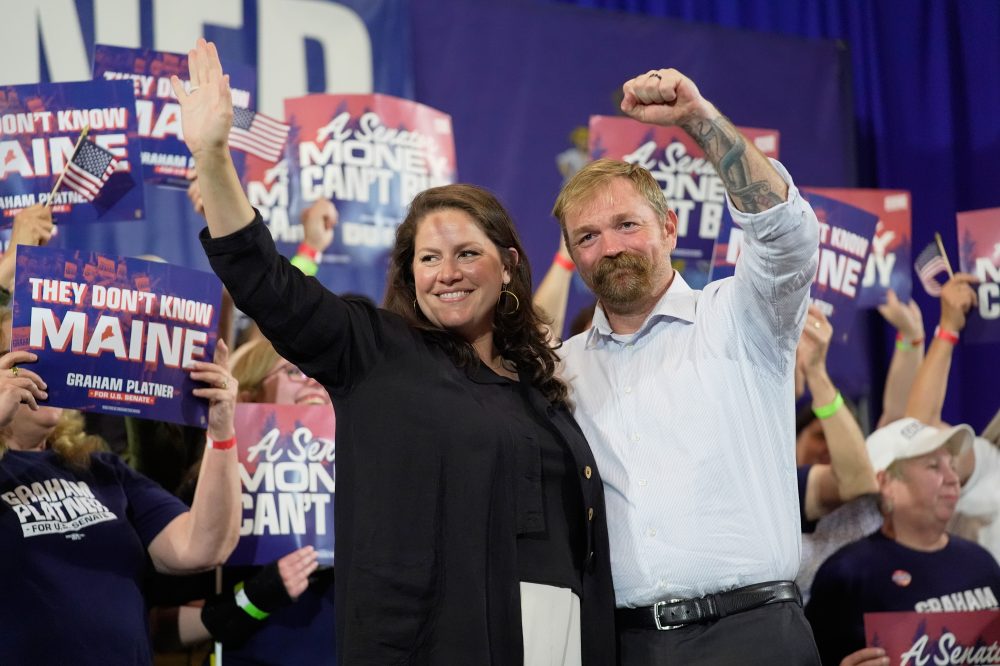
In Maine’s political landscape, Graham Platner clinched the Democratic Senate nomination, establishing a crucial contest against long-serving Republican Senator Susan Collins. This race could influence which party controls the Senate. Trump’s influence within his party faced evaluation in South Carolina and Nevada, where he backed preferred candidates.
Immigration enforcement issues also surfaced in a federal report criticizing conditions at a Texas ICE facility. The Government Accountability Office documented serious problems at Camp East Montana, a large tent complex at Fort Bliss in El Paso, where three detainees died within six months. The report found evidence related to one death – a 55-year-old Cuban migrant who died in January after being restrained by guards – was “missing or destroyed.”
ICE opened the camp hastily in August before construction finished and failed to provide proper oversight ensuring sanitary conditions and adequate medical care, according to investigators. The Department of Homeland Security noted that ICE has replaced the facility’s contractor, with spokesperson Lauren Bis stating the change will help maintain “the highest detention standards with the ability to provide more medical care on-site.”
Cuban diplomatic tensions also intensified as Cuba’s top representative to the United States told The Associated Press that recent sanctions targeting Cuban leadership and the indictment of former President Raúl Castro serve as a “pretext” for the administration to gain American support for military intervention.
Ambassador Lianys Torres Rivera, whose formal title is chargé d’affaires, described the situation as “a war without bombs” during Tuesday’s interview at Cuba’s Washington embassy. She insisted Cuba poses no threat to the United States and opposes confrontation, while warning that attempts to change Cuba’s government through force would meet fierce resistance.