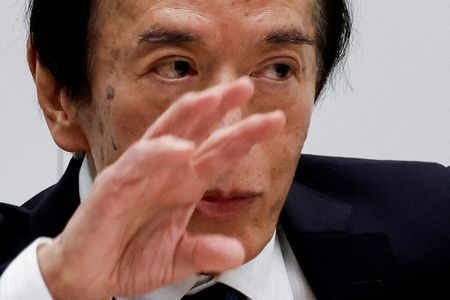

TOKYO – The Bank of Japan faces a challenging communication situation as Governor Kazuo Ueda’s hospitalization will prevent him from attending a crucial policy meeting next week where interest rates are expected to rise.
Ueda’s two-week medical treatment will sideline him during the June 15-16 rate review, creating what analysts call an awkward timing issue as the central bank works to establish its reputation as a serious inflation fighter and demonstrate market commitment.
The 74-year-old governor is receiving hospital care for an infected liver cyst and is anticipated to work from his hospital room before returning for the July 30-31 policy session, according to central bank officials.
Government officials are attempting to minimize concerns about the situation. Chief Cabinet Secretary Minoru Kihara stated during Thursday’s press conference that the central bank’s policy implementation and government coordination would continue without disruption.
However, even short-term leadership questions could challenge the institution as it shifts toward a more aggressive inflation-fighting approach amid global price pressures from the Iran conflict, while managing political concerns about increased borrowing costs and market doubts about the pace of policy tightening.
Former central bank board member Takahide Kiuchi offered his perspective on the situation: “The governor missing just one policy meeting won’t cause big problems. But if it turns into something longer, that’s a different story.”
Kiuchi added: “When markets are turning attention to the rift within the board, his absence may raise questions about his leadership.”
The concern grows more significant given perceptions that Ueda has taken a more measured approach compared to some board colleagues. His absence might spotlight whether more aggressive board members will gain influence or whether the lack of his stabilizing presence will expose internal disagreements.
This hospitalization follows Deputy Governor Shinichi Uchida’s recent medical leave, who was released from the hospital last month after leukemia treatment.
The upcoming policy decision appears largely predetermined. Ueda recently indicated willingness to increase the policy rate to 1% from 0.75%, a move broadly viewed as supported by an increasingly hawkish board.
However, the governor’s absence could complicate the institution’s public messaging since Uchida will conduct the post-decision media briefing, an uncommon arrangement that forces investors to analyze both the message content and the messenger’s delivery style.
For a central bank attempting to carefully manage market expectations, this personnel change introduces additional uncertainty.
Tsuyoshi Ueno, a senior economist at NLI Research Institute, explained the communication challenge: “Even if Uchida’s communication is different in nuance from Ueda, it would be hard to discern whether it’s due to the deputy governor’s character or a change in the BOJ’s thinking.”
Mari Iwashita, executive rates strategist at Nomura Securities, anticipates the institution will avoid providing clear future rate guidance entirely.
“Given uncertainty on how long it may take for the governor to fully recover, it’s also becoming more unclear on whether the BOJ would hike again this year,” she stated.
Analysts currently see minimal likelihood of Ueda resigning before his five-year term concludes in April 2028. Japanese law prevents forced resignation of central bank governors.
Nevertheless, the situation has renewed questions about whether job demands, including constant travel and parliamentary oversight, might eventually impact his leadership capacity.
Should Ueda step down, Uchida would serve as interim governor while the government selects a permanent replacement.
Such circumstances could provide Prime Minister Sanae Takaichi, who is perceived as supporting looser monetary policy, an opportunity to guide the central bank toward a more accommodative stance.
Both deputy governors, Uchida and Ryozo Himino, will complete their five-year terms one month before Ueda’s term ends.
Even if Ueda serves his complete term, the possibility of a dovish administration influencing future appointments could create subtle pressure for cautious policy decisions, some analysts suggest.
A significant test will arrive next July when two hawkish members of the nine-person board complete their terms, giving Takaichi the chance to name replacements.
NLI’s Ueno warned about potential political influence: “Next year’s personnel shift could overhaul the (dove-hawk) balance within the board. The BOJ may find it difficult to do anything that could draw the government’s ire.”
“Given such pressure, the BOJ may not be able to raise rates again for the rest of this year,” he concluded.